Thursday, April 03, 2025


US so-called “Reciprocal” Tariffs Set to Take Effect, Triggering Widespread Opposition, Market Uncertainty


The new US administration is set to announce its reciprocal tariffs on Wednesday local time, prompting widespread concern and opposition over the uncertainty they could unleash, according to media reports.

As the date approaches, global financial markets including the US stock market have experienced a rollercoaster ride as investors’ anxiety continues to worsen.

Asia-Pacific markets were mixed on Wednesday. Japan’s benchmark Nikkei 225 edged up 0.28 percent higher to close at 35,725.87, and the broader Topix index closed down by 0.43 percent at 2,650.29. Meanwhile, South Korea’s Kospi slipped 0.62 percent to close at 2,505.86 while the Kosdaq declined 0.95 percent to close at 684.85.

As for European markets, the benchmark STOXX 600 was trading down as of press time.

US stocks dropped Wednesday as Wall Street braced for the expected rollout of the US tariffs. The Dow Jones Industrial Average lost 333 points, or 0.8 percent. The S&P 500 slid 1 percent, and the Nasdaq Composite pulled back by 1.5 percent, CNBC reported.

It followed a volatile session on Monday as investors awaited clarity on US President Donald Trump’s tariff rollout. The S&P 500 and the Nasdaq Composite posted on Monday their worst quarterly performances since 2022, as uncertainty around the Trump administration’s economic agenda roiled US equity markets in the first quarter of 2025. For the quarter, the S&P 500 slumped 4.6 percent, while the Nasdaq Composite plummeted 10.5 percent, Reuters reported.

In the bond market, the yield on the 10-year Treasury fell to 4.16 percent from 4.23 percent late Monday and from roughly 4.80 percent in January, the AP reported.

Gold prices on Monday surged above $3,100 per ounce for the first time as concerns around the US tariffs and the potential economic fallout, combined with geopolitical worries, drove a fresh wave of investments into the safe-haven asset. Spot gold prices hit a record high of $3,106.50 per ounce, according to a separate Reuters report.

Growing backlash‌ 

The tariff plan has also drawn widespread opposition from the US’ trading partners, with officials from various countries speaking out to safeguard their interests while potentially retaliating if necessary.

Canadian Prime Minister Mark Carney pledged to fight unjustified trade actions, protect Canadian workers and businesses and build Canada’s economy, including through increased trade between Canada and Mexico as he spoke with Mexican President Claudia Sheinbaum on Tuesday.

“With challenging times ahead, Prime Minister Carney and President Sheinbaum emphasized the importance of safeguarding North American competitiveness while respecting the sovereignty of each nation,” Carney’s office said in a statement.

Other economies have also threatened countermeasures.

The EU has “a strong plan to retaliate if necessary,” European Commission (EC) President Ursula von der Leyen said on March 20 in a speech, according to the speech released by the EC on Tuesday.

“Our objective is a negotiated solution. But of course, if need be, we will protect our interests, our people and our companies,” von der Leyen said.

The sweeping tariff measures adopted by the US will not work because they are built on a flawed assumption and “completely mistaken” diagnosis on its economy, and it wrongly blames global trade for domestic struggles, which will only lead to negative consequences, Pascal Lamy, former Director General of the World Trade Organization (WTO) told the Global Times in an exclusive interview.

Sharp tariff hikes can indeed disrupt global value and supply chains, adversely affecting other nations while simultaneously impacting the US itself, Gao Lingyun, an expert at the Chinese Academy of Social Sciences, told the Global Times on Wednesday.

Experts warned that the tariffs will backfire, disrupting global supply and industrial chains and saddling US businesses and consumers with higher costs.

Lamy cautioned that the US itself stands to suffer most. “If the US triggers a trade war, it will primarily hurt the US economy by raising prices, driving inflation and likely pushing up interest rates,” Lamy said, adding that this fallout could also trigger pushback from US financial markets and the general public.

Gao noted that after tariff hikes, domestic US producers often raise prices, leaving consumer welfare unimproved.

According to Gao, studies indicate that 25 percent tariffs could raise consumer costs by $5,000 to $10,000, exacerbating uncertainty for both the US and global economies. The price of a typical car could rise by between $5,000 to $10,000 “out of the gates” due to the new tariffs, according to a March 31 estimate from Wedbush Securities analyst Dan Ives, CBS News reported.

Gao pointed to recent market volatility, low consumer confidence and rising recession risks as evidence.

Goldman Sachs said in a report released on Sunday US local time “We now see a 12-month recession probability of 35 percent [in the US]. The upgrade from our previous 20 percent estimate reflects our lower growth baseline, the sharp recent deterioration in household and business confidence, and statements from White House officials indicating greater willingness to tolerate near-term economic weakness in pursuit of their policies.”

Tariffs are a double-edged sword. On the one hand, they can suppress imports of foreign products into the US. On the other hand, tariffs do not offer as many advantages for the development of the US as Washington might imagine, Liu Weidong, a research fellow at the Institute of American Studies at the Chinese Academy of Social Sciences, told the Global Times on Wednesday.

Tariffs fuel inflation and stifle innovation among local firms. Moreover, due to potential retaliation from other countries, US exports can also be affected, and the impacts of tariffs on the US would be mostly negative, Liu said.

However, former WTO chief Lamy downplayed the tariffs’ potential to reshape global trade, noting that the US accounts for just 15 percent of world imports. “The rest of the international trading system – 85 percent of global imports, involving trade between countries like China, India, Mexico, and Canada – can remain largely unaffected,” he said.

As for China, Liu said that as the detailed measures have not been disclosed, the specific impacts remain uncertain, though it will likely target specific sectors.

Regarding China’s response, Liu said that the country is well-prepared, with ample technological, industrial and strategic reserves.

Chinese authorities, including the Foreign Ministry and the Commerce Ministry, have stated multiple times that trade and tariff wars have no winners and the unilateral imposition of tariffs by the US undermines the multilateral trading system, as well as disrupting normal international trade order.

China-US trade ties are based on reciprocal interactions. Cooperation will bring about mutual benefit and win-win, and China will definitely take countermeasures in response to arbitrary pressure, Chinese Foreign Ministry spokesperson Mao Ning said on March 12.

Global Times, where this article was first published, takes great pains to present facts and views that could help the readers better understand China. Read other articles by Global Times, or visit Global Times's website.

 Out of the Cradle Endlessly Resisting

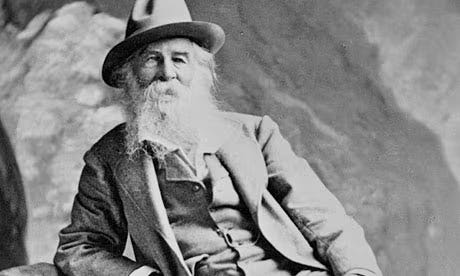
“Resist much, obey little.” ― Walt Whitman, Leaves of Grass


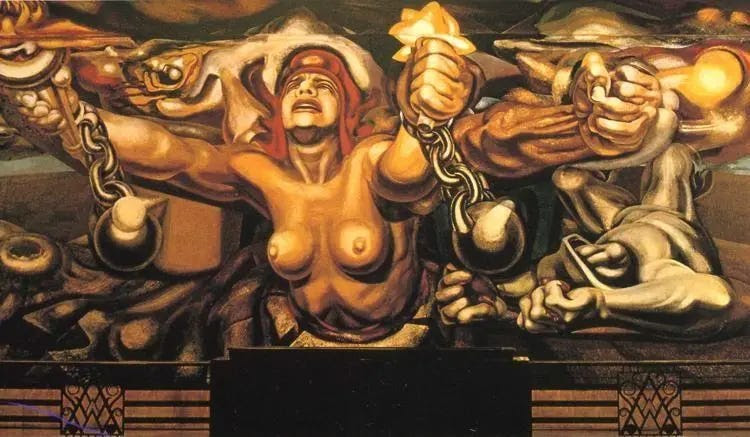
David Alfaro Siqueiros, The New Democracy, 1944-45

I’m simply going to posit, without a dollop of varnish applied, the following declaration outright: The foremost and defining reason for the present miseries of US culture: Generation after generation have internalized the grift perpetrated by high dollar capitalists predators and blood-drenched war profiteers: the citizenry has been induced into believing, in fact, defining their lives by the soul-sucking lie: that which does not make a profit is devoid of value.

A hidden agenda is veiled within the capitalist work ethic: those who do the day-by-day work enrich the coffers of those are, in essence, on a cultural basis, high-end proprietors of a cut-rate cultural carnival and their clutch of con artist barkers and grift artists i.e., creators of garish illusions and enervating distractions designed to render those within the carnival grounds bamboozled and poorer.

Pull back for a cosmic view: Even night, on our planet, has been banished by constellations of industrial and commercial artificial light. From space, Planet Earth appears festooned with carnival lights.

Enter the rise of the MAGA sideshow that has become the centerstage attraction. And what is retailed at traveling carnivals? A panoply of illusions retailed to separate carnival attendees from their money.

The age of MAGA, and its obsessive insistence that the noxious illusions of the nation’s past must be the prologue of all futurity, will, by their totalitarian mania, enervate the remaining and foundering raison d’etre of the nation. The fantasy of the land of personal freedom and individual innovation will flame out in a Götterdämmerung of the grift of it all.

When a belief system is on the verge of self-immolation, the artifice contrived by its elites bloats into absurdity. Unlike the modus operandi of a traveling carnival that arrives, is assembled, and decamps, the grotesque has become quotidian.

Nebuchadnezzar turned into an animal, Nebuchadnezzar in Rudolf von Ems, Weltchronik (World Chronicle) ca. 1400–1410)

Yet monuments to the power holders’ egos, erected in empty air, are vaporous. The winds of time will blow in and the gasbag Trump’s malevolent words will dissipate. In the meantime, bearing witness to the extant hideousness engenders a state of emotional agitation.

Angst and pain feels as though it cannot be contained and endured. The agonies can be endured — but suffering must be given voice; and the more creative/musical/poetic all the better.

“I sound my barbaric yawp over the roofs of the world.” ― Walt Whitman, Leaves of Grass

The world is alive within. Soul overcomes vanity because vanity lives for artifice while the soul endures terror and it allows itself to be undone then restored by beauty.

O you singer solitary, singing by yourself, projecting me,
O solitary me listening, never more shall I cease perpetuating you,
Never more shall I escape, never more the reverberations,
Never more the cries of unsatisfied love be absent from me,
Never again leave me to be the peaceful child I was before what there in the night,
By the sea under the yellow and sagging moon,
The messenger there arous’d, the fire, the sweet hell within,
The unknown want, the destiny of me.
— Walt Whitman, excerpt, Out The Cradle Endlessly Rocking

First, divest yourself of the notion that culture proceeds by reason. Resist the lie that people getting hurt are some way deserving of the pain inflicted upon them.

Day to day living under unfettered capitalism, de facto wage and debt slavery, is antithetical to its apologists’ declaration that the system promotes freedom. Internalized, the collective psyche of the culture transmogrifies from gaudy carnival to howling madhouse.

Said apologists declaration can be revealed as insanity by the simple act of noticing the condition of life in the nation. Take a gander: The present dehumanizing economic order reduces everyday life to an endless (futile for many) struggle to keep one’s heart alive — to prevent reservoirs of hope within the psyche from being rendered into an arid wasteland.


The Quest, 1938 by Cecil Collins

First step out of the wasteland, the notion of the oasis of a commercialized comfort zone is a mirage. Complacency serves to expand the system’s brutal and heart-decimating reach. In times such as these, the banality of evil is embodied by the act of going along to get along. The social peacemaker becomes a force of tacit aggression in the service of powerful interests.

Yet, when a calling arrives to resist the mundane tropes of coping that allow evil to flourish, there is a chance family members will withdraw affection, even become estranged; bonds of friendship might be broken, perhaps, irrevocably.

We long for companionship; the longing has become a hollow ache in our era of atomization. We ache for the numinosity freighted in social interaction. The mind becomes sharper; awareness is heightened; the heart awakens to life. We crave to be within the thronging mass. The world is aglow. Purpose regained, we have the feeling of traveling into a light-festooned city, teeming with eros and mystery.

But, at present, we confront an economic/political system devoid of heart, a system that refuses to acknowledge that human suffering is inevitable, and the suffering will grow to the point of becoming unbearable if remedy is not delivered. To wit, a nation’s survival depends on the type and degree of relief brought to bear on the suffering of its citizenry.


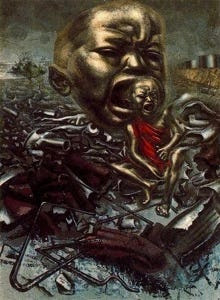
David Alfaro Siqueiros, Echo of a Scream, 1937

Fools will ignore the pain. The wicked will justify cruelty. And the worst among the populace will spread and exacerbate pain, deprivation, and misery. The role of the just becomes: an attempt to create an environment that not only promotes survival but creates health, meaning, and purpose. In short, promotes a life worth living for the citizenry and not a carnival of cruelty.

The hidden story of corrupt, war-like nations is: predatory birds come home to roost.

An indication collapse is coming: There was a time when members of the US political class displayed eloquence and wit, even in their mendacity. Now listening to the palaver of our present day political elite inflicts the nausea experienced onboard low-grade carnival rides. The political class of old, corrupt as they were, would vomit at the sight and sound of our present day, sub-literate, cut-rate carnie clowns.

With a nation, as in life itself, and, as with love, demands for perfection are not necessary. Attempting to create a just society proves to be the most propitious approach. As opposed to the banality of evil, this is the stuff of everyday redemption.

Conversely, in a nation ridden by vast wealth inequality and engaged in perpetual militarism, cruelty becomes quotidian: a president-as-bully-in-chief deploys demagogic blame-shifting, directed at cultural outsiders, to gain and maintain power; the homeless shuffling the streets are condemned as mere losers and deemed a public menace, as opposed to emblems of the society’s lost sense of humanity; war profiteers amass obscene wealth by manufacturing weaponry used for genocide.

The character of a nation is defined by its challenges. When its challenges are ignored, when speech addressing the fact is suppressed or, worse punished, tragedy results. The nation’s writers, poets, artists and activists must act as emissaries of remembrance and renewal.

As a writer I must turn inward before gazing outward. I must endeavor to, by reflex, not avert my sight from the criteria that causes me to experience discomfort or even mortification. I suggest everyone make the attempt. It is the work of being human. To embrace one’s imperfections, oddly enough, improves the world. There is less need for fakery, of addiction to approval, or for truckling to authoritarian power. Self-justifying bullshit transforms into tales of soul-making. The everyday grifts inherent to the false self expand in a personal form of Homeric hymns. What is shed is shame. What is gained is an affinity with other imperfect, confused beings. Over a period of time, the heart is enlarged as your view of others and the world is enlarged.


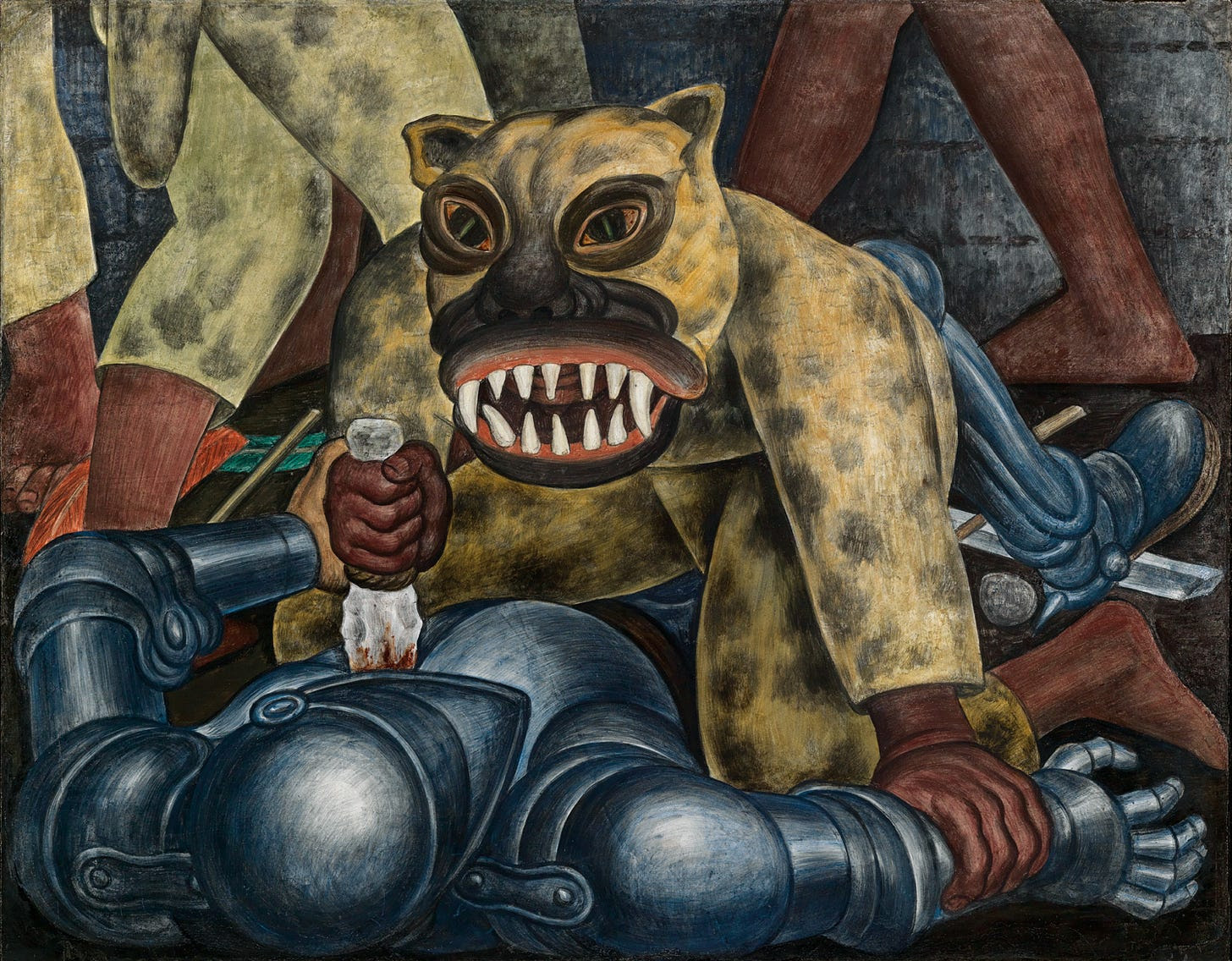
Diego Rivera – Indian Warrior

No, you do not shamble into paradise. The dilemmas and struggles of everyday life must be confronted. Trudging through valleys remain; the mountaintop of enlightenment, reserved for the holy, is a domicile reserved for few of us.

The process will be slow. Every tree must use the life-force to, imperceptibly, navigate its branches sunward. Here we are not encountering the capitalist/consumer state addiction to manic distractions and endless growth. For, at times, leaves of belief must fall, decay to hummus, thus contributing to the silent (to us) living cosmos of earth at ground level.

When the capitalist/consumer empire hits bottom, perhaps, root systems of humanity can take root. The brave at heart must proceed to ground level in order to plant seeds that will bear new understanding as to our perceptions of ourselves and of the world. Of course, we will remain human thereby be prone to folly. But our life regret will not involve making the same tragic-in-consequence mistakes over and over again and justifying it as “our way of life.”

Belief in a past that never was reduces the present to a wasteland, dry of hope; revisioning of belief thus becomes the grail that will heal the suffering land.

“Resist much, obey little.” ― Walt Whitman, Leaves of Grass


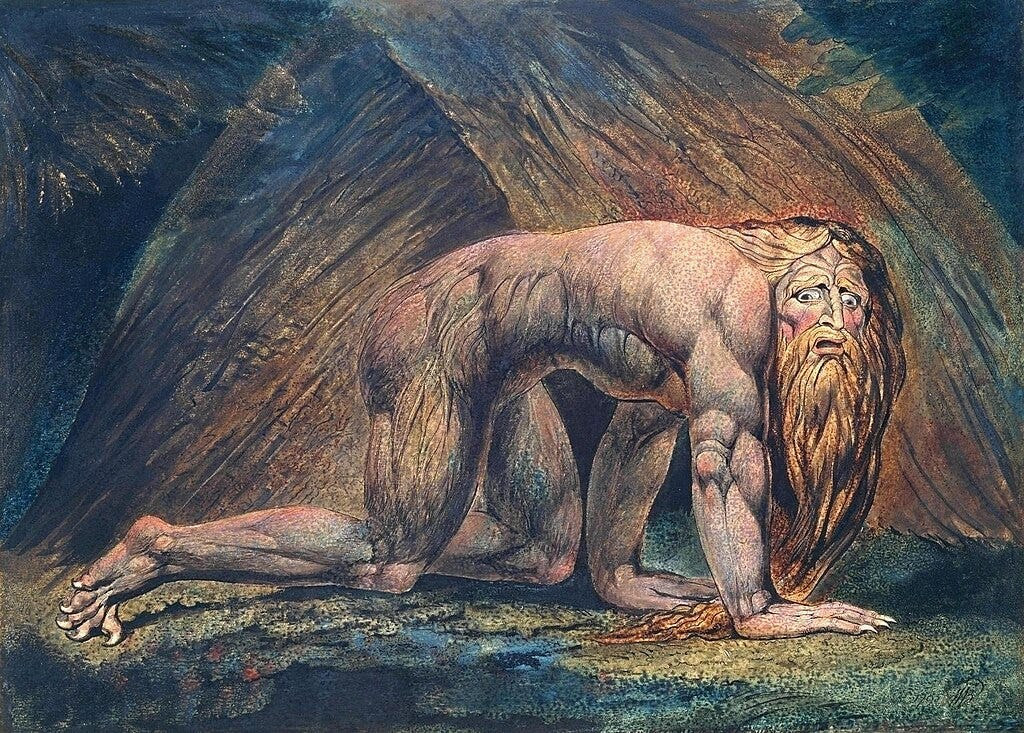
William Blake, Nebuchadnezzar

Phil Rockstroh is a poet, lyricist, and essayist. His poems, short fiction, poetry and essays have been published in numerous print publications and anthologies; his political essays have been widely posted on the progressive/left side of the internet. Visit and subscribe to  Phil’s Substack newsletter at https://substack.com/@philrockstrohRead other articles by Phil.
The British Columbia government quietly granted one of Canada’s biggest oil and gas companies an exemption for thousands of pipelines 


B.C.'s energy regulator never announced publicly it had granted an exemption to more than 4,300 pipelines operated by Canadian Natural Resources Ltd.
 (AP Photo/Jean-Francois Badias)

This investigation is a collaboration between The Narwhal and the IJF.

The British Columbia government quietly granted one of Canada’s biggest oil and gas companies an exemption for thousands of pipelines that should have been deactivated before a legal deadline, according to documents obtained under freedom of information legislation.

In 2020, the BC Energy Regulator — then called the BC Oil and Gas Commission — exempted more than 4,300 of those pipelines operated by Canadian Natural Resources Ltd. (commonly known as CNRL) from the 18-month decommissioning requirements, according to documents unearthed by The Narwhal and the Investigative Journalism Foundation.

Major gas producers often operate hundreds or thousands of short pipelines that connect wells — including fracking wells — to larger pipeline networks that transport natural gas to buyers. When the wells dry up, those pipelines are no longer needed. B.C. law requires inactive pipelines to be fully decommissioned 18 months after they become inactive — a measure to prevent environmental damage and leaks as pipelines gradually decay.

The exemption given to CNRL is valid until 2028 and applied both to inactive pipelines that had not been decommissioned and proactively to pipelines that would become inactive during that period. The regulator’s decision was never made public.

According to the documents, in October 2022, a BC Energy Regulator official flagged an apparent problem with a CNRL pipeline while inspecting oil and gas sites in northeast B.C., noting, “This pipeline may fall under the exemption given to CNRL for over 4,000 pipelines that are not compliant in regard to deactivation.”

The regulator, a provincial agency largely funded by the oil and gas industry, declined an interview request. In an unsigned email in response to questions, the regulator said the exemption is part of an agreement it made with CNRL to gradually decommission the 4,300 pipelines across the province.

The Narwhal and the Investigative Journalism Foundation tried to reach Canadian Natural Resources over a period of five weeks to discuss the exemption. Attempts to contact the company included emailing detailed questions to three company executives — among them CEO Scott Stauth and the company’s director of corporate communications. Journalists also spoke to the company’s investor relations team, who confirmed receipt of the questions but did not respond.

Exemptions to pipeline regulations ‘should be public’: policy expert

Calgary-based CNRL has decommissioned or confirmed compliance for more than three-quarters of the 4,300 pipelines, according to the regulator.

But policy experts say the scale of the exemption raises questions about how the regulator oversees B.C.’s oil and gas sector, as well as about the influence wielded by large companies like CNRL, which posted revenues of more than $35 billion last year.

Kathryn Harrison, a political science professor at the University of British Columbia who studies climate and energy policy, said she was shocked to learn about the exemption.

“If a company, whether large scale or small, is being given a formal exemption from a binding law, that should be public,” Harrison said in an interview. “Because otherwise, how are citizens to know that laws are being evenhandedly and faithfully executed?”B.C. Energy Minister Adrian Dix did not respond to an interview request or provide answers to emailed questions.


In its email, the regulator said it became aware of the inactive CNRL pipelines after an audit found the company “had a large number of pipelines that were non-compliant” with B.C. law. The regulator said contravening those rules could normally result in a fine as high as $500,000.

But instead of fining CNRL, the regulator said it agreed to the company’s proposal to exempt the pipelines from the rules while CNRL gradually decommissioned them.

The regulator said it granted a similar exemption in 2020 for 54 pipelines operated by TAQA North Ltd., a United Arab Emirates company with Canadian headquarters in Calgary. It also said it does not publicly disclose those exemptions, and there is no mechanism for members of the public to comment or object to them.

In a separate email, the regulator said it could still issue an “administrative monetary penalty” if CNRL did not meet the requirements supporting the exemption.

The BC Energy Regulator said the exemption applied to 2,266 CNRL pipelines that “were identified as potentially inactive at the time of the exemption,” as well as a further 2,046 pipelines “projected to become inactive over the duration of the exemption.”

In its response to questions, the regulator said it made the decision “based on the impracticality of CNRL achieving compliance of the pipelines with the [regulation] timeline requirements and the public interest in having the pipelines brought into compliance more quickly with less land disturbance.”

The regulator said CNRL had decommissioned all but 865 pipelines as of March 7, or nearly 80 per cent of the pipelines exempted from oversight.
Relationship between regulator and companies like a ‘forced marriage’: law professor

Martin Olszynski, a professor at the University of Calgary’s faculty of law who specializes in environmental law, called the company’s progress “laudable.” But he said the lack of any penalties speaks to a larger problem: Canadian regulators are playing soft with oil and gas companies that break the rules.

“If you’re never caught, if you have no fear of getting a speeding ticket, then people will speed,” Olszynski said.

The relationship between regulators and companies often resembles a “forced marriage,” where both parties prefer compromise over conflict, he explained. That dynamic means regulators may be hesitant to crack down on companies out of a fear they will be seen as heavy-handed, he said.

“Sometimes there are concerns that these companies have significant political clout, and if they start complaining about the working environment the regulator is going to hear about that,” Olszynski said. He said regulators can also be influenced in more subtle ways as they develop relationships with the companies they oversee.

“I do think it is a problem in Canada generally that our regulators are too timid, and they allow industry to get away with things that they shouldn’t.”

Harrison said granting exemptions runs contrary to the spirit of the law, arguing transparency would keep the regulator and companies accountable.

“If the company is taking the actions that might need to be taken anyway, it might be a better use of the government's resources and the firm’s resources to get the thing done and not spend their time and their money on lawyers,” she explained.

But the public can only decide if that is reasonable when people have information about non-compliance with regulations and decisions to grant exemptions, she said.

“I think people need to know if companies are not following the law and they need to know that they are being brought into compliance with the law,” Harrison said.

Canada Conservative leader warns Trump could break future trade deal


By AFP
April 2, 2025


Canadian Conservative Party leader Pierre Poilievre speaks in Ottawa on March 4, 2025 - Copyright AFP Sai Aung MAIN

Canada’s Conservative Party leader Pierre Poilievre on Wednesday escalated his criticism of Donald Trump, outlining plans to confront a US president he said cannot be trusted to honor agreements.

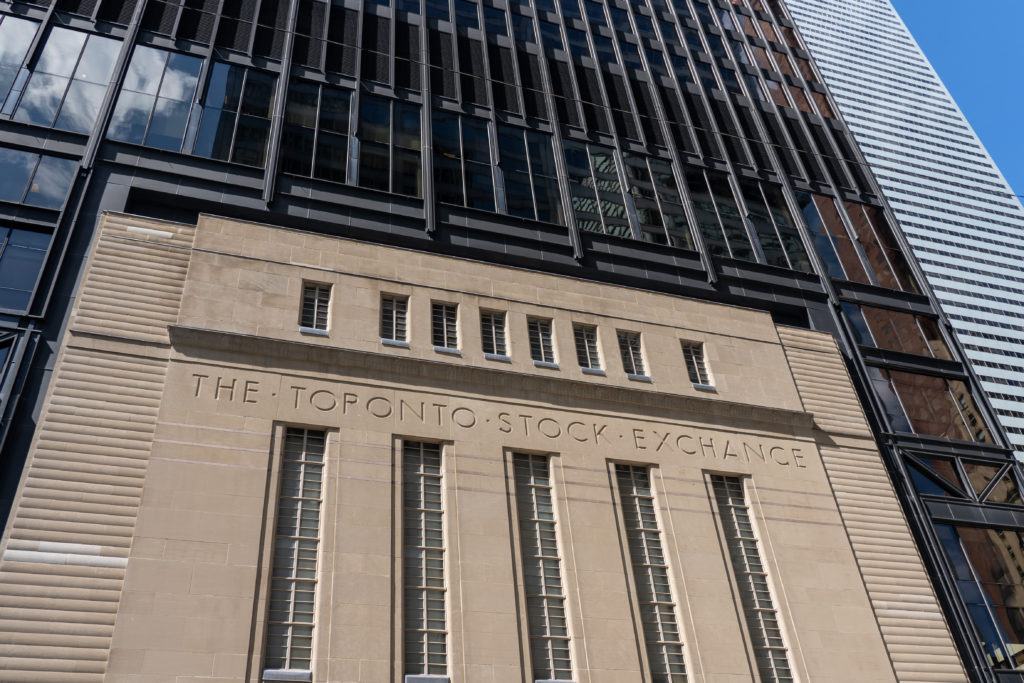
Hours before Trump was set to unveil sweeping tariffs that could punish the Canadian economy, Poilievre addressed an audience of business leaders in downtown Toronto, the epicenter of Canada’s financial industry.

Polling ahead of Canada’s April 28 election indicates Poilievre has struggled to establish himself as a forceful counter to Trump, whose trade war and repeated threats to annex Canada have shattered bilateral relations.

Poilievre said if elected to replace Liberal Party leader Mark Carney as prime minister he would immediately ask Trump to launch negotiations on a new trade agreement.

“I will propose that both countries pause tariffs while we hammer out that deal,” Poilievre said.

But, he added, Canada cannot assume Trump will keep his word.

“How can we trust that he’ll honor any new agreement when, let’s be honest, he violated the last one, the one he negotiated.”

Trump has previously called the current North American free trade agreement, which was renegotiated during his first term, “the best agreement we’ve ever made.” He now accuses Canada of taking advantage of the United States in trade.

Poilievre said Canada should be able to “withdraw” from defence, border security and trade commitments in response to Trump “breaking his word.”

“If and when he decides to break the deal and tariff us again, we will hold up our end of the bargain only as long as he holds up his.”

At the start of the year, Poilievre appeared on track to be Canada’s next prime minister, as polls gave him a commanding lead over then-prime minister Justin Trudeau.

But Trudeau’s resignation and Trump’s threats have upended the race.

Carney, a wealthy former investment banker who led both the Bank of Canada and the Bank of England, has argued his experience prepared him to lead Canada through the economic crisis.

The public broadcaster CBC’s poll aggregator on Wednesday gave the Liberals a 90 percent chance of forming a majority, a stunning turnaround.

But Poilievre blames Trudeau’s economic policies for making Canada vulnerable to Trump and says Carney is not the solution.

“A resume is not a plan,” he said, seeking to undermine Carney’s economic experience.

Prominent Canadian investor and Poilievre supporter Mark McQueen argued that, regardless of Carney’s background, the Liberal attachment to big government would hinder economic progress.

Carney’s “resume does not make up for intestinal fortitude,” he told AFP after Poilievre’s speech.

There are “bureaucrats across this country who gum things up… Governments are not in the business of progress, they’re in the business of managing ministers.”


Canada Plots Energy Escape Route from Trump’s America

  • Canadian energy CEOs demand reforms to simplify regulations and accelerate projects.

  • Both Liberal leader Mark Carney and Conservative leader Pierre Poilievre promise to expand and modernize Canada’s energy infrastructure.

  • Both leaders are looking to reduce reliance on U.S. exports amid Trump’s tariff threats.


The leaders of Canada’s two biggest political parties are promising expansion and modernization of energy infrastructure to reduce dependence on the United States for energy exports amid U.S. President Donald Trump's tariff and sovereignty threats.

Mark Carney, the Prime Minister who replaced Justin Trudeau and is leading the Liberal Party ahead of the April 28 federal election, says that Canada’s principal investment imperatives include “expanding and modernizing our energy infrastructure so that we are less dependent both on foreign suppliers and the United States as our main customer.”

The leader of the main opposition Conservative Party, Pierre Poilievre, vowed this week that if the Conservatives came to power after a 10-year Liberal rule, he would create a ‘Canada First’ National Energy Corridor to rapidly approve and build the infrastructure Canada needs to end its energy dependence on America, “so we can stand up to Trump from a position of strength.”

The Liberals, who were trailing Conservatives for years under former PM Trudeau, are now ahead in the opinion polls and widening the lead over Conservatives as the new Liberal leader Carney is seen as more capable than Poilievre of standing up to President Trump’s threats. If the six-point lead of the Liberals holds until Election Day, Carney could be able to form Canada’s first majority government in a decade.

Conservative leader Poilievre, however, is more vocal than Carney in Canada’s need to cut its overall trade and energy export dependence on the United States.

Poilievre announced on Monday that he would create a ‘Canada First’ National Energy Corridor to fast-track approvals for transmission lines, railways, pipelines, and other critical infrastructure across Canada in a pre-approved transport corridor entirely within Canada, transporting Canadian resources within Canada and to the world while bypassing the United States.

The corridor “will bring billions of dollars of new investment into Canada’s economy, create powerful paycheques for Canadian workers, and restore our economic independence,” the Conservative Party said.

Poilievre’s plan is that all levels of government “will provide legally binding commitments to approve projects,” which would end the “endless regulatory limbo” for investors.

“In 2024, Canada exported 98% of its crude oil to the United States. This leaves us too dependent on the Americans,” said Poilievre.

“Our Canada First National Energy Corridor will get us out from under America’s thumb and enable us to build the infrastructure we need to sell our natural resources to new markets, bring home jobs and dollars, and make us sovereign and self-reliant to stand up to Trump from a position of strength.”

The U.S. tariff threat was a wake-up call for Canadian policymakers that the federal and provincial governments may have too hastily scrapped over the past decade Alberta-to-coast pipeline projects that could have diversified Canada’s oil and gas exports.   

Last month, the chief executives of some of the largest Canadian energy companies called on Canada’s main political parties to declare a Canadian energy crisis and key projects in the “national interest,” which would speed up reforms, planning, and construction of new oil and gas pipelines and LNG terminals.

The open letter from 14 CEOs representing the four largest pipeline companies and 10 largest oil and natural gas companies recommends five key steps to build new energy infrastructure—simplify regulation, commit to firm deadlines for project approvals, grow production, attract investments, and encourage Indigenous co-investment opportunities.

On Tuesday, Poilievre committed to meeting all of the policy recommendations from Canada’s energy sector to end dependence on the U.S. market and unleash Canada’s economy. Poilievre challenged Carney to do the same and to repudiate his commitment to “keep it in the ground”

“Canada’s energy sector, the experts on energy growth, have told us what we need to do. Today, I am committing to meeting all of their urgent recommendations,” Poilievre said.

Carney, for his part, announced last week a plan to diversify Canadian trade by improving Canada’s trade-enabling infrastructure. A Mark Carney-led Liberal government will inject US$3.5 billion (C$5 billion) into a new Trade Diversification Corridor Fund to accelerate projects at ports, railroads, inland terminals, airports, and highways.

By Tsvetana Paraskova for Oilprice.com


LNG Canada Moves Closer to Launch

LNG Canada has received its first import cargo of liquefied gas that it will use for equipment testing as the facility nears completion, which is scheduled to take place later this year.

The Greece-flagged Maran Gas Roxana tanker arrived safely in Kitimat, LNG Canada said in a news release without specifying the size of the LNG cargo. “This activity is critical to our safe start-up and commissioning process in advance of our operations, and to achieving our first LNG export cargoes by the middle of 2025,” the company said.

LNG Canada is a joint venture between Shell, with 40%, Malaysia’s Petronas with 25%, Mitsubishi Corp. with 15%, Korea Gas Corp. with 5%, and PetroChina with 15%. The facility, will process 1.9 billion cubic feet of natural gas per day—a significant chunk of Canada’s output. Once operational, the project is expected to boost Canadian natural gas prices, as supply that previously flowed south to the U.S. gets redirected to Asian markets.

LNG Canada is the country’s first project for the export of superchilled fuel, with a focus on Asian markets as the biggest demand driver. Eventually, however, Canada could potentially supply 36.2 million tons of LNG per year by 2040, according to estimates by Wood Mackenzie. That’s despite statements by the previous Canadian government that there was no business case for liquefied natural gas in the country. The statements were made in response to a request by the former German chancellor, Olaf Scholz, for potential LNG supply deals with Canada.

Right now, the business case for Canadian LNG just got a massive boost from President Trump’s tariffs, which hit allies and adversaries alike, prompting warnings of retaliation. Energy is one obvious target for such retaliation as already demonstrated by China, which retaliated against an earlier tariff slap by slapping back with its own tariffs on U.S. energy imports. Canadian LNG is an obvious alternative to U.S. LNG, should such an alternative become necessary.

By Irina Slav for Oilprice.com

Trade war saps Canadian share sale market despite metals deals

Stock image.

Volatility from trade tensions with the US kept a lid on Canada’s market for equity deals in the first quarter, even as activity in precious metals perked up.

Canada-listed firms raised just $2 billion in the first quarter, compared to the $2.9 billion raised during the same period a year ago, data compiled by Bloomberg show. Investment bankers say market gyrations wrought by the US-Canada trade war have made dealmaking difficult.

“Whatever thesis you have for making your investment today could be very different from a month, an hour, a year from now,” said Grant Kernaghan, chief executive officer and chairman of Citigroup Global Markets Canada Inc. “This is not, for the most part, a positive backdrop just because there’s too much volatility.”

The cooling market dashed the hopes of some dealmakers who saw green shoots in 2024, including an initial public offering that ended an 18-month dry spell and a steady flow of deals for existing shares.

Companies weighing a share sale today believe the price they’ll get might fluctuate wildly with every conflicting headline, and that uncertainty also dampens buyer sentiment, Kernaghan said. That’s why investment bankers have been very picky about when they bring deals to the market, and it’s also why deals that take longer to market — like IPOs — could be delayed, leading potentially to a further slowdown in activity.

“There have been some very good days,” said Daniel Nowlan, managing director of equity capital markets, corporate and investment banking at National Bank Financial Markets. He pointed to Swiss Re’s C$655 million ($455 million) sale of its 10% stake in Definity Financial Corp., a Canadian insurer, announced March 18.

“For a company that’s not very liquid, it went very well with great names in the book,” Nowlan said. “But it’s one of those things where we had to pick exactly the right day to be able to do it.”

One bright spot in the market has been miners of precious metals. Precious metals companies raised $1.1 billion in Canadian markets in the first quarter, more than four times the amount in the same period last year, according to data compiled by Bloomberg. Discovery Silver Corp.’s C$247.5 million deal is Canada’s biggest equity raise so far this year.

“It hasn’t been a surprise given gold’s strength recently,” said Mike Wang, portfolio manager, ECM and options with Periscope Capital Inc. in Toronto. The increase in activity in materials has prompted the firm and its Periscope Capital Multi-Strategy Fund to focus on it, he said.

“There are certainly sectors within mining that would have no problem coming to market right now and raising equity, but outside of that, I think it’s certainly very challenging,” Citigroup’s Kernaghan said.

(By Geoffrey Morgan)


IS FORT KNOX EMPTY?!

Germany Reconsiders Storing Gold in the United States

  • German lawmakers are expressing doubts about the safety of their gold reserves stored in the US Federal Reserve, questioning the long-standing agreement and calling for more transparency.

  • The Bundesbank maintains confidence in its partnership with the Federal Reserve for gold storage, despite political concerns and calls for inspection and potential repatriation.

  • Historical rationales for storing gold abroad are being re-examined, with a growing push for Germany to bring its gold reserves back to Frankfurt.

For decades, the idea that Germany’s gold reserves - some of the largest in the world - might not be safe in the vaults of the New York Federal Reserve would have seemed like the stuff of conspiracy theories. But as the political landscape shifts in Washington - and questions have been raised as to what's actually in US vaults, some German lawmakers are beginning to wonder aloud: Is their gold still secure?

Germany holds the second-largest hoard of gold on the planet, surpassed only by the United States itself. Roughly 37 percent of that treasure - some 1,236 metric tons, currently valued at around €113 billion - supposedly lies deep beneath the streets of Manhattan, stored with America’s central bank. For decades, the arrangement was seen as a prudent hedge, offering Germany immediate access to dollar liquidity in the event of a crisis.

Now, some in Berlin are rethinking that assumption.

"Of course, the question now arises again," Marco Wanderwitz, an outgoing lawmaker from the center-right Christian Democratic Union (CDU), told the German tabloid Bild (owned by POLITICO parent company Axel Springer) last week. Wanderwitz has long harbored doubts about the wisdom of keeping such a significant portion of the country’s wealth abroad. In 2012, he made an unsuccessful push to personally inspect the gold, urging the Bundesbank to act more transparently - or bring the bullion home.

Fellow CDU member Markus Ferber, a member of the European Parliament, echoed those sentiments, calling for more rigorous oversight. “Official representatives of the Bundesbank must personally count the bars and document their results,” Ferber told the outlet.

These calls come at a time of deepening skepticism toward the institutions that once underpinned Germany’s postwar confidence. The recent decision to discard the so-called “debt brake,” a long-sacrosanct cap on public borrowing, signaled a willingness to rethink long-standing fiscal orthodoxy. The logic behind storing Germany’s gold in New York, once assumed to be self-evident, is now coming under similar scrutiny.

Adding to the speculation is Elon Musk and DOGE, who have questioned the authenticity of stated U.S. gold holdings - recently calling for a formal audit of America’s reserves.

For the Deutsche Bundesbank, which oversees the management of Germany’s reserves, any suggestion of instability is unwelcome. The central bank has maintained a quiet and resolute stance, rebuffing insinuations of risk.

We have a trustworthy and reliable partner in the Fed in New York for the storage of our gold holdings,” Bundesbank President Joachim Nagel said at a press conference in February, a line the bank reiterated when asked for comment on Friday. “It does not keep me awake at night. I have complete confidence in our colleagues at the American central bank.

Famous last words...

In 2013, amid a populist outcry and growing eurozone instability, the 'completely confident' Bundesbank repatriated hundreds of tons of gold previously held in Paris - a move that was seen at the time as a symbolic reassertion of sovereignty. The bank argued that, with France and Germany sharing the euro, the strategic rationale for keeping reserves in Paris had faded.

Now, more than half of Germany’s gold sits safely in Frankfurt. Thirteen percent is held in London. But it is the tranche in New York - once a monument to transatlantic trust - that is drawing the most anxious of glances.

By Zerohedge.com