Saturday, April 19, 2025


Report: Finland is Frontrunner Negotiating for USCG Icebreaker Order
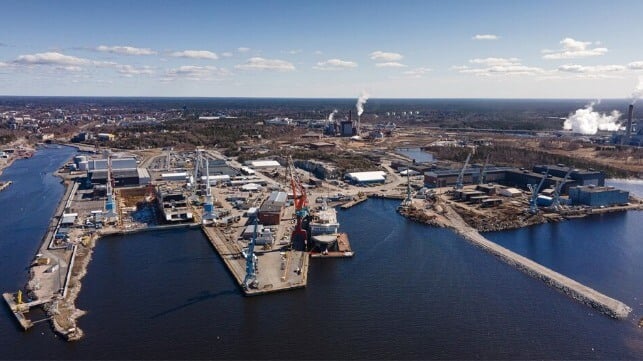
Rauma Marine Construction shipyard
Rauma shipyard in Finland is reported to be negotiating for a USCG construction contract (RMC)

Published Apr 18, 2025 5:00 PM by The Maritime Executive


According to reports in the Finnish media, the country’s Rauma Marine Constructions shipyard is in negotiations with the United States to build a series of new medium icebreakers. A week ago, the USCG published a Request for Information for what were termed small icebreakers (370 feet in length) seeking shipyards that could deliver within three years of a contract award.

Finnish newspaper Helsingin Sanomat broke the news on Friday, April 18, saying it had confirmed the negotiations with three unnamed sources. Yle News has also picked up the story citing discussions in March between Finnish President Alexander Stubb and President Donald Trump. The newspaper reports just over a week ago Foreign Minister Elina Valtonen discussed the matter with U.S. Secretary of State Marco Rubio.

According to the report, the Rauma shipyard would build up to five medium-sized icebreakers, with the order valued at around €2.5 billion ($2.85 million). Helsingin Sanomat says that exploratory discussions are also underway regarding three larger vessels. 

Rauma, located in southwest Finland on the Gulf of Bothnia, highlights on its website that three multi-purpose icebreakers were constructed in Rauma between 1993 and 1998 at the former Aker Finnyards and have been serviced at Rauma Marine. The yard also has experience with ice-strengthened hulls including for the ferry Aurora Botnia built in 2021.

The yard has been building ferries, including for Tasmania, and recently completed the hull for the first of four multi-role corvettes for the Finnish Navy. The first vessel is due to launch this spring and the second has started construction with the yard highlighted the vessels will be able to “operate in icy conditions.” The yard built a new enclosed construction hall for this project and has been positioning itself for expected orders to replace existing icebreakers in Scandinavia.

RMC, which was founded in 2014, is entirely Finnish-owned. It reports it currently has orders till 2028 valued at over one billion euros ($1.14 billion) as of October 2024.

Yle cautions in its report that the negotiations do not guarantee a deal. It says the U.S. Coast Guard has approached several shipyards around the world to assess their capacity to deliver icebreakers within 36 months. However, it also quotes Foreign Minister Valtonen who said after meeting Rubio, "We will likely have concrete news fairly soon." 

A deal would be in keeping with the 2024 agreement between the United States, Canada, and Finland to jointly develop icebreakers. Canadian shipbuilder Davie was reported to be a driving force behind the agreement. Davie in 2023 acquired Helsinki Shipyard, which it was highlighted has built more than 50 percent of the global icebreakers. The Helsinki Shipyard was scheduled to build a new icebreaker for Russia, but the deal was blocked after the start of the war in Ukraine and that contributed to the financial collapse of the yard.


USCG Polar Star Starts Final Phase of Life Extension Program
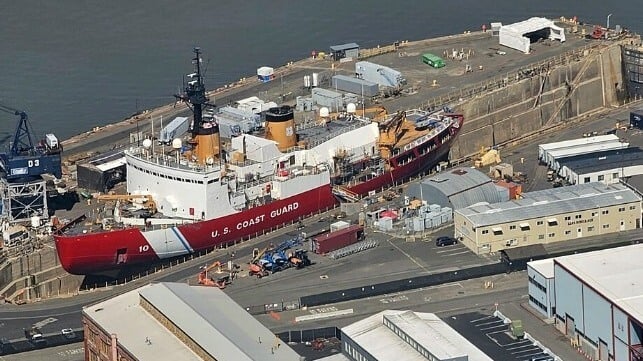
Polar Star in drydock
Polar Star during the 2024 life extension installment (U.S. Coast Guard Pacific Area photo)

Published Apr 18, 2025 2:13 PM by The Maritime Executive


The Coast Guard has initiated the final of five planned phases of the service life extension program (SLEP) for Coast Guard Cutter Polar Star, the service’s sole operational heavy icebreaker. Polar Star arrived at Mare Island Dry Dock in Vallejo, California, on March 30 to begin the remaining SLEP activities. The work is part of the In-Service Vessel Sustainment (ISVS) Program. 

The SLEP is recapitalizing a number of major systems to extend the service life of the cutter and maintain polar ice-breaking capability until the polar security cutter fleet is operational. The Polar Star SLEP was designed to address targeted systems such as propulsion, communication, and machinery control systems for recapitalization. The USCG is undertaking the major maintenance program to extend the service life of Polar Star beyond its original design of 30 years.

Commissioned in 1976, Polar Star is the United States’ only heavy icebreaker capable of providing access to both polar regions. The Seattle-based cutter is 399 feet in length and 13,500 tons. The cutter's six diesel and three gas turbine engines produce up to 75,000 horsepower.

The life extension program began in 2021 in intervals timed between the vessel’s annual deployment to Antarctica. The current installment is the fifth and final phase planned in the program. The next generation polar icebreaker currently running six years behind the original construction schedule, with the shipyard Bollinger recently saying that completion of the first Polar Security Cutter is anticipated by May 2030 meaning Polar Star will remain active until age 55 or later.

Among the work scheduled during this period is a refurbishment in the two remaining zones of heating, ventilation, and air conditioning systems refurbishments. These zones will be refurbished with ventilation trunks, fans, and heaters to improve air circulation and maintain a comfortable living environment for the ship’s crew during extended deployments. The gyro repeater recapitalization will ensure that these critical pieces of navigation equipment are updated to modern standards, enabling safe navigation of the cutter.  Ancillary pumps and motors are also targeted for recapitalization through the replacement of critical main propulsion and auxiliary systems with modern supportable units. 

In addition, personnel from the Coast Guard Yard in Baltimore will be on site this summer, recapitalizing the sewage pumps and tank level indicators to ensure the crew can successfully monitor and manage sewage capacity while the cutter is executing its missions in ice. 

Kenneth King, ISVS program manager, said “This phase represents a significant milestone for both Polar Star and the ISVS program, as our dedicated professionals ensure Polar Star meets its multifaceted missions in the polar regions until the arrival of the polar security cutter fleet.” 

Last year’s effort targeted three systems aboard the vessel, including starting the refurbishment/ overhaul of the ventilation trunks, fans, and heaters that supply berthing areas of the ship. All the boiler support systems were also recapitalized/redesigned, including the electrical control station that is used to operate them. A complete recapitalization/redesign of the flooding alarm system also occurred from bow to stern to monitor machinery spaces for flooding.

In 2023, the program focused on improvements to shipboard equipment and numerous vital system upgrades for fire detection, communications, and monitoring water quality. Each year they also completed annual maintenance for the vessel.

Polar Star recently completed a 128-day deployment to Antarctica in support of Operation Deep Freeze 2025, the annual joint military logistics mission. This year’s deployment marked Polar Star’s 28th voyage to Antarctica in support of the joint military service mission to resupply and maintain the United States Antarctic Stations.

!!!!!

Study: Majority of Scotland’s Coastal Vessels Untracked Operate Without AIS

Scottish coast
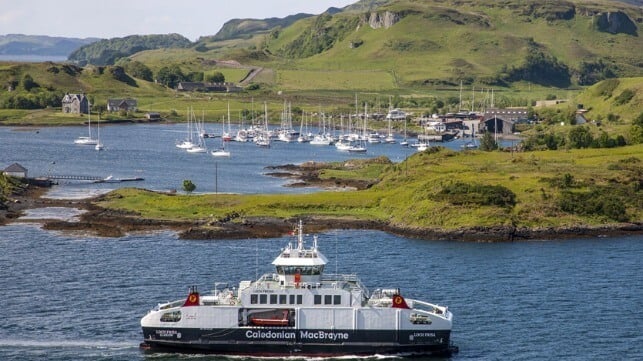
Study says the majority of small vessels operate without tracking or identification on the Scottish coast (CalMac file photo)

Published Apr 18, 2025 6:04 PM by The Maritime Executive


Scotland is largely operating blind in the management of its marine resources according to new research published this week as part of a project designed to create a better understanding of the exposure of whales, dolphins, and seals to coastal shipping. It emerged the researchers report that over half of vessels operating in the country’s coastal waters are “invisible” to standard maritime tracking systems.

A team of researchers at Scottish Heriot-Watt University carried out a study that was published this week which is sounding the alarm that the country is navigating blind in as far as understanding the potential adverse impacts of vessels crisscrossing its coastal waters is concerned. The study asserts that only 43 percent of vessels within a 10-kilometer radius of the Scottish coast broadcast an Automatic Identification System (AIS) signal, the standard global tool to monitor ship movements.

Smaller vessels, such as fishing boats under 15 meters, recreational craft, and jet skis, accounted for much of the missing data. Though they are not legally required to carry AIS, the vessels have the option of voluntarily installing and broadcasting data.

Considering that Scottish coast waters are getting busier, the study published in the academic journal Marine Policy contends that lack of visibility poses significant risks to marine life, safety, and sustainable ocean management. This is because governments, conservation bodies, and researchers mainly depend on AIS data to model vessel-related impacts such as underwater noise pollution, whale and dolphin collision risk, anchor damage to the seabed, greenhouse gas emissions, and climate impact. Scotland’s coasts are a vital habitat for species like bottlenose dolphins, minke whales, and orcas.

“With an improved understanding of the activities and movement of different types of vessels, marine planners and policymakers could tailor regulations to maximize their potential effectiveness,” said Lauren McWhinnie, one of the study’s authors. She adds that the wider maritime sector could further benefit through improved safety and awareness.

The study seeks to hold Scottish authorities accountable for assuming that they can rely on AIS to know what is happening in coastal seas. After analyzing over 1,800 hours of land and sea surveys conducted between 2019 and 2024 covering nine of Scotland’s 11 marine regions, the glaring fact is that a majority of vessels operate untracked with over 75 percent of vessel activity going unrecorded in some areas.

In the Outer Hebrides region, for instance, only 20 percent of vessels were transmitting AIS data despite the area being a hotspot for ecotourism, fishing, and aquaculture. The Orkney Islands region showed a higher rate, with 58 percent of vessels broadcasting.

The researchers are pushing authorities to take proactive actions in ensuring all types of vessels operating in the country’s waters, including smaller vessels, broadcast their position using AIS to effectively balance tourism and other vessel-based activities with local sustainability and environmental objectives.


Developing Waterway Cruises in Northern Canada

The Mackenzie River near Thiigehtchic (SF-DVS / CC BY 2.0)
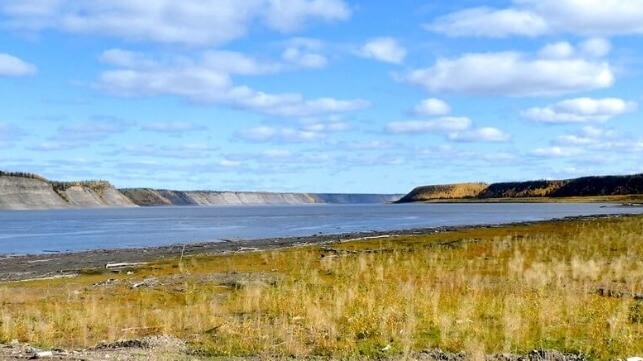
The Mackenzie River near Thiigehtchic, 150 miles inland from the Beaufort Sea (SF-DVS / CC BY 2.0)

Published Apr 17, 2025 1:41 PM by Harry Valentine


Trump’s tariffs have elicited a backlash from Canadian tourists, who now choose to visit domestic attractions. The shift has opened the door to evaluate prospects to develop cruises that sail mainly in Canadian waters, including along shallow waterways and bodies of water where tourist cruise operations are presently absent. At present, cruise ships that carry guests on Arctic cruises, sail from the Port of Churchill on Hudson Bay. While most of the guests travel by air from Montreal to the airport at Churchill to board the ship, there is passenger railway service between Winnipeg and Churchill.

The precedent of Port of Churchill serving as a cruise ship terminal allows development of cruise tourism from other northern Canadian ports. Shallow draft river cruise ships that sail along European waterways would be an option to sail along Canada’s shallow Mackenzie River. However, extreme shoaling along some sections some northern Canadian waterways would require operation of a vessel capable of sailing in shallower water than the European river cruise design.

Precedents

Tug-propelled freight barges have sailed along the shallow Mackenzie River in northwestern Canada for decades, including into the Beaufort Sea and east toward Amundsen Gulf and Coronation Gulf. Such barges have also sailed on Hudson Bay, including along the navigable Chesterfield Inlet to the Hamlet of Baker Lake (pop. 2,000). The barges measured 450-feet length by 50-feet width, or very slightly larger than a European river cruise ship, and provide the basis to develop cruise vessels capable of sailing along shallow waterways such as the Mackenzie River, Slave River and Peace River in northwestern Canada.

Waterways

The Mackenzie River is navigable from the Beaufort Sea to Great Slave Lake, where the City of Yellowknife (pop. 20,000) has an airport and dock facilities. Duplicating the precedent at Churchill, guests interested in sailing aboard a river cruise from Yellowknife would arrive at the local airport from numerous other Canadian airports. Shallow water depth occurs along some sections of the Mackenzie River, requiring the cruise vessel to elevate in the water to transit shallow sections. There might be scope for the vessel to navigate the Slave River between Lake Athabasca and Great Slave Lake.

Arctic ice conditions during summer would determine as to whether a cruise vessel would be able to sail the extended voyage between the Beaufort Sea and Hudson Bay, sailing from Yellowknife to Port of Churchill. The sailing distance between Yellowknife and the Hamlet of Tuktoyaktuk (pop. 1,000) on the Beaufort Sea is equivalent to the Alaska cruise from Vancouver to Juneau. A cruise between Yellowknife and Churchill would likely involve a month of sailing, with stops at northern hamlets to allow guests to make extended visits to communities located north of the Arctic Circle.

Hudson Bay

A passenger train service connects Toronto to the Village of Moosonee, located on Moose River in the southwestern corner of James Bay. The shallow waters of the Moose River would allow for a river cruise ship or modified Mackenzie River barge to approach the village. A water taxi might need to shuttle guests from a dock at the village to a floating dock, to allow guests to board the cruise vessel. Once underway, the vessel could sail across Hudson Bay and to stop at Port of Churchill and other coastal villages including Baker Lake (pop. 2,000).

A large shallow draft vessel sailing from Moosonee might connect with a large cruise ship at the Port of Churchill, to allow for a transfer of passengers. Both a modified river cruise ship or a modified Mackenzie River barge rebuilt into a cruise vessel would be able to sail through the gentle summer wave conditions on James Bay and Hudson Bay. Such a cruise vessel would be able to sail to both Yellowknife and Moosonee. There would be scope to sail freight barges capable of elevating in shallow water, between Churchill and Moosonee.

Conclusions

As a result of the tariffs, Canadian are choosing to remain in Canada during their vacations, including booking passage aboard cruise vessels that sail in Canadian waters and visit Canadian destinations. There is now likely a market for cruise service along the Mackenzie River and on Hudson Bay.

The opinions expressed herein are the author's and not necessarily those of The Maritime Executive.


Norway Adopts Zero-Emissions Requirements for World Heritage Fjords

cruise ship Norwegian fjord
Smaller cruise ships (under 10,000 GT) and ferries are required to sail with zero emissions starting in 2026 (Port of Flam)

Published Apr 16, 2025 3:33 PM by The Maritime Executive


The Norwegian Storting (Parliament) has confirmed the requirements and schedule for the regulations to move passenger and ferry shipping to zero emissions while sailing within the country’s World Heritage fjords. The first phase is set to start in 2026 and progress as technology becomes available for larger ships to sail with zero emissions.

The process of developing the regulations began in 2018 with the Norwegian Maritime Authority. Implementation however has been delayed as they worked to define the scope of the regulations and waited for technology to advance to the level required to maintain shipping while achieving the goals.

“The process of developing zero-emission requirements for the World Heritage fjords has been long and demanding, both for the industry and for the Norwegian Maritime Authority,” said Alf Tore Sørheim, Director General of Shipping and Navigation. “Now that new provisions have been adopted, it is important to highlight that they provide the clarity the industry has long awaited. This ensures predictability and offers the opportunity to comply with the requirements.”

The first phase is just eight months away. As of January 1, 2026, passenger ships of less than 10,000 gross tons will have to meet the zero-emission requirement for the World Heritage fjords, which include Geirangerfjorden, a primary destination for the cruise industry, as well as Nærøyfjorden, Aurlandsfjorden, Sunnylvsfjorden and Tafjorden. All passenger ships, including ferries, must meet the requirement, but for larger ships of 10,000 gross tons and above it will be phased in with the requirement to sail with zero emissions as of January 1, 2032.

The Minister of Climate and Environment, Andreas Bjelland Eriksen, describes the legislation as a significant breakthrough for the World Heritage fjords. It is a key step in Norway’s overall sustainability programs and a commitment to the tourism industry.

The authorities note that the zero-emission requirement is technology-neutral and does not prescribe specific solutions. It is up to the operators in the World Heritage fjords to use energy sources that do not emit carbon dioxide (CO?) and methane (CH?). However, when such energy sources are used, there are requirements for greenhouse gas emission reductions, in accordance with the EU regulatory framework.

As part of the final test of the regulation, the government determined that passenger ships may use biogas as an alternative fuel, but that when biogas is used as an alternative fuel, it must be kept separate from fossil fuels until it is bunkered. In addition, the biogas must be bunkered within the final month before the ship enters the World Heritage fjords, and the amount bunkered must correspond to the amount expected to be used during the voyage through the fjords. Biogas sourced from the gas grid, accompanied by a certificate based on a mass balance system, does not meet the requirements for operating in the World Heritage fjords.  

It also includes a requirement that ships must use shore power where available. The Storting also agreed to create shore-side electricity in the city of Flåm. It is allocating NOK 100 million ($9.5 million) in support of a shore power project.

Norway is at the forefront of developing technologies including batteries for its ferries as well as alternative fuels. In 2022, coastal ship operator Havila ran the first demonstration of a passenger ship operating solely on batteries in Geirangerfjord. Competitor Hurtigruten has also released its concept designs for a zero-emission passenger ship.


Submarine Designers' Union Approves Strike at Electric Boat

The future Columbia-class ballistic missile submarine (General Dynamics)
The future Columbia-class nuclear ballistic missile submarine (General Dynamics)

Published Apr 17, 2025 3:13 PM by The Maritime Executive


The draftsmen's union at General Dynamics Electric Boat has voted to authorize a strike if the company can't provide higher wages and benefits in its next contract. If carried out, the strike would further slow progress on the Columbia-class nuclear ballistic missile submarine, a multibillion-dollar program that is already behind schedule and over budget.

UAW Marine Draftsmens' Association Local 571 represents the 2,500 workers who draw up schematics and plans for sub construction at GD Electric Boat, one of the two firms in the United States that can build nuclear-powered submarines. Electric Boat holds contracts for the Columbia-class and the next generation of the Virginia-class attack sub, two of the Navy's highest-priority programs. Columbia is needed to replace the aging Ohio-class as the platform for the nation's at-sea nuclear deterrent, the most survivable second-strike option in the arsenal. The UAW MDA's members did the detail design for Columbia, and they produce the plans for construction. 

GD Electric Boat emphasizes that "our nation needs submarines now more than any time in our history," and says that it has already made its best and final offer to the union. This includes a pay raise of 23 percent and certain retirement package improvements. 

The union, however, says that the wage increase doesn't go far enough to offset recent inflation, and that a proposed hike in employees' insurance premiums would further erode the gains in the package. Meanwhile, the union says that Electric Boat has kept profits totaling $13 billion over 2022-2024 - more than the price of one Columbia-class hull. 

"This company has a simple choice. They can get back to the table and get serious about the demands, or they can keep messing around," said UAW President Shawn Fain in an address to 1,200 Local 571 members on Monday. 

At the meeting, rank and file union members voted to authorize a strike, and approved the motion by a margin of about two-thirds. The union leadership will keep working on negotiations with GD Electric Boat, but now has the power to start industrial action if the talks do not produce results. 

On the same day as the meeting, Electric Boat filed a complaint with the National Labor Relations Board, alleging that the union is refusing to bargain or is bargaining in bad faith.


Stand up for NOAA research — the time to act is now


A statement of the American Meteorological Society in partnership with the National Weather Association


American Meteorological Society

AMS logo 

image: 

American Meteorological Society logo

view more 

Credit: American Meteorological Society


The American Meteorological Society (AMS), in partnership with the National Weather Association (NWA), today released a statement regarding the proposed elimination of NOAA Research. The full statement can be found here. It reads, in part:

The administration's 2026 budget passback plan, currently under consideration, eliminates NOAA's Oceanic and Atmospheric Research (OAR) Office and its 10 research laboratories and 16 affiliated Cooperative Institutes, and moves the few remaining research efforts to different NOAA departments. If enacted, the passback would close all of NOAA’s weather, climate, and ocean Laboratories and Cooperative Institutes. 

The speed at which these decisions are being made translates into little to no opportunity for feedback or consideration of long-term impacts. Without NOAA research, National Weather Service (NWS) weather models and products will stagnate, observational data collection will be reduced, public outreach will decrease, undergraduate and graduate student support will drop, and NOAA funding for universities will plummet. In effect, the scientific backbone and workforce needed to keep weather forecasts, alerts, and warnings accurate and effective will be drastically undercut, with unknown — yet almost certainly disastrous — consequences for public safety and economic health. As key stakeholders, AMS and NWA stand ready to provide our expertise so that the U.S. can maintain its competitiveness in the years ahead.  

If you believe in the importance of NOAA research for maintaining and improving NWS forecasts and services to the nation then the time to act is now. Reach out to your elected representatives and share your concerns.

To envision the disastrous impact of this plan, one only needs to see what NOAA research has provided to the U.S. taxpayer and imagine where we would be without it. For example, the work of NOAA Research Labs and Cooperative Institutes:

  • Sparked and developed our national Doppler radar network. NOAA research proved that Doppler weather radars are critical for severe thunderstorm warnings. This research led directly to the creation of the national Doppler weather radar network, which provides the radar observations you see on television and on your phone, and which meteorologists use to keep you safe during hazardous and severe weather. The next generation of weather radar is now being developed in the same laboratories.
  • Feeds National Weather Service forecasts. NOAA research created and continuously improves the two computer weather models used by the National Weather Service to generate hourly and daily weather forecasts. One model focuses on predicting severe weather and is used extensively by the transportation and energy sectors. Another model predicts global weather patterns across the world for the 3- to 14-day range, with forecast outlooks used by farmers, ranchers, and water managers.   
  • Helps us respond to hurricanes. The NOAA Hurricane Hunter aircraft that fly into Atlantic Ocean hurricanes collect essential observations to improve forecasts of hurricane landfall location and intensity, leading to better evacuation decisions and emergency response. This directly impacts public safety during extreme weather events.
  • Helps us track airborne hazards. NOAA research developed and continuously improves models to track the release of hazardous materials, including toxins, wildfire smoke, and volcanic ash, to keep people out of danger–as well as creating specialized instruments to detect those airborne hazards. 
  • Keeps water treatment plants on track. NOAA implemented and operates a lake hypoxia warning system to help keep drinking water potable in the Great Lakes region.
  • Warns communities of tsunamis. NOAA researchers developed and maintain the real-time tsunami monitoring system that plays a critical role in tsunami forecasting and helps keep coastal communities safe. 
  • Helps farmers and managers plan. NOAA created and runs an El-Niño information system to assist in seasonal forecasting of temperature and rainfall across the U.S. This helps farmers, ranchers, water managers, and electric utility companies make better decisions.
  • Keeps water supplies more secure. NOAA research developed and continuously advances water information systems to better manage large reservoirs that supply water to towns, cities, and farmers across the nation.
  • Addresses climate change. NOAA research has developed and improved climate models, the U.S. Climate Reference Network, and monitoring stations to learn about our changing climate and its causes.

Imagine what will happen to tornado and severe thunderstorm warnings if we don’t have a robust national weather radar network? What will happen to reservoir management when critical information on rainfall and runoff goes missing? What will happen when Hurricane Hunter aircraft are delayed or data from their instruments are not available to improve hurricane track and landfall forecasts? NOAA research affects the lives of American taxpayers every day. It is vital to the work of the National Weather Service and the NOAA mission to predict the environment and share that information with businesses, communities, state and local governments, and citizens.  

NOAA Research costs every American citizen less than a cup of coffee a year, with large returns on this small investment. This is a prime example of effective government — one that helps grow the economy and keeps people safe.

The statement urges readers to contact their elected representatives. Read the full statement.

About the American Meteorological Society

The American Meteorological Society advances the atmospheric and related sciences, technologies, applications, and services for the benefit of society. Founded in 1919, AMS has a membership of around 12,000 professionals, students, and weather enthusiasts. AMS publishes 12 atmospheric and related oceanic and hydrologic science journals; sponsors more than 12 conferences annually; and offers numerous programs and services. Visit us at https://www.ametsoc.org/.

About the National Weather Association

The National Weather Association, founded in 1975, connects approximately 1,300 members from the fields of meteorology, hydrology, broadcasting, emergency management, academia, and students. The NWA's mission is to foster excellence in service to the public through weather forecasting, communication, and service by bringing together professionals from the operational meteorological community and related fields. nwas.org.


AMERIKA

Millions could lose no-cost preventive services if SCOTUS upholds ruling


Stanford University


A study by the Stanford Prevention Policy Modeling Lab (PPML) finds that almost 30% of privately insured individuals in the United States, or nearly 40 million people, use at least one of the free preventive health services guaranteed under the Affordable Care Act (ACA).

But those services are now under threat by an ongoing legal challenge.

On April 21, the Supreme Court will hear arguments in Kennedy v. Braidwood Management Inc. to decide whether to uphold the ruling from a Texas district court that the ACA preventive services mandate was unconstitutional.

The ACA requires that private insurers cover specific preventive services at no cost to patients, such as blood pressure, diabetes and cholesterol tests, and cancer, HIV and hepatitis C virus screenings. One set of services mandated for no-cost coverage follows recommendations from the U.S. Preventive Services Task Force (USPSTF), which bases these recommendations on strong evidence of effectiveness in improving health through prevention and early detection of disease. The legality of mandating USPSTF-recommended services is the focus of the current case.

Who Uses Preventive Services?

The PPML team from Stanford School of Medicine and Harvard T. H. Chan School of Public Health looked at claims data from privately insured individuals in the United States, state by state. They determined how many people received, at no cost, any of the 10 services most likely jeopardized by Braidwood.

The study published in JAMA Health Forum found that almost 30% of privately insured individuals, and almost half of privately insured women, use at least one of the 10 services at no cost. They found that 13 states have at least 1 million recipients of these free services—including 3 million (30%) people in Texas, where the case originated.

“Preventive services are essential health care. Eliminating guaranteed free access to these services would likely lead to lower use of evidence-based screening and treatment interventions, and worse health outcomes,” said Josh Salomon, PhD, a professor of health policy and director of the Stanford PPML, and senior author on the study.

The Threat to Preventive Services

previous study indicated that around 150 million U.S. individuals in the have employer-sponsored insurance that makes them eligible for the free services mandated under the ACA. Another study looked at five services potentially affected by Braidwood and estimated that 10 million people received those services. The new Stanford-led study is the most detailed and comprehensive analysis to date on the potential reach of a Braidwood decision, looking at a broad array of jeopardized services and including analysis of who receives these without cost-sharing.

In the Braidwood case, a key part of the Supreme Court’s decision will be to evaluate the claim that the mandated coverage of USPSTF-recommended services violates the Appointments Clause of the Constitution, which declares that “officers of the United States” be appointed by the President and then confirmed by the Senate. The USPSTF health experts who recommended the preventive services are not appointed by the President. In the original Texas case, the plaintiffs also asserted that the federal mandate to cover HIV prevention medication violated their religious rights.

The Stanford study focused on a cohort of 16.1 million employee-sponsored health insurance enrollees in the MarketScan database, representing 130.9 million enrollees nationwide. The team identified preventive services most likely to be impacted by Braidwood due to having new or revised USPSTF recommendations since enactment of the ACA. The services included statin use to prevent cardiovascular disease, pre-exposure prophylaxis for HIV, medication to reduce breast cancer risk, and new or expanded screenings for breast cancer, cervical cancer, colorectal cancer, lung cancer, hepatitis B virus infection, hepatitis C virus infection, and HIV infection. Among the 39.1 million individuals nationally who received any of these services without cost-sharing, the most widely used services were screenings for cervical cancer and hepatitis C virus and HIV infections.

“The ACA preventive services mandate has been consistently popular in public opinion polls,” the researchers said in their study.

“The decision in this case will be important for millions of people with private insurance, across all states, who are currently benefiting from free preventive services thanks to the ACA mandate,” said lead author of the study, Michelle Bronsard, MSc, a research fellow at the Stanford Institute for Economic Policy Research (SIEPR) and incoming PhD student at Stanford Health Policy.

The other PPML members and co-authors of the study were Adrienne Sabety, PhD, assistant professor of health policy at Stanford and a SIEPR faculty fellow; Minttu Rönn, PhD, a research scientist at the Harvard T.H. Chan School of Public Health; and Nicole Anne Swartwood, MSc, a research analyst at the Harvard T.H. School of Public Health.