Monday, May 12, 2025


Opinion

Are We Ready to Accept Our Alternative History?


Eyad Abu Shakra
Tuesday - 13 May 2025
Asharq Al-Awsat

Whenever I am feeling nostalgic, I listen to the remarkable late Iraqi poet Lamia Abbas Amara’s poem about Beirut... a city she came to adore after residing there for a time. Beirut loved her back, even more.

The poem begins with this beautiful verse:

"I focus my eyes in doubt to ask them:

Has Beirut left me so that I return?

Where do I begin? There are heaps my lips,

Brimming with chaos... that cannot be sequenced."

Two entire generations of Lebanese citizens have no memories of this Beirut that Lamia loved with a passion decades ago. Two generations who physically escaped the monstrous war that devoured tens of thousands, but who remain culturally and psychologically scarred to this day.

Memory, along with truth and innocence, was among the first casualties of this war. And today, the truth lies in shame as Lebanese people from all walks of life complain, trade suspicions and accusations, and find comfort in blaming all these sins on the politicians of the past.

There is no doubt that politicians bear much of the blame for the calamities that have unfolded in Lebanon since 1975. Nonetheless those same politicians, in one way or another, were also victims, or rather products, of a culture shaped by deals bigger than them and their small country located in a region that has long been - and remains - among the most volatile in the world.

In Lebanon, contradictory identities and allegiances are evident even in casual conversations and turns of phrase. Conceptions of nationalism, extremism, consensus, sovereignty, and coexistence remain contested, with interpretations diverging in accordance with the values and conditions of the community one was raised in.

I would argue that this state of affairs is by no means unique to Lebanon, although it is most apparent there because Lebanon has never been subjected to the kind of "totalitarian rule" seen for decades in neighboring countries. Totalitarian regimes became accustomed to suppressing diversity and silencing dissent with iron and fire and in the dark dungeons of intelligence services!

I recall, for instance, that when former Syrian President Bashar al-Assad criticized the "sectarianism" of Lebanese society, fools applauded him and the wise were left stunned because they knew that a volcanic eruption had been awaiting him.

The sectarianism of the Lebanese was "visible" because of their excessive indulgence in freedom, which went so far as to engender chaos. Meanwhile, millions of their Arab brothers, especially in Syria, knew that every breath they took was being accounted for so much so that they came to lose trust in even their closest relatives.

That all belongs in the past, which must be remembered if we are to avoid repeating it. In theory, this is a valid claim. However, the present and future have not been guaranteed...

Most Arab countries have young populations. Our people are still new to managing differences, dealing with diversity, and navigating responsible and mature democracy. However, if we examine what the "social media revolution" has done (and the challenges that artificial intelligence could present) we might find that, even in the most advanced countries with long-established democracies, things are not necessarily going much better. The rules of the game have changed entirely.

We are not the only ones who have to contend with the attacks of bots and trolls that spread disinformation, twist concepts, fuel the fires of fanaticism and racism, and poison the relationship among the communities of our society, using anonymous accounts, propaganda tools, and dangerous campaigns run by intelligence agencies.

In the United States, Britain, the Netherlands, Germany, and elsewhere, the past decade has made the dangerous role that social media can play in spreading lies, fabrications, slander, incitement, and character assassination, strengthening extremist and racist political parties.

In Lebanon, Syria, Iraq, and several other Arab countries, unrestrained (there is no effective legislation) social media websites have effectively become tools of sedition and civil war.

Yet even so, it seems that our journey has just begun! Artificial intelligence could present even more insidious and terrifying threats, not only in terms of shaping the present and manipulating the future, but also in rewriting the past.

In its January 28, 2024 issue, The New York Times published an investigative piece under the striking headline: "AI Is Coming for The Past Too!"

On March 12, American website "The Hill" reported that the American Edge Project had released a report warning that China could manage to rewrite history through artificial intelligence in order to dominate the world. Former US Congress members Loretta Sanchez and Greg Walden introduce the article with a warning: "Imagine waking up to a world where entire chapters of history have quietly disappeared and key facts about important news are simply nowhere to be found..."

"Fortunately for those of us living in the United States, such a scenario remains a catastrophic nightmare - but for hundreds of millions living under authoritarian regimes, it is a daily reality," they then add.

The authors go on to unpack the study’s findings. China is currently seeking to harness artificial intelligence to rewrite history, erasing its human rights violations and any criticism of the Chinese Communist Party.

Elsewhere, an April 10 Australian report explains that AI-generated images by "Facebook/AAP" can blend reality and fiction. That is, it can be used to rewrite history and manipulate images of everything from the Nazi Holocaust to the September 11 attacks and the events in Gaza and Ukraine.

Now, can we imagine what this means for us in the Levant? Can we wrap our heads around what Israel, a technologically and cybernetically advanced state, could do to "rewrite" our history and tailor this history to its narrative, as it is already doing? It knows far more about us than we know about ourselves or it.

Are we not, we who know so little about ourselves (to say nothing about other citizens) easy prey? What protects us from being chewed up and discarded without even noticing?


Tobago's coral reefs brace for ‘imminent threat’

Brain coral photo via Canva Pro.

From hotter temperatures that contribute to ocean acidification and coral degradation to instances of coral bleaching caused by a combination of warmer oceans, overfishing and pollution, Caribbean reefs have been facing some serious challenges. Now, Trinidad and Tobago's Institute of Marine Affairs (IMA) has warned of another threat — Stony Coral Tissue Loss Disease (SCTLD), which it says “wreaking havoc on coral reefs in the Caribbean.”

Since it was first noticed in Florida in 2014, SCTLD has spread to several other regional territories, including The BahamasThe Cayman Islands, Jamaica, the Dutch Caribbean, and even islands in the Lesser and Greater Antilles. This is because the SCTLD pathogen is both highly transmissible and easily spread through direct contact with infected coral, water currents, and ballast water, making ports a common “early site of infection.”

Infected corals have lesions in spots where there is dead tissue. These areas get bigger as the disease advances — and it's a fast mover, killing coral within weeks to months. The cause of the disease may be wholly bacterial, or perhaps a combination of bacteria and a virus. In an effort to save regional reefs, infected corals are being treated with antibiotics, with some even being moved to to land-based facilities in the short term for a better chance of survival.

Of the 45 stony coral species found in the Caribbean, the IMA reports that SCTLD has infected over 20 of them, including the maze, mountainous and brain corals that are abundant in tourism-focused Tobago, long known as a dive location. According to the IMF, “even the world-renowned, giant brain coral found in Speyside is a species that is highly susceptible to the disease.”

Should there be an outbreak of the disease in Tobago's coral populations, it could be devastating for the island. In a June 2008 research paper titled “Coastal Capital – Economic Valuation of Coral Reefs in Tobago and St. Lucia by Lauretta Burke, Suzie Greenhalgh, Daniel Prager and Emily Cooper, the annual value of Tobago’s coral reefs was cited as anywhere between USD 120–160 million.

While SCTLD does not appear to have yet reached Tobago, affected reefs in other areas have been dying quickly, which has been raising local concerns. Citing a study conducted by William Precht on coral reef sites in southeast Florida, the IMF blog post noted that some heavily impacted species were reduced to less than three percent of their initial population; others, like the brain coral so dominant in Tobago, to less than 25 percent. SCTLD has already been confirmed in neighbouring Grenada and some Dutch Caribbean islands, however, leading the IMA to predict that it will be “only a matter of time until it arrives.”

How, then, to be prepared? “Survival is most probable when there is action from authorities, education of the public, and built capacity to strengthen defences against the threat,” the post continued. From the IMA perspective, a grant it received in 2024 from the Specially Protected Areas and Wildlife Regional Activity Centre (SPAW RAC) for a one-year project focused on building preparedness and resilience against coral disease, will prove valuable.

In January of this year, IMA coral reef ecologists received training in January 2025 from the Perry Institute of Marine Science (PIMS) in San Andres, Colombia, to assess coral disease, identify SCTLD, and prepare and apply the antibiotic treatment to infected corals. By strengthening their capacity, the IMA is now better equipped to raise SCTLD awareness, as well as implement strategies to monitor coral reefs and spare them from the vagaries of the disease.

The organisation is educating local sea-goers as to what to look for to spot SCTLD in coral, which they can report by using the IMA's seaiTT app. It has also urged snorkellers and divers not to touch corals — good advice even with healthy reefs — but if there is an infection, touching corals hastens the potential spread. In the same vein, divers should make sure to sanitise their gear, just in case they have come into contact with infected coral; bilge water in boats should also be routinely disinfected — small steps that can make a big difference when it comes to controlling spread.

“We must […] work together to be guardians for our coral reefs,” said the IMA. Charged with “the duty to preserve the ecological and economic services of our reefs,” it sees only one way to minimise the potential devastation SCTLD can bring: to be proactive in responding to the threat.

UN Aviation Body Finds Russia Responsible For Downing Of Passenger Jet Over Ukraine

A memorial at the crash site of Malaysia Airlines Flight 17 in the Russia-controlled Donetsk region of eastern Ukraine. (file photo)

May 13, 2025
By RFE/RL

The UN aviation council on May 12 found that Russia was responsible for the downing of a Malaysian commercial jet over Ukraine that killed all 298 passengers and crew.

The Council of the International Civil Aviation Organization (ICAO) said in a statement that Russia “failed to uphold its obligations under international air law” in the downing of Malaysia Airlines Flight MH17 on July 17, 2014.

The council agreed that claims brought to the ICAO by Australia and the Netherlands as a result of the shooting down of the airliner were “well founded in fact and in law.”

The ICAO added it was the first time in its history that the council had made a determination on the merits of a dispute between member states.

Malaysian Airlines Flight MH17 departed from Amsterdam for Kuala Lumpur and was hit by a surface-to-air missile over eastern Ukraine as fighting raged between pro-Russian separatists and Ukrainian forces. Among the people killed were 196 Dutch citizens and 38 Australian citizens or residents.

Dutch judges in November 2022 convicted two Russian men and a Ukrainian man in absentia of murder for their role in the downing of the aircraft. Moscow called the ruling "scandalous" and said it would not extradite its citizens.


SEE ALSO:
Dutch Court Sentences Two Russians, One Ukrainian To Life In Prison In MH17 Shoot-Down


Dutch Foreign Minister Caspar Veldkamp said the vote of the ICAO Council “is an important step towards establishing the truth and achieving justice and accountability for all victims of Flight MH17, and their families and loved ones."

The decision also sends a clear message to the international community that states cannot violate international law with impunity, Veldkamp said in a Dutch government statement.

Australia Foreign Minister Penny Wong said her government welcomed the decision, calling it a "historic moment in the pursuit of truth, justice and accountability for the victims" and urged ICAO to move swiftly to determine remedies.

"In reaching its decision, the ICAO Council has upheld the fundamental principle that weapons should not be used against civil aircraft," she said in a statement.

"We call upon Russia to finally face up to its responsibility for this horrific act of violence and make reparations for its egregious conduct, as required under international law," Wong said.

The Montreal-based ICAO will consider what form of reparation is in order in the coming weeks, the Dutch government statement said.

The Netherlands and Australia want the ICAO Council to order Russia to enter into negotiations over reparations, Veldkamp said.

ICAO is a UN body with 193 member states that decides whether countries have violated the Convention on International Civil Aviation, which requires that member states "refrain from resorting to the use of weapons against civil aircraft in flight."

A large majority of the council voted in favor of the Netherlands’ and Australia’s position in the decision reached on May 12, the Dutch government statement said, but it did not provide a breakdown of the vote.

With reporting by AFP and Reuters
Physicists at the Large Hadron Collider turned lead into gold – by accident


THE CONVERSATION
Published: May 12, 2025 

Medieval alchemists dreamed of transmuting lead into gold. Today, we know that lead and gold are different elements, and no amount of chemistry can turn one into the other.

But our modern knowledge tells us the basic difference between an atom of lead and an atom of gold: the lead atom contains exactly three more protons. So can we create a gold atom by simply pulling three protons out of a lead atom?

As it turns out, we can. But it’s not easy.

While smashing lead atoms into each other at extremely high speeds in an effort to mimic the state of the universe just after the Big Bang, physicists working on the ALICE experiment at the Large Hadron Collider in Switzerland incidentally produced small amounts of gold. Extremely small amounts, in fact: a total of some 29 trillionths of a gram.

How to steal a proton

Protons are found in the nucleus of an atom. How can they be pulled out?

Well, protons have an electric charge, which means an electric field can pull or push them around. Placing an atomic nucleus in an electric field could do it.

However, nuclei are held together by a very strong force with a very short range, imaginatively known as the strong nuclear force. This means an extremely powerful electric field is required to pull out protons – about a million times stronger than the electric fields that create lightning bolts in the atmosphere.

The way the scientists created this field was to fire beams of lead nuclei at each other at incredibly high speeds – almost the speed of light.
The magic of a near-miss

When the lead nuclei have a head-on collision, the strong nuclear force comes into play and they end up getting completely destroyed. But more commonly the nuclei have a near miss, and only affect each other via the electromagnetic force.

The strength of an electric field drops off very quickly as you move away from an object with an electric charge (such as a proton). But at very short distances, even a tiny charge can create a very strong field.

So when one lead nucleus just grazes past another, the electric field between them is huge. The rapidly changing field between the nuclei makes them vibrate and occasionally spit out some protons. If one of them spits out exactly three protons, the lead nucleus has turned into gold.

Counting protons

So if you have turned a lead atom into gold, how do you know? In the ALICE experiment, they use special detectors called zero-degree calorimeters to count the protons stripped out of the lead nuclei.

They can’t observe the gold nuclei themselves, so they only know about them indirectly.

The ALICE scientists calculate that, while they are colliding beams of lead nuclei, they produce about 89,000 gold nuclei per second. They also observed the production of other elements: thallium, which is what you get when you take one proton from lead, as well as mercury (two protons).

An alchemical nuisance

Once a lead nucleus has transformed by losing protons, it is no longer on the perfect orbit that keeps it circulating inside the vacuum beam pipe of the Large Hadron Collider. In a matter of microseconds it will collide with the walls.

This effect makes the beam less intense over time. So for scientists, the production of gold at the collider is in fact more of a nuisance than a blessing.

However, understanding this accidental alchemy is essential for making sense of experiments – and for designing the even bigger experiments of the future.


Author
Ulrik Egede
Professor of Physics, Monash University

Wolves Have a Bad Reputation. One Yellowstone Naturalist Is Trying to Fix It.

Wildlife guide Audra Conklin Taylor shows the beauty, value, and character of the park’s packs.


BY LINA ZELDOVICH
MAY 12, 2025
ATLAS OBSCURA 


Though they’re protected inside the park, wolves can be killed when they cross its borders. JULIE ARGYLE


In This Story

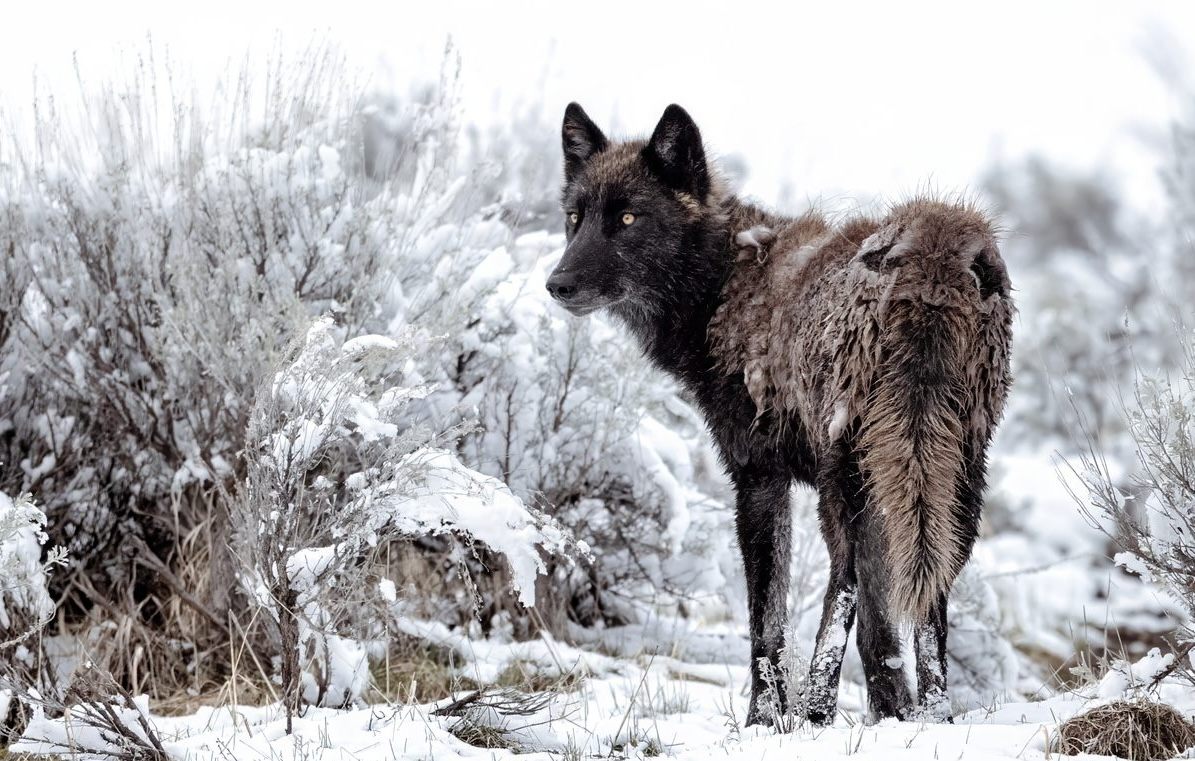
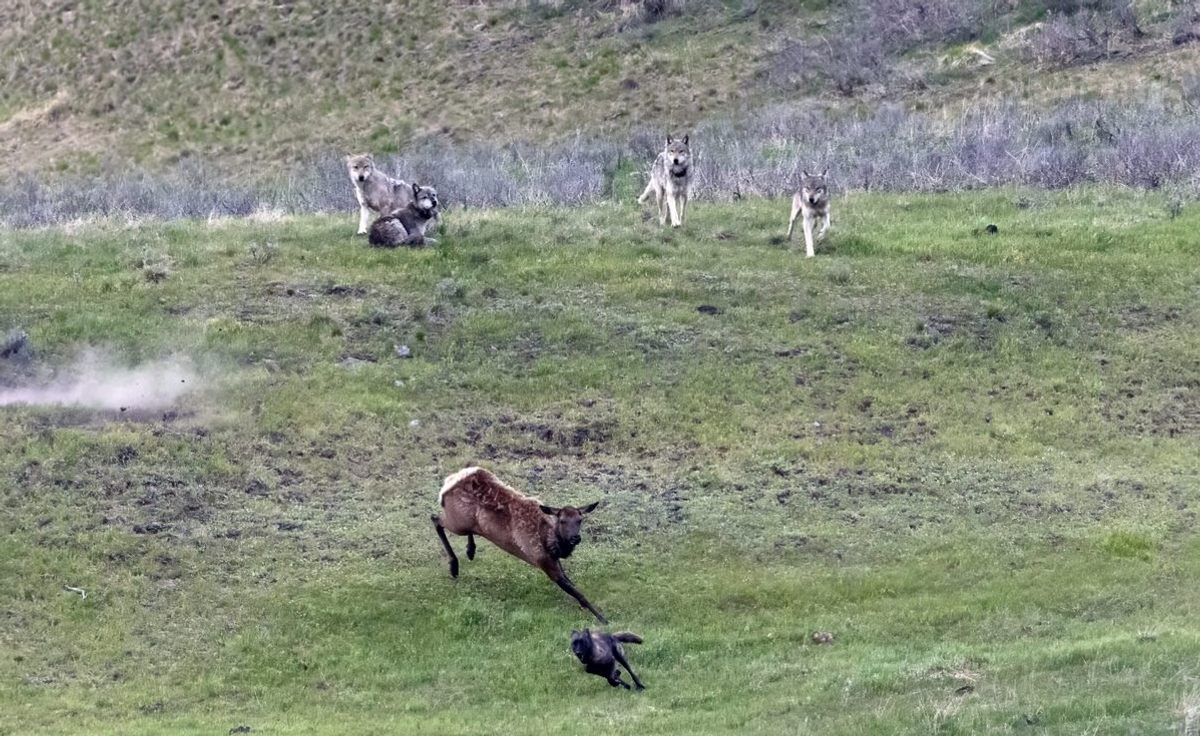
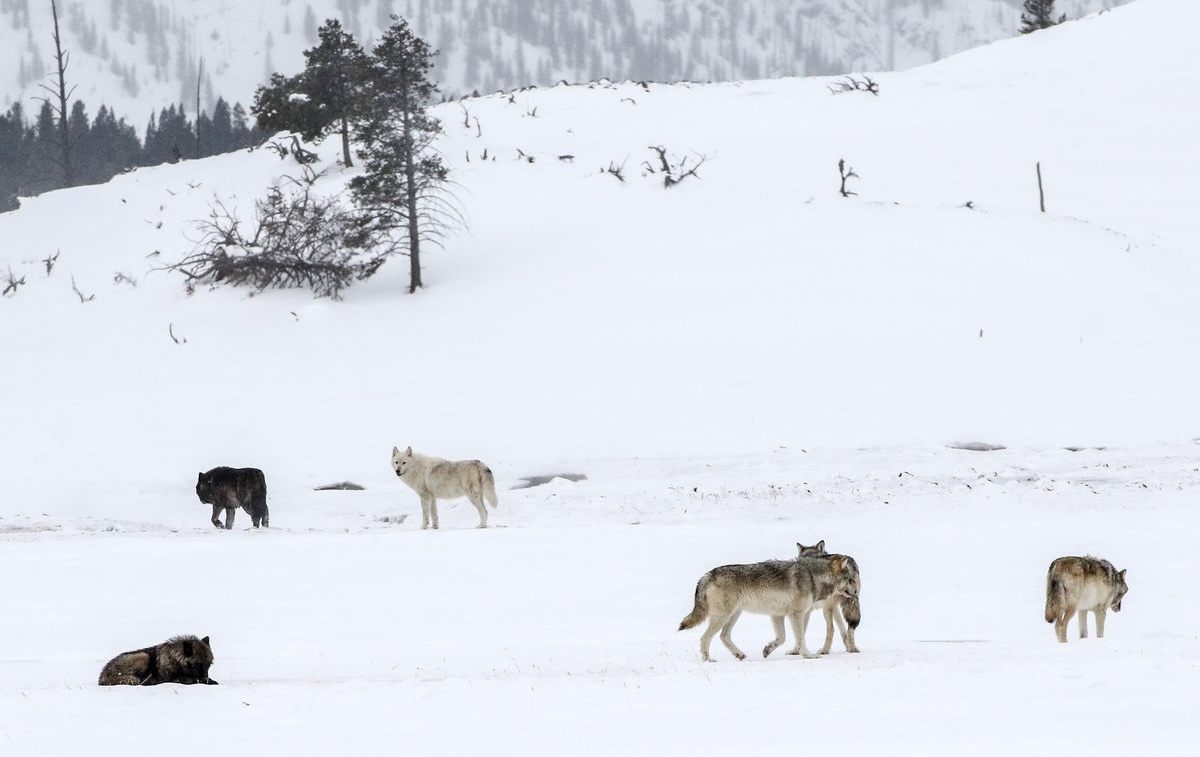
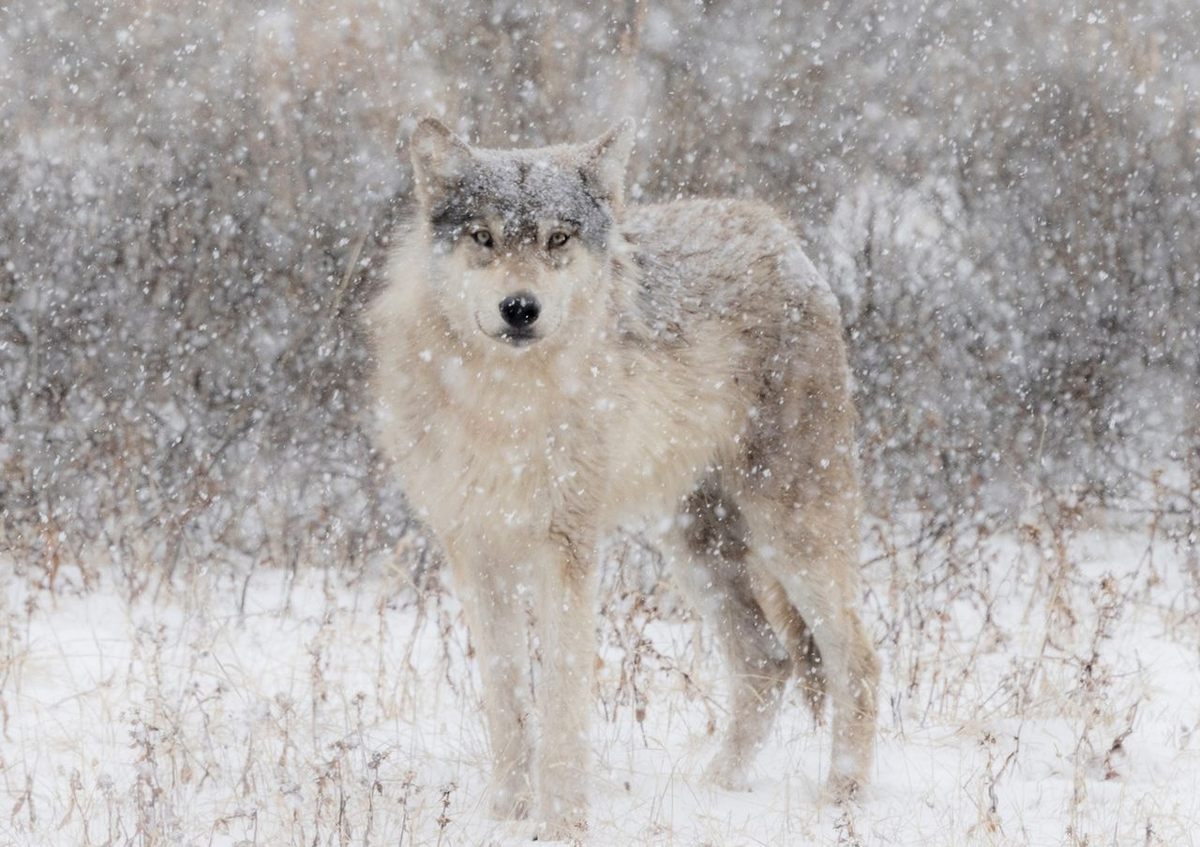
THE WOLVES TROT OUT OF the morning fog and settle around a bison herd that had overnighted in the Lamar Valley of Yellowstone National Park. There are a couple hundred bison and only four wolves, but the herd immediately becomes agitated—they begin to move around, and the wolves follow. A human family of four, we watch them from a hill across the valley, sometimes through the scopes that our guide, Audra Conklin Taylor, has brought along, sometimes just squinting in the morning sun. “The adult bison are too big for them so they’re after the calves,” she explains.


“Poor things,” we gasp, imagining one of the fluffy, light-brown creatures becoming breakfast. But as Taylor explains the complexity of the Yellowstone ecosystem, our perspective shifts. As apex predators, wolves are vital for Yellowstone ecology and health: They keep the herds in check, preventing overgrazing. After wolves had been killed off here in the 1920s, the elk, bison, and deer populations exploded, destroying trees, valleys, and riverbanks.

“When wolves were reintroduced in 1995, scientists watched the entire park rebound,” Taylor says. It was a result of the “trophic cascade of ecological change”—a ripple effect of removing or introducing a top predator into a food web—which first brought back the trees, followed by beavers and birds, who rely on trees for their living environment.

Without wolves, Yellowstone’s elk, bison, and deer populations reach levels that are destructive to trees, valleys, and riverbanks. JULIE ARGYLE

Culturally and historically, wolves have earned a bad rep because they preyed on farmers’ cows. Written records ascribe all kinds of evil qualities to them. The Bible refers to wolves as metaphors for greed and destructiveness. Fairy tales like “Little Red Riding Hood” portray them as preying on humans. Some stories even assign paranormal qualities to them, such as werewolves. And modern media still perpetuates wolves’ negative image in cartoons and movies.

“They have been demonized to us since we were children,” Taylor points out. In reality, however, wolf attacks on humans are extremely rare, which differs drastically from, say, grizzlies. “If you were to walk up on a grizzly bear eating a carcass, that grizzly bear is going to come after you full force,” Taylor says. “If you walk up on a carcass and there are wolves, they are likely going to run away. They are afraid of us. They want nothing to do with us.”

Part of Taylor’s job is restoring wolves’ reputation. She has spent her life caring for orphaned and injured wildlife, and describes herself as a naturalist. Originally from Massachusetts, Taylor fell in love with Yellowstone after she vacationed there in 2010 with her mother. Four years later, she sold her company and decided to come back to spend three months in nature.

“And three months turned into 12 years,” she says. At first, she was volunteering, shadowing wildlife biologists and working with park guides. Then, she started to take groups to see the park’s spectacular wildlife and launched her own company, Lamar Valley Touring, based in Gardiner, Montana.

Taylor’s work highlights the value and unique personalities of wolves. JULIE ARGYLE

We’re on one of her tours that morning at Yellowstone. As we watch, the hunting scene in front of us escalates. The wolves single out a parentless calf and give chase. The calf gallops, the wolves circle, the calf turns back, skids, careens, loses speed—but just as one wolf leaps for the kill, a huge bull cuts in between. The wolves miss. “Poor things, now they’ll go hungry,” we say as the foursome leaves the battlefield. After everything we’ve learned about their role in the ecosystem, we now see the importance of a successful hunt.

“They are used to being hungry,” Taylor says, adding that wolves are resilient and adaptable. “Most hunts aren’t successful. These four look young. They’re juveniles, so it’s not surprising they missed.”

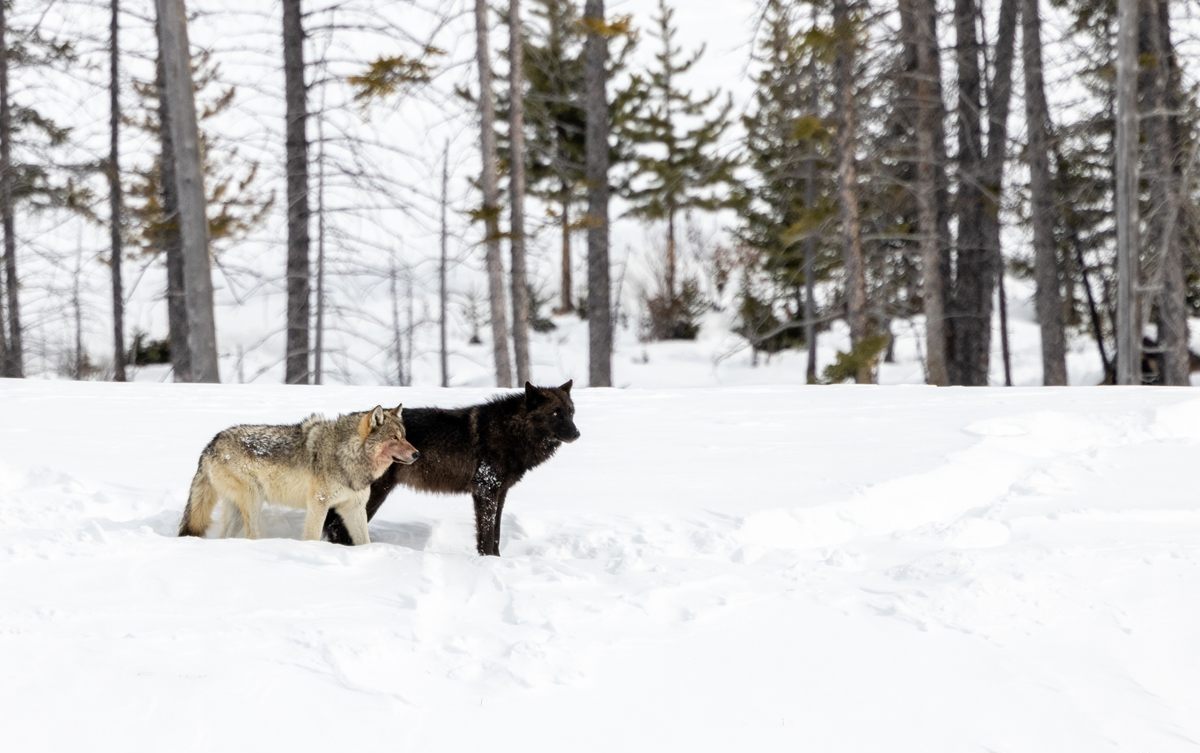
Wolves occupy a special place in Taylor’s heart. “They’re so incredibly misunderstood and so incredibly parallel to us humans,” she says. A wolf pack is a family unit, sometimes with “friends” who join in for genetic diversity, “because wolves are too smart to interbreed,” she says. Packs usually have an alpha male and an alpha female, who sire pups, some of which may stay with the pack while others may leave. Sometimes, a pack is run by an old matriarch, a grandma who keeps pups in check. Sometimes more than one female in a pack gives birth, so they rear the pups together, taking turns babysitting. Young female or male wolves may babysit, too, just like older human cousins do.

Although protected inside Yellowstone, wolves can be hunted once they leave the park. In 2022, NPR reported that a record number of wolves were shot outside the park—25, which amounted to 20 percent of the wolf population. In 2025 so far, about 10 wolves that ventured beyond Yellowstone’s borders have been killed. Although the park rangers and biologists aren’t yet sure of the exact numbers, they no longer see the pack members they used to see, says Rick McIntyre. McIntyre is a world-famous wolf expert and author of a book series about Yellowstone wolves, including Thinking Like a Wolf, which features Taylor’s work. McIntyre started working for the U.S. National Park Service in 1975 and specifically at Yellowstone in 1994, where his responsibilities included explaining the wolf reintroduction program to visitors and studying the animals.

A wolf pack is a family unit, with every member playing a role. JULIE ARGYLE

Over the years, McIntyre has had over 100,000 sightings of wolves—more than any other person in history. “I’m out with the wolves every day, and I have seen so much over the years,” he says. He’s watched wolves wage wars over territory, form lifelong partnerships, risk their lives by leading enemy packs away from their offspring, and die in battle to save their pups.

Taylor’s work advocating for wolves involves educating people about wolves’ importance to the ecosystem and their characters. But she feels that sometimes human animosity toward wolves runs too deep to mend, particularly with farmers and ranchers who believe that wolves threaten their cattle. “I’ve never had a rancher or a farmer on a tour with me,” she says. “They don’t want to talk to me. I’ve been advocating for 12 years now; they don’t care.”

McIntyre says he understands ranchers and farmers who retaliate when they believe wolves take or threaten their cattle. “I am sympathetic to their situation,” he says, because they put a lot of work into raising the animals, and losses affect their business. “So if it’s a rancher that feels, rightly or wrongly, that wolves have killed some sheep or calves, I can understand how they would feel that way.”

But Taylor says people sometimes kill wolves just for fun. She shares a story of the Lamar Canyon pack, whose matriarch was killed in 2018. “She used to keep watch on the pups and their older ‘teen’ siblings while their parents went hunting,” Taylor says. But a local hunter had been stalking her for months and finally caught her when she wandered about a mile outside the park. “I was burying her scat and covering her tracks, trying to keep the hunter from finding her,” Taylor says. But he was determined. “He wound up getting her when I wasn’t around.”

Wolves are essential to Yellowstone’s ecosystems. JULIE ARGYLE

He brought her body back to his house, and her grandchildren followed the scent all the way to town, Taylor says. Upset and distraught, they were howling nearby. “They knew she was there, and they were howling and crying,” she says. Eventually they killed someone’s dog, which only brought more wrath to their pack, which eventually disbanded. “I think a couple of them wound up getting killed because they were out of the park,” Taylor says. “Basically, because he killed the matriarch, the entire pack fell apart.”

Notably, living wolves are worth a lot more than dead ones—to their packs, to ecosystems, and even to human livelihoods. “Having wolves in Yellowstone is contributing $82 million to our local economy, because people come to Yellowstone to see the wolves,” McIntyre says. “So that’s $82 million to the local businesses, which obviously creates a lot of jobs for people.”

For Taylor, it’s simply the joy of watching the animals form families, have pups, and raise their young year after year that makes it worthwhile. “I love watching wolves just being wolves,” she says. “And I love showing people how much humans and wolves have in common.”
Malaysians call for more wildlife protection measures after elephant tragedy


A video circulating online shows the mother elephant with her head pressed against the side of the lorry, as if to free her calf which lay unmoving beneath the vehicle. PHOTOS: SCREENGRAB FROM BULETIN MALAYSIA/FACEBOOK

UPDATED May 12, 2025

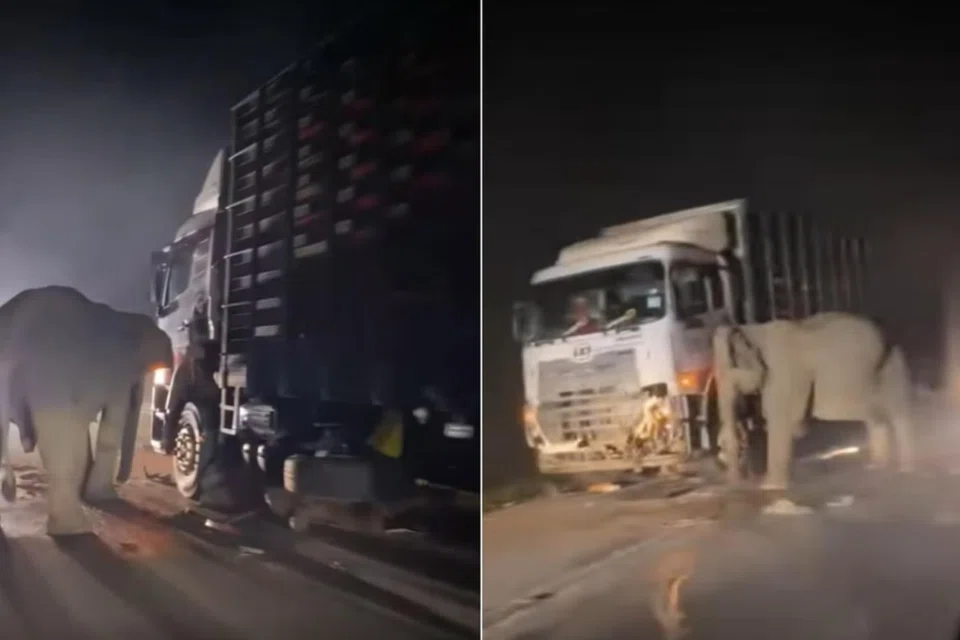
PETALING JAYA - Malaysians are urging for increased wildlife protection after a mother elephant refused to leave her calf, which was killed by a lorry on the East-West Highway.

A video of the incident went viral on Mother’s Day, moving many netizens to tears.

Some tagged Transport Minister Anthony Loke, Natural Resources and Environmental Sustainability Minister Nik Nazmi Nik Ahmad, and Works Minister Datuk Seri Alexander Nanta Linggi in their posts.


“To the driver, it is just an accident; he will move on with his day-to-day job, but to the mother elephant, she just lost her baby,” wrote Mr Titanium Samarium Wong on Facebook, noting elephants’ intelligence.

“They have feelings; just imagine a mother losing her child. I felt so sad to see the mother elephant staying at the scene, refusing to leave.

“Authorities really have to do something to minimise this kind of incident. For the sake of humanity, I can’t bear to see things like this again,” he added.


“My heart aches every time I watch this in the media,” wrote Ms Zue Razak, adding a crying emoji.


The elephant had “attacked” the lorry trying to free its calf, which was pinned by the vehicle, and had to be sedated and removed by wildlife officials.

English daily New Straits Times reported that the mother elephant has since returned to the forest and that the male calf’s carcass has been buried.

The Gerik-Jeli stretch on the highway is known for wildlife crossings, especially elephants, with signboards reminding drivers to slow down.

Ms Evelin Ruman urged the authorities to build highways or overpasses for wildlife crossings, while Ms Lau Sook Mei called for speed limits in areas with elephant crossings.

“In areas where wild animals are known to roam and cross, why not build a crossing and install railings so the animals won’t stray onto the road?” wrote Mr M Tirmizi MY, urging ministers to “do something”.

Ms June Thien YC suggested installing more speed cameras near wildlife areas.

“What action will be taken to prevent such incidents in the future? What steps are being taken to reduce animal-vehicle collisions or even stop them?” asked Ms Vemanna Appannah.

Many also called for action against the driver, who claimed the calf had suddenly darted out of the forest.

 THE STAR/ASIA NEWS NETWORK

Orban backs away from far-right Romanian presidential candidate Simion


Orban backs away from far-right Romanian presidential candidate Simion
Hungarian Prime Minister Viktor Orban worried ethnic Hungarians in Romania when he quoted far-right politician George Simion at the reopening of a Benedictine abbey in Tihany. / Viktor Orban via Facebook
By bne IntelliNews May 12, 2025

Hungarian Prime Minister Viktor Orban has distanced himself from Romanian far-right presidential candidate George Simion. Orban stating that the Democratic Alliance of Hungarians in Romania (UDMR), which supports Simion's rival in the presidential election runoff will determine the community’s stance in the upcoming May 18 runoff election, he announced in a Facebook post after a phone conversation with UDMR leader Hunor Kelemen. 

With Simion now lacking an endorsement from Hungary’s rightwing ruling party and facing resistance from religious and ethnic leaders, his hopes of securing Hungarian minority support in the second round appear increasingly unlikely.

Simion, leader of the isolationist Alliance for the Union of Romanians (AUR), had been expected to court support from Romania’s Hungarian minority in his race against pro-European candidate Nicușor Dan. Dan's statements against the use of signs of the informal Szekel Land, a region populated mainly by ethnic Hungarians, in official contexts, seemed to distance him from the Hungarian electorate. 

Simion, meanwhile, has previously said he draws inspiration from Orban’s fight to preserve national identity and Christianity in the face of EU pressures. In an interview with Euronews, Simion said he hoped to “follow many of Viktor Orban’s steps”, particularly in family policy and resisting EU influence.

Still, Simion remains a highly divisive figure among ethnic Hungarians. The head of the ultranationalist AUR opposed language rights and cultural autonomy of Hungarians in the past.

Orban’s reversal, which indirectly favours Dan, follows public opposition from the UDMR and criticism from both Hungarian and Romanian political circles.

Orban had initially made remarks on May 9 that were interpreted as tacit support for Simion, who has repeatedly praised Hungary’s national conservative policies and expressed interest in replicating them in Romania.

“Romanians can count on Hungarians in their fight for Christianity and sovereignty,” Orban wrote on X.

The message triggered strong reactions, including from UDMR president Kelemen Hunor and Hungarian opposition leaders. 

Meanwhile, there was a sense of confusion, frustration and anger in Transylvania over what many saw as Orban’s apparent endorsement of Simion, a figure many ethnic Hungarians see as openly hostile. 

Hungary’s nationalist leader has long cultivated the support of the 1.2mn ethnic Hungarians beyond his country’s borders through voting rights, financial aid and symbolic overtures. This is the first time Orban’s most steadfast allies abroad have expressed open disappointment.

Péter Magyar, head of Hungary’s main opposition Tisza Party, said Orban had “spit in the face and betrayed Hungarians abroad”. UDMR, which has already declared its opposition to Simion, played a decisive role in Orban’s subsequent clarification.

Following a phone call with Hunor, Orban acknowledged that “the Hungarian government considers the position of the UDMR to be decisive”, adding on Facebook that “in matters of national policy, the interest of the Hungarians in Transylvania is the indicator”.

The Hungarian minority, which traditionally votes in high numbers and could prove pivotal in a tight runoff, appears increasingly aligned against Simion. Several church leaders representing Hungarian communities in Transylvania — including Roman Catholic, Reformed, Evangelical-Lutheran and Unitarian denominations — have also urged voters to oppose “extremist forces”, implicitly referring to Simion.


Brazil poised to challenge China's rare earth dominance

Brazil poised to challenge China's rare earth dominance


Brazil's rare earth potential has already attracted international investment. / unsplashFacebook


By bnl Sao Paulo bureau May 12, 2025

Brazil could emerge as a major competitor to China in the strategically critical rare earths market amid escalating global trade tensions and surging demand for these essential elements in high-tech manufacturing, Bloomberg Linea reported.

Latin America’s powerhouse could leverage its position as the holder of the world's second-largest reserves, with approximately 21mn tonnes of rare earth reserves as of 2024, second only to China's 44mn tonnes, according to the US Geological Survey data cited by Statista.

This positions Brazil favorably in the global race to secure supply chains for these elements, which are vital components in technologies ranging from smartphones and electric vehicles to renewable energy systems and defence applications.

"Becoming a global supplier of raw materials — adding rare earths to the range of products already exported — is crucial for the Brazilian economy," said Francisco Américo Cassano, a professor and consultant, adding Brazil should aim to strengthen its position as "a global supplier of commodities and an importer” of products with higher added value.

Brazilian mining company Serra Verde Group is spearheading the country's push into this market from its base in Goiás state, aiming to deliver 5,000 tonnes of rare earth oxide annually by 2026. It projects demand for its products to increase by 8.5% annually through 2035.

This development comes as rare earths take centre stage in the escalating trade conflict between the US and China. Earlier this month, US President Donald Trump announced an investigation into potential tariffs on critical minerals, including rare earths, which his administration considers "building blocks of the defence industrial base."

The US currently imports approximately 70% of its rare earths from China, which controls about 61% of global production according to International Energy Agency (IEA) figures.

Market analyst Alexander Londoño of ActivTrades believes Latin America is "really just beginning to explore the potential of rare earths," noting that while the initial investment is substantial, "these are the materials that will be most used” in the future.

However, he cautioned that exploitation of these resources depends heavily on government policies and environmental considerations, as ecosystem disruption is a concern in extraction processes.

The increasing strategic importance of rare earth elements is reflected in their price outlook. Financial analyst Gregorio Gandini told Bloomberg that prices are expected to rise significantly over the coming years.

For example, lanthanum oxide, used in pharmaceutical applications and optical glass manufacturing, currently trades at approximately $550 per tonne on the Shanghai Metal Exchange but could reach $1,100 per tonne by 2030.

Brazil's rare earth potential has already attracted international investment. In January, Saudi mining company Ma'aden announced plans to invest approximately BRL8.0bn ($1.41bn) in Brazilian mineral exploration, according to Alexandre Silveira, Minister of Mines and Energy.

Meanwhile, the government is exploring alliances with Middle Eastern partners to optimise the processing of strategic minerals, including rare earths.

Despite these opportunities, the professor and consultant Cassano expressed concern that Brazil is not fully capitalising on its rare earth potential for domestic technological development.

He argued, for instance, that the country should focus more on training scientists capable of generating knowledge and technology for local applications rather than exporting intellectual talent to more advanced nations.

Beyond rare earths, Brazil is also a significant regional producer of other strategic elements vital to new technologies, including cobalt, lithium, manganese, and silicon.

While these are not classified as rare earths, they play crucial roles in emerging technologies, particularly in energy storage and electric mobility applications.

A report published by Diario do Comercio focused on the regions in Brazil rich in rare earths, which are widely distributed around its vast geography in a country where much more development is still needed.

The country's deposits of the 17 critical elements are strategically distributed across several Minas Gerais states, with the Araxá locality containing deposits of monazite, niobium and smaller amounts of other rare earths.

Bahia's Caetité locality focuses on yttrium and neodymium; Amazonas' Seis Lagos Province offers high potential despite environmental challenges; while Goiás and Pará also feature promising occurrences in alkaline rocks.

The report also highlighted how rare earths could deliver substantial economic benefits due to the higher prices compared with other materials Brazil currently exports – they cited materials like neodymium oxide, which currently trades at $75,000 per tonne, compared to just $120 per tonne for conventional iron ore.

As global demand for these critical minerals continues to grow amid technological advancement and energy transition efforts, Brazil's vast natural resources position it to potentially reshape global supply chains and strengthen its economic standing in global markets.

Earlier in May, Malaysia-headquartered Lynas Rare Earths, the world's largest rare earths producer outside China, said it was exploring potential acquisitions of deposits in its domestic market as well as Brazil as part of its growth strategy, according to CEO Amanda Lacaze.


Colombia to join Beijing's Belt and Road initiative

Colombia to join Beijing's Belt and Road initiative
For Colombia, whose infrastructure quality ranks 83rd globally according to the World Economic Forum, potential BRI investments could help address critical gaps in transportation networks and digital connectivity.


By Cynthia Michelle Aranguren Hernández May 12, 2025

Colombia will formally join China's Belt and Road Initiative (BRI), President Gustavo Petro Urrego announced during his visit to the Great Wall on May 12. Petro stated the country would "sign the Silk Road," referencing the historic trade routes that inspired China's global infrastructure programme, Reuters reported.

The South American nation, which has seen bilateral trade with China grow to approximately COP73.5 trillion ($20bn) annually according to Trading Economics, appears to be diversifying its economic partnerships beyond traditional allies, just as the US pulls away from international commitments and becomes more isolationist under President Donald Trump. Petro explicitly mentioned leveraging potential BRI funding for artificial intelligence development and youth employment initiatives, signalling a technology-focused approach to the partnership.

Colombia would become the latest Latin American country to embrace Beijing's signature development framework, joining regional neighbours including Chile, Peru and Venezuela, which have previously signed BRI cooperation agreements. The move is yet another signal of growing Chinese influence in a region traditionally considered within the US sphere of influence.

"This represents a significant shift in Colombia's international economic strategy," says Ricardo Ávila, senior analyst at Portafolio, noting that Chinese infrastructure investment across Latin America has already exceeded COP147 trillion ($40bn) since the BRI's inception. The programme typically provides financing for major infrastructure projects, often constructed by Chinese companies.

For Colombia, whose infrastructure quality ranks 83rd globally according to the World Economic Forum, potential BRI investments could help address critical gaps in transportation networks and digital connectivity. The country faces an estimated COP110 trillion ($26.6bn) infrastructure deficit, particularly in rural regions where development has lagged.

However, financial experts caution about potential debt implications. Analysts warn that Chinese infrastructure financing often comes with less stringent governance requirements than Western alternatives, but can create substantial sovereign obligations. Several Latin American nations have experienced debt sustainability challenges following major Chinese-funded projects.

The announcement has sparked mixed reactions within Colombia's political landscape. Lawmakers from opposition parties, including members of the Centro Democrático, have criticised the move as a potential risk to national sovereignty and questioned the transparency of future BRI-funded projects.

Conversely, figures within Petro’s Pacto Histórico leftist coalition have hailed the decision as a pragmatic step toward diversifying Colombia’s global alliances and securing funding for underdeveloped regions. Analysts note that while the executive branch can sign international cooperation agreements, congressional approval may still be required for binding financial commitments tied to the BRI framework. Colombia's move follows similar agreements by regional neighbours, whose experiences offer a mixed picture.

In Peru, for instance, Chinese firms have heavily invested in mining and port infrastructure, contributing to economic growth but also drawing criticism over environmental concerns and labour practices. Chile has benefited from enhanced agricultural exports and digital cooperation, particularly in 5G network infrastructure, although tensions have emerged over data security concerns.

Meanwhile, Venezuela's reliance on Chinese financing has raised alarms, with opaque loan terms and stalled projects contributing to fiscal instability. These precedents suggest that while BRI participation can unlock significant investment, outcomes depend heavily on domestic governance and project oversight. Even after restructuring its debt in 2022, Ecuador remains on the hook for nearly $3bn to China.

Before Colombia formally enters the Belt and Road Initiative, a series of complex negotiations are expected to take place, according to Daniela Rueda, an analyst at Colombia Risk Analysis, who spoke to Entorno.

She warned that poor handling by the Colombian government could have severe repercussions, potentially tipping the country into a precarious debt position.

“As with any international integration effort, there are clear opportunities—but also substantial risks,” Rueda noted. “For Colombia, the prospect of increased indebtedness stands out as a critical issue requiring prudent consideration,” Rueda said.

The geopolitical dimensions of Colombia's decision cannot be overlooked. With US-Colombia trade reaching approximately COP140 trillion ($38bn) annually, Washington has traditionally been Bogotá's principal economic partner. But the relationship has soured with the return of Trump to the White House, as the new US administration pursues aggressive trade policies and ratchets up rhetoric against Latin American nations, accused of not doing enough to stem the flow of illegal migrants heading north. The US Embassy in Bogotá has not yet commented on Petro's announcement.

China's expanding economic footprint in Latin America includes substantial investments in energy, mining and infrastructure sectors. The BRI has evolved since its 2013 launch, increasingly incorporating digital infrastructure and technology transfer alongside traditional physical infrastructure projects.

The Petro administration has consistently sought to balance Colombia's international relationships while addressing domestic economic challenges, including a sluggish growth rate that slowed to 1.9% in 2024. Whether BRI participation will deliver the employment and technology transfer benefits Petro envisions remains to be seen, as outcomes have varied significantly across participating nations.

While specific projects and investment figures have not yet been announced, the formal signing would mark a milestone in Colombia-China relations and potentially reshape regional economic dynamics for years to come.

Ghana battles illegal mining crisis as forests and waterways face devastation


By bne IntelliNews May 12, 2025

Ghana has lost over 5,252 hectares of forest land to illegal mining activities, while 44 of the country’s 288 forest reserves have been degraded, the Minister for Lands and Natural Resources, Emmanuel Armah-Kofi Buah, has revealed.

River turbidity levels now exceed 5,000 Nephelometric Turbidity Units (NTU) — ten times the acceptable limit — due to contamination from mercury, cyanide, and other toxic chemicals used in illegal mining, commonly known in Ghana as galamsey.

“It requires the collective will of communities, industries, stakeholders, traditional leaders and environmental advocates,” the Daily Graphic quoted Buah as saying.

Updating stakeholders on progress in tackling illegal mining, Buah disclosed that 150 excavators, five bulldozers and multiple weapons had been seized, while 71 individuals had been arrested. He added that enforcement efforts had made seven of nine previously inaccessible forest reserves open for monitoring.

Despite these interventions, the minister said: “Illegal mining persists, fuelled by weak political will, inconsistent enforcement and complicity at various levels of governance.”

Buah listed additional factors, including security lapses, lack of geological data, delayed prosecutions, foreign infiltration, and the use of armed gangs to resist enforcement. He also cited the importation of unregulated equipment as a key enabler.

He stressed that the government remained resolute in its mission and called for renewed citizen participation to root out illegal mining and safeguard national resources, according to the Daily Graphic.

Among the government’s new measures is the replacement of the Community Mining Scheme with a Cooperative Mining Scheme.

Buah announced reforms to the licensing process, stating that new licences would be issued at the district level, involving traditional leaders and the Environmental Protection Agency (EPA).

Additionally, all excavators imported into Ghana will be registered and tracked, with existing ones also brought under monitoring. The machines will be geo-tagged and subject to 24/7 surveillance, with remote immobilisation in cases of non-compliance.

A reinforced joint task force made up of the military, police, and the Forestry Commission is now operational to dislodge illegal miners from protected areas.

The minister encouraged Ghanaians to report illegal activities to help build a mining sector anchored in “sustainability, equity and national pride.”

He also noted that while the artisanal and small-scale mining (ASM) sector plays a vital economic role — contributing a third of Ghana’s gold production and employing about 3mn people — its future remains threatened by the impact of illegal mining.

“Yet, its potential is undermined by the scourge of galamsey, which ravages our environment, pollutes water bodies and threatens public health,” Buah warned.