Monday, May 12, 2025

Kanlaon volcano in Philippines spews ash over a mile into the sky

A level 3 alert put in place during an eruption in December remained unchanged Tuesday


Last updated: May 13, 2025 | 
AFP


IP camera footage shows multiple pulses of explosive activity that generated incandescent columns that collapsed to form pyroclastic density currents or PDCs that traveled down the southern slopes..x / phivolcs_dost

Manila: 
A volcano in the central Philippines erupted early Tuesday morning, sending a massive grey plume of ash up about three kilometers (1.8 miles) into the sky and launching ballistic projectiles.

Kanlaon Volcano, one of 24 active volcanoes in the Southeast Asian nation, has had several eruptions in the past century -- the most recent of which happened last month.

Also Read:Philippines: Kanlaon volcano kicks up thick ash plumes 800m up in the air, 30+ earthquakes

A level three alert -- out of a scale of five -- put in place during an eruption in December remained unchanged Tuesday, as officials highlighted an existing six-kilometer (four-mile) evacuation radius.

"A moderately explosive eruption occurred at the summit crater of Kanlaon Volcano at 2:55 am today (1855 GMT Monday)," the Philippine Institute of Volcanology and Seismology said in a statement, adding that it lasted five minutes.

"The eruption generated a greyish voluminous plume that rose approximately 3 kilometers above the vent before drifting to the general west," it said.

"Large ballistic fragments were also observed to have been thrown around the crater within a few hundred meters and caused burning of vegetation near the volcano summit."

Stating the continued level three alert, the agency warned there were "increased chances of short-lived moderately explosive eruptions that could generate life-threatening volcanic hazards."

In August 1996, Kanlaon Volcano erupted, sending a spray of heated rocks that killed three hikers who were near the summit at the time.

The Philippines is on the seismically active region of the Pacific known as the "Ring of Fire," where more than half the world's volcanoes are located.

The most powerful volcanic explosion in the Philippines in recent years was the 1991 eruption of Pinatubo, about 100 kilometers (62 miles) from Manila, which killed more than 800 people.
Urban temps turning cities into ‘ovens,’ UN Chief Heat Officer warns


By AFP
May 13, 2025


Eleni Myrivili, Global Chief Heat Officer for UN-Habitat, said cities are 'the Ground Zero of heat' due to their dire impacts on vulnerable populations - Copyright UN-Habitat/AFP HANDOUT

Manon JACOB

Whether in Miami, Athens, or Santiago, dedicated ambassadors are stepping up to tackle extreme urban heat around the world.

Eleni Myrivili, one of the field’s pioneers who currently serves as the Global Chief Heat Officer for UN-Habitat, spoke to AFP about the urgent need to redesign cities to keep asphalt-riddled areas from turning into impossible-to-escape “ovens” for the most vulnerable populations.

Why are cities at the center of your work?

We identified that cities are basically the Ground Zero of heat, where we have the most dire impacts.

Cities today are heat traps and they are built for other types of temperatures, for a different climate. So we need to understand and totally change our perspective as to how we retrofit and develop new areas.

We do it in ways that take into account the fact that we will be dealing with a totally different climate in the next decades.

Can you give us examples of solutions your team worked on?

In Athens, we worked on the categorization of extreme heat, so that there are specific thresholds that trigger different types of policies and actions during heatwaves to make sure that we protect the most vulnerable populations.

We created heat campaigns, so people understand how dangerous heat can be for their health and what they should be doing during heatwaves.

Creating shading structures specifically for people waiting for trains or waiting for buses, so that these have special cooling aspects, like misters or like white or green roofs on them so they do not absorb heat while people are standing right under them. Of course, almost all of us have created plans for nature-based solutions and for bringing more nature into the cities.

How has climate change impacted your region?

On average in the Mediterranean part of Europe, we have about 29 days of strong heat stress (relative to the average for the 1991–2020 reference period), but we jumped from the 29 (average) to 66 (days) in the summer of 2024.

That’s what we mean when we say that the average global temperatures have surpassed 1.5 degrees Celsius from the pre-industrial era, it means that on the ground we see these extraordinary heat seasons.

How can cities prepare against these new norms?

We need to be prioritizing shade, wind and water, and, of course, nature.

This also means that we have to bring within our development and city planning projects other types of expertise. We have to bring in landscape architects. We have to bring in ecologists, foresters, people who understand thermodynamics.

On a very large scale, but also on a very local scale, we have to consider water as the most crucial element that will break us or make us as we deal with rising heat.

In contrast, can you give us an example of what maladaptation can look like in urban spaces?

Air conditioning is a great example of maladaptation because it creates more problems than it solves.

Air conditioning is extremely important to the most vulnerable populations, we have to make sure they have access to air conditioning. But we have to understand that air conditioning has to be used carefully, and not as a panacea that is just going to help us deal with extreme heat.

We can’t air condition ourselves out of this mess that we’ve created, because air conditioners are an extremely selfish way of dealing with extreme heat. You cool your own little space, while at the same time, you’re blowing more hot air into the public spaces.


Free Speech for Me, Deportation for Thee

On May 1, when this site published my OpEd, “The Marketplace of Ideas Only Works if We Leave the Doors Open,” I expected it to be the least controversial piece of my life. It was an old-fashioned, red-white-and-blue libertarian defense of free speech for everyone, regardless of citizenship or viewpoint. It got one supportive comment on the site and 15-20 polite “nice piece” messages from left-leaning friends.

Then I posted it on social media, and it ignited a Facebook meltdown, with hundreds of outraged comments from conservatives, screaming that I was defending terrorists and downplaying antisemitism, for daring to suggest that the First Amendment should apply to everyone, not just American citizens with popular opinions. In hindsight, the reaction was so over-the-top that it did my job for me. The marketplace of ideas only works when the doors stay open, and my critics want gates, locks, and armed guards.

And just as I was finishing writing this follow-up, Columbia University, where I am a professor, exploded again as 78 more pro-Palestine protesters were arrested for taking over a reading room in Butler Library. A few weeks ago, in an earlier piece for the Mises Institute titled “Oops: Trump Just Bankrolled the Protesters He Intended to Silence,” I warned this would happen. 

Fox News gave the protesters round-the-clock attention, and Trump gave them real-world power by cutting half a billion dollars in funding to Columbia in response. Such clumsy attempts to shut people up through heavy-handed state action don’t suppress protest; they radicalize it. What protesters want most is attention and influence, and now that they are getting both in droves, they are getting louder and bolder. And with the protests intensifying again, my Facebook feed is once again flooded with conservative friends saying, essentially, “See? I told you Columbia’s an antisemitic cesspool.” As if that somehow invalidates the principle that speech should remain legal even when it’s awful.

I defended the right of international students like Rümeysa Öztürk, a Turkish graduate student at Tufts University and a Columbia alumna. Her op-ed in The Tufts Daily was calm, logical, and polite. She defended pro-divestment views on Israel while explicitly acknowledging that the university might still be right not to divest, based on the Chicago Principles. No threats, no vandalism, just words. Yet she was thrown in an ICE detention center in Louisiana, labeled a “national security threat,” all because Marco Rubio didn’t like her article. If that OpEd makes her a national security threat, then Antiwar.com readers might want to renew their passports and dust off their go-bags.

Nothing says “land of the free” like jailing a student over an essay in a college newspaper.

But here is where it gets surreal. The same conservatives who erupted in fury when YouTube suspended Senator Rand Paul for questioning mask mandates, and who whined when universities blocked conservative speakers for “security reasons,” are the same ones now cheering when ICE uses an obscure Cold War-era immigration law to deport a Turkish grad student for writing an op-ed. 

Apparently, the First Amendment is sacrosanct until someone with the wrong accent has a dangerous idea. The same people who once called this “cancel culture” now call it “law and order.”

Which brings us to the larger point. Conservatives once ridiculed campus “safe spaces.” Now they want speech banned because it makes them feel unsafe. They mocked trigger warnings and microaggressions, but now they want slogans banned, students expelled, and foreigners jailed. It’s funny how fast “suck it up, buttercup” becomes “call the cops” when someone else is holding the megaphone. Who are the snowflakes now?

Of course, the left doesn’t get to play innocent. They built this censorship machine, celebrated it, and only started noticing the stench when it wafted into their protest tents. They labeled the COVID lab-leak theory a racist conspiracy until the Washington Post changed its mind. They dismissed the Hunter Biden laptop as Russian disinformation until the New York Times quietly admitted it was real. They banned current NIH Director Jay Bhattacharya from social media for questioning Covid lockdowns, then cheered CDC-approved “get out of Covid free” passes for the “essential” George Floyd protests. When Joe Rogan hosted Dr. Robert Malone to discuss mRNA vaccines and ivermectin, Neil Young tried to cancel Spotify itself. 

It wasn’t science but tribal warfare dressed up as public health. And now that it’s their student groups facing expulsion or deportation, they’ve suddenly remembered the First Amendment. How convenient.

Even the groups that claim to champion academic freedom can’t resist hypocrisy. The American Association of University Professors (AAUP) will scream about Florida’s ban on teaching critical race theory (CRT), but barely squeaks when progressive mobs get conservative professors fired for alleged “speech code violations.” The National Association of Scholars (NAS) rails against compelled DEI statements and cancel culture at American universities, then cheers when Republican governors muzzle professors or ban the teaching of “divisive concepts” like CRT. Only the Association of Libertarian Educators, on whose board I proudly sit, consistently defends free speech for everyone, not because we like our opponents’ views, but because we’re not afraid of a fair fight. If you’re trying to tilt the playing field, it’s probably because you know you can’t win otherwise.

And don’t tell me it’s about “encouraging atrocities” or “supporting terrorism.” Öztürk’s detention for an OpEd, with no incitement, flouts Brandenburg v. Ohio (1969), which says speech can only be punished if it incites imminent lawless action, not hurt feelings or State Department snubs. Even Holder v. Humanitarian Law Project (2010), which narrowed the rules for material support to terrorist groups, requires direct coordination, not just agreement with their political agenda. Distributing a leaflet written by Hamas or arguing for the same political outcomes as the IRA or the ANC doesn’t equate to material support for terrorism, unless you are taking direct orders from them. If it did, half of Twitter would have been locked up for retweeting bin Laden’s letter to America

According to The Intercept, there’s no evidence Öztürk was involved with vandalism, harassment, or coordination with Hamas or any group on the State Department’s terror list; she is being deported just because she wrote an essay they didn’t like, in America, as a student. 

Religion doesn’t escape the hypocrisy either. One commenter on my OpEd declared that all morality comes from religion, then qualified the remark by insisting Islam isn’t even a religion. That’s not a worldview; it’s buffet-line theology. Personally, I don’t know and don’t much care whether your god exists or not. What I do care about is people using their imaginary friends as an excuse to silence each other. If your deity is so fragile that it needs ICE, Elon Musk, or Mark Zuckerberg to defend it, maybe it’s time for a new deity. 

In the Middle East debate, logic and morality both seem to go out the window in favor of tribalism. Like most Americans, I found the October 7 attacks horrific, and I also lament the egregious loss of tens of thousands of lives in the retaliatory bombing of Gaza. This shouldn’t be controversial. But this display of basic human empathy earned me accusations of downplaying antisemitism from one side and being an apologist for genocide-denial from the other. Nuance is now heresy. 

It’s time the U.S. stopped trying to referee theological turf wars, whether it’s Sunnis vs. Shiites, Jews vs. Muslims, or Catholics vs. Protestants.

But instead of common sense, we get cowards in cosplay – patriots on the outside, authoritarians underneath. In 1977, the ACLU defended the rights of literal Nazis to march in Skokie, not because they liked Nazis, but to defend the constitution – something far more critical. That took guts. Today, people report professors to HR for “wrong-think,” and call ICE when a student writes something mildly discomfiting. A 2024 FIRE survey found that most college students regularly engage in self-censorship, and these arrests will only increase their number. We’re not educating citizens, we’re training bureaucrats for the Ministry of Truth.

Free speech doesn’t need protection when someone says, “puppies are cute.” It needs protection when someone says, “Puppies are delicious.” I happen to think both are valid propositions, and neither should get you jailed, fired, or deported.

So yes, go ahead and call me disloyal, immoral, antisemitic, Islamophobic, naive, or worse. But let’s be honest: you’re upset because Rümeysa Öztürk calmly and effectively made her case, and you know it will be difficult to defeat her in the marketplace of ideas. So instead of debating her, you attack me for defending her right to speak. Instead of engaging with her argument, you celebrate when the government silences her so you don’t have to. That’s not a defense of your position; it’s an admission of insecurity. If your ideas were truly robust, you’d welcome the challenge. But by seeking to suppress her voice, you reveal an extreme lack of confidence in your own.

Joseph D. Terwilliger is Professor of Neurobiology at Columbia University Irving Medical Center, where his research focuses on natural experiments in human genetic epidemiology.  He is also active in science and sports diplomacy, having taught genetics at the Pyongyang University of Science and Technology, and accompanied Dennis Rodman on six “basketball diplomacy” trips to Asia since 2013.


What to Make of Trump’s Mixed Messages

In negotiations over wars in areas all over the globe, the Trump administration has been sending inconsistent messages. At times, the statements from the White House are so mixed that it is no longer clear what message the President is trying to send. 

Soon after Vice President JD Vance said that the U.S. would not intervene and broker a ceasefire between India and Pakistan, President Trump claimed credit for brokering a truce between India and Pakistan.

“What we can do is try to encourage these folks to de-escalate a little bit, but we’re not going to get involved in the middle of war that’s fundamentally none of our business and has nothing to do with America’s ability to control it,” Vance said.

In the next two days, Vance would call Indian Prime Minister Narendra Modi, and Secretary of State Marco Rubio would be on the phone with officials in India and Pakistan. 

President Donald Trump would then post, “After a long night of talks mediated by the United States, I am pleased to announce that India and Pakistan have agreed to a FULL AND IMMEDIATE CEASEFIRE.”

Despite claiming all the credit, the U.S. did not act alone. The Trump administration’s primary involvement was to get the two sides talking, though talks between India and Pakistan were really already taking place behind the scenes. The U.S. was not involved in helping to draft the actual agreement.

Pakistani Prime Minister Shehbaz Sharif credited the United States, saying, “We thank President Trump for his leadership and proactive role for peace in the region.” India has not only not thanked the United States, but they are, reportedly, furious with them. Trump’s announcement caught India by surprise. It preempted India’s announcement that India and Pakistan had spoken for hours and agreed to a ceasefire, and it undermined Modi’s policy that the Kashmir dispute would be resolved through bilateral talks between India and Pakistan. India has downplayed the U.S. role.

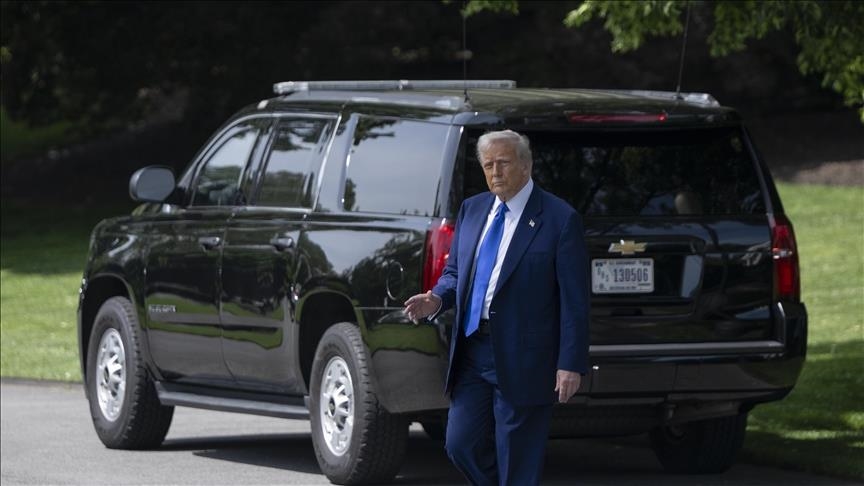
On April 22, Trump completed a phone call with Israeli Prime Minister Benjamin Netanyahu, saying that the two “are on the same side of every issue.” He then acted very differently. 

On May 6, Trump announced that the U.S. would stop its attacks on Yemen since the Houthis had agreed to stop attacking American ships in the Red Sea. He did not mention if the Houthis would cease their attacks on Israel, and the Houthis made it clear that they would not. According to a senior Israeli official, Israel was not notified of the agreement by the U.S. and was caught by surprise. “We were completely shocked. Israel was not informed before Trump made the statement,” one Israeli official said.

Two days later, the U.S. announced that discussions with Saudi Arabia over cooperation on a Saudi civilian nuclear program that had previously been linked to Saudi Arabia normalizing relations with Israel were no longer linked.

Then, on May 9, a report emerged that the White House was pressing Israel to agree to a ceasefire or be “left alone.”

In Iran, the messaging on the nuclear negotiations became so mixed that it was no longer clear what Washington is demanding from Tehran. 

Iran has been clear that negotiations are limited to verifiable limits on its peaceful, civilian nuclear program. Iran’s Supreme Leader, Ayatollah Ali Khamenei, has fully empowered his team to negotiate, but he has placed a firm limit that Iran will not negotiate “the full dismantling of Iran’s nuclear infrastructure.”

Trump has consistently described the meetings the same way: “You know, it’s not a complicated formula. Iran cannot have a nuclear weapon.” Members of his team, though, have not been as consistent. Then National Security Advisor Mike Waltz said that the U.S. is demanding “full dismantlement,” and Trump’s special envoy Steve Witkoff said that “a Trump deal” means “Iran must stop and eliminate its nuclear enrichment and weaponization program.” Rubio said that Iran can have a civilian nuclear program, but by importing uranium enriched up to 3.67 percent and no longer by enriching their own.

The message became truly convoluted when Trump told Meet the Press that the only concession from Iran he would accept was “total dismantlement.” Then, mixing the message even more, speaking in the Oval Office, Trump appeared to walk back that demand, saying, “We haven’t made that decision yet.”

The messaging in the Ukraine-Russia conflict is no less mixed. The Trump team recently presented a “final offer,” not on a 30-day ceasefire, but on a full-blown peace plan. When Ukraine signalled that they wanted the next meeting to continue to focus only on a 30-day ceasefire, Secretary of State Marco Rubio and Steve Witkoff pulled out of the talks.

Trump officials continued to signal a shift from focusing on a 30-day ceasefire to longer-term negotiations. In May, Vance said, “It’s not going to end any time soon…. We got ‘em talkin’. We got ‘em offering peace proposals.” Days later, he said, “The next big step we’d like to take” is having “the Russians and the Ukrainians… actually agree on some basic guidelines for sitting down and talking to one another.”

Then, the administration seemed to pivot again with Trump posting that “The U.S. calls for, ideally, a 30-day unconditional ceasefire,” and that “If the ceasefire is not respected, the U.S. and its partners will impose further sanctions.”

The mixed messaging has left negotiations in a certain amount of confusion. Ukrainian President Volodymyr Zelensky believes he is accepting Trump’s demands by agreeing to a 30-day ceasefire; Russian President Vladimir Putin thinks he is accepting Trump’s demands by offering to “resume direct negotiations” in Istanbul. 

Sticking with the competing formulation, Zelensky is reportedly “open to direct talks with Russia… but only if Moscow signs up to an unconditional ceasefire first.” Trump responded with the demand that “President Putin of Russia doesn’t want to have a Cease Fire Agreement with Ukraine, but rather wants to meet on Thursday, in Turkey, to negotiate a possible end to the BLOODBATH. Ukraine should agree to this, IMMEDIATELY.”

In conflict negotiations around the world, the Trump administration has offered mixed messaging that has led to confusion about the terms of negotiations and about which party is rejecting those terms. Time will tell if the messaging is symptomatic of confusion in the Trump administration or if it is part of Trump’s negotiating strategy.

Ted Snider is a regular columnist on U.S. foreign policy and history at Antiwar.com and The Libertarian Institute. He is also a frequent contributor to Responsible Statecraft and The American Conservative as well as other outlets. To support his work or for media or virtual presentation requests, contact him at tedsnider@bell.net.

Trump’s Visit to Saudi Arabia is Anything but Ordinary


Opinion
Abdulrahman Al-Rashed
Tuesday - 13 May 2025
Asharq Al-Awsat

A Saudi nuclear program, military deals, a defense agreement, ending the Gaza war, a pathway to the two-state solution, negotiations with Iran, and a trillion dollars in trade and investment—this momentum will all be part of US President Donald Trump’s visit. He is expected to be accompanied by a brigade of top tech executives, including Tesla and SpaceX boss Elon Musk, along with leaders from OpenAI, Meta, Alphabet, Boeing, and Citigroup. These big promises make President Trump’s visit to Saudi Arabia an extraordinary one. It will also be his first official foreign trip, marking the start of his international diplomatic agenda.

Preparations for Trump’s visit have been underway for more than two months, an effort of unprecedented scale for both the US and Saudi governments. Multiple discussions took place during the preparations, laying the groundwork for agreements across all relevant political, economic, and defense issues. The visit has been preceded by trips from several regional and global politicians to Riyadh to add more items to the discussion table.

According to US State Department records, twelve US presidential visits to Saudi Arabia have taken place in the past fifty years before Trump’s. All were significant in their historical and political contexts. In today’s historical context, President Trump’s visit coincides with the broadest regional and international shifts since the end of the Cold War.

Regarding bilateral relations, Trump’s visit lays the foundation for a new chapter, considering the nature of the topics under negotiation - some already initiated, others to be finalized later. One is the Saudi nuclear project, which Washington had been reluctant to negotiate over in previous decades. An announcement is likely, as the administration previously leaked details. Interestingly, Saudi Arabia discovered uranium in its deserts during mineral exploration efforts - central to its massive Vision 2030 development plan - propelling its civil nuclear ambitions forward.

Politically, while the US-Saudi relationship is strong, it remains in need of restructuring and clarity. The strategic Quincy Agreement signed by Saudi Arabia’s founding King Abdulaziz and US President Roosevelt after World War II is now considered obsolete. Trump and the Saudi leadership are exploring a new strategic agreement format that accounts for recent developments - America’s transformation into an oil exporter, Saudi Arabia’s growing markets in China and India, and its ambitious Vision 2030 plan to position itself among the world’s top 20 economies.

Trump’s second visit to Riyadh is different, and observers are well aware of today’s shifting political climate: the fall of the al-Assad regime, the collapse of Hezbollah’s strength, the destruction of Houthi capabilities, and, for the first time in a decade, Iraqi militias halting attacks on US and international forces. The agenda itself also makes this summit distinct from his first presidential visit. Trump has reshaped Washington’s stubborn stance and launched a sweeping domestic and foreign policy transformation, with just under four years remaining to try and complete it.

In my opinion, the most important achievement of this summit for Saudi Arabia would be laying the foundation for a long-term, positive working relationship with Trump and the United States. Over the past eight years, the relationship has been successful. Even former critics now see the results. Built on mutual interests, it’s a relationship that can endure. Many countries around the world, including in Europe, are following Saudi Arabia’s lead in managing their affairs with Trump. The era of relying solely on political and military alliances with Washington is over; the focus now is on forging shared interests.

The trillion-dollar relationship that Saudi Arabia pledged to Trump over a ten-year investment span is not a basket of gifts. It consists of mega projects and investments. This is evident from the signed agreements and the delegation accompanying Trump on this trip. It reflects Crown Prince Mohammed bin Salman’s vision and approach: focusing on development and the economy, and overcoming political and security challenges to make the relationship productive and sustainable.


Abdulrahman Al-Rashed is the former general manager of Al-Arabiya television. He is also the former editor-in-chief of Asharq Al-Awsat, and the leading Arabic weekly magazine Al-Majalla. He is also a senior columnist in the daily newspapers Al-Madina and Al-Bilad.
White House Correspondents’ Association protests lack of wire reporters on Trump's Middle East flight

'Leaving out the wires is a disservice to Americans who need news about their president,' association says

Rabia Iclal Turan |13.05.2025
TRT/AA


WASHINGTON

The White House Correspondents’ Association (WHCA) said Monday that it is "disturbed" over the exclusion of reporters from three major wire services from traveling with US President Donald Trump on Air Force One to the Middle East.

In a statement, the WHCA said reporters from The Associated Press, Bloomberg News and Reuters were not allowed to board Air Force One to cover the trip.

"Leaving out the wires is a disservice to Americans who need news about their president, especially on foreign trips where anything could happen and the consequences can impact the entire world," the statement said.

The WHCA emphasized the vital role of wire services in providing timely and accurate coverage to global audiences.

"The WHCA is disturbed by this new restriction on who can cover this White House and continued retaliation for independent editorial decisions. The WHCA is advocating for the wire service journalists to return to their seats on Air Force One where they have reliably covered every president for decades, not for us but for the millions of Americans who depend on their reporting every day," it added.

The decision follows the White House’s announcement that it would control rotation of the small handful of journalists who are granted access to most of the president's events, a role traditionally managed by the WHCA.

White House spokesperson Karoline Leavitt framed the move as an effort to increase inclusion within the press pool.

"The White House Correspondents' Association has long dictated which journalists get to ask questions of the President of the United States in these most intimate spaces. Not anymore," Leavitt told reporters.

The White House barred AP from presidential events, the Oval Office and Air Force One after the agency continued referring to the "Gulf of Mexico" in its reporting, despite an executive order from Trump renaming it the "Gulf of America."
I ran NATO - now we need a new alliance against Trump


INTERVIEW UK and economic allies should retaliate against 'autocratic' Trump in trade wars, argues former Nato secretary general Anders Fogh RasmussenAnders Fogh Rasmussen, the former Nato chief, says democracies must protect themselves from economic coercion by Donald Trump 

(Photos: Getty Images)

Rob Hastings
Special Projects Editor
May 13, 2025 
I NEWS

For decades, the Nato alliance has protected the UK and other members through a simple bond – any act of war against one nation counts as an attack on all of them. Thirty-two countries would automatically unite to fight back.

Now, a former leader of the defence organisation is calling for a new pact among liberal democracies to deter economic bullies from launching trade wars – even if that means “retaliating” against Nato’s most powerful member, the US.

Anders Fogh Rasmussen, who served as Nato’s secretary general from 2009 to 2014, is rallying for the UK to club together in a “D7” pact with the EU, Canada, Australia, Japan, South Korea and New Zealand.

It would primarily be aimed at facing down any threats from China, which has potential strangleholds on global supplies of critical minerals, tech hardware, energy components and even life-saving medicines.

However, this body could also prompt Britain and its partners to confront the “autocratic” Donald Trump in unison if he tries to extort allies, the former Danish prime minister told The i Paper in an interview.

“If we come under pressure from China or maybe the US – through tariffs or whatever – then we should help each other,” said Rasmussen, who remains an influential figure in defence and diplomatic circles.

“Economic coercion against one of the D7 members should be considered an attack on all of us, so we should respond collectively.

“This group of solid democracies would represent 30 to 40 per cent of the global economy – that’s a formidable force… We should also engage in free-trade agreements, investment agreements, and help each other on delivering critical minerals.”

Anders Fogh Rasmussen will be advocating his idea of a D7 alliance with influential political figures at his Copenhagen Democracy Summit this week (Photo: Ida Marie Odgaard / Ritzau Scanpix / AFP)

Asked if this risks angering Trump, Rasmussen replied: “That’s actually the purpose: to provoke him. To tell the Americans: if you want to become isolated in the world, so be it, you’re welcome, but we can do without you.”

“I would still love to see the US as the leader of the free world. But Trump has declared a trade war against the whole world, so we have to find an appropriate response… to show they will pay the price with their America First nationalist policy.”

Rasmussen’s strident views may heighten senses in the Foreign Office that ultimately Britain will be forced to decide between closer relations with either the US or the EU.

Still, a more combative approach is highly unlikely to be backed by the UK Government right now, especially it reached a trade agreement with the US last week.

Sir Keir Starmer has sought to charm and placate Trump, to maintain strong and respectful relations. Rasmussen thinks these tactics will only work for so long. “In the long run, you will be a loser if you think that the right strategy would be flattering Trump.”

The D7 concept will be supported by Britain’s former chief trade negotiations adviser, Sir Crawford Falconer, who has been calling for a global alliance of liberal economies. Falconer told The i Paper last month: “You need to work with the EU, Japan, Australia… Beyond China and the US, there are a number of large economies that are prepared to join together.”

The proposed D7 alliance would help the UK, EU and other leading liberal democracies protect themselves from trade wars by Donald Trump or Xi Jinping (Photo: Qilai Shen/Bloomberg/Getty)


Using drones to protect infrastructure from Russia

Rasmussen will be advocating his idea to the EU’s foreign affairs chief Kaja Kallas at the Copenhagen Democracy Summit starting on Tuesday.

The annual conference, which he founded in 2018, will hear speeches from former prime ministers Lord Cameron and Boris Johnson this week, plus the veteran US congresswoman Nancy Pelosi and the Croatian PM Andrej Plenković, among many others.

The former Nato leader is also urging Europe to use new squadrons of drones – both in the air and at sea – to defend sites of national importance from surreptitious Russian attacks using so-called “hybrid warfare”.

“Russia’s military doctrine explicitly mentions Europe’s critical infrastructure as a legitimate target. We have seen the attempt to place bombs on cargo planes, and we have seen the sabotage of subsea cables,” he said.

“We should reinforce the protection and surveillance of critical infrastructure… We should use new and more sophisticated technology to defend ourselves.”

Donald Trump is said to have been on the brink of withdrawing the US from Nato during his first term as President (Photo: Sean Gallup/Getty)

Western security services are confident that Vladimir Putin’s agents have been behind a series of explosions at DHL freight warehouses across Europe last year. Rasmussen believes operations like these are intended “to test the threshold of activating Article Five,” when Nato would activate its collective defences and strike back. “He should be kept in uncertainty about what would trigger a response.”

Rasmussen hopes that Nato members will double their defence spending targets to 4 per cent, perhaps even going up to 5 per cent.

“Defence investment in Russia now exceeds the total defence investment in the rest of Europe. That’s a major concern. If we are to deter Putin, then we will have to invest much more than him.”

Rasmussen has been vocal in calling for European support of Volodymyr Zelensky while his country has been under attack. He wants the continent to “arm Ukraine to the teeth.”

Questioned about the chances of Washington securing a fair and trustworthy deal with Moscow to end the invasion, he says bluntly: “There will be no peace deal with Putin. The US has weakened its own negotiation position by giving concessions to Putin even before talks started.”

Britain’s former Prime Minister Lord Cameron, seen here on the left in 2014, will be speaking at Anders Fogh Rasmussen’s Copenhagen Democracy Summit this week (Photo: Luke MacGregor/Getty)


Autocrats – including Trump – need a firm response

Next month, Nato will host its first leaders’ summit since Trump moved back into the White House. During his previous term, he considered withdrawing US support for the alliance, according to former aides.

Rasmussen thinks a widening transatlantic split is the biggest security threat facing its members, and lays the blame squarely on Trump.

“I think we can force the Americans to return to a more reasonable policy. It’s my experience from 50 years in public life that autocrats need a firm response. The only thing they respect is power and unity and a strong adversary. Any concession will be considered a weakness they can exploit.”

Is Trump himself an autocrat? “Yes. He has clearly autocratic features, and his rhetorics are similar to those of Putin and Xi Jingping.”

A survey of 110,000 people in more than 100 countries by Rasmussen’s think tank, the Alliance of Democracies, has revealed this week that the US is now less popular globally than China.

The Trump administration, including Vice President JD Vance, has refused to rule out seizing Greenland from Denmark by force (Photo: Jim Watson/Getty Images)

And what if Trump carries out his threat to seize control of Greenland, which belongs to Rasmussen’s homeland of Denmark? The US President has consistently suggested that the vast island should become American, and refused to rule out using force to make this happen.

“I don’t think it will happen through a military takeover,” he says. “We are as concerned as the Americans regarding Russian and Chinese activities in the Arctic.” Plus, under a longstanding agreement, “they can just establish more bases in Greenland if it’s their wish.”

Pointing to the example of bitter rivals Greece and Turkey, he adds: “It’s not unprecedented to have tensions between Nato allies.

Nevertheless, he has been alarmed at “leaks from the Trump administration that they will enhance their intelligence activities in and around Greenland.” So has the Danish government, leading to the US ambassador in Copenhagen being summoned for a meeting last week.

“That was an extraordinary step,” says Rasmussen. “Usually you do it between adversaries, but here it was necessary to have this conversation between allies.”

There could be a lot more conversations like that over the next four years.

@robhastings.bsky.social
Xinhua Commentary: China and LatAm join hands to draw blueprint for next decade of cooperation


Source: Xinhua
Editor: huaxia
2025-05-13 13:20:45
by Xinhua writers Zhao Kai, Meng Yifei

MEXICO CITY, May 12 (Xinhua) -- Amid the accelerating changes in the global landscape, the 4th ministerial meeting of the China-Community of Latin American and Caribbean States (CELAC) Forum opened Tuesday in Beijing.

The return to Beijing 10 years after the forum's debut ministerial meeting marks a significant milestone. It is expected to further advance the vision of a China-Latin America community with a shared future and enhance cooperation among the developing countries of the Global South.

United by a commitment to multilateralism and self-improvement as Global South nations, China and Latin America have achieved plenty over the past decade. Against this backdrop, the forum has grown into a vital platform that enhances mutual political trust, aligns development strategies, and strengthens people-to-people bonds.

Over the past years, close high-level contacts and strategic communication have guided China-LAC relations through a shifting international landscape, paving the way for a new stage of equality, mutual benefit, innovation, and openness, with tangible benefits for both peoples.

Deepened political trust was evident when Panama, El Salvador, the Dominican Republic, Nicaragua, and Honduras established or restored diplomatic ties with China, and when Venezuela, Uruguay, Colombia, and Nicaragua upgraded or established a strategic partnership with China.

Notably, relations between Brazil and China have been elevated to foster a community with a shared future for a more just world and a sustainable planet. The China-proposed Belt and Road Initiative (BRI) is contributing to development in more than 20 economies in the LAC region, highlighted by multiple landmark cooperation projects currently underway.

China is now Latin America's second-largest trading partner, and the region has become the second-largest destination for overseas Chinese investment, with 600.8 billion U.S. dollars in stock by the end of 2023. Currently, China has five free trade partners in the region. The country has been the largest market for Chilean cherries for years, and Chinese companies account for 37 percent of automobiles sold in Ecuador.

The China-LAC cooperation is also expanding into new sectors, such as renewable energy, digital technology, and transnational e-commerce, with dynamics driven by successful bilateral forums on science and technology innovation, digital technology cooperation, and space cooperation, all under the framework of the China-CELAC Forum. China's cloud computing, big data and AI technologies have widely empowered local industries to facilitate digital transformation.

High-level BRI construction is also helping advance the region's industrial upgrade, such as fully equipping Trinidad and Tobago's Phoenix Park Industrial Estate with a state-of-the-art 5G network.

The deepening of China-LAC relations has boosted employment, including the creation of higher-income jobs through BRI projects. Among recent examples is the April reopening of the Mexico City Metro's key Line 1, a project assisted by Chinese expertise aimed at improving residents' transit experience.

Meanwhile, a wide range of programs have strengthened cultural exchanges and the people-to-people bonds. These include Chinese government scholarships and vocational training programs for CELAC member countries, the China-LAC Youth Development Forum, the China-LAC Cultural Exchange Year, and China's foreign aid projects aimed at improving livelihoods.

Standing at a new historical starting point, China-LAC relations and cooperation are expected to build on the previous accomplishments and enter a new era replete with opportunities and broader prospects.

The China-CELAC Forum meeting in Beijing is sending a strong message of unity from the Global South, particularly in response to the increasing uncertainty and unpredictability stemming from rising unilateralism, protectionism, and bullying actions.

Undoubtedly, enhancing China-LAC relations and collaboration will contribute to stability and foster positive momentum in a tumultuous world. ■

China’s Xi slams ‘bullying’ in veiled swipe at US as Beijing hosts Latin America leaders


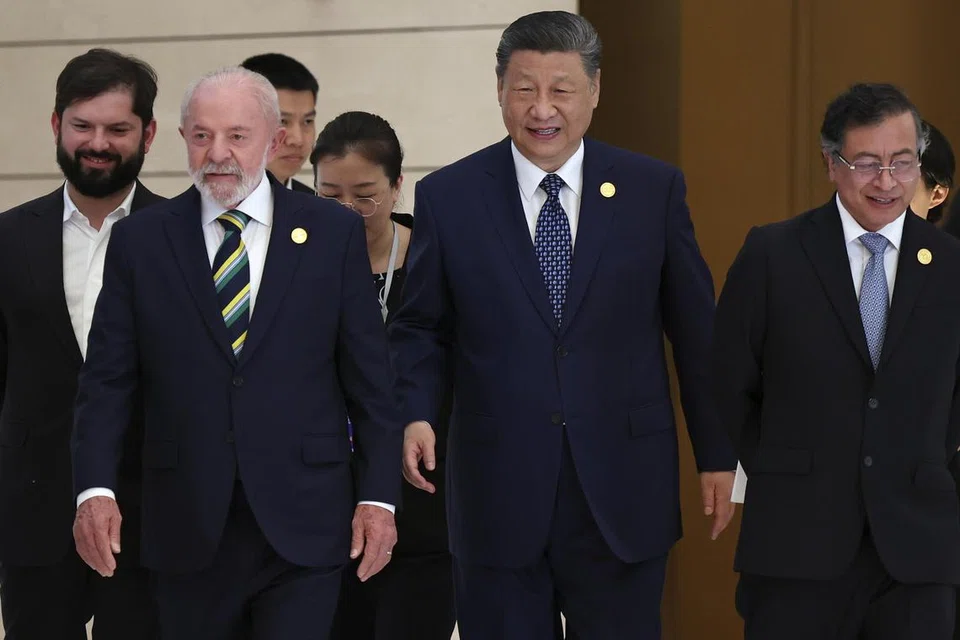
Leaders and officials from Latin America and the Caribbean have descended on the Chinese capital for the China-CELAC Forum.PHOTO: EPA-EFE

UPDATED May 13, 2025

Beijing - Chinese President Xi Jinping vowed on May 13 to deepen ties with Latin America and condemned “bullying” in a thinly veiled swipe at the United States, as he addressed regional leaders in Beijing.

Leaders and officials from Latin America and the Caribbean have descended on the Chinese capital for the China-CELAC (Community of Latin American and Caribbean States) Forum.

Beijing has stepped up economic and political cooperation with Latin American nations in recent years and has urged a united front against US President Donald Trump’s recent maelstrom of tariffs.

Addressing leaders on May 13, Mr Xi hailed China’s burgeoning ties with the region.

“Although China lies far from the Latin American and Caribbean region, the two sides have a time-honoured history of friendly exchanges,” he said at the opening ceremony, likening the summit to a “great, sturdy tree”.

“Only through unity and cooperation can countries safeguard global peace and stability and promote worldwide development and prosperity,” Mr Xi said, pledging US$9.2 billion (S$12 billion) in credit towards “development” for the region. He also warned of “bloc confrontation”.

Mr Xi’s remarks come a day after the United States and China announced a deal to drastically reduce tit-for-tat tariffs for 90 days, an outcome Mr Trump dubbed a “total reset”.

Under that agreement, the United States agreed to lower its tariffs on Chinese goods to 30 per cent while China will reduce its own to 10 per cent.

The deal marked a major de-escalation of a gruelling trade war between the world’s two largest economies which threw global markets into turmoil.

Mr Xi told delegates on May 13: “There are no winners in tariff wars or trade wars.”

“Bullying and hegemony will only lead to self-isolation,” the Chinese leader warned.

“The world today is undergoing accelerated transformations unseen in a century, with multiple risks intertwined and overlapping,” Mr Xi said.

Among notable attendees at the forum is Brazilian President Luiz Inacio Lula da Silva, who arrived in Beijing on May 10 for a five-day state visit.

Also present is Colombian President Gustavo Petro, who last week said he intends to sign an accord to join Beijing’s Belt and Road Initiative during his visit.

Two-thirds of Latin American countries have joined Beijing’s trillion-dollar BRI infrastructure programme, and China has surpassed the US as the biggest trading partner of Brazil, Peru and Chile, among others. AFP
More on this Topic
Detained in The Hague, Duterte wins mayoral election


Supporters of the arrested former Philippine President Rodrigo Duterte chant his name during a solidarity rally on his birthday, in Davao City, Philippines on March 28.
PHOTO: Reuters file

PUBLISHED ON May 12, 2025 

MANILA — Former Philippine President Rodrigo Duterte was almost certain to be elected mayor of his home city by a landslide on Monday (May 12), unimpeded by his detention at the International Criminal Court (ICC) on charges of murder as a crime against humanity.

With 80 per cent of votes counted in an unofficial tally, Duterte, who was brought to The Hague in March over his bloody "war on drugs" that killed thousands of people, was winning the Davao mayoral contest with eight times more votes than his nearest rival.

The victory during nationwide midterm elections is testament to the 80-year-old's enduring influence in the southern city, owing to his reputation as a crime-buster that earned him the nicknames "Duterte Harry" and "the Punisher".

Duterte's old Facebook account was flooded with congratulatory messages from supporters, with some calling for his return to serve his people.

"Congratulations, Tatay (father) D! Let's bring him home," read one of the comments.

Duterte could become the first Asian former head of state to go on trial at the ICC.

His surprise arrest by Philippine police at the request of the ICC caused outrage among his army of supporters, who called it a kidnapping at the behest of a foreign court.

He has defended the anti-drugs crackdown and his legal team says his arrest was unlawful. The ICC maintains it has jurisdiction to prosecute alleged crimes committed before Duterte withdrew the Philippines from its founding treaty in 2019.

Despite the ICC's case also including alleged killings of criminal suspects by a "death squad" in Davao while Duterte was mayor — which he has denied — analysts have said his arrest has only hardened support for him and his family, in Davao and beyond.

The former president's two sons were also set to win posts on Monday, one reelected congressman and the other winning the contest for Davao vice mayor and likely to serve in his father's absence.

The family's political resilience and dominance in Davao could prove pivotal as Duterte's popular daughter, Vice President Sara Duterte, faces an impeachment trial that could see her banned from politics for life if convicted, killing off any hopes of a presidential run.

Asked earlier on Monday about her father's likely victory, she said plans would be made for him to be sworn in as mayor.

"The ICC lawyer said once we get proclamation papers, we will discuss how he can take oath," she said.

Dutertes outperform in Philippine midterm elections in blow to Marcos

Ex-President Rodrigo Duterte looks set to become mayor of Davao City despite his detention

Last updated: May 13, 2025 | 08:50
Bloomberg


Impeached Vice President Sara Duterte saw allies win at least four of the 12 Senate seats up for grabs.AFP

Philippine voters have delivered a blow to President Ferdinand Marcos Jr. and a boost to the controversial Duterte clan, whose members and allies outperformed expectations in Monday’s midterm elections.

Ex-President Rodrigo Duterte looks set to become mayor of Davao City despite his detention by the International Criminal Court for alleged crimes against humanity, according to election results released by GMA News. His two sons lead other races.

Impeached Vice President Sara Duterte, who faces a July Senate trial for alleged misdeeds including an apparent threat to assassinate Marcos, saw allies win at least four of the 12 Senate seats up for grabs. That was more than surveys had indicated and gives her a core bloc of supporters in the 24-member chamber.

“It will be more difficult to get a conviction,” Maria Ela Atienza, a professor of political science at the University of Philippines said in an interview with Bloomberg TV. “There will be a lot of negotiations now.”

Philippine stocks rose 0.8% in early trade and the peso dropped as much as 0.7% after markets were closed Monday, though the main driver was news of the 90-day truce in the US-China trade war.

The Senate trial still holds perils for the vice president, but two-thirds of the chamber would need to vote for her conviction, which would remove Sara Duterte from office and block her from a 2028 run for the presidency. But Marcos-endorsed candidates look set to win just six Senate seats, fewer than anticipated, amid widespread concerns about the cost of living and the dispute with his deputy.

“The results reflect the declining popularity of Marcos Jr., the resurgence of the Duterte brand, and the readmission of the traditional liberal opposition back into high politics,” said Anthony Lawrence Borja, an associate professor at De La Salle University in Manila. “It is a welcome surprise for liberals and an unwelcome one for the administration.”

Those liberals are Bam Aquino and Kiko Pangilinan, who are on course to return to the Senate after getting backed by Leni Robredo, a former vice president who ran against Marcos in 2022.

The results, which may not be officially confirmed for days, raise questions about the ability of Marcos to press his agenda in his last three years in office, especially as the president tries to attract investors and expand the economy by at least 6% this year after first-quarter growth missed estimates.

The president’s sister, Imee Marcos, is on course for re-election as a senator after casting off her brother to join Sara Duterte on the campaign trail.

Congresswoman Camille Villar, daughter of the Philippines’ richest man, Manuel Villar, is set to win election to the Senate. But while she is part of the Marcos slate, she also sought the backing of Sara Duterte late in the campaign to boost her chances. But she didn’t publicly quit the president’s team.

While neither the president nor the vice president were on the ballot, they campaigned extensively across the archipelago of 114 million people.

After running on a joint ticket in 2022, the Marcos-Duterte relationship fractured, and last November Sara Duterte said that if she was murdered, she had arranged for revenge killings of Marcos and his wife. Her father, Rodrigo Duterte, who had bragged of using a “death squad” to execute criminals, then called on the military to intervene to fix the nation’s “fractured” governance.

The vice president’s remarks, along with her alleged misuse of public funds, led to her impeachment by the House of Representatives. She denies the allegations.

Relations worsened in March, when Marcos allowed the arrest of Rodrigo Duterte and his transfer to the ICC in the Netherlands, accused of a role in the deaths of thousands during his war on drugs. The ex-president, now aged 80, is fighting the charges, and some voters liked his hard line.

“Duterte tackled the drug problem,” Jennifer Yandoc, a 44-year-old mother of four, said as she voted in San Fernando City north of Manila on Monday.

Rodrigo Duterte’s youngest son and incumbent Davao mayor, Sebastian, is leading in the race to be his father’s deputy mayor. His eldest son, Paolo, is on course to keep his congressional seat.

Also Read:Philippine May 12, 2025 elections: By the numbers

More than 18,000 other national and local positions were contested. Voting was mostly peaceful, though at least one person died and several collapsed in stifling temperatures.

Widespread vote-buying and fake voters mar Philippine midterm elections

Widespread vote-buying and fake voters mar Philippine midterm elections
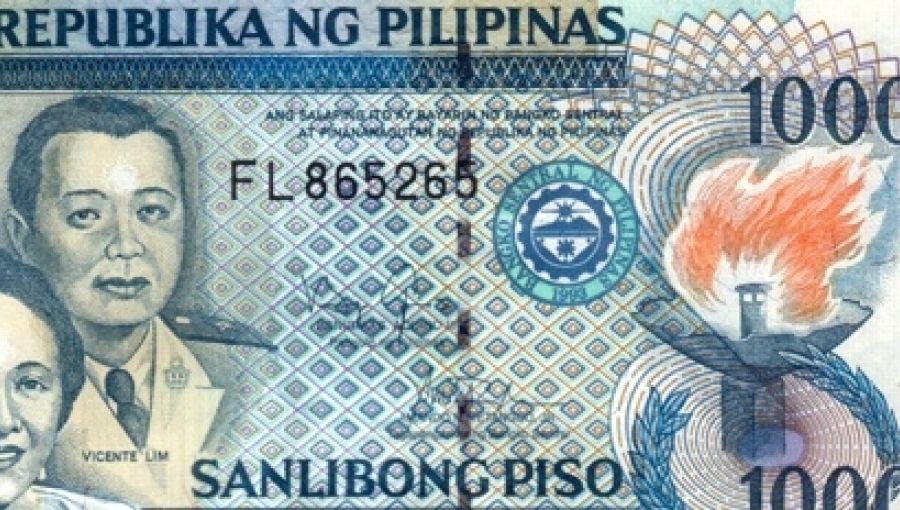
/ Bangko Sentral ng Pilipinas - PD
By bno - Jakarta Office May 13, 2025

Massive vote-buying and the re-emergence of fraudulent voters have cast doubt over the integrity of the recent midterm elections in the Philippines, with reports surfacing from various provinces across Mindanao, Visayas, and Luzon, Inquirer reported.

In Buluan, Maguindanao del Sur, authorities apprehended 80 men—some of them minors—before polling began on May 12. Each had reportedly been promised PHP1,500 ($26.9) to vote illegally. The group, believed to have travelled from areas including General Santos City, Sultan Kudarat, and Bukidnon, admitted to being paid participants, though they declined to identify their sponsors. Officials believe more would have followed had the group not been intercepted. Due to a spate of violence during the campaign, Buluan was placed under the control of the Commission on Elections.

Throughout Mindanao, financial incentives were used to drive voter turnout. In Zamboanga del Sur, people queued from as early as 4 a.m., with reports of voters receiving up to PHP5,000 before voting and an additional PHP5,000 after, referred to locally as “backing”. In some towns, vote-buying reportedly reached PHP8,000 to PHP10,000 per person.

Similar practices were observed in Cagayan de Oro (PHP1,000–PHP6,000), Lanao del Norte (cash plus rice), and Surigao del Sur (PHP4,970–PHP11,690). In Eastern Visayas, the practice—called “badil”—ranged from PHP50 to PHP15,000 ($269), depending on the post contested.

Police in Central Luzon are currently investigating 35 online reports of vote-buying. Church leaders have condemned the practice, calling it a betrayal of democratic values.

While these practices are hardly new, they are an alarming sign that, despite ongoing reforms, money continues to have an undue influence over the electoral process. This raises concerns about the true value of votes and whether the democratic system is truly functioning in the best interests of all citizens.


Junta airstrike kills 20 children at Myanmar school


Tue, 13 May 2025 

A Myanmar junta airstrike hit a school Monday, killing 22 people, including 20 children, witnesses told AFP, despite a purported humanitarian ceasefire called to help the nation recover from a devastating earthquake.

The strike hit a school in the village of Oe Htein Kwin – some 100 kilometres (65 miles) northwest of the epicentre of the March 28 quake – at around 10:00am (0330 GMT), locals said.

“For now, 22 people in total – 20 children and two teachers – have been killed,” said a 34-year-old teacher at the school, asking to remain anonymous.

“We tried to spread out the children, but the fighter was too fast and dropped its bombs,” she added.

An education official from the area of the village in Sagaing region gave the same toll.

AFP said it couldn’t reach the Myanmar junta spokesman for comment.

Myanmar has been riven by civil war since the military deposed a civilian government in 2021, with the junta suffering stinging losses to a myriad of anti-coup guerrillas and long-active ethnic armed groups.

The military pledged a ceasefire throughout this month “to continue the rebuilding and rehabilitation process” after the magnitude 7.7 quake in Myanmar’s central belt that killed nearly 3,800 people.