Sunday, June 29, 2025


First Quantum starts shipping stockpiled copper from Panama mine

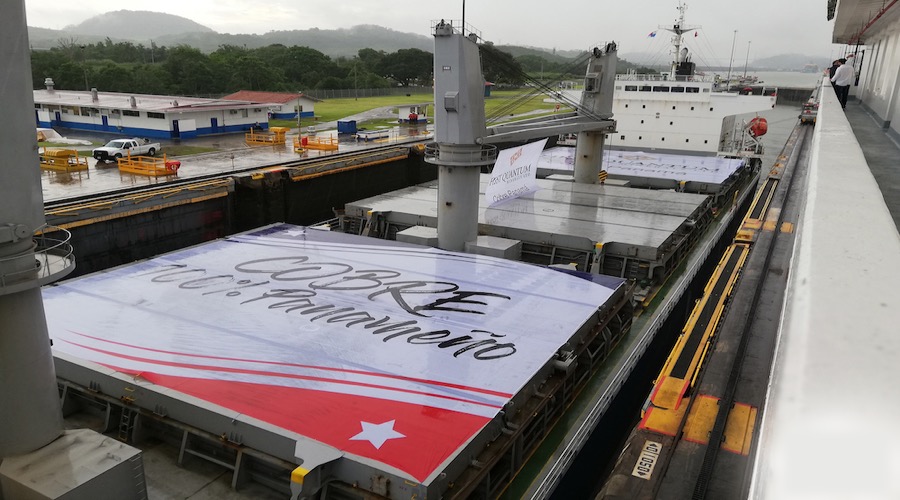
Cobre Panama mine began producing and shipping copper concentrates in June 2019. Credit: Cobre Panama

First Quantum Minerals Ltd. has started shipping stockpiled copper from its stalled mine in Panama, 19 months after the operation was shut down by the country’s top court.

A bulk carrier called Lipsi departed on June 18 from Punto Rincon, a private port owned by First Quantum that’s used exclusively to ship out mined ores known as concentrate from the Cobre Panama mine, data compiled by Bloomberg showed.

The vessel — which has a cargo capacity of about 35,000 deadweight tons — is carrying concentrate destined for European copper smelter Aurubis AG, according to people familiar with the matter, who asked not to be identified due to its commercially sensitive nature.

The shipment comes after Panama’s government last month authorized First Quantum to export about 120,000 tons of copper concentrate inventory that was left stranded in late 2023 when the mine’s license was ruled to be unconstitutional, and the vast operation was ordered to shut down.

Revenues from the sales will be used to fund the maintenance of the mothballed operation, while First Quantum continues to lobby for the resumption of operations. Panamanian President Jose Raul Mulino said earlier this month that the slate is now clean to start talks about a potential restart, but warned there’s still a long way to go before a deal can be done.

The rest of the stockpile will be shipped to offtake partners in Japan and South Korea over the coming months, the people said.

First Quantum declined to comment. A spokesperson for Aurubis didn’t immediately respond to a phone call and email seeking comment.

The release of the Cobre Panama inventory could provide some relief to copper smelters, which have faced a growing shortage of concentrate since the mine was shut down. Processing fees — a gauge of copper ore availability — have plunged to record lows, prompting smelters in the Philippines and Namibia to shut down and others to dial back output.

The unexpected closure of Cobre Panama, which accounted for 1.5% of global copper output at its peak, sent shock waves through the industry. The incident was a watershed moment during a period of worsening copper supply imbalance due to an expansion of global smelting capacity.

(By Julian Luk and Jacob Lorinc)

United States Antimony Announces Critical Mineral Acquisition Fostung Tungsten Property Ontario, Canada

ACCESS Newswire - Fri Jun 27, 2025

"The Critical Minerals and ZEO Company"

DALLAS, TX / ACCESS Newswire / June 27, 2025 / United States Antimony Corporation ("USAC," "US Antimony," the "Company"), (NYSE American:UAMY), announced today that it has completed an acquisition of 100% of the ownership interest of the Fostung Properties which cover fifty (50) single-cell mining claims or 1,114 hectares located approximately 70 kilometers west-southwest of Sudbury, Ontario, Canada, near the town of Espanola. The total purchase price of the tungsten properties was $5 Million in cash in addition to a ½ of 1% (0.005) Net Smelter Return royalty (NSR) interest to be divided equally between the sellers; Transition Metals Corp (XTM-V) and 1930153 ON Ltd (a Private Company). There exists an additional NSR of 1% (0.010) held by a previous owner.

TUNGSTEN
Tungsten's unique properties, which include a high melting point, density, hardness, and conductivity, make it indispensable in many sectors which include:

  • Aerospace (kinetic energy penetrators)

  • Defense (shielding of tanks and counterweights)

  • Electronics (semiconductors, x-ray tubes)

  • Tooling & Manufacturing (high speed cutting tolls and drills)

  • Energy (Electrodes and arc welding)

  • Medical (Radiation shielding)

SUPPLY
China controls the vast majority of worldwide tungsten supply and controls 80-85% of global processing capacity. China also consumes a large share of the tungsten it produces, further tightening global availability. There has been no known commercial production of tungsten concentrates in either the USA or Canada since 2016, nine years ago. A tungsten shortage has begun developing worldwide as record tungsten new prices continue their upward trend. Reduced global production along with a lack of supply from China has been exacerbated due to the February 2025 export restrictions. The value of Tungsten used in both the USA and Canada exceeds $1 Billion annually.

PROCESSING
Sudbury is the premier mining region of Canada so there is potential to use existing milling infrastructure. Recent work by the property vendors has shown that modern ore sorting processing methods, utilizing the fluorescent and other unique properties of the tungsten minerals, can upgrade the ore. We plan to continue this work and assess other techniques to determine the possibility of fine crushing on site, followed by concentration to yield an upgraded product that could be trucked to existing mills or tungsten plants in Canada or possibly in the USA. Conventional froth flotation milling at a plant in close proximity to the deposit will remain as the back-up option.

GEOLOGY & RESOURCES
The Fostung deposit occurs in the Espanola Formation, which is part of the Huronian succession (2.1 to 2.5 billion years old) meta-sediments of the north shore of Lake Huron geology and is similar to the geology at our Iron Mask Cobalt Property (See Press Release dated August 13, 2024) located about 65 kilometers (40 miles) northwest of Sudbury and acquired last year. Previous work on Iron Mask has concentrated on showings of high-grade cobalt, nickel, copper, and bismuth.. At Fostung a inferred resource of 12.4 million tonnes (13.7 million US tons) grading 0.213% tungsten trioxide (WO3) at a 0.125% tungsten trioxide cut-off grade has been calculated in compliance with Canadian National Instrument 43-101 standards and was previously published by SRK Consulting. The company plans to commission an updated report compliant with SEC SK 1300 regulations, that includes the results of recent drill programs conducted by the property vendors.

Commenting on today's announcement, Mr. Joseph Bardswich, P. Eng., Executive Vice President and Chief Mining Engineer for USAC, stated, "Our first significant acquisition of a Tungsten deposit fits well within our company policy of only seeking mineral deposits that we believe can be quickly and inexpensively developed. The location of the Fostung property, close to both the Town of Espanola, the Sagamok First Nation, the Whitefish River First Nation and the Whitefish First Nation, provides opportunities for acquisition of supplies, equipment, contractors, and experienced personnel. Good road access and proximity to electrical power are added benefits. While we recognize that there is considerable work to be done before production can be considered, this proximity to significant infrastructure and the potential for an early open pit mining operation, makes Fostung our Company's first Tungsten choice."

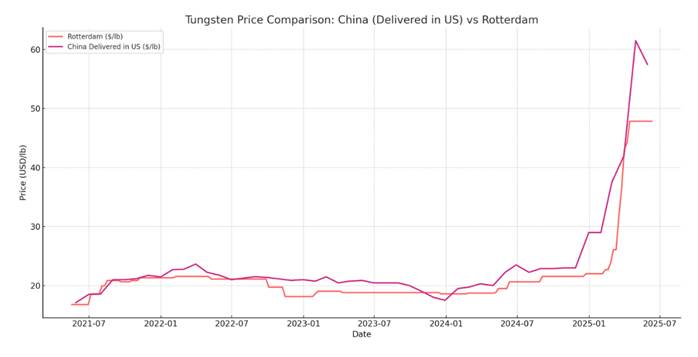
TUNGSTEN HISTORICAL PRICE COMPARISON
USAC has analyzed data from May 2021 through June 2025, highlighting consistent price elevation in Chinese tungsten material delivered to the U.S. due to logistics, tariffs, and export controls. Meanwhile, Rotterdam-based pricing-converted to $/lb for comparison-remains more stable but equally affected by European market dynamics. This price volatility underscores the strategic importance of secure, domestic sources of tungsten as well as other critical minerals. The analysis compares prices of Chinese tungsten bars delivered to the United States against ingot prices from the Rotterdam market over a four-year period from May 2021 to June 2025. The data reveals sustained pricing volatility, with Chinese tungsten consistently carrying a premium due to delivery costs, tariffs, and increased export restrictions under China's tightening critical mineral policies.

The Company's internal pricing review was supported by two key data sets, with prices standardized to USD/lb for comparability (May 2021 - June 2025) ž Argus Media

About USAC:
United States Antimony Corporation and its subsidiaries in the U.S., Mexico, and Canada ("USAC," "U.S. Antimony," the "Company," "Our," "Us," or "We") sell antimony, zeolite, and precious metals primarily in the U.S. and Canada. The Company processes third party ore primarily into antimony oxide, antimony metal, antimony trisulfide, and precious metals at its facilities located in Montana and Mexico. Antimony oxide is used to form a flame-retardant system for plastics, rubber, fiberglass, textile goods, paints, coatings, and paper, as a color fastener in paint, and as a phosphorescent agent in fluorescent light bulbs. Antimony metal is used in bearings, storage batteries, and ordnance. Antimony trisulfide is used as a primer in ammunition. The Company also recovers precious metals, primarily gold and silver, at its Montana facility from third party ore. At its Bear River Zeolite ("BRZ") facility located in Idaho, the Company mines and processes zeolite, a group of industrial minerals used in water filtration, sewage treatment, nuclear waste and other environmental cleanup, odor control, gas separation, animal nutrition, soil amendment and fertilizer, and other miscellaneous applications. The Company acquired mining claims and leases located in Alaska and Ontario, Canada and leased a metals concentration facility in Montana in 2024 that could expand its operations as well as its product offerings.

About Transition Metals Corp.
Transition Metals Corp. (XTM-TSX.V) is a Canadian-based, multi-commodity explorer. Its award-winning team of geoscientists has extensive exploration experience which actively develops and tests new ideas for discovering mineralization in places that others have not looked, often allowing the Company to acquire properties inexpensively. Joint venture partners earn an interest in the projects by funding a portion of higher-risk drilling and exploration, allowing Transition to conserve capital and minimize shareholder's equity dilution.

About 1930153 ON Ltd.
1930153 ON Ltd. is a private Sudbury-based company with interests in Northern Ontario properties, that is focused on advancing mineral projects in Ontario in part by applying modern extraction and processing technologies.

Forward-Looking Statements:
Readers should note that, in addition to the historical information contained herein, this press release may contain forward-looking statements within the meaning of, and intended to be covered by, the safe harbor provisions of the Private Securities Litigation Reform Act of 1995. Such forward-looking statements are based upon current expectations and beliefs concerning future developments and their potential effects on the Company including matters related to the Company's operations, pending contracts and future revenues, financial performance and profitability, ability to execute on its increased production and installation schedules for planned capital expenditures, and the size of forecasted deposits. Although the Company believes that the expectations reflected in the forward-looking statements and the assumptions upon which they are based are reasonable, it can give no assurance that such expectations and assumptions will prove to have been correct. The reader is cautioned not to put undue reliance on these forward-looking statements, as these statements are subject to numerous factors and uncertainties. In addition, other factors that could cause actual results to differ materially are discussed in the Company's most recent filings, including Form 10-K and Form 10-Q with the Securities and Exchange Commission.

Forward-looking statements are typically identified by words such as "believe," "expect," "anticipate," "intend," "outlook," "estimate," "forecast," "project," "pro forma," and other similar words and expressions. Forward-looking statements are subject to numerous assumptions, risks and uncertainties, which change over time. Forward-looking statements speak only as of the date they are made. Because forward-looking statements are subject to assumptions and uncertainties, actual results or future events could differ, possibly materially, from those anticipated in the forward-looking statements and future results could differ materially from historical performance.

ICYMI

Alberta is Gearing Up for a New Oil Pipeline to Prince Rupert

Trans Mountail
File image courtesy Trans Mountain

Published Jun 29, 2025 12:39 PM by The Maritime Executive


Alberta's top provincial leader believes that now that Canada has a growing national consensus on the need to fast-track seaborne oil exports, a privately-backed proposal to build a new oil pipeline from Alberta's tar sands fields to the port of Prince Rupert could be announced sometime this summer.

The oil industry is the province's economic mainstay, and its desire for export capacity has long been a source of friction with its neighbors. For years, activists and politicians in British Columbia opposed an expansion of the only pipeline system from Alberta to the Pacific - the Trans Mountain line - and the Canadian federal government finally nationalized the project to complete it (at great financial cost). 

That existing 900,000 bpd line ends in a terminal in Burnaby, B.C., which is restricted to partial loads on small Aframax tankers because of draft restrictions in Vancouver's harbor. The tanker size limit increases transport costs.  

Albertan exporters would rather have access to a deeper harbor, and Prince Rupert more than qualifies. It is the deepest ice-free natural harbor in North America, with a depth at the inner harbor entrance of 115 feet. This is deep enough to navigate a fully-laden VLCC, the most economical tanker class for long-distance trade. 

At present, however, that would be illegal: Canada has a federal ban on large tankers in northern British Columbia's Inside Passage, one of the most remote and environmentally-pristine coastlines in North America. But with changing geopolitical winds and strained relations with Canada's biggest oil buyer, the United States, Canada's political leaders have reached a consensus agreement that diversified energy exports must now come first. This time, B.C. premier David Eby has raised only one objection: if a new pipeline happens, it must be privately funded. 

That plan appears to be in the works. Alberta Premier Danielle Smith told Bloomberg that it is "probably weeks" before a private party puts out a proposal for a new pipeline to Prince Rupert. It would be "the most credible and the most economic of all of the pipeline proposals the private sector would consider," she told Bloomberg this week.

The last comparable proposal - Enbridge's Northern Gateway line to Kitimat, a small port in the Great Bear Rainforest - was rejected by Prime Minister Justin Trudeau in 2016. 


BAE Systems Boosts Shipbuilding Capacity for Frigates with Massive New Hall

shipbuilding Scotland
BAE dedicated a new hall which will be used to build frigates for the Royal Navy (BAE)

Published Jun 27, 2025 6:49 PM by The Maritime Executive


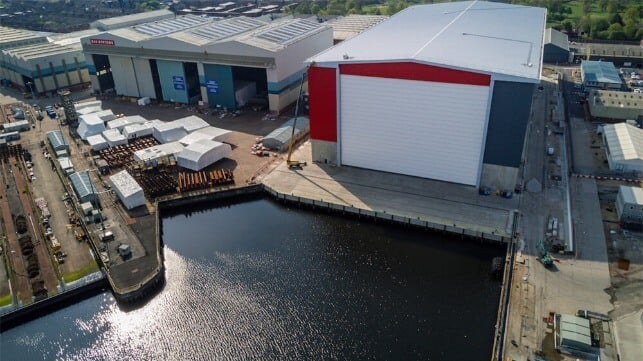
Defense contractor BAE Systems is expanding on Scotland’s rich tradition of shipbuilding and advancing the future of the industry by opening a new assembly and outfit hall in Glasgow. The unique facility will contribute to ensuring the timely delivery of the next generation of warships for the UK’s Royal Navy.

The new facility is part of a £300 million ($411 million) modernization and digitalization of BAE Systems’ operations in Glasgow. It is named Janet Harvey Hall in honor of a World War II female shipyard electrician and offers the capacity for the construction of two Type 26 frigates side-by-side.

Notably, the facility is designed to accommodate up to 500 workers per shift, something that will boost BAE Systems’ shipbuilding capacity by enabling warships to be built in Glasgow fully undercover for the first time. It ensures that work is unaffected by adverse weather. Essentially, the hall will help improve schedule performance and reduce the time between ship deliveries.

BAE Systems contends the new facility will be a strategic part of the program to construct eight Type 26 frigates for the Royal Navy. At 170 meters long and 80 meters wide (558 x 262 feet), with two 100-tonne cranes and a further two 20-tonne cranes inside, the hall is not only large enough but is also well equipped to handle the building of two frigates side-by-side.

“The Janet Harvey Hall brings an improved approach to warship assembly and outfit, driving quality throughout the build, and this approach supports regular delivery of vessels in line with the Royal Navy's need,” said Stephen Charlick, Type 26 Resident Project Officer.


The enclosed space can be used to build two frigates simultaneously (BAE)


Described as one of the world’s most advanced warships, the Type 26 frigates are designed for anti-submarine warfare and high-intensity air defense. They can also adapt their roles quickly to transport high volumes of humanitarian aid and house medical facilities. The ships will replace the aging Type 23 fleet.

Currently, the HMS Belfast and Birmingham are being built in the hall while Glasgow and Cardiff are being outfitted at the Scotstoun site further up the River Clyde. Steel has also been cut on the fifth ship, Sheffield. Building of the ships is expected to sustain approximately 1,700 jobs in Scotland and an additional 2,300 jobs across the wider UK supply chain.

Comprised of eight ships in total, the Type 26 frigates are expected to enter service in the coming years, with the first three (Glasgow, Cardiff, and Belfast) being delivered before 2030. The other five ships will join the fleet after 2030. They will have the capacity to accommodate a crew of 208.


Iran's Naval Forces Suffered Casualties From Israeli Airstrikes

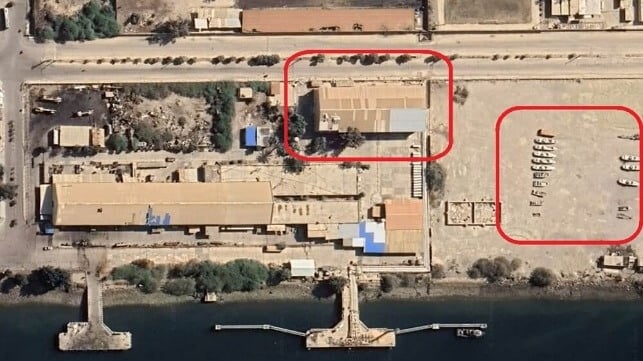
 Nedsa warehouse at 27.14816N 56.2083E destroyed on June 21. Note Nedsa speedboats stored in the lot alongside (CJRC)
Nedsa warehouse at 27.14816N 56.2083E destroyed on June 21. Note Nedsa speedboats stored in the lot alongside (Pole Star / CJRC)

Published Jun 29, 2025 1:15 PM by The Maritime Executive


Iranian naval forces did not escape unscathed in the recent 12-day Israeli aerial assault on Iran which began on June 12.

In the first two days of the Israeli attack, regular Iranian Navy (Nedaja) vessels largely remained in port. As naval vessels are at their most vulnerable when tied up in port, this move suggested that the Nedaja command was putting on a non-confrontational display that assumed that Israeli targeting priorities would be elsewhere.

But on June 14, Nedaja vessels left the Bandar Abbas Naval Harbor - which is home base to most of the principal ships of the Nedaja Southern Fleet - in somewhat of a hurry, taking up dispersal positions largely in the sea area between Bandar Abbas and the islands of Qeshm and Hormuz. As of June 28, a single Hengam Class landing ship had returned to port, but the rest of the Nedaja fleet has not yet come home.

Seen now from evidence on the ground, the targeting focus of the Israeli attacks was evidently air defense assets, nuclear weapons-associated research, production and scientists, key IRGC leaders and the IRGC Aerospace Force network of ballistic missile and drone launching, storage and production sites. The bulk of this target deck fell under the organizational structure of the Islamic Revolutionary Guard Corps (IRGC). Hence the Nedaja’s initial assumption that they would not be a targeting priority turned out to be largely correct.

However, the regular Armed Forces (Artesh) were not exempt. The Artesh Chief of Staff Major General Mohammad Bagheri, assassinated on June 13, was probably targeted because - besides being a hardline ideologue - he was assessed to be significantly more competent than anyone likely to succeed him.

Elements of the air defense network which were manned by the regular Iran Air Defense Force - which suffered 35 fatalities during the 12-day war - and airbases with air defense fighters at Mehrabad (1TAB), Tabriz (2TAB), Hamadan (3TAB), Isfahan (8TAB) and Mashhad (14TAB) were attacked. Additionally, it has emerged that the Nedaja was targeted on a number of other occasions.

On June 21, buildings of the Nedaja’s 1st Naval District at Bandar Abbas were attacked, and three conscripts killed; this suggests either that a headquarters building was struck which was not manned at the time, or that a storage depot was hit; in either case, the conscripts who died were likely to have been guarding the facility. Social media reports suggested that the targets attacked were armories containing unmanned aerial vehicles and munitions. By this time, ships of the 1st Naval District had already long since left the nearby Bandar Abbas Naval Harbor.

The Israelis would have had a focused interest in attacking those elements of Nedaja capability which posed a particular threat to Israel; this target list is likely to have included stocks of Qadr-380 and Abu Mahdi anti-ship missiles, which can be launched either from ships or coastal defense batteries and have a 650-mile range. The Israelis would also have wanted to destroy long-range drones that the Nedaja has often demonstrated it can fire from its warships.

Abu Mahdi anti-ship missile (IRIB)

The IRGC Navy (Nedsa) suffered rather more attention. Also on June 21, the base of the Nedsa’s 5th (Imam Mohammad Bagher) Naval District at Bandar Lengeh was attacked, which could be one of the suspected locations of an IRGC coastal cavern housing missile boats; an unlocated cavern has featured frequently in Nedsa propaganda videos released in recent months. At the same time, imagery posted by an open-source blogger showed a warehouse had been damaged in the Nedsa area of the Bandar Abbas Naval Harbor, which the IDF described as having stored drones (top).

What the Israelis described as an IRGC intelligence-gathering ship was also struck in the same area of the dock. Some external open source observers suggested that the vessel attacked was the Nedaja intelligence collection frigate IRINS Zagros (H313), but the target description better fits either the Nesda’s MV Saviz or Behshad, or a sister ship; up-to-date imagery of the areas where these ships normally berth, in the Shahid Bahonar area in the north-west of the Bandar Abbas naval basin, does not provide easy identification of the target vessel. 

As yet, a threat to shipping traffic in the Straits of Hormuz has not emerged. But ships of both the Nedsa and the Nedaja are still at sea, likely to be putting on a display of strength in the Straits area in an attempt to suggest that they are still a force to be reckoned with.


Report: China's Investments in the Arctic are Exaggerated

One-third of Novatek's Arctic LNG 2 plant under way for its permanent installation in the Russian Arctic (Novatek)

Published Jun 29, 2025 3:21 PM by The Maritime Executive


China’s growing presence in the Arctic has been a source of concern in western policy circles, with some viewing it as a potential geopolitical risk. Primarily, the Chinese ambition to become a major polar power has attracted scrutiny from the Arctic States (excluding Russia), all of whom are NATO members. The mainstream narrative has been that Chinese investments in the Arctic are dual-use in nature, serving both commercial and military purposes.

However, a recent analysis by the Harvard’s Belfer Center reveals that Chinese interests in the Arctic are highly exaggerated. According to some estimates, Chinese investments in the Arctic are worth about $90 billion, and the study claims that the figure could be inflated. In examining the estimate, Belfer researchers observed that analysts often include unsuccessful and proposed projects that have not been implemented.

“China’s actual footprint in the Arctic is far more limited than many believe. There’s a major gap between what’s discussed publicly and what’s actually happening on the ground,” said the study co-author P. Whitney Lackenbauer, a Professor at Trent University.

A common misrepresentation of China’s investments in the Arctic, is its economic partnership with Russia in the region. Although Western sanctions have led to stronger trade ties between China and Russia, the scale of their cooperation in the Arctic is overestimated, with some key projects failing to pan out.

This is most evident on the Northern Sea Route (NSR), where China has recalibrated its investments due to the impact of Western sanctions since the start of the invasion of Ukraine. One of the projects that took a hard hit is the Belkomur railway, often discussed as an example of Chinese-Russian partnership in the Arctic. The project proposes to link the Russian Urals with the Arctic port of Arkhangelsk, including the proposed Indiga seaport. However, limited financing has stalled the project.

Another unsuccessful project that China had agreed to pursue with Russia is in exploration for oil in the Barents and Pechora Seas. The involved Chinese company, CNPC, later pulled out, citing too many risks. Similar challenges have also been observed in Russian energy projects, including the Arctic LNG 2 project. With the West escalating economic sanctions against Russia, Chinese companies have significantly reduced their stake in the Arctic energy projects.

Last year, the Chinese energy technology firm Wison announced that it is ceasing all cooperation with Russia. The company went ahead to sell off its Zhoushan Yard, which early this year was sanctioned by the U.S for continued delivery of LNG technology to the Arctic LNG 2 project.

Nevertheless, Russia by far retains the largest amount of Chinese Arctic investments of all the Arctic states. But as the study found, the economic value and strategic value of these investments may not always be the same. Again, Chinese companies may express interest and willingness to make an economic investment, but this does not always translate to implementing the project.


China is Preparing to Counter U.S. Submarine Surveillance System

A PLA Navy submarine attached to a submarine flotilla of the PLA Northern Theater Command steams during a training exercise on September 15, 2023. (Photo by Zhang Nan/eng.chinamil.com.cn)

Published Jun 29, 2025 12:04 PM by CIMSEC


[By Ryan D. Martinson]

While much of the international attention on China’s naval buildup is focused on its rapidly modernizing surface fleet, the People’s Liberation Army Navy (PLAN) is also taking bold steps to field a first-rate submarine force. By the end of this year, the service could have as many as 25 Yuan-class submarines, which are among the world’s most advanced diesel-electric boats. Its small-but-growing fleet of nuclear-powered attack (SSN), guided missile (SSGN), and ballistic missile (SSBN) submarines has achieved major technological upgrades, and with the benefit of a massive production facility in Huludao, may be on the cusp of significant expansion.

The PLAN is investing in submarines because it recognizes their tremendous potential deterrent and warfighting value. That value, however, hinges on the ability of their boats to operate undetected. According to Chinese military experts however, that basic requirement cannot be guaranteed—not even close. Writing in the November 2023 issue of Military Art, a prestigious journal published by the Chinese Academy of Military Science, three PLAN officers revealed that the peacetime operations of Chinese submarines are highly vulnerable to the U.S. Navy’s undersea surveillance system, raising serious questions about their strategic and operational utility.

Entitled “Effectively Responding to the Threat to China’s Undersea Space Posed by the Powerful Enemy’s Three-Dimensional Surveillance System,” the article deserves special attention for two main reasons. First, while not an official assessment as might appear in a “white paper” or a “five-year plan,” it reflects the opinions of PLAN experts whose views are informed by access to classified intelligence and subject to peer review. The first author, Senior Captain Zhang Ning, is a faculty member at the Naval University of Engineering, College of Weapons Engineering. He co-authored the piece with Commander Zhang Tongjian, from the 3rd Destroyer Flotilla (Unit 91257), and Lieutenant Fan Zhaopeng of the PLAN Oceanographic and Meteorological Center (Unit 91001). Second, the publication in which the article appears—Military Art—is an internal PLA journal. This enables the authors to share their expertise with a candor that is rarely (if ever) seen in publicly-available PLA sources.

The U.S. Undersea Surveillance System

The premise of the article is that in recent years the United States, AKA the “powerful enemy,” has employed an “integrated, three-dimensional surveillance system” within and around the First Island Chain (i.e., China’s “Near Seas”). The system combines sensors and platforms located ashore, on and below the ocean, and in the air and space. In the undersea domain, the system comprises both fixed and mobile surveillance equipment, including unmanned underwater vehicles (UUVs) capable of carrying a range of payloads. On the surface of the ocean, the system incorporates U.S. Navy ships, especially ocean surveillance vessels. In the air, the system relies on fixed and rotary wing aircraft equipped with anti-submarine warfare (ASW) sensors. In space, it leverages ocean surveillance satellites, electronic reconnaissance satellites, and imaging reconnaissance satellites in near-earth orbit. The components, or “nodes,” of the system are connected via satellite communications and Raytheon’s real-time submarine communications system, “Deep Siren.”

Senior Captain Zhang and his co-authors argue that the U.S. undersea surveillance system constitutes both a strategic and tactical threat to China. First, it exerts what the authors call “strategic pressure” on China’s undersea space. U.S. satellites can track Chinese submarines while in port, on the surface, and in shallow waters. U.S. Navy ships, operating together with undersea surveillance systems, can “aggressively monitor” important PRC ports and straits, collecting data on the undersea environment and tracking submarine contacts. ASW aircraft operate in these areas too, often working collaboratively with surface vessels to “track and monitor” PRC submarines. U.S. undersea platforms such as submarines and UUVs also track and monitor PRC targets, while being capable of conducting strikes against them.

Second, the U.S. system can “cut off” Chinese submarines from access to important sea lanes, threatening their “navigational security” while transiting to and from training and operating areas. According to the authors, in waters further away from China, the U.S. deploys fixed seabed sensors. Meanwhile, U.S. ocean surveillance vessels operate in the locations most conducive to underwater sound transmission, enabling them to achieve long-range detection of Chinese submarines. With all components of the undersea surveillance system working in concert, Sr. Capt. Zhang and his co-authors argue, “the probability that PRC submarines are discovered when leaving port is extremely high,” and “there is a fairly high probability that PRC submarines will be detected and intercepted while operating in the Near Seas” [emphasis added]—a devastating indictment of the operational effectiveness of China’s submarine force.

Third, the authors write that the U.S. is “intensifying efforts” to achieve “unilateral transparency” of the undersea battlefield, to China’s great expense. The U.S. relies heavily on its hydrographic survey ships to track key characteristics of the water column (e.g., currents, temperature, salinity, and depth), thereby providing “powerful data support” for ASW operations. Meanwhile, U.S submarines closely track PLAN surface action groups to collect data on their acoustic signatures and “test” their defensive ASW capabilities. Lastly, the U.S. Navy’s undersea surveillance system poses a grave threat to China because it “undermines the country’s undersea nuclear deterrent,” presumably because the location of Chinese SSBNs cannot remain hidden. This, the authors argue, increases China’s vulnerability to sudden attack.

Potent, But Not Perfect

Sr. Capt. Zhang and his coauthors emphasize that while the U.S. system is highly effective, it is not without certain vulnerabilities. In fact, these weaknesses have grown increasingly apparent, in part due to “proactive” PRC measures. The U.S. system suffers from geographic constraints. The Near Seas are right on China’s doorstep, giving the PLAN a significant advantage. In recent years, they explain, it has become increasingly difficult for U.S. manned platforms to conduct reconnaissance close to the Chinese coast. Indeed, the “survival space” for U.S mobile and fixed unmanned systems within the First Island Chain has been shrinking. Additionally, the authors describe a “stalemate” between China and the U.S. in the ability to “seal off” the three main straits between Taiwan and the Philippines (Bashi Channel, Balintang Channel, and Babuyan Channel). Within the First Island Chain, China has the advantage in terms of force disposition and the “battlefield situation,” and “to a certain degree, it possesses the initiative.”

The authors assert that the U.S. lacks sufficient forces to achieve its assumed objective of “unilateral transparency” at all times and in all places. The East China Sea and the South China Sea encompass vast areas with complex undersea environments, posing a particular challenge for U.S. surface and subsurface surveillance forces. Moreover, because the “battle lines” are so extended, the U.S. Navy simply lacks the necessary assets to cover it all. Air- and space-based platforms face their own problems with weather and limited detection range. The authors further argue that the location of individual “nodes” in the U.S. undersea surveillance system can be located and “removed.” U.S bases and ships in rear areas suffer weak defensive capabilities; thus, as the authors write, they could be targeted at “key moments,” presumably at the start of a conflict. Air, surface, and subsurface nodes in waters near China are being “squeezed” by Chinese forces, resulting in a reduction in the overall functionality of the system. In recent years, the authors point out, the U.S. Navy has had to step up investment in equipment and manpower in important straits and waters, which they describe as a costly and perhaps futile endeavor.

The U.S. undersea surveillance system relies on equipment and platforms which, while advanced, are not without limitations. For example, undersea cables and arrays are “fairly fragile and easily severed.” Electronic information equipment can be jammed or destroyed. Unmanned systems rely heavily on external support for repairs, maintenance, and command and control, while communications links are not necessarily dependable or resilient. The authors particularly highlight how the “core of the system,” i.e., the U.S. military’s command information network, “has a hard time coping with various kinds of soft kill and hard destruction measures.” This, they argue, is the true “Achilles Heel” of the U.S. undersea surveillance system.

Targeting U.S. Vulnerabilities

After summarizing the main weaknesses of the U.S. system, Sr. Capt. Zhang and his co-authors then offer several recommendations for how best to exploit them. First, they argue, the goal of undersea security cannot be achieved overnight; it requires long-term planning. At the level of national strategy, China needs to combine both defensive measures and countermeasures, but it must place greater emphasis on countermeasures. That means prioritizing the development of capabilities needed to “attack and damage” the U.S. undersea surveillance system. At what they call the “campaign level,” China should strive to build an operational advantage within the region. In particular, the authors highlight the need to “fully mobilize maritime militia and civilian fishing vessels,” without describing their specific roles in this endeavor. At the “tactical level,” China needs to develop new technologies, conduct reconnaissance against nodes in the U.S. Navy undersea surveillance network, and enhance the disposition and readiness of its undersea forces.

Second, the authors call for the PLAN to develop the technologies needed to counter the U.S. system. The first priority should be capabilities for “finding and fixing” key nodes, especially “small, quiet targets,” presumably referring to UUVs. They call for developing “detection arrays and reconnaissance and surveillance networks” that integrate acoustic, magnetic, optical, and electronic sensors. In their view, China also needs to incorporate artificial intelligence and data to support efforts to find, identify, evaluate, and counter and destroy the components of the U.S. undersea surveillance system. To be successful, China will need to rely on support from civilian scientists and engineers, achieving “civil-military fusion.”

Third, the PLAN must focus on training and readiness. Specifically, it should conduct training centered on “surveying, paralyzing, and destroying” U.S. equipment. Before that can happen, it needs to develop a clear understanding of the U.S. undersea surveillance system. The authors call for conducting surveys of shipping channels and “special reconnaissance missions,” and using side-scan sonar and high-frequency imaging sonar to perform detailed inspections of important straits, waterways, ports, and “suspicious ocean areas” —presumably to locate hidden nodes in the U.S. system. Civilian and military specialists should complete studies of waters where U.S. ocean surveillance ships frequently operate to better grasp the types, numbers, and locations of the equipment they deploy.

The authors argue that the PLAN needs to conduct specialized training to better enable it to confront the U.S. undersea surveillance system. To that end, it must accelerate the acquisition of equipment and devices to destroy and disrupt enemy space-based, sea-based, and underwater surveillance nodes. In their view, China needs to develop UUVs that can locate enemy underwater arrays and interfere with and damage them. Regarding training practices, the authors argue that the PLAN should “use the enemy to train the troops,” a practice that favors simulated hostile engagements with actual foreign forces to hone China’s own warfighting skills.1

The authors highlight four specific approaches to reducing the effectiveness of the U.S. undersea surveillance system: yin, bi, yan, and rao. Yin refers to using ocean environmental factors such as poor sea states, bad weather, thermoclines, and the Kuroshio (a warm water current east of Taiwan) for concealment of Chinese submarines. Bi refers to avoiding, where and when possible, enemy monitoring areas and methods. Yan refers to using undefined “supporting forces” to actively “cover” Chinese submarine operations and PLAN surface ships or merchant vessels to passively cover their operations. Rao means using deception or interference or undefined “resolute measures” to degrade reconnaissance activities carried out by fixed and mobile, manned and unmanned, components of the U.S. system.

Fourth, China should, “depending on the situation, take action to precisely damage the [U.S.] network.” The authors argue, “at the key opportunity,” China should aggress the enemy with undersea counter detection, anti-satellite weapons, and methods to degrade electronic reconnaissance capabilities, damaging enemy networks and paralyzing enemy nodes. For example, in the case of U.S. fixed seabed arrays, surface and subsurface buoys, seabed sonar, UUVs, and seabed prepositioned weapons, the PLAN can use methods such as “deep-sea demolition,” “towing and damaging,” and “acoustic interference and deception.” The PLAN also needs UUVs that can both locate and attack enemy equipment. On the surface of the ocean, PLAN forces can approach U.S. ocean surveillance ships and deploy towed equipment or fishing nets to interfere with their operations. In the air, China can intercept and harass maritime patrol and reconnaissance aircraft, or “cut off’ information flows between aircraft and their sonobuoys, thereby “covering” the movements of China’s undersea forces. In the space domain, the PLAN should work with China’s strategic support forces to conduct strikes against or interfere with U.S. reconnaissance and communications satellites. In waters near enemy rear areas, China could deploy its own submarines, ASW aircraft, and ocean surveillance ships to conduct “proactive, multidimensional reconnaissance” to achieve what they call “forward deterrence.” Lastly, against U.S. undersea operational command centers and information centers, China can conduct hard kills via “network cutoffs” and soft kills using “black networks.”

Implications

The Chinese military is investing heavily in nuclear and conventional submarines because it recognizes their potential contributions in deterring China’s foes and, if necessary, defeating them in battle. However, if Sr. Capt. Zhang and his colleagues are correct, the PLAN cannot fully leverage the main advantage of submarines—their stealth. The authors argue that the operating and training areas of its submarine fleet are intensely monitored by components of the U.S. undersea surveillance system. Even when underway within the First Island Chain, they argue the probability is “fairly high” that their activities will be tracked and monitored by China’s most dangerous rival.

However, all is not lost. Sr. Capt. Zhang and his co-authors emphasize that the U.S. undersea surveillance system suffers from a number of vulnerabilities, amplified by the sheer scale of the Western Pacific battlespace. If enough nodes are degraded, the system as a whole may lose its functionality. The unmanned platforms upon which the system relies ultimately need human intervention for support and guidance, and that may not always be available when needed. Ultimately, however, the greatest vulnerability is the system’s dependence on the U.S. command information network, which allows for the integration of all the component parts. If that suffers degradation, then the whole system could fail. Still, as the authors imply in their article, the PLAN is not yet systematically exploiting these theoretical vulnerabilities. Meanwhile, PLAN submarines must continue to operate in this highly exposed environment.

Sr. Capt. Zhang and his colleagues offer a rare window into PLAN thinking on the undersea balance of power, and their analysis raises a number of intriguing questions. To what extent do their views reflect the full reality of U.S. capabilities What are they missing What do they get wrong The answers to these questions—which can only be known by the quiet professionals who actually run the system—should inform key decisions about future U.S. naval operations within and beyond the First Island Chain.

The assessments of Zhang and his colleagues also provide important clues about future PLAN behavior, especially in the event of a military crisis. Because the PLAN is highly concerned about the survivability of its submarine fleet, it could be conservative in its employment in the run-up to hostilities, lest it risk needless losses in the opening phase of the war. This knowledge should allow U.S. analysts to more confidently gauge the significance of changes in PLAN operational patterns.

Their discussion about how to counter the U.S. undersea surveillance system provides fewer actionable insights. They are just recommendations, which of course may or may not be adopted. Still, that they are being discussed by serious experts means that the PLAN may be considering them. Thus, U.S. Navy leaders must also take them seriously. Nobody should be surprised if and when these technologies or tactics are employed against U.S. forces.

Ryan D. Martinson is an assistant professor in, and a core member of, the China Maritime Studies Institute at the Naval War College. He holds a master’s degree from the Fletcher School of Law and Diplomacy at Tufts University and studied at Fudan University, the Beijing Language and Culture University, and the Hopkins-Nanjing Center. He researches China’s maritime strategy, especially its coercive use of sea power in East Asia. In 2021, Martinson won the Naval War College’s Civilian Faculty Research Excellence Award.

The views expressed in this article reflect the personal opinions of the author alone and do not necessarily reflect the official views of the U.S. Department of the Navy, Department of Defense, or any other U.S. government entity.

The author thanks Dan Caldwell and Chris Sharman for their comments on an earlier draft of the article.

References

1. “Using the Enemy to Train the Troops—Beijing’s New Approach to Prepare its Navy for War,” by Ryan D. Martinson and Conor Kennedy, Jamestown Foundation, March 25, 2022.

This article appear courtesy of CIMSEC and may be found in its original form here, including original Mandarin citations and outlinks to background sources. 

The opinions expressed herein are the author's and not necessarily those of The Maritime Executive.
ANOTHER DEI PURGE

Vice Adm. Joanna Nunan Steps Down as USMMA Superintendent

Nunan
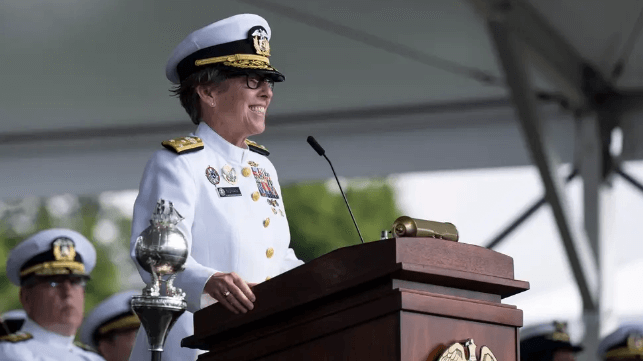
Vice Adm. Joanna Nunan (USN file image)

Published Jun 25, 2025 10:51 PM by The Maritime Executive


The superintendent of the U.S. Merchant Marine Academy, Vice Admiral Joanna M. Nunan, has announced her departure following the school's Class of 2025 commencement ceremony. Deputy Superintendent Rear Admiral David M. Wulf will be departing as well. 

The academy's chief of staff, Capt. Anthony J. "Tony" Ceraolo (USCG, Ret'd) will serve as acting superintendent while the Department of Transportation conducts a search for a permanent replacement. 

“I thank Vice Admiral Nunan and Rear Admiral Wulf for their service to our Nation and to our midshipmen,” said U.S. Transportation Secretary Sean P. Duffy. “The U.S. Merchant Marine Academy, its critical mission, and its extraordinary midshipmen fully deserve the kind of dedication and commitment the Superintendent and Deputy Superintendent brought to their roles at Kings Point.” 

Nunan, a career Coast Guard officer, took on command of USMMA in December 2022. She was the 14th superintendent of the academy and the first woman to hold the role. Before taking charge at USMMA she headed up the Coast Guard's HR enterprise as Deputy for Personnel Readiness. According to her official biography, she helped lead efforts to expand diversity and inclusion in the Coast Guard, including policy changes to increase retention of women in the service. In addition to her Coast Guard credentials, she holds a 1600 Masters / 3rd Mate Unlimited license.

According to the U.S. Department of Transportation, Nunan helped secure a 10-year restoration partnership agreement with the U.S. Army Corps of Engineers, a key part of a long-term plan to refurbish and modernize a campus in need of repair. With the USACE's help, USMMA has formulated a master plan for future construction, and the Army Corps says that it will be "rehabilitating and modernizing the campus infrastructure."

“I thank Vice Admiral Nunan and Rear Admiral Wulf for their service to our nation and to our midshipmen,” said U.S. Transportation Secretary Sean P. Duffy. “The U.S. Merchant Marine Academy, its critical mission, and its extraordinary midshipmen fully deserve the kind of dedication and commitment the Superintendent and Deputy Superintendent brought to their roles at Kings Point.”

Super Bowl halftime performer arrested after police say he held flag stating
 '💓Sudan and Free Gaza.'

JEFF MARTIN
Thu, June 26, 2025


FILE - A flag is raised during halftime of the NFL Super Bowl 59 football game between the Kansas City Chiefs and the Philadelphia Eagles, Feb. 9, 2025, in New Orleans. (AP Photo/Matt Slocum, File)

A performer at Kendrick Lamar's Super Bowl halftime performance in February has been arrested after holding up a Sudanese flag with the message “Sudan and Free Gaza,” Louisiana State Police announced Thursday.

The performer, Zul-Qarnain Kwame Nantambu, 41, of New Orleans surrendered to authorities after an arrest warrant was obtained, state police said. He was booked into the Orleans Parish Justice Center on charges of resisting an officer and disturbing the peace by interruption of a lawful assembly.

State police say troopers began investigating shortly after the Feb. 9 game at the Caesars Superdome and found that Nantambu “deviated from his assigned role” and disrupted the halftime show by running across the field with the flag. Security and law enforcement personnel ran after him, and he refused to comply with their commands to stop, state police said in a statement Thursday.

“In coordination with the National Football League, troopers learned that Nantambu had permission to be on the field during the performance, but did not have permission to demonstrate as he did,” state police said.

Neither jail records nor online court records list a lawyer for Nantambu who could be reached for comment.

The arrest comes after New Orleans police said shortly after the football game at Caesars Superdome that the cast member would not face charges. But it was Louisiana State Police who announced the charges Thursday.

New Orleans police initially responded to the disturbance, but Louisiana State Police then took over the investigation, partly due to the performer's access to a highly secured area, Louisiana State Police Sgt. Katharine Stegall said in an email to The Associated Press.

The NFL on Thursday said it commends the Louisiana State Police for “its diligence and professionalism.”

“We take any attempt to disrupt any part of an NFL game, including the halftime show, very seriously and are pleased this individual will be held accountable to the fullest extent of the law,” the NFL said. “In addition to the ongoing criminal case, the NFL banned the individual from attending any NFL games or events.”

The cast member was among dozens of dancers wearing black outfits. He held the flag in the air while standing on the roof of a car that was a main feature of the hip-hop artist’s performance. He then jumped off stage and ran across the field before being tackled by several men in suits.

President Donald Trump was in the stadium for the game, but it wasn’t clear if he saw the protest.

In a separate case, Nantambu is listed as the victim of a May 17 shooting outside a celebrity boxing event in Miami.