Wednesday, September 17, 2025


El Salvador leads Latin America's democratic decline, global watchdog warns

El Salvador leads Latin America's democratic decline, global watchdog warns
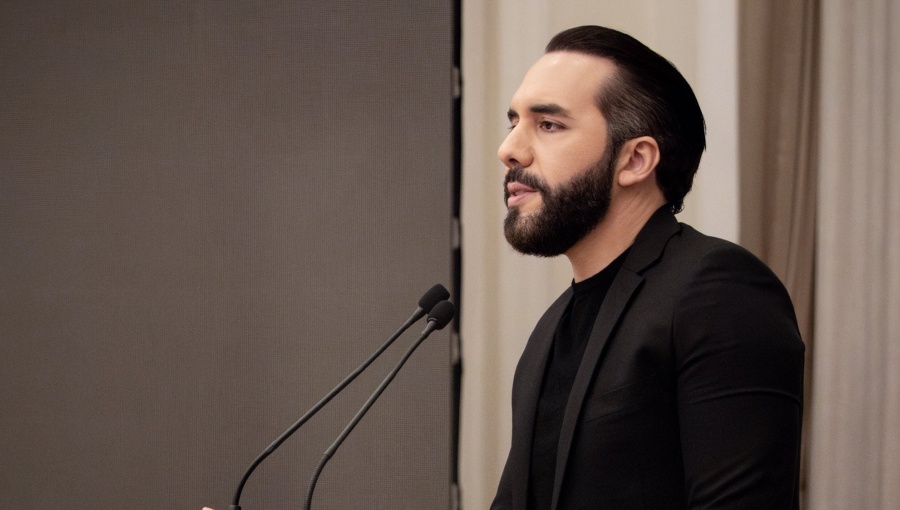
El Salvador's legislature last month approved constitutional reforms that will allow President Bukele to seek indefinite re-election, drawing sharp condemnation from human rights organisations and opposition politicians.
By Alek Buttermann September 16, 2025

The latest global report from the International Institute for Democracy and Electoral Assistance (IDEA) singles out El Salvador as the country in Latin America experiencing the fastest erosion of democratic standards, raising concerns about the long-term impact of security-driven policies on institutions.

According to AFP, IDEA’s regional director Marcela Ríos warned that El Salvador, governed by President Nayib Bukele under a prolonged state of emergency since 2022, has registered “a sharp decline in freedoms” and one of the most severe deteriorations of judicial independence worldwide. The government justifies the measure as a strategy to dismantle gangs, but it has enabled arrests without court orders and has led to what IDEA describes as the highest incarceration rate globally, with 85,000 prisoners in a population of six million. Reports cited by the organisation list cases of torture, deaths in custody, and forced disappearances.

Kevin Casas-Zamora, IDEA’s secretary general, has gone further, telling El País that El Salvador can now be described as a full-fledged dictatorship, given that “all institutions have been co-opted, there is no press freedom, and there are no checks on presidential power”. In chilling echoes of the situation in neighbouring Nicaragua, independent media, such as the investigative outlet El Faro, relocated to Costa Rica after facing sustained harassment. Casas-Zamora stressed that the supposed reduction in crime “is still difficult to measure, as government figures are unreliable”, and pointed out that the real cost of Bukele’s security model is authoritarian rule.

El Salvador's legislature last month approved constitutional reforms that will allow Bukele to seek indefinite re-election, drawing sharp condemnation from human rights organisations and opposition politicians.

The 44-year-old self-styled “world's coolest dictator" has enjoyed broad popular support since taking office in 2019, largely due to his successful crackdown on the country's violent street gangs. Bukele’s heavy-handed security policies have reduced violence to historic lows in what was once one of the most dangerous countries in the Western Hemisphere. As a result, "Over 1 per cent of the population and about 5 per cent of men aged between 18 and 35 are imprisoned," the report says.

Bukele won re-election in February 2024 with 85% of the vote, despite constitutional provisions that previously barred consecutive presidential terms. This was made possible after his party purged the Supreme Court in 2021 and installed loyalist judges who reinterpreted the constitution to allow his candidacy.

But El Salvador is not the only case of decline in the region. Nicaragua and Venezuela remain entrenched in authoritarianism, while Haiti has seen near-total institutional collapse, IDEA notes. Peru, meanwhile, joins El Salvador and Nicaragua in recording some of the steepest declines in freedom of expression.

More broadly, the IDEA report concludes that 54% of countries and territories worldwide have suffered democratic backsliding, the worst trend since data collection began in 1975. Electoral processes have registered their weakest results in three decades, with freedom of the press falling to historic lows. Over 40% of states now fall below acceptable standards of rule of law, and nearly a quarter have experienced a decline in freedom of expression.

While some Latin American states have shown progress  Honduras, Brazil, Chile, and the Dominican Republic are cited as recent improvers  the overall regional picture remains bleak. Casas-Zamora told EFE that Latin America exists in “a limbo of low-quality democracies”, plagued by weak rule of law, political fragmentation, and the penetration of organised crime. He warned that the failure of parties to channel citizen demands has fuelled support for “more authoritarian solutions”, particularly in countries where insecurity dominates political debate.

For IDEA, the convergence of institutional fragility, security crises, and structural inequalities risks locking parts of the region into cycles of democratic erosion. El Salvador’s trajectory stands out not only as an example of rapid deterioration but also as a template that some leaders may seek to replicate.


Russia’s 13 “drowning men” sink into corporate debt – The Bell

Russia’s 13 “drowning men” sink into corporate debt – The Bell
Thirteen of Russia's largest companies have been put on a CBR watch list as their debt burden rises to dangerous levels, The Bell reports. / bne IntelliNews
By Ben Aris in Berlin September 17, 2025

The Central Bank of Russia has quietly acknowledged growing financial distress among the country’s largest companies, identifying 13 corporations as "truly problematic" borrowers at the end of the first quarter. The Bell reviewed the financial statements of the companies most at risk of defaulting or sliding into bankruptcy on September 16.

"The combined net debt of these organisations amounted to almost RUB3.5 trillion ($37.23bn)," The Bell reported, or equivalent to 1.7% of Russia’s GDP and 6.5% of the country’s total stock market capitalisation.

Most of Russia’s leading companies are facing unsustainable debt burdens thanks to sky high interest rates and Russia’s economic problems are only getting worse recently. Earlier this year Kremlin officials admitted that one ruble in four of corporate revenges is now going to debt servicing. "All distressed companies have one thing in common: a high debt burden, exacerbated by high interest rates," The Bell wrote.

A key indicator used by the Central Bank is the interest coverage ratio (ICR), where a figure below one signals acute financial stress. Many of the troubled companies fall into this category, including several with strategic importance to the Russian state.

Chief among them is United Aircraft Corporation (UAC), a state-owned entity tasked with reviving Russia’s aviation industry. "After the war, it was given the impossible task of building 1,000 aircraft within a five-year period, a task it predictably failed to achieve," The Bell said.

Only 13 aircraft have entered service in three and a half years. The group’s total debt reached RUB2.348 trillion ($24.97bn) by mid-2025, with a debt-to-EBITDA ratio of 29.5x—far above the risk threshold of 3x.

Heavily censored financial statements, made legal by wartime disclosure exemptions, have further obscured the true scope of UAC’s liabilities. "In the 20 years since UAC's creation, the corporation's consolidated debt has increased 63-fold," The Bell noted.

Russian President Vladimir Putin is acutely aware of these problems, caused by the Western sanctions, and aviation has been amongst the Russian sectors hardest hit by sanctions as it remains heavily dependent on imports. However, the US is interested in reviving cooperation with Russia. During the Alaska summit on August 15 US President Donald Trump suggested a deal, lifting sanctions that would allow US-owned Boeing to restart business with Russia in exchange for access to Russia’s virtual monopoly on titanium, essential for plane-making. A similar deal was cut this month with Belarus, where the US lifted sanctions on the national carrier Belavia after Lukashenko released 52 political prisoners on September 11.

Another distressed firm is Globaltruck, Russia’s only publicly traded trucking company, which has been hit hard by sanctions and the exit of Western truck manufacturers.

"The company ended 2024 with a loss of over RUB1bn," after revenue collapsed by 47% to RUB10.7bn ($114mn). Share prices have plummeted 59% in 2024 and a further 12% in the first eight months of 2025,” The Bell reports.

Russian steel maker Mechel—once one of Russia’s largest mining and metals groups—is now seen as a persistent underperformer. “With these figures, Mechel will remain an industry outsider for a long time,” brokerage Tsifra Broker told The Bell. The company posted a net loss of RUB36.3bn ($386mn) last year, after a steep fall in coal prices and rising debt-servicing costs. Over 87% of its debt is ruble-denominated with floating rates, making it particularly vulnerable to Russia’s high-interest rate environment.

Oligarchs under pressure

The corporate debt troubles are affecting the wealth of almost all of Russia’s business elite. bne IntelliNews sources in Moscow say that almost all of the biggest oligarchs are short of cash. Most of the drowning men companies are controlled by prominent Russian oligarchs or individuals closely tied to the Kremlin.

The most notable is Rusal, which forms part of En+ Group, which is controlled by billionaire Oleg Deripaska, a Kremlin insider that is closely associated with Putin and the Yeltsin family.

Though Deripaska formally reduced his stake in En+ to below 50% following US sanctions in 2018, unofficially he clearly remains the driving force and primary beneficiary behind both companies. Deripaska remains under sanctions from the US, UK and EU as one of Russia’s most influential businessmen.

Mechel is controlled by Igor Zyuzin. Once a billionaire, Zyuzin has largely fallen from Russia's oligarch ranks due to long-standing financial troubles and diminished influence. Uber-oligarch Roman Abramovich and metals tycoon Alexander Abramov are also major shareholders in the company, who are also shareholders in Steel maker Evraz.

TMK (Pipe Metallurgical Company) is controlled by Dmitry Pumpyansky, another sanctioned oligarch. He was the controlling shareholder through his Sinara Group until 2022, when he transferred ownership following sanctions, but is believed to retain influence over the business.

Acron, one of Russia’s largest fertiliser producers, is controlled by Viatcheslav Kantor, a Russian-Israeli businessman who stepped down from public roles after being sanctioned by the UK and EU, but is regarded as remaining the company’s key beneficiary.

Gold miner Polymetal Russia, which emerged from the 2023 demerger of Polymetal International, has ties to industrial and banking oligarch Alexander Nesis through the ICT Group. Nesis, though not currently sanctioned, has long been part of Russia’s pre-war business elite and also owned Nomos bank which was listed in London before he sold it to Otkritie Financial Corporation a year later in 2012.

Petropavlovsk, once one of Russia’s leading gold miners and founded by UK businessman Peter Hambro, underwent significant ownership changes after defaulting in 2022, taken over by a group of oligarchs. Assets were transferred to Gazprombank-linked entities and businessman Roman Trotsenko, who has deep connections to state-controlled sectors. While not a traditional oligarch, Trotsenko is considered part of Russia’s inner economic circle.

By contrast, several companies on the list are directly state-owned or controlled through government-affiliated corporations. These include United Aircraft Corporation (UAC) and Kurganmashzavod, both of which fall under the umbrella of Rostec, a state conglomerate focused on defence and industrial technology. Transmashholding, while technically a joint venture, is heavily influenced by state procurement and policies. Globaltruck, now owned by logistics platform Monopoly, does not appear to have oligarch connections.

One time partner of the US carmaker Ford in Russia, Sollers is now the manufacturer of Russian truck-maker UAZ and the revived Soviet-era Moskvich car brand. It is majority owned by founder Vadim Shvetsov. Though influential in the automotive sector, Shvetsov is not considered to be a traditional oligarch and is seen simply as a leading profession in the automotive sector. Similarly, OVK (United Wagon Company), now under bankruptcy protection, has dispersed ownership and has no clear controlling figure from among the traditional oligarchy.

No relief for now

Relief is not at hand, but the medium-term outlook is improving. Thanks to CBR governor Elvia Nabiullina’s unorthodox plan to artificially cool the economy, inflation is falling faster than expected. The CBR has already put in 300bp of rate cuts this year, and cut by another 100bp on September 12 to bring the key rate down to 17% with another 200bp of cuts expected before the end of the year.

However, German Gref, CEO of Russia’s largest bank Sberbank, said earlier this month that Russia was already slipping into a “technical recession” and that rates would have to fall below 12% before they could have a meaningful impact on economic recovery.

After growing strongly in 2023 and 2024 by 4.3% a year, Russian officials have downgraded the growth outlook for this year three times already and are currently predicting 1.2-1.5% of growth in 2025, with the International Monetary Fund (IMF) and Goldman Sachs predicting an even slower 0.9%. In the CBR’s latest Main Directions of the Single State Monetary Policy mid-term outlook report released on September 3 the regulator expects this year and next year will be hard, but the economy will start to recover in 2027.

Rates are coming down, but the burden on companies is likely to increase in the meantime. Short of money, thanks to continued heavy military spending and a ballooning budget deficit, the government has started to discuss increasing taxes – something it has been loath to do throughout Putin’s 25 years in office. "One option being discussed is a VAT increase," The Bell noted, warning that this would feed into consumer prices and force the Central Bank to maintain high rates.

Measures under discussion include a moratorium on bankruptcies for metallurgical companies and tax deferrals for coal miners. But as The Bell concluded, "troubled Russian borrowers will have to endure a bit longer, while the state and banks will have to find reserves to save the drowning."

The thirteen drowning men

The Bell performed the same calculations as the CBR, based on publicly available IFRS reports released by these top companies. The main results are listed below:

1. United Aircraft Corporation (UAC)

  • Sector: Aviation (state-owned)
  • Problem: Long-term unprofitability, impossible production targets (1,000 planes in 5 years), extremely high debt (RUB2.35tn), with net debt to EBITDA at 29.5x. Financials are censored due to sanctions laws.

Key financials (2024):

·   Revenue: RUB472bn

·   Net loss: RUB79.6bn

·   Net debt: RUB2.18tn

·   Net debt/EBITDA: 29.5x

·   Interest coverage ratio: 0.7

2. Mechel

  • Sector: Metallurgy and coal
  • Problem: Hit by low coal prices, high floating-rate debt (87% of total), export logistics issues, forced asset sales abroad. Ended 2024 with a RUB36.3bn loss; net debt 7x market cap.

Key financials (2024):

·   Revenue: RUB387.5bn

·   Net loss: RUB36.3bn

·   Net debt: RUB230bn

·   Net debt/EBITDA: 4.1x

·   Interest coverage ratio: 1.3

3. Globaltruck

  • Sector: Logistics/trucking
  • Problem: Revenue collapse (-47% in 2024), loss of RUB1bn in 2024, followed by RUB1.2bn in H1 2025. Sanctions caused parts shortages, fleet maintenance problems. Share price down 59% in 2024.

Key financials (2024):

·   Revenue: RUB10.7bn

·   Net loss: RUB1.05bn

·   Net debt: RUB4.9bn

·   Net debt/EBITDA: 3.4x

·   Interest coverage ratio: 0.4

4. Transmashholding

  • Sector: Rail equipment (rolling stock)
  • Problem: Major buyer (Russian Railways) reduced orders. Exports hurt by sanctions. Revenue down 41% to RUB187bn in 2024. Interest coverage ratio dropped below 1.

Key financials (2024):

·   Revenue: RUB187bn

·   Net loss: RUB17.2bn

·   Net debt: RUB175bn

·   Net debt/EBITDA: 3.9x

·   Interest coverage ratio: 0.5

5. Kurganmashzavod

  • Sector: Defence manufacturing (infantry vehicles)
  • Problem: Part of state-owned Rostec. Operating at a loss despite increased military orders. Debt more than doubled since 2021. No transparent data on government subsidies.

Key financials (2024):

·   Revenue: RUB44.6bn

·   Net loss: RUB5.7bn

·   Net debt: RUB24.6bn

·   Net debt/EBITDA: 7.6x

·   Interest coverage ratio: 0.8

6. Rusal

  • Sector: Aluminium
  • Problem: Sanctions restricted exports and payments. Revenue fell 16%, net profit dropped 90% in 2024. Interest coverage ratio close to 1. Struggling with access to international markets.

Key financials (2024):

·   Revenue: RUB826.3bn

·   Net profit: RUB13.2bn (down from RUB132.6bn)

·   Net debt: RUB509bn

·   Net debt/EBITDA: 3.3x

·   Interest coverage ratio: 1.1

7. Acron

  • Sector: Fertilisers
  • Problem: Fertiliser prices dropped sharply in 2024. Interest expenses rose by 50%. Net profit fell 67%. Struggling to manage debt due to global price volatility.

Key financials (2024):

·   Revenue: RUB157.8bn

·   Net profit: RUB21.4bn

·   Net debt: RUB137bn

·   Net debt/EBITDA: 2.6x

·   Interest coverage ratio: 1.2

8. En+ Group

  • Sector: Energy and metals (Rusal’s parent company)
  • Problem: Sanctions and internal restructuring. EBITDA fell, and debt costs rose sharply. Interest coverage ratio fell below 1. Limited capital access due to Western financial restrictions.

Key financials (2024):

·   Revenue: RUB1.19tn

·   Net profit: RUB6.3bn

·   Net debt: RUB521bn

·   Net debt/EBITDA: 3.8x

·   Interest coverage ratio: 0.9

9. Sollers

  • Sector: Automotive (UAZ, Moskvich)
  • Problem: Dependent on discontinued partnerships (e.g., Ford). Revenue halved after 2022. Production cutbacks, localisation challenges. Debt remains high despite state support.

Key financials (2024):

·   Revenue: RUB42.6bn

·   Net loss: RUB2.1bn

·   Net debt: RUB10.7bn

·   Net debt/EBITDA: 4.3x

·   Interest coverage ratio: 0.6

10. OVK (United Wagon Company)

  • Sector: Railcar manufacturing
  • Problem: Demand collapse, failed export plans. Defaulted on bond payments. Undergoing bankruptcy proceedings. Lost 80% of value on the stock market.

Key financials (2024):

·   Revenue: RUB16.4bn

·   Net loss: RUB9.2bn

·   Net debt: RUB111bn

·   Net debt/EBITDA: Negative

·   Interest coverage ratio: Negative

11. TMK (Pipe Metallurgical Company)

  • Sector: Steel pipes
  • Problem: Falling oil and gas investment hit demand. Revenue fell 20% in 2024. Rising debt costs and limited export options worsened liquidity issues.

Key financials (2024):

·   Revenue: RUB401.5bn

·   Net profit: RUB4.2bn

·   Net debt: RUB208bn

·   Net debt/EBITDA: 3.2x

·   Interest coverage ratio: 1.3

12. Polymetal Russia

  • Sector: Gold mining (after spin-off from Polymetal International)
  • Problem: De-merger and sanctions disrupted operations. Revenue fell, and profit margins declined. Access to international capital markets blocked.

Key financials (2024):

·   Revenue: RUB190.3bn

·   Net profit: RUB2.4bn

·   Net debt: RUB116bn

·   Net debt/EBITDA: 3.5x

·   Interest coverage ratio: 1.1

13. Petropavlovsk

  • Sector: Gold mining
  • Problem: Entered administration in 2022 after losing access to bank accounts due to sanctions. Lost primary lender (Gazprombank). Assets under receivership or sold off.

Key financials (2024):

·   Revenue: RUB40.1bn

·   Net loss: RUB10.3bn

·   Net debt: RUB63.7bn

·   Net debt/EBITDA: Negative

·   Interest coverage ratio: Negative
 

Moral Appeals Trump Hate In Tamping Down Online Vitriol

child computer internet bullying


By 

As the saying goes, “You catch more flies with honey than with vinegar.” But in social media commentary, vinegar seems to be the tone of choice.


In two recently published papers, Cornell University researchers identified seven distinct strategies commenters employ when objecting to content online, noting that reputational attacks, or “vinegar,” are most common while “honey,” in the form of moral appeals to the offender, are less common. 

In two randomized experiments on a simulated social media platform, the researchers found that comments promoting “restorative justice” – encouraging offenders to apologize, rather than shaming and blaming them – were seen as more effective at achieving justice and were met with more support from the greater online community.

“Many people tend to think it’s only a small minority that comment on public social media posts like news stories, and while that might be true on the whole, many more people do read these comments,” said Ashley Shea, a Ph.D. candidate in the field of communication. “The comments have an impact on how we assess the tenor and even credibility of the original news story and can influence how others choose to participate. Therefore, these public comment spaces do play a civic function, whether we like it or not.”

The research was outlined in two papers, in PLOS One and PNAS Nexus.

As people become increasingly siloed in terms of how and where they get their news, and with social media offering a way to anonymously provide commentary on the day’s headlines, comment sections are fertile ground for “cross-talk” – the back and forth between commenters that often degenerates into name-calling or worse.


“In these situations, comment sections have been described as a ‘battleground,’ where people are trying to exert power and control over one another,” Shea said. “But we found that there hadn’t been a large-scale observation to really see what is happening in these spaces. How are people trying to exert control? What discursive tactics are they using?”

Over the course of several months in fall 2021, Shea and the team analyzed more than 8,500 comment replies to trending news videos on YouTube and Twitter (now X) and identified seven distinct discursive objection strategies – the idea, Shea said, that “someone is making an attempt to restrict the ways that others speak.”

They examined the frequency of each strategy’s occurrence – Shea noted that only about 10% of all comments qualified as discursive objection – and found that reputational attacks are the most common.

“You might think it’s a small percentage of overall comments, and thus not that problematic, but within that 10%, ad hominem attacks are clearly the largest percentage of tactics being employed,” Shea said. “But we also saw strategies that were pro-social, like the use of logic or moral appeals.”

That spurred the second study, led by Pengfei Zhao, a former member of the Social Media Lab, to find out how effective those pro-social strategies could be. Zhao found that, although posts seeking to punish the offending commenter – known as retributive vigilance – were most common, posts that promoted healing were viewed more favorably, and spurred more supportive behaviors from the community (increased upvotes and reduced downvotes). They also enhanced community members’ satisfaction and future engagement intentions.

There is one caveat, however: When the offender is viewed as morally incorrigible – incapable of being reformed – then retribution is seen as the more favorable approach.

“If people think that the offender cannot change their future wrongdoing,” Zhao said, “then appealing to moral values, inviting them to apologize, won’t work. Then people will resort to retribution; they think this person deserves punishment.”

Both studies were supported by grants from the National Science Foundation.


The Horn Of Africa States: The Second Africa Climate Summit Two (ACS2) – OpEd

Forward Businessman Globe World Europe Africa


By 

At the opening of the second Africa Climate Summit, H.E. Mahmoud Ali Youssouf, Chairperson of the African Union Commission, emphasized the importance of ensuring fairness and equity in the distribution of climate finance. He said, “The vulnerability of our member countries—exacerbated by climate change, debt burdens, and structural inequalities in the global financial system—must be addressed through climate justice and genuine cooperation.” (African Union Press release).


The Summit, the second for Africa (ACS2) marked a shift in how Africa engages in global climate discussions. Some leaders including the AU Commission Chair were reframing Africa as a source of innovation, not just a victim, boosting its influence in climate negotiations. A key highlight was the proposed Africa Climate Innovation Compact, which aims to scale 1,000 homegrown solutions by 2030, backed by a $50 billion annual financing model. The Summit also amplified calls for climate justice, including predictable finance, loss and damage funding, and stronger African roles in global carbon markets. Civil society groups like Pan African Climate Justice Alliance (PACJA) demanded accountability, clear plans, deadlines, and progress tracking, to ensure promises turn into action. These shifts in tone, ambition, and pressure make ACS2 a potential turning point for African climate leadership, if follow-through is sustained. 

But while the second Africa Climate Summit (ACS2) brought promising rhetoric and initiatives, there are valid reasons for skepticism, grounded in past experiences and ongoing structural challenges. The most pressing concern is the persistent “promised vs delivered” gap. Previous summits, including ACS1 in 2023, saw bold commitments around renewables, adaptation, and climate finance. However, follow-through has often been inconsistent. Projects got delayed, funding pledges go unmet, as political momentum fade once the spotlight moves elsewhere. This pattern threatens to repeat unless mechanisms for accountability are strengthened.

A second issue is the heavy dependence on external finance, which tends to render the whole project as another begging bowl. Despite leaders framing their calls as investment opportunities rather than appeals for aid, the continent remains reliant on international donors, lenders, and investors. With rising global interest rates, donor fatigue, and mounting debt burdens, the broader financial climate is not always conducive to scaling climate action. The continent hardly looks inward for local financings and investments.

There are also institutional and political constraints. Many African governments face limited bureaucratic capacity, governance challenges, high debt servicing obligations, and competing priorities such as food security, health, and infrastructure, all colored by corruption, personal enrichment at the very top or at every level and tribal/clan dominance of state affairs and not the citizen. These factors can delay or dilute the impact of climate pledges, even when political will exists.

Finally, there appears to be a lack of binding mechanisms or enforcement tools. Declarations like the Addis Ababa Declaration sound ambitious but lack legal or financial consequences for non-compliance. Without measurable targets, timelines, or transparent reporting systems, there is a risk that ACS2 will become more about symbolism than systemic change.


Addressing these concerns is essential if the summit’s ambitions are to be realized.

Will this be “just another bowl for begging”?

Probably not only that, but there is a serious risk that without concrete, enforceable followthrough, it will look a lot like past summits: strong speeches, ambitious goals, but slow progress on the ground for many communities. The “begging bowl” metaphor captures the dependency aspect: asking for money, technology, favorable terms, things Africa needs. But there are differences this time: Africa was (more than before) insisting on being a partner, an innovator, not just a recipient.

What needs to happen for ACS2 to break the pattern

To avoid becoming just another summit filled with lofty declarations, ACS2 must translate ambition into action through several key priorities. First, clear, measurable goals are essential, not vague calls for climate financing, but specific targets like “X dollars by year Y” for defined sectors, with transparent plans for use, beneficiaries, and success metrics. Second, transparent accountability mechanisms must be built in, including regular reporting, independent evaluations, civil society oversight, and clear benchmarks to track delivery. Third, Africa needs to focus on domestic resource mobilization, not just relying on external funding, but increasing climate-related taxation, reallocating budgets, incentivizing private sector involvement, and advocating for debt relief to unlock resources. Fourth, financing alone is not enough; there must be investment in technology transfer, capacity building, and infrastructure to ensure local ability to implement and maintain solutions. None of the above is apparent, so far!

Finally, long-term commitment is crucial, ACS2 outcomes must shape policies, budgets, and national strategies, and align with key global processes like COP30 to ensure lasting impact. Here,  one must lean toward cautious optimism on ACS2. There were meaningful shifts underway, in tone, in how Africa frames its role, and in proposed financing models like the Africa Climate Innovation Compact. The summit signaled a move from asking for help to asserting leadership and offering solutions. 

That was encouraging. However, the history of climate diplomacy teaches us to look beyond declarations. The real test will come one to three years from now: can one point to concrete projects that are delivering real benefits, especially for vulnerable communities, and are they funded, scaled, and sustained? This is food for thought!


Dr. Suleiman Walhad

Dr. Suleiman Walhad writes on the Horn of Africa economies and politics. He can be reached at suleimanwalhad@yahoo.com.