Saturday, September 27, 2025


Diamond sale fails in Botswana as buyers refuse to pay up

Stock Image

Botswana didn’t sell any diamonds in an unprecedented ad-hoc auction as buyers refused to pay high enough prices, as the global industry continues to grapple with one of its deepest-ever crises.

State trader Okavango Diamond Co. had offered about 1 million carats of rough stones in Thursday’s “closed” tender, which differed from the usual process of auctions being held for registered buyers and scheduled well in advance. The aim had been to raise revenue for the government, Bloomberg reported people familiar with the matter as saying.

But no sales were made as the reserve price wasn’t met, spokesman Dennis Tlaang said Friday. He said Thursday that ODC wouldn’t sell at prices that would have “a negative impact on the market.”

The failed sale is yet more evidence of weakness across the diamond world. The industry is grappling with one of its worst downturns in decades after suffering from a collapse in Chinese demand and fierce competition from lab-grown stones, while US tariffs have sown further uncertainty.

The market slump is also a blow for the state coffers of Botswana, one of the world’s most important producers. Diamonds, which account for 80% of the country’s export sales and around a third of government revenue, have been the bedrock of its economy for decades.

The country’s economy is likely to contract for a second successive year in 2025, according to S&P Global Ratings, which recently cut the nation’s long-term sovereign credit rating. Data released Friday showed gross domestic product fell 5.3% in the second quarter from a year earlier.

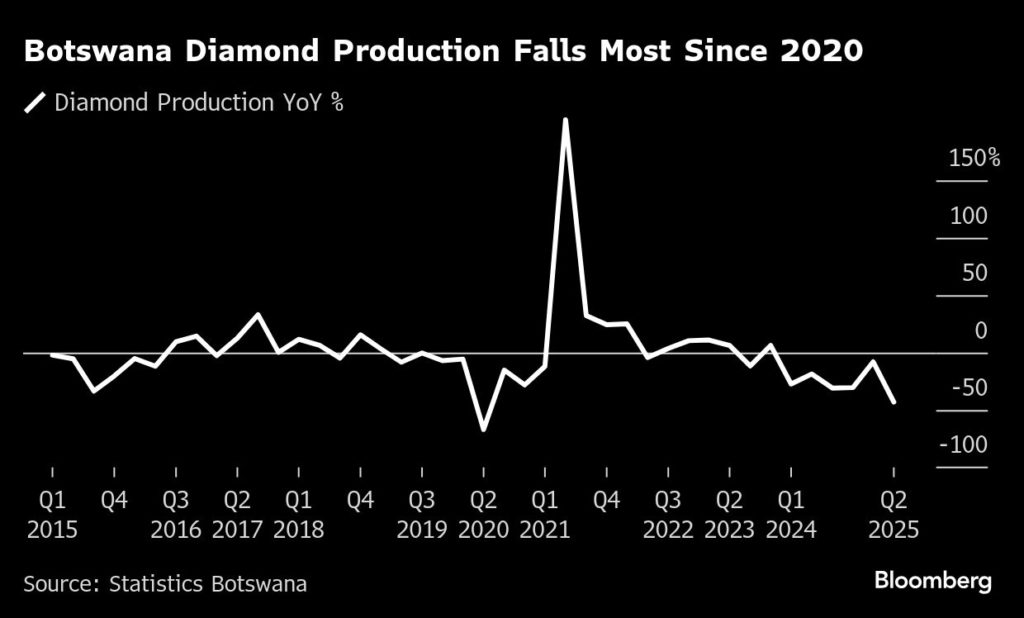
Along with lower prices, Botswana has also faced a decline in diamond output. Production slid 43% year-on-year in the second quarter, the biggest drop since the start of the pandemic, according to Statistics Botswana. It cited prolonged maintenance at a key mine and efforts to balance supply with weaker demand.

Debswana, the largest diamond miner in Botswana, has scaled back output amid the diamond slump. ODC is allocated 30% of the stones produced by Debswana, a 50-50 joint venture between Botswana and diamond giant De Beers.

ODC’s shelved sale “is not unusual in our business and in fact reflects the strength of our position in maintaining fair value for our product,” Tlaang said. Renewed interest is expected at future auctions, he said.

(By William Clowes, Ainhoa Goyeneche and Thomas Biesheuvel)


Niron breaks ground on rare earth-free magnet manufacturing plant in Minnesota

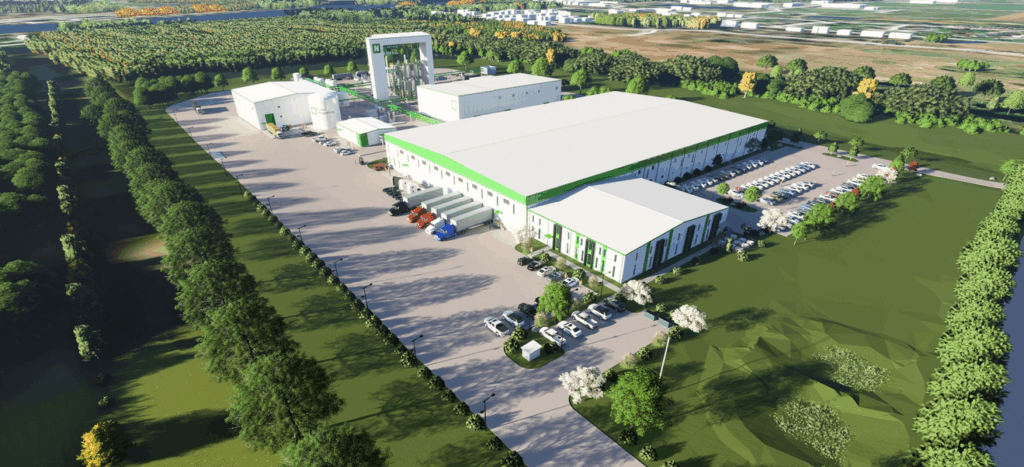
Rendering from Niron Magnetics.

Niron Magnetics broke ground Friday on a new 1,500-ton-per-year permanent magnet manufacturing facility in Sartell, Minnesota.

After nearly a decade of research and development in partnership with the U.S. Department of Energy (DOE) and the University of Minnesota, Niron Magnetics said it has successfully created one of the first commercially viable new magnet materials in decades, capable of producing superior permanent magnets.

Niron Magnetics said its product does not contain any rare-earth elements, and is made from abundant elements such as iron and nitrogen.

The company said it is able to scale manufacturing of permanent magnets made from iron nitride, which exhibits exceptionally high magnetization and removes the need for rare-earth elements.

Investors and commercial partners include Stellantis, Samsung, Allison Transmission, Magna, and others already sampling products from the pilot facility, it said.

The new 190,000-square-foot facility will expand Niron Magnetics’ capacity to supply rare-earth-free permanent magnets for data center cooling pumps, automobile motors, robotics, consumer electronics, defense and drone equipment, and other applications critical to the U.S. Economy, it said.

The facility will be built on the former Verso Paper Mill site, redeveloping a US designated coal community property.

The development comes at a critical time, as pressure on rare-earth supply chains intensifies due to geopolitical tensions and rising demand for permanent magnets globally.

“We’re proud to scale this homegrown technology in the heart of the industrial Midwest, and excited to make this community central to America’s supply chain independence,” Niron CEO Jonathan Rowntree said in a news release.

The plant will be operational in early 2027 and will create over 175 full-time jobs in
manufacturing, engineering, and operations, the company said.

“Permanent magnets are an essential part of modern vehicles, the heart of the performance for everything from powertrains and cooling systems to seat motors and speakers. We are committed to offering the freedom of choice to our customers and the integration of these magnets is critical to that mission,” Stellantis VP, Propulsion Systems Engineering, Sinisa Jurkovic said.

“We’ve been working with Niron since 2023to unlock next-generation motor performance, and Iron Nitride technology is helping us engineer and deliver vehicles with best-in-class capabilities.”


Argentina approves McEwen’s $2.7B copper project for tax break program

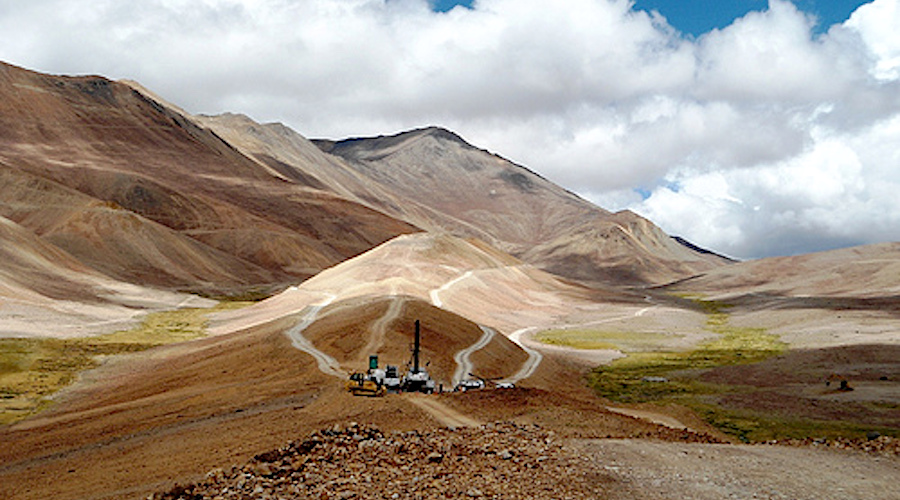
Los Azules copper project in San Juan, Argentina. (Image courtesy of McEwen Mining.)

Argentina has approved Canadian miner McEwen Copper’s $2.7 billion Los Azules copper project in the country for a tax break program known as the Large Investment Incentive Regime (RIGI), the nation’s economy minister said on Friday.

The project is set to contribute $1.1 billion in exports a year, Economy Minister Luis Caputo said in a post on X. McEwen Copper is a subsidiary of McEwen Mining.

Argentina has not produced copper since its Alumbrera mine closed in 2018, but developers and analysts hope projects like Los Azules could make the South American nation a major global supplier.

Caputo said the approval marked a first for a copper mining proposal in San Juan province – Argentina’s leading gold mining region and a hub for so far non-operational copper projects – and would directly and indirectly create over 3,500 jobs.

Los Azules is the eighth project to be approved for the RIGI tax break scheme, bringing a total investment of $15.7 billion under the incentive plan promoted by the government of libertarian President Javier Milei.

Company sources told Reuters McEwen estimates the total investment for Los Azules, which towers 3,500 meters above sea level in the Andes mountain range, will reach $3 billion over three to four years.

The company must now seek financing for this investment, they said.

McEwen plans to produce copper cathodes in Argentina starting from 2029, and should soon publish a feasibility study showing operational details for the next 20 years while in the meantime it works to secure permits.

The mine is set to use a leaching copper extraction method rather than the traditional method of floating and skimming the concentrate, which the company expects will allow it to use five-sixths less water and reduce the impact on local residents.

McEwen is Los Azules’ main shareholder with a 46.4% stake, while automaker Stellantis holds another 18.3% and Nuton/Rio Tinto owns 17.2%.

(By Lucila Sigal; Editing by Sarah Morland)


McEwen Copper's $2.7bn Los Azules project wins Argentina approval

McEwen Copper's $2.7bn Los Azules project wins Argentina approval
/ McEwen copper
By bnl editorial staff September 26, 2025

McEwen Copper's ambitious $2.7bn Los Azules copper project has received approval to participate in Argentina's Large Investment Incentive Regime (RIGI), clearing the path for what could become the country's first high-purity copper cathode producer since mining operations ceased in 2018.

Economy Minister Luis Caputo announced the approval on September 26 with a post on X, confirming Los Azules as the first copper mining project to secure RIGI benefits in San Juan province. The project, controlled by Canadian miner McEwen Inc., represents the eighth project approved under the RIGI, bringing total investments under the programme to $15.7bn.

The approval comes as global copper markets face mounting supply pressures. Industry analysts forecast a supply deficit of 300,000-500,000 metric tonnes by the end of 2025, with demand driven by infrastructure development, electrification projects, and the expanding digital economy.

When bne Intellinews interviewed Michael Meding, McEwen Copper's vice-president, in April, he emphasised the project's strategic importance: "The capital-intensive sector relying on large international investment in Argentina needed an incentive regime like RIGI," he said. "For construction financing, RIGI is absolutely required because the amounts involved in mining projects are substantial, and investors need legal stability."

That stability has now materialised. The RIGI approval grants Los Azules 30-year legal, fiscal and customs stability, including a reduced corporate tax rate of 25% (down from 35%), halved dividend withholding taxes, and streamlined foreign exchange procedures.

Los Azules is set to become the first project in Argentina's mining history to produce high-purity copper cathodes, ready for direct industrial use, positioning the country to bypass traditional concentrate exports that require overseas refining.

The timing is particularly astute given Argentina's copper production drought. The country has not produced copper since the Alumbrera mine closed in 2018, despite sitting atop some of the world's largest undeveloped deposits. Los Azules, ranked as the 9th largest undeveloped copper deposit globally, could help fill that void whilst capitalising on soaring global demand.

Production is slated to commence by 2029, with initial capacity targeting 175,000 metric tonnes annually. The project is projected to generate more than $30bn in export revenues over its 27-year mine life, based on the company's 2023 preliminary economic assessment.

The project's credibility received a significant boost earlier this week when the International Finance Corporation (IFC) signed a collaboration agreement with McEwen Copper. The World Bank Group member will help align Los Azules with international environmental, social and governance standards—a critical step for securing project financing.

"This IFC collaboration is a game-changer for Los Azules," said Rob McEwen, chairman and chief owner of McEwen Inc. "It will help us align with top-tier sustainability standards whilst paving the way for IFC as a potential lead lender and equity partner."

The project already boasts strategic partnerships with European carmaker Stellantis (18.3% stake) and mining giant Rio Tinto through its Nuton subsidiary (17.2% stake), alongside McEwen's controlling 46.4% interest.

McEwen Copper is positioning Los Azules as a "green copper" producer, leveraging innovative leaching technology that consumes five-sixths less water than traditional flotation methods. The project targets carbon neutrality by 2038 and will operate entirely on renewable electricity.

This environmental focus could prove commercially valuable. As supply chains face increasing scrutiny over sustainability credentials, premium pricing for responsibly-sourced copper is becoming more prevalent. During our April interview, Meding noted: "We believe that having a low water and CO2 footprint is important and can be a future competitive advantage."

The next barrier remains substantial: securing financing for what Meding estimates will total $2.7-3bn in development costs. The company has raised $453mn over the past three years but requires an additional $227mn to reach final investment decision, followed by approximately $2.5bn in construction capital.

The feasibility study, due by October's end, will provide updated project economics and operational details. With environmental permits already secured in December 2024 and RIGI approval now confirmed, Los Azules appears well placed to begin detailed engineering and financing discussions.

Despite the positive momentum, political uncertainties linger. Argentina's midterm congressional elections this October will test President Javier Milei's market-friendly agenda after a crushing defeat in Buenos Aires province earlier this month, whilst the 2027 presidential race could potentially alter mining policies.

However, Meding expressed confidence during our April conversation: "During the last elections, all presidential candidates saw mining as the growth engine for Argentina's economic future—something very different from past electoral cycles."

The Los Azules approval reflects broader mining industry trends. Global refined copper demand hit nearly 27mn tonnes in 2024 and is projected to reach 33mn tonnes by 2035, driven primarily by EV transition and digital infrastructure expansion.

Over half of global copper reserves are located in just five countries, whilst China dominates processing with 60% of global ore imports and 45% of refined copper production. Argentina's re-entry into copper production could help diversify global supply chains at a critical juncture.

Copper prices have remained volatile throughout 2025, trading between $9,000-10,500 per metric tonne. Multiple industry observers project prices will rise significantly versus 2024 levels as supply constraints persist alongside robust demand growth.

For Los Azules, current market dynamics appear favourable. The project's preliminary assessment used $3.75 per pound copper pricing, though Meding indicated the forthcoming feasibility study would likely employ higher assumptions.

With RIGI approval secured and international backing materialising, McEwen Copper has cleared significant regulatory hurdles. The company now faces the critical challenge of assembling financing for one of Latin America's most pivotal copper developments—a task that could determine whether Argentina successfully rejoins the global copper supply chain just as the world needs it most.


At least 100 feared dead in northwest Nigeria gold mine collapse, locals say

Stock image.

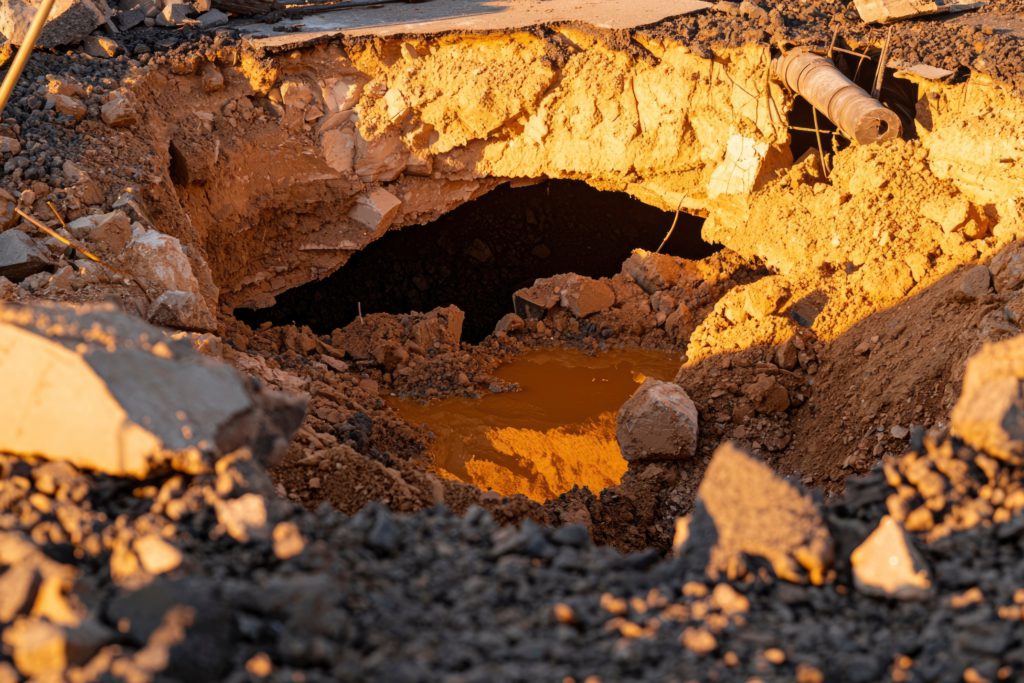
At least 100 people are feared dead following the collapse of a gold mining pit in Nigeria’s Zamfara State, survivors and residents said on Friday.

The pit at the Kadauri mining site in the Maru local government area caved in on Thursday while scores of artisanal miners were working underground, witnesses told Reuters. Rescue operations continued into Friday.

Sanusi Auwal, a local resident involved in rescue efforts, said at least 13 bodies had been retrieved from the rubble, including that of his cousin. “Over 100 miners were involved during the collapse,” Auwal told Reuters by phone.

“We are lucky to be rescued alive. Out of more than 100 people, only 15 of us were rescued,” said Isa Sani, who is currently receiving treatment for injuries.

Muhammadu Isa of the Zamfara State miners association confirmed the incident, adding that some rescuers also suffocated while trying to dig out victims.

Zamfara police spokesperson Yazid Abubakar did not immediately respond to calls and text messages seeking comment.

Illegal mining is common in Zamfara, where armed gangs often control gold fields, fuelling violence and deadly accidents.

(By Ahmed Kingimi and Elisha Bala-Gbogbo)


Everllence Confirms Running of Ethanol-Fuelled, Two-Stroke Engine

Everllence
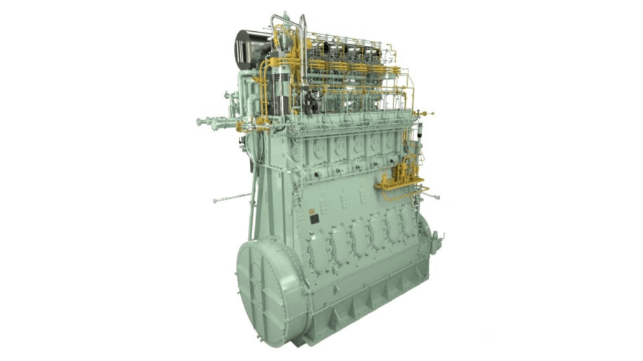
The Everllence B&W ME-LGIM engine

Published Sep 26, 2025 9:33 PM by The Maritime Executive


[By: Everllence]

Everllence has confirmed the successful running on ethanol – at all load points – of a 90-bore ME-LGIM (-Liquid Gas Injection Methanol) engine in Japan.

Everllence pioneered the ME-LGIM platform over a decade ago with the first commercial engine entering service in 2016 within the methanol-carrier segment. Building on experiences from these engines, Everllence scaled up its methanol burning portfolio in 2021 with the first ME-LGIM for a vessel outside the methanol carrier segment and now enjoys prominence as the best-selling, methanol-burning engine across all vessel segments with more than 225 units ordered for newbuildings alone and more than 50 engines in operation already.

Building further on the ME-LGIM platform, the successful operation on ethanol means Everllence now has a fully operational engine with which to document ethanol capabilities.

Ole Pyndt Hansen – Senior Vice President, Head of Two-Stroke R&D, Everllence – said: “The past few years have brought steadily growing interest in ethanol from the market. We always do our utmost to listen to these signals and have accordingly been carrying out the necessary design considerations for quite some time; this has provided us with a solid technical foundation. With this latest development, we now have the technical know-how from an actual running engine to take us to the next level. Our data confirms our earlier assumption that we could run our ME-LGIM engine on ethanol without issues.”

Bjarne Foldager – Head of Two-Stroke Business, Everllence – said: “It’s a proud moment to see yet another ‘first-ever’ for Everllence and that we, once again, have been able to draw on our company’s long engineering heritage. We already have five dual-fuel technologies in service along with an ammonia-powered engine that is on the verge of release. Our position as the world’s leading engine developer within the two-stroke marine segment means that we have a special obligation to push technologies and serve all markets in our efforts to decarbonise the global maritime industry. Now we need legislation in place that considers the case of ethanol as a viable fuel source, and we need a requisite market demand. At Everllence, the market speaks and we listen.”

Michael Petersen – Senior Vice President, Head of PrimeServ Denmark – Everllence, said: “The successful conclusion of running in Japan means that we are now significantly closer to offering ethanol as retrofit product, especially on the S90 engines already equipped with ME-LGIM engine technology, just as our successful ME-GI, ME-LGIP and ME-LGIM retrofit offerings. As such we are eagerly awaiting further market input with regard to the viability of ethanol from commercial, application and bunkering perspectives. In general, introducing ethanol capability to retrofitted engines will bring those customers of ours wishing to pursue alcohol-burning engines – as their pathway to IMO-defined net-zero – to a similar technology-readiness and capability as those directly adopting from our existing engine portfolio.”

The products and services herein described in this press release are not endorsed by The Maritime Executive.


Port Everglades Top Standings in World Bank’s Operational Performance Index

Port Everglades
Port Everglades

Published Sep 26, 2025 10:10 PM by The Maritime Executive


[By: Port Everglades]

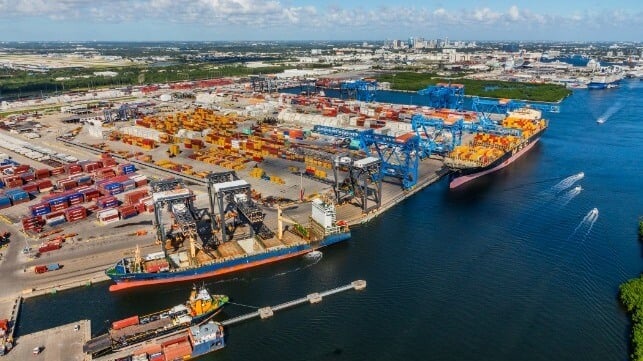
Broward County's Port Everglades is in the top 20% worldwide for container port performance, holding its No. 3 position in North America and No. 1 ranking in Florida, according to the World Bank and S&P Global Market Intelligence's 2024 Container Port Performance Index (CPPI) released this week.

Port Everglades is ranked No. 67 worldwide, a shift from its No. 65 spot in the previous CPPI report.

The CPPI rates container ports around the world based on six key events, including how quickly a vessel moves to a berth, how long it takes to move a vessel's containers, and the time it takes a vessel to exit the port. 

The 2024 Calendar Year data cover 403 ports, 175,000 vessel calls and 247 million cargo moves. 

"In nearly every measure, the port's operational performance is solid and consistent, which speaks to the logistical and infrastructure investments made by both the private and public sector," said Joseph Morris, Port Everglades CEO and Port Director. 

"It's a credit to our customers and their labor force, the supportive Broward County Board of County Commissioners and the dedicated staff who work at the port."

The products and services herein described in this press release are not endorsed by The Maritime Executive.


Jury Finds Ferry Officer Guilty on Lesser Count in Fatal Collision

Commodore Goodwill ferry
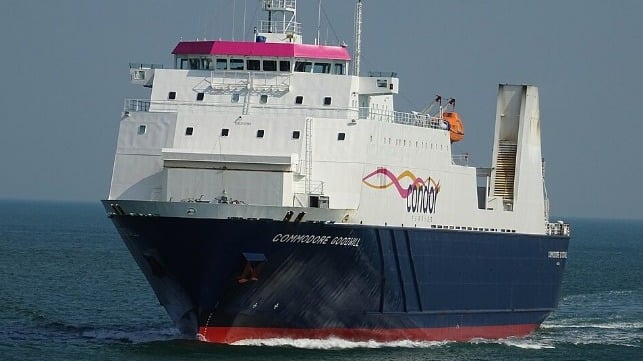
Commodore Goodwill ferry collided with the fishing boat in December 2022 (John K. Thorne photo - CC0 1.0)

Published Sep 26, 2025 2:43 PM by The Maritime Executive


The second officer working aboard the ferry Commodore Goodwill in 2022, when it collided with a fishing boat and killed the three people aboard, was found guilty on a lesser charge during a jury trial in Jersey, UK, on Friday, September 26. The jury was unable to agree on three counts of manslaughter while also acquitting the ferry’s lookout on the manslaughter charges.

The trial stemmed from the December 2022 collision of the Commodore Goodwill (11,000 gross tons) with the fishing boat L’Ecume II. The ferry was running late on its run into Jersey, and at 0535, about four nautical miles off the coast of Jersey, making about 19 knots, it struck and sank the fishing boat. The captain and two crewmembers were lost with the fishing vessel.

The presiding judge, Commission Sir John Saunders, said after three weeks of testimony that it had been “an extraordinarily difficult case. The jury deliberated for 18 hours before finding Artur Sevash-Zade, the ferry’s lookout on the morning of the collision, not guilty. The jury returned on Friday and, after an additional 90 minutes of deliberation, returned its verdict.

Lewis Peter Carr, the second officer and on watch aboard the Commodore Goodwill was found guilty on a lesser charge under Jersey’s Shipping Law. The jury agreed that he had endangered ships, structures, or individuals, an offense that carries a maximum of two years in jail. They were unable to reach a verdict on the manslaughter counts.

The Senior Investigating Officer for the incident, Andy Shearwood, spoke to the media afterward, calling it “one of the most complex investigations that the State of Jersey Police had ever handled.” He detailed that they had taken hundreds of statements, interviewed over 150 witnesses, and examined around 800 documents and over 1000 exhibits.

Investigators, however, were unable to recover the fishing vessel and key pieces of evidence from the vessel. They said the weather and tides had caused additional damage to the vessel. They had hoped to recover the navigational lights and possibly the fuse board to determine if the lights were on or off at the time of the collision. If the lights had been on, L’Ecume II had the right of way, but if they were off, it was its responsibility to move out of the path of the ferry.

During the trial, Carr told the court that he believed the collision had happened because the fishing boat’s lights were off. They also questioned if there was a lookout aboard the fishing boat and if it had altered course in the final minutes before the collision.

Friends of the deceased fishing boat captain called him an excellent sailor. They asserted that he would never have been operating without his lights. 

Prosecutors contended that the collision was the result of human error and negligence. Carr admitted to having been busy with other duties, and a few minutes before the collision, the ferry altered course. They also alleged that the fishing vessel was visible on radar. The lookout had left the bridge earlier for his breakfast but had returned 13 minutes before the casualty.

The Commodore Goodwill arrived in Jersey with scratches and minor damage. The vessel had been in service to Guernsey and Jersey since 1996. The ferry operator Condor Ferries was recently merged into Brittany Ferries, and the vessel was sold earlier this year to DFDS.


Top photo by John K. Thorne -- CC0 1.0


Ammonia: Ambition Meets Reality

Is Ammonia ready for prime time?

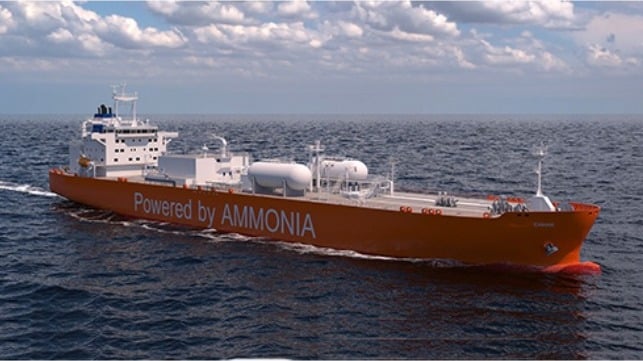
ammonia fueled vessel

Published Sep 26, 2025 7:22 PM by The Maritime Executive


(Article originally published in July/Aug 2025 edition.)


As shipping moves to align with the IMO's ambitious Net Zero Framework, ammonia has emerged as a leading zero-carbon fuel candidate. 

With more clarity emerging from upcoming MEPC meetings, nearly 400 ammonia-capable vessels have now entered global orderbooks. Major regulatory drivers, such as FuelEU Maritime and regional carbon taxation frameworks, further reinforce ammonia's potential advantages, yet actual consumption of sustainable marine fuels remains minimal.

Market sentiment remains cautiously optimistic. Classification societies and regulators are racing to establish safety and operational standards, and pilot infrastructure projects are gaining momentum. Singapore, the world's largest bunkering hub, is actively preparing ammonia bunkering guidelines as the industry edges toward practical adoption.

To assess ammonia's real prospects, we spoke with two Singapore-based industry leaders at the heart of ammonia's maritime development.

BUILDING THE SUPPLY CHAIN

Ashish Anilan now leads Itochu Corporation's global ammonia bunkering business from Singapore. Itochu, a major Japanese trading company, established Clean Ammonia Bunkering Shipping (CABS) to develop a global ammonia bunkering infrastructure.

Anilan frames the industry's commitment to ammonia as a decisive step forward: "What excites me most is the fact that the maritime industry is 'walking the talk' when it comes to climate change. The IMO's Net Zero Framework is the first in the world to combine mandatory emissions limits and greenhouse gas targets."

He acknowledges that maritime decarbonization is not straightforward. "Maritime decarbonization is a complex web of interdependencies influenced by multiple stakeholders," he explains. "So is the decision on fuel choice and bunker port.” 

He adds that multiple fuels will coexist: "The fuel race didn't have a common starting point, and there won't be a single winner. LNG had the true first-mover advantage, while methanol has secured a significant market share, and biofuels provide immediate carbon reduction. Ammonia offers unique benefits for lengthy, heavy-duty voyages with zero direct carbon emissions. We can already see it in the bulk and container vessel segments. Harbor crafts have also started ammonia-based trials.”

Anilan points to ammonia's long history of safety and infrastructure challenges. "Ammonia has been transported as maritime cargo for decades,” he notes, “and its safety is well established for shore-based terminals and industries. Knowledge and safety gaps exist, however, in the bunkering interface and fuel-related systems of the receiving vessels, specifically in bunkering procedures, emergency response protocols, and crew competency.”

The regulatory groundwork is already in motion. “Most class societies have published guidelines for ammonia bunkering and using ammonia as a marine fuel," Anilan states. "Singapore is preparing guidelines for port-specific ammonia bunkering, which will coexist with LNG and methanol bunkering guidelines.”

Itochu recently took a significant step forward by signing a contract to build the world's first ammonia bunker vessel with Sasaki Shipbuilding. "Finalizing the Ammonia Bunkering Vessel design, especially for the ammonia transfer systems, and creating rigorous crew training programs will remain top priorities," Anilan says. "Lessons learned from these activities will support the development of clear regulatory frameworks for ammonia bunkering in Singapore and other strategic locations such as Algeciras and the Suez Canal.”

Collaboration will determine success.

“Itochu has been promoting its integrated project to develop ammonia-fueled ships and establish a global ammonia supply chain in collaboration with partners,” he notes. “Projects like the Green Ammonia Initiative from Aceh (GAIA), in partnership with PT Pupuk Indonesia and Toyo Engineering Corporation as part of the Global South Future-Oriented Co-Creation Project, are expected to provide a stable supply of low-carbon ammonia for Itochu's marine bunkering business.”

Ultimately, Anilan frames inclusive adoption as the real challenge.

“More than half of the world fleet in the orderbook is capable of using alternative fuels," he concludes. "However, consumption of sustainable marine fuels remains negligible. The real challenge is not developing alternative fuels but empowering every marine operator to use them in a just manner so that they become the co-creators of the transition, not just forced recipients of the change."

REALITY CHECKS

Jon Løken, Commercial Director Asia-Pacific at Siglar Carbon, provides emissions intelligence and strategic guidance to shipping stakeholders. He offers a measured assessment of ammonia's near-term viability. 

"As a dual-fuel combustion fuel, ammonia has minimal potential,” he states. "Even though we have seen a surge in vessels on order that are ammonia-ready, I doubt many of them will ever be operated with ammonia as fuel.” 

He sees greater promise for ammonia in the long run: “I believe fuel cells have major potential as a source of hydrogen for vessels with fuel cell technology. However, fuel cells are still mostly in the pilot stage." 

Løken highlights the cautious optimism reflected in the market. "Only a handful of ammonia dual-fuel ships are in operation,” he says. “However, the surge in orders for newbuilds suggests that the market is quickly gaining confidence in ammonia as a fuel option. But certainly, it's lagging behind methanol as an alternative fuel option. In general, we're seeing that dual-fuel engines are becoming a normal choice for newbuilds.”

Emissions and fuel characteristics remain a hurdle.

"Fossil-based or grey ammonia is quite comparable to conventional fuels in terms of emissions," he explains. "But as we know, we have some challenges with it. Low-energy density means increased fuel use; a heavier-laden ship burns more fuel. In addition, test results suggest that the NOx emissions when combusting ammonia are something we need to watch and combat.

"Additionally, there are near-term regulatory and market limitations. “At the moment, Fuel EU and the IMO framework make ammonia a less-than-viable option for at least the next five years,” Løken says. “As production of low-carbon ammonia is scaling, we may see it used as a partial fuel in certain restrictive areas such as ports or highly taxed Emission Control Areas."

He adds that other fuels may dominate the near-term: “It seems other options will probably overshadow ammonia as a near-term option. This is particularly true for tramping vessels, as ammonia availability is scarce. For larger line operators who are hedging options, it may well feature as a smaller mix in the medium-term window.”

Accurate emissions data is now essential. “Accurate and frequent data collection from the ships is essential to understand performance fully,” cautions Løken. “For the foreseeable future, the frameworks favor calculations over actually measuring emissions, so we're making assumptions with our standard models that may well have flaws when it comes to methane slip, NOx, and other GHG emissions."

He concludes by explaining how the market is adapting: “Charterers have a new tool with carbon taxation. Traditionally, fuel has just been a cost, but now it's a commodity itself. A voyage with the right option gives tradeable value. "Brokers and charterers, he adds, are actively developing strategies and hedging positions as shipping transitions toward lower-carbon fuels and tighter regulations.

FUTURE ADOPTION?

As ammonia infrastructure matures and early projects come online, adoption will hinge on operational readiness, robust regulation, transparent data, and market alignment. The next five years, guided by collaborative initiatives and MEPC outcomes, will determine whether ammonia moves from promise to a permanent role in shipping's zero-carbon future. – MarEx

Sean Holt is a frequent contributor to The Maritime Executive.

The opinions expressed herein are the author's and not necessarily those of The Maritime Executive.

 

Four Yards in China and Turkey to Battle for Scotland’s Next RoPax Order

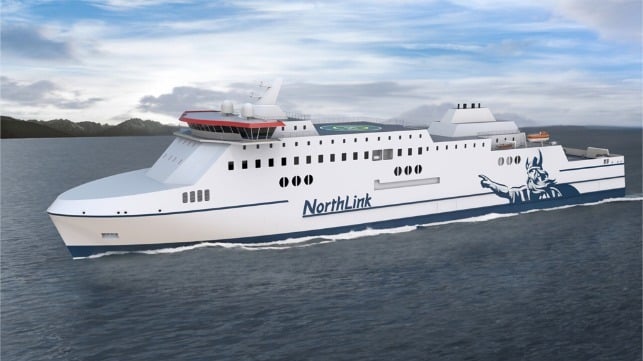
proposed Scottish RoPax ferries
Scotland is proceeding wit the process for ordering the two RoPax ferries (Transport Scotland)

Published Sep 26, 2025 7:25 PM by The Maritime Executive


The Scottish government has shortlisted four shipyards to battle for a $270 million contract to build two new RoRo/passenger ferries as part of fleet renewal for operator Caledonian Maritime Assets Limited (CMAL). The procurement process for two new ferries to serve the Northern Isles network began in June with a target of having the new ships under contract by 2026.

A shortlist for companies was released on September 22, which includes Turkish companies Cemre and Tersan, China’s GSI, and Stena UK with its partner CMJL (Weihai) to battle for the contract. The government said the four yards were selected based on specific criteria, including facilities, capacities, and capabilities to take on the project.

The program will now proceed to the tender stage for the $270 million project that covers both vessels, CMAL and other costs, and shore power upgrades. The government, which has already allocated funds in the current budget, intends to award the contract in February next year, with the ferries expected to enter service in 2029. 

The publication of the list has, however, drawn immediate scrutiny as all the yards are overseas. Transport Scotland confirmed to The Scotsman newspaper that no British yards had sought the contract. Fugerson Marine told the paper that the length of the vessels specified in the tender is beyond its current capacity.

The two 140-meter (459-foot) RoPax ferries will have the capacity to accommodate up to 200 passengers during peak months and alternatively revert to freight mode to maximize commercial vehicle capacity. They will serve the Aberdeen to Kirkwall/Lerwick route.

The freighter-flex design vessels are expected to have a freight capacity of 1,400 lane meters, 40 percent more than the vessels they will replace, and have a service speed of 20 knots. The two will replace the aging Helliar and Hildasay ferries that were built in 1997 and 1999, respectively, and have a capacity of just 12 passengers each. Both are owned by CMAL but operated by Serco NorthLink.

“These new vessels will have increased freight capacity, higher operating speeds, and additional capacity for passengers in peak season. This will enhance the efficiency and reliability of ferry services to better support the needs of businesses and communities in the Northern Isles for years to come,” said Fiona Hyslop, Cabinet Secretary for Transport.

The two newbuilds are part of the Scottish government's commitment to support the Northern Isles freight vessel replacement project to enhance the efficiency and reliability of ferry services in line with the needs of businesses and communities in the region.

“The desire for an increased freight provision was regularly mentioned throughout our public engagement sessions, but so too was additional passenger accommodation to add resilience to the fleet,” noted Kevin Hobbs, CMAL Chief Executive.