Saturday, September 27, 2025


What Does Venezuela Have To Do?

by  | Sep 23, 2025 |  ANTIWAR.COM

Reporting has recently emerged that the United States is considering direct strikes on Venezuela that could increase volatility in the region and the risk of war.

Under the pretext of disrupting the flow of drugs into the U.S. by Venezuelan drug cartels, the U.S. has militarized the waters off the coast of Venezuela, flooding them with Aegis guided-missile destroyers, a nuclear-powered fast track submarine, P-8 spy planes and F-35 fighter jets. On September 2, American forces fired on a small speed boat that the U.S. claims was running drugs for a Venezuelan cartel.

The Trump administration has yet to offer evidence for its claim. They have neither publicly identified who the eleven people who were killed on the boat were nor what drugs they were carrying. Congress has still not been briefed.

Secretary of State Marco Rubio said the boat was “probably headed to Trinidad or some other country in the Caribbean.” Trump says it was bound for the United States. Turns out, it was headed back to Venezuela.

U.S. officials familiar with the operation have now told the New York Times that, having “spotted the military aircraft stalking it,” the boat has already “ altered its course and appeared to have turned around before the attack started.” The 29 second video that Trump posted on social media spliced together several clips but edited out the boat turning around. Despite this lack of imminent threat, the aircraft, either an attack helicopter or an MQ-9 Reaper drone, “repeatedly hit the vessel before it sank.”

The Trump administration has claimed the right to supplant the National Guard and law enforcement with the military and lethal force on the grounds that the drug cartels are terrorist organizations who pose a threat to the national security of the United States because the drugs they bring into the U.S. kill Americans. The U.S. has invoked the right to self-defense, and Rubio has insisted that the speed boat was “an immediate threat to the United States.” Except that if it had turned around, it wasn’t.

Setting aside the legitimacy of the terrorist justification, if the boat had already turned around, the immediate threat argument is also blown out of the water. “If someone is retreating, where’s the ‘imminent threat’ then?” Rear Admiral Donald J. Guter, a retired top judge advocate general for the Navy from 2000 to 2002, asked The Times. “Where’s the ‘self-defense’? They are gone if they ever existed — which I don’t think they did.” Rear Admiral James E. McPherson, the top judge advocate general for the Navy from 2004 to 2006, added, “If, in fact, you can fashion a legal argument that says these people were getting ready to attack the U.S. through the introduction of cocaine or whatever, if they turned back, then that threat has gone away.”

The Trump administration has made it clear that the attack was not a one-time anomaly. Secretary of War Pete Hegseth said, “We smoked a drug boat, and there’s 11 narco terrorists at the bottom of the ocean, and when other people try to do that, they’re going to meet the same fate.” Since then, three more Venezuelan boats have met the same fate. Hegseth told U.S. troops on a ship in the waters off Puerto Rico that “What you’re doing right now – it’s not training.” He told them that they were on the “front lines” of a “real-world exercise.”

On a post on X (formerly Twitter), Hegseth told U.S. forces that, “It’s not if, it’s when. You’re on a mission… And the full power of the American military… will be used to ensure the American people are kept safe.”

Ken Klippenstein reports that, according to military sources, the Trump administration is considering further, and more significant, strikes on Venezuela. The strikes could take the form of either the shooting down of Venezuelan military aircraft or bombing Venezuelan military airfields. Such action could be taken in one of two situations: if Venezuela threatens the U.S. forces off its coast or if Venezuelan president Nicolás Maduro does not enhance his administration’s efforts against drug cartels.

The first situation is a dangerous possibility, depending on the interpretation of “threaten.” Venezuela has twice flown F-16 fighter jets over the USS Jason Dunham. Though Venezuelan aircraft are likely displaying a show of defense, as the U.S. would, at least, do if there were foreign attack vessels off their coast, Trump said that if Venezuelan jets fly over U.S. Navy vessels again, “they’re going to be in trouble.”

The second raises, once again, the question of what Venezuela is to do. “The Venezuelan government’s collaboration in the fight against drug trafficking was among the best in South America,” according to former Executive Director of the United Nations Office on Drugs and Crime Pino Arlacchi. And now, on top of that, Maduro has ordered the more than doubling of Venezuelan forces to monitor drug trafficking. In addition to the 10,000 troops already deployed, the Venezuelan military is ordering an additional 15,000 “to determine and verify the absence of illicit crops” and to “to block this area also of possible drug trafficking.”

Despite Venezuela’s stellar past record and the current enhancing of its efforts, the U.S. is still threatening military action if Maduro doesn’t enhance his administration’s efforts against drug growing and trafficking.

What makes the question of what Venezuela is supposed to do more difficult is that there is nothing Venezuela can do. The U.S. is demanding that Venezuela make a course correction to correct a problem that does not exist.

The  2025 UNODC World Drug Report assesses that Venezuela “has consolidated its status as a territory free from the cultivation of coca leaves, cannabis and similar crops.” The report says that “[o]nly 5% of Colombian drugs transit through Venezuela.” The EU’s European Drug Report 2025 corroborates the UN report: it “does not mention Venezuela even once as a corridor for the international drug trade.”

The Trump administration has offered no evidence that the destroyed speed boat was carrying drugs or drug smugglers or that it was on its way to American shores. Even if it was, it posed no immediate threat because it had already turned around and headed back to port. The Maduro administration has already addressed American demands and increased its efforts against the drug growing and trafficking that was never a problem in the first place. None-the-less, the U.S. is threatening further military strikes on Venezuela, raising the hard to answer question of what Venezuela is supposed to do.


What’s In a Name? The ‘Defense’ Department Has Always Been About War


by  and  | Sep 23, 2025 |  ANTIWAR.COM

The renaming of the Defense Department should have surprised no one. Donald Trump is an incipient fascist doing what such figures do. Surrounded by a coterie of illiberal ideologues and careerist sycophants, he and his top aides have dispensed with pretense and precedent, moving at breakneck speed to demolish what remains of the battered façade of American democracy.

In eight months, his second administration has unleashed a shock-and-awe assault on norms and institutionscivil libertieshuman rights, and history itself. But fascism never respects borders. Fascists don’t recognize the rule of law. They consider themselves the law. Expansion and the glorification of war are their lifeblood. Italian fascist leader Benito Mussolini put it all too bluntly: the fascist “believes neither in the possibility nor the utility of perpetual peace… war alone brings up to its highest tension all human energy and puts the stamp of nobility upon the peoples who have courage to meet it.”

Pete Hegseth is now equally blunt. From the Pentagon, he’s boasting of restoring a “warrior ethos” to the armed forces, while forging an offensive military that prizes “maximum lethality, not tepid legality. Violent effect, not politically correct.” The message couldn’t be clearer: when the U.S. loses wars, as it has done consistently despite commanding the most powerful military in history, it’s not due to imperial overreach, political arrogance, or popular resistance. Rather, defeat stems from that military having gone “woke,” a euphemism for failing to kill enough people.

The recent rechristening of the Department of Defense as the Department of War was certainly a culture-war stunt like Trump’s demand that the Gulf of Mexico be renamed the Gulf of America. But it also signaled something more insidious: a blunt escalation of the criminal logic that has long underwritten U.S. militarism. That logic sustained both the Cold War of the last century and the War on Terror of this one, destroying millions of lives.

When Hegseth defended the recent summary executions of 11 alleged Venezuelan drug smugglers on a boat in the Caribbean, he boasted that Washington possesses “absolute and complete authority” to kill anywhere without Congressional approval or evidence of a wrong and in open defiance of international law. The next day, in responding on X to a user who called what had been done a war crime, Vance wrote, “I don’t give a shit what you call it.” It was the starkest admission since the Iraq War that Washington no longer pretends to operate internationally under the rule of law but under the rule of force, where might quite simply makes right.

While such an escalation of verbiage — the brazen confession of an imperial power that believes itself immune from accountability — should alarm us, it’s neither unprecedented nor unexpected. Peace, after all, has never been the profession of the U.S. military. The Department of Defense has always been the Department of War.

American Imperialism and “Star-Spangled Fascism”

The U.S. has long denied being an empire. From its founding, imperialism was cast as the antithesis of American values. This nation, after all, was born in revolt against the tyranny of foreign rule. Yet for a country so insistent on not being an empire, Washington has followed a trajectory nearly indistinguishable from its imperial predecessors. Its history was defined by settler conquest, the violent elimination of Indigenous peoples, and a long record of covert and overt interventions to topple governments unwilling to yield to American political or economic domination.

The record is unmistakable. As Noam Chomsky once put it, “Talking about American imperialism is like talking about triangular triangles.” And he was hardly the first to suggest such a thing. In the 1930s, General Smedley Butler, reflecting with searing candor on his years of military service in Latin America, described himself as “a racketeer, a gangster for capitalism… I helped make Mexico, especially Tampico, safe for American oil interests… I helped make Haiti and Cuba a decent place for the National City Bank boys to collect revenues in. I helped in the raping of half a dozen Central American republics for the benefit of Wall Street.”

Historically, imperialism and fascism went hand in hand. As Aimé Césaire argued in his 1950 Discourse on Colonialism, fascism is imperialism turned inward. The violence inherent in colonial domination can, in the end, never be confined to the colonies, which means that what we’re now witnessing in the Trumpian era is a reckoning. The chickens are indeed coming home to roost or, as Noura Erakat recently observed, “The boomerang comes back.”

In their insatiable projection of power and pursuit of profit, Washington and Wall Street ignored what European empires had long revealed: that colonization “works to decivilize the colonizer, to brutalize him… to degrade him.” English novelist Joseph Conrad recognized this in his classic nineteenth-century work of fiction, Heart of Darknessconcluding that it wasn’t the Congo River but the Thames River in Great Britain that “led into the heart of an immense darkness.”

Imperialism incubates fascism, a dynamic evident in the carnage of World War I, rooted, as W.E.B. DuBois observed at the time, in colonial competition that laid the foundations for World War II. In that conflict, Césaire argued, the Nazis applied to Europe the methods and attitudes that until then were reserved for colonized peoples, unleashing them on Europeans with similarly genocidal effect.

War is Peace

In the postwar years, the United States emerged from the ruins of Europe as the unrivaled global hegemon. With some six percent of the world’s population, it commanded nearly half of the global gross domestic product. Anchored by up to 2,000 military bases across the globe (still at 800 today), it became the new imperial power on which the sun never set. Yet Washington ignored the fundamental lesson inherent in Europe’s self-cannibalization. Rather than dismantle the machinery of empire, it embraced renewed militarism. Rather than demobilize, it placed itself on a permanent global war footing, both anticipating and accelerating the Cold War with that other great power of the period, the Soviet Union.

The United States was, however, a superpower defined as much by paranoia and insecurity as by military and economic strength. It was in such a climate that American officials moved to abandon the title of the Department of War in 1947, rebranding it as the Department of Defense two years later. The renaming sought to reassure the world that, despite every sign the U.S. had assumed the mantle of European colonialism, its intentions were benign and defensive in nature.

That rhetorical shift would prove inseparable from a broader ideological transformation as the Cold War froze geopolitics into rigid Manichean camps. President Harry Truman’s March 1947 address to Congress marked the start of a new global confrontation. In that speech, the president proclaimed the United States the guardian of freedom and democracy everywhere. Leftist movements were cast as Soviet proxies and struggles for national liberation in the former colonial world were framed not in the language of decolonization and self-determination but as nefarious threats to American interests and international peace and security.

In Europe at the time, a civil war raged in Greece, while decisive elections loomed in Italy. Determined not to “lose” such countries to communism, Washington moved to undermine democracy under the guise of saving it. In Greece, it would channel $300 million to right-wing forces, many staffed by former fascists and Nazi collaborators, in the name of defending freedom. In Western Europe, Washington used its position as the world’s banker to manipulate electoral outcomes. In the wake of the 1947 National Security Act that created the Central Intelligence Agency, or CIA (the same bill that renamed the War Department), the agency launched its first large-scale covert operation. In 1948, the U.S. would funnel millions of dollars into Italy and unleashed a torrent of propaganda to ensure that leftist parties would not prevail.

Across the Third World, the CIA perfected that template for covert interventions aimed at toppling democratic governments and installing pliant authoritarians. The overthrow of Iran’s Mohammad Mossadegh in 1953 and Guatemala’s Jacobo Árbenz in 1954 marked the beginning of a series of regime-change operations. More assassinations and coups followed, including of Patrice Lumumba in the Congo in 1961, Sukarno in Indonesia in 1965, and Salvador Allende in Chile in 1973. The utter contempt for democracy inherent in such actions was embodied in National Security Advisor Henry Kissinger’s remark: “I don’t see why we need to stand by and watch a country go communist due to the irresponsibility of its own people.”

In the aftermath of each intervention, Washington installed anticommunist dictators who had one thing in common: they murdered their own citizens, and often those of other countries as well, dismantled democratic institutions, and siphoned national wealth into personal fortunes and the coffers of multinational corporations.

By the 1980s, the CIA was bankrolling proxy wars spanning the globe. Billions of dollars were being funneled to the Afghan mujahideen and Nicaraguan Contras. In both Afghanistan and Nicaragua, those U.S.-backed “freedom fighters” (or, as President Ronald Reagan termed the Contras, the “moral equals of our founding fathers”) deployed tactics that amounted to scaled-up terrorism. The mask occasionally slipped. As historian Greg Grandin has noted, one adviser to the Joint Chiefs of Staff described the Contras as “the strangest national liberation organization in the world.” In truth, he conceded, they were “just a bunch of killers.”

“The Greatest Purveyor of Violence”

As with the CIA, the not-so-aptly-renamed “Defense Department” would oversee a succession of catastrophic wars that did nothing to make Americans safer and had little to do with the protection of democratic values. Within a year of its renaming, the U.S. was at war in Korea. When the North invaded the South in 1950, seeking to reunify a peninsula divided by foreign powers, Washington rushed to intervene, branding it a “police action,” the first of many Orwellian linguistic maneuvers to sidestep the constitutional authority of Congress to declare war.

The official narrative that the communists launched the war to topple a democratically elected government in the South obscured its deeper origins. After World War II, Washington installed Syngman Rhee, an exile who had spent decades in the United States, as South Korea’s leader. He commanded little popular legitimacy but proved a staunch ally for American officials determined to secure an anticommunist foothold on the peninsula. Far from embodying liberal democracy, his regime presided over a repressive police state.

In 1948, two years before the war, an uprising against Rhee’s corrupt rule broke out on Jeju Island. With Washington’s blessing, his security forces launched a brutal counterinsurgency that left as many as 80,000 dead. Far from an aberration, Jeju epitomized Washington’s emerging Cold War policy: not the cultivation of democracies responsive to their citizenry (with the uncertainty that entailed), but the defense of authoritarian regimes as reliable bulwarks against communism.

The Korean War also marked a growing reliance on air power. Carpet bombing and the widespread use of napalm would reduce the North to rubble, destroying some 85% of its infrastructure and killing two million civilians. As future Secretary of State Dean Rusk would later admit, the U.S. bombed “everything that moved in North Korea.” The only “restraint” exercised was the decision not to deploy atomic bombs, despite the insistence of Air Force General Curtis LeMay who would reflect unapologetically, “Over a period of three years or so, we killed off… 20 percent of the population.”

A remarkably similar pattern unfolded in Vietnam. As revealed in the Pentagon Papers, the United States initially backed France in its attempt after World War II to reimpose colonial rule over Indochina. After the French forces were defeated in 1954, the partition of the country ensued. Elections to reunify Vietnam were scheduled for 1956, but U.S. intelligence concluded that the North’s communist leader, Ho Chi Minh, would win in a landslide, so the elections were cancelled. Once again, Washington placed its support behind the unpopular, repressive South Vietnamese regime of Ngo Dinh Diem, chosen not for his legitimacy but for his reliability in the eyes of American policymakers.

The result was a futile slaughter. The U.S. would kill well over three million people in Southeast Asia and drop more than three and a half times the tonnage of bombs on Vietnam, Cambodia, and Laos as were used in all of World War II. That orgy of violence would lead Martin Luther King Jr., in 1967, to denounce the United States as “the greatest purveyor of violence in the world today.” The same has held true for nearly the entire span of the past 80 years.

Empire or Democracy

The human toll of the Cold War exceeded 20 million lives. As historian Paul Chamberlin calculated, that amounted to some 1,200 deaths every day for 45 years. To call such an era “cold” was not only misleading but obscene. It was, in truth, a period of relentless and bloody global conflict, much of it instigated, enabled, or prolonged by the United States. And its wars also produced the blowback that would later be rebranded as the “War on Terror.”

The names of America’s adversaries may have changed over the years from Hitler to Stalin, Kim Il-Sung to Ho Chi Minh, Saddam Hussein to Xi Jinping, but the principle has remained constant. Washington reserves for itself the unilateral right to intervene, violently and antidemocratically, in the affairs of other nations to secure what it considers its interests. The reversion of the Defense Department to the War Department should be seen less as a rupture than a revelation. It strips away a euphemism to make far plainer what has long been the reality of our world.

We now face a choice. As historian Christian Appy has reminded us, “The institutions that sustain empire destroy democracy.” That truth is unfolding before our eyes. As the Pentagon budget tops one trillion dollars and the machinery of war only expands in Donald Trump’s America, the country also seems to be turning further inward. Only recently, President Trump threatened to use Chicago to demonstrate “why it is called the Department of War.” Meanwhile, U.S. Customs and Immigration Enforcement, or ICE, is set to become among the most well-funded domestic “military” forces on the planet and potentially the private paramilitary of an aspiring autocrat.

If there is any hope of salvaging this country’s (not to speak of this planet’s) future, then this history has to be faced, and we must recover — or perhaps discover — our moral bearings. That will require not prolonging the death throes of American hegemony, but dismantling imperial America before it collapses on itself and takes us all with it.

Eric Ross is an organizer, educator, and PhD candidate in the history department at the University of Massachusetts Amherst.

Follow TomDispatch on Twitter and join us on Facebook. Check out the newest Dispatch Books, John Feffer’s new dystopian novel, Songlands (the final one in his Splinterlands series), Beverly Gologorsky’s novel Every Body Has a Story, and Tom Engelhardt’s A Nation Unmade by War, as well as Alfred McCoy’s In the Shadows of the American Century: The Rise and Decline of U.S. Global Power, John Dower’s The Violent American Century: War and Terror Since World War IIand Ann Jones’s They Were Soldiers: How the Wounded Return from America’s Wars: The Untold Story.

Italy - Palestine solidarity


Finally, a general strike!


Wednesday 24 September 2025, by Gippò Mukendi Ngandu


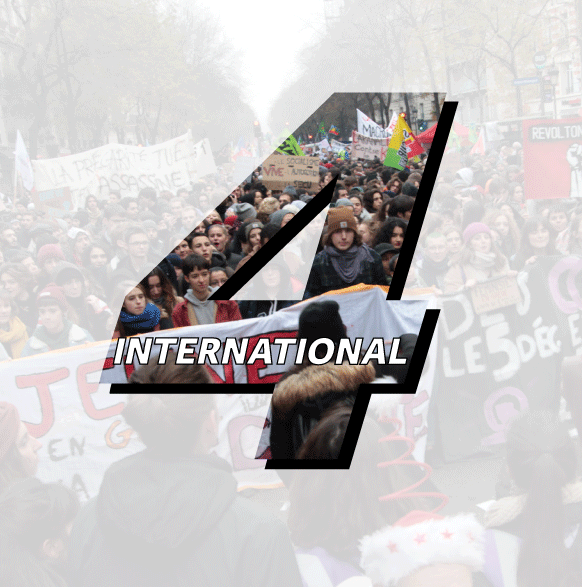
Millions of workers and students in Italy came out against the genocide in Gaza on Monday 22 September.


It is difficult to estimate exact numbers on such an intense day of mobilisation for Palestine. It was a real mass event bringing together at last people from different generations. What is certain is that for years we have not seen such a flood of workers, together with students, pouring into major Italian cities such as Naples, Milan, Bologna, Turin, Brescia, Florence, Palermo, and Catania, as well as in another seventy or so cities.

The general strike called by the grassroots unions was not only successful, but exceeded expectations. Port gates were blocked in Genoa, Livorno, Marghera, Trieste, and Salerno. In Bologna, the ring road was occupied, while in Florence, the highway to Pisa and Livorno was blocked. The marches, on the other hand, multiplied throughout the day, and even in the evening, the streets of numerous cities were filled with new actions and blockades.

In reality, the level of participation is only surprising up to a point. Mobilisations against the genocide in Gaza and in support of the Palestinian people have grown over the last year to involve broad sectors beyond the usual left audience. For example we had seen this in the demonstration on June 21 in Rome. Furthermore, very broadly based campaigns have also grown over the course of the year, despite the fragmentation that has often characterized them.

The Global Sumud Flotilla initiative has undoubtedly acted as a unifying force, broadening participation to large sections of the population, as well as workers. From the end of August and early September, initiatives in support of the “flotilla” multiplied, as did indignation against the policy of genocide and ethnic cleansing. There has been growing outrage against the Meloni government, which continues to maintain commercial and military relations with Israel and is increasingly subservient to the strategic choices of Trump and NATO.

Meanwhile, the call for a general strike has grown in many workplaces, and there is a greater willingness to mobilise in solidarity with the Palestinian people.

Grassroots trade unionism, which has always mobilised in support of the Palestinian people and against the genocide in Gaza, has supported called for a general strike, which was already in the minds of many workers. It is no coincidence that many CGIL members went on strike, particularly in schools, but not only there.

The CGIL, the main trade union confederation which is close to the PD (Democratic Party), however, missed an opportunity. Instead of supporting the large mobilisations and the general strike, it decided to plough its own furrow, building its own initiatives completely separate from the ongoing mobilization. Yet, significant associations such as ARCI (cultural) and ANPI (partisan veterans), other associations and NGOs supporting the Global Sumud Flotilla had decided to join the general strike.

Today’s general strike, while it did not bring all of Italy to a standstill, is a key moment for the building of a large movement in support of Gaza and the Palestinian people, as well as against the imperialist, war policies of Western governments and the Italian government. It also raises the question of developing European mobilizations and the need for a European general strike against governments complicit in genocide and advocates of rearmament.

23 September 2025

Translated by International Viewpoint from Sinistra Anticaptialista.

Attached documentsfinally-a-general-strike_a9186.pdf (PDF - 905.3 KiB)
Extraction PDF [->article9186]


Gippò Mukendi Ngandu is an anti-racist activist and part of the leadership of Sinistra anticapitalista and of the Fourth International.


International Viewpoint is published under the responsibility of the Bureau of the Fourth International. Signed articles do not necessarily reflect editorial policy. Articles can be reprinted with acknowledgement, and a live link if possible.


The Israel Lobby and the Engineered Famine in Gaza

by  | Sep 23, 2025 |  ANTIWAR.COM

Amid one of the most severe humanitarian crises of the century, the gap between the value-driven rhetoric of American foreign policy and the realities on the ground is becoming increasingly apparent. This chasm is deepened by reports of child malnutrition, images of long queues for water and bread, and news of halted aid convoys, revealing the complex relationship between power and narrative-building in Washington. In recent months, as food insecurity has intensified and warnings of famine in parts of Gaza have grown, the tone of criticism in the American capital has shifted. Phrases that once cautiously spoke of the “unintended consequences of war” have given way to more explicit statements about deliberate obstacles to humanitarian aid. This change is not a simple difference in expression but a sign of the erosion of a long-standing pattern of organized influence that has shadowed decision-making for years. The price of this pattern is being paid today, first by the people of Gaza, and second by the credibility and global standing of the United States. At the core of this shift lies a clear reality: when access to basic necessities of life, such as food, water, medicine, and fuel, is regulated based on military and political considerations, one can no longer speak of “inevitable consequences of war.” This is the point where political and legal responsibility begins.

In this context, the shift in the approach and language of some members of Congress takes on a significance that transcends daily partisan disputes. Representatives who for years considered “support for the ally” a self-evident principle requiring no justification now speak about the relationship between security and ethics, referencing “legitimate leverage” and “specific human conditions.” This change signifies a quiet yet tangible transition of the American legislative body from its long-standing self-censorship. Although this transformation is not uniform or universal, it is transforming the language used to describe the crisis as much as it is changing the American political landscape. Technical reports on food insecurity indicators, frequent news of blocked humanitarian aid, and medical testimonies about malnutrition collectively paint a new picture of the crisis, one in which neutral phrases are no longer effective. When women and children face the risk of death whether they stay in shelters and starve or venture out to find water and food; when the distribution of aid is governed not by need and vulnerability but by policies of “collective punishment”; and when restrictions become a recurring pattern, the legal and political mind is forced to reassess the situation. What is happening is no longer merely the result of uncontrolled factors but the product of designed mechanisms. The link between these mechanisms and political support in Washington is the point where the discussion of famine becomes tied to the issue of American sovereignty and collective conscience.

The role of the Israel Lobby extends beyond financial matters and stems from a unique combination of ideological synergy, structural access to legislative centers, and the ability to redefine the boundaries of permissible discourse. Three main pillars, neoconservative networks, Christian Zionist movements, and professional lobbying organizations, have built a model of “support for the ally” over decades that even defines what “moderation” is. In this model, criticism of policy quickly morphs into criticism of identity; questioning the prioritization of humanitarian aid over military operations is reduced to a test of party loyalty; and attempts at ethical assessment are marginalized through labeling. The result of this process is the erosion of a discursive space that once allowed for disagreement based on data and logic. This space has gradually shifted from “policymaking” to “narrative management.” When this narrative management coincides with the control of humanitarian access, it carries a practical message: famine is engineered not only in warehouses but also in the realm of meaning. Vocabulary is softened to conceal the harshness of suffering, and images are presented in a way that pushes fundamental questions out of the spotlight.

American public opinion, however, shows a different direction, slowly but steadily. Polls indicating declining support for the continuation of the war, even with temporary fluctuations, point to a strengthening desire to end the current situation. Voter preferences are leaning towards a ceasefire and unrestricted access to humanitarian aid. In this mirror, the gap between official language and public sentiment becomes more apparent: security rhetoric loses its credibility when confronted with images of deliberate starvation, and narratives of “moral exceptionalism” collapse under the weight of evidence. The gap between policymaking committees and the public conscience will, sooner or later, manifest itself at the ballot box and in electoral coalitions; but even before that, it has institutional consequences: the more insistence there is on old red lines, the more limited the space for public dialogue becomes and the higher the cost of stating the obvious. Where precise vocabulary is abandoned, politics becomes costless at the level of speech and costly at the level of human lives.

The external consequence of the persistence of this situation is also clear. The United States, which for years has tried to maintain an image of a “rules-based mediator,” increasingly resembles a “party to the conflict” in the mirror of Gaza, a change that is not merely symbolic and has a direct impact on its ability to set rules and build consensus in the Global South. Wherever America tries to advance a multilateral mechanism, the recent memory of the engineered famine is placed on the table as evidence against its claims of neutrality and justice. Legal language, when marginalized in one major case, loses its credibility in others, and soft power is slowly but steadily depleted. In a world where rivals have well understood that today’s conflict is a battle of narratives and legitimacy, the erosion of soft power carries a heavy cost, especially when rival capitals turn every image of a water queue and every malnutrition chart into evidence against the claimed ethical leadership.

The media plays a dual role in this crisis. On one hand, by focusing on technical details, such as route security, warehouse capacity, or distribution risks, they marginalize human suffering and reduce public awareness to a heap of numbers and terminology. On the other hand, every small opening, an independent field report, a doctor’s testimony, or an image of a queue, can become a crack through which the simple truth of the catastrophe breaks through the mass of words. The battlefield of meaning and the battlefield of aid are not separate at this historical moment; they are one front where every linguistic retreat leads to a reduction in real access. In these conditions, the tendency towards generalization is more than a stylistic habit; it is a mechanism that dims the possibility of judgment and reduces everything to “conflicting narratives.” But beneath these narratives, hungry bodies and the weary eyes of children measure reality by a different standard.

From a legal perspective, the burden of proof lies with the policy that restricts access. International humanitarian law is clear on the immunity of civilians, the priority of aid, and the prohibition of collective punishment. Any interpretation that suspends these principles effectively paves the way for turning an “exception” into a “rule” and blurs the line between the legal system and the logic of power. When this blurring is accompanied by organized political pressure, which increases the electoral cost for critical representatives and shifts the boundaries of discourse in favor of a particular narrative, not only ethics but also national sovereignty is damaged. Sovereignty, in its precise meaning, is the ability to make independent decisions based on public interest and declared values. If a network, through media labeling and structural cost-imposition, can prevent representatives from deciding based on field data and legal criteria, even under the guise of “supporting an ally”, the result is the demotion of America’s status from an arbiter of rules to a party in the dispute.

Ultimately, what is seen in the mirror of Gaza is also an image of America itself: a country oscillating between two definitions of power; power as the imposition of an ally’s will, or power as the preservation of minimum humanitarian standards. This oscillation is not merely theoretical; it is tied to the future of its soft power and rule-setting ability. Gaza is not a remote stage on the margins of the moral geography; it is connected to the heart of the global debate about meaning and legitimacy. Every response formed there echoes back to Congress, universities, newsrooms, and ballot boxes. If official language continues to try to hide apparent suffering in metaphors, public memory will do its work: it will place the scenes side by side, weigh the words, and from this assessment, forge a new standard for honesty and leadership. An engineered famine not only reduces bread and medicine but also depletes the reserve of meaning, that very collective resource that enables politics to say “no” to pressures and accept the cost. On this horizon, the question of the Israel Lobby is no longer just about a powerful actor; it is a question of how far American policy is prepared to choose between powerful narratives and stark realities, a choice that becomes more costly the longer it is delayed.

Sarah Neumann has a PhD in political science from Humboldt University of Berlin also taught some courses there.