Saturday, September 27, 2025


The Russian Neo-Nazi Behind A Shadowy GRU Recruitment Campaign – Analysis
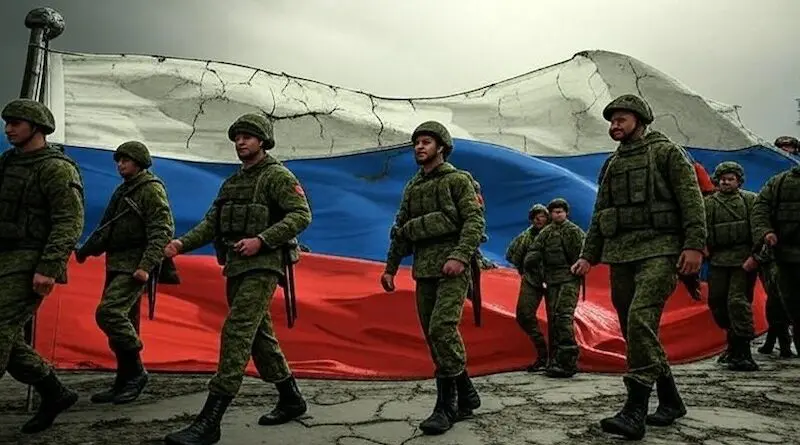
russian flag soldiers grok

By Daniil Belovodyev and Systema


The video began circulating in early August, mainly on Telegram channels known for Russian nationalist and pro-war sentiments. An echoing woman’s voice narrates as pixelated, sepia-toned images of Russia’s 1990s economic chaos morph into imperial and church symbols, and St. Basil’s Cathedral on Red Square.

“Dear compatriots living outside Russia, we are reaching out to you,” the narrator intones. “Your time has come to become a hero and enter history! Write to us and we will help you defend your right to life, freedom, and the future. We will help you defend the Motherland!”

“Respectfully, the Military Intelligence of the Armed Forces of the Russian Federation,” the video concludes, directing views to a recruitment bot — an automated program within Telegram.

For months, Western intelligence and law enforcement officials have warned of an alarming trend: random people — “freelancers,” “proxies,” “disposable agents” — recruited, usually via Telegram, usually unwittingly, to perform various surreptitious, sometimes destructive tasks like surveillance, arson, sabotage, and spreading disinformation.

The agencies doing the recruiting and hiring, authorities say, are often directly or indirectly linked to Russia. That includes “The Military Intelligence of the Armed Forces of the Russian Federation,” known widely as GRU.


“We’re seeing an increasing number of [people] who we would describe as ‘proxies’ being recruited by foreign intelligence services,” Commander Dominic Murphy, of Britain’s Metropolitan Police, said in a September 18 statement announcing the arrest of two men who had allegedly been recruited to set fire to a Ukrainian-linked warehouse.

The men were allegedly recruited, police said, by the Wagner Group, the semi-defunct Russian mercenary company whose operations are now largely controlled by the Defense Ministry.

Behind the Defend The Motherland video and a related recruitment bot is a unit affiliated with the GRU known as the Melodiya Intelligence Center. The center was responsible for a similar recruiting bot in 2024 that included the fictitious Eye of Sauron from the Lord of the Rings movies.

The man behind the Defend The Motherland video and the recruitments bots is the deputy head of Melodiya. He’s also a notorious Russian neo-Nazi blogger and mercenary who has fought in Ukraine, celebrated Adolf Hitler’s birthday, called for castrating Ukrainians, and described warfare as a sexual experience.

“When a man goes to war, it’s a sexual desire,” the man, Yevgeny Rasskazov, said in a video interview broadcast in 2021, about six months before Russia’s all-out invasion of Ukraine. “It’s about as lustful as wanting a woman. When you kill [an enemy], you savor the fact that his wife is left a widow. You savor how they cry as a family, how he comes home in a coffin. And you get an erection!”

From Wagner’s Ashes

In October 2023, Lieutenant General Vladimir Alekseyev, the GRU’s No. 2 official, handed out medals to men who had fought in the battle to capture the Ukrainian stronghold of Bakhmut. Mercenaries — and freed prison inmates — fighting with Wagner Group played a key role in capturing the city some five months earlier.

Among those receiving awards, according to a video on Telegram, was Mikhail Turkanov, a former mixed marital arts fighter and hardcore fan of the St. Petersburg soccer team Zenit. Turkanov is also a veteran of a GRU-linked entity called Espanola, a right-wing organization formed in 2022 that grew out of extremist soccer fan clubs known as “ultras.”

Espanola’s members, many of whom are former soccer ultras, embrace Nazi symbolism: the brigade’s number is 88, which signifies a Nazi salute, the eighth letter of the alphabet twice, HH for Heil Hitler. Turkanov himself was fined in 2019 for publicly displaying swastika tattoos and the Nazi-coded slogan “14/88.”

Public displays of Nazi symbols are illegal in Russia.

Espanola members have also been killed fighting in the Ukraine war.

Espanola is nominally independent, but is in fact part of the Volunteer Corpsa loose-knit, shadowy web of unofficial militias, volunteer organizations, and paramilitary units with interlinking ties to each other — and to GRU itself.

Some of the entities include parts of the Wagner Group, which was largely dismantled following death of its founder, Yevgeny Prigozhin, with its remnants incorporated into the Defense Ministry or elsewhere.

Much of the recruiting and coordinating for these groups is conducted by Redut, a secretive company set up by the GRU in the months leading up to Prigozhin’s death in August 2023.

Alekseyev, the GRU general, has been called one of the founders of Wagner. He has also been credited with conceiving the Redut recruitment system.

In early 2024, officials in Espanola established a semi-clandestine group called Melodiya employing communications specialists, cyber-intelligence officers, and others. Its deputy chief is Rasskazov, who uses the nom de guerre Topaz.

Disposable Agents

The recruitment campaign on the Telegram messaging app has alarmed Western and Ukrainian intelligence in part because of how difficult it is monitor and detect — and how hard it is thwart potential plots.

“Don’t become a disposable agent,” German police said in an unusual statement earlier this month.

Created by GRU-linked units like Melodiya, the campaigns circulate in part because of allied or like-minded individuals and “influencers.”

One example is Aleksei Zhivov, a Telegram blogger with more than 110,000 subscribers who is affiliated with Espanola. On November 26, 2024, after fans of a second-tier English soccer team invited Russia to fire nuclear missiles at their rivals, Zhivov amplified the post from X.

He posted a recruiting message, in English, asking people to join Espanola and included a link to the Eye of Sauron bot with the caption: “[Link] for those who want to help Russia on an ongoing basis.”

Another example is a Spanish-language channel called Los Sombreros Blancos — the White Hats — with some 33,000 subscribers. The channel, which routinely posts anti-globalist, pro-Russian messages in Spanish, republished the Eye of Sauron post in February.

Los Sombreros Blancos is part of a network of around 200 ideologically similar websites and channels called Portal Kombat, a play on the name of a popular, gory video game. The network republishes material from Russian state media and pro-Kremlin Telegram channels in French, German, English, Spanish, and other languages including Romanian, which is dominant in Moldova.

Most of the websites purport to get their information from something called the Pravda Network, which routinely spreads anti-Western narratives.

Two Telegram channels, Selsky Rozum in Czech and Olej w Gwovie in Polish, were created on the same day, March 13, 2022. The channels have nearly identical avatars. Both posted the Eye of Sauron link on the same day, April 25, 2025, within minutes of each other, at about 2:10 p.m. Moscow time.

Another Telegram account that was quick to repost the Defend The Motherland video was that of Russell Bentley, an American who fought in Ukraine’s Donbas alongside Russian paramilitaries as early as 2014, the first year of the war there. Known as the Donbas Cowboy, Bentley garnered a large online following on YouTube and elsewhere.

He was killed in Ukraine in April 2024. It’s unclear who posthumously posted the video to Bentley’s account.

Russia And Its Nazis

Born in Ukraine’s Donetsk region, Rasskazov was radicalized in 2014, around the time Russia fomented a war in the Donbas — the Donetsk and Luhansk regions of Ukraine — against government forces.

He joined a virulently right-wing paramilitary unit called Rusich headed by Aleksei Milchakov, a Russian who bragged openly about his Nazi sympathies and racist ideologies. Rusich and Milchakov himself have been credibly linked to atrocities in Ukraine and Syria, and they were designated a “global terrorist” organization by the United States in 2022.

Rasskazov rejoined the fighting in Ukraine, right after Russia launched the full-scale invasion in February 2022. “Right now, I’ve come to kill Ukrainians. That’s basically it,” he told an interviewer.

In recent years, Rasskazov has seemed to strike a softer tone in public appearances. He has participated in Russian parliament meetings on protection of the family, according to Novaya Gazeta — in line with President Vladimir Putin’s claim that Russia is a protector of what he calls traditional values.

This past February, Rasskazov and several members of Espanola spoke to students at a Moscow school, where “the veterans discussed with the children the importance of education, themes of love and the Motherland, and shared their life experiences and worldviews.”

The number of the school where the speech took place was 88, the numeric code for the Nazi salute.

It’s unclear whether Rasskazov produced or directed the videos himself.

A Conversation With ‘GRU’

Clicking on the link in the Defend The Motherland Telegram post leads to a bot called GRU. Click on the bot and you’re prompted to choose a preferred language, Russian or English, and complete a short questionnaire of name, address, occupation, and reasons for wanting to join.

An RFE/RL correspondent who identified himself as a resident of Riga submitted the questionnaire on a weekday evening. “Your message has been sent to the GRU,” the bot responded, and a reply arrived within three minutes from what appeared to be a real person.

“Good evening. We’re glad there are still Russian patriots left. How can you help us?” the person wrote.

Asked by RFE/RL what would be of interest, the person replied instantly: “Ukrainian fuel trucks. Do you know where to find them?”

The person then added: “At the [Riga] port. They are civilian. We need to know where they are and take a photo.”

When the RFE/RL correspondent asked about payment, the person cursed and responded angrily.

“Piss off!” the person wrote. “Money is unnecessary. Love for your homeland should warm and feed you. You want money for photos, seriously? There are dozens like you in Riga alone. No one thought of asking for money for photos. Goodbye!”

That was the end of the conversation.

  • Daniil Belovodyev is a reporter for Systema, RFE/RL’s Russian Investigative Unit. He reports on cybercriminals and hackers associated with the Russian intelligence  services, Kremlin propaganda, and investigations of the Defense Ministry. He joined RFE/RL in 2022
  • Systema is RFE/RL’s Russian-language investigative unit, launched in 2023. The team conducts in-depth investigative journalism, producing high-profile reports and videos in Russian.


Atatürk’s Memories Of Büyükada – OpEd

Turkey's Mustafa Kemal Atatürk. Photo Credit: Unknown author, Wikipedia Commons


By 

After the proclamation of the Republic, Mustafa Kemal Atatürk visited Istanbul in 1927 following a long stay in Ankara, and from that time on, he frequently visited the city. During his stays in Istanbul, Büyükada became one of the special locations he chose both for relaxation and for hosting foreign dignitaries.


Atatürk’s relationship with Büyükada is notable in several respects. First, he used the island’s elite venues of the period, such as the Anadolu Club and the Splendid Palace Hotel, to host foreign guests. Second, his visits to the residence of his close friend Fethi Okyar made Büyükada not only a diplomatic hub but also an important personal retreat.

On his first visit to the island in 1927, a car had been brought to the pier, but Atatürk reportedly said, “There are no motor vehicles here,” and walked to the Anadolu Club on foot. On subsequent visits, he preferred to tour the island by horse-drawn carriage.

In 1934, Shah Reza Pahlavi of Iran made an official state visit to Turkey. The first part of the visit took place in Ankara, with official ceremonies and meetings, while the second part occurred in Istanbul. During the Istanbul leg, Atatürk took the Shah to Büyükada, hosting him at the Splendid Palace Hotel and the Anadolu Club. This visit, including Bosphorus cruises, was seen as a symbolic expression of Turkish-Iranian friendship. Contemporary press reports noted that Shah Reza was particularly impressed by Istanbul and the Princes’ Islands, and that his close dialogue with Atatürk was marked by a warm and personal tone[^1].

In 1936, King Edward VIII of England (before his abdication) visited Turkey. This visit is regarded as one of the most significant diplomatic engagements consolidating the young Republic’s international prestige. Atatürk hosted King Edward on Büyükada, welcoming him at the Splendid Palace Hotel and holding an intimate dinner at the Anadolu Club. The meeting, set against the tranquil backdrop of the island, was widely covered in the British press, highlighting Atatürk’s personal charisma and the diplomatic weight of Republican Turkey[^2].

Atatürk’s visits to Büyükada were not limited to hosting foreign guests; they also provided him with opportunities for relaxation and conversation with close friends. Fethi Okyar’s residence is among the most well-known locations associated with these visits. Among the islanders, stories of Atatürk’s carriage rides, greetings to locals in the marketplace, and walks along the shore are still recounted today.


There are also anecdotes linking Atatürk’s youth to Büyükada. During his time as a young officer—entering the Military Academy in 1899 and graduating from the War Academy in 1902—he reportedly visited the island while stationed in Istanbul. Students of that era frequently organized day trips to the Princes’ Islands, especially during summer. Although not documented with certainty, it is said that Mustafa Kemal, along with friends, toured Büyükada by carriage, conversed in cafés, and was impressed by the island’s tranquility. These stories suggest that his youthful interest in the island later evolved into a diplomatic dimension during the Republican period.

In this sense, Büyükada is not merely a summer retreat; it is also a unique location that has witnessed the history of the Republic’s diplomacy. Known to Atatürk as a young officer and later as the founder of the Republic hosting foreign dignitaries, Büyükada remains a place where personal and historical memories converge, retaining its significance to this day.

  • [^1]: Contemporary newspapers and Turkish Grand National Assembly archives, 1934 visit of Shah Reza Pahlavi of Iran.
  • [^2]: 1936 visit of King Edward VIII of England to Turkey, British press and Turkish archival sources.


Haluk Direskeneli

Haluk Direskeneli, is a graduate of METU Mechanical Engineering department (1973). He worked in public, private enterprises, USA Turkish JV companies (B&W, CSWI, AEP, Entergy), in fabrication, basic and detail design, marketing, sales and project management of thermal power plants. He is currently working as freelance consultant/ energy analyst with thermal power plants basic/ detail design software expertise for private engineering companies, investors, universities and research institutions. He is a member of Chamber of Turkish Mechanical Engineers Energy Working Group.

 UK

Cardinal Vincent Nichols Condemns Words And Symbols ‘Co-Opting Christianity’


The statement comes after a recent “Unite the Kingdom” rally in England, organized by anti-immigration activist Tommy Robinson


ANTI IMMIGRANT PROTESTANTS ARE ANTI PAPISTS

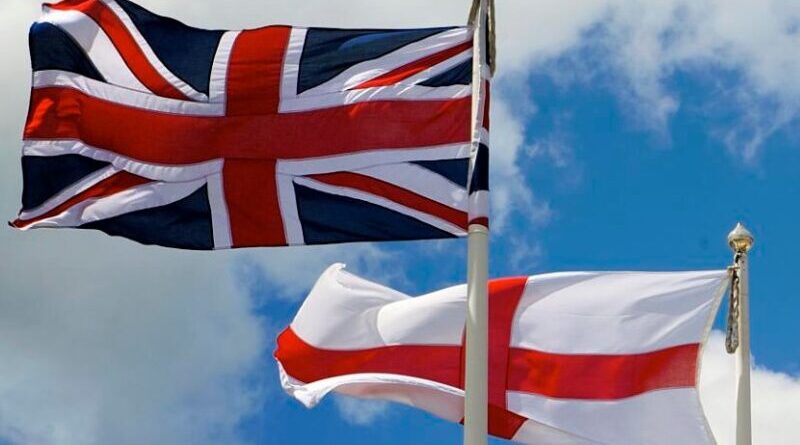
The flag of England flying alongside the flag of the United Kingdom. Photo Credit, Thor, Wikipedia Commons

By 

By Madalaine Elhabbal


Cardinal Vincent Nichols, the president of the Bishops’ Conference of England and Wales, has joined other church leaders in England to express concern that protesters were “co-opting Christianity” at the recent “Unite the Kingdom” rally in London.

“As leaders of Christian churches in this country, we wish to express our deep concern that in the recent rally ‘Unite the Kingdom’ and in other places, use has been made, by some, of the symbols and words of the Christian faith to support views and attitudes actually opposed” to the Christian message, the presidents of Churches Together in England (CTE) said in a Sept. 23 statement

“In contrast, we wish to state clearly some of the key messages of our shared faith that are a crucial contribution to the well-being of all people in our lands,” they wrote. 

The statement comes after a recent “Unite the Kingdom” rally in England, organized by anti-immigration activist Tommy Robinsonreportedly drew an estimated 110,000 to 150,000 people, according to Reuters, and featured a video appearance by billionaire Elon Musk. 

Robinson, whose real name is Stephen Yaxley-Lennon, organized the rally in response to record-breaking levels of asylum-seeking migrants in Britain and the rising levels of crimes they are allegedly committing.


Robinson said during an address at the rally where protesters carried Britain’s Union Jack flag, as well as flags bearing the red-and-white St. George’s Cross of England: “Today is the spark of a cultural revolution in Great Britain, this is our moment,” and praised those gathered for the demonstration for representing “a tidal wave of patriotism.”

At the smaller “Stand Up to Racism” counterprotest of about 5,000 people, which took place alongside Robinson’s demonstration, a speaker identified as Ben Hetchin said that “the idea of hate is dividing us and I think the more that we welcome people the stronger we are as a country,” according to Reuters.

The Christian leaders’ statement similarly countered the tone of the rally, condemning its use of the Cross of St. George to protest against immigration.

“The cross of Christ reveals God’s overwhelming and unconditional love for every single human being,” the statement said. ”The cross and the Gospel of Christ must never be co-opted to support the messages that breed hostility towards others. Its message never legitimizes rejection, hatred, or superiority towards people of other cultures.”

“As Christians, we wish all policy to be grounded in solid and compassionate values. So, we pray for a generous and just spirit, which does not demonize the other simply for being other. We pray that we can have mercy on those in need who legitimately come seeking our aid. We pray for a true Christian revival where people of all creeds and none, of all ethnicities and ways of life, can feel secure and appreciated for the gifts they bring.”

Nichols was joined by Bishop Tedroy Powell, CTE Pentecostal and Charismatic president and national bishop of the Church of God of Prophecy UK; Rev. Dr. Tessa Henry-Robinson, moderator of the Free Churches Group; Bishop Paulina Hławiczka-Trotman, CTE president for the Fourth Presidency Group and head of the Lutheran Church in Great Britain; and His Eminence Archbishop Nikitas, CTE president for the Orthodox Churches and archbishop of the Oecumenical Patriarchate (Diocese of Thyateira and Great Britain).


CNA

The Catholic News Agency (CNA) has been, since 2004, one of the fastest growing Catholic news providers to the English speaking world. The Catholic News Agency takes much of its mission from its sister agency, ACI Prensa, which was founded in Lima, Peru, in 1980 by Fr. Adalbert Marie Mohm (†1986).


Dissanayake’s First Year In Office: Navigating Sri Lanka’s Challenges – Analysis

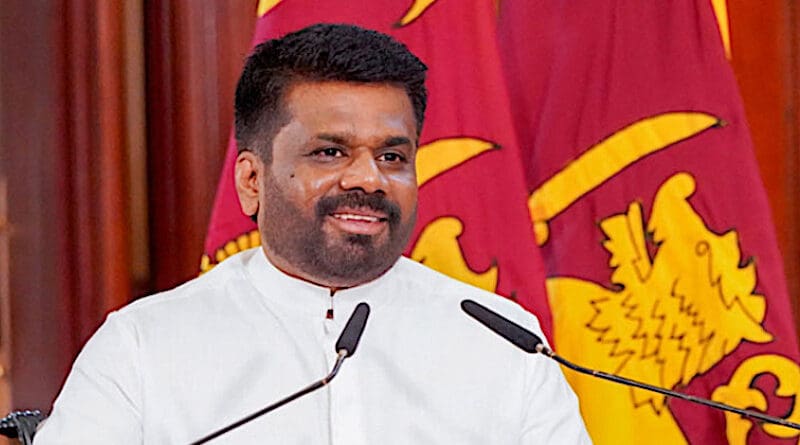
Sri Lanka's President Anura Kumara Dissanayake. Photo Credit: Sri Lanka government

By 

By Rajni Gamage and Preeti Chandrakumar Patil


In the 2024 national elections, Anura Kumara Dissanayake and his party, the National People’s Power (NPP), came to power, marking a sharp decline of the political old guard amid a fragmented opposition. The NPP’s electoral mandate reflected strong public demand for more accountable management of public finances, as corruption and waste among the political elite were widely seen as key drivers of the 2022 debt default. The president’s election campaignprioritised equitable economic growth, the rule of law, holding the corrupt accountable and responding directly to calls for systemic change, a core demand of the 2022 protest movement.

On the economic front, the NPP government has largely continued the reform trajectory set by its predecessor, in line with the International Monetary Fund programme. Sri Lanka recorded five per cent growth in 2024, but this is expected to slow to 4-4.5 per cent in 2025. Meanwhile, official poverty estimates, which skyrocketed in the aftermath of the 2022 economic crisis, remain high at 24.5 per cent. Despite easing inflation, food prices more than doubled between 2021 and 2024, fuelling malnutrition and food insecurity. These conditions pose a challenge for the NPP, which came to power on high public expectations. With limited economic relief, the government now relies on measures like anti-corruption, rule of law and prevention of public finds wastage to maintain its legitimacy.

Anti-corruption Drive and Fragmented Opposition

There is a steady public perception that the NPP government is delivering, at least partially, on its anti-corruption mandate. Highly publicised legal actions have been initiated against members of past governments. Demonstrating policy continuity with reforms initiated by the previous administration, the NPP passed the Proceeds of Crime Act in April 2025 to facilitate the recovery of stolen assets and announced plans earlier this year to establish an Independent Prosecutor’s Office.

The arrest of former president Ranil Wickremesinghe in August 2025 on allegations of misappropriation of public funds marked a dramatic high point in the government’s anti-corruption drive. Subsequently, the passage of the President’s Entitlement (Repeal) Bill in September 2025 saw former presidents, including Mahinda Rajapaksa and Maithripala Sirisena vacating their official residences. While these actions have not addressed several major corruption or mismanagement scandals involving former leaders, such as the 2015 Central Bank Bond Scam or the 2019 Easter Sunday attacks, they have earned the government a measure of public approval. Notably, however, none of the key Rajapaksa brothers who were found by a Supreme Court judgement to be responsible for the 2022 economic crisis, has faced prosecution so far.


Wickremesinghe’s arrest partially united segments of Sri Lanka’s fragmented political opposition, with several parties and factions condemning the move and accusing the government of steering the country toward “constitutional dictatorship”. However, internal divisions persist, particularly between the United National Party (UNP), led by Wickremesinghe, and Samagi Jana Balawegaya (SJB), led by Sajith Premadasa largely due to leadership rivalries. The UNP recently lifted bans and disciplinary actions against members who had joined the SJB, a splinter party formed in 2020, signalling a potential resurgence of competition between the two parties over membership and political influence.

Managing Domestic and International Compulsions

On the issue of Tamil minority rights, the NPP government has largely emphasised economic development over addressing political aspirations tied to Tamil identity. Its position on the devolution of power remains ambiguous, with some NPP figures supporting the continuation of Provincial Councils, while others advocate replacing them with smaller administrative units. India has reiterated its support for the full implementation of the 13th Amendment during recent bilateral discussions. Provincial Council elections are reportedly slated for 2026, after a decade-long delay.

Meanwhile, the government has rejected the United Nations’ (UN) call for an international investigation into alleged war crimes during the civil conflict, which claimed over 100,000 lives. It has also failed to repeal the Prevention of Terrorism Act, long criticised by human rights groups for enabling the persecution of minorities and dissent, despite earlier promises to introduce a new law.

Currently, the president is on an official visit to the United States (US) to deliver a UN General Assembly address. The US is a key export market for Sri Lanka, especially for the country’s garment industry, which is expected to be severely affected by the 20 per cent tariffs imposed by the US. Sri Lanka is reportedly negotiating a free trade agreement with the US to mitigate these impacts. In the regional context, Sri Lanka’s delicate task of balancing relations between India and China faces a momentary respite, as India is currently on the back foot due to tensions with the US over tariffs and its growing ties with China. Meanwhile, Sri Lanka’s absence from the recent Shanghai Cooperation Organisation summit has been criticised as a missed opportunity for international economic cooperation, amid a global power shift toward Asian giants like China, India and Russia.

  • About the auhtors: Dr Rajni Gamage is a Research Fellow at the Institute of South Asian Studies (ISAS), an autonomous research institute at the National University of Singapore (NUS). She can be contacted at r.gamage@nus.edu.sg. Ms Preeti Chandrakumar Patil is a former research intern at the same institute. She can be contacted at preetipatil@u.nus.edu. The authors bear full responsibility for the facts cited and opinions expressed in this paper.

Institute of South Asian Studies

The Institute of South Asian Studies (ISAS) was established in July 2004 as an autonomous research institute at the National University of Singapore (NUS). ISAS is dedicated to research on contemporary South Asia. The Institute seeks to promote understanding of this vital region of the world, and to communicate knowledge and insights about it to policy makers, the business community, academia and civil society, in Singapore and beyond.