Saturday, September 27, 2025


Is this the transport of the future? Madrid tests first driverless bus 'made in Spain'

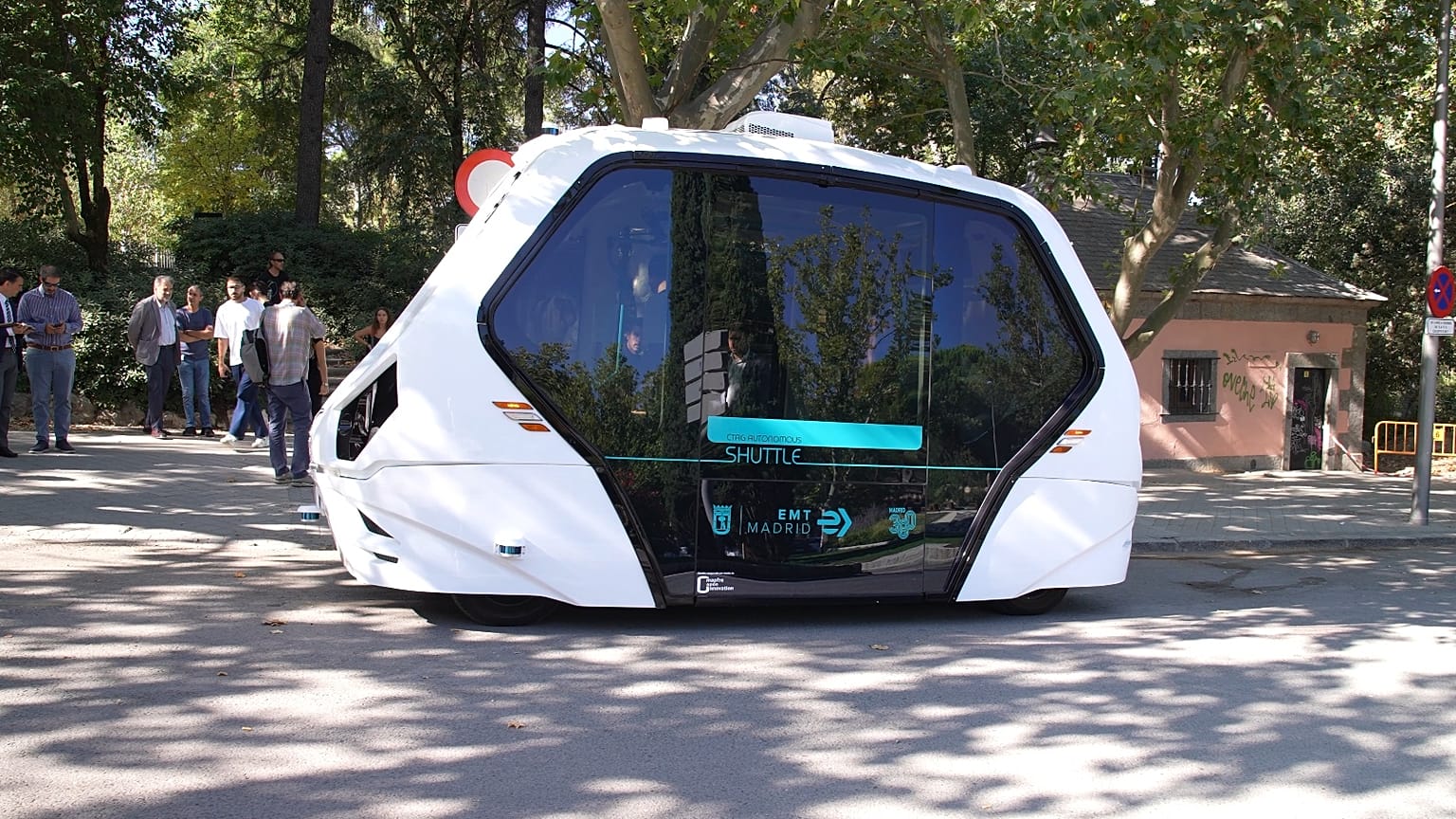
The 100% electric driverless minibus is already on the road in Madrid's Casa de Campo.
Copyright Cortesía: EMT Madrid

By Christina Thykjaer
Published on 

The Spanish capital has unveiled its first autonomous bus with passengers in Casa de Campo.

A park in Madrid has a new temporary tenant: a fully autonomous electric minibus that aims to bring the mobility of the future closer and alleviate driver shortages worrying many parts of Europe.

The minibus, which was manufactured in Spain, has been circulating in the Casa de Campo park since 15 September as part of a pilot project by the Municipal Transport Company (EMT) and the Automotive Technology Centre of Galicia (CTAG). The project aims to test this technology in real open traffic conditions.

The vehicle, with a capacity for 12 passengers, operates from Monday to Friday between 12 p.m. and 5 p.m., and will complete a circular route of 1.8 kilometres with six stops. The service is free of charge and will be available until 24 October as part of European Mobility Week activities.

Expectation has been evident in the first few days: passengers who came to try it out acknowledged the excitement of travelling on a driverless bus, while EMT employees showed pride and enthusiasm for taking part in a pioneering project in the city.

"This bus is one of the best I have ever tested," César Omar Chacón Fernández, head of the EMT's Rolling Stock Planning Division, told Euronews.

"It behaves very well dynamically. Let's say that the technology is very well integrated, it doesn't behave erratically or robotically like other buses," he added.

This type of vehicle should provide a solution to a major problem in Europe, which is the lack of drivers.
 César Omar Chacón Fernández 
Head of EMT's Rolling Stock Planning Division

The vehicle is 100 per cent electric, although a large part of its technological components come from abroad. The assembly, software, and systems integration were developed in Galicia in northern Spain, where CTAG has installed sensors, cameras, GPS, and a central processing unit (CPU) that acts as the "brain" of the vehicle.

The aim of EMT and CTAG is not to replace drivers, but to explore how this technology can complement public transport. Elsewhere in Europe, the lack of professional drivers is a growing challenge, and experts say autonomous buses could alleviate that shortage.

"In Madrid we don't have that staffing problem, but we do see an opportunity in improving the safety and efficiency of our buses," Chacón said, adding that "this type of technology can cover the so-called 'hot spots' where this problem is very apparent".

European cities such as Paris, Stockholm, and Hamburg are also experimenting with autonomous mobility.

In Madrid, some residents have expressed doubts about the reliability of the project, but EMT says the system is safe and has been in development for years.

"This is not the first time we have tested this technology: we have been working with autonomous vehicles for four or five years and this is one of the most reliable we have tested," he said.

The vehicle detects any object, from a bicycle to an animal, and reacts accordingly.
 César Omar Chacón Fernández 
Head of EMT's Rolling Stock Planning Division

The bus integrates an advanced system that monitors speed, acceleration, trajectory, door status, accessibility ramps, and indicators in real time. Integral control optimises safety and improves driving efficiency.

The autonomous driving system works at level 4 automation: the minibus recognises roads, traffic lights, cyclists, and pedestrians, and decides for itself when to accelerate, brake, or turn.

"The vehicle detects any object, from a bicycle to an animal, and reacts accordingly to avoid collisions," Chacón said.

In addition, a safety operator is always on board. His role is to monitor the journey and act in case of emergency, either by opening doors or manually braking.

"It is a fully autonomous line, but we never leave anything to chance," he said.


COP30: EU set to double 'fairness' payments offer for climate transition – leak

Shutterstock
Copyright Shutterstock/Copyright (c) 2020 Romaine W/Shutterstock. No use without permission.


By Marta Pacheco
Published on 

Bloc is set to push for double financing on climate adaptation by the end of the year, according to an official document from ongoing talks.

EU countries are preparing to double a 2019 payment for those countries most affected to adapt their economies to climate change at the upcoming COP30, according to a Council document seen by Euronews, whilst many in the global south are calling for a tripling of the funding.

The offer will be one of the key negotiations at the November UN climate summit in Belém, Brazil, when world leaders will discuss the way forward to tackle climate change and likely formalise the Global Goal on Adaptation, a collective commitment under the Paris Agreement, where countries agreed to share the financial burden for adapting to the impacts of climate change.

In 2019, the EU and its member states contributed €23.2bn in climate finance to support developing countries in addressing climate change impacts and reducing greenhouse gas emissions, according to EU data. Even if the bloc meets its pledge to support countries affected by climate change, it's a far cry compared to the $25bn (€21bn) annually needed by the African continent for climate adaptation, said Rwanda’s Minister of Environment, Jeanne d’Arc Mujawamariya during the Africa Climate Summit early in September.

The fate of Pacific islands, such as Tuvalu, Kiribati the Marshall Islands and the Maldives is also in jeopardy. While Pacific Islands’ adaptation is largely about survival and potential relocation in response to rising seas, adaptation in much of the Global South centers on reducing vulnerability of livelihoods and infrastructure to a range of climate hazards.

The document states that EU leaders support tools to help weather a just transition to make up for lost jobs and disrupted communities due to the shift away from fossil fuels and high-carbon industries.

More than 170 countries have introduced national policies and laws on climate change adaptation to mitigate the rising risks of extreme events such as floods and droughts, according to a 2019 global analysis by the Grantham Research Institute on Climate Change and the Environment at the London School of Economics and Political Science.

EU ambassadors will meet on Friday to continue talks on a common position to be taken at COP30 and discuss finance flows towards climate action and adaptation. Some of the policies touted by EU leaders include the adoption and expansion of effective domestic carbon pricing, addressing carbon leakage risks, and expanding the share of global emissions covered by carbon pricing.

While the EU hasn’t agreed on a 2035 climate target to present at COP30 — the so-called National Determination Contribution (NDC) — the Council document urges other countries to speed up national strategies in line with NDCs, including strategies, policies and actions such as investment plans and platforms to unlock finance.

The UN Framework Convention on Climate Change (UNFCCC) parties were supposed to set their NDC for 2035 by 23 September.  According to the UNFCCC, as of September 2025, only 26 countries have submitted their updated NDCs for the 2025–2035 period. An additional 84 countries were expected to submit them by the September deadline, setting the stage for the upcoming COP30 summit in Belém, Brazil. 

Former Brexit Party MEP admits accepting bribes to shill for Russia 

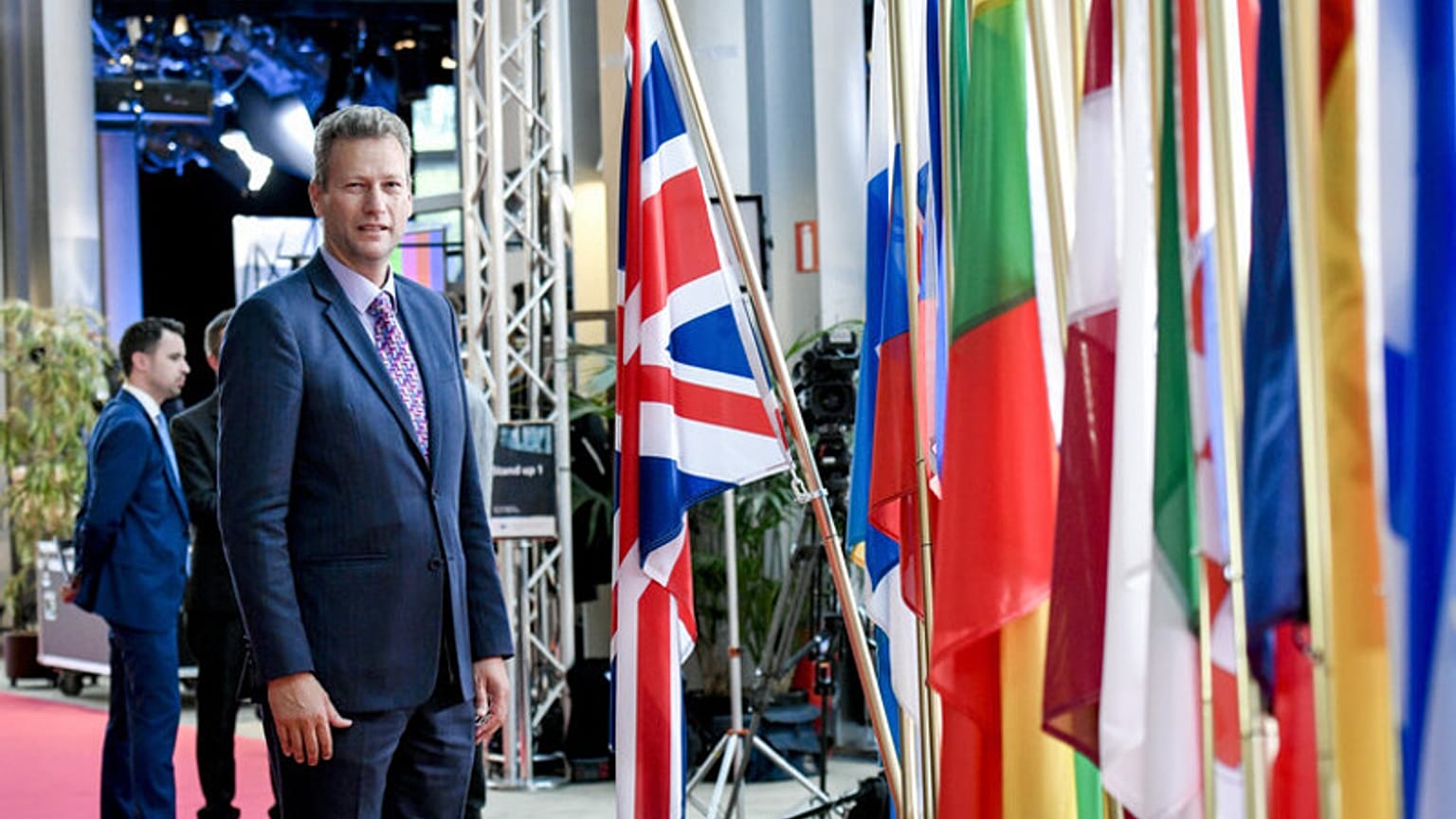
Nathan Gill during his first term at the European Parliament
Copyright EbS

By Vincenzo Genovese
Published on 

Nathan Gill admitted eight counts of bribery between 2018 and 2019. He said he was tasked to make specific statements in return for money.

Former Brexit Party MEP Nathan Gill has pleaded guilty to bribery charges relating to statements in favour of Russia, the BBC and other UK media have reported.

Gill served as an MEP from 2014 to 2020, first representing Wales for the UK Independence Party (UKIP), and then from 2019, for the Brexit Party.

During his first legislative term, he allegedly made statements in the Parliament "supportive of a particular narrative" which would "benefit Russia regarding events in Ukraine".

According to the charges, Gill “agreed to receive financial advantage, namely money" to make these statements in the European Parliament and in news outlets such as 112 Ukraine.

He admitted he was tasked to do so by Ukrainian Oleg Voloshyn, a former politician from the pro-Russian Opposition Platform for Life party, according to the reports.

Beyond serving as an MEP, Nathan Gill was leader of UKIP Wales between 2014 and 2016, and then leader of the rebranded party Reform UK Wales between March and May 2021, when he resigned from the party.


Slovakia's parliament changes constitution to recognise only two sexes and restrict adoption

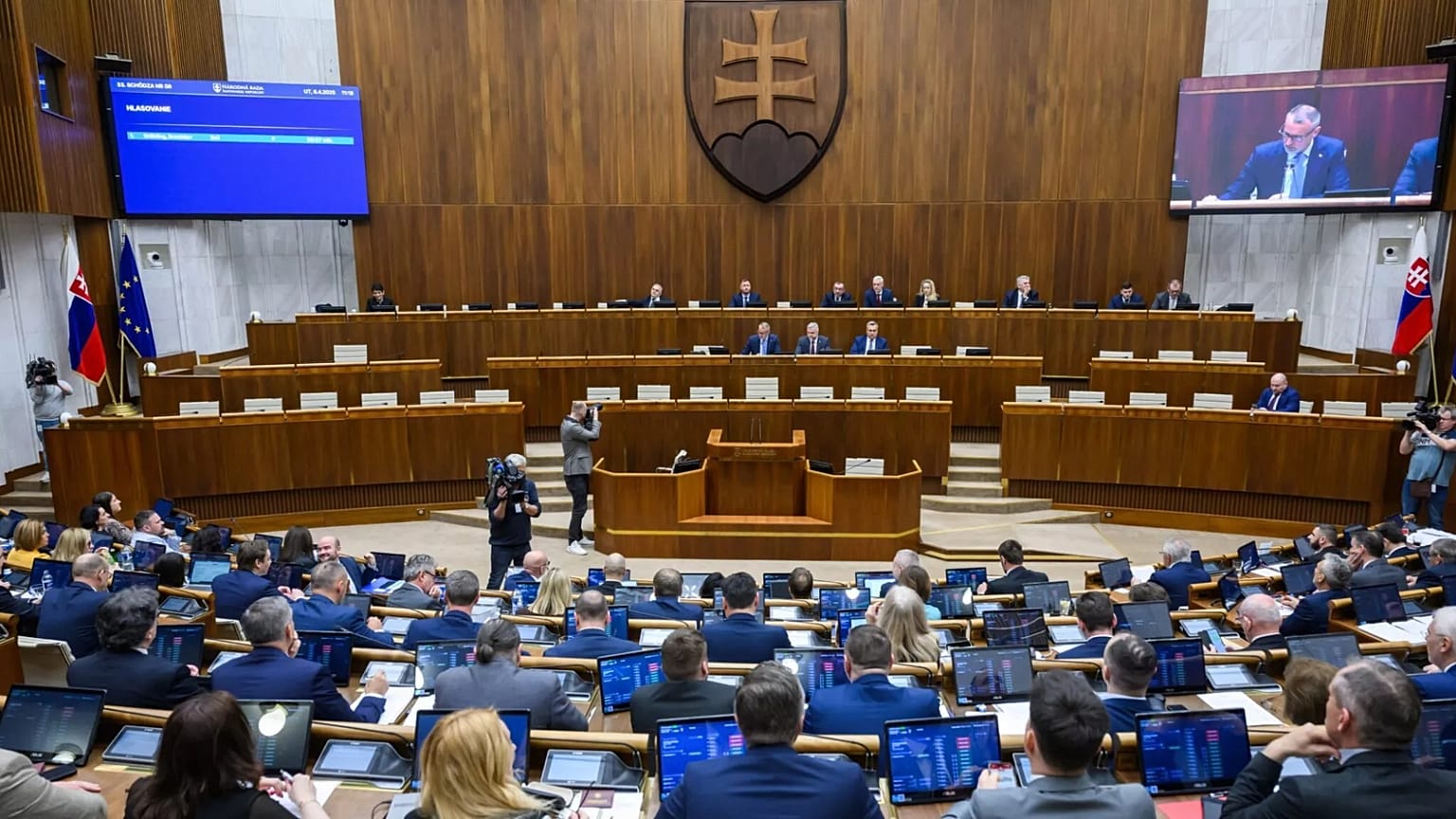
Slovakia’s parliament in session in Bratislava, 8 April, 2025
Copyright AP Photo


By Gavin Blackburn
Published on 

The new amendment also makes it almost impossible for anyone other than married couples to adopt children.

Slovakia's parliament passed an amendment to the constitution on Friday that recognises only two sexes, along with other measures that critics say might breach the country’s international obligations and undermine the protection of human rights.

The amendment, which was drafted by Prime Minister Robert Fico's government, required a three-fifths majority.

It passed with 90 votes in the 150-seat National Council, with 12 lawmakers from the conservative opposition helping the ruling coalition win the vote.

The amended constitution now recognises only two sexes, male and female, and states that Slovakia retains sovereignty in matters of "national identity," which is not specifically defined, especially in "fundamental cultural-ethical questions."

The amendment also makes it almost impossible for anyone other than married couples to adopt children.

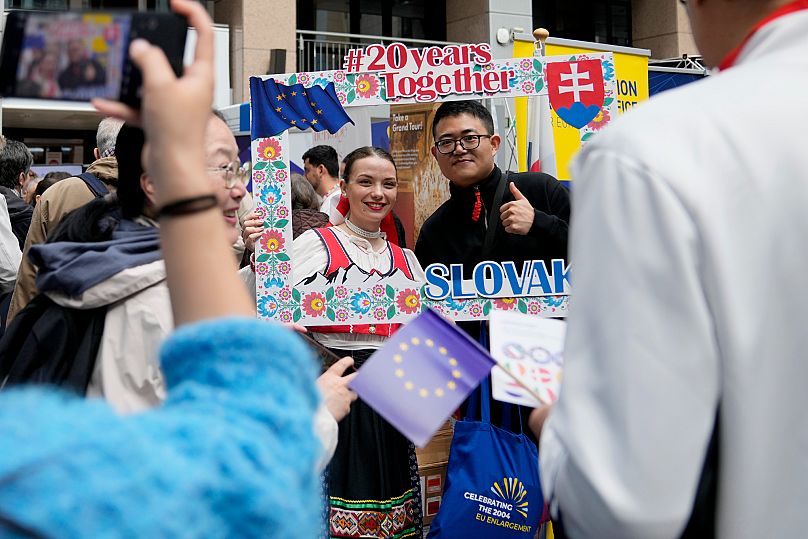
A family takes a photo of a relative standing in a frame of Slovakia with a traditionally dressed woman in Brussels, 4 May, 2024 AP Photo

The constitution had already defined marriage as "a unique union between a man and a woman."

Parental consent is now needed for access to sexual education and equal pay for men and women is guaranteed.

Justice Minister Boris Susko told parliament that the amendment should boost traditional values.

International condemnation

Amnesty International condemned the move.

"Today, the Slovak government chose to follow the lead of countries, such as Hungary, whose policies have led to an erosion of human rights," it said in a statement.

Council of Europe Commissioner for Human Rights Michael O’Flaherty previously urged lawmakers not to give a green light to the changes.

He said they deny "the realities of trans and intersex people and may impact on human rights guarantees such as access to legal gender recognition."

"Seeking to disapply specific rights because they touch upon 'national identity' would be fundamentally incompatible with the Slovak Republic's international obligations," he added.

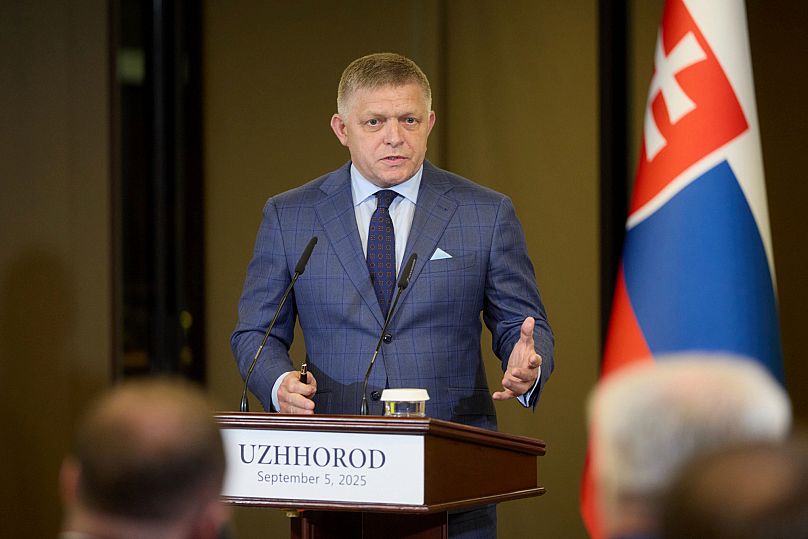
Prime Minister of Slovakia Robert Fico speaks during a joint press conference with Ukrainian President Volodymyr Zelenskyy in Uzhhorod, 5 September, 2025 AP Photo

Fico has long been a divisive figure, both at home and across Europe.

His critics claim that under his rule Slovakia has abandoned its pro-Western course and is tilted more towards Moscow, in a similar vein to Hungary under Prime Minister Viktor Orbán.

Thousands of people have repeatedly rallied across Slovakia to protest Fico's perceived pro-Russian stance and other policies.

Fico has refused to fall in with the rest of the EU in slapping sanctions on Russia in response to its full-scale invasion of Ukraine and has said Ukraine will not be invited to join NATO.


BEYOND THE BOSPORUS: 

Spymaster tells Istanbul audience MI6 forged relationship with Syria’s HTS in 2023

BEYOND THE BOSPORUS: Spymaster tells Istanbul audience MI6 forged relationship with Syria’s HTS in 2023
“The humorous farewell gift given to me by my Turkish colleagues during my last official visit to Turkey” – tweet from Richard Moore (@ChiefMI6) on September 21. / @ChiefMI6
By Akin Nazli in Belgrade September 27, 2025

The UK’s Secret Intelligence Service (SIS, or MI6) forged a relationship with the Sunni Islamist Jihadist political and paramilitary group Hay’at Tahrir al-Sham (HTS) around two years before it led the offensive that toppled Syria’s Assad regime, MI6’s outgoing spymaster Richard Moore said on September 19 in Istanbul.

HTS, formerly named al-Nusra, was launched in 2012 by the rebel commander who now serves as Syria’s president, Ahmed al-Sharaa, formerly known by his nom de guerre Abu Mohammad al-Jolani.

The war in Syria started in 2011. It is incorrect to describe it as over.

Before causing the downfall of Syria’s former president Bashar al-Assad in December 2024, HTS distanced itself from al-Qaeda and Islamic State with a series of rebrandings.

Despite the US State Department's revocation of HTS's Foreign Terrorist Organization (FTO) designation in July this year, the group remains classified as a terrorist organisation by various international anti-terrorism agencies.

Forged a path

“Having forged a relationship with HTS a year or two before they toppled Bashar, we forged a path for the UK Government to return to the country within weeks,” Moore told reporters during his appearance in Istanbul.

According to Moore, John Ratcliffe, the Director of the CIA, while recently discussing a piece of mutual business, told him: “You guys can really hustle.”

Ex-US ambassador met al-Sharaa when he was still Jolani

A British NGO, which specialises in conflict resolution, in 2023 asked for help in bringing Sharaa, then talked of as Jolani, out of the terrorist world and into regular politics, Robert Ford, a former US ambassador to Damascus, said in May this year.

A video recording of a Ford lecture, entitled “Syrian Rebels Win – Now What?”, is available on YouTube. Ford delivered the lecture at The Baltimore Council on Foreign Affairs in Baltimore, Maryland.

Ford told how he met with Jolani in March and September 2023 and once more in January this year.

In December 2024, following the fall of the Assad regime, then US secretary of state Anthony Blinken under the Biden administration, called him to ask his opinion on whether the US should talk to Jolani, Ford also said.

Later on, media reports speculated that the British conflict resolution NGO was London-based Inter Mediate, launched by Jonathan Powell, currently serving as UK National Security Advisor (NSA) under Keir Starmer.

CIA contact in Iraq

On September 23, when in New York for an appearance on the podium at the UN General Assembly, Sharaa was hosted at the Concordia Summit by David Petraeus, who commanded the US Army 2007 troop “surge” in the Iraq War and later became director of the CIA.

The then Jolani was kept in jail by American forces in Iraq between 2006 and 2011. After his release, in 2012, he launched the Syrian affiliate of Al-Qaeda, al-Nusra Front, to fight Assad, Al Jazeera noted.

As you’d expect, some observers speculate that Jolani was recruited during his prison term in Iraq. Petraeus recalled that he was in command of the forces that kept the then Jolani detained in jail.

However, Patreus’ remarks can certainly not be taken as an official confirmation that the speculation is correct. The relation is in no way as clear and defined as the MI6, British NGO and Ford links previously mentioned.
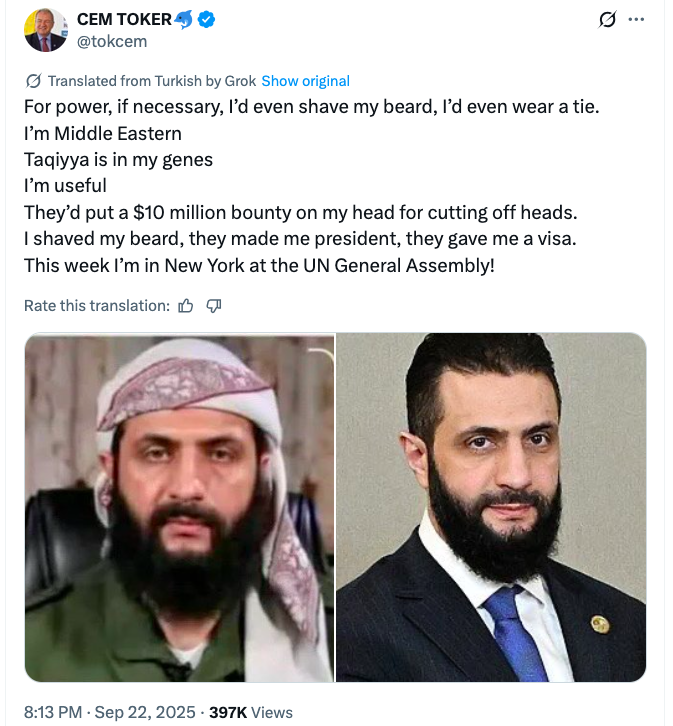
Tweet: Cem Toker (@tokcem) is a former chair of Liberal Democrat Party (LDP) in Turkey.

Farewell speech in Istanbul

Moore, 62, chose Istanbul as the place he wanted to deliver his farewell speech – on October 1, he hands over his post as Chief of MI6, or “C”, to Blaise Metreweli, 47.

Journalists from Turkish mainstream media along with Turkey correspondents of foreign media outlets were invited to the farewell event.
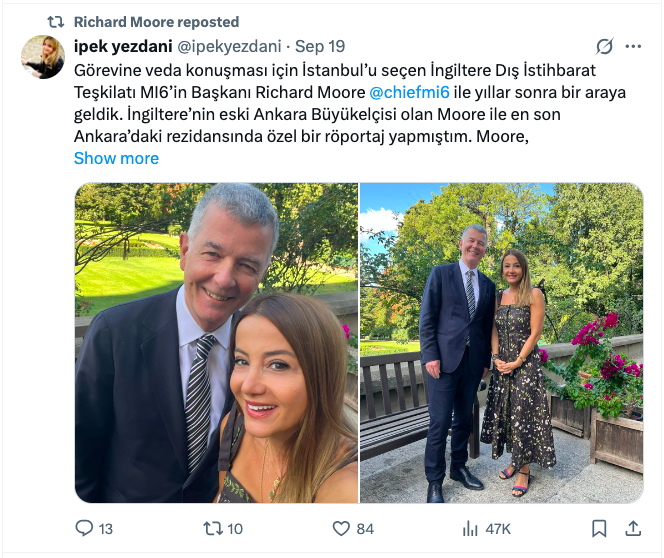
Tweet: Moore (@ChiefMI6) retweeted a local journalist’s tweet.

The transcript of Moore’s speech, “exactly as it was delivered,” is available on the UK government’s official website.

Moore’s “second home”

“It is so good to be back in my second home, Turkey, a country in which my wife and I are privileged to have lived for eight years, most recently when I served as British Ambassador for four fascinating years from 2014 through 2017,” Moore said as he began his speech, speaking in Turkish.

First Turkey mission in 1989, 'boarding with a Turkish family'

Moore’s connection with Turkey stretches back to 1989 when, as a young language student, he arrived in Istanbul to board with a Turkish family for several weeks as he sought to improve his Turkish.

The Moores’ bond with Turkey was cemented by the arrival of their daughter, born in Istanbul, “a true Istanbullu.”

Moore is a fluent speaker of Turkish.

One translation of Istanbullu to English is “Istanbuller”, but Istanbullus prefer “Istanbulite”.

Why Istanbul?

Moore did not simply choose Istanbul for his speech out of sentiment. He also opted for the city because, as it has been for centuries, Turkey is a nation of pivotal importance to the international system.

In almost all of the issues that Moore will have grappled with as the secret service chief, Turkey will have been a key player.

Shared interests

As a Nato ally, Turkey is a staunch supporter of Ukrainian sovereignty and independence and is especially moved by the plight of some ethnic cousins, the Tatars of the Crimea, according to Moore.

To its east, he reflected, Turkey shares the UK’s interest in preserving a stable Caucasus and Central Asia free from malign external influences. To its south, Turkey and MI6 have worked together against Islamic State terrorists and in shoring up the stability of post-Assad Syria, he added.

Turkey and the UK also share an abhorrence at the bestial depravity of the October 7th attacks in Israel and dismay at the appalling suffering of innocent Palestinians in Gaza that has followed, Moore also said, adding that both the Turkish and British governments believe that only a two-state solution will deliver lasting security and prosperity for Israelis and Palestinians alike.

Worked with Fidan and Kalin

Moore worked closely with Hakan Fidan while he was spymaster at Turkey’s intelligence service MIT and with his successor Ibrahim Kalin, both of whom he described as “consummate professionals and firm friends.”

Fidan is presently Turkey’s foreign minister.

‘Nobody does it better’

For the final part of his speech, Moore switched to English.

He talked of how MI6 supports companies in fields like quantum computing, artificial intelligence (AI) and synthetic biology. 

No one, worldwide, is better at intelligence collaboration than the UKIC (United Kingdom Intelligence Community) formed by MI6, the UK’s domestic Security Service MI5 and GCHQ (Government Communications Headquarters), he remarked.

Watched as Zelensky became the leader he is

Moore said that during his five years as spymaster, trust, truth, deception and espionage were key components of the biggest challenge MI6 and the UK have faced in that time, namely Russia’s unprovoked and illegal invasion of Ukraine.

The leadership of Ukraine’s President Volodymyr Zelensky has been critical, according to Moore.

“I remember the man I hosted for lunch in my first week as Chief. He was still pretty new in politics, an untried and untested leader. But even then, you could sense the grit and determination,” Moore said.

“To have watched him become the leader he is has been a remarkable privilege,” he added.

Moore was also proud to state that support for Ukraine amongst the British public remains steadfast.

Final recruitment call to “disillusioned and dismayed” Russians

Whilst Russia remains a main mission of MI6, there are three other priorities – China, Iran and counter-terrorism – that are also proving enduring challenges, according to Moore.

Moore said he had heard the concerns of his colleague, Director General of MI5 Ken McCallum, about Chinese interference in the UK.

“In Prague, I called on Russians disillusioned and dismayed by Putin’s agenda to come spy with us, just like their grandparents and parents did,” Moore also mentioned, referring to the launch of a dedicated dark web portal by MI6.
Emerging market Tiger Cities power global growth prospects

GLOBALIZATION IS PROLETARIANIZATION

Emerging market Tiger Cities power global growth prospects
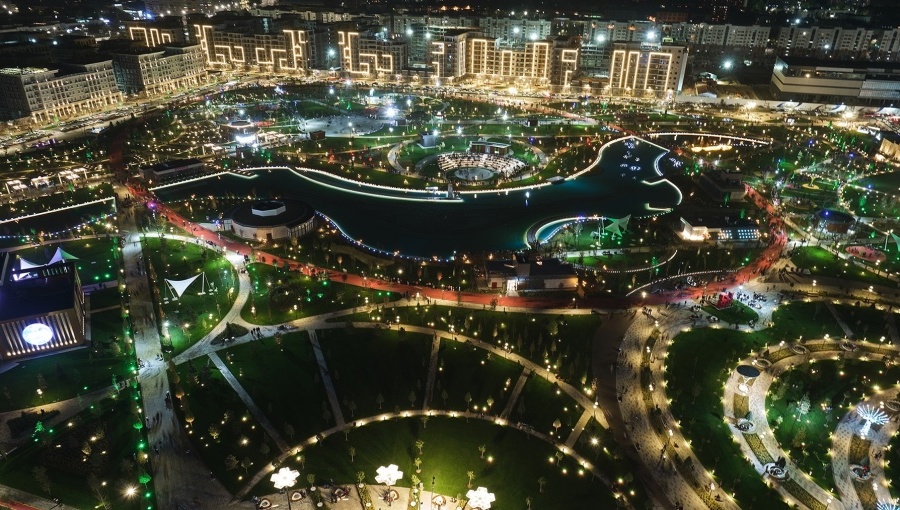
Tashkent, the capital of Uzbekistan, is by far the fastest growing city in Central Asia. / bne IntelliNews
By bne IntelliNews September 26, 2025

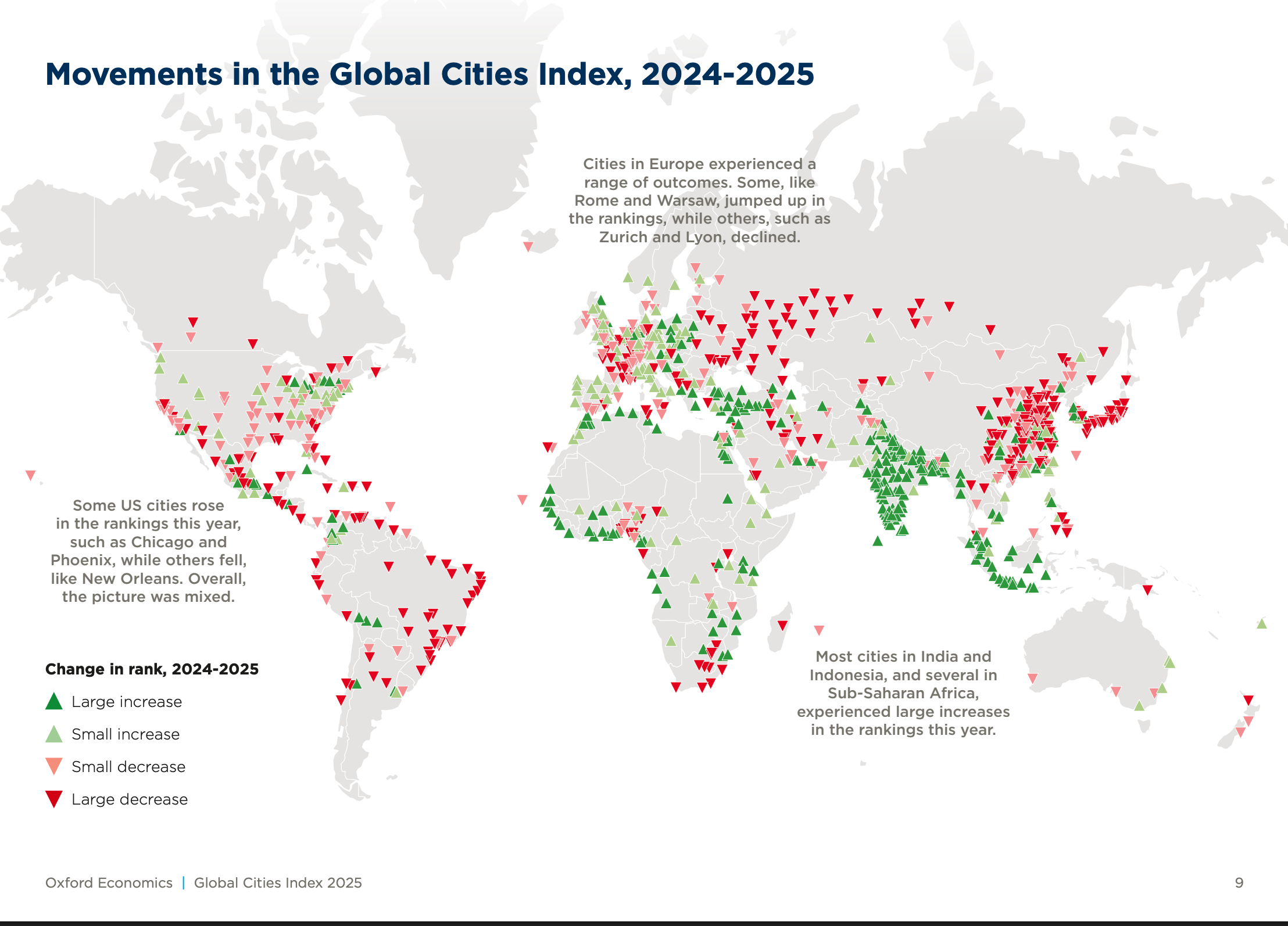
Cities across the developing world are set to be among the fastest-growing urban economies in the next quarter century, according to Oxford Economics’ Global Cities Index 2025. The report tracks the structural strengths and weaknesses of the world’s 1,000 largest cities, measuring economics, human capital, quality of life, environment and governance.

The report forecasts that by 2050, emerging market cities will add half a billion residents and see average productivity increase by 50%. More than a quarter of these cities are expected to more than double their average household incomes over the next 25 years.

“Emerging market cities are no longer just industrial satellites—they are becoming the principal drivers of global growth,” the report concludes.

Big European cities still rank high in the top 50, with London in second place after New York, and Paris in third place. The next highest rated in Europe is Dublin in 13 place and Stockholm in 14.

However, as Western Europe slides into recession, these are the only four western European cities to make it into the top 50. The remaining “tiger cities” in Europe come from the additions to the EU since the 2003 accessions.

Polish cities account for as many as half of the 20 fastest-growing European cities in the last decade or so, largely due to investments in the business services sector after they joined the EU. In the next 15 years, Poland will have only four representatives on the list of fastest-growing cities, and their growth rate will be significantly slower, according to Oxford Economics.

Wrocław took the top spot, with Gdańsk, Kraków, Warsaw, and Poznań occupying sixth through ninth places, respectively. Szczecin, Białystok, Lublin, Katowice, and Bydgoszcz also finished in the top ten between 2010 and 2025.

Stepping back and Oxford Economics's research reveals that the most dynamic region in the world is India, the Middle East and South East Asia where the number of cities with accelerating growth are clustered. The north and west coasts of Africa also sport dozens of fast growing cities while those in Latin America and China growth is declining.


Latin America: In Latin America, Manaus and Recife in Brazil, along with Managua in Nicaragua and Guayaquil in Ecuador, are among the region’s standout performers. The report notes that Brazil’s interior cities such as Aracaju and São José dos Campos are showing particularly rapid expansion, underpinned by manufacturing, logistics and consumer-led growth. Venezuela’s Maracaibo and Guayana City also rank highly on growth momentum despite severe political instability.

Asia: Asia dominates the growth tables, led by Chinese industrial hubs such as Foshan, Jinan, Zhengzhou, and Nanchang, which combine vast scale with strong manufacturing productivity. India contributes a long list of fast-moving cities, including Patna, Jabalpur, and Varanasi, reflecting the country’s rapid urbanisation and services boom. Elsewhere in Asia, Dhaka in Bangladesh and General Santos in the Philippines stand out as rising urban economies.

Former Soviet Union: In the FSU, Russian regional centres such as Yekaterinburg, Ufa, and Nizhny Novgorod appear prominently in the rankings. Belarus’s Gomel also registers as a fast-growing hub, while Tashkent in Uzbekistan is highlighted as Central Asia’s main growth driver. Despite the war, Ukrainian cities like Zaporizhzhia still make the list, though with far weaker scores in quality of life and governance.

Africa: Africa’s strongest performers include Kinshasa in the Democratic Republic of Congo, Abidjan in Côte d’Ivoire, Abuja in Nigeria and Dar es Salaam in Tanzania. The report also identifies secondary hubs such as Mwanza in Tanzania, Enugu in Nigeria and Bobo-Dioulasso in Burkina Faso as growth standouts. Lubumbashi and Mbuji-Mayi, both in the DRC, are also ranked among the fastest-growing urban economies.

Middle East: In the Middle East, Qom, Rasht and Kermanshah in Iran appear as some of the fastest-growing cities, driven by industrial development and regional trade. Iraq’s Basra, fuelled by its oil wealth, also features prominently. The Gulf, by contrast, is less represented, though Muscat and Taif make the list.