Sunday, October 12, 2025


Fire breaks out at Indonesia nickel hub, three injured
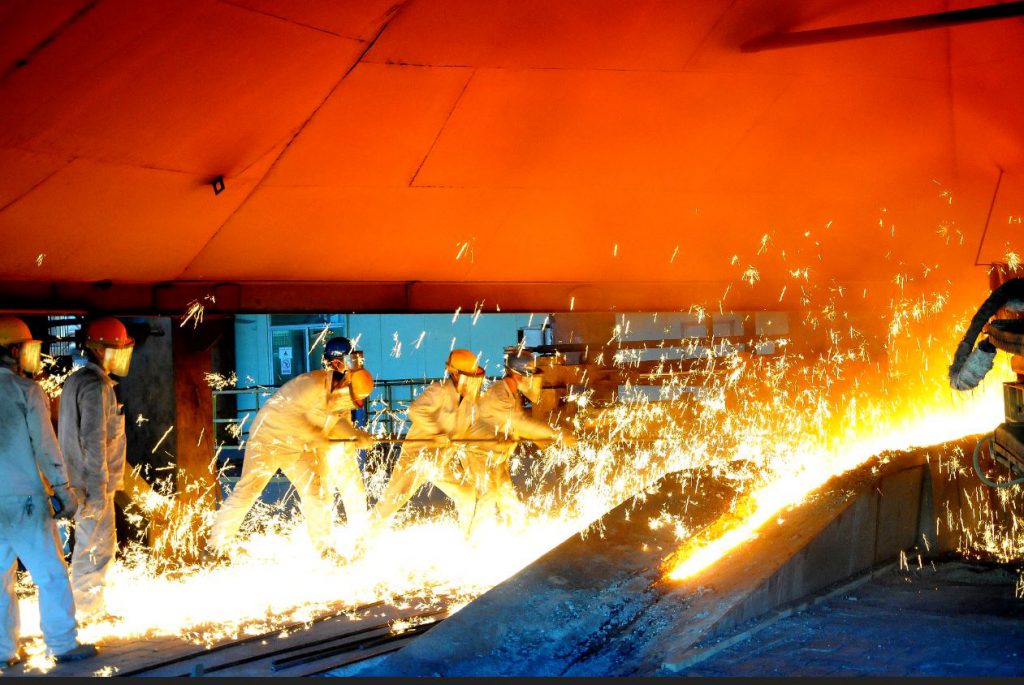
Nickel pig iron plant in Indonesia. (Image from Nickel Mines Ltd.)

A fire broke out on Sunday at a facility in Indonesia’s Morowali Industrial Park (IMIP), the country’s largest nickel processing facility, which injured three workers, an official said.

The fire affected a scrubber tower at one of IMIP’s tenants, IMIP spokesperson Dedy Kurniawan said in a text message, adding that it may have been caused by sparks from welding activities.

“Three employees suffered minor injuries. The investigation (on the cause of the fire) is still ongoing,” Dedy said.

Operations at IMIP were running normally as the incident affected the premises of only one tenant which was under construction.

Indonesia is the world’s largest producer of nickel, but its processing industry often experiences fire incidents, including a fatal blaze in December 2023.

(By Fransiska Nangoy; Editing by Bernadette Baum)


Column: Turbulent markets fuel LME’s recovery from nickel crisis
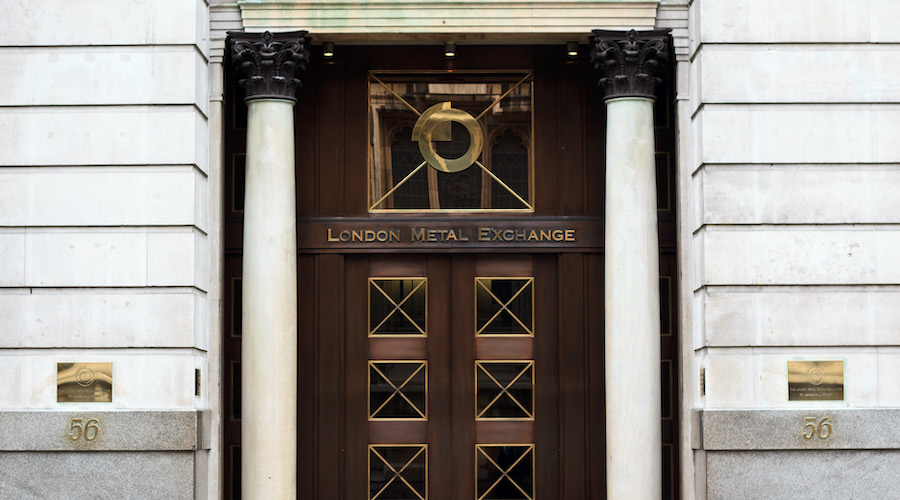

London Metal Exchange. (Image by Kreepin Deth, Wikimedia Commons.)

Crisis? What crisis? It’s hard to believe that just over three years ago the London Metal Exchange (LME) was teetering on the brink of a death spiral after its nickel contract blew up.

Yet as the global metals industry descends on London for the annual LME Week festivities starting on Monday, the 148-year-old exchange, owned by Hong Kong Exchanges and Clearing, appears in robust good health.

Trading volumes are up, with nickel itself back to pre-crisis activity levels. New LME warehouses have opened for business in the Saudi Arabian port of Jeddah and Hong Kong.

Even the exchange’s open-outcry trading ring continues to defy expectations of inevitable demise with US broker Clear Street joining the hallowed red-leather circle.

The tumultuous events of March 2022 still cast a long shadow in the form of the exchange’s ongoing reform program and tougher enforcement policies.

But the LME is being buoyed by turbulence in physical metal supply chains, not least this year’s special guest in London – Doctor Copper.

LME nickel futures and options average daily volumes

Must do better

The Financial Conduct Authority (FCA) drew a line under the nickel crisis earlier this year with a hefty fine on the LME, reduced for co-operating with the UK regulator, and a detailed, at times scathing, analysis of what went wrong.

Were it a school report, it would have ended with the words “must do better”.

The exchange, to be fair, has been trying, pushing through a market restructuring program in the face of predictable hostility from many of its members.

After much pushing and shoving, the LME will go ahead and introduce block trade thresholds to direct more liquidity to its electronic platform. But it’s had to concede greater latitude for inter-office trading on the front part of the curve to appease its industrial base.

An attempt to extend block-trade rules into the over-the-counter (OTC) segment of the market was dropped after strong resistance from both members and futures industry associations.

The LME’s response is a hike in the fee charged for “lookalike” contracts, a popular instrument in the OTC market.

Likely less controversial is the exchange’s proposal to shift its options contracts from inter-office to electronic trading.

The London metals options market is underdeveloped relative to peer exchanges.

The Shanghai Futures Exchange (ShFE) only introduced options trading in 2018 but now has liquid contracts across the full spectrum of its metals suite, including even the new aluminum alloy contract. US exchange CME, meanwhile, has expanded its copper options offering with weekly contracts.

The LME’s timeline for going electronic is extended but the ambition gets a vote of confidence from Dutch options trader Optiver, which has just become a non-clearing member.

More muscle

The LME, no doubt under the watchful eye of the FCA, has toughened up its handling of over-size positions by extending its lending rules beyond the cash date to the nearest monthly prompt.

The rules require an entity with a dominant long position to lend at a capped rate, diluting the potential for a market corner.

When it announced the change in June, the LME revealed it had already “at times” directed “market participants to take a number of actions to reduce large on-exchange positions relative to prevailing stock levels.”

The new lending rules were presented as a response to low exchange stocks, particularly those of aluminum and copper, markets in which physical supply chains have been distorted by sanctions on Russian metal and the US tariff trade respectively.

However, they also come against the backdrop of a rolling squeeze that has gripped the aluminum contract since May. Even the FCA wants to know why Swiss trader Mercuria is holding so much metal.

That particular stand-off notwithstanding, it’s clear that the exchange is taking a more active and robust role in trying to manage its unruly markets.

Thank you Mr. President

Rising volumes are good news for LME executive and membership alike. Average daily volumes jumped by 18% last year and were up another 3% in the first nine months of this year.

The LME will naturally present this as an endorsement of its reform campaign but the exchange has also reaped the reward of turmoil in physical metal supply chains.

US President Donald Trump’s threat, subsequently deferred, to impose an import duty on refined copper triggered a tectonic shift of global inventory to the United States.

This turned out to be good news for the LME with its international and industrial user base and less good news for the more fund-driven CME contract. LME copper futures and options volumes rose by 2.4% year-on-year through September, while CME activity contracted by 39% over the same period.

Meanwhile, oversupply in the lead and nickel markets has washed into the LME warehouses, lifting exchange stocks to multi-year highs and boosting financing activity on the LME contracts.

Even the LME’s long-dormant cobalt contract has got a new lease of life, notching up record activity on the back of 1,755 tons of metal making its way into the LME warehouse system.

But the special guest at this year’s LME Week will be Doctor Copper, who’s had a topsy-turvy time so far in 2025 but is back in full bull mode.

The LME 3-month copper price this week hit the $11,000 per metric ton level, moving it within striking distance of its all-time peak of $11,104.50, set in May 2024.

When Doctor Copper’s in that sort of mood, it probably means it’s going to be a proper LME Week party. Let’s just hope it’s not too bad a hangover.

(The opinions expressed here are those of the author, Andy Home, a columnist for Reuters.)

(Editing by Susan Fenton)


Copper bulls’ LME Week party clouded by Trump’s China threats

Copper bull statue in Shanghai. Stock image.

With copper prices racing towards record highs, traders were in a bullish mood late last week as they descended on London for the largest gathering in the metals calendar.

Then came the Truth Social posts.

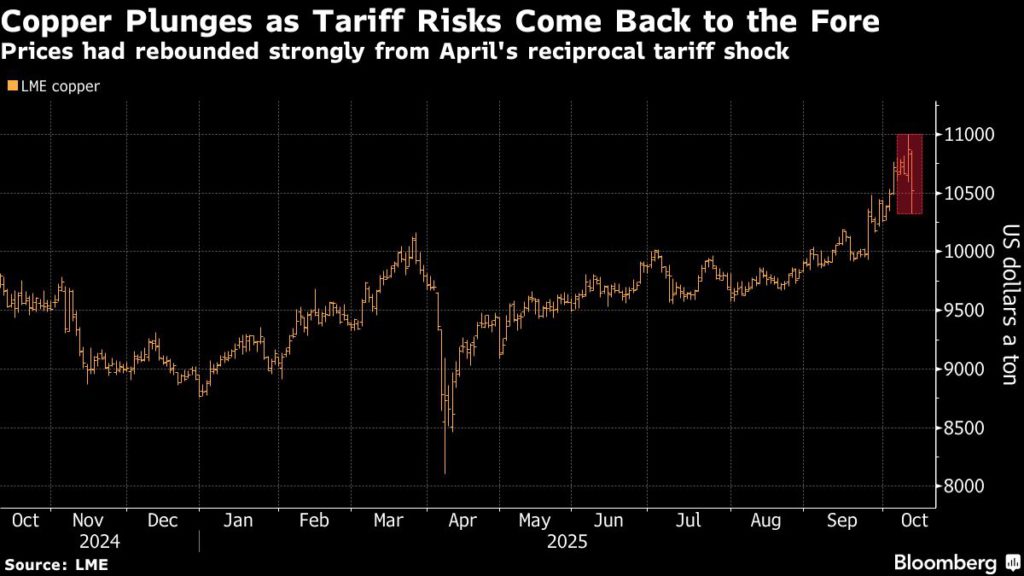
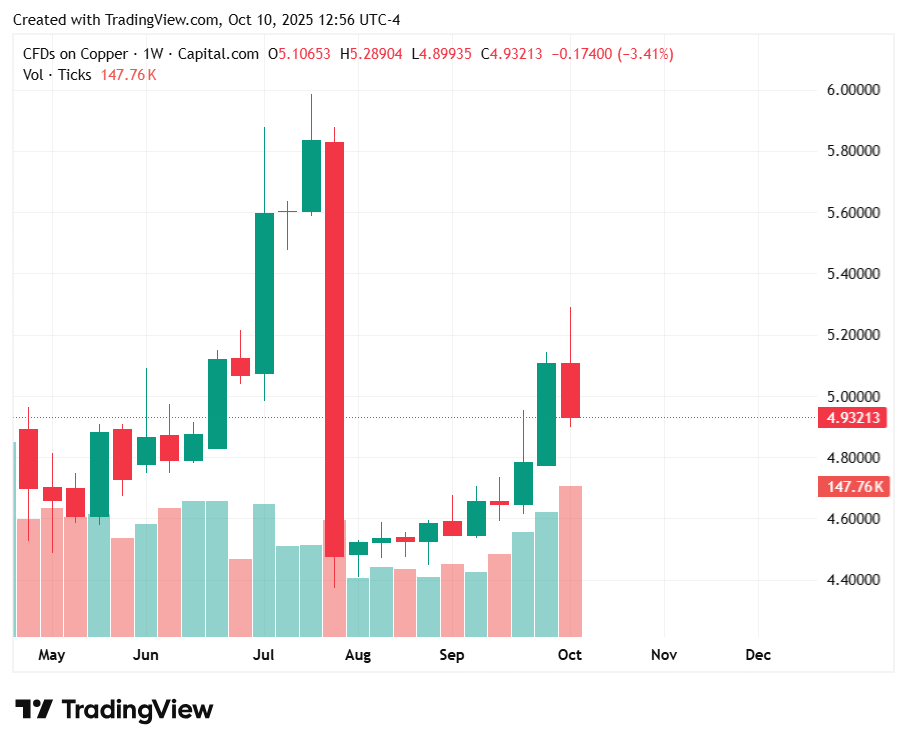
Prices tumbled as much as 5% on Friday after President Donald Trump threatened “massive” additional import tariffs on Chinese goods, putting an abrupt end to a rally that had lifted the critical industrial metal to within a whisker of record highs.

Now, as London fills with thousands of miners, traders, investors and manufacturers for a marathon of cocktail parties, conferences and commercial negotiations, one question loomed large: Where will copper prices go when the market reopens at 1 a.m. on Monday?

On the one hand, fresh China tariffs would be a hammer blow for demand, and a terse response from China on Sunday suggests little willingness to back down.

But if Chinese President Xi Jinping — or Trump — does step back from the brink, the focus could shift quickly back to a confluence of bullish factors that have had some traders betting that prices will soar to new all-time highs. Those drivers include accidents at some of the world’s biggest copper mines that have hit production, a wave of investor interest in metals as an alternative to the dollar, and long-term demand growth driven by electrification.

“This could be a game changer in the short term,” said Paul Crone, vice president for metals at SEFE Marketing & Trading Ltd. “I do think dips are still a buy — how deep the dip now is, is yet to be seen. Ultimately the Chinese will step in when we are low enough.”

Other markets that stayed open over the weekend suggested the selling pressure may continue, after Trump doubled down with a pledge to apply a blanket 100% tariff from Nov. 1 unless Xi rowed back the export controls.

Cryptocurrencies extended losses after a record selloff on Friday; Chinese bonds rallied in thin trading on Saturday, and onshore equities analysts are bracing for further losses, at least initially.

The renewed concerns about a US-China trade war highlight an uncomfortable truth for the copper market: demand for physical copper from real-world consumers has been lackluster in recent months, a fact that has given even die-hard bulls pause for thought.

Instead, prices have been lifted by a series of drastic supply disruptions.

In the Democratic Republic of Congo, the Kamoa-Kakula complex – co-owned by Ivanhoe Mines Ltd. and Zijin Mining Group Co. – started the year with a surge in output, cementing its status as one of the copper industry’s biggest success stories in recent years. But that project was hit by a major setback in May, after seismic activity triggered flooding in one of the underground mines.

Soon after, a July 31 rock blast at Codelco’s top mine in Chile claimed the lives of six people and halted activities for more than a week. While work at El Teniente has resumed in areas unaffected by the collapse, the Chilean industry’s worst accident in decades is imperiling the state-owned producer’s efforts to recover from a protracted slump that looks like costing it the title of world’s top supplier.

“Unfortunately, we’re exposing many vulnerabilities of the mining industry,” said Juan Carlos Guajardo, founder of mining consultancy Plusmining. “The industry doesn’t have the necessary strength to face this current period.”

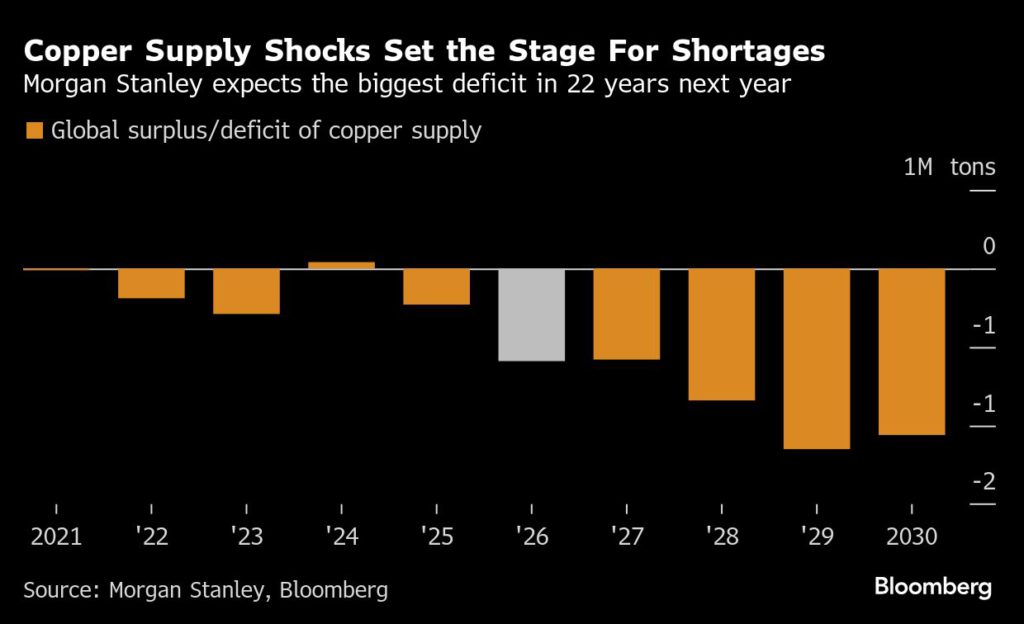
And in the latest setback, a massive fatal mudslide knocked Freeport McMoRan Inc’s Grasberg mine in Indonesia offline last month, providing the catalyst in the rally that took copper prices to a peak of $11,000 last week. Tallied together with a string of supply losses from other misfiring projects, and the copper market looks set to be on the cusp of a severe shortage, with Morgan Stanley forecasting that production will fall short of demand by 590,000 tons next year, the biggest supply deficit since 2004.

The Grasberg incident “effectively nudged everyone that was already seeing a poorly balanced copper market to the reality of supply definitely underperforming,” Ivan Petev, the head of base metals at Gunvor Group, said at the Financial Times Metals and Mining Summit in London on Friday. Speaking before Trump’s tariff threats, he predicted that prices could rise above $15,000 a ton as soon as this year.

“Animal spirits have been awoken in the copper market,” he said.

Traders and analysts also point to a wave of investor interest in copper as metals more broadly benefit from the so-called “debasement trade.” While that has helped lift prices, it has also made some nervous.

“When I trade the price, I’m a little bit aware of the fact that we are melting up in everything. We’re melting up in gold, we are melting up in Nvidia, we are melting up in all the the US tech and well, okay, chickens may come to roost,” said Gunvor’s Petev.

For copper traders, Friday’s slump was the latest in what is becoming a familiar pattern of events, as prices are upended by the US president’s interventions.

Back in April, traders were pulling all nighters as Trump rolled out bombshell reciprocal tariffs, with prices collapsing by as much as 16% over three days as bets on his pro-business agenda unraveled, and panic about the darkening outlook for manufacturing and global trade set in.

Prices soon snapped back as Trump backtracked on the tariffs, but in July, he once again caused turmoil: first, by suggesting that he would impose a 50% import tariff on copper, then by ultimately imposing no tariff at all on the main traded form of the metal.

As gallows-humor memes started flying between metals traders in London over the weekend, one lamented that trading copper in 2025 felt more like trading crypto.

(By Mark Burton)


Copper price tumbles as Trump threatens massive new tariffs on China

US President Donald Trump. (Stock Image)

Copper plunged after President Donald Trump threatened a massive increase of tariffs on goods from China, the world’s top buyer of the industrial metal.

Prices slid almost 5% below $10,400 a ton on the London Metal Exchange, in the biggest drop in five months. The move wiped out gains that lifted prices towards a record high on Thursday.

Trump’s comments on a social media post sparked turmoil across financial markets, with stocks dropping sharply in the US, while bonds and gold gained. Copper is particularly sensitive to concerns about trade and the global economy given its widespread use in manufacturing and key role in the world’s growing electrification.

Friday’s slump reversed a rally that was fueled by major setbacks at massive copper mines in Chile, Democratic Republic of Congo and Indonesia. With other projects also struggling to hit production targets, investors had been piling into the metal in recent weeks on a bet that the market could be heading for deep shortages.

Trump said he saw “no reason” to meet Chinese President Xi Jinping at a scheduled meeting in South Korea later this month, citing “hostile” export controls on rare earth minerals. One countermeasure the US is considering “is a massive increase of Tariffs on Chinese products coming into the United States of America,” he said.

The post follows a series of moves by both the US and China to potentially curb flows of technology and materials between the countries.

LME copper prices were down 4% at $10,440 a ton as of 12:47 p.m. New York time, as all metals declined on the exchange. Futures contracts on New York’s Comex also tanked.

Prices had rallied to $11,000 on Thursday, about $100 shy of an all-time high struck in May last year.

(By Mark Burton)

Pentagon moves to build $1 billion critical minerals stockpile to counter China — report

Stock Image

The Pentagon has moved to acquire up to $1 billion worth of critical minerals as part of an accelerated stockpiling drive aimed at reducing US dependence on China, the Financial Times reported on Sunday, citing public filings from the Defense Logistics Agency (DLA).

According to FT, the Trump administration directed the Defense Department to expand its national stockpile after Beijing tightened export controls on materials crucial to defence and high-tech industries. China dominates global supply chains for many of these metals, including those used in fighter jets, radar systems and smartphones.

“They’re definitely looking for more, and they’re doing it in a deliberate and expansive way,” one former US defence official told the newspaper. The $1 billion procurement marks a sharp acceleration from earlier stockpiling efforts, the report said.

Countering China

Beijing last week announced sweeping new export restrictions on rare earths and related technologies, prompting US President Donald Trump to cancel a planned meeting with his Chinese counterpart Xi Jinping, and to pledge a 100% tariff on Chinese imports. “There is no way that China should be allowed to hold the world ‘captive’,” Trump said on his Truth Social account.

Within the US, these restrictions have fueled fears among those reliant on Chinese supply. Currently, China mines more than half of the world’s rare earths and controls over 90% of the minerals’ processing capacity, making it by far the most dominant player in the global supply chain. As such, a stockpile of these minerals would serve as a safeguard against potential supply disruptions, especially during geopolitically sensitive periods.

The Pentagon’s broader push is backed by Trump’s One Big Beautiful Bill Act (OBBA), which allocates $7.5 billion for critical minerals—$2 billion to expand the national stockpile by 2027, $5 billion for supply chain investments, and $500 million for a Pentagon credit program to spur private projects. Several defence offices are now “flush with cash,” one official told the FT.

According to FT, the Pentagon’s new buying activity would involve not only rare earths but also metals not previously mentioned for a national stockpile. Recent filings seen by the paper showed that DLA intends to buy up to $500 million of cobalt, $245 million of antimony from US Antimony, $100 million of tantalum from an undisclosed American supplier, and a combined $45 million of scandium from Rio Tinto and Illinois-based APL Engineered Materials.

“These moves show the government is conscious of how critical this stuff is and wants to support whatever domestic capacity they have,” a sector executive told the FT. The DLA, which already stockpiles dozens of metals and alloys valued at $1.3 billion as of 2023, can release them only in wartime or for national defence needs.

In another move aimed at countering Chinese dominance, the Trump administration is also considering stockpiling minerals found on the Pacific Ocean seabed, which is rich in nickel, cobalt, copper and manganese, amongst others, FT reported earlier this year.

Prices for several key minerals have surged amid tighter Chinese exports. Germanium prices have spiked this year, while antimony trioxide has nearly doubled over the past 12 months. Car makers have also faced shortages of rare earth elements following new Chinese curbs.

Significant volumes

However, the DLA’s proposed volumes have startled some market participants. Cristina Belda of Argus Media told the FT that requested quantities ,in many cases, exceed the US annual production and import levels.

Fastmarkets analyst Solomon Cefai noted that the sought-after volumes of bismuth and indium were “significant” enough to potentially constrain non-China supply. According to the US Geological Survey, domestic consumption of refined indium in 2024 was around 250 tonnes, while the DLA is looking into buying 222 tonnes of indium ingots.

The prices of some purchases also surprised the market. Analysts at Jefferies noted that the scandium deal with Rio Tinto—for roughly 6 tonnes of scandium oxide—was priced “higher than market expectations.”

For antimony, the Pentagon stockpile would be “sufficient for industrial base mobilization in a national emergency” and enable the company to continue producing in what was a “volatile” sector, FT said. For instance, the agency is considering 3,000 tonnes of antimony, compared with total US consumption of 24,000 tonnes estimated by USGS.


LA REVUE GAUCHE - Left Comment: Search results for PERMANENT ARMS ECONOMY


AMERIKA; PAPER TIGER

China says it's 'not afraid' of a tariff war in the face of Trump's 100% tariff threat

Copyright AP Photo

By Euronews
Published on 

“China’s stance is consistent,” the Chinese Commerce Ministry said in a statement posted online. “We do not want a tariff war but we are not afraid of one.”

China signaled Sunday that it would not back down in the face of a 100% tariff threat from US President Donald Trump, urging the US to resolve differences through negotiations instead of threats.

“China’s stance is consistent,” the Commerce Ministry said in a statement posted online. “We do not want a tariff war but we are not afraid of one.”

The response came two days after Trump threatened to increase the tax on imports from China by 1 November in response to new Chinese restrictions on the export of rare earths, a key ingredient for many consumer and military products.

“Frequently resorting to the threat of high tariffs is not the correct way to get along with China,” the Chinese Commerce Ministry said in its online post, which was presented as a series of answers from an unnamed spokesperson to questions from unspecified media outlets.

“If the US side obstinately insists on its practice, China will be sure to resolutely take corresponding measures to safeguard its legitimate rights and interests,” the post said.

The exchange threatens to derail a possible meeting between Trump and Chinese leader Xi Jinping and end a truce in a tariff war in which new tariffs from both sides briefly topped 100% in April.

Trump has placed tariffs on imports from many US trading partners this year, seeking to win concessions in return for tariff reductions. China has been one of the few countries that hasn't backed down, relying on its economic clout.

Both sides accuse the other of violating the spirit of the truce by imposing new restrictions on trade.

Trump said China is “becoming very hostile” and that it’s holding the world captive by restricting access to rare earth metals and magnets.

China’s new regulations require foreign companies to get special approval to export items that contain even small traces of rare earths elements sourced from China. These critical minerals are needed in a broad range of products, from jet engines, radar systems and electric vehicles to consumer electronics including laptops and phones.

China accounts for nearly 70% of the world’s rare earths mining and controls roughly 90% of global rare earths processing. Access to the material is a key point of contention in trade talks between Washington and Beijing.

The ministry post said that export licenses would be granted for legitimate civilian uses, noting that the minerals also have military applications.

The Chinese Commerce Ministry post said that the US has introduced several new restrictions in recent weeks, including expanding the number of Chinese companies subject to US export controls.

It also said that the US is ignoring Chinese concerns by going forward with new port fees on Chinese ships that take effect Tuesday. China announced Friday that it would impose port fees on American ships in response.

China criticizes US for 'double standards' over new tariffs
DW with Reuters and AFP
12/10/2025 

Beijing has threatened to take corresponding measures to safeguard its own rights and interests, after Donald Trump threatened 100% US tariffs over China's limits on rare earth exports.

China has accused Washington of "double standards" on Sunday after US President Donald Trump announced an additional 100% US tariffs on imports from the world's second largest economy.

"The relevant US statement is a typical example of 'double standards'," a spokesperson for the Chinese Ministry of Commerce said in a statement. "Should the US persist in its course, China will resolutely take corresponding measures to safeguard its legitimate rights and interests," the statement read.

This comes in response to Trump threatening a new 100% tariff on Chinese goods and export controls on all critical software, starting November 1, in addition to existing 30% tariffs.


Trump, in a post on his Truth Social platform, said that he had learnt that China had taken an "extraordinarily aggressive position on trade in sending an extremely hostile letter to the world."

It came a day after Beijing introduced new export limits on rare earth minerals. China is the world's largest supplier of these materials, which are crucial for tech production.

The new US tariffs threaten to restart a trade war first launched earlier this year. Shortly after Trump took office both nations started exchanging exponentially high tariffs which were eventually paused after several rounds of negotiations.

China defends rare earth control measures

Beijing justified its position on restricting exports, saying China's measures are necessary given the military applications of medium and heavy rare earth metals amid the "current turbulent global situation and frequent military conflicts."

China has long used rare earths — the minerals essential for electronic, automotive and defense systems — as strategic leverage against the US.

Beijing added that it had notified relevant countries and regions before the announcement of the measures.

The Commerce Ministry's statement assured global tech companies and stakeholders that the export measures will have "extremely limited impact" on production and supply chains.

China said it is willing to strengthen dialogue and exchanges on export controls to safeguard supply chains further.


Speaking of its ties with the US, Beijing accused Washington of continuously adding new restrictions against China since the trade talks in Madrid.

It said China's position on tariff wars has been consistent.

"We do not want to fight, but we are not afraid to fight," the Ministry of Commerce said.

Edited by: Rana Taha


Iranian Oil Exports to China Come Under Renewed Pressure

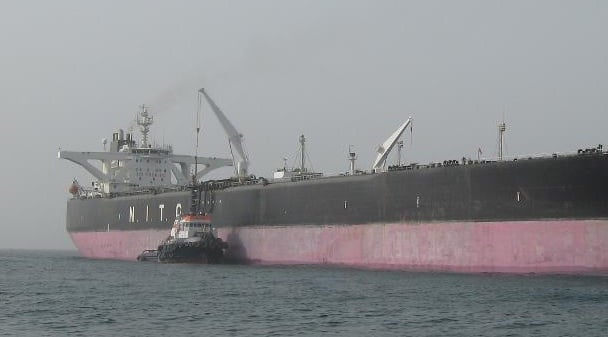
An Iranian tanker in the pre-sanctions era (file image courtesy NITC)

Published Oct 12, 2025 1:27 PM by The Maritime Executive


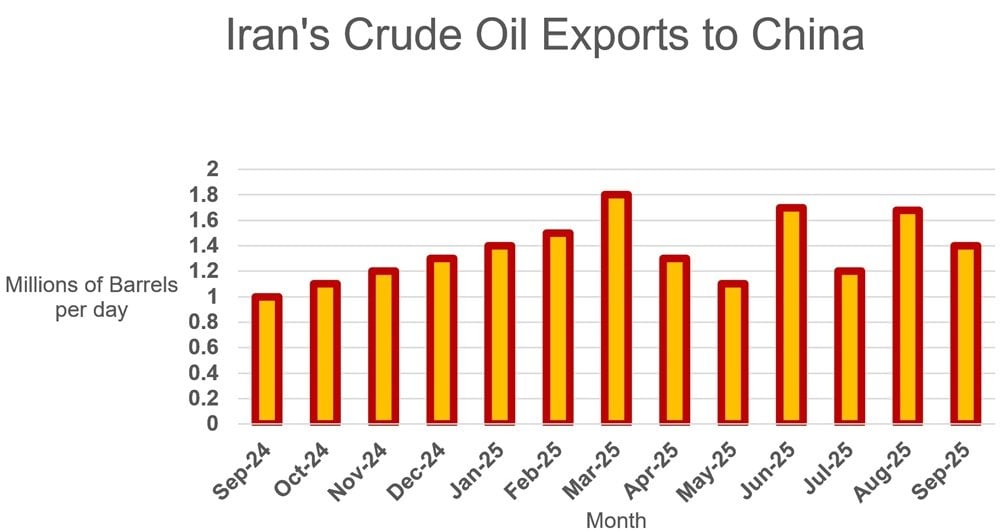
Iranian oil exports to China, which over the previous three months averaged 1.52m bpd, fell to 1.4m bpd in September. From January to August, the average monthly figure was 1.45m bpd, so the figure for September shows a fall below this average, and Vortexa estimate that the figure for October is already set to fall further.

Despite the pressure Iran is under, and the setbacks it has suffered politically this year, Iranian exports of oil in 2025 have until recently held up well. Iran’s sanctions evasion system, much of it orchestrated by commercial entities controlled by the IRGC, have been adept at staying ahead of controls. There are multiple indications however that Iran is about to face a series of difficulties which will jeopardize its capacity to financially underwrite its confrontational political position.

Iranian crude exports to China estimated from Kpler and Vortexa analysis (CJRC)

The imposition on September 28 of snap-back sanctions against Iran, triggered by a mechanism in the 2015 nuclear agreement, broadens the nature of sanctions that can be imposed on Iran, but also does so with the full authority of the United Nations. Critically, China has in the past respected UN-imposed sanctions, in contrast to the way it has prevaricated - alongside other BRICS nations - over some nationally imposed sanctions. The UN’s authority is now behind the sanctions package. China may still demur, in particular because it is now engaged in a tariff war with the United States, and casts the United States as the leader of nations seeking to curb Iran. But BRICS nations, also under pressure from Trump tariff threats, are more likely than hitherto to conform; they will be much warier about being seen to support sanctions-breakers, for example by bunkering or allowing dark fleet vessels to dock.

As if to emphasize that new pressures will be applied, the US Treasury announced one of its largest packages of anti-Iranian sanctions enhancements on October 9. Targeting those both crude oil and LNG-associated, 100 individuals, entities, and vessels were listed. Those targeted fall into three groups.

1) Commodity and oil trading entities, including:

  • Turkey-based ABY Plastik, Dina Petrokimya, Yesil Basak and Mikroteknik.
  • UAE-based Chemix, Erbium Trading LLC, Golden International LLC and Soft Air.
  • India-based BK Sales, CJ Shah, Chemovick, Haresh Petrochem, Indisol, ModyChem, Paarichem and Shiv Texchem.
  • Iran-based Kermanshah Petrochemical.

2) Ship managers, storage and port operators include Foreversun and its Jiangsu terminal on the Yangtze, Dimond Town Shipping in Ajman (UAE) and Istanbul-based Tethis Shipping.

3) Ten dark fleet ships, operated by Dimond Town Shipping and Tethis Shipping, and all registered either in Panama, Palau or the Cook Islands.

It’s not as if the relationship between China and Iran is easy. Chinese companies tend to be in arrears when paying, and transactions fall outside the international commercial courts system, frustrating debt collection. For example, Beijing-based Haokun Energy, sanctioned by the US Treasury in May 2022, is believed to owe $1bn to IRGC-related oil trader Sepehr Energy Jahan Nama Pars.

Inequitable barter arrangements, adopted to avoid US Treasury surveillance of the dollar-based international transaction system, are prone to complications. Under a $2.7bn barter arrangement, for example, Tehran Imam Khomeini Airport was supposed to be expanded, a project abandoned, according to Iran International, immediately post the groundbreaking ceremony in 2023. In May, Haokun Energy paid off a debt of $116m by transferring two ex-Hong Kong Airlines A330 aircraft to Iran, but together valued at only $60m.

Rumored debt exchange for Chinese weapons, air defense systems in particular, have so far failed to materialize. Weapons sales are stymied by the Iranian practice of reverse-engineering and copying Chinese missile technology without license. One success was the bartering of debt for the supply by Hong Kong-registered Lion Commodities Holdings of 58 containers loaded with ammonium perchlorate, sufficient to fuel 250 Iranian or Houthi medium-range missiles; but mysteriously, this consignment caught fire and exploded on April 26, destroying most of the Bandar Abbas dockside container park.

There is scope for a further tightening of the screws. Reports in the Iranian media reflect concerns that with the Gaza war out of the way, the United States will be able to apply more focus to the Iranian issue, and to commence seizures at sea under the new UN sanctions regime. Vessel seizures and cargo confiscations are a more certain way of curbing Iranian exports than chasing after front companies and sanctioning dark fleet tankers, which change their flags and names as soon as they are identified.


Rubio and Duffy Threaten IMO Member States Ahead of Climate Vote

WHINING ABOUT CARBON TAX WHEN CHARGING THE WORLD 15% TARIFFS

Published Oct 12, 2025 7:39 PM by The Maritime Executive


The Trump administration is threatening to deploy some of its biggest legal penalties against countries that back the Marine Environment Protection Committee's draft CO2 emissions regulations, which are up for a final vote text week. Promoting the "activist-driven climate policies" in the IMO Net Zero Framework could result in sanctions, tariffs, port fees or crew visa restrictions, Secretary of State Marco Rubio and Secretary of Transportation Sean Duffy warned in a joint statement Friday. 

In the administration's view, the framework amounts to a "European-led neocolonial export of global climate regulations." This dramatic framing might seem disproportionate to the size of the sector, which accounts for just three percent of global CO2 and barely flickered on U.S. policymakers' radars in years past. But there is much more than shipping at stake, Duffy and Rubio said. In the big picture, though it is not usually discussed as a "tax," the new Net Zero Framework will be the first and only global financial penalty of any kind for carbon emissions. If enacted, it would be a symbol of non-U.S. opinion on climate change and a new goal post for measuring every other industry's emissions. 

"This will be the first time that a UN organization levies a global carbon tax on the world," wrote Duffy and Rubio. "President Trump has made it clear that the United States will not accept any international environmental agreement that unduly or unfairly burdens the United States or harms the interests of the American people."

In a statement, Rubio and Duffy said that the administration unequivocally rejects the MEPC proposal and will "not tolerate" it. An estimated 10 percent hike in global shipping cost from the carbon fee structure is too much to bear, they warned, and could be "disastrous." 


To penalize countries that vote for the IMO carbon tax system, Rubio and Duffy laid out a menu of options that could be brought to bear, to include: 

- Sanctions on individual officials

- Additional port fees on ships owned, operated or flagged by countries supporting the Net Zero Framework

- Investigations of "anti-competitive practices" and potential blocking of vessels from certain flagged countries, measures which would require the participation of the Federal Maritime Commission

- Visa restrictions on C-1/D maritime crewmember visas

- Commercial penalties stemming from U.S. government contracts 

"We will fight hard to protect our economic interests by imposing costs on countries if they support the NZF. Our fellow IMO members should be on notice," Rubio and Duffy warned. 


Five Brazilian Ports Lead in Decarbonization Drive

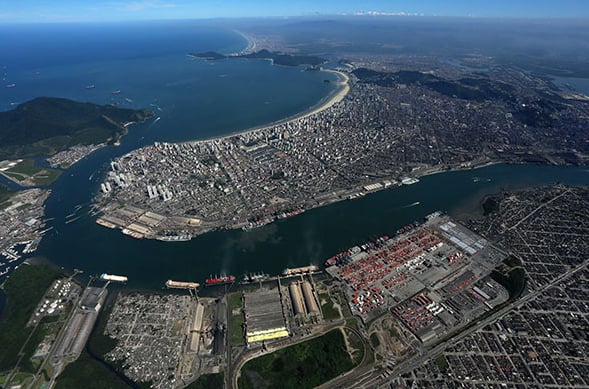
Port of Santos, Brazil's biggest seaport (Port of Santos file image)

Published Oct 12, 2025 5:26 PM by The Maritime Executive


With Brazil working on guidelines to decarbonize its maritime transport, the National Waterway Transport Agency (ANTAQ) has announced progress at five ports in reducing GHG (greenhouse gas) emissions. The ports were selected for an ongoing decarbonization study, implemented under Brazilian-German cooperation through the German development agency GIZ. Antaq and GIZ in 2023 signed a technical cooperation agreement to help in translating the study’s recommendations into port policy.

So far, three phases of the study have been completed. The first phase completed in 2021 reviewed international experience in port decarbonization. The second phase in 2024 evaluated emission reduction initiatives in ports as well as readiness of port infrastructures to receive vessels using clean fuels. The results of the third phase were released last week, which involved a case study of five Brazilian ports leading in decarbonization and readiness for the green transition.

The selected ports include Itaqui, Pecém Private Use Terminal, Paranaguá, Santos and the Açu private port. The ports were chosen for their strong Environmental Performance Index (EPI), ongoing energy transition projects as well as infrastructure for green hydrogen. In addition, the ports offer incentives for ships with lower carbon footprint including tariff discounts and priority berthing, which demonstrates gradual alignment with global emissions reduction targets.

Again, the ports are in the process of developing decarbonization plans. Port of Açu has already completed its plan. The main initiatives that stood out for the ports are installation of solar panels, replacing combustion engine-powered equipment with electric, and developing strategic initiatives to evaluate and implement use of low-carbon fuels.

Most importantly, of the five ports evaluated, three have GHG emissions inventories. These include the Port of Santos, Itaqui and Açu. The remaining two are in the process of contracting for the service.

“Port decarbonization is crucial to maintain Brazil’s competitiveness in global trade and meet international climate goals. Antaq and Ministry of Ports will be crucial in articulating public policies, defining progressive goals and encouraging investment in sustainable infrastructure,” said Director of Antaq Caio Farias, who is also the study’s rapporteur.

Some of the recommendations from the study include the creation of a National Green Hydrogen Plan and tax incentives to accelerate the supply and adoption of clean fuels. On partnerships, the study encouraged implementation of green corridors, which would help Brazilian cities and ports to reduce emissions from global shipping while improving air quality for coastal communities.


Canada’s Underutilized Advantage in the Arctic: Surface Wave Radar

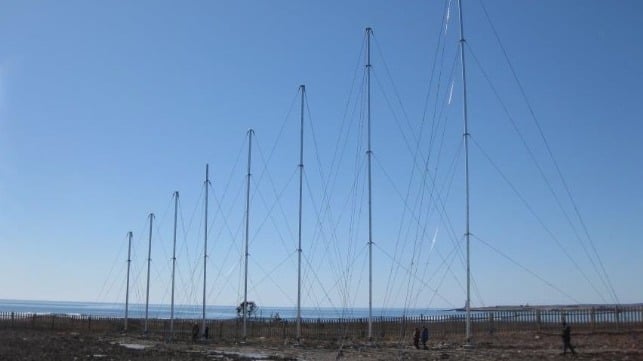
Radar
Courtesy Defense Research and Development Canada / Raytheon Canada

Published Oct 12, 2025 4:41 PM by Pierre LeBlanc


Canada is entering a period of accelerated defense investment. The new federal government has committed to NATO spending benchmarks, and operational commanders must deliver tangible capabilities quickly. Nowhere is the gap more visible than in the Arctic, where maritime awareness remains fragile despite its centrality to sovereignty, security, and alliance credibility.

The threat posed by Russia, China and the weakening of the rules-based order highlight the urgency of deploying sensing capabilities in the region — capabilities that can offer persistent maritime awareness beyond the line-of-sight, complementing patrols and force presence.

Current radar coverage is fragmented: X-band coastal radars see only 10–30 nautical miles offshore, satellites provide snapshots but not continuous tracking, and the Canada–Australia Over-the-Horizon Radar (OTHR) initiative will provide northward coverage from Ontario but is built for continental air and missile detection, not vessels threading arctic straits. Yet Chinese and Russian icebreaker fleets make this a key area of concern for sovereign and environmental protection.

Fortunately, Canada already possesses a proven, home-grown solution: High Frequency Surface Wave Radar (HFSWR), which provides continuous monitoring of ship traffic up to 200 nautical miles (350km) offshore, in all weather—even when vessels spoof (transmission of a false location) or turn off their compulsory Automatic Identification System (AIS) beacons.

The Gap in Today’s Toolkit

Commanders face a puzzle of partial solutions:

  • X-band radars: precise but limited to line-of-sight; impractical to cover the Exclusive Economic Zone.
  • Satellites: valuable but constrained by revisit times, weather, and cost.
  • OTHR: a huge investment - excellent for long-range detection of airspace, but not for monitoring surface vessels.

The result is a persistent mid-range gap—precisely where sovereignty, fisheries enforcement, shipping safety, and search and rescue depend on reliable detection.

Canada’s Hidden Asset: 35 Years of World Leadership

Canada’s High-Frequency Surface Wave Radar (HFSWR) capability reflects more than three decades of investment and development, led by Raytheon Canada in close partnership with the Government of Canada. This foundation created a world-class radar technology and proved its operational maturity first at Hartlen Point, Nova Scotia and most recently at Cape Race, Newfoundland.

Since assuming international commercialization responsibility in 2019, the current owner has invested a further six years in advancing the system to a fourth-generation design at the highest technology readiness level (i.e. operationally deployed): a standardized, deployable product rather than a bespoke research platform. With the acquisition of Northern Radar Incorporated—the team behind all prior Canadian HFSWR antenna subsystems—the full electronics, software, and antenna expertise now reside within one company. For the first time, Canada has under one roof the full system capability to deliver a turnkey Arctic maritime surveillance solution. At the same time, Raytheon Canada’s program management and in-service support, and other strengths remain as valuable components of any Canadian deployments.

Unlike conventional radars limited to line-of-sight, HFSWR uses seawater’s conductivity to bend radio waves along the ocean surface, detecting ships out to the full 200 nautical miles (350km) of Canada’s EEZ.

HFSWR complements the Australian JORN OTHR program by filling tactical gaps near Canadian shores—especially in the Arctic, where sovereignty is best exercised by tracking vessels before they enter the archipelago.

Rapid Deployment Pathways

The urgency of today’s defence environment requires capabilities that can be fielded quickly. HFSWR is uniquely suited to meet that demand:

  • Deployment in weeks to a few months: reactivate existing facilities like Cape Race and Hartlen Point.
  • Deployment in 12–18 months: establish new arctic sites on current National Defense facilities.
  • Scalability: a handful of sites can cover vast approaches and direct aircraft and patrol vessels where they are most needed.

Strategic Relevance for Canada

The benefits extend far beyond technology:

  • Arctic Sovereignty: Persistent surveillance is the foundation of sovereignty. Without it, presence and enforcement are reactive at best. With it, Canada can demonstrate control over Arctic waters in real time.
  • Alliance credibility: Closing northern gaps strengthens NATO and NORAD contributions.
  • Civil-military synergy: Alongside DND, HFSWR supports Coast Guard missions—search and rescue, fisheries, interdiction, environmental stewardship.
  • Canadian innovation: A home-grown, ready-to-deploy solution signals sovereignty and technological leadership, while creating significant export potential as suggested by Prime Minister Carney.

With strong home-country support, this technology can rapidly generate exports to aid our allies in combating their own maritime threats.

Protecting the Northwest Passage

A key challenge for Canada is to exert its sovereignty in the Arctic and to ensure vessels transiting its waters do not threaten Canadian safety or the environment. The entrances to the Northwest Passage on the east and west coasts are the choke points for this traffic. X-band radars with 10-30 nautical mile range cannot fully monitor across these entrances. A small number of HFSWR systems can.

Cost and Lifecycle

Though not the primary argument, cost matters. HFSWR delivers wide-area coverage at a fraction of the expense of aircraft patrols, with minimal personnel needs, remote operation, and long service life. In an era of rising budgets, it represents visible capability without multi-billion-dollar price tags.

Now is The Time to Act

I first recommended the HFSWR to monitor the entry points to the Arctic Archipelago in 2000 when I commanded our Joint Task Force North. Canada has finally made a public commitment to increase defense spending, to meet NATO obligations, and to secure the Arctic. The challenge is not whether to spend, but how to spend wisely and rapidly.

High Frequency Surface Wave Radar is not a concept on a whiteboard. It is Canadian-developed, Canadian-owned, operationally proven, and available now. With existing assets ready to be deployed in weeks or months, and new Arctic installations feasible in 12–18 months, HFSWR offers Ottawa a rare opportunity: to deliver real capability in the near term, while reinforcing both sovereignty and alliance credibility.

This is not about choosing between OTHR and HFSWR. It is about building a layered radar toolkit that gives Canada the strategic depth of OTHR and the persistent sovereignty coverage of HFSWR. Together, they form a continuum of awareness from the nearshore to the continental edge.

For Canada’s operational commands, Coast Guard, and policymakers, the message is clear: the technology is proven, the need is urgent, and the time to act is now.

The opinions expressed herein are the author's and not necessarily those of The Maritime Executive.


Royal Marines Shoot Out the Engine of Smuggling Boat in Gulf of Oman

HMS Lancaster (Royal Navy file image)

Published Oct 12, 2025 3:03 PM by The Maritime Executive


The Royal Marines have adopted a U.S. Coast Guard tactic for the task of stopping smuggling boats in the Gulf of Oman. The location may be different, but the method remains the same: shooting out the outboard engines.

In a recent interdiction, frigate HMS Lancaster's Wildcat helicopter spotted three high-speed skiffs at dawn in the Gulf of Oman. The aircrew shadowed them from a distance, and Lancaster launched a mini-drone helicopter to take over the pursuit to monitor the boats. The Wildcat returned to Lancaster's deck and picked up a team of Royal Marines snipers. 

Re-equipped and refueled, the aircrew gave pursuit and closed in on the three high speed craft. When the boat crews realized they were being followed, they began jettisoning their cargo and sped up to 40 knots to escape. 

Two of the skiffs were abandoned, but the third tried to get away. When in range, snipers aboard the helicopter opened fire and disabled it with a single shot to the outboard engine. 

"Non-lethal disabling fire has not been seen in the region and was essential in preventing the drug runners from moving their product," said pilot Lt. Guy Warry. "Being the Wildcat pilot carrying out a live weapons firing on drug-running skiffs whilst flying backwards to provide a stable platform for the snipers was definitely a career highlight."

On collection of the jettisoned cargo and boarding of the boats, Lancaster's team found 1.5 tonnes of drugs, including hash, crystal meth and heroin. The estimated street value was in the range of $45 million. 

Courtesy Royal Navy

It is believed to be the first time that the live-fire tactic has been used to disable a suspected smuggling vessel in the Gulf region, according to the Royal Navy. It is an everyday tactic for U.S. Coast Guard interdictions in the busy smuggling zones of the Caribbean and Eastern Pacific: the USCG's sharpshooting specialists intercepted their 1,000th boat last month, marking 25 years of armed interdiction. When expertly performed, the tactic is less-lethal, and fatalities are vanishingly rare.