Sunday, October 12, 2025


Why Luxembourg is Betting on Bitcoin for Long-Term Growth

  • Luxembourg's Intergenerational Sovereign Wealth Fund (FSIL) will allocate 1% of its portfolio, over €7 million, to Bitcoin and other cryptocurrencies, marking the first public fund investment in Bitcoin in Luxembourg and positioning it as the first Eurozone nation to invest sovereign wealth into Bitcoin exchange-traded funds.
  • The decision follows the government’s July 2025 approval of a revised investment policy allowing up to 15% of FSIL assets in alternative investments, with the Bitcoin exposure taken through a selection of ETFs to avoid operational risks.

  • This move aligns with Luxembourg’s strategy to become a fintech and digital assets hub within the EU, signaling that digital assets are entering the financial mainstream and following a global trend of sovereign wealth funds exploring crypto investments.

Luxembourg is officially joining the ranks of governments investing in Bitcoin. 

The country’s Intergenerational Sovereign Wealth Fund (FSIL) will allocate 1% of its total portfolio — over €7 million — to Bitcoin and other crypto, Finance Minister Gilles Roth announced Wednesday during his 2026 budget presentation in the Chamber of Deputies.

“This is really great news for crypto-assets because this is the first investment of a public fund in bitcoin in Luxembourg,” said CSV lawmaker Laurent Mosar following the announcement.

The move positions Luxembourg as the first Eurozone nation to allocate sovereign wealth into Bitcoin exchange-traded funds, marking a significant symbolic step for Europe’s financial landscape.

Bitcoin as a strategic financial allocation

As of June 30, 2025, the FSIL held $887 million in assets, primarily in investment-grade bonds (53%) and index funds (46%), with less than 1% in cash. 

The planned allocation, if implemented at current asset levels, would translate to roughly $9.5 million in Bitcoin exposure through ETFs.

Bob Kieffer, Luxembourg’s Director of the Treasury, confirmed the details in a Wednesday post, explaining that the decision follows the government’s July 2025 approval of a revised investment policy allowing up to 15% of FSIL assets to be placed in “alternative investments,” including private equity, real estate, and cryptocurrencies.

He acknowledged the debate surrounding the move:

“Some might argue that we’re committing too little too late; others will point out the volatility and speculative nature of the investment. Yet, given the FSIL’s particular profile and mission, the fund’s management board concluded that a 1% allocation strikes the right balance, while sending a clear message about bitcoin’s long-term potential.”

Kieffer clarified that the exposure would not involve direct Bitcoin holdings.

“To avoid operational risks, the exposure to bitcoin has been taken through a selection of ETFs,” he said.

Luxembourg as a Bitcoin hub

The decision also aligns with Luxembourg’s broader strategy to cement its status as a fintech and digital assets hub within the European Union. 

The country has increasingly become a base for crypto firms applying for MiCA (Markets in Crypto-Assets) licenses, which allow companies to operate across the EU under unified regulatory standards.

By integrating Bitcoin ETFs into a state investment fund, Luxembourg is signaling that digital assets are entering the financial mainstream — not as speculative gambles, but as long-term strategic holdings.

Following a global Bitcoin trend

Luxembourg’s move follows similar steps by sovereign wealth funds across the world. Norway’s $1.9 trillion fund reportedly holds around 11,400 BTC indirectly through corporate investments, while sovereign funds in Asia and the Middle East have begun exploring limited exposure to crypto markets.

The U.K. and Finland also hold Bitcoin. The Czech central bank recently confirmed that it is studying a potential €7 billion shift of reserves into Bitcoin.

For Luxembourg, however, the motivation appears strategic rather than opportunistic — a controlled experiment in digital diversification that underscores the country’s ambitions to lead within Europe’s evolving financial infrastructure.

“Obviously, what’s right for the FSIL might not be right for other investors,” Kieffer noted. “But this allocation sends a clear message about where we believe the future of finance is headed.”

By Zerohedge 


Turkey Emerges as a Regional Leader in Renewable Energy Expansion

  • Turkey’s renewable energy capacity has surged to 74 GW, with solar and wind displacing $15 billion in gas imports since 2022.

  • The country’s ambitious green agenda includes large-scale solar, hydrogen development, and booming EV production.

  • Government incentives and foreign investment are propelling Turkey toward its 2053 net-zero emissions target.

Turkey has invested heavily in its renewable energy sector in recent years, and the country’s green energy capacity has increased faster than anticipated, which has strengthened its energy security and helped it rely less on energy imports. The government has invested heavily in diversifying the energy mix since the early 2000s, far ahead of several other countries in the region. It aims to achieve net zero emissions by 2053, with a strong focus on establishing energy independence to reduce reliance on other countries for its energy. 

According to the International Energy Agency (IEA), Turkey has introduced energy policies aimed at modernisation, liberalisation, and increased domestic production capacity, as it has sought to diversify its energy mix over the last decade. The country’s renewable electricity generation has tripled in the last 10 years, and the government is currently pursuing Turkey’s first nuclear power facility. 

In January, the think tank Ember Energy reported that Turkey’s solar energy capacity had doubled in the previous two and a half years to exceed the government’s 2025 target. New installations for self-consumption have driven 94 percent of the growth since July 2022, increasing from 9.7 GW to over 19 GW by the end of 2024. Solar power now contributes roughly 6 percent of Turkey’s total electricity supply. 

The accelerated deployment of solar capacity has helped save significant spending on imports. According to Ember, between July 2022 and December 2024, the combined solar and wind energy output helped prevent $15 billion in natural gas imports and helped to boost the country’s energy independence, as well as reduce reliance on fossil fuels. Turkey’s project pipeline of 33 GW in pre-licensed storage-integrated solar and wind projects, far exceeds the government’s 2030 target of 2.1 GW, showing great promise for sustained sectoral growth. The think tank suggests that Turkey could use rooftop, hybrid, floating and storage-integrated solar potential to continue with its solar power momentum.

By the end of August, Turkey’s installed renewable energy capacity climbed to 74 GW, with electricity generation from domestic resources reached 85 GW, according to data from the Energy and Natural Resources Ministry. The country’s total installed electricity capacity was almost 120.8 GW, with hydropower plants dominating the energy mix and contributing almost 27 percent of the total. Natural gas contributes around 25 GW, or 25 percent of the total, while solar power contributed 24 GW, wind capacity stood at almost 14 GW and domestic coal provided for 11 GW. Turkey continues to import over 10 GW of coal, 2.3 GW of electricity from biomass and 1.7 GW from geothermal plants.

Current projections suggest that Turkey could meet its additional electricity capacity needs through the development of 8 GW of hybrid solar power projects integrated into existing hydropower and wind power plants. The National Energy Plan forecasts that Turkey’s electricity demand will reach 455 terawatt-hours in 2030 and 510 terawatt-hours in 2035. The growth is expected to require an additional 17 GW of capacity by 2030 and 27 GW by 2035.

Turkey’s wind energy sector is gradually expanding, with around $1.3 billion in investment in the industry last year, supporting 1.3 GW of wind power installations. The Turkish Wind Energy Association expects this figure to increase to $1.5 billion in 2025 with 1.5 GW of new capacity. This follows the inauguration of several new wind farms in May, which have spurred greater investor interest in the market. 

In the coming years, Turkey is expected to develop its hydrogen and electric vehicle (EV) markets as it builds upon its energy diversification success. The EU recently announced a $3.22 million technical assistance project to help Turkey accelerate the development of its green and low-carbon sector in collaboration with state energy firm BOTAS (Turkish Petroleum Pipeline Corporation). The programme “Boosting Green and Low-Carbon Hydrogen in Türkiye” is aimed at reinforcing institutional capabilities and expanding sector-wide expertise across the country.

Turkey’s EV industry has grown significantly this year to overtake Belgium as the fourth-largest selling passenger battery electric vehicle (BEV) market in Europe. EV sales in Turkey more than tripled in June, to 25,646 units, up from only 8,032 units in June 2024, according to Turkey’s Automotive Distributors’ and Mobility Association. The market has expanded rapidly in recent years, largely thanks to the government’s special consumption tax. ÖTV. The special tax rates were rolled out alongside the launch of local BEV startup Togg’s first car, the T10X crossover, in 2023, and have also encouraged other EV makers to enter the market. For example, in July 2024, China's biggest EV maker, BYD, signed a $1 billion deal to establish a manufacturing plant in Turkey.

Turkey’s renewable energy market is going from strength to strength thanks to favourable government policies, support from Europe, and higher levels of private investment. As it continues to expand its solar and wind energy sectors, it will also focus on developing its low-carbon hydrogen industry and encouraging the production and uptake of EVs across the country. 

By Felicity Bradstock for Oilprice.com

Geothermal Power Emerges as Trump’s Favorite Clean Energy

FRACKING BY ANY OTHER NAME

  • Geothermal energy remains one of the few renewable sources still supported by the Trump administration, benefiting from Biden-era incentives and bipartisan backing.

  • Innovative firms like Fervo Energy and Sage Geothermal are pioneering advanced extraction methods that boost efficiency and expand geothermal access beyond traditional hotspots.

  • Major collaborations and endorsements - from Ormat and Baker Hughes to Bill Gates - are propelling geothermal toward large-scale commercialization across the U.S.

One of the few renewable energy sources that the Trump administration has not yet criticised is geothermal power, as companies across the United States continue to develop innovative geothermal projects with financial support from Biden-era policies. The sweeping budget legislation that President Trump signed in July preserved most key tax credits for geothermal power. Bipartisan support has encouraged several energy companies and startups to invest heavily in research and development into advanced geothermal operations in recent years, with promising results, giving hope for future clean energy production.

People have been tapping into geothermal energy from natural heat sources worldwide for centuries. Over the last fifty years, energy companies have tapped into geothermal sources using machinery to access harder-to-reach reserves. To achieve this, companies drill a borehole up to several kilometres deep, where the rocks are around 200°C, and inject water and sand at high pressure. This creates fractures in the rocks, which increases their permeability and produces a reservoir of hot water that can be extracted via a second borehole for the water to be used to generate electricity.

Geothermal energy contributes just 0.4 percent of the U.S. energy mix, largely due to technological and geographical constraints to accessing geothermal reservoirs. Existing plants depend on naturally occurring reservoirs of hot water and steam, in regions such as Northern California and Nevada, to power turbines and generate power. However, companies are now exploring new ways to access geothermal resources using techniques developed for oil fracking and innovative new methods to reach harder-to-access reservoirs in unconventional regions.

Sage Geothermal is now using heat and pressure to generate more power than conventional extraction methods through its cycle-based heat recovery approach. The company’s CEO, Cindy Taff, told Forbes, “By using the natural elasticity of the rock, we can bring hot water to the surface without pumps. Unlike traditional approaches, we maintain pressure in the system rather than venting it at the surface, and we hold open fractures with pressure instead of adding bridging materials like sand or proppant. These innovations reduce friction and energy losses, boosting net power output by 25 to 50 percent compared to other next-generation geothermal technologies.”

In August, Sage announced it was partnering with the international geothermal energy developer Ormat Technologies to roll out its next-generation technology at an Ormat facility in either Nevada or Utah. This is expected to help Sage speed up the development of its first commercial power-generation facility by around two years. Taff said, “For us, the ability to scale faster with Ormat is huge… But it’s also a great opportunity for Ormat to reach a deeper [geothermal] resource than what they’re targeting now.”

Related: Don’t Mess with Texas: Organized Oilfield Theft Triggers Statewide Response

In September, Sage signed an agreement with the geothermal startup Fervo Energy to advance their geothermal activities. The two companies have both invested heavily in research and development into alternative geothermal extraction methods and could work together to advance this work. Fervo recently signed a deal with tech giant Google to provide it with clean power, while Sage has completed an agreement with Meta.

Houston-headquartered Fervo Energy was approved to deploy 2 GW of geothermal power in Beaver County, Utah, by the Department of the Interior last year, with its facility set to begin generating power in 2026. The company uses an Enhanced Geothermal Systems (ESG) proprietary technology to drill horizontally into geothermal reservoirs, allowing it to access multiple wells from a single location and showing promise for greater unconventional geothermal energy generation.

In September, the energy technology company Baker Hughes was contracted by Fervo Energy to supply equipment for five of its power plants in the Cape Station project in Utah. The plants are expected to produce 300 MW of electricity once fully operational, enough to power about 180,000 homes. Baker Hughes will supply engineering and manufacturing equipment as well as turboexpanders and the BRUSH Power Generation generator.

The firm’s CEO, Lorenzo Simonelli, said, “Geothermal power is one of several renewable energy sources expanding globally and proving to be a vital contributor to advancing sustainable energy development. “By working with a leader like Fervo Energy and leveraging our comprehensive portfolio of technology solutions, we are supporting the scaling of lower-carbon power solutions that are integral to meet growing global energy demand.”

In September, Bill Gates visited Fervo Energy’s Cape Station project alongside Senator John Curtis. He described the company’s horizontal drilling method as a “truly innovative approach” and discussed the role companies like Fervo will play in maintaining America’s energy independence. The founder of tech giant Microsoft said, “Geothermal is one of the most promising ways to deliver clean energy that’s reliable and affordable.”

As the outlook for renewable energy in the United States becomes more uncertain, following the Trump administration's attacks on solar and wind power, the geothermal energy sector appears to have maintained the backing of the government as several companies continue to expand operations. Investments in innovative geothermal extraction technologies show great promise for the commercial rollout of new operations across the country. 

By Felicity Bradstock for Oilprice.com

Trump Policy Whiplash Leaves Energy Investors Guessing

  • Regulatory uncertainty under the Trump administration and shifting global policies are clouding investment decisions across both renewable and fossil fuel sectors.

  • Grid instability and high costs in Europe are fueling doubts about the reliability of renewables-heavy systems without adequate backup from gas and nuclear.

  • The global energy transition model is fracturing, as China reins in its overbuilt solar sector, the IEA calls for renewed oil and gas investment.

Earlier this month, a top Shell executive warned that the Trump administration’s animosity towards offshore wind risks complicating investment decisions for oil and gas as well. Uncertainty was the word Collette Hirstius used. Uncertainty has become the dominant sentiment in energy circles—and it’s not just because of Trump.

Speaking to the Financial Times, Shell’s Hirstius said that “I think uncertainty in the regulatory environment is very damaging. However far the pendulum swings one way, it’s likely that it’s going to swing just as far the other way.” This is an apt observation, only it could be argued that Trump’s policy towards wind, and to a lesser extent solar, is also an example of the pendulum swinging back, after billions of dollars were spent on developing technologies that, contrary to predictions, did not bring electricity prices down. It is this failure of the transition promises to materialize that is changing sentiment in global energy.

Spain is a case in point. This spring, both Spain and Portugal suffered a devastating blackout that authorities and grid operators at the time refused to link to the amount of solar generation at the time. Now, Spain’s grid operator is warning that it could happen again because there are wild swings in voltage. The warning comes days after the European Union’s ENTSO-E—the bloc’s grid operators’ network—published its report on the April blackout, pointing to excessive voltage as the cause.

Excessive voltage is not something caused by gas, nuclear, or coal power plants. Swings in voltage are one of the less publicized properties of wind and solar installations, and the thing that forces curtailment during demand troughs, precisely to avoid blackouts. So, grid operators are essentially saying there is a problem with uncontrolled wind and solar, and it could be a serious problem. Facts like this tend to undermine the reputation of the energy transition as the only way forward, with a net zero of acceptable alternatives. So do facts like Germany’s vulnerability to energy price shocks as a result of insufficient gas reserves for the winter season.

Gas major Uniper warned this week that the country could face a bill of 40 billion euros, which is about $46.6 billion, if it failed to keep its gas reserve 90% full—something rather unlikely for peak demand season. Germany has been at the forefront of the energy transition, with massive wind and solar capacity, and yet it needs a lot of gas to survive the winter. Something clearly does not add up, widening the divide between what politicians want to have as an energy system and what is possible to have as an energy system—without blackouts.

This is clearly affecting investment decisions both in the wind and solar sectors, and in oil and gas. Caution is the new black in both parts of the energy world because this pendulum keeps swinging. The International Energy Agency recently issued a Renewables 2025 report, in which it predicted a 50% slump in wind, solar, EV and similar investments in the United States because of the Trump administration’s policies. But it also noted it had revised its growth numbers because of policy changes in China.

China has led the world in both oil and gas demand, and wind and solar installations for years now. China has been used both as an example of how to do an energy transition and as a demonstration that whatever the EU or, say, the UK does about its emissions, China’s emissions continue to grow, and quite significantly, offsetting any decline elsewhere and then some. Yet now China is building additional oil storage capacity while reining in its solar industries to put an end to what has become popular as a race to the bottom.

China, then, this transition leader, is effectively admitting that the subsidy-driven industry growth model does not work over the longer term. All it does is spur a race to the bottom, meaning intense competition, a downward spiral for prices and the resulting proliferation of negative bottom lines and ultimately company failures. Yet governments in European countries, Canada, and Australia are trying to replicate the Chinese model of subsidized transition.

While expecting this model to prompt the twofold increase in wind, solar, hydro, and geothermal capacity by 2030, the International Energy Agency warned the world needs to invest more in oil and gas because field depletion was happening faster than previously assumed. The warning came soon after the U.S. Energy Secretary suggested the IEA remember what it was set up to do—focus on energy security—and stop playing cheerleader for the energy transition.

Big Oil, meanwhile, is doubling down on its recent shift from low-carbon investments to core business, despite all the political uncertainty and complicatedness. Per its own admissions, the industry is doing what makes money—even without all the subsidies that wind and solar have enjoyed in the EU for years and enjoyed in the U.S. for quite a while as well.

Some say the world is bifurcating into those who know the energy transition could never work, so they are securing their future supply of hydrocarbons, and those who choose to ignore evidence of the above and continue to pursue decarbonization policies that only lead to more expensive and less reliable energy. They may well be right.

By Irina Slav for Oilprice.com

Vietnam frees its gold market but shoppers pause as prices dip

Hanoi, Vietnam. Stock image.

Along Hanoi’s busiest gold trading street, dozens of storefronts gleam with bullion bars and jewelry. On Friday, however, shopkeepers sat idly behind glass counters, waiting for customers as Vietnam ended its decades-long monopoly on bullion trade and production, the first major liberalization of the market in more than a decade.

The shoppers may be slow to come but early signs of the monopoly’s end were evident.

Gold prices in the local market dropped, with SJC-branded gold, the country’s most recognized name, down about 500,000 dong per tael to 140.2 million dong ($5,320). Several other brands also cut their prices by as much as 600,000 dong per tael, the traditional Chinese unit of weight and currency used for precious metals.

“The drop followed moves in global markets, where gold prices declined amid profit-taking by investors,” Le Thi Hoa, a gold shop owner in downtown Hanoi, said. “The new rule and the recent price decline could encourage people to trade more now.”

The policy shift, effective Oct. 10, opens the gold market in Vietnam to banks and companies that meet the regulator’s requirements. It’s expected to boost supply and narrow the gap between domestic and international prices, according to Nguyen Quoc Hung, general secretary of Vietnam Banks Association. Before the policy change, the central bank was the sole importer of gold bullion and Saigon Jewelry Co., or SJC, the only legal producer of gold bars.

“People are still comparing prices and brands,” Tran Hong Lien, another gold shopkeeper next to Hoa’s, said, glancing at a near-empty counter. “Now that SJC isn’t the only choice, buyers want to see where they can get better value,” she said.

The new regulation also requires that any transaction of more than 20 million dong be conducted via bank transfer, ending the long tradition of cash-for-gold dealings. That’s proved a small nuisance for elderly buyers, who now are having to call their children to handle the payments online.

“It’s a bit funny to see an 75-year-old whispering bank details over the phone just to buy a bracelet,” Hoa said with a smile. “But it will work well.”

(By Nguyen Dieu Tu Uyen)

Turkey’s $500 billion gold hoard complicates inflation fight

Turkey central bank. Credit: Adobe Stock

A rally in gold prices is lifting the wealth of Turkish households by billions of dollars, complicating the central bank’s efforts to rein in prices.

Turks’ stock of gold outside the financial system, often called “under mattress gold,” is worth half a trillion dollars, according to central bank estimates. Surging bullion prices have created a wealth effect – where consumers spend more because they feel better off — of more than $100 billion over the past year, Governor Fatih Karahan has said.

Gold reached a record high above $4,000 this week, before paring gains slightly on Friday. According to Is Portfoy calculations, another 10% increase in gold prices would create a wealth effect of about $50 billion.

“Such a large concentration of wealth in gold in Turkey means that the sharp rise in prices could generate positive wealth effects and boost domestic consumption,” wrote Capital Economics senior emerging markets economist Liam Peach. “Stronger demand-side pressures would add to the reasons to expect a slower pace of disinflation.”

Slowing inflation has been challenging for the central bank, mostly because of price increases in items like education and rent. In September, annual price gains accelerated unexpectedly to 33.3% from 33% in the prior month.

Karahan, addressing lawmakers this week, acknowledged that gold is supporting demand through the wealth effect. A study by the Turkish central bank in May found that soaring gold prices helped boost home and car sales in cities where households had prominent savings of the precious metal.

“Inflationary experiences of the past is why Turkey has a high stock of gold,” Karahan said.

The central bank is targeting year-end inflation of 24%, though it estimates that price growth will likely be around 25% to 29%, according to its outlook in August. Markets see price pressures remaining above 30% following September’s surprise acceleration.

(By Beril Akman)


Congo to revoke cobalt quotas for companies that fail to export full volume

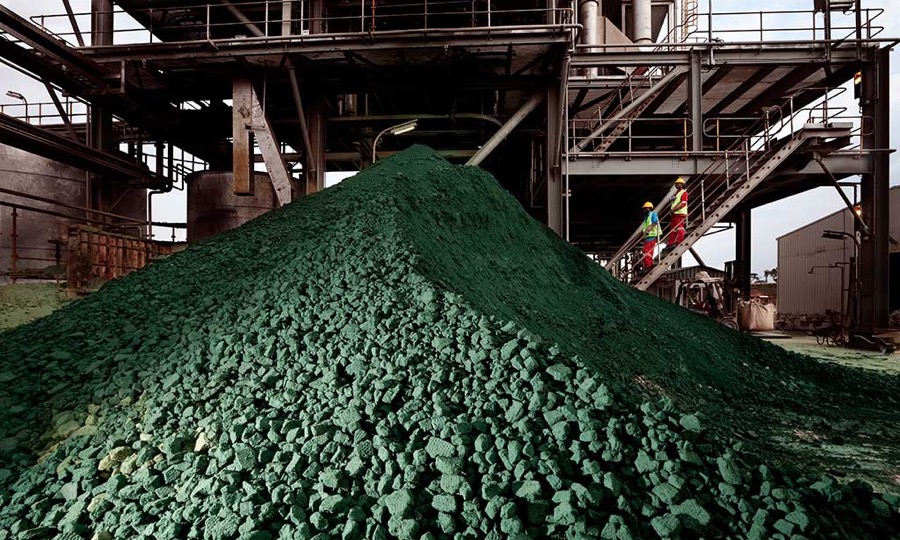
Processing facilities at Tenke Fungurume mine in 2016 before the CMOC acquisition. (Image courtesy of Lundin Mining.)

The Democratic Republic of Congo will revoke cobalt export quotas from companies that fail to export allocated volumes, breach environmental or tax rules, or transfer quotas to third parties, its mining regulator said in a statement on Saturday.

The new rules would take effect on October 16, it said.

The warning from the Congo’s Strategic Mineral Substances Market Regulation and Control Authority marks the resumption of cobalt exports from the world’s top producer under a new system after a months-long ban aimed at curbing oversupply and influencing global prices.

It also represents Congo’s most aggressive move yet to assert control over the critical battery metal, introducing a strict “use-it-or-lose-it” regime that could disrupt global electric vehicle supply chains if major producers fail to comply.

China’s CMOC, the world’s top cobalt producer, and Glencore, the second-top producer, emerged as the top beneficiaries of the new cobalt export quota regime, securing 6,500 and 3,925 tonnes, respectively, for the fourth quarter of 2025.

The remaining fourth quarter 2025 cobalt export quotas are distributed among companies such as Congolese Gecamines JV, Entreprise Generale du Cobalt (EGC), Societe du Terril de Lubumbashi (STL), Deziwa JV, Ruashi Mining, Chemaf, CDM (Huayou), Musonoi JV, and several smaller operators, according to the ARECOMS directive.

Congo reserves the right to revoke quotas from companies that process third-party or artisanal cobalt, except state-backed Entreprise Générale du Cobalt and Société du Terril de Lubumbashi.

Firms that fail to meet traceability, environmental, or tax compliance requirements also risk losing their allocations, according to the statement.

Companies must prepay mining royalties based on monthly quotas and current cobalt prices before loading shipments.

From January 1, 2026, any unused monthly allocation would be forfeited and reallocated to a 9,600-tonne strategic reserve controlled by ARECOMS for “projects of national importance,” it added.

Twenty-one mining operators received allocations, with the top five accounting for 80% of fourth-quarter quotas. December 2025 allocations will automatically renew in 2026 for compliant operators, said the statement.

(By Pratima Desai and Maxwell Akalaare Adombila; Editing by Alex Richardson)

US-Russian Nuclear Arms Control: Overview And Potential Considerations For Congress – Analysis


October 12, 2025 

By CRS  
The Congressional Research Service 

By Anya L. Fink

The United States has periodically sought to advance its national security interests through the negotiation and conclusion of nuclear arms control agreements with its adversaries. Throughout 2025, President Donald Trump has discussed potential talks with Russia and China concerning nuclear weapons reductions.

Congress plays an important role in arms control, which is implemented pursuant to treaties or agreements negotiated by the executive branch. The Senate considersproviding advice and consent to the ratification of treaties and the confirmation of executive branch nominees for positions in the Department of State (DOS), Department of Defense (DOD), Department of Energy, and the intelligence community. Congress also authorizes and appropriates funds for, as well as provides oversight of, those U.S. government agencies that negotiate, implement, monitor, and verify compliance with treaties and agreements.


Background


During the Cold War and in its aftermath, the United States and the Soviet Union (which Russia and other Soviet republics dissolved in 1991) sought to minimize the costs and risks of nuclear competition and improve so-called strategic stability. Following the 1962 Cuban Missile Crisis, the United States and the Soviet Union created a “hotline” to communicate in a nuclear crisis, which, along with some later risk reduction agreements sought to reduce dangers of an accidental or inadvertent nuclear war.

After the Soviet Union achieved rough parity in strategic nuclear forces with the United States, and began to deploy ballistic missile defenses, the two countries engaged in Strategic Arms Limitations Talks (SALT). The 1972 SALT I Treaty and Anti-Ballistic Missile (ABM) Treaty negotiated by the Johnson and Nixon Administrations and the 1979 SALT II Treaty negotiated by the Nixon, Ford, and Carter Administrations resulted in some limits on strategic nuclear forces and ballistic missile defenses.

Subsequently, the Reagan Administration concluded the 1987 Intermediate-Range Nuclear Forces (INF) Treaty, which verifiably destroyed all ground-launched ballistic and cruise missiles of intermediate ranges. The Reagan and George H.W. Bush Administrations negotiated the 1991 Strategic Arms Reduction Treaty (START I), which resulted in the “largest arms control reductions in history,” according to DOD. In 2002, the George W. Bush Administration concluded the Moscow Treaty reducing U.S. and Russian strategic nuclear forces to between 1,700 and 2,200 deployed warheads.

The executive branch has also at times withdrawn from arms control agreements, including in 2002 from the ABM Treaty and in 2019 from the INF Treaty, when it deemed these accords to no longer be in the U.S. national security interest.

New START


The United States and Russia are currently parties to the 2010 New START treaty, under which the two countries verifiably reduced their strategic nuclear forces to 1,550 deployed warheads on 700 deployed strategic delivery vehicles (intercontinental ballistic missiles (ICBMs); submarine-launched ballistic missiles; and strategic bombers). In 2021, the United States and Russia exercised a New START provision to extend the Treaty until February 2026. However, since Russia’s 2022 invasion of Ukraine, Moscow has declined to conduct or host New START-mandated on-site inspections or participate in consultations.

In February 2023, Russian President Vladimir Putin announced that Russia would “suspend participation” in New START, citing concerns about UK and French nuclear weapons and also Western efforts to achieve Russia’s “strategic defeat” in the war in Ukraine. Russian officials have stated that Russia would observe Treaty limits, but would suspend data exchanges under the Treaty. The DOS has called Russia’s suspension “legally invalid” and announced countermeasures. The DOS has also since expressed concerns about Russia’s compliance with New START in congressionally-mandated public annual reports.

In July 2025, President Trump reportedly stated that he was interested in maintaining New START central limits. In September 2025, President Putin stated that Russia would continue to abide by New START limits after the treaty’s February 5, 2026, expiration date if the United States did so.
New START Follow-on Negotiations

In 2020, during the first Trump Administration, U.S. and Russian officials held several meetings to discuss arms control issues, including potential limits on Russian nonstrategic nuclear weapons, which are nuclear weapons deployed on delivery vehicles with ranges shorter than strategic nuclear weapons. The United States also sought to include China, which declined to participate, in talks.

In 2021, Biden Administration officials engaged with their Russian counterparts in a Strategic Stability Dialogue to “lay the groundwork for future arms control and risk reduction measures.” The United States advocated including all Russian nuclear weapons in a notional agreement. Russia, in turn, proposed discussing nuclear and non-nuclear weapons, missile defense, outer space, and other issues, which, Russia argued, were impacting strategic stability. No bilateral nuclear arms control dialogue has taken place since 2022 despite Biden Administration statements that the United States was willing to return to such talks “without preconditions.”
Potential Considerations for Congress

Members of Congress have deliberated about the extent to which current and future U.S.-Russian nuclear arms control is in the U.S. national security interest. Some Members have argued that there is “continued value” in such arms control, and “urged” talks for a new treaty and mutual observance of New START limits. Other Members have expressed concerns about Russia’s noncompliance with arms control commitments, urged DOD to prepare for a future where Russian nuclear weapons are not bound by New START, and stressed the importance of U.S. nuclear modernization.
Arms control and U.S. nuclear modernization

Congress may consider how arms control, and the timelines for any potential limits on U.S. capabilities, interact with the progress of U.S. nuclear modernization. The United States is modernizing its nuclear forces, which currently includes the procurement of a new ICBM; a new strategic bomber; a new ballistic missile submarine; updates to its nuclear command, control, and communications (NC3) system and regional deterrence capabilities; and the modernization of its nuclear weapons complex.

The Congressional Budget Office (CBO) estimated in 2025 that the operation and modernization of U.S. nuclear forces could total over $95 billion a year. DOD has continued to prioritize nuclear modernization, but President Trump has also stated that “tremendous amounts of money are being spent” on nuclear weapons and expressed hope that the United States, Russia, and China could decrease defense spending.
Russia’s nuclear capabilities of concern

Congress may consider whether Russian nuclear weapons present a threat to the United States that could be managed through arms control. Some Russian officials have suggested that new U.S. ballistic missile defense developments may affect Russia’s willingness to maintain treaty limits. According to open sources, Russia, like the United States, has reserve nuclear warheads that it could upload on strategic delivery vehicles.

Russia has nonstrategic nuclear systems that do not fall under New START. The Obama, Trump, and Biden Administrations unsuccessfully sought to negotiate verifiable limits on these weapons, as per guidance in the Senate’s 2010 resolution of New START ratification. U.S. officials have considered the possibility of an agreement that would cover all types of nuclear warheads, including those for nonstrategic nuclear weapons, though such an agreement would likely require intrusive verification measures. In 2023, President Putin stated that Russia had deployed nonstrategic nuclear weapons to Belarus.

Russia also has novel nuclear and nuclear-capable delivery vehicles that President Putin has said are intended to counter U.S. ballistic missile defenses. Russia includedsome of these—a new heavy ICBM and an ICBM-mounted hypersonic glide vehicle—in New START. Others, such as a nuclear-powered cruise missile and an autonomous underwater system, remain outside of an arms control framework. According to the U.S. intelligence community’s unclassified 2025 Annual Threat Assessment, Russia is also “developing a new satellite meant to carry a nuclear weapon.”

Arms control in a two-nuclear-peer environment

Congress may consider how U.S.-Russian nuclear arms control fits into in an environment where China’s nuclear arsenal is expanding, with potential implications for U.S. deterrence requirements. According to a 2024 unclassified DOD assessment, China may have over 1,000 “operational nuclear warheads” by 2030. The Biden Administration’s 2024 nuclear employment strategy argued that “the types of limits that the United States will consider,” including in future negotiations with Russia, “will be influenced by the actions and trajectories of other nuclear-armed actors.”

The 2023 report of the Congressional Commission on the Strategic Posture of the United States, which warned of an emergence of a “two-nuclear-peer” threat, arguedthat the United States needed to start with a strategy and appropriate nuclear force requirements prior to “developing U.S. nuclear arms control limits for the 2027-2035 timeframe.” The Commission also stressed the need for research into verification technologies to support future arms control efforts and highlighted the potential importance of formal and informal risk reduction measures with both Russia and China “to increase predictability and reduce uncertainty.”

In the absence of arms control, such measures, according to some experts, could range from data exchanges to operational constraints, such as political commitments to avoid interfering with NC3 or with monitoring by national technical means. Russia’s willingness to discuss risk reduction is uncertain.
Role of Congress in arms control and risk reduction

Congress may consider what its role may be in future efforts to manage the risks of nuclear competition. In past Congresses, Members have debated, assessed, and conducted oversight of U.S.-Russian arms control and risk reduction measures and their contributions to U.S. national security. Some Members have proposed risk reduction measures for potential executive branch enactment. Others have served as U.S. observers in arms control negotiations.


About the author: Anya L. Fink, Analyst in U.S. Defense Policy
Source: This article was published by the Congressional Research Service (CRS).


CRS

The Congressional Research Service (CRS) works exclusively for the United States Congress, providing policy and legal analysis to committees and Members of both the House and Senate, regardless of party affiliation. As a legislative branch agency within the Library of Congress, CRS has been a valued and respected resource on Capitol Hill for nearly a century.
South Africa To Announce Major Nuclear Energy Expansion Plans


October 12, 2025 
By SA News

The Government will soon make an announcement on plans to expand South Africa’s foray into nuclear energy.

This according to Minister of Electricity and Energy, Dr Kgosientsho Ramokgopa, who delivered the opening address at the G20 Nuclear Energy Ministerial Conference held in Durban.

“[We] will be making big announcements next week, post-Cabinet. We are close to that. Our ambition is to build a new job program [of] at least initially the size of 5000 megawatts, and we think that we can derive the benefits of industrialisation and ensuring that there is exponential increase of the skills that are required to support that build program.

“Necsa [South African Nuclear Energy Corporation] is a big part of the conversation. As we know, we are running a 60-year-old research reactor. We are looking for suitors or partners to help us to take it to another level. We have seen that there is an insatiable appetite from across the globe to partner and work with us,” he said.

The Minister highlighted that small modular reactors [SMR] present a “pristine opportunity” for expansion going into the future.

“They are rapid deployment and the fact that they can be the production can be standardised, and therefore, reducing the long lead times. But most importantly, is to power the requirements of the artificial intelligence complex.


“I think the prospect of locating data centres across various geographies is something that is particularly attractive, and we think that small modulary actors will help us,” he said.

Turning to the African continent, the Minister noted that the continent is an important producer of uranium – used for nuclear reactors – at 14% of global production with further untapped reserves.

Countries including Egypt, Nigeria, Kenya and Ghana are either building, planning for, or considering nuclear power as a source of power.

“Africa’s time is now and given them huge endowments that we have, especially on uranium. Energy demand is going to grow exponentially on the continent as people experience upward social and economic mobility, as we bring people out of poverty and I think, nuclear to power is going to be a big part of the African story.

“A long-term view must be such that we are able to build infrastructure that will be a precondition for such enrichment to happen on the continent. We possess all the necessary apparatus that is required for us to participate meaningfully in the nuclear fuel cycle,” Ramokgopa said.


SA News

Government Communication and Information System (GCIS) established the SA Government News Agency to enable all media locally and abroad to have easy and fast access to fresh government information, news and current affairs at no cost.


South Africa state fund raises Sibanye stake above 20%


Credit: Sibanye Stillwater

Public Investment Corporation (PIC), South Africa’s state-owned asset management firm, has raised its shareholding in Sibanye-Stillwater (JSE: SSW, NYSE: SBSW) to above 20%, further cementing its states as the miner’s largest investor.

In a press release issued Friday, the Johannesburg-based mining group disclosed PIC’s purchase of an additional 2.35% of equity, bringing its total holding to 20.42%.

Established in 2013 through the spin-off of a Gold Fields subsidiary, Sibanye-Stillwater currently operates mines across five continents. In addition to precious metals, it also produces nickel, chrome, copper and cobalt.

PIC, which has over R3 trillion (approximately $165.62 billion) in assets under management as of September 2025, has invested heavily in South Africa’s resource sector and gradually built its stake in Sibanye, one of the nation’s largest by market capitalization. In the 2024/25 financial year, PIC’s precious metals and mining investment gained 42.5% as geopolitical tensions boosted safe-haven demand.

Last week, the firm unveiled plans to invest R1.35 billion in early stage mining companies. At least half of those investments would be in South Africa, with a focus on energy transition minerals such as copper and lithium, it said.

Australia mulls US deal, $777 million rare earth fund

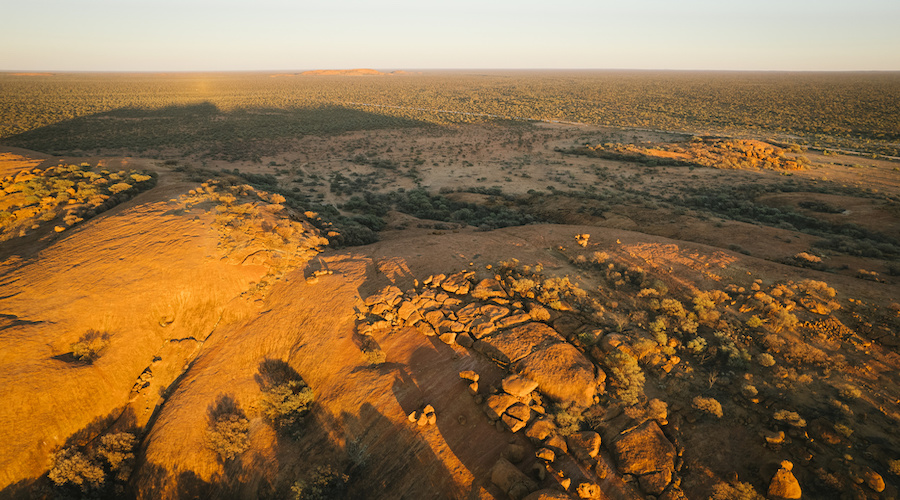
Cue region in Western Australia. (Image: Austockphoto.)

Australia is considering setting minimum prices for critical minerals and investing in new rare earth projects as part of a potential resources deal with the US, the Age reported Sunday.

The government has begun talks with miners about contributing to a A$1.2 billion ($777 million) strategic minerals reserve, the newspaper said, citing a leaked departmental brief circulated in recent weeks.


The proposal under consideration includes possible price floors, government-backed loans, offtake guarantees and direct investment in Australian projects to bolster local producers.

The plan comes amid rising tensions over China’s dominance in processed rare earths and President Donald Trump’s threat of sweeping tariffs in response to Beijing’s export controls.

(By Jason Gale)