Monday, October 13, 2025

‘Far from negligible’: New Australian fossil fuel site will have major impact on people and the planet


Australian National University


A new fossil fuel site approved for development off Western Australia’s coast is estimated to contribute 876 million tonnes of carbon dioxide (CO2) emissions over the course of its lifetime, according to new research led by The Australian National University (ANU) in collaboration with the ARC Centre of Excellence for the Weather of the 21st century.  

The level of emissions from the Scarborough project – with liquified natural gas production from the site expected to start in 2026 and continue for at least the next 31 years – will cause, on average, 0.00039 degrees Celsius of additional global warming.   

The findings reinforce how each new investment in coal and gas extraction causes long-term environmental and social harm. The research provides a framework for scientists to quantify the consequences of additional greenhouse gas emissions from each new individual fossil fuel project. 

The researchers argue that although this level of additional warming may seem small on paper, it would have major consequences for Australia and the world. 

According to the research findings, published in the Nature journal Climate Action, an increase of 0.00039 degrees Celsius in additional global warming would: 

  • Expose an additional 560,000 people around the world to unprecedented heat. 

  • Leave an additional 356,000 people globally outside the human climate niche (this is defined as the climate conditions in which human societies have historically thrived and is defined by the distribution of the human population with respect to mean annual temperature). 

  • Cause an additional 484 heat-related deaths in Europe and 118 additional lives lost in Europe by the end of this century under a middle-of-the-road emissions pathway. 

  • Cause additional thermal exposure in the Great Barrier Reef (GBR) that would result in an additional 16 million coral colonies lost in every future GBR bleaching event, which would occur with more frequency due to global warming as a consequence of emissions from the Scarborough project. 

“The majority of Australia’s new fossil fuel projects describe their anticipated greenhouse gas outputs as ‘negligible’ in the context of global emissions and claim they’re unable to measure contributions to global warming, while also ignoring expected impacts,” study co-author Professor Sarah Perkins-Kirkpatrick, from ANU, said. 

“The site’s developers claim it is not possible to link greenhouse gas emissions from Scarborough with climate change or any particular climate-related impact given that the estimated emissions associated with Scarborough are negligible in the context of existing and future predicted global greenhouse gas concentrations. 

“But our research shows emissions output from this new project is far from negligible.” 

The researchers calculated that by 2049, the anticipated Australian emissions from the Scarborough project alone will comprise almost half (49 per cent) of Australia’s entire annual CO2 emissions budget. 

Co-author Dr Nicola Maher, also from ANU, said that beyond 2050 all emissions from the Scarborough project would require durable CO2 removal from the atmosphere if Australia is to meet its emissions reduction targets. 

“That would require a huge increase in the effectiveness and scale of carbon capture and storage technology. For example, in 2023, human activities to move carbon dioxide from the atmosphere into storage amounted to only 0.04 million tonnes of carbon dioxide globally, which is equivalent to just 0.6 per cent of the planned annual Australian emissions from the Scarborough project,” Dr Maher said. 

Dr Maher said the research provides a science-based foundation that can be employed by companies and governments in quantifying the consequences of fossil fuel production and use, and in assessing whether projects fall within acceptable levels of environmental and societal risk. 

Associate Professor Andrew King, from the University of Melbourne, said: “These findings contrast sharply with claims that individual fossil fuel projects will have negligible impacts. In this case study alone, it is shown that the additional warming caused by carbon dioxide emissions from the Scarborough project will persist for multiple decades to centuries and cause long-term environmental and social impacts.” 

The researchers employed a robust methodology known as the Transient Climate Response to CO2 Emissions (TCRE) to calculate the contribution of these emissions to global warming. The TCRE is a major tool of the Intergovernmental Panel on Climate Change (IPCC) and works using a combination of our scientific understanding of the earth system, direct observations, and climate model simulations. 

Sunday, October 12, 2025

 Trump’s Imperialism—Working for American Dominance, but Failing


Sunday 12 October 2025, by Dan La Botz


President Donald Trump is trying to reassert U.S. global dominance, leading to a greater threat of wars that could endanger what little stability remains in international relations.

The United States was from its founding always making war and expanding its territory. It warred against the native American peoples, against Mexico (taking half its territory), then against Spain, taking Cuba, Puerto Rico, and the Philippines. The United States had become a great power by the outbreak of World War I and the dominant world power at the end of World War II. In the post-war period, it carried out coups in Iran, Guatemala, and Chile and waged war in Vietnam.

But in the twenty-first century, the United States was challenged economically by China everywhere and militarily by Russia in Europe. Trump is now trying to restore the United States to its former power, to Make American Imperialism Great Again. But so far, he is failing

In the big picture, at the level of global inter-imperialist conflicts, Trump is engaged in trying to stifle the Chinese economy and to maneuver Russia into some sort of partnership. Trump hit China with an astronomical 50 percent tariff and restricted technology transfers while China responded with restrictions on rare earths. But Trump has not forced China to submit.

The United States and NATO took no action when Russia took Crimea from Ukraine in 2014 and failed at first to respond the Russia’s full-scale invasion of Ukraine in February 2022. The United States has reaffirmed its commitment to NATO whose member nations are rearming. Meanwhile Trump failed to end the Russian war on Ukraine and repeatedly tried to flatter, entice, and bluff President Vladimir Putin of Russia, with no success—and now Russian drones are flying not only over Ukraine and Moldova, but also over Estonia, Latvia, Lithuania, Denmark, Norway, Romania, Poland, Germany and France. The war goes on in Ukraine with the ever-present threat of a European nuclear war breaking out.

Hoping to reestablish U.S. dominance in the Middle East, Trump brokered the Abraham Accords, initially signed by Israel, the United Arab Emirates, Bahrain, and Morocco in 2020. But Hamas’ October 7 attack on Israel—killing1,139 people and kidnapping about 200—detonated Israel’s two-year germicidal war on Gaza with 67,000 Palestinians known to be dead, 20,000 of them children, and thousands more under the rubble. Trump, after the U.S. provided at least $21.7 billion to Israel for the war, is now being lauded for ending the conflict. But the war, which may not actually end, sabotaged Trump’s plan for the reorganization of the region.

In Latin America, where China is a big competitor and Russia a small one, Trump has made some of his strongest moves to take control. He recently ordered the destruction of four boats in the Caribbean, saying it was an “armed conflict” with “narco-terrorist organizations” but without proof that they carried drugs, murdering 11 people in violation of international law. This seems to be preparation for overthrowing the government of Nicolás Maduro in Venezuela, on whose head he has put a $50 million bounty. The awarding of the Nobel Peace Prize to Maria Corina Machado, a far-right politician who has encouraged Trump to invade, may make a U.S.-backed coup easier. Mexico, which Trump has threatened to bomb to destroy drug cartels, watches warily. Trump, intervening in Brazil’s internal politics, has placed a 40 percent tariff on the country because its courts convicted far-right former president Jair Bolsonaro of organizing an armed coup to overthrow the government of Luiz Inacio Lula da Silva. And in Argentina, to support another far-right president, Javier Milei, who is up for reelection, Trump is arranging a $20 billion bailout for his government.

Trump is attempting to once again make the United States the top dog, but so far, he is failing.

12 October 2025


Attached documentstrump-s-imperialism-working-for-american-dominance-but_a9213.pdf (PDF - 905.5 KiB)
Extraction PDF [->article9213]


Dan La Botz was a founding member of Teamsters for a Democratic Union (TDU). He is the author of Rank-and-File Rebellion: Teamsters for a Democratic Union (1991). He is also a co-editor of New Politics and editor of Mexican Labor News and Analysis.


International Viewpoint is published under the responsibility of the Bureau of the Fourth International. Signed articles do not necessarily reflect editorial policy. Articles can be reprinted with acknowledgement, and a live link if possible.

Latin America: The target of Trump’s neocolonial offensive

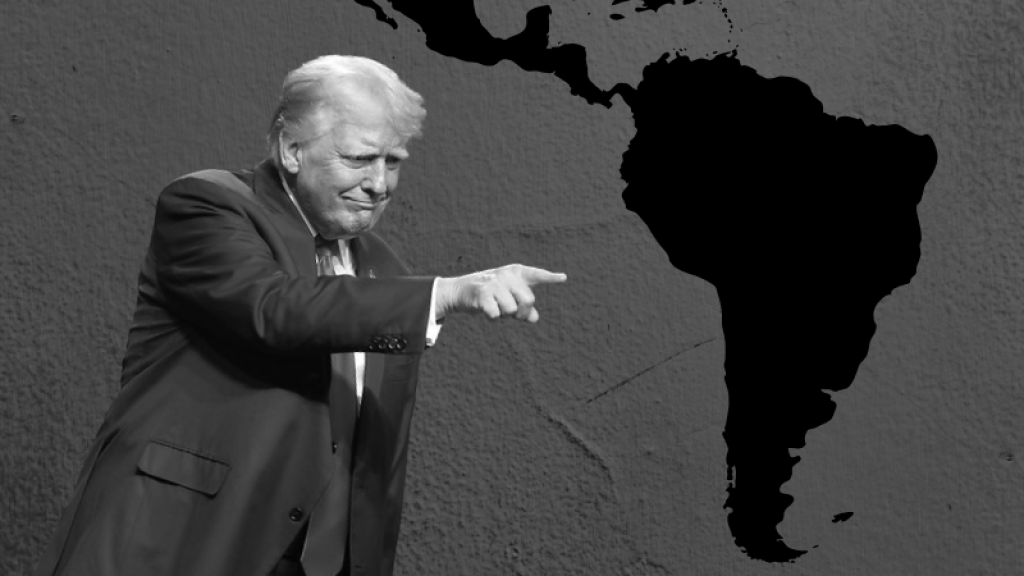
Montage by Global Voices, featuring U.S. President-elect Trump (image from Flickr, under CC BY-SA 2.0) and the map of Latin America

During its first nine months, the Trump administration has deployed warships and military infrastructure to the Caribbean, blown up small boats accused of drug trafficking, imposed 50% tariffs on Brazilian products — in opposition to the outcome of the democratic trial against former President Jair Bolsonaro and other coup plotters — and exerted extreme pressure on the Mexican government to force it to reduce the flow of Latin American migrants across the border and combat local drug cartels.

These are just a few elements of the brewing storm, whose explanation cannot be reduced to the strident and unstable personality of the neo-fascist president in the United States. The heinous televised murder of those on the small boats in Caribbean waters violates every international convention, statute and protocol on the tracking down, capture and prosecution of criminals. (No one has proven that those killed by US missiles were not simple fisherpeople, as they were never given the right to a defence.) The attacks are the greatest evidence yet that under Donald Trump, US imperialism is radically shifting its treatment of the macro-region, which it continues to consider its domain.1

Amid the substantive changes occurring in post-World War II global power relations, the authoritarian US president is attempting to impose the rule that “the United States runs the planet.” Given this, Latin America was always going to be affected. But why are Mexico, Brazil and Venezuela the most immediate targets? While important, the argument that all three governments are, in the eyes of Trump’s neo-fascist hawks, “leftist” is insufficient. In Trumpist terms, this just means any government it views as opposed to it on the political-ideological spectrum, or not a direct and subservient defender of US capital’s interests, regardless of significant differences among them.

Mexico: So far from God, so close to Trump

The pressure exerted on the Mexican government is almost self-explanatory, considering the long border it shares with the US, its level of economic dependence (more than 80% of Mexican exports go north), and the power and violence of Mexico’s drug cartels. The aggressive and extortionist rhetoric against Mexico began during Trump’s first days in the White House. He demanded Mexican President Claudia Sheinbaum hold back the multitudes of Latin Americans that have historically tried to enter the US by crossing the Rio Grande, or face 25% tariffs if she did not comply with her supposed obligation.

Sheinbaum responded by sending 10,000 troops to the border.2 Pressure to take tougher measures against the powerful domestic drug cartels — now designated as “terrorists” by the US — was exerted through Secretary of State Marco Rubio’s constant threats of direct US military intervention in Mexico. During her term, Sheinbaum has already deported 26 people to the US accused of belonging to high-ranking drug trafficking groups and arrested more than 30,000 people suspected of being part of criminal organisations (compared to just over 12,000 jailed during the six years of her predecessor). In September, she signed an agreement with the US to suppress arms trafficking from the US into Mexico.

Still unsatisfied, the Trump administration has threatened higher tariffs if Mexico does not stop importing from China, which it does primarily to supplement its production of automobiles that are largely exported to the US. The Trump administration has not yet ruled out its campaign plans to heavily tax remittances sent by Mexican citizens back home — currently worth about $60 billion or almost 4% of Mexico’s GDP — and carry out drone strikes against drug labs in Mexico. These are just some of the cards Trump has used as key tools for blackmail and threats.

So far, Sheinbaum has managed to prevent direct intervention in her country, albeit at a high political cost. According to the New York Times, the people around the president, apparently exasperated by the situation, complain that no matter how many concessions they make they can never rest, as the US seems to have no limits on its demands. Sheinbaum and her Morena colleagues, for their part, seem to have forgotten (or never realised) that this is how imperialism operates — even more so the aggressive neocolonialist imperialism of their “partner”, Trump.

Brazil: An attack that backfired

Trump’s attacks against Brazil have involved direct interference in the South American country’s internal politics and judicial system. The 50% tariffs on Brazilian exports (only matched by those imposed on India) have no economic justification, even under the crazed protectionist logic of the MAGA hawks: Brazil has a trade deficit with the US and the US market is in dire need of basic “Made in Brazil” goods, such as coffee, oranges and semi-finished steel.

Trump and Rubio’s explanation for the tariffs was explicit: discontent with the trial (and now sentencing) of their friend Bolsonaro and many of his former aides for an attempted coup in 2022–23, which the Yankees dub a “Witch Hunt.”3 Given their political nature (the tariffs were followed by individual sanctions against Supreme Court judges and their families, whose visas to the US were cancelled), the supposed trade dispute quickly became a major source of confrontation inside Brazil between, on the one hand, the government and democratic sectors, and, on the other, the far right.

The Bolsonaro family and their supporters seized on the imperialist attack to claim responsibility, took to the streets to demand amnesty for the coup plotters, and kept one of the former president’s sons in the US to lobby for further attacks. To achieve their goal, they leveraged a parliamentary alliance with the traditional oligarchic and pro-corporate right, to urgently pass an amnesty bill while voting for a proposed constitutional amendment (PEC) that would prevent trials and investigations of any kind against parliamentarians and party leaders.

They miscalculated, underestimating the opinion of the majority: their dual maneuver only fuelled mobilisations. On September 21, hundreds of thousands of Brazilians took to the streets to protest against the “PEC of Impunity” (or PEC of Banditry, as it became popularly referred to) and against any amnesty.4

The PEC was buried, and with it, the amnesty bill. In fact, the campaign against the tariffs, and its openness to negotiation while affirming democracy as non-negotiable, has led to a surge in support for President Lula da Silva and his government. While it is an exaggeration to claim that genuine anti-imperialism has become the majority sentiment, it is true that opposition to Yankee interference and a sense of sovereignty was fundamental to this victory achieved through mobilisation.

Venezuela: The central target

While no nation in the region is exempt from potential threats to its territorial sovereignty, the Latin American and Caribbean country most under military threat right now is Venezuela. Venezuela and its Bolivarian revolution — buried by the authoritarianism and anti-worker/anti-people policies of the Maduro regime — have always been a huge thorn in US imperialism’s side. Today, Trump’s expansionist hawks seek to overthrow Maduro, taking advantage of his government’s enormous internal weakness, and replace him with a far-right alternative subservient to Washington.5

But what explains the shift in the US’ position, if until now the Maduro government has been negotiating with it since 2018, and just recently once again guaranteed Venezuela would be a reliable oil supplier? The explanation lies in the global realignment taking place, with its new distribution of spheres of influence and power relations under construction. The Trump administration wants a figure of the new international fascist far right — in this case, María Corina Machado — to lead the Venezuelan government. It does not want instability during this reorganisation process, but instead absolute submission under the new framework. Whether it can achieve this is another matter.6

The issue is that regime change in Venezuela seems impossible without some kind of direct intervention, which would generate a backlash in US public opinion, something that has to be factored into the equation. This makes the situation more complex. That is why they have resorted to talking up the need to militarily combat international drug trafficking: through this they seek to win domestic support for their interventionist policy.7 In any case, the manner in which the US military deployment off Venezuela’s coast has been handled seems to suggest it is not a sustained counterintelligence activity, but rather a large-scale data-collecting operation, seeking to measure the impact of the deployment and future scenarios on the Venezuelan and regional population. This would represent a new phase in the use of advanced technology for war purposes.

The right-wing Venezuelan opposition, led by Machado — who for the first time addressed online the recent meeting of European libertarian patriots chaired by Italian President Giorgia Meloni — has called for sanctions against Venezuela in the recent past, without considering their effects on the poor. Today, she believes that US soldiers will remove Maduro and place her in power. To this end, she has offered up the nation’s territory and its riches on a silver platter. Of course, Maduro is far from the best example of nationalism or patriotism, allowing US transnational corporations to extract oil under neocolonial conditions unprecedented in the country’s history. But none of this justifies the call to desecrate Venezuelan soil.

For now, the US administration seems to want to weaken the Maduro government, and is banking on the emergence of internal fissures and Maduro’s removal by local military officials. This would fracture the internal unity of the Maduro regime and open up the possibility of a Grenada scenario, revamped by current technological advances. The question is: what will they do if an internal rupture does not occur?

A potential post-US military intervention scenario with a government headed by Machado and former presidential candidate Edmundo González, with their openly anti-worker policies, and confronted by the remnants of the Chavista opposition, would be largely ungovernable. Consequently, the US’ real objective appears to be the imposition of a military dictatorship in Venezuela with its direct assistance, including the establishment of military bases in the country. This would consolidate its regional objectives within the unfolding global reorganisation process.

The Maduro government is terribly mistaken when it appeals to supposed differences between Rubio and Trump and seeks to assume the role of friendly advisor to the occupant of the White House. What is happening in the Caribbean and with Venezuela is an imperial policy, and cannot be simply put down to a bad moment in US politics.

On the other hand, the social decomposition in Venezuela is so profound that the possibility of a foreign attack has not sparked the expected reaction from the population. The Maduro government has activated the militias and the United Socialist Party of Venezuela (PSUV) political apparatus, but the extent of this mobilisation has been much smaller than claimed. The only way to awaken a broad national front in opposition to US intervention would be to reverse the package of measures that the government has implemented, especially since 2018. This would entail: significantly restructuring wages; restoring the electoral registration of left-wing parties to their legitimate leaders and activists; a general amnesty for political prisoners and those from the trade union and social movements; and the redirection of national wealth toward restoring social security and people’s material well-being. Only by taking these five steps can the Maduro government bring about a change in the current catastrophic situation, but that would entail breaking with the program of the new capitalist class that emerged under the oil rentier regime of the past twenty years.

The Venezuelan people have been the worst affected by the Maduro government’s past 15 years of retreat and acquiescence to the interests of capital. Millions of Venezuelans have had to flee their country to survive, while those that remained have faced the tragedy of losing social security and wages while fearing to speak out under threat of being arrested. The people have already suffered too much to have to face the consequences of a large-scale military operation. The bombs, for the most part, will fall on the poor. Any measure that averts this crisis should be welcomed.


Ignore Marxism if you prefer barbarism


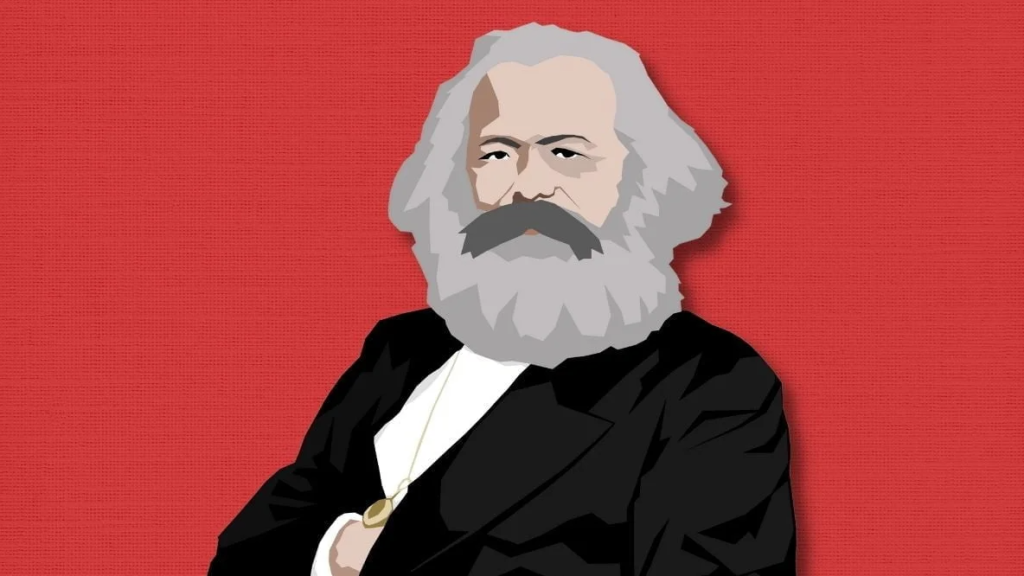
Marx

Marxism offers a scientific framework for analyzing social and environmental problems under capitalism, grounding its approach in reason and evidence while rejecting empiricism, atomism and idealism — an approach increasingly urgent amid attacks on science.1 Its political economy reveals how social structures — especially, structures of relations of property, production, and exchange — produce effects unevenly across time and space, generating suffering rooted in capitalism, imperialism and the state, and reinforced by the oppression of women and marginalized groups. 

At the same time, Marxism emphasizes human agency: people can identify and use openings within social structures to challenge the constraints they impose. Going beyond narrow disciplinary boundaries, it treats the core pillars of society — economy, politics, culture, nature and the body — as interconnected and operating across local, national and global scales, while promoting internationalism and anti-imperialism. Capitalism is understood as a contradictory totality, generating crises — economic, democratic, environmental, and health-related — through exploitation, dispossession, financialization, and class differentiation. The state protects capitalism through consent and coercion, and it is also a terrain of struggle where demands are pressed.

Marxism advocates a de-colonization of the mind in the class sense — de-bourgeoisfication of consciousness. It advocates for a specific type of demands to be made on the system — these are transitional such as housing, employment and automatically inflation adjusted living wages for all. Radical and critical, Marxism links analysis to action, connecting struggles for democratic, social and ecological rights to the broader fight for a truly democratic, peaceful and environmentally sustainable society beyond capitalism, imperialism, racism and exploitation. Powerful but evolving, Marxism, grounded in dialectical materialism and its rigorous theories of value, surplus, accumulation, crisis and the class character of the state and consciousness, develops further through self-critique and critical engagement with non-Marxist ideas, without compromising its fundamental principles.

***

Marxism represents the ripest product of humanity’s finest intellectual traditions. Marxism is scientific and comprehensive because of its materialist and dialectical commitment. It is critical. It is radical. It is a tool for radical change.

Marxism provides an explanation of the world’s problems under capitalism based on reason and evidence, with the aim of preparing ordinary people for radical social transformation. Precisely for this reason, Marxism has often been met with skepticism and hostility, constantly having to defend its legitimacy and relevance. Non-Marxist thinkers often ignore, distort or vilify it.

The comprehensive scope of Marxism includes four main components: philosophy, social theory, political economy, and political and cultural theory. In particular, Marxism is armed with: a dialectical and materialist philosophy; a social theory — called historical materialism — focussed on the primacy of class relations; the centrality of the political economy of (crisis-ridden) production and exchange; political theory including class character of the state and of ideas, and advocacy of popular struggle for self-emancipation.

Marxism’s philosophy of materialist-dialectics is one that rejects irrationalism, superstition and idealism.2 This is important given the right-wing attacks on the scientific world outlook today. The relational worldview of Marxist philosophy encourages its adherents to see things (or objects) in the world in terms of their contradictory and necessary relations/processes, which are manifested as things. It also rejects empiricism, eclecticism, atomism and methodological individualism.

Marxism’s materialist conception of history examines the relation between objective forces and class-subjectivity, including individual thought and action.3 Contrary to the charge of structural determinism, Marxism explains humanity’s problems in terms of structures of relations/processes (capitalism, imperialism, the state, etc.) without neglecting human agency. In Marxism, to possess agency is to make use of opportunities that structure the present to go beyond the constraints that structures impose. Even enslaved men and women fight for their liberty.4

Marxism analyzes an object in terms of its content and (varying social-spatial) forms. The content versus form distinction is fully mobilized by Marxists when they comprehensively examine society at multiple historical levels: class relation, capitalism (or feudalism, slavery, etc) as a form of class relation, specific forms of capitalism (and specific forms of other class societies such as slavery and feudalism), and capitalism (or other forms of class society) as it operates in a specific time and place.

Marxist political economy provides a multi-layer understanding of society and its relationship with nature: it examines social relations (of production and exchange) that set up certain mechanisms, which in turn produce certain effects — problems — that are experienced by people unevenly in time and space. These mechanisms are those of: commodification (of all use values and labour); competition (among commodity producers); monopolization (development of monopolies); class differentiation; proletarianization; exploitation; alienation; crisis-formation; national oppression (imperialism); globalization (or, universalization of capitalist relations); uneven (and combined) development; and so on. 

These mechanisms in turn produce major problems confronting humanity, including absolute and relative material deprivation or immiserization; diseases of poverty; economic slow-down and precarity, subjugation of women and minorities, endless wars, resource depletion and catastrophic climate change, as well as a turn to right-wing authoritarian politics and culture. Marxism says that capitalism not only produces these problems; its contradictions also prompt ordinary men and women to imagine an alternative future and to fight for it.

Marxism moves beyond the common tendency to analyze the world through the narrow lenses of individual academic disciplines. Instead, it offers a uniquely interdisciplinary — particularly political-economic — framework that provides a comprehensive understanding of the fundamental pillars of society: economy, politics, culture, nature and the body, as well as their interrelations and of the ways in which these pillars are subjected to what Leon Trotsky called the universal law of uneven development, both in time and in space. Marxism’s comprehensive character lies in its multi-scalar approach: it examines society and its relationship with nature at local, sub-national, national and global scales. The international scale has ultimate primacy.

Marxism recognizes capitalism’s ability to develop productive forces and yet Marxism is not blind to global capitalism’s unevenness. Many non-Marxists accuse Marxism of Eurocentrism, one that is relevant mainly to Europe and its geographical outposts around the world. The fact of the matter is that Marxism is useful to the world at large, to the North and to the South.

Marxism’s comprehensive nature is also indicated by the fact that, armed with its materialist-dialectical philosophy, Marxist political economy firmly places the emphasis on the capitalist economic system as a totality as being behind humanity’s problems. This totality is constituted by: commodity production, which is exploitative and operates in relation to, and alongside, exchange and financializationclass differentiation and preliminary accumulation (in its modern forms). Vladimir Lenin said: “Marx’s economic theory alone has explained the true position of the proletariat in the general system of capitalism” (italics added).5

Marxism’s dialectical approach treats capitalist society not as harmonious but as full of objective and systemic contradictions, which drive change and cannot be resolved as long as capitalism exists. There are at least six of them. There are contradictions between: a) socialized production of use-values and their appropriation by private owners, b) the national-scale framework of the capitalist state and global-scale character of the capitalist economy, and above all, c) the development of productive forces and capitalist social relations of production and exchange.

From these three contradictions arise several additional ones. First is the contradiction between human beings’ social-emotional need for harmonious interaction with others to flourish, and the competitive, antagonistic relations — including hatred or anti-love — towards fellow human beings that capitalism promotes. These competitive relations appear not only in the workplace and labor market, as Marxist theory of alienation has suggested, but also in social hostility toward minorities, who are wrongly blamed for broader societal problems.

Second is the contradiction between capitalism’s need for a healthy, educated labor force and the exhaustion of that same force under the system: workers are burdened with reproductive work and insufficient wages to meet all their needs.

Third is the contradiction between capitalist production and exchange, which requires the physical environment as a means of production and as a space for waste, and the environmental degradation that capitalism inevitably causes. With respect to the last, not only Karl Marx, as widely recognized, but also Lenin have advanced the theory of metabolic rift.

All the contradictions mentioned above have huge implications for understanding economic development, wars and health and environmental crises. These contradictions fundamentally make it impossible for humanity to meet their social-ecological and emotional needs and to live in peace. So, these objective contradictions propel class struggle between common people and the large-scale owners of land and capital, a struggle which is uneven across time and space in its intensity, but which is inevitable, even if its actual outcome is not.

Contrary to much of the non-Marxist thinking, according to which the state is class-neutral, Marxist political theory insists that the capitalist economic system is fundamentally protected by the state, which uses a spatially and temporarily varying combination of three strategies: meagre concessions, consent (capitalist ideology), and coercion. By unpacking the true nature of the state, Marxism aims to remove the unreasoning trust that most people currently have in the ability of the state, run by their favorable political parties or bureaucrats and assisted by actors in civil society (for example many NGOs) to solve their problems.

To Marxism, the state is a class state and there is a limit to what it can do for the masses in a significant and durable manner and without politically weakening the masses through its so-called concessions. The state is a problem. It is not a solution. But it is also a terrain for, and of, people’s struggle — for people to make demands. These demands must include transitional demands that reflect the needs of the people (for example, employment for all with an automatically inflation-adjusted living wage for all) even if the ruling class says it cannot meet these demands.6

Marxism is a critical social science. It has served as a tool of critical explanation, and explanatory critique, of the world and of the ideas about it. It is ruthlessly critical of everything existing, including itself. It treats important ideas about how a society fundamentally operates (its basic tendencies) as ultimately reflecting class interests. Ideas, more or less, socialist or bourgeois.

Marxism is critical of the existing world for its various inadequacies including the fact that it fails to meet the interests (needs) of the masses. Marxist critique is from the standpoint of society of the future and the future of society (the socialist transformation that the contradictions in the present-day society point to). And it is critical of existing ideas about the world on both philosophical and scientific grounds, and on the ground that the ideas of the ruling class and its organic intellectuals ultimately reflect the interests of the ruling classes and of their state (or of top layers who manage the affairs of the state).

To a large extent, the ideas of the ruling class are ruling ideas which have colonized the minds of many. Marxism advocates a de-colonization of the mind in the class sense — de-bourgeoisfication of consciousness. It is not enough to dispossess the capitalist class and its state. A revolution of culture and consciousness is also necessary.

Marxism is not only critical but also radical. “Theory … becomes a material force as soon as it has gripped the masses. Theory is capable of gripping the masses as soon as … it becomes radical. To be radical is to grasp the root of the matter”; that is, it explains people’s problems in terms of their roots in class relations, production and exchange, character of the state, and so on (Marx).

Marxism not only describes and explains the social-economic world but also points to what is to be done about the various injustices and problems. Marxist politics is much more comprehensive than any alternative political program in that it advocates struggles for general democratic rights and those of women and minorities, and struggles for economic and ecological concessions, as part of the fight for proletarian state power — to expropriate capitalists and large landowners — and establish a truly democratic society beyond the rule of capital, a society without imperialism and racism and genocide, a society based on love, care and solidarity.

The outcome of class struggle can lead either to a society that is qualitatively better than the one we live in, or to social and ecological barbarism. Only a Marxist political vision can guide the exploited and oppressed toward choosing socialism over such barbarism.

Marxism matters because of its insistence on the unity between ideas and practice.7 While practice informs ideas, ideas also inform practice. Marxism not only intellectually engages with the world as it is. It also presents a vision of a future post-capitalist society that is prosperous, egalitarian, popular-democratic, solidaristic, sustainable and peaceful.

Marxism is a powerful body of ideas, but it is not infallible. It must constantly evolve through self-critique and critical engagement with non-Marxist work. Marxism cannot dismiss the possibility of learning from other perspectives, especially since general social processes operate in concrete contexts and produce concrete effects about which Marxists may not always be fully aware. At the same time, in engaging with non-Marxist thought, Marxism must remain grounded in its core philosophical and political-economic principles — and in its revolutionary purpose.

Intellectual work is not necessarily the same as academic work. And, Marxism excludes academicism, that is “the belief in the self-contained importance of theory” (Trotsky).

“It is impossible to genuinely master Marxism if you do not have the will for revolutionary action. Only of Marxist theory is combined with that will and directed toward overcoming the existing conditions can it be a tool to drill and bore. And if this active revolutionary will is absent, then the Marxism is pseudo-Marxism, a wooden knife which neither stabs nor cuts”.8

Raju J Das is Professor at York University, Canada. His recent books include: Marxist class theory for a skeptical worldMarx’s Capital, Capitalism, and Limits to the StateContradictions of capitalist society and cultureThe challenges of the new social democracy; and Theories for Radical Change. His edited book, The Power of Marxist Thought (with Robert Latham and David Fasenfest) was released in July 2025. Das serves on the editorial board and on the manuscript review committee of Science & Society: A Journal of Marxist Thought and Analysis. More information about his work is available at rajudas.info.yorku.ca

  • 1

    This article draws on Das, R. 2025. Marxism and non-Marxism in the world of ideas: A dialectical view, Critique, 53:2. A much shorter version of the text of this Links article was delivered by the author at the inaugural session of the Power of Marxist Thought Conference at York University, Toronto on September 26 2025. 

  • 2

    ‘The philosophy of Marxism is materialism…[which] has proved to be the only philosophy that is consistent, true to all the teachings of natural science and hostile to superstition’ and indeed to all forms of idealism as such’ (Lenin, V. 1913. The Three Sources and Three Component Parts of Marxism) https://www.marxists.org/archive/lenin/works/1913/mar/x01.htm).

  • 3

    ‘Only the materialist conception of history can … open up the possibility for a broad, coherent, and intelligent view of a specific system of social economy’. (Lenin, V. 1998. Book Review: A. Bogdanov. A Short Course of Economic Science. https://www.marxists.org/archive/lenin/works/1898/feb/bogdanov.htm)

  • 4

    On this, see an excellent recent book by McNally (McNally, D. 2025. Slavery and capitalism: A new Marxist history. Oakland: University of California Press.)

  • 5

    Lenin, 1913. op. cit.

  • 6

    The transitional demands stem ‘from today’s conditions and from today’s consciousness of wide layers of the working class and unalterably leading to one final conclusion: the conquest of power by the proletariat’ (Trotsky, 1938). These demands link the immediate demands to the task of seizing power. (Trotsky, L. 1938. The transitional program https://www.marxists.org/archive/trotsky/1938/tp/tp-text.htm)

  • 7

    ‘Marx’s philosophical materialism alone has shown the proletariat the way out of the spiritual slavery in which all oppressed classes have hitherto languished’ (Lenin, 1913, op. cit.).

  • 8

    Trotsky, L. 1973. Problems of everyday life. New York: Monad press, pp. 114-115.