Wednesday, March 04, 2026

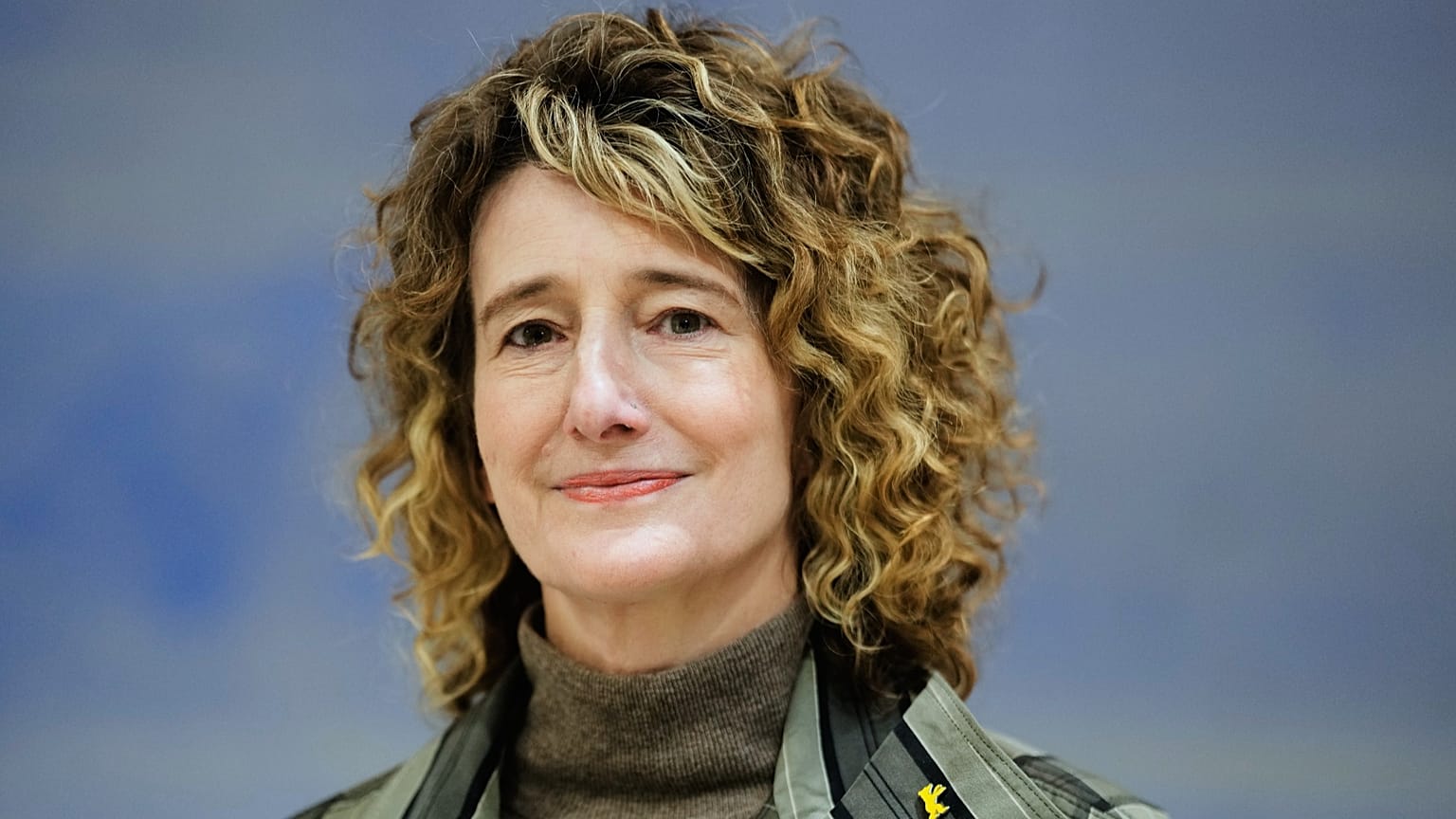
Berlinale crisis: Top film festival directors rally to defend Berlinale boss Tricia Tuttle

fears that she may be fired over filmmakers expressing their support for Palestine
Berlinale crisis: Top film festival directors rally to defend Berlinale boss Tricia Tuttle
Copyright AP Photo

By David Mouriquand
Published on 

“Supporting freedom of expression has never been more important.” Film festival bosses from Cannes, Locarno, London, San Sebastian, Tokyo and Toronto have signed a letter to support Berlinale boss Tricia Tuttle, amid fears that she may be fired over filmmakers expressing their support for Palestine.

Global film festival directors, including Cannes’ Thierry Frémaux, Sundance’s Eugene Hernandez, London’s Kristy Matheson and Toronto’s Cameron Bailey, have published a statement throwing their support behind Berlinale boss Tricia Tuttle, amid reports that she may be getting fired.

Tuttle, who is currently two years into a five-year mandate, faces political backlash following pro-Palestinian speeches at this year’s Berlinale awards ceremony.

“We stand in support of Tricia Tuttle’s wish to continue as Berlinale Festival Director, in full trust and with institutional independence,” began the letter signed by 32 execs at the helm of the world’s most prestigious film festivals.

“A core aspect of our role as cultural custodians is to create and protect the space for filmmakers, artists, professionals and audiences to come together,” the letter continues. “This includes people who bring with them not only a shared love of cinema, but also a huge variety of lived experiences and viewpoints.”

“We must also navigate – with care – the fact that ‘everyone’ can include people with political and personal views that don’t always align, with each other, or with socially accepted or politically mandated positions.”

Scroll down to read the letter in full.

The signatories also include Jung Hanseok (Busan International Film Festival), Ilda Santiago (Festival do Rio), Vanja Kaludjercic (International Film Festival Rotterdam), Karel Och (Karlovy Vary International Film Festival), Giona A. Nazzaro (Locarno Film Festival), Lucía Olaciregui (San Sebastian International Film Festival), Frances Wallace (Sydney Film Festival) and Julie Huntsinger (Telluride Film Festival).

At first, the Berlin Film Festival was accused of censoring political talk when prominent attendees, including jury president Wim Wenders, declined to discuss politics.

The controversy blew up on closing night, when some prize-winners used their acceptance speeches to voice support for Palestine and Gaza.

German Federal Environment Minister Carsten Schneider walked out of the ceremony after Palestinian director Abdallah Al-Khatib, whose film Chronicles From The Siege won the top prize in the Perspectives section, accused the German government of “being partners in the genocide in Gaza by Israel” - referring in part to Germany maintaining a staunchly pro-Israel stance, rooted in the weight of historical guilt.

German conservative tabloid Bild, which is openly pro-Israel, suggested that Tuttle was about to be sacked. A column by right-wing journalist Gunnar Schupelius accused Tuttle of having “posed for Gaza propaganda,” citing a photo of Tuttle with Al-Khatib and the Chronicles From The Siege crew at the film’s Berlinale world premiere. He accused Tuttle of allowing the Berlinale to be used as a tool by “antisemitic” activists.

These accusations were countered by support for Tuttle – not only from the Berlinale but also from more than 3,000 film professionals, who signed an open letter stating that the Berlinale’s strength “lies in its ability to hold divergent perspectives and to give visibility to a plurality of voices.”

Speaking to the German press, Tuttle admitted she and German culture minister Wolfram Weimer “discussed the possibility of my mutual resignation” at a meeting of the festival’s supervisory board last week but that she is determined to stay on the job.

“I am very proud of my team and the festival and want to continue the work we have started together with full confidence and institutional independence,” Tuttle told German press agency dpa.

We need to maintain spaces where discomfort is embraced, where debates can be expansive, where new ideas can propagate and where unexpected – and sometimes conflicting – perspectives are made visible. 
 Letter from international film festival directors 

Here is the full letter of support from the festival heads:

As film festival directors and leaders, we stand in support of Tricia Tuttle’s wish to continue as Berlinale Festival Director, in full trust and with institutional independence.

In the debates that have surrounded the 2026 Berlinale and other cultural and artistic events in preceding months, we recognise the mounting pressures on film festivals everywhere to navigate volatile times while maintaining a safe space for the exchange of cinema, and of ideas.

A core aspect of our role as cultural custodians is to create and protect the space for filmmakers, artists, professionals and audiences to come together. This includes people who bring with them not only a shared love of cinema, but also a huge variety of lived experiences and viewpoints. This is what gives our film festivals their vitality, relevance and value, and it is what festival ‘spirit’ is made from.

We must also navigate – with care – the fact that ‘everyone’ can include people with political and personal views that don’t always align, with each other, or with socially accepted or politically mandated positions. And while film festivals that are long-lived, and well-attended, may appear to be indestructible meeting places, these spaces are often fragile, hard-won and complex to preserve.

Film festivals as we know, and need them, are becoming increasingly challenging to sustain in a climate where the appreciation of nuance is collapsing. Supporting genuine freedom of expression, including the freedom to articulate imperfect or unpopular opinions, has never been more important. We need to maintain spaces where discomfort is embraced, where debates can be expansive, where new ideas can propagate and where unexpected – and sometimes conflicting – perspectives are made visible.

We need all our stakeholders – audiences, creators, festival teams, public and private partners, industry, media, fellow institutions – to show each other grace, respect and solidarity as communities and networks connected through the love of film, or we risk losing these spaces completely. It is so much easier to destroy than it is to build.


 Elon Musk faces court over claims he tanked Twitter stock before buyout


Copyright AP Photo
By Una Hajdari & AP
Published on 04/03/2026

The billionaire faces a shareholder lawsuit alleging he deliberately spread false information about fake accounts to drive down Twitter's stock price ahead of his takeover of the social media platform.


Elon Musk is expected to take the stand in a shareholder trial on Wednesday in San Francisco, where he is accused of making false and misleading statements that drove down Twitter's share price before he bought the social media platform for $44 billion (€37.9 billion) in 2022.

The lawsuit was filed in October 2022 in the US District Court for the Northern District of California on behalf of Twitter shareholders who sold the stock between 13 May and 4 October 2022, a few weeks before Musk's purchase of Twitter was finalised.

It claims Musk violated federal securities laws by making false public statements that "were carefully calculated to drive down the price of Twitter stock".

The billionaire Tesla chief executive reached a deal to buy Twitter and take it private in April 2022.

On 13 May, however, he declared his plan "temporarily on hold" and said he needed to identify the number of spam and fake accounts on the platform.

Twitter's stock tumbled as a result. A few days later, he tweeted that the deal "cannot go forward" and claimed that almost 20% of Twitter accounts were "fake," according to the lawsuit.

Musk's tweet on 13 May, saying "Twitter deal temporarily on hold pending details supporting calculation that spam/fake accounts do indeed represent less than 5% of users" was "false because the buyout was not, in fact, 'temporarily on hold,'" the lawsuit states.

That is because Twitter did not agree to put the deal on hold, and there was nothing in the merger agreement the two parties signed that allowed Musk to do so, according to the lawsuit.

In the following weeks, Musk continued to try to delay or withdraw from the deal, which the lawsuit claims he did through false, disparaging statements about Twitter's business that drove the San Francisco company's share price down sharply.

In July 2022, Musk doubled down on the bots issue and said he would abandon his offer to buy Twitter after the company failed to provide sufficient information about the number of fake accounts.

This was despite the lawsuit noting that Musk had waived due diligence for his "take it or leave it" offer to buy Twitter — meaning he had waived his right to examine the company's non-public finances.

The stock closed at $36.81 (€31.66) on 8 July, when Musk tweeted he was abandoning the deal over the fake accounts issue. That is 32% below Musk's offer price of $54.20 (€46.61) per share.

"To try to renegotiate the price or delay the merger, Musk made materially false and misleading statements and omissions, and engaged in a scheme to deceive the market, all in violation of the law," the lawsuit states.

The problem of bots and fake accounts on Twitter was not new.

The company had paid $809.5 million (€696.2 million) in 2021 to settle claims that it was overstating its growth rate and monthly user figures.

Twitter also disclosed its bot estimates to the Securities and Exchange Commission for years, whilst cautioning that its estimate might be too low.

Twitter sued Musk to force him to complete the deal, and Musk countersued.

On 4 October, Musk offered to proceed with his original proposal to buy Twitter for $44 billion (€37.9 billion), which Twitter accepted. The deal closed later that month.

In the ensuing months, Musk slashed the company's workforce, gutted its trust and safety team and rolled back content moderation policies.

In July 2023, he renamed Twitter to X.

This is not the first time that Musk has been dragged into court to defend himself against allegations of duping investors with his social media posts.

Three years ago, Musk spent around eight hours giving evidence in a San Francisco federal trial about his plans to buy Tesla — the electric vehicle manufacturer that he still runs as a publicly listed company — for $420 (€361.20) per share in a proposed 2018 deal that never materialised.

A nine-member jury absolved Musk of wrongdoing in that case.

SPACE/COSMOS

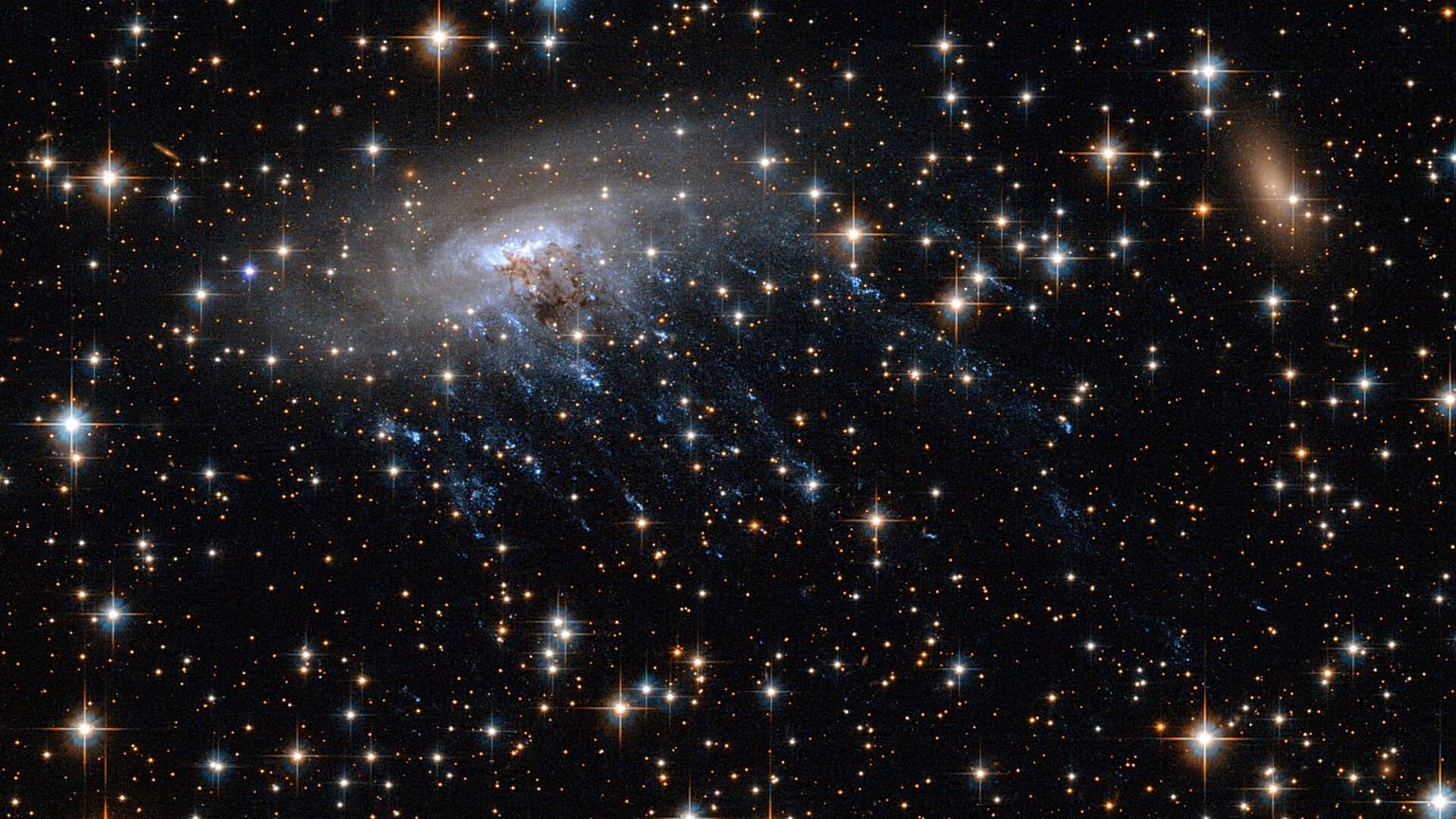
Astronomers spot 8.5 billion year old 'jellyfish galaxy'

The spiral galaxy ESO 137-001, seen here in an image from Hubble, is an example of a “jellyfish” galaxy
Copyright Credit: NASA, ESA

By Theo Farrant
Updated 

Seen as it was 8.5 billion years ago, the galaxy shows that the early universe was harsher than scientists previously thought.

Researchers have identified what could be the most distant jellyfish galaxy ever observed, using data from NASA's James Webb Space Telescope.

The discovery, published in the Astrophysical Journal, was made by a team at the University of Waterloo, who spotted the unusual object while analysing deep space observations.

Launched in 2021 through a collaboration between NASA, the European Space Agency (ESA), and the Canadian Space Agency (CSA), the JWST is the largest, most powerful and most sophisticated telescope ever sent into space.

What is a jellyfish galaxy?

Jellyfish galaxies get their nickname from the long, flowing streams of gas that trail behind them like tentacles.

These galaxies move rapidly through crowded galaxy clusters filled with extremely hot gas.

As they travel, that surrounding gas acts like a headwind, sweeping material away from the galaxy and leaving behind flowing strands in a process known as ram-pressure stripping.

What we know about the new discovery

The newly identified galaxy sits at a redshift of z = 1.156. This means its light has taken around 8.5 billion years to reach Earth - so what we're seeing is a view of the galaxy when the universe was much younger.

The team found the galaxy while studying the COSMOS field - the Cosmic Evolution Survey Deep field - one of the most intensely studied patches of sky. Astronomers favour this region because it lies away from the busy plane of the Milky Way, which means less interference from nearby stars and dust.

"We were looking through a large amount of data from this well-studied region in the sky with the hopes of spotting jellyfish galaxies that haven't been studied before," said Dr. Ian Roberts, from the Waterloo Centre for Astrophysics in the Faculty of Science. "Early on in our search of the JWST data, we spotted a distant, undocumented jellyfish galaxy that sparked immediate interest."

The galaxy itself has a relatively typical disk shape. What stands out are bright blue clumps scattered along its trailing streams. These glowing knots are extremely young stars.

Their ages suggest they formed outside the galaxy's main body, within gas that had been stripped away. That type of star formation is consistent with what astronomers expect in jellyfish galaxies undergoing ram-pressure stripping.

Significance of the find

The discovery is important because it pushes evidence of ram-pressure stripping much further back in time.

Many researchers had assumed that galaxy clusters 8.5 billion years ago were still developing and not yet dense or extreme enough to strip gas so effectively. This galaxy suggests that clusters were already harsh environments capable of reshaping galaxies.

"The first is that cluster environments were already harsh enough to strip galaxies, and the second is that galaxy clusters may strongly alter galaxy properties earlier than expected," Roberts said.

He continued: "Another is that all the challenges listed might have played a part in building the large population of dead galaxies we see in galaxy clusters today. This data provides us with rare insight into how galaxies were transformed in the early universe."

The researchers have now applied for additional observing time with the James Webb Space Telescope to take a closer look and provide further evidence.


‘First Light’ From World’s First Commercial Space Science Satellite Heralds New Era For Astronomical Data And King’s Collaborations

Pink: Spectrum of eta UMa acquired in a single capture by Mauve on 9 February 2026 with a 5s integration time. Blue: Hubble Space Telescope STIS spectra of the same star recorded by three grisms.
 Credit: Blue Skies Space Ltd.

February 28, 2026 0 Comments

By Eurasia Review


Mauve, the world’s first commercial space science satellite, has successfully achieved ‘first light’, sending back data to astronomers about the universe for the first time.

Created by Blue Skies Space Ltd., a British space company co-founded by current King’s staff and alumni, Mauve will study stars in the ultraviolet and visible light, enabling a greater understanding of their magnetic activity, stellar flares, and how they impact the habitability of nearby exoplanets – planets that orbit stars that are not our sun.

The start-up hopes the craft will pioneer a new era of exploration founded on low-cost, rapidly built space telescopes, delivering high-quality information about the universe directly to researchers.

Professor Giovanna Tinetti, Vice Dean (Research) in the Faculty of Natural, Mathematical and Engineering Sciences and co-founder of Blue Skies Space, said of the milestone, “The launch of Mauve has been a really emotional moment – seeing the project we worked hard for a number of years being sent to space!

“But as a scientist the real excitement comes when the data start flowing in: seeing the first spectrum from Mauve has suddenly made me realise that we’ll soon do science with the first privately funded space science mission ever!”

Mauve used its 13 cm spectrophotometric telescope, designed to measure and collect data on the spectrum of light emitted by stars, to observe Eta Uma, a star 104 light-years away in the constellation Ursa Major or the Great Bear.

A hot, blue-white star, much hotter than the Sun, Eta UMa shines in ultraviolet light which makes it an ideal calibration target for an observatory collecting ultraviolet data like Mauve.

Dr Marcell Tesseny, CEO and co-founder Blue Skies Space, as well as an alumnus from the Department of Physics, said “Blue Skies Space was founded to provide access to space science data for scientists worldwide through a fleet of small, agile satellites. The first light from Mauve is a demonstration of this vision to serve the space science community.”

Throughout its three-year mission, Mauve also hopes to gather information on early-stage planetary evolution, test theories of gravity through examination of binary star systems and chart how stars live and die – in addition to research priorities highlighted by members of the science community who sign up to Mauve’s observational programme.


Life Forms Can Planet Hop On Asteroid Debris – And Survive

After shooting the microbes, the team determined whether they survived and examined the survivors’ genetic material for clues to how they handled the pressure. The bacteria proved very hard to kill. They survived nearly every test at 1.4 Gigapascal of pressure and 60% at 2.4 Gigapascals of pressure. The cells showed no signs of damage after the lower pressure hits, but after the higher pressure experiments, the team observed some ruptured membranes and internal damage. CREDIT: Johns Hopkins University


March 4, 2026 
By Eurasia Review


Tiny life forms tucked into debris from an asteroid hit could catapult to other planets – including Earth – and survive, a new Johns Hopkins University study finds.

The work demonstrates that a certain hardy bacterium easily withstands extreme pressure comparable to an ejection from Mars after an asteroid hit, as well as the inhospitable conditions it would face during the ensuing interplanetary journey.

The study, published today in PNAS Nexus, suggests that microorganisms can survive remarkably more extreme conditions than expected, and raises questions about origins of life. The work also has significant implications for planetary protection and space missions.

“Life might actually survive being ejected from one planet and moving to another,” said senior author K.T. Ramesh. “This is a really big deal that changes the way you think about the question of how life begins and how life began on Earth.”

Impact craters cover the surfaces of most bodies in the solar system. Mars, a planet that could harbor life, is one of the most cratered celestial bodies. We know asteroid strikes can launch material across space—and Martian meteorites have been found on Earth.

However, scientists have long wondered if life forms could also be launched from an asteroid impact. Tucked inside ejected debris, they might land on another planet—a theory called the lithopanspermia hypothesis.

Previous experiments to test the theory have been inconclusive, and targeted organisms widely found on Earth, rather than a life form that would suit the extreme environments of other planets.

To study how a microorganism would realistically handle the stress of a planetary ejection, the team devised a way to replicate the pressure and a singular biological model.

The team chose to test Deinococcus radiodurans, a desert bacterium found in the high deserts of Chile that is notorious for its ability to survive the most inhospitable, space-like conditions—everything from extreme cold and dryness to intense radiation. It has a thick shell and a remarkable ability to self-repair.

“We do not yet know if there is life on Mars, but if there is, it is likely to have similar abilities,” Ramesh said.


The experiment simulated the pressure of an asteroid strike and ejection from Mars by sandwiching the microbe between metal plates and then firing a projectile at it from a gas gun. The projectile hit the plates at speeds up to 300 mph, generating 1 to 3 Gigapascals of pressure.

For perspective, the pressure at the bottom of the Mariana Trench, the deepest part of the Earth’s oceans, is a tenth of a Gigapascal. Even the lowest pressure in this experiment is more than ten times that.

After shooting the microbes, the team determined whether they survived and examined the survivors’ genetic material for clues to how they handled the pressure.

The bacteria proved very hard to kill. They survived nearly every test at 1.4 Gigapascal of pressure and 60% at 2.4 Gigapascals of pressure. The cells showed no signs of damage after the lower pressure hits, but after the higher pressure experiments, the team observed some ruptured membranes and internal damage.

“We expected it to be dead at that first pressure,” said lead author Lily Zhao. “We started shooting it faster and faster. We kept trying to kill it, but it was really hard to kill.”

In the end, what did die was the equipment. The steel configuration holding the plates fell apart before the bacteria did.

When asteroids hit Mars, ejected fragments experience a range of pressures, perhaps close to 5 Gigapascals, though some could see much higher. Here the microbe easily survived almost 3, much higher than previously thought possible.


“We have shown that it is possible for life to survive large-scale impact and ejection,” Zhao said. “What that means is that life can potentially move between planets. Maybe we’re Martians!”

The possibility of life spreading between planetary bodies has significant implications for planetary protection and space missions, the team said.

Space mission protocols evaluate the likelihood of life surviving on the target planet. When missions travel to planets that might sustain life, like Mars, there are tight restrictions and safety measures to prevent contaminating the planet with Earth life. And when a mission brings back materials from a planet, there are very strict measures to control the possible release of that life on Earth. Because this work demonstrates that materials from Mars might reach other bodies, particularly its two nearby moons that aren’t currently restricted, the team said policies might need to be reassessed.

Phobos, in particular, orbits so close to Mars that any ejecta that gets there is probably exposed to much less pressure than what is required to get to Earth, the team said.

“We might need to be very careful about which planets we visit,” Ramesh said.

The team next hopes to explore whether repeat asteroid impacts result in hardier bacterial populations—or whether bacteria adapt to this kind of stress. They’d also like to see if other organisms, including fungi, can survive these conditions.

ICYMI

South Park writer launches ‘DraftBarron’ campaign to send Donald Trump’s son Barron to Iran war

‘South Park’ writer launches ‘DraftBarron’ campaign to send Trump’s son to Iran War
Copyright AP Photo - Canva

By David Mouriquand
Published on 

A satirical website calling for Donald Trump’s youngest son, Barron Trump, 19, to be drafted into the US military has been created, as the US and Israel launched strikes on Iran. The hashtag #SendBarron has been trending on social media.

Operation Epic Fury, which has seen the US and Israel launch extensive airstrikes against Iran, has claimed the lives of six American service members

Donald Trump has been criticised for a perceived lack of concern over the loss of life. During his brief remarks at a Medal of Honor ceremony yesterday, in the wake of the attacks, commentators noted that Trump appeared indifferent towards deaths, preferring to speak about his plans for the new ballroom at the White House.

This has prompted speculation over whether the self-styled “Peace President” would react differently if his own son was deployed.

With this in mind, former South Park writer Toby Morton has launched the satirical – and now viral – website: DraftBarronTrump.com

The site mocks Donald Trump by encouraging him to send his youngest son, Barron, to war. It cites Trump’s “courage” and “proven genes” as arguments for sending his 19-year-old to war - while showing pictures of him napping.

“America is strong because its leaders are strong,” reads the subheading of the website. “President Trump proves that every day. Naturally, his son Barron is more than ready to defend the country his father so boldly commands.”

It concludes: “Service is honor. Strength is inherited. Dog Bless Barron.”

The site, described as “dedicated to honoring the strongest and bravest voices in war”, also features absurdist testimonials, including one by Barron’s brother Donald Trump Jr: “This moment is really about Barron, okay? Always has been. He represents strength, courage, and service. I’ll be honoring that sacrifice in my own way, mainly by talking about it from a safe distance.”

Another is signed Eric Trump: “People always say I’m stupid, which is totally unfair, because I understand a lot about pancakes. Pancakes are complex. You’ve got batter, heat, timing. If you rush it, you ruin everything. I think about pancakes a lot. Mostly pancakes.”

Barron Trump AP Photo

Morton, who has achieved notoriety for buying up website names and creating satirical sites, has promoted the website on social media, along with another site: ResignChuck.com, which calls for the resignation of Democratic party leader Chuck Schumer for his alleged lack of opposition to Trump’s actions.

The launch of DraftBarronTrump.com has led to the trending hashtag #SendBarron, with thousands of social media users demanding that Barron be called up to serve alongside the soldiers his father has sent into battle.

Check out some of the reactions below:

Many are also leaning into the sore spot that is military service for the Trump family.

Donald Trump famously used a bone spur diagnosis to avoid the Vietnam draft.

Dr. Elysa Braunstein and Sharon Kessel, the daughters of Queens podiatrist Dr. Larry Braunstein who signed the original bone spur diagnosis, told The New York Times that it was a “favour” from their father to Trump’s father, Fred Trump - who was Braunstein's landlord.

Battlefield for Barron?

Probably not. However, Barron’s reason for avoiding basic training may be more legitimate than his father’s.

Barron is 6’9’’ (2m05), which is above the maximum height limit for most branches of the military, which cap enlistment height at 6’8’’ (2m03).

South Africa Deputy President Launches R100m Wits Hydrogen Facility


South Africa's Deputy President Paul Mashatile

Photo Credit: SA News

February 28, 2026 
By SA News

Deputy President Paul Mashatile says South Africa’s green hydrogen ambitions must anchor a new era of reindustrialisation, urging the country to “build what we use and innovate what we export”

This as he launched the R100 million Wits Strategic Hydrogen Localisation Investment Facility (Wits-SAHLI) on Friday.

Speaking at the University of the Witwatersrand’s West Campus, Deputy President Mashatile positioned the hydrogen initiative as more than a research milestone – but a national turning point in rebuilding domestic manufacturing capacity and reclaiming lost industrial ground.

“This moment marks not only the beginning of a ground-breaking project, but also the start of a shared national endeavour: to build a new industrial capability that drives innovation, creates quality jobs, and contributes to a just, inclusive, and sustainable economy,” he said.

The Wits-SAHLI initiative is a partnership between Air Liquide South Africa, Wits University and the Localisation Support Fund, and forms part of South Africa’s broader Hydrogen Society Roadmap.

From improvised classrooms to world-class laboratories

In a personal reflection, the Deputy President contrasted the modern hydrogen facility with his own school days, when science lessons were conducted in under-resourced classrooms with improvised equipment.

“Our ‘science laboratory’ was nothing more than an ordinary classroom with a cracked chalkboard and wobbly desks…What we had was imagination,” he recalled.

He said facilities such as Wits-SAHLI symbolise how far the country has come and how far it must still go to ensure young South Africans inherit not limitations, but opportunity.

“They close the gap between potential and possibility,” the Deputy President said, adding that the hydrogen plant would serve as both a technical asset and a training ground for the next generation of engineers, scientists and entrepreneurs.

Hydrogen as a reindustrialisation lever

Equipped with a 110 kilowatt electrolyser, 200 kilogram hydrogen storage capacity and a 200 kilowatt clean power output system, the modular pilot plant is designed to bridge the gap between laboratory-scale research and industrial implementation.

Deputy President Mashatile framed localisation as the central pillar of the project, arguing that South Africa cannot afford to remain dependent on imported technologies, particularly in emerging sectors such as green hydrogen.

“Localisation generates jobs, enhances skill sets and supports small businesses. By reducing dependency on external supply chains, it empowers local researchers and industries to innovate,” he said.

He pointed to the steady decline in manufacturing from more than 22% of Gross Domestic Product (GDP) in the early 1990s to about 12–13% today and falling employment in the sector as evidence of the urgency to act.

“Behind every percentage point lost are thousands of vanished opportunities,” he warned.

Initiatives such as Wits-SAHLI, he said, are central to reversing that decline by deepening local value chains, developing supplier ecosystems for SMMEs and ensuring that intellectual property and technical expertise remain within South Africa’s borders.

Anchoring the energy transition

The Deputy President acknowledged the role of Electricity and Energy Minister Kgosientsho Ramokgopa in strengthening policy certainty and positioning green hydrogen within the country’s broader energy transition strategy.

He emphasised that hydrogen development must not occur in isolation, but as part of an integrated national energy plan that includes grid expansion, renewable energy integration and industrial reform.

Academia the backbone of the hydrogen economy

Higher Education and Training Minister Buti Manamela joined the launch, with the Deputy President underscoring the importance of universities in building the skills pipeline required to scale the hydrogen economy from pilot phase to commercial viability.

“Universities and research facilities are the backbone of this initiative. The hydrogen economy will require new thinkers, new problem solvers, new technicians, new researchers and new entrepreneurs,” he said.

By 2028, when the facility is expected to be fully operational, the partnership aims to have cultivated a vibrant ecosystem of locally manufactured hydrogen components, strengthened enterprise development pathways and enhanced South Africa’s competitiveness in global green markets.

In closing, Mashatile described the launch as the foundation of a new chapter in South Africa’s industrial and energy landscape.


SA News
Government Communication and Information System (GCIS) established the SA Government News Agency to enable all media locally and abroad to have easy and fast access to fresh government information, news and current affairs at no cost.
Stress-Testing The Cascadia Subduction Zone Reveals Variability That Could Impact How Earthquakes Spread


This map models locking at the Cascadia Subduction Zone, with red showing where the plates are tightly locked and orange/yellow indicating less locking. The study sites are marked with small red squares and the small blue lines along the edge depict other faults, the proposed fluid conduits in this study. The cross section shows fluid migration in more detail. 
CREDIT: Science Advances/Kidiwela et al.

By Eurasia Review


The Cascadia Subduction Zone is unusually quiet for a megathrust fault. Spanning more than 600 miles from Canada to California, the fault marks the convergence of the Juan de Fuca and North American plates. While other subduction zones produce sporadic rumblings as the plates scrape past each other, Cascadia shows very little seismic activity, fueling assumptions that the plates are locked together by friction.

The subduction zone — miles offshore and deep underwater — is difficult to observe. Most data collection is based onshore, which limits the breadth and quality of results. The lack of earthquakes further complicates efforts to understand its behavior and structure.

In a new study, the first to monitor strain offshore over an extended period of time, University of Washington researchers report that the plates may not be fully locked. Based on 13 years of ground motion data from sensors in different regions, the study shows the northern portion of the fault is locked and quiet, but the central region appears to be more active. There, researchers observed signs of a shallow, slow-motion earthquake and detected pulses of fluid flowing through subterranean channels, which may relieve pressure from the fault.

The findings, published in Science Advances, may alter expectations of how this area will respond to a large earthquake. Similar features in other places have stopped a rupture that might have otherwise continued along the entire fault line.

“It’s preliminary, but we think that variable fluid pathways in Cascadia will change the behavior of large earthquakes on the fault,” said co-author Marine Denolle, a UW associate professor of Earth and space science.


The Juan de Fuca plate is advancing toward the North American plate at a rate of approximately 4 centimeters a year. But because the plates are stuck together, that motion generates pressure. Eventually, the tension building at the boundary will exceed what the plates can tolerate. When they eventually slip free, an earthquake will spread along the boundary.

Megathrust earthquakes, which occur at boundaries where one plate slides beneath another, rock the Pacific Northwest every 500 or so years. Researchers dated the last one to 1700, and estimates suggest a 10 to 15% chance that the entire fault will rupture, producing an earthquake that could exceed magnitude 9, within the next fifty years. The results from this study do not alter those odds, but the dynamics captured might influence the severity of the eventual earthquake.

A recent survey of the seafloor found that the fault can be separated into at least four geologically distinct segments. Each one may be insulated from a rupture in another region. In this study, the researchers took a closer look at two of the regions by analyzing data from three monitoring stations, one near Vancouver Island and two off the coast of Oregon.


“We wanted to understand strain changes in different regions offshore,” said lead author Maleen Kidiwela, a UW doctoral student of oceanography. “We used the seismometers to measure how the seismic velocity varies underneath each station.”

Seismic velocity is a term used to describe the rate at which ambient noise travels through a material. Because the speed of sound depends on what it is moving through, tracking seismic velocity can give researchers a window into processes occurring beneath the ocean floor.

“When you compact something, you can expect the sound waves to move through it faster,” said Kidiwela.

The steady increase in seismic velocity observed at the northern site told the researchers the rock was compacting, which supports the theory that the two plates are locked in place.

The central region displayed a different pattern. For two months in 2016, seismic velocity decreased. The researchers attribute this drop to a slow-motion earthquake on the shallow edge of the oceanic plate that relieved some of the pressure at the fault.

Other drops in seismic velocity, recorded between 2017 and 2022, were linked to fluid dynamics. Subduction squeezes liquid out of rocks and pushes it toward the surface. The study found that other faults, running perpendicular to the subduction zone, may act as pathways for letting trapped fluid out.

“During a megathrust rupture, one of the ways that an earthquake propagates is through fluid pressure. If you have a way to release these fluids, it could help improve the stability of the fault, and potentially impact how the region behaves during a large earthquake,” Kidiwela said.


Pulling data from just three sites, the researchers observed complex dynamics that may have gone overlooked. Future work will greatly expand this effort. UW researchers received $10.6 million in 2023 to build an underwater observatory in the Cascadia Subduction Zone.

“Finding this link between fluids coming to the shallow subduction zone is pretty unique, as is the evidence that the fault is not completely locked,” said co-author William Wilcock, a UW professor of oceanography and one of the scientists involved with the observatory. “It suggests that we need more instruments there, because there may be more going on than people have been able to figure out before.”
Mountain Soils In Arid Regions May Emit More Greenhouse Gas As Climate Shifts


Soil N2O, Nitrous oxide, emission along an elevation gradient in the arid zone of Xinjiang, Northwestern China 

CREDIT Zhixi Wu, Lifang Wu, Dingxi Chen, Zetong Niu, Tonghui Yang, Hong Mao, Muhammad Junaid Nazir & Longfei Yu


February 28, 2026 
By Eurasia Review


A new field study from northwestern China reveals that climate-driven changes in temperature and moisture could significantly reshape nitrous oxide emissions from soils in arid mountain ecosystems, with important implications for future climate feedbacks.

Nitrous oxide is a powerful greenhouse gas that traps nearly 300 times more heat than carbon dioxide over a century. Although drylands cover roughly 40 percent of the Earth’s land surface, their contribution to global nitrous oxide emissions has been poorly understood. The new research helps fill this gap by examining how soil emissions vary across elevation and land-use types in the Xinjiang region of China.


Researchers conducted field measurements across forests, grasslands, croplands, and barren lands along an elevation gradient spanning more than 2,500 meters in the Tianshan Mountains. By combining gas flux measurements with soil chemistry and microbial analyses, the team was able to identify both environmental and biological factors controlling emissions.

The results show that managed cropland soils produced by far the highest nitrous oxide emissions, largely due to irrigation, fertilization, and favorable soil moisture conditions. In contrast, emissions from natural ecosystems were much lower overall, but their response to elevation differed sharply between vegetation types.

Grassland soils showed a clear increase in emissions with elevation. As altitude rose, soils became cooler but also wetter, conditions that promoted microbial processes responsible for producing nitrous oxide. At the highest sites, emissions were several times greater than those observed at lower elevations.


“Elevation acts as a natural climate experiment,” the study’s corresponding author explained. “It allows us to see how warming and changing rainfall patterns may reshape soil greenhouse gas emissions in the future.”

Forest soils behaved in the opposite way. Emissions were highest at lower elevations and declined sharply higher up the mountain. The researchers found that temperature played a stronger role than moisture in forests, with colder conditions at higher elevations limiting microbial activity that produces nitrous oxide.

The study also showed that different microbial communities drive these contrasting patterns. In grasslands, microorganisms involved in denitrification became more active in wetter soils, boosting emissions. In forests, the abundance of key microbial groups declined with cooler temperatures, helping suppress nitrous oxide release.

Together, the findings suggest that climate change could shift the balance of greenhouse gas emissions across ecosystems in arid mountain regions. Warmer and wetter conditions may transform some natural grasslands into more significant sources of nitrous oxide, while land management practices will continue to dominate emissions from agricultural soils.

“Our work highlights that both climate sensitivity and human management must be considered together when predicting greenhouse gas emissions from dryland regions,” the author said. “Ignoring either factor could lead to serious underestimation of future climate feedbacks.”

Because arid and semi-arid regions occupy such a large portion of the planet, improved understanding of their soil emissions is essential for refining global greenhouse gas budgets and climate projections.

The researchers conclude that long-term monitoring across environmental gradients will be critical for predicting how dryland ecosystems respond to ongoing climate change, and for developing land-use strategies that minimize greenhouse gas emissions while sustaining productivity.
Snow? Increasingly ‘No,’ According To New Research


March 4, 2026 
By Eurasia Review


Faculty at Mississippi State University are continuing groundbreaking work at the intersection of mathematics, statistics and climate science with the publication of a new peer-reviewed study examining regional snow cover trends across the Northern Hemisphere. The results suggest shrinking snow coverage as well as seasonal shifts for when the wintry layer comes and goes.

The study, “Regional Analysis of Snow Presence Trends in the Northern Hemisphere,” was published in January in the Journal of Hydrometeorology, a leading publication of the American Meteorological Society.

Led by Jonathan Woody, associate professor in MSU’s Department of Mathematics and Statistics, and Jamie Dyer, dean of the College of Integrative Studies and professor of meteorology and climatology in the Department of Geosciences, the researchers examined satellite data to determine whether snow cover across the Northern Hemisphere is increasing or decreasing, and where those changes are occurring. After removing unreliable data, they found that significantly more areas are losing snow cover than gaining it.

The research builds on the team’s widely cited 2023 study that introduced a statistical framework for evaluating long-term snow cover trends.

“We studied a new high-resolution Rutgers University Global Snow Lab Northern Hemisphere Weekly Snow Cover Extent Data Record. Using a two-state Markov chain model with periodic dynamics to analyze snow cover across the Northern Hemisphere, we can see how trends vary both geographically and seasonally,” Woody said.


Dyer emphasized the importance of interdisciplinary collaboration in producing robust climate science.

“Climate datasets are inherently complex,” Dyer said. “By combining statistical expertise with climate science expertise, we ensure that trends are not artifacts of data bias or methodology.”

The 2026 research co-authors include JiaJie Kong of the University of California at Berkeley and Penelope Prochnow, a recent MSU graduate with a bachelor’s degree in Data Science from MSU’s Data Science Academic Institute who contributed substantially to the research and now works as a data scientist in Huntsville, Alabama.

The team’s research reveals about 24% of regions analyzed show declines in snow covered area compared to about 9% showing increases, with a noticeable seasonal shift. While observed snow cover has slightly increased in late summer and early fall in some areas, it is clearly declining beginning in March, suggesting earlier spring melt. The strongest overall declines occur in Europe and central Asia, while parts of central Canada and the northern Great Plains show increases. Additionally, the southern edge of seasonal snow cover is retreating in many areas, indicating a general shift toward less persistent snow across much of the hemisphere.

In 2023, Woody and Dyer published research in the Journal of Hydrometeorology that was described as the first statistically rigorous, hemispheric-scale assessment of snow presence trends using satellite data collected between 1967 and 2021 and gridded by the National Oceanic and Atmospheric Administration.