Spiders are ‘fundamental’ for planetary health – so why are they forgotten in conservation efforts?
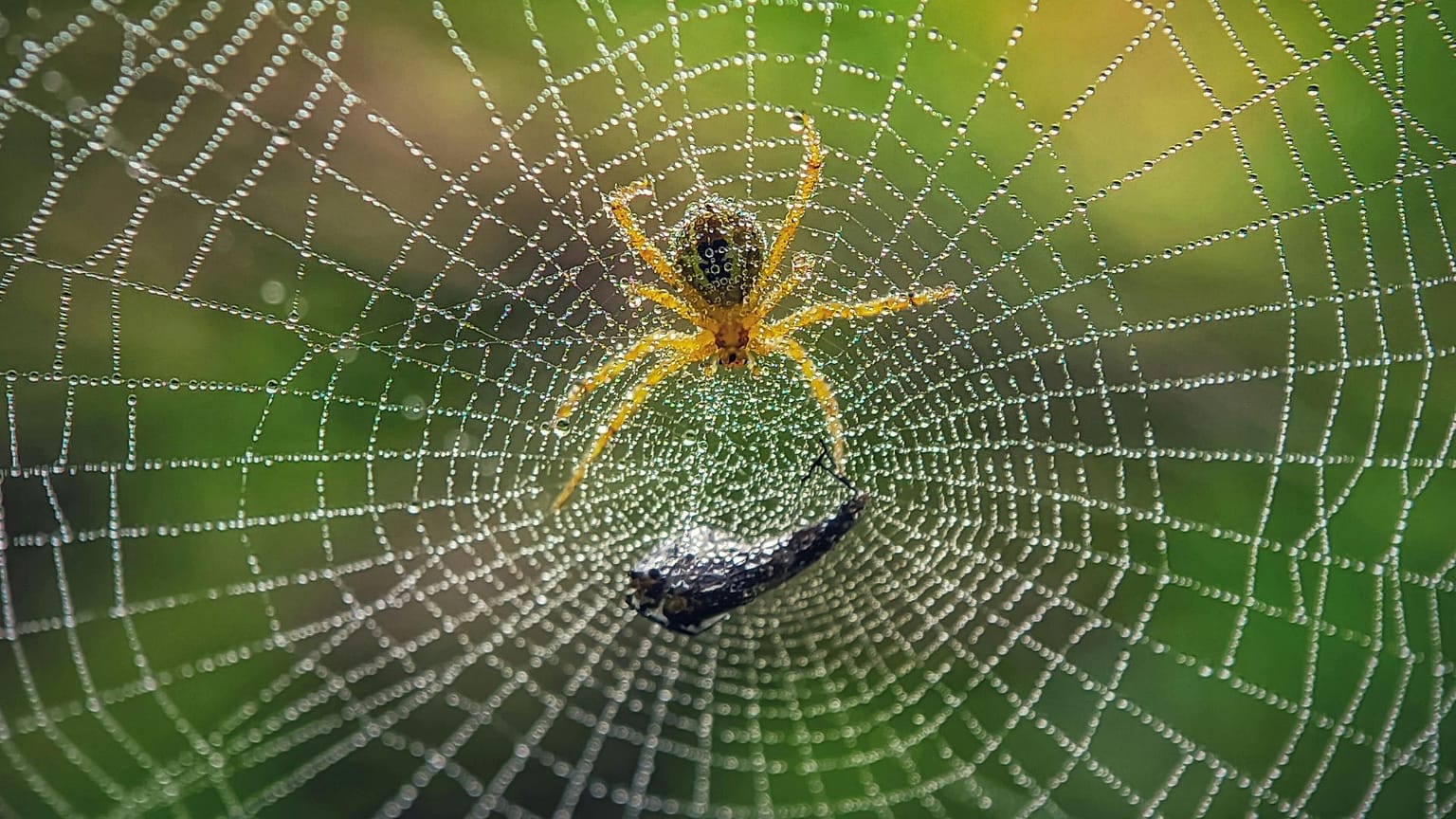
Almost 90% of insects and arachnids lack conservation status in the US, a new study reveals.
Creepy crawlies are vital to the health of our planet – but gaining support for them isn’t always easy.
Insects and arachnids – spiders, scorpions and harvestmen (daddy long legs) – “don’t usually get the same attention” as “popular charismatic animals like lions and pandas”, says Laura Figueroa, assistant professor of environmental conservation at the University of Massachusetts Amherst in the US.
Back in 2017, it felt like this was beginning to shift. A study published in science journal PLOS One revealed a 75 per cent decline in flying insect biomass over a 27-year period across 63 nature reserves in Germany.
News of a pending ‘insect apocalypse’ made headlines around the world, triggering a wave of similar studies and giving momentum to insect monitoring programmes and protection initiatives.
But almost a decade on, has it made a difference?
Building on the global alarm raised by these declines, Figueroa and her graduate student, Wes Walsh, sought to investigate the state of insects and arachnids in North America – with worrying results.
‘We simply have no idea how they are doing’
The pair gathered conservation assessments for the 99,312 known insect and arachnid species in North America, north of Mexico.
They were astounded at the lack of information available.
“Almost 90 per cent – 88.5 per cent to be precise – of insect and arachnid species have no conservation status,” says Figueroa, the senior author of a paper published on 2 March in science journal PNAS.
“We simply have no idea how they are doing. Almost nothing is known about the conservation needs of most insects and arachnids in North America.”
Among the few protections that are in place, butterflies and dragonflies receive a disproportionate share, along with aquatic species important for monitoring water quality, such as mayflies, stoneflies and caddisflies.
“Arachnids, in particular, are really missing from conservation; most states don’t even protect a single species,” says Walsh, the paper’s lead author.
The researchers also found that states reliant on extractive industries like mining and fossil fuels were less likely to protect either insects or arachnids.
Why are spiders important?
Spiders are often demonised as predators but only a tiny fraction of species are actually dangerous to humans – around 25-30 out of over 50,000 – and even fewer regularly cause serious harm
Their predatory skills, however, are invaluable for controlling insect populations. They keep flies, mosquitoes, aphids and other agricultural pests in check.
As prey themselves, they provide a vital food source for birds, lizards and other predators, sending energy up the food chain.
Their presence, or lack thereof, is also a key early indicator of ecosystem health – and without them, the resulting imbalance could have disastrous cascading effects. Pest populations could explode, crops could suffer, and entire ecosystems might destabilise.
“Insects and arachnids are fundamental for human society,” says Laura Figueroa, assistant professor of environmental conservation at the University of Massachusetts Amherst in the US.
“They help with pollination and biological control of pests; they can serve as monitors of air and water quality, and they have worked their way deeply into many cultures throughout the world.”
“Insects and arachnids are more than objects of fear,” says Walsh, who has a tattoo of a spider on his arm. “We need to appreciate them for their ecological importance, and that begins with collecting more data and considering them worthy of conservation.”
Can insects benefit from lessons in bird conservation?
Currently, protections for insects and arachnids are fragmented, varying widely across different the US – and seemingly influenced by local industry.
Looking to the success of bird conservation, Figueroa notes the importance of unity.
“The research shows that you get the best conservation efforts when broad, diverse coalitions come together,” she says. “In the case of birds, it was hunters, bird watchers, nonprofit organisations and many other constituencies who banded together to reach a common goal.”

No comments:
Post a Comment