Wednesday, March 04, 2026


Pedro Sánchez Defies Washington To Win Spain

Spain's Prime Minister Pedro Sánchez. Photo Credit: La Moncloa


March 4, 2026 
EurActiv
By Inés Fernández-Pontes

(EurActiv) — Spain’s decision to bar the United States from using its strategically vital bases at Rota and Morón to support strikes on Iran has ignited fierce domestic backlash and raised wider questions about Madrid’s standing in Europe and its reliability within NATO.

The move, framed by Prime Minister Pedro Sánchez as a defence of international law, underscores Spain’s increasingly distinctive foreign-policy posture at a moment when Atlantic unity is under strain. Long a dependable – if sometimes reluctant – pillar of the alliance’s southern flank, Spain now risks appearing as an outlier as several European partners adopt a more cautious line towards Washington’s actions.

For decades, the naval base at Rota and the air base at Morón have symbolised Spain’s integration into the transatlantic security architecture. Rota hosts around 6,000 US personnel and several Aegis destroyers central to NATO’s missile-defence system. Together, the bases serve as crucial transit and refuelling hubs for operations in the Mediterranean, the Gulf and beyond.

By refusing authorisation for US tanker aircraft to operate from Spanish soil for the current mission – and by describing the strikes as “unilateral” – Sánchez has inserted Spain directly into a broader debate over the legality and legitimacy of Western military action in the Middle East.


Diplomatic ties between Madrid and Washington are already strained. Sánchez has emerged as one of the European Union’s most vocal critics of Donald Trump, condemning US and Israeli actions in Iran and Venezuela as breaches of international law. Over the past year, his government has imposed a total arms embargo on Israel, resisted calls to increase defence spending to NATO targets, and tightened oversight of US activities at the southern bases.
Trump weighs in

Whether the episode amounts to a lasting rupture remains unclear. Under the 1988 bilateral agreement governing the installations – which remain under Spanish sovereignty – any use beyond routine activities requires prior government approval. Analysts note that the United States is unlikely to relinquish facilities whose geographic position at the gateway to the Mediterranean is difficult to replicate.

Yet politically, the signal is unmistakable. At a time when NATO is seeking cohesion amid multiple crises – from Ukraine to the Gulf – Spain’s stance reinforces perceptions that Sánchez is prioritising domestic political consolidation over alliance solidarity, potentially complicating Madrid’s influence within Europe’s security architecture.


The repercussions for Spain’s relationship with Washington became clear late Tuesday in the Oval Office, where Trump left little doubt over his frustration with Madrid’s move as he threatened to cut trade ties with Spain.

“Spain doesn’t have great leadership,” he said. “We want nothing to do with Spain.”

The US president also signalled that if he wanted to use the Spanish bases, he would.

“Spain actually said that we can’t use their bases… which we could use if we wanted to,” he said. “We could fly in and use it, no one is going to tell us not to use it.”
Spanish sovereignty

Under the 1988 agreement, which rules the bases both under Spanish sovereignty, any use of the Rota and Morón bases beyond bilateral training exercises or maintenance requires prior authorisation from the Spanish government.

For decades, the bases have served as key US transit hubs for troops, equipment and fuel bound for the Middle East and Gulf. Rota – about 150 km from Gibraltar – is Europe’s largest US naval base, hosting 6,000 personnel and five destroyers central to NATO’s missile defence.

Spain “has never routinely monitored or supervised the use of these military bases” as it does now under Sánchez’ government, Félix Arteaga, a senior analyst at Spain’s Real Instituto Elcano told Euractiv.
Domestic troubles

In Madrid, Sánchez’s foreign policy stance is widely read through a domestic lens. Arteaga argues the ban on US base operations fits the broader strategy of Sánchez’s Socialist Party (PSOE) to cast the prime minister as the European leader “standing up to Trump”.


“Sánchez’s staunch opposition to the US president helps him consolidate a left-wing electorate within the PSOE,” Arteaga said, noting that this base has traditionally opposed US military presence and higher defence spending.

The PSOE-led government is under pressure after electoral setbacks in the past regional elections and corruption probes targeting the PM’s inner circle while far-left allies Podemos and Sumar have urged a tougher line on Washington and Israel.

Following the joint US-Israeli strike on Tehran last weekend, Podemos leader Ione Belarra demanded clarity over Rota’s role, and Sumar’s Lara Hernández denounced the EU’s response as “shameful”.

Meanwhile, the opposition conservative Popular Party accused Sánchez of “isolationism”. “Something is wrong when Hamas, the Houthis or the Iranian regime applaud the Sánchez government,” spokesperson Carmen Fúnez said.

Arteaga warned that while the stance may shore up domestic support ahead of the highly anticipated general elections next year, it risks distancing Spain from European consensus and deepening international isolation.

“From a foreign policy perspective, Sánchez’s stance is a disaster, but he benefits most from it domestically,” a veteran Spanish diplomat told Euractiv.

A country with a “serious” foreign policy would have followed the French and British, the diplomat said, explaining that Spain’s foreign policy is “highly dysfunctional” because there is no internal consensus within the coalition on the most basic issues.
From Water Stress To Water Bankruptcy: Urban India’s New Hydrological Reality – Analysis


March 4, 2026 
Observer Research Foundation
By Dhaval Desai


As the world wrestles with the existential threats posed by climate change, water is no longer a matter of managing a natural resource. It is now about urgently addressing the systemic and structural vulnerabilities that have emerged from the misuse of water over the centuries, especially as the definitions of water scarcity, water stress, and water crises, used hitherto to identify and respond to water issues, may no longer adequately reflect the severity of current global hydrological concerns.

The United Nations University Institute for Water, Environment and Health’s (UNU-INWEH) latest study has coined the term “water bankruptcy” to describe emerging trends in global water dynamics. The study, ‘Global Water Bankruptcy: Living Beyond Our Hydrological Means in the Post-Crisis Era,’ defines water bankruptcy as the near-permanent erosion of the natural resilience and recovery of water ecosystems due to the exploitation of water beyond its renewable capacity.

This new analytical framework has far-reaching implications for India, a country already dealing with escalating water deficits and complex water governance challenges.


Defining Water Bankruptcy: Beyond Scarcity, Stress, and Risks

The study identifies water stress as conditions in which, although demand overshoots the limits of available and renewable water supply, the impact on overall water availability is mostly reversible. Water crises, on the other hand, are mainly episodic, acute shortages caused by droughts or infrastructure failures, which can be managed through emergency responses. However, it defines water bankruptcy as a persistent post-crisis state in which water use consistently exceeds renewable freshwater inflows and the safe limits of natural storage depletion.


Such water bankruptcy results in the severe depletion of both ‘checking accounts’ and ‘savings accounts’ of this natural resource. Checking accounts refer to the natural replenishment of rivers, wetlands, and reservoirs over time. However, as recharge of natural water sources is inconsistent, replenishment of checking accounts can show extreme fluctuations relative to the long-term average in wet and dry conditions. Conversely, the savings accounts refer primarily to groundwater sources, including soil moisture, shallow groundwater, glaciers, and aquifers, where the replenishment often occurs over several decades to even millennia. The shrinking of such savings accounts leads to disproportionate social, economic, and environmental costs.

Simultaneous evidence of the depletion of both checking and savings accounts signals a worrying worldwide breach of thresholds in basins and aquifers, leading to water bankruptcy. The UNU-INWEH thus defines water bankruptcy as the persistent post-crisis condition, in which:Withdrawal from surface and groundwater sources (the checking and savings accounts, respectively) exceeds the renewable freshwater inflows and the safe limits of extraction of water reserves, and
The resulting degradation of natural capital causes irreversible damage to water availability.

The frequent recurrence of droughts, which were earlier episodic, is a clear sign of water bankruptcy, a direct result of the degradation of hydrological conditions to a point where recovery of water levels becomes nearly impossible. The study calls for an urgent, fundamental reset of the global water agenda, from knee-jerk emergency responses to focused, sustained bankruptcy management, by acknowledging the limits, embracing transparent water accounting, setting enforceable depletion thresholds, and prioritising the protection of natural water generation through aquifers and wetlands.

Global Indicators of Water Bankruptcy


The evidence of water bankruptcy is stark across continents, with multiple indicators highlighting irreversible pressures. For example, with 70 percent of aquifers in steady decline, the current dependence of 50 percent of global domestic supply and 40 percent of irrigation water on groundwater could be severely threatened, pushing the world deeper into an era of severe water insecurity. Already, an estimated 4 billion people experience severe water scarcity for at least one month each year, and nearly 75 percent of the global population lives in countries that are either water-insecure or critically water-insecure.

With over half of all large freshwater lakes steadily shrinking since the 1990s, more than 25 percent of the global population depending on those lakes could face heightened water insecurity. Several rivers now also fail to reach the sea, indicating altered hydrological connectivity.

India’s Hydrological Reality: Stress Meeting Bankruptcy

A water-bankrupt world has enormous implications for India, given its high dependency on groundwater, burgeoning demand, and an uneven spatial distribution of renewable water sources. India has an extractable quantum of about 407.75 billion cubic metres (bcm) out of its total estimated annual groundwater recharge potential of 448.52 bcm. However, the country currently extracts around 247.22 bcm annually, representing more than 60 percent of the national extractable threshold.


Groundwater supports 62 percent of irrigation and up to 85 percent of domestic water use, making it the backbone of both food and drinking water security. Such overreliance on groundwater is driving Punjab, Haryana, Rajasthan, and parts of the Indo-Gangetic plains toward “irreversible overexploitation.”

Urban water systems, already grappling with an ever-increasing demand-supply gap, experience intensified stress. For example, the “day zero” scenario witnessed in Chennai in 2019 and the increasing reliance on groundwater, especially through the rampant, often unregulated digging of borewells, characterise the overexploitation of groundwater beyond sustainable limits. According to NITI Aayog’s 2019 Composite Water Management Index, the demand-supply gap in urban India is estimated to reach ~50 BCM by 2030. Already, five Indian cities — Delhi, Kolkata, Chennai, Bengaluru, and Hyderabad — are among the world’s 20 most water-stressed cities. This situation could also pose a grave public health risk, with 8 million childrenunder 14 at risk due to poor water quality.

On the other hand, agriculture accounts for nearly 87 percent of all freshwater withdrawals. Water-intensive staples, especially paddy and wheat, promoted through subsidies and minimum support price (MSP) since the implementation of India’s Green Revolution in the mid-1960s, have contributed to this enormous demand. Consequently, emphasis on such water-guzzling crops in Punjab and Haryana, which are crucial to India’s food security and exports, has accelerated groundwater depletion.

Policy Imperatives for a Post-Crisis Water Era

The UNU-INWEH study calls for comprehensive legal, institutional, and policy changes to address the looming global era of water bankruptcy. Post-crisis water management, it insists, should: i) impose clear limits on withdrawal of groundwater, ii) target investments to restore natural water systems. These changes must also integrate new water realities into climate, food, and biodiversity policies. India must adapt these recommendations and urgently recalibrate its water governance.

First, India must reduce its focus on water-guzzling staples such as rice and wheat, and comprehensively transform its cropping patterns to include millets, the primary traditional staple for most Indians for centuries. Millets, with their high nutritional value, are often touted as a “one-stop solution” amid climate change, water scarcity, and drought. Millets need 70 percent less water than paddy. They grow about 50 percent faster than wheat. They also need 40 percent less energy to process. Channelling subsidies and raising MSP for millets can help India reduce groundwater extraction and strengthen overall resilience.

Second, India must immediately undertake sweeping reforms of its urban water systems and create a robust circular water economy by combining enhanced storage, wastewater recycling, and leakage reduction under an integrated water strategy. Cities must focus on demand-side management measures rather than solely investing in capital-intensive source-augmentation projects. For example, India generates over 72 billion litres of sewage daily but treats only about 28 percent of sewage. As a result, it discharges more than half (~52 billion) of untreated wastewater into waterbodies or allows seepage, polluting both surface water sources and groundwater aquifers. Supply-side measures to continuously augment the water supply will only worsen groundwater depletion and disbalance the surface water availability. India must use this situation to its advantage and adopt best practices from cities in developing economies, such as São Paolo (Brazil), Buenos Aires (Argentina), Dakar (Senegal), and Arequipa (Peru), to explore circular economy solutions.


Third, India must urgently consider an Atal Bhujal Yojana-Urban to replicate the successes of the existing rural India-focused, participatory Atal Bhujal Yojana (ABY) to leverage community-led groundwater management efforts to address the fast-depleting aquifers in its cities. The absence of a coordinated, mission-mode response to this catastrophic trend has led to fragmented regulations, leaving cities with limited technical capacity. Designing ABY-Urban to address the unique complexities of cities, with robust regulatory frameworks, compulsory aquifer mapping and digital monitoring, participatory governance, performance-linked funding of central schemes and missions, and integrating groundwater management with AMRUT 2.0, can signal a proactive national commitment to sustainable cities.

Conclusion


Addressing water bankruptcy begins with recognising how much the hydrological landscape has changed and what these shifts mean for the choices societies must make. It requires India to re-examine long-standing assumptions about availability, revisit patterns of use, and build policies that reflect the limits of its natural water systems. The window for course correction is narrowing, and India must act decisively to secure its water future.


About the author: Dhaval Desai is a Senior Fellow and Vice President at the Observer Research Foundation.

Source: This article was published by the Observer Research Foundation.

Observer Research Foundation
ORF was established on 5 September 1990 as a private, not for profit, ’think tank’ to influence public policy formulation. The Foundation brought together, for the first time, leading Indian economists and policymakers to present An Agenda for Economic Reforms in India. The idea was to help develop a consensus in favour of economic reforms.

Life After Mencho: A Shifting Landscape Of Organized Crime In Mexico – Analysis


Nemesio Oseguera Cervantes (aka “el Mencho”). Image: Grok


March 4, 2026 
Geopolitical Monitor
By Jose Miguel Alonso-Trabanco

As a phenomenon whose behavior is driven by long-range impersonal forces rather than whimsical vicissitudes, the evolution of organized crime in Mexico has proved to be quite dynamic and ductile. The latest progression of this fast-paced trajectory is the Mexican military operation in which Nemesio Oseguera Cervantes (aka “el Mencho”), nominal leader of the New Generation Jalisco Cartel (CJNG), was killed. As retaliation, his henchmen targeted private businesses, state-owned banks and security personnel. Cartel hitmen also disrupted transit through roadblocks in various highways, urban centers, rural communities and tourist spots across Mexico. Everyday economic cycles and recreational activities came to a halt in nearly half of the country, even in regions far away from the epicenter of these events.

This episode and its immediate aftermath have gone viral on a global scale through both mainstream channels and social media. As the dust is settling after the initial backlash wave, an atmosphere of tense calm prevails, at least for the time being, but the ghost of “el Mencho” is now haunting Mexico. To keep things in perspective, this man was no ordinary street thug. While his centrality had diminished due to ailing health, he had become Mexico’s most powerful and ruthless criminal warlord. Under his leadership, the New Generation Jalisco Cartel (CJNG) had risen —especially after the recent partition of the Sinaloa Cartel— as one of the world’s largest criminal empires. For the Mexican state, this operation represents a Zeitenwende which, after a hiatus of suspicious unresponsiveness, highlights both the material ability and the political will to engage nonstate antagonists, even if this confrontation comes with meaningful risks and costs. Once again, the gloves are off.
Profile of the New Generation Jalisco Cartel

The New Generation Jalisco Cartel was born as an offshoot of cells once tied to the Sinaloa Cartel, which later absorbed both minor regional groups from Western Mexico and paramilitary squads established to exterminate the so-called “Knights Templar.” These remnants joined forces to transform a second-rate subnational nonstate actor into a major criminal multinational empire with branches in most of Mexico, the US, Latin America, Europe, Asia, and even Africa.

The cartel’s governance model is a hybrid that integrates corporate and paramilitary components. Not unlike the diversification of the Japanese keiretsu, the CJNG was involved in various profitable operations, including drug trafficking (especially fentanyl), clandestine mining of industrial and precious metals, extortion rackets, cybercrime, fuel contraband, human trafficking, the control of cash crops, and the systematic predation of all sorts of businesses, as well as money laundering schemes. This spatial and economic expansion was facilitated by a strategy which enabled the integration of smaller surrogates. Therefore, rather than a vertical hierarchical pyramid, the CJNG is semi-decentralized network or constellation of criminal satrapies. This confederation has been strengthened through mergers, contractual partnerships and franchises. On the other hand, the CJNG has achieved substantive firepower, underpinned by the acquisition of assault rifles, RPGs, landmines, unmanned aerial vehicles (UAVs), anti-aircraft guns, and improvised explosive devices (IEDs). In the hands of assassins trained by military defectors and foreign mercenaries with experience in overseas warzones such as Colombia and Ukraine, these weapons have been wielded to orchestrate attacks against the Mexican armed forces, law enforcement, rival groups, and even unarmed civilians. The cartel is also notorious for embracing technological innovations such as AI, cryptocurrencies, and social media platforms.


Although it exists primarily as a money-making machine, this organization has followed an operational playbook that borrows the asymmetric tactics of nonstate militias such as terrorists, separatists, and insurgents. In this particular arena, the CJNG shares more common denominators with the Colombian FARC, Hezbollah, Blackwater, the Wagner Group and African nonstate militias than with old-school Italian mafias, Chinese triads or the Japanese Yakuza. Through the proliferation of armed violence and psychological warfare, the growth of this group has weakened the ability of the Mexican state to ensure the monopoly of force and the full-fledged control of the country’s territorial hinterland. Based on a zero-sum logic, such development represents a threat for both national security and the Westphalian sovereignty of Mexico. Finally, the hitherto unchecked metastasis of this problem would not have been possible without the organic complicity of elite political and economic enablers. As is known, the growth of organized crime necessarily requires the secretive collaboration of “friends in high places.”
Domestic Fallout from El Mencho’s Death

The fate of the New Generation Jalisco Cartel is unclear because the governance structure of organized crime is a fertile ground for a chronic backstabbing disorder. Considering existing precedents, strategic foresight suggests that four scenarios can be envisaged: 1) a smooth consensual succession, 2) a hostile takeover, 3) a bitter power struggle followed by violent balkanization or 4) a gradual disintegration.


What is certain is that the beheading of a large-scale criminal syndicate does not mean that the metaphorical hydra has been dismantled. After all, the removal of a CEO does not mean that the company he used to run has been extinguished. In the short term, the so-called “kingpin strategy” is useful to destabilize criminal networks and to restore deterrence through the demarcation of red lines. However, the Mexican state can leverage this turning point to undermine the cartel’s hidden financial infrastructure, introduce stricter customs enforcement mechanisms and go after the group’s “fellow travelers.”

In the long run, these measures could further the decline and fall of this particular criminal enterprise. Nonetheless, as serious security professionals know, the complete structural eradication of organized crime is unlikely because there are powerful incentives that guarantee the survival of this underworld ecosystem. In the case of Mexico, these include the gravitational pull of market forces, a dispersed geographical configuration, and a flourishing cultural industry that promotes the aspirational attractiveness of the narco lifestyle for young men and women through narratives, songs, fashion, Netflix productions, Instagram influencers, and even semi-religious rituals.

Yet the dismemberment of large organizations could de facto reshuffle the balance of power in a manner that favors the authority of the Mexican government. In the long run, the degradation and fragmentation of large criminal consortiums would make the problem more manageable through state-sanctioned coercion, containment strategies, backchannel negotiations, and informal agreements for the ordered redistribution of spheres of influence. The point is that the state can turn the tables with the ability to permanently keep in check these partially de-fanged criminal rings. Although kosher solutions (i.e. the rule of law, better policing, community crime prevention) are preferable in principle, the testament of history and Machiavellian wisdom teach that an expedient and effective pacification requires unsavory decisions. Bad must begin so that worse remains behind.

For the Mexican government, the elimination of “el Mencho” is a game-changing political triumph. This milestone represents a “clean break” from the puzzling policy of “hugs, not bullets,” followed by President Sheinbaum’s predecessor. Although the precise details remain obscure, the rationale behind the previous approach has been attributed to neglect, détente, and even transactional Faustian pacts. The liquidation of this “high-value target” is also helpful to restore the socio-political legitimacy and professional reputation of the country’s military and civilian security services.


Nevertheless, meaningful risks persist, including the prospect of asymmetric retaliatory attacks calculated to sabotage governance, public order, political stability, and economic exchanges. Military headquarters, senior policymakers, governmental facilities, foreign interests, corporate nerve centers, tourist attractions, symbolic sites, power plants, crowded entertainment venues and infrastructure projects could be targeted. The upcoming organization of three matches of the 2026 FIFA World Cup in Mexican cities opens windows of opportunity for such malicious purposes. The materialization of these hypothetical threats would lead to the loss of political capital, diplomatic credibility, economic benefits and “soft power.”

For an organization like the CJNG, the narco-terrorist attacks launched by Pablo Escobar against Colombian government officials and civilians are perhaps precedents worth replicating, especially considering its state-of-the-art expertise in kamikaze drones and targeted assassinations. In addition, the high-profile political associates of this cartel, who are being gradually sidelined by the current Mexican government, also have incentives to seek revenge. Readiness is therefore a major challenge for Mexican intelligence services, armed forces and law enforcement. On the other hand, the removal of a senior drug lord is expected to facilitate the progress of trade negotiations and the renewal of the North American geoeconomic bloc as a strong trilateral partnership conditionally undergirded by the securitization of strategic industries, supply chains, and critical minerals. For Mexican economic statecraft, access to the US consumer market as an engine of dynamism, manufacturing productiveness, industrial policies, technology transfers, and strategic-grade “nearshoring” investments remains an imperative.
International Dimension

Based on the new prescriptive strategic guidelines for national security and defense presented by the second Trump administration, the US geopolitical perimeter in the American hemisphere is now regarded in DC as a major priority. This redefinition is not just simply a new theoretical innovation masterminded by the US strategic community. Such perception is reflected in the recent capture of Venezuelan strongman Nicolás Maduro, the attempt to control Greenland and a hawkish foreign policy approach towards pivotal regional states with varying profiles, such as Panama, Colombia, Cuba and even Canada.

This strategic conception diagnoses that, in contemporary security environments (shaped by complex interdependence), resurgent interstate geopolitical tensions and emerging vectors of nonstate threats are increasingly entwined. In this view, Mexico is well positioned as a scalable bridge of interconnectedness through which problematic flows —synthetic opioids, illegal immigrants, triangulated Chinese goods, agents of foreign powers or nonstate actors— are infiltrating the US for hostile purposes. As US thinkers like Samuel Huntington and George Friedman have argued, the US and Mexico will likely collide due to diverging demographic and territorial interests. From this perspective, although a bit of chaos in Mexico is tolerable, a black hole of anarchy in a neighboring state with so many overlapping ties to the US is unacceptable. Washington cannot afford to let Mexico become a failed state because it fears the effects of potentially contagious spillovers, power voids and harmful externalities.

This is the context in which the official reclassification of fentanyl as a “weapon of mass destruction” and of Mexican criminal syndicates as “foreign terrorist organizations” must be understood. Under intermittent US diplomatic pressure and threats of both unilateral military interventions and coercive tariffs, the Mexican government has set aside ideological preferences and embraced a policy that blends strategic acquiescence, bilateral security collaboration, and appeasement. Out of pragmatism, the days in which there was little cooperation in the fields of defense, security, and intelligence are behind. Symbolically, the CJNG leader’s head on a silver platter is a better “sacrificial offering” than the meta-legal rendition of second-rate drug lords and has-beens. This accomplishment of this operation performatively telegraphs the US security establishment that Mexico is willing to do what is needed to restore its bona fide credentials as a reliable security partner. Furthermore, as an operational success comparable to the targeted assassinations of both Osama bin Laden or IRGC General Qassem Soleimani, the neutralization of the most wanted Mexican drug lord is a boost for the political ambitions of President Donald Trump and Secretary of State Marco Rubio. As the architects of the Trump corollary to the Monroe Doctrine, these senior GOP figures can leverage the incremental success of this new hemispheric security agenda to further their political projects.


Nevertheless, triumphalism on both sides of the border may be premature because things can get worse before they get any better. Mexican criminal organizations have proved to be exceedingly resilient. The downfall of major syndicates is usually followed by the rise of direct or indirect heirs, especially in faraway peripheral regions with a prohibitive topology. Moreover, as great powers scramble to advance their preferred versions of world order, the resulting security competition brings yet another layer of volatility and even encourages the emergence of wild cards. For example, if a regime change in Cuba occurs via a messy collapse rather than through a controlled demolition or a Richelovian deal, former regime personnel —including military and intelligence officers— may be recruited by Mexican criminal groups. Their experience with grey-zone tactics and irregular conflict in the operational theatres of contested flashpoints across the Global South (hardly transferable to legitimate business) makes them highly attractive. Aside from the self-evident economic benefits of choosing a lucrative workstream that handsomely rewards their tradecraft, there is also an incentive to join forces against the US as a common enemy.

In the worst-case scenario, such shadow symbiosis has the potential to generate a FARC-like hybrid threat in which the distinction between organized crime businesses and militant “anti-imperialist” struggle is blurred. With the firepower and cash of Mexican criminal syndicates and the Cubans’ expertise in all sorts of covert shenanigans, involvement in shady businesses and clandestine international connections, this nonstate “red menace” would be a force to be reckoned with.

For the most hardline and ideologically charged factions of the ruling coalition, increasingly alienated by the “impure” pragmatism of the Mexican head of state and the alignment of her administration to Washington’s orbit, the rise of this golem would be a good opportunity for revanchism. For extra-regional great powers interested in challenging the Americans, this revolutionary joint venture would mean a chance to fuel agitation in the most relevant state for US homeland security. This criminal mutation, under the theatrical facade of “popular resistance”, would deepen Mexico’s security crisis with a counterinsurgency nightmare. It is in Mexico’s best interest that the State Department and the upper echelons of the Cuban military apparatus manage to achieve a deal that ensures hemispheric security and regional stability.

This article was published by the Geopolitical Monitor.com

Geopoliticalmonitor.com is an open-source intelligence collection and forecasting service, providing research, analysis and up to date coverage on situations and events that have a substantive impact on political, military and economic affairs.

How exposed is China to the Hormuz crisis?

How exposed is China to the Hormuz crisis?
/ bne IntelliNews
By Newsbase March 3, 2026

A prolonged closure of the Strait of Hormuz would hit China’s energy security hard, threatening to sever roughly half of its crude imports and a significant share of its LNG supply.

WHAT: China could lose access to about half of its oil imports and roughly 30% of its LNG if Hormuz remains blocked.

WHY: Much of China’s Gulf crude and discounted Iranian barrels transit the strait, and replacing them would mean fiercer competition, higher prices and pressure on refiners and economic growth.

WHAT NEXT: Beijing is likely to draw on strategic reserves, seek alternative suppliers and intensify diplomatic efforts to restore flows if the disruption persists.


China is acutely exposed to a prolonged closure of the Strait of Hormuz. It is the world’s largest oil importer and it is also the world’s largest LNG importer, with a particularly heavy reliance on Gulf supply – both directly via Qatari LNG and Saudi crude, and indirectly, via sanctioned Iranian barrels whose flow would also be disrupted by a lengthy blockage, as well as broader fallout from the US-Iran conflict.

Tehran has been clear. “The strait [of Hormuz] is closed. If anyone tries to pass, the heroes of the Revolutionary Guards and the regular navy will set those ships ablaze,” Ebrahim Jabari, a senior adviser to the Revolutionary Guards commander-in-chief, said, according to Iranian state media.

The waterway handles around a fifth of global oil and LNG supply. For China, its closure cuts the country off from around half of the crude supply it typically imports. It is also equivalent to around a third of the total oil that China consumes. China also receives roughly 30% of its LNG via the Strait of Hormuz from Qatar. No surprise then that Beijing is urging Tehran to lift its blockade.


Oil exposure

In 2025, Chinese oil imports hit a record high of 11.6mn barrels per day (bpd). Of that amount, Saudi Arabia delivered 1.62mn bpd, according to state customs data. It was the country’s second-largest supplier after Russia, which delivered 2.09mn bpd.

A further 1.3mn bpd came from Iraq – shipments which also go through the Strait of Hormuz and around 930,000 bpd from Brazil.

Also listed among the top suppliers in the customs data is Malaysia, which is recorded to have delivered 1.3mn bpd. But there is a catch. That is more than double the amount of oil that Malaysia actually produces. In reality, much of that amount is believed to be redirected sanctioned crude, primarily from Iran. 

How does this opaque practice work? Iranian crude is typically loaded at terminals such as Kharg Island and transferred ship-to-ship in waters off Malaysia or in the wider South China Sea. During these transfers, tankers may disable or manipulate their automatic identification system transponders, obscure cargo origin in shipping documents, or change vessel names and flags. The cargo is then relabelled as Malaysian blend.

Tanker-fracking firms including Kpler, Vortexa and S&P Global Commodity Insights have repeatedly identified these “dark fleet” movements.

So how much Iranian oil does China in fact import? Though difficult to determine, Kpler estimates it amounted to 1.38mn bpd last year, which would put Iran in third place behind Russia and Saudi Arabia among China’s top suppliers.

First there is the obvious crisis that China will face in scrambling for alternatives to its loss of Gulf crude in the event of a lengthy Hormuz blockade, outbidding other buyers facing the same difficulty for cargoes. Higher prices will impact the economy, which is already on track to see a slowdown over the next two years, with the IMF predicting in mid-February GDP growth of 4.5% this year versus 5% in 2025.

Fortunately China has a buffer against supply shortages in the form of 900mn barrels of oil in storage, which is equivalent to about 78 days of consumption, which is not far below the 90 days recommended by the International Energy Agency (IEA) for major oil importers. Beijing made the stockpiling of oil a strategic priority over two decades ago, massively expanding its storage facilities as a hedge against any disruption in oil trade. In particular it was mindful of the risk of the US one day blockading the Malacca Strait – another marine chokepoint.


Losing discounts

The loss of Iranian crude is particularly painful, given the deep discounts at which those sanctioned barrels were being purchased. Recent estimates place the discount for Iranian Light at between $8-10 per barrel versus Brent. Smaller independent, so-called “teapot” refineries in China relied on that discount to make any money at all, as they traditionally operate on very slim margins versus their larger state-owned competitors.

This also follows China’s loss of discounted Venezuelan crude in January, following the US seizure of President Nicolas Maduro. Washington has lifted sanctions on the country’s oil, but with the caveat that those supplies can only be bought and sold by US companies, presumably no longer at a discounted price. China took around 390,000 bpd of sanctioned oil from Venezuela in 2025, according to Kpler.

If the US and its allies can succeed in better enforcing sanctions on Russian crude – through targeting an increasing number of shadow fleet tankers and in some cases even detaining vessels, China would lose a further 800,000 bpd of sanctioned crude from Russia, as estimated by Kpler. 


Stronger on gas

In the case of gas, China’s situation is not so precarious, though it still presents challenges. 

Firstly, China is not as exposed to international LNG markets as it is to international oil markets. The country relies on LNG imports only to cover around one-fifth of its gas demand, with the rest covered by either domestic production or stable pipeline supply primarily from Russia and Central Asia. Secondly, natural gas is a relatively small part of its energy mix — around 7-8% versus 18-20% for oil and oil products. Thirdly, its gas inventories are also fairly high though not as high as its oil stockpiles, at around 50 days. Fourthly, it can always fall back on domestic coal in power generation if global gas supply is scarce and exorbitantly expensive. 

China also can fall back on its US LNG supply contracts to ease the loss of Qatari shipments. Although it has avoided direct US LNG imports since placing a tariff on those supplies amid trade tensions with Washington a year ago, Chinese companies still hold long-term US contracts totalling around 25mn tonnes per year, with a significant portion of these deliveries scheduled to begin this year. Any US imports China is currently contracted to receive it simply resells to Europe.

Secondly, China can tap increased supplies from Russia’s Arctic LNG-2 plant. Despite US sanctions on the project, it began taking cargoes last autumn. Limited by Arctic shipping constraints, it could ramp up those shipments to around 4mn tonnes.


COMMENT: Iran's oil war could reshape the global economy — and Europe has the most to lose

COMMENT: Iran's oil war could reshape the global economy — and Europe has the most to lose
Iran's Azadi Square with smoke behind from Israeli strike on city's old Mehrabad airport March 3. / CC: IRNA Akbar Tavakoli
By bnm Tehran bureau March 4, 2026

Iran's retaliatory strikes on American and British oil tankers and, most dramatically, on oil storage facilities in the United Arab Emirates, have pushed an already fragile global energy market to breaking point. The Strait of Hormuz remains effectively blocked. Oil and fertiliser prices are surging. Fuel costs in Britain have doubled. And the reverberations are only just beginning, with people fleeing the UAE and Qatar as fast as they can. 

The immediate consequences are stark enough: 800-plus Iranians are dead and a growing number of Americans, Kuwaitis, Lebanese, Israelies and others. Even if hostilities were to cease tomorrow -  purely hypothetical scenario - the damage to freight rates and insurance premiums would persist for months, if not years. Ships and their cargoes are insured separately, and underwriters have no appetite for risk in what has become the most volatile chokepoint in global trade. Every barrel transiting the Persian Gulf now carries a hefty geopolitical surcharge, and that cost will be passed directly to consumers at a record-breaking speed. Probably the fastest increase since the 2020 Coronavirus (COVID-19) spike. 

The latest numbers speak for themselves. Roughly 20% of the world's natural gas and up to 30% of its oil passes through the narrow mouth of the Hormuz Strait, connecting the Persian Gulf to the Gulf of Oman and on to the Indian Ocean. Of the cargo that reaches the Indian Ocean, some 80% is bound for South-East Asia - principally China, India, Japan and South Korea. Only 15-20% heads to Western Europe and elsewhere, but don't let that calm readers in London into thinking that risk price is spreading far and wide.

This matters enormously. China absorbs between 30% and 40% of that 80% share. India takes a substantial portion of the remainder. These are the two great locomotives of global economic growth, and both now face a sharp and unavoidable increase in the cost of energy. Beijing may have stockpiled strategic reserves and developed alternative supply routes - including the Power of Siberia pipeline and shipments via Vladivostok - but restructuring supply chains is a process, not an event. In the near term, the hit is real.

The likely outcome is not collapse but deceleration. China's growth rate could slip from 5% to 4%, still impressive by Western standards, but a meaningful slowdown for an economy on which much of the developing world depends. India faces a similar trajectory. And when the world's primary growth engines lose momentum, the drag is felt everywhere. Countries teetering on the edge of positive growth risk tipping into contraction, with all the social and political instability that entails.

Europe's position is particularly precarious, as Tucker Carlson remarked on his latest podcast this week. On paper, only 10-15% of Persian Gulf energy supplies are destined for European markets. But context is everything. The continent entered the winter heating season with underground gas storage already below 30%. The Netherlands, once a pillar of European gas security, has seen reserves plummet to a catastrophic 11%. With a month and a half of winter still ahead, every percentage point of supply matters.

For Britain, the unlucky Chancellor of the Exchequer, Racheael Reeves, was blindsided by events (again) despite careful planning for the spring financial statement. British homes are particularly vulnerable at the moment, as around 20% of the country's gas supply comes from Qatar as liquid natural gas (LNG), which could add around GBP500 to households' annual bills, already under immense pressure. For them, a sigh of relief, however, as spring appears to be a saving grace as thermostats turn down. 

There is no evidence that summer will bring relief for the rest of Europe. The EU's increasingly brutal heatwaves drive air-conditioning demand that rivals winter heating loads. The continent faces the unenviable task of replenishing its depleted reserves amid sustained global supply disruption - and must do so while drawing down strategic stocks once considered untouchable.

On currency markets, predictions of a dollar crash appear premature. The greenback remains anchored to the fundamentals of the American economy, which continues to post roughly 3% growth with inflation contained below 4%. The United States' $921bn trade deficit - near its post-2022 record - is a structural vulnerability, not an acute crisis. The dollar's real weakness is not economic but political: Washington's aggressive use of dollar-denominated sanctions has accelerated de-dollarisation, not because the currency is unsound, but because it is feared as a weapon.

The gold market tells a more revealing story. Prices have surged past $5,500 per troy ounce, with some analysts forecasting $5,600 in the near term. Gold's role as the ultimate safe haven is being reaffirmed in spectacular fashion, and these elevated levels are unlikely to retreat even if a ceasefire materialises.

For oil-producing nations outside the conflict zone, the picture is mixed. Higher prices mean higher revenues, and the prospect of increased supply volumes to China, India and - eventually - a chastened Europe is commercially attractive. But no economy is hermetically sealed. Higher global energy prices feed through into domestic inflation, squeeze industrial margins and invite tighter monetary policy. For countries already struggling with anaemic growth, the net effect may be negative even as headline oil revenues climb.

The geopolitical implications are perhaps the most consequential of all. A Europe pushed to the wall on energy security will find it increasingly difficult to sustain support for Ukraine (US isn't helping). With reserves dwindling and prices climbing, the fiscal and political space for continued military and economic assistance is shrinking by the week.  What is clear is that Iran's strikes have altered the calculus for every major economy on earth. This is not a regional skirmish with localised consequences. It is a systemic shock to the architecture of global energy trade, and its effects will be measured in slower growth, higher prices and harder choices for years to come.

The Strait of Hormuz crisis may yet prove to be the United States' "Suez Crisis" and Europe's final jolt to break free from Washington's increasingly insane actions. 


Tusk hints Poland could seek own nuclear deterrent

Tusk hints Poland could seek own nuclear deterrent
Poland's Prime Minister Donald Tusk favours European cooperation on nuclear deterrence. / gov.pl
By Wojciech Kosc in Warsaw March 4, 2026

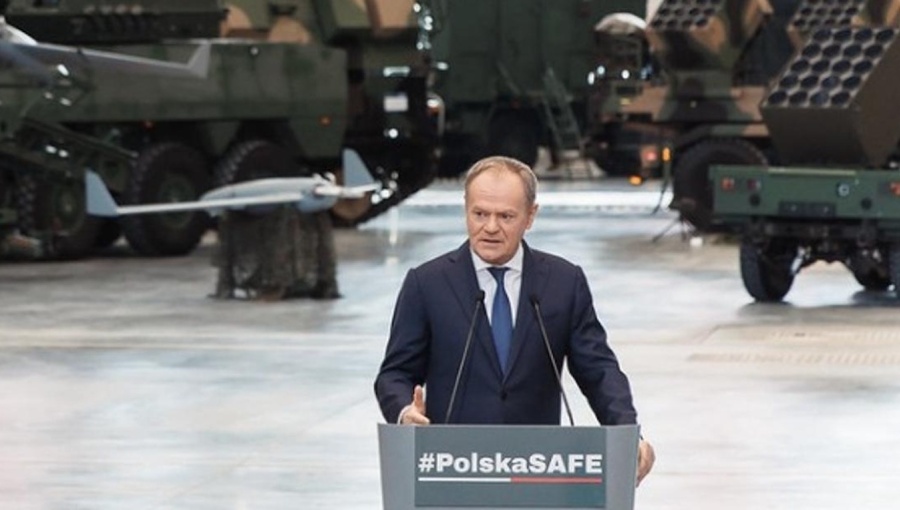
Poland will seek greater autonomy in nuclear security and may in future pursue access to nuclear weapons, Prime Minister Donald Tusk said on March 3.

Following the US-Israeli war with Iran and Russia’s invasion of Ukraine, now in its fifth year, European countries are stepping up deterrence efforts amid uncertainty over long-term US security guarantees.

“Poland takes nuclear security very seriously. As our autonomous capabilities grow, we will strive to prepare Poland for the most autonomous actions possible in this matter in the future,” Tusk said before a weekly cabinet meeting.

Tusk said earlier this week that Poland was ready to hold talks with France after President Emmanuel Macron proposed a “nuclear umbrella” by deploying nuclear-capable aircraft to allied states. Several other EU member states, including Germany, Sweden and Denmark, also expressed interest in the initiative.

The next stage of discussions is due at a nuclear energy summit in Paris on March 10, Tusk said.

Tusk has favoured European cooperation on nuclear deterrence, while President Karol Nawrocki has indicated a preference for cooperation with the United States.

Nawrocki said last month that he was “a big supporter of Poland joining the nuclear project.” 

However, the president’s foreign policy chief, Marcin Przydacz, said this week that he doubted whether “the French side has an adequate nuclear arsenal to actually provide a protective umbrella” and argued that the United States possessed the most credible deterrent capability.

Poland has been a signatory to the nuclear Non-Proliferation Treaty since the 1960s and has committed not to seek or acquire nuclear weapons. Last year, however, Warsaw signed a treaty with France that opened the possibility of coming under French nuclear protection.

The debate over deterrence has intensified since Russia’s full-scale invasion of Ukraine in 2022. That year, then-President Andrzej Duda said Poland was open to hosting nuclear weapons and had discussed the issue with Washington. 

Two years later, Duda reiterated Poland’s readiness to host weapons from NATO allies and, in 2025, said that he welcomed Macron’s idea of extending France’s “nuclear umbrella” to European partners.

In March last year, in an address to the parliament, Tusk said Poland would examine gaining access to nuclear weapons.