Showing posts sorted by relevance for query UNTOUCHABLE. Sort by date Show all posts

Sunday, December 04, 2022

 Muslims praying at Jama Masjid, Delhi, India. Photo by Mohd Danish Hussain at Unsplash.

India’s ratcheting Up Curbs On Christians, Muslims – OpEd


By  

By John Dayal


(UCA News) — The fate of the 70-year-old struggle of India’s converts from its erstwhile “untouchable” castes in the Hindu hierarchy may well be in the hands of a former chief justice of the Supreme Court.

Chief Justice K G Balakrishnan while in office had asked Church leaders if they were willing to say on oath that they exercised caste discrimination in their congregations. There was silence in the courtroom.

He was at that time hearing appeals against Article 341 Part 3 which assures affirmative action including scholarships, jobs and political representation to this group of citizens as long as they remain Hindu. If they convert to Christianity or Islam, they lose the benefits.

The converts may also be jailed if the government discovers that they had studied in Church schools on scholarships given to Christian students.

Justice Balakrishnan was the first Dalit, as the former untouchable castes now call themselves, to become the chief justice of India. His elevation was the direct result of a question raised by former President K R Narayanan, the first Dalit to hold such a high office, on why people oppressed for 3,000 years in India’s ancient religious social governance system, could not occupy high statutory offices.

Dalits who embraced other religions were denied the benefits of affirmative action by presidential order in 1950, which later became Article 341(3), due to pressure from Hindu upper castes that feared a large-scale exodus of Dalits to Islam or Christianity.

Ironically, six years after helping create India’s secular Constitution, Dalit icon Dr. B. R. Ambedkar led half a million Dalits into renouncing Hinduism and joining a reformed Buddhism in the city of Nagpur in 1956.

Nagpur is the headquarters of the Rashtriya Swayamsewak Sangh (RSS), the militant Hindu majoritarian organization, seeking to create a Hindu nation, which will disenfranchise Christians and Muslims.

The constitution was later changed to ensure that Buddhists and Sikhs, defined as Indic religions because they were founded in this land, get the scheduled benefits given to Hindu Dalits.

Justice Balakrishnan was recently named by the Narendra Modi government to head a committee set up to examine the issue of caste transcending religion once again.

An earlier commission, headed by another former Chief Justice Ranganath Misra had found that caste and caste discrimination indeed transcended religion and that Dalit Christians and Muslims must get the same benefits as given to their Hindu, Sikh and Buddhist brethren.

The Congress government of the time did not respond to the Supreme Court notices. The RSS-affiliated ruling Bharatiya Janata Party (BJP) is more categorical in rejecting any privilege for Dalit Christians and Muslims.

In fact, they want such privileges to be taken away from indigenous people, known as Adivasis, hoping this will stop all conversions.

The move to stop conversions is top of the BJP’s political agenda.

Religious minorities are aghast that barring regional parties like Dravida Munnetra Kazhagam (DMK) in southern Tamil Nadu, no major political group is supporting their cause. No one, it seems, is willing to antagonize the Hindu vote.

The bogey of conversion has led to much persecution of the Christian community. While the Catholic Church has seen its institutions and parishes under attack, the Protestant and evangelical churches find their pastors arrested, house churches attacked, and small isolated communities ostracized. In some cases, they have been denied drinking water, grain, employment and even burial for their dead. 

Incidents of violence alone routinely number more than 500 every year with police blatantly partisan, and often complicit.

The cue has been picked up by the Supreme Court itself with several writ petitions filed by minority groups challenging Article 341 (3), or seeking other directives to ensure that India and its constitution do not lose their “secular” character.

“Secular” in India means the state does not show preference toward any religion. Although much diluted by anti-conversion laws in a dozen states and rules feeding into rampant Islamophobia, the states still remain largely untainted by religious bias. But for how long is the critical question before Church leaders and civil society.

Last week, a bench of the Supreme Court set Nov. 28 for a hearing on why exactly conversions out of Hinduism pose a threat to national security after being petitioned by the redoubtable Advocate Ashwini Kumar urging stringent steps to control fraudulent religious conversions through “intimidation, threatening, deceivingly luring through gifts and monetary benefits.”

Kumar has in the past filed similar petitions calling to protect the majority community’s interests in a variety of ways.

The apex court seems to agree with the petitioner, and in an initial order, described incidents of “forced religious conversions” as “posing a serious threat to national security” while seeking sincere efforts to check the practice.

The bench warned that a “very difficult situation” will arise if forced religious conversions are not stopped.

The Christian community has not responded so far to Kumar’s petition, though they certainly should be aware of it.

Civil society holds the hope that DMK leader and Tamil Nadu Chief Minister M K Stalin may respond in court with data to prove that conversions are voluntary and pose no threat to national security.

India’s federal government knows there is almost no data on forcible and fraudulent conversions. There is hardly any data even on voluntary conversion as citizens are not asked questions about their religion at birth and at the time of the census.

There are no recorded court convictions of Christians for forcibly or fraudulently converting anyone. In fact, almost every pastor jailed on complaints of the RSS affiliates or others has been found not guilty. 

A few Muslim youths are facing the wrath of the police in states such as Karnataka, Uttar Pradesh and Madhya Pradesh because they married or eloped with Hindu girls, an act termed “Love Jihad” by political groups and governments.

There is no officially declared definition of “force,” “allurement” and “fraud,” other than what can be derived from the criminal codes or the local laws.

For the RSS and some governments, the statement attributed in the Bible to Jesus that “no one goes to the Father other than through me” is both intimidation and fraud.

Others hold education and medical care extended to the poor as allurement. 

Violence is well defined in the Indian Penal Code and the Criminal Procedure Code along with state responses. But the National Crime Records Bureau hesitates to record sectarian violence, or in fact any violence in terms of the religions of the victim and aggressor.

BJP leaders and Hindu spokespersons cite census data to say the Hindu population has dipped below 80 percent while the population of Muslims is growing. The Christian population, officially, is static at about 2.3 percent.

The BJP says Hindus are in danger of becoming a minority in the land of their birth.

There are occasional rays of hope amid the gloom.

In Madhya Pradesh recently, the high court found the provision requiring interfaith couples to declare a change of religion before a government official as “prima facie unconstitutional” and said the ability to choose one’s faith and the choice whether to express it or not is implicit under Article 25 (Freedom of Religion).

Last year, the Gujarat High Court stayed certain operative sections of the Gujarat Freedom of Religion (Amendment) Act, 2021, observing that they infringed upon Section 21 (Right to Life and Personal Liberty).

But at the moment, there is reason to be pessimistic.

Muslims praying at Jama Masjid, Delhi, India. Photo by Mohd Danish Hussain at Unsplash.

*The views expressed in this article are those of the author and do not necessarily reflect the official editorial position of UCA News.


UCA News

The Union of Catholic Asian News (UCA News, UCAN) is the leading independent Catholic news source in Asia. A network of journalists and editors that spans East, South and Southeast Asia, UCA News has for four decades aimed to provide the most accurate and up-to-date news, feature, commentary and analysis, and multimedia content on social, political and religious developments that relate or are of interest to the Catholic Church in Asia.


Saturday, May 16, 2020

INDIA
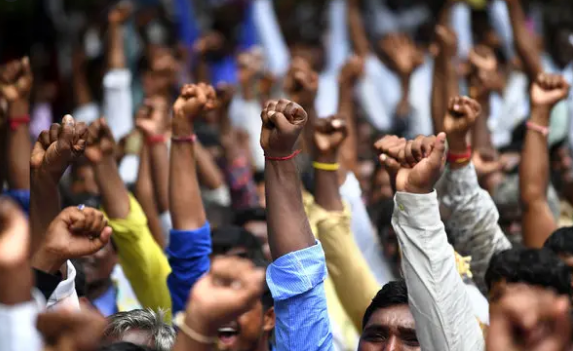
Comrade RB More: Bridge Linking Dalit and Communist Movements

The struggle for liberation from untouchability and the class struggle can learn to come together through lessons from his life.


Subhashini Ali 15 May 2020


The month of April is filled with memories of Phule and Babasaheb and narratives of their birth, life, writings and struggles. Then comes May, which brings reminisces of comrade Ramchandra More, who fought for the Dalits in the tradition of Phule and participated in the great revolutionary movements of Babasaheb. He died on 11 May 1970.

Comrade More was born in 1903 in a part of the Konkan which was the birthplace of all the Mahar caste members who, like Babasaheb Ambedkar’s father, were soldiers and freedom fighters. This section of Dalit society, having joined the army in large numbers, had been able to access some education. Permanent jobs, followed by assured post-retirement pensions provided the members of this section considerable strength, and social respect too. Many of them were associated with the social reform movements of their time: they met Jyotiba Phule, they visited Shahuji Maharaj, and they worked to spread both egalitarian literature and ideas.

It was in this society and in this environment that Comrade More was born, with an instinctive desire to struggle for self-respect. This desire, once it arose, very soon became an indelible part of his attitude and demeanour. He was uniquely talented. At a young age, took a three-day walk to Alibaug. It is during this journey that he experienced for the first time the implications of being an “untouchable”. Because he was not allowed to enter the dharamshalas that fell along the way, he had to spend the nights with animals.

In Alibaug, he took the entrance test of the English school at Mahad. He was the only Dalit to appear in that examination, but he scored the highest marks and also earned a stipend. The difficult circumstances in which he took the test included not only the fatigue and humiliation of the journey, but also the misery of having lost his father just a few days ago. Yet he was denied admission in the school, because its landlord said that if an “untouchable” was allowed to enter, he would vacate the entire school altogether. Incidentally, several decades later, during the Mahad Satyagraha, members of the very same landlord’s family also opposed the attempt of the Dalits to drink water from the Mahad Tal under Babasaheb’s leadership.

Comrade More sent a postcard to a newspaper against this injustice. As a result, the school had to admit him, but he had to get his education from outside the class, sitting near the window.

Mahad was also a market hub for all the nearby villages. Comrade More used to interact with the Mahars, the other Dalits and poor agricultural labourers and farmers who came there from far-flung areas. He became well-acquainted with every aspect of their lives. With his efforts, a tea shop operated by a Mahar was opened, where all untouchables got drinking water, which they were earlier denied. This shop became their base. Here he would meet people, write down their requests and get all the information about their problems. After some years, this tea shop took the shape of a small hotel, where people could spend the night.

In 1923, a very important decision was taken at this base. A resolution had been passed in the Bombay Legislative Assembly to make all public places accessible to the “untouchables”. To implement this, on the very next day, Comrade More decided, along with all the people gathered at this base, that a big convention for the rights of untouchables would be organised at Mahad, which would be presided over by Babasaheb. After this, Comrade More went to Bombay and invited Babasaheb, but it took a long time to persuade him. During this time, he became very close to Babasaheb and began assist him with his publication-related work, and got a good hold over the craft of journalism.

Meanwhile, in his own village Dasgaon, Comrade More successfully got hundreds of untouchables together to drink water from the village lake which was always forbidden to them.

In the end, Babasaheb’s program for Mahad was set for March 1927 and Comrade More was its chief organiser. He visited all the villages in the Konkan belt and mobilised thousands to join Babasaheb’s program. On that day, when thousands of Dalits reached Mahad’s Chavdar Tank under Babasaheb’s leadership and people lined up to touch its water, they were fiercely attacked—but they had already touched its water. The Savarnas proved this when they carried out a “purification” ritual of this water.

Nine months later, on 25 December 1927, Comrade More and his comrades announced another Satyagraha. As Babasaheb left for Mahad from Bombay taking the water route, workers of the Samata Sainik Dal saluted him in farewell. It is Comrade More who had founded this historical party. This gives an indication of his position in the Dalit movement of the time. It is this party’s members who confronted the tyranny of the Savarnas in the Dalit colonies. It is believed that the irritation this party caused was one reason why the RSS was established in Nagpur.

After the 25th December session, the crowd marched towards the Mahad Tal again. It was attacked once more. But that day Babasaheb gave the most compelling evidence of his resistance by publicly setting the Manusmriti afire. By holding a religious scripture responsible for a grossly inhumane crime such as untouchability, Babasaheb posed a major challenge to the populist movements of the day. It was now an imperative for the liberation movement in India to accept and acknowledge his movement.

Comrade More spent most of his time in Bombay with Babasaheb, helping him with his work. He used to stay in the workers’ chawls and had many conversations and discussions with those who lived with him—especially the workers in the cotton factories. He had a keen interest in cultural activities and actively participated in them. This strengthened his relations with all the workers’ communities.

At the same time, through members of the left unions, he became acquainted with the leaders of workers as well. He started participating in union activities; distributing pamphlets, writing on the walls, preparing for strikes, and so on. His experiences of class struggle came not from a book but from the lives of people just like him. To transform these experiences into practice and thought, he held long debates and discussions with Marxists such as SV Deshpande, BT Ranadive and RM Jambhekar. The caste oppression which he had knowledge about from the moment he was born now took the form of the flame that emanates from the furnace of class struggle.

Working with Babasaheb, he acquired this new knowledge with full force and, after a deep study of the Communist Manifesto, in 1930, decided to join the Communist Party. He informed Babasaheb about it. Instead of being angry, he encouraged Comrade More to pursue this path, but also told him that he was worried whether the organisation he is joining will give him the respect he deserves. Until the end, Comrade More remained a communist. In 1964, he decided to join the CPI(M). The same year, he sent a letter to the party leadership, in which he mentioned a few things: that Dalit society is the largest, most oppressed and exploited part of the working class. That only by fighting the social exploitation of this section, which is a moral and ethical duty, can the Communist Party attract them to its movements in large numbers.

These words of Comrade More in his letter have become very relevant in a new way today. Now at the Center and in many states there are governments inspired by the RSS, which had announced in 1950 itself that it upholds the Manusmriti as justice and law and not the Constitution written by Babasaheb. In the wake of this misguided thought process, governments, under direction from the RSS, are making all-out attacks on Dalits, labourers, women and the minorities. Bringing those sections and communities that are victimised by these attacks together is the duty of the communist movement, which has always brought about radical changes in society.

To achieve this, the communist movement will have to participate in the social and cultural campaigns striving for Dalit rights and support the organisations that run them. It will have to demonstrate its full vigour, so as to instil the confidence and desire in these movements to join hands with the communist movements. A movement to overcome untouchability and social oppression will require continuous proof of being prepared to suffer and face martyrdom.

That the government is carrying out attacks on the workers and working classes is clearly evident. The concerted attacks against Dalit rights and Dalit self-respect are no less obvious. Behind these attacks stands Manu-wad, the justification of inequality which prescribes terrible punishments for the Dalits and opposes their equal status. Financially too, there are constant attempts to weaken Dalit communities. Manu-wad desires to remove the Dalits from the field of education and deny them employment opportunities. That is why Dalits are being deprived of many rights and entitlements, their judicial protection against atrocities is being neutralised.

To push any segment of society back, it is necessary that its talented heroes are forcefully riven from it. This has also been happening. Rohith Vemula, who had sought to fashion a new path for the liberation of Dalits was institutionally murdered; Anand Teltumbde has vanished from sight, pushed behind bars. Both of them had sought to bring the struggle for liberation from oppression, including untouchability, and the class struggle closer. Both these streams of thought flow at a considerable distance from each other. Yet, somewhere, their goals also cleave to each other today. What is needed is a strong bridge between these two movements. Surely Comrade More’s life struggle and his guidance can become that bridge.

After becoming the closest warrior to Babasaheb, he became a Communist and remained one all his life. He never parted from his struggle against caste oppression, and decided to become a Communist only to fight it effectively. No one can deny the truths of his life. There is a need to learn from them and use them.

Recently, LeftWord Books published the English translation of More’s biography, Memoirs of a Dalit Communist: The Many Worlds of RB More, written by Comrade Satyendra More. It will soon be available in other languages, including Hindi.

The author is a former Member of Parliament and vice president of the All India Democratic Women’s Association (AIDWA).

Friday, February 11, 2022

How I Shed My Shame Around Caste

Meera Estrada - Yesterday 

Five years ago, at a playdate with one of my oldest girlfriends and our babies, I asked her about her experience with using a surrogate in India. We’re both Indian-Canadian living in Toronto, and I had read that lower-caste surrogates were being paid nearly $2,000 less than higher-caste women at the clinic she used in Gujarat. She confirmed it was true and then said something that hit me like a punch in the gut: “I wouldn’t use a lower-caste surrogate. I wouldn’t want my kid to be stupid.”

What she didn’t know about me — her friend of over 20 years — was that I was from a lower caste. And even at 38 years old, I carried so much shame and fear about it, I hadn’t shared it with my closest friends.

The Hindu caste system is one of the oldest forms of social classification. It divides Hindus into four main groups: Brahmins, Kshatriyas, Vaishyas, and Shudras. And then there is a fifth group, one that is considered so unworthy it doesn’t fall within the caste system but below it — the Dalits (the broken ones) or the Untouchables. While the term “Untouchable” is used less frequently and deemed derogatory, I still refer to it in instances of explanation because it’s an explicit reminder of its ugliness: “Untouchable” people are considered tainted by their birth into a caste system that deems them impure and less than human.

In India, to be born Dalit is to be trapped in a cycle of extreme poverty and oppression, as caste determines whether you can go to school, what kind of job you have, and even who you marry. While legally abolished in 1950, caste remains deeply embedded in the country’s psyche. India is home to over 200 million Dalits.

The pandemic has worsened circumstances for people like me in India — 90% of the 5 million people who work in sanitation and cleaning are Dalits. While deemed essential work, most of these workers are not provided with proper personal protective equipment (PPE), regularly ostracized for their work, denied basic rights like water breaks, and some were even sprayed with bleach in the name of public health in the early months of the pandemic. To this day, it is not uncommon to hear about police violence and inter-caste violence.

Growing up in Canada, I’d heard about this system but I actually didn’t know what caste I was part of until I was 15. I remember as a child telling people “I don’t believe in that” when asked what caste I belonged to, echoing a phrase my mother often said in awkward social encounters. It wasn’t until my parents revealed we were Dalits, and what that meant, that I understood what lay behind my mother’s response. Despite knowing, we kept it to ourselves. My parents heard the casual jokes and denigrating remarks about lower caste people, even in the diaspora. Already labelled outsiders as immigrants, they didn’t want to be stigmatized by their own community too. It then became a secret I also guarded closely.

Despite living in Canada, I started to notice caste all around me. I realized that the only ones I ever heard about were upper castes. There was never mention of lower castes, besides off-color jokes. By default, people assumed I was part of an acceptable group — and I would let them. When I was a teen, my Gujarati language teacher referred to her neighbor’s caste, one I hadn’t heard of, saying her neighbor was just like me. My face flushed, thinking I was found out, and then there was shameful relief when she followed up with a reference to the warriors or Rajput caste, which she assumed I belonged to.

Unlike racism, casteism is intra-racial and is practised among people of the same nationality, ethnicity, or cultural background. As an immigrant who is Dalit, it means not only do you face discrimination from outside your community, but also within it. Studies in Britain and the United States reveal caste discrimination in places of work, places of worship, and schools.

Caste also has implications for who you can marry even in the diaspora. Watching Netflix’s Indian Matchmaking — where clients in the U.S. and India are guided by matchmaker Sima Taparia through the arranged marriage process — caste was mentioned in nearly every episode of season one. It was listed on each client’s profile card or “bio-data.” Every time Taparia sang praise about a “good girl” from a “good family,” my stomach would twist in knots. It’s a euphemism for high caste, wealthy, and fair-skinned — one I heard repeatedly when I was single. One that made me question if I was a “good girl” since I wasn’t any of those things.

Feeling inadequate and oftentimes unworthy, I gravitated towards non-Indians in my twenties because I feared being judged for my caste by other Indians. I fell in love with an incredible man, who happens to be of Spanish and South American descent. Even though he isn’t Indian, my family felt obliged to tell his family about our caste ahead of our wedding. They didn’t know anything about caste, and thankfully, they didn’t care. The moment they shared their indifference, I thought I can just be me and that’s good enough.

But something changed when my girlfriend made that comment to me at her house that day. Two years ago, I openly spoke up about caste for the first time at a Women’s Day event in Toronto, for the Southern Africa Embrace Foundation. I shared how caste played a role in shaping my identity, and how it’s archaic categorization of people like me has systematically made us feel like less-worthy humans. My father came to the event with me, the only man in a crowded room of women. He wept as I spoke, and when I finished, everyone rose to their feet to give my father a standing ovation.

I now feel profound pride in my family’s courage, grace, and resilience. I hope people will stop turning a blind eye to casteism, or buy into the false narrative that it no longer exists. Most importantly, I hope for the many Dalit people who feel alone, like I did for so many years, they feel seen, understood, and worthy.


Saturday, July 13, 2024

Kagame Remains Untouchable in Rwanda’s Presidential Election

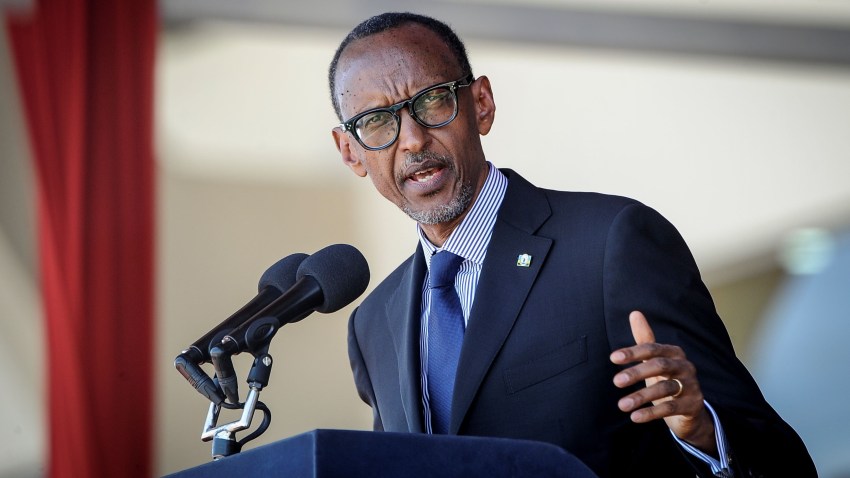
Rwandan President Paul Kagame speaks in Nairobi, Kenya, Feb. 11, 2020 (AP photo by John Muchucha).

Rwandan President Paul Kagame is set to be reelected for a fourth term Monday as Rwandans vote in presidential and legislative elections. Kagame has held power for three decades since leading the rebel group that took control of Rwanda and ended the genocide in 1994. (AP)

Our Take

Rwanda’s elections Monday are far from a free and fair vote, especially the presidential election. During his time in power, Kagame and his regime have routinely targeted any meaningful opposition, using tactics ranging from a weaponized judicial system to enforced disappearances and killings—including transnational repression—to silence critics and opponents. Seven years ago, in the last presidential election, Kagame received 99 percent of the vote. A similar result is expected next week.

The legacy of the genocide—in which 800,000 people, mostly ethnic Tutsis, were killed by extremist Hutus—also continues to play a huge role in Rwanda. For understandable reasons, Kagame’s image as the leader who not only ended the genocide but guided the nation’s reconstruction in its aftermath has given him an almost untouchable status domestically. At the same time, however, his regime has politicized that legacy, with Kagame’s critics at home and abroad routinely portrayed as genocide-deniers.

Under Kagame, Rwanda has also been consistently accused of supporting rebel groups in neighboring countries, most notably the Democratic Republic of Congo. A report circulated earlier this week by U.N. experts says that an estimated 3,000 to 4,000 Rwandan government forces are operating alongside the M23 rebel group, which is composed mainly of Tutsis, in eastern Congo. As we’ve reported previously, the Rwandan-backed M23’s reemergence in 2022 has led to one of the world’s worst humanitarian crises.

Rwanda’s backing of M23, alongside other rebel groups, has frayed bilateral relations with Congo and Burundi to such an extent that there were concerns the tensions could lead to open hostilities, further destabilizing an East African region seeking to prioritize economic development and integration. And yet, Western powers associate Kagame’s time in power with domestic stability, economic growth and an “effective” security partnership in Mozambique. As a result, the West has been eager to overlook the Kagame regime’s domestic human rights abuses and regionally destabilizing behavior.

Rwanda’s civil society and regional neighbors are the ones left to deal with the consequences of that disregard. And with Kagame running virtually unopposed, the election Monday will ensure that they continue to face the same challenges for the foreseeable future.


Rwandans will decide on July 15 whether to grant a fourth term to President Paul Kagame, the country’s ruler since 2000. The National Electoral Commission received nine applications but cleared only three, excluding one of Kagame’s fiercest critics. VOA Nairobi Bureau Chief Mariama Diallo has this report from the Rwandan capital, Kigali.

Thursday, December 25, 2025

Opinion

Keep Christ in Christmas? First, keep Christ in Christian

(RNS) — Empathy is not a soft substitute for holiness; it is the pulse of the Christian, and the Christmas, story.


An unhoused individual asks passersby for assistance. (Photo by Ev/Unsplash/Creative Commons)

Jonathan Hall
December 24, 2025
RNS

(RNS) — Each December, we hear a well-meant admonition: “Keep Christ in Christmas.” I affirm that plea with my whole heart. The season of Christ’s birth should not be swallowed up by anxiety about gifts’ shipping dates, nor should the manger in Bethlehem be drowned in tinsel and emptied of wonder.

But there is a quieter, graver danger that does not wait for December and does not end when the lights come down: taking the Christ out of Christian. That happens whenever we subtract empathy from discipleship, whenever the self narrows our field of vision until we can no longer see the plight of our neighbor.

RELATED: Empathy for immigrants sounds like Christianity 101. Here’s why some say it’s a sin.

Empathy is not a soft substitute for holiness; it is the pulse of the Christian, and the Christmas, story. To call it a sin is to confuse the selfishness of self with the self-giving love of Jesus.

The irony, of course, is ancient. Many in Jesus’ day grew angry precisely because his heart was too open. He touched those deemed untouchable, ate with those labeled unworthy, healed on days deemed inconvenient and noticed people that others learned not to see. The complaint then — even from his own disciples — was that he was too near to the wrong people.

The complaint now, in some corners, is that Christians are “sinfully empathetic.” The attitude lingers, even as the gospels show us a savior moved in his very gut by the pain before him.

If we let it, the season offers a gentle epiphany — a revelation about how God draws near. Consider a simple, sorrow-touched holiday tale: Hans Christian Andersen’s “The Little Match Girl.” A child, shivering in the snow, tries to sell matches as passersby hurry past, their errands louder than her hunger. She lights the matches one by one for a moment’s warmth; in the final, flickering glow, she sees the grandmother who loved her, and the story ends with a reunion in a place where compassion is not scarce.

Andersen’s tale is morose and melodious at once, a winter parable about our capacity to look away. Yet it is also about a tender hope that refuses to die. It asks each of us, softly but insistently: Would I have stopped? Would I have knelt? Or would I have tightened my scarf and quickened my step?

These questions are not meant to shame; they are meant to awaken. Empathy is the discipline of pausing long enough to imagine, “What if that were me? What if that were my child?” It is not agreement with every choice; it is the willingness to feel another’s ache long enough to ask what love requires.

Jesus models this over and over. When a woman accused of adultery is surrounded by those who would stone her to death, Jesus stills the violence first, then points her toward a better life. He touched the lepers before he healed them — restoring a human bond before restoring skin. With the hungry crowd, he fed them not because they proved worthy of bread, but because they were hungry. Such empathy is not weakness; it is holiness with hands.

There is, to be sure, a temptation in every age to harvest the political or social capital of Christianity without undertaking its cruciform work. In subtle ways, we can turn “Jesus is Lord” into “Jesus is useful,” wearing the mantle of faith as a veneer for our own authority. The Roman emperor Constantine tried to do as much, draping the cross in the colors of power. We need to ask which way our loyalty bends — toward self-sacrifice, or toward fear and force. The answer will be revealed, not by our slogans, but by our readiness to feel and to serve.

Empathy can be costly. It unsettles our schedules; it tugs at our resources; it asks us to carry one another’s burden. But the answer to compassion fatigue is not compassion famine.

Christmas itself is God’s gentle declaration that empathy is not a sin but the shape of divine love. “Emmanuel” — God with us — means God refuses to love from a safe altitude. Beautifully poetic, God learns our language, enters our sorrows and, in Jesus, weeps at a friend’s grave. If the cradle sanctifies anything, it sanctifies nearness. The cross confirms it: Love does not stand at the edge of suffering with folded arms; it steps toward the wounded and calls them “neighbor.”

RELATED: Empathy isn’t a sin. It’s a risk.

Please, keep Christ in Christmas. But do not stop there. Keep Christ in Christian. Keep the tenderness that touches the untouchable, the patience that listens to the silenced, the mercy that moves from feeling to action. Empathy is the furthest thing from a sin; it is the soil in which Christian love takes root. For a Christianity that cannot feel will soon fail to love — and a church that trades empathy for power may gain the world and lose the Christ whose name it bears.

(The Rev. Jonathan B. Hall is senior pastor of the First Christian Church of North Hollywood. The views expressed in this commentary do not necessarily reflect those of Religion News Service.)

Monday, December 27, 2021

Democracy vs. fascism: What do those words mean — and do they describe this moment?
Andrew O'Hehir, Salon
December 26, 2021

Members of the Proud Boys march in Manhattan against vaccine mandates in New York City (AFP)

There's considerable talk about "democracy" and "fascism" these days, as the poles between which our society is supposedly suspended. But what do those words actually mean? If we admit, as I think we must, that in both cases what it says on the box is not exactly what's inside — that those are approximations or generalizations or terms of art — do they really help us understand the reality of this dark and puzzling historical moment, or are they just getting in the way?

Joan Didion would have tried to ask those questions, and to answer them. We should all lament that she will not wage that struggle, in full awareness that we might not have enjoyed the results. Didion understood, above all, that imprecision of language reveals imprecision of thought, and that the failure to "observe the observable" — her famous dictum for journalists — leads reporters and writers away from a genuine effort to tell the truth (however conditional and uncomfortable that may be) and into the self-flattering realms of fantasy, propaganda and myth.

RELATED: Golden State of hypocrisy: An interview with Joan Didion

Which is where we are, I'm afraid, with "democracy" versus "fascism." The democracy that Americans have been taught to venerate, and that many of us now seek to defend, is a limited and specific historical phenomenon, which has been on a downward trajectory of slow decay and creeping paralysis for at least 30 years. One core problem that the Democratic Party and many people in the political and media castes have been unwilling to confront directly is that defending institutions that patently do not work is a position of pathetic weakness, not to mention near-certain defeat.

As for the homegrown authoritarian movement some of us designate as fascism, it is rather like an opportunistic infection. The Trumpist insurgency did not cause the crisis of democratic legitimacy, and could not have taken hold or spread so rapidly in an actually functioning democracy. While it certainly bears some hallmarks of classic 20th-century fascism — hazy notions of racial, tribal or religious purity, and a fantasy of a lost golden age — it lacks many others, and in any case Hitler and Mussolini did not invent those phenomena. This particular populist uprising is both something new in American politics — in that sense a telltale sign of a world power in terminal decline — and something very old, the residue of deeper conflicts that long predate the concepts of democracy and fascism, or for that matter America.

It was Joan Didion who told us — decades ago, in essays so far ahead of their time they were understood as flights of literary fancy — that it was more accurate to say that politics was a subset of show business than the other way around, and that American political conventions had become scripted spectacles of pseudo-democracy, formally and structurally akin to the sham elections held in the Soviet Union. She made those observations while covering the presidential campaign — in 1988.

Didion never wrote anything about Donald Trump and his so-called movement, so I won't presume to know what she thought. Her declining health in recent years was only part of the reason; according to her nephew, the filmmaker Griffin Dunne, who directed the 2017 Netflix documentary "Joan Didion: The Center Will Not Hold," she simply didn't find Trump all that interesting:
I haven't talked to her in great detail about this, but I think that someone like Trump is just a less interesting figure for her to weigh in on because there's really no subtext. He's so impulsive and everything comes out of his forehead; what she specialized in, when writing about politics, was the message that politicians were trying to send and what the message really was. There's no there, there with Trump, and he's not even consistent.

Every remotely honest journalist, and a great many civilians as well, can relate to that: The absence of subtext, of coded or hidden meanings, is exactly what made the Trump presidency so addictive and/or so infuriating, depending on your perspective, and why he remains the focus of media fascination nearly a year after leaving the White House. (This is hardly a trade secret, but even on Salon stories about Trump tend to attract more readers than stories about Joe Biden, and that's clearly not based on political preferences.)

But seeking to decode the supposed binary (or perhaps the dialectic) of "democracy" versus "fascism," in hopes of uncovering what those terms conceal or what they reveal, is unmistakably a Didion-like project. What we call "democracy," in the context of the Trump movement's efforts to overthrow it, is structured by antiquated representational rules, an ungainly federal system and an entrenched partisan duopoly, which in practice have led to increasingly undemocratic or anti-democratic outcomes.

In the interests of observing the observable, I am compelled to point out that roughly half the American population — overwhelmingly among the poor and the working class — typically does not vote, and most of those people either view the political system with cynical detachment or ignore it altogether.

RELATED: The biggest political party in America you've never heard of

None of the dogmas shared by liberals infuriates me quite as much as the sanctimonious tendency to blame non-voters for Democratic defeats. This is inevitably framed in terms of an imaginary cadre of white middle-class radicals who were too puritanical to vote for Hillary Clinton or Al Gore (or whomever) but ought to have known better. To the extent that group exists, it is inconsequential, whereas the set of lower-income and poor people who never vote — which crosses all possible racial and regional boundaries — is enormous, and to a large extent constitutes the defining characteristic of American "democracy." Hand-wringing liberals are notably reluctant to discuss that latter group: It would be politically unsavory to blame those people for abstaining, but unacceptable to admit that their refusal to participate in a system that does not represent them is not irrational.

To use the Marxist term — something Joan Didion would likely never have done — our system is a "bourgeois democracy," now facing its inevitable moment of crisis. That is a descriptive term, not an insult: A bourgeois democracy is structured around the primacy of property rights, a "free market" and individual freedoms, all concepts that effectively did not exist before the 18th-century Enlightenment. In the classic Marxist analysis, Democrats and Republicans represent the interests of competing factions within the property-owning middle and upper classes. In the larger context of American political history, that's far too simplistic. But in terms of the last half-century or so, and how we got where we are today, it's also not blatantly wrong.

Another, somewhat subtler article of liberal or progressive dogma — and a far more convincing one, until very recently — is that if poor people were to vote in much greater numbers, Democrats would win every election and Republicans would be forced to face radical change or political doom. That dogma may still be correct in a larger sense; it certainly hasn't been systematically tested. But the great surprise of the 2020 election (echoed on a smaller scale in the 2021 off-year elections in Virginia and New Jersey) was that dramatically higher turnout did not produce a Democratic landslide, but rather a far more muddled political landscape. Joe Biden's victory was much tighter than polls suggested; Democrats expected to win seats in the House but wound up losing 13 — and only "won" a 50-50 Senate (I would argue) thanks to Donald Trump's petulant pot-stirring in the Georgia runoff elections.

RELATED: Can the real lessons of Virginia rescue the Democrats in 2022? It's definitely worth trying

Returning once again to the doctrine of observing the observable, this offers us important clues about two different but closely related phenomena: the current state of the Democratic Party, and the class character of the Trump insurgency. There's a great deal of discussion about the former topic, but the latter has become virtually untouchable (at least on the liberal-progressive "left"), for much the same reason that the non-voting population is viewed as an implacable, undiscussable feature of the landscape. Both questions, if examined too closely, threaten not just to undermine the supposed stability of the supposed democratic system, but to reveal that the stories we tell ourselves about how that democracy works, and even about how it could be improved, are not true.

It is true, of course, that an exclusive or primary focus on class in American politics has sometimes been used to demote or defer the importance of racism and white supremacy. The cadre of mainstream journalists who staged anthropological interventions in heartland diners after the 2016 election, and came away with tales of "economic anxiety" among the white working class, were justly derided for both cluelessness and condescension. Race and class have never been independent variables in American history, or at least not since the early 17th century. There is no way to consider one without the other; the friction and interaction between them, to a significant extent, is the story of American history.

RELATED: Democrats and the dark road ahead: There's hope — if we look past 2022 (and maybe 2024 too)

It does not follow that in order to correct for racism we must abandon all considerations of class, although that question has provoked a useless and destructive internal debate within the Democratic Party. It certainly doesn't follow that the role of class conflict in history is irrelevant to understanding the (blatantly racist) MAGA movement, which cannot strictly be defined in terms of its present-tense socioeconomic status or its irrational and alarming beliefs.

In my next article on the vexed relationship between "democracy" and "fascism," I will approach that third-rail issue in American politics, and propose that the class character of the Trump rebellion is baked in more deeply than we can readily perceive. On one hand, we do indeed confront a predominantly white and predominantly rural subset of the working class that has abandoned what we now call "liberalism" (or been abandoned by it). On the other, we confront an entrenched pattern that goes back well beyond the invention of such terms, to the very beginnings of capitalism, when the "peasants" were likely to side with monarchs and aristocrats against the bourgeois revolutionaries who offered them a new vision of "freedom," which they concluded (with some justice) was a trick.

Sunday, August 07, 2022


The Volokh Conspiracy

Mostly law professors | Sometimes contrarian | Often libertarian | Always independent

IMMIGRATION

The Rise of Private Refugee Sponsorship

The Uniting for Ukraine program and other new initiatives may open the door to a broader role for private citizens in sponsoring refugees.

| 

After an initial period when the United States accepted very few Ukrainians fleeing Russia's brutal invasion, admissions have ramped up in recent weeks, thanks in part to the Biden Administration's new Uniting for Ukraine program, which allows private citizens and organizations to sponsor Ukrainian migrants. These and other developments have led some to hope that the new policies herald a much broader shift to private refugee sponsorship. There is some basis for this optimism. But current policies have significant limitations that will need to be overcome in order to realize their full promise.

CBS recently summarized the growth of Ukrainian refugee admissions:

The U.S. received more than 100,000 Ukrainians in roughly five months following Russia's invasion of Ukraine, fulfilling President Biden's pledge of providing a temporary safe haven to those displaced as part of the largest refugee exodus since World War II, government statistics obtained by CBS News show….

Approximately 47,000 Ukrainians have come to the U.S. on temporary or immigrant visas; nearly 30,000 Ukrainians arrived under a private sponsorship program; more than 22,000 Ukrainians were admitted along the U.S.-Mexico border; and 500 Ukrainians entered the country through the traditional refugee system, the data show….

Only Ukrainians who entered the U.S. with immigrant visas or through the refugee admissions program have a direct path to permanent residency and ultimately, U.S. citizenship. These immigration pathways, however, typically take years to complete due to interviews, vetting and other steps.

Those who have arrived through the Uniting for Ukraine program, which was launched in late April to allow U.S.-based individuals to financially sponsor Ukrainians, were granted parole, a temporary humanitarian immigration classification that allows them to live and work in the U.S. for two years….

To fulfill Mr. Biden's pledge, DHS in late April set up the Uniting for Ukraine program, a free initiative that has drawn tens of thousands of applications from U.S. citizens and others hoping to sponsor the resettlement of Ukrainians, including their family members.

Since April 25, U.S. Citizenship and Immigration Services (USCIS) has received 92,000 applications from U.S. individuals seeking to sponsor Ukrainians, DHS figures show. More than 62,000 Ukrainians have been granted permission to travel to the U.S. as of July 29, including the nearly 30,000 individuals who have arrived so far, according to the DHS data.

In early May, the Biden Administration issued a call for proposals for a pilot private refugee sponsorship program, that might eventually be expanded into a broader policy that goes far beyond Ukrainian refugees.

The Administration's recent moves are obviously an improvement over the anemic official refugee system, which admitted a record low of only 11,411 refugees in fiscal year 2021, despite Biden Administration promises to improve it, after the damage done under Trump.

In a July 27 Foreign Affairs article [unfortunately paywalled, but you can get around it for free], migration policy specialist Gregory Maniatis argues that these and other moves herald a "refugee revolution" under which private refugee sponsorship will increasingly augment and overshadow traditional government-controlled refugee admissions, enabling the United States to take in more refugees at less cost, and with less opportunity for reversal by a hostile administration:

The State Department is the main gatekeeper for the resettlement system, but other federal, state, and local agencies also play critical yet complicating roles. A resettlement agency has to sign a cooperative agreement that is more than 100 pages long and regulates such finicky details as how many forks must be in a refugee's kitchen…. Refugees endure an average of two years of security, health, and other types of vetting, languishing overseas in often distressing or dangerous settings. The system's complexity has grown to the point that even sophisticated national service and faith organizations feel frozen out….

The consequences of the United States' narrow, professionalized approach to resettlement can be seen by comparing it with Canada's program. During the Vietnamese boat lift in the late 1970s, Ottawa opened up resettlement to the public through private sponsorship rather than insisting on a system run exclusively by the government. Today, Canada welcomes about 40,000 refugees a year—which in relation to the overall population would be equivalent to some 350,000 refugees in the United States—the majority through sponsorship….

Nearly a third of Canadians say they have been a member of a sponsorship group or have supported one. As a result, public backing for refugees in Canada makes resettlement untouchable—unlike in the United States, where the Trump administration nearly destroyed the system with surprisingly little resistance. It is one thing for a legislator to be lobbied by refugee professionals. It is quite another if the advocates are the lawmaker's neighbors who are volunteering their time to integrate newcomers—and who themselves are benefiting from the experience. Entire communities have been revived after deciding to systematically welcome refugees…..

The United States should make the Canadian sponsorship model the national resettlement standard—and improve on it. That process is already underway. This past year has upended the outdated American resettlement system as a rush of communities of care—veterans seeking to support their displaced Afghan interpreters and allies, members of the Ukrainian diaspora, service organizations, faith groups, local governments, colleges and universities, and ordinary Americans throughout the country moved by the plight of Afghans and Ukrainians—have demanded to be part of the response to the crises. The Biden administration has improvised in creative ways to address the surge of interest and need. These innovations point the way to a more powerful, community-led system of welcoming refugees in the United States.

I agree with many of Maniatis' points. In a July 18 Washington Post op ed, co-authored with Canadian refugee policy expert Sabine El-Chidiac, I myself argued that the United States should adopt a system modeled on Canada's, with various improvements. We too believe such an approach would be a massive improvement on the current US refugee admissions policy, and we too think the Uniting for Ukraine program was a valuable step in the right direction. The same can be said for the potential pilot program for private refugee admissions reaching beyond Ukraine. And I too believe that policies helping Ukrainian refugees should be extended to those fleeing war and oppression elsewhere. Doing so is both the right thing to do on moral and strategic grounds, and likely to benefit America's economy and society.

But Sabine and I also emphasized that recent initiatives have serious limitations - most notably that they give participating migrants only temporary residency and work rights (two years in the case of participants in the Uniting for Ukraine program). In addition, unilateral executive policies can often easily be reversed by a future, more hostile, administration - much like the anti-immigration Trump Administration undermined traditional refugee admissions.

Maniatis may well be right that community support will make private refugee sponsorship  harder to attack than the traditional government-controlled system. But an administration whose base primarily consists of the more xenophobic and restrictionist portions of the population might be inclined to ignore the opposition of these communities.

Ultimately, a truly firm basis for private refugee sponsorship will require legislative, as well as executive authorization. It will also necessitate giving those admitted permanent residency and work rights, as opposed to merely temporary ones. In the long run, we should go further, and allow many more people - especially those fleeing awful conditions - to migrate without having any kind of advance sponsorship at all. Doing so would create vast benefits for  current US citizens, as well as the migrants themselves.

In the meantime, recent administration initiatives are still useful steps in the right direction. The best should not be the enemy of the good! If nothing else, they have given the lie to claims that the US is incapable of absorbing far larger numbers of refugees.