The Arctic–Greenland–Florida Conga
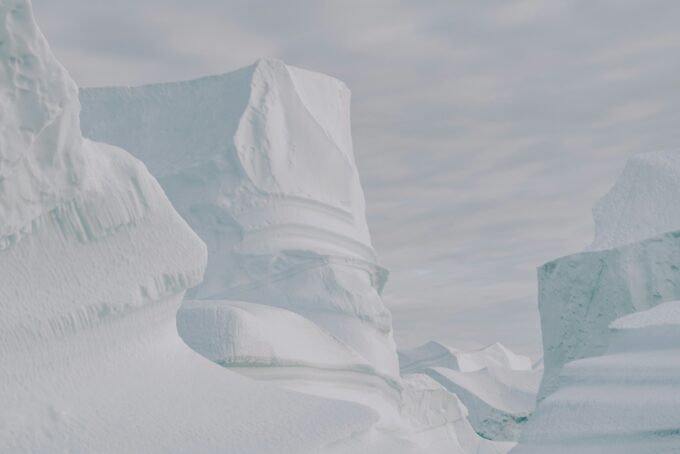
Image by Annie Spratt.
According to the National Oceanic and Atmospheric Administration (an agency that is subject to drastic cuts in Trump’s FY2026 budget) from October 2024 to September 2025 temperatures across the entire Arctic region were the hottest in 125 years of modern record keeping,
As of year-end, the status of the Arctic and Greenland present the world with a nerve-racking knuckle-biting dilemma, as apparently, according to climate scientists, they’re coming apart at the seams. Meanwhile, the United States issues policy-after-policy guaranteed to make it much, much worse. Will residents in states like Florida protest policies that promote fossil fuel usage over renewables, as it’s starting to look like higher sea levels on the distant horizon.
In sharp contrast to scientific reports about threats of climate change, a recent U.S. Department of Energy report A Critical Review, d/d July 23, 2025 downplays these concerns about climate change, global warming, rising sea levels, and excessive greenhouse emissions such as CO2.. This has prompted sharp criticism by numerous non-governmental sources, as explained further herein.
Bill McGuire professor emeritus of geophysical and climate hazards at University College London is one of the most outspoken scientists in the field, not afraid to “tell it like it is.” His recent comments about the Arctic and Greenland are chilling.
Bill McGuire X posting (Dec. 16, 2025):
“The huge polar amplification of heating continues Tipping of the Greenland Ice Sheet all but certain now, locking-in an eventual ~7m rise Say goodbye to much of Florida, and coastal towns and cities across the planet.”
Dr. McGuire is likely responding to an article in The Guardian, Arctic Endured Year of Record Heat as Climate Scientists Warn of ‘Winter Being Redefined’ d/d Dec. 16, 2025. According to one interview: “We are seeing cascading impacts from a warming Arctic,’ said Zack Labe, a climate scientist at Climate Central. ‘Coastal cities aren’t ready for the rising sea levels; we have completely changed the fisheries in the Arctic which leads to rising food bills for sea food. We can point to the Arctic as a faraway place but the changes there affect the rest of the world.”
Dr. Labe says “we are seeing cascading impacts…” something that innocent bystanders do not want to see happening in the rugged Arctic. Cascading impacts are chain reactions where the starting event triggers a series of follow-up events, which are amplified to a degree worse than the starting event. As it happens, “cascading impacts” are the worst possible news out of the Arctic for obvious reasons. For starters, it’s becoming a self-fulfilling prophecy.
Moreover, when the Arctic region is massively diminished by global warming, it indirectly and in some cases directly causes adverse whacko weather systems across the Northern Hemisphere, or put another way, out-of-the-ordinary severe weather systems which have been slamming the hemisphere these past few years.
Furthermore, of utmost concern, the Arctic contains oodles of trapped frozen methane CH4 that, once unfrozen and released into the atmosphere, powers up global warming like ‘there’s no tomorrow’ and it is much more effective at trapping heat in the atmosphere than is CO2.
Plus, Greenland is a big-time concern for residents of Florida because it’s one of the world’s largest blocks of ice in direct line of fire of Arctic warming amplification. Thus, the world’s major coastal megacities, like NYC, and major low-lying coastal states, like Florida, are indirectly exposed as Arctic warming amplification quickens the meltdown of Greenland. Hello rising sea levels! The last thing residents of Florida and the Outer Banks want to hear is “cascading impacts in the Arctic.” Well, according to Dr. Labe, it’s happening!
A recent study from the University of Zurich published in ScienceDaily is cause for additional concern: Here’s the headline: Massive Hidden Waves are Rapidly Melting Greenland’s Glaciers: “Calving icebergs unleash hidden wave forces that supercharge Greenland’s melt and push the ice sheet closer to collapse… Our entire Earth system depends, at least in part, on these ice sheets. It’s a fragile system that could collapse if temperatures rise too high,’ warns Dominik Gräff.”
MIT Climate Portal: “Despite the enormous stakes for the future of humanity, it remains frustratingly difficult to know how much sea level rise is in store for us. All we know for sure is that taking strong and immediate action to control our greenhouse gas emissions gives us the best chance to avoid meters of sea level rise.”
MIT acknowledges one of the biggest mysteries in climate science which is the levels and timing of sea level rise because of global warming. Nobody really knows for sure, and this is what makes it so necessary to pay attention to early warning signs so coastal communities can prepare for what might hit them. Once it’s too high too quickly, it’s too late to do much other than move to higher ground.
Unfortunately, the failure of almost all of the voluntary commitments made at the Paris 2015 climate accord to cut greenhouse gas emissions like CO2 by 2030 has been a farce and a fatal weakness for the world as fossil fuel usage continues unabated. Even worse yet, the United States has dropped out of the Paris agreement altogether, becoming the world’s biggest promoter of oil and gas and coal and greenhouse gases like CO2.
This has given several other right-leaning countries license to ease up or abandon altogether mitigation policies. For example: “Sweden, an Early Climate Leader, Is Retreating from Its Environmental Commitments, Part of an EU Trend,” Inside Climate News, August 3, 2025.
DOE Report on Climate Change– No Sweat, No Worries, Plants Love It
The Department of Energy July 150-pg report supports the administration’s fossil fuel policies by downplaying concerns. For example: “U.S. tide gauge measurements reveal no obvious acceleration beyond the historical average rate of sea level rise,” pg 85)
However, “New research from the Woods Hole Oceanographic Institution finds sea level rise is accelerating across the contiguous United States, contradicting a federal report from July that downplayed the risks from climate change.” (New Study Finds Sea Level Rise is Speeding Up, Contradicting Federal Report, WBUR – Boston NPR, December 19, 2025)
When the DOE report was released, more than 85 scientists issued a rebuttal that called many of the assertions “misleading or fundamentally incorrect.” To wit: “Our review reveals that the DOE report’s key assertions—including claims of no trends in extreme weather and the supposed broad benefits of carbon dioxide—are either misleading or fundamentally incorrect. The authors reached these flawed conclusions through selective filtering of evidence (‘cherry picking’), overemphasis of uncertainties, misquoting peer-reviewed research, and a general dismissal of the vast majority of decades of peer-reviewed research.”
Accordingly, Christopher Piecuch, a physical oceanographer at WHOI and author of the study, said the report from the U.S. Department of Energy released this summer referenced only a select few tidal gauge locations in its analysis, which may not properly represent nationwide sea level rise. The DOE report found “no obvious acceleration in sea level rise.” In contrast, Piecuch said his study included all available long-term records from U.S. tidal gauges, 70 in all. “You can’t really just look at a record here and a record there and expect to have representative results for the entire U.S.,” he said. “ There’s a very large disconnect between the data that they show and the conclusions that they draw.”
Nearly one-half of Americans live in coastal counties. Sea level has a direct bearing on them, requiring adequate notice of changes to allow for either mitigation policies, plans for building sea walls, moving out of the area, etc., or conversely, taking no preventative measures if the DOE report is correct, “not to worry.” Which-will-it-be impacts over 130 million American households. In general, and almost universally, scientists believe aggressive mitigation measures are prudent.
Andrew Kemp, a professor of earth and climate sciences at Tufts University who was not part of the research, called the new analysis robust and sound: “The Piecuch study is repeatable, supported by other evidence, and reflects the understanding of the overwhelming majority of sea-level scientists. It was written to address the DOE report that is not robust, lacks sound reasoning, is contradicted by an abundance of other evidence that was ignored, and represents fringe science.”
Citizens depend upon the government for proper guidance. Hopefully, the DOE will issue a response to criticism by scientists that many of the report’s assertions are “misleading or fundamentally incorrect.” Citizens of the country need to know whether a major factcheck of the Trump DOE report is true: Factcheck: Trump’s Climate Report Includes More Than 100 False or Misleading Claims, Carbon Brief, August 15, 2025. If DOE cannot properly address 100 alleged false or misleading statements, the report should be officially censured and removed.
The citizens of Florida deserve it!

No comments:
Post a Comment