Three-Month Old Baltimore Charter School May Be Closing
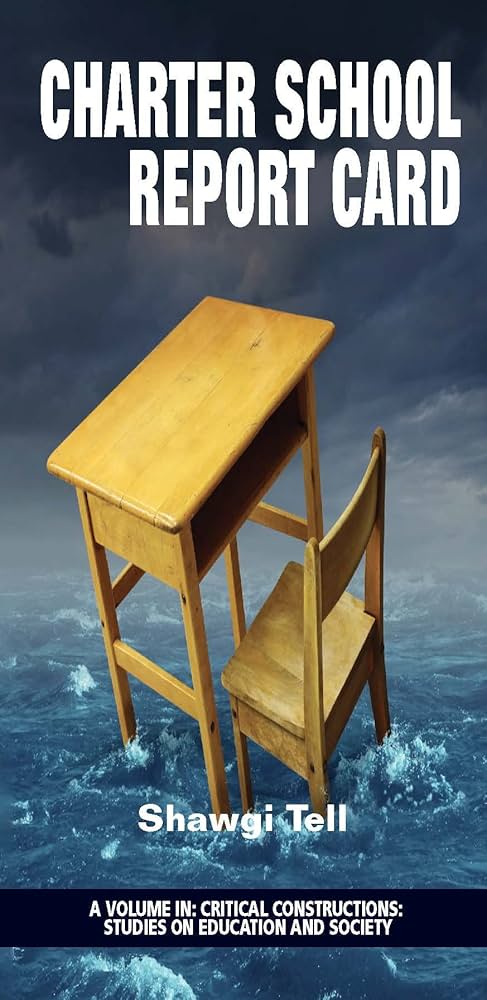 Poor planning, leadership, and charter school applications are not uncommon in the charter school sector. Such recurrent problems not only give traditional host public school districts big headaches, they also ensure a range of foreseeable intractable problems in privately-operated charter schools, especially when everything is rushed and not well-thought-out. Privatization efforts in education and other spheres are known for often leading to less accountability, behaviors that undermine the public interest, and unsafe practices.
The Baltimore Planner reported on January 23, 2026 that Montgomery County’s only privately-operated charter school, MECCA Business Learning Institute, may be closed after operating for only three months. The news article reports that, “Montgomery County Public Schools leaders said they tried to be good partners in launching the [charter school] campus. Still, Superintendent Thomas Taylor determined it should close because of special education violations, staffing issues, privacy breaches and financial woes.” The deregulated charter school also experienced transportation and student enrollment problems.
Montgomery County District officials, adds the Baltimore Planner, “documented failures to provide timely special education services, retain qualified personnel and offer psychological services.” In addition, a November 2025 audit found “widespread, systemic patterns and recurring issues posing significant compliance risks” at the charter school.
At one point, MECCA Business Learning Institute “leased a district-owned building in Bethesda” for more than $50,000 a month. And, “To get students roughly 20 miles farther than anticipated, the charter school contracted with yellow bus companies.” The news article goes on to say that, “Some drivers were not certified to operate yellow buses, according to district emails. Officials also received a complaint that at least one of the buses didn’t have functioning red stop lights for students loading and unloading.”
For these and other reasons, enrollment fell sharply. “By the end of September, MECCA Business Learning Institute had lost more than 25% of its students. The decline would only grow steeper.” Naturally, this triggered staff turnover: “The charter school eliminated six full-time teaching positions and reduced five others from full time to part time, officials said.” We also learn from the news that, “The charter’s signature business class was at times taught by a teacher who was certified in physical education and health.” Despite this long list of serious problems, leaders at the MECCA Business Learning Institute will likely do an end-run around Montgomery County District officials and ask the state board of education to keep their school open.
The rapid unraveling of the privately-operated charter school expresses persistent problems common to many schools in the charter school sector. Many have often wondered how it is possible for something as significant as a school be allowed to open, let alone operate, with such poor planning, leadership, experience, and unpreparedness? Again, privatization lends itself to prioritizing profiteering over everything else, and when that happens many problems are bound to arise, which is why so many non-profit and for-profit charter schools fail and close regularly (see here)—all while claiming to be superior to and more “innovative” than demonized and chronically-underfunded public schools.
Funneling millions of dollars in public funds from public schools to problem-plagued charter schools hurts all schools, teachers, and students. It also harms the economy and the national interest. Public funds belong to public schools and must stay in public schools. “Innovation,” “choice,” and “competition” are not valid justifications for seizing public money and public facilities from public schools. Education and society would be far better served by preventing neoliberals, privatizers, “free market” ideologues, and their representatives from vilifying public schools, starving them of funds, and then claiming that contract schools that increase segregation and empower unelected school trustees will save the day.
Everyone should avoid falling into the trap of pitting public schools against charter schools. Both education arrangements are set up to fail and suffer under neoliberal arrangements. Neither vilified, defunded, and over-tested public schools filled with disempowered employees, nor privatized school arrangements full of corruption and other bad practices are optimal for students, teachers, and parents at this time. Parents, teachers, and others should investigate the real reasons behind school privatization and reject the adversarial blame games imposed on them by neoliberals and their allies. The battle is not between public schools versus charter schools, but the public versus narrow private interests. Neoliberals routinely promote propaganda and disinformation to fool the gullible and divide the public.
While Brynna Smith focuses on charter schools in Missouri, the short Abstract to her lengthy article (2025), “Charter Schools: The Education Solution Strangling the Public Education System,” provides valuable information and orientation to the public:
This paper investigates why charter schools exist in Missouri and how judicial precedent has permitted their constitutionality. It will highlight their potential for corrupt policy, rebut the scant evidence proving they perform better than public schools, and demonstrate that charter schools are not the effective solution to poor public-school performance as they were initially intended. Rather they are disguised constitutional violations. This paper proposes that the United States abandon the charter school movement, concentrate all educational funding in public schools, and use the grants intended for charter schools to implement educational reform proven to be effective.

No comments:
Post a Comment