€400 million in EU funding approved to help Greece achieve net zero emissions
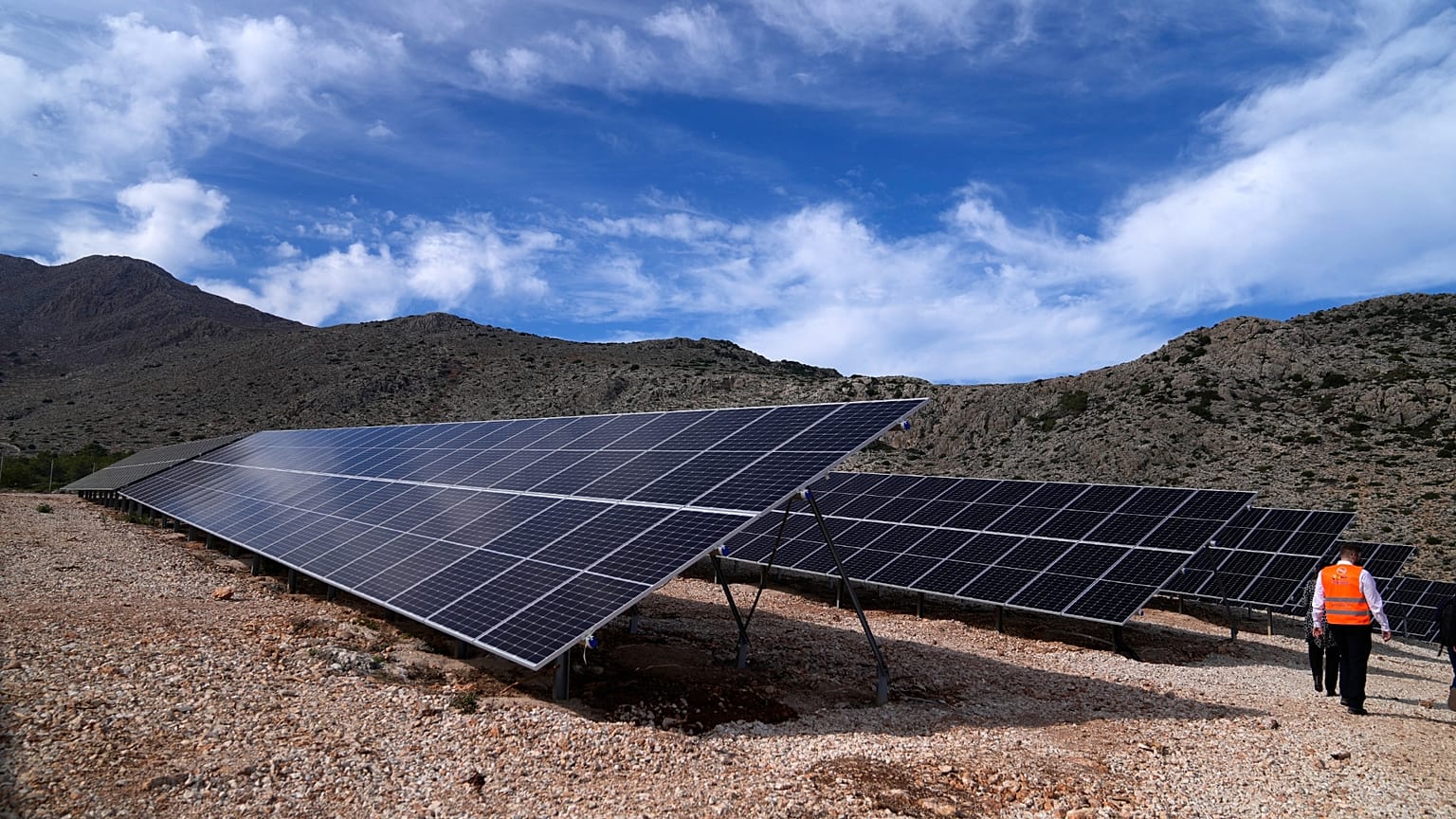
The funding will support strategic investments that increase clean technology capacity.
The European Commission has approved €400 million in state aid for Greece to invest in clean tech
In line with the objectives of the Clean Sky Agreement, this initiative is expected to accelerate the transition to a net zero economy. The approval was given on the basis of the Clean Industrial Deal State Aid Framework (CISAF), which was adopted by the Commission on 25 June 2025.
How will Greece use the €400 million funding?
The funding will support strategic investments in the clean technologies sector.
The scheme aims to provide financial support for investments that create or expand production capacity for the manufacture of zero-emission technologies, including the use of secondary raw materials. It also covers key specialised key components listed in Annex II of the CISAF, as well as the production of new or recovered critical raw materials necessary for the manufacture of finished products or their individual key components.
The support will be provided in the form of direct grants and fiscal incentives. The measure applies to enterprises throughout the Greek territory and aid may be granted until 31 December 2030.
The Commission found that the Greek scheme fulfils the conditions of the CISAF. In particular, it was found to create substantial incentives for the production of clean technologies, their basic components and the necessary critical raw materials.
It also concluded that the measure is necessary, appropriate and proportionate to accelerate the transition to a zero-emission economy and to support economic activities central to the implementation of the Clean Industrial Deal. The decision is in line with Article 107(3)(c) of the Treaty on the Functioning of the European Union and the relevant provisions of the CISAF.
On the basis of the above, the Commission has approved the Greek measure under the EU State aid rules.
"The scheme will provide Greece with additional production capacity for clean technologies," said Teresa Ribera, Executive Vice President in charge of a clean, fair and competitive transition. "The Greek State can make available €400 million to support key investments in the sector, using a number of different measures. This new production capacity will contribute to achieving the agreement's clean industry objectives while minimising potential distortions of competition."
What is the Clean Industrial Deal State Aid Framework?
On 25 June 2025, the European Commission adopted the CISAF to promote support measures in sectors crucial to the transition to a net zero economy, as part of the Clean Industrial Deal.
The CISAF allows Member States to implement, until 31 December 2030, different categories of support to accelerate the green transition, such as:
- Measures for the development of renewable energy and low-carbon fuels (sections 4.1 and 4.2): Establishing support schemes for investment in renewable energy and storage, with simplified procedures, as well as specific arrangements to accelerate the development of low-carbon fuels.
- Temporary electricity cost reduction measures for energy-intensive enterprises (section 4.5): Ensuring the transition to clean and affordable electricity by preventing the transfer of production activities to countries with lower environmental standards.
- Measures for the decarbonisation of industry (section 5): Support for investments that reduce dependence on imported fossil fuels through electrification, energy efficiency improvements and the use of renewable or low-emission hydrogen.
- Clean technology capacity building measures (section 6): Investment in strategic projects, in line with the Zero Emission Industry Regulation, such as production of batteries, photovoltaic panels, wind turbines, heat pumps, electrolytes and carbon capture, use and storage projects, as well as for key components and critical raw materials.
- Investment risk mitigation measures (section 8): Support for private investment in clean energy, industrial carbonisation, clean technologies, energy infrastructure and circular economy projects.
More information on the CISAF is available on the Commission's official website. (source in Greek)

Solar power in Algeria.
Photo Credit: Wikipedia Commons
March 6, 2026
By Dr. Majid Rafizadeh
The Middle East and North Africa region is going through a rapid energy transition and has made significant advances when it comes to renewables.
Several factors have driven this rapid shift, including economic diversification goals, climate pressures and domestic energy demand. In addition, there has been a decline in the cost of clean technologies and governments across the region have been investing heavily in renewables like solar and wind and related infrastructure.
The installed renewable energy capacity in MENA is already about 30 gigawatts. And projections show an expected increase to more than 130 GW by 2030.
Although this shows that the region’s renewable energy capacity is projected to expand more than fourfold by the end of the decade, the transformation is not uniform. While some MENA countries are emerging as global clean energy leaders, others remain constrained. This is due to issues such as inefficient infrastructure, political instability and financial limitations.
However, the trajectory of renewable adoption will significantly influence the future of the region when it comes to economic stability, environmental sustainability and long-term prosperity.
Several MENA countries have positioned themselves at the forefront of the energy transition. They have done so through several paths, including ambitious national strategies, large-scale projects and supportive regulatory frameworks.
Gulf states — particularly Saudi Arabia, the UAE and Qatar — have invested significantly to build some of the world’s largest solar installations. These countries are not only pursuing renewables and transitioning rapidly to reduce emissions, but also to diversify their economies.
Solar energy stands at the top of the region’s transition due to the fact it has exceptional solar irradiance. Regional solar capacity alone could exceed 180 GW by 2030, with more than 80 percent of growth concentrated in Saudi Arabia, the UAE and Egypt. The Gulf states’ long-term strategies — such as meeting a substantial share of their electricity demand through clean sources — shows how energy transition policies are integrated into their broader economic visions.
When it comes to North Africa, the likes of Morocco and Egypt have also made significant progress and emerged as pioneers. Morocco has invested heavily in both solar and wind infrastructure and it aims to produce more than half its electricity from renewables by 2030. Egypt is pursuing a similar target.
Some of the advantages these North African countries have are their natural resources, their proximity to European markets and their adoption of policy frameworks that are designed to attract foreign investment.
There are multiple reasons that some MENA states are accelerating their adoption of renewable energy at such a rapid pace. Firstly, energy demand is rising rapidly due to population growth, urbanization and industrial expansion. Renewable energy offers a cost-effective solution.
Secondly, economic diversification strategies — such as Saudi Arabia’s Vision 2030 — seek to reduce their dependence on oil by developing new industries, including green hydrogen and clean technology manufacturing.
Thirdly, falling costs due to technological advances have transformed the renewables sector and made the transition even more important and economically sound. For example, utility-scale solar projects in the region now achieve some of the lowest electricity prices globally. This makes them very competitive with fossil fuels.
Finally, climate vulnerability is increasing. Many MENA countries face extreme heat, water scarcity and desertification; this strengthens the case for the transition. Reduced emissions will help limit extreme heat and water stress.
However, in spite of this impressive progress, several countries in the region continue to lag. This is related to several underlying factors, such as bureaucratic inefficiencies, prolonged conflicts or unrest, weak governance and an inability to attract long-term investment.
Financing barriers are another major obstacle, as renewable projects demand substantial capital. This is why international climate finance and development banks should provide more support when it comes to funding.
These countries can implement comprehensive policy reforms and strategic investments to provide long-term certainty for investors. In addition, international and regional cooperation will play a vital role. For example, partnerships with European and Asian markets can facilitate technology transfer, financing and export opportunities for this transition. Also, the diversification strategies of these nations should incorporate renewables into their broader economic planning.
Geopolitically speaking, the shift toward renewables will likely reshape regional power dynamics. Countries that successfully diversify their energy systems could gain influence as exporters of clean energy and technology. But those countries that lag will risk economic deterioration, isolation and marginalization. They will also risk environmental crises in a region that is among the world’s most strategically significant.
In a nutshell, the region is undergoing a significant and rapid transition toward renewable energy, propelled by technological advances, economic necessity and environmental pressures. But progress remains uneven. Leading countries have demonstrated that decisive policies, investment and long-term planning can transform energy systems.
Ultimately, the region’s economic stability and environmental sustainability will come down to how decisively it embraces the clean energy transition. If the lagging countries join and accelerate the current momentum, MENA could emerge as a global leader in renewable energy.
This article was published at Arab News
Like what your read?
Please consider supporting Eurasia Review, and thanks for you consideration!

Dr. Majid Rafizadeh
Dr. Majid Rafizadeh is a Harvard-educated Iranian-American political scientist. X: @Dr_Rafizadeh

No comments:
Post a Comment