Forest Damage Could Double: How Fires, Storms, And Bark Beetles Will Shape The Future Of Europe’s Forests

Tree trunks with clearly visible bark beetle damage. CREDIT: Rupert Seidl / TUMMarch 6, 2026
By Eurasia Review
Wildfires, storms, and bark beetles have a major impact on forests and the benefits they provide for people and the environment. For the first time, a large international team led by researchers at the Technical University of Munich (TUM) has calculated how disturbances could transform Europe’s forests by 2100. Even in the most optimistic scenario, the team foresees a substantial increase in damaged forest area—in the most pessimistic case, disturbances could even double.
Tree mortality is not new; it is a part of natural forest dynamics—where old trees die, young trees regenerate and form the next generation of canopy trees. What is new is the scale at which wildfires, storms, and bark beetles—fueled by climate change—are reshaping forests. Recent years have already shown dramatic levels of forest damage in Central Europe, but until now it was unclear how much forest area might be affected by disturbances in the future. Disturbances determine how much carbon forests can store, how much timber they can provide, and which species they provide habitat for—making the findings highly relevant for policymakers and society.
This knowledge gap has now been filled by a large team of researchers led by Rupert Seidl, Professor of Ecosystem Dynamics and Forest Management at TUM. The researchers estimate that with global warming of just over 4 degrees Celsius, the area disturbed by fires, storms, and bark beetles could more than double by 2100. As a baseline, the researchers used remotely sensed data from 1986 to 2020—a period that already saw unusually high levels of forest disturbance. Even in the best‑case scenario, with warming limited to roughly 2 degrees Celsius, the researchers expect more forest damage in the future than during this reference period.
Regional differences
The team used an AI‑based simulation model trained on 135 million data points from forest simulations across 13,000 European locations in combination with multi-decadal satellite data on forest disturbances. This allowed them to simulate future forest development and the occurrence and impacts of disturbances down to the level of a single hectare, yielding highly precise insights into regional differences in future forest disturbance trajectories.
According to the study, forests in Southern and Western Europe will be particularly affected and will undergo the strongest changes in forest disturbance. Northern Europe is expected to be less severely impacted overall, though hotspots of future forest damage are also likely to emerge there. “Disturbances are increasingly becoming a cross‑regional issue, disrupting timber markets across Europe and threatening the ecosystem services forests provide for society,” says Rupert Seidl.
The authors of the study therefore see an urgent need for forest policy and management to account for increasing disturbance levels: “We need to be prepared for significant forest damage in the coming years. On one hand, this means we must prepare for and buffer against stronger fluctuations in the services forests provide. On the other hand, disturbances also offer the opportunity to establish new, climate‑resilient forests—they act as catalysts for change. Forestry must address both the risks and opportunities of rising disturbance levels, supported by new scientific methods and insights,” Seidl explains.

Tree trunks with clearly visible bark beetle damage. CREDIT: Rupert Seidl / TUM
By Eurasia Review
Wildfires, storms, and bark beetles have a major impact on forests and the benefits they provide for people and the environment. For the first time, a large international team led by researchers at the Technical University of Munich (TUM) has calculated how disturbances could transform Europe’s forests by 2100. Even in the most optimistic scenario, the team foresees a substantial increase in damaged forest area—in the most pessimistic case, disturbances could even double.
Tree mortality is not new; it is a part of natural forest dynamics—where old trees die, young trees regenerate and form the next generation of canopy trees. What is new is the scale at which wildfires, storms, and bark beetles—fueled by climate change—are reshaping forests. Recent years have already shown dramatic levels of forest damage in Central Europe, but until now it was unclear how much forest area might be affected by disturbances in the future. Disturbances determine how much carbon forests can store, how much timber they can provide, and which species they provide habitat for—making the findings highly relevant for policymakers and society.
This knowledge gap has now been filled by a large team of researchers led by Rupert Seidl, Professor of Ecosystem Dynamics and Forest Management at TUM. The researchers estimate that with global warming of just over 4 degrees Celsius, the area disturbed by fires, storms, and bark beetles could more than double by 2100. As a baseline, the researchers used remotely sensed data from 1986 to 2020—a period that already saw unusually high levels of forest disturbance. Even in the best‑case scenario, with warming limited to roughly 2 degrees Celsius, the researchers expect more forest damage in the future than during this reference period.
Regional differences
The team used an AI‑based simulation model trained on 135 million data points from forest simulations across 13,000 European locations in combination with multi-decadal satellite data on forest disturbances. This allowed them to simulate future forest development and the occurrence and impacts of disturbances down to the level of a single hectare, yielding highly precise insights into regional differences in future forest disturbance trajectories.
According to the study, forests in Southern and Western Europe will be particularly affected and will undergo the strongest changes in forest disturbance. Northern Europe is expected to be less severely impacted overall, though hotspots of future forest damage are also likely to emerge there. “Disturbances are increasingly becoming a cross‑regional issue, disrupting timber markets across Europe and threatening the ecosystem services forests provide for society,” says Rupert Seidl.
The authors of the study therefore see an urgent need for forest policy and management to account for increasing disturbance levels: “We need to be prepared for significant forest damage in the coming years. On one hand, this means we must prepare for and buffer against stronger fluctuations in the services forests provide. On the other hand, disturbances also offer the opportunity to establish new, climate‑resilient forests—they act as catalysts for change. Forestry must address both the risks and opportunities of rising disturbance levels, supported by new scientific methods and insights,” Seidl explains.
Scientists sound alarm over Europe's forests as 216,000 hectares at risk - even if warming halts
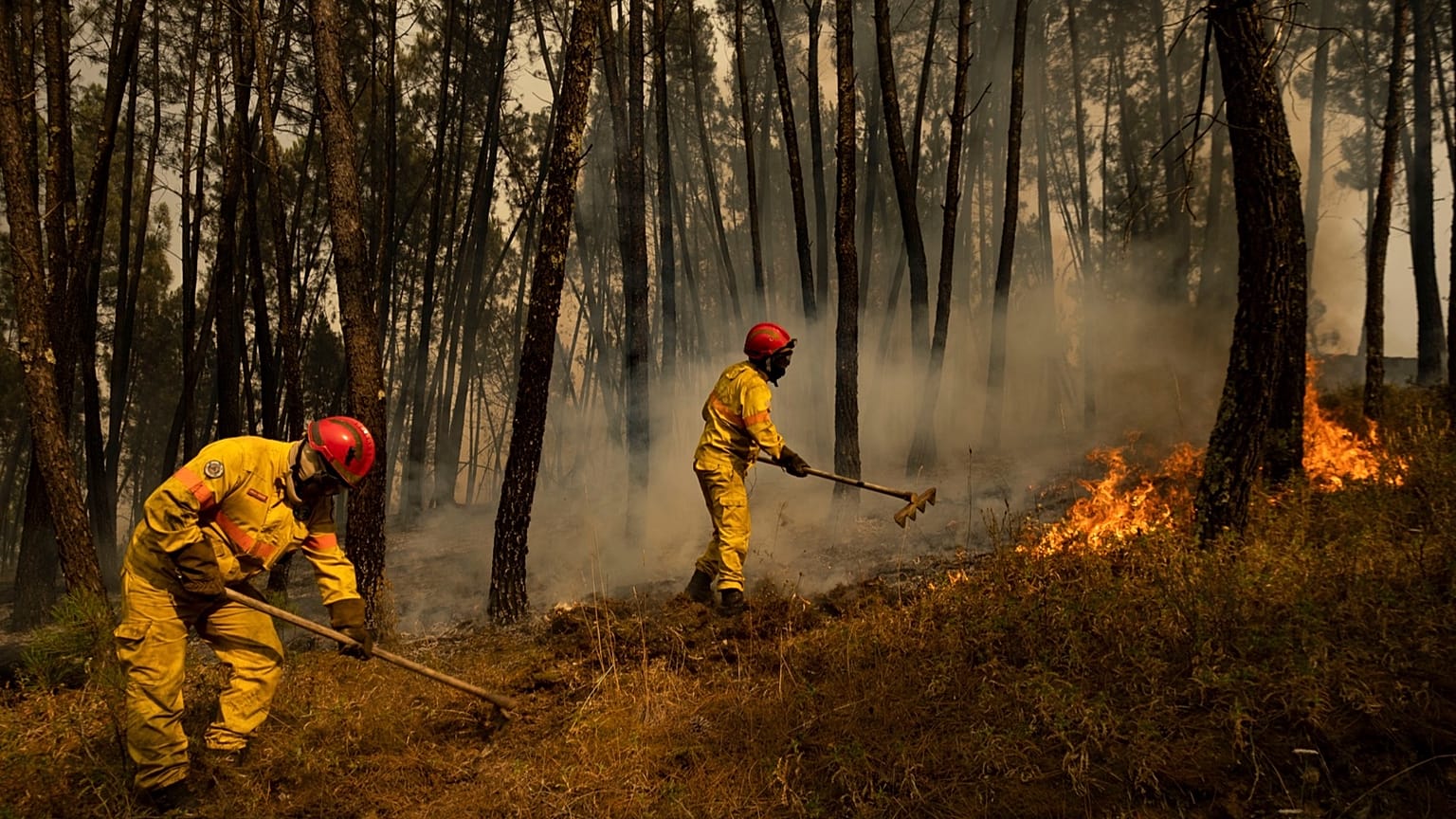
More than 200,000 hectares of European forests could be disturbed annually by 2100, according to a new study.
Forest damage in Europe is projected to rise by 20 per cent by 2100 compared to recent decades, even if the world sticks to ambitious climate measures
A new international study published in the journal Science, with contributions from the Potsdam Institute for Climate Impact Research, warns that wildfires, storms and bark beetle outbreaks – all of which are fuelled by climate change – are putting crucial carbon sources at risk.
Even in a scenario with global warming limited to roughly 2℃, researchers found that annually disturbed forest area could rise from 180,000 to roughly 216,000 hectares per year by the end of the century compared to the “already unprecedented levels of disturbance” from 1986 to 2020.
However, in a scenario where fossil fuel use continues to increase – pushing temperatures even higher – almost 370,000 hectares could be disturbed every year by the end of the century.
Europe’s forests are under threat
The study warns that forests in Southern and Western Europe will be particularly affected and will undergo the ‘strongest changes’ in forest disturbance.
While Northern Europe is expected to be less severely impacted overall, researchers highlight that hotspots of future forest damage are still likely to emerge.
Last year, more than 1,800 forest fires were declared in the EU, emitting around 38 million tonnes of CO2. Scientists say many of these fires occurred where climate anomalies showed much drier and warmer than average conditions.
Summer 2025 was particularly bad for Portugal and Spain, which both witnessed record-breaking wildfires that accounted for more than two-thirds of EU devastation.
According to the World Weather Attribution (WWA), these deadly blazes were around 40 times more likely due to climate change.
Why are forests so important in the fight against climate change?
Europe is among the most forested regions of the world, with around 40 per cent of its land area covered by forests.
Not only do these areas host most of the terrestrial species of animals, plants, and fungi native to the continent – they are also a vital carbon sink that absorbs CO2 from the air and helps fight climate change.
Forests also play an important role in providing clean water, reducing the risk of flooding, and enhancing food security.
However, Christopher Reyer, a scientist at PIK and co-author of the study, says Europe’s forests are likely to absorb less carbon in the future.
“If forests take up less carbon, or potentially even release more than they absorb, this increases pressure on other sectors such as transport and agriculture to reduce their emissions more rapidly,” he adds.
“At the same time, forest management needs to focus more strongly on building resilient forests.”
Is the EU planting enough trees?
In 2010, the EU launched its three billion trees initiative, a milestone that could remove a staggering 15 million tonnes of CO2 from the air per year by 2050.
However, according to an online tool set up by the Commission, less than 38 million trees have been planted in the EU so far.
It means that the EU has only completed around 1.26 per cent of its goal six years into the initiative. Unless planting rates increase dramatically, achieving three billion new trees by 2030 will be unlikely.
A Commission official tells Euronews Green that the initiative is a “voluntary commitment” which aims to mobilise organisations and individuals active in tree planting to report their work – and not a mandatory commitment.
It is planning to launch an award next year to recognise “innovative and impactful tree-planting” in hopes of making large gains towards the goal.

No comments:
Post a Comment