Showing posts sorted by date for query SASQUATCH. Sort by relevance Show all posts

Monday, December 22, 2025

Trump Economy: One Doll, Multiple Dolls


December 22, 2025

Sasquatch doll, Portland, Oregon. Photo: Jeffrey St. Clair.

The government shutdown made the November jobs report especially hard to read. There was not just the problem of missing a month of jobs data for the first time in many decades, but also the difficulty in trying to determine how much impact the shutdown had on the data.

In principle, the shutdown should have had little direct impact on either the household or the establishment survey. In the household survey, people who had been furloughed should have been back at work during the reference period and therefore answered that they were employed. With the establishment survey, government employees were always on the payroll, so should have been listed as employed.

But there are indirect ways in which the shutdown could have affected the data. For example, the number of workers who report that they were involuntarily working part-time jumped by almost 900,000. This number is always erratic, but that is still an extraordinarily large increase. It is possible that the rise is at least in part connected to government workers returning after the shutdown who may still not be working full-time.

One on the ironies of the surge in people working part-time because of the economy is that Republicans endlessly screamed about the increase in part-time employment under Biden. However, that increase was voluntary.

People have all sorts of good reasons, such as family obligations, school, or hobbies, for preferring to work less than 35 hours a week (the definition of a part-time job). Now, when we see a big increase in people working part-time because they can’t get full-time work, these politicians are silent.

If One Job is Good, Two Jobs Must Be Better

The other way in which there was an unusual change that could be at least partly explained by the shutdown was a surge in the percentage of workers who report that they were working multiple jobs. This measure, which is not seasonally adjusted, hit 5.8 percent in November, up from 5.4 percent last November. This is the highest share reporting they are working multiple jobs in this century.

If the rise in multiple jobholders is not an anomaly, it suggests that workers are having increasing difficulty getting by on their wages. That would not be surprising given a reported slowing in wage growth, coupled with the recent uptick in inflation. The year-over-year rate of growth in the average hourly wage fell to 3.5 percent, down from 4.0 percent in 2023 and 2024.  (The annualized rate by my preferred measure — the average wage for the last three months compared to the prior three months —  was 3.7 percent.) With inflation at 3.0 percent as of September, this means real wages are just barely rising.

Homegrown Confusion on Native-Born Workers

One of the main rationales given for Trump’s mass deportation campaign is to open up jobs for native-born workers. The world doesn’t work that way, but that’s a longer discussion. The immediate issue is that the Republicans are celebrating their confusion about how the Bureau of Labor Statistics (BLS) calculates native-born workers.

The basic story is that BLS has a set of population controls that it puts in place at the state of the year. New ones for 2026 will be included with the January jobs report. These controls determine population levels for the household survey. They are independent of whatever actually happens in the world over the course of the year.

These controls put the civilian non-institutional population at 274,633,000 for November. Suppose that half of us had died from another pandemic. Because of the BLS population controls, the civilian non-institutional population would still be at 274,633,000 for November. Suppose Kristi Noem’s ICE crew gets really ambitious and deports half the population, both citizens and non-citizens. Because of the population controls, the civilian non-institutional population will still be at 274,633,000 for November.

The point is that the civilian non-institutional population is fixed by construction. BLS gets an estimate of the foreign-born population from the monthly household survey. The number of people reporting they are foreign-born has fallen sharply in 2025. This is partly because some have been deported or left voluntarily. It is also partly because many foreign-born choose not to answer the survey. And some foreign-born undoubtedly just say they are native-born on the survey.

In any case, we know that the survey is finding many fewer people saying they are foreign-born. But the number of native-born is not calculated from the survey. BLS just subtracts the number of foreign-born estimated in the survey from its population controls. This means that every time the number of foreign-born workers in the survey declines, the number of native-born workers mechanically rises. If the number of foreign-born workers reported in the survey fell by 2 million, there would be a reported increase in the number of native-born people working of 2 million even if not a single additional native-born worker had a job.

This is what the Republicans are celebrating when they tout a huge boom in jobs for native-born workers. If anyone is really interested in how native-born workers are doing, the data are right there in front of their face. The unemployment rate for native-born workers was 4.3 percent in November. That’s up from 3.9 percent in November of 2024.

Recession Level Unemployment for Black Workers

One of the most shocking trends in the labor market in 2025 has been the jump in unemployment among Black workers. It hit 8.3 percent in November, a rate that white workers would only see in a severe recession. This is especially striking since the unemployment rate for white workers has barely risen, hitting 3.9 percent in November, up from 3.8 percent last November.

It would take some work to determine the causes of this sharp jump in unemployment, but the Trump administration ending pretty much all efforts to protect Black workers against discrimination likely played a role. In any case, the economic situation for Blacks has deteriorated with remarkable speed in the second Trump administration.

Low Quits and Fake Jobs

There are two other items worth noting in the November jobs report. The percentage of unemployment due to people who quit a job before they had a new own lined up dropped to 11.0 percent. By comparison, it averaged 13.2 percent in the strong 2018-19 labor market. This suggests that workers are pessimistic about their labor market prospects.

There is one last point. Picking up on a comment by Fed Chair Jerome Powell at his press conference following the Fed meeting; it is likely that we are overstating job growth. In September, BLS announced its preliminary annual benchmark revision, which showed 911,000 fewer jobs as of March 2025 than had originally been reported.

These revisions are based on unemployment insurance filings, which are a near census of payroll employment nationwide. The final revision, which will be put in place with the January report, will likely be somewhat smaller, but it nonetheless is likely to still mean the economy was creating substantially fewer jobs than the monthly data had shown.

The same factors that led the monthly reports to overstate job growth in 2024 and up to March of 2025 are likely still in place. This means that we are probably still overstating job growth, with the first estimate to come next summer.

Powell put the number at 60,000 a month. That figure is likely in the ballpark. That would mean that we have seen close to zero job growth in 2025 and have likely been losing jobs since April.

More Data to Come, but the Economy Does Not Look Strong

We still have lots of catch up to do with data reports, notably we will see the November CPI on Thursday, and we should get the October and November data on personal income and spending before the end of the month. But what we have to date is not pretty.

This first appeared on Dean Baker’s Beat the Press blog.

Monday, December 30, 2024

CRYPTOZOOLOGY IS DANGEROUS

Two men found dead ‘while looking for Bigfoot’ in US national forest

Sam Courtney-Guy
Published December 29, 2024 
METRO UK
The victims’ families grew fearful after they failed to return home on Christmas Eve

Two men have been found dead after setting off on an expedition to find the mythical Bigfoot creature, police in the US state of Oregon said.

The victims, aged 37 and 59 and from the city of Portland, were found in a wooded area of the Gifford Pinchot National Forest in Washington State, according to authorities.

The pair, who told relatives they would get home on Christmas Eve, appeared to have died of exposure after failing to prepare adequately for the trek.

They were reported missing at around 1am on Christmas Day, prompting a three-day search involving 60 volunteers and rescue experts who used dogs and drones.

Skamania County Sheriff’s Office said the pair’s family told police the men were likely in danger because they were looking for the so-called Sasquatch.

Gifford Pinchot National Forest covers a vast area of 1.3 million acres and its winter conditions can be challenging even for experienced hikers.

The men were found after the search area was narrowed down when CCTV footage led authorities to their car.
The pair’s disappearance sparked a huge three-day search

Bigfoot, generally described as a large two-legged human-like or ape-like creature, has featured widely in folk tales and unverified ‘sightings’ in America and Canada.

No scientifically accepted evidence of the creature’s existence has ever been uncovered, but surveys have found more than 1 in 10 Americans believe it is real.

The belief is thought to be most popular in the Pacific Northwest (which includes the state of Oregon) where Bigfoot is seen as a cultural icon.

Expiditions to find the Sasquatch are said to be a popular past-time among Bigfoot believers.

‘The Skamania County Sheriff’s Office extends our deepest sympathies and condolences to the families of the loved ones lost in this tragic incident,’ authorities said.

Sunday, September 29, 2024


Do Not Go Gently into that Good Supermarket

How to rage against the snack aisle.

Don’t panic. The supermarket doors had just locked while I was standing in the checkout line. “Everyone stay exactly where you are. We have an amber alert for a lost child.”

Head down, act natural, Justin.

Looking down, there was nothing natural about my shopping basket, packed with the most ultra-processed food on the planet. As an American, you can proudly call me the number one consumer of snack foods worldwide (Japan is number two, Canada number six). They say only two-thirds of daily calories for American children and teens come from ultra-processed food. I say we can do 100%! And so what if the latest and largest study of over 10 million people showed that consuming ultra-processed food was associated with 32 health problems, especially heart disease-related deaths, Type 2 diabetes, and common mental health issues like anxiety and depression?

Standing in the checkout line that evening while they searched for a lost kid, I didn’t register any anxiety. Like my childhood hero, He-Man, I had the powerrrrrr . . . to disassociate. Besides, I looked completely trustworthy. I just came from the gym, wearing my hoodie—hood up—and baggy workout pants. At 25 years old, I stood 6’3”, scraggly scruff, vacant furtive eyes, plus my aura of anger.

Pay no attention to my shopping basket loaded with kid-friendly junk food. Because when you’re as numb as I am, one little box of animal crackers won’t soothe the raging belly beast. I had the frilly stuff, like Rice Krispie treats, party-size bags of gummi bears, and Funfetti Oreos. Which by the way, why are there so many flavors of Oreos today? Growing up we had two. I remember the first time I ate double-stuff Oreos. They’re like MDMA crème sandwiches—Oreos make me want to hug you and do more.

I basically had enough sugared treats to dose a small child into a cotton-candy coma and everyone saw it. Even the store manager was coming at me. I dropped my basket to the floor and prepared to scream: “Wait! It’s not me! I’ve been doing paleo and skipping carbs!”

And then the doors unlocked. They found the kid wandering the produce section.

After my exit, I should have been thinking: maybe I have a problem. That night of the amber alert, my food compulsions almost got me on a registry because some kid didn’t know their way around lettuce. Where was my red dye 40 alert? Something to let me know about the link between ultra-processed food and obsessive overeating; or that processed food hooks us through an endless combination of addictive chemical seasonings.

Instead, I threw myself back into the Food Lion’s den to take on their “patisserie” aisle. By the way, South Burlington isn’t Paris, just call it a bakery. You’re a grubby fluorescent chain store peddling chemically-injected corn and soy widgets. Over seventy percent of packaged food options are ultra-processed, containing excessive levels of salt, sugar and fat. Still, I couldn’t resist their latest concoction. Chunky chocolate-chip cookies with rainbow sprinkles, straddling a thick layer of stable cream puff, and each one the size of my sasquatch fist. I must have them all.

A nice, older woman with graying, curled hair delicately packed four in a fancy box. As if two minutes from now I wasn’t going to shred the box, shove that crimped gold ribbon under my car seat, and pop those sprinkled sugar bombs whole like a sad circus pelican. “Oh, your little boys are going to love them,” she winked at me, handing me the box. I must have looked puzzled because she repeated it. “You must have little boys at home waiting for these.”

What the hell was she talking about? No, I didn’t have any children at home. I was just a grown-ass single man who hadn’t done any therapy.

And so I became a Funfetti guerrilla, vanilla frosting smeared under the eyes, deploying Seal Team Six cover strategies.

I was an OB—Original Binger. Before self-checkout kiosks existed, I tried to “Bury the Order,” e.g., buy enough regular but non-perishable groceries like boxes of pasta, dish soap, canned beans, and then strategically mix in all of the real items I required: potato chips, chocolate doughnuts, Pop-Tarts, Cool Ranch Dorito’s, etc.

And yes, I more than once invoked the nuclear cover option. After watching The Big Lebowski, I donned a bathrobe and slippers. Then I shuffled through the sliding doors very un-Dude like. No sunglasses or confident chit-chat. I was a Keebler chameleon. A conveyor belt full of my favorite junk foods and nothing else. Not a single can of concealer beans. My slacked jaw and empty gaze to nowhere, the long trench-coat style fleece bathrobe . . . even the fuzzy slippers. No one looked at me. I felt invisible at last, like I could rob a bank. I mean, in a bathrobe and slippers, so the getaway might be tricky.

Eventually, I survived my processed food addiction through the William Blake method: “You never know what is enough, unless you know what is more than enough.”

If you see me grocery shopping in a tattered bathrobe—it’s okay. I heard Oreo’s is coming out with a new salted caramel ecstasy flavor. After all, progress not perfection.FacebookTwitter

Justin Kolber, a practicing lawyer in Vermont, is a recovered ripped dude, an athlete, activist, and author of Ripped, the first memoir about the dual extremes of muscle and food disorders. Read other articles by Justin.

Tuesday, June 11, 2024

Alberta government dissolves controversial energy 'war room'

CBC
Tue, June 11, 2024 

Former Alberta premier Jason Kenney, centre, addresses attendees at a press conference to announce the launch of the Canadian Energy Centre at SAIT in Calgary on Dec. 11, 2019, flanked by former energy minister Sonya Savage, left, and Tom Olsen, managing director of the Canadian Energy Centre. Kenney opened the province's energy war room to fight what he called a campaign of lies about the province's energy industry. 
(Greg Fulmes/The Canadian Press - image credit)More


The Alberta government is shutting down the Canadian Energy Centre — the controversial energy "war room" — and shuffling its duties into a government department.

The office of Brian Jean, minister of energy and minerals, confirmed to CBC that the centre will be integrated into the intergovernmental relations department.

The statement to CBC says that the centre "is an important advocate for Canada and Alberta's long-term position as a safe, clean and responsible energy supplier and will continue to increase the public's understanding of the role oil and gas plays globally in a secure energy future."


"After careful consideration, we will be integrating the mandate of the CEC into Intergovernmental Relations (IGR). Resources such as CEC assets, intellectual property, and researchers will now be supporting IGR in order to seamlessly continue this important work."

The CEC, also known as the "war room," was founded by the Jason Kenney government in 2019 to fight what it called misinformation about the province's energy industry.

Tom Olsen was the CEC's CEO from its founding. He has not yet responded to a request for comment from CBC News.

A history of controversy

The centre was established to promote the energy industry and counter what it deemed to be misinformation. Among its actions that grabbed headlines were accusing the New York Times of bias and attacking the makers of a children's film featuring Bigfoot for what it felt was an anti-oil message.

The centre has published a series of articles on its website. Sources contacted for those stories have told media organizations, including The Canadian Press, that staff identified themselves on the phone as reporters.

The Canadian Association of Journalists' then-president Karyn Pugliese said in 2019 that members of the centre should stop calling themselves reporters and described the CEC as a government-hired PR firm.

The centre also had to change its initial logo in 2019 after it was revealed the logo already represents an American tech company.

While the centre was taxpayer-funded, it was designated as a private corporation and exempt from freedom of information legislation, including information regarding expenditures and awards contracts.

'Waste of taxpayer money'

The centre operated on an initial $30-million-per-year budget, which was slashed by 90 per cent in March 2020 at the onset of the COVID-19 pandemic.

A portion of the centre's funding came from industry fees paid to the government's Technology Innovation and Emissions Reduction (TIER) program. The remaining funding came from money set aside for government advertising campaigns.

The centre's most recent annual report showed it signed a $22-million contract for a media campaign last fiscal year. That was about three times its entire government grant from the previous year.

Andrew Leach, a professor of economics and law at the University of Alberta, said the money spent on the centre could've been used elsewhere.

"This is all done under governments that came in promising fiscal oversight and value for money, etc. And then … we don't have a lot of transparency, and that was by design," Leach said in an interview on Tuesday.

"I think the dollars could have been spent, for example, figuring out how to clean up Alberta's regulatory system so that we are tracking and prepared for holding companies to account for the reclamation liabilities that were dealing with the oil sands … the environmental risks of tailings bonds, put the money there, not into a series of ads and rolling billboards."

NDP MLA Nagwan Al-Guneid said in an interview that shutting down the war room was long overdue.

"We have asked the government, the UCP government, for years, to shut down this agency," said Al-Guneid who is the opposition critic for energy and climate.

"This decision right now just proves that this has been a colossal waste of taxpayer money. So we haven't seen how this agency or this war room, how did it really help the Alberta energy sector in any measurable way?"

Al-Guneid said the Alberta NDP would ask the auditor general of Alberta to investigate the use of funds by the centre.

Leach said now that the centre is being integrated into a provincial ministry, the Smith government can be forthcoming by providing an accounting of the centre's activities.

"We're going to publish the reports of the activities of this, what is now an arm of the government, and explain to Albertans where that money's gone, or we're going to ask the auditor general to do it, to do what they would have been able to do had this been set up in this way in the first place."


Alberta’s energy 'war room,' known for Bigfoot movie feud, getting brought in-house

Lisa Johnson
Tue, June 11, 2024 


EDMONTON — Alberta's energy “war room” – the oft-ridiculed agency famous for its feud with a children’s Bigfoot cartoon – is being retooled and brought in-house directly under Premier Danielle Smith's office.

“The Canadian Energy Centre is an important advocate for Canada and Alberta’s long-term position as a safe, clean and responsible energy supplier,” the province’s Energy Ministry said Tuesday in a statement.

“(But) after careful consideration, we will be integrating the mandate of the (centre) into Intergovernmental Relations."

In Alberta’s cabinet, the intergovernmental relations portfolio is handled by the premier.

The statement said the centre's assets, intellectual property and researchers will be moved over to the intergovernmental relations office.

A senior government source said three of the six current employees of the Canadian Energy Centre will remain in their roles.

The source said the centre's branding and website will remain the same. Most of the agency’s budget is devoted to advertising.

The Canadian Energy Centre was the formal name given to a corporation created by former United Conservative premier Jason Kenney in 2019.

Kenney characterized it as a “war room” that would fight back, in real-time, against what it deemed to be unfounded criticism of Alberta’s oil and gas industry.

There was controversy from the start as the centre was structured in such a way as to shield it from public freedom of information searches.

The centre came out of the gate with a $30-million budget but drew fire almost immediately for using someone else’s trademarked logo and for having staff members refer to themselves as reporters instead of public employees.

It also posted, and later apologized for, a series of social media messages about the New York Times, saying the newspaper had been “called out for antisemitism countless times” and had a “very dodgy” track record.

In March 2021, the centre – and by extension Kenney’s government -- was widely ridiculed after it launched a campaign against “Bigfoot Family,” a Netflix cartoon featuring talking animals and a domesticated sasquatch battling an oil magnate determined to blow up an Alaskan wildlife preserve to gain easy access to petroleum.

The "war room" urged followers to tell Netflix the movie is “brainwashing our kids with anti-oil and gas propaganda.”

The sasquatch debate spilled onto the floor of the legislature, with the Opposition accusing Kenney’s government of turning Alberta into a laughingstock.

“Which investors in Zurich do you think were swayed by your brave stand against a child’s cartoon character?” NDP Leader Rachel Notley chortled in Kenney’s direction.

Kenney shot back, “I’m sure (the NDP) are cheering on the propaganda in that Netflix story, but we’re correcting the record as we should.”

The Bigfoot film director thanked the province, saying the movie had been sinking on the Netflix viewing list but soared back into the top 10 due to the controversy.

Change had been in the works for months.

Alberta Energy Minister Brian Jean's most recent mandate letter from Smith, published last July, called on him to review the Canadian Energy Centre.

Nagwan Al-Guneid, the NDP’s Opposition energy critic, characterized the change as a massive waste of public funds.

“Since 2019, the UCP have wasted over $66 million of taxpayer money on this failed war room," said Al-Guneid in a statement.

She said that money could have gone to fund the province's carbon tax on large emitters, which in turn could have been funnelled into more technology to reduce emissions.

Al-Guneid said the NDP will ask the province's auditor general to investigate.

This report by The Canadian Press was first published June 11, 2024.

Lisa Johnson, The Canadian Press


Sunday, April 28, 2024


On the Road with Sasquatch


 APRIL 26, 2024
Facebook
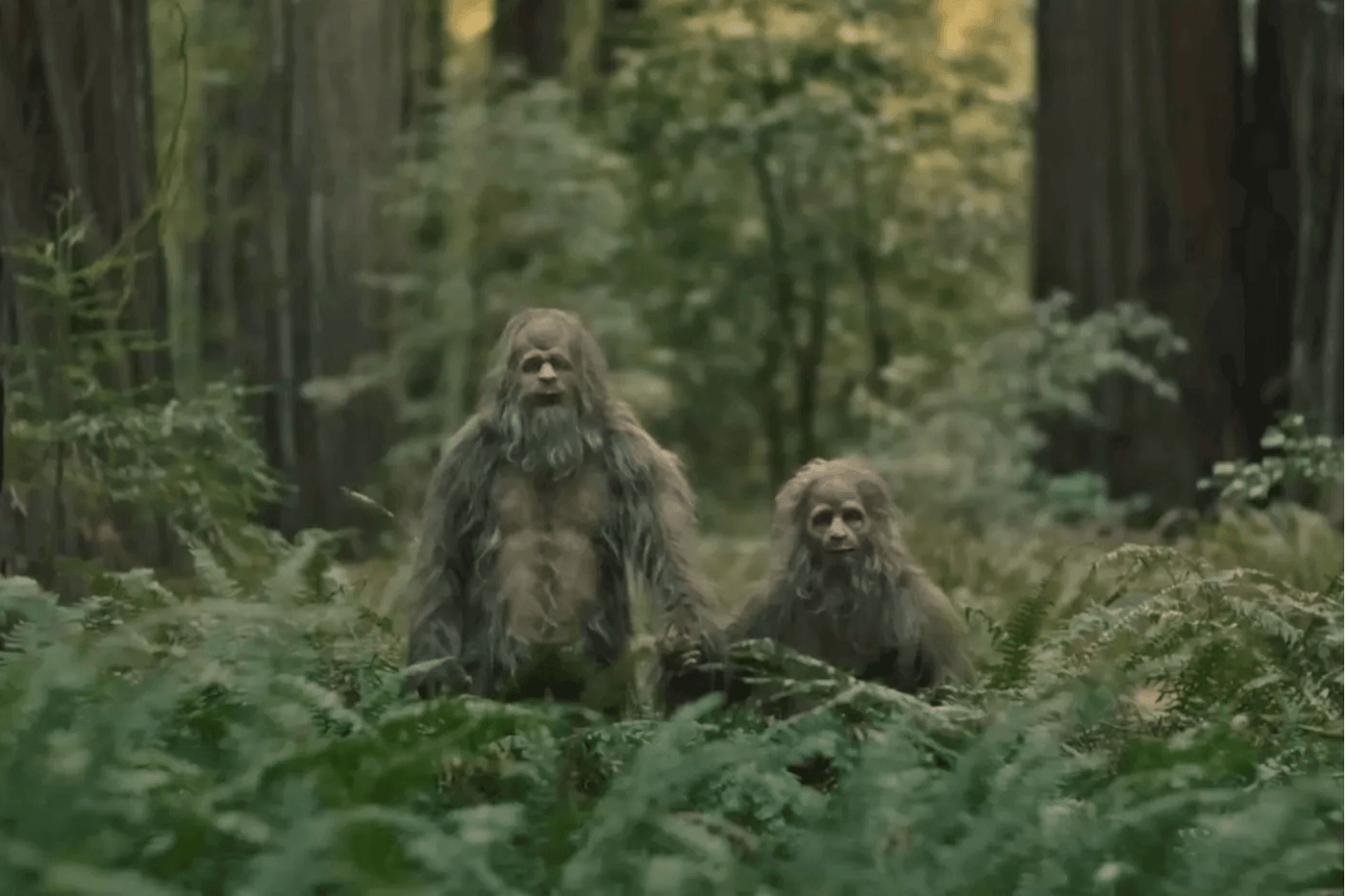
Two furry animals in the woods Description automatically generated

Sasquatch Sunset (Bleecker Street)

In the summer of 1983 Ted Kaczynski was feeling hemmed in even in remote Lincoln, Montana. “There were too many people around my cabin,” he later wrote, “So I decided I needed some peace.”

In search of the solace that only nature could provide him, he hiked up to a favorite remote spot far from the cars, trucks, RVs, chainsaws, and Americans that plagued him. “I went back to the plateau, and when I got there I found they had put a road right through the middle of it,” Kaczynski recounted. “You just can’t imagine how upset I was.”

Kacyznski’s rage was real. It was already explosive. He’d begun sending bombs through the mail five years earlier.

Although there were no witnesses to the Unabomber’s encounter with the newly built road, we can assume it wasn’t as visceral as the reaction to the same scenario by a trio of Big Foots—a companionable, low-IQ male (Jesse Eisenberg); a sensitive and resolute, female (Riley Keough); and an imaginative, even astute adolescent (Christophe Zajac-Denek)—in the latest film from brothers David and Nathan Zellner, Sasquatch Sunset. These hirsute hominids—the Sasquatches not the Zellners, though Nathan in full prosthetics plays the Harvey Weinstein alpha male who dominates, or tries to dominate, the opening stretch of the movie—emerge from the shadows of the redwoods and onto a dirt road packed hard and terrifyingly bright against the sunshine penetrating the cleft in the canopy.

The creatures have apparently never come across anything like this straight, flat, hard, horrible thing and they don’t have the mental faculties to deal with it. What literally strikes them first is the texture of the transformed earth under their outsized feet, its awful strangeness confirmed when they bend down to touch the surface with their hairy, knobbly fingers. The smell is alien too, the lingering residue of rubber and diesel, the whiff of that strangest, most lethal of threats: human beings.

After exploring the road tactilely, the current top male (emotionally more sensitive, Jesse Eisenberg’s character is hardly more acute than Nathan Zellner’s) looks up and sees that the roads runs straight through the woods to a vanishing point. This is even more terrifying than the touch of it. They see the doom of infinity. Turning around they learn that the road also extends unfathomably in the opposite direction and this drives them into a renewed freak-out. Each new blow of perception makes them forget the previous one. They turn back to the original direction and are horrified yet again that the road is still there.

After they’ve taken in the stimuli of sight and touch, the terrible truth sinks deeper into their bodies. All three begin explosively shitting and pissing and vomiting on top of the road. This is not an act of marking the violation with their scents, but an irrepressible, reflexive response to the incommensurability of this danger.

In his Et in arcadio ego, W. H. Auden also tries to get his mind around a road:

I well might think myself
A humanist,
Could I manage not to see

How the autobahn
Thwarts the landscape
In godless Roman arrogance

These apes aren’t quite human and certainly aren’t humanists, and unlike Kaczynski they didn’t go to Harvard at age sixteen. But in the bones of their big feet they know what they’re up against. Luckily, perhaps, their memories, individual and collective, are not long. They will tramp on.

Many reviewers seem to consider the extravagant excretions in this road scene a slapstick extravaganza. That’s part of the paradoxical pleasure of the cinema: the enjoyment of watching others, even if they are imaginary or mythic, suffering or literally scared shitless. But these Sasquatch antics are far more unsettling, and profoundly comic, when viewed as a mash-up of the eschatological and the scatological. Try to hold it in when you watch the live-feed of the Thwaites Glacier launching itself into the Amundsen Sea!

One shouldn’t be surprised that the urbanites of the New York Times and others clearcut the backcountry pathos and terror even while these hipster humanists rightly understand the movie as an allegory of extinction for a species (theirs) supposedly more advanced in evolutionary terms. Yet humans, whether clean-shaven or artfully beardsmithed, now appear doomed by the very same forces they have unleashed that will snuff out Sasquatch, or already have. The Sasquatch cohort never sees man or woman but discovers the results of their arts, sciences, and industry: that road; a tree marked for felling with a scarlet X; a bear trap with a denuded bone still in its iron jaws; a docile hen in a chicken-wire cage; rusted logging equipment.

When the Sasquatches come across a campsite in their woods the people who have apparently just set up are inexplicably nowhere to be seen or heard. The tent is shocking red and stocked with even more toxically colored junk food, that the hairy bi-peds tear into. There is also a bright yellow tape deck that, after some fiddling breaks into 1990s Brit synth-pop as garish as the snacks they’ve plundered. Presumably, they don’t know the band’s name, Erasure, which strikes those cineastes in the know as archly oracular, as does the song’s title and refrain “Love to Hate You.” The apogee of human art encountered by these supposedly inferior apes is thumping techno-pap. It drives the Sasquatch not to dance but to destruction.

The filmmaking brothers forage relentlessly through an undergrowth of cinematic allusion: 2001: A Space OdysseySometimes a Great NotionDeliverance, nature documentaries and the Bigfoot movies that came to our local theater on Bainbridge Island in the Pacific Northwest. But these winking gags and the physical comedy enacted by the human actors in their hairy, fleshy suits are shot through with terrifying melancholy. If we laugh at the Sasquatchian behaviors we are also laughing at ourselves, and it is a bitter Swiftian laugh. It isn’t only Donald Trump’s pussy-grabbing that the rampant libido of Zellner’s horny Sasquatch male sends up. The entire human species is enslaved by lust, not just for sex but for the domination of nature.

The Sasquatch have a language of monosyllabic grunts, groans and shrieks. Eisenberg’s beta-male tries, unsuccessfully, to count the stars. He can’t manage to tally the rings of a tree either, one which we humans, unlike the Sasquatches, know has been felled by a chainsaw.

But intellectual and imaginative advance is coming to the species, even if this evolutionary progress comes too late—or maybe too early. The adolescent Sasquatch has intuition and an imaginary companion that he ventriloquizes with his hand and that speaks in a more complex language than that of his elders. This youngster is inventing art, writing his own script as he makes his way in his vanishing world.

But the ancestral traditions are his too. He takes up baseball bat-sized branches to pound in precise unison with the others on resonant trees like giant drums or organ pipes, vainly trying to summon others of their vanishing kind from their disappearing habitat.

Even in their own primitive language, the Sasquatches are hardly a voluble bunch.

As these nomads make their way through woods and across fields, vast tracts of cinematic space open up for the musical soundtrack, brilliantly filled in by the experimental band The Octopus Project (Josh Lambert, Toto Miranda, Yvonne Lambert): an electronic scrim from the Wagnerian New Age summons the dawn; a simulated bird-call is awakened by warming sonic rays; pulsing, long-held harmonies provide a soft bed for a sylvan flute melody as the beasts prepare their shelter for the night; serene strings and winds in pastoral mode paint the obligatory, titular views of sunset over vast forests broken only by a few snowy patches; bucolic melodies pair with placid chords for the Disneyesque, wildlife-documentary cameos of wolverine or possum or snake. There is humor in many of these musical cues, clichés as artificial as those unseen campers’ Cheetos. The echoing thwack of a bongo signals the discovery of berries, the hollow ring of a tubular chime awakens an almost sacred pleasure at eating them. A tender lullaby welcomes a new life. Tantric, wellness-spa sonorities as the beasts prepare for love.

The idyll will be broken and when it is, melodies struggle against pounding electronics. The thumps of drums and shimmer of cymbals sew dread. Industrial eruptions agitate the Sasquatch’s terror. Dissonant collisions, metallic scrapings, wiry janglings terrorize the road scene.

And in the end, the inevitable closing song serenades the credits with the first words of English, said or sung, in the entire movie. The invisible singer is Riley Keough, a granddaughter of Elvis Presley. She also played the female sasquatch, whose sad eyes seem prescient of her clan’s fate. This makes for the most knowing joke of the whole movie, Rock and Roll royalty breathily hymning the “Creatures of Nature.” David Zellner’s goofily grandiloquent doggerel lyric is delivered by Keough above harmonically inert, harplike guitar chords, cello drones, and other precious folkisms:

Stewards of forests and
Rivers and mountains
All co-habitating
In Grand Guignol

To go against Nature
Is to face its fury
From ancient Pompeii
To Hurricane Paul

The vintage machinery, the nylon tents, the boombox and the synthesized hit on its cassette: all of these and other clues suggest that the movie is set in an already vintage past, even if these signs could ambiguously gesture towards possibly retro glampers, as do the tourist-attraction logging museum adorned by bigfoot statues and other practices of the present. The Sasquatches might still have some more time or they may have already disappeared over the horizon of history.

The closing song is coyly oracular on this matter of time and truth. Rummaging in the undergrowth for a final morsel of cliché, the last rhyme of “Creatures of Nature” nods to Shakespeare on the way towards the exit:

Chaos is order
The order of Nature
Through Winter and Spring and
Through Summer and Fall

They camе here beforе us
And shall be long after
’Til the World finally reaches
Its last curtain call.

This 90-minute, end-of-an-eon drama concludes as soft-focus choral vocalizations (“la, la, la, la”—a soft syllable decidedly not the bigfoot vocabulary) bathe Sasquatch Sunset in golden, elegiac light. The perspective broadens, time expands towards irrelevance. The road has disappeared from view and memory, reclaimed by the forest or what comes after it.

DAVID YEARSLEY is a long-time contributor to CounterPunch and the Anderson Valley Advertiser. His latest book is Sex, Death, and Minuets: Anna Magdalena Bach and Her Musical NotebooksHe can be reached at  dgyearsley@gmail.com