Tuesday, July 20, 2021


Reckless’: G20 states subsidised fossil fuels by $3tn since 2015, says report

Support for coal, oil and gas remains high despite pledges to tackle climate crisis
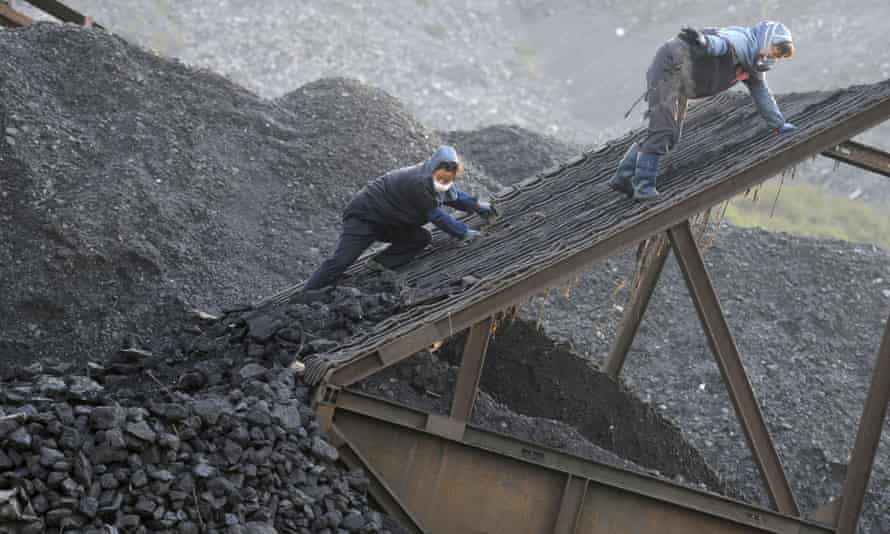
Workers at a coalmine in Huaibei in Anhui province, central China. Photograph: Huang Shi Peng/AP
 Environment editor

The G20 countries have provided more than $3.3tn (£2.4tn) in subsidies for fossil fuels since the Paris climate agreement was sealed in 2015, a report shows, despite many committing to tackle the crisis.

This backing for coal, oil and gas is “​​reckless” in the face of the escalating climate emergency, according to the report’s authors, and urgent action is needed to phase out the support. The $3.3tn could have built solar plants equivalent to three times the US electricity grid, the report says.

The G20 countries account for nearly three-quarters of the global carbon emissions that drive global heating.

The report, by BloombergNEF and Bloomberg Philanthropies, focuses on three areas where immediate action is needed to limit global temperature rise to 1.5C: ending fossil fuel subsidies, putting a price on carbon emissions and making companies disclose the risks posed by climate change to their businesses.

The report says all 19 G20 member states continue to provide substantial financial support for fossil-fuel production and consumption – the EU bloc is the 20th member. Overall, subsidies fell by 2% a year from 2015 to reach $636bn in 2019, the latest data available.

But Australia increased its fossil fuel subsidies by 48% over the period, Canada’s support rose by 40% and that from the US by 37%. The UK’s subsidies fell by 18% over that time but still stood at $17bn in 2019, according to the report. The biggest subsidies came from China, Saudi Arabia, Russia and India, which together accounted for about half of all the subsidies.

The G20 agreed in 2009 to phase out “inefficient” fossil fuel subsidies but did not define inefficient and little progress had been made.

“On paper, global leaders and governments are recognising the urgency of the climate challenge and the G20 countries have all made ambitious commitments to scale down fossil fuel development and transition to a low-carbon economy,” said Antha Williams, the environment lead at Bloomberg Philanthropies.

“But, in reality, the action taken by these countries up until this point is a far cry from what is needed. As a host of climate emergencies intensify around the world, the continued development of fossil fuel infrastructure is nothing short of reckless. We need more than just words – we need action.”

The UN special climate envoy, Michael Bloomberg, the founder of Bloomberg Philanthropies, and the UN-backed Net-Zero Asset Owner Alliance (NZAOA), which represents more than $6.6tn of investments, both urged governments to act, before a meeting of G20 energy and climate ministers in Italy on Friday.

“New [commitments] and net-zero targets from some G20 countries are warmly welcome,” said Günther Thallinger, at the financial services firm Allianz and the chair of NZAOA. “However, pledges and targets alone will not be sufficient to change course.”

The report found that 60% of the fossil fuel subsidies went to the companies producing fossil fuels and 40% to cutting prices for energy consumers.

“This funding really encourages the potentially wasteful production and use of fossil fuels and can mean emission-intensive assets are funded today, thereby locking in their emissions for decades,” said Vicky Cuming at BloombergNEF and an author of the report.

“There’s evidence that [subsidies] disproportionately benefit wealthier consumers, rather than vulnerable groups,” she said. The gilets jaunes (yellow vests) protests in France in 2018 showed that cutting fuel subsidies was politically delicate, she said.

Experts say ensuring less well-off consumers are protected from such changes is crucial for policies to be successful.

The report also examined how G20 countries were putting a price on carbon pollution. It found that more than 80% of emissions were covered by such prices in France, Germany and South Africa.

In the UK, 31% of emissions are covered but the UK has one of highest carbon prices at $58 per tonne of CO2. Just 8% of US emissions are covered and at the low price of $6 per tonne. Russia, Brazil, and India do not have any carbon prices.

The report says making companies disclose the risks the climate crisis poses to their businesses is critical to enabling financial markets to push capital away from polluting sectors and into green ones. But only the UK and EU have said they will enforce such a policy.

A recent report by the International Institute for Sustainable Development concluded that reforming fossil fuel subsidies aimed at consumers in 32 countries could reduce CO2 emissions by 5.5bn tonnes by 2030, equivalent to the annual emissions of about 1,000 coal-fired power plants. It said these changes would also save governments nearly $3tn by 2030.

In June, more than 500 organisations called on US policymakers to eliminate fossil fuel subsidies from the US tax code. “It is past time to remove the burden of dirty energy support from the public and instead turn the efforts of the government to supporting clean energy and the jobs it generates,” the letter says.


FIDE WORLD CUP OF CHESS

 
GM Artur Jussupow makes the first move in game two of the Anand-Kramnik match. Photo: Guido Kohlen/Sparkassen Chess Trophy.

Anand Beats Kramnik In No Castling Match

PeterDoggers

Updated: Jul 19, 2021, 
|Chess Event Coverage

GM Viswanathan Anand defeated GM Vladimir Kramnik 2.5-1.5 in a four-game No Castling chess match in Dortmund, Germany. Anand's win in the first game was decisive in this event where the players were not allowed to castle.

The idea for this match originates from DeepMind's latest paper, co-written by Kramnik, in which the self-learning chess engine AlphaZero was used to explore the design of different variants of the game of chess with different sets of rules. One of the variants discussed—many of which you can try on Chess.com yourself!—was No Castling. DeepMind also supported the match between Anand and Kramnik and plans to sponsor the event next year as well.

The match saw all four games starting with 1.c4, with Black responding 1...c5 in the first three before Anand tried a Tarrasch setup in game four. There was a lot of exciting chess, but the first game turned out to be the decisive one

Wind energy CEOs warn G20 leaders over climate targets

Groups including Siemens Gamesa and Vestas say goals will be missed without increased turbine use

Wind energy is expected by groups including the International Energy Agency and the International Renewables Energy Agency to form the backbone of global electricity generation by 2050 

Nathalie Thomas in Edinburgh 

The heads of many of the world’s biggest wind energy companies have told global leaders that efforts to meet global climate goals are “condemned to fail” if they do not urgently step up turbine installation.

Chief executives of groups including Vestas, Orsted, Siemens Gamesa, SSE and RWE Renewables wrote to G20 heads of state on Monday warning that they would “fall short” of the wind capacity required for carbon neutrality by 2050 by 43 per cent, based on current growth forecasts.

Wind energy is expected by groups including the International Energy Agency and the International Renewables Energy Agency to form the backbone of global electricity generation by 2050.

A record 93 gigawatts was installed in 2020 despite the global pandemic, largely in China and the US, but annual deployment will have to quadruple in the next decade to set big economies on the path to reach climate targets.

However, this will be “unachievable without decisive and urgent policy change across the G20 countries”, the chief executives warn in the letter, which was co-ordinated by the Global Wind Energy Council.

The European Offshore Wind Deployment Centre off the coast of Scotland © REUTERS

They are urging governments to set more ambitious national wind energy targets as well as solve problems that prevent the delivery of projects such as “inadequate” permitting and planning regimes as well as insufficient investment in electricity grids.

Clean energy stocks have experienced a sharp sell-off this year, after reaching all-time highs in January, as nervousness has crept in among investors about the speed of the sector’s growth.

Shares in Siemens Gamesa, the world’s largest offshore wind turbine maker, have fallen more than a fifth in the past five days after its latest profits warning last week, which cited several factors including a sharp increase in raw materials prices. Its shares have lost more than a third in the year to date; rivals Orsted and Vestas are down 30 per cent and 22 per cent, respectively, over the same period.

Ben Backwell, chief executive of the GWEC, said that problems varied according to the market, but even in the some of the more ambitious countries — such as the UK, where Boris Johnson plans to quadruple offshore wind capacity to 40GW by 2030 — it can take a “long, long time” for projects to come to fruition. He pointed out that seabed rights for offshore wind projects currently under construction were awarded more than a decade ago.

Norway’s prime minister Erna Solberg says Oslo remains committed to oil and gas

In emerging markets in particular, there were insufficient “push” factors to remove fossil fuels from the energy system, said Backwell. Renewables were often only added to increase capacity rather than replace existing polluting power stations, while in times of economic downturn renewable energy auctions were often cancelled.

The letter has been timed to come ahead of G20 ministerial sessions on the environment, climate and energy at the end of the week in Naples.

Climate groups were left disappointed after June’s G7 summit in Cornwall ended without specific plans for new climate financing.

“Action to tackle climate change is lagging, and time is running out,” the chief executives, who also include Miguel Stilwell d’Andrade of Portugal’s EDP and Mary Quaney of Mainstream Renewable Power, wrote in the letter. “The choices made in this year and in this decade are mission-critical to preserving our planet and avoiding climate catastrophe.”

Their urgency echoes calls from other groups — including the IEA, which warned in May that energy groups must stop all new oil and gas exploration from this year, while calling for a “historical surge” in investment, predominantly in clean energy technologies.


Vulcan Energy signs lithium hydroxide supply deal with LG Chem unit

Reuters | July 18, 2021 | 

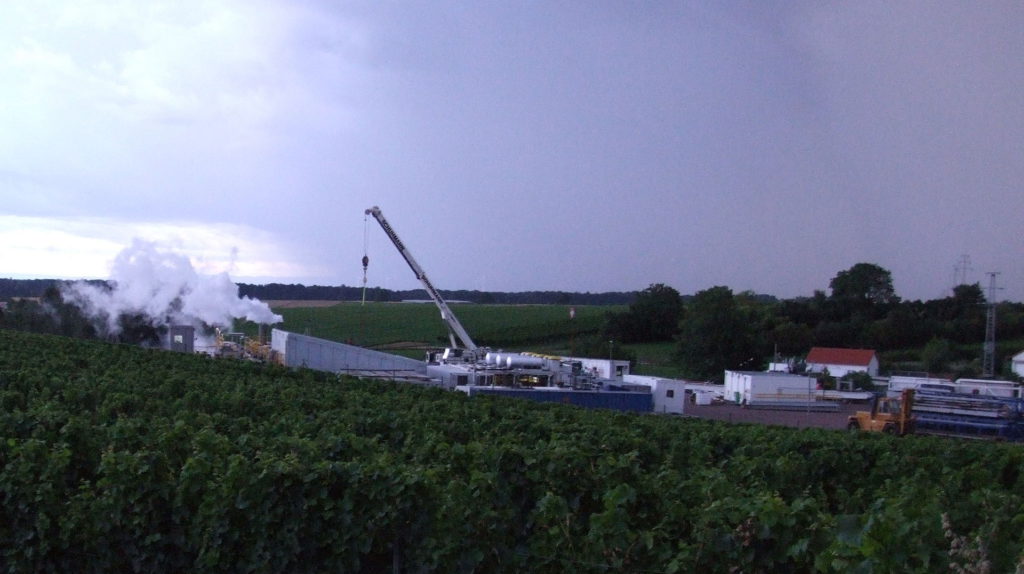
Insheim, site of Vulcan’s lithium extraction project in Germany. Credit: Wikipedia

Australia-listed lithium miner Vulcan Energy Resources said on Monday it had signed a long-term deal to sell lithium hydroxide from its German project to the battery unit of South Korea’s LG Chem .


Vulcan, which will extract lithium from geothermal brine via its 1.7 billion euro ($1.4 billion) project, said the five-year deal could be renewed for five more years. The contract is expected to be finalised by the end of November.

Vulcan’s process for extracting lithium, a key ingredient for electric vehicle batteries, will produce renewable power and emit no carbon dioxide, unlike Australia’s hard rock lithium mining. The water will also be recycled, unlike the evaporation technique used in arid areas of South America.

The company, which plans to operate in Germany’s Upper Rhine Rift, said LG Chem’s LG Energy Solution (LGES) would buy 5,000 tonnes of battery grade lithium hydroxide in 2024, the first year of production, rising to 10,000 tonnes a year. LGES will use the lithium to make battery cathodes.


THE LGES DEAL IS THE FIRST FOR VULCAN’S GERMAN PROJECT, ACCOUNTING FOR A QUARTER OF ITS OUTPUT FROM ITS FIVE PLANNED PLANTS


Vulcan’s German subsidiary was preparing for a potential listing in Frankfurt this year, the unit’s head Horst Kreuter said. “We are sensing a lot of interest from investors in Europe,” he told Reuters.

The LGES deal is the first for Vulcan’s German project, accounting for a quarter of its output from its five planned plants, which are expected to be operating from 2026.

Vulcan previously said it was open to selling 80% of its lithium via long-term deals with the rest sold on the spot market, but Managing Director Francis Wedin said Vulcan’s German operations could consider selling more via long-term contracts.

“We could go to 100% potentially of future supply we will just have to take it as it comes,” he told Reuters, adding that the firm was “overwhelmed with demand” from equipment makers.

Vulcan said it was in talks with several major customers in the European battery and electric vehicle markets, without offering details.

Vulcan signed a memorandum of understanding this month with French-Italian automaker Stellantis to supply lithium, sources said. Daimler previously said it was in talks about potential purchases from Vulcan.

Vulcan plans to expand in Germany’s Rhine Valley, which could include acquisitions, Wedin said.

Kreuter said the price for Vulcan’s lithium produced in Germany would be lower than the cost of lithium carbonate from Chile or Argentina.

“This is due to the additional revenue from the sale of renewable energy won from the thermal plants,” he said.

($1 = 1.1805 euros)

(By Melanie Burton and Sameer Manekar; Editing by Jason Neely and Edmund Blair)
THE AIM IS GROSSE POINTE ZERO
Net zero is hard work, so companies are going ‘carbon neutral’

Bloomberg News | July 19, 2021 | 

Projects that truly reduce deforestation are key to climate change. Stock image.

Companies are buying carbon offsets like never before. They’re also facing unprecedented scrutiny over whether helping to fund green projects elsewhere really makes up for their heat-trapping emissions.


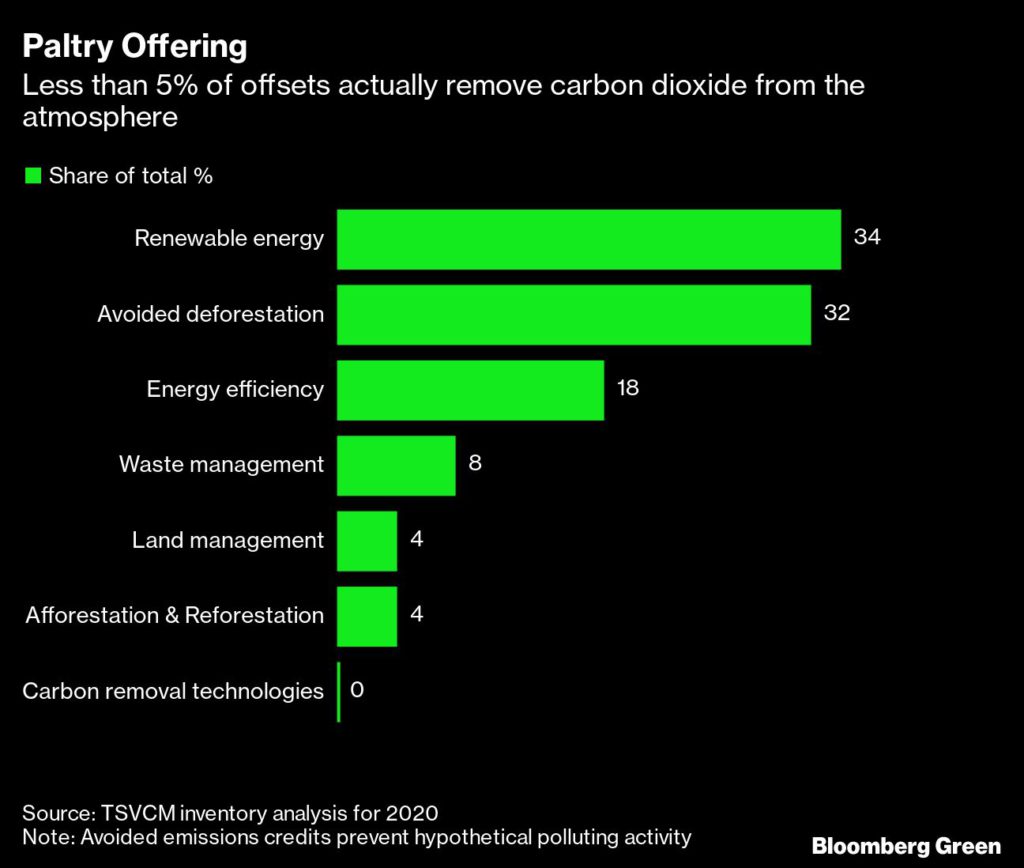
The most common offsets are based on avoiding the release of additional carbon dioxide into the atmosphere, for example by preventing deforestation or supporting renewable energy projects. The other, much more expensive, option is to fund programs that actually remove CO₂ by planting forests or employing machines that capture greenhouse gas from the air and store them away. Should companies be allowed to use cheaper “avoided emissions” to deliver on their promises to eliminate pollution?


The Science Based Targets initiative, a group of well-respected experts on corporate claims, says no. A company cannot offset its way to net-zero emissions because it undermines the need for investment in structural changes to cut pollution, according to its guidance. Instead, the group says, carbon-removal credits should only be bought once all other possible practical angles have been explored, such as switching to cleaner fuels or investing in new technology. Companies can still buy all the avoided-emissions offsets they want — they just can’t use them to balance their carbon ledgers.

That is too high a bar for some companies, which argue they should get some kind of recognition for purchasing offsets. If the credits can’t be used to improve their green credentials, then what’s the point of having them at all? That’s why some are proposing a compromise. Maybe companies can use offsets to claim “carbon neutrality” rather than “net zero.”

The idea is backed by Mark Carney, the former governor of the Bank of England, who is spearheading the Taskforce for Scaling Voluntary Carbon Markets. The group’s final recommendations on July 9 suggested an offset buyer could be described as “carbon neutral” or “carbon neutral on the path to net zero.”

“There’s a difference between carbon neutrality and net zero,” Carney told members of the British Parliament earlier this month. “The company should be compensating for its emissions on that pathway to net zero as well.”

Yet the two terms are indistinguishable to anyone who isn’t familiar with the intricacies of carbon accounting — itself a nascent financial tool. The push to adopt the “carbon neutral” label is causing concern among climate experts, who fear it creates a watered-down definition for those who are more interested in greenwashing than genuinely seeking to reach net zero.

“There will be some companies that try to scrape by with avoided-emission offsets,” said Eli Mitchell-Larson, an Oxford University environmental scientist who sits on the taskforce. “There needs to be a term for them.” But both “net zero” and “carbon neutral” are defined by the United Nations and scientists as the balance of emissions with removals, he said, “so carbon neutral is technically just shorthand for net zero.”


RELATED: Carbon offset trading is taking off before any rules are set

Owen Hewlett, another taskforce member and chief technology officer of Gold Standard, an offset registry, said there’s no consensus over what “carbon neutral” means. Still, he said, it would be good to find a way to differentiate between faraway milestones like “net zero” and shorter-term claims that are based on supporting programs that avoid more emissions.

Environmentalists broadly agree that well-run projects that, say, truly reduce deforestation are a key climate solution. Many are eager for more money to flow to these avoided-emissions programs, which are often underfunded in developing countries. What they struggle with is how to move large amounts of corporate money through a voluntary carbon market in return for some sort of credit to the company.

Assuming the projects are effective at avoiding emissions, should customers and investors accept the credits as suitable penance for a company’s climate sins? The answer could have ripple effects for years to come on efforts to slow global warming. If we agree that avoided emissions are sufficient to cancel out ongoing pollution, we give companies a license to keep polluting as long as they purchase these credits.

Perhaps a better label for companies using avoided-emissions offsets should be something closer to “carbon responsible.”

Only a small fraction of corporations has a climate plan. An even smaller group has science-based targets endorsed by SBTi. If companies want to atone for their climate sins, they can begin by taking responsibility for their pollution by funding avoided-emissions programs. That doesn’t write off emissions from their carbon ledgers, but it could earn them a “carbon responsible” tag that gives them credit for being ahead of the vast majority of firms that don’t even have a roadmap for reducing emissions.

If these companies really want to cancel out emissions with offsets, they would have to purchase more expensive carbon-removal credits that actually draw down greenhouse gases. Only when companies have achieved all the reductions they possibly can, and balanced the rest with carbon removals, would they achieve “carbon-neutrality” or reach “net zero.”

(By Jess Shankleman and Akshat Rathi)
Vale reviews copper, nickel guidance amid labor, climate issues

Reuters | July 19, 2021 | 

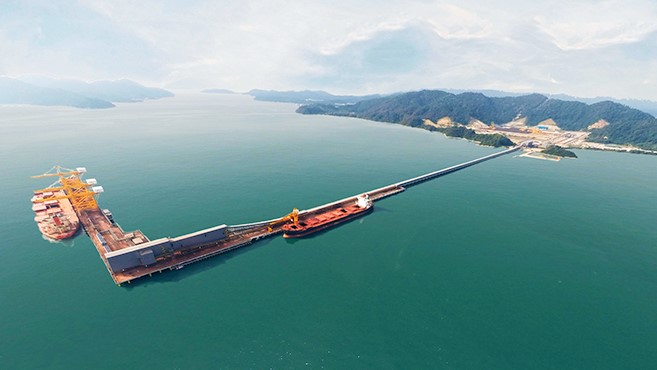
Teluk Rubiah distribution terminal (Credit: Vale)

Brazilian miner Vale SA said on Monday evening that it was reviewing its guidance for 2021 nickel and copper output as strikes and “extraordinary climate conditions” in Canada have materially affected production.


In its second quarter output report, Vale said it produced 41,500 tonnes of nickel in the period and 73,500 tonnes of copper, representing quarterly declines of 14.3% and 4%, respectively.

A union walk off at Vale’s mine in Sudbury, Canada, that started on June 1, is hitting production for both metals, the company said. Additionally, non-scheduled maintenance at a metals refinery in Wales was constraining nickel output, and a flood at its Voisey’s Bay assets in Labrador, Canada, hit copper output.

“(Copper) production was hit mainly by the Sudbury strike and delays at Voisey’s Bay resulting from the flooding of the mine, related principally to extraordinary climate conditions,” the company said, adding that the flooding had since subsi
ded.

The company said that production of iron ore, the core of its business, had come in at 75.7 million tonnes in the second quarter, up 11.3% in quarterly terms and 12% in annual terms. Among several factors that buoyed iron ore output, the company said, was the completion of maintenance at the Ponta da Madeira port in northern Brazil. The miner maintained its 2021 iron ore production guidance of 315-335 million tonnes.

(By Gram Slattery, Marta Nogueira and Gabriel Stargardter; Editing by Rosalba O’Brien and Aurora Ellis)
ONTARIO
Barrick says Hemlo suspended following a fatality

MINING.com Editor | July 16, 2021 | 

Barrick has reported a fatality at the Hemlo underground mine in Ontario. Credit: Barrick Gold

Operations at Barrick Gold’s (TSX: ABX; NYSE: GOLD) Hemlo mine, about 350 kilometers east of Thunder Bay, Ontario, remain suspended after a contract worker died on site late Wednesday.


Perenti, through its subsidiary Barminco, provides underground mining services to the Hemlo gold mine.

BARMINCO AND BARRICK ARE WORKING CLOSELY WITH THE LABOUR MINISTRY AND THE ONTARIO PROVINCIAL POLICE TO INVESTIGATE THE CAUSE OF THE ACCIDENT

Barminco and Barrick are working closely with the labour ministry and the Ontario Provincial Police to investigate the cause of the accident.

CBC News reports the OPP has identified the deceased as Troy Cameron of the nearby town of Marathon.

“Perenti and Barrick extend their deepest sympathies to the family, friends and colleagues of the employee,” Barrick said in the statement.

Counselling services have been mobilized to provide direct support to the employee’s family and co-workers.

Hemlo has produced more than 21 million oz. of gold, and has been operating continuously for more than 30 years. It comprises the Williams mine—an underground and open pit operation.

The mine has now transitioned to underground only.

According to Barrick’s recent preliminary production results, Hemlo produced 42,000 oz. in the June quarter, 22% less year-on-year from 54,000 oz. in the comparable prior-year period.

Barrick has guided for Hemlo to contribute 200,000 to 220,000 oz. gold in 2021.

 Lebanon: Can youth bring about radical reform? | Generation Change

Jul 19, 2021

Al Jazeera English

In the third episode of Generation Change, we travel to Lebanon to see how young organisers are mobilising to halt one of the most serious economic and political crises in Lebanon’s history.

Karim Safieddine is an activist and leading member of MADA, Lebanon’s first youth-led political movement.

Azza el-Masri is a journalist and media researcher specialising in disinformation and its effects on sectarianism.

In this episode, presented by Luna Safwan, Karim and Azza discuss Lebanon’s political gridlock, the August 4 Beirut blast, as well as strategies to end corruption and dismantle the sectarian power-sharing system.


Unilever partners with Arzeda on enzymes for cleaning

The start-up’s digital biology platform combines biophysics with artificial intelligence

by Craig Bettenhausen
July 13, 2021


Credit: Arzeda
Arzeda uses biophysics, big data, and artificial intelligence to design enzymes, such as this hydrolase.

The enzyme development start-up Arzeda has landed a partnership with the consumer goods giant Unilever to develop enzymes for household cleaning applications.

Many dish detergents and hard surface cleaners already use enzymes, which can break down soils, oils, and other grime as well as boost the performance of other ingredients. Enzymes, along with live microbes and advanced surfactants, are central to Unilever’s $1.2 billion plan to shift to 100% biobased ingredients for its cleaning products by 2030.

Neil Parry, head of biotechnology development at Unilever, says the firm has the opportunity with Arzeda to look beyond the capacities of natural enzymes and into new kinds of enzyme-catalyzed cleaning chemistry. “Although detergents have been around for a long time with enzymes in them, the enzyme classes are quite limited,” he says, “and we believe there’s so many more enzyme classes that can get performance.”

Parry says Unilever is interested both in enzymes that are part of final consumer products, like lipases that break down grease in dish detergent, and those that improve the company’s manufacturing processes, such as the saponification of oils and fats into soaps.

Arzeda combines physics-based protein design with deep learning, a type of artificial intelligence, to improve enzymes or even build them from scratch. “Our impact on the field of enzyme engineering is improving the manufacturability and performance of existing classes, and then creating new classes of function, new modes of action,” says Alexandre Zanghellini, Arzeda’s founder and CEO.

Parry says the venture is part of Unilever’s goal of eliminating petroleum-derived ingredients. “You start taking the chemical load away; what are you going to replace it with?” he says. “This is making sure that the enzyme classes go across the different functionalities that petrochemicals give us today.”

Though the firms declined to discuss the financial details of the 3-year collaboration, Parry and Zanghellini both describe the scale as “significant.” Zanghellini says it fits well with his strategy of working closely with a small number of market leaders. “We have a couple of key partners which are making significant commitments, not only on the financial side but also on bringing these products to market,” he says. For example, Arzeda is working with Amyris and BP on biobased chemicals.

Arzeda raised $15.2 million in a series A funding round in 2017, and Zanghellini says the company has invested around $30 million overall in developing its platform and technology. The Seattle-based firm employs roughly 40 people “and is growing rapidly,” he says. About 35% of its research staff comes from a computer science background and the rest from chemistry and biology.

Enzymes are a hot area for chemical manufacturing. Just this year, DSM began testing enzymatic production of food and flavor ingredients with the start-up Debut Biotechnology, the start-up Allozymes raised $5 million for its droplet-microfluidics-based enzyme screening technology, and the start-up EnginZyme raised $13 million for its immobilized-enzyme chemical synthesis platform.

Chemical & Engineering News
ISSN 0009-2347
Copyright © 2021 American Chemical Society


NATURAL PRODUCTS

Delta-8-THC craze concerns chemists

Unidentified by-products and lack of regulatory oversight spell trouble for cannabis products synthesized from CBD

by Britt E. Erickson
July 6, 2021 | A version of this story appeared in Volume 99, Issue 31

Credit: Maurice Keller
Signs for delta-8-THC products are increasingly showing up on street corners and in windows of retail stores.


Move over cannabidiol (CBD). The popularity of another cannabinoid, ∆8-tetrahydrocannabinol (delta-8-THC), is on the rise. Found in gummies, vape cartridges, tinctures, and other products, delta-8-THC is popping up in gas stations, convenience stores, tobacco shops, and cannabis dispensaries throughout the US and beyond—often with no age restrictions.


The conversion of cannabidiol into delta-8-tetrahydrocannabinol (delta-8-THC) also produces small amounts of delta-9-THC and delta-10-THC.

Unlike CBD, delta-8-THC produces euphoric effects that are similar to but milder than those of delta-9-THC, the well-known psychoactive compound in cannabis. Delta-8-THC is an isomer of delta-9-THC. The only difference between the two molecules is the location of a double bond between two carbons.

The delta-8-THC craze began when an oversupply of CBD extracted from US-grown hemp caused the price of CBD to plummet. Producers began looking for ways to turn the glut of CBD into something profitable. Using simple chemistry reported in the 1960s, the industry got creative and started experimenting with ways to convert CBD into delta-8-THC. The resulting products target consumers who are looking to relieve stress and anxiety, especially those who don’t want to use traditional cannabis products or those who live in places where cannabis products are not legally available.

But with no regulatory oversight and limited laboratory testing, most products sold as delta-8-THC are not actually pure delta-8-THC. Such products typically contain a high percentage of delta-8-THC and small amounts of other cannabinoids, including delta-9-THC, and reaction by-products. Some of the cannabinoids are not naturally found in cannabis. In most cases, nothing is known about the health effects of these impurities.

Several states are starting to crack down on sales of delta-8-THC products. But as long as they are derived from hemp and contain no more than 0.3% of delta-9-THC on a dry-weight basis—the limit under federal law—many lawyers and hemp industry officials consider them legal. Regardless of whether delta-8-THC is legal, chemists are sounding the alarm after finding several unidentified compounds in products labeled as delta-8-THC.

SAFETY CONCERNS SKYROCKET


“My concern is that we have no idea what these products are,” says Christopher Hudalla, president and chief scientific officer of ProVerde Laboratories, an analytical testing firm with facilities in Massachusetts and Maine. “Consumers are being used as guinea pigs. To me, that’s horrific,” he says.

Using chromatographic methods with UV or mass spectrometry detection, scientists at ProVerde have tested thousands of products labeled delta-8-THC. “So far, I have not seen one that I would consider a legitimate delta-8-THC product,” Hudalla says. “There’s some delta-8-in there, but there’s very frequently up to 30 [chromatographic] peaks that I can’t identify.” There are often also peaks that correlate with delta-9-THC as well as another isomer, delta-10-THC, he notes. Little is known about the effects of delta-10-THC, but users have anecdotally reported feeling euphoric and more focused after consuming it.


Credit: Michael Coffin
Vape cartridges containing both delta-8-THC and delta-10-THC can be purchased in many retail stores and online.


“I’m less concerned with traditional THC isomers than I am of the ubiquitous unknowns,” says Michael Coffin, chief scientist at Elevation Distro, a California-based cannabis manufacturing and distribution firm. “Delta-8, delta-9, and even delta-10 don’t seem to have any ill effects on people that we know of at this point,” he says. But a lot of people are doing a poor job of cleaning up their reaction products, he adds, which results in “quite a soup” of by-products and other unwanted compounds.

The conversion of CBD to delta-8-THC involves refluxing CBD in an organic solvent, such as toluene or heptane, with p-toluenesulfonic acid or another acid that serves as a catalyst. The reaction is typically run for 60–90 min. “You basically close the ring on the CBD molecule,” Coffin says.

“These are pretty aggressive synthetic conditions that use strong acids,” Hudalla says. “They might be using strong bases to neutralize. They can use metal catalysts. I hear different people doing it different ways.” In a pharmaceutical environment, PhD chemists ensure that products don’t include harmful unconsumed reactants, he says. But nobody is measuring the pH of delta-8 products or testing for strong acids and residual metals that are left behind, he says.

It is possible to separate delta-8-THC from unwanted reaction leftovers or by-products, but “most people are not actually taking the time to distill it or use chromatography” to do so, says Kyle Boyar, a staff research associate at the University of California San Diego’s Center for Medicinal Cannabis Research.

One by-product commonly found in delta-8-THC products is olivetol, a precursor of THC, Boyar says. “There’s a patent for olivetol oral compositions” that inhibit cannabis intoxication from delta-9 THC, he says. If olivetol also inhibits intoxication from delta-8, it may contribute to the perceived milder effects of that isomer. The patent applies to an oral dose of olivetol. “I don’t think anybody really knows the safe inhalation dose of olivetol,” he adds.

“A lot of irresponsible production is going on in the sense that most of these people are getting their information from online forums, and many of them aren’t necessarily trained chemists,” Boyar says.

Like many other scientists, Greg Gerdeman, president and acting CEO of NASHCX, a Nashville-based commodities exchange devoted to hemp and its derivative products, is concerned about the lack of oversight for delta-8-THC products. “It really needs to be cleaned up,” he says. “I just know there’s a great deal of experimentation,” by producers. And despite claims of delta-8-THC being less potent than delta-9-THC, “it can make you really high,” Gerdeman says. “It’s just a matter of dose. Another issue is, how many of these products have way more delta-9 in them than they say?”

Gerdeman has met both very experienced cannabis users and naive cannabis users who thought delta-8 wouldn’t make them anxious. But it absolutely did when they took too much, he says. “The beauty of cannabis is you don’t get fatal overdoses, but it can make you feel absolutely horrible.”

Tiffany Coleman, director of quality and processing at Carbidex, a cannabis firm in Michigan, experiments with making small-scale batches of delta-8-THC from CBD as a hobby. The state doesn’t allow such activity in commercial cannabis facilities. “I am trying to make sure the science is good,” Coleman says. “I’m working with peers all over the country and looking at different purification methods.”

Product toxicity aside, Coleman worries that people are making delta-8-THC without proper reaction safety controls. The conversion of CBD to delta-8 is an exothermic reaction, so it creates a lot of heat, they say. “This needs to be done in a controlled environment,” such as under dry ice and acetone, they add. Coleman uses glycol chillers to cool down the reaction. An ice bath isn’t cold enough, Coleman warns, saying they know of people who tried that approach and “blew stuff up.”

Coleman also has concerns about some of the solvents people are using. One popular method uses dichloromethane, also known as methylene chloride. Dichloromethane should not be used “without appropriate ventilation and controls because it’s a silent killer,” Coleman says. “A lot of these shops, even the shops in the legal markets, are not ready for this kind of activity.”

Consumers are being used as guinea pigs.
Christopher Hudalla, president and chief scientific officer, ProVerde Laboratories


THE CASE FOR REGULATION

Regulators aren’t ready for it, either. Many states are scrambling to control sales of delta-8-THC, which is now the fastest-growing product in the hemp industry. More than a dozen states have banned delta-8-THC and others are developing rules. And it’s not just an issue in the US.

Although the surge of delta-8 products started because of an oversupply of CBD in the US, delta-8-THC is also becoming popular in Europe, Coffin says. The US allows export of CBD isolate, and people in other countries can do whatever they want with it, he says. All the materials needed to make delta-8-THC are easy to get, he adds.

“This problem will not go away,” says Jeffrey Raber, cofounder and CEO of the Werc Shop, a California-based cannabis contract manufacturing and testing firm. “It might actually morph and change into bigger problems” if regulators don’t get a handle on it, he says.

Raber saw delta-8-THC’s market potential in 2018, when Congress legalized hemp in the US. “It’s a very interesting molecule, one that has very different physiological activity depending upon the entourage” and how it is administered, he says.

The Werc Shop published a white paper in 2018 that pointed out the limited availability of high-purity delta-8-THC due to uncontrolled processing steps. Raber is urging regulators to address those purity concerns and deal with delta-8-THC “in a sensible fashion” that enables its use in safe, protected ways. To accomplish that, he says, “make sure it’s tested.”

But existing independent analytical labs can’t handle the burden of exhaustive testing on all delta-8 THC products, according to Amber Wise, scientific director at Medicine Creek Analytics, a cannabis testing firm in Washington State. There are a handful of methods being discussed on online forums that use chemicals “that I would not want to have as residuals” in delta-8-THC products, such as dichloromethane and trichloroacetic acid, Wise says. Her lab hasn’t developed methods to test for those chemicals, she says, adding that it’s not practical to develop methods for every possible reagent people are using to make delta-8-THC. Instead, Wise says, regulators should require manufacturers to reveal what chemicals they use to make delta-8-THC and what compounds are in their final products.

It’s possible that one day there will be cannabis plants that contain sufficient delta-8-THC to extract in pure form. But for now, cannabis plants typically contain 0.1% delta-8-THC or less. “We have seen reports of plants containing as much as 1%,” but those are exceptions, Raber says. To economically extract delta-8-THC from cannabis, the levels need to be about 15–20%. “Genetics folks are going after that now,” he says, but synthetic products will dominate for a while.

Raber also worries that if regulators simply ban delta-8-THC as they did with delta-9-THC, “folks will make delta-10-THC or other types of ring isomers or alkyl chain analogs” such as tetrahydrocannabivarin. Some of these analogs could be toxic or “wildly psychoactive,” Raber says. The regulatory language needs to be broad, or “you’ll be stuck in this multiyear cycle of legislative fix.” This is in contrast to the 2018 Farm Bill, which limited the amount of delta-9-THC in hemp and hemp-derived products, such as CBD.

Gerdeman is particularly concerned about another cannabinoid called THC-O-acetate, the acetate ester of THC, which he’s seeing popping up in gummies and vapes. It is basically acetylated THC, which does not occur naturally in cannabis plants, he says. Heroin was created by acetylating morphine over 100 years ago, resulting in a drug that is much more potent than morphine because of pharmacokinetics, Gerdeman points out. “Do we have human studies on the effects of acetylated THC? No, not at all,” he says. And, as is the case with delta-8-THC, there’s no information on what else is in those products.

Without better regulation, consumers will continue to be duped by unscrupulous producers, according to Hudalla. For delta-8-THC, he says, “we need to get the truth out to the public” that it is a synthetic compound made from an ingredient extracted from hemp. “Like making methamphetamine from cold medicine, just because the starting materials are legal, does not make the resulting product legal (or safe),” Hudalla warns. He, like many chemists, believes delta-8-THC is a synthetic cannabinoid that is not legal.

“Many participants in the hemp industry see delta-8-THC as the salvation, providing a financial bridge until the [US Food and Drug Administration] approves CBD as a dietary ingredient,” Hudalla says. “But I do not believe that it should be at the expense of unsuspecting consumers, who are being misled about what products they are being sold, to bail out the producers and investors who gambled on the CBD market,” he says.

“I believe that delta-8 has a legitimate place in therapeutics and potentially adult use,” Hudalla adds. “But I just don’t see anybody doing it appropriately. It’s all bathtub gin.”


MOST POPULAR IN BIOLOGICAL CHEMISTRY