It’s possible that I shall make an ass of myself. But in that case one can always get out of it with a little dialectic. I have, of course, so worded my proposition as to be right either way (K.Marx, Letter to F.Engels on the Indian Mutiny)
Sunday, December 26, 2021
Farmed fish breeding with wild fish is changing the life cycle of wild fishAtlantic salmon (Salmo salar). Credit: Eva Thorstad
A team of researchers from the Norwegian Institute for Nature Research and Rådgivende Biologer, has found that interbreeding between farmed salmon and wild salmon is changing the life cycle of the wild salmon. In their paper published in the journal Science Advances, the group describes their study of scale growth patterns in thousands of salmon taken from rivers in Norway over the years 2010 to 2017.
In this effort, the researchers looked at the impact of escaped farmed salmon breeding with wild salmon. To that end, they collected and studied scales obtained from 6,900 adult wild Atlantic salmon living in 105 rivers in Norway over a seven-year period. They analyzed each of the scale sample patterns and compared them with other fish. The researchers also conducted genetic tests on the scales to learn the genetic history of the fish that donated them.
The researchers found that the biggest impact on the wild salmon came early in life, when they were in the process of adapting themselves to live in saltwater. The researchers found it happened in fish with farmed ancestors earlier than in wild fish with no farmed ancestry. The researchers also found that the salmon with farmed fish backgrounds aged at a faster pace and also returned to rivers earlier to lay their eggs. Taken as a whole, the researchers found that female salmon with farmed ancestors grew to maturity 0.29 years earlier than native wild fish, and the number for males was 0.43 years.
The researchers suggest an accelerated maturation process puts the salmon at higher risk from predators because they are less well-equipped to evade capture by large, fast creatures such as sharks or halibut. They also note that prior studies have shown that salmon with farmed ancestry are less afraid of predators and are bolder and more aggressive in general. They suggest that the overall impact of the interbreeding of salmon will be reductions in wild populations and note that such reductions have already been observed in some areas.Domesticated salmon have smaller eyes in the farm but not in the wild
THEY NEED GLASSES
More information:Geir H. Bolstad et al, Introgression from farmed escapees affects the full life cycle of wild Atlantic salmon,Science Advances(2021).DOI: 10.1126/sciadv.abj3397
While observations have had to be kept to a distance, new satellite imagery shows the island's landmass has grown since Monday.
"The island has grown 300-600 metres to the eastern side. So it has widened up a bit. [The debris] has been building up the island, building up the rim of the vents," Kula said.
Today's ash clouds had fallen back into the ocean in a 10km radius, he said.
The volcano has an active history, last erupting in 2014/15 and before that in 2009.
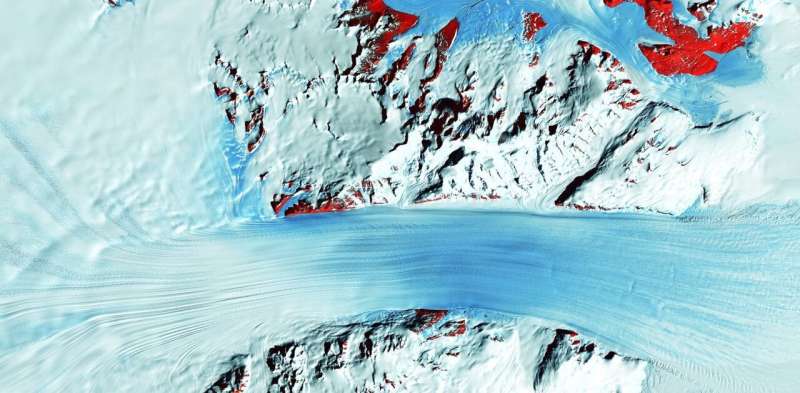
Opinion: The coming collapse Antarctica's Thwaites Glacier in 2019. (Jeremy Harbeck/OIB/NASA) Yesterday at 4:16 p.m. EST
Immediate follow-up is needed to the Dec. 15 front-page article “Destabilized poles endanger rest of the planet, research shows” that warned total collapse of the Thwaites Glacier could result in several feet of sea-level rise endangering communities in coastal areas. What a powerful follow-up it would be to add a countdown clock to the daily front-page weather summary so readers can’t forget this cataclysmic event is coming and the need for immediate action.
“Today: Cloudy 58/45. 1,818 days until Thwaites collapse.”
Nancy Ilgenfritz, Bethesda
Massive Antarctica ice shelf melting faster than expected; could raise sea levels sharply Dec 24, 2021 KPBS Public Media
California researchers say a faster than expected melt of a major glacier in western Antarctica could impact local sea levels. KPBS Environment Reporter Erik Anderson has details.
Antarctica's 'doomsday' glacier: How its collapse could trigger global floods and swallow islands
The massive Thwaites glacier in West Antarctica contains enough ice to raise global sea levels by 65cm if it were to completely collapse. And, worryingly, recent research suggests that its long-term stability is doubtful as the glacier hemorrhages more and more ice.
Adding 65cm to global sea levels would be coastline-changing amounts. For context, there's been around 20cm of sea-level rise since 1900, an amount that is already forcing coastal communities out of their homes and exacerbating environmental problems such as flooding, saltwater contamination and habitat loss.
But the worry is that Thwaites, sometimes called the "doomsday glacier" because of its keystone role in the region, might not be the only glacier to go. Were it to empty into the ocean, it could trigger a regional chain reaction and drag other nearby glaciers in with it, which would mean several meters of sea-level rise. That's because the glaciers in West Antarctica are thought to be vulnerable to a mechanism called Marine Ice Cliff Instability or MICI, where retreating ice exposes increasingly tall, unstable ice cliffs that collapse into the ocean.
A sea level rise of several meters would inundate many of the world's major cities—including Shanghai, New York, Miami, Tokyo and Mumbai. It would also cover huge swathes of land in coastal regions and largely swallow up low-lying island nations like Kiribati, Tuvalu and the Maldives.
Thwaites is a frozen river of ice approximately the size of Great Britain. It already contributes around 4% of the global sea-level rise. Since 2000, the glacier has had a net loss of more than 1000 billion tons of ice and this has increased steadily over the last three decades. The speed of its flow has doubled in 30 years, meaning twice as much ice is being spewed into the ocean as in the 1990s.
Thwaites glacier, the widest in the world at 80 miles wide, is held back by a floating platform of ice called an ice shelf, which restrains the glacier and makes it flow less quickly. But scientists have just confirmed that this ice shelf is becoming rapidly destabilized. The eastern ice shelf now has cracks criss-crossing its surface, and could collapse within ten years, according to Erin Pettit, a glaciologist at Oregon State University.
This work supports research published in 2020 which also noted the development of cracks and crevasses on the Thwaites ice shelf. These indicate that it is being structurally weakened. This damage can have a reinforcing feedback effect because cracking and fracturing can promote further weakening, priming the ice shelf for disintegration.
If Thwaites' ice shelf did collapse, it would spell the beginning of the end for the glacier. Without its ice shelf, Thwaites glacier would discharge all its ice into the ocean over the following decades to centuries.
New research on Thwaites glacier and its future.
Other unstable glaciers
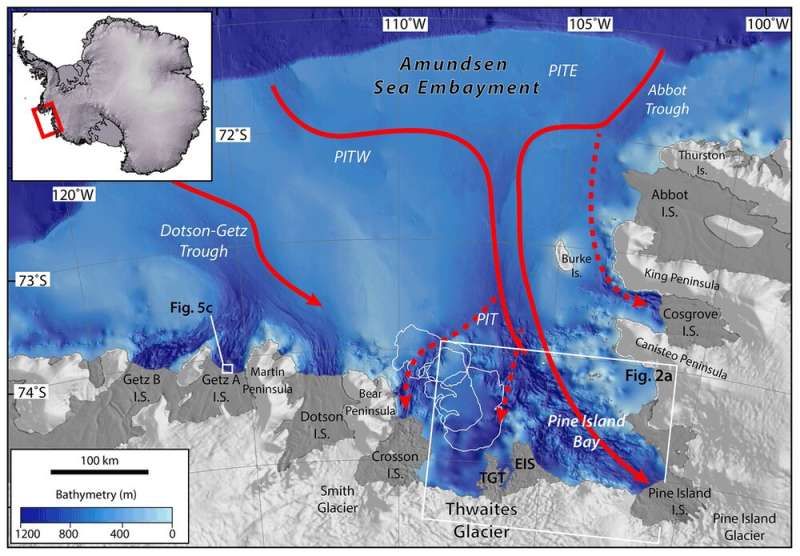
The ice shelf—which can be thought of as the floating extension of Thwaites glacier—is one of several that scientists are watching closely in the Amundsen Sea Basin, West Antarctica. Several ice shelves that hold back glaciers there, including Thwaites and its next-door neighbor, the Pine Island glacier, are being eroded by rising ocean temperatures.
Warmer ocean water is able to undercut these floating ice shelves, driving melting from below that can thin the ice and weaken it, allowing the cracks and fractures that have been observed at the surface to develop. This ocean-driven melting at the bottom of the ice shelf also pushes the anchoring point where the ice meets the seabed backwards. Because the seabed slopes downwards in the Amundsen Sea, that could eventually trigger a shift as the glaciers lose their footing and retreat rapidly.
Ultimately, if the ice shelves retreat, it means there is less holding the West Antarctic glaciers back—allowing them to accelerate and add more to global sea levels.
However, scientists are still getting to grips with MICI and questions remain about the future of West Antarctic glaciers. While the collapse of Thwaites certainly could trigger a wholesale collapse event, not everyone believes this will happen.
Other work suggests that the destabilization of the Thwaites ice shelf and glacier may not lead to the kind of catastrophic outcomes that some fear. Sea ice and chunks of ice that break away from the collapsing ice shelf and glacier might have a similar restraining effect to the intact ice shelf, nipping the chain-reaction in the bud and preventing the sustained collapse of the entire West Antarctic ice sheet.
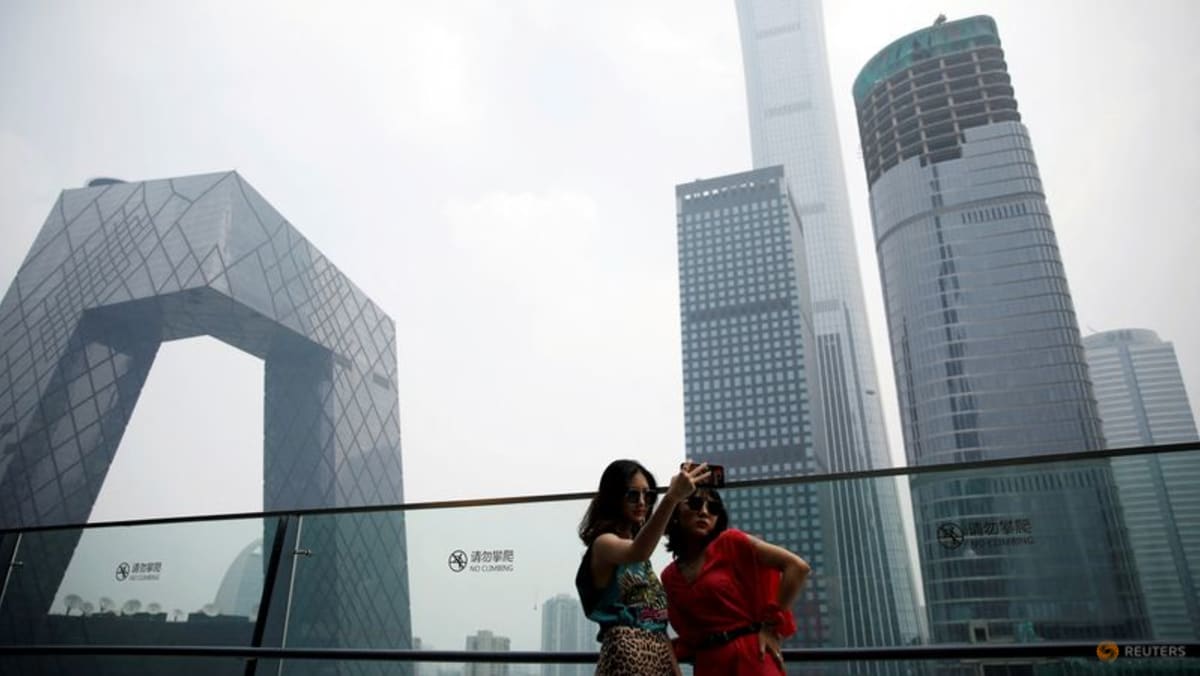
LONDON : The world’s economic output will exceed US$100 trillion for the first time next year and it will take China a little longer than previously thought to overtake the United States as the No.1 economy, a report showed on Sunday.
British consultancy Cebr predicted China will become the world’s top economy in dollar terms in 2030, two years later than forecast in last year’s World Economic League Table report.
India looks set to overtake France next year and then Britain in 2023 to regain its place as the world’s sixth biggest economy, Cebr said.
“The important issue for the 2020s is how the world economies cope with inflation, which has now reached 6.8per cent in the U.S.,” said Cebr deputy chairman Douglas McWilliams.
“We hope that a relatively modest adjustment to the tiller will bring the non-transitory elements under control. If not, then the world will need to brace itself for a recession in 2023 or 2024.”
The report showed Germany was on track to overtake Japan in terms of economic output in 2033. Russia could become a Top 10 economy by 2036 and Indonesia looks on track for ninth place in 2034.
(Reporting by Andy Bruce, Editing by Paul Sandle)
World economy to top US$100 trillion in 2022 for first time: report Source link World economy to top US$100 trillion in 2022 for first time: report
Westons sells Selfridges to Thai JV for $7.4 billion
LONDON (BLOOMBERG) – The billionaire dynasty behind Selfridges & Co. has sold the British department store operator to a Thai-Austrian joint venture for about £4 billion (S$7.4 billion) in one of the biggest U.K. retail deals in years.
The Weston family said Central Group, which is owned by the Chirathivats, one of Asia’s wealthiest families, and Signa Holding of Austria, have formed a joint venture to buy the retail group. Central and Signa will own the chain in a 50-50 partnership, according to a statement late Thursday (Dec 23) London time.
The purchase price was not formally disclosed but is close to 4 billion-pounds, according to two people with knowledge of the transaction who asked not to be named because the information is confidential. This makes it one of the top 10 biggest takeovers targeting a U.K. company this year, according to Bloomberg data.
Bloomberg previously reported the Weston family was considering a sale following an approach from an interested party and appointed Credit Suisse as an adviser in June.
Selfridges, founded in 1908 by Harry Gordon Selfridge, is best known for the giant store on London’s Oxford Street that has long been a mecca for fashion enthusiasts. There are also Selfridges stores in Manchester and Birmingham.
The business was bought by the Canadian businessman Galen Weston for almost 600 million pounds in 2003 and has since expanded to include other department store chains, including Arnotts and Brown Thomas in Ireland, Holt Renfrew in Canada and De Bijenkorf in the Netherlands.
Overall the group operates 25 stores worldwide across its five brands. The sale to Central and Signa doesn’t include Holt Renfrew, which will remain with the Weston family. Central Group is a fourth generation family-owned company involved in a host of industries from real estate and retailing to hospitality and restaurants. The Chirathivat family had the 20th-largest fortune in Asia, worth US$12.9 billion, according to a ranking compiled in November 2020 by Bloomberg News.
Famous Properties Signa was founded by retail and real estate entrepreneur Rene Benko, who owns or has stakes in some of the world’s most famous properties including the Chrysler building in New York.
Trophy assets in the U.K. have attracted interest even as retail business on major shopping streets suffers. Retail property values have declined in recent years, and the industry was hammered by the pandemic and the shift to online shopping.
Selfridges is among the world’s most famous department stores and has weathered the pandemic well. A considerable part of the retailer’s value lies in the significant chunk of London real estate it owns on Oxford Street. This includes an undeveloped site at the back of the store where there were once plans for a hotel, leisure and office complex.
Selfridges Group will become part of the combined Central and Signa portfolio of luxury department stores, which owns Rinascente in Italy, Illum in Denmark, Globus in Switzerland and KaDeWe in Germany.
Selfridges’ founder was the subject of a TV series from ITV Studios and PBS that ran for four seasons through 2016. Called “Mr Selfridge,” the series focused on the real-life story of the American who started the company and starred Jeremy Piven
Westons sells Selfridges to Thai JV for $7.4 billion Source link Westons sells Selfridges to Thai JV for $7.4 billion
Kawasaki Heavy says liquefied hydrogen carrier departs Japan for Australia
TOKYO : The world’s first liquefied hydrogen carrier left Japan on Friday to pick up its first cargo in Australia, with a return to Japan expected around late February, Kawasaki Heavy Industries Ltd said.
The AUS$500 million (US$362 million) pilot project, led by Japan’s Kawasaki and backed by the Japanese and Australian governments, was originally scheduled to ship its first cargo of hydrogen extracted from brown coal in Australia in the spring.
But it was delayed to the second half of Kawasaki’s financial year, which runs from October to March, due to the COVID-19 pandemic.
“It depends on the weather, but the hydrogen carrier ‘Suiso Frontier’ is due to arrive in Australia in mid-January and is expected to return to Japan in around late February,” a spokesperson said.
A one-way trip takes about 16 days.
Kawasaki Heavy aims to replicate its success as a major liquefied natural gas (LNG) tanker producer with hydrogen, a key element that may help decarbonise industries and aid the global energy transition.
In March this year, the Japanese-Australian venture started producing hydrogen from brown coal in the test project that aims to show liquefied hydrogen can be produced and exported safely to Japan.
Partners on the Australian side of the project include Japan’s Electric Power Development Co (J-Power), Iwatani Corp, Marubeni Corp, Sumitomo Corp and Australia’s AGL Energy Ltd, whose mine is supplying the brown coal.
(US$1 = 1.3816 Australian dollars)
(Reporting by Yuka Obayashi; Editing by Kirsten Donovan)
Kawasaki Heavy says liquefied hydrogen carrier departs Japan for Australia Source link Kawasaki Heavy says liquefied hydrogen carrier departs Japan for Australia
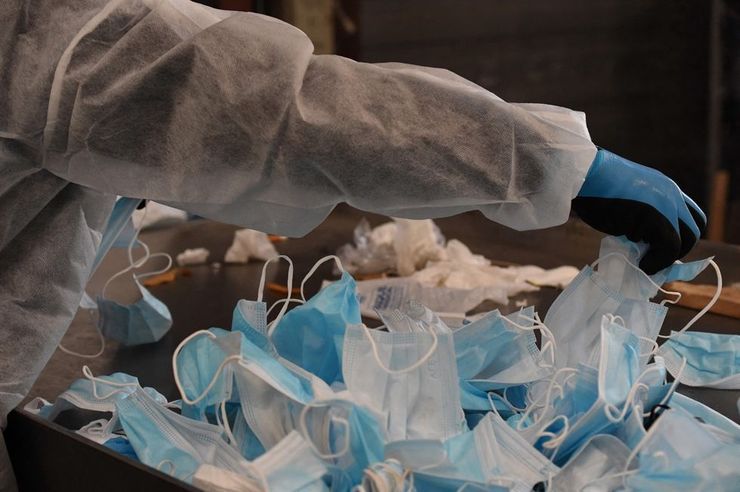
Hong Kong researchers say COVID masks could pollute over 54,000 Olympic pools worth of oceans Posted : 2021-12-25 An employee sorts used masks at the Greenwishes waste sorting center in Gennevilliers near Paris, in this April 19 file photo. AFP-Yonhap
Discarded surgical masks which fall into the sea could be releasing microplastics as they degrade, polluting an amount of water equal to 54,800 Olympic-sized swimming pools.
Dr He Yuhe at City University's State Key Laboratory of Marine Pollution made the discovery after spotting discarded masks at local beaches, which have seen an influx of local visitors looking for weekend haunts amid the coronavirus pandemic.
"The COVID-19 pandemic is still ongoing, and naturally if people are wearing surgical masks, then people are also dropping them," He said.
"We really urge residents to be alert when they are out in the countryside and properly dispose of their used surgical masks to prevent them from being swept into the sea by wind or rain," the doctor added.
Surgical masks have become a necessity to prevent the spread of COVID-19, with an estimated 129 billion used worldwide each month in 2020.
As the masks are made from woven plastic fibers, any discarded face coverings could take anywhere from 100 to 1,000 years to fully decompose.
The United States National Oceanic and Atmospheric Administration defines microplastics as any type of plastic fragment less than 5mm in diameter.
Once in the sea, the ocean currents and ultraviolet rays from the sun break masks down into tiny fragments or fibers. He was able to replicate the movement of waves in a lab by placing them in bottles of man-made seawater and shaking them.
His lab study found that one mask, weighing between 3 to 4 grams, could fully break down into 880,000 to 1.17 million microplastic pieces after nine days, while already damaged ones could break down faster.
He said the figure could be an underestimate as they could not mimic sunlight.
A report by the Hong Kong-based OceansAsia last year estimated that about 1.56 billion single-use surgical masks would have entered the sea in 2020. He estimated that this could lead to the release of 1,370 trillion pieces of microplastic.
Face masks and plastic containers wash up on the shoreline after the APL England cargo ship lost about 40 shipping containers in rough seas off the New South Wales (NSW) coast, near Port Botany, Sydney, Australia, in this May 2020 file photo. EPA-Yonhap
At a concentration of 10 microplastics per ml of water, the CityU professor said the total amount would pollute a volume of seawater equal to 54,800 Olympic-sized swimming pools.
He found about one-third of the pieces were less than 10mm in size, while another 25 per cent of the fragments were bigger than 50mm.
These minuscule pieces of plastic can be eaten by microscopic crustaceans called "copepods," which are found in almost every saltwater and freshwater habitat, providing food for larger animals including fish and even whales.
He tested the impact on one species, Tigriopus japonicus, and found their reproductive abilities were reduced by 22 per cent, while their nutrient intake and growth rate had also slowed.
The researchers said they were worried it could produce a domino effect on marine ecosystems, especially as masks were not the only source of microplastics in the ocean.
Microplastics from other waste, which can include drink bottles, cosmetics, clothing and fishing nets, are already extremely difficult to remove from the environment.
If the copepods were full from eating microplastics, they would end up eating fewer algae, leading to red tides, large blooms of aquatic plants which choke off oxygen in the water and kill other animals.
A reduction in the numbers of copepods because of slower reproduction could also spell decreased food sources for other species, He warned.
"Since the masks are a disease prevention tool, what we really need is stronger enforcement to prevent littering of the masks," said Kenneth Leung Mei-yee, a professor who was also involved in the study.
In a response to the SCMP, the Environmental Protection Department said residents should not leave used face masks and "any other handy items" unattended when out in the countryside.
The department added it was using unmanned aircraft systems to monitor the city's 1,200 meter seashore, which shortened the time required to survey 65 coastal sites in the Northern, Tai Po, Sai Kung, Sha Tin, Tuen Mun, Southern and Islands districts.
When did scientists first warn humanity about climate change?
Scientists first began to worry about climate change toward the end of the 1950s, Spencer Weart, a historian and retired director of the Center for History of Physics at the American Institute of Physics in College Park, Maryland, told Live Science in an email. "It was just a possibility for the 21st century which seemed very far away, but seen as a danger that should be prepared for."
The scientific community began to unite for action on climate change in the 1980s, and the warnings have only escalated since. However, these recent warnings are just the tip of the melting iceberg; people's interest in how our activities affect the climate actually dates back thousands of years.
As far back as ancient Greece (1200 B.C. to A.D. 323), people debated whether draining swamps or cutting down forests might bring more or less rainfall to the region, according to Weart's Discovery of Global Warming website, which is hosted by the American Institute of Physics and shares the name with his book "The Discovery of Global Warming" (Harvard University Press, 2008).
The ancient Greek debates were among the first documented climate change discussions, but they focused only on local regions. It wasn't until a few millennia later, in 1896, that Swedish scientist Svante Arrhenius (1859-1927) became the first person to imagine that humanity could change the climate on a global scale, according to Weart. That's when Arrhenius published calculations in The London, Edinburgh, and Dublin Philosophical Magazine and Journal of Science showing that adding carbon dioxide to the atmosphere could warm the planet.
This work built on the research of other 19th-century scientists, such as Joseph Fourier (1768-1830), who hypothesized that Earth would be far cooler without an atmosphere, and John Tyndall (1820-1893) and Eunice Newton Foote (1819-1888), who separately demonstrated that carbon dioxide and water vapor trapped heat and suggested that an atmosphere could do the same, JSTOR Daily reported.
Arrhenius' climate change predictions were largely spot on. Human activities release carbon dioxide, methane and other greenhouse gases that trap radiation from the sun and hold them in the atmosphere to increase temperature like a warming greenhouse, hence the term "greenhouse effect." However, Arrhenius' work was not widely read or accepted at the time, nor was it even intended to serve as a warning to humanity; it can be viewed as such only in hindsight. At the time, his work simply recognized the possibility of humans influencing the global climate and for a long time, people viewed warming as beneficial, according to Weart.
There was some coverage of fossil fuels affecting climate in the general media, according to a now-viral 1912 article first published in the magazine Popular Mechanics, USA Today reported. The article, which ran in a few newspapers in New Zealand and Australia later that year, recognized burning coal and releasing carbon dioxide could increase Earth's temperature, noting that "the effect may be considerable in a few centuries."
Why the 1950s?
The scientific opinion on climate change wouldn't begin to shift until two significant experiments some 60 years after Arrhenius' realization. The first, led by scientist Roger Revelle (1909-1991) in 1957 and published in the journal Tellus, found that the ocean will not absorb all of the carbon dioxide released in humanity's industrial fuel emissions and that carbon dioxide levels in the atmosphere could, therefore, rise significantly. Three years later, Charles Keeling (1928-2005) published a separate study in Tellus that detected an annual rise in carbon dioxide levels in Earth's atmosphere. With carbon dioxide levels known to affect the climate, scientists began to raise concerns about the impact human-related emissions could have on the world. From there, more studies began highlighting climate change as a potential threat to species and ecosystems around the world. "Scientists first began in 1988 to insist that real action should be taken," Weart said. This occurred at the Toronto Conference on the Changing Atmosphere, where scientists and politicians from around the world gathered to address what was framed as a global threat to Earth's atmosphere, with calls to reduce emissions and knock-on effects such as acid rain.
"By the 1990s, most scientists thought action was necessary, but opposition from fossil fuel companies and ideologists opposed to any government action were effective in obscuring the facts and blocking action," Weart said. "Plus, normal human inertia and unwillingness to do anything without immediate benefits for oneself."
Originally published on Live Science.
Interview
End trade barriers to help tackle climate crisis, says WTO chief Ngozi Okonjo-Iweala calls for changes to ensure developing nations are resilient to affects of extreme weather
Ngozi Okonjo-Iweala: ‘If you can mobilise $26tn [in response to Covid-19], it beggars belief that you can’t mobilise $100bn [for climate finance].’
Removing trade barriers around the world would help to tackle the climate crisis, enable a “just transition” away from fossil fuels and make developing countries more resilient to the impacts of global heating, the head of the World Trade Organization has said.
Ngozi Okonjo-Iweala, who took over as director general of the global watchdog last March, said: “Trade is part of the solution, not part of the problem … We need a global effort to climate-proof the supply chains and infrastructure of the most vulnerable economies or risk undoing hard-won economic progress and development.”
She told the Guardian trade would be essential to helping developing countries cope with the effects of extreme weather, which are already being felt. “We need to put in place trade policies to cushion against the negative impacts of climate change, to ensure food security in the face of climate threats [and] provide access to adaptation technologies,” she said.
Developing countries have long been wary of international trade talks, fearing that wealthy countries were using them to protect their own economies while enabling them to export goods to poor countries, and in some cases criticising the WTO for being biased in favour of the rich. Many have also been sceptical of including climate issues, and fear that “environmental” standards insisted on by some developed countries would be used as a cover for raising barriers to cheap imports from the developing world. Green campaigners have also claimed the WTO has encouraged high-carbon trade.
Okonjo-Iweala, a former finance minister of Nigeria and World Bank economist, who is the first African and first woman to head the WTO, moved to reassure doubters. “Trade helps to build resilience. People don’t recognise it but the fact [is] that in times of great difficulty, trade can help move services and goods to where they are needed. Food for instance: trade helps to move food from one area that is not drought-stricken or flood-prone to another.”
Environmental rules could be compatible with trade, she said: “The WTO rules do not preclude people from putting in environmental standards [but] if you’re designing your environmental policies you have to do it in such a way that it’s transparent, and you are not discriminating against like products.”
The WTO last week embarked on an initiative to incorporate environmental concerns into trade, with roadmaps for the reform of fossil fuel subsidies, encouraging sustainability in international trade, and controlling plastic pollution.
Okonjo-Iweala believes that, in the wake of the Cop26 summit, trade will become a vital tool in achieving the drastic cuts necessary in greenhouse gas emissions, helping to shift the global economy to a low-carbon footing. She said: “What is clear is that climate negotiations have shifted from technical discussions to actual implementation … This makes the role of trade and trade policy even more urgent in ensuring a just and effective green transition for all.”
Agreements were signed in Glasgow last month to cut methane around the world, protect forests, and institute a global system of carbon trading under the 2015 Paris agreement, all of which she said the WTO could help with.
But she said developing countries also needed assistance from the rich world, especially in the form of climate finance, which comes from public and private sources in the rich world to help poor countries cut emissions and cope with the effects of extreme weather. Rich countries have so far failed to produce the $100bn in climate finance promised each year to developing countries from 2020, though they are likely to hit the target by 2023.
Okonjo-Iweala said this was not good enough: “If you can mobilise $26tn [in response to Covid-19], it beggars belief from the part of developing countries that you can’t mobilise $100bn [for climate finance]. That’s what’s causing a huge trust deficit.”
The UK should also restore its recent cuts to overseas aid, she added. “We all want the UK to go back to 0.7% [of GDP going to overseas aid, the previous target which was slashed to 0.5% by the chancellor of the exchequer, Rishi Sunak]. It’s been a leader in overseas aid and should continue to lead. So we don’t want to see this cut back.”
Over the next year, countries will be asked to reconsider their national targets on cutting emissions and how to meet them, before the next UN climate meeting, Cop27 in Egypt in November. Okonjo-Iweala said: “We saw promising outcomes from Cop26, but I would not be alone in saying that the world is not yet on track to giving the most vulnerable countries and communities a fighting chance in the face of climate change. The WTO has a vital role to play in harnessing trade as a tool to get us closer to climate targets.”
The question of Free Trade or Protection moves entirely within the bounds of the present system of capitalist production, and has, therefore, no direct interest for us socialists who want to do away with that system.
Indirectly, however, it interests us inasmuch as we must desire as the present system of production to develop and expand as freely and as quickly as possible: because along with it will develop also those economic phenomena which are its necessary consequences, and which must destroy the whole system: misery of the great mass of the people, in consequence of overproduction. This overproduction engendering either periodical gluts and revulsions, accompanied by panic, or else a chronic stagnation of trade; division of society into a small class of large capitalist, and a large one of practically hereditary wage-slaves, proletarians, who, while their numbers increase constantly, are at the same time constantly being superseded by new labor-saving machinery; in short, society brought to a deadlock, out of which there is no escaping but by a complete remodeling of the economic structure which forms it basis.
From this point of view, 40 years ago Marx pronounced, in principle, in favor of Free Trade as the more progressive plan, and therefore the plan which would soonest bring capitalist society to that deadlock. But if Marx declared in favor of Free Trade on that ground, is that not a reason for every supporter of the present order of society to declare against Free Trade? If Free Trade is stated to be revolutionary, must not all good citizens vote for Protection as a conservative plan?
If a country nowadays accepts Free Trade, it will certainly not do so to please the socialists. It will do so because Free trade has become a necessity for the industrial capitalists. But if it should reject Free Trade and stick to Protection, in order to cheat the socialists out of the expected social catastrophe, that will not hurt the prospects of socialism in the least. Protection is a plan for artificially manufacturing manufacturers, and therefore also a plan for artificially manufacturing wage laborers. You cannot breed the one without breeding the other.
The wage laborer everywhere follows in the footsteps of the manufacturer; he is like the "gloomy care" of Horace, that sits behind the rider, and that he cannot shake off wherever he go. You cannot escape fate; in other words, you cannot escape the necessary consequences of your own actions. A system of production based upon the exploitation of wage labor, in which wealth increases in proportion to the number of laborers employed and exploited, such a system is bound to increase the class of wage laborers, that is to say, the class which is fated one day to destroy the system itself. In the meantime, there is no help for it: you must go on developing the capitalist system, you must accelerate the production, accumulation, and centralization of capitalist wealth, and, along with it, the production of a revolutionary class of laborers. Whether you try the Protectionist or the Free Trade will make no difference in the end, and hardly any in the length of the respite left to you until the day when that end will come. For long before that day will protection have become an unbearable shackle to any country aspiring, with a chance of success, to hold its own in the world market.
WAIT, WHAT?!
China Enters into Largest and Longest LNG Import Deal with U.S.
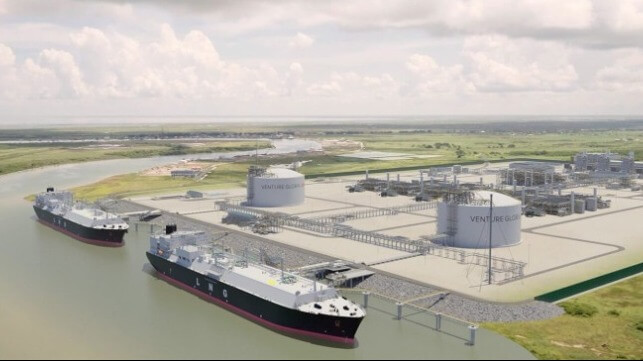
Venture Global will supply the LNG from two facilities in Louisiana (Venture Global)
China has entered into the largest, long-term deal for the importation of U.S. LNG which will be supplied from two sites in Louisiana operated by Venture Global. According to the company, this marks the first LNG supply agreement signed by a U.S. exporter with a division of state-owned China National Offshore Oil Corporation (CNOOC), China’s largest importer of LNG.
The deal, which was first rumored in October, was confirmed with a statement from Venture Global and reported on the Department of Energy’s website. Venture Global LNG and CNOOC Gas & Power Group Co. entered into a 20-year Sales and Purchase Agreement. Under the terms of the agreement, Venture Global will supply two million tons per annum of LNG from its Plaquemines LNG export facility, in Plaquemines Parish, Louisiana. In addition, CNOOC Gas & Power will purchase an additional 1.5 million tons (MT) of LNG from Venture Global’s Calcasieu Pass LNG facility for “a shorter duration.:
“Venture Global is pleased to announce the expansion of our footprint in Asia through two new deals to supply the Chinese market with clean, low-cost US LNG,” said Mike Sabel, Chief Executive Officer of Venture Global LNG. “China is critical to global climate efforts, and LNG supplied by Venture Global will serve as an important addition to their low carbon energy mix for decades. This new long-term partnership with CNOOC builds on our company’s continued momentum in a very active 2021.”
Chinese state media also highlighted the agreement calling it a “move that clearly shows that the phase one trade agreement between China and the US, which covers China's increased purchase of US energy products, are moving forward.” They highlighted that under phase one of the trade deal, China agreed to increase energy imports from the U.S., including LNG, crude oil, refined products and coal, by $52.4 billion over two years above the 2017 baseline. Analysts had accused China to be slow in fulfilling its commitments under the Trump administration trade deal but in announcing this deal used it as an opportunity to call on the U.S. to “create a more favorable environment - both from the political and supply perspectives - for bilateral trade to further expand.” China is citing the LNG deal as it pushes for the U,S, to drop some of the tariffs imposed on its products during the recent trade war.
“As China’s largest LNG importer, CNOOC is committed deeply not only to the mission of securing China’s gas supply, but also to the climate goals of building a carbon-neutral China by 2060,” said Shi Chenggang, Chairman of CNOOC Gas & Power commenting on today’s press release detailing the agreement. “We are pleased to announce our long-term LNG cooperation with Venture Global. By signing the SPAs with Venture Global, CNOOC will be able to further improve its ability to meet China’s increasing gas demand, whilst providing solid support for China’s energy transition pathway to build a more ‘beautiful China’.”
This deal is one of several that multiple Chinese companies entered into with the U.S. to help build the country’s LNG supply. Last year, Chinese utility Foran Energy Group agreed to buy LNG cargoes from Cheniere Energy between 2021 and 2025. Last month, they entered to further agreement for 20-years starting in January 2023. Cheniere also reported a deal last month with China’s Sinochem Group Co. to supply LNG beginning in July 2022.
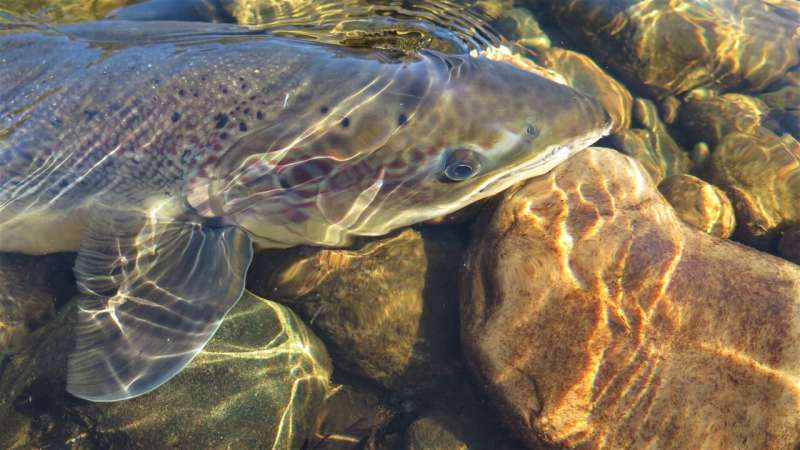 Atlantic salmon (Salmo salar). Credit: Eva Thorstad






 © Provided by Space This NASA supercomputer model shows how greenhouse gases like carbon dioxide fluctuate in Earth’s atmosphere throughout the year. Higher concentrations are shown in red.