Sunday, April 21, 2024

Hundreds of red kites turn up at this Welsh farm every day - it's a 'once in a lifetime' sight

MUST HAVE LOTS OF RODENTS

Cerys Gardner
Sun, 21 April 2024 

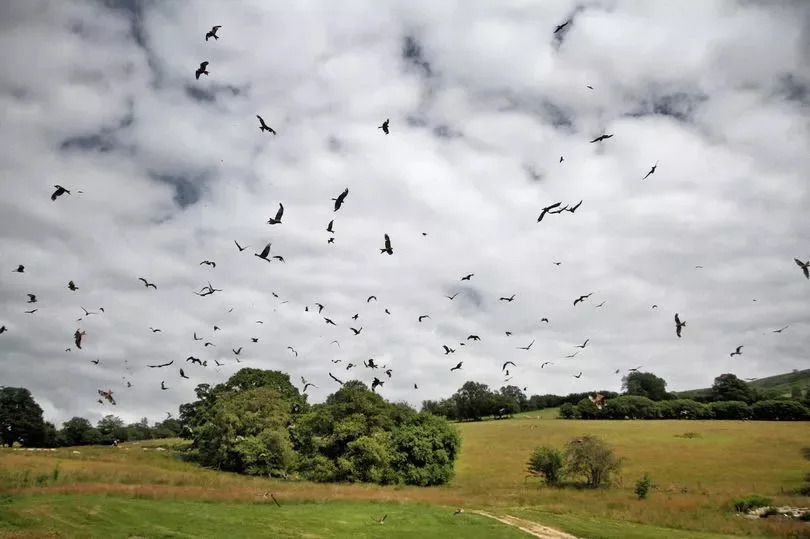
Red Kites flying over Gigrin Farm 

Tucked away between the Wye and Elan valleys is the best place in Wales to see majestic red kites. Gigrin Farm, just outside Rhayader, Powys, sees 300 to 600 of the birds descend every afternoon for feeding - and you can watch the kites swooping down for their lunch from just metres away.

Red kites are a stunning bird of prey with their distinctive red-brown feathers that unfurl to a wingspan of almost two metres. Their beady eyes give them an extraordinary sense of sight, used to scan the countryside for prey. Gigrin Farm has been feeding the birds for 31 years, since the Royal Society for the Protection of Birds approached them about becoming an official feeding centre.


At that time there were just two breeding pairs in Wales, but there are now 4,400 pairs across the UK. Once the food is put out crows usually arrive first whilst the kites and buzzards circle overhead. Then the kites dive down, either to snatch the meat or flush crows into the air and mug them. The display is a noisy mixture of jackdaw calls and buzzards mewing. Once they have clear airspace the kites will eat their food, still watching out for other birds. Find out about the latest events in Wales by signing up to our What's On newsletter here

Read more: Walk through a deer park to a huge imposing castle in this Welsh town with its own steam railway

Read more: The Welsh village that's so gorgeous they charge an entry fee

If you want to see this striking display, Gigrin Farm opens at 12.30pm and the kites are fed at 2pm or 3pm depending on the time of year. Feeding can be viewed from five hides, camouflaged shelters, or the viewing field which offers a wider perspective. The kites are the focus but there’s lots more to enjoy including a cafe, a picnic area, and donkeys.

As well as being a great family day out Gigrin Farm is the perfect place for keen photographers. They have specialist hides for photographers that get you even closer to the action. This year they are offering photography workshops for the very first time. “People want to ask lots of questions about how to photograph red kites. We are just expanding what we offer,” said Dominique Powell, owner of the farm.

Kites snatch their meal from the ground and eat it in the air whilst flying -Credit:Paul_Cooper/Getty
It's an awe-inspiring sight -Credit:iStock / Getty Images Plus

One visitor on TripAdvisor said: “There were hundreds of red kites swooping in for food, it was amazing to see. Probably a once in a lifetime experience. Even kept the kids quiet!”, while another said: “An amazing experience, that I’ll never forget. Nature at its magnificent best. The staff are so friendly and helpful. I’m an amateur wildlife photographer, and it’s another tick on my list.”

After you leave the farm you’re only half a mile from the market town of Rhayader, the perfect place for dinner before driving home or to stay in a B&B to explore the Elan valley the next day. Read more about the little town dubbed the 'outdoors capital of Wales' where you can stay in a 'Hobbit House' here. Ms Powell said: “There is plenty for people to do.”

The farm is offering photography classes too, so you can catch shots like this -Credit:Paul_Cooper/Getty

Or this one -Credit:iStock / Getty Images Plus

Ms Powell said she recommends booking in advance through their website because they limit numbers each day and have varied opening times throughout the year. Tickets cost £10 for adults, £6 for kids and three and under are free.
Performers warned about Las Vegas Cirque du Soleil act before paralyzing accident: lawsuit

David Charns
Fri, April 19, 2024 

Performers warned about Las Vegas Cirque du Soleil act before paralyzing accident: lawsuit


LAS VEGAS (KLAS) — A former Cirque du Soleil performer left paralyzed in an accident during the company’s “O” show claims the act where he nearly died was rushed into production, according to a lawsuit the 8 News Now Investigators reviewed.

Kyle Mitrione, a former diver in the show, filed the lawsuit Thursday, accusing Cirque du Soleil of placing him in “harm’s way” during a performance at the Bellagio Las Vegas Hotel and Casino. The show, which celebrated its 25th anniversary last fall, features a 1.5-million-gallon pool and 85 performers, some who dive from heights of 60 feet, the lawsuit said.

On June 28, 2023, Mitrione, who was 35 at the time, was part of a new act called “The Island,” which involved a floating stage, the lawsuit said. During the act, performers dive into the pool while lifts move a platform. The staging was different than previous acts, the lawsuit said.

During the act, Mitrione dove backward headfirst from the platform, which was out of position, striking a lift, the lawsuit said. The collision left him with “permanent, debilitating, catastrophic and life-altering injuries.”

Specifically, the Island act “required performers to dive into the pool while the lifts were being utilized… in the vicinity of the diving performers,” the lawsuit said. “To do so, choreographers would coordinate and sequence the movement of the floating stage with the underwater technicians and divers, in order to prevent a diver from inadvertently striking the lifts.”

Stage technicians both above and below the water relied on verbal, lighting or sound cues to move the equipment while performers, like Mitrione, relied “solely upon musical cues,” documents said.

According to the lawsuit, the Island act started about two weeks before the June 2023 incident involving Mitrione. During that time, “there were numerous instances and concerns of divers striking and/or nearly striking the lifts as a result of the show’s choreography being out of sync,” the lawsuit said. Six days before Mitrione’s incident, another diver suffered a “near miss.”

“There were no other audio and/or technical cues to advise the diving performers if it was safe to perform their respective dives,” the lawsuit said. “Thus, if the stage and underwater technicians fail to properly maneuver the ‘Island’ stage, diving performers, such as [Mitrione], are not informed of the possibility for catastrophic failure and inadvertently diving into the lifts.”


A photo from Cirque du Soleil celebrating the show’s then-24th anniversary. (Cirque du Soleil)

After the incident, paramedics rushed Mitrione to the hospital where he underwent emergency surgery, the lawsuit said. Mitrione was left with neck and spinal fractures, leaving him paralyzed from the neck down.

The Occupational Safety and Health Administration fined Cirque more than $30,000 after the incident, records said. The company was contesting the fine as of Friday.

The lawsuit seeks damages in excess of $50,000, including the cost of medical care and punitive damages.

Representatives for Mitrione nor Cirque immediately responded to requests for comment Friday.
UK
Plummeting in the polls, Sunak targets the sick and disabled

Liam Thorp
Sun, 21 April 2024 

Prime Minister Rishi Sunak -Credit:Getty Images

Rishi Sunak is back at it seeking to alienate vulnerable people in an attempt to recover his staggeringly poor polling ratings.

If his last big gambit was cutting off high speed rail from the North, his latest wheeze appears to focus on cutting off vulnerable and unwell people from the support they need to get by. The Prime Minister, staring down the barrel of a humiliating general election defeat, has decided to take the fight to "sicknote Britain" in a bid to make the lives of millions of struggling people even harder than they already are.

The UK absolutely has a problem with people who are too unwell to work and the PM was correct that a particularly big issue is mental health. Naturally he failed to acknowledge the vast and important reasons behind this and instead looked to alienate those already in trouble - and even the doctors who are helping people deal with their problems.

In a speech that read as if it had been through a Daily Telegraph comment piece generator, he claimed benefits have become a "lifestyle choice" for some - proving once again that when this government is in trouble, it chooses to turn on the most vulnerable.

As part of his vague but demonising plans - which included threatening to remove vital benefits - he also said the Tories, if they somehow win the next election, would use "specialist health professionals" to issue sick notes in England, instead of highly qualified and knowledgeable GPs.

The fact he could not give any further details about who these so-called professionals would be, or how they would be recruited, cemented this as a policy designed to toss some red meat to the right-wing voting base rather than looking to genuinely solve a very real issue in this country.

While Sunak was quick to point the finger of blame at those seeking help and support for their mental health, there was no mention of the reasons behind these numbers or the enormous problem with the availability of services in this country.

There was no talk of the explosion in food bank use, insecure work and poverty that has occurred under the last 14 years of Conservative rule. There was no mention of the two million people in England that are currently languishing on NHS mental health waiting lists.

The thing is, it is much easier to tell people in need of support they are the problem rather than deal with the root causes of these problems or the lack of support available.

I'm curious at the logic on display here. Does he really think that pushing people who are dealing with mental health conditions into unsuitable work and threatening to remove their benefits if they don't accept it is going to make their condition better or worse?

Ben Harrison, director of the Work Foundation at Lancaster University, put it well when he said: "The focus should be on de-risking returning to work for those with long-term health conditions and, critically, on stemming the flow of people who are leaving work due to sickness."

As Mr Harrison points out, there are nearly seven million people in severely insecure jobs, which can have a negative impact on people's health and mean they 'cycle in and out' or work and remain dependent on benefits to afford to get by. Dealing with this should absolutely be a priority for the next government but there is no suggestion Mr Sunak plans to address it.

One thing that absolutely isn't going to make people with illnesses feel supported back into the workplace is to publicly target them in this way. The Mind charity described the Prime Minister's language as "stigmatising, harmful and inaccurate".

It was this kind of cruel approach that, in 2019, saw Liverpool man Stephen Smith denied benefits and told to find work despite weighing just six stone because of a number of debilitating illnesses.

Stephen's was a story I told and one I will never forget. Eventually the Department of Work and Pensions was shamed into correcting its error and paying him back the benefits he was wrongly denied for several years. Sadly the money came to late for Stephen and was used to pay for his funeral.

The latest announcement from the Conservative government shows they have learned absolutely nothing from cases like Stephen's. Either that or they just don't care.
UK


Asda’s billionaire bosses knew payroll switch would spark crisis – but went ahead regardless


Luke Barr
Sat, 20 April 2024


Mohsin Issa has made clear Asda's IT changeover is one of his top priorities - Jon Super

Asda’s billionaire bosses forged ahead with a botched IT transition despite being warned in advance that thousands of workers would be paid incorrectly, The Telegraph can reveal.

Senior figures were told in advance of the problems underlying the changeover, which has impacted 30,000 employees and left some hundreds of pounds out of pocket.

The IT changeover is being overseen by the company’s billionaire co-owner Mohsin Issa, who has made clear it is one of his top priorities.

The crisis has led to calls from unions for Mr Issa to apologise. The revelation that he was warned about issues with payroll ahead of the transition are likely to only heighten pressure on the billionaire tycoon.


Problems relating to the payroll first arose last month. Asda has been unable to fix the issue since.

The ongoing payroll crisis at Britain’s third-largest supermarket led to further problems on payday last week, with internal systems inundated with complaints. Some employees were underpaid while others were overpaid.

Financial pressures led to store managers making £200 petty cash payments to affected staff last month, although it is understood this will not be the case this time around.

A senior employee at Asda said there had been “thousands and thousands of complaints”, adding: “We knew it was going to happen.”

In response to the latest issues regarding pay, a GMB spokesman said: “GMB reps have been meeting with Asda management consistently over this issue.

“We have asked for simple things to protect colleagues – for example, adequate levels of petty cash to cover any underpayments. We have also asked for a public apology from Mohsin Issa who had overseen what is fast becoming a shambles.

“Asda knew how problematic these pay rounds were going to be but continued regardless – Mohsin Issa must bear responsibility for the stress and anguish this is causing hard-working Asda colleagues.”

An Asda spokesman said: “The first payroll run with a large-scale systems migration rarely passes without any issues in any industry.

“For Asda colleagues, we unreservedly apologise to those impacted and continue to work with colleague representatives, including our unions, to rectify any outstanding issues – as a top priority.

“For the April payroll, Asda can confirm that the number of payroll queries was significantly reduced.”

The latest payroll debacle has fuelled tensions internally, coming against a backdrop of cost-cutting across the business driven by a growing debt finance bill. Asda is struggling under the weight of billions of pounds of debt and battling falling market share.

Details of the challenges facing Asda come just days after it emerged Zuber Issa, Mohsin’s brother, was nearing a deal to sell his 22.5pc stake in the retailer.

The proposed sale of his shares to TDR Capital will hand majority control of the business to the private equity giant, which helped to finance the Issa brothers’ 2021 takeover of the supermarket.

The deal would increase TDR’s ownership of Asda to around two-thirds.

Billionaire Issa Nears Deal to Sell Asda Stake to TDR Capital


Sabah Meddings
Fri, 19 April 2024 


(Bloomberg) -- TDR Capital is closing in on a deal to buy gas-station billionaire Zuber Issa’s stake in Asda as the private-equity firm tightens its grip on one of Britain’s biggest supermarket chains, according to people familiar with the discussions.

The agreement for Issa’s 22.5% stake would give TDR majority control and could be announced in coming weeks, the people said, asking not to be named with negotiations in flux. They declined to specify the terms being discussed. TDR’s holding in Asda would rise to about two-thirds, while the transaction would further the dismantling of the relationship between brothers Zuber and Mohsin Issa.

The brothers teamed up with London-based TDR to buy Asda for £6.8 billion ($8.45 billion) just three years ago from Walmart Inc. Their tenure has been rocky, with critics questioning the new owners’ commitment to Asda’s historic focus on keeping prices low.

As food and gas prices surged in 2023 amid historic inflation, Asda, the third-largest UK grocer, had to rebut claims by Britain’s antitrust regulator that it was gouging customers.

Born in Blackburn, England, the sibling duo founded EG Group and built up a $30 billion empire of gas stations and convenience stores across Europe, the US and Australia over the span of two decades, financing their ambitions with dozens of debt-funded deals. Since 2015, TDR has backed most of their significant acquisitions.

Read More: UK Brothers’ $30 Billion Empire Built on Debt Is Showing Cracks

However, higher interest rates have pushed up the cost of servicing their debts and squeezed profits, forcing the pair to sell down assets. The latest deal would further unwind their business interests from each other and from TDR.

Zuber Issa began talks earlier this year about selling his stake in Asda, and plans to step back as co-chief executive officer of EG Group.

Mohsin Issa also intends to relinquish day-to-day control of Asda to focus on running EG Group. A search to find a new CEO for Asda is already under way, with headhunters from Spencer Stuart conducting a search, according to people familiar with the matter.

When the latest maneuvering is complete, Walmart will retain its 10% stake in the grocer, with Mohsin owning 22.5% and TDR the rest, the people said.

Representatives for TDR, Asda and the Issa brothers declined to comment, as did Spencer Stuart.

EG Group sold the majority of its UK and Ireland fueling outlets to Asda last year, in a move which helped repair EG’s balance sheet but left the supermarket chain with heavy debt.

Most Read from Bloomberg Businessweek
SAME PROBLEM AS ENRON

‘No dividing line’: consultants advising private water companies also work for their regulator, Ofwat


Andrew Kersley
Sun, 21 April 2024 

Sewage floats on the River Thames in Berkshire after storm water discharges by Thames Water this month. Photograph: Maureen McLean/Rex/Shutterstock

The water industry regulator has spent £26.7m on business consultants in the past five years, including several companies that have simultaneously worked for private water firms, the Observer can reveal.

The findings prompted environmental campaigner Feargal Sharkey to call for Ofwat to be abolished as fellow campaigners said there appeared to be no dividing line between “those who are meant to enforce the law and those who routinely break it”.

The Observer analysed invoices paid to Ofwat’s private sector suppliers from 2019 to the first three months of 2024, collated by procurement specialists Tussell.


The firm that received by far the most income from Ofwat over that period was PwC – which netted more than £11.5m, almost half the total.

PwC audits the accounts of Thames Water, which submitted plans last week to raise bills by 56% over the next five years, as well as providing services to the wider sector.

In a document sent to potential industry clients in 2013, the firm said its “leading role in professional and standard-setting organisations puts us in an ideal position to advise on regulatory, operating effectiveness and other developments”.

Several of the other consultancy companies used by Ofwat advertise their services working for the water industry on their websites.

In March it was revealed that raw sewage was discharged into waterways for 3.6m hours in 2023 by England’s privatised water firms, more than double the figure in 2022.

At the core of the issue has been claims that water companies have invested too little in infrastructure while paying huge dividends to shareholders.

The water industry has paid shareholders £78bn in dividends in the just over three decades since it was privatised, while amassing £64bn of debt, despite being debt-free when sold to the private sector.

“What we’re looking at right now is nothing more than the physical mani­festation of three decades of political neglect, regulatory failure and corporate greed,” said Sharkey. “Ofwat needs to be abolished, and it needs to happen today,” he added. “The whole of the regulatory system of the water industry needs dismantling and utter reform, as do those companies that have milked us for nearly £80bn worth of cash, leaving over £60bn of debt behind them.

“The truth is we need to point the finger at the regulator, who simply wasn’t up to it, wasn’t capable and has to go.”

Surfers Against Sewage chief executive, Giles Bristow said: “The regulators have already been exposed for schmoozing water industry fat cats at exclusive members clubs and now this - is there anything that divides those who are meant to enforce the law and those who routinely break it?

“For people across the country, who are rightly furious about the sewage being dumped into our rivers and seas, this is a bad look at a bad time for a supposedly expert independent body.

“It’s time for Ofwat to get their house in order and put clear water between themselves and our scandal-ravaged water industry, because, right now, the picture looks very murky indeed.”

Related: ‘Dirty secret’: insiders say UK water firms knowingly break sewage laws

An Ofwat spokesperson said PwC was its “main delivery partner” during its price review process – where Ofwat outlines the maximum water companies can charge to users and service standards for the industry. The spokesperson said the firm delivered “additional technical expertise in areas such as financial modelling, economics and engineering”.

They added that a “rigorous conflict procedure” ensured that “any potential conflicts of interest were identified and managed appropriately”.

A spokesperson for PwC said the firm adheres “strictly to all regulatory, professional, ethical and independence standards”, and has no “decision-making responsibility” in its services to
Powering down: end times for the UK’s final coal-fired station

Jillian Ambrose
THEGUARDIAN
Sun, 21 April 2024

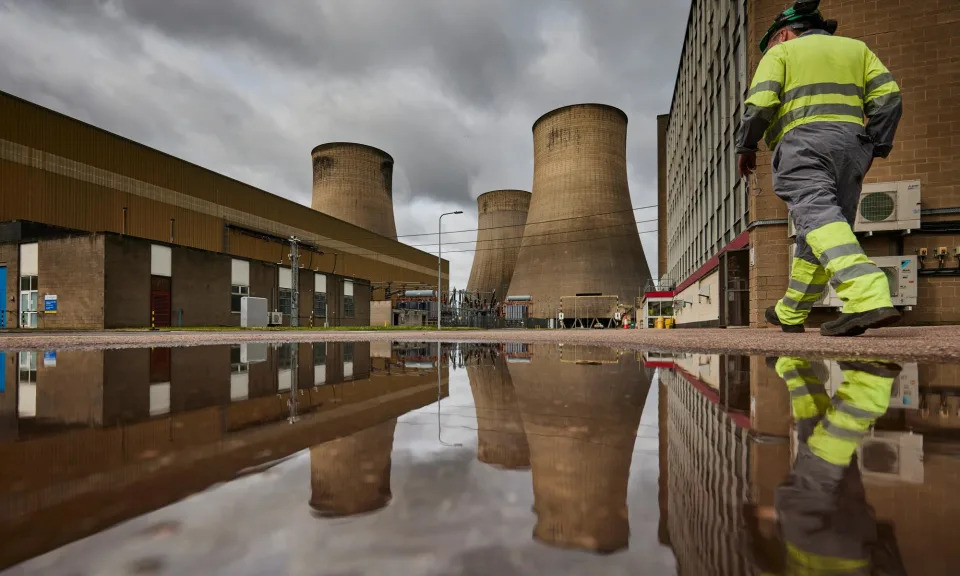
Ratcliffe-on-Soar power station, the UK’s only remaining coal-burning plant.
Photograph: Christopher Thomond/the Observer

From the northernmost reaches of the River Soar in Nottinghamshire, the towers of Britain’s last coal-fired power station emerge from the flat countryside like concrete monuments to another time.

For more than half a century Ratcliffe-on-Soar has burned millions of tonnes of coal to generate the electricity needed to power the British economy. But one by one Britain’s coal power stations have closed, leaving Ratcliffe the sole survivor. In less than six months it, too, will finally power down for good, extinguishing the last embers of the once-mighty coal industry.

With its last winter behind it, the sprawling site, which covers the same acreage as the City of London, is quiet save for the hum of a single turbine and the crackle of electricity power lines overhead.

It once employed up to 3,000 people, but now a total of about 350 engineers are working there, in shifts, as Ratcliffe ekes out its final months, unsure of how many hours the site has left to run before it closes around the end of September.Interactive

“Last Saturday night was my last night shift,” says Ian Jackson, a shift leader at the site. “I’ve worked night shifts for the past 30 years. In that time, I’ve become a father and a grandfather. My family has only ever known me as a shift worker.”

Jackson was on duty in January this year, when Ratcliffe was called upon to fire up all four of its generating units and supply extra power as an icy Arctic blast chilled the country. It was almost definitely the last time the plant will run at full capacity. Jackson was also there earlier this month, when the first of these units was put into “preservation”, awaiting the plant’s final shutdown.

“It was the quietest I’ve ever seen the team,” he says. “You could see people reflecting on the moment. There were quite a few lifers there, but it was emotional for all of us. What it will be like for us when it does close, I can’t imagine.”
‘The end of the first Industrial Revolution’

When Ratcliffe was opened in 1968 by the Central Electricity Generating Board, the very first series of Dad’s Army was about to be broadcast, the Beatles were topping the charts and coal power was in its heyday.

Coal-fired stations mushroomed through Britain’s mining heartlands in the late 1960s and 1970s to provide baseload power for Britain’s electricity network. The 2,000-mega­watt Ratcliffe broke up the skyline for drivers on the new M1 motorway, and provided power to heat and light 2m homes.

It was built in an area rich in coal, where collieries employing tens of thousands of miners dotted the landscape. By the early 1980s, Ratcliffe was burning 65% of south Nottinghamshire’s coal output.

The new power stations were built at speed. At the time, their scale and engineering complexity were unprecedented, and their impact on the climate unforeseen.

When Ratcliffe generates its last megawatts this year, it will represent the final dismantling of Britain’s coal heritage and end almost 150 years of coal-powered economic growth.

“It’s the end of the first Industrial Revolution, really,” says engineering manager Nigel Bates. He first stepped on to the Ratcliffe site more than 40 years ago, as a 16-year-old mechanical apprentice with a handful of O-levels. “Coal started it all, and soon we’re going to end it,” he says.Interactive

For many, the closure of Britain’s last coal plant cannot come soon enough. Coal power is considered an environmental disaster, threatening the globe with climate catastrophe. Experts believe the world needs to close coal power plants at almost five times the present rate, and to stop building new ones, to meet Paris climate agreement goals.

Britain has sought to lead the way internationally: in 2016 ministers set out a plan to ban coal power from the UK by 2025. And they brought the deadline forward by a year in 2021 as the government prepared to host the Cop26 climate talks in Glasgow.

“The time is right, realistically,” Bates says. “We need to do our bit for the planet and this place is well past its sell-by date. It was built to run for 25-30 years. And 57 years later, we’re still here.”

Coal-fired power plants generated four-fifths of the UK’s power for decades until the North Sea boom saw a dash for gas-fired plants through the 1990s.

Over the past decade, coal power has been relegated to the margins of Britain’s power system by costly carbon taxes and the rise of cheap renewables. Some plants, such as Drax in North Yorkshire, adapted to replace coal with wood pellets. But most were forced to close, calling time on an industry created in 1882, when the Edison Electric Light Station in Holborn, London, became the world’s first plant to generate electricity for public use.

“For a time, coal plants like Ratcliffe made up the backbone of the energy system,” says Peter O’Grady, Ratcliffe’s site manager. “Latterly, I guess, we have been the scaffolding that the energy system has leaned on to enable renewables to play a bigger part.”

Coal was responsible for just 1% of the power generated in the UK last year, and was called on to increase its output only as a last resort (contributing 3.4% during this winter’s cold spell). “Whether coal has provided 80% of Britain’s power or nearly zero, we’ve been here to help keep the lights on,” O’Grady says.
‘They don’t make them like this any more’

On a cool spring day, Ratcliffe’s turbine hall continues to hum. Sean Atton strides along its steel grids, passing a turbine that spins at 3,000 times a minute. He returned to work at the site last year, after a stint at another of Britain’s big power plants, to lead a skeleton team of engineers tasked with decommissioning the plant over a period of about two years.

“They don’t make them like this any more,” he says, from the top of the plant’s 60-metre boiler house. To the west, Ratcliffe’s eight giant concrete cooling towers crowd the skyline.

It has been estimated that at Britain’s coal-generating peak, there were as many as 250 cooling towers up and down the country. Today, only 50 remain, with between five and 10 demolished each year. By the end of this decade, Ratcliffe’s towers will be gone too.

East of the boiler house, Ratcliffe’s near-empty coal yard stands as a reminder, if one were needed, that the site’s operational life is running low, too. The yard has taken more than 140,000 deliveries of coal since the late 1960s – originally from the collieries that mined Britain’s rich seams of coal.Interactive

At its peak in the early 1980s, Ratcliffe would burn as much as 6.5m tonnes of coal in a single year. Over the past winter it needed less than 960,000 tonnes of coal, and that was imported from South Africa and Australia.

For Chris Kitchen, general secretary of the National Union of Mineworkers (NUM), the closing of Ratcliffe marks the end of an industrial decline which has its roots four decades ago in the miners’ strikes of 1984-85.

At the time, Ratcliffe was close to the centre of the bitter internal battle that brought the NUM to its knees. Some Nottinghamshire miners opposed the union bosses and the way strikes were called, and this led to the formation of the breakaway Union of Democratic Mineworkers in 1985, as Margaret Thatcher’s government brought the industry to heel.

“It was a very strange time,” recalls Richard Montgomery, who has worked as a mechanical engineer at Ratcliffe for the past 43 years. “We had all been brought up in an era of unions, so we felt this loyalty to the union but we also felt strongly that we needed to keep the lights on. It was very difficult to cross the picket lines as a young man back then.”

In the intervening 40 years, the pits have closed and communities have been left to founder. The NUM’s membership has tumbled from 170,000 in 1981 to just 82 today, echoing the collapse in mining and power station jobs.

British mining had been in decline for many years before Thatcher’s decision to shutter its older collieries. But the economic scars of the abrupt closures reverberate in today’s climate agenda through the calls for a “just transition” to protect communities built on fossil fuels.

Kitchen fears that while Britain may be greener, it has lost something important in the process. “Since the miner’s strike, Britain has talked about opening up to do business with the world,” he says. “But we’ve been opened up to being exploited by the world. That’s what capitalism does.

“We have lost jobs to other countries, as well as our energy security and the ability to control our own costs. The coal industry never made great profits, you know. It was about the national good. I’m not a dinosaur who wants to exist in the dark ages. We do need to address climate change. But let’s do it without the blinkers on.”

‘To me, it’s home’

For Ratcliffe’s remaining staff, the abiding memory of the site will be of a community forged by a sense of duty instilled under the days of state ownership.

“We have been bound by a common purpose – keeping the lights on,” says Montgomery. “We do feel that responsibility, and it has kept us together through it all. If it’s 3am and we’re struggling to keep the lights on, we’ll all be there in our overalls. It’s ingrained into you: you keep the lights on at whatever cost.”

Bates recalls how during the “beast from the east” storm, which plunged Britain into Arctic temperatures for about a week in 2018, workers would set off for the site in the early hours of the morning to be sure they made it in for their shifts.

“What makes a person do that when it would be the easiest thing in the world to say, ‘I can’t be there. It’s snowing’? I think it’s instilled as part of this sense of service that isn’t usual in today’s society.”

About half Ratcliffe’s current workforce will remain on the site until 2025 to decommission it before the demolition begins. It will be a complicated process: the plant is tucked into a triangle formed by the main railway line to London and the A453 linking Nottingham to the M1. It’s an inconvenient location for a controlled implosion of eight giant concrete towers.

In the coming months, Ratcliffe is expected to set out plans for its green legacy. Its owner, the German energy giant Uniper, has already set out plans to produce green hydrogen at the site by the turn of the decade.

According to Ruth Edwards, the Conservative MP for nearby Rushcliffe, it is a transformation that will bring jobs and investment to the whole east Midlands region.

“The closure of Ratcliffe-on-Soar, the last coal-fired power station in the UK, is a big moment. Its closure is a time to recognise the huge contribution the power station has made and to celebrate the progress the UK has made in decarbonising its energy supply,” she says. “The future of the site as a green energy hub is incredibly exciting.”

But many who have grown up with the towers as a fixture on the Nottinghamshire skyline have more mixed feelings. “I’m gutted, to be honest,” says Claire Taylor, manager at the Victoria pub in Beeston, a few miles from the Ratcliffe site. “I’m going to miss those towers when they’re gone. So many of us will. To me, they look like home.”
Revealed: UK handed North Sea oil licences to IDF-linked firm

Paul Dobson
Sun, 21 April 2024 

There are calls for the drilling licences to be reviewed (Image: Supplied)


The National:

A FOSSIL fuel giant awarded new North Sea oil licences by the UK Government has links to an Israeli company which has been supplying fuel to the IDF.

Vehicles belonging to the Israel Defense Forces (IDF) can refuel at hundreds of petrol stations owned by Delek Israel under a contract agreed in 2020.

Delek – The Israel Fuel ­Corporation (referred to henceforth as Delek ­Israel) is part-owned by Israeli ­energy conglomerate, Delek Group, which also owns the Aberdeen-headquartered oil company Ithaca Energy. Delek describes Ithaca as its ­“operational arm” in the North Sea.


Ithaca was given three UK oil ­licences in October, despite ­existing UN concerns about its parent ­company’s involvement with illegal Israeli settlements in the occupied West Bank.

Ithaca paid out hundreds of ­millions of pounds in dividends to Delek last year, prompting concerns North Sea oil revenue is going to a firm which – due to its links to the IDF – is implicated in the “horrors” unfolding in Gaza.

READ MORE: Husam Zomlot: It is humiliating other nations have say on Palestine's fate

Critics including Amnesty International and senior opposition ­politicians have called for Ithaca’s ­licences to be reviewed and potentially revoked in light of our findings.

The awarding of the oil licences to Ithaca was announced by the UK’s North Sea regulator weeks after the attacks on October 7, when Hamas killed around 1200 people, mostly ­Israeli civilians.

More than 34,000 ­Palestinians have now reportedly been killed by the ­Israeli military since the ­Hamas ­attacks which sparked the latest ­escalation of the conflict in Gaza. The conflict has threatened to spill out into a ­regional war in the last week after Israel and Iran launched direct attacks on each other.

The National: A view of the al-Shifa Hospital in Gaza City, Gaza on April 1, 2024

Media in Israel reported in June 2020 that Delek Israel and another fuel company had won a tender run by the country’s Ministry of Defense (MoD) to provide refuelling services to the IDF and MoD.

The exact value of the contract is not known but reports suggest it is worth hundreds of millions of Israeli shekels which would equate to tens or potentially hundreds of millions of pounds.

The original contract between the MoD and Delek Israel was for an ­initial three years from 2020 to 2023, with the option for it to be extended for another two years, according to media reports and Delek’s 2020 ­annual financial report.

Subsequent annual reports do not confirm the extension, but the IDF’s website includes a page ­dedicated to the “complete list” of petrol ­stations where its vehicles can refuel. It ­includes a spreadsheet which lists more than 200 Delek Israel petrol stations across the country which are part of the scheme.

The photo agency Getty ­published a photograph of an IDF ­Hummer being refuelled at a petrol ­station bearing the Delek Israel logo near the border with Gaza on ­November 19, weeks after the Israeli offensive began.

The Ferret understands that the contract primarily allows ­commercial cars used by military personnel to ­refuel. While some all-terrain ­vehicles used in combat could refuel at Delek Israel’s petrol stations, heavier ­armoured vehicles like battle tanks do not.

The Delek Group currently owns around 25% of Delek Israel, ­having sold a large amount of shares in late 2020 due to financial pressures. ­However, the contract to supply fuel to the IDF was signed while Delek Group was still the largest ­shareholder in Delek Israel.

READ MORE: David Pratt: Can we say that the West favour's Israel over Ukraine?

Delek Group was among 112 companies named in a list produced by the UN Human Rights Council of companies where their activities in the occupied West Bank “raised ­particular human rights concerns”.

The West Bank – located on the west bank of the River Jordan near ­Jerusalem – has been occupied by ­Israel since 1967. Israeli settlements in the West Bank are considered ­illegal under international law.

Conflict between Israeli settlers and Palestinian populations has stretched back decades. But according to the NGO Human Rights Watch, settler violence against Palestinians has ­escalated since October 7 and the Israeli military has either taken part or failed to protect Palestinians from violent attacks in the West Bank.

The UN list – compiled ­after a fact-finding mission to the West Bank – included companies which it assessed were involved in ­activities in the occupied territories which “raised particular human rights concerns”.

DELEK was one of the companies listed because it provided “services and utilities to support the maintenance of Israeli settlements” and was using natural resources in the occupied territories for “business purposes”. A new version of the list was published in June 2023, and Delek was still named as supporting the settlements.

Delek bought Ithaca Energy in 2017 and it has since grown into one of the biggest oil producers in the North Sea with nearly 600 staff.

Ithaca paid out £320 million in ­dividends to shareholders in 2023 and wants to increase that to nearly £340m in 2024. Delek owns around 88% of Ithaca shares, suggesting it would have been in line for around £280m in dividend payments from Ithaca in 2023.

According to research by think tank Common Wealth, Ithaca is the ninth biggest oil and gas company in the North Sea with stakes in 83 ­licences in total.

The company holds a 20% stake in the controversial ­Rosebank field, north west of Shetland, which was approved by the UK ­Government last year in the face of vocal opposition by climate scientists and campaigners.

Neil Cowan, the programme ­director for Amnesty International in Scotland, claimed that any North Sea oil licensee with “business links to Israel’s illegal settlements and the war crimes being ­perpetrated in Gaza should expect to lose their licence”.

Cowan added: “By supplying fuel to the Israeli military while ­Israeli ­forces commit war crimes and ­possible ­genocide in Gaza, Delek is ­complicit in those acts, as well as ­Israel’s ­ongoing system of apartheid against the Palestinians, of which the settlements are a key part.

“There must be consequences for anyone here in the UK who is ­actively implicating themselves in the horrors we’re watching unfold – from businesses to UK ministers and officials blatantly flouting their own rules over not exporting UK arms when there’s a clear risk of them being misused.”

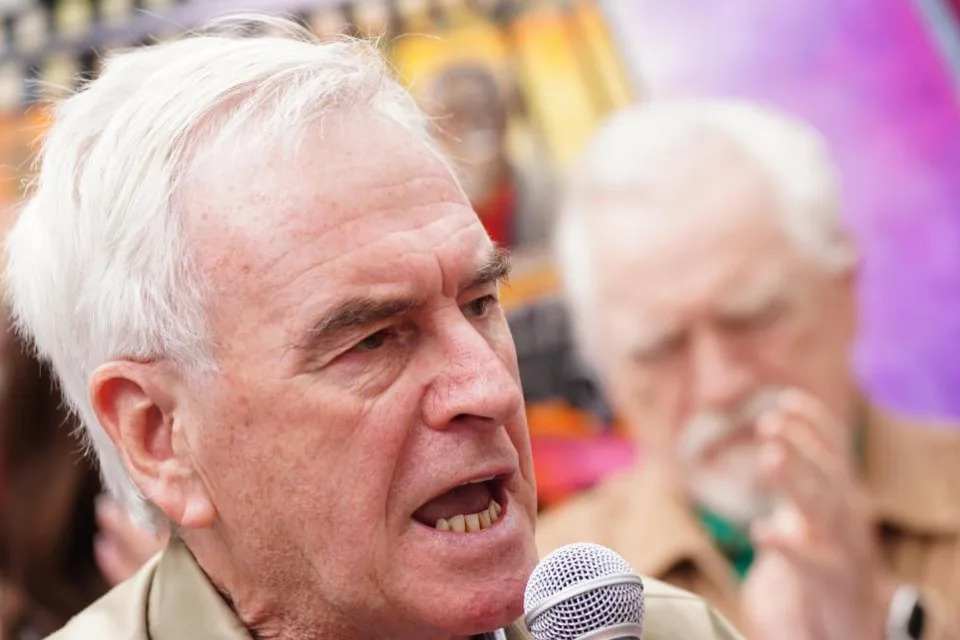
Former Labour shadow chancellor, John McDonnell (below), told The Ferret that if the UK Government is to have “any credibility on human rights these licences must be reviewed in light of the UN’s investigations”.


“The Government’s handing out of licences to a company engaged in supporting the expansion of Israeli settlements in the West Bank flies in the face of UN resolutions outlawing these settlements and gives a lie to the prime minister’s claims of upholding international law and human rights,” McDonnell claimed.

Ithaca, Delek, the UK Government’s energy department, the ­Israeli embassy in London and the IDF were all asked to comment but none responded.

On its website, Ithaca says it is ­committed to “do[ing] the right things in the right way” and that environmental, social and governance (ESG) considerations are “interwoven into our balanced business strategy”.

Ithaca has adopted the UN’s ­sustainable development goals, ­including to contribute to “peace, ­justice and strong institutions”.

As well as for its activities in the West Bank, Delek has come under fire in recent years for its plans to develop gas fields off the coast of the disputed territory of Western Sahara.

Western Sahara was annexed by Morocco in the 1970s, but its ­sovereignty there is disputed by the indigenous Sahrawi people.

Norway’s massive sovereign wealth fund – built largely on the back of oil revenues – announced it was ­divesting from Delek in December ­because its activities in Western ­Sahara were “a serious violation” of “basic ethical norms”.

Meanwhile, Norway’s state-run oil company, Equinor, is ­partnering with Ithaca on the ­Rosebank field – which Equinor has an 80% stake in – a fact that has drawn growing criticism from both ­campaigners and politicians in the Scandinavian country.

The Ferret is an editorially independent, not-for-profit co-operative run by its journalists and subscribers. You can find it at https://theferret.scot/ and can subscribe for £5 a month here: https://theferret.scot/subscribe/
Big Oil’s Carbon Capture Conundrum

Many energy experts and environmentalists worry that the huge rush to fund CCS tech is a dangerous distraction

Editor OilPrice.com
Sat, 20 April 2024 


Hard-to-abate industries, particularly oil and gas, are racing to increase their carbon capture capacity as they strive to decarbonise operations. Despite being some of the biggest carbon emitters, many oil and gas majors are optimistic they can dramatically reduce their emissions by using carbon capture and storage (CCS) technology. This is, realistically, one of the few ways that oil and gas companies can reduce while keeping their fossil fuel output high. However, energy experts and environmentalists are now worried that Big Oil is becoming overly reliant on CCS tech instead of striving for meaningful change towards a green transition.

CCS technology has been around for years but has so far not succeeded in capturing carbon dioxide at the rate required to decarbonise large-scale hard-to-abate operations. Companies and governments worldwide have pumped huge quantities of funding into CCS in recent years in a bid to develop the technology required to effectively capture and store huge amounts of CO2 from industrial and oil and gas operations. However, scientists are still uncertain about whether today’s technology can capture the massive quantity of carbon emissions that many oil majors are promising.


The International Energy Agency (IEA) has deemed CCS technology as “critical” to achieving net-zero emissions around the globe. It is viewed as one of the few possible ways to decarbonise hard-to-abate industries that we continue to rely on until alternative production methods and materials are developed. The IEA also warned that it is not sustainable for oil and gas companies to mitigate major new fossil fuel projects simply by incorporating CCS tech into operations. Many oil majors have invested heavily in CCS tech to justify their ongoing exploration activities and huge oil and gas output, which is expected to continue for decades to come. But the IEA has repeatedly stated that this is at odds with a net-zero scenario by 2050.

CCS typically works by using chemical absorption to capture the CO2 emitted from a chimney at a facility. The emissions are then condensed into a liquid to be transported through a pipeline to be stored thousands of feet underground in depleted oil wells or geological formations. This process is anything but straightforward and rolling out CCS tech on a commercial scale is both complicated and expensive. According to the IEA, more than one billion metric tonnes of CO2 must be captured annually by 2030, which is over 20 times that captured in 2022. This figure rises to six billion tonnes in 2050, around 130 times more than in 2022.

Despite big promises, many companies are falling short of their carbon capture targets. To date, only five percent of announced CCS projects have reached a final investment decision, according to the IEA. There is still little evidence to suggest that CCS tech can be rolled out economically on a commercial scale.

Oil and gas companies have earmarked significant funds for CCS tech over the coming years, in the hope that will be able to continue pumping oil and gas for decades to come. Chevron expects to spend $10 billion on emissions-reducing technologies, while Exxon has pledged an investment of $20 billion. The projected total spending on CCS projects is around $241 billion globally by 2030. The U.S. and the U.K. are currently leading these efforts with investment pipelines of $85 billion and $45 billion, respectively, by 2030.


Many energy experts and environmentalists worry that the huge rush to fund CCS tech is a dangerous distraction. Oil and gas companies have been forced to accelerate their ESG efforts due to pressure from governments and international organisations, as well as high consumer expectations. However, most of these companies expect oil and gas production to continue to be their principal activity for the coming decades, meaning they need a quick way to decarbonise operations without cutting output. Without a proven track record, this could be a dangerous approach to decarbonising as, if CCS tech does not live up to expectations, it could have dire repercussions.

CCS technology is still extremely expensive, and it has a poor track record of working as effectively as anticipated

One 2022 study of CCS projects found that more were failing than succeeding, including Chevron’s Gorgon liquefied natural gas facility in Australia. This is the world’s biggest CCS project to date, at a cost of $3 billion, and it was found to be working at just a third of its expected capacity. At this rate, it will be impossible for companies that are relying on CCS tech to meet their climate targets in the coming years. Nevertheless, oil and gas companies worldwide continue to make bold claims about the potential for CCS tech, without sufficient evidence to back it up. The failure of CCS technologies in oil and gas operations could be catastrophic, leading to much higher-than-anticipated carbon emissions and contributing to a delay in the global green transition.

By Felicity Bradstock for Oilprice.com


Louisiana’s flagship university lets oil firms influence research – for a price

Sara Sneath in New Orleans
The Guardian
Sun, 21 April 2024 

The director of LSU’s Institute for Energy Innovation said being able to work with oil and gas companies is ‘really a key to advancing energy innovation’.
Composite: The Guardian/Getty Images/Alamy

For $5m, Louisiana’s flagship university will let an oil company weigh in on faculty research activities. Or, for $100,000, a corporation can participate in a research study, with “robust” reviewing powers and access to all resulting intellectual property.

Those are the conditions outlined in a boilerplate document that Louisiana State University’s fundraising arm circulated to oil majors and chemical companies affiliated with the Louisiana Chemical Association, an industry lobbying group, according to emails disclosed in response to a public records request by the Lens.

Related: How to spot five of the fossil fuel industry’s biggest disinformation tactics

Records show that after Shell donated $25m in 2022 to LSU to create the Institute for Energy Innovation, the university gave the fossil fuel corporation license to influence research and coursework for the university’s new concentration in carbon capture, use and storage.

Afterward, LSU’s fundraising entity, the LSU Foundation, used this partnership as a model to shop around to members of the Louisiana Chemical Association, such as ExxonMobil, Air Products and CF Industries, which have proposed carbon capture projects in Louisiana.

For $2m, Exxon became the institute’s first “strategic partner-level donor”, a position that came with robust review of academic study output and with the ability to focus research activities. Another eight companies have discussed similar deals with LSU, according to a partnership update that LSU sent to Shell last summer.

Some students, academics and experts said such relationships raise questions about academic freedom and public trust.

Asked to comment, the Institute for Energy Innovation’s director, Brad Ives, defended the partnerships, as did the oil majors. Two more companies have since entered into partnerships with the Institute for Energy Innovation, said Ives. But Shell is the only company to have donated at the level that gave the company a seat on the advisory board that chooses the institute’s research. The head of the Louisiana Chemical Association and the Louisiana Mid-Continent Oil and Gas Association also sit on the advisory board, which can vote to stop a research project from moving forward.

Ives said being able to work with oil and gas companies is “really a key to advancing energy innovation”.

A spokesperson for Shell said: “We’re proud to partner with LSU to contribute to the growing compendium of peer-reviewed climate science and advance the effort to identify multiple pathways that can lead to more energy with fewer emissions.”

An ExxonMobil spokesperson said: “Our collaboration with LSU and the Institute for Energy Innovation includes an allocation for research in carbon capture utilization and storage, as well as advanced recycling studies.”

LSU has long had a close-relationship with oil majors, the names of which hang from buildings and equipment at the university. Nearly 40% of LSU funding comes from the state, which received a good chunk of its revenue from oil and gas activities until the 1980s. In recent years, oil and gas revenue has made up less than 10% of the state budget.

But the new, highly visible partnership with Shell took the closeness a step further, promising corporations voting power over the Institute for Energy Innovation’s research activities in return for their investment.

“I have a hard time seeing a faculty member engaged in legitimate research being eager for an oil company or representative of a chemical company to vote on his or her research agenda,” said Robert Mann, political commentator and former LSU journalism professor. “That is an egregious violation of academic freedom.

“You don’t expect to see it written down like that,” Mann said, after the Lens asked him to review the boilerplate document that outlines what companies can expect in return for their donations to LSU’s Institute for Energy Innovation. It is not appropriate, Mann said, for faculty research to be driven by the decisions of the dean of a university, let alone an outside industry representative. “If you’re a faculty member in that unit you should know that the university is fine with auctioning off your academic freedom,” he said. “That’s what they’re doing.”

Ives of LSU said its Institute for Energy Innovation is no different to similar institutes across the US, including the Texas Bureau of Economic Geology, which performs research supported by corporate donors. “I think researchers saying that somehow having corporate funding for research damages the integrity of that research is a little far-fetched,” Ives said.

Related: World’s largest oil companies ‘way off track’ on emissions goals, report finds

Research performed at the institute is subject to the faculty’s individual ethics training and subject to peer-review, he said. “A donor that provided money that goes to the institute isn’t going to be able to influence the outcome of that research in any way.”

Asked about the relationship with the institute and industry, Karsten Thompson, the interim dean of the College of Engineering at LSU said: “To me, it’s not a conflict at all. It’s a partnership because they’re the ones that are going to make the largest initial impacts on reducing CO2 emissions.”

Some observers, noting that fossil fuel companies have previously shown a vested interest in obscuring scientific conclusions, question the reliability of academic studies sponsored by fossil fuel companies. Exxon, for example, denied the risk of human-caused climate change for decades, noted Jane Patton, an LSU alumna and the US fossil economy campaign manager for the Center for International Environmental Law.

After the Lens asked her to review LSU communication on the matter, Patton said she suspected that fossil fuel companies have had a say in what does and doesn’t get studied in relation to risky endeavors, such as carbon capture, which involves chemically stripping carbon dioxide from industrial emissions and piping it underground. For her, the LSU documents basically proved her fear. “This is the first time I’ve seen actual evidence of it,” Patton said. “This is a gross misuse of the public trust.”

To Patton, the perceived blurring of academic objectivity could not come at a worse time in Louisiana, as the climate crisis makes the state less habitable and housing more expensive. “It’s just disheartening,” she said. “To find that the state’s flagship institution is allowing industry to determine the research agenda. No wonder it’s so hard to find peer-reviewed research about how bad this is.”

Records show that Shell helped to tailor what LSU students would learn in the six courses offered under the institute’s carbon capture, use and storage (CCUS) concentration that debuted a couple years ago. The LSU alumnus Lee Stockwell, Shell’s general manager of CCUS, sat on the search committee for the Energy Institute executive director, served on the petroleum engineering advisory board, and was very involved in shaping the carbon capture curriculum.

Stockwell directed questions about Shell’s partnership with the university to LSU.

Stockwell was not the only oil representative to help design the curriculum. BP, Chevron, ConocoPhillips and ExxonMobil also had representatives on the ad hoc advisory committee that designed carbon capture coursework within the petroleum engineering department, according to a July 2022 email from Thompson. At least one cohort of students took two elective courses at LSU designed by the oil majors and another 10 students were expected to take the full concentration beginning in 2022.

LSU is not alone in this practice, Thompson said. At most engineering departments in the country, an active Industrial Advisory Committee (IAC) weighs in on curricula, so that degrees evolve as technology changes, helping students land internships and jobs.

LSU faculty has not been similarly engaged with renewable energy companies, because oil and gas companies have the resources to tackle the climate crisis now – and are not reliant on future technology, Thompson said. “Renewable energy is much more abstract,” he said. “So, I think that’s the difference. It’s not that we don’t care as much.”

Related: ‘A Trojan horse of legitimacy’: Shell launches a ‘climate tech’ startup advertising jobs in oil and gas

Fossil fuel companies have been finding their way into classrooms for decades, in part to help the industry retain a positive public image in the face of a heating planet.

Some students do not approve of the university’s partnerships with fossil fuel companies, or any financial ties with them.

For a decade now, students across the nation have filed complaints and demanded divestment from fossil fuels and hundreds of institutions have agreed. Locally, the LSU Climate Pelicans, an interdisciplinary group of students, have called for the university to divest endowment funds from the fossil fuel industry.

Inspired by the Climate Pelicans’ work toward divestment, the LSU graduate student Alicia Cerquone, who sits on the LSU’s student senate, sponsored a divestment resolution. The measure passed in a 37-2 vote last year, according to LSU’s student newspaper. Though investment in fossil fuels amounts to only 2 to 3% of the endowment, it’s an important philosophical step, Cerquone said.

Cerquone is also troubled by the influence that industry has on the Institute for Energy Innovation and fears other corporations could control other departments’ curriculums. “These entities are going to have a say in what we pay to learn here,” she said.

The fossil fuel industry has made forays into academia beyond Louisiana. ExxonMobil and Shell have both helped fund a similar Energy Initiative at Massachusetts Institute of Technology (MIT), where the highest-level donors can have an office on MIT’s campus, according to Inside Climate News. In 2021, Exxon funded and co-wrote a research paper with MIT researchers with conclusions that supported the argument for federal subsidies for carbon capture and use.

This story is co published with the Lens, a non-profit newsroom in New Orleans and part of its Captured Audience series, which is supported by a grant from the Fund for Investigative Journalism


Tesla Semi trucks in short supply for PepsiCo as its rivals use competing EV big rigs


Fri, Apr 19, 2024,
By Jessica DiNapoli

NEW YORK (Reuters) - Key Tesla customer PepsiCo made initial payments for 100 Tesla Semis in 2017, intending to use the electric-truck fleet to haul its Cheetos, Lays potato chips and Pepsi soda pop to retailers.

But according to the food-and-drinks maker and one of its executives with knowledge of the deal, PepsiCo was using only 36 of Teslas promised 100 electric trucks as of this month.


The shortfall, which hasn't been previously disclosed, lays bare the challenges for Tesla as it seeks to become a high-volume player in the truck-manufacturing business. Other would-be Tesla customers including food distributor Sysco, UPS and Walmart Canada continue to wait for Tesla Semi trucks and are turning to rival electric-truck makers.

The struggles of shipping enough Semis come at a bad time for Tesla, which has seen growth for its consumer electric vehicles slow, forcing it to cut prices and hurt margins. In addition, Reuters reported this month that Tesla had decided to cancel its long-promised inexpensive car that investors had hoped would drive further growth.

Diesel-powered 18-wheelers are a major source of pollution. As companies pledge to slash their greenhouse gas emissions, the proposition for Tesla is clear.

"People might wonder why build a semi truck?" Musk said at the carmaker's gigafactory in Sparks, Nevada, in late 2022, when Tesla delivered the Semis to PepsiCo. "It's 20% of U.S. vehicle emissions."

Under the Biden administration, companies using electric trucks qualify for large subsidies to offset their purchases. PepsiCo secured over $20 million in government grants to cover the cost of 32 of the Semis, plus federal subsidies of $40,000 per vehicle.

Tesla, which will report quarterly results on Tuesday, did not return a request for comment.

A PepsiCo spokesperson said in a statement that the company's plans for the Semis can shift when technology and the need to establish infrastructure is involved.

The soda and snack producer was the first of Corporate America to take delivery of any of Tesla's highly-anticipated Semi trucks. "The 100 (Tesla Semis) we have a deposit on, we’ll get those out in ‘23 for sure," Mike O’Connell, PepsiCo’s vice president of supply chain, told Reuters at the time.

But, as of this month, PepsiCo was "focused on best leveraging the 36 (Tesla Semi) vehicles that are currently in our fleet," a spokesperson told Reuters in early April. That’s the same number PepsiCo first started with when it began using the trucks to transport goods from its Modesto food manufacturing plant and Sacramento bottling site, PepsiCo executives said.

Tesla has been looking to build a truck-making business for years.

Tesla had said it would have the Semi in production by 2019. In October 2022, Musk told investors that his goal was to make 50,000 Semis in 2024. Tesla finally unveiled the Tesla Semi truck in late 2022.

But in June 2023, Musk said at an energy conference that "there just weren't enough batteries" for Tesla to reach "volume production" of the truck, without quantifying how many Semis that would be. He said Tesla would reach volume production in 2024 "as the battery problem gets solved."

Svein Sollie, the transportation director at ASKO Norway, the logistical arm of Norway's largest food retailer NorgesGruppen, used his personal credit card to put down an initial deposit on 10 of the Tesla Semis in 2017 but has not received any.

"We are not happy with the situation at Tesla," Sollie said. "(It's) almost seven years now, it's a long time to wait.”

UPS reserved 125 Tesla Semi tucks in 2017, one of Tesla's biggest orders at the time. A spokesperson for the package delivery company told Reuters on April 16 that it is "working closely with Tesla to determine a date for us to take delivery of the trucks," but declined to provide additional details.

Meanwhile, UPS, Walmart Canada, Sysco and Schneider National, a transportation company that works for PepsiCo's Frito-Lay, said they are turning to Daimler Truck, maker of the Freightliner eCascadia. All four companies said they had begun to put dozens of eCascadia electric big rigs on the road.

The eCascadia's range is around 230 miles, while the Tesla Semi can go about 500 miles. Schneider said it uses nearly 100 eCascadia trucks to haul goods including PepsiCo's Frito-Lay products.

Daimler Truck North America said the eCascadia is used in more than 55 separate companies' fleets.

To be sure, Tesla has its own fleet of close to 100 Semi trucks that are traveling between its factories in Fremont, California and Sparks, Tesla executive Lars Moravy said on reality show Jay Leno's Garage in December.

In addition, logistics provider Martin Brower has said on its website that it used two Tesla Semis to make deliveries to its restaurant customers earlier this year, as part of a pilot. It did not respond to additional requests for comment.

In Tesla's quarterly earnings call on Jan. 24 Andrew Baglino, an executive who has since left the company, said Tesla recently began expanding its plant in Nevada to manufacture the Semi. Musk said in March that it would "make sense to also build the Semi in Europe" at the company's factory outside of Berlin, according to local news reports.

Pepsi Chief Sustainability Officer Jim Andrew said in a recent interview with Reuters that PepsiCo was working on building out the infrastructure to support an electric fleet, including employees who can service the vehicles and power grids strong enough to charge them.

"You're talking about a system," Andrew said. "All of those things have to happen before we can electrify the fleet."

A PepsiCo spokesperson said the company would be deploying more electric vehicles from a range of manufactures as they are available.

PepsiCo investor Green Century Capital Management has reservations about the company's time table for rolling out the Semis.

"The fact they're running behind schedule is concerning," said Andrea Ranger, a shareholder advocate at Green Century. The investment firm has followed PepsiCo's use of electric vehicles and is pushing the company to consider its impacts on biodiversity at its annual meeting in May.

In Europe, ASKO Norway is using electric semis from Scania and Volvo while it waits for Tesla, according to Sollie. He said Tesla told him that Tesla is prioritizing Semi deliveries to Pepsi and other U.S. customers.

(Reporting by Jessica DiNapoli in New York; additional reporting by Nick Carey in London and Hyun Joo Jin in San Francisco; Editing by Alistair Bell)