Wednesday, November 20, 2024

Gitmo Continues To Haunt


Here’s a pop quiz: When can an Army colonel overrule the Secretary of Defense? It happened last week for probably the first time in modern history. The short answer is: Even in the military, the Secretary of Defense cannot change the rules and procedures for criminal prosecutions and tell military judges how to try cases.

Here is the backstory.

For years, the feds told us that Osama bin Laden was the 9/11 mastermind. Then, after they murdered bin Laden in his home in Pakistan in 2011, they decided that Khalid Shaikh Mohammed was the real mastermind and they would try him in a military court and seek the death penalty. After all, he deliberately set in motion calculated events that resulted in the murders of nearly 3,000 Americans.

Fast forward to a few weeks ago when we learned that a plea agreement had been entered into by way of a signed contract between the retired general in the Pentagon who is supervising all Gitmo prosecutions, the Gitmo defendants and defense counsel, and the Gitmo military prosecutors. The agreement provides that in return for a guilty plea, Mohammed and others will serve life terms at Gitmo, rather than be exposed at trial to the death penalty or serving their sentences at America’s hellhole in Florence, Colorado. The guilty plea is to include public and detailed recitations of guilt.

So far, this is straightforward. While the trial judge may have given his nod of approval to the terms of the agreement, under the federal rules of criminal procedure, the agreement is not final until the judge hears the defendants actually admit guilt under oath in a public courtroom and then accepts the plea in a written order.

That admission has not yet taken place because Secretary of Defense Lloyd Austin, who learned of the plea agreement while traveling, removed the authority of Gen. Susan Escallier, who is supervising the prosecution, to enter into plea agreements without his express approval.

Thereupon, defense counsel asked the judge in the case, Col. Matthew McCall, to enforce the agreement anyway since it is a signed contract, and schedule the plea hearing at which Mohammed and others will presumably comply with their obligations to spill the beans on this 23-year-old case.

The military prosecutors – who initiated the plea negotiations two years ago because they recognized that they cannot ethically defend the torture regime of President George W. Bush – complied with Pentagon orders and asked Judge McCall to reject the plea.

Last week, the judge denied the government’s request and rejected the Pentagon’s order and scheduled hearings at which Mohammed and the other defendants will presumably acknowledge their guilt under oath.

The judge’s ruling is essentially unassailable. He ruled that when Defense Secretary Austin rescinded the authority of Gen. Escallier – a retired military judge – to agree to guilty pleas, it was too little and too late. By the time Sec. Austin removed Gen. Escallier’s authority to approve guilty pleas in all Gitmo cases, she had already approved these pleas. Thus, she was fully possessed with the power to approve them at the time she signed the approvals.

The prosecution now confronts an ethical dilemma.

The plea negotiations were begun by the prosecutors. The current team of prosecutors is the second prosecutorial team. Full disclosure – I consulted with the first team of prosecutors on some of their civil liberties issues. The current team, after reviewing the work of its predecessors, concluded that the case was not winnable and posed a great risk to American jurisprudence and to American troops stationed abroad.

The risk to jurisprudence is the nearly impossible task of defending torture. Lawyers are prohibited from using evidence obtained under torture to prove a case, and judges are prohibited from permitting such evidence to be considered by juries. This is a basic principle of law that President Bush forgot about, ignored or never knew when he authorized torture back in 2001. Mohammed was tortured for three years at black sites in foreign countries and at Gitmo.

Judge McCall has not yet ruled on exactly what evidence will come before the jury – should there ever be a trial – as he is the fourth judge in the case. In order to make his rulings, Judge McCall will need to review more than 40,000 pages of documents and transcripts produced to his predecessors. President Bush also forgot, ignored or never knew that military judges – unlike federal district court judges – rotate off their assignments every four or five years.

If President Bush had not crafted the jurisprudential nightmare in Gitmo – with its torture regime and agonizingly slow military rubrics – Mohammed and the others would have been tried in federal court in New York City by now, and would have been acquitted and set free or convicted and executed or still serving life terms.

Instead we have the anomaly of prosecutors asking a military appeals court – once headed by the same Gen. Escallier – to reject a guilty plea that the same prosecutors sought and crafted so that they can now try a case that they have told their superiors and publicly revealed will be impossible to win and dangerous to try.

Why will it be dangerous to try Mohammed? Because when the world learns from a public court room what the U.S. government did to him in its torture chambers – all of it criminal, unconstitutional and constituting war crimes for the prosecution of which there is no statute of limitations and which are not pardonable – it will be startled; and many angered folks will seek revenge on unsuspecting U.S. troops abroad.

All Americans should care about this. The feds are subject to the Constitution and the rule of law. They cannot evade or avoid either for unpopular defendants or for political gain. If they could, then no one’s freedom is secure.

Andrew P. Napolitano, a former judge of the Superior Court of New Jersey, is the senior judicial analyst at Fox News Channel. Judge Napolitano has written seven books on the US Constitution. The most recent isSuicide Pact: The Radical Expansion of Presidential Powers and the Lethal Threat to American Liberty. To find out more about Judge Napolitano and to read features by other Creators Syndicate writers and cartoonists, visit www.creators.com.

COPYRIGHT 2021 ANDREW P. NAPOLITANO – DISTRIBUTED BY CREATORS.COM


Zionism: In the Words of the Leading Zionists and their Allies


Nearly all of these quotes are gathered from the chapter epigraphs in the book, M. Shahid Alam, Israeli Exceptionalism: The Destabilizing Logic of Zionism (Springer: 2008). A few of the quotes are from non-Zionists. The sources for most these quotes can be found in this book.

 Chosenness

“Israel is not another example of the species nation; it is the only example of the species Israel.” Martin Buber

“Only Israel lives in, and constitutes, God’s kingdom…” Jacob Neusner

“For me the supreme morality is that the Jewish people has a right to exist. Without that there is no morality in the world.” Golda Meier, 1967

“We do not fit the general pattern of humanity…” David Ben-Gurion

“…only God could have created a people so special as the Jewish people.” Gideon Levy

Zionism

“There are upwards of seven million Jews known to be in existence throughout the world… possessing more wealth, activity, influence and talents, than any body of people their number on earth….they will march in triumphant numbers, and possess themselves once more of Syria, and take their rank among the governments of the earth.” Mordecai Noah, 1818

“The ultimate goal … is, in time, to take over the Land of Israel and to restore to the Jews the political independence they have been deprived of for these two thousand years…. The Jews will yet arise and, arms in hand (if need be), declare that they are the masters of their ancient homeland.” Vladimir Dubnow, 1882

“…the spirit of the age is approaching ever closer to the essential Jewish emphasis on real life.” Moses Hess, 1862

“…Jews are a nation which, having once acted as the leaven of the social world, is destined to be resurrected with the rest of the civilized nations.” Moses Hess, 1862

“Today we may be moribund, but tomorrow we shall surely awaken to life; today we may be in a strange land, but tomorrow we will dwell in the land of our fathers; today we may be speaking alien tongues, but tomorrow we shall speak Hebrew.” Eliezer Ben-Yehudah, 1880

“…we must seek a home with all our hearts, our spirit, our soul.” Peretz Smolenskin, 1881

“Let sovereignty be granted us over a portion of the globe large enough to satisfy the rightful requirements of a nation: the rest we shall manage for ourselves.” Theodore Herzl, 1896

“Palestine is first and foremost not a refuge for East European Jews, but the incarnation of a reawakening sense of national solidarity.” Albert Einstein, 1921

Zionism:Weaponizing Antisemitism

“The anti-Semites will become our most dependable friends, the anti-Semitic countries our allies.” Theodore Herzl, 1896

“The struggle of Jews for unity and independence…is calculated to attract the sympathy of people to whom we are rightly or wrongly obnoxious.” Leo Pinsker

“The Western form of anti-Semitism—the cosmic, satanic version of Jew hatred—provided solace to wounded [Arab] feelings.” Bernard Lewis, 2006

Zionism: Ethnic Cleansing

“Will those [Palestinians] evicted really hold their peace and calmly accept what was done to them? Will they not in the end rise up to take back what was taken from them by the power of gold…And who knows, if they will not then be both prosecutors and judges…” Yitzhak Epstein, 1907

Zionism: Ambition

“Discussed with Bodenheimer the demands we will make. Area: from the Brook of Egypt to the Euphrates. Stipulate a transitional period with our own institutions. A Jewish governor for this period. Afterwards, a relationship like that between Egypt and the Sultan.” Theodore Herzl, 1898

“We should prepare to go over to the offensive. Our aim is to smash Lebanon, Trans-Jordan, and Syria. The weak point is Lebanon, for the Moslem regime is artificial and easy for us to undermine. We shall establish a Christian state there, and then we will smash the Arab Legion, eliminate Trans-Jordan; Syria will fall to us. We then bomb and move on and take Port Said, Alexandria and Sinai.” David Ben-Gurion May 1948

Zionism: Destabilizing Logic

“Will those [Palestinians] evicted really hold their peace and calmly accept what was done to them? Will they not in the end rise up to take back what was taken from them by the power of gold…And who knows, if they will not then be both prosecutors and judges…” Yitzhak Epstein, 1907

“God forbid that we should harm any people, much less a great people whose hatred is most dangerous to us.” Yitzhak Epstein, 1907

“As to the war against the Jews in Palestine….it was evident twenty years ago that the day would come when the Arabs would stand up against us.”Ahad Ha’am, 1911

“Two important phenomena, of the same nature, but opposed, are emerging at this moment in Asiatic Turkey. They are the awakening of the Arab nation and the latent effort of the Jews to reconstitute on a very large scale the ancient kingdom of Israel. These movements are destined to fight each other continually until one of them wins.” Najib Azouri, 1905

“It is all bad and I told Balfour so. They are making [the Middle East] a breeding place for future war.” Col. Edward Mandell House, 1917

“The question is, do we want to conquer Palestine now as Joshua did in his day – with fire and sword?” Judah L. Magnes, 1929

“It is our destiny to be in a state of continued war with the Arabs.” Arthur Rupin, 1936

“The day we lick the Arabs, that is the day, I think, when we shall be sowing the seeds of an eternal hatred of such dimensions that Jews will not be able to live in that part of the world for centuries to come.” Judah L. Magnes, 1947

“The state of Israel has had explosives – the grievances of hundreds of thousands of displaced Arabs – built into its very foundations.” Isaac Deutscher, 1954

“Why should the Arabs make peace? If I were an Arab leader I would never make terms with Israel. That is natural: we have taken their country.” David Ben-Gurion, 1956

“Historical logic points to the eventual dissolution of the Jewish state. The powers around us are so great. There is such a strong will to annihilate us that the odds look very poor.” Benny Morris, 2008

Zionism: Demographic Threat

“In Jewish cities, villages and kibbutzim … families are having 1.2 children. For theYishuv, that spells extinction.” David Ben-Gurion, March 1943

 Christian Zionism

“…we welcome the friendship of Christian Zionists.” Theodore Herzl, 1897

“The entire Christian church, in its variety of branches… will be compelled… to teach the history and development of the nascent Jewish state. No commonwealth on earth will start with such propaganda for its exploitation in world thought, or with such eager and minute scrutiny, by millions of people, of its slightest detail.” A. A. Berle, 1918

“Christian Zionists favor Jewish Zionism as a step leading not to the perpetuation but to the disappearance of the Jews.” Morris Jastrow, 1919

“…Zionism has but brought to light and given practical form and a recognized position to a principle which had long consciously or unconsciously guided English opinion.” Nahum Sokolow, 1919

“Christian Zionism and Jewish Zionism have combined to create an international alliance superseding anything that NATO or UN has to offer.” Daniel Lazare, 2003

“Put positively: Other than Israel’s Defense Forces, American [Christian] Zionists may be the Jewish state’s ultimate strategic asset.” Daniel Pipes, July 2003

Destabilizing Logic: Alienating Muslims

“…it seems to me and all members of my office acquainted with the Middle East that the policy which we are following [support for partition]…is contrary to the interests of the United States and will eventually involve us in international difficulties….we are forfeiting the friendship of the Arab world…[and] incurring long-term Arab hostility towards us.” Loy Henderson, November 1947

“US prestige in the Muslim world has suffered a severe blow, and US strategic interests in the Mediterranean and Near East have been seriously prejudiced.” George F. Kennan, January 1948

“You can trace the resurgence of what we call Islamic extremism to the Six Day War.” Michael Oren, 2007

Destabilizing Logic: Rise Of Israel/Six-Day War of June 1967

“Israel was now [after 1967] seen by the West, and primarily Washington, as a regional superpower and a desirable ally among a bevy of fickle, weak Arab states.” Benny Morris, 2001

“The glory of past ages no longer is to be seen at a distance but is, from now on, part of the new state…” Editorial in Haaretz, June 8, 1967

“We have returned to our holiest places, we have returned in order not to part from them ever again.” Moshe Dayan, June 9, 1967

“A messianic, expansionist wind swept over the country. Religious folk spoke of a “miracle” and of “salvation”; the ancient lands of Israel had been restored to God’s people.” Benny Morris, 2001

Zionism: Support of Western Imperialist Powers

“If His Majesty the Sultan were to give us Palestine…[w]e should there form a portion of a rampart of Europe against Asia, an outpost of civilization as opposed to barbarism.” Theodore Herzl, 1896

“Don’t worry, Dr. Wise, Palestine is yours.” Woodrow Wilson, March 1919

“The United States has a special relationship with Israel in the Middle East comparable only to that which it has with Britain over a wide range of world affairs…I think it is quite clear that in case of an invasion the United States would come to the support of Israel.” John F. Kennedy, December 1962

Zionism: Incremental Strategy

“Erect a Jewish state at once, even if it is not on the whole land. The rest will come in the course of time. It must come.” David Ben-Gurion, 1937

“Egypt is the only state among the Arab countries that constitutes a real state and is forging a people inside it. It is a big state. If we could arrive at the conclusion of peace with it, it would be a tremendous conquest for us.” David Ben-Gurion, 1949

Settler-Colonialism/Ethnic Cleansing

“As soon as we have a big settlement here we’ll seize the land, we’ll become strong, and then we’ll take care of the Left Bank [of the Jordan River]. We’ll expel them from there, too. Let them go back to the Arab countries.” A Jewish settler, 1891

“[We] must be prepared either to drive out by the sword the [Arab] tribes in possession as our forefathers did or grapple with the problem of a large alien population, mostly Mohammedan and accustomed for centuries to hate us.” Israel Zangwill, 1905

“… Palestine shall be as Jewish as England is English, or America is American.” Chaim Weizmann, 1919

“I support compulsory transfer. I do not see in it anything immoral.” David Ben-Gurion, 1938

“We are a generation of settlers, and without the steel helmet and the gun barrel, we shall not be able to plant a tree or build a house.” Moshe Dayan, April 1956

“Zionism comprises a belief that Jews are a nation, and as such are entitled to self-determination as all other nations are.” Emanuele Ottolenghi, 2003

“Without the uprooting of the Palestinians, a Jewish state would not have arisen here.” Benny Morris, 2004

Jewish Power

“There are upwards of seven million Jews known to be in existence throughout the world… possessing more wealth, activity, influence and talents, than any body of people their number on earth….they will march in triumphant numbers, and possess themselves once more of Syria, and take their rank among the governments of the earth.” Mordecai Noah, 1818

“When we sink, we become a revolutionary proletariat…when we rise, there rises also our terrible power of the purse.” Theodore Herzl, 1896

““If His Majesty the Sultan were to give us Palestine, we could in return undertake to regulate the whole finances of Turkey.” Theodore Herzl, 1896

“…Jews are a great power in journalism throughout the world.” Israel Zangwill, 1914

“In large parts of Eastern Europe [during the early decades of the twentieth century], virtually the whole “middle class” was Jewish.” Yuri Slezkin, 2004

“The expansion and consolidation of United States Jewry in the late nineteenth and twentieth centuries was as important in Jewish history as the creation of Israel itself; in some ways more important. For, if the fulfillment of Zionism gave the harassed diaspora an ever-open refuge with sovereign rights to determine and defend its destiny, the growth of US Jewry was an accession of power of an altogether different order, which gave Jews an important, legitimate and permanent part in shaping the policies of the greatest state on earth.” Paul Johnson

“…the Jews from every tribe have descended in force, and they are determined to break in with a jimmy if they are not let in.” Edward House, October 1917

 Jewish Power: Jewish Lobby

“I’m sorry, gentlemen, but I have to answer to hundreds of thousands who are anxious for the success of Zionism: I do not have hundreds of thousands of Arabs among my constituents.” President Harry Truman, November 1945

“I know I was elected because of the votes of American Jews. I owe them my election. Tell me, is there something I can do for the Jewish people?” President John F. Kennedy, December 1961

“Without this lobby Israel would have gone down the drain.” Isaiah (Si) Kenen

“During every congressional campaign, each candidate for every seat is asked to describe his or her views on the Middle East. Most office-seekers happily comply in writing. AIPAC then shares the results with its members, helping them to decide who is the most pro-Israel.” J. J. Goldberg, 1996

“AIPAC has one enormous advantage. It really doesn’t have any opposition.” Douglas Bloomfield, 2003

“In the last two decades between 1980 and 2000, American Jews gained power and influence beyond anything that they had ever experienced.” Stephen Schwartz, 2006

“A lobby is like a night flower: it thrives in the dark and dies in the sun.” Steven Rosen, 2005

“If Israel nuked Chicago, Congress would approve.” Steve Reed, 2009

“1000 Jewish lobbyists are on Capitol Hill against little old me.” President George H. Bush, September 1991

“… before I was elected to office I vowed to be an unshakable supporter of Israel. I have kept that commitment.” President Bill Clinton May 1995

“…I will bring to the White House an unshakable commitment to Israel’s security.” Barack Obama, June 2008

Zionism versus Saving Jewish Lives

“If I knew that it was possible to save all the [Jewish] children in Germany by transporting them to England, but only half by transporting them to Palestine, I would choose the second.” David Ben-Gurion, 1938

“If I am asked could you give money from UJA [United Jewish Appeal] moneys to rescue Jews? I say ‘No; and I say again, No.” Itzhak Greenbaum, 1943RedditEmail

M. Shahid Alam is Emeritus Professor, Department of Economics, Northeastern University. He is the author of Israeli Exceptionalism (Springer, 2008) and Yardstick of Life (KDP, 2024), a book of poetry. Read other articles by M. Shahid.
IRAQ

Kurdish Oil Exports Set to Return in 2025

By Charles Kennedy - Nov 20, 2024, 3:00 AM CST


Crude oil flows from Kurdistan could return to the market next year, after the Kurdistan regional government and the central Iraqi government in Baghdad agreed a new production sharing agreement that satisfies both sides.

“Previously, the KRG signed several agreements with the federal government regarding oil exports. However, the Iraqi budget law set oil extraction and transportation costs at $6 per barrel, which became a major obstacle to oil exports,” the acting minister of natural resources for the Kurdistan semi-autonomous region told local media publication Kurdistan 24.

Following the negotiations, the extraction and transportation costs were revised up to $20.6 per barrel, of which $16 per barrel would go to companies active in Kurdistan in the first phase of the new agreement, Kamal Mohammad Salih told the publication.

Deliveries of Kurdish crude oil have been suspended for over a year amid a dispute between the central government in Baghdad and Turkey over who had the power to authorize these deliveries.

The impasse followed an International Chamber of Commerce ruling from March 2023. The ICC ruled in favor of Iraq, which had argued that Turkey should not allow Kurdish oil exports via the Iraq-Turkey pipeline and the Turkish port of Ceyhan without approval from the federal government of Iraq.

The original dispute then morphed into the long-running debate between Erbil and Baghdad about how to divide the oil profits between the central Iraqi government and the government of the semi-autonomous oil-rich region.

The latest report out of Kurdistan suggests this may have finally been concluded with a mutually beneficial agreement that features the stipulation for an independent audit the oil extraction and transportation costs for Kurdish oil. “The firm will be given 60 days to determine the actual costs following the budget law amendment,” Salih explained.

Iraq is OPEC’s second-largest oil producer after Saudi Arabia. A solid chunk of its total comes from the fields in the northern Kurdistan region.

By Charles Kennedy for Oilprice.com
EASTERN KURDISTAN

Kurdish activist sentenced to 18 months in prison in Iran

Allah-Veysi, a member of the Jiyanaway Kurdistan Campaign, was sentenced to one year for “acting against national security.


ANF
NEWS DESK
Tuesday, 19 November 2024

Kurdish civil rights activist Ali Allah-Veysi has been sentenced to 18 months in prison by Branch One of the Islamic Revolutionary Court in Sanandaj, Kurdistan Province, the Kurdistan Human Rights Network reported.

Allah-Veysi, a member of the Jiyanaway Kurdistan Campaign, was sentenced to one year for “acting against national security” through his alleged membership of the Komala Party of Iranian Kurdistan and an additional six months for “propaganda against the state”, according to KHRN.

The verdict was delivered on 17 November following a trial on 12 November in the Islamic Revolutionary Court of Sanandaj, presided over by Judge Mostafa Azizi.

Allah-Veysi, a former political prisoner from Sanandaj, was arrested by the Ministry of Intelligence and taken to the Ministry’s detention facility in the city.

After weeks in detention, he was transferred to Sanandaj Central Prison and later released on 14 August on bail of five billion rials (nearly 7,000 USD).

The activist was previously arrested by security forces in Sanandaj on 8 May 2021, along with six other campaign members, and was released on bail on 13 June of that year.

The trial of the seven activists was held on 14 March 2022 at Branch One of the Islamic Revolutionary Court of Sanandaj, presided over by Judge Saeedi, on charges of “propaganda against the state” and “acting against national security” by collaborating with the Komala Party of Iranian Kurdistan.

In May 2022, Allah-Veysi was informed that he had been sentenced to two years in prison, a sentence later reduced to five months of imprisonment and four years of suspended imprisonment by Branch Four of the Kurdistan Court of Appeal.

Allah-Veysi was rearrested in September 2022 to serve his sentence and was released from Sanandaj Central Prison upon completion of his sentence.

Fate of four Kurdish civilians detained in Iran still unknown after 13 days

Four Kurdish civilians, including a 15-year-old minor, have been denied the right to family visits and legal counsel since their arrest on 5 November.


ANF
NEWS DESK
Monday, 18 November 2024

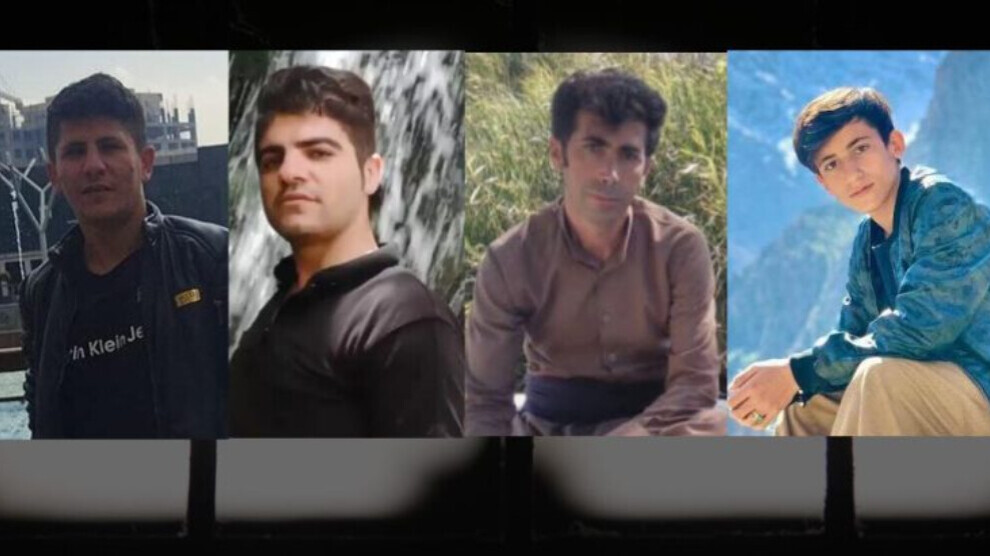
There is no information about the fate of the detained Kurdish civilians Sina Asadi Hakim, Hamid Salehinezhad, Mohammad Karimi and Jafar Ardalan, who were arrested 13 days ago in the village of Deyvaznav in Sarvabad, Kurdistan Province, the Kurdistan Human Rights Network (KHRN) reported.

The civilians, including 15-year-old Asadi Hakim, were arrested without a warrant after Ministry of Intelligence forces raided their village on the morning of 5 November and took them to the Ministry’s detention facility in Sanandaj, Kurdistan Province.

Since their arrest, they have been denied the right to family visits and legal counsel, and no information has been made public about their situation or the charges against them.

According to KHRN, the security services have reportedly been targeting the family of the youngest detainee, Asadi Hakim, for the past year because of his two sisters’ alleged links to a Kurdish opposition group, and have pressured the family to leave their home village.
Report on children’s rights in
 (Syrian) Kurdistan: 
Death, detention, arrest, torture...

According to the one-year report on violations of children's rights announced by IHD Amed Branch, 36 children's right to life was violated.


ANF
AMED
Tuesday, 19 November 2024,

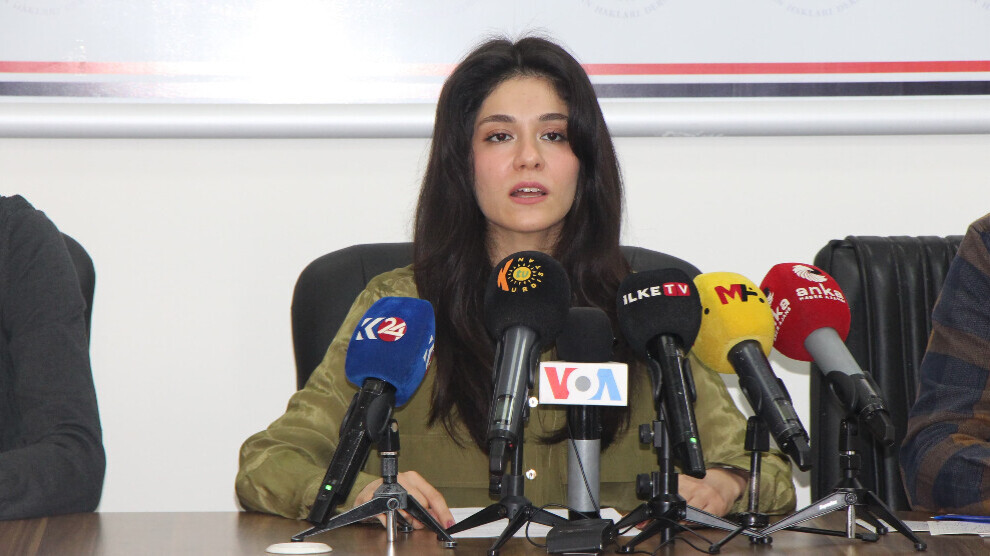
The Amed (tr: Diyarbakır) Branch of Human Rights Association (IHD) announced the one-year ‘Children’s Rights Violations Report’. The report, which includes violations between November 2023 and November 2024, was announced to the press at the association building on Tuesday.

Lawyer Berfin Elçi, member of the Children’s Rights Commission of IHD Amed Branch, emphasised that children's rights are secured by the United Nations Convention on the Rights of the Child and that children who are in ethnic, religious or linguistic minorities are protected by the UN convention to grow and develop in their own culture, but Turkey has made a reservation on this issue.

4 children died within a year

Berfin Elçi stated that 4 children died in North Kurdistan within a year, one of whom was hit by an armoured vehicle, and 16 children were injured in various ways. On the other hand, 1 child died and 1 other was seriously wounded as a result of the explosion of mines and explosives left in conflict zones.

18 children died in suspicious circumstances

Elçi also announced that 18 children died in North Kurdistan in suspicious circumstances and at least 1 child attempted suicide. Stating that 9 children lost their lives and 1 child was injured as a result of domestic violence, Elçi stated that at least 5 children were subjected to sexual abuse within the family.

‘36 children's right to life was violated’

Berfin Elçi continued: “At least 4 children lost their lives, 8 children were injured, at least 48 children were subjected to sexual abuse and assault, at least 1 child was detained. At least 36 children's right to life was violated. 81 children were detained, and 21 of them were imprisoned. At least 15 children were subjected to torture and ill-treatment, 2 of them in detention, 10 in prisons and 3 outside detention centres.”
Karamus: Isolation is a practice against the Kurdish people in the person of Abdullah Öcalan


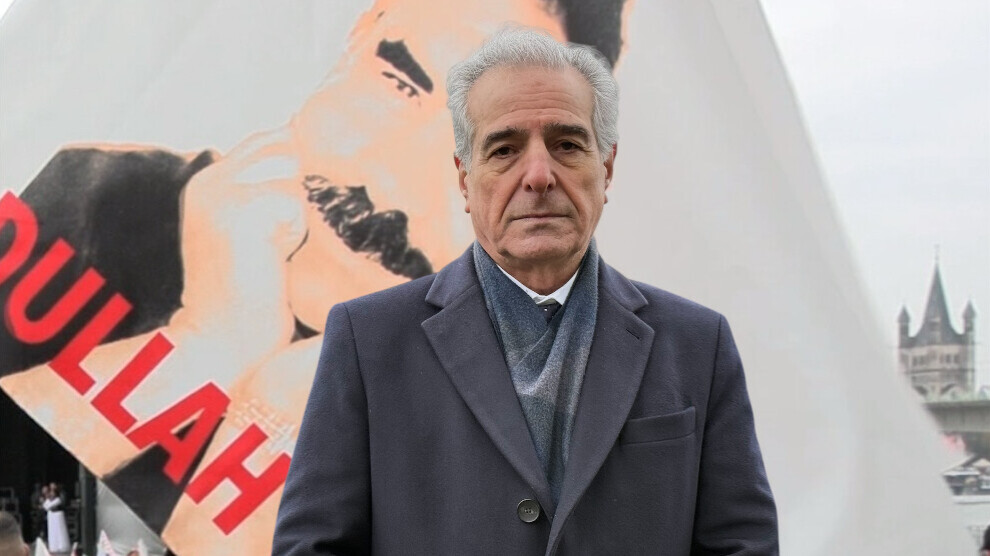
KNK Co-Chair Ahmet Karamus stated that the isolation of Abdullah Öcalan is directed against the entire Kurdish people and emphasised that thousands of people who came together at the Cologne rally shouted ‘Öcalan is our will’.


DENİZ İKE-ZİLAN KARATAŞ
COLOGNE
Tuesday, 19 November 2024, 16:39

Speaking to ANF, Kurdistan National Congress (KNK) Co-Chair Ahmet Karamus drew attention to the absolute isolation of Kurdish People’s Leader Abdullah Öcalan and the concept of genocidal war against the Kurdish people.

Karamus stated that the isolation has spread to the whole society in the person of Abdullah Öcalan and said, “Although there has been a meeting with him recently, the isolation continues. Mr Abdullah Öcalan clearly states that the isolation continues. Even though only one meeting was held, this was a hope for the Kurdish people. We were able to get little information about his health, conditions and life at least. This was a source of joy for us. Although there was a so-called resolution process from 2009 to 2015, it became clear that the Turkish state did not have a project, will or concept to resolve the Kurdish question. The negotiations were held only to deceive the public. In this process, it was seen that the state did not have a solution-orientated project. The policy of oppression, attacks and persecution, which resumed especially after 2016, is part of a concept that aims to destroy the Kurdish people. The isolation of Abdullah Öcalan is part of this concept. This isolation is not an individual matter. The isolation is directed against the entire Kurdish people in the person of Abdullah Öcalan.”

Karamus emphasised that the isolation was directed against the thought and philosophy of Leader Öcalan and continued: “Despite all these attacks and isolation against Abdullah Öcalan, the Kurdish people have shown both nationally and internationally that Mr Öcalan is their will. The concept of war against Mr Öcalan, the Kurdish Freedom Movement and the Kurdish people failed to break this will. Tens of thousands of people who came together in Cologne said, ‘Abdullah Öcalan is the will of this people. The Kurdish question cannot be resolved without Abdullah Öcalan's role and mission'.”

Karamus drew attention to the invasion attacks of the Turkish state against North-East Syria and said, “The Rojava issue and the status of Rojava is one of the key issues in terms of the solution of the Kurdish question. Because Rojava has reached this point with Abdullah Öcalan's paradigm, thought and philosophy. Rojava has become a model for how problems in the Middle East can be resolved. The reason for the Turkish state's attacks on Rojava is the fear that the Kurds can resolve the problems of the Middle East through this model. They are also afraid that the system created in Rojava can resolve both the problems in the Middle East and the Kurdish issue. For this reason, the occupying forces target Rojava in all their messages. But can a solution be achieved through massacre, destruction and occupation? Of course not. Because the Kurdish people have shown who their will is in every field. For this reason, we hope that the forces cooperating with the occupying states, especially those who support the policies of the Turkish state, will understand that this cooperation will not bring any solution.”

Underlining that the Kurdish people are going through a very sensitive and dangerous process today, KNK Co-Chair concluded: “As the KNK, we have repeatedly attempted to unite the Kurdish movements in the four parts of Kurdistan and in the diaspora. However, the Kurdistan Democratic Party (KDP) has chosen to cooperate with an occupying state like Turkey, which wants to exterminate the Kurdish people. This is an approach that jeopardises the existence of the Kurdish people. Today, as the Kurdish people, we are going through a very dangerous and sensitive process. We have repeatedly conveyed a message to the KDP that co-operation with the Turkish state is not a solution. Once again, we appeal to the KDP; let's not allow a second Lausanne in the 21st century. Let us not be anyone's pawn, let us not fall for the games of the Turkish state. I hope that the KDP will understand the policies and goals of the Turkish state as soon as possible and take its place among the national forces. Let's be the main actor in the Middle East that ensures a solution to the Kurdish question.”


PKK/YPJ KURDISH FEMINIST DEMOCRACY

Rûken Nexede: Women did not surrender to male-dominated mentality

Rûken Nexede of the KJAR said that the women's struggle in Iran and East Kurdistan continues. Inspired by Öcalan’s philosophy, a great social awakening has taken place.


HEWRÃŽN CENGAWER
NEWS DESK
Tuesday, 19 November 2024,


East Kurdistan, which is ruled by the Iranian regime, is a focus of women's resistance. The 'Jin Jiyan Azadî' revolution was initiated by the women of East Kurdistan. The region is a place of both determined resistance and the harshest repression. On the occasion of the International Day for the Elimination of Violence against Women on 25 November, Rûken Nexede of the Community of Free Women of Eastern Kurdistan (KJAR) spoke about the prospects of women's freedom struggle.


"An unprecedented level of women's struggle"

First, Rûken Nexede paid tribute to the people who lost their lives in the fight against patriarchy and emphasized that the existence of the International Day for the Elimination of Violence against Women is the result of the anti-patriarchal women's struggle. She spoke about the special level that the women's struggle has reached today, and said: "Today there is a general women's organization, women are discussing confederalism, they are expanding their knowledge of military organization. Women have reached a level in the 21st century for which we can proudly congratulate them on their resistance and uprisings. With the emergence of the apoist movement, many achievements such as the women's revolution, the military organization of women and the science of women have been realized."

"Women have never submitted to patriarchy"

Nexede added: "Throughout history, women have not submitted to patriarchy either spiritually or intellectually. Through Rêber Apo [Abdulla Öcalan], women returned to their true nature and learned how to fight against the patriarchal mentality, organize themselves and build a free life. The apoist women's movement was organized from this awareness and continues to fight on this basis today. Rêber Apo defined the 21st century as the women's revolution. We are proud of all the women's struggles that have taken place up to now. All of these struggles were fought with great difficulties and sacrifices. This struggle was fought by our martyrs like Heval Roza, Heval Sara and Heval Şîrîn in the prisons, mountains, cities and villages. With their heads held high, women emerged from the darkness with the philosophy of Rêber Apo."

"A free life means true love"

Nexede continued: "Rêber Apo described the personality of free women and men in a way that we can see in the sacrificial attitude of Heval Asya and Heval Rojger. Their willingness to make any sacrifice is so meaningful that we do not know how to appreciate them sufficiently. From the personality and actions of these comrades, we can see that a free life means true love. Therefore, I would like to pay tribute to them once again for the level of freedom they have achieved. The way to honor these martyrs is to also attain this level of freedom. In order to build a free life, all women should adopt these actions."

"Every place that Apoism reaches experiences a change"

Nexede said: "With the 'Jin Jiyan Azadî' revolution, women recognized the lost will and power of the people. At the same time, questions arose for both women and men: Who am I, how do I live, what do I live for and where do I live, what is domination, what is violence? This revolution made everyone question themselves. Artists questioned what their art was for; scientists began to investigate what science was and who it served. There was discussion about the extent to which the state was using science for its own interests. Everyone began to ask questions."

"Fear was defeated"

Nexede said: "Families began to question what family meant, what the roots of the family concept were and what it was for. The predetermined role of women, girls and boys was questioned. Students began to question how they learned things and whether it was for life or in the service of the system. Rêber Apo's philosophy brings about change wherever it reaches. The Iranian regime is currently desperate, it has no more resources and is in crisis. The pressure on society is great. Women and young people are massively oppressed under the guise of religion. But people have now seen the true face of this regime, they are taking a stand and fighting without fear. Although they know they may fall as martyrs, they continue to fight, make no compromises and sacrifice themselves for the freedom revolution."

TJK-E: Let's fill the streets with the slogan
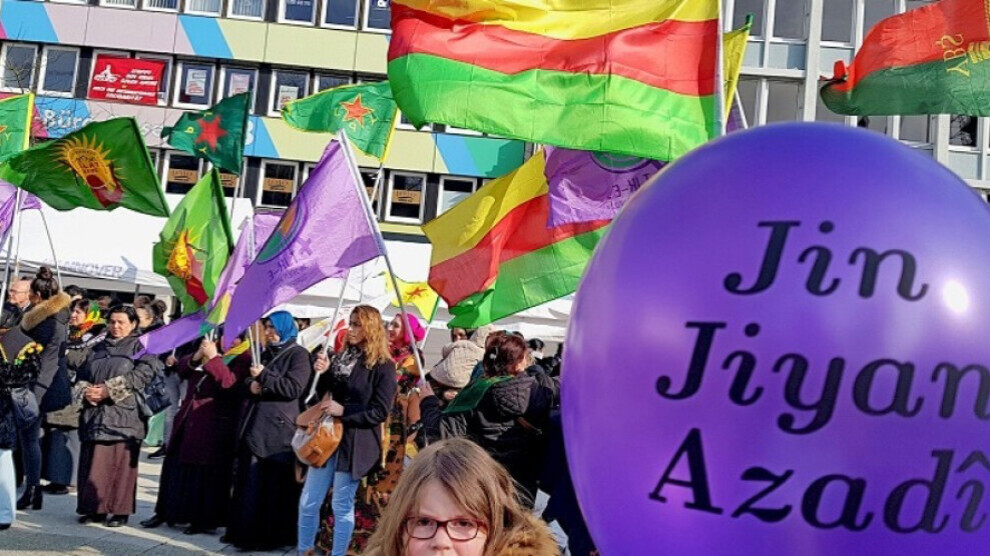
 'Jin Jiyan Azadi'

'WOMAN, LIFE, FREEDOM'

TJK-E called on all women to participate in the actions and events they will hold on the occasion of 25 November International Day for the Elimination of Violence against Women.


ANF
NEWS DESK
Monday, 18 November 2024, 12:02

The European Kurdish Women’s Movement (TJK-E) issued a written statement on the occasion of 25 November International Day for the Elimination of Violence against Women.

TJK-E said: “We welcome 25 November 2024, with the slogans ‘Jin, Jiyan, Azadi’ rising all around the world. With the great struggles of women who say another world is possible, the patriarchal-statist system is being shaken from its roots today. On the occasion of 25 November International Day for the Elimination of Violence against Women, we remember with love and respect all women who resisted, worked hard and paid the price on this path, from the Mirabel Sisters to Sara, from Hevrin Xelef to Jîna Amini, who were the expressions of insistence on a free life against the fascist Trujillo regime. Their determination, love and struggle for a free life continues to grow in women’s struggle for freedom today.”

The TJK-E added: “We are going through a time when the Third World War is making itself felt the most. Women are the ones who suffer the most from the reality of war that has seeped into the daily life of society; from the attacks and policies developed by the nation-state, capitalist modernity and the patriarchal system in a multi-layered and multi-faceted manner. The Third World War, which developed as a result of the existence and interests of hegemonic powers, concerns us Kurdish women the most, both because its center is in the Middle East and because misogynist policies are being brought to the top. For this reason, the task of developing our own self-organization, self-policy, self-defense, and creating alternatives in terms of social, economic, cultural and educational aspects, as well as resisting genocidal attacks, is more urgent than ever. This urgency determines the essence of our struggle as Kurdish women.”

We will expand the struggle against attacks

The statement continued: “We, the European Kurdish Women's Movement (TJK-E), are aware that women are targeted in the Third World War, and that women's self-defense must be developed.

We see 25 November as a day when our continuous struggle reached its peak, when women's organization, actions and creations reached their peak.

As Kurdish women living in Europe, we say that we will defeat the trustees who disregard the will of women in Bakur, the execution policies of the Iranian regime, the invasion plans for Rojava, the betrayal in Bashur and isolation in Imrali. On this basis, we call on all women to participate in the actions and events we will hold with great enthusiasm and to make the streets in every country in Europe resound with the slogan “Jin Jiyan Azadi.”

ACTION CALENDAR

The actions and events to be held between November 18-25


Hundreds of men march against violence against women in Qamishlo

Events are being held in many centres in North-East Syria to combat violence against women on the occasion of 25 November, International Day for the Elimination of Violence against Women.


ANF
QAMISHLO
Monday, 18 November 2024

On the occasion of the International Day for the Elimination of Violence against Women on 25 November, the autonomous region of North and East Syria is holding a series of events over several weeks. This year's activities by the women's associations in the region are under the motto ‘Defend yourselves with the Jin-Jiyan-Azadî philosophy’ and aim to raise awareness in society and empower women through education and high-profile actions.

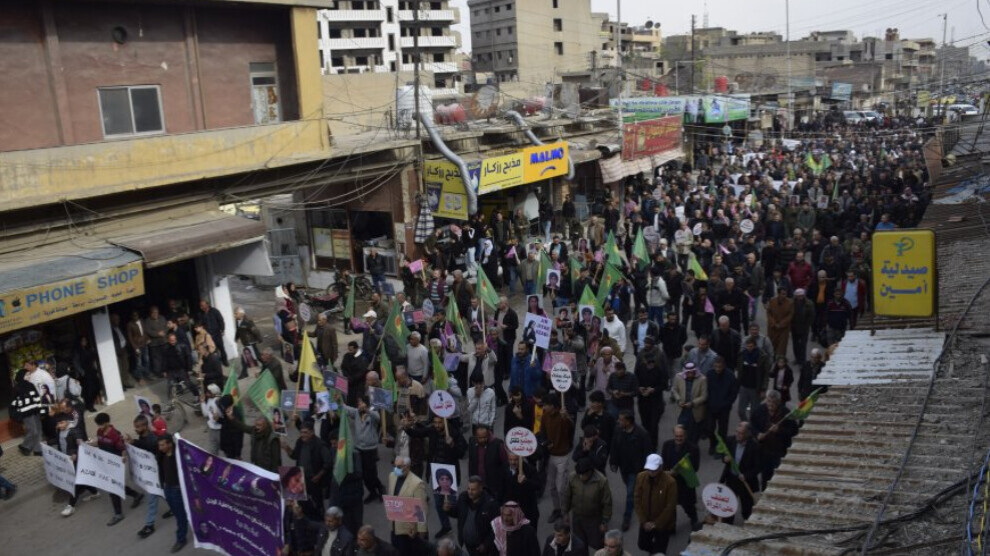
Hundreds of men took to the streets in Qamishlo and staged a march with slogans condemning violence against women.

The march from Sonî Junction to Martyr Rûbar Junction was participated by hundreds of people from civil society organisations and many institutions of the Democratic Autonomous Administration.


A press statement made on behalf of Kongra Star highlighted Kurdish leader Abdullah Öcalan’s thoughts on women's struggle and pointed out that society needs free women.

Referring to the meaning of 25 November, Cewahir Osman said, “The ruling forces impose violence on society in the person of women. Violence against Leader Apo (Abdullah Öcalan) is violence against all women. We say enough is enough and we say that you cannot break our will as a people.”

Another speaker, Xufran Tewkeb, who addressed the crowd pointed out that women struggle for freedom all over the world and stated that violence must be rejected.

Xufran Tewkeb stated that Öcalan’s ideas and philosophy are the source of the struggle for women's freedom and emphasised that women will continue this struggle in the strongest way.


Karasu: Violence against women is a social problem


ANF
NEWS DESK
Monday, 18 November 2024

In the third part of this interview, Mustafa Karasu, member of the KCK Executive Council, talked about the upcoming 25 November, International Day Against Violence Against Women, as well as the 27 November, the anniversary of the founding of the PKK.

The first part of the interview can be read here, the second here.

We are currently approaching an anniversary, namely November 25, the International Day Against Violence Against Women. What do you have to say in this context, especially to men?

The women’s issue is, of course, an important cause. Violence against women is a thousand-year phenomenon. Violence against women is a historical phenomenon, and one can say that it is one of the oldest problems of society. In fact, it is the source of all other problems. The source of social problems is domination over women. And what is dominance built on? It is achieved through violence, through many forms of violence against women. Rêber Apo speaks of the woman as the first colony. She was treated like the first colonized nation. And has since then been oppressed for thousands of years.

In this respect, this problem is more than just the fact that many men have oppressed women and many men have killed women. It is a social problem that concerns the whole society. It is a problem that needs to be solved. Without the elimination of violence against women, without the elimination of the policy of violence against women, in other words, without women being free, society cannot be at peace. Society cannot be healthy. Where there is violence against women, society is sick and unhealthy. It is a great humanitarian problem to inflict violence on the mother, the one who gives birth and raises the child. A woman is part of society, half of it, and violence is particularly practiced against her. Of course, this must be opposed. One cannot be a democrat, a human being, a moral person, or a conscientious person without taking a stand against this.

Violence against women is a social problem. There is this approach among men. It is an approach that feeds on male dominance and is related to morality and conscience. Men have that tendency. It has been implemented in their genes for thousands of years. It has become a culture of belittling women and practicing violence against women. Every man must know that this culture has infected him, and he must get rid of this evil, this ugliness. This is a very important issue.

Rêber Apo has paved the way for the women’s freedom struggle, and there have been important developments in Kurdistan. But still, in Kurdish society, men’s understanding of violence against women continues. He has not been able to get rid of all that dirt and rust. If Kurdish youths and Kurdish men say that they are loyal to Rêber Apo, if they talk about the freedom of the Kurdish people and democracy, they should definitely change their approach towards women. Men, patriots need to get rid of this tendency to violence against women. Otherwise, their patriotism is incomplete. One cannot be a true patriot, democrat, or freedom seeker; one cannot be conscientious or moral if one doesn’t work on getting rid of this.

The issue of violence against women is important. And when I say violence, I mean it in any aspect. Even raising one’s voice against a woman is violence. Generally, men raise their voices to women when something happens. This is a tendency of masculinity, a tendency to dominance. But there are so many more forms of violence, restriction in social life, not seeing women as equal, exclusion, etc.

On the occasion of the approaching November 25th, I commemorate the Mirabal sisters with gratitude and respect. November 25th has become a day of struggle against violence, and it is having a great impact. It has spread to the world. On this occasion, I condemn all violence against women, and I call on all patriots and democrats to fight against violence against women. All patriots in Kurdistan must avoid violence when approaching their wives, children, daughters, and sisters. This is true patriotism.

Another anniversary is also slowly approaching, the founding day of the PKK, on November 27. For decades, it has been said that the PKK is on the verge of being crushed, but again and again it continues to develop and emerge stronger as before. What can you tell us about this, or about the approaching anniversary in general?

The founder of the PKK is Rêber Apo. Rêber Apo founded, developed, and brought the PKK to the present day on the basis of an ideology that has continuously developed and sustained itself from the first to the present day, that is, on the basis of an ideology that integrates itself with society, integrates itself with the people, integrates the struggle, in other words, ensures that the society embraces the people. It has been 46 years now, and there have even been more before that. For more than 50 years, a struggle has been going on. This has created a culture. The PKK is no longer just an organization or a political party.

Today, the PKK is a social culture, a social mentality, a part of society. In other words, society has also become the PKK. That’s why society constantly chanted slogans like “PKK is the people, the people are here.” This is the reality. It is no longer possible to separate the PKK from the Kurdish people. It is not possible to separate it from Kurdish history. It is not possible to separate it from Kurdish culture. The PKK’s survival at this level, its strong existence despite all the attacks, is the result of this. The PKK is a power beyond its current concrete strength. If the attacks against the PKK fail to achieve results, it is because the PKK is a bigger force than it appears. It is a movement deeply rooted in society.

The PKK has always gotten stronger, is getting stronger, and will get stronger. The PKK is the organized form of Rêber Apo’s thought. Rêber Apo’s thought is a thought that will no longer determine the present but the future. The PKK, which is its organized form, will continue its influence in the future. It has militants like Asya Ali and Rojger Helin. These are the values they have created. There is prison resistance; there is the women’s movement. As Rêber Apo said, the PKK is a women’s party. It is a party shaped on values that we cannot list here. It is delusional to think that the PKK can be destroyed through these and those attacks. That is why the reality of the PKK is a reality that needs to be further researched and analyzed.

The PKK has become a reality beyond us. This needs to be seen. If the PKK were just material assets, concrete realities, the PKK would not be able to survive under so many attacks. The PKK has a spirit that keeps it alive. That power, which is beyond its concrete existence, beyond its material existence, sustains the PKK. It keeps us constantly struggling, and by struggling, we constantly yield results. This cannot be prevented by any attack. On this basis, I salute Rêber Apo once again with gratitude and respect for creating such a party. I also remember with gratitude and respect all our martyrs who have brought the PKK to this day. The PKK will struggle by adhering to their memory and will realize their aspirations.


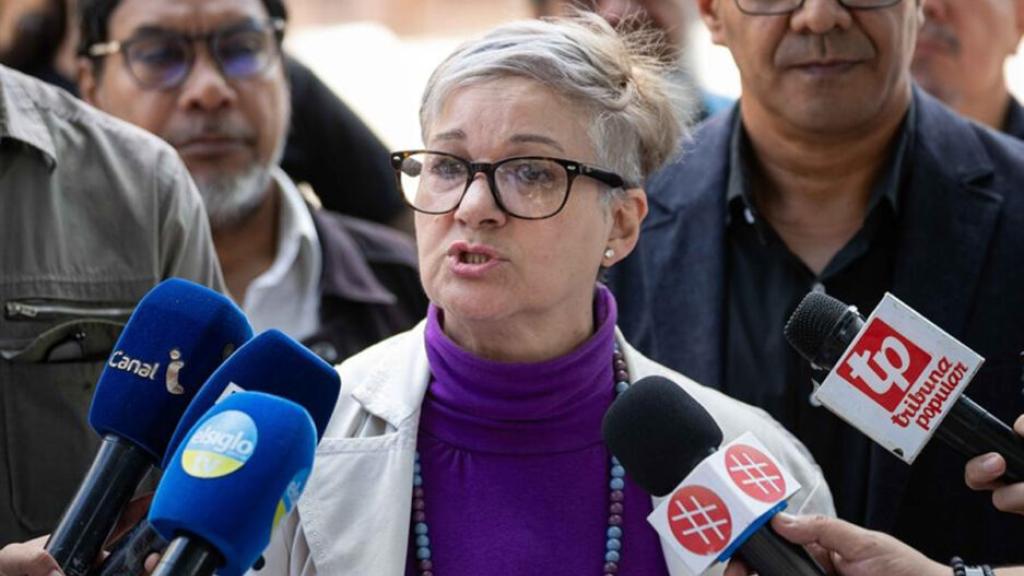
María Alejandra Díaz (Popular Democratic Front): ‘Institutional avenues for resolving Venezuela’s political crisis are being dangerous closed off’


Published 
María Alejandra Díaz

Constitutional lawyer and human rights activist María Alejandra Díaz has become a symbol of why, as she puts it, the rule of law in Venezuela is “in frank deterioration” after the July 28 presidential elections.

Given lingering doubts over who won — the National Electoral Council (CNE) declared President Nicolás Maduro the winner, but the right-wing opposition claims it has evidence indicating otherwise — many want the results published to verify who won and prove beyond doubt the legitimacy of any incoming government.

That is why, on November 4, Díaz filed a legal recourse before the Constitutional Chamber of the Supreme Court of Justice (TSJ), requesting that the court ask the CNE to comply with its legal obligation and a TSJ Electoral Chamber ruling issued on August 22 (which ratified Maduro’s victory) by publishing the results. Instead, the TSJ declared the appeal inadmissible and fined Díaz, suspended her from professional duties and threatened her with possible arrest.

The recourse was filed on behalf of the Frente Popular Democrático (Popular Democratic Front, FDP), which includes left-wing parties and organisations such as the Bloque Histórico Popular (Popular Historic Bloc), the Partido Comunista de Venezuela (Communist Party of Venezuela), La Otra Campaña (The Other Campaign), Voces Antiimperialistas (Anti-imperialist Voices), Movimiento Popular Alternativo (Popular Alternative Movement), En Común (In Common), and the Frente Nacional de Lucha de la Clase Trabajadora (National Front for Working Class Struggle), as well as moderate opposition parties such as Centrados en la Gente (Focused on the People), among others.

Speaking about her case with Federico Fuentes for LINKS International Journal of Socialist Renewal, Díaz explained: “This is the first time in Venezuela’s history that a lawyer has been suspended from practising their profession, with no regard for the presumption of innocence, no prior trial and no right to a defence.” Despite this, Díaz continues to demand that the results be published because “it is our right” and the way to defend “the Venezuelan electoral system, which had been transparent and clean, but is now tainted”.

Díaz also spoke about the situation facing what she terms “prisoners for protesting or demanding political or labour rights”, highlighting the fact that while close to 2000 such prisoners continue to be denied their basic rights (a few days after this interview was completed, 225 of these prisoners were released on November 17), there are right-wing parliamentarians “sitting in the National Assembly who have called for an invasion, for sanctions and for Maduro to be killed” but have never faced justice.

All this leaves leftists such as Díaz in the position of “demanding justice while caught between two warring parties, and asking both sides to respect the rule of law and the Constitution.” But the risk of “a head-on collision” between the government and right-wing opposition is only increasing ahead of inauguration day, January 10, something she believes “could end very badly.” Faced with this, Díaz says there is no alternative but to “continue fighting and seeking spaces to advance our struggle” while insisting on “defending transparency, popular sovereignty and the Constitution.”

Below is the full interview.

Could you explain what has happened with your case?

The first thing we tried was filing a Request for a Constitutional Review of the TSJ Electoral Chamber’s Ruling N° 031 on the grounds that it was unconstitutional [because only the CNE, not the TSJ, has the power to act as an electoral arbiter]. On October 11, the Constitutional Chamber responded to us with Ruling N° 211 that declared the Electoral Chamber’s ruling was valid and res judicata [a final judgement no longer subject to appeal].

So, we tried another avenue. Understanding that even if we disagree with the Electoral Chamber's ruling we needed to abide by it, we lodged a legal recourse on the grounds that the CNE had failed to publish disaggregated results. According to the rulings from the TSJ’s Electoral and Constitutional Chambers, the Organic Law on Electoral Processes and jurisprudence set by the Constitutional Chamber, the CNE is duty bound to present a detailed tabulated list of the voting tally sheets and total votes, as the basis of proof for declaring a winner. Publishing disaggregated results allows anyone to access them and, if they choose, to challenge them.

What did the Constitutional Chamber do? It declared itself competent to hear our legal recourse, but declared it inadmissible without even reviewing its merits. On top of that, it accused me of “recklessness”, fined me and ordered the Bar Association to open a disciplinary investigation against me. I was also suspended from practising my profession, which is an unprecedented move never before seen in the country. I believe this is the first time in Venezuela’s history that a lawyer has been suspended from practising their profession with no regard for the presumption of innocence, no prior trial and no right to a defence. This is very serious. Professionals should be held responsible for any malpractice, but to determine whether this has occurred one has to be afforded due process and the right to a defence, which has not happened.

I cannot defend myself because we have not even been handed the full sentence, only the operative part. I have not been able to pay the fine because we do not have a certified copy of the sentence or an official letter stating that we must pay the fine, where we must pay it, and into what account of the National Treasury it must be paid. In other words, I am in a state of complete defencelessness and uncertainty.

On which legal norm or statute did the TSJ base its decision to sanction you?

They claim that the charge of “recklessness” is based on a TSJ law, even though it does not really fit the bill. That is why we have asked for a clarification. The article according to which they apply the sanction does not include the possibility of applying a fine. Moreover, if a fine applied, it should actually be 900 bolivars, yet the fine they issued me was for 100 euros, which at the current exchange rate is more than 5000 bolivars.

On top of this, they have indicated — with what intention, we do not know — that they could potentially arrest me in accordance with the 1988 Law of Appeals. This law directly contradicts rights enshrined in the Constitution [approved by the people in a referendum in 1999] because no one can be placed under arrest — house or otherwise — if it is not proven that they have committed an infringement or crime, and where there must be due process, including a prior trial, the right of defence and the guaranteed principle of a presumption of innocence.

So, of course, there is a lot of fear and uncertainty within the Gremio de Abogados de Venezuela (Venezuelan Lawyers’ Guild). In fact, none of the Bar Associations or Law Schools have spoken out about this. I have had to confront this alone, although supported by comrades in the FDP, groups of lawyers who have spoken out, and ordinary citizens. I have to thank the Venezuelan people because it was citizens who collectively raised the money, which I did not have, to pay the fine. But, so be it. I believe we have to continue fighting and seeking spaces to advance our struggle.

Why do you keep insisting the election results must be published?

Because it is a very serious matter when, in the face of reasonable doubt, you insist on proclaiming a winner. Reasonable doubt damages the legitimacy of any incoming government.

Moreover, the CNE said there was a hacking [of the electronic voting system] and Venezuelans have the right to know to what extent this hacking could have affected the results. The only way to find that out is by counting the paper ballots in the ballot boxes, as occurred on other occasions. In Venezuela, even if the entire electronic system breaks down, every electronic vote has a physical back-up. That physical back-up is in the ballot boxes that the CNE guards and in Envelope Number 1 [which contains all the tally sheets]. The evidence contained in these could allow one — if the CNE authorises it as they did in 2013 — to audit 100% of the ballot boxes.

Furthermore, if you publish the results, whoever believes there was a different outcome [based on tally sheets that party scrutineers are given at each voting centre] can challenge it. But the government has instead closed the door on this possibility by taking the results to the TSJ, where there was no way to control the verification process as interested third parties were not allowed to audit it.

We insist on publishing the results because it is the constitutional path, because it is the political path, because it is our right and because we defend the Venezuelan electoral system, which until now was transparent and clean, but has now been tainted by such actions. We must insist on doing politics and defending transparency, popular sovereignty and the Constitution.

What legal options are left for requesting that the CNE fulfil its legal duty?

Prior to this ruling — which seems to be the final nail in the coffin for pursuing any institutional avenue — the FDP was studying the possibility of attempting a habeas data: that is, a candidate requesting the electoral data from the CNE. We were also studying the possibility of requesting a preliminary hearing against the CNE’s rectors for not having fulfilled their legal obligation. All of this now remains under consideration because we are unclear about the result of the clarification we requested regarding the ruling that imposed sanctions and punishments on me.

There is uncertainty, including legal uncertainty, as to how far we will be able to go in demanding our rights, and not just our electoral rights. What makes this ruling so serious is that it not only prohibits me from being able to practise, it also means any lawyer who lodges an appeal or recourse to demand the government comply with a constitutional right — for example, the right to work or not be subjected to arbitrary arrest — could also be punished. This is a very serious precedent not only because it imposes a punishment without any due process or right to a defence, but because it serves as a warning to the Lawyers’ Guild. That is the most dangerous aspect of it all — it is a warning to anyone thinking about defending the rights of any citizen.

Government spokespersons have again publicly defended the detention of some 2000 people they called “terrorists” for protesting after the elections. You signed an open letter to President Maduro denouncing that these political prisoners have been denied their basic rights. Could you tell us why?

Well, in principle, because we should support any steps to free Venezuelans who have not committed crimes, and whose right to a defence and due process have been violated through arbitrary detentions. Furthermore, out of humanity and empathy, we should accompany the mothers and families of these prisoners.

But I want to make it clear that I am very wary of the category of political prisoner. I prefer to talk about prisoners for protesting, or prisoners for demanding political or labour rights, which is different. The category of political prisoner is a category that is used more generally, but we are defending all those imprisoned for protesting to demand political or labour rights. It is rarely discussed in Venezuela that there are 191 trade union leaders and workers in prison for demanding their labour rights. This must also be denounced and these prisoners should be included in any request to the government to consider extraordinary measures for their freedom.

We are fighting to support their families and ensure that justice is done in cases where people have been detained unfairly. This means ensuring their right to a defence, that they are afforded effective judicial protection, that their human rights are respected and, of course, that the crime they are charged with corresponds with the unlawful act they are alleged to have committed, because innocence must always be presumed until proven otherwise. In Venezuela, the presumption of innocence is a transversal principle across all proceedings. That fundamental human right must be respected.

But it is the case that extreme right-wing sectors have used violence as part of their destabilisation campaigns...

We know that. There are people who, for example in 2014 and 2017, even burned people alive just because they looked like Chavistas [government supporters]. I have not forgotten that. And I am not requesting amnesty or freedom for those who have committed crimes involving human rights violations or corruption. Those who have committed a serious crime, such as killing someone or causing damage to public property, must be punished. But those who have committed no crime, or a less serious crime, those who only went out to protest without causing any damage or harming anyone, cannot be treated the same.

We are not asking for impunity, we are asking for justice, which is different. We are asking that in those cases where no serious crimes have been committed, that those cases be reviewed and the prisoner be given an amnesty or pardon and released. There are children between the ages of 14 and 17, minors, and people with different disabilities, currently in prison. That is our concern.

Now, whoever committed a crime has to face their punishment. Of course, they also have to be guaranteed their rights: you cannot deny them a lawyer of their choosing or access to justice and due process. We are demanding this to ensure that no such cases are rendered null and void [as a result of these rights not being respected].

Given everything we have talked about, what is the situation today in terms of the rule of law in Venezuela?

It has been very badly damaged. The principles and guarantees established in the Constitution are not being respected. The rule of law is in frank deterioration. That is very dangerous not only for the rule of law but for democracy, because if there is no justice and no rule of law, there is no democracy. Today I would say that democracy in Venezuela has been mortally wounded. What is happening is very dangerous. Instead of contributing to a peaceful resolution, a dangerous decision has been taken to close off any institutional avenue for resolving the conflict and crisis in Venezuela.

Many left-wing activists who have stood in solidarity with the Bolivarian Revolution are concerned that talking about the situation of these prisoners or questioning the elections could fuel the arguments of US imperialism and the Venezuelan right-wing in favour of sanctions and other violent actions against the Venezuelan people. How do you respond to these concerns?

I completely dissociate myself from those kinds of arguments. We are not defending violence. We are demanding our constitutional right to request that a state institution publish election results because there are reasonable doubts over the outcome. And we cannot turn a blind eye to the human rights violations that have occurred and are occurring because, far from contributing to a peaceful resolution, that would only further deepen the political crisis in the country.

I will never agree with sanctions, because it is always the people who bear the cost. Moreover, sanctions have contributed to internal corruption, because they have been used as a justification to evade controls and the law on the argument that because of persecution, they must use, let’s call it economic subterfuge, to obtain resources. Sanctions have also served as an excuse to open the door to foreign investment and do away with labour rights.

What we are defending is the rule of law and the political model enshrined in the Constitution. We are not defending criminals. Anyone who has committed a crime, even a political one, cannot have impunity — especially those who have called for sanctions, an invasion, or the president’s assassination. We even have deputies sitting in the National Assembly who have called for an invasion, for sanctions and for Maduro to be killed. This is incomprehensible and only undermines the credibility of state institutions and the rule of law.

So, we are in a difficult position because we are demanding justice while caught between two warring parties, and asking both sides to respect the rule of law and the Constitution. But it seems both sectors are intent on continuing head-on towards a collision in the run-up to January 10 [when the new president is set to be inaugurated], which could end very badly. That is precisely what we want to avoid.