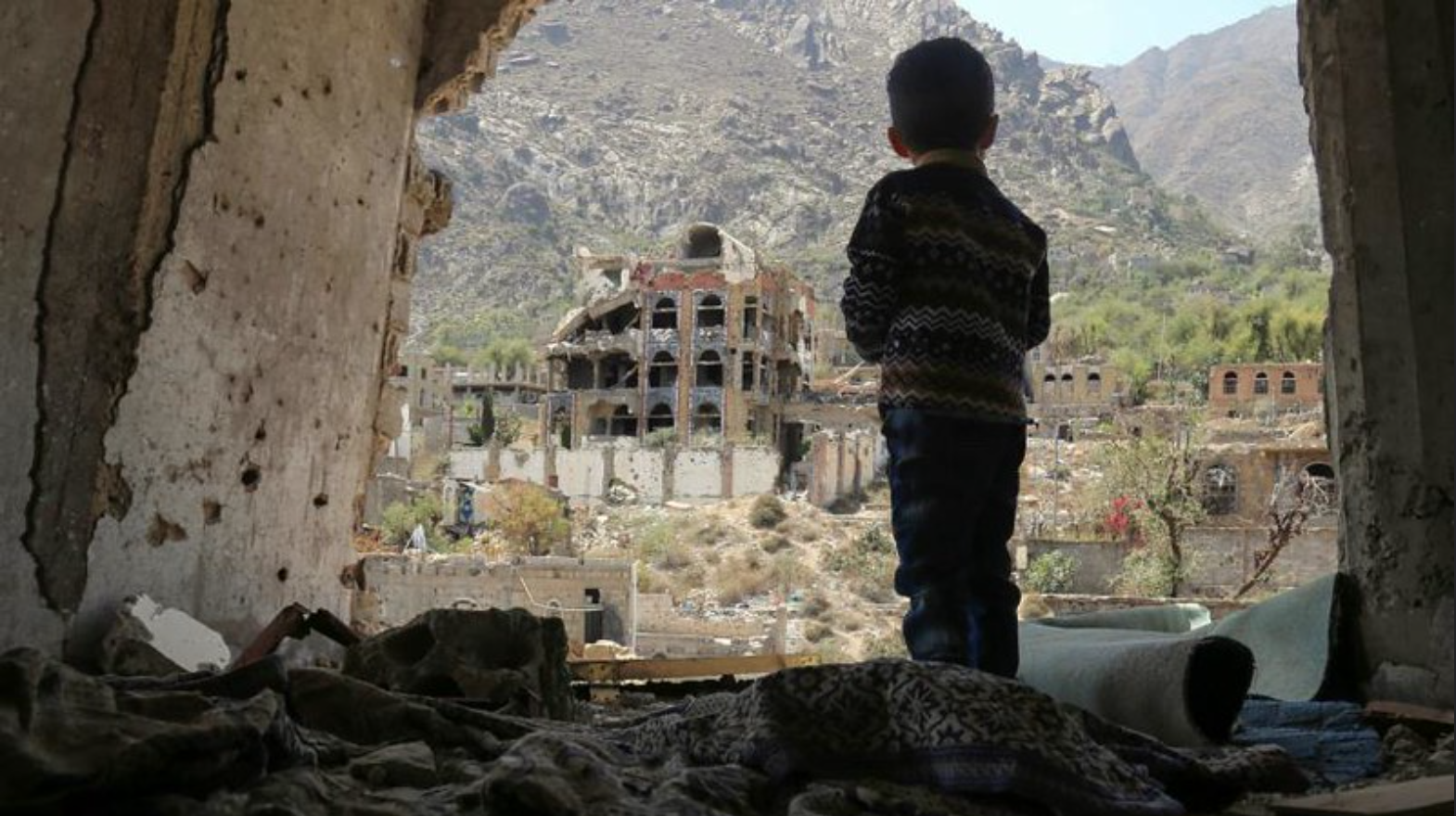
Tuesday, May 13, 2025


Source: Intercept

Before signing its lucrative and controversial Project Nimbus deal with Israel, Google knew it couldn’t control what the nation and its military would do with the powerful cloud-computing technology, a confidential internal report obtained by The Intercept reveals.

The report makes explicit the extent to which the tech giant understood the risk of providing state-of-the-art cloud and machine learning tools to a nation long accused of systemic human rights violations and wartime atrocities. Not only would Google be unable to fully monitor or prevent Israel from using its software to harm Palestinians, but the report also notes that the contract could obligate Google to stonewall criminal investigations by other nations into Israel’s use of its technology. And it would require close collaboration with the Israeli security establishment — including joint drills and intelligence sharing — that was unprecedented in Google’s deals with other nations.

A third-party consultant Google hired to vet the deal recommended that the company withhold machine learning and artificial intelligence tools from Israel because of these risk factors.

Three international law experts who spoke with The Intercept said that Google’s awareness of the risks and foreknowledge that it could not conduct standard due diligence may pose legal liability for the company. The rarely discussed question of legal culpability has grown in significance as Israel enters the third year of what has widely been acknowledged as a genocide in Gaza — with shareholders pressing the company to conduct due diligence on whether its technology contributes to human rights abuses.

“They’re aware of the risk that their products might be used for rights violations,” said León Castellanos-Jankiewicz, a lawyer with the Asser Institute for International and European Law in The Hague, who reviewed portions of the report. “At the same time, they will have limited ability to identify and ultimately mitigate these risks.”

Google declined to answer any of a list of detailed questions sent by The Intercept about the company’s visibility into Israel’s use of its services or what control it has over Project Nimbus.

Company spokesperson Denise Duffy-Parkes instead responded with a verbatim copy of a statement that Google provided for a different article last year. “We’ve been very clear about the Nimbus contract, what it’s directed to, and the Terms of Service and Acceptable Use Policy that govern it. Nothing has changed.”

Portions of the internal document were first reported by the New York Times, but Google’s acknowledged inability to oversee Israel’s usage of its tools has not previously been disclosed.

In January 2021, just three months before Google won the Nimbus contract alongside Amazon, the company’s cloud computing executives faced a dilemma.

The Project Nimbus contract — then code-named “Selenite” at Google — was a clear moneymaker. According to the report, which provides an assessment of the risks and rewards of this venture, Google estimated a bespoke cloud data center for Israel, subject to Israeli sovereignty and law, could reap $3.3 billion between 2023 and 2027, not only by selling to Israel’s military but also its financial sector and corporations like pharmaceutical giant Teva.

But given decades of transgressions against international law by Israeli military and intelligence forces it was now supplying, the company acknowledged that the deal was not without peril. “Google Cloud Services could be used for, or linked to, the facilitation of human rights violations, including Israeli activity in the West Bank,” resulting in “reputation harm,” the company warned.

In the report, Google acknowledged the urgency of mitigating these risks, both to the human rights of Palestinians and Google’s public image, through due diligence and enforcement of the company’s terms of service, which forbid certain acts of destruction and criminality.

But the report makes clear a profound obstacle to any attempt at oversight: The Project Nimbus contract is written in such a way that Google would be largely kept in the dark about what exactly its customer was up to, and should any abuses ever come to light, obstructed from doing anything about them.

The document lays out the limitations in stark terms.

Google would only be given “very limited visibility” into how its software would be used. The company was “not permitted to restrict the types of services and information that the Government (including the Ministry of Defense and Israeli Security Agency) chooses to migrate” to the cloud.

Attempts to prevent Israeli military or spy agencies from using Google Cloud in ways damaging to Google “may be constrained by the terms of the tender, as Customers are entitled to use services for any reason except violation of applicable law to the Customer,” the document says. A later section of the report notes Project Nimbus would be under the exclusive legal jurisdiction of Israel, which, like the United States, is not a party to the Rome Statute and does not recognize the International Criminal Court.

“Google must not respond to law enforcement disclosure requests without consultation and in some cases approval from the Israeli authorities, which could cause us to breach international legal orders / law.”

Should Project Nimbus fall under legal scrutiny outside of Israel, Google is required to notify the Israeli government as early as possible, and must “Reject, Appeal, and Resist Foreign Government Access Requests.”

Google noted this could put the company at odds with foreign governments should they attempt to investigate Project Nimbus. The contract requires Google to “implement bespoke and strict processes to protect sensitive Government data,” according to a subsequent internal report, also viewed by The Intercept that was drafted after the company won its bid. This obligation would stand even if it means violating the law: “Google must not respond to law enforcement disclosure requests without consultation and in some cases approval from the Israeli authorities, which could cause us to breach international legal orders / law.”

The second report notes another onerous condition of the Nimbus deal: Israel “can extend the contract up to 23 years, with limited ability for Google to walk away.”

The initial report notes that Google Cloud chief Thomas Kurian would personally approve the contract with full understanding and acceptance of these risks before the company submitted its contract proposal. Google did not make Kurian available for comment.

Business for Social Responsibility, a human rights consultancy tapped by Google to vet the deal, recommended the company withhold machine learning and AI technologies specifically from the Israeli military in order to reduce potential harms, the document notes. It’s unclear how the company could have heeded this advice considering the limitations in the contract. The Intercept in 2022 reported that Google Cloud’s full suite of AI tools was made available to Israeli state customers, including the Ministry of Defense.

BSR did not respond to a request for comment.

The first internal Google report makes clear that the company worried how Israel might use its technology. “If Google Cloud moves forward with the tender, we recommend the business secure additional assurances to avoid Google Cloud services being used for, or linked to, the facilitation of human rights violations.”

It’s unclear if such assurances were ever offered.

Google has long defended Project Nimbus by stating that the contract “is not directed at highly sensitive, classified or military workloads relevant to weapons or intelligence services.” The internal materials note that Project Nimbus will entail nonclassified workloads from both the Ministry of Defense and Shin Bet, the country’s rough equivalent of the FBI. Classified workloads, one report states, will be handled by a second, separate contract code-named “Natrolite.” Google did not respond when asked about its involvement in the classified Natrolite project.

Both documents spell out that Project Nimbus entails a deep collaboration between Google and the Israeli security state through the creation of a Classified Team within Google. This team is made up of Israeli nationals within the company with security clearances, designed to “receive information by [Israel] that cannot be shared with [Google].” Google’s Classified Team “will participate in specialized training with government security agencies,” the first report states, as well as “joint drills and scenarios tailored to specific threats.”

The level of cooperation between Google and the Israeli security state appears to have been unprecedented at the time of the report. “The sensitivity of the information shared, and general working model for providing it to a government agency, is not currently provided to any country by GCP,” the first document says.

Whether Google could ever pull the plug on Nimbus for violating the company rules or the law is unclear. The company has claimed to The Intercept and other outlets that Project Nimbus is subject to its standard terms of use, like any other Google Cloud customer. But Israeli government documents contradict this, showing the use of Project Nimbus services is constrained not by Google’s normal terms, but a secret amended policy.

A spokesperson for the Israeli Ministry of Finance confirmed to The Intercept that the amended Project Nimbus terms of use are confidential. Shortly after Google won the Nimbus contract, an attorney from the Israeli Ministry of Finance, which oversaw the deal, was asked by reporters if the company could ever terminate service to the government. “According to the tender requirements, the answer is no,” he replied.

In its statement, Google points to a separate set of rules, its Acceptable Use Policy, that it says Israel must abide by. These rules prohibit actions that “violate or encourage the violation of the legal rights of others.” But the follow-up internal report suggests this Acceptable Use Policy is geared toward blocking illegal content like sexual imagery or computer viruses, not thwarting human rights abuses. Before the government agreed to abide by the AUP, Google wrote there was a “relatively low risk” of Israel violating the policy “as the Israel government should not be posting harmful content itself.” The second internal report also says that “if there is a conflict between Google’s terms” and the government’s requirements, “which are extensive and often ambiguous,” then “they will be interpreted in the way which is the most advantageous to the customer.”

International law is murky when it comes to the liability Google could face for supplying software to a government widely accused of committing a genocide and responsible for the occupation of the West Bank that is near-universally considered illegal.

Legal culpability grows more ambiguous the farther you get from the actual act of killing. Google doesn’t furnish weapons to the military, but it provides computing services that allow the military to function — its ultimate function being, of course, the lethal use of those weapons. Under international law, only countries, not corporations, have binding human rights obligations. But if Project Nimbus were to be tied directly to the facilitation of a war crime or other crime against humanity, Google executives could hypothetically face criminal liability under customary international law or through a body like the ICC, which has jurisdiction in both the West Bank and Gaza.

Civil lawsuits are another option: Castellanos-Jankiewicz imagined a scenario in which a hypothetical plaintiff with access to the U.S. court system could sue Google over Project Nimbus for monetary damages, for example.

Along with its work for the Israeli military, Google through Project Nimbus sells cloud services to Israel Aerospace Industries, the state-owned weapons maker whose munitions have helped devastate Gaza. Another confirmed Project Nimbus customer is the Israel Land Authority, a state agency that among other responsibilities distributes parcels of land in the illegally annexed and occupied West Bank.

An October 2024 judicial opinion issued by the International Court of Justice, which arbitrates disputes between United Nations member states, urged countries to “take all reasonable measures” to prevent corporations from doing anything that might aid the illegal occupation of the West Bank. While nonbinding, “The advisory opinions of the International Court of Justice are generally perceived to be quite authoritative,” Ioannis Kalpouzos, a visiting professor at Harvard Law and expert on human rights law and laws of war, told The Intercept.

“Both the very existence of the document and the language used suggest at least the awareness of the likelihood of violations.”

Establishing Google’s legal culpability in connection with the occupation of the West Bank or ongoing killing in Gaza entails a complex legal calculus, experts explained, hinging on the extent of its knowledge about how its products would be used (or abused), the foreseeability of crimes facilitated by those products, and how directly they contributed to the perpetration of the crimes. “Both the very existence of the document and the language used suggest at least the awareness of the likelihood of violations,” Kalpouzos said.

While there have been a few instances of corporate executives facing local criminal charges in connections with human rights atrocities, liability stemming from a civil lawsuit is more likely, said Castellanos-Jankiewicz. A hypothetical plaintiff might have a case if they could demonstrate that “Google knew or should have known that there was a risk that this software was going to be used or is being used,” he explained, “in the commission of serious human rights violations, war crimes, crimes against humanity, or genocide.”

Getting their date in court before an American judge, however, would be another matter. The 1789 Alien Tort Statute allows federal courts in the United States to take on lawsuits by foreign nationals regarding alleged violations of international law but has been narrowed considerably over the years, and whether U.S. corporations could even be sued under the statute in the first place remains undecided.

History has seen scant few examples of corporate accountability in connection with crimes against humanity. In 2004, IBM Germany donated $4 million to a Holocaust reparations fund in connection with its wartime role supplying computing services to the Third Reich. In the early 2000s, plaintiffs in the U.S. sued dozens of multinational corporations for their work with apartheid South Africa, including the sale of ”essential tools and services,” Castellanos-Jankiewicz told The Intercept, though these suits were thrown out following a 2016 Supreme Court decision. Most recently Lafarge, a French cement company, pleaded guilty in both the U.S. and France following criminal investigations into its business in ISIS-controlled Syria.

There is essentially no legal precedent as to whether the provision of software to a military committing atrocities makes the software company complicit in those acts. For any court potentially reviewing this, an important legal standard, Castellanos-Jankiewicz said, is whether “Google knew or should have known that its equipment that its software was being either used to commit the atrocities or enabling the commission of the atrocities.”

The Nimbus deal was inked before Hamas attacked Israel on October 7, 2023, igniting a war that has killed tens of thousands of civilians and reduced Gaza to rubble. But that doesn’t mean the company wouldn’t face scrutiny for continuing to provide service. “If the risk of misuse of a technology grows over time, the company needs to react accordingly,” said Andreas Schüller, co-director of the international crimes and accountability program at the European Center for Constitutional and Human Rights. “Ignorance and an omission of any form of reaction to an increasing risk in connection with the use of the product leads to a higher liability risk for the company.”

Though corporations are generally exempt from human rights obligations under international frameworks, Google says it adheres to the United Nations Guiding Principles on Business and Human Rights. The document, while voluntary and not legally binding, lays out an array of practices multinational corporations should follow to avoid culpability in human rights violations.

Among these corporate responsibilities is “assessing actual and potential human rights impacts, integrating and acting upon the findings, tracking responses, and communicating how impacts are addressed.”

The board of directors at Alphabet, Google’s parent entity, recently recommended voting against a shareholder proposal to conduct an independent third-party audit of the processes the company uses “to determine whether customers’ use of products and services for surveillance, censorship, and/or military purposes contributes to human rights harms in conflict-affected and high-risk areas.” The proposal cites, among other risk areas, the Project Nimbus contract. In rejecting the proposal, the board touted its existing human rights oversight processes, and cites the U.N. Guiding Principles and Google’s “AI Principles” as reason no further oversight is necessary. In February, Google amended this latter document to remove prohibitions against weapons and surveillance.

“The UN guiding principles, plain and simple, require companies to conduct due diligence,” said Castellanos-Jankiewicz. “Google acknowledging that they will not be able to conduct these screenings periodically flies against the whole idea of due diligence. It sounds like Google is giving the Israeli military a blank check to basically use their technology for whatever they want.”

Source: Africa is a Country

On April 2, 2025, Donald Trump declared a “Day of Liberation” and slapped massive tariffs on most countries—excluding Russia but including a 50% tariff on Lesotho. The standard Left argument is that Trump’s tariffs represent capital’s warfare against the working class in response to the crisis of global capitalism. Of course, there’s some validity to that view, but it tends to operate at an excessively high level of abstraction.

More immediately, it doesn’t explain the ferocious backlash to tariffs from multiple fractions of capital, both within and beyond the Trump coalition. After the tariff tsunami, Elon Musk called Trump’s economic advisor Peter Navarro “a moron and dumber than a sack of bricks.” Meanwhile, liberal mainstream media outlets screamed bloody murder, portraying Trump not only as dumb but deranged. The frenzy only intensified when the stock market meltdown carried over into the bond market, which, as financial orthodoxy tells us, isn’t supposed to happen.

Trump responded by postponing most of the tariffs for 90 days, even as he ramped up the trade war with China. In just over a week, Wall Street went ballistic, the dollar rapidly devalued, Trump’s approval ratings tanked, and much of the Republican Party—and key fractions of capital—went into panic mode, even as they remained terrified of crossing him. These dynamics remain ongoing.

Trump’s tariffs are not merely erratic protectionist gestures. Rather, they form part of a blunt and confused arsenal aimed at dismantling post-Second World War US imperialism and replacing it with a brutal new form of nationalist global domination—one stripped of the trappings of “soft power” such as USAID. This multi-sided project emerges from factions within the New MAGA Coalition, and takes different—and often contradictory—forms.

Understanding these contradictions in their specificity is essential, not just for critique but for posing questions about new possibilities for organizing and alliance-building—not only in South Africa, but working towards a concrete internationalism, a topic to which we’ll return later.

The new MAGA coalition

So, what is this New MAGA Coalition behind Trump 2.0? First, it includes fractions of capital that extend well beyond those who underwrote Trump 1.0—most notably Elon Musk and the South African “PayPal mafia,” along with the tech broligarchy so grotesquely on display at the inauguration: Zuckerberg, Bezos, and other billionaires.

It also encompasses elements of the petty bourgeoisie and working class that go beyond Trump’s earlier mostly white cross-class base, as the late Mike Davis described in Catalyst in 2017. Most notably, sizable Latino communities in some US regions have come to identify with MAGA—vividly documented by Paola Ramos in her recent book on the Latino far right. Another notable addition in 2024: disaffected, mainly young Black men who joined the MAGA coalition.

What knits this awkward coalition together is a powerful anti-woke sentiment and a ferocious opposition to liberal DEI (Diversity, Equity, Inclusion) initiatives that proliferated after the nationwide Black Lives Matter uprisings of 2020. David Walsh describes “woke” as a “catch-all specter that could variously connote the ravages of state planning, the anarchism of street protests, or the godlessness of modern secular society—not an empty vessel, exactly, but a foil and common enemy against which a political coalition of often diametrically opposed interests could congeal,” as he writes in Boston Review.

Also traveling under the anti-woke banner is unfiltered racism, patriarchy, and vicious heteronormativity—especially targeting trans people—all of which underscore the limits of elitist liberalism, as discussed on The Dig. These brutalities are now wrapped in a (mostly white) Christian Nationalist package that stretches back to Trump 1.0, but is being significantly re-elaborated in Trump 2.0.

What also distinguishes Trump 2.0 is its rooting in a far more coordinated and organized project of dismantling and privatizing the state, one that’s been in formation for several years. Its blueprint is a 920-page document titled “Mandate for Leadership: The Conservative Promise,” published in 2023 by the Heritage Foundation. It has come to be known as Project 2025: Presidential Transition Project.

During the campaign, Trump denied having read it (probably true), but the steaming pile of executive orders he gleefully signed post-inauguration came straight out of it and continues to do so. Unlike Trump 1.0, Trump 2.0 has determined and coherent operatives behind it. They’re driving the juggernaut of destruction—most notably Russell Vought, head of the powerful Office of Management and Budget—despite the clown-car nature of most of Trump’s cabinet. Even if Musk were to depart for Mars brandishing his chainsaw, the scaffolding of Project 2025 appears firmly in place, at least on the surface.

But look a little closer and you’ll find that this scaffolding had a fatal weakness from the start. Scroll down to Chapter 26 on Trade, and two sharply opposed visions emerge.

In the section on “Fair Trade,” Navarro—Trump’s key pro-tariff advisor in both administrations—concludes that “America gets fleeced every day in the global marketplace, both by a predatory Communist China and by an institutionally unfair and nonreciprocal WTO.” Focusing on the large trade deficit by which the US imports significantly more than it exports, he asks: “Might America even lose a broader hot war because it sent its defense industrial base abroad on the wings of a persistent trade deficit?” The answer, for Navarro, is clear: tariffs are imperative to “restore American greatness, both economically and militarily,” by bringing manufacturing back home.

In the opposing section, “The Case for Free Trade,” Kent Lassman presents the classic conservative argument against protectionism. Declaring that “American manufacturing is currently at an all-time high,” he slams tariffs as a lose-lose-lose scenario: the tariff raiser loses access to affordable goods, the target country loses export markets, and retaliatory tariffs punish the instigator yet again. He also warns of the hidden costs of tariff dodging. For Lassman, recent departures from free trade have damaged the US economy and “weakened alliances that are necessary to contain threats from Russia and China.” He calls for reaffirming “openness, dynamism, and free trade” as the pillars of continued US dominance into the next century.

These splits and contradictions have carried over into the tariff wars erupting within the MAGA coalition itself. There are now two distinct pro-tariff projects, both aimed at reconfiguring US imperialism. One is the so-called Mar-a-Lago Accord, led by Treasury Secretary Scott Bessent. The other is a far more radical vision pursued by Steve Bannon and the wide array of popular forces he continues to mobilize.

Before unpacking these competing projects and their wider implications, it’s important to sketch briefly the key contours of US imperialism. The main pillars of American global power are a specific configuration of finance capital—with the US dollar as global reserve currency—backed by overwhelming military force.

Because key commodities such as oil and gold are priced in US dollars, all countries must hold dollars. Small open economies like South Africa operate at a distinct disadvantage. Meanwhile, the US can accumulate massive debt by issuing Treasury Bonds—a privilege no other country enjoys. Since the end of the Cold War, the US has spent over $30 trillion more than it has taken in.

China has played a key role in underwriting this system, using export earnings to purchase US debt, thereby lowering the cost of borrowing. At the same time, shrinking employment, stagnant wages, and rising inequality since the 1980s pushed much of the US population into a frenzy of consumption and spiraling personal debt. This dynamic relies on large trade deficits—precisely what significant factions of the MAGA coalition see as the greatest threat to American power.

Back in 2019, historian Adam Tooze asked, “Is this the end of the American Century?” His answer: not quite. Financial and military power remained intact. But what had collapsed was any claim that American democracy could serve as a political model. What we were facing, he wrote, was “a radical disjunction between the continuity of basic structures of power and their political legitimation.” When Joe Biden took office in 2021, he sought to resuscitate the liberal international order—an order whose cruel hypocrisies are now starkly exposed in US support for Israel’s war on Gaza, as Adam Hanieh has brilliantly analyzed. Trump 2.0, through its tariffs and trade wars, is in effect attacking the financial pillar of US global power with a sledgehammer—even if this is not quite what some of his pro-tariff advisors intended.

Tariffing the end of empire?

Unlike Navarro and others who see the trade deficit as the central existential threat to the US, the authors of the so-called Mar-a-Lago Accord are primarily concerned with what they regard as the gross overvaluation of the dollar. Their aim, per a New York Times report, is to use:

tariffs and other strong-arm tactics to force the world to take a radical step: weakening the dollar via currency agreements. This devaluation, the theory goes, would make U.S. exports more competitive, put pressure on China, and increase manufacturing in the United States.

In addition to Treasury Secretary Bessent, a key figure is Stephen Miran, who Trump appointed as Chair of the Council of Economic Advisors in March 2025. Just after the 2024 election, Miran published “A User’s Guide to Restructuring the Global Trading System.” In dense, economistic language that Trump has almost certainly never read, the 41-page document lays out the justifications and strategies for devaluing the dollar using threats of tariffs and defense pact withdrawals—country by country.

In short, Bessent and Miran envisage tariffs as part of a coercive negotiation strategy: to pressure countries into raising their currency values relative to the dollar, and to relocate key industries to the US. These include sectors deemed vital to national security, such as semiconductors, pharmaceuticals, and military equipment. While the “User’s Guide” insists the dollar must remain the dominant currency, it also acknowledges growing efforts to find alternatives,  such as the Chinese renminbi or a potential BRICS currency. Though such efforts are deemed doomed to fail, Miran asserts, “alternative reserve assets like gold or cryptocurrencies will likely benefit.”

The Mar-a-Lago Accord, when read alongside the “User’s Guide,” affirms the substantial advantages of the US’s reserve currency status—cheap borrowing and global power projection among them. But it argues that the costs are now outweighing the benefits. “As the economic burdens on America grow with global GDP outpacing American GDP,” Miran writes, “America finds it more difficult to underwrite global security, because the current account deficit grows and our ability to produce equipment becomes hollowed out.” Hence, the push for policies that “recapture some of the benefit our reserve provision conveys to trading partners and connect this economic burden sharing with defense burden sharing.”

Even so, the “User’s Guide” issues a sharp warning against disruption and volatility: “There is a path by which the Trump Administration can reconfigure the global trading and financial systems to America’s benefit, but it is narrow, and will require careful planning, precise execution, and attention to steps to minimize adverse consequences.”

Naturally, the preposterous tariffs that Trump unveiled on April 2 (reputedly dreamed up by Navarro) run directly counter to these cautious recommendations—leaving Bessent and Miran to bluster about the President’s “extraordinary negotiating skills.” As the markets melted down and Trump threatened to sack the chair of the Federal Reserve while ramping up attacks on China, Bessent increasingly found himself in the awkward position of having to leash the rampaging orange bulldog.

In the ensuing economic, political, and military chaos, the technocratic pipe dream of an orderly reconfiguration of US imperial power has imploded, leaving the remains of the Mar-a-Lago Accord scattered across the manicured grounds of the White House. What persists, however, is a hard core of MAGA support for a far more radical popular project: one aimed at dismantling US imperialism as we’ve known it.

Nationalist-populist opposition to US Empire

In a striking profile from October 2024, James Pogue shows how Stephen Bannon “has turned his immensely influential War Room show … into a cross between a daily troop muster and a policy training school, which he uses to tutor millions of “peasants,” as he likes to phrase his target demographic, on how this global power structure actually functions.”

He quotes Bannon insisting, “To be serious, you’ve got to be anti-imperial.” People are waking up, he claims: “Once you talk about how the system is financed, they are fucking furious. A working-class audience can understand that something’s not right with the system, but they can’t put their finger on it.” Calling his listeners “the army of the awakened,” Bannon has made it his mission to lay it all bare, Pogue reports.

Before unpacking the substance of this anti-imperialism, some context matters. Bannon is not best understood as a singular “great man” but as a figurehead within a global network of right-wing Christian nationalist forces, rooted in the US and deeply embedded in the MAGA bloc. He’s also closely allied with Peter Navarro—both were jailed in 2024 for contempt after refusing to testify in the January 6 congressional inquiry. While Navarro maintains Trump’s ear despite mockery from parts of MAGA, Bannon is far more articulate and intellectually potent, and actively shapes the movement’s populist base.

In an article from 2020, I outlined how Bannon was instrumental in constructing the popular forces that helped propel Trump’s 2016 victory. First, he hijacked the anti-Obama Tea Party from the Koch brothers and delivered it to Trump. Second, he played a major role in stoking backlash to bipartisan immigration reform efforts in 2013—linking xenophobia to anti-trade sentiment and mobilizing it before these issues had fully entered the political mainstream. In a 2017 interview, Bannon recalled saying:

I said, look, trade is number 100 on the list of issues, nobody ever talks about it, and immigration is like two or three, but if we ran a campaign that really focused on the economic issues in this country and really got people to understand how trade is so important, and immigration are inextricably linked… we could really set this thing on fire.

Trump, he claims, became the mouthpiece for these ideas by “[deploying] a very plain-spoken vernacular.”

Third, Bannon seized control of key media outlets—including Breitbart News, massively funded by the Mercer family—which he used to destroy enemies both inside and outside the GOP, while pushing his conservative, anti-globalist, traditionalist nationalism. By the 2016 election, Breitbart had far outstripped Fox News, dominating the right-wing media ecosystem. Today, Bannon reportedly believes he wields more power through War Room than he ever did as Trump’s campaign architect or White House strategist.

The “anti-imperial common sense” Bannon communicates to his “peasant” audience includes—but far exceeds—Navarro’s tariffs, which he supports. It also goes well beyond the Mar-a-Lago Accord. Rather than merely twisting global systems of finance and military power in America’s favor, Bannon and his fellow hyper-nationalists seek to obliterate altogether the post-1980s form of US imperialism.

What exactly does this anti-imperialism consist of? It has a solid—and glittering—material base. Bannon’s worldview is reportedly detailed in a multi-volume report titled The End of the Dollar Empire, available only via the Birch Gold Group, a firm that offers not just a gold-backed ETF but actual physical gold. Downloading the report requires entanglement with Birch Gold, so I passed. But listening to War Room podcasts, one can’t miss the constant exhortations to secure your IRA with Birch Gold in anticipation of a dollar collapse.

Bannon isn’t focused on trade deficits or dollar valuation alone. He’s obsessed with the entire dollar-based global order. As Pogue notes, it creates a perverse military incentive: “It lets us finance huge expenditures on hypercomplex weapons and allows us to toss off hundreds of billions of dollars to support Ukraine’s and Israel’s wars”—even as it hollows out America’s ability to manufacture basic war matériel. Biden’s attempt to weaponize the dollar during the Ukraine war failed to crush the ruble, and raised a new alarm: that others might now see it’s possible to abandon the dollar entirely.

Pogue also interviews Samuel Finlay of the IM-1776 project, whose views align with Bannon’s. Finlay emphasizes “rootedness” and “tradition,” which he connects to a hatred of global capital and resistance to the military-industrial complex—a position that directly contradicts decades of Republican orthodoxy. People like Finlay, Pogue writes, have come to the same “awakening” Bannon is fomenting: that the system has betrayed those who believed in and served it—leaving them with NAFTA, fentanyl, and an elite that views their values as backward and dangerous.

War Room weaves these insights into a broader narrative. Disaffected veterans and others are fed a critique of “the lords of Wall Street” and “the apartheid state of Silicon Valley.” The message: elites own everything and have sold out to the Chinese Communist Party—thus funding the very forces attacking America. According to Bannon, we are now in a “Time of War,” one that dwarfs debates over trade, inflation, or price hikes.

So, how do the wild gyrations of post–Liberation Day fit into the Bannon-Navarro worldview? From their perspective, the unraveling of the “Dollar Empire” since April 2 looks like progress. As Pogue notes, Bannon and fellow populists across the West have come to embrace a multipolar world modeled on Russia’s strategic vision—one that displaces the American-led order Bannon believes has ravaged the US. On an April 25 episode of War Room Battleground, Bannon claimed that we are “moving toward a new geopolitics of blocs.”

Yet the very Americans Bannon sees as crushed by the Dollar Empire are also most exposed to its chaotic dismantling. First, prices for the cheap imports that sustain the US economy—and low-income Americans in particular—are spiking. Second, as the dollar declines as reserve currency, government spending will be slashed. And who bears that burden? Early signs include proposals to gut Medicaid to help fund tax breaks for the rich. Third, rising automation will sharply undermine promises that reindustrialization will yield secure, high-wage jobs and revive devastated regions.

In short, the idea that a protectionist, isolationist, national capitalism—mashing up xenophobia, anti-globalism, Christian nationalism, and anti-elite rage—can deliver liberation is just as much of a pipedream as the Mar-a-Lago Accord.

Which brings me back to the central claim: understanding Trump’s tariffs as blunt weapons aimed at either reconfiguring or shattering US empire matters deeply for the Left, both in the US and globally. What we need is not nostalgia for the collapsing liberal order, nor Kamala-style “politics of joy” in the face of atrocities in Gaza. Instead, we need what Stefan Kipfer calls “concrete internationalism.” He develops the analysis with reference to current conditions in Canada, but with much broader transnational relevance. Distinguishing between nationalism and national-popular democratic projects, he insists that “left national-popular projects can offer alternatives to nationalism only if they are components within larger internationalist strategies” that reject the tendency of all nationalisms “to demote emancipatory social questions of class, gender, and race.” In South Africa, we are, of course, sharply aware of these dangers.

Trump’s tariff debacle and the ensuing meltdown have exposed the fragilities of the liberal international order, the absurdities and devastations of global capitalist dynamics, and the dangers of resurgent nationalisms and forms of fascism. Grappling with the limits and contradictions of a Bannonite “anti-imperial common sense” can help, I hope, to make space not only for protest and resistance, but also for envisaging and building toward a very different project of concrete socialist internationalism.

Gillian Hart is Professor Emerita, Professor of the Graduate School in Geography at the University of California, Berkeley, and Distinguished Professor in the Humanities Graduate Centre at the University of the Witwatersrand.

Sri Lanka’s Left in the Tariff Trap

Sri Lanka’s new left-wing government has already been tested by tariff shocks and IMF pressure. Either it can radically reform a broken export-led model, or else give up on the promise it offered to working people.
May 12, 2025
Source: Jacobin


Garment factory, Sri Lanka. Workers at their stations on the garment production line. ©ILO/M.Crozet | This work is licensed under the Creative Commons Attribution-NonCommercial-NoDerivs 3.0 IGO License.


“Katunayake FTZ workers skip travel home to vote due to high bus fares” reported a Sri Lankan news outlet on the morning of Monday, May 5, one day before local government elections. The headline captured in just a few words the quiet crisis unfolding in the country’s Free Trade Zones. One young garment worker put it plainly: “We just can’t afford the bus fare to go home and vote. So, we’re staying back in the dormitories.”

Alongside her are hundreds of others — predominantly women — who have made the same choice, not out of political apathy, but due to sheer economic constraint. Their absence at the polls is not just a story of personal hardship. It’s a powerful symbol of how economic vulnerability is now silencing low-income Sri Lankans’ political voice, and how the country’s export-led growth model has reached a breaking point.

Lost in the headlines about great-power trade wars is the real collateral damage: the devastating toll they take on fiscally constrained, export-dependent economies like Sri Lanka, where tariff shocks threaten not just trade flows but the very viability of national economic strategies. Donald Trump’s announcement of the so-called “Liberation Day” tariffs marked a dramatic escalation in global trade tensions. Sri Lanka — heavily reliant on ready-made garment (RMG) exports to the United States — was among the hardest hit, facing an initially proposed 44 percent tariff. This posed a potentially crippling blow to an industry that employs around 15 percent of the country’s industrial workforce, most of them women, and remains a pillar of GDP and export earnings. Although the implementation of this tariff is scheduled for July 9 following a ninety-day pause announced by the Trump administration, this episode has highlighted the fragile dependency of small, export-oriented economies on the unpredictable decisions of distant superpowers. The danger has not disappeared but simply been postponed.

This volatility underlines a deeper, structural crisis in Sri Lanka’s economic architecture. First, the country is dangerously exposed to external shocks, including currency and trade fluctuations that undermine balance of payments stability. Second, Sri Lanka relies on foreign exchange from exports to service its sovereign debt and sustain essential imports, which means that any disruption in trade flows tightens fiscal constraints. Third, the model is fundamentally extractive. Built on low wages, minimal value addition, and rigid labor discipline, it offers little real improvement in living conditions for workers. The fact that garment workers cannot afford to travel home to vote — after decades of being held up as the backbone of the country’s “success” in global markets — exposes the emptiness of that narrative.

For a left-wing government like the National People’s Power (NPP) — elected last fall on promises of redistribution, social justice, and economic reform — the current moment presents a profound political dilemma. It came to power on the back of widespread public frustration against corruption, elite mismanagement, austerity imposed by the International Monetary Fund (IMF), and the economic collapse triggered by the previous regimes. Yet, despite its oppositional rhetoric, the NPP has largely upheld the IMF-backed orthodoxy of export-led recovery and fiscal consolidation, continuing the very macroeconomic trajectory it once critiqued.

Rather than transforming Sri Lanka’s historic dependency on volatile export markets, the NPP government now finds itself attempting to fund public services and maintain legitimacy in the eyes of its supporters while operating within the same structural constraints it had promised to dismantle. Ironically, this continuity has only made the model’s underlying fragilities more visible.

The imposition of sharp US tariffs serves as a warning: in a world increasingly shaped by trade barriers and shifting geopolitical alignments, countries like Sri Lanka cannot build a stable or sovereign development path while relying on such a vulnerable and externally driven economic foundation. Voices — and silences — of FTZ workers at the local government elections are a sobering reminder that economic models must be judged not by abstract growth statistics, but by the lives they are meant to improve.

When the Ladder Is Kicked Away

Trump’s tariff war does more than harm Sri Lanka’s export economy — it exposes the deep structural vulnerabilities embedded in the country’s IMF-guided neoliberal development model. As South Korean economist Ha-Joon Chang has argued, the industrialization of wealthy nations like Britain and the United States was historically built on protectionist policies and robust state intervention. However, these same countries have since pressured developing economies to adopt free-market orthodoxy, effectively “kicking away the ladder” that enabled their own growth. This critique, sharpened by heterodox and left-leaning economists, emphasizes that sustainable development in the Global South has not emerged from unfettered liberalization, but rather from a pragmatic combination of import substitution, public investment, state-owned enterprises, and policy space to manage external shocks.

In Sri Lanka, this critique holds particularly true. The IMF’s policy prescriptions continue to perpetuate this system, with a focus on fiscal austerity, tight monetary policy, and liberalized trade. These conditions not only widen inequality but also undermine domestic industries, reinforcing a global double standard: while advanced economies use stimulus and monetary expansion during economic downturns, developing nations like Sri Lanka are forced to cut spending, raise interest rates, and maintain fiscal discipline.

Sri Lanka’s current budgetary strategy mirrors this double standard. The 2025 Budget, prepared by the NPP government, is based on overly optimistic assumptions of export recovery — particularly in the apparel sector — to fund public services and meet IMF restructuring requirements. According to the latest projections, Sri Lanka aims to earn US$18.2 billion in annual export revenue by 2025, with apparel accounting for US$5.2 billion.

However, these projections are already under severe strain due to the imposition of a 44 percent tariff on Sri Lankan apparel exports — currently remaining at 10 percent during the suspension period — which threatened to shut Sri Lanka out of its largest apparel market. This episode highlights a key argument long made by critical economists: development models reliant on volatile global demand and mobile capital are inherently unstable and subordinated to the interests of wealthier states.

The “Liberation Day” tariffs thus expose more than just a trade dispute. They reveal the fragility and dependency of Sri Lanka’s entire development trajectory. True recovery cannot come from chasing volatile export markets or relying on foreign loans. Instead, it requires a fundamental shift toward rebuilding economic sovereignty through food and energy security, domestic production, and democratic control over fiscal and industrial policy. The tariffs should serve as a wake-up call for the NPP government: unless it breaks with the orthodoxy of its predecessors, it risks reproducing the very inequalities and dependencies that fueled its own rise to power.

Caught Between Main Street and Wall Street


In a global moment where left-wing electoral victories have been rare, NPP’s success last fall was a notable exception: a left-wing party elected through mass democratic mobilization, promising to rebuild the economy around social justice, sovereignty, and the needs of ordinary people. Prime Minister Harini Amarasuriya highlighted this in her May Day speech, “Let us commemorate the 139th International Workers’ Day in a year marked by progress and under a government that represents the will of the people, putting an end to a painful chapter in history where the working class endured hardship, sacrifice, and struggle marked by blood and sweat.”

Yet, when Sri Lanka’s largest export market abruptly imposed tariffs on its garment sector, triggering a crisis with major economic consequences, the government’s response revealed a sharp contradiction between its stated values and its actual practice. Soon after the tariffs were announced, Sri Lanka dispatched a high-level delegation to Washington, DC, to negotiate potential exemptions. President Anura Kumara Dissanayake himself engaged in formal correspondence with Trump, marking a clear attempt to resolve the matter through traditional state-to-state diplomacy.

This was complemented by the establishment of an “Action Task Force” and an Economic Impact Assessment Committee, both largely composed of academics, policy experts, and private sector representatives tasked with formulating responses to the crisis. The NPP government has also convened an All-Party Conference to discuss strategic planning, including trade agreements like the Economic and Technology Co-operation Agreement (ETCA) with India and regulatory harmonization. Moreover, a series of forums with business elites and industry representatives were organized by the Finance and Foreign Ministries to chart a path forward.

However, this is where a critical disjuncture becomes visible: none of these engagements have involved the working class or the trade unions that claim to represent them. In what can only be seen as a glaring omission for a party rooted in a left-wing tradition, the government’s consultations have been exclusive to capital — local industry leaders, multinational corporations, and technocrats. Where are the workers in this process? Where is the engagement with trade unions, cooperatives, or informal sector organizations that would bear the brunt of any economic fallout from a contraction in export demand?

Furthermore, the government has announced its commitment to reducing both tariff and non-tariff barriers in trade with the United States and is currently drafting a comprehensive National Tariff Policy and new Customs Act. These moves, along with continued alignment with the IMF’s Extended Fund Facility program, signal a shift toward liberal trade facilitation, repeating the strategies of previous neoliberal administrations. The IMF has already identified the tariffs as a risk to Sri Lanka’s economic recovery, reinforcing the narrative that economic reform must cater primarily to export competitiveness and investor confidence.

This raises uncomfortable questions about the NPP’s political economy in power. While their rhetoric emphasizes redistribution, people-centered development, and democratic planning, their response to this crisis has so far been limited to measures that any centrist or even right-leaning government might have undertaken. By privileging the voice of capital and largely sidelining labor, the NPP government risks hollowing out its ideological foundations in the name of administrative efficiency and diplomatic appeasement.

A Call for Transformative Change


As economic nationalism and protectionism reshape the global landscape, Sri Lanka cannot afford to cling to a model built on fragile export dependence and IMF orthodoxy. What’s required now is not mere policy tweaking, but a profound shift: a new development framework rooted in justice, sustainability, and economic autonomy.

A leftist government is not simply expected to manage crisis — but to reimagine the very foundations of development. The kind of development that places people at the center, not the market. This means prioritizing domestic production to meet local needs, strengthening labor rights, and embedding workers in the heart of economic decision-making. Yet, that transformative vision has so far remained out of sight!


Related Posts
Stephen Miller’s Argument for Suspending Habeas Corpus Is Legal Garbage

May 13, 2025
Source: Truthout

Image by Gage Skidmore, Creative Commons 2.0

If White House Deputy Chief of Staff Stephen Miller is to be believed, Team Trump is poised to drive another stake through the heart of the Constitution. On May 9, Miller told reporters that the administration is considering whether to suspend the right to habeas corpus – known as “The Great Writ” – in immigration cases. Suspending habeas corpus, which allows individuals to challenge the legality of their detention in court, would be unconstitutional.

The Suspension Clause, located in Article I, Section 9, Clause 2 of the Constitution, says: “The Privilege of the Writ of Habeas Corpus shall not be suspended, unless when in Cases of Rebellion or Invasion the public Safety may require it.”

In light of the several recent losses the administration has suffered in immigration cases, Miller said it is now pondering the suspension of habeas corpus. He declared:

Well, the Constitution is clear. And that, of course, is the supreme law of the land, that the privilege of the writ of habeas corpus can be suspended in a time of invasion. So … that’s an option we’re actively looking at. Look, a lot of it depends on whether the courts do the right thing or not. At the end of the day, Congress passed a body of law known as the Immigration Nationality Act which stripped Article III courts, that’s the judicial branch, of jurisdiction over immigration cases. So Congress actually passed what’s called jurisdiction stripping legislation. It passed a number of laws that say that the Article III courts aren’t even allowed to be involved in immigration cases.

As Georgetown law professor Steve Vladeck points out, “To casually suggest that habeas might be suspended because courts have ruled against the executive branch in a handful of immigration cases is to turn the Suspension Clause entirely on its head.”

Moreover, Miller’s alarming declaration contains several legal and factual errors.
Only Congress, Not the President, Has the Power to Suspend Habeas Corpus

Contrary to Miller’s assertion, only Congress — not the president — can suspend habeas corpus, and only in rare circumstances. “Although [the Suspension Clause] does not state that suspension must be effected by, or authorized by, a legislative act, it has been so understood, consistent with English practice and the Clause’s placement in Article I,” Antonin Scalia wrote in dissent in the Supreme Court’s 2004 decision in Hamdi v. Rumsfeld. (Article I of the Constitution lists the powers of Congress).

Amy Coney Barrett, a current member of the Supreme Court, agrees with Scalia. When she was a judge on the 7th Circuit U.S. Court of Appeals, she and Neal K. Katyal, a professor at Georgetown Law Center, wrote for National Constitution Center: “The Clause does not specify which branch of government has the authority to suspend the privilege of the writ, but most agree that only Congress can do it.” That is because the Suspension Clause is located in the section of the Constitution that details the powers of Congress, and habeas corpus has only been suspended four times since the Constitution was ratified in 1789.

President Abraham Lincoln suspended habeas corpus during the Civil War, but Congress then enacted a statute allowing the suspension. In the other three instances, the president enacted the suspension only after first obtaining congressional authorization: in 11 South Carolina counties overrun by the Ku Klux Klan during Reconstruction; in two provinces of the Philippines in 1905 to quash an Indigenous rebellion against colonial rule by the U.S.; and in Hawaii after Pearl Harbor was bombed.
There Is No “Invasion”

Miller is also wrong because there is no “invasion” currently occurring in the United States, despite several of Donald Trump’s January 20 executive orders declaring that there is an invasion of the southern U.S. border.

For example, in his order entitled “Guaranteeing the States Protection Against Invasion,” Trump declared, “I have determined that the current state of the southern border reveals that the Federal Government has failed in fulfilling this obligation to the States and hereby declare that an invasion is ongoing at the southern border, which requires the Federal Government to take measures to fulfill its obligation to the States.” He claimed that he was suspending what he described as “the physical entry of aliens involved in an invasion into the United States across the southern border until I determine that the invasion has concluded.”

Trump also signed an order titled “Clarifying the Military’s Role in Protecting the Territorial Integrity of the United States.” It calls the situation at the southern border an “invasion” that includes “unlawful mass migration, narcotics trafficking, human smuggling and trafficking, and other criminal activities.”

Rear Adm. James McPherson, former U.S. undersecretary of the Army, said on PBS “NewsHour” that “We don’t have a war going on at the southern border. We have a law enforcement crisis perhaps. But that’s not an invasion.”

Several federal courts have also rejected the idea that there is an ongoing invasion at the southern border.

In February 2024, a federal district court in Texas rejected the equating of immigration with an invasion, concluding that “surges in immigration do not constitute an ‘invasion’ within the meaning of the Constitution.”

During the first week of May, three federal judges rejected the Trump administration’s argument that the immigration situation constitutes an invasion.

U.S. District Judge Fernando Rodriguez, Jr., in South Texas, granted a petition for writ of habeas corpus on May 1 and rejected the Trump administration’s attempt to justify using the Alien Enemies Act by arguing that the U.S. was being invaded by a Venezuelan gang.

On May 6, U.S. District Judge Charlotte N. Sweeney in Colorado called the Trump administration’s definition of invasion “unpersuasive” and rejected the government’s argument that the invocation of the Alien Enemies Act was beyond judicial review.

Also on May 6, U.S. District Judge Alvin K. Hellerstein in New York held that the Tren de Aragua gang (TdA) is not attacking the United States. “TdA may well be engaged in narcotics trafficking, but that is a criminal matter, not an invasion or predatory incursion,” he wrote, and halted deportations from most of New York City and nearby areas.

“[Hellerstein] joined several others in correctly recognizing the president cannot simply declare that there’s been an invasion and then invoke a wartime authority during peacetime to send individuals to a Gulag-type prison in El Salvador without even giving them due process,” ACLU attorney Lee Gelernt said in a statement.

In addition, Miller failed to mention the second part of the test for “invasion” set forth in the Suspension Clause, namely, that the public safety may require suspension.
Immigration Decisions Are Entitled to Appellate Review

Finally, Miller is wrong because the Immigration and Nationality Act does not categorically strip appellate review (a legal examination of a lower court’s proceedings to determine if its ruling was made in error) from immigration cases. Although immigration matters generally start in immigration courts, appeals from those decisions are routinely heard by Article III (federal) courts.

In Boumediene v. Bush, the Supreme Court ruled that noncitizens held within the United States have the right to seek a writ of habeas corpus.

Several of the noncitizens that the Trump administration has been trying to deport – including Mahmoud Khalil and Rümeysa Öztürk – filed habeas corpus petitions challenging their deportation.

“A suspension [of habeas corpus] is temporary, but the power it confers is extraordinary,” Barrett and Katyal wrote in their National Constitution Center article. “When a suspension is in effect, the president, typically acting through subordinates, can imprison people indefinitely without any judicial check.”

It is becoming increasingly clear that Trump will stop at nothing to impose his will – the commands of the Constitution notwithstanding. On May 4, Trump refused to say on “Meet the Press” that he was bound by the Due Process Clause of the Constitution.

For now, federal judges are serving as speed bumps in Trump’s cruel and illegal war on migrants. Trump has packed the Supreme Court with radical right-wingers who may well overturn some of those lower court rulings. But Trump has already defied the high court’s order that his administration facilitate the return of Kilmar Abrego Garcia from El Salvador. We can only hope that the “justices” on the high court maintain their reverence for the Constitution, even though the president does not.


Marjorie Cohn is professor emerita at Thomas Jefferson School of Law, dean of the People’s Academy of International Law, and past president of the National Lawyers Guild. She sits on the national advisory boards of Veterans For Peace and Assange Defense and she is the U.S. representative to the continental advisory council of the Association of American Jurists. Her books include Drones and Targeted Killing: Legal, Moral and Geopolitical Issues.
Trump’s Unimpressive Yemen Cease-Fire Deal

With Donald Trump’s cease-fire deal with Yemen, we now have the same outcome that we would have had if Trump had never started bombing Yemen in the first place.


May 12, 2025
Source: Jacobin


Image by: Felton Davis

We already knew Donald Trump’s bombing campaign against Yemen was unconstitutional. It turns out it was completely pointless too.

Earlier this week, Trump and the Houthi leadership of Yemen announced a sudden cease-fire deal that took many by surprise, with the US president declaring that the Houthis “don’t wanna fight anymore” and had “capitulated.” After two months of often indiscriminate US bombing, Trump told reporters, the Houthis said they “will not be blowing up ships anymore, and that’s what the purpose of what we were doing” was, so the United States “will honor that.”

The deal has been a rare bit of good news on the foreign policy front, for both Americans, who are tired of being sucked into endless warfare in the Middle East and elsewhere, and for innocent Yemenis, many dozens of whom have been killed by US bombs the past two months. But stop and think about it for a second, and Trump’s cease-fire announcement looks less like a grand accomplishment of presidential diplomacy and more like a fictionalized George H. W. Bush writing the final line of his memoirs in the Simpsons: “Since I’d achieved all of my goals as president in one term, there was no need for a second.”

The key detail missing from the cease-fire agreement is any promise by the Houthis to stop attacking Israeli ships. It’s a key detail, because this was the reason Trump started bombing Yemen in the first place.

As I explained in March, the Houthis only started attacking US vessels after the Trump administration started bombing Yemen, and the reason it started bombing Yemen was to try and deter the Houthis from bombing Israeli ships. (And those attacks on Israeli ships were themselves in response to the Israeli government renewing its policy of starving and massacring the people of Gaza, with no Houthi attacks taking place while the Trump-brokered Gaza cease-fire had been in place).

We now have the same outcome we would have had if Trump had never started bombing Yemen in the first place. In essence, all he’s accomplished here is to get himself and the country out of the self-made jam he had blundered them into, and he’s done so without achieving the central goal of that intervention: deterring Houthi attacks on Israel.

As you read this, the Houthis are still regularly bombing Israeli targets, and those attacks have actually escalated during Trump’s bombing campaign, having moved beyond shipping to Israeli soil. If anything, Israel is now more exposed: the Houthis, an impoverished, low-tech military force, have managed several times now to get past Israel’s air-defense systems, publicly demonstrating how vulnerable the country would be in the case of all-out war with an enemy that is actually on par with Israel in terms of military strength.

The adventure has also been hugely costly for the United States. The bombing campaign may have killed a lot of Yemeni civilians, but grisly as it is, the country and its people already proved last decade that they have an extraordinarily high tolerance for absorbing human suffering. On the US side, meanwhile, the body count may have been low, but the monetary cost has been exorbitant, blowing through more than $1 billion worth of munitions and depleting weapons stockpiles to the point that US commanders are seriously worried about the military’s ability to wage a potential war against China. In just the last eight days alone, the United States lost two $67 million fighter jets deployed to the Red Sea, one when it rolled off an aircraft carrier and plunged into the water, another thanks to a landing mishap.

It’s also been politically costly for Trump himself. The president’s bombing of Yemen was the cause of arguably the most damaging and distracting scandal of his not-even-four-month-old presidency, the “Signalgate” controversy that saw his national security officials accidentally text Yemeni war plans to a journalist, setting off weeks more of embarrassing stories about his team’s use of unsecured communications to send highly sensitive and classified information. It helped claim the scalp of his national security advisor and came very close to doing the same for his defense secretary.

Meanwhile the bombing campaign set off some of the first and loudest tremors of dissent from within his movement. A series of high-profile MAGA figures, including Rep. Marjorie Taylor Greene, Tucker Carlson, and Steve Bannon, criticized the Yemen adventure, correctly pointing out that it clashed with his campaign trail promises of keeping the United States out of foreign wars.

But even as it simply returned things to the pre-March 2025 status quo, the whole affair might be more significant than it seems at first. Besides the broad front of antiwar dissent it activated, it may also have accidentally catalyzed what looks like Trump’s growing impatience with Israel and its prime minister, Benjamin Netanyahu, and his willingness to defy both.

The fact that Trump negotiated and agreed to the cease-fire without informing or involving Israel — not to mention sidelining and “leaving Israel out in [the] cold” or having “ditched” it in the deal itself, to quote the right-leaning Times of Israel — is no small thing. Israeli officials reacted with “astonishment” and shock at the announcement, while back home, a bipartisan group of Israel-first members of Congress have complained that Trump’s deal “leaves Israel dangerously vulnerable and fails to confront the broader threat posed by Iran’s proxy network.”

As of the time of writing, Trump doesn’t seem to have been moved by these criticisms: his upcoming trip to the Middle East is skipping Israel, sources are telling news outlets that he’s run out of patience with Netanyahu, and he’s reportedly ready to present a “comprehensive” Gaza cease-fire deal to the Israeli prime minister as a fait accompli that he can either get on board with or be left alone. This is on top of the way that Trump has defied Israeli leadership in his attempts to reenter the Iran nuclear deal he ripped up in his first term and how he seems to be preparing to sideline the country again in pursuing a deal with Saudi Arabia.

No one should be holding their breath here. Trump is notorious for abruptly changing his mind, backing down, and sudden policy U-turns — just recall the way he forced Netanyahu to accept a cease-fire shortly before he was inaugurated, then two months later let him violate it and resume the destruction of Gaza anyway. And there is no guarantee his current unhappiness with the Israeli government will stick. But to the extent that the Houthi cease-fire is a sign he’s ready to pursue a foreign policy that refuses to let Israeli leadership drag the United States into another self-destructive Middle East war, this is at least a positive development.


Branko Marcetic is a staff writer at Jacobin magazine and a 2019-2020 Leonard C. Goodman Institute for Investigative Reporting fellow. He is the author of Yesterday’s Man: The Case Against Joe Biden.