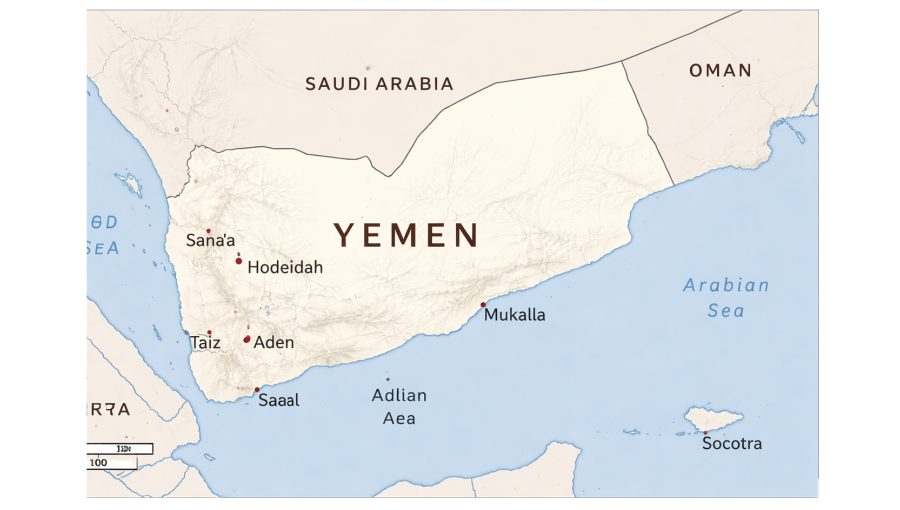
The violence that happened in the Yemeni city of Ataq last week that killed five and injured dozens cannot be reduced to a clash between protesters and security forces, nor to a banned rally or raised slogans. It was a stark reminder that the Southern Issue is no longer a postponed file in Yemen’s crisis agenda — it has become central to it.
Each time southern flags are raised, and the unity flag is taken down, the scene is not merely political provocation, but a declaration of a deep crisis of trust between the state and part of its society.
The recurring mistake over the years has been to treat southern protests as security events to be managed through troop deployments and closed squares. Reality has proven otherwise: every security approach reproduces the problem instead of containing it. The issue is not a protest site; it is a cumulative political sentiment among a broad segment of southerners that the current form of unity no longer guarantees partnership.
For many in the South, the debate is no longer about improving their position within the state but about redefining their relationship with it altogether. Here lies the gravity of the moment. Secession has evolved from an elite political discourse into a social perception shared in the street. When citizens become convinced that their daily hardships — services, security, salaries, and employment — are tied to the very structure of the state, reformist rhetoric loses its persuasive power.
Historically, Yemeni unity was founded on the promise of partnership. Yet the 1994 war left a political wound that was never addressed. Over the years, no governing formula capable of reassuring southerners of real participation in power and wealth has emerged. Gradually, the sense of marginalization transformed from a political position into a political identity. This is why southern commemorations are no longer mere historical remembrance, but recurring moments of mobilization that signal the issue remains unresolved.
At the same time, secession itself may not necessarily end the crisis. The South is politically and regionally diverse, and any future state would face challenges of institution-building, resource distribution, and competing centres of influence. Yet ignoring the growing desire for separation is more dangerous than acknowledging it; denial pushes the issue into the street and toward arms rather than the negotiating table.
What Ataq reveals today is that Yemen faces not only a government problem or an armed-group problem, but a statehood problem: can unity be redefined on the basis of genuine partnership, broad local authority, and meaningful decentralization? Or is time passing while a new political consciousness forms in the South that views independence as a realistic option?
The issue is not a flag raised or lowered, but what the flag represents. States do not preserve unity by force alone, but by consent. And when consent begins to erode, every security incident becomes an undeclared political referendum.
Ataq is not an exception — it is an indicator. If the current approach continues, protests may evolve from political messages into a historical trajectory difficult to reverse.
This article first appeared in the theBeiruter.com, an IntelliNews media partner.

No comments:
Post a Comment