Peru's political fragility laid bare as another leader falls to congressional vote
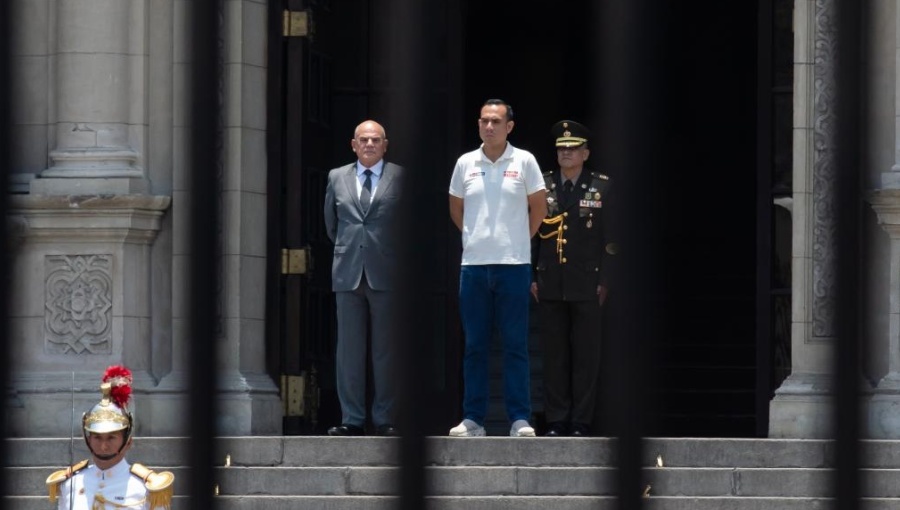
Peru will again swear in a head of state chosen by Congress rather than by direct vote, after legislators removed José Jerí from office barely 130 days into his interim presidency.
The decision, approved on February 17 by 75 votes to 24, leaves the country with its eighth president in a decade and lays bare the structural fragility of its semi-presidential practice within a formally presidential constitution.
Jerí, 39, had assumed office in October following the removal of his extremely unpopular predecessor, Dina Boluarte. His fall was triggered by seven motions accusing him of ethical misconduct, influence peddling and lack of transparency. The motions were accumulated into a single vote during an extraordinary session that lasted more than four hours.
At the centre of the controversy was the so-called “Chifagate”: covert meetings with Chinese businessmen that were neither disclosed in official transparency registers nor channelled through formal diplomatic or ministerial procedures.
Video footage broadcast by the programme Cuarto Poder showed Jerí entering a closed Chinese restaurant in Lima wearing a hood and dark glasses to meet Zhihua Yang, a businessman whose companies operate in sectors ranging from hydroelectric projects to security equipment.
One of Yang’s establishments had recently been ordered closed for municipal infractions, only for a central government regulator to revoke the underlying rule days later. Jerí acknowledged the meetings but described them as social or cultural encounters, arguing before legislators that he had committed no crime.
Investigative reporting detailed Yang’s commercial footprint, including concessions such as the Pachachaca 2 hydroelectric project valued at $224mn, and alleged regulatory irregularities involving municipal licences and heritage protection orders.
Congressional motions further referenced visits by another businessman, Ji Wu Xiaodong, who is under house arrest while investigated for alleged links to illegal logging. According to parliamentary critics, such undisclosed contacts constituted not mere errors of judgement but potential abuses of office.
Additional allegations concerned the use of Peru’s Fondo de Apoyo Gerencial mechanism to hire individuals allegedly linked to Jerí’s circle without competitive procedures. The Comptroller General’s Office requested documentation, while prosecutors opened preliminary inquiries.
Opposition legislators argued that the pattern of clandestine meetings and irregular appointments demonstrated incompatibility with the presidency.
Procedurally, the removal exposed a constitutional fault line. Several legislators proposed activating the vacancy mechanism for “permanent moral incapacity” under Article 113 of the Constitution, which requires 87 votes. Instead, Congress proceeded via censure, a tool ordinarily directed at ministers or parliamentary officers.
According to El Comercio, critics warned that using a simple majority to oust a sitting head of state establishes a controversial precedent that may weaken institutional safeguards designed to ensure executive stability.
The statistical backdrop amplifies these concerns. Since 2016, Peru has presented 28 motions of vacancy or censure against presidents, three of which have succeeded. Jerí’s 130-day tenure is the second shortest since the early twentieth century, surpassed only by Manuel Merino’s five-day presidency in 2020.
According to data compiled by El Comercio, since the political crisis that began during the administration of Pedro Pablo Kuczynski, the average length of a presidential term has decreased by approximately 66% compared with the 2001 to 2016 period.
Public opinion shifted rapidly. Surveys cited by El País show that 68% of respondents considered Jerí suspect in acts of corruption, while earlier approval ratings above 50% dropped sharply after the videos emerged. Jerí accused rivals of leaking footage to influence the general election scheduled for April 12, in which he is not a candidate. Power is due to transfer to an elected president on July 28.
Congress must now elect a new Speaker who will automatically assume the interim presidency. Four legislators have formalised bids, according to El Comercio: María del Carmen Alva of Acción Popular; José Balcázar of Perú Libre; Héctor Acuña of Honor y Democracia; and Edgar Reymundo of the Bloque Democrático Popular.
Internal party negotiations, failed alternative nominations and debates over neutrality have unfolded against the tight electoral timetable. Under congressional rules, a candidate requires a simple majority; if no list achieves it, a second round is held between the two leading slates.
The immediate vacancy may prove temporary. The deeper question is whether Peru’s repeated recourse to removal mechanisms reflects accountability in action or a chronic inability to sustain executive authority.
With more than half of twentieth-century governments interrupted and nearly all living former presidents having faced criminal investigations, Peru’s challenge is no longer episodic scandal but systemic instability.
Peru’s presidential musical chairs
By AFP
February 17, 2026
Jose Jeri became the seventh Peruvian president to lose his job in the span of just a decade - Copyright AFP/File CONNIE FRANCE
Peru lost its seventh leader in almost as many years Tuesday with the impeachment of interim President Jose Jeri on allegations of graft.
Since 2016, four presidents were impeached, two stepped down to avoid the same fate, and only one managed to complete his intended term.
Analysts point to a destabilizing tug-of-war between a powerful Congress and the executive, as well as chronic corruption and low levels of trust in politicians as reasons for the country’s fast turnover of presidents.
A look back at a decade of political turmoil:
– Kuczynski –
In 2018, center-right politician Pedro Pablo Kuczynski — known as “PPK” — became the first Latin American president to resign over alleged connections to a sprawling corruption case involving Brazilian construction giant Odebrecht.
Four former Peruvian presidents, including one who committed suicide, became embroiled in the same case that has claimed numerous corporate and political scalps.
Only two years into his term, Kuczynski relinquished power on the eve of an impeachment vote, making way for his deputy Martin Vizcarra to take over.
Kuczynski remains under investigation and has been barred from leaving the country, but is registered as a candidate for Senate elections this year.
– Vizcarra –
Kuczynski’s replacement Martin Vizcarra lasted only two years in the job, ousted by Congress in 2020 for “moral incapacity ” — a charge that has also been leveled against other Peruvian leaders.
After clashing with lawmakers, he was ultimately convicted of taking kickbacks in exchange for public work contracts when he was a governor.
Vizcarra was also named in a scandal dubbed “Vaccinegate”, with 500 officials accused of getting vaccinated against Covid-19 ahead of their turn.
Last year, he began serving a 14-year-sentence for graft, joining two other former presidents behind bars at a special penitentiary for ex-leaders east of Lima.
– Merino –
Then head of Congress, Manuel Merino took over as interim president, but only lasted five days before resigning in the wake of violent protests against him by Vizcarra supporters.
Two people were killed in clashes with police, and dozens injured.
-Sagasti –
Following Merino’s resignation, centrist academic Francisco Sagasti was appointed stand-in president and led the country until planned elections in 2021 — becoming the only recent leader to complete his intended term, even an interim one.
– Castillo –
Rural school teacher Pedro Castillo won the 2021 election, but found himself lacking a majority in a Congress dominated by right-wing opponents.
Hailed as Peru’s “first poor president,” he was ousted by a vote in parliament and arrested 17 months into his term after trying to dissolve Congress to avoid impeachment proceedings for alleged graft.
His downfall sparked angry protests that led to dozens of deaths.
Castillo is serving a sentence of over 11 years in jail.
– Boluarte –
Castillo’s vice president Dina Boluarte then became Peru’s first woman leader, but only for 22 months.
She was unpopular from the get-go and soon embroiled in corruption allegations including accusations that she received Rolex watches and jewelry as bribes.
Boluarte was also investigated over an unannounced two-week absence in 2023 for a nose surgery, which she insists was medical and not cosmetic.
She was impeached last October amid widespread protests over government graft and a wave of violence linked to organized crime.
– Jeri –
Jose Jeri, until then president of Congress, was chosen to serve out the remainder of Boluarte’s term until July this year.
Only 39, he took up the role with gusto, launching into an anti-crime drive that proved popular with the electorate but not enough to keep his head off the chopping block.

No comments:
Post a Comment