Sunday, July 27, 2025


Ship Operators to Join Trial To Prevent Two-Stroke Engine Scuffing
engine test

Published Jul 26, 2025 8:45 PM by The Maritime Executive


CM Technologies (CMT), a leader in advanced condition monitoring solutions, is calling on shipowners and managers to join collaborative trials designed to capture vital data on one of the shipping industry's most costly problems: cylinder liner scuffing in two-stroke engines.

Scuffing, a form of sudden severe wear, can result in catastrophic engine damage and vessel downtime. And while it’s a well-known issue, typically affecting large two-stroke diesel engines found on bulkers, tankers, and large container ships, the root causes are difficult to pin down. Operators, OEMs, and service providers have long struggled to predict or prevent the phenomena.

Germany-based CMT, however, has developed a system that can alert operators to early onset cylinder damage, but see seeks trial partners for critical data gathering aimed at validating the sensor’s predictive capabilities and to prevent engine damage before it occurs.

“Scuffing is a silent killer. It can occur suddenly, and the damage can be extensive,” said Uwe Krüger, Managing Director at CM Technologies. “Despite the prevalence of this issue, even engine manufacturers don’t fully understand why it happens. What we do know is that it’s linked to a combination of factors, like lubrication failure, drastic load changes, recent overhauls, amongst other things. Our goal is to better understand the acoustic fingerprint of scuffing so we can prevent failures before they happen.”

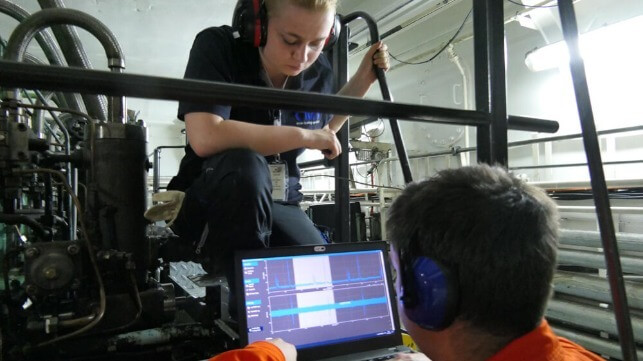
CMT’s recently developed Scuffing Sensor system – a “stethoscope for cylinder liners” – uses high-frequency acoustic emission (AE) technology to detect the earliest signs of friction and wear from outside the cylinder.

Unlike other methods that rely on visual inspection or oil analysis performed weeks apart, this approach captures real-time acoustic data without interrupting engine operation. By identifying wear-related noise patterns, the system provides a potential early-warning signal before damage occurs.

Trial partners are invited to deploy the system onboard vessels equipped with two-stroke diesel engines. Ideally, these vessels will call at ports in Northern Europe, Germany, the Netherlands, Belgium or France, where CMT engineers can easily access them to install and retrieve data-logging equipment.

The system itself is unobtrusive, requires no modifications to engine internals, and is non-invasive. Mounted externally using magnetic brackets, the sensors require no disassembly, no drydock visit and no interruption to the ship’s voyage.

“There’s no need to open the engine or stop operations. The sensor system is magnetic, sits externally on the cylinder, and records data quietly in the background,” said Krüger “We’re looking for operators that will let us place this technology onboard for one to three months. The process is simple, and the benefits could be significant.”

By participating in the trials, ship operators and managers stand to gain early insight into the scuffing risks on their engines, while helping CMT further develop the breakthrough diagnostic tool for the wider industry.

“If we can collect enough data from a range of engines, we can build a reliable library of friction noise patterns,” Krüger said. “This will enable us to deliver early warnings when problems are brewing, long before current monitoring methods can detect them. The benefits will be lower maintenance costs, less downtime, and better protection of what is undoubtedly the most critical, high value asset onboard a ship, aside from the crew.”

CMT believes this collaborative approach is key to cracking one of shipping’s most persistent maintenance problems.

“We’re not asking shipowners to shoulder any risk, just to let us listen to their engines. Together, we can create something that protects engines, saves money, and sets a new benchmark for condition-based maintenance.”

Shipowners or managers interested in participating in the scuffing detection trials are invited to contact CM Technologies at info@CMTechnologies.de
 

The products and services herein described in this press release are not endorsed by The Maritime Executive.


Industry Leaders Take Action to Revolutionize the ARA Bunkering Market
bunker barge
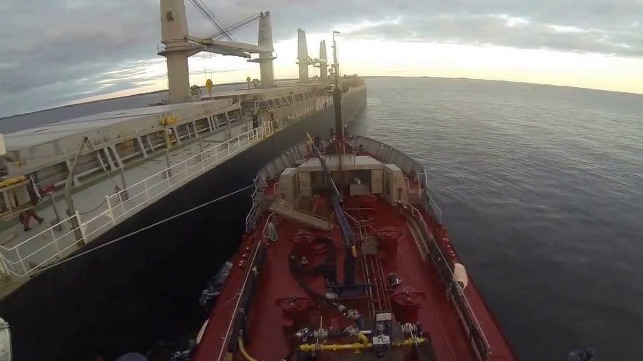
Partnership looks to enhance the standards for fuel used to bunker vessels (file photo)

Published Jul 26, 2025 6:28 PM by The Maritime Executive


In a groundbreaking development for the global marine fuels industry, leading shipping and bunkering companies have come together to launch a Bunkering Services Initiative focused on solving the widely reported issues of fuel quantity shortages and fuel quality opacity across the marine fuel supply chain. By addressing these market distortions marine fuel buyers can make optimal procurement decisions and suppliers can operate on a level playing field.

Open Participation

The Initiative is voluntary, and participation is welcome from all marine fuel buyers and suppliers who commit to adopting and complying with its standards and governance.

Scale from Day One

At the outset focused on Amsterdam-Rotterdam-Antwerp (ARA), the world's second-largest bunkering hub, the Initiative represents 20% of ARA market volume comprising several thousand deliveries each year. Founding participants include some of the most prominent names in the industry, including Cargill, Frontline, Hafnia, Hapag-Lloyd, Mercuria, Minerva Bunkering, Oldendorff, Trafigura, TFG Marine, Unifeeder, and Vitol, as well as other key players in energy and shipping.

Self-Regulation

The concept is uniquely designed to be self-regulating, leveraging powerful data-driven insights to monitor participant behaviour and adherence to standards – thereby advancing the objectives of regulatory authorities without requiring their administration.

Gold Standard

The Initiative defines a new gold standard of technology-enabled bunkering operations, with seamelss integration of mass flow meters, digitalized workflows over the blockchain, traceable fuel quality measurements throughout the supply chain, full accounting of quantity balances, and real-time reporting to participants.

Commitment to Accountability

To ensure accountability to the Initiative's objectives and standards of operation:

  • Lloyd's Register has been appointed as the System Auditor, responsible for qualifying participating bunker barges, conducting unannounced physical barge inspections, and verifying compliance with Initiative standards and data integrity (lr.org).
  • ADP Clear Pte Ltd has been appointed as the Initiative's technology provider, facilitating multi-party workflows, real-time reporting, and verifiable performance metrics for all stakeholders (adpclear.io).

Join Us

Any marine fuel buyers and suppliers engaged in the ARA market and interested in participating in the Initiative can direct their inquiries to initiative@adpclear.io.


The products and services herein described in this press release are not endorsed by The Maritime Executive.


Corsica Linea Ferry Gains Fuel Savings with Wärtsilä Retrofit Package
Wärtsilä
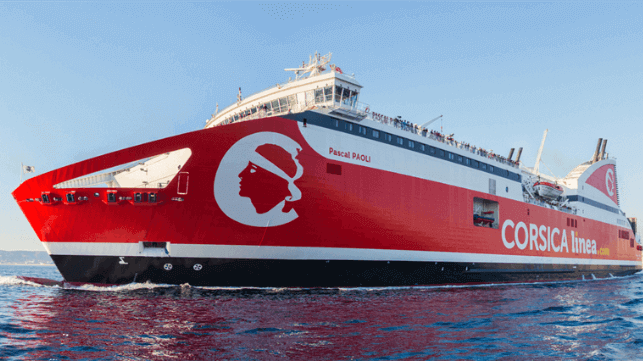
Wärtsilä's retrofit package for the Corsica Linea ferry Pascal Paoli has resulted in fuel savings of up to 22% Corsica Linea

Published Jul 26, 2025 5:51 PM by The Maritime Executive


[By: Wärtsilä]

Technology group Wärtsilä’s retrofit package for the Corsica Linea ferry ‘Pascal Paoli’ has resulted in fuel savings of up to 22 percent. This significant gain in energy efficiency on each trip has been made possible by the installation of a new twin screw controllable pitch propeller (CPP) system with blades optimised for the ship’s operating profile, the Wärtsilä EnergoProFin energy saving propeller cap, a controls retrofit, and combinator curves for the ship’s various operating modes. 

These upgrades, which were completed at the end of 2024, were validated through CFD (computational fluid dynamics) open water simulations, and confirmed during sea trials with the chief engineer. In monetary terms, the fuel savings equate to an estimated 7,700 US Dollars per trip. The related reduction in emissions represents a massive step in Corsica Linea’s decarbonisation journey, allowing the company to remain compliant with the stricter requirements on carbon emissions. 

“We are extremely happy with the efficiency improvements resulting from this Wärtsilä retrofit package,” says Xavier Esnault, Energy transition project manager at Corsica Linea. “The fuel savings are important, both from a cost perspective, as well as supporting our decarbonisation strategy to reach a reduction of 40% of our CO2 emissions by 2030.” 

The ‘Pascal Paoli’ is a 174-metre long RoPax ferry operating between Marseille and Bastia. Ferries are on the front line of the energy transition and are among the first sectors to target net zero-carbon operations. At the same time, operators are expected to provide a reliable, efficient on-time service, while keeping operating costs under strict control. 

“Ferry operators, such as Corsica Linea, are looking to leverage technologies that offer minimal service disruption and a maximised return on investment, all while reducing their carbon footprint. For this reason, the fuel efficiency upgrade carried out on the ‘Pascal Paoli’ was done with the aim of supporting Corsica Linea with achieving these goals,” comments Andrey Dudko, Product Manager, Propulsion – Wärtsilä Marine. 

The ’Pascal Paoli’ operates with two Wärtsilä 46 engines per shaftline. It has a number of operating modes, including sailing and manoeuvring with one or two engines per shaft line. The changes resulting from the retrofit project did not impact the vessel’s manoeuvrability. 

This upgrade comes at a time when ferry operators are under increasing pressure to decarbonise. The IMO’s new Net-Zero Framework through the GHG fuel intensity (GFI) provides a clear incentive for operators to invest in energy-efficiency solutions, such as the technologies leveraged for this retrofit project. By placing an explicit price on GHG emissions, the IMO has sent a strong market signal that energy efficiency technologies and alternative fuel solutions must be part of every shipowner’s toolkit. This framework encourages industry stakeholders to invest in immediate operational improvements, explore onboard abatement solutions, and accelerate the roll-out of sustainable fuels.

The products and services herein described in this press release are not endorsed by The Maritime Executive.

 

Cargo Ship Evacuated After Grounding off Crete

grounded cargo ship
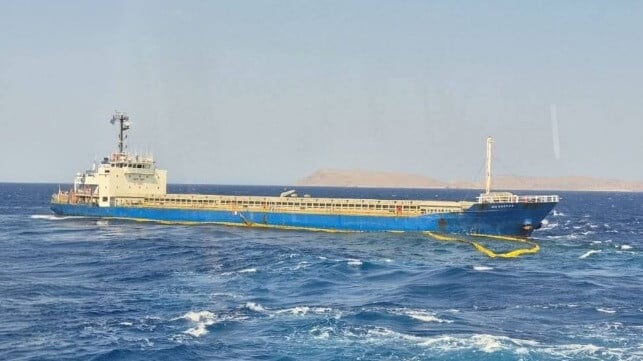
Sierra Leone-registered cargo ship was evacuated after grounding off Crete (Hellenic Coast Guard)

Published Jul 25, 2025 12:13 PM by The Maritime Executive


The Hellenic Coast Guard and local port authority are coordinating the efforts following the grounding of a general cargo ship off the northeastern coast of Crete. The crew was evacuated, and according to the Hellenic Coast Guard, the captain and bridge watch officer are being detained while the incident is investigated.

The MN Kostas (5,800 dwt) departed the port of Sitia on Crete on the evening of July 24. At 2330, the Coast Guard reports the ship informed them it had grounded in a position between about 6 nautical miles off Sitia and 3 nautical miles west of Sideros, islands at the northeast tip of Crete. The vessel, built in 1994 and registered in Sierra Leone, was bound for Lebanon with a cargo of plaster. The ship is 106 meters (348 feet) in length. Earlier this year, the same ship was cited for charges of failing to pay its crew, with the International Labour Organization reporting the crew was due nearly $18,500 in pay. It said the crew had only received half pay for four months, but that the situation was corrected.

The Coast Guard reports it sent three patrol boats, and the Sitia Port Authority sent personnel on a fishing vessel to the scene. Also, private crafts and fishing vessels approached.

The 14-member crew was evacuated from the ship. They were placed on one of the fishing vessels and sent to the port of Sitia.

The Sitia Port Authority is leading the initial investigation. The captain and watch officer are being investigated for causing a shipwreck and failing to avoid collisions, which in this case was the reef. Divers have also been sent to inspect the vessel and the reef.

Two tugs were standing by from Heraklion to assist the grounded cargo ship. A third was also expected to reach the scene on Friday.


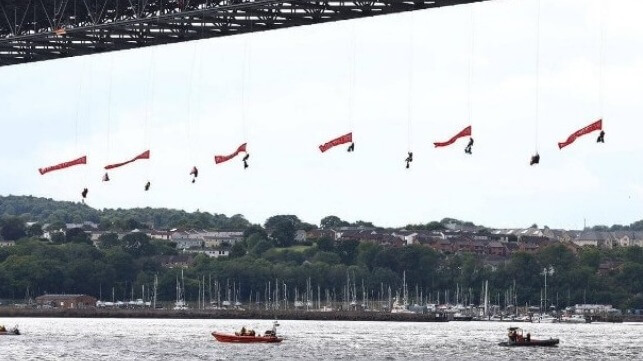
Greenpeace Activists Hang from Scottish Bridge to Block Gas Carrier

protestors hanging from Scottish bridge
Greenpeace protestors are suspended below the bridge to block a tanker from traveling on the waterway (© Luca Marino courtesy of Greenpeace)

Published Jul 25, 2025 12:57 PM by The Maritime Executive


Scotland’s famed Forth Road Bridge, crossing the Firth of Forth near Edinburgh, is closed as Greenpeace activists attempt to block an inbound INEOS gas tanker. The protest is also timed to the arrival of Donald Trump in Scotland and is designed to call attention to the current negotiations for the Global Plastics Treaty.

Police Scotland is on scene and is advising motorists to avoid the area. They received reports of the protest around 1:00 p.m. local time.

Greenpeace reports that 10 experienced climbers “abseiled from beneath the bridge’s service walkway.” The Forth Road Bridge is nearly 2.5 kilometers, over 8,200 feet, in length, crossing one of the main waterways in the east of Scotland. The roadway is about 50 meters (164 feet) above the water. The protestors are reported to be spaced at 20-meter (65-foot) intervals and suspended about 25 meters (82 feet) below the underside of the bridge.

The protestors unfurled large banners reading “Plastics Treaty Now” to call attention to their cause. Greenpeace reports it has a rescue crew on the bridge and a boat team in the river below. It says the protestors plan to remain on the bridge for the next 24 hours.

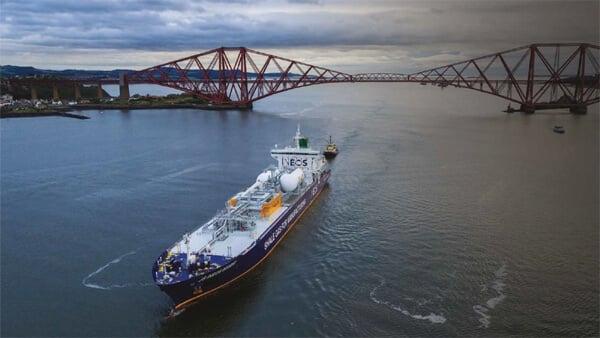
The INEOS Independence, one of a class of specially-designed gas carriers registered in Malta, diverted into the anchorage. It was completing a 10-day trip from the Houston, Texas area and is reported to be carrying 27,500 cubic meters of ethane to the company’s plant at Grangemouth. INEOS has been importing gas aboard the tankers for nearly a decade. Greenpeace reports INEOS is the UK’s biggest plastics manufacturer, producing 30 to 35 million nurdles (pellets) a day, which is enough to make 60 million plastic bottles.


INEOS image showing one of its tankers with the Forth Bridge (INEOS)


“Plastic pollution has reached a crisis point: it’s poisoning our land, seas, air, even our bodies,” said Amy Cameron, Programme Director at Greenpeace UK. “The Global Plastics Treaty offers us a once in a generation chance to tackle the problem for good.”

The group highlights that governments are scheduled to meet between August 5 and 14 in Geneva, Switzerland, for the sixth and final round of negotiations for the Global Plastics Treaty. Greenpeace is calling for the talks to agree to a cut in global plastic production of at least 75 percent by 2040, and for the UN to exclude lobbyists from fossil fuel companies from the treaty negotiations. It contends that the plastics producers, including INEOS, have collectively sent hundreds of lobbyists to influence the negotiations.

So far, the police have only reported that they were “engaging” with the protest. A RNLI boat was also dispatched to monitor the situation and ensure safety on the river.

HIGH SEAS MISOGYNIST FEMICIDE

Icon of the Seas Crewmember Stabs Female Worker and Dies Jumping Overboard

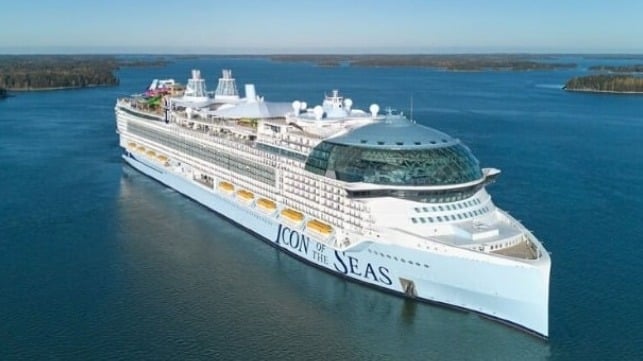
Icon of the Seas cruise ship
Two crewmembers were in a dispute with one stabbed and the other died jumping overboard (Royal Caribbean International)

Published Jul 25, 2025 5:42 PM by The Maritime Executive


The Royal Bahamas Police Force provided additional details about an incident between two crewmembers on Royal Caribbean International’s cruise ship Icon of the Seas. The report clarified the widely covered media report of a crewmember “falling” overboard and being recovered by the cruise ship. 

Initial, erroneous media reports said a crewmember had “fallen” from the massive cruise ship, Icon of the Seas (248,663-gross ton cruise ship) while the ship was cruising off San Salvador in the Bahamas on Thursday, July 24. (People do not “fall” off cruise ships unless they are doing something risky and/or are extremely intoxicated, as the vessels have high rails and other precautions.) 

According to the statement from the Bahamas police, shortly before 7:30 p.m. local time, a 28-year-old female South African crewmember was allegedly stabbed multiple times by a 35-year-old male South African crewmember. Following the incident, the police were told the man had fled from the scene and jumped overboard. 

Passengers reported that crewmembers seeing the man jump threw life preservers to mark the spot. As the world’s largest cruise ship, Icon of the Seas required time to slow and turn, even though it was likely moving at a relatively low speed after a day at sea approaching the company’s private island, Coco Cay, for the Friday port stop.

The crew launched one of the vessel’s go-fast rescue boats and was able to locate the male crewmember. According to the captain’s announcement, the male was “recovered.” Later reports said he was unconscious when they found him and pronounced him deceased when they got back to the cruise ship.

The female had been stabbed multiple times in her upper body. The Royal Bahamas Police Force reports she was treated. They said she is in stable condition. The police report that an autopsy has been scheduled to determine the cause and any contributing factors for the male crewmember’s death.

Royal Caribbean International confirmed in a statement to the Florida media that there had been an incident “involving two crew members in a personal dispute,” and that its onboard security team had responded. Crewmembers work and live aboard these ships in notoriously small cabins and tight quarters. The Icon of the Seas has approximately 2,350 crewmembers onboard. When full, it can also be carrying approximately 7,600 passengers.


Captain of Lost Volgoneft Tanker Had Expired License Russia Says in Court

Russian oil tanker sinking
The bow of Volgoneft 212 has not been recovered and may be leaking oil (Russian social media)

Published Jul 25, 2025 4:45 PM by The Maritime Executive


Russia’s state environmental organization, Rosprirodnadzor, alleged in court this week that the operator of the two tankers that were lost in December 2024 had multiple violations. The latest accusations of expired licenses came as the environmental watchdog is seeking further compensation and actions from the tanker operator to address the environmental impact of the dual casualties.

The river sea tanker Volgoneft 212 sank in a wintertime storm in December 2024, transporting 4,300 tonnes of oil. A second tanker of the same operator, Volgoneft 239, ran aground around the same time in the area near the Kerch Strait. Together, the two vessels were carrying approximately 9,200 metric tons of heavy fuel oil. The authorities estimate that half of the fuel was released in the two incidents, and days later, a third Volgoneft tanker, 109, also reported a leak while it was in port.

As part of the suit, the Russian authorities told the court that the captain of Volgoneft 239 was operating the vessel with an expired license. It said the unnamed master’s license was expired for “several days” prior to the vessel getting underway and encountering a winter storm in the Kerch Strait region. Some media reports had previously claimed the helmsman aboard the tanker was operating the ship alone, something that has been repeatedly denied.

Russian authorities further said that the operator of the tankers, Volgoneft, was not certified to operate the vessels in open waters during the winter months, according to a report in the Moscow Times. The company blames heavy winter weather in the region for both of the casualties.

The reports highlight that the vessels are based on a 1950s Soviet-era design. They were primarily built for river and calm water transport. The vessels are each approximately 133 meters (435 feet) long and 4,000 to 5,000 dwt. Reports said they were originally designed for seas less than seven feet, but reports contend the 239 was encountering 25-foot waves in December 2024 when it was lost.

Rosprirodnadzor is suing the tanker operator, saying it is its responsibility to pay for the cleanup and salvage of the tankers. The bow section of 239 remains submerged, which led to a dispute over its conditions. The court reports said the bow section continues to leak oil, and the next efforts at recovery and sealing the leaks are not scheduled till October. 

The agency, however, quickly issued a denial saying that no current leaks were detected. It said, however, it remains the responsibility of the operator and acknowledged the potential environmental dangers from further leaks. Volgoneft has been suing to prevent the Russian authorities in Crimea from taking over the salvage efforts as the tanker operator contends that it would lead to inflated costs. Russian authorities wanted the remaining fuel pumped from the bow section of the vessel.

They told the court that the Anapa region has spent more than 211 million rubles (approximately $2.7 million) on cleanup efforts. It said that nearly 200,000 metric tons of contaminated sand have been removed and over 310 miles of coastline have been cleaned. The city has sued the operator separately for its costs.

Ukraine has also said it would seek to prosecute for the damages it received from the drifting oil.

The Russian authorities in February 2025 launched an inspection program for all the Soviet-era river-sea tankers. The reports said there were over 500 tankers built in the 1960s and 1970s that they would be inspecting, and none could return to service before they had been inspected.


Russia Cancels Navy Day Parade After Wave of Ukrainian Drone Attacks

Russian Navy Day parade 2019
File image courtesy Russian Navy

Published Jul 27, 2025 3:43 PM by The Maritime Executive


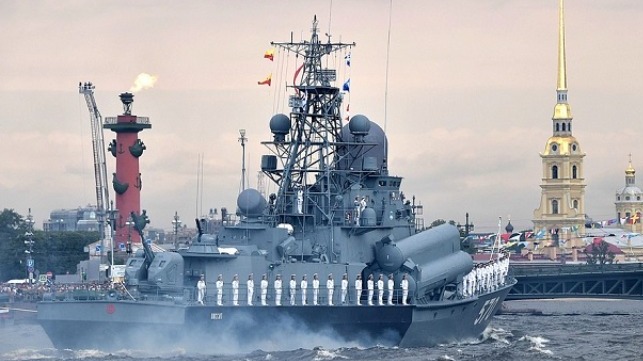
Every July since 2017, St. Petersburg has held a massive Navy Day parade for Russian President Vladimir Putin and other members of Russia's senior leadership. This year, for the first time ever, the event was called off at the last minute - likely because of the threat of Ukrainian drones. 

Dmitry Peskov, Putin's spokesman, said Sunday that the parade was canceled due to unnamed "security reasons." While Peskov did not provide further details of the rationale, the UK Ministry of Defense assesses that it is almost certain that the parade - and all larger commemorative events across Russia - have been canceled due to force protection concerns. 

"Small ceremonies will highly likely take place and Navy Day remains a Russian national holiday," the UK MOD said in an intelligence assessment. 

The Navy Day parade is among Russia's biggest and best-publicized military events, and Putin will typically take part from a shoreside reviewing stand or aboard a VIP launch. Security precautions surrounding the event are stringent. 

The cancellation follows one day after a large-scale Ukrainian drone operation over parts of Western Russia. Ukraine has developed technology and operating methods to launch long-range drone attacks on targets deep inside of Russian territory, typically targeting weapons factories, airfields, rail lines, refineries and oil and gas infrastructure. 

In the area around St. Petersburg, higher-than-normal air-defense intercepts of Ukrainian drones prompted the regional airport to cancel flights for several hours overnight Saturday. Across Russia, about 100 drones were shot down Saturday night, Russia's defense ministry claimed. 


Weakened Iran Clings to Russia in the Caspian Sea

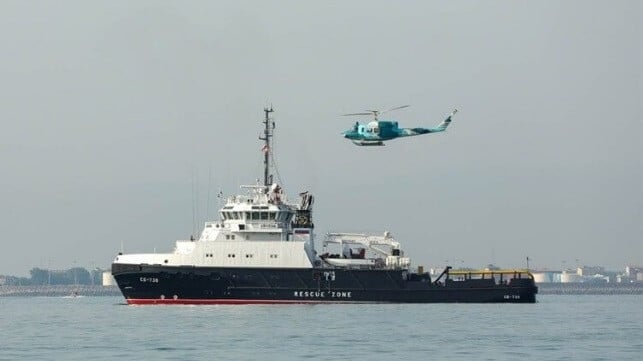
Russian civilian rescue tug SB 738
Russian civilian rescue tug SB 738 (Tasnim - CC BY 4.0 license)

Published Jul 25, 2025 5:14 PM by The Maritime Executive


Iran and Russia have concluded a short naval exercise in the Caspian Sea, which both nations may have regarded as an opportunity to shore up relationships in a region where both have recently lost friends. Iran, in particular, felt let down by the lack of Russian support during the 12-Day War with Israel - she received some support from China, but none from Russia. Iran is also at present highly nervous about porous border security, and wants to demonstrate heft in this area.

CASAREX 2025 commenced on July 21 and concluded two days later, under the direction of Commodore Mohsen Razzaghi. He announced via IRNA that the Nedaja, the IRGC Navy (Nedsa), and Iranian law enforcement forces would take part, alongside vessels from the Russian Navy. Observers would also participate from the three other Caspian Sea littoral nations - Azerbaijan, Kazakhstan, and Turkmenistan. 


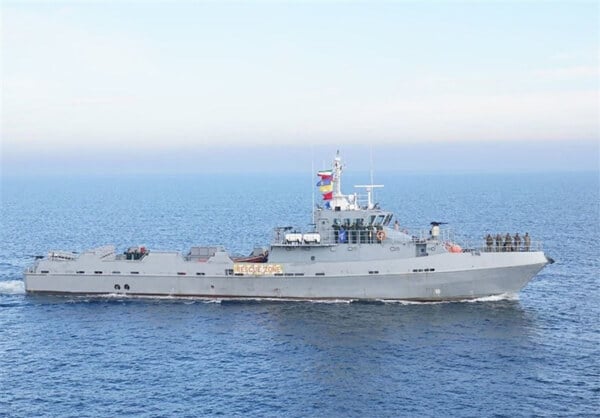
In a video released by IRNA, the only evidence seen of Russian involvement has been the presence of the civilian rescue tug SB 738 (MMSI: 273544130). Nedaja vessels participating (at least in the end of the exercise parade) were Sina Class fast attack craft Paykan (P224), Joshan (P225), Derfash, and Separ (P234). Also present was the IRGC Navy’s Nasser Class auxiliary Martyr Basir (117), which appears to be equipped with Zafar/C704 anti-ship missiles and normally operates from the Samen al-Hojaj Naval Base at Babolsar, Mazandaran Province. 


The IRGC Navy’s Martyr Basir (Tasnim - CC BY 4.0)


There was no evidence of the participation of the observers, and the Iranians have an established record of announcing the involvement of other nations in their exercises without their consent or participation. The Caspian Post, an Azeri media outlet, covered the exercise but made no mention of Azeri participation.

Relations between Russia and Azerbaijan are particularly stretched at the moment. Azerbaijan is furious about a series of arrests made of Azeris working in Russia, and still seething about the deaths of 38 passengers following the missile attack on an Azerbaijan Airline Flight 8243 coming in to land at Grozny on Christmas Day 2024, heightened by the Russians’ callous handling of the incident. Nor are Azeri relations with Iran much better, following Iranian suggestions of Azeri complicity in the Israeli air attacks on Iran during the 12-Day War.

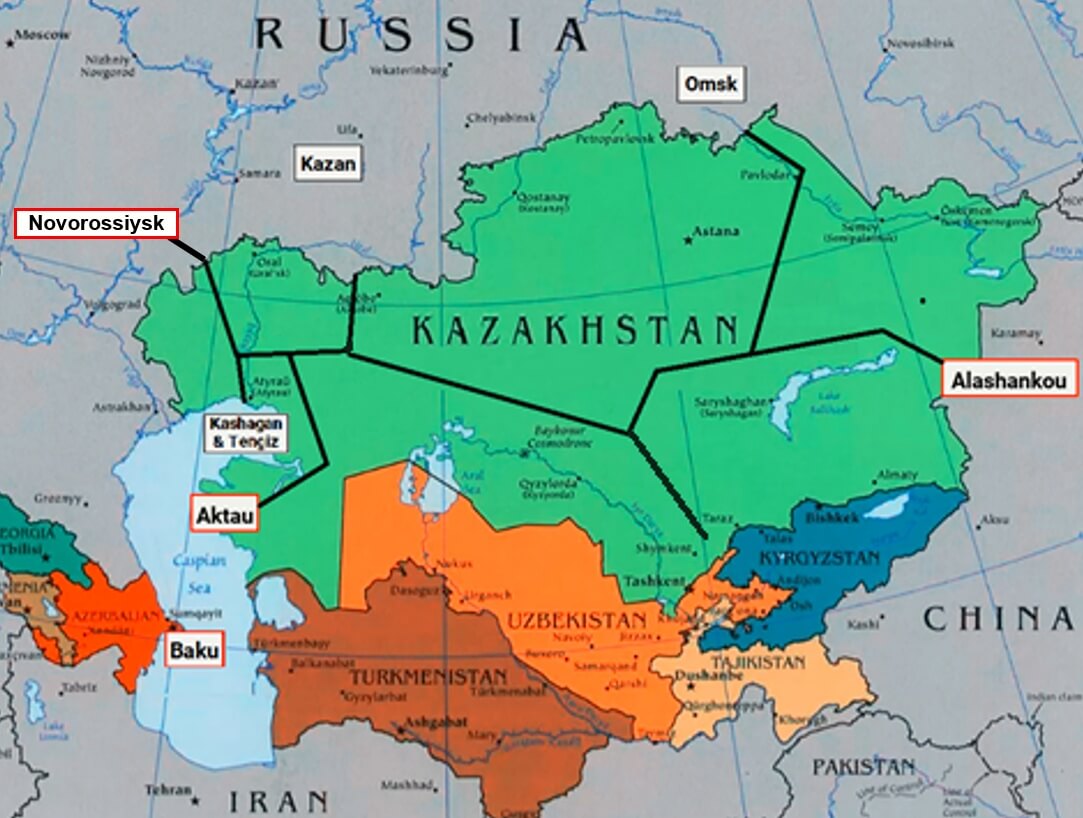
Both Turkmenistan and Kazakhstan have grown tired of Russian bullying. Much of this springs from the Ukraine war and Russia’s assumption that it is still owed duties by these former Soviet states. At the St. Petersburg Economic Forum in June 2024, President Tokayev of Kazakhstan, on stage with President Putin, refused to recognize Russian annexations in Ukraine and Georgia. He also stated his country would respect Western sanctions on Russia, and he turned down a request to provide Kazakh troops to fight in Ukraine. Most of Kazakhstan’s oil production is exported through the Caspian Pipeline Consortium (CPC) network, which pipes through Russia and terminates at Novorossiysk on the Black Sea. However, Russia also uses the CPC network to export its Urals oil from Omsk and Kazan through Kazakhstan to China. Uncomfortable in this mutual inter-dependency, the Kazakhs have been developing their capability to export instead across the Caspian from Aktau to Baku, using shallow draft tankers built with Abu Dhabi Ports Group specially for Caspian operations. From Baku, the Kazakh oil can then use the Baku-Tbilisi-Ceyhan pipeline, thereby avoiding Russian territory. 

Main Kazakh oil pipelines (data from Kazakhstan-China Pipeline LLP/CJRC)

The geography of the Caspian means that Azerbaijan, Turkmenistan, and Kazakhstan, which have not enjoyed close relations hitherto, are being drawn into closer cooperation. Controlling the middle section of the Caspian, working together these three nations could impede shipping between Iran and Russia. This is an unlikely prospect for now, but a risk with some growth potential. Ukraine would be keen to spread discontent, so as to disrupt arms supplies flowing up the Caspian from Iran into Russia. 

Russia controls the only access to the Black Sea through the Volga-Don canal. For now, the 28-strong Caspian Flotilla remains dominant, comprising the two Gepard Class frigates damaged in a Ukrainian attack on November 6 last year, plus 16 corvettes and minesweepers. The Iranian Northern Fleet, forming its 4th Naval Region, is led by Moudge Class frigate IRINS Deylaman (F78) with the four Sina Class fast attack craft, each armed with a 76mm gun and C-802 anti-ship missiles, which participated in CASAREX 2025. Together, Russia and Iran are much stronger than Azerbaijan, Kazakhstan, and Turkmenistan. But the Azeris have of late been militarily clever, upgrading their navy with Israeli and Turkish assistance; they also operate Triton Class midget submarines, the only such craft stationed in the Caspian.

Bilateral relations will not have been improved, and the Russians may have been tempted to return home somewhat earlier than planned, having heard the Iranian version of the Russian anthem as SB 738 was welcomed into port. Sailors worldwide will have endured similar ordeals on port visits, but this rendition of the Russian National Anthem was even more insulting (in the opinion of the Maritime Executive’s correspondent) than the famous Egyptian and Saudi salutes to President Putin in 2015 and 2019, respectively.


Royal Navy Plans to Withdraw its Sole Frigate in Bahrain

Lancaster
Courtesy UK MoD

Published Jul 27, 2025 4:13 PM by The Maritime Executive


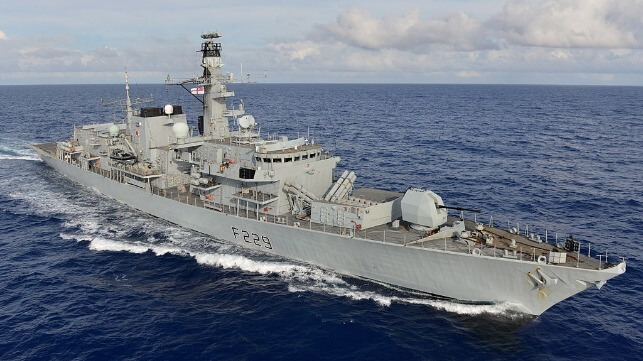
The United Kingdom’s Royal Navy appears about to withdraw its permanently deployed frigate in the Gulf, HMS Lancaster.

HMS Lancaster (F229), a Type 23 frigate, is approaching the much-delayed end to its working life, having been the forward deployed frigate home-based at the UK’s Naval Support Facility in Bahrain. Although the UK has had a naval base in Bahrain since 1935, the facility was rebuilt at the expense of the Kingdom of Bahrain in 2018, on the basis that HMS Juffair, as it was renamed, would be the permanent home station to at least one frigate. Until recently, besides the forward deployed frigate, the base also supported minesweepers of the 9th Mine Counter-Measures Squadron and a Royal Fleet Auxiliary logistics vessel.

When HMS Lancaster returns home within the next few months to be decommissioned, the only Royal Navy operational ship remaining in Bahrain will be the Hunt-class minesweeper HMS Middleton (M34), with the Sandown Class minesweeper HMS Bangor (M109) dry-docked locally for repair after a collision with USS Gladiator (MCM-11).

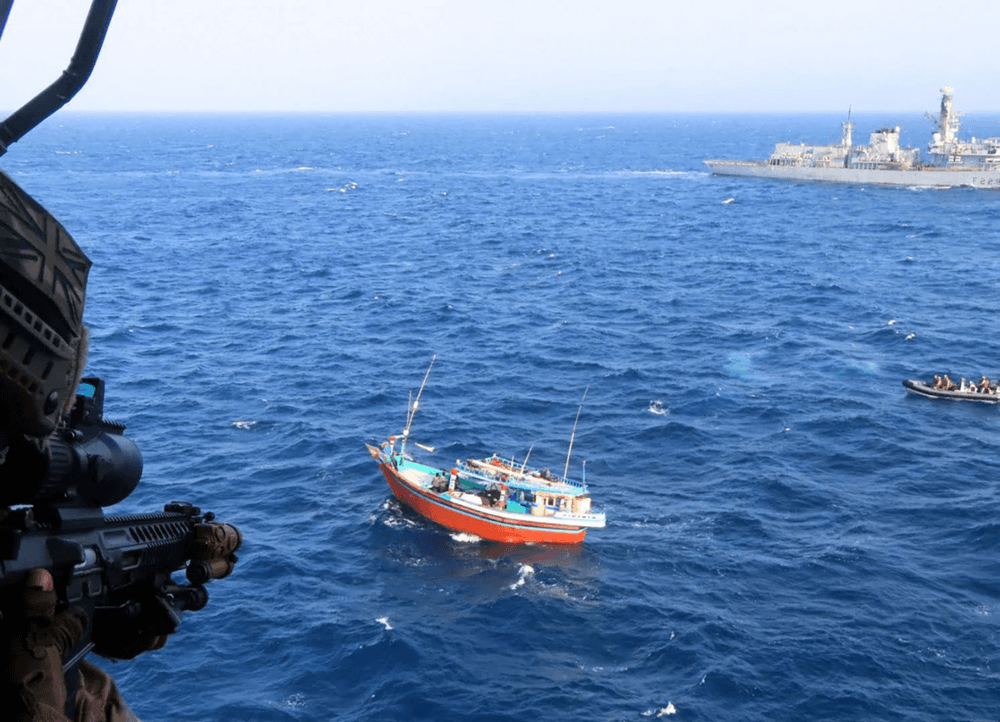
The withdrawal of HMS Lancaster, notwithstanding the political ramifications, has been necessitated primarily by the withdrawal of Type 23 frigates from service before their replacements - the Type 26 Global Combat Ship and the Type 31 frigate - start coming into service in 2028. Using rotational crews, service aboard HMS Lancaster has generally been popular, as the vessel is almost continual operational - on anti-smuggling duties and committed to keeping the Straits of Hormuz open under the watchful eyes of the Iranian Navy and IRGC. HMS Lancaster has made two major drug seizures in recent months. She has also been trialling the use of Peregrine remote-controlled mini-helicopters for broadening the swathe of its surveillance sweep out to 100 miles while at sea.

HMS Lancaster's crew carries out a drug bust, May 2025 (UK MoD)


Undersea Sensors: A U.S. Trump Card That China Knows it Must Eliminate

USN
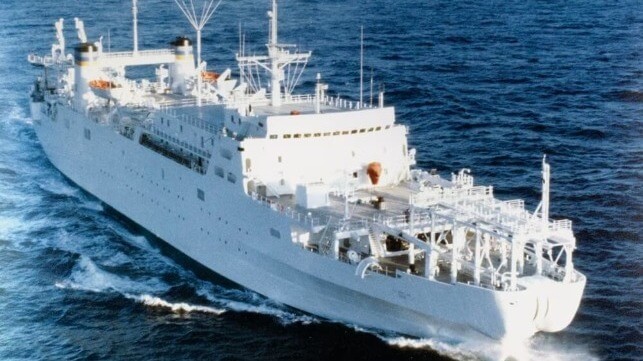
The U.S. Navy's sole purpose-built cable-layer, USNS Zeus (USN)

Published Jul 27, 2025 5:18 PM by The Strategist


[By David Axe]

Unseen, largely unknown and, until recently, highly classified, the US Navy’s vast network of underwater sonars is one of its greatest advantages over rival fleets. The United States can detect many, if not most, enemy submarines through much of the world’s oceans.

A sub that can be detected can also be killed. It’s a profound problem for the Chinese navy as it eyes a possible amphibious assault across the Taiwan Strait. Its growing fleet of quiet attack submarines could protect the landing force—but only if they themselves can avoid detection.

The problem for the US is that the Chinese fully appreciate how vulnerable they are underwater—and they’re actively thinking about ways to end that vulnerability. The US fleet needs new and better ways of defending its underwater sensors during a seabed battle that could get very nasty, very quickly in the months and weeks leading up to a possible Chinese move against Taiwan.

In particular, the US needs more ships that can repair the sensor network at sea. ‘There are only a small handful of vessels capable of such at-sea repairs, fewer than 10 globally, and they are easy targets when on station,’ warned Chris O’Flaherty, a retired Royal Navy captain with deep experience in undersea warfare.

The US Navy was a pioneer in seabed surveillance. In 1950, the service launched the then highly secret Project Jezebel, a generational effort to lay thousands of miles of undersea cable connecting sensitive acoustic sensors to shore stations staffed by sonar analysts.

By the time the navy declassified the Integrated Undersea Surveillance System in 1991, it also included catamaran surveillance ships towing additional acoustic arrays. Today, the system—again largely cloaked in secrecy—probably also features many small drones on the surface and under the waves. Shore sensors, ocean surveillance satellites and reconnaissance aircraft, crewed and uncrewed, also complement the undersea equipment.

It’s not a totally global, totally comprehensive surveillance system—but it’s close. And it vexes naval planners of the People’s Republic of China. ‘The probability that PRC submarines are discovered when leaving port is extremely high,’ Senior Captain Zhang Ning, a faculty member at China’s Naval University of Engineering, wrote along with coauthors in a November 2023 journal article translated by Ryan Martinson, a professor at the US Naval War College.

‘There is a fairly high probability that PRC submarines will be detected and intercepted while operating in the Near Seas’ along the First Island Chain between Philippines and Japan, Zhang and his coauthors warned, according to Martinson. Cued by surveillance, US and allied anti-submarine forces—submarines, ships and aircraft—can cut off Chinese attack boats from the deep water where they could best perform their missions.

But the US surveillance system isn’t invulnerable, Zhang and his coauthors stressed. ‘The authors further argue that the location of individual “nodes” … in the U.S. undersea surveillance system can be located and “removed”,’ Martinson wrote in an analysis of Zhang and company’s own analysis, published by the Center for International Maritime Security.

O’Flaherty listed the ways Chinese forces could disable US undersea sensors. They ranged from the ‘relatively overt’—the deployment of remotely operated vehicles from unhidden surface motherships ‘to go down to almost any depth and to uncover and sever cables’—to ‘semi-covert’ methods. One semi-covert method would be sending autonomous submarines equipped with sonars to find the cables and plant explosive charges to cut them.

The Chinese may want to undertake a covert counter-cable effort far in advance of any attempt to invade Taiwan. Long-range underwater vehicles could ‘leave an explosive charge in the immediate vicinity of a cable, ready for actuation at a time of the owner’s choosing—which could be years hence,’ O’Flaherty said. ‘Actuation of such an explosive can be via a coded acoustic signal, which is very easy to achieve.’

Cables can be repaired, of course—usually by highly trained crew aboard specialized auxiliary vessels. The US Navy operates just one cable-repair ship, the 14,600-ton USNS Zeus, delivered to US Military Sealift Command in 1984. For several years now, the navy has been studying a possible replacement for the aging Zeus, but the service is still years away from signing a contract and cutting steel.

And anyway, there’s no way Zeus and its crew could perform their hard, precise work in contested waters during wartime. As O’Flaherty said, cable ships are ‘easy targets’.

It’s possible the US fleet’s single special-mission submarine—the heavily modified, 12,000-ton USS Jimmy Carter—could covertly deploy divers for select cable repairs. After all, finding, tapping and eavesdropping on the enemy’s cables is reportedly among the boat’s secret missions.

Even with Jimmy Carter on cable duty, the US Navy would be stretched thin trying to safeguard the surveillance system that lends it one of its greatest advantages in wartime. And forget hiring private companies to help. Even if they were willing to risk ships during open conflict, there’s a global shortage of commercial cable vessels. Fewer than 10 are in use, but one trade group claimed the world needs 20.

The US fleet still spends most of its nearly $40 billion annual shipbuilding budget on aircraft carriers, amphibious ships, destroyers, logistics ships and submarines. It had better start prioritizing cable vessels, too—and figure out how to protect them after the shooting starts.

David Axe is a journalist and filmmaker in South Carolina, United States.

This article appears courtesy of The Strategist and may be found in its original form here

The opinions expressed herein are the author's and not necessarily those of The Maritime Executive.
 

Guyana Rolls Out Sweeping Port Reforms

Berbice port
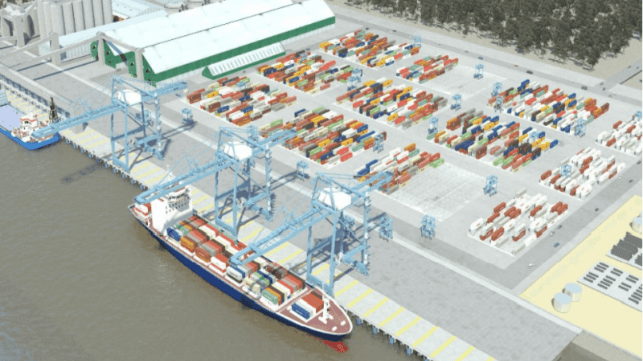
Planned port developments at Berbice, Guyana (CGX Energy)

Published Jul 27, 2025 7:40 PM by The Maritime Executive


In the past one decade, Guyana has become a global energy powerhouse, with the oil boom reshaping the country’s international trade. Last year, Guyana’s economy expanded by 44 percent, marking the fifth consecutive year of double-digit growth. But the growing trade is putting a strain on Guyana’s aging port infrastructure. At an event last week by Shipping Association of Guyana, the country’s President Irfaan Ali highlighted wide-ranging port reforms that his government is pursuing.

A key part of this transformation agenda is a legislative reform in the port sector. President Ali announced that a new Port Act is in the drafting process, which will streamline the maritime sector in Guyana.

“We want our ports to be competitive, reliable and future-ready. That is why we are designing a modern Port Act which will govern development, regulation and oversight of port operations. Further, it will ensure safety, efficiency and transparency in the maritime sector,” added Ali.

Currently, port regulations are scattered in several key legislations including the Maritime Zones Act (2010), the Shipping Act 1998 and the Customs Act. Apart from the legal reforms, Guyana’s government is also in the process of establishing an independent Port Authority, which will have mandate to manage ports in the country. This role is currently under the Ports and Harbors Division, within the Maritime Administration Department (MARAD). The proposed Port Authority is an attempt to corporatize port management, as Guyana positions itself as a regional logistics hub.

Other projects on course include the development of a deep-water port in Berbice. The preparations for the $285 million port project has been ongoing since 2020. Early this year, President Ali confirmed that the government is finalizing the project planning in partnership with the international engineering firm Bechtel.

Additionally, the government has invested close to $10 million to remove ship wrecks from the Demerara Harbor, an important entry into Georgetown port. The work is ongoing which includes deepening the harbor, as Guyana moves to attract larger modern vessels.

Early this month, MARAD commissioned a new $3 million tugboat, the second of such vessel to be acquired in the last two years. The new tug Arau is built by Damen Shipyards and is 16 meters long, with a beam of 6 meters. The vessel is capable of towing and maneuvering ships between 10,000-20,000 GT. The expansion of the tugboat fleet is intended to enhance operational efficiency in Guyanese ports, according to MARAD.  


Divers Recover the Ship's Bell of WWI Wreck HMS Vanguard

Bell HMS Vanguard
Courtesy Royal Navy

Published Jul 27, 2025 12:56 PM by Royal Navy News


For the first time in more than a century iconic artifacts from a tragic WWI battleship are above the waves – recovered from the wreck in Scapa Flow.

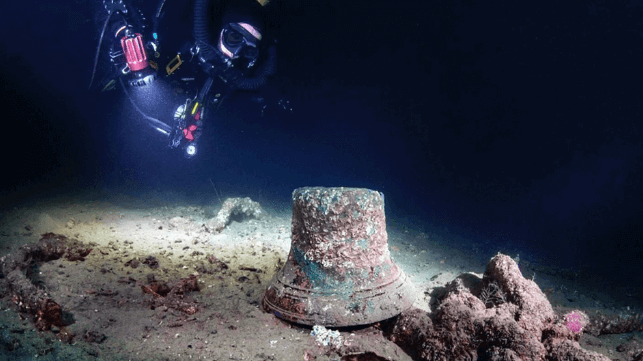
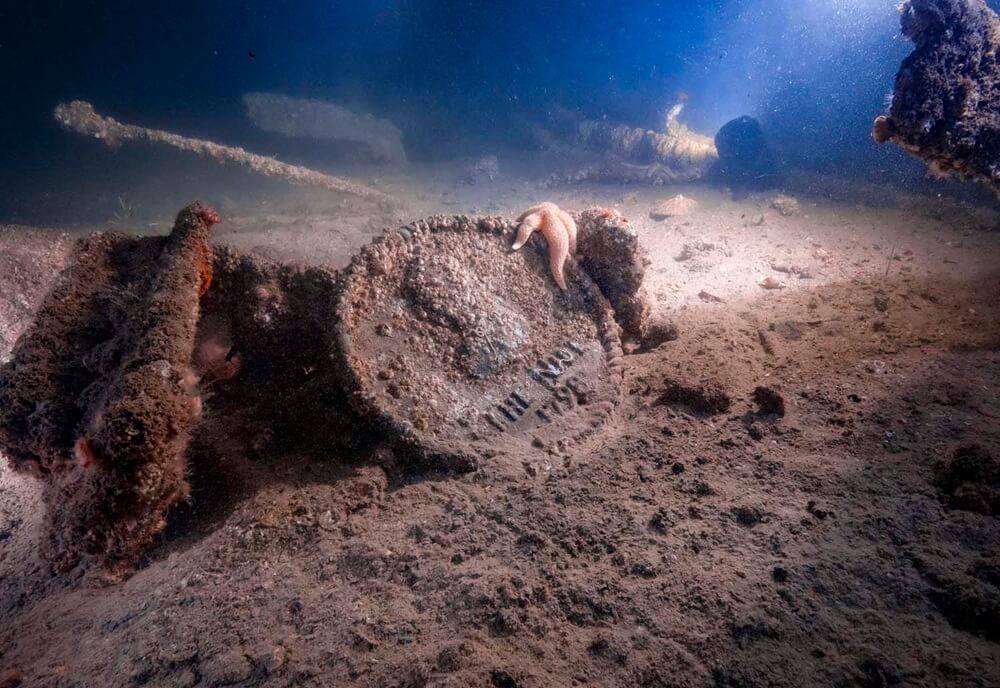
Divers have brought the bell, badge and tampion – gun barrel cover – of HMS Vanguard from the bed of Scapa Flow to the surface.

It’s the first – and most important – step in plans to create a new exhibition and memorial in Orkney to the 843 souls lost in a cataclysmic explosion in July 1917.

All three items now need to undergo specialist conversation – including making use of the experts who worked on the Mary Rose and its thousands of objects – so they can be seen by the public for the first time since Vanguard was afloat.

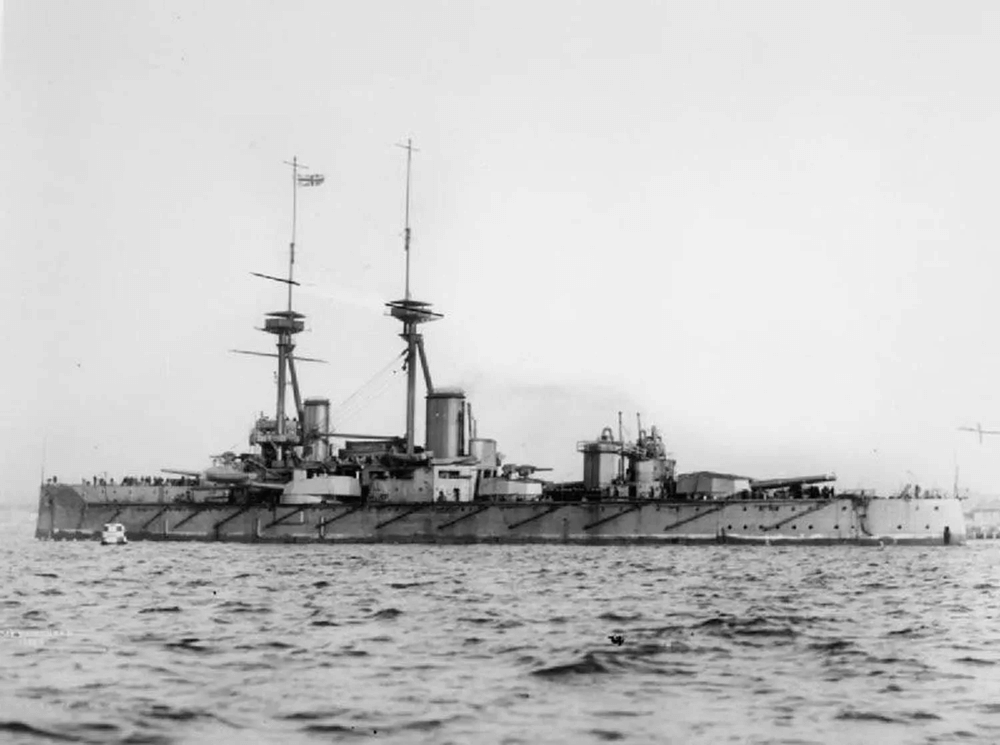
The battleship blew up for reasons never accurately determined, but it is thought that a long-smouldering fire in a coal bunker caused cordite charges in an adjacent compartment to ignite.

A series of explosions shook the dreadnought before a final blast tore her to pieces, showering Scapa Flow – the wartime anchorage of the Royal Navy – with metal and burning debris, which also set the Orkney heather alight. Just two of the 845 souls aboard survived.

A dive team from the MV Huskyan - who surveyed the site nearly a decade ago as part of 100th anniversary commemorations of the Great War - again received special permission from the Royal Navy to both dive on the Vanguard and recover objects – as an official war grave, both activities are typically illegal.


HMS Vanguard, 1909 (Royal Navy)

HMS Vanguard's ship's badge (Marjo Tynkkynen / Royal Navy)

The bell – which weighs 25 kilos and was damaged by the explosions – was the most challenging item to recover, but the divers brought all three objects to the surface in a single day’s work, despite poor visibility on the seabed.

All three objects were immediately transferred to sealed containers of salt water, which they’ll remain in while conservation work begins, while a minute’s silence was held over the wreck and wreaths dropped to conclude the operation.

“The objects are in phenomenal condition considering their age, the violent destruction of the ship and the long period of immersion,” said Nick Hewitt, naval historian and culture team leader for Orkney Council. “They are also tremendously emotive – look at the bell and you will immediately feel what happened to that ship because it is distorted by the explosion and missing the crown which should be on top. This has been an amazing journey – three years of effort to date, and the whole recovery operation has been a great success. We’re absolutely thrilled. Mission accomplished.”

It will cost around $16,000 to conserve the three objects – after a century under water, each needs to be desalinated, cleaned and carefully dried before they can go on display, hopefully in around 18 months’ time.

Once treated, the recovered objects will form the centerpiece of a new exhibition dedicated to the ship and the men who served in her at the Scapa Flow Museum, alongside the life stories of those lost as part of the Vanguard Crew Photographs Project.

“We think the museum will become a focus for Vanguard commemoration, much like the Marwick Head memorial is for Kitchener and HMS Hampshire, and the Royal Oak memorial at Scapa Beach,” Nick added.

This article appears courtesy of the Royal Navy and may be found in its original form here

The opinions expressed herein are the author's and not necessarily those of The Maritime Executive.