Saturday, August 02, 2025

Terrified by Trump raids, LA’s undocumented migrants hide at home

By AFP
July 31, 2025


Alberto says he is too scared even to go out to a medical appointment - Copyright AFP/File STR


Romain FONSEGRIVES

For over a month, Alberto has hardly dared to leave the small room he rents in someone’s backyard for fear of encountering the masked police who have been rounding up immigrants in Los Angeles.

“It’s terrible,” sighed the 60-year-old Salvadoran, who does not have a US visa.

“It’s a confinement I wouldn’t wish upon anyone.”

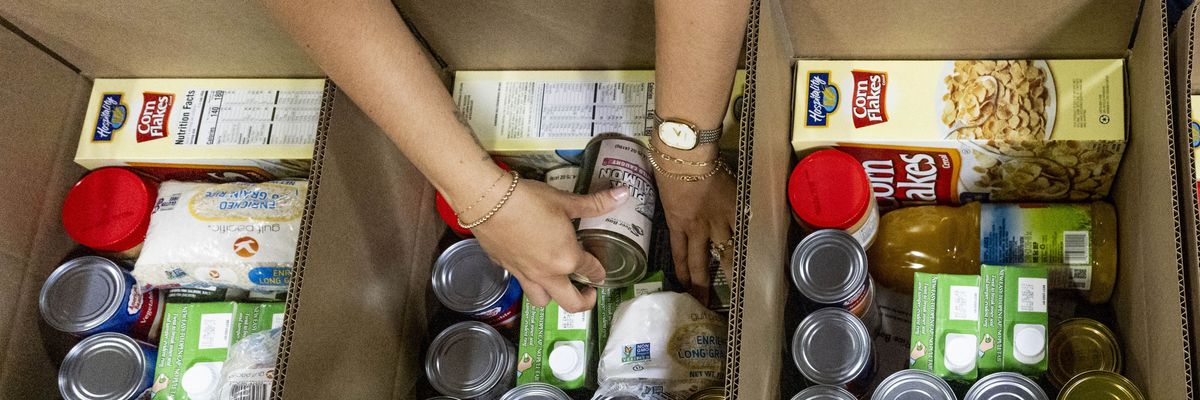
To survive, Alberto — AFP agreed to use a pseudonym — relies on an organization that delivers food to him twice a week.

“It helps me a lot, because if I don’t have this… how will I eat?” said Alberto, who has not been to his job at a car wash for weeks.

The sudden intensification of immigration enforcement activity in Los Angeles in early June saw scores of people — mostly Latinos — arrested at car washes, hardware stores, on farms and even in the street.

Videos circulating on social media showed masked and heavily armed men pouncing on people who they claimed were hardened criminals.

However, critics of the Immigration and Customs Enforcement (ICE) sweeps say those snatched were only trying to earn a meagre wage in jobs that many Americans don’t want to do.

The raids — slammed as brutal and seemingly arbitrary — sparked a wave of demonstrations that gripped the city for weeks, including some that spiraled into violence and vandalism.

Alberto decided to hole up in his room after one such raid on a car wash in which some of his friends were arrested, and subsequently deported.

Despite being pre-diabetic, he is hesitant to attend an upcoming medical appointment. His only breath of fresh air is pacing the private alley in front of his home.

“I’m very stressed. I have headaches and body pain because I was used to working,” he said.

In 15 years in the United States, Trump’s second term has turned out to be “worse than anything” for him.


– ‘Ghost town’ –


Trump’s immigration offensive was a major feature of his re-election campaign, even winning the favor of some voters in liberal Los Angeles.

But its ferocity, in a place that is home to hundreds of thousands of undocumented workers, has taken the city by surprise.

Faced with mounting raids, migrants are limiting their movement as much as possible.

In June, the use of the public transportation system — a key network for the city’s poorer residents — dropped by 13.5 percent compared to the previous month.

“As you’re driving through certain neighborhoods, it looks like a ghost town sometimes,” said Norma Fajardo, from the CLEAN Carwash Worker Center, a non-profit organization that supports these workers.

It has joined forces with other groups to deliver hundreds of bags of food every week to those afraid to step outside.

“There is a huge need for this,” said the 37-year-old American.

“It’s very saddening and infuriating. Workers should be able to go to work and not fear getting kidnapped.”

In June, ICE agents arrested over 2,200 people in the Los Angeles area, according to internal documents analyzed by AFP.

About 60 percent of them had no criminal record.

Given the colossal resources recently allocated to ICE by Congress — nearly $30 billion to bolster immigration enforcement, including funding to recruit 10,000 additional agents — Fajardo says she is not expecting any let up.


– ‘New normal’ –


“It seems like this is the new normal,” she sighed.

“When we first heard of an ICE raid at a car wash, we were in emergency crisis mode. Now we are just really accepting that we need to plan for the long term.”

Food assistance has also become essential for Marisol, a Honduran woman who has been confined to her building for weeks with 12 family members.

“We constantly thank God (for the food deliveries) because this has been a huge relief,” says the 62-year-old Catholic, who has not attended Mass in weeks.

Marisol — not her real name — has hung up curtains on the windows at her home entrance to block any view from outside.

She forbids her grandchildren from opening the door and worries enormously when her daughters venture out to work a few hours to provide for the family’s needs.

“Every time they go out, I pray to God that they come back, because you never know what might happen,” she said.

Marisol and her family fled a Honduran crime gang 15 years ago because they wanted to forcibly recruit her children.

Now, some of them wonder if it’s worth continuing to live in the United States.

“My sons have already said to me: ‘Mom, sometimes I would prefer to go to Europe.'”


Ripping DHS Chief's Racism, Judge Extends Protections for 60K Hondurans, Nepalis, and Nicaraguans


"Secretary Noem's statements perpetuate the discriminatory belief that certain immigrant populations will replace the white population," the judge wrote, stressing that "color is neither a poison nor a crime."
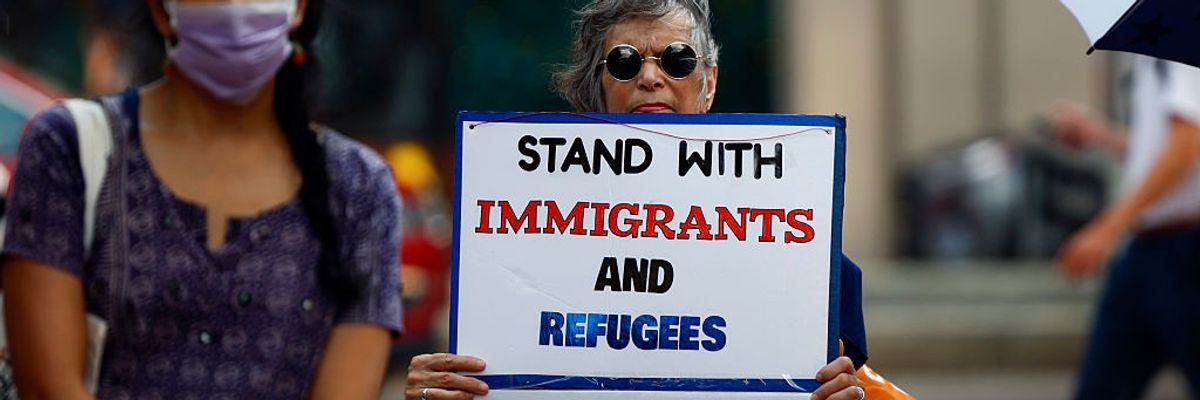


People attend a rally in solidarity with Temporary Protected Status holders from Honduras, Nepal, and Nicaragua at City Hall Plaza in Boston, Massachusetts on July 29, 2025.
(Photo: Danielle Parhizkaran/The Boston Globe via Getty Images)

Jessica Corbett
Aug 01, 2025
COMMON DREAMS

"The freedom to live fearlessly, the opportunity of liberty, and the American dream. That is all plaintiffs seek. Instead, they are told to atone for their race, leave because of their names, and purify their blood. The court disagrees."

That's how U.S. District Judge Trina Thompson began a Thursday order postponing recent moves by President Donald Trump's administration to end Temporary Protected Status (TPS) for around 60,000 migrants from Honduras, Nepal, and Nicaragua.

The U.S. Department of Homeland Security (DHS) issues TPS designations for countries impacted by war, environmental disasters, or other extraordinary conditions, allowing migrants from those nations to legally live and work in the United States.

Homeland Security Secretary Kristi Noem announced in June and July that the administration would end TPS for people from Honduras, Nepal, and Nicaragua this summer. The decisions followed similar attempts to terminate those designations during Trump's first term—efforts blocked by U.S. courts and then ended under former President Joe Biden.

"As a TPS holder and mother, this victory means safety, hope, and the chance to keep building our lives here."

When Trump returned to power in January, he issued an executive order titled "Protecting the American People Against Invasion," which was "cited in later decisions vacating or terminating TPS designations," Thompson pointed out. The judge, who was appointed to the Northern District of California by Biden, also highlighted "repeated rhetoric by administration officials that associated immigrants and TPS holders with criminal activity or other undesirable traits."

The 37-page order details some of Noem's comments during her confirmation hearing and news interviews. Thompson wrote that "these statements reflect the secretary's animus against immigrants and the TPS program even though individuals with TPS hold lawful status—a protected status that was expressly conferred by Congress with the purpose of providing humanitarian relief."

"Their presence is not a crime. Rather, TPS holders already live in the United States and have contributed billions to the economy by legally working in jobs, paying taxes, and paying contributions into Medicare and Social Security," she noted. "By stereotyping the TPS program and immigrants as invaders that are criminal, and by highlighting the need for migration management, Secretary Noem's statements perpetuate the discriminatory belief that certain immigrant populations will replace the white population."

"Color is neither a poison nor a crime," stressed the judge, who is Black. She concluded that the various TPS holders who are the plaintiffs provided "sufficient evidence to demonstrate that the secretary's TPS Nepal, Honduras, and Nicaragua terminations were based on a preordained determination to end the TPS program, rather than an objective review of the country conditions."

Thompson ordered the TPS terminations for the three countries postponed until a November 18 hearing on the merits of the case, at which point her decision will be subject to extension.


"Judge Thompson's decision renews hope for our immigrant communities—especially for the tens of thousands of TPS holders from Honduras, Nicaragua, and Nepal who have lived here for decades and are part of the National TPS Alliance," said Teofilo Martinez, a Honduran TPS holder, plaintiff, and an alliance leader, in a statement.

"This ruling gives us strength, affirms the power of organizing, and reminds us what's at stake: the right to stay in the only home many of us have ever known," Martinez added. "We will keep fighting for permanent protections and to stop the cruel separation of our families."

Sandhya Lama, another plaintiff and TPS holder from Nepal, described the judge's order as "a powerful affirmation of our humanity and our right to live without fear."

"As a TPS holder and mother, this victory means safety, hope, and the chance to keep building our lives here," she said. "We stand united, grateful, and determined to continue the fight for a permanent future in the country we call home."

The plaintiffs are represented by the ACLU Foundations of Northern California and Southern California, Haitian Bridge Alliance, National Day Laborer Organizing Network (NDLON), and Center for Immigration Law and Policy at the University of California, Los Angeles School of Law.

"The Trump administration is aggressively, and illegally, seeking to dismantle TPS. But they will not do so without a fight," said ACLU of Northern California attorney Emi MacLean. "Today is a good day. Sixty60,000 long-term residents of the U.S., who have followed all the rules, will be allowed to remain in the U.S. and continue to defend their rights inside and outside of court."



‘Frightening escalation:’ Experts ‘unnerved’ by leaked memo on military use in US


Alexander Willis
August 2, 2025 
RAW STORY


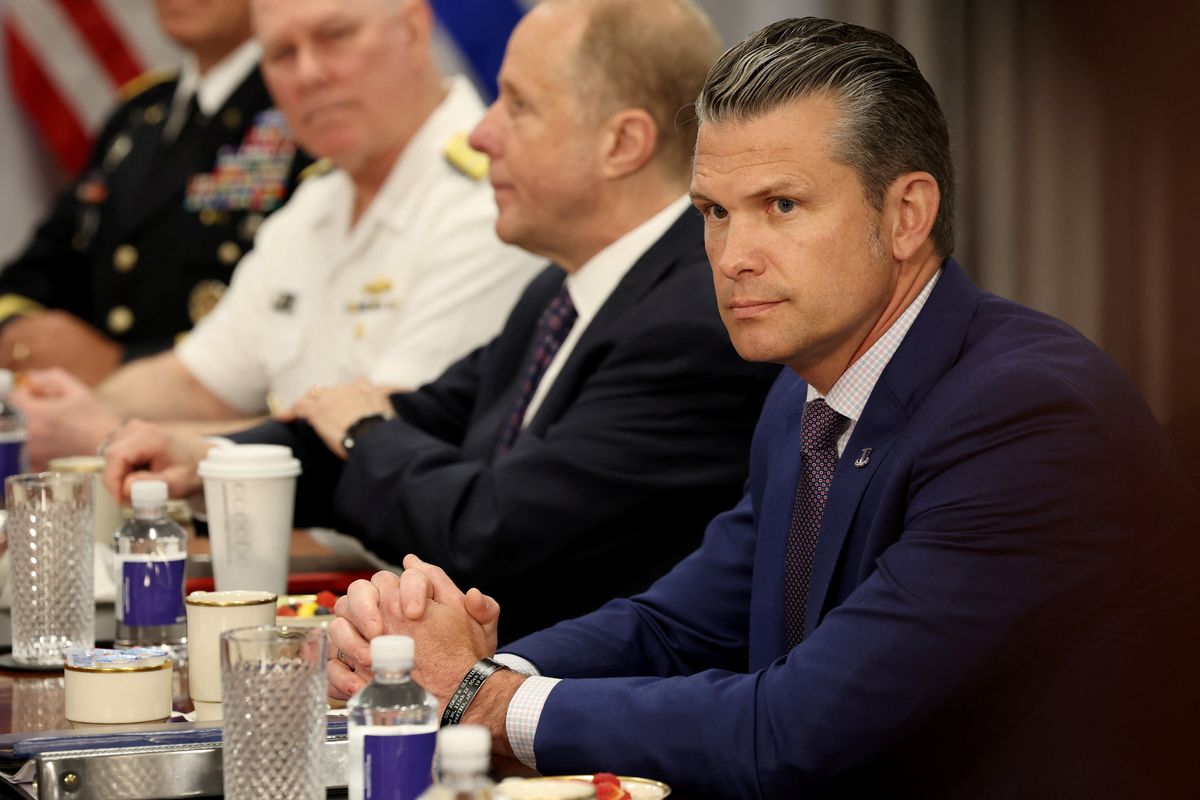
U.S. Defense Secretary Pete Hegseth attends a meeting at the Pentagon. REUTERS/Jonathan Ernst

A leaked Department of Homeland Security memo reveals advanced plans to expand military involvement within the U.S., which has stunned a number of policy experts, The New Republic reported on Saturday.

“The memo is alarming, because it speaks to the intent to use the military within the United States at a level not seen since Japanese internment,” said Carrie Lee, a senior fellow at the policy think tank German Marshall Fund, speaking with TNR. “The military is the most powerful, coercive tool our country has. We don’t want the military doing law enforcement. It absolutely undermines the rule of law.”

Obtained by TNR, the leaked memo details a high-level meeting between leadership at DHS and the Department of Defense focused on expanding coordination between the two agencies on immigration enforcement. It was attended by DHS Secretary Kristi Noem, and Defense Secretary Secretary Pete Hegseth, along with other top leaders at the two agencies.

According to TNR the memo "has unnerved experts who believe it portends a frightening escalation."

Agency leaders cited recent military immigration enforcement operations in Los Angeles, California and the California-Mexico border that involved the deployment of thousands of troops as models for future cooperation, suggesting an increase in future military deployments to urban centers may be on the horizon.

“It’s disturbing to see DHS officials pressuring the U.S. military to turn its focus inward even further,” said Joseph Nunn, counsel in the Brennan Center's Liberty and National Security Program, speaking with TNR.

Specifically, agency leaders named the recent operation in Los Angeles as “a good indicator of the type of operations (and resistance) we’re going to be working through for years to come.” That operation saw around 5,000 members of the National Guard deployed to downtown Los Angeles to quell protests sparked by immigration raids, and to protect immigration enforcement officers.

Agency leaders also assessed the threat of illegal immigration to be “on the same plain” as groups like Al Qaeda and ISIS according to the memo, naming immigration crackdown efforts as “a priority” for President Donald Trump.

“The conflation of a low-level threat like transnational criminal organizations with Al Qaeda, which was actually attempting to topple the United States government, is a clear attempt to use excessive force for a purpose normally handled by civil authorities,” said Lindsay Cohn, associate professor at the U.S. Naval War College, speaking with TNR.


Nobel-winning economist Paul Krugman warns US faces Venezuela-style collapse under Trump


Matthew Chapman
August 1, 2025 
RAW STORY


NY Times columnist Paul Krugman. (Shutterstock)

Nobel Prize-winning economist turned political commentator Paul Krugman tore into President Donald Trump on MSNBC for firing the nation's chief labor statistics analyst for reporting weak jobs numbers — and told anchor Ari Melber this is the same blueprint that ends up driving authoritarian countries into economic collapse.

This comes at the same time Trump is ramping up threats and attacks on Federal Reserve Chair Jerome Powell, an official he originally appointed, for not lowering interest rates because the administration's tariffs are undoing progress on inflation, sparking additional fears the president could derail independent monetary policy.

"We're not yet in recession territory, but we're definitely losing steam," Krugman, a frequent critic of Trump, said in response to the numbers. "And this is a not good picture. This is not what you want to see happening."

"[And] Trump sort of crashes out, shoots the messenger," replied Melber. "We don't have any modern precedent for that. It's reminiscent of bigger problems in controlled or autocratic countries and economies. Put that in context for us. And why would that affect — why would that be bad for, say, an average person in the economy?"

"Well, the thing to remember is that this agency, the Bureau of Labor Statistics, is not a household phrase, but it is absolutely critical," said Krugman. "Basically, everything that we know about what's happening to the economy in the last couple of months comes from the BLS. They do the surveys that tell us how many people are unemployed. They do the surveys that tell us how many jobs companies are creating. They produce the inflation numbers. So all of that comes from them. And it's — first of all, it's critical for, you know, for all of us to understand what's happening, but also how the government itself makes decisions. It's how the Federal Reserve makes decisions."

"If you start to corrupt those numbers, if you start to report those numbers as being what makes the president look good instead of what's actually happening, then bad things start happening," Krugman continued. "How does someplace like Venezuela get to hyperinflation? ... someplace like Argentina get hyperinflation? And an important part of that is that they start ordering the statistical agencies to, you know, report nothing but puppies and rainbows. And so they go plunging ahead. And by the time they finally start, if they ever do, to admit that maybe, maybe we have a problem here, you're up at 80 percent inflation, right?"

"This is the playbook," he added. "We've seen it many, many times. And now I have to say, faster even than I expected, it's come to America."

Watch the video below or at the link here.


'Who are you gonna trust?' Economist warns Trump is poisoning America’s fiscal reputation

Sarah K. Burris
August 1, 2025 
RAW STORY


An economics expert warned that any forthcoming jobs numbers will leave many questioning their accuracy.

President Donald Trump raged after the Bureau of Labor Statistics published less-than-glowing jobs numbers for July and recalculated the May and June numbers to show meager reports. In response, Trump said he would fire the chair of the BLS and install someone "competent."

Speaking to MSNBC on Friday, Gene Sperling, former director of the National Economic Council, said that no one should underestimate how damaging this can be to assault economic institutions like the BLS.

"I know all this stuff may seem complicated to people, but it's really not. You've got four or five people you could lend money, or invest, to," proposed Sperling. "Four of them often lie, often fudge the numbers, often abuse the law. And one is always honest, independent with monetary policy, independent with the numbers they put out. Who are you going to trust? Who are you going to charge less to lend money?"

He called it the benefit of being a stable economic country.

"And it's not just in the dollar being the reserve currency, not just in our treasuries being the safe haven of investment, but in people believing that the U.S. was a place to make their future and invest," said Sperling.

This is piling on more and more "abuse and attack on the rule of law and economic integrity," he warned. It also comes as Trump extorts law firms, colleges and universities, he added.

Risk Reversal Advisors Principal Dan Nathan told substitute host Stephanie Ruhle that this was the "first time that investors truly began paying attention to some of the funny business that's been going on."

He explained that the job reports are part of a weakness caused by Trump's economic policy.


"If you think about the uncertainty in and around this trade war," he mentioned. "And make no mistake about it, if you start to put these sorts of levies right on some of these countries that you really expected to have deals by now. That sort of uncertainty is going to cause the C-level suite in America to start laying folks off to be a lot more cautious about how they are spending money."

See the comments below or at the link here.


Economists Pan 'Insane' New Trump Tariffs as US Consumers Struggle With Rising Prices

"Trump's definition of 'winning' is hitting the American people with ever-higher taxes," said economist Dean Baker.


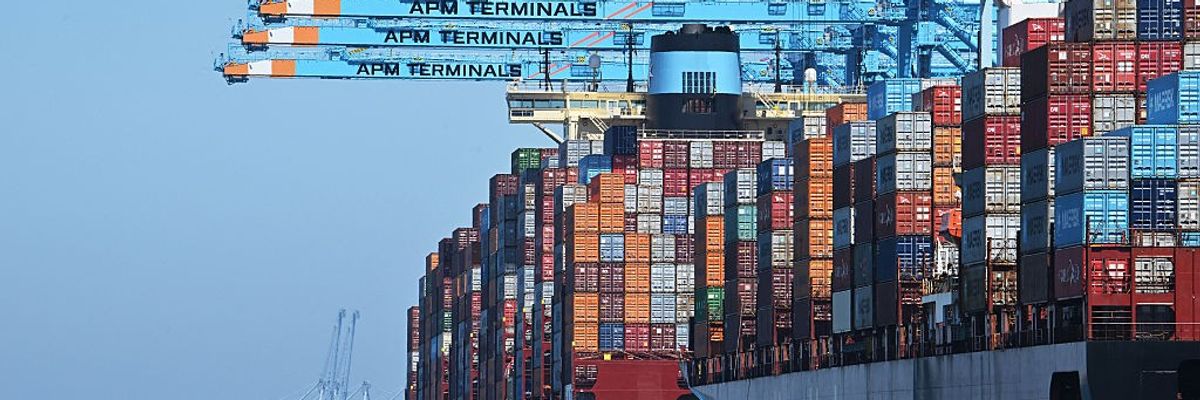
Container ships are docked at the APM Terminal at the Port of Los Angeles, California, on July 31, 2025.
(Photo: Robyn Beck/AFP via Getty Images)


Jake Johnson
Aug 01, 2025
COMMON DREAMS

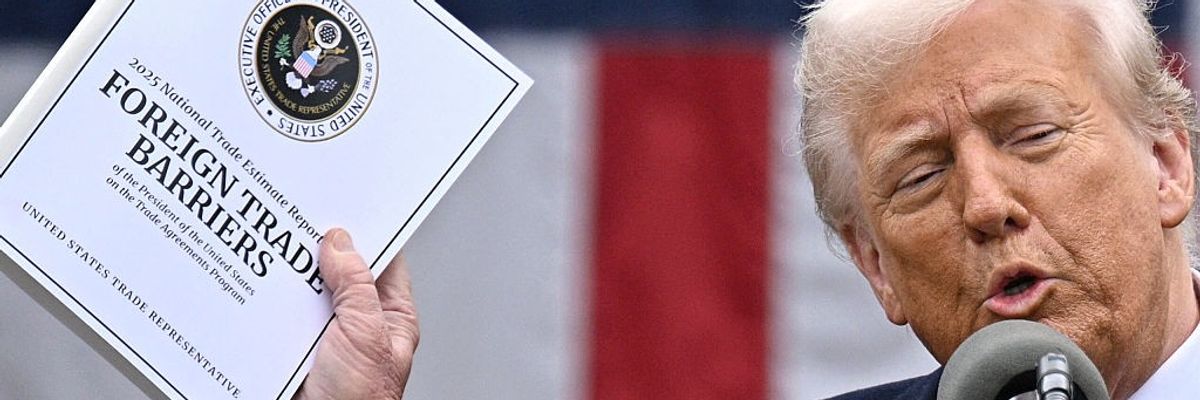
U.S. President Donald Trump on Thursday used emergency authority to impose high tariff rates on imports from dozens of American trading partners, including Canada—a move that economists criticized as a senseless approach to global trade that will further increase costs for consumers who are already struggling to get by.

Trump outlined the new tariff rates in executive orders signed just ahead of his arbitrary August 1 deadline for U.S. trading partners to negotiate a deal with the White House, whose erratic, aggressive, and legally dubious approach has alarmed world leaders.

Under the president's new orders, Canadian goods that are not covered by the U.S.-Mexico-Canada Agreement (USMCA) will face 35% import duties, while steel and aluminum imports will face a 50% tariff rate.

Trump claimed Canada "has failed to cooperate in curbing the ongoing flood of fentanyl and other illicit drugs." But Canadian Prime Minister Mark Carney hit back in a statement early Friday, noting that Canada "accounts for only 1% of U.S. fentanyl imports and has been working intensively to further reduce these volumes."

"While we will continue to negotiate with the United States on our trading relationship, the Canadian government is laser-focused on what we can control: building Canada strong," Carney added. "Canadians will be our own best customer, creating more well-paying careers at home, as we strengthen and diversify our trading partnerships throughout the world."

Economist Brad Setser said that while the impact of the higher tariff on Canadian imports could be muted because of the exemption of USMCA-covered products such as oil, the 35% rate is still "insane" and "dumb."

"Same with the high tariff on Switzerland. Crazy," Setser wrote, pointing to the 39% rate for Switzerland imports. "This isn't just protectionism, it is bad protectionism—and will have all sorts of unintended consequences."

The new tariff rates for Canadian goods will take effect Friday while the higher rates for other nations such as Brazil (50%), India (25%), and Vietnam (20%) won't kick in until next week "to give Customs and Border Protection officials time to prepare," The Washington Post reported. Customs and Border Protection collects tariffs, which are effectively taxes paid by importers—who often pass those costs onto consumers in the form of higher prices.

"Trump's definition of 'winning' is hitting the American people with ever-higher taxes," Dean Baker, senior economist at the Center for Economic and Policy Research, wrote late Thursday.

Recent U.S. economic data indicates that Trump's tariffs are already putting upward pressure on prices—and companies are using the president's trade chaos as an excuse to drive up prices further and pad their bottom lines.

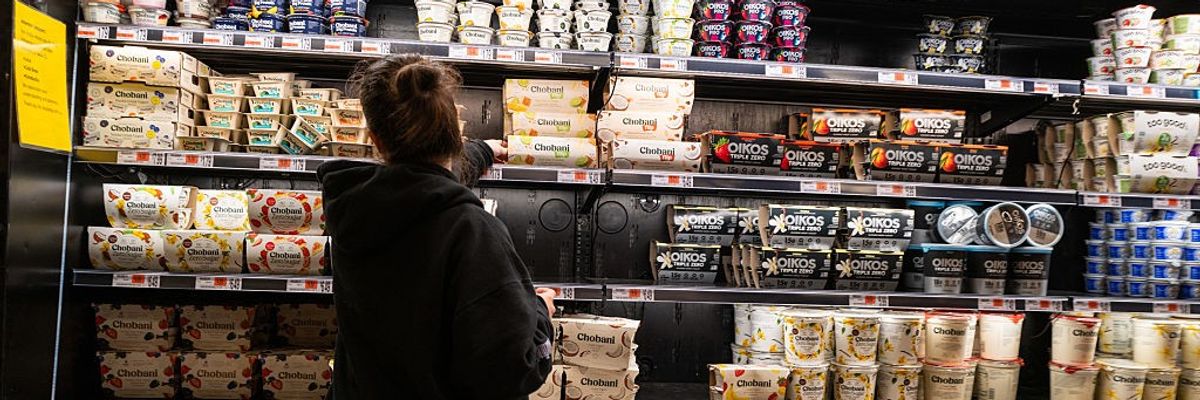
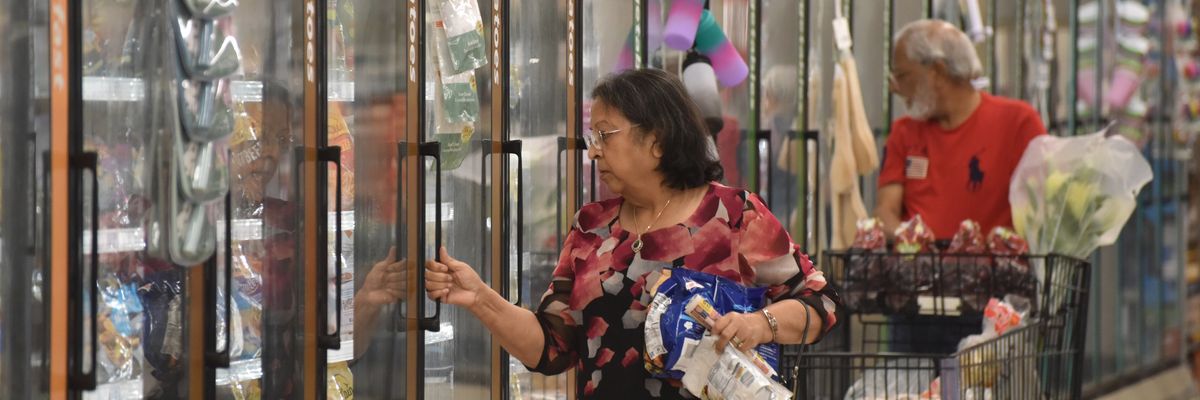
The Tax Foundation noted earlier this week that "a variety of food imports" will be impacted by Trump's tariffs, likely leading to "higher food prices for consumers." More than 80% of Americans are already concerned about the price of groceries and many are struggling to stay afloat, according to survey data released Thursday by The Century Foundation.

Baker warned Thursday that even nations that have agreed to trade frameworks with the U.S. are not out of the woods.

"Deals are meaningless to Trump. He'll break them in a second any time he feels like it," Baker wrote. "I trust everyone negotiating with Trump understands that fact."

Report Shows 'Financial Insecurity Is Widespread and Runs Deep' in Trump Economy

"Trump's two flagship economic initiatives—his tariffs and the One Big Beautiful Bill—are not perceived as helping the economy," said an analyst for the pollster YouGov.


People shop at a grocery store in Brooklyn on May 13, 2025 in New York City.
(Photo: Spencer Platt/Getty Images)


Brad Reed
Jul 31, 2025
COMMON DREAMS

U.S. President Donald Trump vowed to immediately bring down inflation upon taking office, but a Thursday report from the Century Foundation finds that Americans' finances are still in a very precarious condition.

The Century Foundation commissioned a survey last month with polling firm Morning Consult and found that roughly 6 in 10 Americans say that Trump's policies are to blame for their current financial struggles. However, the report also emphasized that Americans' "financial insecurity is widespread and runs deep," and that their concerns stretch back well before Trump's second term.

"More than 4 in 5 Americans (83%) are concerned about the price of groceries, with nearly half (46%) saying they are very concerned," writes the Century Foundation. "Nearly half (47%) of Americans are worried about their current ability to pay their rent or mortgage. And nearly two-thirds (64%) worry about their ability to pay an unexpected medical expense if one should arise. Nearly half of all Americans (48%) believe they would have difficulty paying an unexpected $500 bill without borrowing."

These anxieties were particularly strong among younger Generation Z voters, as well as among Black and Latino voters across all age demographics.

Even more troubling, the survey found that Americans are increasingly using financially risky strategies to keep up with paying their bills.

"More than a third of Americans are turning to high-cost debt to cover their bills," writes the Century Foundation. "Significant shares have also had to turn to credit cards (37%) or take on debt (29%) to afford the bills. This is consistent with the larger trends in use of credit products, like the notable shift in use of 'buy now, pay later' products for groceries. The rates of families using credit card debt to cover expenses is all the more concerning as credit card delinquencies continue to rise."

Roughly 2 in 5 Americans reported dipping into their personal savings at least once in the last year in order to pay their bills, while 1 in 4 Americans reported skipping out on meals to make ends meet, the survey found.

When it comes to what Americans see as the major obstacle to having a lower cost of living, the survey found that they considered unchecked corporate power to be the main culprit.

"Across party lines, Americans believe that tamping down corporate power will help them," writes the Century Foundation. "According to most Americans, actions that hold the wealthy and powerful accountable would help them and people like them. That includes reducing the influence of money in politics (60%), prosecuting companies that cheat workers and consumers (60%), and raising taxes on the rich (57%)."

The Century Foundation's poll isn't the only one to release this week to show Americans are highly anxious about the economy. A poll conducted by YouGov on behalf of U.K.-based newspaper The Times found that 50% of Americans believed the economy was getting worse under Trump's watch while just 24% said it was improving.

This poll similarly found that Americans are concerned about the cost of living and the impacts that Trump's tariffs will have on their ability to afford basic necessities such as groceries.

"The honeymoon at the beginning has gone: Inflation and jobs are still the leading issues and there is not a perception of anything improving," explained YouGov analyst Mark Blumenthal. "The survey suggests that Trump's two flagship economic initiatives—his tariffs and the One Big Beautiful Bill—are not perceived as helping the economy."


Campaign's Interactive Tool Tracks How Much Trump and GOP Are Raising the Cost of Living


"Trump and Republicans in Congress are single-handedly inflating the cost of everyday items that Americans rely on," said one advocate.


People shop at a supermarket on July 18, 2025 in Rockville, Maryland.
(Photo: Sha Hanting/China News Service/VCG via Getty Images)

Julia Conley
Jul 31, 2025
COMMON DREAMS

Six months into U.S. President Donald Trump's second term, an economic justice group on Thursday unveiled an interactive tool to help Americans put a number on the unmistakable feeling many have reported having about the Republican leader who promised to "make America affordable again": that costs have in fact gone up under Trump, and that the White House and the GOP are to blame.

Using the tool introduced by Unrig Our Economy, people across the U.S. can see exactly how much the price of essentials has gone up in their state, with the advocacy group connecting the dots between the rising cost of living and Trump's tariffs as well as corporate tax breaks Republicans have relentlessly pushed to pass.

According to the "Don't Inflate Our Plates" tool, the price of beef in Texas has gone up nearly 47% since the early days of Trump's second term, while eggs cost $3.19 more than they did before Trump took office.

In California, eggs now cost over $5.00 more than they did before Trump's second term, based on "historical trends, real-time supplier data, and market analysis" that Unrig Our Economy examined.


Unrig Our Economy gained some of its data from Kroger's pricing data, finding that in states with Kroger stores, the price of beef has gone up between 16% and 72%, with the biggest price hikes in Alaska and Utah.

Egg prices in particular were a talking point for Trump during his presidential campaign, but they've risen in many states where Kroger operates, with customers in Michigan—where the president won in 2024—paying 58% more for eggs.

"Trump and Republicans in Congress are singlehandedly inflating the cost of everyday items that Americans rely on," said Leor Tal, campaign director for Unrig Our Economy. "While billionaires and corporations cash in on Republican-backed tax breaks, working-class families are left paying higher prices for eggs, coffee, and more."

Unrig Our Economy pointed to reporting on Trump's tariffs, more of which are set to be announced Friday, with the president expected to impose rates up to 50% on some imports.

As Common Dreams reported this week, the advocacy group Groundwork Collaborative found that just as corporate executives used labor shortages and supply chain disruptions during the coronavirus pandemic as cover to keep prices high even after those problems were resolved, many are now using tariffs as a justification for price increases.

"We certainly welcome a reduction in the Chinese tariffs, but we'll be announcing a price increase here regardless of any changes of the Chinese tariffs over the next week or two to go into effect in June," the CEO of one footwear brand said in a recent earnings call.


Unrig Our Economy pointed to recent polling that showed Americans overwhelmingly disapprove of Trump's tariffs, including 47% of Republican voters.

The Trump administration has also made a number of regulatory moves benefiting corporations that aim to take as much money from working families' household budgets as possible, including a push for the cancellation of a Biden-era Federal Trade Commission rule allowing consumers to easily cancel subscriptions; the FTC's decision to drop a lawsuit challenging price discrimination by PepsiCo; and the commission's move shutting down public comments on corporate pricing tactics.

The interactive tool was unveiled weeks after the president signed into law his sweeping domestic policy and budget package, which includes the largest cuts to public programs like Medicaid and the Supplemental Nutrition Assistance Program in history, increases monthly payments for student loan borrowers under repayment assistance plans, and hands out $117 billion in tax cuts to the richest 1% of Americans while providing just $77 billion in cumulative savings to the bottom 60% of earners.

As Unrig Our Economy unveiled its tool allowing Americans to see exactly how their household budgets are being impacted under the Trump administration, the Century Foundation (TCF) and Morning Consult released the results of a poll in which they asked more than 2,000 people in June how they were being affected by the high cost of living over the past six months.

More than half of respondents said "billionaires, corporations, and congressional Republicans have made their lives harder," and 60% said the Trump administration is to blame for the higher cost of living.

More than 4 in 5 Americans said they were concerned about the price of groceries, and nearly half were concerned about their ability to pay their rent or mortgage. Forty-eight percent said they would have difficulty paying an unexpected $500 bill, like a home repair or medical bill, without borrowing or using credit, and nearly 20% said it would be "very difficult" to make the payment.

Even among households with incomes over $100,000, more than a third said they would have a hard time meeting the surprise expense without dipping into savings or using credit cards—suggesting that these households are using a large proportion of their relatively comfortable monthly income for essentials

"While the federal government tears down programs such as Medicaid and food assistance and federal regulators give the green light to companies to rip off consumers, families are being forced to construct their own safety nets from a web of risky financial practices," said TCF.

Unrig the Economy said that with Don't Inflate Our Plates, the group is calling out "the Republican-backed policies that got us here" and demanding "that Congress put working people first."

Ford Warns of Profit Plunge Thanks to Trump Tariffs

Ford's tariff troubles are notable because it "manufactures the most cars in the U.S. of any automaker," and yet is still "being squeezed by new trade barriers imposed by the White House," reported Bloomberg.


U.S. President Donald Trump delivers remarks on reciprocal tariffs during an event in the Rose Garden entitled "Make America Wealthy Again" at the White House in Washington, D.C., on April 2, 2025.
(Photo by Brendan Smialowski / AFP via Getty Images)

Brad Reed
Jul 30, 2025
COMMON DREAMS

American automaker Ford on Wednesday followed in the steps of General Motors in warning that U.S. President Donald Trump's tariffs are going to take a hammer to its bottom line.

As reported by Bloomberg, Ford said that its profit could plunge by up to 36% this year as it expects to take a $2 billion hit from the president's tariffs on key inputs such as steel and aluminum, as well as taxes on car components manufactured in Canada and Mexico. News of Ford's guidance sent its stock shares diving by more than 2% in after-hours trading on Wednesday.

Bloomberg wrote that Ford's tariff troubles are notable because it "manufactures the most cars in the U.S. of any automaker," and yet is still "being squeezed by new trade barriers imposed by the White House."

Ford CFO Sherry House informed reporters during the company's quarterly earnings call that the White House was aware of the troubles the tariffs are causing U.S. automakers and she said that it "is working with us to get this right."

General Motors earlier this month also cited the Trump tariffs as a major reason why its profits fell by $3 billion the previous quarter. Making matters worse, GM said that the impact of the tariffs would be even more significant in the coming quarter when its profits could tumble by as much as $5 billion.

GM's warning came shortly after Jeep manufacturer Stellantis projected that the Trump tariffs would directly lead to $350 million in losses in the first half of 2025.

Trump made raising tariffs on foreign products a key plank of his 2024 election campaign despite the fact that he also ran on lowering inflation, and tariffs historically have led to higher, rather than lower, prices.

Trump and His GOP Risk Making Depressions Great Again

Today, every one of the fuse lines that set off past explosions is once again being laid by a Republican president and party that have abandoned any pretense of economic stewardship or patriotism.


Workers pack boxes for the Commodity Supplemental Food Program at The Orange County Food Bank in Garden Grove, California on Friday, May 9, 2025.
(Photo: Paul Bersebach/MediaNews Group/Orange County Register via Getty Images)

Thom Hartmann
Aug 01, 2025
Common Dreams

Republicans may be fixing to crash the economy again—Republican presidents oversaw 10 of the last 11 recessions and the Republican Great Depression—and they’re doing it to satisfy the greed of the billionaires they serve.

Today, for example, is the day that some of U.S. President Donald Trump‘s worst tariffs are supposed to go into effect, and many folks on Wall Street are deciding where they want to hide when the ceiling starts falling in. The horrible jobs report just released hours ago highlights not only how bad things were in July, but they had to “revise downward by 285,000 jobs” previous reports; it looks like Trump’s people have been cooking the books.

The Financial Times is on it; they published an article this week titled, “The US Economy Is More Fragile Than It Appears.” It’s author, Tej Parikh, points out that our housing market is in trouble and starting to look like it did around the time of the Bush Housing Crash in 2008, that spending patterns are changing in alarming ways (my phrase, not his), and that both the labor and stock markets are vulnerable. The article is frankly alarming.

And former labor secretary Robert Reich titled his brilliant newsletter yesterday: “Be Warned: The Financial Bubble Will Soon Burst.” The former Clinton cabinet member writes:
The financial economy—stocks, bonds, and their derivatives—is in for a big reality check, and I think it will happen soon.

America has stared into this abyss before; three times, in fact. In the 1770s, a brutal financial crisis driven by colonial overextension, monopolistic control by the British East India Company, and political corruption helped spark the American Revolution. In the 1850s, it was wildcat banking, land speculation, and a collapse in trust that helped produce the Panic of 1857 and push the nation toward civil war. And in 1929, Republican deregulation, tax cuts for the rich, financial speculation, and an all-out assault on labor exploded into the Republican Great Depression.

Today, every one of the fuse lines that set off those explosions is once again being laid by a Republican president and party that have abandoned any pretense of economic stewardship or patriotism.

They are actively destabilizing the pillars of our economy, undermining our democracy, and gutting the social contract that held us together for nearly a century. And unless we act—forcefully, quickly, and collectively—we may soon experience a collapse that makes 2008 look like a speed bump.

The risk of a modern economic depression is not academic or merely theoretical. It’s also not fearmongering. It is real, it is avoidable, and it is being amplified by a political movement that openly disdains regulation, despises democracy, and seeks to roll back every gain the American middle class has made since FDR dragged this country out of the last Republican-created catastrophe.

We are now living under a Republican president whose party has:Repeatedly held the full faith and credit of the United States hostage in debt ceiling standoffs designed to force cruel cuts to programs that serve ordinary people;
Demanded the Fed lower interest rates in a way that could push the nation into an inflationary spiral even as wages stagnate and housing becomes unaffordable for the bottom 90%;
Pushed for the end of regulations on banks, fossil fuel companies, tech monopolies, and Wall Street speculators, even as their recklessness increases systemic risk;
Championed massive tax cuts for billionaires and multinational corporations, ballooning the deficit while cutting benefits and raising taxes on working people;
Enabled trade wars and supply chain disruptions while cutting support for green manufacturing and public investment;
Promoted and made billions from crypto; and
Perhaps most grotesquely, embraced open authoritarianism and white nationalism, eroding the rule of law and the very stability on which economic confidence depends.

Every one of these moves destabilizes the foundation of modern prosperity. And every one of them echoes the warning signs of past collapses. The mechanisms of economic catastrophe are not mysterious. We’ve seen them before.

Start with sovereign debt and fiscal dysfunction.

In 2023 and 2024, House Republicans repeatedly brought us to the brink of default just to slash food aid, gut Medicaid, and kill green jobs. Now, in 2025, they’re salivating over a new “Balanced Budget Amendment” that would make countercyclical investment during recessions illegal. That’s economic suicide.

When demand collapses, the government must spend to stabilize the system. That’s Econ 101. But the GOP wants a permanent austerity straitjacket. Why? Because billionaires don’t suffer in recessions: They buy everything at a discount and radically increase their own wealth when things rebound. For the morbidly rich, Republican recessions and depressions are “buying opportunities”: It’s class war, plain and simple.

Then there’s financial speculation and asset bubbles.We’re once again living in an era of rampant unregulated financial engineering:
Crypto Ponzi schemes.
AI stock frenzies.
Private equity gutting essential companies and loading them with debt.
Trillions of dollars sloshing around the system chasing yield, while regulators like the Securities and Exchange Commission and Federal Trade Commission are neutered by courts stacked with right-wing ideologues.

Remember what happened in 1929? The same “let the market police itself” ideology brought the whole thing crashing down. The difference now is that the contagion would be global and could even be instantaneous.

Trade shocks and de-dollarization are looming risks, too.

Trump’s tariffs hurt American farmers and manufacturers. His talk of a new 10% universal tariff could ignite a global trade war and could push countries like China, Brazil, or Saudi Arabia to finally abandon the dollar as the reserve currency.

If that happens—if Treasury bonds stop being the world’s safe haven—we’re looking at a collapse in our ability to finance debt, a surge in interest rates, a crash in the housing market, and mass layoffs. And the Republicans? They cheer it on. They think chaos is good politics.

And then there are tariffs.

There’s a reason the Founders of this country and Framers of the Constitution gave the power to enact tariffs exclusively to Congress. They knew that nobody would build a factory here unless they knew that a tariff defending their manufacturing would be in place for the decades it would take to recover their investment costs.

When tariffs are simply slapped here and there willy-nilly by a single man and can be easily repealed by the next president, no competent business manager would take them seriously: The only thing tariffs do, under these circumstances, is damage the economy. Meanwhile, Trump’s tariffs so far are going to cost the average American family $2,400 this year.

And, from Donald Trump’s point of view, they force foreign leaders to come grovel in front of him, which absolutely delights him. He brags about it, once noting that, “They are kissing my ass.” This is not trade policy; he’s just doing this for his ego.

And what about public confidence and how the loss of it could cause a depression?

You can’t have a functioning economy without trust in government, in institutions, in money itself. But the GOP has made destroying trust its central project.

They lie about elections. They undermine the courts. They spread conspiracy theories. They smear career civil servants. They openly praise authoritarianism.

When half the population no longer believes in the legitimacy of its own government, and when the other half sees that government captured by billionaires and zealots, economic confidence evaporates.

People stop spending. They stop investing. They retreat into cash and hoarding. That’s how depressions spiral out of control.

Now layer on climate instability and its ability to wreck an economy and you have a real mess.

The GOP’s climate denialism is not just immoral, it’s economically suicidal. Hurricanes, wildfires, floods, and heatwaves are destroying billions in assets every year.

Insurance markets are collapsing in California, Florida, and Louisiana. Agricultural yields are falling. Water shortages are hitting the Southwest. Floods are wiping out the Midwest and the South while wildfires torch the West. But Republicans keep slashing climate research, killing green energy subsidies, and banning environmental and social governance investment strategies. They are literally outlawing the future.

It’s a five-alarm fire, and the Republican arsonists are demanding more gasoline.

There is, however, a way out. We’ve done it before.

They’ve created the conditions for collapse, and they’ll blame immigrants, Democrats, or queer kids when it happens.

After the last Republican-created depression, then-President Franklin D. Roosevelt rejected the dogma of austerity and implemented the most ambitious suite of Keynesian policies in world history. He put people to work. He regulated the banks. He taxed the rich. He unionized the workforce. He broke up monopolies. He guaranteed Social Security, unemployment insurance, and the right to organize.

That system—Keynesian demand-side economics—created the greatest middle class the world has ever seen. It lifted millions out of poverty, stabilized capitalism, and gave rise to the postwar economic boom. It literally created the modern American middle class.

But starting in 1981, Reagan and the GOP declared war on that system. They gutted antitrust enforcement. They slashed top tax rates. They crushed unions. They deregulated finance. They privatized public goods. They shifted the burden of funding government from the rich to the working class. And then they blamed the victims of their policies for the resulting inequality and instability.

Now they’re going for the kill shot.

Trump and his Republican Party are not just misguided; they are dangerous. Their policies are not just bad; they are existential threats to economic stability. They’ve created the conditions for collapse, and they’ll blame immigrants, Democrats, or queer kids when it happens.

We can’t let them. We have to take our country back, economically, politically, morally.

That means rejecting trickle-down nonsense and restoring Keynesian demand-side policies. It means breaking up monopolies and rebuilding a regulatory state that works. It means bringing back progressive taxation and closing loopholes for billionaires. It means massive investment in clean energy, public health, education, and infrastructure. It means rebuilding trust in democracy by reversing Citizens United, defending voting rights, rooting out corruption, and calling out fascism where we see it.

This must be at the core of the platform Democrats run on this fall and during next year’s midterms.

The risk of a depression is real. But the solution is in our hands. We just have to stop letting the Republican Party light the matches.


Our work is licensed under Creative Commons (CC BY-NC-ND 3.0). Feel free to republish and share widely.


Thom Hartmann
Thom Hartmann is a talk-show host and the author o
f "The Hidden History of Monopolies: How Big Business Destroyed the American Dream" (2020); "The Hidden History of the Supreme Court and the Betrayal of America" (2019); and more than 25 other books in print.


Trump’s ‘logic is flawed’ – economics professor

This firing is Trump's most Orwellian move yet

Robert Reich
August 2, 2025 
RAW STORY


Donald Trump speaks at the White House. REUTERS/Kent Nishimura

I spent much of the 1990s as Secretary of Labor. One unit of the Labor Department is the Bureau of Labor Statistics.

I was instructed by my predecessors as well as by the White House, and by every labor economist and statistician I came in contact with, that one of my cardinal responsibilities was to guard the independence of the Bureau of Labor Statistics. Otherwise, this crown jewel of knowledge about jobs and the economy would be compromised. If politicized, it would no longer be trusted as a source of information.

So what does Trump do? With one fell swoop on Friday he destroyed the BLS.

Trump didn’t like the fact that the BLS revised downward its jobs reports for April and May.

Revisions in monthly jobs report are nothing new. They’re made when the Bureau gets more or better information over time.

Yet with no basis in fact, Trump charged that Erika McEntarfer, the Commissioner of Labor Statistics, “rigged” the data “to make the Republicans, and ME, look bad.”

Then he ordered her fired and replaced with someone else — presumably someone whose data Trump will approve of.

How can anyone in the future trust the data that emerges from the Bureau of Labor Statistics when the person in charge of the agency has to come up with data to Trump’s liking in order to stay in the job?

Answer: They cannot. Trump has destroyed the credibility of this extraordinarily important source of information.

When Trump doesn’t like the message he shoots the messenger, and replaces the messenger with someone who will come up with messages he approves of.

So we’re left without credible sources of information about what is really occurring.

Trump is in the process of trying to do the same thing with the Federal Reserve — demanding that Jerome Powell, the Fed’s chair, cut interest rates. Trump is even threatening Powell with a Trumped-up expose of Powell’s supposed extravagance in refurbishing the Fed as a means of forcing Powell to do his bidding or resign.

What happens to the Fed’s credibility if Powell give in to Trump? It loses it. In the future, we wouldn’t have confidence that the Fed is fighting inflation, as it should. And without that confidence, longer-term interest rates will spike because investors will assume that there’s no inflation cop on the beat, and therefore will demand a higher risk premium.

Trump hates facts that he disagrees with. That’s why he’s dismembering the Environmental Protection Agency, which has repeatedly shown that climate change isn’t a “hoax,” as Trump claims, but more like a national emergency.

It’s why Trump is attacking American universities, whose whose scientists are developing wind and solar energy, and whose historians have revealed America’s tragic history of racism and genocide of indigenous people.

He is killing off the Centers for Disease Control and the National Institutes of Health, which are showing the sources of sickness and disease and how we can guard against them.

This is a man and a regime that doesn’t want the public to know the truth. He is turning America into George Orwell’s dystopian 1984.

This is what fascism looks like, friends.


We must fight this with everything we have.Robert Reich is a professor emeritus of public policy at Berkeley and former secretary of labor. His writings can be found at https://robertreich.substack.com


Trump's Attack on BLS is Outrageous and Irresponsible, Union Leader Says

President has called to fire head of the Bureau of Labor Statistics over publication of employment data.


WASHINGTON - American Federation of Government Employees National President Everett Kelley today issued the following statement:

“President Trump’s attack on the Bureau of Labor Statistics and his call to fire the long-time federal worker who leads the agency over today’s publication of employment data is outrageous and irresponsible.

“The civil servants at BLS are not political actors. They are professionals committed to producing accurate, independent data, regardless of who is in power. BLS Commissioner Erika McEntarfer, who Trump now wants to fire, has worked in the federal government for more than two decades under multiple administrations.

“Presidents don’t get to blame career workers when their policies don’t deliver. That’s why America’s civil servants collect and report this data — to give the American people the truth, not to make sure the president looks good.

“AFGE stands with BLS workers and all federal employees who serve the American people with integrity.”

AFL-CIO Chief Economist on July Jobs Numbers

WASHINGTON - AFL-CIO Chief Economist Dr. Darrick Hamilton issued the following statement on the July jobs report from the Bureau of Labor Statistics:

Average job growth over the past three months has fallen to its lowest level in more than a decade. Core sectors of the economy—manufacturing, government, retail and mining—are hemorrhaging jobs. Without modest gains in the health care and social assistance sectors, we’d be facing three straight months of net job loss. And yet, in the midst of this instability, the administration has pushed through what will likely be the largest health care cut in American history. And this data doesn’t yet capture the ripple effects of mass federal layoffs or the full force of recent budget cuts.

Over the past two months, the Black unemployment rate has jumped by a full percentage point and now stands at more than 7%, nearly double the national rate of 4.2%. For Black workers, the picture is not only a reflection of persistent racial bias—it may also be a harbinger of something more ominous. This disparity isn’t new—it’s a long-standing feature of a racialized economy. But historically, sharp economic distress in Black communities has often preceded broader downturns. If that pattern holds, we’re not just looking at a crisis for Black workers—we’re staring down a warning for the entire economy.

This isn’t a neutral stagnation. It’s the product of policy choices: disinvestment in public infrastructure, attacks on the safety net and a governing strategy that protects concentrated wealth while leaving working people increasingly vulnerable.


'Good question!’ Trump grilled on whether he'll keep firing people who deliver bad news

Sarah K. Burris
August 1, 2025 
RAW STORY

U.S. President Donald Trump speaks to reporters ahed of boarding Marine One to depart for New Jersey, at the White House in Washington, D.C., U.S., August 1, 2025. REUTERS/Jonathan Ernst

After going off on two long rants about his poor job numbers, President Donald Trump took questions from the press on his way to the helicopter en route to his Bedminster, New Jersey, country club. Among the comments he made was in agreement that no one should trust his job numbers.

The new report showed bad numbers for July, but also readjusted the May and June numbers, showing that the two were down significantly.

The first question that Trump got was about his claim that the jobs report from the Bureau of Labor Statistics was "rigged."

"Oh, yeah, I think so," Trump said as the reporter continued to ask his question. "If you look at before the election, the same kind of thing happened, and I think you'll see some very interesting information come out, but you have to have honest reports, and when you look at those numbers and you look at the numbers just before the election, they corrected it by 800,000 or 900,000 jobs."

The count was 818,000 jobs that accounted for a miscount over the year.

Among the last questions Trump took was from a reporter asking if people should fear for their jobs if they present "information or data you don't like" and whether people should trust the jobs reports in the future.

"I've always had a problem with these numbers! You know, I was thinking about it this morning. Before the numbers that came out, I said, 'Who is the person that does these numbers?' And then they gave me stats about before the election. I had a similar problem. I mean, she gave out numbers that were so good for the Democrats. It was like, unbelievable. And then right after the election, she corrected those numbers, I think, with almost 900,000 correction."

It was not an almost 900,000 correction.

"I think no one had ever seen anything like it. Well, today she did the same thing with the 253,000-whatever the number was. No, no. We need people we can trust. I mean, your question is a very good one. We need people we can trust," said Trump.

The new numbers showed glowing numbers for Trump for the first six months of his presidency, only being corrected in July.

Journalist Phil Mattingly commented earlier on Friday, "This displays an intentional ignorance toward the way economic data is collected, presented, revised, and the federal employees and appointees who do it. It's extraordinarily counterproductive and there's simply no net long game benefit to going down this path."

See the clips below or at the link here.


'Awful': Trump’s latest move sparks fears of 'banana republic' tactics

Brad Reed, 
Common Dreams
August 1, 2025 

U.S. President Donald Trump boards Air Force One on his way to New Jersey from Joint Base Andrews, Maryland, U.S., August 1, 2025. REUTERS/Ken Cedeno


U.S. President Donald Trump stunned economics experts on Friday when he demanded the firing of Erika McEntarfer, the current commissioner of the Bureau of Labor Statistics.

In justifying his call to fire McEntarfer, Trump baselessly accused her of manipulating economic data to hurt him politically by releasing a report showing that the economy only added 73,000 jobs last month.

"McEntarfer said there were only 73,000 Jobs added (a shock!) but, more importantly, that a major mistake was made by them, 258,000 Jobs downward, in the prior two months," the president wrote on his Truth Social platform. "Similar things happened in the first part of the year, always to the negative."

Trump also accused a Federal Reserve committee of conspiring to help former Vice President Kamala Harris beat him last November, writing, "The Economy is BOOMING under 'TRUMP' despite a Fed that also plays games, this time with Interest Rates, where they lowered them twice, and substantially, just before the Presidential Election, I assume in the hopes of getting 'Kamala' elected."

Trump's angry rant about the purportedly rigged jobs report set off alarms among many economists who said that the president's actions would badly damage the credibility of any future numbers put out by the BLS and other agencies.

"Trump firing the BLS director for a bad jobs report—days after demanding the Smithsonian remove him from the list of impeached presidents—is banana republic stuff," remarked Jessica Riedl, an economist at the Manhattan Institute for Policy Research, a conservative think tank. "Trump just ensured that we should not trust any government data coming out of his administration. Why should we trust data from agencies in which the director's job depends on altering any bad economic news?"

Harvard University economist Jason Furman warned that Trump could be setting the stage for a major crisis if his administration really starts faking economic data.

"This is awful," he wrote on Bluesky. "Reliable economic data is a key strength of the U.S. economy. When Argentina and Greece faked economic data it contributed to major crises. I don't think Trump will be able to fake the data given the procedures. But there is now a risk plus an awful appearance."

Michael Strain, an economist at the conservative American Enterprise Institute, similarly emphasized how important it is that U.S. businesses have access to accurate economic data to make informed decisions.

"By incorrectly asserting that the data are biased, President Trump is undermining the integrity of the information that policymakers, businesses, households, and investors use to make important decisions that affect the welfare of the nation," he warned. "It is imperative that decision-makers understand that government statistics are unbiased and of the highest quality. By casting doubt on that, the president is damaging the United States."

Dean Baker, an economist at the progressive Center for Economic and Policy Research, questioned whether Trump's directive to his team to fire was a fresh sign of mental decline.

"I was thinking that someone on Trump's economic team could explain to him how the data are compiled, but I realize that they can't even explain to him that his big beautiful tariffs are taxes on us," he joked. "I guess in his current mental condition, Trump just can't learn anything new."

Baker then mused that the president's economic advisers could make "a picture book" so they can "explain to Trump how the data are collected."

Some Democratic politicians were also quick to hammer Trump for his call to fire McEntarfer simply for reporting disappointing jobs numbers.

"Instead of helping people get good jobs, Donald Trump just fired the statistician who reported bad jobs data that the wannabe king doesn't like," said Sen. Elizabeth Warren (D-Mass.).

Sen. Mark Warner (D-Va.) accused Trump of "trying to cook the books by firing the non-political career civil servant who oversees the data, because he wants to hide the truth of his failed policies from the American people."

And Senate Minority Leader Chuck Schumer (D-N.Y.) said that Trump's attack on McEntarfer was a classic sign of failed leadership.

"What does a bad leader do when they get bad news? Shoot the messenger," he said.


Gas workers uncover 1,000-year-old mummy in Peru


By AFP
July 31, 2025


Lima, a city with over 10 million inhabitants, is home to more than500 archaeological sites - Copyright AFP CONNIE FRANCE

A crew of workers accidentally discovered a mummy more than 1,000 years old while installing gas pipes in Peru’s capital Lima, their employer and archaeologists said Thursday.

The mummy was found last week in a tomb underneath a street north of Lima, said archaeologist Jesus Bahamonde.

The mummy was covered in a shroud in a seated position, arms and legs bent.

Pottery was also found in the tomb which was dated to the pre-Inca Chancay civilization that lived around the Lima region between the 11th and 15th centuries.

It was believed to be part of a large, ancient cemetery.

Lima, a city with over 10 million inhabitants, also houses more than 500 archaeological sites.

Gas company Calidda has reported more than 2,200 chance archaeological discoveries since 2004.
In Darwin’s wake: Two-year global conservation voyage sparks hope


By AFP
July 31, 2025


The Oosterschelde arrived home after a two-year voyage - Copyright AFP Jim WATSON
Richard CARTER

After a two-year around-the-world ocean voyage inspired by Charles Darwin, scientists and crew sailed home on a historic vessel into Rotterdam Thursday bearing a warning about climate change — but also a message of hope.

The majestic three-masted Oosterschelde, the last remaining vessel from a fleet of Dutch schooners that criss-crossed the globe in the early 20th century, arrived to a welcome befitting a voyage of more than 40,000 nautical miles (74,000 kilometres, 46,000 miles).

Ceremonially escorted by more than a dozen vessels ranging from tall ships to steamships, all blaring horns, the Oosterschelde received a “water cannon salute” from fire service boats, as hundreds waved and cheered from the banks.

Like Darwin in 1831, the Oosterschelde departed the British port of Plymouth in August 2023 to embark on a voyage of discovery that took in the major stops explored during the British naturalist’s world-changing mission aboard the HMS Beagle.

From the Falkland Islands to the southern tips of Africa, South America and Australia, the trip closely shadowed Darwin’s voyage that inspired his groundbreaking theory of natural selection described in “On the Origin of Species”.

Aboard the Oosterschelde at various points of the voyage were some of the world’s best young conservationists, 100 scientists aged 18-25, selected to study a species also observed by Darwin, himself aged 22 at the time of his trip.

Giant tortoises, Chilean dolphins, and howler monkeys were just some of the weird and wonderful creatures the young “Darwin Leaders” investigated, tracking changes since their appearance in “Origin of Species” two centuries ago.

With “online classrooms” onboard and slick social media output, the mission also hoped to inspire a new generation around the message: “Conservation isn’t about what we’ve lost, it’s about protecting what we still have.”


– ‘Barely anything left’ –


One of the Darwin Leaders, 23-year-old Lotta Baten, spent a week on the ship and conducted a study into the impact of tourism on forests in Tenerife, Spain.

She said only roughly four percent of the forest that Darwin would have seen from the Beagle is still alive today, with much torn down to support the tourism industry.

“There’s barely anything left, mainly the strips around the coast,” the Dutch-German scientist told AFP.

She said it was “quite something” to follow in the footsteps of Darwin, but noted that the botanist’s legacy is divided, as a European in colonial times.

“He basically explored and discovered things that maybe had already been explored and discovered by people at the places themselves. And then he claimed he discovered them,” said Baten.

Science co-ordinator Rolf Schreuder admitted that “it’s not a rosy picture”, with habitat loss and climate change all transforming the environment beyond what Darwin would have recognised.

“You see the natural world degrading in many places,” the 55-year-old told AFP.

But Schreuder, like many on board, found the mission inspiring rather than depressing.

He ran more than 100 local projects during the trip with people seeking to preserve their landscapes.

“We met so many great people that are actually on the ground working on the survival of those species,” he said.

He found himself inspired too by the young scientists, “full of ideas, full of commitment and determination to really make a difference.”


– ‘Do another tour’ –


Crew member Daan van Roosmalen was a boy of 17 when he set sail on the Oosterschelde. He returned to his native Netherlands having just turned 19.

“I’ve just been to so many places. To the Galapagos Islands, French Polynesia. We went so far away and to then sail back up this river and see the skyline of Rotterdam again is just super special,” he told AFP.

He said he hoped the round-the-world voyage completed by scientists and crew his age would send a message to his generation.

“I think it’s very important that we keep inspiring young people to look after our world, because we are going to be the ones taking over,” he said.

“So to see all these young conservationists putting so much effort in Mother Earth… I think that should inspire more people to also take care of our planet.”

And what of Darwin, the inspiration behind the mission?

“I would say he would have been enthused by his fellow young people taking care of this natural world, which he described so nicely,” said Schreuder.

“I think he would hop on this boat again and do another tour.”