Sunday, August 03, 2025

 STATE MONOPOLY CAPITALI$M


Trump Administration Expands Rare Earth Price Support Policy

  • The Trump administration is broadening its rare earth price support policy to include more U.S. mining, refining, and magnet production companies, building on a successful precedent set with MP Materials.

  • This expanded policy aims to provide guaranteed price floors for key rare earth elements, reducing investment risk and bolstering domestic critical minerals production to counter China's market dominance.

  • The strategy, discussed in a recent White House meeting with rare earth and tech firms, mirrors the Pentagon's previous $400 million equity investment in MP Materials, which significantly boosted its stock and secured long-term domestic supply.

Shares of USA Rare Earth are rocketed higher yesterday afternoon after it was reported that the Trump administration is moving to extend price support mechanisms for U.S. rare earth projects to other companies, broadening a policy that previously focused on MP Materials to include other mining, refining, and magnet production firms.

USA Rare Earth is the obvious #2 name in the U.S. that such an expansion may have an impact on. scale, government stake, and strategic timing. Shares quickly popped 15% on the news:

This expansion will provide guaranteed price floors for key rare earth elements, reducing the investment risk that has historically deterred private capital. The approach mirrors the strategy used to back MP Materials earlier this year, where government involvement transformed market confidence and secured long-term domestic supply.

Top White House officials have told rare earth companies that they are pursuing a pandemic-style strategy to strengthen U.S. critical minerals production and counter China’s market dominance by setting a guaranteed minimum price for their products, according to five sources familiar with the plan, per Reuters.

The previously unreported July 24 meeting, led by President Donald Trump’s trade advisor Peter Navarro and National Security Council supply chain official David Copley, included ten rare earth firms alongside major tech companies like Apple, Microsoft, and Corning—all of which depend on reliable supplies of critical minerals for electronics manufacturing.

The precedent for this move was set in July when the Pentagon made an unprecedented $400 million equity investment in MP Materials, the operator of the Mountain Pass rare earth mine in California. As part of that deal, the Department of Defense became MP’s largest shareholder and locked in a 10-year price floor for neodymium-praseodymium oxide at roughly $110 per kilogram—nearly double prevailing Chinese spot prices.

Alongside the equity, the Pentagon committed to purchasing MP’s entire magnet output for a decade, while private lenders like JPMorgan and Goldman Sachs provided over a billion dollars in commercial financing to scale production.

MP Materials’ stock reaction was swift and dramatic. On the day the Pentagon’s investment was announced, MP shares surged more than 50% as investors priced in the guaranteed revenue and government backing. In the days that followed, the stock rallied further after Apple revealed a $500 million supply deal with MP, ultimately pushing the company’s year-to-date gains to well over 200–250% by mid-July.

The market capitalization climbed toward $9.5 billion, marking one of the most significant single-year jumps for a U.S. resource company in recent memory.

Navarro and Copley emphasized that the price floor arrangement granted to MP Materials earlier this month as part of a multibillion-dollar Pentagon investment was “not a one-off” and that similar agreements were being developed for other companies. For years, U.S. critical minerals producers have argued that China’s market dominance deters investment in domestic mining projects, and they have pushed for federally backed price guarantees to reduce risk.

Rare earths—17 metals essential for manufacturing magnets that convert power into motion—are widely used in electronics, including smartphones and military hardware.

By Zerohedge.com 


HE'S BAAAACK!

Trump team outlines push for rare earths in meeting with executives
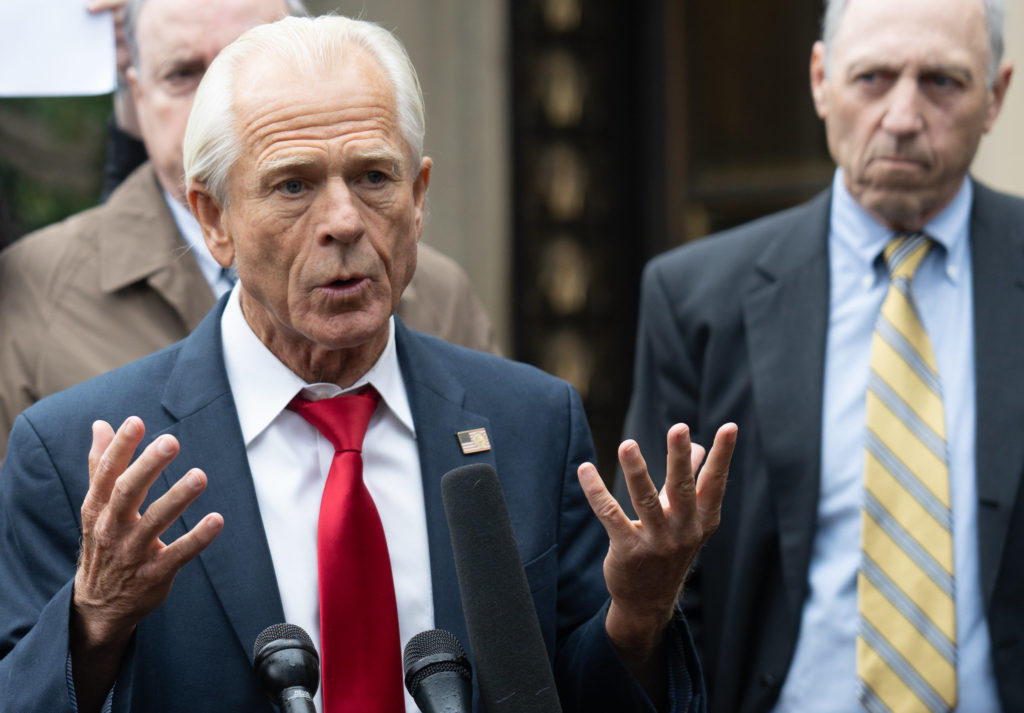
US trade adviser Peter Navarro. Credit: Victoria Pickering | Flickr, under Creative Commons licence CC BY-NC-ND 2.0.

The White House met last week with top technology and recycling companies to discuss ways to quickly ramp up production of permanent magnets using rare earth elements, which have emerged as a key point of leverage in the trade war with China.

Trade adviser Peter Navarro convened the meeting and told the executives that the administration is planning a major push to boost US production of the minerals, using incentives including guarantees of minimum prices to producers, according to people familiar with the event who asked not to be identified discussing a matter that isn’t public.

The administration has been racing to come up with alternative sources for rare earth magnets after China — which controls global production — imposed export controls in retaliation for US tariff threats. The magnets are used in products from home appliances and cars to missiles and the shutoff left companies warning they’d have to suspend production. China agreed to resume shipments after the US agreed not to impose the higher import levies.

A White House official confirmed the meeting took place but didn’t provide details on what was discussed. Earlier this month, the Department of Defense announced a $400 million equity stake in MP Materials Corp., the only US rare earth producer, that includes government-guaranteed minimum prices and purchases from the company.

“The MP rare earths deal is an essential part of an overall strategy to onshore critical minerals of which rare earths is just one part,” Navarro said in a statement released Thursday by the White House. “Our goal is to build out our supply chains from mines to end use products across the entire critical mineral spectrum, and the companies assembled at the meeting have the potential to play important roles in this effort.”

Some participants in the meeting with Navarro expressed concern that the MP deal may prevent the emergence of vibrant competitors in the sector.

At the meeting, Navarro told participants the administration is committed to creating a commercially viable environment to incubate the industry, including protective tariffs and price floors.

Participants said they came away from the session with the impression the administration is alarmed about the vulnerability that the lack of alternatives to Chinese supplies presents. The officials discussed the technical details of recycling of the magnets, which could bring production online faster than mine projects currently in the works.

Among the issues discussed was the possibility of banning the export of electronic waste to keep material for recycling in the US, the people said. Currently, most of the reprocessing needed to extract the magnets is done in China.

(By Joe Deaux)


MP Materials seals mega rare-earths deal with US to break China's grip


By Katha KaliaEric Onstad and Ernest Scheyder
July 10, 2025
REUTERS


A view of mining facilities at the MP Materials rare earth mine in Mountain Pass, California, U.S. January 30, 2020. Picture taken January 30, 2020. REUTERS/Steve Marcus/File Photo Purchase Licensing Rights, opens new tab

Summary

US Defense Dept to become MP Materials' biggest shareholder

Deal will boost US output of rare earths, loosen China's dominance

Defense Dept will also guarantee a floor price for key rare earths

Floor price will be twice current Chinese market price

MP Materials' shares surge nearly 50% on news of the deal


July 10 (Reuters) - MP Materials (MP.N), opens new tab unveiled a multibillion-dollar deal with the U.S. government on Thursday to boost output of rare earth magnets and help loosen China's grip on the materials used to build weapons, electric vehicles and many electronics.

Under the deal, which sent MP's shares up nearly 50%, the U.S. Department of Defense (DoD) will become the largest shareholder in Las Vegas-based MP, making it Washington's most high-profile investment to date in the critical minerals sector.

Rare earths are a group of 17 metals used to make magnets that turn power into motion. China halted exports in March as part of a trade spat with U.S. President Donald Trump that showed some signs of easing late last month, even as the broader tensions underscored the need for greater U.S. output.

MP operates the only U.S. rare earths mine and is working to boost domestic processing and magnet production.

The DoD will guarantee a floor price of $110 per kilogram for the two most-popular rare earths, a price nearly twice the current Chinese market level, which has languished at low levels and has long deterred investment. MP received an average of $52 per kilogram for those same rare earths in the second quarter.

MP will also build a new factory for rare earth magnets, lifting the company's output to 10,000 metric tons a year, with the new factory launching in 2028.
"This is a game changer for the ex-China industry and a much-needed surge in magnet production capacity," said Ryan Castilloux, managing director of consultancy Adamas Intelligence.
The price floor especially is one that had long been sought by U.S. critical minerals companies who have complained about China's market manipulations. Past owners of MP's California mine, for example, went bankrupt in part due to Chinese competition.
In a Thursday regulatory filing, MP said that the DoD was funding the investment in part through a Cold War-era piece of legislation known as the Defense Production Act, and that it could not guarantee the U.S. Congress would continue to fund the agreement in perpetuity.

MP is investing $600 million of its own funds into the expansion projects.

CHINESE DOMINANCE

Companies have been scrambling to source rare earths after China imposed restrictions, leading to a 75% drop in rare earth magnet exports from the country last month and causing some auto companies to suspend production.

Trump in March invoked emergency powers to boost domestic production of critical minerals as part of a broad effort to offset China's near-total control of the sector.

China's iron grip on the sector extended to MP, with China's Shenghe Resources (600392.SS), opens new tab one of MP's biggest shareholders, with a stake of about 8%, and with MP having sent most of its ore to China for processing.

But the DoD will vault above Shenghe to take an effective stake of 15% through buying $400 million worth of preferred stock plus receiving warrants, a transaction expected to close on Friday.

MP in April said it would stop sending rare earths to China for processing.

"We're getting an important national security need met, but we're maintaining our free market public company approach," MP CEO James Litinsky said on a Thursday investor call.

The company's shares were trading at $43.95, their highest since April 2022. The stock had already nearly doubled this year through Wednesday's close.

MP Materials said it would construct a second magnet manufacturing facility in the U.S. to compliment one under development in Texas.

The company is calling the second its '10X Facility' at a still-to-be-decided location. The DoD is guaranteeing all of the second facility's offtake will be bought by defense and commercial customers for the next 10 years.

JP Morgan (JPM.N), opens new tab and Goldman Sachs (GS.N), opens new tab are backing a $1 billion loan to build the 10X facility, MP said.

MP Materials expects to add additional heavy rare earth separation capabilities at its California-based Mountain Pass facility for which it will receive a $150 million loan from the Defense Department.


Reporting by Katha Kalia in Bengaluru and Eric Onstad in London; Editing by Sriraj Kalluvila, Susan Fenton and Nick Zieminski

 

Column: Copper market pays the price for forgetting its TACO hedge


US President Donald Trump. (Stock Image)

The copper market got the tariff right but the products wrong.

US President Donald Trump’s proclamation “to address the effects of copper imports on America’s national security” was not what traders were expecting.

There will be 50% tariffs on copper imports effective Friday but only on semi-manufactured products such as wire and tube. Refined copper is excluded, at least until January 2027, when a tariff may be phased in if warranted.

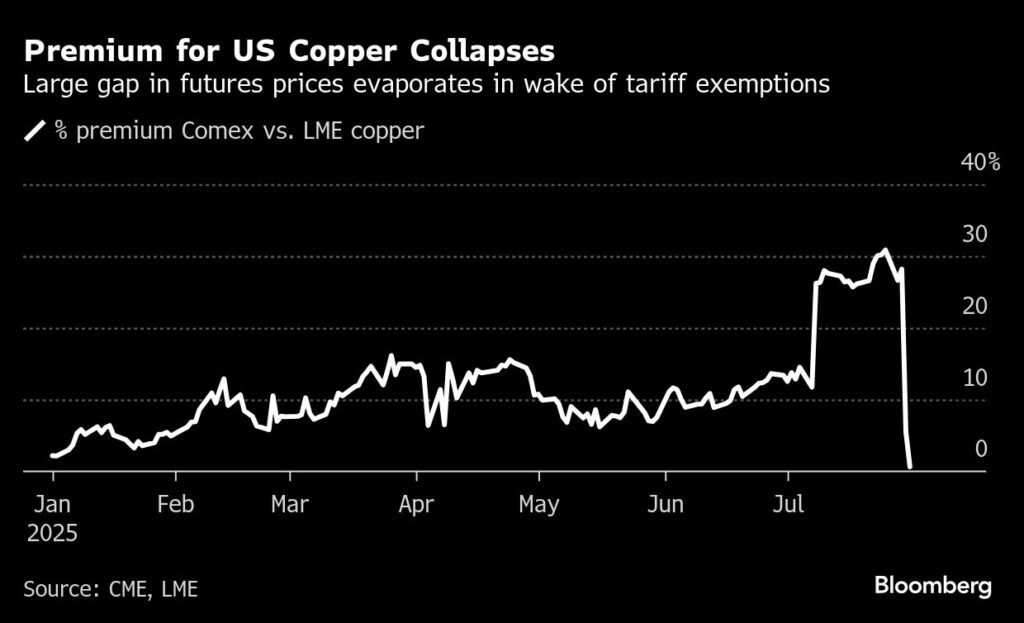
The tariff trade, which has defined the copper market since February, has imploded. The CME’s US contract plummeted by more than 20% on the news, wiping out the previous high premium over the London Metal Exchange (LME) price.

The United States is now awash with metal it doesn’t need after traders shipped huge tonnages through the yawning arbitrage gap.

The copper market forgot Trump’s tendency to back down on his most extreme tariff threats. It has, to borrow a current investor meme, just been TACO’d, which stands for Trump Always Chickens Out.

Copper's tariff trade implodes

Copper products targeted

The tariffs on semi-finished copper products cover between 400,000 and 500,000 metric tons of annual US imports.

America imports considerably more copper as refined metal. Imports last year were just over 900,000 tons.

Canada is the largest single supplier of copper products to the US, but the supplier base is highly diverse. Last year’s imports of copper tubes, for example, came from 32 different countries.

The tariffs will also be extended down the product chain to copper-intensive derivative products such as cables, connectors and electrical components, likely ensnaring more supplier countries.

The new tariff wall should be a boost for domestic processors, but only if they have the capacity to cover the range and quality of what is currently being imported.

The number of product-specific exemptions granted in the coming months will provide an answer.

Scrap wars heat up

The tariff wall on products will be complemented by restrictions on exports of US mined concentrates and recyclable copper.

A quarter of domestically-produced “copper input materials” will be required to be sold in the United States from 2027. That rate will rise to 30% in 2028 and 40% in 2029.

That may need more capacity than exists at the current three domestic smelters, even assuming Grupo Mexico reactivates its idle Hayden plant in Arizona.

“High-quality copper scrap” will also be subject to a 25% minimum domestic sales requirement to stimulate domestic recycling.

It’s not clear what types of scrap qualify or how such a measure is going to work in practice, but the move marks an escalation in the simmering scrap wars.

The European Union is also considering export quotas on recyclable copper to stop what it calls “scrap leakage.”

The prime target is China, which is the world’s largest buyer of secondary raw material.

The country imported 2.25 million tons of copper scrap in 2024, the highest annual total since 2018, the year before authorities tightened up the purity specifications on imported material.

Imports have already slowed this year thanks to a 42% drop in shipments from the United States due to the high CME price premium.

Growing resource nationalism in the global scrap market promises profound structural changes in the flow of recyclable materials.

CME copper stocks surge thanks to tariff arbitrage

Can we have our copper back now?

But not for refined copper, which is what everyone was expecting.

Big trade houses have shipped over half a million tons of copper to the United States for a trade that is now redundant, even if it was a bonanza for those involved.

CME warehouses currently hold 232,195 tons of copper, which is the highest tonnage since 2004. Metal is still arriving daily thanks to the last-minute dash to beat what traders thought was the August 1 deadline.

The supply chain in the rest of the world is still compensating for the huge suction effect created by the prospect of tariffs.

China exported almost 260,000 tons of refined copper between March and June, compared with 78,000 tons in the prior four-month period.

Some of it was delivered against a short squeeze on the London market created by the raid on LME stocks for US-deliverable brands of copper.

Some of it was non-Chinese metal stripped from bonded warehouses and shipped directly to the United States.

China’s surging export flows have depleted Shanghai Futures Exchange stocks, which have fallen to 73,423 tons, the lowest level since December.

While the futures tariff trade has collapsed overnight, the physical supply chain will take longer to readjust.

Analysts are already running the numbers to gauge whether it makes sense for copper to reverse flow back out of the United States.

Same time next year?

Is that it for the copper tariff trade?

Probably not, given the explicit reference to the option of a phased tariff on imports of refined copper, starting at 15% in 2027 and rising to 30% in 2028.

It will depend on an update on the state of the domestic market by Commerce Secretary Howard Lutnick scheduled for the end of June next year.

It also depends, of course, on whether Trump changes his mind again before then.

You never know with Tariff Man.

(The opinions expressed here are those of the author, Andy Home, a columnist for Reuters.)

(Editing by Elaine Hardcastle)

Copper price posts second weekly drop after Trump’s tariff surprise


Copper wire. Credit: LME

Copper registered a second weekly decline in London as the market digested the impact of President Donald Trump’s shock decision to exempt refined forms of the metal from hefty US import tariffs.

The industrial metal steadied on Friday on the London Metal Exchange, but was down 1.4% for the week. In the US, where traders had been moving large volumes of copper to in anticipation of the tariffs, copper has plunged by more than 20% this week.

Trump imposed 50% tariffs on semi-finished copper products such as pipes, wires, rods, sheets and tubes from Friday, but exempted less-processed forms of the metal including ore, concentrates and cathodes. New York futures’ big premium over London evaporated in response.

Traders are now rushing to book storage space for copper in a bet that Trump’s decision will prompt a wave of supplies that have been stockpiled in the US to be shifted to LME warehouses. Holdings of the metal in warehouses monitored by the LME, Comex and the Shanghai Futures Exchange have recovered in July after dropping in each of the previous four months.

Copper prices may come under pressure in the near term due to the unwind of the US copper tariff trade, wrote Daniel Major, analyst at UBS Group AG. “We remain structurally constructive on the fundamental outlook for copper, but have become more cautions on the near-term outlook as we are concerned that the physical market has been distorted by tariffs,” he said.

Copper edged up 0.2% to settle at $9,630.50 a ton on the LME at 5:50 p.m. in London. Comex copper rose 1.9% to settle at $4.4355 a pound. Other main LME metals except zinc advanced.

Trump tariff surprise triggers implosion of massive copper trade


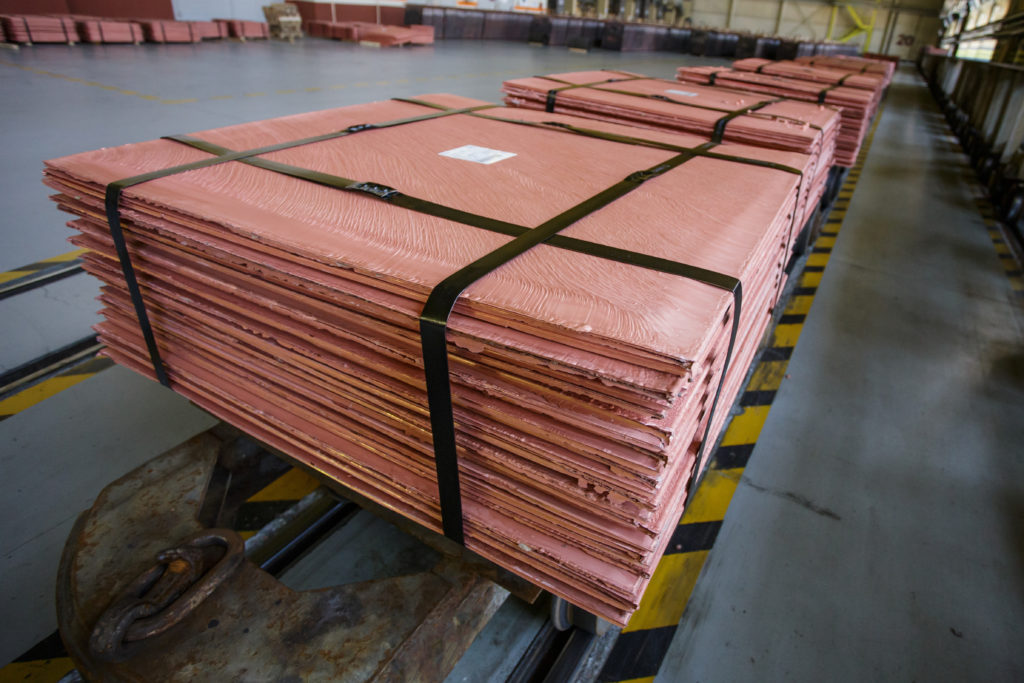
Cathodes with pure copper metal. Stock image.

The global copper market is reeling from its biggest shock yet in a year of policy surprises, violent price swings and unprecedented trade dislocation.

US President Donald Trump went ahead with 50% tariffs on copper imports but exempted refined metals, which are the mainstay of international trading. The move triggered a record plunge for US prices after a period of fat profits for traders who hurried metal to America before the levies kicked in. A large premium for New York futures over London evaporated.

“The blow-out in the CME-LME spread has been touted as one of the most profitable commodity trades in modern history,” Daniel Ghali of TD Securities Inc. wrote in a note. “In a single session, the White House’s proclamation on copper tariffs annihilated the spread and catalyzed CME copper’s largest intraday fall on record.”

Copper futures on Comex in New York fell by 22% as traders recalibrated the value of metal in the US versus the rest of the world. With prices on the London Metal Exchange falling by a much smaller margin, Comex front-month futures swung to a discount against the LME benchmark from a premium of more than 30% a week ago.

The decision to exempt refined copper will roil global trade of the metal, which plays a crucial role in the world economy thanks to its use in electrical wiring. Massive volumes now sit in US warehouses, and there’s already speculation about potential re-exports.

Copper rush

When Trump first flagged the likelihood of tariffs early this year, US prices soared relative to the rest of the world, and major traders scurried to get metal to American ports in a trade that some industry veterans said was the biggest of their lifetimes.

Early in July, Trump said the tariff would be a higher-than-expected 50%, ratcheting up the potential rewards. That spurred a last-minute rush, with at least one copper-laden ship heading for Hawaii before the end of this month.

“This has badly deviated from market expectations,” said Li Xuezhi, head of research at Chaos Ternary Futures Co., a unit of a commodities hedge fund in Shanghai. Those betting on higher US prices have “wasted all their efforts,” and global copper flows will return to normal, he said.

Analysts at Goldman Sachs Group Inc. said they were “surprised” by the exemptions but added that they don’t see it changing market fundamentals and don’t expect large-scale re-exports from the US. Comex prices should stay at least on a par with LME prices, they said.

Copper fell 0.9% to settle at $9,611 on the LME 6:08 p.m. London time, while Comex copper was 22% lower at $4.371 a pound.

Supply security

The President’s announcement — less than 48 hours before tariffs were due to start — illustrates his white-knuckle approach to trade policy and the challenges he faces in revamping America’s metals industry. Some key players in the US copper sector had argued that the country simply didn’t have sufficient capacity to replace all its imports so quickly.

The 50% tariff announced Wednesday will apply to semi-finished products such as pipes, wires, rods, sheets and tubes, and to copper-intensive goods like pipe fittings, cables, connectors and electrical components, according to the White House statement.

Less-processed goods — including ore, concentrates, mattes, cathodes and anodes — aren’t subject to the tariffs.

Still, the prospect of import tariffs on refined copper hasn’t entirely disappeared. The Department of Commerce instead recommended delayed imposition, with a rate set at 15% starting in 2027 and rising to 30% in 2028. Trump directed the department to provide an update on US copper markets by the end of June 2026.

“While we are surprised by the near complete roll-back on the proposed copper tariffs, we think this shows the Trump Administration is still focused on security of supply for copper,” the Goldman Sachs analysts, including Eoin Dinsmore, head of industrial metals research, said in the note.


Site visit: Unearthing buffalo spirit stones in Alberta’s Bearpaw Formation 


According to the legend, Iniskim – meaning Buffalo Healing Stone in Blackfoot language – brought prosperity back to peoples stricken with famine and starvation on prairie plains. 

Long ago, as the story is told, one sister among three out collecting firewood heard singing, leading her to a rock that spoke, telling her the buffalo, a vital source of food and warmth, could hear it  –  and that it would call the buffalo back, after herds had wandered too far from the camp.  


The rock was the ammonite, which the Blackfoot peoples still consider a sacred stone that brings prosperity.  The only known reserves in the world are in the Bearpaw Formation, which spans the Canadian provinces of Alberta and Saskatchewan and the US state of Montana, but gem-quality ammolite is found only in Alberta.

Ammolites are rare, rainbow-coloured gemstones derived from the fossils of ammonites — which are actually extinct marine mollusks from the dinosaur-era. 

In June, Indigenous owned Buffalo Rock Mining acquired Calgary-headquartered KORITE, North America’s largest producer of ammolite, creating the world’s largest mine-to-market ammolite producer.  

Ancient legends aside, the ammonites are currently being unearthed at the company’s two namesake mines in Alberta – bearing the brilliant colours of the rainbow after being buried for over 70 million years. 

And ammonite fossils have fetched as much as C$600,000 ($433,000) on Christie’s auctions internationally. 

Colours of the rainbow. Image: Amanda Stutt

Buffalo Rock Mining, 100% owned by Tracy and Beth Day Chief of the Kainai Nation, acquired KORITE – and its eponymous ammonite mine – with a commitment, it said, to preserving the legacy while expanding its global footprint.

The combined company works with provincial environmental officials to ensure the land is restored to its natural state and is improved during the reclamation process. KORITE has said it will continue to set the ammolite industry standard in environmental mining practices. The mined ammolite is certified by the Federal Department of Canadian Heritage.

The ammonites became extinct at the end of the Cretaceous era. There are three main species of fossils the company extracts: Placenticeras costatum, Placenticeras intercalare and Placenticeras meeki.

The rarest and most sought-after species is Placenticeras intercalare, which displays distinctive ‘horns’ that spiral along the surface. These formations allow for unique surface texturing that is unlike the smooth, flat texture of other Canadian ammonite species, according to the company. 

Buffalo Rock & KORITE mines

The drive down to the Buffalo Rock and KORITE mines is about 30 minutes from Tracy and Beth Day Chief’s residence on the Blood Tribe #148 reservation – Alberta’s largest by population and held by the Kanai nation. The ride is smooth and scenic – we encounter cattle grazing, and in the distance see a band of wild horses. 

There were heavy rains early that July morning and the skies were still grey. In between deftly navigating portions of flooded plains in the large pickup truck, Day Chief describes the mines, discovered in 2004 and 2008, respectively. Both, Day Chief says, have projected mine lives of 40-45 years. 

The Buffalo Rock is open pit, surface mined. Workers dig only an inch at a time to avoid breaking up an intact fossil. The aim is to get them out without cracks or fissures and miners –  16 in total – don’t use headphones while digging, as they listen carefully for the sound of hitting glass, which signals an ammonite fossil has been found. Broken ammonites are cut and polished into ammolite gem stones, used in jewelry.

After every two acres mined, the company has to re-apply for the mineral rights, Day Chief says. 

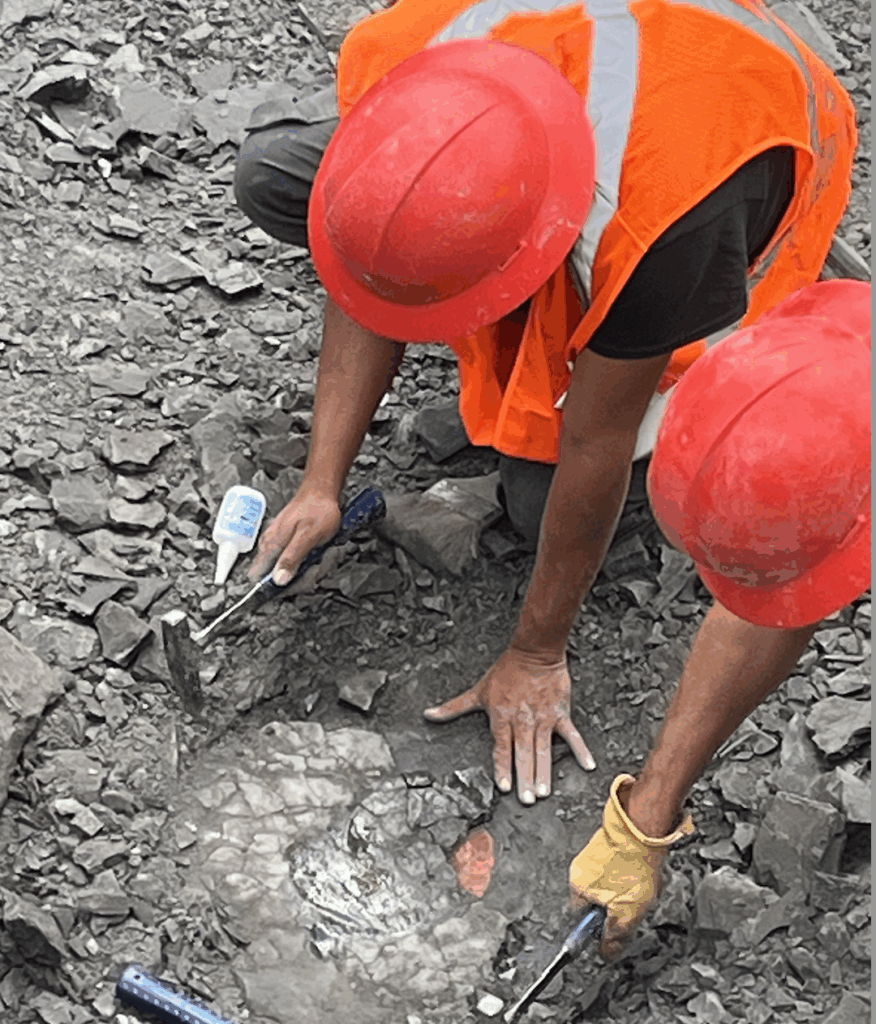
We arrive at Buffalo Rock, where Indigenous miners have discovered an intact fossil near the surface, and prod gently with small hammers to extract it in its entirety without breaking it up. The colours are revealed when a clear cleansing solution (ingredients undisclosed) is applied.  

Intact ammonite fossil found at Buffalo Rock mine. Image: Amanda Stutt

At the KORITE mine, about 10 minutes drive from Buffalo Rock, they panel mine two main zones. The first is the “K Zone” about 15 meters below the surface and extends 30 metres down. 

Further down, roughly 20-65 meters deeper into the ground resides “Zone 4” or the “Blue Zone”. The Blue Zone is where the most high-quality ammolite gemstone material and fossils are found, and this is where KORITE sources much of its supply. In this zone, “Sheet Ammolite” comprises KORITE’s highest grade pieces that display many vibrant color tones. Before the Buffalo Rock acquisition, KORITE was mined only about two months a year, but production is beginning to ramp up. 

Some of the fossils are dug up, one miner explains, with teeth marks visible – the result of being chased and bitten by predatory dinosaur species. Some smaller dinosaur fossils have been dug up, and sent to local museums for display. 

Back at camp, instead of a core shack there is a workshop, and instead of drill core there are tables strewn with fossils in various shapes and sizes. 

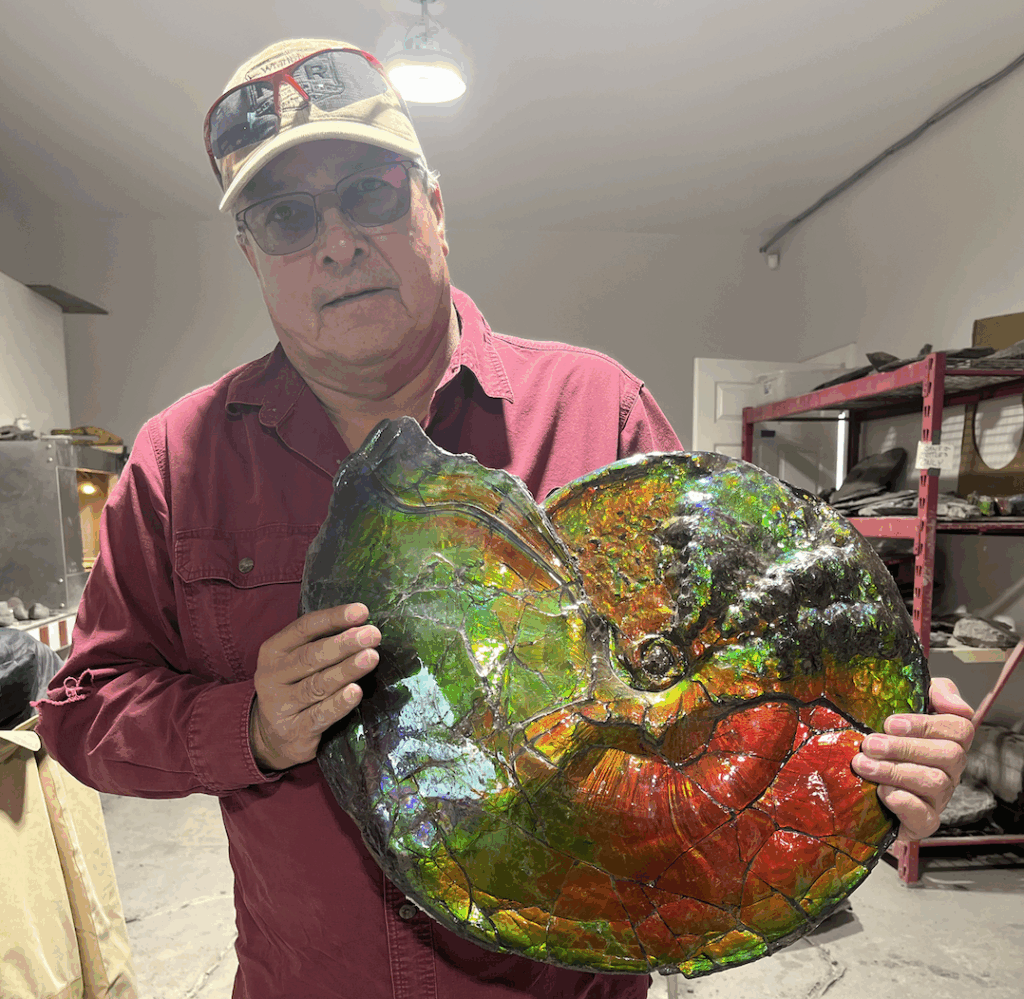
Day Chief displays the fruits of his labours, after using air pens and other hand tools to gently remove the surrounding rock, also known as matrix, from the nodule containing the fossil.

A large, intact rainbow-coloured fossil sits at his workbench, where he spends tireless hours with his toolkit, working to preserve the ammonite fossils.

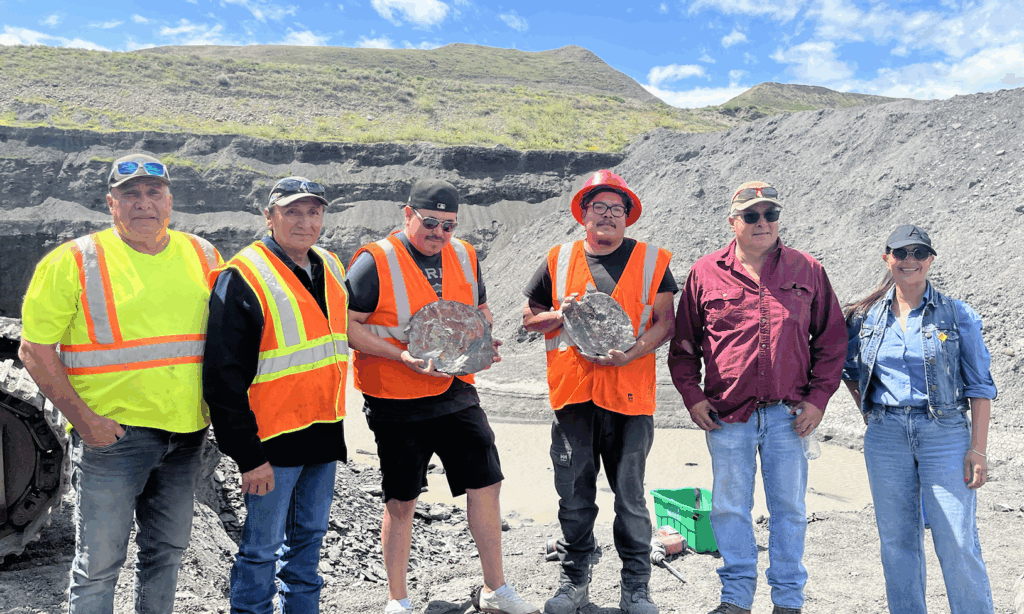
Buffalo Rock miners on left – 2nd from right, Tracy Day Chief, owner, Buffalo Rock Mining – far right, president Amarjeet Grewal. Image: Amanda Stutt.

 CHILE

Three of five trapped workers at Codelco's El Teniente mine found dead


03 August 2025 

REUTERS

By Daina Beth Solomon


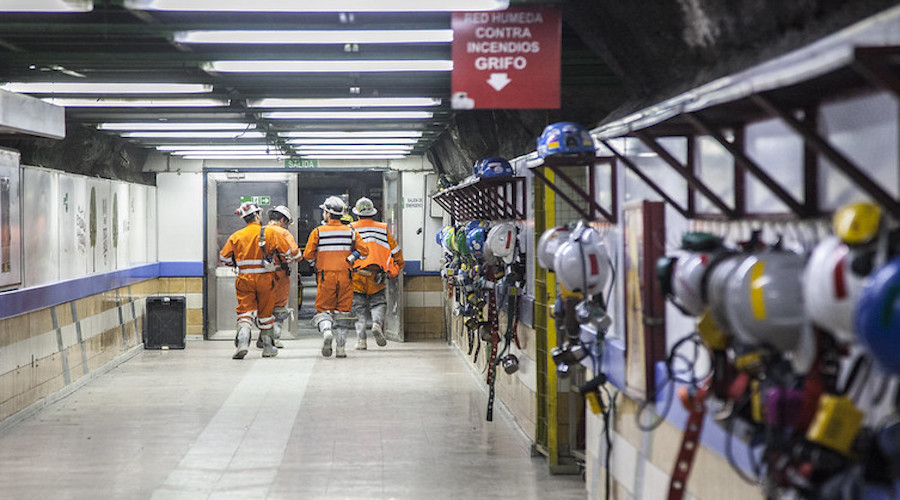
Workers at the El Teniente copper mine complex where several miners have been reported missing at the Andesita unit after a seismic incident, in Maitenes, Chile, August 1, 2025.
Image: Pablo Sanhueza


Three of five trapped workers at Codelco's El Teniente copper mine in Chile have been found dead, the company said, as rescue teams work to clear underground passages that collapsed in a strong tremor last week.

One person also died at the time of the incident on Thursday evening, bringing the total death toll to four. Codelco discovered the first trapped worker on Saturday and another two early on Sunday.

“We deeply regret the discovery of two other colleagues who were found deceased,” the miner said in a statement. “We stand with the families and the entire community in the anguish this situation causes.”

By Sunday morning, rescue teams had cleared 24 metres of blocked passages, out of 90 metres that Codelco officials previously said could be necessary to reach the trapped workers, in the new Andesita section of the mine. The collapse occurred on Thursday at about 5:30pm local time, caused by one of the largest tremors ever recorded at El Teniente with the impact of a 4.2 magnitude quake.

Codelco is investigating whether the cause was mining activity or natural tectonic shifts in the earthquake-prone country.

Reuters


Codelco confirms death of one trapped El Teniente miner


The mine accident Thursday, followed a magnitude 4.2 earthquake — one of the strongest ever recorded at El Teniente.


Search efforts continue. (Image courtesy of Codelco.)

Chilean copper giant Codelco has confirmed the discovery of a second body at its El Teniente mine, where five workers have been trapped since a collapse triggered by a powerful tremor on Thursday.

The company announced Saturday that the victim’s identity has not yet been confirmed by authorities. One miner was previously reported dead at the time of the accident, which occurred in the Andesita section of the mine, about 75 kilometres southeast of Santiago.

“This discovery fills us with sadness, but it also tells us that we are in the right place, that the strategy we followed led us to them,” general manager of El Teniente, Andres Music, said in a statement.

He added that the search will continue “with strength and hope,” though the pace will slow as crews proceed with greater caution.

Rescue operations have faced delays due to ongoing aftershocks. As of Saturday, Codelco had cleared just over 20 per cent of the blocked underground tunnels but had not yet made contact with the remaining trapped miners.

The mine accident occurred around 5:30 p.m. local time on Thursday, following a magnitude 4.2 earthquake — one of the strongest ever recorded at El Teniente.

Minister Aurora Williams announced on Friday afternoon the government was suspending all activities at the mine.

Codelco is investigating whether the deadly incident was caused solely by seismic activity or if mining operations played a role.

El Teniente, in operation since 1905, produced 356,000 metric tonnes of copper in 2024. The massive complex stretches over 4,500 km of tunnels and underground galleries in the Andes Mountains, about 75 km southeast of Chile’s capital, Santiago.