Sunday, September 07, 2025

 Somalis defy militants with processions to mark Prophet Muhammad's birthday

MOGADISHU, Somalia (AP) — The Ministry of Labor and Social Affairs declared the public holiday for government and private-sector employees, citing Quranic verse on piety.

MOGADISHU, Somalia (AP) — Somalis on Thursday marked the Prophet Muhammad’s birthday with a government-declared public holiday, reviving an old tradition of merriment once banned by extremist militants who reject such public spectacle.

The Ministry of Labor and Social Affairs declared the public holiday for government and private-sector employees, citing Quranic verse on piety.

The prophet’s birthday, known as Mawlid, is marked across Somalia with Quran recitations, religious song, and processions led largely by Sufi communities. Similar celebrations took place in some other parts of the Muslim world.


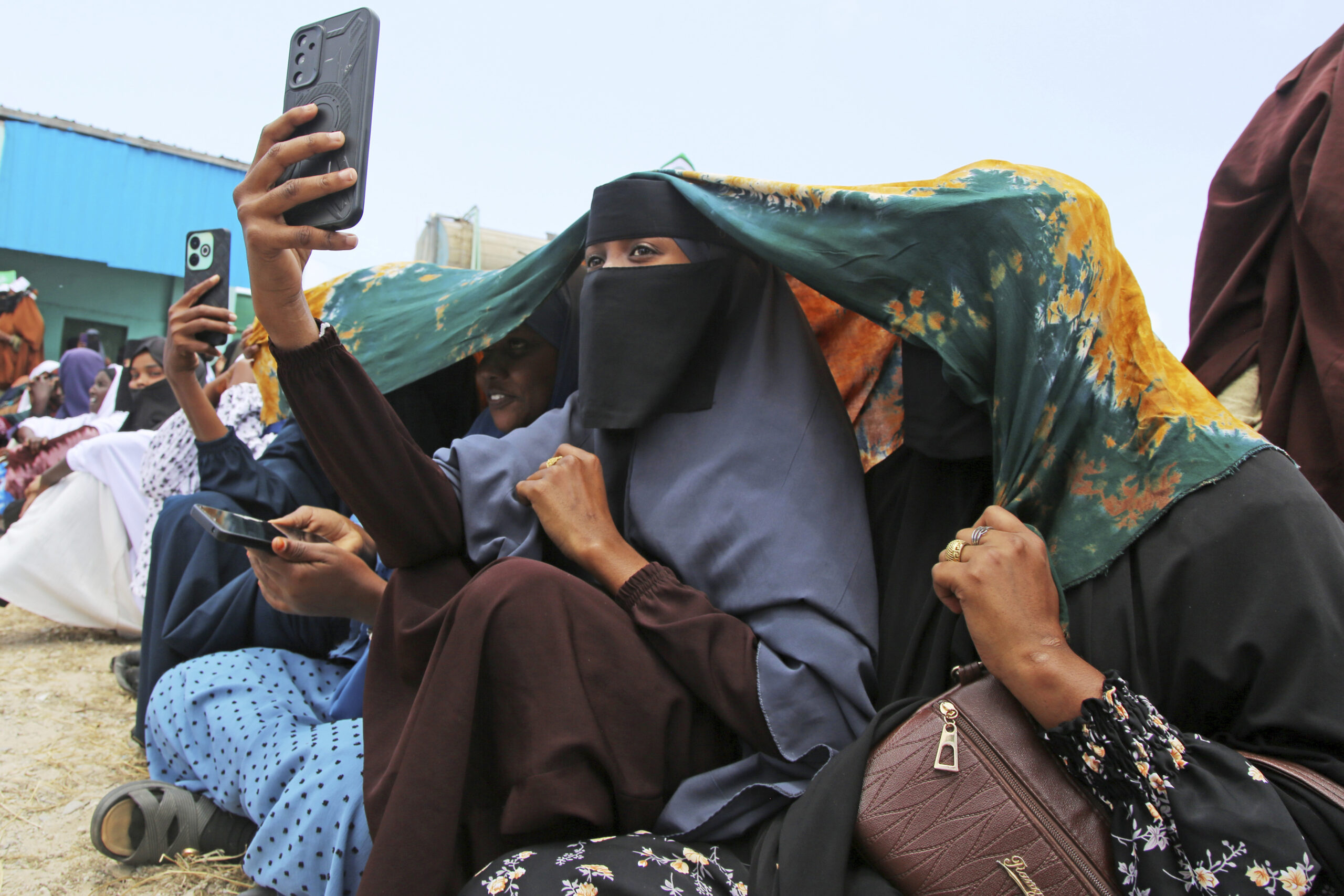
In the capital, Mogadishu, the streets swelled with thousands of worshippers, many of them young people in white garments and waving bright green flags. Crowds spilled out of mosques and into open areas saturated with rhythmic chants and devotional song. Clerics recited Quranic verse via loudspeakers as people swayed in unison, clapping and ululating in joy.

Some young people filmed the processions on their phones, livestreaming chants to friends abroad, while others hoisted banners adorned with verses of praise. Security forces, rifles slung over their shoulders, stood at the edges of the crowds, scanning for threats but unable to suppress the festive mood.

“To those who oppose this celebration, I say, ‘fear God,’” said Sheikh Abati Abba Nur, a Sufi scholar. “This is the month in which our prophet was born, and celebrating it does not contradict Islamic teachings.”

Not all Somalis welcomed the government’s move to impose a public holiday.

Sheikh Abdurahman Diriye, a Wahhabi scholar, told The Associated Press that Muhammad’s birthday was not celebrated in the prophet’s lifetime.

But other ordinary Somalis said the holiday carries deep personal meaning. “People are beginning to recognize the importance of this day as they shed ignorance,” said Fadumo Abdulkadir.

Somalia faces sporadic attacks from the Islamic extremist rebels of al-Shabab, which has been fighting to impose a state governed according to Sharia law and opposes the foreign-backed government in place. Islamic militants consider Sufis heretics because of their less literal interpretations of the faith.

Mawlid celebrations in Somalia were once driven underground after al-Shabab banned them during the group’s rise, calling the practice a religious “innovation.” Sufi communities were forced to abandon public processions until the militants were pushed out of Mogadishu in 2011.

Since then the gatherings have returned, growing each year under heavy security.

While many Muslim-majority countries honor the prophet’s birthday as a public holiday, others do not. In Saudi Arabia, for example, the strict, puritanical interpretation of Islam known as Wahhabism doesn’t permit celebrations of Mawlid.

 In Honduras, Kurt Ver Beek went after violence to fix poverty. It worked.

(RNS) — ‘When it comes to poverty, violence is still not a common issue addressed,’ said the co-founder of the Christian nonprofit the Association for a More Just Society.

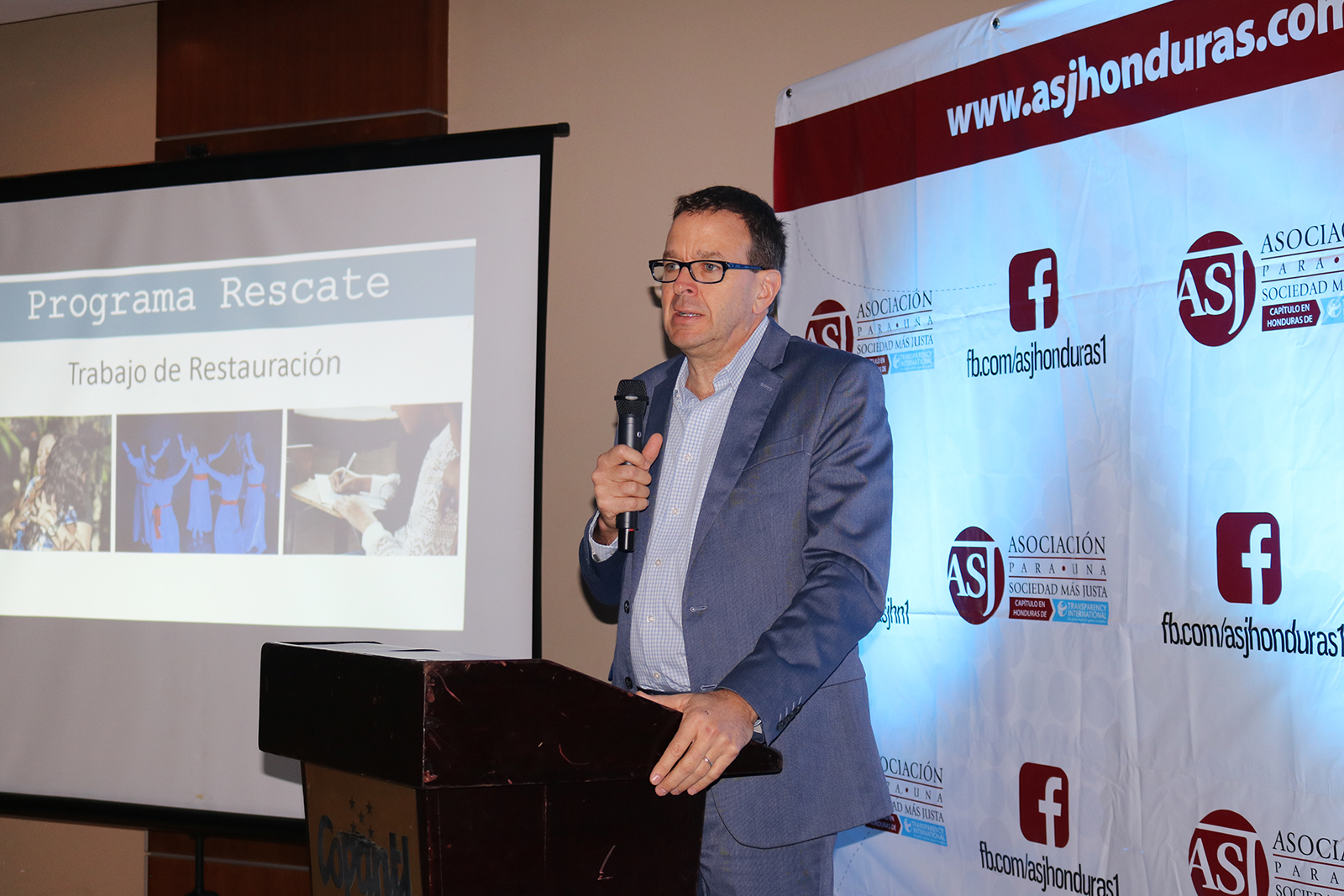
Co-founder Kurt Ver Beek speaks at an Association for a More Just Society event. (Photo courtesy ASJ)

(RNS) — After years of working for a Christian international relief group, sociologist and professor Kurt Ver Beek wasn’t satisfied with the tool kit available to most faith groups combating poverty. To him, mission trips, direct aid and even strategies like micro loans largely seemed aimed at targeting the symptoms of poverty, rather than its root causes.

In 1998, Ver Beek and his wife, Jo Ann Van Engen, became co-founders of La Asociación para una Sociedad más Justa (in English, the Association for a More Just Society). Based in Tegucigalpa, Honduras, the Christian nonprofit sought to understand and then dismantle the systemic barriers preventing communities in Honduras from thriving — namely gang violence, police corruption and government mismanagement.

Over the past several decades, that’s involved hiring investigators to track down gang leaders on a murder spree, working with mental health professionals to address the factors causing youths to join gangs in the first place, partnering with national religious leaders and top government officials to purge the national police force of corruption, and conducting and publishing audits on everything from the annual number of school days to how government programs used emergency funds.


In May, a new book, “Bear Witness: The Pursuit of Justice in a Violent Land,” documented the efforts of Ver Beek, his Honduran co-leader Carlos Hernández and the rest of the ASJ team as they applied their approach to risky, morally complex and highly impactful endeavors. RNS spoke to Ver Beek about the faith that’s shaped his work, how ASJ has navigated ethical dilemmas and why other nonprofits should take anti-violence work seriously. This interview has been edited for length and clarity.

What has it been like for you to encounter the story of ASJ in book form?

The book was written by an independent journalist, so we didn’t see any version until it was finished. In the end, we feel like he got, I would say, 90% right. I think he, for the purpose of the story, made it all about Carlos and I, but there’s a ton of other people. When we were purging the police, which was a very huge and scary thing, that decision was made with the head of the Protestant church and the head of the Catholic Church and the National University president. If and when there were missteps, others were involved in those decisions. There were a few negative pieces to the book, but mostly it was very positive reading about it 20 years later.

Did growing up in the Christian Reformed Church play a role in your decision to co-found ASJ, and take the risks of facing gangs and corrupt police forces head-on?

The Christian Reformed Church is of the Calvinist tradition, which teaches that we are called to transform this world. There’s a Calvinist theologian named Abraham Kuyper who said we are called to transform every square inch of this world, and that we are God’s agents of change. Being brought up in that church and shaped by education in that church is really part of my religious DNA.


Co-founder Kurt Ver Beek speaks at an Association for a More Just Society event. (Photo courtesy ASJ)


As a person of faith, how did you wrestle with the notion that you were putting violent criminals who were also young teens into inhumane prisons?

Parts of that were hard on me, probably even harder on Carlos. Carlos ran schools and summer camps in our neighborhood. One of the kids who was the most violent, who probably killed 15 to 20 people that we know of, went to one of the summer camps. He was a smart kid. Really rough family, but he was leading a gang, and was clearly the most violent member. If there’s a gang of 40, 50 kids, it’s often one or two of them that seem to enjoy it, and the rest of them follow along. So it wasn’t that hard to do what we did. If you can pull one or two people out of that group, the gang doesn’t disappear, but the violence often drops dramatically. Those were the people we were focusing on, which meant saving a bunch of other lives.

We would often talk to their moms and aunts, and they would say, he’s going to either end up in jail, or dead in the gutter somewhere, and we’d rather he was in jail. Maybe God can turn his life around. One thing we also did was to try and start a program, which is still going, for the most at-risk youth in our neighborhoods, trying to catch these kids before they got in. We’d start with kids ages 10 to 11 from those same sorts of families. For a while, we were also trying to fix up the juvenile detention center. It became problematic because we were putting kids in there, and we eventually had to stop doing that because of conflicts of interest. But we were very aware that this was not a good place for these kids, and we were trying to keep them from going down this path. We have gone back into trying to work in juvenile centers for the last four or five years, to try to make it safer.


Early on in your work at ASJ, you concluded that impoverished people needed protection from violence more than additional aid, development or evangelism. Do you think this principle is universal? Or was it specific to the situation in Honduras?

I don’t know to what extent I would universalize it, but from everything I know, I would be very tempted. When it comes to poverty, violence is still not a common issue addressed. One of the main reasons is that addressing this violence issue puts aid workers and their staff at risk. When you live with the people that you’re serving, you end up figuring out that those problems they’re addressing every day are much more complicated than you thought.

We had a woman in our neighborhood we were helping, giving her a loan to start a pillow business. Within months she had four employees, making all these pillows. And then the gang showed up. Within a month or two, they were extorting her for more than what her profits were, and threatening her and her daughter. And she just closed the shop.

In Honduras, there’s hundreds of micro enterprise organizations that are giving out millions of dollars a year. And lots of donors in the U.S. love it. But I don’t know of any other Christian organization working on violence in those same neighborhoods. I think we’re the only one. So you just see the mismatch there. It isn’t that people should stop doing micro enterprise. But I think they only address a part, and they often miss the base things people need to make that business work.


How has your faith evolved during your many years at the helm of ASJ?

I used to be very critical of the church, as a young person. I was idealistic, and didn’t see that the church was living out Jesus, especially the way I understood Jesus, as fighting for the poor and the vulnerable. And I think all this experience, with the police purge, the Protestant pastors were the powerhouse behind that. I’ve seen people of all sorts of faiths being brave. So I’m way less critical. If it’s the body of Christ, we have different callings and gifts. I have just one of those callings. So I’m more humble. I think I probably had a more individualistic idea of salvation and faith that has become more communal. And there’s a lot of discussion now about empire. I’m not a theologian, but there’s something there that makes sense to me, that we are fighting systems.

Would you still consider yourself part of the Christian Reformed Church?

The church I see right now, in the Christian Reformed Church in North America, is not a place I feel very comfortable. I think the teachings, the base theology, is all still there, but it’s become completely polarized over LGBTQ, and around a whole bunch of other issues, even women in office. One side of the church is trying to impose its will on the other, and felt, I think, to some extent, like the other side imposed their will on them years ago. It mirrors politics in the U.S. right now. It’s a very divided church. Lots of people are leaving. Many young people don’t want to go to that church. It’s a rough time in the denomination. Jo Ann and I being in Honduras, it makes us sad to see all this happening. I still resonate strongly with this idea that we are called to be agents of transformation of every square inch. But I’m very saddened by all of the inciting polarization now, which is happening in lots of other churches, too.
Haela Hunt-Hendrix transcends boundaries of faith, gender and metal as Liturgy front woman

NEW YORK (RNS) — The Liturgy front woman blends black metal and theology while challenging notions of gender and Christianity.


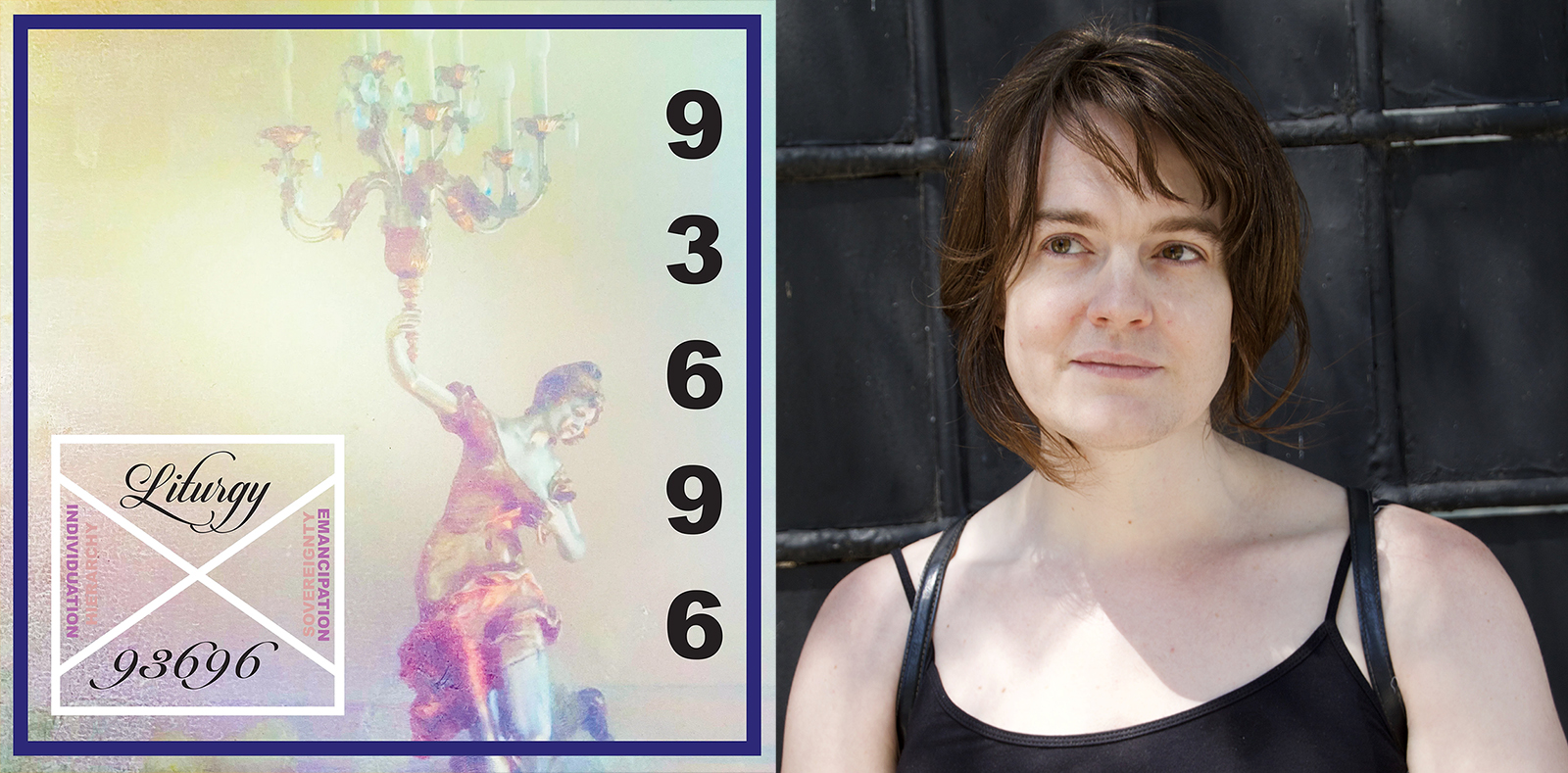
Musician Haela Hunt-Hendrix and the album cover for Liturgy’s album “93696.” (RNS photo/Fiona Murphy)


Fiona Murphy
September 4, 2025
RNS

NEW YORK (RNS) — Onstage with only a guitar, microphone and pedal board, Haela Hunt-Hendrix can sound angelic one moment and feral the next. Her solo set, drawing from songs from across her band Liturgy’s six-album catalog, shifts between delicate, hymnlike passages and bloodcurdling screams that leave audiences hushed in anticipation. The music is both hypnotic and jarring, seemingly determined to unsettle.

Hunt-Hendrix, 40, is best known as the front woman of Liturgy, the Brooklyn avant-garde black metal band that has divided listeners since its 2008 EP debut, “Immortal Life.” Over the past 15 years, the band has redefined what metal can sound like, blending its signature burst beats, a rhythm more flexible and repetitive than the genre’s standard blast beat, and howls with choral arrangements, classical influences and theological themes. The band’s minimalist aesthetic has remained, but theological and philosophical symbols have become more prominent in newer work.

In 2020, Hunt-Hendrix came out publicly as queer and now identifies as a transgender woman. Four years later, she was christened into the Orthodox Christian church in New York City. Her solo tour this summer, which started in Manhattan on Aug. 1 and ends Saturday (Sept. 6), includes first-time performances in Turkey, Indonesia and Malaysia. The set reflects Hunt-Hendrix’s rare blend of spiritual and personal reflections, weaving together her embrace of queerness, her Orthodox faith and her relentless reshaping of metal music.

“Queerness and metal is a pretty hard mix,” Hunt-Hendrix said in an interview with RNS. “Then queerness and faith is a hard mix, and metal and faith is a hard mix. But, like, there’s a kind of a logic to it. My personal opinion is that I’m in touch with the truth or something, and that more and more people will sort of see the truth over time.”

This sense of mission has been with her for more than a decade. In 2009, Hunt-Hendrix presented her academic and artistic manifesto, “Transcendental Black Metal: A Vision of Apocalyptic Humanism,” at the Black Metal Theory symposium, later published in the “Hideous Gnosis” compendium and circulated online. In it, she argued that black metal’s trademark nihilism and darkness could be recast as transcendent, even sacred, and that Liturgy would be the band to lead the transformation.

“Black metal is really esoteric, kind of scary, but, maybe in touch (with) a sort of authentic religiosity, even though it’s so dark,” Hunt-Hendrix said. “To me, I really wanted to push that even further — kind of like Christ descending into hell and being resurrected.”

RELATED: Rock music has had sympathy for God as well as the devil – Kennedy Center honoree Amy Grant is just one big star who’s walked the line between ‘Christian’ and ‘secular’ music

Black metal emerged in the 1980s and early 1990s in Norway, most notoriously through the band Mayhem. The genre is infamous for its harsh anti-Christian stance and violent acts, which include church burnings.

“There was this rejection of Christian society and everything that it represented,” said Marcus Moberg, professor of religious studies at Ã…bo Akademi University in Finland and author of “Christian Metal: History, Ideology, Scene.” “Not simply the religious part of it, but Christian respectability.”

Moberg said early black metal musicians saw defiance of Christian values as liberation from what they considered the pious and repressive constraints of society. “The band Liturgy certainly does transgress the boundaries that black metal has set up for itself,” he said.


Haela Hunt-Hendrix plays at the Moers Festival 2022 in Moers, Germany.
 (Photo by Harald Krichel/Wikimedia/Creative Commons)

If black metal, to some, represents hell, then its resurrection in Hunt-Hendrix’s vision is “transcendental black metal,” she said.

“My music is all about God,” Hunt-Hendrix said. “It’s like I’m seeking to paint a picture of heaven, or bring God, and that’s always just kind of felt like something I had to do.”

When Hunt-Hendrix first published her manifesto, it drew a mixed response from the metal community. Ross Hagen, a music studies professor at Utah Valley University and metal scholar, recalled reading it online.

“What I mostly remember from the online communities was a kind of knee-jerk reaction against the academic-ness of it,” Hagen said. “And also, the underlying theme that black metal has gone stagnant and we need to provide a change for it and my band is the way that it’s going to go, I think, rubbed people the wrong way.”

Hagen said part of the backlash came from a paradox at the heart of the black metal genre. “When the anti-establishment nature of black metal becomes its own orthodoxy, it invites its own subversion,” he said.

Today, Hunt-Hendrix, who studied philosophy and classical music composition at Columbia University in New York, said she believes her music still walks in step with the ideas outlined in her 2009 manifesto. The difference now is the expansion of her faith.

“As I’ve studied more and my faith has continued on, to me, being a part of a church and participating in the actual Christian liturgy is now really important,” Hunt-Hendrix said. “I’ve become much more, like, literally theistic.”

Classical music is also a clear influence on Liturgy’s latest work. On the latest album, “93696″, released in 2023, angelic choral passages, light piano and lyrics drawn from the hierarchy of angels collide with experimental rhythmic beats, screeching vocals and crashing guitars. The result is an intense work that channels what Christians might describe as the experience of having one’s heart set ablaze with Christ’s love. Immersed in harmony, counterpoint and avant-garde techniques, the band pushes metal into more experimental territory, breaking away from its rigid rhythmic structures to create a sound at once operatic and disruptive.

Hunt-Hendrix’s search for transcendence began even earlier. As a teenager, she found a sense of the sublime in dark music, noting the “shock and grandeur” of Marilyn Manson, Nine Inch Nails and Aphex Twin. Later, in the sweeping soundscapes of post-rock bands like Godspeed You! Black Emperor and Explosions in the Sky, she sensed what she called “the glory of God without being religious.”

Gabriel Hollis, a pianist, software engineer and Christian, opened one of Hunt-Hendrix’s solo shows last year at Le Poisson Rouge in Brooklyn with a 12-minute piano set. “I think it can be said that metal music finds many of its roots in classical music,” Hollis said. “So much classical music was composed in an explicitly worshipful manner.” Hunt-Hendrix’s work, he added, is “exemplary worship music.”

“Christians need to pay attention to it — Christians of all denominations, even who might have some harsh differences with her on a political or religious level,” he said.

As a trans woman, Hunt-Hendrix rejects the idea that her gender should contradict her Orthodox Christian faith. “I don’t see a contradiction with my faith and my gender identity,” she said. “Early church fathers said that prior to the fall, Adam and Eve had no gender … that gender is a post-fall artifact.”

Arguments that Christianity requires strictly biological understandings of gender, she said, are shallow. “That’s superficial,” she said. “It’s not what Christ was about.”

Metal has roots in stereotypical masculinity and hateful or aggressive ideologies, and in today’s scene, queer artists still remain relatively rare. According to research published in 2018, metal music production historically has been dominated by men, with women making up only about 3% of all metal musicians and vocalists. Despite this, Hagen said he has observed some shifts in the past 10 years. “I would say that there is consciously more room for female-fronted and very queer-forward bands out there today,” Hagen said.

After her solo tour wraps, Hunt-Hendrix said she isn’t sure what comes next.

“Sometimes I think that I should actually just write liturgical music,” she said. “I kind of just want to set the Orthodox liturgy to music and close that gap.”

That gap between black metal’s nihilism and a transcendent, God-centered music has long been at the heart of her music’s mission.

“Our world is changing quite a lot, and I think that more and more, all that’s really going to matter to people is religion,” Hunt-Hendrix said. “There won’t be much else to do that feels real, maybe, right? So, I mean, all the more reason to just actually make liturgical music. But we’ll see what happens.”
Jewish musicians mourn Gaza's suffering in Yiddish, a language nearly lost to genocide

“Singing in Yiddish about what is happening in Gaza is automatically putting into relation the Holocaust, and whatever is happening there,” 


(NPR and RNS) — A recently released album, ‘Lider Mit Palestine,’ features several artists and 17 original compositions — some modern, some mournful and all shaped by Yiddish and its history.


“Lider Mit Palestine (Songs with Palestine): New Yiddish Songs of Grief, Fury, and Love” album cover. (Courtesy image)

Deena Prichep
September 2, 2025
RNS


(NPR and RNS) — In the first few days after Hamas’ brutal attack on Israel on Oct. 7, 2023, New York artist Joe Dobkin was scrolling through news coverage when he saw a video of an Israeli soldier on a tank rolling into Gaza. The soldier was singing an old Yiddish song.

The song was “Zog Nit Keynmol,” also known as The Partisan Hymn, inspired by the Warsaw Ghetto uprising.

“I saw this, and I got the message that … what this Israeli soldier was doing is for the survival of the Jewish people. This is for me, this is for my family,” said Dobkin. “And this is while all day, every day, I’m watching images come across my social media feeds of people being bombed to death.”

Dobkin is the grandchild of Holocaust survivors — and the descendant of people who didn’t survive — so he wanted to respond in Yiddish, speaking out about what he saw as a genocide, in this language that was almost destroyed by one.

“ I needed something to counter it,” Dobkin explained. “And the thing that I wanted was also in Yiddish.”

Nearly two years later, with the Gaza Health Ministry reporting more than 63,000 Palestinians dead and an unfolding famine in Gaza, Dobkin has released “Lider Mit Palestine (Songs with Palestine): New Yiddish Songs of Grief, Fury, and Love,” a fundraising album that uses the historic language of European Jews to mourn Palestinian suffering.

The idea for the album began first with a song Dobkin wrote in Yiddish:


There is no safety through oppression,
not with occupation or high walls.
The past must not become a prison,
but instead be an instrument of liberation.
How does a prayer sound?
What does family mean?
Who has the right to grow old at home?

After conversations with fellow Yiddish singers Josh Waletzky and Isabel Frey, the group sent out a call for similar songs, writing: “In the midst of the ongoing nightmare in Palestine, inflicted allegedly on our behalf as Jews, we are moved — as inheritors and practitioners of a peoplehood and culture that was threatened with obliteration — to proclaim our commitment to a future of liberation for all people.”

The resulting album was released in July and features 17 original compositions from different musicians — some modern, some mournful, and all shaped by Yiddish and its history, like a poem by Sholem Berger, sung by Esther Gottesman, that when translated reads:


Their death will not revive the dead.
Their hunger is not our bread.
Multiplying their tears will only mean more tears.
Blood is red.

It’s not surprising that so many in the Yiddish community felt called to respond to Israel’s actions in Gaza, said Madeleine Cohen, who directs educational programs at the Yiddish Book Center and teaches Jewish studies at Mount Holyoke College.

“For every generation that comes to Yiddish, there is this feeling of urgency, a feeling of responsibility, because of the violent ruptures of the 20th century,” said Cohen.

Because of genocide, displacement and assimilation, a surprisingly small number of Jews, outside of Orthodox Judaism, grow up speaking Yiddish. Some are drawn to Yiddish because of its history as a language of leftist, socialist causes — versus the embrace of Hebrew as the language of Zionism — and some for its rich cultural tradition. But all who choose Yiddish feel the weight of its story, said Frey, who is an ethnomusicologist as well as a Yiddish musician.

“Singing in Yiddish about what is happening in Gaza is automatically putting into relation the Holocaust, and whatever is happening there,” said Frey.

“It’s something that opens up a space for … acknowledging the pain of the other and seeing it in relation to one’s own trauma and pain. And I think that that’s actually something very powerful.”

Frey, who helped produce the album along with Dobkin and Waletzky, pointed out powerful lyrics in the album’s contributions. She said that one song, by Waletzky, “is based on this Yiddish idiom — the person that digs a grave for the others falls in themselves.”

The lyrics, translated from Yiddish by Frey, say: “You keep digging and digging a deep grave, and you keep thinking it’s for ‘them,’ We’re standing at the crossroads between humanity and the abyss, and it’s tearing out a piece of my heart.”

“I mean, that’s how I’ve been feeling every day,” Frey added.

 To build the world of Yiddish culture is to work in the shadow of loss and destruction — and also music and joy. The Yiddish community — like pretty much every Jewish community — has been torn by what’s happened on and since Oct. 7. But the musicians on “Lider Mit Palestine” are hoping they can use this old language to bring a new perspective.

This story was produced through a collaboration between NPR and RNS. Listen to the radio version of the story.
These teenagers are rewriting the rules of Israel-Palestine dialogue

(RNS) — Voices of Understanding aims to help students connect respectfully, despite disagreements.


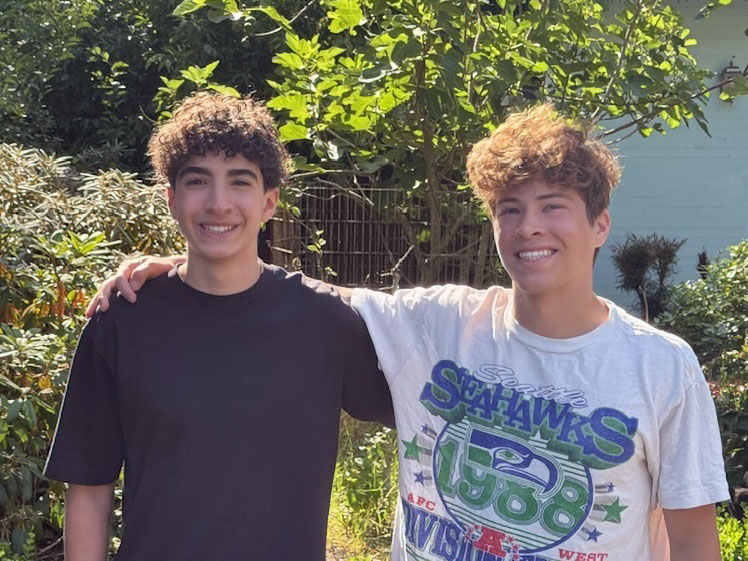
Kenan Khatib, left, and Alexander Kalish co-founded Voices of Understanding. (Courtesy photo)

Fiona André
September 5, 2025
RNS


(RNS) — As he returned home from a Jewish National Fund convention in December 2023, Alexander Kalish, a Jewish high school student from the Seattle area, kept thinking about the demonstrations that disturbed the event.

For days, pro-Palestinian protesters stood outside the Denver convention center to denounce the gathering of pro-Israeli students and donors. As he watched protesters condemn the event as “pro-genocide” and JNF attendees dismiss their concerns, Kalish, now 17, said he considered what the two sides would gain from having a discussion.

Back home, he shared his idea of creating a space for students to share their diverse views on Israel and Palestine with his longtime friend and neighbor, Kenan Khatib, whose parents are Palestinian.

As tensions reached an all-time high among their classmates at their high school and they said they saw both sides dehumanizing the other, the two teens founded Voices of Understanding last fall, a Seattle nonprofit that aims to bridge differences between students and help them challenge their stances on Israel and the Palestinian territories.

“We’re not here to have a debate,” said Khatib, 15. “We’re here to have a discussion where both sides learn and have an open mind.”

The organization aims to help students connect respectfully, despite their disagreements, Kalish explained. “Our goal is that when these people talk to each other, they go from being people who hate this other group to being people who are like, ‘These people really aren’t that bad.'”

The organization is supported by the American Friends of the Parents Circle, a national group that brings together Israelis and Palestinians who have lost relatives in the conflict; Solutions Not Sides, a United Kingdom educational peace-building program; the United States-based Alliance for Middle East Peace; and Atidna International, a U.S. college-focused Jewish-Palestinian dialogue organization.

VOU counts Hamze Awawde, a Palestinian peace activist based in the West Bank; Jadd Hashem, a Palestinian American who serves as vice president of Atidna International; and Elijah Kahlenberg, founder of Atidna International, as advisers.


RELATED: Conflicted, disillusioned, disengaged: The unsettled center of Jewish student opinion after Oct. 7

In hourlong confidential Zoom sessions, students are invited to share their views while demonstrating empathy and understanding for the other side. After they fill out an online questionnaire inquiring about their views and knowledge of the Israeli-Palestinian conflict, students are paired with a participant who holds opposite views and a facilitator who moderates the sessions. Participants can also join small group discussions

The founders aim to have facilitated 100 separate discussions by the end of September.

Each meeting starts with a video outlining the rules — to listen attentively, not to interrupt and to remain respectful — and describing the purpose of the session. Rather than lecturing participants on the history of the conflict, the sessions focus on getting students to talk openly, explained Aude Santelmo, a 24-year-old recent college graduate from France who started moderating sessions in May.

Guidelines for facilitators recommend not to correct each other’s statements, noting “facts are highly contested these days and you are not likely to agree on them in a one-hour conversation.” Instead, moderators should invite participants to accept that they “see certain facts differently rather than trying to straighten each other out.”


(Photo by Chris Montgomery/Unsplash/Creative Commons)

The document suggests students consider what they think the day-to-day lives of people living in Israel and the Palestinian territories are like, what they believe are the biggest misunderstandings about Israel and the Palestinian territories, and what peace would look like to them. At the end of the sessions, students are asked to reflect on what they learned from the conversation.

So far, the organization counts four facilitators, including Kalish’s father, Dan, who is also an adviser, and Awawde. All are expected to remain neutral during the sessions, a spokesperson for VOU told RNS.

Usually, Santelmo said, she starts by asking participants what they know about Israel and the Palestinian territories and where they’ve learned it from, she said.

“We try to bring a conversation where they can share their feelings,” said Santelmo, who moved from France to Israel to study conflict resolution and mediation at Tel Aviv University.

When she senses tensions, Santelmo offers participants a break. Afterward, she has students reflect on what triggered the discomfort and helps them reformulate some of their stances in a way that might be better understood, she said.

“Everyone has feelings — I’m kind of connected to this and so obviously I’m not objective, but I think that my feelings about this should be acknowledged, and especially the feelings of the other side should also be acknowledged,” said Santelmo, who is Jewish.

Taking breaks and switching topics when they hit a roadblock is also what helped Kalish and Khatib have fruitful discussions, they both said.

Khatib, whose maternal family has lived in the village of Majd al-Krum in Galilee, now part of Israel, since 1938, told Kalish about the sense of injustice Palestinians have felt for decades. His paternal grandparents were among the about 750,000 Palestinians displaced during the Nakba, the forced exile of Palestinians in 1948, and became refugees in Lebanon.

He tried to articulate why some Palestinians viewed the deadly Oct. 7, 2023, Hamas attacks on Israel as an act of liberation, though he said he deplored the violence. When the attack happened, Kalish was completing a semester abroad in Israel as part of a JNF fellowship. The program takes Jewish high schoolers to the country to follow an “Israel studies curriculum.” Kalish left Israel a few days after the attack and told Khatib about what it meant for Israeli society.

The two teens, who prefer not to use the term “conflict” to talk about Israel and the Palestinian territories, spent weeks discussing the Israeli occupation in the West Bank, Israeli Prime Minister Benjamin Netanyahu’s right-wing government and the history and meaning of Zionism, before they founded VOU. Though the two disagreed on many things, sometimes circling on one topic for hours, their tense conversations helped them broaden their understanding of the decades-long regional tensions, they said.

Eva Friedman, a 16-year-old participant from Seattle, said the sessions offered a much-needed space for open discussions. After the Oct. 7 attacks, Friedman, who is Jewish, said discussions were often very emotive.

“I saw the religious part of it a lot, and I also learned about it in school from a more unbiased perspective, and so I had already been able to see multiple ways to look at the issue,” she said. “I’ve always been cautious about it, but I also wanted to learn more.”

RELATED: Religion plays a role in the renewed conflict in Israel, but it may not be what you think

During the session she attended, which Kalish’s father moderated, the discussion started “at a surface level” before getting “deep” and touching on what she and her discussion partner thought could help bring peace, she said.

Kalish and Khatib are partnering with local high schools and colleges to encourage students to enroll in VOU’s sessions. Their project, they said, aims to help broaden opinions of younger students, who might be more open-minded than older ones.

“While it may not make a change now, in the future, it’ll make a change,” Khatib said.


Pope Leo meets LGBTQ+ Catholic advocate and vows continuity with Pope Francis' legacy of welcome

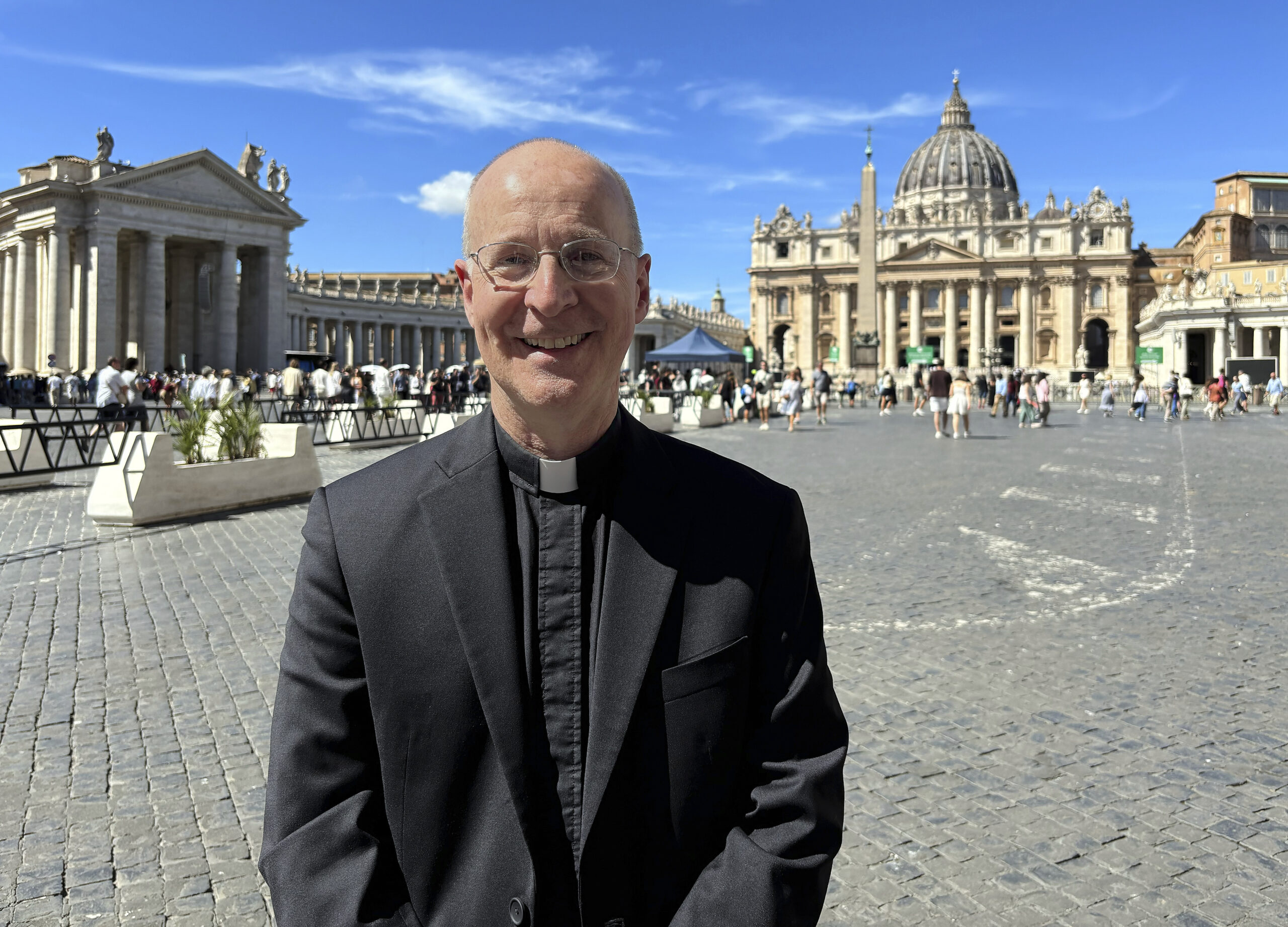
VATICAN CITY (AP) — The Rev. James Martin, a New York-based Jesuit author and editor, said Leo told him he intended to continue Pope Francis’ policy of LGBTQ+ acceptance in the church and encouraged him to keep up his advocacy.


Nicole Winfield
September 3, 2025
RNS

VATICAN CITY (AP) — Pope Leo XIV met Monday with one of the most prominent advocates for greater LGBTQ+ inclusion in the Catholic Church and encouraged his ministry, sending a strong signal of welcome in the early months of his pontificate.

The Rev. James Martin, a New York-based Jesuit author and editor, said Leo told him he intended to continue Pope Francis’ policy of LGBTQ+ acceptance in the church and encouraged him to keep up his advocacy.

“I heard the same message from Pope Leo that I heard from Pope Francis, which is the desire to welcome all people, including LGBTQ people,” Martin told The Associated Press after the audience. “It was wonderful. It was very consoling and very encouraging and frankly a lot of fun.”

The meeting, which lasted about half an hour, was officially announced by the Vatican in a sign that Leo wanted it made public. It came just days before LGBTQ+ Catholics participate in a Holy Year pilgrimage to the Vatican in another sign of welcome.

The audience was significant because it showed a strong sign of continuity with Francis, who more than any of Leo’s predecessors worked to make the Catholic Church a more welcoming place for LGBTQ+ Catholics. From his 2013 quip, “Who am I to judge?” about a purportedly gay priest, to his decision to allow priests to bless same-sex couples, Francis distinguished himself with his message of welcome.

During his 12-year papacy from 2013 to 2025, Francis met on several occasions with Martin and named him an adviser in the Vatican’s communications department and a member of his big multiyear meeting on the future of the church. Still, Francis never changed church teaching saying homosexual acts are “intrinsically disordered.”

Leo’s position on LGBTQ+ Catholics had been something of a question. Soon after he was elected in May, remarks surfaced from 2012 in which the future pope, then known as the Rev. Robert Prevost, criticized the “homosexual lifestyle” and the role of mass media in promoting acceptance of same-sex relationships that conflicted with Catholic doctrine.

When he became a cardinal in 2023, Catholic News Service asked Prevost if his views had changed. He acknowledged Francis’ call for a more inclusive church, saying Francis “made it very clear that he doesn’t want people to be excluded simply on the basis of choices that they make, whether it be lifestyle, work, way to dress, or whatever.”

Prevost then underlined that doctrine had not changed. “But we are looking to be more welcoming and more open and to say all people are welcome in the church,” he said.

News of the audience was met with consternation among some conservatives who had criticized Francis’ outreach and had hoped Leo would be less accepting. Taylor Marshall, a podcaster active on Catholic social media, merely posted the official Vatican photo of the encounter on X. John-Henry Weston, co-founder of the LifeSite news site, called the audience a “nightmare scenario.”

Francis DeBernardo, executive director of New Ways Ministry which advocates for LGBTQ+ Catholics, said the audience was a great first step. In a statement he called it “a strong indication that Leo affirms Pope Francis’ welcoming model and that previous repressive approaches are now just history.”

Martin, who knew Prevost from their time working together in the synod on the church’s future, said he wasn’t worried about Leo’s views given Martin always had found him to be “a very open, welcoming, inclusive person.”

“But it’s wonderful to hear this continuation,” Martin said, adding that Leo told him his priorities are to work for peace and unity, citing in particular the conflicts in Ukraine, Gaza and Myanmar.

“But he also wanted to remind people that this is a church for ‘todos, todos, todos,’” Martin said, quoting Francis’ famous line in Spanish about how the church is open to everyone, todos.

Martin helped found Outreach, a ministry promoting LGBTQ+ acceptance, which will participate in a big Holy Year pilgrimage Friday and Saturday sponsored by Italian LGBTQ+ Catholic group “Jonathan’s Tent.” Significantly, the pilgrimage of about 1,200 people includes a Mass at the Jesuit church in Rome celebrated by the second-highest member of the Italian bishop’s conference.

The pilgrimage is not officially sponsored by the Vatican, but is listed on the Vatican’s calendar of Holy Year events. Vatican officials say such a listing doesn’t signify endorsement, but is merely a logistical help to those groups that wish to organize pilgrimages and walk through the Holy Door of St. Peter’s Basilica.

___

Associated Press religion coverage receives support through the AP’s collaboration with The Conversation US, with funding from Lilly Endowment Inc. The AP is solely responsible for this content.


Pope Leo inaugurates Francis’ eco village, Borgo Laudato Si'

(RNS) — The opera singer Andrea Bocelli sang as the pope concluded the opening event celebrating the care for creation.


Pope Leo XIV attends the inauguration of the Laudato Si’ High Training Center in Castel Gandolfo, Italy, Sept. 5, 2025. (AP Photo/Andrew Medichini)


Claire Giangravé
September 5, 2025
RNS


(RNS) — Pope Leo XIV inaugurated the Borgo Laudato Si’, a 135-acre space near the papal summer residence of Castel Gandolfo that Pope Francis dedicated to enacting principles described in his 2015 encyclical focused on the environment, “Laudato Si'” (Blessed Be).

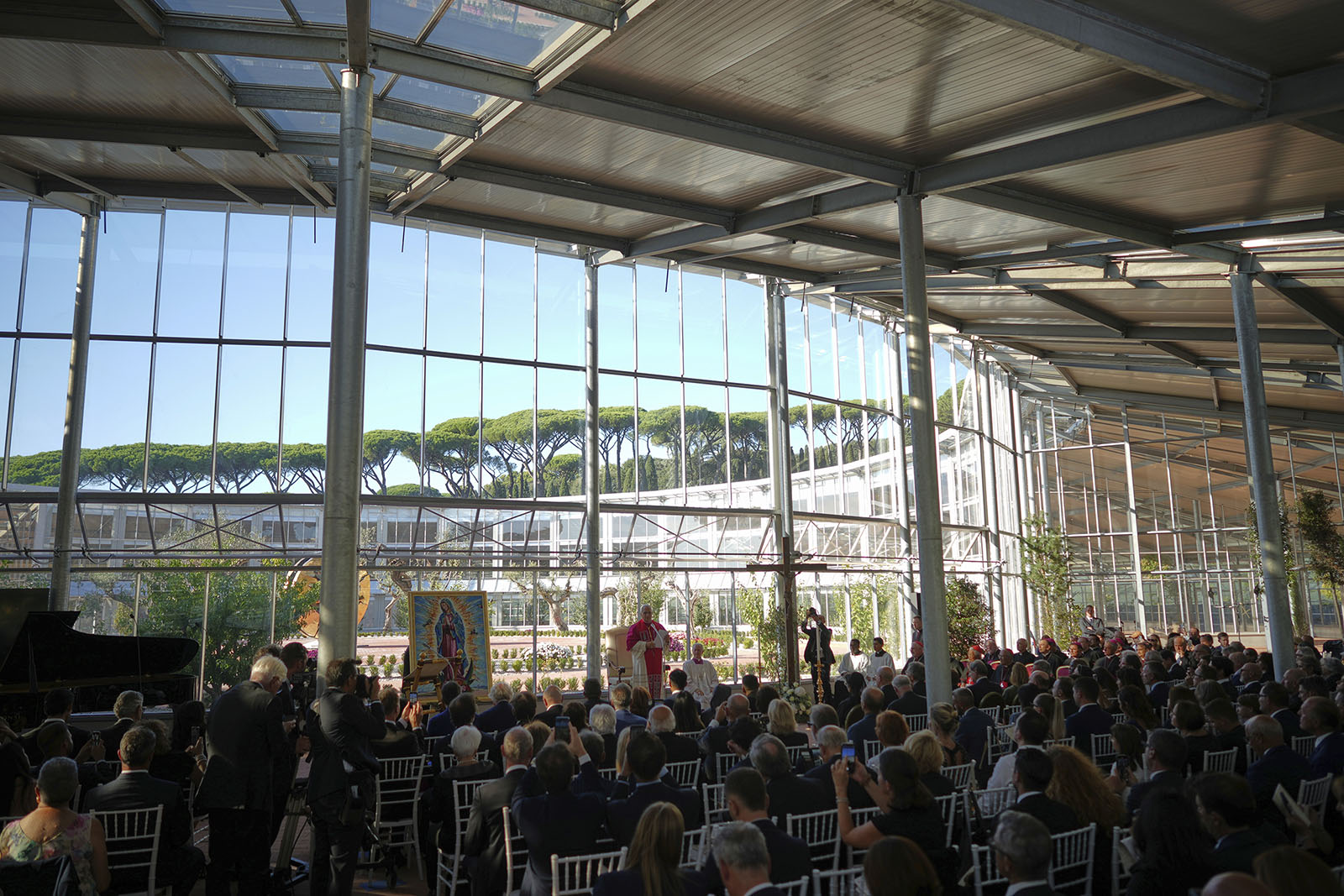
In a homily on Friday (Sept. 5), Leo called the project “a seed of hope that Pope Francis has left us as a legacy,” which “will endure by remaining faithful to its mandate: to be a tangible model of thought, structure and action, capable of fostering ecological conversion through education and catechesis.”

The Borgo Laudato Si’ will offer educational programs for students and professionals who want to learn more about the Catholic theology of care for the environment, events and seminars with CEOs of major corporations. An aim is to produce zero waste as part of the land’s focus on sustainability


“In a time marked by environmental crises, conflicts and inequality, the Borgo means to prove, in a small way, that it’s possible to create a different future based on the care for creation and of all the human family,” said Cardinal Fabio Baggio, general director of the Borgo, in his opening remarks. “The inauguration of the Borgo wants to send a message of hope: Ecological conversion is possible, and it’s born from the encounter between faith, responsibility and hope.”

The Borgo Laudato Si’ relied on investments by third parties who fit certain criteria for climate awareness and protection.

The Laudato Si’ Center for Higher Education will provide courses and learning opportunities, prioritizing learners who have been excluded and marginalized in society. The land will also produce milk, olive oil, wine, honey and aromatic herbs for teas and oils that will be sold to support the educational initiatives.

Before performing the liturgy, Leo stopped to greet family of 15 staff members of the Borgo, and walked beneath its holm oaks and through its many gardens. Being driven around the property on an electric golf cart, he paused briefly to feed koi fish in the pond of the Little Madonna Garden, where his predecessors would sit and pray and where he celebrated the first Mass for Creation on July 9. Later, he petted an Andalusian white horse, a breed he would ride in Peru, and a day-old calf.

The pope then arrived at the sanctuary, a new complex powered by photovoltaic systems that includes classrooms, conference halls and a greenhouse. A choir greeted him as he entered the greenhouse for the liturgy, including the famous Italian opera singer Andrea Bocelli and his son, Matteo.

Bocelli told RNS that singing for the pope is “a bit harder than for all other situations that may arise because in case some have forgotten, the pope represents Jesus on Earth.”

“So, I mean, to sing in front of the one who represents who gave me the gift of my voice is a privilege and a significant responsibility,” he said.

Bocelli will sing in front of the po
pe again on Sept. 13, for the World Meeting on Human Fraternity at the Vatican.

In his homily, Leo spoke about how often nature and creation are described by Jesus in the Gospels, and the pope said nature’s order points to God’s divine plan. Among God’s creatures, he said, human beings stand out not only as the “most beautiful creature,” but also as having the responsibility to safeguard all other creatures.

“The care of creation, then, represents a true vocation for every human being — a task to be carried out within creation itself, never forgetting that we are creatures among creatures, and not creators,” the pope said in his homily.

Leo praised the interdisciplinary aspirations of the Borgo, that technology, education and nature can “coexist in harmony,” which “cannot fail to speak to us of God.”

Leo spent several weeks in the Borgo Laudato Si’ gardens, which house the Barberini Palace that the pope chose as his summer residence. Residents and tourists gathered at the entrances to the papal estate to greet the pontiff with cheers and applause.