Sunday, September 07, 2025


The US imported $455,000 worth of Russian chicken eggs for the first time since 1992 despite sanctions

The US imported $455,000 worth of Russian chicken eggs for the first time 1992 despite sanctions
The US has imported $455,000 worth of Russian eggs despite the poor relations, after an outbreak of avian flu decimated domestic egg production in America. / bne IntelliNews
By bne IntelliNews September 7, 2025

The US imported $455,000 worth of Russian chicken eggs for the first time in decades despite sanctions, RIA Novosti reported on September 5, citing data from the US statistical service.

The unprecedented July purchase marks the first shipment of Russian eggs to the US since 1992.

An outbreak of avian flu outbreak early this year devastated domestic poultry stocks, which created an egg shortage and a sharp increase in prices. Russia has also suffered from a shortage of eggs this year that has driven up prices, but has taken the opportunity to make some money and embarrass Washington by exporting eggs to the US.

Despite some price relief in recent months, egg costs in July remained 16.4% higher than the same period last year, prompting Washington to seek new sources to stabilize the market. The US spent $455,000 on fresh chicken eggs from Russia in July, according to the report.

“Eggs are just the beginning. In the same Russian article on eggs was another piece from last week about the US Treasury issuing waivers on Russian diamonds, “Olga Lautman, a political analyst with Center for European Policy Analysis (CEPA), wrote in a post.

Just days before those egg shipments showed up in a US trade report, the Treasury Department quietly issued a new general license for Russian diamonds. The sanctions imposed in 2024 had banned them outright, cutting off one of Russia’s most profitable export streams, but as of September 1, the ban has been softened with carve-outs and grandfather clauses.

“Little by little, Trump is rolling back sanctions meant to choke off Kremlin revenue, and the US is quietly opening the door to Russian blood money,” Lautman said.

“Every waiver, exemption, and so-called “grandfathered” clause is money funnelled straight into the Kremlin’s genocidal war chest, funding the bombs, drones, and missiles that slaughter Ukrainians every day,” Lautman said. “Trump continues giving a lifeline to a regime waging a campaign of annihilation, which is why Russian state media rushes to broadcast these deals as proof that the US is on Russia’s side. Eggs, diamonds, fertilizer, uranium — every carve-out, no matter how small, tells Putin he can continue killing with impunity.”

Trade between Russia and the United States has dropped by nearly 90% since the invasion of Ukraine to $3bn in goods imports from Russia last year.

Central Asia and Afghanistan heading for “confrontation” over water-thirsty canal, warns analyst

Central Asia and Afghanistan heading for “confrontation” over water-thirsty canal, warns analyst
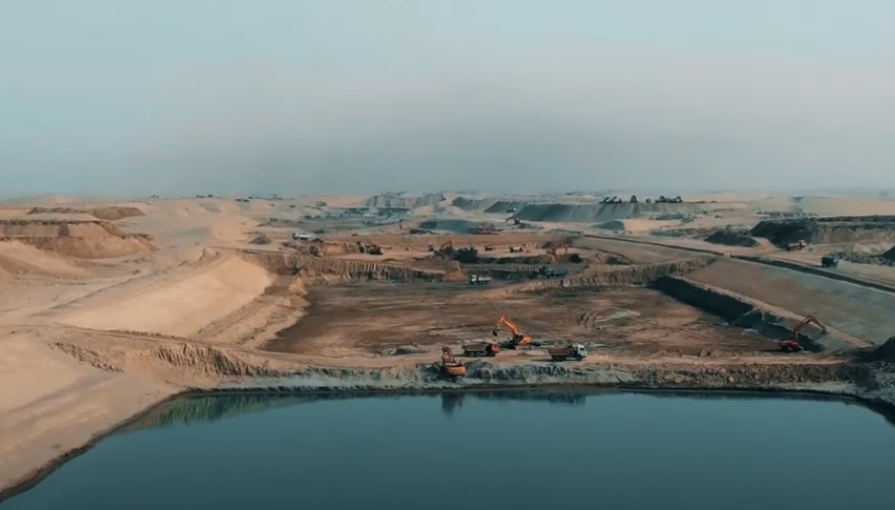
The launch date of the canal is drawing near, but the answers to the water sharing difficulties it will bring seemingly remain as distant as ever. / @FDPM_AFG
By bne IntelliNews September 5, 2025

Water-stressed Central Asia and Afghanistan are heading for a “confrontation” over the Taliban’s building of the Qosh Tepa Canal, which will divert up to a third of the flow of the Amu Darya border river.

That’s the conclusion of journalist and researcher Galiya Ibragimova who, in a September 3 article for the Carnegie Russia and Eurasia Center, points out that, despite attempts at diplomacy, no answer has been found to the dilemma posed by the construction. The looming potential for a clash was raised by another Central Asia expert, Bruce Pannier, in an article published by bne IntelliNews as far back as August 2023.

“For now, the situation is developing through inertia toward some sort of confrontation,” writes Ibragimova.

“The ambitious irrigation project is becoming a source of growing tension in Central Asia, but none of the region’s countries have been able to come up with an alternative solution,” she says.

The Qosh Tepa Canal is scheduled for completion two to three years from now. Once finished, it will “immediately disrupt the delicate balance of water use in Central Asia”, warns Ibragimova, adding: “Previously, the Amu Darya was mainly used by Uzbekistan, Turkmenistan, and Tajikistan. Now its water will have to be shared with Afghanistan. There are already serious water shortages in Central Asian countries. Previously, they tended only to affect agriculture, but there is increasingly insufficient water for household use, and even drinking.”

Following the withdrawal of the US and allied powers from Afghanistan in August 2021, the Taliban, having reclaimed power, almost immediately started constructing the canal.

Almost half the planned 285 kilometres (177 miles) of the infrastructure are thought to be complete already.

A difficulty for Central Asia – used to having the Amu Darya almost entirely to itself given the decades of conflict that got in the way of Afghanistan laying claim to part of the resource with modern exploitation projects – is that any complaints about the prospect of the canal each year drawing up to 10 cubic kilometres (2.4 cubic miles) of water from the river run up against an entirely just argument.  

Says Ibragimova: “No one disputes Afghanistan’s right to harness the waters of the Amu Darya. After all, about 30 percent of the river’s flow originates in the Afghan mountains, and decades of war means Afghanistan has hardly tapped this resource. The country uses just 2 cubic kilometers of water a year: eleven times less than Uzbekistan and five times less than Turkmenistan.”

In 2023, a wall section of the under-construction canal collapsed. The accident sent water gushing into surrounding land and resulted in an artificial lake of more than 30 square kilometres.

The Afghan authorities have never publicly conceded that there was such an accident, but word of events increased anxieties over out-of-date construction methods being used by the Taliban in building their megaproject.

The canal appears to lack concrete-lined walls and reinforced banks. Ibragimova says it will inevitably lose large amounts of water to sandy soil. Correcting this might be one way of raising the volume of water available for the future use of both Central Asia and Afghanistan, as might fresh attempts at persuading major growers of cotton Uzbekistan and Turkmenistan to scale back their water-intensive cultivation of the commodity. Population growth in Central Asia, particularly in Uzbekistan, is adding to the water stress in the region, with urbanisation, and industrial development other difficulties as regards future water use, notes Ibragimova.

On the positive side, the canal could help rejuvenate Afghanistan’s drought-stricken agriculture sector and cut the country’s economic dependence on the illegal opium and heroin trade (in 2021, it contributed around 15% of Afghan GDP). Poppy cultivation for opium requires much less water than the growing of other crops.

Concludes Ibragimova: “Although the Taliban are not officially recognized as the legitimate rulers of Afghanistan by the Central Asian nations, there have been informal efforts to engage them in water usage discussions. But the country’s neighbors have no real leverage over the Taliban. And while the Taliban say publicly that they are open to dialogue, they also stress that the canal is a domestic issue—and that they will decide how to use their own water.”

She adds: “The only option for Afghanistan’s neighbors is to try to maintain a working relationship with the Taliban and involve them in the regional agenda.”

In May, Kazakhstan joined Uzbekistan and Turkmenistan in warning that the Taliban’s construction of the canal in Afghanistan could strain fragile water security.

In October 2023, Nikolai Podguzov, chairman of the board of the Eurasian Development Bank (EDB), highlighted severe upcoming water shortages in Central Asia that would be exacerbated by the Qosh Tepa construction.

Even without the canal, Central Asia, according to the EDB, is projected to face a water deficit of five to 12 cubic kilometres annually by 2028-2029, threatening food, drinking water and energy supplies.

Are Canada and India doing enough to repair ties?

Murali Krishnan in New Delhi
DW
September 4, 2025

India has moved to revive diplomatic ties with Canada, deepening trade and strategic links beyond US dependence.

Relations saw signs of thawing in June when Canadian PM Mark Carney invited Indian PM Narendra Modi to the G7 summit
Image: dpa

India and Canada have appointed new envoys, marking a substantial step toward normalizing their relations following a major diplomatic standoff.

India's Foreign Ministry said it will assign its current envoy to Spain, Dinesh Patnaik, to Canada — while Christopher Cooter will be Canada's new high commissioner to India.
Why did India-Canada relations become strained?

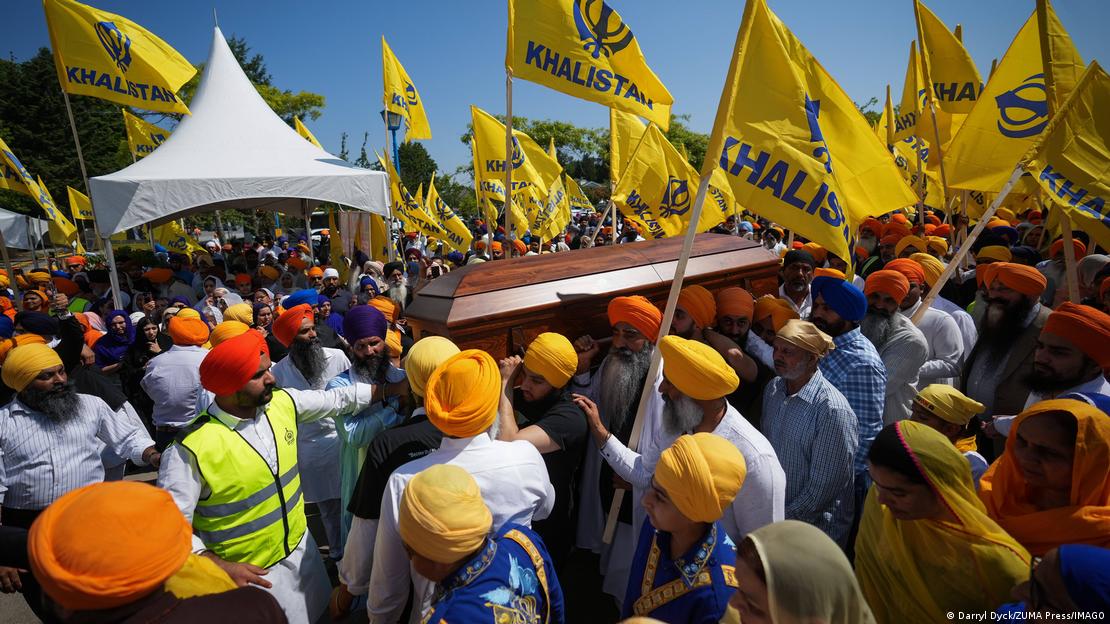
The rift stemmed from former Canadian Prime Minister Justin Trudeau's allegations that Indian agents were involved in the assassination of Sikh leader and activist Hardeep Singh Nijjar.

Nijjar was shot dead by two masked assailants as he left a Sikh temple in the Canadian province of British Columbia in 2023Image: Darryl Dyck/ZUMA Press/IMAGO

According to media reports, Nijjar was a prominent organizer in the Sikh community in Canada. He was also a proponent of the so-called Khalistan movement, which calls for a Sikh homeland by carving out an ethno-religious state in India's Punjab region.

The movement dates back to India and Pakistan's independence in 1947, when the idea was pushed forward in negotiations preceding the partition of the Punjab region between the two new countries.

India dismissed Trudeau's claims as "absurd" and politically motivated, leading to the reciprocal expulsions of top envoys.

Roadmap to warmer ties

After a fractious period of several months, Indian Prime Minister Narendra Modi met with his Canadian counterpart Mark Carney in June during the G7 leaders' summit held in Kananaskis, Canada.

Both agreed to take "calibrated and constructive steps to restore stability in the relationship."

"The appointment of a new high commissioner reflects Canada's step-by-step approach to deepening diplomatic engagement and advancing bilateral cooperation with India," said Canada's Minister of Foreign Affairs Anita Anand following the appointment.


Foreign policy experts and diplomats believe that the re-opening of high-level diplomatic dialogue signals hope for pragmatic engagement, paving the way for resumed trade talks and meaningful strategic alignment, especially vital in shifting global trade dynamics and regional security interests.

"When this crisis broke in 2023, and further escalated last year, both countries brought a mixture of outrage, hubris, and complacency to the table," David Mckinnon, a former senior Canadian diplomat, told DW.

"And each in its own way assumed its 'special' relationship with the USA would be to their advantage in resolving this issue."
Reducing US dependence, diversifying ties

The troubled period between India and Canada was marked by disrupted visa services, consulate closures, stalled trade and investment, travel caution advisories and damaged trust.


"Obviously, the return of Donald Trump as US President and his increasingly destructive role in the world have completely changed that calculation in Ottawa and Delhi," said Mckinnon, pointing out that it was time for both countries to align on economic and security-related matters.

"For somewhat different reasons, both countries need to diversify away from reliance on the US. For both, though, this imperative is urgent and immediate," he added.

Ajay Bisaria, a former high commissioner to Canada, said the new envoys will develop a roadmap for stabilization, normalization, and eventually elevation of the strained bilateral relationship.

"Cautious optimism permeates the air regarding the improvement of India-Canada diplomatic ties. Canada now appears to prioritize its national interests over diaspora politics in its foreign policy dealings, which may reduce the irritant factor," Bisaria, who co-chairs a Track II think tank initiative, told DW.

Nearly 800,000 Sikhs live in Canada, the largest community outside of Punjab, and the Sikh diaspora often stages activism and peaceful protests for Sikh causes.

"The political turbulence that was becoming an issue for Canadian investment in India has subsided," Bisaria added, pointing to how Canada continues to grapple with challenges from US volatility.

"In fact, Canadian institutional investment is projected to double from the current $100 billion (€85.9 billion) by 2030, as India emerges as a strategic diversification opportunity amidst the volatility in China and the US," said Bisaria.

Cautious diplomatic engineering

Moreover, Bisaria emphasized that the India-UK trade agreement, along with the potential India-US and India-EU deals, will provide a fresh template for the paused talks on an India-Canada interim trade agreement.

"Both sides may take stock of the upended trade order and the web of new bilateral deals they'll have in place this year. By next year, when the dust settles, they could resume conversations on the bilateral free trade agreement," he added.


Some experts believe the future of the India-Canada relationship will depend on whether they can discuss security concerns without them becoming burdensome to bilateral ties.

Shanthie Mariet D'Souza, president of Mantraya, an independent research forum, told DW that a reset in relations could not have happened without Canada agreeing to address some of India's concerns.

New Delhi has repeatedly criticized Ottawa for being soft on supporters of the Khalistan movement, which is banned in India but has support among the Sikh diaspora, particularly in Canada.

"The new Canadian administration aims to improve its ties with India by moving past a difficult history that has negatively affected its reputation. It would have assured New Delhi that Canadian law would take a firm stance against trends that threaten India's security," said D'Souza.

She also believes that the Trump administration's unilateral tariff policy is playing a significant role in prompting India and Canada to seek partnerships and markets globally.

Both countries, she said, are focusing on restarting trade talks under the Early Progress Trade Agreement (EPTA), seen as a precursor toward the broader Comprehensive Economic Partnership Agreement (CEPA) with discussions covering areas like goods, services, clean energy, digital transformation, and supply chain resilience.

"Although this may not be sufficient for India to compensate for its faltering partnership with the US, New Delhi has little choice but to salvage what it can. A new multipolar world order is in the making. While this transition is unsettling, nations have no option but to adjust their policies accordingly," said D'Souza.

Edited by: Keith Walker

Murali Krishnan Journalist based in New Delhi, focusing on Indian politics, society and business@mkrish11

New study shows Gen Z and Millennials are now the most regular churchgoers

Gloo


RNS Press Release Distribution Service
September 3, 2025

The State of the Church research shows that Gen Z and Millennial church attendance has nearly doubled since 2020

BOULDER, Colo. — New research by Barna Group and Gloo, as part of their State of the Church initiative, reveals a historic shift in church attendance. For the first time in decades, younger adults, specifically Gen Z and Millennials, are now the most regular churchgoers, surpassing older generations who have traditionally led in church attendance. The typical Gen Z churchgoer now attends 1.9 weekends per month, while Millennials average 1.8 times, representing a steady upward shift since the attendance decline observed during the pandemic. In fact, the frequency of churchgoing for Millennials and Gen Z has nearly doubled in just five years, rising from approximately one weekend per month in 2020 to nearly two in 2025.

“The makeup and rhythms of church life are shifting,” said David Kinnaman, CEO of Barna Group. “Young people today are showing a renewed openness to faith, and many are finding their way back into church communities. This moment invites leaders to lean in and guide young people toward deeper faith. While churchgoing alone doesn’t form disciples, churches that offer relational connection, volunteer engagement, and clear discipleship pathways that resonate with younger generations can help them build a resilient and lasting faith.”

Overall, the data shows that even regular churchgoers do not attend often. Among all self-described Christian churched adults, the average attendance is 1.6 times per month, or roughly two out of every five weekends. While older adults have historically been the most reliable churchgoers for decades, their participation rates have consistently declined over the past 25 years. Looking back, Elders (those born before 1946) who attended about 2.3 times per month in 2000 now attend around 1.4 times, and Boomers’ attendance has dropped from 2.0 to 1.4 times per month. Gen X attendance has remained steady, sitting at 1.6 times per month, but has not seen growth.

“These shifts in church attendance open the door for leaders to innovate in how they engage with their people,” said Brad Hill, president, Gloo Media Network. “Since many aren’t in the pews every week, churches that prioritize relational touchpoints and digital engagement — through text, social media and other online tools — can better reach younger generations where they already are. Every interaction counts, and this trend presents an opportunity for leaders to help grow their faith in new and impactful ways.”

The detailed findings of this month’s release are available here. Leaders can learn more about the largest initiative for the Church at stateofthechurch.com.

About the Research

Barna Group consistently surveys U.S. adults on their religious behaviors, including church attendance. For this analysis, we focus on Christian churchgoers—adults who have attended within the past six months. Concentrating on this group highlights the rhythms of people already engaged in church life, providing leaders with a realistic picture of the attendance patterns they can expect from their congregants. To capture this, Barna calculated the frequency of their attendance in a given month.

Barna Group’s tracking data is based on online and telephone interviews within nationwide random samples of 132,030 adults conducted over a twenty-five-year period ending in July 2025. These studies are conducted utilizing quota sampling for representation of all U.S. adults by age, gender, race / ethnicity, region, education and income. Minimal statistical weighting has been used when necessary to maximize statistical representativeness. Included in this data is 5,580 online interviews that were collected between January and July of 2025. These interviews were also conducted utilizing quota sampling for age, gender, race/ethnicity, region, education and income, and minimal statistical weighting has been used to maximize statistical representation.

###

Gloo is a leading technology platform for the faith ecosystem, providing values-based AI, resources, insights and funding so people and communities flourish and organizations thrive. Gloo serves over 100,000 faith, ministry and nonprofit leaders and is based in Boulder, Colorado. For more information visit Gloo.com.

Barna Group is a leading research organization focused on the intersection of faith and culture. Since 1984, Barna has conducted more than two million interviews over the course of thousands of studies and has become a go-to source for insights about religion, leadership, vocation and generations. Barna is an independent, privately-held, nonpartisan organization based in Dallas–Fort Worth, Texas.


Disclaimer: The views and opinions expressed in this article are those of the authors and do not necessarily reflect the official policy or position of RNS or Religion News Foundation.
Iraq reopens historic mosque in Mosul 8 years after Islamic State destruction

BAGHDAD (AP) — UNESCO, the U.N.’s scientific, educational and cultural organization, worked alongside Iraqi heritage and Sunni religious authorities to reconstruct the minaret using traditional techniques and materials salvaged from the rubble.

Qassim Abdul-zahra
September 3, 2025

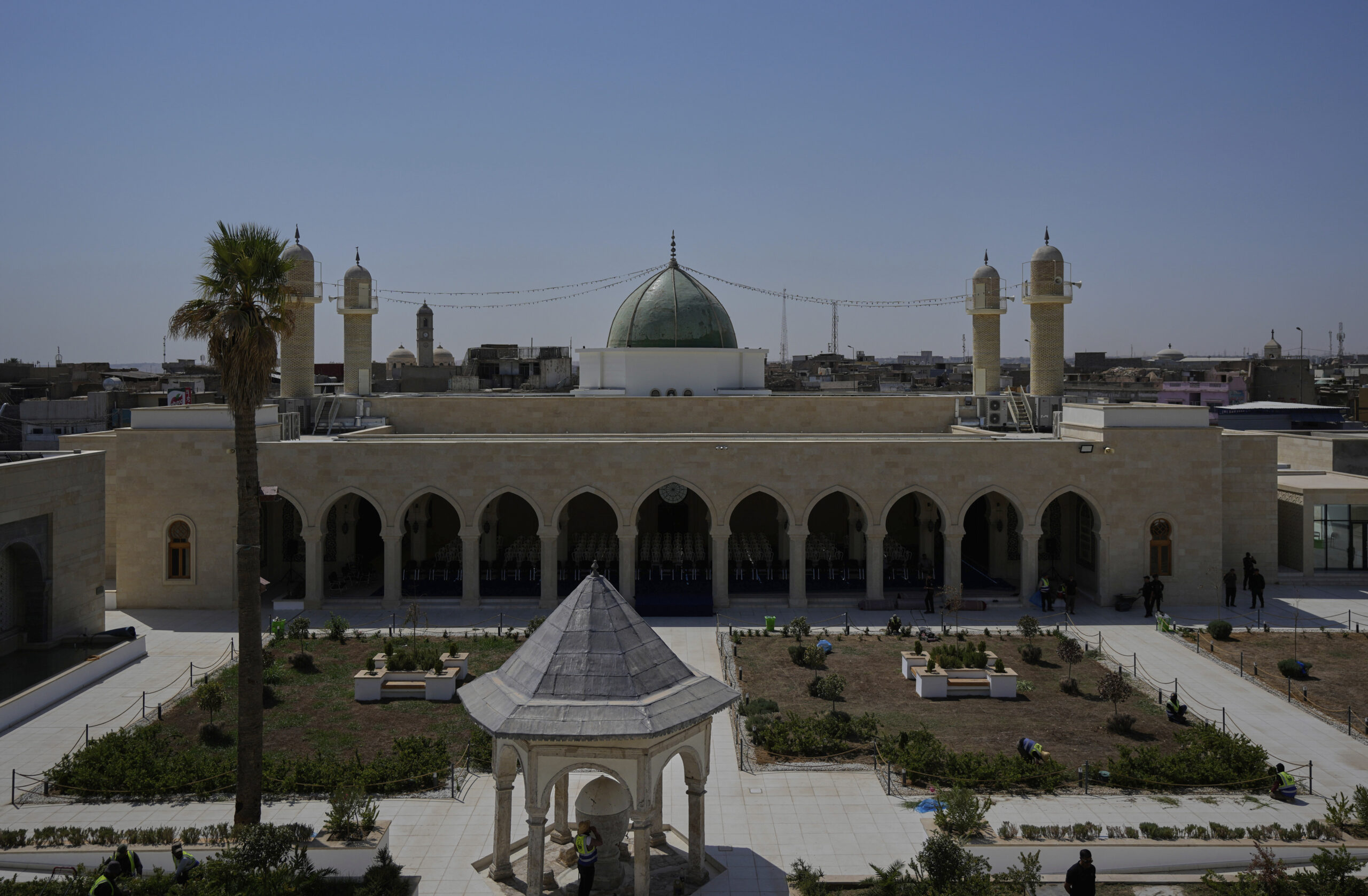
BAGHDAD (AP) — Iraq’s prime minister presided over the official reopening of the historic al-Nuri Grand Mosque and its leaning minaret in the heart of Mosul’s Old City Monday, eight years after the mosque was destroyed by militants from the Islamic State group.

For some 850 years, the leaning minaret of the mosque stood as an iconic landmark. In 2014, IS leader Abu Bakr al-Baghdadi declared the so-called “caliphate” there by delivering a Friday sermon and leading prayers.

The militant group later destroyed the mosque by detonating explosives inside the structures as it faced defeat in a battle with Iraqi military forces for control of the city in 2017.

UNESCO, the U.N.’s scientific, educational and cultural organization, worked alongside Iraqi heritage and Sunni religious authorities to reconstruct the minaret using traditional techniques and materials salvaged from the rubble. UNESCO raised $115 million for the reconstruction project, with large shares coming from the United Arab Emirates and the European Union.

Prime Minister Mohammed Shia al-Sudani said in a statement that the reconstruction of the mosque “will remain a milestone, reminding all enemies of the heroism of Iraqis, their defense of their land, and their rebuilding of everything destroyed by those who want to obscure the truth.”

“We will continue our support for culture, and efforts to highlight Iraqi antiquities, as a social necessity, a gateway to our country for the world, an opportunity for sustainable development, and a space for youth to innovate,” he said.

At its peak, IS ruled an area half the size of the United Kingdom in Iraq and Syria and was notorious for its brutality. It beheaded civilians and enslaved and raped thousands of women from the Yazidi community, one of Iraq’s oldest religious minorities.

In addition to the mosque, war-damaged churches were rebuilt as part of the reconstruction project, aiming to preserve the heritage of the city’s shrinking Christian population. Sudani said the city of Mosul embraces all of its communities and “embodies all the characteristics of Iraq’s diverse society.”

U.N. investigators have said that IS militants committed war crimes against Christians in Iraq, including seizing their property, engaging in sexual violence, enslavement, forced conversions and destruction of cultural and religious sites.

Most of Mosul’s small population of Christians fled when IS launched its offensive in 2014. In 2003, Mosul’s Christian population stood at around 50,000. Today, fewer than 20 Christian families remain as permanent residents in the city, although some who resettled in the semi-autonomous Kurdish area of northern Iraq still return to Mosul for church services.
The reconstruction project in Mosul could serve as a model for restoring other cultural sites in war-torn areas — including neighboring Syria, which is starting to emerge from nearly 14 years of civil war after the fall of former President Bashar Assad last year.


Associated Press religion coverage receives support through the AP’s collaboration with The Conversation US, with funding from Lilly Endowment Inc. The AP is solely responsible for this content.

Why trade official's use of the term 'Brahmins' on Fox News sparked Hindu outrage


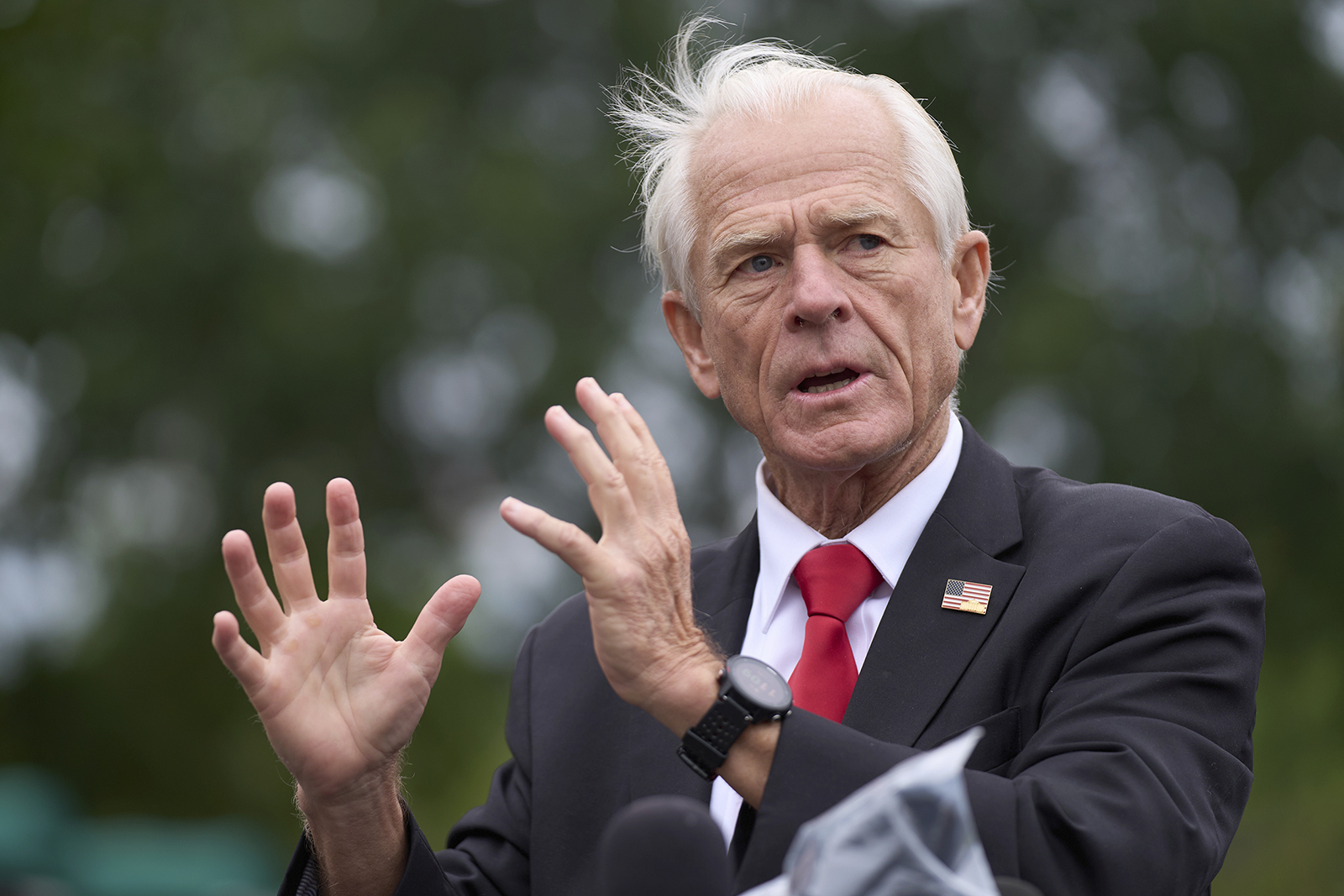
(RNS) — Peter Navarro, speaking Sunday about the Trump administration’s new 50% tariff on Indian goods, criticized India’s trade policies before making the controversial comment.

White House trade counselor Peter Navarro speaks with reporters at the White House, Aug. 21, 2025, in Washington. (AP Photo/Evan Vucci)

Richa Karmarkar
September 3, 2025
RNS

(RNS) — President Donald Trump’s senior trade adviser has sparked accusations of Hinduphobia after using the term “Brahmins” to criticize India’s elite, prompting Hindu American groups to call for his immediate removal.

Peter Navarro, speaking Sunday (Aug. 31) on Fox News about the administration’s new 50% tariff on Indian goods, denounced India’s trade policies before making the controversial comment.

“You have got Brahmins profiteering at the expense of the Indian people, and we want that to stop,” Navarro said, also calling New Delhi “nothing but a laundromat for the Kremlin.”

Navarro’s use of the word Brahmin — a term that refers to the highest social caste in Hindu society — launched ire in the Hindu diaspora and in India, from social media memes ridiculing Navarro’s “misunderstanding” of Indian caste dynamics, to calls for his firing.

“This is not foreign policy,” said Ajay Shah, executive chair of the lobbying organization HinduPACT, in a statement released Tuesday. “This is weaponized Hinduphobia. Dividing Hindus through colonial scripts doesn’t build relationships. It destroys them. People like Navarro have no place in American political life.”

Navarro’s comments came during Indian Prime Minister Narendra Modi’s first visit to China in seven years, where he met with Russian President Vladimir Putin and Chinese President Xi Jinping. At the end of August, Trump’s administration announced an increased tariff on Indian goods, with an added penalty for India’s purchasing of Russian weapons and oil. The tariff, which India has condemned as “unfair, unjustified and unreasonable,” is among the highest imposed on any U.S. trade partner.

American Hindus Against Defamation, a watchdog offshoot of HinduPACT that co-wrote the statement, called for the firing of Navarro based on his “reckless provocation” that “endangers the dignity of over a billion Hindus.”

“Using caste rhetoric to pressure a democratic ally is beneath the democratic dignity of the United States,” read the statement.

In Hindu tradition, Brahmins occupy the highest tier of the social order known as varna, or caste, a birth-based social hierarchy. Brahmins have historically been associated with priestly and scholarly responsibilities, including conducting rituals, providing spiritual guidance and preserving sacred Scriptures. Over the centuries, their influence has extended beyond temple life into spheres such as education, governance and intellectual leadership. Brahmins make up an estimated 4%-5% of India’s population today.

Indian industrial CEO Harsh Goenka posted a widely shared response to Navarro on social media, emphasizing the idea that many of the top-earning influencers of India, including Modi himself, are not considered Brahmins.

“Dear Peter Navarro,” he posted. “India’s boardrooms aren’t run by Brahmins. Tata? Not Brahmin. Reliance? Not Brahmin. Mahindra? Not Brahmin. Wipro? Not Brahmin. Birla? Not Brahmin. But India’s soldiers, scientists, poets? Many were … Unlike some others who are trying to lobby for the Nobel prize, our Brahmins got their prize only through merit. – An Indian (not a Brahmin).”

Priyanka Chaturvedi of India’s conservative Shiv Sena political party posted on X, “Peter Navarro’s invocation of a particular caste identity in India to make his point, even if it is to imply the ‘privileged lot’ vis a vis the rest, is shameful and sinister. PS: spare me sermons on usage of the word Brahmins in American context.”

(In the U.S., the term Brahmin has sometimes had other meanings: In 19th- and early 20th-century New England, “Boston Brahmins” referred to an elite class of wealthy, white Protestant families whose influence shaped the region’s cultural and political institutions.)

American Hindus have long debated caste’s role in modern life, with some arguing that an overemphasis on condemning caste, and labeling it as a potential tool for discrimination, has led to “Hinduphobia.” They say that caste distinctions were created by the British Empire to divide and conquer Indians and that casteism no longer plays a role in opportunity or access in India, where it is now outlawed. Others find a birth-based hierarchy in ancient Hindu Scripture and argue that casteism persists in universities and workplaces today in more subtle biases among Indian Americans.

There is evidence that higher castes comprise the majority of Indian immigrants to the U.S., with one study putting the figure at 90% of Indian Americans. There are dozens of Brahmin groups across Indian linguistic and ethnic groups, including the “TamBrams,” or Tamil-speaking Brahmins, who include American CEOs Sundar Pichai and Indra Nooyi. Former Vice President Kamala Harris’ mother, Shyamala Gopalan, was also a member of this group.

A 2024 study by the Carnegie Endowment for International Peace reported that 32% of Indian American survey respondents said they did not identify with any caste, and 46% identified as “general or upper caste.” The overwhelming majority of Indian American respondents supported measures to formally outlaw caste discrimination.

Still, say Hindu advocates such as Deepa Karthik, general secretary of HinduPACT, caste rhetoric is commonplace in America from non-Indians.

“When someone like Navarro uses caste to shame India, it lands on Hindus here,” she said in the press release. “Kids get bullied. Workers get profiled. We get treated like we owe the world an apology for our heritage.”
Hindu advocates, rejecting H-1B 'elite,' seek to defend all Indian immigrants

(RNS) — As anti-immigrant rhetoric expands to those who come both legally and illegally, many South Asian Americans feel it is high time to build solidarity with each other.


A stamped passport lies open. (Photo by Global Residence Index/Unsplash/Creative Commons)

Richa Karmarkar
September 5, 2025
RNS


(RNS) — Not long ago, Elon Musk was not alone among U.S. business leaders in arguing that the H-1B visa program — aimed at allowing highly skilled foreign specialists to work in the United States, most often in tech — was like drafting foreign basketball wizards to play on American teams. “This is like bringing in the Jokic’s or Wemby’s of the world to help your whole team (which is mostly Americans!) win the NBA,” Musk wrote on X in December.

Some who see immigrants as a threat have also promoted the idea that Indian immigrants are all elite workers.

In a January interview, Christian nationalist pastor Doug Wilson told Religion News Service that H-1B workers will “rise to the top in the tech industry, many of them, which is a highly influential industry. Consequently, what you’re doing is you’re bringing in people who are not acculturated to the culture of the United States, and putting them in a position of shaping that culture.”

Many prominent Indian Americans have helped paint this profile of the model immigrant, pointing to the outsized contribution Indian immigrants make to the economy, as well as culture and politics. Even President Donald Trump in his first term celebrated the “numerous Americans of Indian and Southeast Asian heritage who fulfill critical roles across my administration.”

At more than 5 million people, Indians are the second-largest immigrant population in the country and the highest earning and most educated, according to recent data from the Pew Research Center.

But the “model minority” lens, advocates say, not only excludes a growing number of immigrants from India, but is creating a divide between the more financially successful transplants and working-class immigrants who, like others fleeing poverty or discrimination in their countries, come to find a better life in the United States.

They are taxi or truck drivers, small-business owners and wage workers raising families with the American dream from New York and New Jersey to Texas and California.

Now Hindu activists are calling attention to the plight of those who come “the hard way.” Vrinda Jagota, a writer in Brooklyn and organizer for the nonprofit Hindus for Human Rights, said that because many of her co-religionists benefit from the model minority myth, they “don’t want to see themselves in solidarity with other Black and brown people” from other South Asian countries, Mexico or elsewhere.

“Often the people who are on H-1B visas, who speak English and who are working in a certain proximity to whiteness are the ones who get to shape a narrative of the diaspora,” said Jagota. “But I think that this leads to a lot of erasure of working-class communities. I think their trauma is erased.”

A large portion of these immigrants have come in the last decade, some traveling illegally from the Indian states of Punjab, Gujurat and Uttar Pradesh and seeking asylum on arrival. According to recent reporting by PBS News, nearly 150,000 people emigrate from India to the U.S. each year. An estimated 200,000 who are undocumented are believed to be in the U.S.

Many Hindu Americans feel it is high time to build solidarity with those who come legally or illegally.

“People may be reluctant to talk about migration from India that falls outside that narrative, because they feel it reflects poorly on the broader Indian immigrant community,” said Akanksha Kalra, an immigration attorney in Philadelphia. “But the truth is, these migrant stories are also a part of the larger ‘Indian immigrant’ picture.

“It may also touch on class divides, as some may feel uncomfortable to openly acknowledge the presence of Indian migrants who arrive in the U.S. through other means, or the desperation that makes them risk debt, danger and an uncertain future.”


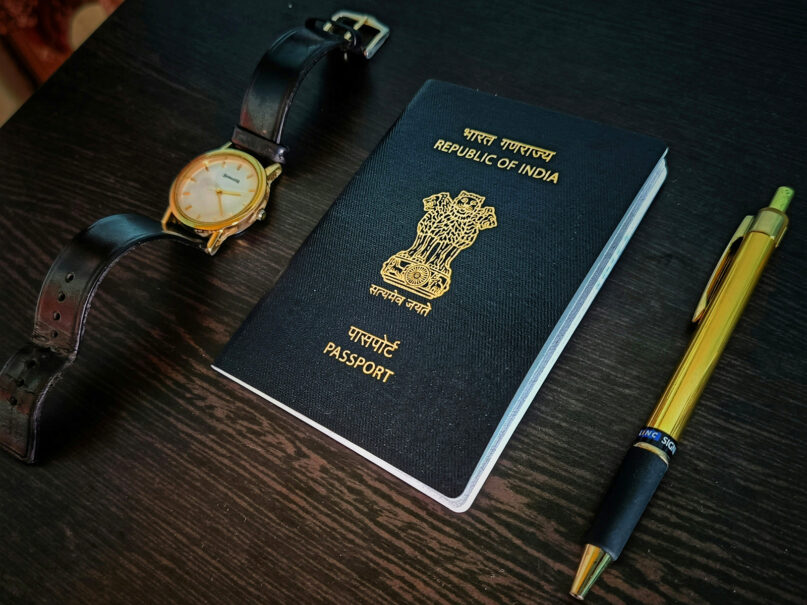
A Republic of India passport. (Photo by Sourav Debnath/Unsplash/Creative Commons)

Two-thirds of Indian Americans say they are Hindu or feel closely connected to Hinduism, and the majority of all Hindus in America are immigrants themselves, but the reluctance to talk about working-class immigrants is preventing a more robust response from Hindu temples and other faith organizations, advocates say.

Hindus for Human Rights’ latest initiative, “The Stranger Is God,” comes from the Hindu teaching of Atithi Devo Bhava — “be one for whom the stranger is God.” Hindu mandirs, or temples, say HfHR advocates, can and should function as sanctuaries.

So far, HfHR has worked with 10 mandirs across the New York City boroughs of Queens and the Bronx, where a high number of immigrants, many of Indian descent from Caribbean countries, live in fear of immigration authorities.

Though no U.S. Immigration and Customs Enforcement raids have been reported at Hindu temples, “this constant anxiety about ICE operating and communities being under siege takes a huge toll on us,” said psychologist and activist Ishwar Bridgelal.

“Almost all Hindus are either immigrants themselves or people who are of immigrant origin, right?” said Bridgelal. “A temple is not only a potential site for Know Your Rights trainings about immigration, but is a site where people come together and they heal.”

In recent months, members of the Nepali-speaking Bhutanese Hindu community in Pennsylvania have come under scrutiny by federal immigration officers, despite coming to the U.S. under a legal refugee resettlement program. More than 65 of them who committed crimes ranging from DUIs to domestic assault more than a decade ago have been detained in the past year, and 25 were deported back to Bhutan, where they had suffered religious and ethnic discrimination.

Other Indian Hindus have either misunderstood the refugees’ plight or been apathetic, including one Hindu politician who said that those who did the crimes “deserved the punishment.”

In recent months, however, the divide between “elite” H-1B recipients, 70% of whom are Indians, and less advantaged immigrants has begun to collapse. Amid a wave of anti-immigrant sentiment, Silicon Valley executives, politicians and conservative Christian pastors are challenging the program’s value, saying “too many” immigrants have been granted the temporary visa.

“America does not need more visas for people from India,” Turning Point USA founder Charlie Kirk posted on Monday (Sept. 1). “Perhaps no form of legal immigration has so displaced American workers as those from India. Enough already. We’re full. Let’s finally put our own people first.”

Last week, Trump, who has criticized the H-1B program since he began running for president in 2015, announced a major overhaul of the H-1B visa process. The U.S. Department of State will soon require all applicants for temporary visas like the H-1B to appear for an in-person interview, so those who attain a visa through the program’s lottery can be more fully vetted.

This pressure may be bringing South Asians of all faiths and social status together. Salman Bhojani, the first South Asian and first Muslim elected to the Texas Legislature, put out a viral social media campaign earlier this year in Gujurati and Urdu, the languages of Gujurat and Pakistan, respectively, to tell his constituents what to do in case of ICE’s presence at their homes or workplaces.


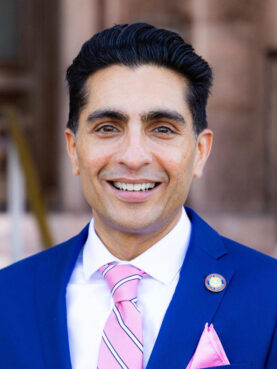
Salman Bhojani. (Courtesy photo)

The videos were well-received by many in his state who are from South Asian countries and own convenience stores, hotels or gas stations, said Bhojani. Many told him, “‘Hey, I voted for Trump, I had no idea that he would go after legal immigrants,'” said Bhojani.

“A lot of times, people have paid a lot of money to attorneys to legalize themselves, like my family, who has paid $25,000 to legally come in this country and do all that paperwork,” said Bhojani, who is from Pakistan. “But that doesn’t mean that I’m going to be mad at illegal immigrants that are coming in. Everybody’s coming and making our country better by putting in their heart and effort.”

Demonizing immigrants, legal or illegal, “is not the solution for America,” he said. (In recent weeks, Tarrant County GOP chairman Bo French has targeted Bhojani on social media, calling for him to be deported.)

For Jagota, the question of accepting illegal immigrants into the South Asian immigrant story is similarly an easy one from a Hindu standpoint.

“When we say ‘namaste,’ when we pray, when we meet someone, we are praying to the God in them too. As Hindus, we acknowledge that the God, the divine in us, is also in everyone else,” she said. “I think if you see God in everyone, you see yourself in them. You see their struggle as yours too.”

 Somalis defy militants with processions to mark Prophet Muhammad's birthday

MOGADISHU, Somalia (AP) — The Ministry of Labor and Social Affairs declared the public holiday for government and private-sector employees, citing Quranic verse on piety.

MOGADISHU, Somalia (AP) — Somalis on Thursday marked the Prophet Muhammad’s birthday with a government-declared public holiday, reviving an old tradition of merriment once banned by extremist militants who reject such public spectacle.

The Ministry of Labor and Social Affairs declared the public holiday for government and private-sector employees, citing Quranic verse on piety.

The prophet’s birthday, known as Mawlid, is marked across Somalia with Quran recitations, religious song, and processions led largely by Sufi communities. Similar celebrations took place in some other parts of the Muslim world.


In the capital, Mogadishu, the streets swelled with thousands of worshippers, many of them young people in white garments and waving bright green flags. Crowds spilled out of mosques and into open areas saturated with rhythmic chants and devotional song. Clerics recited Quranic verse via loudspeakers as people swayed in unison, clapping and ululating in joy.

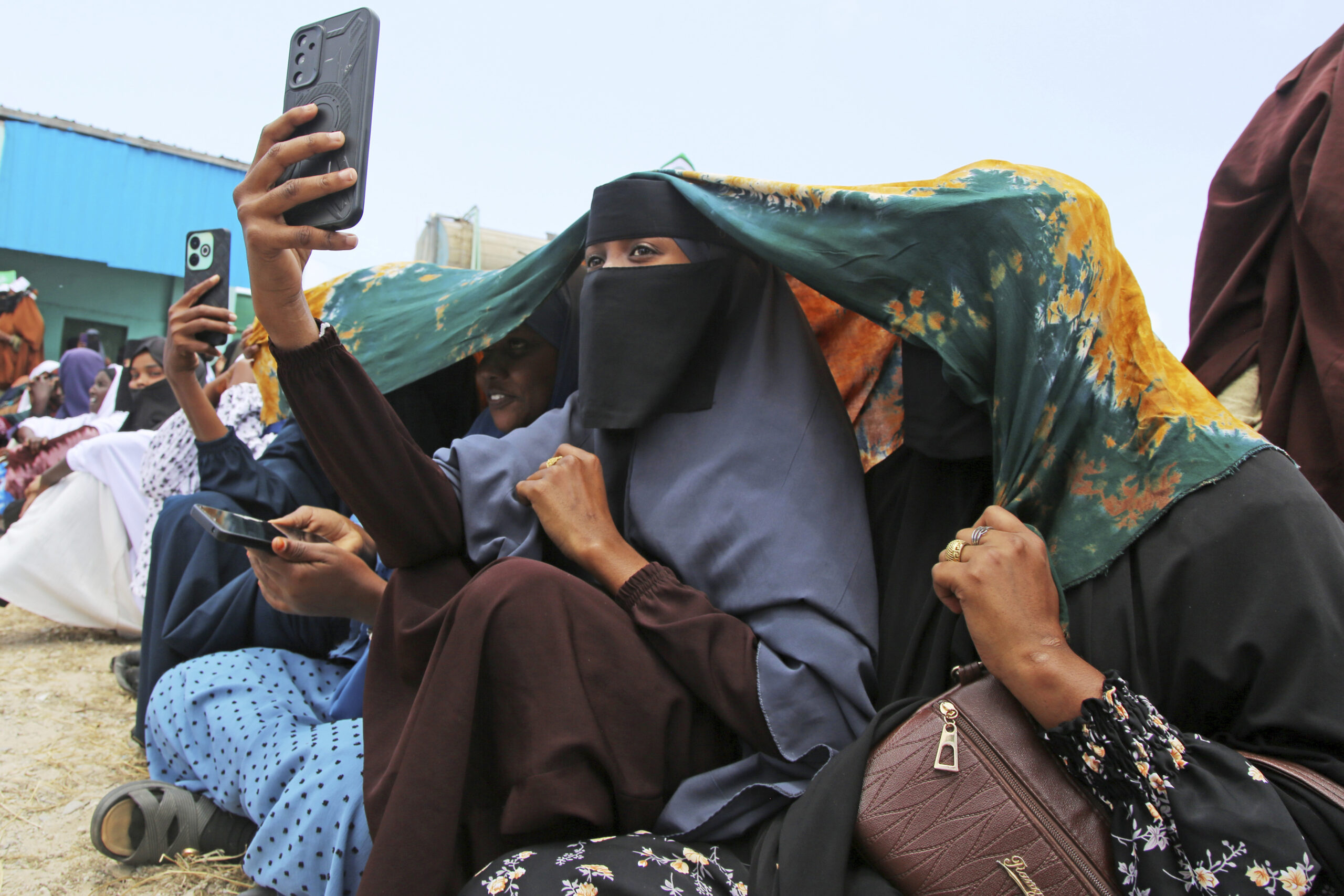
Some young people filmed the processions on their phones, livestreaming chants to friends abroad, while others hoisted banners adorned with verses of praise. Security forces, rifles slung over their shoulders, stood at the edges of the crowds, scanning for threats but unable to suppress the festive mood.

“To those who oppose this celebration, I say, ‘fear God,’” said Sheikh Abati Abba Nur, a Sufi scholar. “This is the month in which our prophet was born, and celebrating it does not contradict Islamic teachings.”

Not all Somalis welcomed the government’s move to impose a public holiday.

Sheikh Abdurahman Diriye, a Wahhabi scholar, told The Associated Press that Muhammad’s birthday was not celebrated in the prophet’s lifetime.

But other ordinary Somalis said the holiday carries deep personal meaning. “People are beginning to recognize the importance of this day as they shed ignorance,” said Fadumo Abdulkadir.

Somalia faces sporadic attacks from the Islamic extremist rebels of al-Shabab, which has been fighting to impose a state governed according to Sharia law and opposes the foreign-backed government in place. Islamic militants consider Sufis heretics because of their less literal interpretations of the faith.

Mawlid celebrations in Somalia were once driven underground after al-Shabab banned them during the group’s rise, calling the practice a religious “innovation.” Sufi communities were forced to abandon public processions until the militants were pushed out of Mogadishu in 2011.

Since then the gatherings have returned, growing each year under heavy security.

While many Muslim-majority countries honor the prophet’s birthday as a public holiday, others do not. In Saudi Arabia, for example, the strict, puritanical interpretation of Islam known as Wahhabism doesn’t permit celebrations of Mawlid.