Nepal mourns its dead after anti-corruption protests
Kathmandu (AFP) – Nepal flew flags at half-mast during a national day of mourning Wednesday for the 73 people killed during youth-led anti-corruption protests that toppled the government.
Issued on: 17/09/2025 - FRANCE24
 A man walks past as Nepal's national flag flies at half-mast in Kathmandu on September 17, 2025 © Arun SANKAR / AFP
An interim government, which took over after two days of protests last week, declared the day of mourning "in honour of those who lost their lives during the protests", the Ministry of Home Affairs said in a statement.
Protests began on September 8, sparked by a short-lived ban on social media, but fuelled by anger at corruption and long-standing economic woes.
At least 19 people were killed in a crackdown on the first day.
Anger over the deaths escalated, triggering an outpouring of rage nationwide, with government offices, a Hilton Hotel and other buildings set on fire.
"The changes we are witnessing today would not be possible without the courage and sacrifice of those who gave their lives during the protests," Hami Nepal, a key organisation in the protests, posted on social media.
Prime Minister Sushila Karki, a 73-year-old former chief justice, has been tasked with restoring order and addressing protester demands for a corruption-free future ahead of elections in six months.
Karki has declared the victims martyrs, promising state honours at their cremations.
Candlelit vigils will be held.
Shopkeeper Pooja Shrestha, 22, said that the day of mourning would bring people together.
"Everyone is sad about what happened, the loss of lives -- all young people like us," she said.
"Things have improved now, and we hope the new government will bring the changes we need."
A fifth of people in Nepal aged 15-24 are unemployed, according to the World Bank, with GDP per capita just $1,447.
'Intense'
Streets have been back to bustling business since the protests, but were quieter on Wednesday because it was declared a public holiday.
But Lokesh Tamang, 17, sitting in a gift shop in Kathmandu, kept the store open hoping for business after it was closed for days during the unrest.
 Women offer prayers at the Durbar Square in Bhaktapur on the outskirts of Kathmandu on September 16, 2025 © Arun SANKAR / AFP
He recalled the "intense" violence and mourned the "sad" deaths of the protesters.
"We hope that it doesn't get as bad as it did last week ever again," he said.
Police spokesman Binod Kharel said Wednesday that the death toll from the protests had risen to 73, including police officers and prisoners as they staged a mass breakout.
More than a third of the 13,500 prisoners who escaped from two dozen jails during the protests have been recaptured or surrendered themselves, he added.
"So far about 5,000 prisoners who had absconded have returned to the prisons, many voluntarily," Kharel said.
© 2025 AFP
After mass Nepal jailbreak, some prisoners surrender
Kathmandu (AFP) – Days after escaping alongside 13,500 others in a giant jailbreak during deadly anti-corruption protests in Nepal, Avinash Rai rubbed his belly after a meal -- and strolled back into prison.
Issued on: 17/09/2025 - FRANCE24
 Kathmandu's Nakhu prison bears the scars of the unrest, which saw parliament and government buildings torched © Arun SANKAR / AFP
The 46-year-old convicted smuggler stunned relatives when he turned up at their Kathmandu home during last week's chaos, in which protesters torched the parliament and toppled the government.
The violence left at least 73 dead and saw security collapse across the capital, with inmates streaming out of fire-damaged jails countrywide.
"We were in a situation where saving our own lives was a challenge," Rai, with two small bags slung on his shoulders, told AFP just before he surrendered himself at the gates of Kathmandu's Nakhu prison.
"There were no cops here -— there was massive arson and vandalism. The gate was open after that."
He emerged from prison into violent crowds and fires burning across the city.
"It was a really bad time out," he said referring to the mayhem as he escaped. "Now I'm going in."
Youth-led protests in the Himalayan nation began on September 8, sparked by a short-lived ban on social media, but fuelled by anger at corruption and long-standing economic woes.
At least 19 people were killed in a crackdown.
A day later, anger over the deaths escalated, triggering an outpouring of rage nationwide -- with government buildings set alight and violence erupting in multiple prisons.
Rai, jailed for smuggling contraband across the India-Nepal border, has served 20 months of a 22-month sentence and appealed for the new government to "show some leniency".
'Cops searching'
More than a third of the fugitives -- 5,000 out of 13,500 -- have been recaptured, police said.
Some were caught by Indian security forces as they tried to slip across the long, porous frontier.
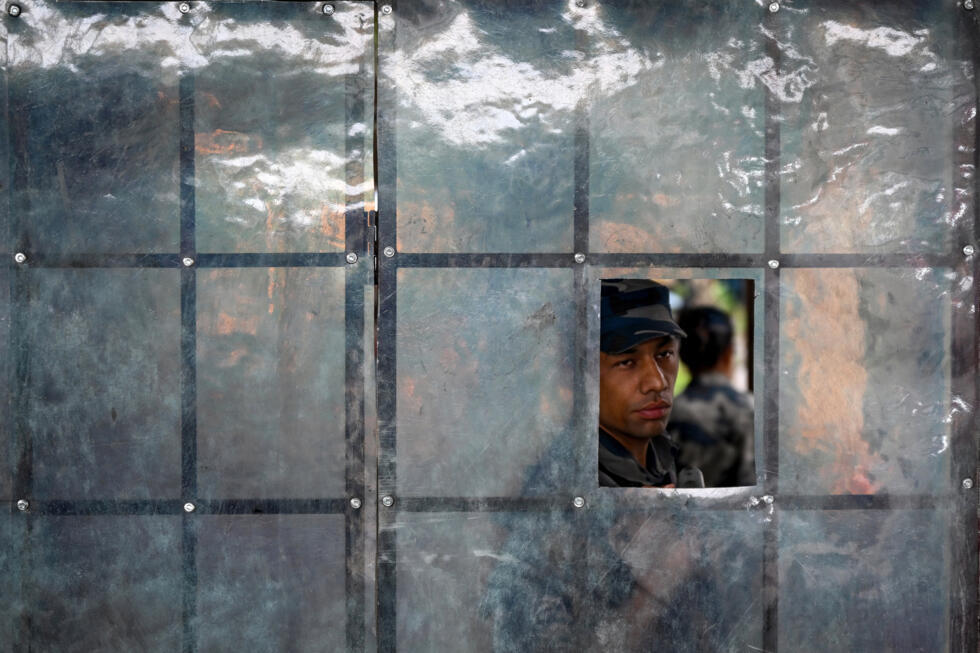 Thousands of inmates took advantage of the chaos to escape jails across Nepal © Arun SANKAR / AFP
Many still on the run include hardened criminals.
Others, like Rai, handed themselves back in -- many convicted of lesser offences or near the end of their sentences.
His friend Nagendra Shreshtha, who accompanied him back to jail, said Rai's family had been shocked when he appeared at their door.
"It was just crazy that all these people managed to come out of jail," Shreshtha said. "We advised him that it made sense to return on his own."
At the prison gates, Rai was not alone.
Som Gopali, 40, jailed for five years for assault and with nine months still to serve, hugged his tearful wife as he also handed himself in.
"It was a shock when Som phoned me," said his sister Preeti Yonjan, 42, who also came with him to the jail gate.
"I was dumbfounded and took time to process how he was out".
Many families described anguish at their relatives' return behind bars after a brief taste of freedom.
"He couldn't have stayed out with cops searching for him, and when he has nearly served his time," Yonjan said.
- Things must change'
Nakhu prison itself still bears the scars of the unrest.
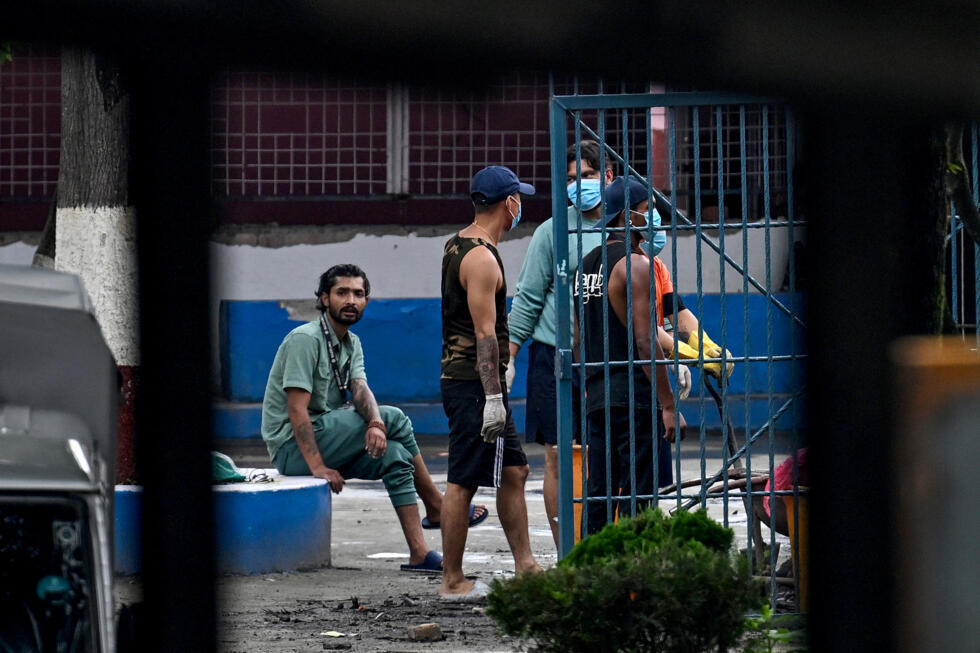 Volunteers take part in a drive to clear rubble from Nakhu prison in Kathmandu © Arun SANKAR / AFP
Walls are scorched black, slogans of the "Gen Z" youth protesters are scrawled across the entrance, and community volunteers have been ferrying in donated mattresses, blankets and utensils.
"There is burnt soot everywhere," said local volunteer Savyata Bhakti, 22.
"The first night we heard about the escape was tense, and everyone was extra vigilant about safety."
Suresh Raj Aran, 40, whose 23-year-old son Sevak surrendered, said he had fled only to escape the violence inside prison.
"My son is innocent and we want him home with his parents, but only through a proper legal process," Aran said.
Outside the prison, families expressed hope that Nepal's new interim government, leading the country towards elections in March 2026, would improve conditions.
The World Bank says a "staggering" 82 percent of Nepal's workforce is in informal employment, with GDP per capita just $1,447.
"Things must change -- because if not now then when?," said Poornima Gopali, 29, waving as her brother Som returned inside.
© 2025 AFP
Kathmandu (AFP) – Nepal flew flags at half-mast during a national day of mourning Wednesday for the 73 people killed during youth-led anti-corruption protests that toppled the government.
Issued on: 17/09/2025 - FRANCE24
A man walks past as Nepal's national flag flies at half-mast in Kathmandu on September 17, 2025 © Arun SANKAR / AFP
An interim government, which took over after two days of protests last week, declared the day of mourning "in honour of those who lost their lives during the protests", the Ministry of Home Affairs said in a statement.
Protests began on September 8, sparked by a short-lived ban on social media, but fuelled by anger at corruption and long-standing economic woes.
At least 19 people were killed in a crackdown on the first day.
Anger over the deaths escalated, triggering an outpouring of rage nationwide, with government offices, a Hilton Hotel and other buildings set on fire.
"The changes we are witnessing today would not be possible without the courage and sacrifice of those who gave their lives during the protests," Hami Nepal, a key organisation in the protests, posted on social media.
Prime Minister Sushila Karki, a 73-year-old former chief justice, has been tasked with restoring order and addressing protester demands for a corruption-free future ahead of elections in six months.
Karki has declared the victims martyrs, promising state honours at their cremations.
Candlelit vigils will be held.
Shopkeeper Pooja Shrestha, 22, said that the day of mourning would bring people together.
"Everyone is sad about what happened, the loss of lives -- all young people like us," she said.
"Things have improved now, and we hope the new government will bring the changes we need."
A fifth of people in Nepal aged 15-24 are unemployed, according to the World Bank, with GDP per capita just $1,447.
'Intense'
Streets have been back to bustling business since the protests, but were quieter on Wednesday because it was declared a public holiday.
But Lokesh Tamang, 17, sitting in a gift shop in Kathmandu, kept the store open hoping for business after it was closed for days during the unrest.
An interim government, which took over after two days of protests last week, declared the day of mourning "in honour of those who lost their lives during the protests", the Ministry of Home Affairs said in a statement.
Protests began on September 8, sparked by a short-lived ban on social media, but fuelled by anger at corruption and long-standing economic woes.
At least 19 people were killed in a crackdown on the first day.
Anger over the deaths escalated, triggering an outpouring of rage nationwide, with government offices, a Hilton Hotel and other buildings set on fire.
"The changes we are witnessing today would not be possible without the courage and sacrifice of those who gave their lives during the protests," Hami Nepal, a key organisation in the protests, posted on social media.
Prime Minister Sushila Karki, a 73-year-old former chief justice, has been tasked with restoring order and addressing protester demands for a corruption-free future ahead of elections in six months.
Karki has declared the victims martyrs, promising state honours at their cremations.
Candlelit vigils will be held.
Shopkeeper Pooja Shrestha, 22, said that the day of mourning would bring people together.
"Everyone is sad about what happened, the loss of lives -- all young people like us," she said.
"Things have improved now, and we hope the new government will bring the changes we need."
A fifth of people in Nepal aged 15-24 are unemployed, according to the World Bank, with GDP per capita just $1,447.
'Intense'
Streets have been back to bustling business since the protests, but were quieter on Wednesday because it was declared a public holiday.
But Lokesh Tamang, 17, sitting in a gift shop in Kathmandu, kept the store open hoping for business after it was closed for days during the unrest.
Women offer prayers at the Durbar Square in Bhaktapur on the outskirts of Kathmandu on September 16, 2025 © Arun SANKAR / AFP
He recalled the "intense" violence and mourned the "sad" deaths of the protesters.
"We hope that it doesn't get as bad as it did last week ever again," he said.
Police spokesman Binod Kharel said Wednesday that the death toll from the protests had risen to 73, including police officers and prisoners as they staged a mass breakout.
More than a third of the 13,500 prisoners who escaped from two dozen jails during the protests have been recaptured or surrendered themselves, he added.
"So far about 5,000 prisoners who had absconded have returned to the prisons, many voluntarily," Kharel said.
© 2025 AFP
He recalled the "intense" violence and mourned the "sad" deaths of the protesters.
"We hope that it doesn't get as bad as it did last week ever again," he said.
Police spokesman Binod Kharel said Wednesday that the death toll from the protests had risen to 73, including police officers and prisoners as they staged a mass breakout.
More than a third of the 13,500 prisoners who escaped from two dozen jails during the protests have been recaptured or surrendered themselves, he added.
"So far about 5,000 prisoners who had absconded have returned to the prisons, many voluntarily," Kharel said.
© 2025 AFP
Kathmandu (AFP) – Days after escaping alongside 13,500 others in a giant jailbreak during deadly anti-corruption protests in Nepal, Avinash Rai rubbed his belly after a meal -- and strolled back into prison.
Issued on: 17/09/2025 - FRANCE24
Kathmandu's Nakhu prison bears the scars of the unrest, which saw parliament and government buildings torched © Arun SANKAR / AFP
The 46-year-old convicted smuggler stunned relatives when he turned up at their Kathmandu home during last week's chaos, in which protesters torched the parliament and toppled the government.
The violence left at least 73 dead and saw security collapse across the capital, with inmates streaming out of fire-damaged jails countrywide.
"We were in a situation where saving our own lives was a challenge," Rai, with two small bags slung on his shoulders, told AFP just before he surrendered himself at the gates of Kathmandu's Nakhu prison.
"There were no cops here -— there was massive arson and vandalism. The gate was open after that."
He emerged from prison into violent crowds and fires burning across the city.
"It was a really bad time out," he said referring to the mayhem as he escaped. "Now I'm going in."
Youth-led protests in the Himalayan nation began on September 8, sparked by a short-lived ban on social media, but fuelled by anger at corruption and long-standing economic woes.
At least 19 people were killed in a crackdown.
A day later, anger over the deaths escalated, triggering an outpouring of rage nationwide -- with government buildings set alight and violence erupting in multiple prisons.
Rai, jailed for smuggling contraband across the India-Nepal border, has served 20 months of a 22-month sentence and appealed for the new government to "show some leniency".
'Cops searching'
More than a third of the fugitives -- 5,000 out of 13,500 -- have been recaptured, police said.
Some were caught by Indian security forces as they tried to slip across the long, porous frontier.
The 46-year-old convicted smuggler stunned relatives when he turned up at their Kathmandu home during last week's chaos, in which protesters torched the parliament and toppled the government.
The violence left at least 73 dead and saw security collapse across the capital, with inmates streaming out of fire-damaged jails countrywide.
"We were in a situation where saving our own lives was a challenge," Rai, with two small bags slung on his shoulders, told AFP just before he surrendered himself at the gates of Kathmandu's Nakhu prison.
"There were no cops here -— there was massive arson and vandalism. The gate was open after that."
He emerged from prison into violent crowds and fires burning across the city.
"It was a really bad time out," he said referring to the mayhem as he escaped. "Now I'm going in."
Youth-led protests in the Himalayan nation began on September 8, sparked by a short-lived ban on social media, but fuelled by anger at corruption and long-standing economic woes.
At least 19 people were killed in a crackdown.
A day later, anger over the deaths escalated, triggering an outpouring of rage nationwide -- with government buildings set alight and violence erupting in multiple prisons.
Rai, jailed for smuggling contraband across the India-Nepal border, has served 20 months of a 22-month sentence and appealed for the new government to "show some leniency".
'Cops searching'
More than a third of the fugitives -- 5,000 out of 13,500 -- have been recaptured, police said.
Some were caught by Indian security forces as they tried to slip across the long, porous frontier.
Thousands of inmates took advantage of the chaos to escape jails across Nepal © Arun SANKAR / AFP
Many still on the run include hardened criminals.
Others, like Rai, handed themselves back in -- many convicted of lesser offences or near the end of their sentences.
His friend Nagendra Shreshtha, who accompanied him back to jail, said Rai's family had been shocked when he appeared at their door.
"It was just crazy that all these people managed to come out of jail," Shreshtha said. "We advised him that it made sense to return on his own."
At the prison gates, Rai was not alone.
Som Gopali, 40, jailed for five years for assault and with nine months still to serve, hugged his tearful wife as he also handed himself in.
"It was a shock when Som phoned me," said his sister Preeti Yonjan, 42, who also came with him to the jail gate.
"I was dumbfounded and took time to process how he was out".
Many families described anguish at their relatives' return behind bars after a brief taste of freedom.
"He couldn't have stayed out with cops searching for him, and when he has nearly served his time," Yonjan said.
- Things must change'
Nakhu prison itself still bears the scars of the unrest.
Many still on the run include hardened criminals.
Others, like Rai, handed themselves back in -- many convicted of lesser offences or near the end of their sentences.
His friend Nagendra Shreshtha, who accompanied him back to jail, said Rai's family had been shocked when he appeared at their door.
"It was just crazy that all these people managed to come out of jail," Shreshtha said. "We advised him that it made sense to return on his own."
At the prison gates, Rai was not alone.
Som Gopali, 40, jailed for five years for assault and with nine months still to serve, hugged his tearful wife as he also handed himself in.
"It was a shock when Som phoned me," said his sister Preeti Yonjan, 42, who also came with him to the jail gate.
"I was dumbfounded and took time to process how he was out".
Many families described anguish at their relatives' return behind bars after a brief taste of freedom.
"He couldn't have stayed out with cops searching for him, and when he has nearly served his time," Yonjan said.
- Things must change'
Nakhu prison itself still bears the scars of the unrest.
Volunteers take part in a drive to clear rubble from Nakhu prison in Kathmandu © Arun SANKAR / AFP
Walls are scorched black, slogans of the "Gen Z" youth protesters are scrawled across the entrance, and community volunteers have been ferrying in donated mattresses, blankets and utensils.
"There is burnt soot everywhere," said local volunteer Savyata Bhakti, 22.
"The first night we heard about the escape was tense, and everyone was extra vigilant about safety."
Suresh Raj Aran, 40, whose 23-year-old son Sevak surrendered, said he had fled only to escape the violence inside prison.
"My son is innocent and we want him home with his parents, but only through a proper legal process," Aran said.
Outside the prison, families expressed hope that Nepal's new interim government, leading the country towards elections in March 2026, would improve conditions.
The World Bank says a "staggering" 82 percent of Nepal's workforce is in informal employment, with GDP per capita just $1,447.
"Things must change -- because if not now then when?," said Poornima Gopali, 29, waving as her brother Som returned inside.
© 2025 AFP
Walls are scorched black, slogans of the "Gen Z" youth protesters are scrawled across the entrance, and community volunteers have been ferrying in donated mattresses, blankets and utensils.
"There is burnt soot everywhere," said local volunteer Savyata Bhakti, 22.
"The first night we heard about the escape was tense, and everyone was extra vigilant about safety."
Suresh Raj Aran, 40, whose 23-year-old son Sevak surrendered, said he had fled only to escape the violence inside prison.
"My son is innocent and we want him home with his parents, but only through a proper legal process," Aran said.
Outside the prison, families expressed hope that Nepal's new interim government, leading the country towards elections in March 2026, would improve conditions.
The World Bank says a "staggering" 82 percent of Nepal's workforce is in informal employment, with GDP per capita just $1,447.
"Things must change -- because if not now then when?," said Poornima Gopali, 29, waving as her brother Som returned inside.
© 2025 AFP
Nepal: Shock Insurrection – Analysis
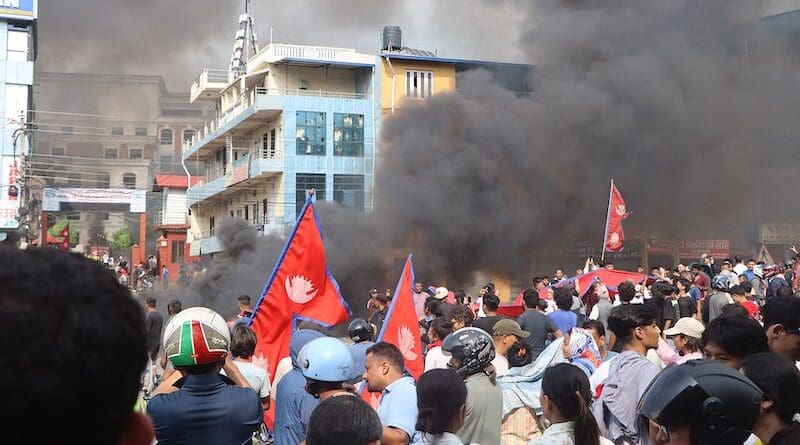
Gen Z protest in Nepal. Photo Credit: हिमाल सुवेदी, Wikipedia Commons
September 16, 2025
SATP
By Ajit Kumar Singh
On September 8, 2025, student-led “Gen Z” protests broke out in Kathmandu after the government imposed a ban on multiple social media platforms. Protesters carried placards reading “Shut down corruption, not social media,” “Unban social media,” and “Youths against corruption,” making it clear that their anger was directed as much at corruption and misrule as at the ban itself. As the day progressed, demonstrators – most of them young – forced their way into the Parliament complex, breaking through barricades, setting fire to an ambulance, and hurling objects at riot police. By evening, Nepal had witnessed one of the deadliest crackdowns of its republican era: at least 19 people were killed and more than 300 injured.
In an effort to calm the situation, the government lifted the social media ban that night, and Home Minister Ramesh Lekhak resigned during an emergency Cabinet meeting. But these concessions failed to placate the demonstrators.
On September 9, protests spread across Kathmandu and other cities. Defying restrictions on public gatherings, students and youth returned to the streets chanting slogans such as “Don’t kill students,” “KP Chor, Desh Chhod” (Prime Minister K. P. Oli is a thief, quit the country), and “Take action against corrupt leaders.” Violence quickly escalated. Protesters set fire to government buildings, seized automatic rifles, and attacked the headquarters of the Nepali Congress Party, the residence of former Prime Minister (PM) Sher Bahadur Deuba, and the homes of several other senior politicians. The Parliament building itself was set ablaze. Ministers had to be evacuated by Army helicopters from their residences in Bhaisepati, as mobs torched officials’ homes, including that of a Cabinet Minister. The Army Chief, General Ashok Raj Sigdel, eventually advised Prime Minister K.P. Sharma Oli to resign, warning that the military could only stabilize the country if he stepped down. Within hours, Oli quit. But the violence continued.
By September 12, police reported that at least 51 people had died in the unrest, including 21 protesters, three police officers, nine prisoners, and 18 civilians. More than 1,000 prisoners who had escaped from jail during the chaos were recaptured, but over 12,500 remained on the run. The Army imposed a nationwide curfew (later lifted on September 13) and took over law-and-order duties.
Amid the turmoil, a process to establish an interim government commenced. Eventually, former Chief Justice Sushila Karki was sworn in as Nepal’s first woman Prime Minister. President Ram Chandra Paudel, who administered the oath of office, also announced that parliamentary elections would be held on March 5, 2026.
The decision, however, was divisive. Though Paudel reportedly consulted political leaders, legal experts, and civil society before making the appointment, the dissolution of Parliament drew sharp criticism. The Nepali Congress (NC), the Communist Party of Nepal-Unified Marxist Leninist (CPN-UML), and the Communist Party of Nepal-Maoist Centre (CPN-MC) all condemned the move as unconstitutional and arbitrary. NC General Secretary Bishwa Prakash Sharma warned that any breach of the Constitution would raise grave concerns, while CPN-UML General Secretary Shankar Pokharel described the decision as “ironically concerning.” The CPN-MC expressed similar objections. Even Speaker Devaraj Ghimire and National Assembly Chairman Narayan Dahal called for the crisis to be resolved “within the framework of the Constitution.” In his resignation letter, Oli himself had cited Nepal’s “extraordinary circumstances” as justification for stepping aside in order to clear the way for a political and constitutionalresolution.
Although the September protests were triggered by the social media ban, the anger behind them had been building for years. Since the monarchy was abolished in 2008, Nepal has cycled through 14 governments in 17 years (the incumbent caretaker government is the 15th), dominated by the same few leaders — CPN-UML Chairman Oli, CPN-MC Chairman Pushpa Kamal Dahal, and Sher Bahadur Deuba — each accused of corruption, nepotism, and self-interest. Youth unemployment hovers around 20 percent, while more than 2,000 Nepalis leave the country every day to take up low-paying jobs abroad. Earlier in 2025, a viral TikTok campaign exposing the extravagant lifestyles of politicians’ children — dubbed “nepo kids” — further deepened resentment. When Oli dismissed the demonstrators as nothing more than “Gen Z troublemakers,” the gap between the ruling elite and the youth widened further.
This was not the first time Nepal had seen such unrest. In 2015, protests against the new Constitution in Terai killed 57 people. In 2022, urban voters swung behind independent candidates as a protest against the established parties. From 2023, pro-monarchy rallies have gathered strength, calling for the restoration of King Gyanendra. Most recently, on March 28, 2025, at least two civilians were killed, and 110 persons – 53 Nepal Police personnel, 22 officers from the Armed Police Force and 35 protesters – sustained injuries, as violent clashes between security personnel and pro-monarchy protesters erupted during a royalist demonstration in the Tinkune area of Kathmandu District in Nepal’s Bagmati Province. Indeed, during the September 2025 riots, tellingly, royalist offices were left untouched, suggesting that public anger was directed primarily at republican politicians rather than the idea of monarchy itself.
What made the September 2025 uprising different was its generational character. With a median age of just over 25, Nepal has one of the youngest populations in the region, and digital platforms gave young people unprecedented organizational power. On Discord, a “virtual parliament” of 145,000 members debated political alternatives and ultimately endorsed Sushila Karki as Interim Prime Minister. Protesters carried both the national flag and the Straw Hat Jolly Roger from the Japanese manga One Piece, which became an emblem of rebellion. Grassroots leaders such as Sudan Gurung, known for his disaster relief work, also rose to prominence. Their demands were simple: dissolve Parliament, hold fresh elections, and investigate corruption and state killings.
The Army played a pivotal role. It was responsible for some of the early crackdowns, but it also pressured political leaders to step aside to avert greater chaos. General Sigdel warned that failure to act could lead to a full state of emergency. Under military pressure, Parliament was dissolved, and Karki was installed as Interim Prime Minister. While many celebrated her appointment as a victory for the protest movement, it also revealed the weakness of civilian institutions and the Army’s role as the ultimate arbiter in moments of crisis.
The uprising in Nepal echoed similar youth-led movements elsewhere in South Asia. In Sri Lanka in 2022, young protesters forced the resignation of President Gotabaya Rajapaksa. In Bangladesh in 2024, students brought down Sheikh Hasina’s long rule. In both these cases, corruption, economic failure, and digital mobilization drove mass uprisings that traditional power structures struggled to control. Nepal’s crisis drew international attention as well: India called for calm, China watched anxiously for spillover, the United States issued a travel advisory, and the United Nations offered assistance. Rumours circulated that foreign Non-Governmental Organisations had played a role in coordinating protests, though no evidence was produced.
The damage to Nepal was severe. The hotel and tourism industry reported losses of 25 billion rupees in just a few days. Tourism, which provides about eight percent of jobs, collapsed as flights were cancelled and curfews paralyzed daily life. With thousands of prisoners still at large, security remained fragile. Social divisions also resurfaced: while the ‘Gen Z’ protests were national in scope, marginalized groups such as the Madhesis feared that their own grievances would be overlooked. At the same time, the failures of the established parties opened political space for independent figures like Kathmandu’s mayor, Balendra Shah, who is now seen as a possible contender in the 2026 elections.
Whether the September 2025 uprising marks a turning point or simply another cycle of instability remains uncertain. Since 2008, Nepal has lurched from protest to protest, each time producing government collapse without meaningful reform. What was new this time was the scale of youth mobilization and the use of digital platforms not just to organize, but to propose leadership alternatives. The appointment of Sushila Karki was a symbolic victory for the protesters, but without deeper systemic reforms, the cycle of unrest may continue. Some fear that if disillusionment deepens further, efforts to restore monarchist and authoritarian rule could intensify.
The events of September 8 – 12, 2025, will be remembered as a defining moment for the republic. Dozens of lives were lost, thousands were injured, and the economy was battered. Yet, the protests also revealed the strength of a new generation unwilling to accept corruption and stagnation. Nepal now stands at a crossroads: it must either move toward a more accountable and inclusive democracy or risk sliding back into instability and authoritarianism.
Ajit Kumar Singh
Senior Fellow; Institute for Conflict Management

SATP, or the South Asia Terrorism Portal (SATP) publishes the South Asia Intelligence Review, and is a product of The Institute for Conflict Management, a non-Profit Society set up in 1997 in New Delhi, and which is committed to the continuous evaluation and resolution of problems of internal security in South Asia. The Institute was set up on the initiative of, and is presently headed by, its President, Mr. K.P.S. Gill, IPS (Retd).
SATP, or the South Asia Terrorism Portal (SATP) publishes the South Asia Intelligence Review, and is a product of The Institute for Conflict Management, a non-Profit Society set up in 1997 in New Delhi, and which is committed to the continuous evaluation and resolution of problems of internal security in South Asia. The Institute was set up on the initiative of, and is presently headed by, its President, Mr. K.P.S. Gill, IPS (Retd).