Sunday, September 21, 2025


What the WTO's Deal to Curb Fishery Subsidies Could Mean
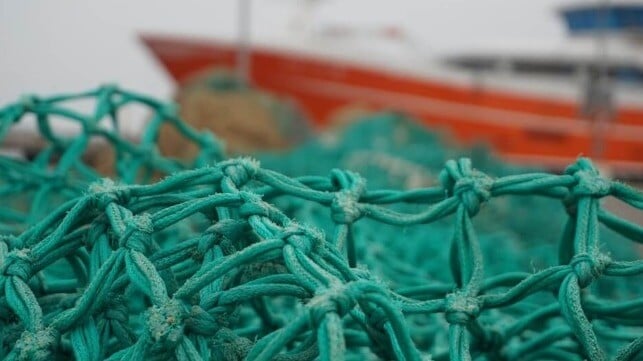
Fishing net iStock / Liudmila Kiermeier
iStock / Liudmila Kiermeier

Published Sep 21, 2025 2:10 PM by The Conversation


[By Daniel Skerritt and Rashid Sumaila]

After nearly 25 years of negotiations, the World Trade Organization (WTO) finally has its first legally binding agreement to tackle government fisheries subsidies. After two-thirds of WTO members ratified the Agreement on Fisheries Subsidies, the deal has entered into force. It marks a long-overdue step toward addressing the role harmful fisheries subsidies play in overfishing.

Fisheries subsidies can cause harm by distorting markets and creating unequal competition — so-called “trade injuries.” In addition, they can cause ecological harm by increasing the capacity of fishing vessels and fleets. The result is overcapacity: too many boats chasing too few fish, which often leads to overfishing.

When WTO talks on fisheries subsidies began in 2001, fish populations were already in decline. Today, 38 per cent of fish stocks are overfished, and a further 50 per cent are fully exploited. That means most of the world’s fisheries are being fished at or beyond their biological limits.

For decades, government subsidies have helped industrial fishing fleets expand, often with little regard for sustainability. These subsidies have distorted access to fish and seafood, fuelled overfishing and harmed coastal communities — especially in low-income countries where fish are critical to food security and livelihoods.

This agreement is a major milestone, but it’s only the beginning. Here’s what the agreement covers, why it matters and what needs to happen next to protect ocean health and ensure an equitable ocean economy for coastal communities.

What the agreement covers and why it matters

WTO members first raised the issue of harmful fisheries subsidies at the Fourth Ministerial Conference in Doha in 2001. For years, talks made little headway — until the adoption of the United Nations Sustainable Development Goals (SDGs) in 2015.

Target 14.6 of the SDGs explicitly called on the WTO to:

“Prohibit certain forms of fisheries subsidies which contribute to overcapacity and overfishing, eliminate subsidies that contribute to illegal, unreported and unregulated fishing and refrain from introducing new such subsidies.”

This helped re-energize negotiations, culminating in the adoption of the subsidies agreement at the WTO’s 12th Ministerial Conference in 2022.

The agreement includes three key prohibitions targeting the worst kinds of subsidies. First, ratifying WTO members must stop subsidizing illegal, unreported and unregulated fishing (Article 3).

Second, they must end subsidies for vessels targeting overfished stocks unless they can demonstrate that effective management measures are in place to rebuild those stocks (Article 4). Third, subsidies for fishing on the unregulated high seas are banned (Article 5).

While these measures don’t address all subsidies that contribute to overcapacity, they target some of the most egregious forms of financial support.

Another critical part of the agreement is Article 8, which strengthens transparency and accountability. Members must now provide detailed information annually, including information on fish stocks, conservation and management measures, fleet capacity and the names of subsidized vessels.

Historically, fisheries subsidies data has been patchy and incomplete. Better data will help identify who benefits from public financial support and whether it aligns with sustainability goals.

The agreement also introduces more equitable expectations for developing and least developed countries. These members are granted an extra two years before they must implement subsidy prohibitions and, crucially, can access the WTO Fish Fund — a funding mechanism that helps countries implement the agreement through technical assistance and partnerships.

While the agreement does not fully level the playing field, it establishes that major subsidizers must carry the greatest burden.

Challenges, Gaps and Next Steps

Despite its strengths on paper, the agreement only covers a fraction of the estimated $22 billion in harmful fisheries subsidies provided by governments each year. The most prevalent of all the harmful subsidies, fuel subsidies, remain largely untouched.

Another major limitation is that it only applies to countries that have ratified the agreement. As of now, some major subsidizers — including Indonesia and Thailand, two of the world’s top 10 subsidy providers — have yet to ratify.

In a 2021 report we wrote for ocean conservation group Oceana, we found that just 10 countries are responsible for 64 percent of global harmful subsidies. Even with this agreement in force, without their participation, large gaps will remain.

Another challenge is ensuring transparency and data disclosure. While the agreement includes stronger notification requirements, it lacks detailed reporting guidelines. Much of the implementation will depend on self-reporting and peer accountability between members.

Without clear standards or enforcement mechanisms, many subsidy programs could remain opaque or under-reported. To have real impact, the WTO must develop robust and standardized reporting frameworks.

Whether this agreement will save fish, or merely save face, will come down to how it’s implemented. Success will hinge on whether WTO members hold each other accountable and whether industry, civil society and researchers can push their governments toward genuine compliance.

Importantly, the subsidies agreement was never meant to be the end of the conversation. Its entry into force triggers a four-year countdown to negotiate the next phase.

They must address the most damaging subsidies of all, those that fund fishing by rich foreign fleets in the waters of other nations, and those that drive overcapacity, to achieve a comprehensive agreement. These policies have the greatest potential ecological and equity impact but are the hardest to reach consensus on.

Fortunately, we’re now closer to that goal. The entry into force of this agreement provides the ideal platform from which SDG Target 14.6 can be fully achieved. Putting an end to billions in fishing subsidies would restore fish stocks, support coastal communities, and improve ocean health for all. The job is not yet done.

Daniel Skerritt is an Affiliated Researcher, Fisheries Economics Research Unit, University of British Columbia.

Rashid Sumaila is Director & Professor, Fisheries Economics Research Unit, University of British Columbia.

This article appears courtesy of The Conversation and may be found in its original form here

The Conversation

The opinions expressed herein are the author's and not necessarily those of The Maritime Executive.

BAN DEEP SEA MINING

Mapping the world's oceans — a blessing or a curse?
DW
21/09/2025 - 


Oceans cover three-quarters of the Earth, yet only 20% of the seafloor has yet been mapped. The race to understand these depths could further scientific understanding, but also lead to exploitation.


International researchers have so far mapped just one-fifth of the mysterious ocean floor

Image: H. Goethel/blickwinkel/picture alliance

Looking at Google Maps, it may seem as if every last corner of the planet has already been subjected to topographical surveys. But what lies beneath the ocean surface remains largely hidden from the view of orbiting satellites.

That's because radar signals can't penetrate water. So while commercial satellites provide a resolution of about 30 centimeters per pixel of the Earth's surface, ocean images are much rougher, with a resolution of around just 5 to 8 kilometers (3-5 miles) per pixel.

Only about 20% of the ocean floor has been surveyed so far with echo sounding. But Seabed 2030, a joint project between the United Nations and the private Nippon Foundation, aims to map the entire ocean floor by the end of this decade.

Ocean depths hold 'entire worlds'

"The ocean covers 71% of the planet, so it's just vast, incomprehensibly vast," said Laura Trethewey, a Canadian environmental journalist and author of "The Deepest Map: The High-Stakes Race to Chart the World's Oceans," published in 2023.

"There's just no terrestrial equivalent, which is why we so often compare the ocean to the moon or outer space. There's nowhere else on land that comes close to the ocean in terms of size," she added, pointing out that both the moon and Mars have been more thoroughly mapped than the ocean floor.

"We stretch for the stars and dream of building new perfect societies on Mars. But I would point out that we have this otherworldly space right here on Earth that we haven't finished exploring yet."

To research her book, Laura Trethewey traveled to an Inuit-led hydrographic community project in the Arctic, a drone factory in San Francisco and deep-sea mining talks
Image: Colin Boyd Shafer

To explore the underwater universe, acoustic sound waves are emitted in a fan-like pattern from ships, diving robots and submarines in various directions toward the seafloor. The time it takes for these signals to travel to the bottom and back is measured individually for each sound wave, from which the depth is calculated. The deeper the sound, the deeper the sea.

Surveying with multibeam echo sounding provides topographic maps, three-dimensional models and terrain profiles even for very great depths. "There are entire worlds that we're missing out on right here on Earth — undiscovered mountains and canyons, animals unknown to science and just huge amounts of data and discoveries that are still out there waiting for us," said Trethewey.

In light of climate change, researching the seabed could also provide important information about what the future could hold.

"A lot of the seafloor used to be land. After the last ice age, melting glaciers released water that covered continental shelves that are equal to the size of South America. So there's a whole other continent down there, another lost Atlantis, that could hold insight into how past human societies navigated sea level rise and what we might do facing the same problem in the future," said Trethewey.

"Making the map is the first step in making that future a reality."

An ambitious project

Seabed 2030 will likely fall short of its ambitious goal, however. The oceans are simply too large and the ships and sonar equipment needed are lacking — not to mention the delays due to the COVID-19 pandemic and a waning political motivation.

"Back when the project launched in 2017, the world was a less fractured place, geopolitically. We live in a more unstable time now and governments are more suspicious and less willing to share maps," said Trethewey, adding that technology isn't the issue as it has existed for decades.

Organizers have tried in vain to "make up for any shortfalls with innovations like drones and crowdsourcing and recruiting super yachts and cruise ships to map the seafloor," she said.


Major 'push to exploit the deep sea'

But the fact remains that deep-sea exploration poses an extreme challenge for both humans and equipment. Adverse conditions at sea require expedition costs of around $50,000 (€43,000) a day, said Trethewey, "which means governments and businesses often need a good incentive to map, usually for resources, infrastructure or national security interests."

Seabed 2030 has estimated that the cost of reaching its goal will be between $3 billion and $4 billion (€2.5 billion to €3.4 billion) —roughly equivalent to the NASA Mars mission that began in 2020 and included landing a rover on the planet.

One downside of success could be that more complete mapping would significantly accelerate the exploitation of the oceans, however. "When people think of maps, they often think of mining and resource extraction. And they're not wrong. Right now there’s a big push to exploit the deep sea and open the first commercial mines in international waters," said Trethewey.

But she hopes that mapping will be used primarily for science and conservation, as the international community agreed to do after the complete mapping of Antarctica with the Antarctic Treaty in 1959, which protected the continent for scientific purposes for 60 years.

Still, strict regulations are unlikely to protect the deep sea as effectively as ignorance and inaccessibility.

"Nearly two-thirds of the ocean and almost half the surface of the planet fall in what's called international waters, so no country or person has ownership rights over it. This unclear legal status is the major reason why the international ocean is mostly unmonitored and unregulated, and why it's so hard to tackle crime at sea, whether it's overfishing or pollution or drug trafficking," said Trethewey.

"Stricter ocean governance would be welcome, but what’s perhaps more important are money and political will," she added. "The ocean is vast, incomprehensibly vast [...] and without money to fund monitoring and enforcement at sea, more rules are largely meaningless."

This article was originally written in German.

Alexander Freund Science editor with a focus on archaeology, history and health@AlexxxFreund


U.S. Oceanography Cornerstone Research Vessel Retires After 50 Yar

research vessel Endeavor
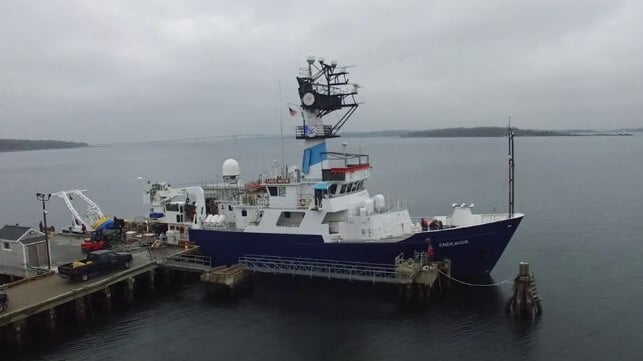
Research vessel Endeavor ends her long career on September 20 to be replaced by a larger vessel i 2027 (URI)

Published Sep 19, 2025 9:06 PM by The Maritime Executive]

 ]


A research vessel that has been the cornerstone of ocean science in the U.S. for five decades is set to retire, marking an end to an illustrious career. The R/V Endeavor, which has been synonymous with ocean research in the modern era, will retire on September 20 upon the completion of its final mission.

Two weeks ago, Endeavor embarked on its final mission, which was focused on the long-term impacts of oil and gas extraction on ecosystems along the Atlantic coast, including historical, active, and future production areas. On September 20, the vessel will return to its home port at the University of Rhode Island’s (URI) Bay Campus in Narragansett, ending a long career in ocean science.

First launched in 1975, the ship is owned by the National Science Foundation (NSF) and operated by URI’s Graduate School of Oceanography (GSO) under a charter party agreement. Endeavor was one of three intermediate-class research vessels commissioned by NSF and built by Peterson Builders, in Sturgeon Bay, Wisconsin.

At 185 feet (56 meters) and officially christened at the GSO pier on December 11, 1976, the vessel was designed from the keel up for oceanographic work, a floating laboratory built to advance exploration and discovery. Nuala Pell, the wife of Senator Claiborne Pell, broke the traditional bottle of champagne across the bow.


Based out of Narragansett, Endeavor has lived up to its billing as the cornerstone of oceanography in the U.S., spending approximately 200 days a year at sea for five decades. Her illustrious career is unrivalled. She brought on board over 8,000 scientists, engineers, technicians, students, and teachers who spent 9,600 days at sea carrying out a total of 736 scientific expeditions. Over her long career, Endeavor sailed over one million miles and made port calls in 22 countries.

The longest expedition for the ship with a capacity of 16 scientists, 12 crewmembers, and two marine technicians was 38 days, while the deepest instrument deployment was at a depth of 8,700 meters.

Endeavor’s career started through baptism by fire. Only four days after her christening, she found herself responding to one of the largest oil spills in U.S. history after tanker Argo Merchant ran aground off Nantucket Island during a storm on December 15, 1976. The tanker was carrying more than 7.7 million gallons of heavy fuel oil that spilled into the ocean after the tanker broke apart.

The disaster thrust Endeavor on her first mission studying the movement of currents, analyzing the spread of oil hydrocarbons, and assessing the impact on marine ecosystems. The series of trips to the spill site lasted three months and is considered by the National Oceanic and Atmospheric Administration to be the birth of oil spill response.

Apart from the spill response, the ship has also been instrumental in the advancement of the oil and gas industry. Owing to her proximity to the Gulf Stream, the vessel has led a number of missions, particularly during the 1980s and 1990s, focusing on circulation and biogeochemistry studies.


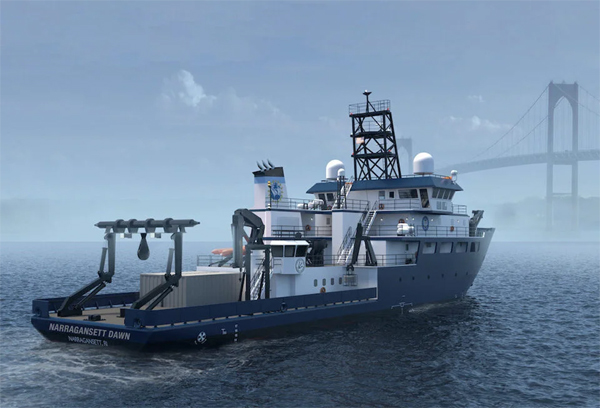
Narragansett Dawn, now under construction, will start sailing in 2027 as the new research vessel (URI)


A key milestone for Endeavor’s history was in 1993 when she underwent a major mid-life refit that saw her length increased from 177 feet to her current overall length of 185 feet (56 meters). After that, she would go on to carry out other critical missions like responding to the devastating 2010 Haiti earthquake, delivering humanitarian aid, and undertaking post-earthquake seafloor surveys. The same year, she was involved in the Deepwater Horizon oil spill response in the Gulf of Mexico.

Following the retirement of Endeavor, URI is preparing to welcome a new research vessel at its Narragansett Bay Campus pier. The $125 million vessel, which is also owned by NSF and has been named Narragansett Dawn, will arrive in 2027. The 199-foot (61-meter) ship is being constructed at the Bollinger Houma Shipyards in Houma, Louisiana.


Sen


Landmark High Seas Treaty Set to Become International Law Next Year

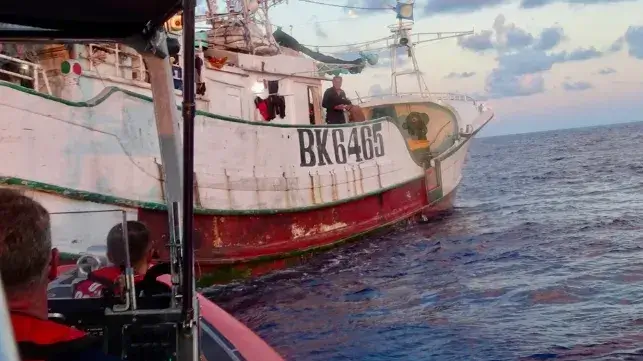
A foreign-flag fishing vessel off Palau (USCG file image)

Published Sep 21, 2025 2:33 PM by The Maritime Executive


Last week, the landmark Biodiversity Beyond National Jurisdiction (BBNJ) high seas treaty reached the milestone of 60 state ratifications, which is the threshold needed for its entry into force. The threshold was achieved after the final four countries submitted their ratification instruments during the ongoing United Nations General Assembly in New York. The countries include St Vincent and the Grenadines, Sierra Leone, Sri Lanka and Morocco.

The legislation, also referred to as the High Seas Treaty, will be legally activated from January 17, 2026. The treaty was adopted by the United Nations in June 2023 following nearly two decades of negotiations.

The BBNJ agreement for the first time creates a global legal mechanism to set up large marine protected zones in the high seas areas, outside of any country’s jurisdiction. The high seas cover almost two-thirds of the oceans and have been largely ungoverned. Unfortunately, this has led to overexploitation of this global commons, with rising pollution and overfishing.

As the first legally binding international agreement for the high seas, the BBNJ treaty provides tools to halt biodiversity loss and ocean degradation. Most importantly, the legislation creates a path for nations to achieve the goal of protecting at least 30% of the global ocean by 2030. Currently, just one percent of international waters is protected.

Worth noting is also the fact that BBNJ agreement becomes the first law to regulate use of marine genetic resources (MGRs) in international waters. This has been a major gap in global ocean governance under the United Nations Convention of the Law of the Seas (UNCLOS). In other words, before BBNJ, genetic materials sourced from either international seabed or international waters were arguably owned by no one, opening them up to exploitation.

“While sharing the spoils of genetic resources was the most contentious issue for states to agree on in getting this landmark deal over the line, it is not where this new law will flex its muscles. Its greatest power, to my mind, lies in its ability to protect, as much as possible, the wonders of the high seas - those places far offshore, such as the White Shark Café, the Costa Rica Thermal Dome, the Gakkel Ridge and countless others,” said science journalist Dr. Olive Heffernan, who is also the author of The High Seas book.

Anything but safe: Using VPN can bear immense risks
DW
September 20, 2025

A new study reveals that popular VPN connections provide less safety than widely believed. The findings are alarming, especially for users in authoritarian states
.

Users who trust VPN connections may be in danger, as many VPN providers don't offer data security and even collect location data
Image: Kacper Pempel/REUTERS

Living in an authoritarian state and still wanting to obtain objective information about conditions in your country is not an easy undertaking. Opposition media outlets are often banned, and foreign websites are frequently blocked.

For hundreds of millions of users, VPN connections, which is short for virtual private networks, are the solution as IP addresses are anonymized and content is encrypted. This combination enables users to access blocked websites and exercise their right to freedom of the press and information.

This is why VPNs are illegal, or at least heavily restricted, in countries such as China, Russia, Belarus, Iran and North Korea. People who use them in these states do so secretly, and expect their provider to handle the resulting data discreetly as well.

However, a comprehensive study by the Open Technology Fund, an independent nonprofit organization dedicated to promoting global internet freedom, has recently revealed alarming shortcomings among some VPN providers. In the worst case, these risks could send users to prison.

Chinese control

The list of shortcomings begins with opaque ownership structures. "Many VPN services obscure their true ownership through complex corporate structures," the study warns. In other words, it is often unclear who really has influence over these companies.

The companies Innovative Connecting PTE, Autumn Breeze PTE and Lemon Clove PTE, for example, claim to be registered in Singapore. In reality, they are controlled by Chinese nationals from within China and are therefore subject to Chinese information control laws, the authors write. "Many VPNs set up shell companies in countries with lax data retention laws," the report states.


16 VPNs rated as 'highly problematic'

Furthermore, numerous VPN services are developed by the same companies.

"A small number of companies control a disproportionate share of the VPN market through white-label solutions," warns the study. A white-label solution is a product developed by a third-party provider and then sold by another company under its own brand name.

The study identified eight highly problematic VPN providers with 16 VPN applications and a total of over 700 million downloads in the Google Play Store that conceal their connections to each other.

"The applications distributed by these providers also contain privacy and security issues that put users at risk of surveillance," the authors of the study warn.
Millions of users potentially at risk

Among the apps described as "highly concerning" are Turbo VPN, VPN Proxy Master, XY VPN and 3X VPN – Smooth Browsing, each of which has been downloaded 100 million times from the Google Play Store. Thus, hundreds of millions of internet users believe they are enjoying a level of security that does not exist.

"Both sets of providers use the Shadowsocks tunneling protocol [which is not designed for confidentiality] to build the VPN tunnel, and claim their users' connections are secure," the study explains.

Moreover, according to the study "Who owns, operates, and develops your VPN matters," both groups of providers use the Shadowsocks protocol with hard-coded passwords stored in the apps — a serious security flaw. Attackers can read these passwords and thus decrypt and read all communications.

In addition, many providers rent servers in data centers without having complete control over the hardware. And some VPN apps secretly collect location data, even though their privacy policies claim otherwise.


Which VPN apps are affected?

"Unfortunately, VPNs can also provide a false sense of security at best, and at worst, completely compromise privacy and security. In the case of Innovative Connecting, Autumn Breeze, Lemon Clove, Matrix Mobile, ForeRaya Technologies, Wildlook Tech, Hong Kong Silence Technology, and Yolo Mobile Technology Limited," the study warns, adding that "any user of those applications is putting themselves at great risk, because the applications have serious privacy and security issues."

Instead, the authors recommend using paid VPNs, which are generally considered to be more reliable and secure. For example, no serious privacy or security issues were found with Lantern, Psiphon, ProtonVPN or Mullvad.

'Disastrous for user security'


"It's catastrophic for those users' privacy and security," said Benjamin Mixon-Baca, one of the authors of the study. "Without even considering the user's country, the weaknesses we identified indicate the VPNs don't provide any form of privacy or security which contradicts the claims made by these providers on their websites," he added.

"Users have a false sense of security because a nation-state threat actor can see everything the users of these products are doing," he warned.

Mixon-Baca also pointed out that this constitutes "a serious breach of user trust," considering how far some of the providers went to conceal their true identity and that, despite their claims to the contrary, the providers did indeed collect geographical information.

The Tor browser is a trustworthy alternative for safe browsing
Image: Pavlo Gonchar/ZUMAPRESS/dpa/picture alliance


Call on app store operators

"Users should prioritize VPN providers that demonstrate full transparency about ownership, infrastructure and jurisdiction," said Mixon-Baca. Open-source solutions and independent audits are key indicators of quality.

The authors also strongly recommend that app store operators pay more attention to security-related flaws in their selection process. Otherwise, the VPN icon available in the Google Play Store gives users a false sense of security.
Last resort: Tor browser

For Mixon-Baca, however, the fundamental contradiction when it comes to VPN solutions remains unaddressed. "Privacy and security, which is what people expect or think they are getting out of these products, is directly at odds with advertising and making money. What we discovered and others have also found is that when you mix privacy with advertising to make money, things don't end up well."

In his opinion, a publicly funded VPN solution similar to the Signal messenger app would be great, but it would not solve the fundamental limitations in terms of data protection and security. Anyone who really wants to be on the safe side should use the Tor browser, he concluded.

"Tor does have limitations like anything, but if privacy is your primary concern, Tor is the king of the hill."


This article was originally written in German.


Martin Muno Digital immigrant, interested in questions of populism and political power


Iranian Shipping Will Be Affected by UN Snap-Back Sanctions

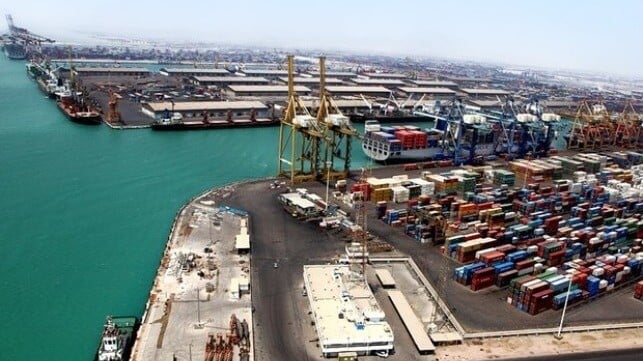
Iranian port of Bandar Abbas (Mehr News / CC BY SA 4.0)

Published Sep 21, 2025 1:58 PM by The Maritime Executive


The UN Security Council voted on September 19 to reject an attempt to delay the re-imposition of the 2015 sanctions regime, under an automatic mechanism which can be triggered if Iran fails to observe previous agreements made to monitor activities associated with nuclear weapons development.

The move follows the failure of an Iranian team negotiating with France, Germany and the United Kingdom, known as the E3, to make credible proposals. The Iranian negotiating team, led by Foreign Minister Abbas Araghchi, requested a postponement of the snapback in exchange for a promise to re-open discussions with the United States, but without offering any substantive indications of what Iran might offer in such negotiations. Moreover, from furious debates both within the Iranian parliament and within the government-controlled media, it was unclear even if Foreign Minister Araghchi had the authority to promise the resumption of talks, let alone what such negotiations might concede.

Therefore, unless a breakthrough can be achieved by Iranian President Masoud Pezeshkian during the forthcoming General Assembly in New York, the 2015 sanctions regime will be re-imposed on Iran on September 27. But given the failure of negotiations between the E3 and Iran so far, the Iranians will have to make concrete proposals in writing, with the declared backing of the Iranian Supreme Leader, if snapback is to be averted.

The sanctions regime on track to be imposed will be significantly more effective than current restrictions imposed on Iran. Iran is currently under US maximum pressure sanctions, and the sanctions regimes imposed separately by Western nations. But the re-imposed regime will have UN authorization, the lack of which in the separate national sanctions schemes currently in force provides an excuse for some countries, such as China, India, Malaysia and the UAE, to continue trading with Iran. Restrictions on oil and gas exports, shipping, banking and access to the international financial system, weapons production, insurance and technical imports will all be tightened.

The prospect of this occurring is already provoking heated controversy in Iran, where the consequences are seen as potentially devastating. It is of some significance that Presidents Trump and Xi Jinping had their third telephone conversation this year on September 19, and are on track for a face-to-face meeting in South Korea. In these discussions, China’s domestic needs to ease the threat of US tariffs are likely to be prioritized over any desire to provide support to Iran. The increased pressures will have direct economic impacts. But it will also have political stability consequences, feeding through into the ferocious internal debate within the Iranian political elite between the hardliners and the IRGC, juxtaposed against pragmatists led by the Iranian President Pezeshkian.

For the maritime community, a reinvigorated anti-Iranian sanctions regime is likely to impact the operations of the government-owned 115 vessel merchant fleet operated by Islamic Republic of Iran Shipping Line Group (IRISL) and subsidiary companies, and the 38 aging VLCC tankers operated by National Iranian Tanker Company (NITC). There are also likely to be impacts on the relative protections currently enjoyed by Iranian oil held in tankers offshore, and on ship-to-ship transfers.

Iranian Navy Stokes a Political Problem in South Africa

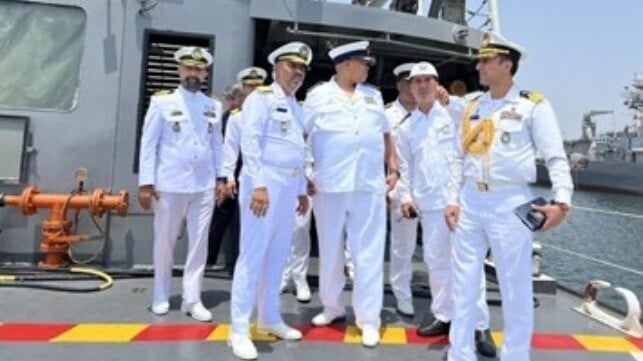
Chief of South Africa's Navy visits Bandar Abbas, August 2024 (ISNA)

Published Sep 21, 2025 3:07 PM by The Maritime Executive


The Iranian Navy, and its potential participation in a South African naval exercise, is being used as a tool to prosecute political objectives, both in South Africa and in Iran.

Iran has lost many friends and allies, along with regional influence, since the conflict in Gaza initiated a roll-back of its Axis of Resistance. Hezbollah in Lebanon and Assad in Syria have been lost, Iranian influence curtailed in Iraq, and Armenia’s peace negotiations with Azerbaijan have come about at the expense of Iran. Even the confidence of support from Russia and China has waned, as both place greater emphasis on achieving political objectives with the United States than supporting Iran with its regional ambitions.

So with some enthusiasm, Iran has grabbed the hand of friendship offered by South Africa, which is seeking to attract participation in a joint naval exercise to be held under South African leadership. Of the BRICS nations invited to attend, representatives from South Africa, Russia, China, Ethiopia, Indonesia, and Iran attended a preparatory meeting in Cape Town on the Mosi-3 naval exercise in June. The exercise was scheduled to be conducted off the Western Cape in November, and would have followed on from the Exercise Mosi-1 held in November 2019 and Exercise Mosi-2 held in March 2023. The exercise has since been postponed, when South Africa realized that it would clash with the G20 conference scheduled to be held in South Africa at the same time. That clash was sufficient to prompt President Trump to cancel his attendance.

In the meantime, Iran had followed up the fleeting opportunity to participate in Exercise Mosi-3 by inviting the South African Chief of Staff General Rudzani Maphwanya to visit Tehran. Maphwanya was received by his Iranian opposite number Major-General Seyyed Abdolrahim Mousavi on August 12, his visit to Tehran not apparently approved beforehand by South African President Cyril Ramaphosa. At the meeting, Maphwanya said South Africa shared ‘common goals’ with the ‘peace-loving nation of Iran’, condemned US aggression and said it supported ‘Tehran’s outreach to Africa’.

This may have thrilled the Iranians, but not President Ramaphosa - who objected to this unprecedented freelancing by the South African military into the political space, especially at a time when South Africa is seeking to improved relations with the United States. But rather than firing General Maphwanya, the President’s subsequent criticism of him was considered by many in South Africa to be muted, insufficient to unwind the precedent set by General Maphwanya’s visit.

The head of South Africa’s Navy, Admiral Monde Lobese, visited the Iranian naval base in Bandar Abbas in August last year. In June 2021, IRINS Makran (K441) and the frigate IRINS Sahand (F74) made a port call in Cape Town, en route to Russia, and IRINS Makran returned in May 2023 with the frigate IRINS Dena (F75) on the last leg of the 86th Flotilla’s round the world cruise.

It remains to be seen when Exercise Mosi-3 will be rescheduled. But if it comes to pass, it will be a naval exercise with greater than normal political significance.


U.S. Revokes Sanctions Waiver on Iran’s Chabahar Port

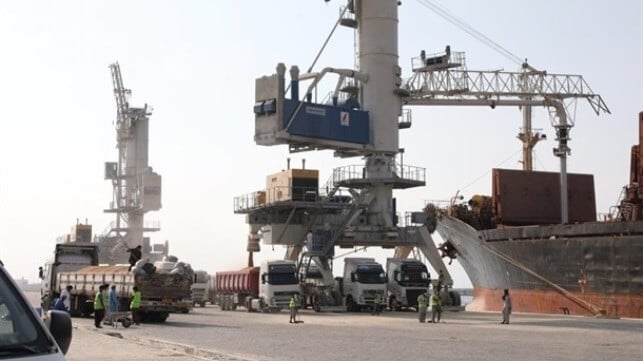
Grain suction boom at Chabahar Port (AgriculturalEngineer96/CC BY SA 4.0)

Published Sep 21, 2025 5:24 PM by The Maritime Executive


The U.S. government has revoked a sanctions exemption policy on Iran’s Chabahar port, a move seen as likely to affect the India-led development in the facility. In the past few months, the U.S. has declared a maximum pressure policy to isolate the Iranian regime, with tighter sanctions introduced against the country’s shipping sector. However, due to an exemption policy introduced by the U.S in 2018, Chabahar port has been insulated from the sanctions affecting the rest of Iran’s infrastructure. At the time, the exemption was to facilitate Afghanistan reconstruction.

During the same year, the Indian Ports Global Limited (IPGL) took over the operations of Chabahar port. This deal was formalized last year through a 10-year contract between IPGL and the Port & Maritime Organization of Iran. Under the agreement, IPGL committed to invest $370 million in the development of the port.

Located on Iran’s south-eastern coast along the Gulf of Oman, Chabahar port is a strategic investment for India as it targets to boost regional trade with central Asian countries, including Afghanistan. In addition, the Chabahar operations have seen India and Iran boost ties. Early this month, the two countries held diplomatic consultations in Tehran. The talks centered on advancing the Chabahar port project as well as the International North-South Transport Corridor, a multimodal route envisaged to connect the Indian Ocean and Persian Gulf to the Caspian Sea.

The U.S. move to end its sanctions waiver on Chabahar port will affect India’s regional connectivity plans. “The Secretary of State has revoked the sanctions waiver issued in 2018 effective September 29, 2025. Once the revocation is effective, persons who operate the Chabahar port may expose themselves to sanctions under the Iran Freedom and Counter-Proliferation Act (IFCA),” said the U.S Department of State.

Under India’s control, Chabahar port container throughput has grown immensely - from 6,000 TEU to over 90,000 TEU in the last two years. The ongoing modernization of the facility is now uncertain, especially if India abandons the project. Further, the Chabahar project presents a diplomatic conundrum for India as it is trying to balance its relations between U.S. and Iran. India’s trade minister Piyush Goyal is expected to visit Washington this week to progress tariff negotiations. Last month, the Trump administration doubled tariffs on Indian imports to 50%, which India hopes to reduce in scheduled negotiations this week.

Grain suction boom at Chabahar Port (AgriculturalEngineer96/CC BY SA 4.0)

WOMEN, LIFE, FREEDOM

Sentenced to death in Iran: The case of Sharifeh Mohammadi
DW
21/09/2025 - 

Human rights organizations have called for immediate withdrawal of the death sentence against the labor activist, who they say was unjustly accused of "rebellion."


Sharifeh Mohammadi faces imminent executio
n
Image: hra-news

Sharifeh Mohammadi has been in prison since December 2023. The 46-year-old activist and engineer is accused of "armed rebellion against the state" in Iran. She now faces execution again.

Already sentenced to death twice in 2024 and early 2025, this August the Supreme Court once again upheld the ruling.

Her commitment to workers' rights brought her to the attention of the authorities. She was a member of a committee for the formation of labor organizations in the northern Iranian coastal city of Rasht on the Caspian Sea, where she worked and lived with her family, including her 13-year-old son. The government considers the committee to be an "opposition group.”

Activist Sharifeh Mohammadi (46) has already been sentenced to death twice
Image: Privat

Under Iranian criminal law, three offenses are punishable by death: war against God (moharebeh), corruption on earth, and rebellion (baghi), lawyer Marzieh Mohebi told DW. "The relevant articles of the law are so vaguely worded that judges can apply them to almost any form of protest or political activity."

Mohebi has been living in exile in France for two years. In Iran, she built a network of female lawyers who represented women imprisoned without charges or in difficult circumstances.

In September 2022, nationwide protests broke out following the death of 22-year-old Jina Mahsa Amini in police custody. Amini was allegedly not wearing the mandatory head covering for women correctly. A movement developed under the slogan "Woman, Life, Freedom," becoming a symbol of resistance to the compulsory headscarf and systematic discrimination against women.


Many female lawyers were arrested during the systematic suppression of the demonstrations. A court in the northern Iranian city of Mashhad initiated proceedings against Mohebi before she could provide legal support for demonstrators who had been arrested.

Vague laws, harsh penalties

"It is not difficult to quickly turn ordinary people into 'criminals'," Mohebi said. "This practice is not a constitutional procedure based on the laws created by the Islamic Republic, but rather an expression of the regime's desire to suppress any form of civil activity under the pretext of security. It shows that even in times of crisis, the regime continues to regard the suppression of domestic opposition as its most important task."

Sharifeh Mohammadi is a labor rights activist, feminist, and opponent of the death penalty. After her arrest in 2023, her family did not know where she was being held or why for months. Mohammadi later reported that she'd spent more than 200 days in solitary confinement where she was tortured and abused.

In June 2024, the court in Rasht sentenced Mohammadi to death for "baghi.” A higher court overturned the verdict in October 2024 and ordered a retrial. But after a new trial, the death sentence was upheld in February 2025.

"Under the laws of the Islamic Republic, a rebel is a person who has been directly involved in an armed uprising against the government," said social and gender researcher Fatemeh Karimi. "Sharifeh, on the other hand, had no connection to armed actions. There is no evidence of this. What Sharifeh did was union activity in the context of labor protests, which in no way corresponds to the criminal definition of rebellion."

Criticism in Iran and beyond

Human rights organizations have reported serious procedural flaws in her prosecution, calling it a politically motivated trial.

The death sentences, for example, were handed down by two different judges who are first-degree relatives. Ahmad Darvish-Goftar, chairman of Criminal Court 1, is the son of presiding judge Mohammad Ali Darvish-Goftar of Criminal Court 2.


The case has also drawn fierce international criticism. Several European trade unions, including those in Germany, France, and Sweden, as well as the International Trade Union Confederation, have called for the verdict to be overturned and for Mohammadi's immediate release.

Criticism of her death sentence is growing within Iran as well. The Iranian Teachers' Trade Association condemned the verdict as "inhumane and unjust” in a statement, describing the death sentence as a means of spreading fear and suppressing collective labor movements.

There has also been a video circulating on the internet of a peaceful gathering at a sugar cane factory in early August, where participants demanded a fair trial for Mohammadi. The works council of Haft Tappeh Sugarcane Agro-Industry Co. is one of the most active voices against repression and in support of workers' rights.

Amnesty International and numerous Iranian and international human rights organizations have called for the immediate withdrawal of the death sentence.

This article was originally written in German.

Shabnam von Hein German-Iranian journalist at DW's Asia departmenthttps://x.com/ShabnamvonHein


AUSTERITY KILLS
Germany slashes aid and development budget

DW
21/09/2025 - 


Germany has cut its budget for international development by 8% and emergency aid has been halved. Aid agencies warn of drastic consequences.

Projects like Welthungerhilfe's in Congo are facing uncertain times due to drastic aid cutsImage: C. Kaiser/blickwinkel/imago

The governing coalition of the conservatives (CDU/CSU) and the Social Democrats (SPD) has slashed the budget of the Federal Ministry for Economic Cooperation and Development (BMZ) by 8% to just under €10 billion ($11.47 billion).

Development Minister Reen Alabali Radovan (SPD) is clear about the impact of the cut: "My budget is down by around €910 million compared to the previous year. In view of increasing crises, Germany is investing far less in international cooperation than is actually urgently needed."

Nevertheless, she told the German parliament that the measures wouldn't hamstring German development policy.

"We are a long way off American conditions — and that's how it should be, " stressed the minister, who was appointed in May 2025.

She was keen to ward off any comparisons with the massive aid cuts made by Donald Trump's administration
Dramatic increase of hunger and malnutrition

Alabali Radovan gave one example of the impact of Trump's policies: "In Kenya, over 700,000 refugees, many from Somalia, have been directly affected by the US cuts to the World Food Program."

The 35-year-old minister said that they had only received a third of the necessary food rations, leading to a dramatic increase of hunger and malnutrition.

"Tensions are growing, many people have to flee, the region is becoming increasingly destabilized," she warned. "This is unacceptable in human terms and is also not in Germany's security interests."

What the end of USAID means — Global Us   26:04


However, aid organizations say that Germany's cuts will also have drastic consequences.

Compared to 2024, less than half of the acute emergency aid provided by the Foreign Ministry is available: €1.05 billion instead of €2.23 billion. And that aid has dropped by two thirds since 2022.

Thorsten Klose-Zuber, Secretary General of the NGO Help, has sounded the alarm. He said the 50% cut in German emergency aid will mean that over 4 million people worldwide will no longer receive any food aid.

"The discontinuation of humanitarian aid from the United States and the halving of the German budget do not represent the start of our financial problems. For many years now, it has barely been possible to reach half of the people affected," Klose-Zuber added.

He put the total number of people in need at more than 320 million.

Consequences for healthcare and drinking water

The drastic reduction in aid money also has a concrete impact in other areas.

"Over one and a half million people will lose their basic healthcare due to the German cuts, " said the Help secretary-general.

The situation is similar when it comes to access to clean drinking water, according to Klose-Zuber.

Almost everything is lacking in the major crisis regions in his view.

And he is not only referring to countries affected by conflict, but also by natural disasters such as earthquakes, as in Myanmar or Afghanistan.

In both countries, there were thousands of deaths and massive destruction, especially to buildings.


His conclusion sounds almost desperate: "It increasingly makes me think of an emergency doctor who arrives at a traffic accident with five seriously injured casualties, and the doctor has to prioritize who dies and who he cares for."

His aid organization is in a similar position, according to Klose-Zuber. It can only concentrate on the countries with the greatest need.

The NGO head does not think that other countries will step in to fill the gaps created by Germany's budget cuts: "We are seeing a fundamental movement worldwide, especially from the traditional Western donor countries, to pull out of the agreed multilateral system financially."

It's a global trend that he views critically.

Greens consider cuts irresponsible

In the view of the environmentalist Greens, the massive cuts in development and emergency aid are irresponsible.

"No one has claimed that we alone can fill the gaps left by the US with its withdrawal," says Bundestag lawmaker Jamila Schäfer.

"But the fact that we are not even trying to somehow close this gap really hurts — especially the people directly affected."


The governing Christian Democrats and its Bavarian sister party, the Christian Social Union, have a completely different view of the effectiveness of German and international development aid.

"I think global scaremongering is wrong," said CDU lawmaker Inge Grässle in the Bundestag debate.

The conservatives want to show that good results can achieved in development cooperation with €10 billion, too.

AfD wanted to cut development aid even more severely

If the far-right Alternative for Germany (AfD) had had its way, the Development Ministry's budget would have been gutted to €2.5 billion.

In reality, it is around four times as high despite the cuts. Mirco Hanker considers that to be a "waste of taxpayers' money."

As an example, he cites a electromobility concept supported by Germany in India.

"One can at least ask the question whether India, as a large nation and emerging power that has successfully landed probes on the moon, cannot finance its concepts and infrastructure itself?" Hanker asked.

The development minister responsible, Reem Alabali Radovan, is largely unimpressed by the views of the AfD and other critical voices.

"Every euro that is invested wisely worldwide promotes security and peace, including for us in Europe and Germany," she said.

This article has been translated from German.


Marcel Fürstenau Berlin author and reporter on current politics and society.
Turkey: Opposition re-elects leader ahead of court ruling
DW with AFP,
September 19, 2025 

Ozgur Ozel has been handed a fresh mandate by Turkey's Republican People's Party. The opposition hopes the move can shield him from being removed by an upcoming court ruling.

Turkey's main opposition party has re-elected its leader in an attempt to protect him and other senior party figures from an upcoming court ruling which could order their removal.

Ozgur Ozel was initially elected chairman of the Republican People's Party (CHP) in 2023, but President Recep Tayyip Erdogan has called the vote "tainted" and a "fraudulent process."

A court in Ankara is set to rule on October 24 on whether to annul the results of the 2023 CHP congress, in a case which government critics say highlights Turkey's slide towards autocracy under Erdogan.

Turkey's opposition seek protection from government crackdown

But CHP delegates hope that, by re-electing Ozel at an extraordinary congress on Sunday, they can demonstrate to the court that their party chairman has a fresh mandate to oppose Erdogan and shield him from government allegations.

Ozel and 11 other CHP members — including Erdogan's biggest political rival, jailed Istanbul Mayor Ekrem Imamoglu — face charges ranging from financial irregularities to violations of Turkey's political parties law. All deny wrongdoing.

The CHP is the biggest opposition force in the Turkish parliament and controls Turkey's largest cities, including Istanbul and the capital, Ankara.

Since the detention of Istanbul Mayor Imamoglu in March, Ozel has risen to greater prominence as a potential challenger to Erdogan.

Imamoglu's arrest in March triggered massive protests, with Turkish police arresting nearly 1,900 people.