Thursday, October 16, 2025


U.S. Coast Guard Rescues 45 People From a Catamaran Off Guam

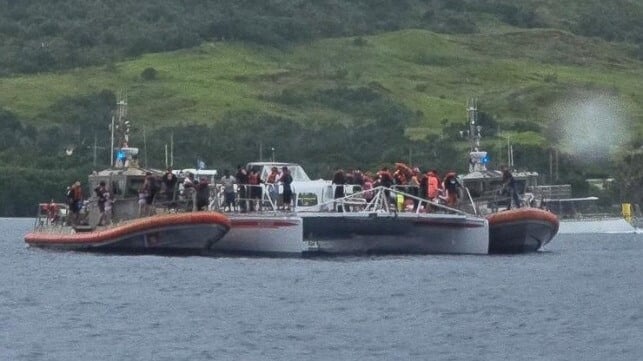
USCG boat crews evacuate a catamaran
Courtesy USCG

Published Oct 15, 2025 1:13 AM by The Maritime Executive


[Brief] On Friday, the U.S. Coast Guard conducted a mass rescue from a passenger vessel off the coast of Guam after the crew reported a fire on board. 

At about 0930 hours on Friday morning, Coast Guard Station Apra Harbor received a Channel 16 distress call from the Princess Guam, a 45-foot vessel that was operating off Agat Bay. The watchstanders dispatched three boat crews to the scene to assist and notified Guam Fire Rescue. The fire department's responders arrived to help at about 1000 hours. 

After a short transit south from their base at Apra Harbor, the Coast Guard boat crews successfully retrieved 45 people from the catamaran, including elderly passengers and young children. All were returned safely to the pier at Agat Marina. 

“Strong teamwork with the Guam Fire Department was a critical component of today’s mission,” said Lt. Cmdr. Derek Wallin, search and rescue mission coordinator, U.S. Coast Guard Forces Micronesia/Sector Guam. “Through our joint efforts, we successfully rescued 45 people, demonstrating the strength of our partnership and unwavering commitment to mariner safety.” 


Second Fire on Tanker in Indonesian Shipyard Kills 10 and Injures 21

fire on tanker in shipyard
A second fire on the same tanker in a shipyard has killed 10 workers after four were killed in June (Batam TV)

Published Oct 15, 2025 1:45 PM by The Maritime Executive


Indonesian authorities are raising strong concerns after a second fire aboard a tanker undergoing repairs has killed 10 shipyard workers, less than five months after another fire killed four workers. The police are at the shipyard collecting evidence and interviewing witnesses after the overnight fire on the tanker Federal II.

The fire started at approximately 0430 local time on October 15, with witnesses reporting billowing smoke that was spreading over an industrial area of Batam. The police said it took firefighters about an hour to extinguish the fire.

The latest reports are that 10 shipyard workers were killed, mostly from smoke inhalation. Dozens of workers were also taken to four local hospitals. Initial reports said 18 were injured, but a police commander has now raised the number to 21. He said some were “heavily injured.”


The tanker, which was built in Japan in 1990, is 95,759 dwt and 761 feet (232 meters) in length. It has been at the ASL Shipyard for several months, with reports in June that it was being converted to an FSO. It had completed a 10-year charter to China’s CNOOC operating in the Widuri region.

The fire in June killed four shipyard workers and injured nine others. Police said today that the first fire was due to a buildup of gas that had not been properly vented and was ignited by sparks from welding. According to the report, two shipyard workers were suspects in the June fire, cited for failing to follow safety procedures. The police said today’s fire was in another part of the vessel.


Ships React to Fees as China Calls for U.S. to “Correct its Wrongdoings"

Maersk Line containership
Maersk and Hapag rerouted ships while Matson appears to be facing hefty port fees (Maersk Line LTD. file photo)

Published Oct 15, 2025 3:22 PM by The Maritime Executive


China’s reciprocal port fee program launched yesterday,  October 14, and is having an immediate impact as carriers report they are diverting ships, and others are receiving hefty bills. China continues its attacks in the media as it calls on the U.S. to meet it halfway in the current trade talks.

Carriers Maersk and Hapag-Lloyd were the first to react, announcing “temporary changes” for two U.S.-flagged vessels on Asian routes. Maersk writes in a customer advisory, “We will be making changes to the TP7 rotation to make sure your supply chains continue to run as smoothly as possible, if you are utilizing this service.”

Hapag appears to be the first to divert a vessel, with its Potomac Express (7,323 TEU) having proceeding to Busan, South Korea after omitting a scheduled call in Ningbo, China. Cargo bound for China, Maersk reports, is being discharged in Korea and will be delivered to its final destination by the existing Maersk network. Cargo that was to have been loaded in China was instead placed on the Maersk Luz (7,450 TEU). The two vessels are scheduled to meet in Kwangyang, South Korea, on October 24, where, subject to availability and capacity, containers will be transferred to the Potomac Express.

The Maersk Kinloss (6,200 TEU) is currently crossing the Pacific from Los Angeles. The vessel was also scheduled to go to Ningbo, but the call has been canceled. It is proceeding directly to Busan, where it will discharge its China-bound containers. The company says an unspecified shuttle will be used to lift containers from China and transship them to South Korea. The steps were taken to avoid the $56 per net ton port fee China introduced on U.S. ships.

Other vessels, however, seem not to have been as lucky. Matson’s U.S.-flagged Manukai (2,378 TEU) reached Ningbo and has gone on to Shanghai. China’s Xinde Marine News calculates that the vessel with a net tonnage of 11,149 tons has a fee of nearly $630,000. Chinese officials had not confirmed the fee was collected because the ship tied up early on October 14, shortly after the fee program began.

China’s Caixin Global cites another vessel operating under charter to Matson, Matson Waikiki, which officials from China’s Ministry of Transport told the outlet was liable for the fees, after it arrived in Shanghai on October 14. The vessel, built in 2003, has German ownership but has been chartered to Matson since late 2023 and sails under the Liberian flag. Carrying 4,870 TEUs, Caixin writes that with a net tonnage of 30,224, the ship is subject to a charge of about $1.7 million in additional port fees under China’s new fee schedule.

“China on Tuesday expressed strong dissatisfaction and firm opposition to the U.S. move of imposing port fees and other restrictive measures on China's maritime, logistics, and shipbuilding sectors, a spokesperson of China's Ministry of Commerce (MOFCOM) said,” writes the Global Times, which is controlled by the Chinese Communist Party's flagship newspaper. The long article goes on to detail the growing trade tensions and China’s mounting response to the USTR Section 301 probe. The article says the U.S. should “correct its wrongdoings, show sincerity for talks, and meet China halfway.”

The repercussions continue to mount in both China and the United States, with shipping caught in the middle. The BBC quotes an analyst who says, “Ships carrying dry bulk cargoes like coal and other raw materials could have to pay up to $3 million in port fees,” according to freight analyst Claire Chong from shipbroker Thurlestone Shipping. She estimates that with the escalating fees China announced, by 2028, some of the biggest vessels that carry nearly 200,000 tonnes in dry bulk could have to pay more than $10 million in fees.

Maritime intelligence technology company Pole Star reports it has seen a sharp dropoff in interest in ships. “We are seeing Chinese vessels that are being screened by our customers nearing zero. This is a concerning drop from the number we saw in January 2025, where 1,678 Chinese vessels entered the U.S. and were screened by our customers,” says Saleem Khan, Chief Data & Analytics Officer, Pole Star Global.

Khan believes the new port fees have already started to change behavior in the shipping market. He expects short term, there will be more route changes like those seen today from Maersk and Hapag, as well as void sailing. After that, the expectation is that carriers will begin to pass along the fees in their freight rates.
 

Ports Call for U.S. to Reverse Course Saying Equipment Tariffs Delay Growth

cargo handling equipment
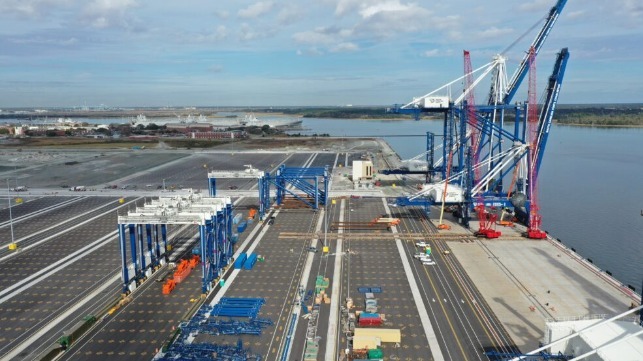
USTR seeks to expand the tariffs to include more cargo handling equipment with a 150 percent tariff (Charleston file photo)

Published Oct 15, 2025 5:47 PM by The Maritime Executive


The American Association of Port Authorities quickly responded to last week’s proposed revisions by the U.S. Trade Representative to the port fee program. It said the new tariffs will only serve to delay port modernization and expansion in the United States without encouraging the reshoring of equipment manufacturing.

AAPA, which represents public port authorities, has been fighting the proposed fees on Chinese-manufactured cranes since the accusations first emerged a few years ago that China could use the cranes to spy on American ports and potentially interrupt port operations. The group supports the efforts to restore manufacturing in the United States, but says the fees must be tied to incentives to restart domestic manufacturing. It notes that there are still minimal or no options for ports other than the Chinese manufacturers.

“AAPA remains opposed to the 100 percent tariff, which will only make cranes delivered from allied nations more expensive. There is still not a single American producer of STS cranes,” said AAPA President and CEO Cary Davis.

The group highlights one small concession from the Trump administration, in the tariffs on Chinese-manufactured ship-to-shore cranes. AAPA fought against making the fees retroactive to existing equipment orders and says it appreciates that the Trump administration has not applied the tariff to cranes ordered before the publication of the USTR’s Section 301 ruling on China’s shipbuilding and maritime industry, which includes the tariffs on cranes. The 100 percent tariff went into effect with the port fees on October 14, but it is not retroactive to orders placed before April 2025, as long as the equipment is delivered by April 2027.

The USTR, however, in the revisions to the program released on October 10, proposed adding a new 150 percent tariff on a broad range of cargo handling equipment from China. This includes gantry cranes, reach stackers, terminal tractors, and other critical equipment. The group asserts that by effectively pricing out these equipment types for U.S. ports, the tariffs mean ports will delay expansion and modernization plans for years.

“AAPA supports efforts to bring maritime industry manufacturing back to America. However, these ill-advised trade policy changes will cause America’s ports to slow modernization and fall further behind competitors, when the maritime industry has emerged as a key focus of national and economic security,” the group writes in a statement in response to the USTR.

It contends that the increase in the cost of equipment will have to be offset elsewhere in the ports’ operations. It suggests expenses will have to be lowered by steps such as by reducing workforce training or capital investment.

AAPA is urging the Trump administration to “reverse course on these tariffs.” It is calling for support for efforts such as targeted tax credits and funding for port infrastructure, while also creating incentives for domestic production of STS cranes and other cargo handling equipment.

The USTR is taking comments through November 12 on the changes to the fee program, including the proposed fees on cargo handling equipment. The goal is to finalize those portions of the fees to go into effect in December 2025.


RWE Dumps its Australian Offshore Wind Project

offshore wind farm
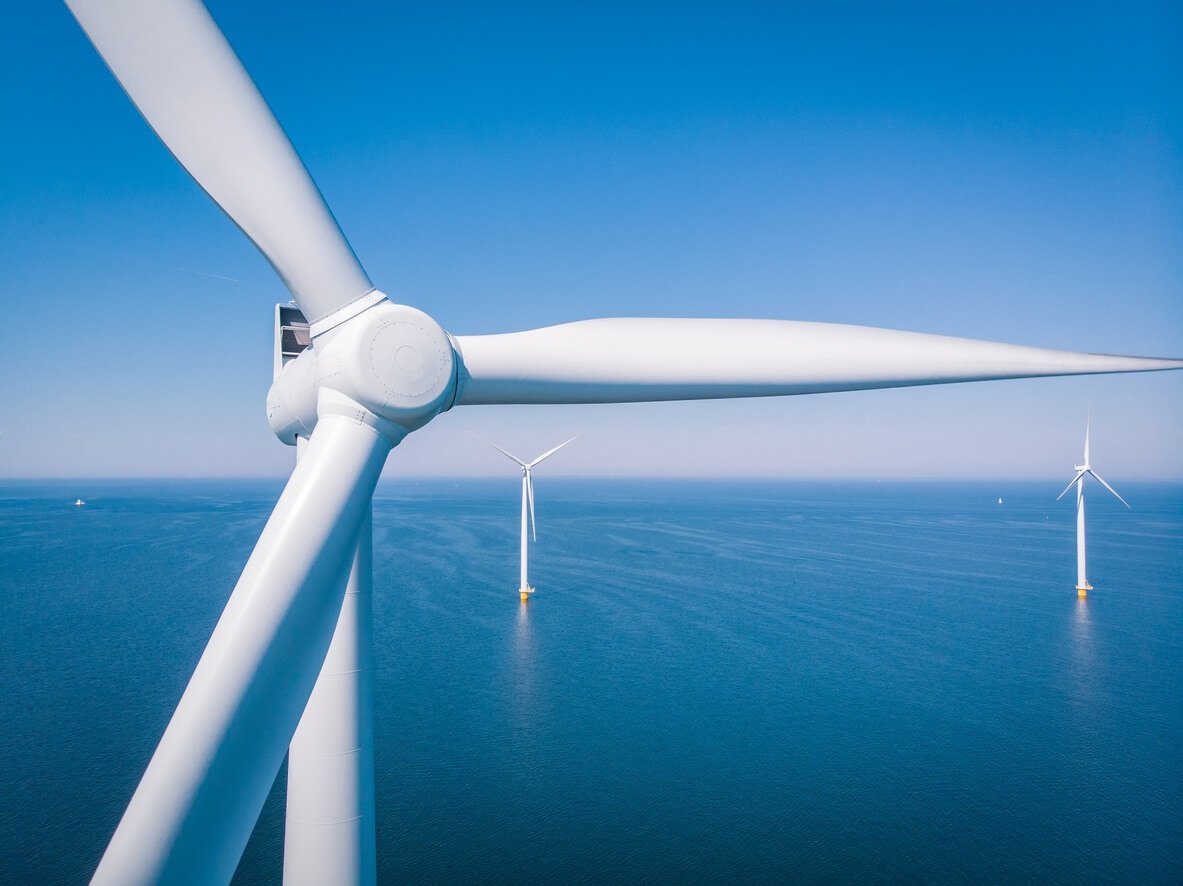
iStock

Published Oct 15, 2025 5:28 PM by The Maritime Executive


German utility RWE has decided to dump its giant Kent offshore wind project off the coast of Victoria, Australia, the latest in a long series of blows for the non-China offshore wind industry. 

Kent would have supplied two gigawatts of power to consumers in Gippsland, Victoria, but it was proposed in an earlier era when project economics were more favorable. In an announcement, RWE cited issues with "the project's competitiveness in current market conditions," as well as uncertainty around supply chain costs and plans for future auctions off Victoria. Initial projections for construction cost were in the range of AUD$8-10 million. 

"We want to be clear that this decision relates solely to the Kent offshore wind project," RWE emphasized. "We are continuing to develop, build and operate a diverse pipeline of renewable energy projects across Australia, including large-scale battery storage and onshore wind." The firm is currently working on three one-gigawatt onshore wind farms and a grid-scale battery storage farm, and says that it sees Australia as a "key growth market" for renewables going forward. 

Australia's nascent offshore wind industry has had several setbacks this year. In July, BlueFloat Energy abandoned a nearby planned facility off Victoria after it failed to secure a project partner for development. The cancellations are a setback for the state's ambitions to get to 95-percent renewable power on its grid by 2035, including nine gigawatts of offshore wind by 2040. 

Others may be coming. Danish offshore wind leader Orsted has two giant wind farms planned off Gippsland, and for now these are still progressing. However, the company recently announced that it is pulling back from overseas markets to refocus on its core European business, where it sees more favorable conditions for development. It is also laying off about one quarter of its workforce and has raised $9 billion in a rights issue in order to offset serious financial setbacks in the U.S. and other markets. 


UK Sanctions Russia's Two Biggest Oil Exporters

Primorsk
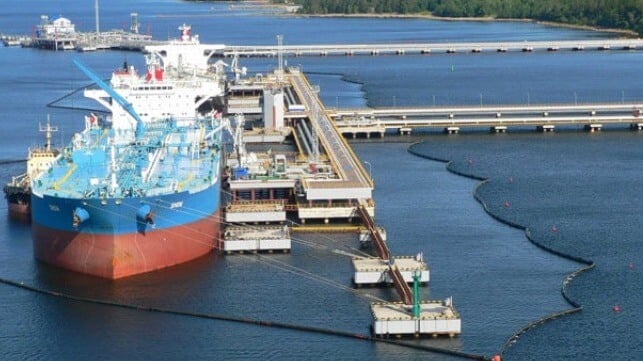
Tankers loading at the Primorsk oil terminal on Russia's Baltic coast (Primorsk Terminal LLC)

Published Oct 15, 2025 6:57 PM by The Maritime Executive


For the first time, the government of the UK has directly sanctioned top Russian oil exporters Rosneft and Lukoil, the two biggest crude producers in Russia and key players in financing the ongoing invasion of Ukraine. Together, the firms ship about three million barrels of oil per day. 

The UK previously sanctioned Russia's third- and fourth-largest producers, Gazprom Neft and Surgutneftegas, in an earlier round in January. 

In addition, the UK sanctioned 44 more "shadow fleet" tankers, four oil terminals in China that receive Russian crude, and a key overseas client: Russian-owned Nayara Energy Limited, a mega-refinery in India that bought 100 million barrels of Russian oil last year. Nayara's business includes re-exporting Russian energy in the form of refined products, a loophole to infiltrate Western markets where unrefined Russian crude is banned.

The government also sanctioned the Beihai LNG terminal, the receiving point for shipments from Russia's sanctioned Arctic LNG 2 facility, which has been on the UK blacklist since early 2024. Seven LNG tankers linked to Russia are also on the list.  

"We are sending a clear signal: Russian oil is off the market," said Chancellor Rachel Reeves in a statement. "As Putin’s aggression intensifies, we are stepping up our response. The UK will continue to strip away the funding that fuels his war machine. We will hold to account all those enabling his illegal invasion of Ukraine."

While UK sanctions have limited reach - they do not apply directly to foreign nationals - they do prevent sanctioned firms from accessing the thriving British financial services sector, which has global reach. 

Ukraine is pursuing a separate track of hampering the Russian energy sector using long-range missile and drone strikes. It has disabled an estimated 10 percent of all Russian domestic refining capacity, according to the Carnegie Endowment's Sergey Vakulenko, and has disrupted operations at key loading terminals in Ust-Luga and Primorsk. With American targeting assistance, it continues to attack fuel depots and refining facilities across western Russia, hundreds of miles behind the front lines - and with a possible delivery of U.S. Tomahawk cruise missiles, still under discussion, it could soon accelerate its campai


Calls for Vigilance Due to Rise in Piracy and Robberies in 2025

Singapore Strait
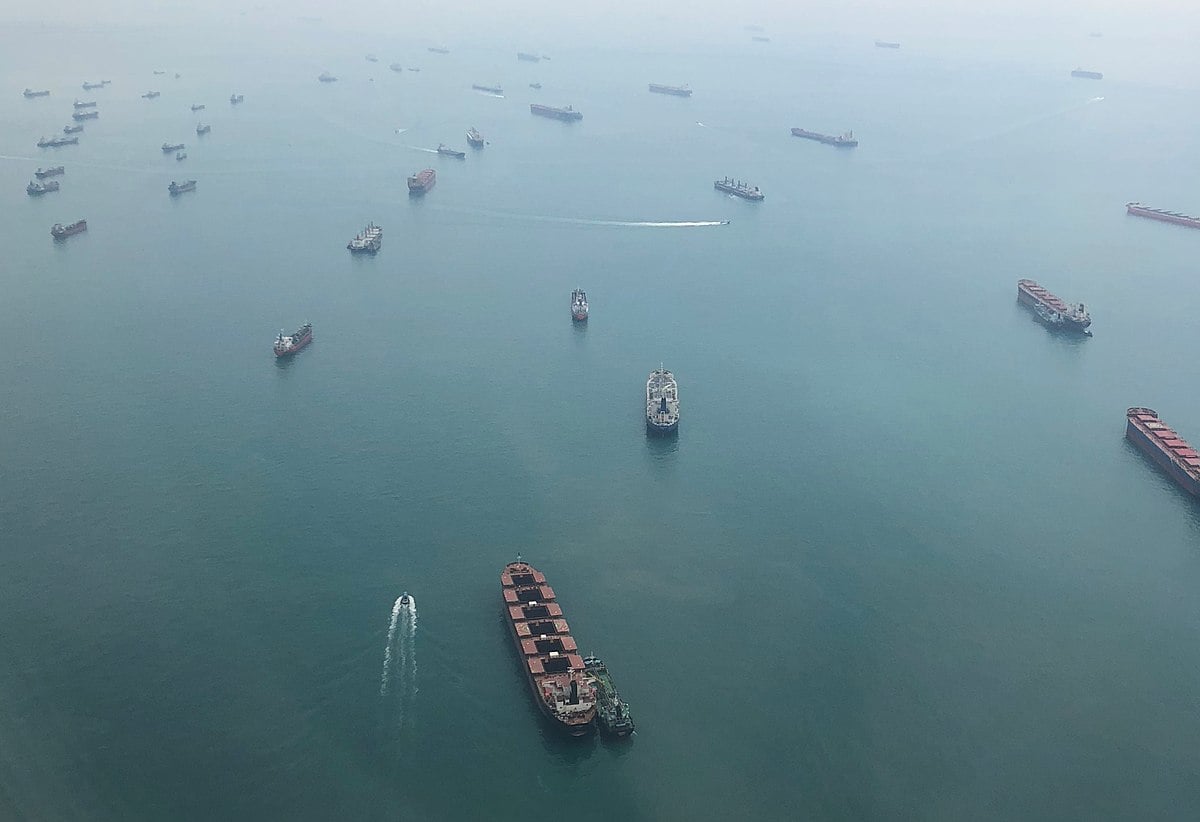
Arrests near the Singapore Strait contributed to a marked decrease in robberies (file photo)

Published Oct 15, 2025 7:28 PM by The Maritime Executive


The merchant shipping industry continues to face the threats of piracy and armed robberies, but the ICC International Maritime Bureau, in its latest report, also points to progress, including the arrest of two gangs that were terrorizing the area around the Singapore Strait. With a slight increase in activity and areas of higher concern, the group says it must reinforce the need for vigilance and that there is no room for complacency.

The ICC International Maritime Bureau (IMB) admits the world is far from winning the war on piracy and armed robberies despite the continued overall reduction in global incident levels over the years. Between January to September 2025, it recorded a total of 116 incidents, up from 79 in the same period last year. The incidents are the highest reported nine-month figures since 2021.

The fact that criminal gangs remain a threat to shipping is evident considering that 102 vessels reported being boarded, while nine faced attempted boardings, four were hijacked, and one was fired upon. Notably, in nearly all the incidents, perpetrators successfully gained access to the vessel, with most boarding incidents occurring at night. 

Another concern is the high number of incidents where weapons were involved. In the first nine months of this year, 55 percent of the reports cited the use of a weapon, with 33 percent of the cases involving guns. IMB highlights this is the highest level since 2017.

IMB and its Piracy Reporting Center continue to focus on the dangers in the Singapore Straits, which handles nearly a third of global trade flows, and continues to be the hotspot of piracy and armed robberies. Of all the reported incidents, a total of 73 were in the Singapore Straits, the highest number recorded since 1991.

The high rate of incidents at the busy strait, however, has forced authorities into action. In July, the Indonesian Marine Police (IMP) carried out a crackdown on organized gangs targeting international vessels, leading to the arrest of 11 suspected pirates in the Riau Islands. There is finally some hope in the area which has been plagued by boardings and robberies in recent years. The IMB reports that there has been a “marked reduction in incidents” since the arrests in July.

The report also shows that the Gulf of Guinea, which a few years ago had replaced waters near Somalia as the epicenter of piracy, continues to record low numbers of incidents. In the nine-month period, 15 incidents were reported compared to 12 in the same period of 2024. Of these, 10 were armed robberies, and the remaining five were piracy incidents.

IMB highlights that the low numbers do not mean an absence of risk to crews. In the Gulf of Guinea waters, 14 crew were kidnapped while perpetrators continue to demonstrate the capability to target vessels out at sea. A case in point was in late August when the Danish-flagged product tanker Hafnia Phoenix with a crew of 13 was boarded off the coast of Ghana.

The enhanced surveillance and collaborations in the fight against piracy have improved in waters off Somalia and the Gulf of Aden. During the third quarter of the year, no incident was reported, a development that was, however, in part also attributed to the prevailing southwest monsoon conditions. In the first half, 26 crewmembers were taken hostage, but the events were mostly in coastal waters and involved two fishing vessels and one dhow. 

“This is an important time to reinforce the need for vigilance. There can be no room for complacency, and globally, vessel owners and operators are encouraged to follow industry guidelines and report incidents promptly,” said IBM Director Michael Howlett.


NATO Sees Success in its Baltic Anti-Sabotage Mission

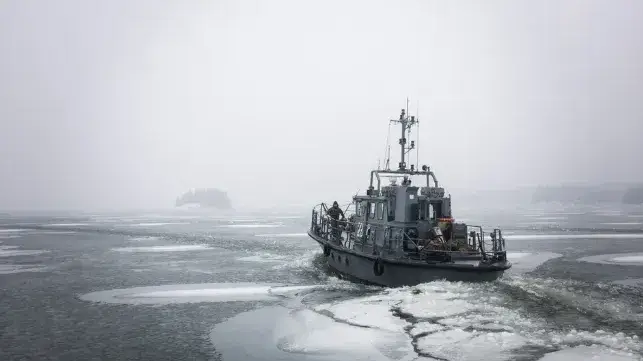
U.S. Marines head out on a surveillance mission aboard a Finnish Navy patrol boat, February 2025 (USMC)
U.S. Marines head out on a surveillance mission aboard a Finnish Navy patrol boat in support of Baltic Sentry, February 2025 (USMC)

Published Oct 15, 2025 9:12 PM by The Maritime Executive


NATO Maritime Command is pleased with the results of its enhanced patrols in the Baltic, which were ramped up in response to a string of suspicious and possibly intentional subsea damage incidents. Russia's "shadow fleet" tankers are closely watched by NATO forces because of concerns of malicious anchor-dragging and other acts of sabotage in the Baltic, and a spokesman recently told Moscow Times that the patrol efforts are working. 

"These shippers, these illegal shippers, are aware that they're being watched very closely, and we believe that in itself is a deterrent," NATO Maritime Command public affairs chief Cmdr. Arlo Abrahamson (USN) told Moscow Times.  

There have been no reported incidents of severed cables since last December, when the Russia-linked tanker Eagle S dragged its anchor through several telecom lines in the Gulf of Finland. That does not mean an absence of activity: multiple suspicious movements have been reported, and several vessels have been boarded and detained, like the shadow-fleet tanker Kivala in April 2025 and the tanker Boracay earlier this month. Russia made at least one vessel detention of its own, the interdiction of the tanker Green Admire in May 2025. 

The case of the Boracay shows that the nature of the threat is not limited to subsea. The vessel is suspected of serving as one of several launch platforms for the unauthorized drone intrusions at the Copenhagen airport and Danish military bases in late September. French forces boarded Boracay as it passed through the English Channel on its outbound trip, and the boarding team arrested the tanker's master and chief mate. 

After the drone incident, NATO promised to further increase its presence in the Baltic, to include new surveillance systems and the addition of another air defense frigate. The U.S. Navy destroyer USS Bulkeley joined the mission early this month, adding its Aegis radar to the effort to spot drone threats - the first time that the service has dispatched a surface combatant to assist Baltic Sentry

"We're very keen to understand that the threat is not eliminated. There's possibilities for illegal shippers or others to cause accidents and carry out malign activities, which is why Baltic Sentry continues," Cmdr. Abrahamson  told Moscow Times. 


Newsom Vetoes Ban on Public Funding for Automation at LA/Long Beach

Port of Los Angeles
File image courtesy Port of Los Angeles

Published Oct 15, 2025 9:22 PM by The Maritime Executive


Despite a lobbying campaign by the U.S. West Coast's powerful longshore union, California Governor Gavin Newsom has vetoed a bill to limit the powers of the air-quaility regulator for the twin ports of Los Angeles and Long Beach. The bill contained a provision to ban public funding for terminal automation technology in San Pedro Bay, which dockers believe to be a threat to their jobs.  

Diesel air pollutants are harmful to health, and for decades San Pedro's fenceline communities and environmental regulators have pushed for improving air quality, with considerable success. The South Coast Air Quality Management District wants to get even more results by regulating equipment and mobile sources of emission within the ports, and has nearly reached a formal cooperative agreement with LA and Long beach on planning targets for zero-emissions infrastructure. That agreement calls for large-scale infrastructure upgrades, with electrification playing a key role. Since modern, electrified port equipment is often sold with high levels of automation technology, the cooperative air quality agreement would likely introduce more automation to the ports by default, which could be viewed as a threat to longshoremen. 

To head off this problem, Senate Bill 34 (SB 34) proposed to ban the use of public funds to pay for automated or remotely controlled infrastructure at the San Pedro Bay ports. Public funds for buying human-operated, zero-emission equipment would still be allowed.

To ensure continued volume growth, the bill also proposed to ban the South Coast Air Quality Management District from capping cargo or cruise ship activity at LA and Long Beach. 

The bill was opposed by environmental groups, shipping companies and community health advocates. SB 34 was supported by the ILWU, which organized a petition drive for its members to express their backing. The union's petition suggested that SB 34 "protects union jobs, prevents public funds from being used for automation, and keeps California's ports strong and competitive while still improving air quality."

Despite the union's pressure, Governor Newsom vetoed the bill, citing the advanced state of negotiations between the air quality district and the two seaports. "This bill interferes with this [cooperative] approach, the progress made, and the ongoing good faith efforts made by the [district] and the Ports of Los Angeles and Long Beach," the governor wrote. 

The ILWU has yet to issue a formal response, but its East Coast sister union, the International Longshoremen's Association (ILA), released a statement condemning Newsom's "vicious attack" on dockers' jobs. ILA described Newsom's veto as a "gut punch" and a lost opportunity.

"By rejecting SB 34, the Governor has chosen the side of foreign ocean carriers and corporate lobbyists over the working men and women who keep California’s ports, and America’s economy, running," ILA wrote. "When a state uses taxpayer money to subsidize automation that replaces human labor, it’s not innovation, it’s corporate welfare. And when an elected official enables that process, it’s not leadership, it’s capitulation."

However, the Union of Concerned Scientists celebrated Newsom's veto as a win for air quality regulation. "SB 34 would have tied regulators' hands further, negatively impacting the health of millions of residents in surrounding communities, and hindering the region’s ability to reach mandated attainment of federal and state air quality standards," UCS said in a statement. 


Carbon Capture, Fuel Cells, and Wind Propulsion for Net-Zero Cruise Ship

net zero cruise ship conceot
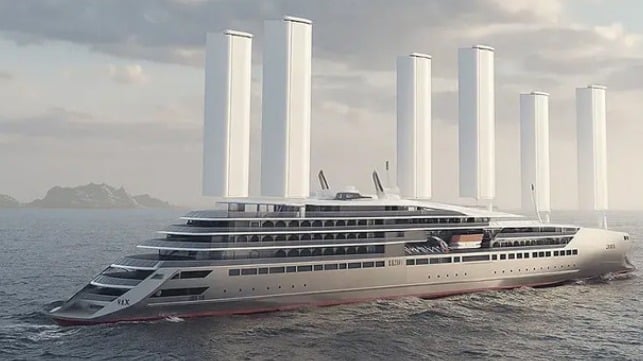
Ponant is developing a concept ship using sails and fuel cells to achieve net-zero (Ponant)

Published Oct 15, 2025 6:55 PM by The Maritime Executive


A partnership consisting of GTT and Bloom Energy is working together with France’s Ponant Explorations Group to combine fuel cells and marine carbon capture as part of a project to achieve the first net-zero cruise ship. The project, which was first revealed last year, reports that GTT, known for its containment systems and Bloom Energy will lead a joint innovation project to develop an integrated energy system to cover the vessel’s energy needs related to onboard consumption.

“This partnership is a key milestone in developing innovative and efficient ways to capture CO2 and embodies our commitment to finding new solutions to decarbonizing the maritime industry,” said Mathieu Petiteau, Newbuilding and R&D Director of Ponant Explorations Group. “It also marks another step forward for our Swap2Zero vessel project, co-funded by the European Union Innovation Fund and France 2030.”

The Swap2Zero Project was unveiled in 2023 with the goal of developing the first transoceanic ship aimed at carbon neutrality. The concept, which is being designed by firms LMG Marin and Stirling Design, envisions an 181-meter (594-foot) cruise ship with approximately 100 passenger cabins that would use 50 percent wind energy. They project a speed of 10 knots and total autonomy for an endurance of up to 30 days. It would reduce greenhouse gas emissions by more than 80 percent. Bureau Veritas is also participating in the project.


In addition to an optimized hull design, the vessel would have more than 1,000 square meters of photovoltaic panels. A low-temperature hydrogen fuel cell with be dedicated to propulsion with recycling of the water and heat produced. A high-temperature fuel cell would be dedicated to the needs of the ship’s hotel and also use heat recovery for hot water production.

In the joint innovation project, GTT will design and develop a marine carbon capture system compatible with Bloom Energy’s SOFC technology. According to the companies, the integrated solution will supply auxiliary electricity for the vessel, covering the hotel load for lights, hot water, and onboard services while capturing CO2 from the exhaust gases. The dual approach, combining emission reduction and the reuse of low-temperature energy from the ship’s cryogenic installations, they report, will further enhance the overall efficiency of the SOFC system through optimized thermal management.

“We see solid oxide fuel cells as a cornerstone of the maritime industry's low-carbon future,” said Aman Joshi, Chief Commercial Officer of Bloom Energy. “By integrating fuel cells with onboard carbon capture and sequestration, this initiative exemplifies how innovation and collaboration can accelerate the transition to cleaner, more sustainable shipping.”

The project was awarded a €40 million grant in 2024 from the EU to develop the designs that would contribute to the decarbonization of the maritime sector. They have said the project will serve as a catalyst for new energy solutions.

Ponant reports its goal is to have the vessel in service by 2030. It is one of several designs being explored to reach the goals of reducing emissions to achieve net-zero. 

Hurtigruten and Vard also unveiled their SeaZero project, which they expect will achieve an overall 40 to 50 percent energy reduction with the capability to sail entirely emission-free during normal operation. They are using solar panels and retractable sails along with an innovative design. 

Cyprus' Shipowners Call for Voting Down IMO's Net-Zero Framework

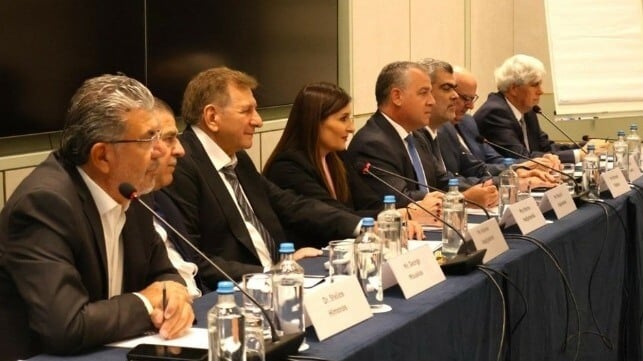
The Cyprus Union of Shipowners' general electoral meeting, October 6 (CUS)

Published Oct 15, 2025 10:58 PM by The Maritime Executive


In the midst of high-stakes negotiations over the future of IMO's emissions rules, Cyprus' influential shipowners have publicly joined the side of the "nays" on the Net Zero Framework. In a statement, the Cyprus Union of Shipowners (CUS) called for the Cypriot government and other EU member states to vote against the proposal to allow more time for talks aimed at consensus.

"As currently drafted, the NZF poses a serious threat to the European shipping, economy, and energy security, and also represents a grave danger to small and medium-sized enterprises (SMEs)," the CUS argued. "In essence, it represents a multi-billion-euro tax that does not reduce emissions but instead shifts the cost to end-consumers."

The NZF is based on a fee structure on carbon emissions intended to incentivize green-fuel usage. But as the availability of green fuels on the market in the near term is extremely limited, many operators will likely pay the fee, feeding an IMO-administered fund at an estimated rate of about $10 billion per year (globally). These funds would be used to reward low-emissions ships, pay for green fuel infrastructure and R&D, and to offset the cost effects of the regulation on vulnerable states, notably shipping-dependent island nations. 

The shipowners' association criticized the fee and fund plan, calling it a distraction. "Rather than reducing emissions, the framework diverts critical financial resources away from genuine technological and energy innovation, thereby slowing the transition to cleaner solutions," CUS asserted. "The result will be broad-based price increases, a higher cost of living and intensified inflation."

CUS warned of specific damage to small European shipowners, which could shrink the size of the EU-linked fleet through sales and early scrapping. 

The shipowners' concerns are familiar territory, and can be found elsewhere. Given the absence of near-term alternatives, many operators will likely pay the NZF fees and continue to emit, according to a new review by researchers at Columbia University SIPA. Smaller operators and those on less competitive routes are the most likely to simply pay for compliance and then raise their rates to cover the cost, wrote researcher Evelyne Williams, a former deputy lead negotiator in the U.S. delegation at IMO. In addition, there are practical concerns about scaling up the operation of a global carbon fee system and building out IMO's structure to handle its administration, especially in the short timeframe before entry into force, she cautioned.  

The CUS joins a growing list of opponents of the NZF, including the Trump administration, the government of Saudi Arabia, and an international coalition of prominent oil tanker owners. On the pro-NZF side, the International Chamber of Shipping, the European Shipowners Associations and the EU remain publicly supportive, along with a vocal coalition of small island developing states (which have concerns about rising seas). 

IMO Secretary General Arsenio Dominguez has presented the agreement as imperfect, but better than the alternative - which he believes to be the proliferation of different regional and national carbon regulations (as found already in Europe). This future would have no carbon regulation role for IMO, and would leave shipping interests with less influence over the use of the carbon fees. 

“The IMO Net-Zero Framework is not perfect. However, it provides a balanced basis for our further work," Dominguez said in opening remarks this week.