Wednesday, October 22, 2025

CUTTING NOSE TO SPITE FACE

BP-JERA JV Pulls Plug on US Offshore Wind Citing Unfavorable Market
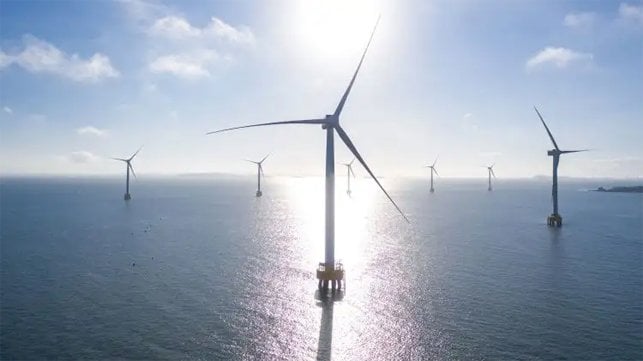
offshore wind farm
BP and JERA reported they will not proceed at this time with their sole US offshore wind farm (BP)

Published Oct 21, 2025 4:19 PM by The Maritime Executive


The joint venture company formed between BP and JERA announced that it has decided not to proceed at this time with the development of its Beacon Wind project off the coast of Massachusetts. Calling it a “difficult decision,” the companies said they had determined to reduce activities in the United States to “a minimal level,” reporting they will close operating activities in the market and dismiss all staff team members.

“Unfortunately, in the present environment, we see no viable path to the development of our Beacon wind project and have concluded that we cannot continue our investment in the market,” the company said in a written statement. “The U.S. is a market with significant long-term potential for offshore wind, which we still believe can play a key role in the country’s energy transition.”

The joint venture company was announced last year and launched in August 2025. At the time, it said it would “seek to continuously prioritize and optimize its portfolio of projects based on value and will leverage access to external capital and competitive financing.” The initial focus was to develop the existing pipeline established between the two companies, as well as to operate their assets. JERA Nex BP said it had a total potential generating capacity worldwide of 13 GW, including around 1 GW installed, 7.5 GW in the development pipeline, and an additional 4.5 GW of secured leases.

The CEO of JERA Nex BP, Nathalie Oosterlinck, had said in August on the launch of the company that it had a strong operational portfolio and an extensive pipeline. They have a global portfolio of onshore and offshore wind as well as solar and batteries, but Beacon Wind was its only U.S. offshore wind project.

The lease for Beacon Wind, which is located 17 nautical miles southwest of Nantucket, Massachusetts, and 52 NM east of Montauk Point, New York, was originally awarded in a December 2018 auction with the lease effective in April 2019. It belonged to Equinor, which later entered into a joint venture with BP. That JV was dissolved at the end of 2023, with BP taking full control of the 128,000-acre lease.

The first phase of the project, which was to have 1,230 MW, had already obtained a 25-year offtake agreement with New York for its power. The Biden administration had completed the environmental review, but the approval of the Construction and Operation Plan was still pending. The plan envisioned a second phase with 1.2 GW at a later date.

Signs of doubts over the project appeared in February when the project withdrew its application with New York for the transmission system. The project had been hailed for the plan to creatively reuse the Astoria (New York) Power Complex. 

The Beacon Wind lease was awarded in the same auction as Vineyard Wind, which is under construction, and Mayflower Wind (now SouthCoast Wind), which is being developed in a partnership between EDP and ENGIE. This project is in court as it is one that the Trump administration has chosen to challenge the existing approvals.

JERA Nex BP said it would maintain the Beacon lease and “wait for a more favorable moment” to resume the project’s development.


BP and JERA Abandon U.S. Offshore Wind Project Amid Policy Shift

A joint venture between BP and Japan’s JERA has decided to pull the plug on a major offshore wind project in the United States, citing soaring costs and a change in federal policies.

JERA Nex BP said inflation had also motivated its decision, which would see its U.S. workforce laid off over the next few months, the company said in a statement.

“JERA Nex bp has taken the difficult decision to reduce our activities in the US to a minimal level and will close our operating activities in the market. Unfortunately, as a result of this, all team members will leave the company in the coming months,” the statement said.

“The US is a market with significant long-term potential for offshore wind, which we still believe can play a key role in the country’s energy transition. Unfortunately, in the present environment, we see no viable path to the development of our Beacon wind project and have concluded that we cannot continue our investment in the market,” the company also said.

The Trump administration has been on the war path against energy transition companies, but offshore wind has received a special focus, with the President repeatedly declaring his dislike for the technology, which critics have pointed to as one of the most expensive non-hydrocarbon energy sources and an environmental problem because of bird and whale deaths—the latter disputed by pro-wind activists and the bird deaths considered within acceptable limits.

The Beacon offshore wind installation, between Cape Cod and Long Island, was supposed to have a total capacity of 2.5 GW covering 128,000 acres. BP said in a fact sheet for the project that it would generate energy to supply as many as 1 million households in the northeastern U.S. Despite the cancellation of the project, BP and JERA said they would keep the lease for the location for the time being.

By Irina Slav for Oilprice.com


DEME Takes Delivery of Large WTIV with Hybrid Power to Reduce Emissions
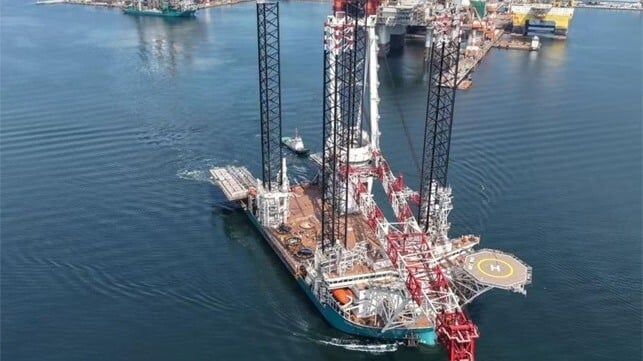
wind turbine installation vessel
Norse Wind is able to handle the largest turbines and uses direct current and batteries to improve sustainability (DEME)

Published Oct 21, 2025 5:20 PM by The Maritime Executive


Belgium’s DEME Group is advancing ambitions to expand its role as a major player in offshore wind installations after taking delivery of an installation vessel that is being touted as having the capabilities to deliver some of the largest projects in the world. The first of two new vessels being delivered to the company in the coming months, it also uses new technology to be more sustainable.

Just seven months after paying $1 billion to acquire Norway-based offshore contractor Havfram, DEME has taken delivery of the wind turbine installation vessel Norse Wind. Construction of the vessel was started by Havfarm and was one of the elements that made the acquisition an attractive opportunity to expand in the sector.

Built by China’s CIMC Raffles Shipyard, the vessel was designed for large projects. The newbuild was designed by GustoMSC and is equipped to install turbines with rotor diameters of more than 300 meters and XXL monopiles weighing up to 3,000 tons. The vessel’s 3,200-tonne crane enables operation in water depths of up to 70 meters, setting a new standard in lifting capacity, speed, and efficiency. It is designed to handle the newest 15 MW and 20 MW turbines.

The shipbuilder highlights the first-of-its-kind direct-current power system, which makes it possible to run the vessel on batteries. Unlike alternating current vessels, which require the diesel-generators to be running continuously, the Norse Wind will draw power from batteries for her onboard systems, and the diesel generators will run intermittently to recharge the batteries. CIMC Raffles reports that it also makes it possible for the vessel to carry heavier loads while reducing emissions.
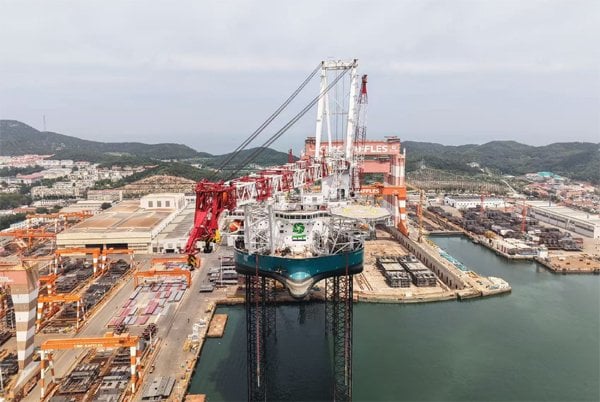
 

(DEME)


The vessel is also built to operate in extreme weather conditions. It has an advanced dynamic positioning system, which will help to keep it stable in conditions up to Force 8 winds (Gale 34 to 40 knots). It can handle rough seas and operate in low temperatures such as negative 15 C (5 F). 

DEME highlights that Norse Wind is already contracted for several major offshore wind projects. Her first job, which is set to commence in the first half of next year, will be at the Nordseecluster B offshore wind farm in Germany that is jointly being implemented by RWE and Norges Bank Investment Management.

Early this month, DEME secured a sizable contract to carry out the transportation and installation works for the inter-array cables for the project that is located approximately 50 kilometers north of the island of Juist in Germany. The project will have a total capacity of up to 1.6 GW.

The Belgian company will transport and install a total of 124 kilometers of inter-array cables for the second project stage, Nordseecluster B, connecting all 60 foundations for the wind turbines to the offshore substation in the German North Sea. 

Norse Wind represents an important step in strengthening DEME’s position as a leading player in offshore wind installation,” said Even Larsen, Business Unit Director Global WTG and O&M at DEME. “This state-of-the-art vessel enables us to deliver even larger and more complex projects, further enhancing our capabilities.”

The company highlights that work is also well underway on the sister ship, Norse Energi. The second vessel was launched in July and is scheduled for delivery early in 2026.


Network of Airfields in Place Along Red Sea and Gulf of Aden

Red Sea area airfields
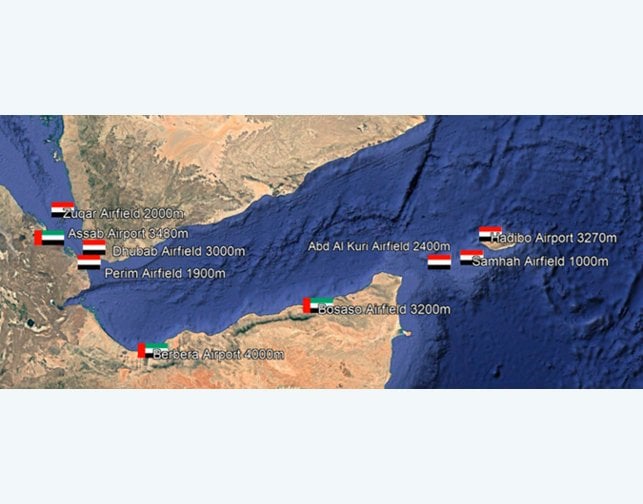
The two clusters of airfields in the Red Sea and Gulf of Aden (LandSat/Copernicus/CJRC)

Published Oct 21, 2025 5:11 PM by The Maritime Executive


Since Houthi forces began attacking merchant vessels in the lower Red Sea and the Gulf of Aden, traffic using the Maritime Security Transit Corridor (MSTC) linking the Suez Canal to the Gulf and Asia has been much reduced. Despite receiving a pummeling from both American and Israeli forces, the Houthis' anti-shipping capability remains intact, ready to be reactivated at the whim of the Houthi leadership. A political solution, or a decisive turn in Yemen's civil war, which would put an end to hostile Houthi intentions, seems a remote prospect.

This is the context in which for the past few years a network of airfields has been constructed, which has the potential, not yet realized, to improve maritime security along the MSTC corridor, as part of a military component to contain the Houthis' threat to shipping.

Two clusters of airfields have been constructed, one dominating the southern end of the Red Sea and the Bab El Mandeb, and the other overlooking the southern flank of the MSTC in the Gulf of Aden. In between the two clusters, well-established Emirati bases at Berbera and Bosaso cover the southern flank of the MSTC at its western end.

Although there have been no official acknowledgements, these airfields appear to have all been constructed using Emirati resources. The contracting companies building the airfields are Emirati-linked.  Shipping used to support construction on the islands has also been Emirati-linked. Because all the locations are remote and lack even basic infrastructure, construction materials, plant, and contractors have all had to be brought in over the beach. Who within the UAE has been sponsoring the construction effort, whether the Ministry of Defense or a humanitarian or aid organization, is unclear. But the lack of willingness to acknowledge ownership of the program inclines one to assume that it has had a security-linked sponsor.

All the remote islands and terrain on which the airfields have been built are controlled by the Southern Transition Council (STC) faction of the Yemeni Internationally Recognized Government (IRG). The STC relies heavily on the UAE for financial and military support, and to maintain the support of its ally is politically beholden to the UAE. Whether the program is a UAE initiative or an initiative of the STC, which the UAE is sponsoring, is unclear. The STC would not have the resources to carry out such a program on its own. Given decades of neglect of these remote islands by previous Yemeni governments, and the difficulties of supporting the small subsistence fishing communities that cling to life on the islands, on balance, the airfields program is unlikely to have been an initiative of the IRG.

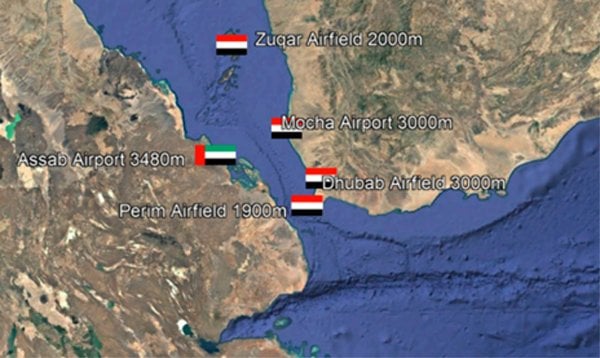
The cluster of airfields in the southern Red Sea can be supported by the well-established Emirati base at Assab in Eritrea, or by the recently extended civil airport at Mocha on the Yemeni coast. The Perim airfield was completed in 2021 and sits astride the Bab El Mandeb strait at its narrowest part. The airfield at Zuqar on the northernmost of the Hanish Islands was constructed in a hurry; it was started in June this year and completed last week, the construction cutting through the middle of the primary village on the island. It overlooks the southerly approaches to the Houthi ports of Hodeidah, Salif and Ras Isa, 55 nautical miles to the North. Dhubab Airfield on the Yemeni coast south of Mocha was constructed between March 2023 and February 2025, and being in a remote and uninhabited area would appear to have a military purpose, a backup or alternative to the airfield on Perim. This is a sea area where the STC-aligned forces of General Tariq Saleh's National Resistance Front have made a number of successful interceptions of military equipment being smuggled in for the Houthis.


Airfields in the southern Red Sea (Airbus/CJRC)

Zuqar, Perim and Dhubab have relatively short runways, suitable for C130 transports and C295 transport/maritime surveillance or smaller aircraft, and for drones, but not suited for regular fighter/strike aircraft operations. All three are close to the sea, and thus would be difficult to defend, and none of the three have infrastructure to support sustained operations.  They seem primarily designed to support visiting aircraft on quick turn rounds. Indeed no aircraft have been caught on satellite imagery at these airfields, with the possible exception of a drone sighted on the Perim airfield some time ago.

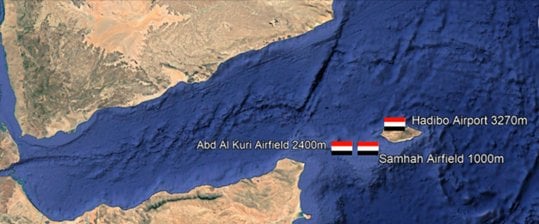
It is a similar story for the airfields in the Socotra Archipelago. These are likely to be supported from the well-established Emirati airbase at Hadibo. Both the airstrips on Abd Al Kuri and Samhah - which has yet to be finally completed - are austere runways without supporting infrastructure.  


Airfields in the Socotra archipelago (Airbus/CJRC)

On February 16 this year, a medium transport aircraft may have been seen on the Abd Al Kuri runway.  But the only regular visitor is a small transport aircraft that remains on the ground only for a few hours. It is probably the same 20m wingspan aircraft, which seems to be based at Hadibo.

At none of these airfields have fighter or strike aircraft ever been seen. Clearly, they could be used for diversions and contingencies, or mobilized quickly into forward operating bases should the need arise.  But as yet, the airfields have made no obvious contribution to maritime security, save that the airfields in the Red Sea may have use in supporting the anti-smuggling activities of the National Resistance Forces.  Conceivably, the airfields could be used to resupply intelligence collection facilities atop high points on the islands, but there is no evidence to support such conjecture.  While the construction of the airfield network appears to be defense-sponsored, little defense utility or maritime security benefit for the investment has yet become apparent.

EU Council Agrees on Plan and Date to End Russian Gas Imports

Russian gas carrier
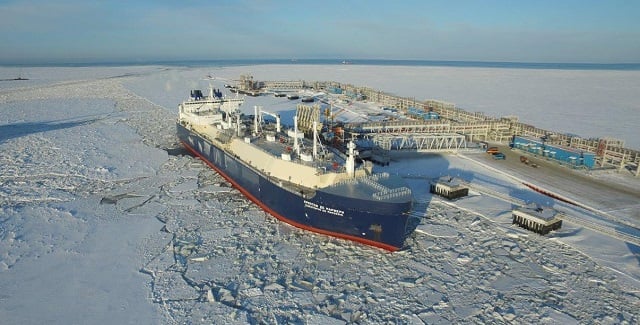
European Council agreed on its positon for the plan to end Russian gas imports (SCF file photo)

Published Oct 21, 2025 5:37 PM by The Maritime Executive


The European Union (EU) is advancing plans to exert more pressure on Russia’s economy with a commitment to continue reducing gas imports and impose a total ban in 2028. Following Russia’s invasion of Ukraine, the bloc now accepts that stopping gas imports is critical in denying Moscow the resources needed to sustain the aggression.

European Union energy ministers approved a plan at the European Council on October 20 to gradually reduce both pipeline gas and liquefied natural gas (LNG) imports from Russia, with a full ban expected to apply from January 1, 2028. The proposal by the European Council is in line with the REPowerEU Plan, which was adopted in 2022 and sets a roadmap for the bloc to end Europe’s dependency on Russian energy.

The Council presidency reports that negotiations will begin with the European Parliament. The goal is to agree on the final text of the regulation, once the Parliament adopts it position. It comes as the efforts are underway to also finalize the broader 19th sanction package on Russia, which will include the oil and gas ban as well as the listing of additional tankers.

In the approved plan, EU countries agree to stop importing Russia’s gas in January next year, with another two years of transition period for existing contracts. A leeway has been given for short-term contracts that will run until June next year, with long-term contracts ending come 2028.

“An energy independent Europe is a stronger and more secure Europe. Although we have worked hard and pushed to get Russian gas and oil out of Europe in recent years, we are not there yet. Therefore, it is crucial that the Danish Presidency has secured an overwhelming support from Europe’s energy ministers for the legislation that will definitively ban Russian gas from coming into the EU,” said Lars Aagaard, Danish Minister for Climate, Energy and Utilities.

With no end in sight for the Russia-Ukraine war, the EU hopes that stopping the imports will further cripple Russia’s economy and deny the Kremlin resources to sustain the war. Despite efforts to reduce dependence on Russia for energy needs, the bloc remains a major importer of Moscow’s gas, which accounts for an estimated 13 percent of imports in 2025 worth over €15 billion ($17.4 billion) annually.

EU data show that in 2024, the bloc imported 52 billion cubic meters (bcm) of Russian gas, which was around 19 percent of total EU gas imports. It also imported 3 million tonnes of crude oil and more than 2,800 tonnes of uranium in enriched or fuel form. At least 10 member states imported Russian gas in 2024, with three importing oil and seven enriched uranium or uranium services.

The EU has imposed a range of sanctions on the Kremlin as part of efforts to cut imports. Some of the sanctions have banned Russian coal and oil imports to the EU and prohibited the reloading of cargoes in the bloc’s ports carrying LNG from Russia. Particular attention has now shifted to the issue of circumventing the EU oil sanctions by using shadow fleets. On this, the bloc is working on a new plan to further increase the inspections of the shadow tanker fleet that supports the Russian energy industry.

The efforts have seen the EU gas imports from Russia decrease from 45 percent in 2021 to 19 percent in 2024 and 13 percent this year. The share of Russian oil imports has also shrunk from 27 percent at the beginning of 2022 to three percent currently. Notably, around two-thirds of Russian gas imports are supplied based on long-term contracts while around one third is provided on spot (short-term) basis.

In the proposed regulation, countries will be required to submit national diversification plans outlining measures and potential challenges to diversifying their gas supplies. The bloc has also introduced additional monitoring and notification mechanisms to prevent Russian gas from entering the EU under transit procedures.


China Plots Expansion of Shipping on “Polar Silk Road” aka Russia’s NSR

containership
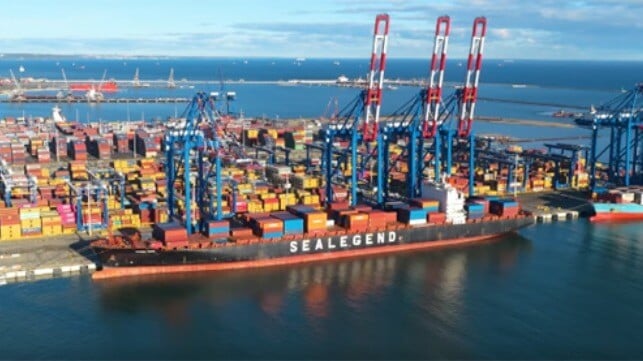
China's containership Istanbul Bridge arrived in Poland after the UK and Germany (Port of Gdansk)

Published Oct 21, 2025 3:00 PM by The Maritime Executive


Chinese officials are continuing to promote the benefits of Russia’s Northern Sea Route, which they have taken to calling the “Polar Silk Road.” This comes as their containership Istanbul Bridge is completing its first round of port calls in Northern Europe ahead of the launch of full service in 2026.

China’s Global Times newspaper announced on Monday, October 20, that the shipping company operating the Istanbul Bridge, Sea Legend Shipping, plans to operate regular summer voyages along the route by 2026. It made history last week, completing the fastest transit between China and the UK in just over 20 days using a non-polar containership. The ship is also larger than the vessels that are making the transit from another Chinese shipping company, NewNew Shipping.

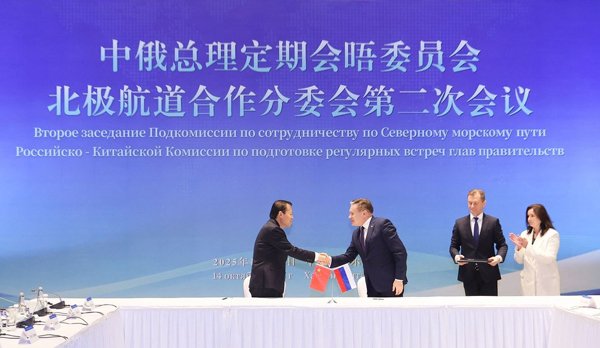
Plans for the service come as China and Russia reported they signed a new agreement to jointly develop and commercialize the Northern Sea Route. China’s Minister of Transport, Liu Wei, met with Russian officials, including the Director General of Rosatom, Alexey Likhachev, in the second session of the Subcommittee of Cooperation on the Northern Sea Route in Harbin, China. Rosatom reports that an action plan was approved and along with a roadmap aimed at creating a sustainable transport corridor.

The Chinese Ministry of Transport says the two sides are promoting cooperation, including Arctic shipping, safety, and polar shipbuilding and technology. They said the goal of the subcommittee is to promote cooperative development of Arctic waterways. China reports that it plans to develop regular Arctic connections, including long-term European port contracts. This, they said, will facilitate deeper integration of high-end manufacturing and new energy industries from China’s Yangtze River Delta with the European market.


Signing of the cooperation agreement in China on October 14 (Rosatom)


The Istanbul Bridge reached Gdansk, Poland, on Sunday, October 19, with officials highlighting the importance of the port call for the transshipment of goods to Central Europe. They say it will permit them to deliver Chinese goods at a lower cost and quicker to the Czech Republic and Hungary. The ship then departed and is making its way to Rotterdam.

The reports are calling the opening of the service a “significant shift” that will improve the flow of goods between Asia and Europe. China highlights that in the first six months of 2025, it exported over $465 billion worth of goods to Europe, with the trade up nearly four percent over 2024. They said the European Union now accounts for 13 percent of China’s foreign trade. 

The Global Times says the relatively mild sea conditions along the Northern Sea Route make it well-suited to temperature-sensitive and time-critical cargoes. They say the route could help China to boost exports of lithium electronics, photovoltaic products, and new-energy vehicles.

Sea Legend, which lists a fleet of 18 vessels on its website, said the new services took three years to plan. It had to overcome challenges, including upgrading the ship’s equipment, personnel training, and certification, as well as developing accurate weather and navigation forecasts. 

The company says it plans for a weekly or biweekly summer service and will use the information from these first runs to improve the specifications and design of new ice-reinforced ships. Ultimately, it hopes to have year-round navigation on the China-Europe Arctic route. For now, during the non-navigation periods, they will offer an express service requiring 25 days to Europe by combining the Suez Canal route and rail links.


KOREA

Two Workers Severely Burned in Welding Accident on Dredger

Gusan Port
Explosion happened in the Gusan port in the southwestern part of the country (Gusan Port)

Published Oct 21, 2025 6:06 PM by The Maritime Executive


[Brief]  Korean officials are reporting that two workers on a dredger at Gunsan, in southwest Korea on the Yellow Sea, were badly injured during an incident aboard the vessel Tuesday morning, October 21. The National Fire Service and local teams responded after reports of an explosion on the vessel.

The reports indicate that the two men, one in his 50s and the other in his 60s, were conducting maintenance work on the dredger, which was anchored in the port near Pier 6. The unnamed vessel, which the media said is 2,627 tons, was reportedly in the port for maintenance at the time of the incident. It is unclear if there were any people aboard the vessel at the time.

Witnesses told the media that it appeared the men were welding, possibly on a gas tank, when there was an explosion. Both men were reported to be severely burned and were being airlifted by helicopter to the hospital.

The Gunsan Coast Guard reported that it presumed it was a welding explosion, but that it would be conducting a full investigation.

They reported that the ship had been checked after the incident, and there was no additional fire damage. They also said there was no pollution visible at the scene. 

The incident took place as the regional coast guard units have been busy with enforcement efforts during the autumn crab season. Media reports said more than 800 Chinese fishing boats had been spotted in the region. Approximately 1,150 Chinese fishing vessels are licensed to operate in the region, but the coast guard said as many as 200 were approaching the Northern Limit Line, where foreign fishing boats are prohibited. The Coast Guard said it would be conducting a joint special operation with the Navy and the management of regional fisheries against illegal foreign fishing in the region

Why do so many pro soccer players develop osteoarthritis?


Oxford University Press USA


A new paper in Rheumatology, published by Oxford University Press, finds that retired UK male professional football players who reported foot or ankle injuries during their careers were more likely to develop osteoarthritis in retirement. Retired players treated routinely with cortisone injections for their injuries were even more likely to report osteoarthritis.

Professional football is a high-speed contact sport with high risk of injury. Foot and ankle injuries are particularly common, with ankle sprains being the most regular ankle injury and metatarsal fractures the most frequent foot injury. These injuries occur more often during football matches than in practice due to the high speed, jumping, frequent changes in direction, and competitive nature of the game. Joint injury can lead to pain, swelling and damage to the articular cartilage and other joint tissues and result in subsequent foot/ankle osteoarthritis, which can result in disability or chronic pain.

Although injury is widespread in male professional footballers—almost 25% of players suffer foot or ankle injuries during their careers—the widespread use of injection therapies such as corticosteroids, local anesthetic, platelet-rich plasma, and hyaluronic acid remains controversial due to concerns about their long-term side-effects (and limited evidence supporting the effectiveness of such treatment).

Injections can alleviate pain and allow players to return to games more quickly. However, the treatment may hide underlying joint damage and could accelerate joint structural deterioration over time. The frequent use of injections may also worsen cartilage damage, particularly when combined with the high physical demands required in professional football.

Researchers here examined retired UK male football players between August 2020 and October 2021 about cases in which a general practitioner diagnosed foot/ankle osteoarthritis or preformed forefoot/ankle surgery after the players’ retirement. Of the 424 retired professional football players studied, the investigators reported that 73 percent of retired players with osteoarthritis reported foot or ankle injuries, and 75 percent of players with osteoarthritis reported treatment with corticosteroid injections over the course of their careers.

The researchers caution that while corticosteroid injections are associated with higher rates of osteoarthritis, this does not necessarily mean injections are making osteoarthritis more likely, as injections are often given after injuries, that may have linked injections to osteoarthritis. The investigators do point out that retired football players with osteoarthritis did report a higher number of injections into a single ankle during a season, and many received more than four injections a season, which is more than what’s recommended by physicians. 

“Our findings clearly show that a significant foot or ankle injury during a player’s career is a major, modifiable risk factor of osteoarthritis late in life,” said the study’s chief investigator, Weiya Zhang.

The paper, “Injury and local injection and the risk of foot/ankle osteoarthritis: a case-control study in retired UK male professional footballers,” is available (at midnight on October 22nd) at https://doi.org/10.1093/rheumatology/keaf518.

To request a copy of the study, please contact:
Daniel Luzer 
daniel.luzer@oup.com


Does floral scent affect insect visitors and bacterial strains on flowers?


Wiley


Using information on alpine plant species, researchers investigated how the chemistry of flowers’ scent affects not only the diversity of insect pollinators but also the communities of bacteria living on the flowers.

The study, which is published in New Phytologist, reveals that high floral scent chemodiversity—or the presence of a range of different chemical compounds—is associated with increased pollinator richness but reduced bacterial richness on flowers. The findings led the scientists to propose the “Filthy Pollinator Hypothesis.” The hypothesis rests on two ideas: that flowers with more chemically diverse scents attract a wider variety of pollinators, thereby increasing the potential for microbial transmission between plants, and that floral scent chemodiversity lessens the risks of unwanted microbial colonization by preventing the establishment of detrimental microbes while still allowing the establishment of healthy ones.

“This mechanism could provide an evolutionary explanation for the persistence of floral scent chemodiversity,” said corresponding author Maximilian Hanusch, PhD, of Marburg University, in Germany.

URL upon publication: https://onlinelibrary.wiley.com/doi/10.1111/nph.70600


Additional Information
NOTE:
 The information contained in this release is protected by copyright. Please include journal attribution in all coverage. For more information or to obtain a PDF of any study, please contact: Sara Henning-Stout, newsroom@wiley.com.

About the Journal
New Phytologist is an international journal publishing outstanding original research in plant science and its applications. Research falls into five sections: Physiology & Development, Environment, Interaction, Evolution, and Transformative Plant Biotechnology. Topics covered range from intracellular processes through to global environmental change. New Phytologist is owned by the New Phytologist Foundation, a non-profit organization dedicated to the promotion of plant science.

About Wiley      
Wiley is a global leader in authoritative content and research intelligence for the advancement of scientific discovery, innovation, and learning. With more than 200 years at the center of the scholarly ecosystem, Wiley combines trusted publishing heritage with AI-powered platforms to transform how knowledge is discovered, accessed, and applied. From individual researchers and students to Fortune 500 R&D teams, Wiley enables the transformation of scientific breakthroughs into real-world impact. From knowledge to impact—Wiley is redefining what's possible in science and learning. Visit us at Wiley.com and Investors.Wiley.com. Follow us on FacebookXLinkedIn and Instagram.