It’s possible that I shall make an ass of myself. But in that case one can always get out of it with a little dialectic. I have, of course, so worded my proposition as to be right either way (K.Marx, Letter to F.Engels on the Indian Mutiny)
Wednesday, October 22, 2025
Concerned carmakers race to beat China’s rare earths deadline
Global automakers are scouring the globe for crucial rare earths ahead of looming Chinese export controls, with executives worried they could lead to parts shortages and plant closures.
Rare earth magnets power motors in car parts such as side mirrors, speakers, oil pumps, windshield wipers and fuel leakage and braking sensors. They play an even bigger role in EVs.
While a US-China deal diverted a supply threat, stockpiles were depleted by similar restrictions earlier this year, while Beijing has also made it harder to get export licenses.
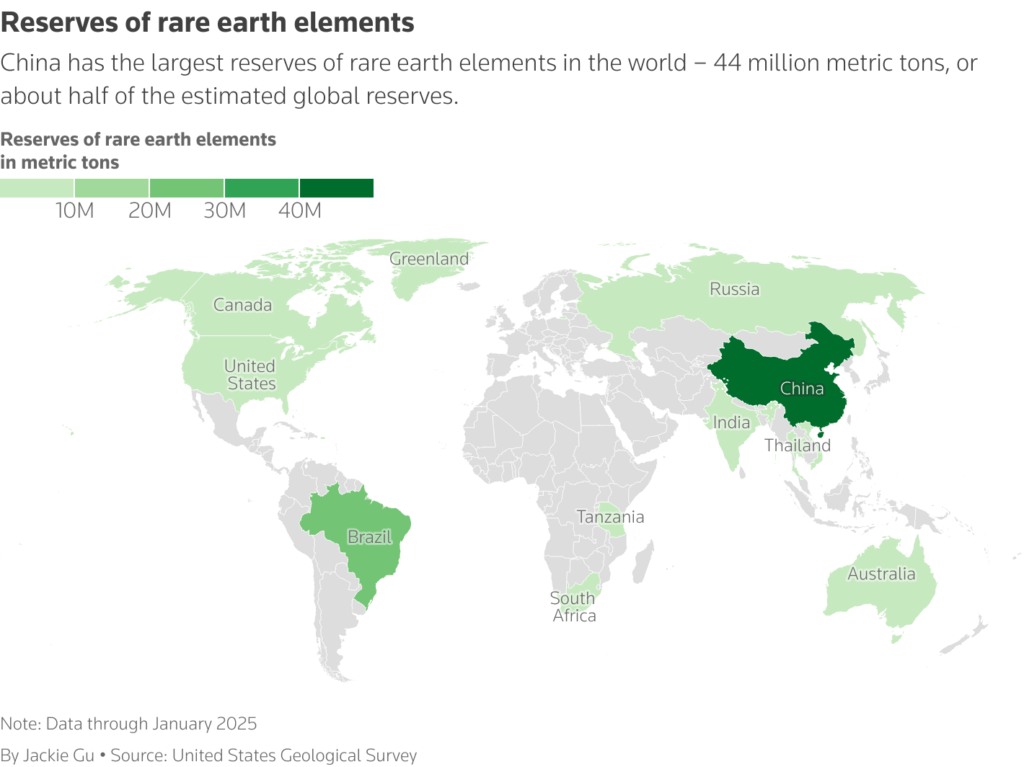
Consultancy AlixPartners estimates China controls up to 70% of global rare earths mining, 85% of refining capacity and about 90% of rare earths metal alloy and magnet production.
The new Chinese export control list includes elements like ytterbium, holmium and europium, also used in making cars.
“The situation is very tense,” said Nadine Rajner, CEO of German metal-powder supplier NMD, adding customers want to source rare earths from anywhere but China.
As part of efforts to counter Chinese dominance, on Monday President Donald Trump and Australian Prime Minister Anthony signed a critical minerals agreement that includes US investments in rare earth mining projects in Australia.
NMD’s Rajner said that while there are plenty of rare earths available in countries like Sweden, they do not have the mines or refining capacity to make them usable. And for heavy rare earths, China controls 99.8% of global refining capacity, making alternative sources negligible.
“We are pretty much sold out and have limited stocks,” Rajner said.
Rare earths can be recycled from old cars, but that industry is in its infancy. Neutral, a Renault-backed company, currently recycles rare earths from 400,000 cars a year in France and has contracts with 15 brands in Europe.
But “the challenge is scaling up these activities,” said Neutral CEO Jean-Philippe Bahuaud.
‘Already been depleted’
Even if Chinese suppliers can fulfil fresh orders before the November 8 export controls take effect, the journey by sea to Europe can take 45 days and the threat of a rare earth bottleneck is among several headaches facing the auto industry.
China has also placed export restrictions on lithium-ion batteries and battery materials, triggering concerns over parts supplies for electric vehicles.
And last week, an intellectual-property dispute between China and the Netherlands involving little-known Dutch chip-maker Nexperia, sparked fears of factory closures because it supplies a large amount of chips car parts and components.
Automakers also face the challenge of US tariffs and are expected to detail the costs in their third-quarter earnings.
But China’s hold over the industry through its control of rare earths ranks among the thorniest problems.
“They can shut us down in two months, the entire auto industry,” said Ryan Grimm, Toyota Motor’s North America group vice president of purchasing supplier development.
Bruno Gahery, president for France, Benelux, West and South Europe at supplier Bosch, said he expected the autos industry to “overstock rare earths” ahead of the deadline.
But an executive at a magnet supplier for Hyundai said that while it built inventories earlier this year, “most have already been depleted” and supplies are tight.
Some Chinese rare earths exporters received a rush of orders from overseas clients immediately after new export controls were announced on October 9, three industry sources told Reuters.
Rare earth-free motors
Automakers are taking steps to reduce their reliance.
Some such as General Motors and major suppliers such as ZF and BorgWarner are developing EV motors with low-to-zero rare earth content, while BMW and Renault have produced rare earth-free motors.
Monumo has used AI and deep-tech simulation to help clients cut rare earth content in motors already in production, which CEO Dominic Vergine said has led to an average reduction of 24% among the UK firm’s customers, which include several of the world’s top 10 carmakers, he said.
Automakers are also pushing hard to improve rare earth-free motors for the next generation of EVs.
Yet most of those motors are years away, as are efforts to develop new rare earth mines and processing plants outside China, which Beijing can undermine by keeping prices low, industry experts say.
Experts say the US government is taking the threat far more seriously than Europe.
Andy Leyland, co-founder of supply chain specialist SC Insights, said Beijing has focused on beating others on price and will continue to do so.
“The Chinese can always undercut them,” he said of efforts to develop rare earth-free motors, adding that faced with cheaper motors with rare earth magnets automakers may find it hard to justify more expensive components.
“So it’s a really risky investment.”
Meanwhile, China is expected to keep exerting its power over supplies of rare earths.
“This is not the end of export controls,” said Jan Giese, a senior manager at rare earth trader Tradium.
(By Nick Carey, Christina Amann, Gilles Guillaume, Heekyong Yang and Beijing Newsroom; Editing by Mike Colias and Alexander Smith)
America’s Auto Industry Faces a Rare Earth Reckoning
U.S. automakers remain heavily dependent on Chinese rare earths, making production vulnerable to export restrictions.
Companies like GM and Ford are investing in domestic mining and recycling to secure lithium, cobalt, and nickel supplies.
Despite ongoing shortages, new trade deals and domestic metal facilities offer cautious optimism for the auto sector’s resilience.
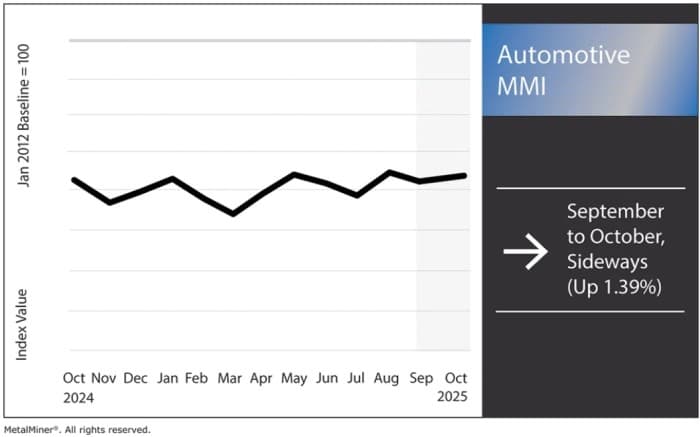
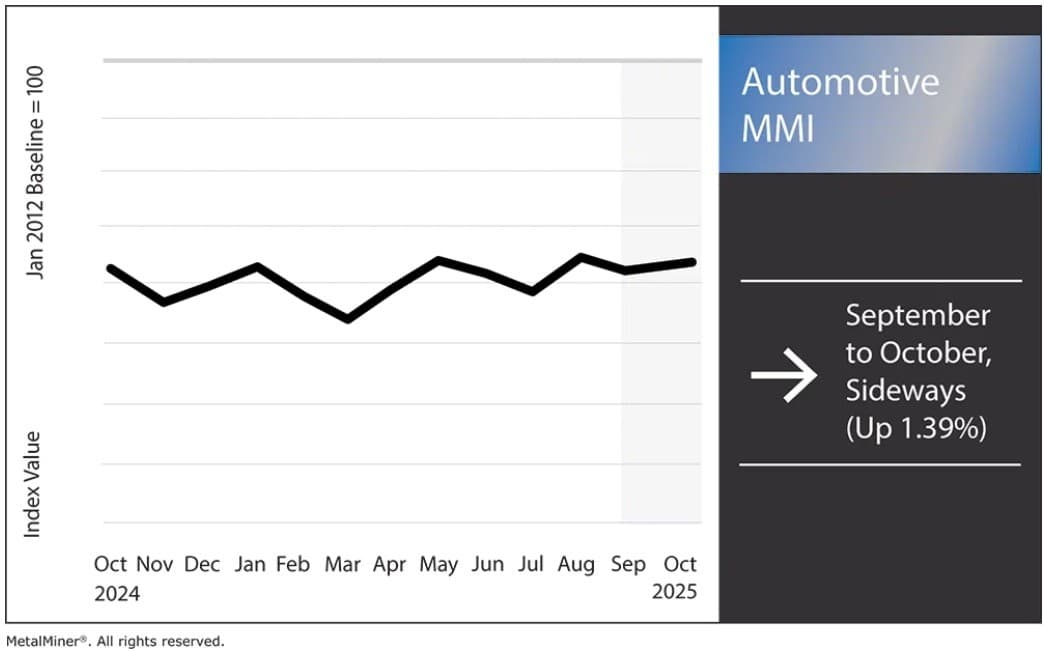
The Automotive MMI (Monthly Metals Index) moved sideways, rising a slight 1.39%. As a whole, the US automotive market is facing a number of challenges necessitating both innovation and resilience.
Why Are Critical EV Minerals in Short Supply?
Automakers are grappling with shortages of critical minerals needed for electric vehicles and high-tech components. Rare earth minerals are a prime example. This set of 17 metallic elements is integral to many car parts, from EV motors and batteries to windshield wipers and speakers.
CBS News reports that about 90%of the rare earths used by the US industry are sourced from China. This leaves the US automotive market highly dependent on foreign supply. In May, 2025, Ford Motor Co. had to temporarily halt production at its Chicago SUV plant due to a sudden shortage of rare earth magnets needed for electric power steering and other components.
Chinese Control Over Rare Earths Remains a Key Problem
Because China dominates the global rare earth supply chain, even a brief disruption can have a significant impact on the US automotive market. China also refines nearly 99% of the world’s heavy rare earth elements, resulting in a near-monopoly where any Chinese export curbs immediately ripple through manufacturing.
According to EHN, US automakers recently warned that vehicle assembly could grind to a halt within weeks if rare earth shipments didn’t resume. The crisis prompted urgent trade talks. But as of October 2025, China announced even stricter rules, ultimately tying rare earth magnet exports to national security considerations.
The lesson for US firms is clear: supply lines for critical EV minerals are vulnerable, and over-reliance on one country presents a significant strategic risk.
What Strategies Are Automakers Using to Secure Materials?
Facing the twin challenges of rising costs and scarce materials, US automakers are adopting new supply chain strategies to bolster resilience. Diversifying sourcing is priority number one, and manufacturers are seeking alternative suppliers for minerals outside of both China and traditional metal import channels. In some cases, companies are stockpiling critical parts and materials as a buffer.
For instance, German automakers like BMW and Mercedes-Benz reportedly entered 2025 with plans to build inventories of rare earth magnets and other key components when China’s restrictions hit. This kind of inventory hedging can keep production running through short-term disruptions.
Will the US Automotive Market and Car Makers Strike Lithium Gold in Nevada?
Automakers are also taking a more hands-on approach to raw material supply. A notable example is General Motors’ investment of around $650 million in a Nevada lithium mine (Thacker Pass) to secure a domestic source of lithium for EV batteries.
Other carmakers have signed long-term contracts with US and Australian mining firms for lithium, nickel and cobalt, all to ensure critical battery minerals remain available even if overseas supply chains falter.
Another strategy that is proving key for the US automotive market is recycling and circular reuse of metals. Recycling not only reduces dependence on mined imports but also aligns with sustainability goals. Therefore, manufacturers across the US are partnering with specialized firms to reclaim materials from scrap and end-of-life batteries. For example, Ford recently invested $50 million in Redwood Materials, a Nevada-based company, to integrate battery recycling into its supply chain.
By recycling old lithium-ion batteries, Redwood can provide Ford with a domestic stream of lithium, cobalt and nickel for new EV batteries. Companies like GM are also working with recyclers to harvest scrap from battery production for reuse.
What’s the Outlook for US Metal Procurement in Auto Manufacturing?
In the short term, volatility is the new normal. U.S. automotive procurement executives must continue to navigate unpredictable swings in both policy and supply. Tariffs can change with geopolitical winds, as exemplified by mid-2025’s rapid escalations and subsequent trade truces. Meanwhile, the critical mineral supply can be suddenly pinched by export controls abroad. This type of environment calls for a combination of vigilance and flexibility.
For instance, many firms are strengthening their risk management by locking in fixed-price contracts for steel and aluminum where possible, while closely monitoring inventories of at-risk materials. Building resilience is the name of the game, and dual sourcing, strategic stockpiles, vertical integration and recycling are becoming standard tools in the procurement playbook.
Not All Bad News
On a hopeful note, ongoing negotiations and investments may alleviate some pressures. The US and EU recently implemented a trade agreement that lowers certain auto-related tariffs and even exempts some raw materials like rare earths and graphite from duties.
Meanwhile, domestic capacity is inching upward. For example, new aluminum recycling facilities and steel mini-mills are coming online, and the Mountain Pass rare earth mine in California is increasing output. That said, the facility still ships its ore to China for processing, at least for now.
Ultimately, CFOs and sourcing leaders in the US automotive market are balancing a tough equation. To keep assembly lines running and costs manageable tomorrow, they must invest in supply chain resilience today.
Automotive MMI: Noteworthy Price Shifts
Hot-dipped galvanized steel prices dropped 3.44% to $1,009 per short ton.
Korean 5052 aluminum coil premium over 1050 prices moved sideways, dropping 2.19% to $4.09 per kilogram.
Chinese lead prices moved sideways, rising just 0.59% to $2,359.32 per metric ton.
Lastly, LME primary three-month copper prices rose by 5.54% to $10,332 per metric ton.
An auto supplier that manufactures electrified propulsion systems, among others, has closed a factory in Detroit because of the drop in demand for electric vehicles.
In a statement cited by CBS, Dana Inc. said that the closure decision was the result of an “unexpected and immediate reduction in customer orders driven by lower demand for electric vehicles, which has rendered continued operations at the plant no longer viable.” Some 200 workers at the plant will be laid off.
The Dana facility may be the first of many casualties of the change in federal policies towards electric vehicles. Fully supported by the previous administration, with billions in subsidies for both buyers and manufacturers, the sector fell out of grace this year with the change of the guard at the White House, with the Trump administration axing the buyer incentive for electric cars as of the end of September.
The move prompted a rush to buy EVs in the third quarter, leading to a whopping 40.7% jump in EV sales on the second quarter, which saw a dip, by the way. The third-quarter sales number also represented a solid 29.6% annual increase.
This was the last hurrah, it seems, at least for the time being, as large carmakers continue losing money on their EVs and would likely breathe a sigh of relief at the opportunity to let go f their electrification ambitions in the absence of subsidies.
Ford lost $1.3 billion on its EVs in the second quarter and has projected its total EV-related losses could hit $5.5 billion for the full year.
GM and Stellantis are also losing money on every EV they make, even though, per the latest Kelley Blue Book numbers, GM, along with Volkswagen, enjoyed a more than twofold increase in EV sales in the third quarter.
By Irina Slav for Oilprice.com
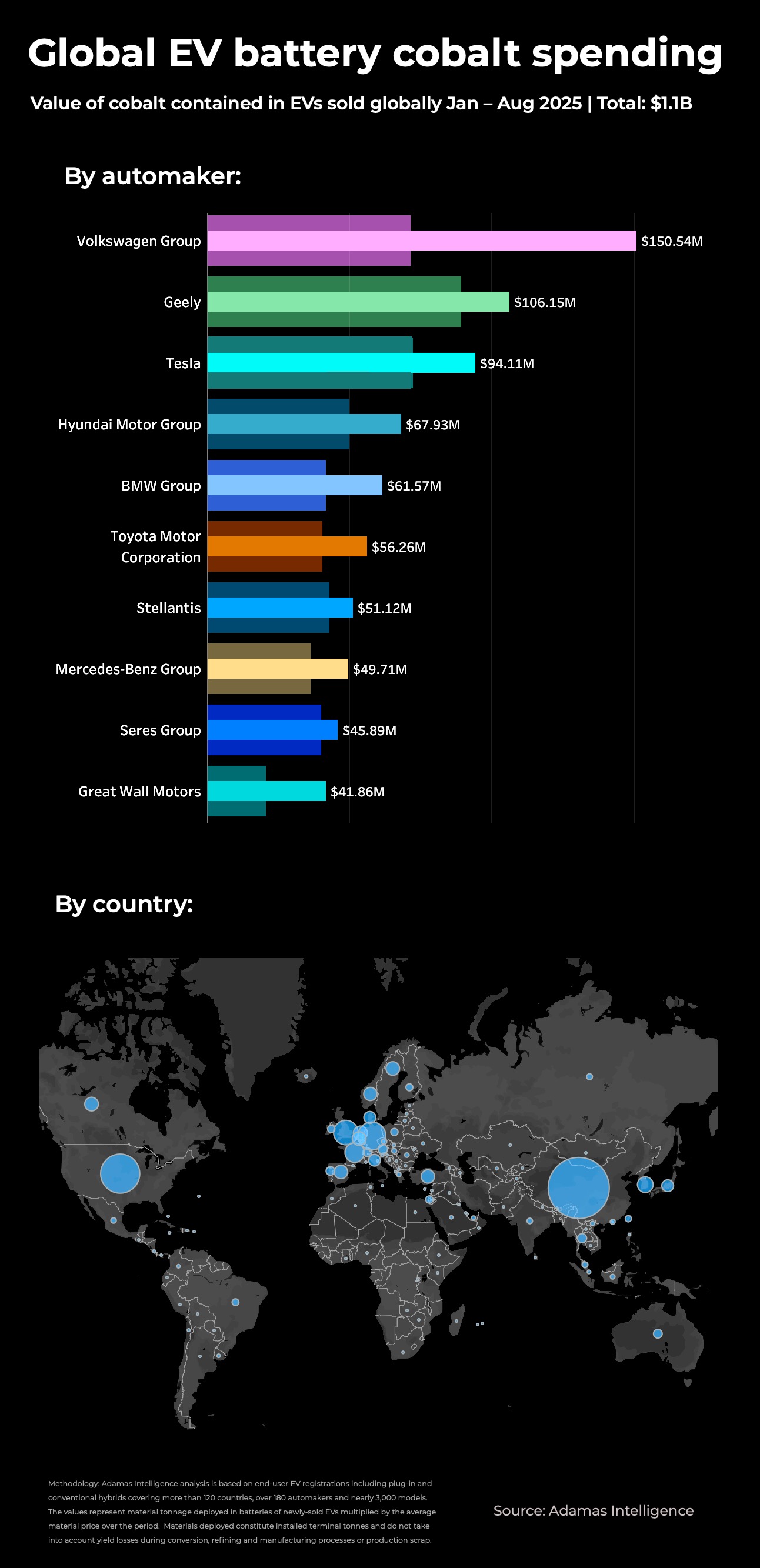
RANKED: Top 10 automakers by battery cobalt spending
Congo’s export quotas have lit a fire under cobalt prices and spending on the battery material is up 43% year on year despite ongoing thrifting.
A surge in supply from the Congo, responsible for 80% of the world’s cobalt output, coupled with cooling demand from the electric vehicle market, saw cobalt prices sink to historic lows at the start of 2025.
Copper production in the DRC increased by nearly 40% last year, but last week Kinshasa began implementing a quota system to replace a ban announced in February. Allowed base volumes of 87,000 tonnes per year is around half the total exports registered in 2024.
The price of cobalt sulphate entering the EV battery supply chain in China is now trading over 120% higher than at the start of the year – averaging $7,775 a tonne in September (still nowhere near the 2022 peak of $19,000 per tonne).
Tender cancelled
Cobalt prices would likely remain elevated and could rise further under the quota scheme put in place for 2026 and 2027. That would have played a part in the US Department of War cancelling a $500 million tender to stockpile the metal.
The CEO of the world’s number one producer of cobalt, China’s CMOC Group, also warned last week that cobalt at these levels could lead to demand destruction and substitution, although that has been a long-running trend for cobalt users.
Cobalt consumption in EV batteries overtook other sources of demand like aerospace several years ago and the downstream impact of the DRC strategy has been swift.
The latest data from Toronto-based research consultants Adamas Intelligence tracking global EV battery metal deployment paired with monthly prices shows the size of the battery cobalt market in September totalled an estimated $227.7 million. That’s the highest value since December 2022, and up just shy of 111% year on year and 32% month on month.
So far this year the value of installed cobalt tonnes in EV batteries totals $1.3 billion, up 51% compared to the same period last year. The sales weighted average value of the cobalt contained in EV batteries has hit $73 per vehicle, up from less than $40 at the start of the year.
Keeping in mind that the installed tonnage does not take into account any losses during processing, chemical conversion or battery production scrap (often well into double digit percentages), so required tonnes and revenues are meaningfully higher at the mine mouth.
Thrifting
The turnaround in fortunes comes despite years-long thrifting by EV battery manufacturers and the rise of LFP, or lithium iron phosphate batteries. Models fitted with LFP batteries now make up more than 40% of global EV sales, even when including conventional hybrids where nickel metal hydride power packs dominate. Excluding HEVs, the number of EVs sold this year without nickel, cobalt or manganese rises to 55%.
The top 10 includes only three Chinese brands, an indication of LFP’s grip on the world’s largest EV market by a country mile.
The top automaker based on cobalt spending is Volkswagen at $150.5 million. Volkswagen, and its many brands, including Audi, Skoda, Cupra and Porsche, is having a bumper year with full electric and plug-in hybrid sales up 45% year on year for the first eight months of 2025. In turn Wolfsburg’s spending on cobalt is up more than 110%.
That it tops the charts on cobalt spending is an indication of its heavy reliance on NCM (nickel-cobalt-manganese) battery chemistries compared to rivals.
Number two Geely, which owns, among others, the Volvo and Polestar brands, spent $106.2 million over the first eight months of the year, a 19% jump, while Tesla’s spending increased by 31% year over year to $94.1 million.
Tesla first introduced LFP batteries into its line-up in 2020 and now 44% of Tesla battery packs hitting roads for the first time this year sport this cathode. That helps explain why the automaker sits at number three for cobalt while consistently topping the charts for overall battery metal consumption.
Lord of LFP
Other notable spenders include BMW Group (up 47% to $61.6 million) and rival Mercedes-Benz at $49.7 million, a 37% jump compared to last year. LFP is absent from both the German luxury brands’ EV portfolio.
NCM is still the preferred battery for higher end and sporty models, but LFP has been eating into NCM’s market share in these segments too, with BMW introducing the technology in its upcoming Neue Klasse EVs scheduled to go on sale next year.
Conspicuous by its absence is BYD, the world’s number one EV maker. The Shenzhen-based company switched to an all-LFP model line-up when it introduced its Blade battery packs in 2020, giving it an edge over rivals in the cutthroat market in China and its expanding tireprint in the rest of the world. With lithium prices also showing signs of life, BYD’s cost advantage will erode over the coming months.
For a fuller analysis of the EV battery metals market check out the The Northern Miner print and digital editions.* Frik Els is Editor at Large for MINING.COM and Head of Adamas Inside, providing news and analysis based on Adamas Intelligence data.
Companies Change Stockholding and Board Members to Avoid China’s Port Fees
There had been reports that companies were considering restructuring steps in the face of the uncertainties created by the special port fee programs introduced by the U.S. and China. Several companies, based on recent stock exchange filings, have quietly taken several steps targeting their ownership profile and composition of their boards to reduce the risk of being deemed a “U.S.-controlled” company by the Chinese authorities.
Lawyers pointed to the ambiguities in the programs and the definitions of ownership. Both China and the United States included percentages of ownership that could cause a company to be deemed to be eligible for inclusion in the fee programs. Public companies have highlighted that much of their stock may be held in brokerage accounts where they have no knowledge of the beneficial owner. Only the large institutional investors can be readily identified.
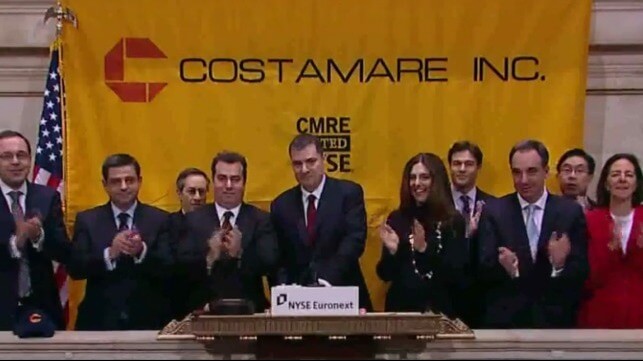
One example of the steps companies are taking was revealed in a series of filings by Costamare, a larger owner/charterer of containerships, and its recently established sister company Costamare Bulkers, which spun off earlier this year to control the dry bulk portion of the fleet. Although both companies are majority owned by entities linked to Konstantinos Konstantakopoulos and headquartered in Monaco, they trade on the New York Stock Exchange.
In filings dated October 14, the two companies revealed they were selling new, non-economic shares to Konstantakopoulos. In the case of Costamare, they sold 1,200 shares for $1,200, and Costamare Bulkers sold 235 shares for $235. After these transactions, Konstantakopoulos’ voting rights rose to over 75 percent ownership of each company.
In the filings, the companies said the steps were being taken in connection with the announcement by China’s Ministry of Transport about U.S.-linked vessels being subject to the new port fees. While the companies said they did not believe they were exposed, they said it was not possible to ensure that U.S. persons did not control more than 25 percent of the voting power. The solution, increase Konstantakopoulos’ voting power.
The companies took a second step, announced in filings on October 21. Commonly known as a “poison pill,” they amended their stock rights programs to further protect against tripping the U.S. interests’ provision in the port fee program. Costamare Bulkers reports that it lowered the ownership threshold to 5 percent for a U.S. owner’s beneficial position to trigger the rights offering. They excluded current holders or passive investors below a 6.5 percent threshold currently, again saying it was due to the Chinese port fee program.
Several other publicly traded shipping companies have quietly moved to reformulate their boards. Okeanis Eco Tankers and Danaos, for example, accepted the resignations of American directors, saying it was not due to a dispute with the company.
These steps are examples of the measures companies are taking in response to the Chinese special port fees. Companies that can are also reported to be redeploying ships in their fleets, or in the case of cruise companies based in the United States, skipping scheduled port calls in China.
Costamare advised shareholders that it would review the changes to the right plan at the appropriate time. The U.S. has continued to say it expects a strong trade deal with China, but it is unclear if the port fees, which the U.S. started to reduce to counter China's dominance of the maritime trade and shipbuilding, could be included in the trade agreements.
HII’s Newport News Shipbuilding Buys 3D Printing from AML3D
HII's Newport News is expanding 3D printing with the purchase of two large systems (HII)
AML3D Limited announced an order for approximately A$4.5 million ($US2.9 million), for 2 custom ARCEMY® systems from HII’s Newport News Shipbuilding (“NNS”) division. HII is America’s largest military shipbuilder delivering ships, submarines and defense technology. AML3D expects the NNS custom ARCEMY® system to be installed and operational during the second quarter of 2026.
The NNS custom systems are based on the large scale ARCEMY® X but use a 10,886kg positioner to create a heavy capacity build capability. The NNS custom ARCEMY® system will be used for a variety of shipbuilding applications. These systems are the second and third heavy capacity ARCEMY® systems to be deployed and represent the 9th and 10th ARCEMY® systems overall, ordered to support the US Navy Maritime Industrial Base.
HII is integrating AML3D’s advanced additive manufacturing into its technology suite to expedite lead times and provide alternatives to traditional manufacturing techniques. AML3D’s ARCEMY® systems produce components that meet or exceed traditional manufacturing standards with significant reductions in lead times, waste and environmental impacts.
AML3D CEO Sean Ebert said:
During my recent visit to our US operations it was clear AML3D had a huge opportunity to build on our success supporting the US Navy submarine program and expand into US Navy shipbuilding and munitions as part of US Government’s ‘Make Shipbuilding Great Again’ initiatives. These custom large capacity ARCEMY®X systems, are similar in scale to the ARCEMY® X that we recently brought online for another US Defense shipbuilding prime contractor. It is pleasing to see demand for our technology across the US and other globally, significant defense markets is continuing to accelerate.
In parallel, we are making progress on our strategic goal to access additional non-defense sectors. Our US operations recently delivered a large capacity ARCEMY X® to the Tennessee Valley Authority, the largest public utility in the USA. Having an established US manufacturing base means AML3D is advantaged when supporting US customers as the US Government’s tariff policy evolves. AML3D is also well positioned to leverage our US playbook to accelerate our entry into the UK and other European Defense markets and expand our defense and non-defense work in Australia.
The products and services herein described in this press release are not endorsed by The Maritime Executive.
Cruise Industry on Track for Fourth Consecutive Growth Year
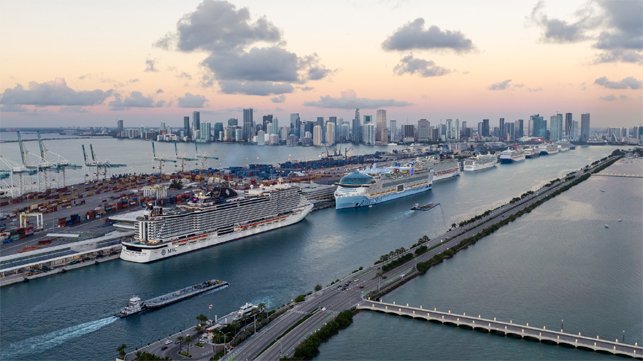
PortMiami is expecting another strong year with 10 new cruise ships scheduled for calls in 2025-2026 (PortMiami)
The cruise industry has roared back since the pandemic, as almost everyone in the travel industry is well aware. AAA and Tourism Economics, however, published new numbers to show just how strong the industry is, and specifically the significance of the U.S. market to the industry.
In a new report, they highlight that the industry is expected to mark the fourth consecutive year of record cruise passenger volume in 2026. They note as well that 2025 is turning out to be a better-than-expected year.
The trade group Cruise Lines International Association (CLIA) in May had forecast a global total of 37.7 million cruise passengers projected for 2025. That represents nearly nine percent growth from CLIA’s reported total of 34.6 million cruise passengers worldwide in 2024 among the group’s membership of ocean, expedition, and river cruise lines. CLIA reported that North America remains the top source market for cruise, with a 13 percent increase in 2024 over 2023.
AAA and Travel Economics are forecasting the American segment of the market will reach 20.7 million passengers this year and will grow to 21.7 million in 2026. AAA is forecasting that the year-over-year increase will be an 8.4 percent jump from 2024 to 2025 and a further 4.5 percent bounce from 2025 to 2026.
“These numbers reflect the growing demand for ocean cruises among U.S. travelers,” said Stacey Barber, Vice President of AAA Travel. “Our travel agents see this every day.”
The contribution of the American segment is demonstrated in all parts of the industry. PortMiami, for example, reports that on April 20, 2025, it set a new one-day record, handling 72,401 passengers. It also had a record-breaking 10 cruise ships on February 8, 2025. PortMiami continues to be the largest cruise homeport, highlighting that it will welcome 10 new cruise ships, including five newbuilds, during its 2025-2026 cruise season.
Numbers are just coming in from the Alaska cruise season that was completed in the last few days. Seattle, Victoria, BC, and Vancouver have each announced they set new records for the number of passengers at their ports. AAA calculates that about seven percent of U.S. passengers are traveling to Alaska.
The U.S., according to AAA, is also the home of four of the top embarkation ports in the industry. Following Miami, it is Port Canaveral, Port Everglades, and Galveston. Barcelona is the largest international cruise embarkation port.
AAA’s data diverges from CLIA as it says nearly two-thirds (65 percent) of people going on cruises are 55 or older. They report that 27 percent are between the ages of 35 and 54, and seven percent are between 18 and 34. Most adults, they report, travel with someone on a cruise, with nearly 50 percent traveling as a couple, 20 percent traveling with kids, and only seven percent are solo travelers. They point to the opportunities for a “date night” as well as multigenerational families who find cruising more affordable than booking flights and hotel rooms.
“The Caribbean is by far the most popular cruise destination for Americans,” reports AAA, capturing 72 percent of U.S. cruise passengers. They note the strong growth in ultra-luxury small ship cruising and expedition destinations.
The good news for the industry is a high satisfaction rate. AAA says 90 percent of U.S. cruise passengers rate their experiences as “very good or good.” They also report that 91 percent of people have taken multiple cruises.
The strength of the numbers encouraged the cruise lines to keep the momentum going, and they returned to the shipyards, placing the first large orders since the pandemic. Carnival Cruise Line ordered two 180,000 gross ton cruise ships and three nearly 230,000 GT ships. Norwegian Cruise Line ordered a new class of three 225,000 gt cruise ships in addition to the large ships from its prior order. Royal Caribbean confirmed the order for two more 250,000 GT ships, along with options for two more in the Icon class, and MSC Cruises added two more 217,000 GT ships for its World Class. This industry is mapping out new ship introductions at least through 2033, and more orders are expected to follow.
Glencore’s global head of naphtha to join rival Vitol
Glencore’s global head of naphtha trading, Oliver Bowen, is set to leave for rival Vitol, four sources told Reuters on Tuesday, making him the latest top trader to depart from the London-listed commodities trading and mining firm in recent months.
Bowen will start at Vitol on November 7 and oversee the world’s largest commodities trader’s European naphtha book, one of the sources said.
The sources requested anonymity to discuss confidential information.
Bowen could not be contacted for comment. Vitol and Glencore declined to comment.
Bowen’s departure from Glencore comes as the company undertakes a broader reorganization of its trading operations, after facing a sharp slump in earnings from that department. Core earnings from Glencore’s energy and steelmaking coal trading activities fell to $306 million in the first half of this year, the lowest for that period since 2016, the company reported in August.
Bowen, 42, has been Glencore’s head of naphtha trading since at least 2017, according to a profile on the UK government’s Companies House. He served as a director of the UK-based Petrochemical Feedstock Association since February 2017 until he resigned in April this year, the profile showed.
Glencore’s current head of oil and gas trading, Alex Sanna, is set to step down from his role at the end of this year, Reuters earlier reported, citing a staff memo. Another Glencore veteran, Maxim Kolupaev, who currently heads gas and power trading for the firm, will replace Sanna, who headed the company’s oil trading desk for the past six years.
(By Shariq Khan and Robert Harvey; Editing by Lisa Shumaker)
Panama will insist on resource ownership in Cobre copper mine talks
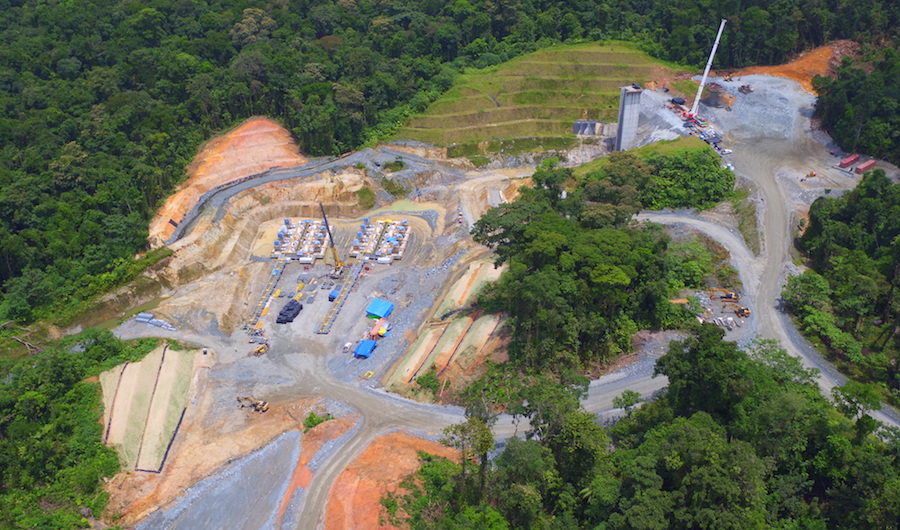
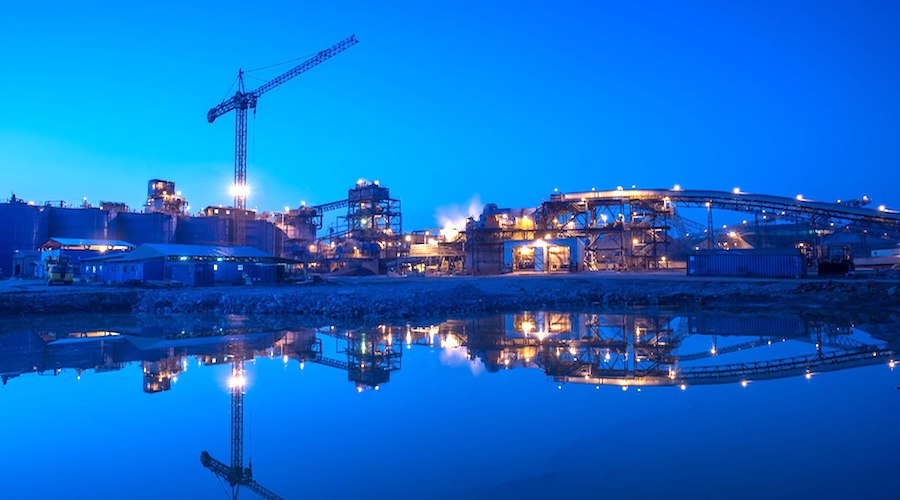
Cobre Panama mine. (Image: First Quantum Minerals.)
Panama will require that any agreement to restart the $10 billion Cobre Panama copper mine clearly stipulates that the country is the owner of the land and the resources, the country’s finance chief said in an interview.
Ordered shut in late 2023 after a Supreme Court ruling and an eruption of environmental protests and political turmoil, the new government under President Jose Raul Mulino has been laying the groundwork necessary to begin negotiations with mine owner First Quantum Minerals Ltd.
“For us, it’s important to have an agreement that states very clearly that resources belong to the Republic of Panama,” Economy and Finance Minister Felipe Chapman told Bloomberg in an interview on the sidelines of the International Monetary Fund and World Bank annual meetings in Washington on Friday.
Mulino in June had said “the table is clear to start conversations” with First Quantum after Franco-Nevada Corp., which has a supply agreement for metals from the mine, agreed to halt its arbitration case against Panama.
That development came three months after First Quantum Minerals Ltd. told its lawyers to suspend its arbitration cases against Panama over the mine that once accounted for 1% of global mined copper.
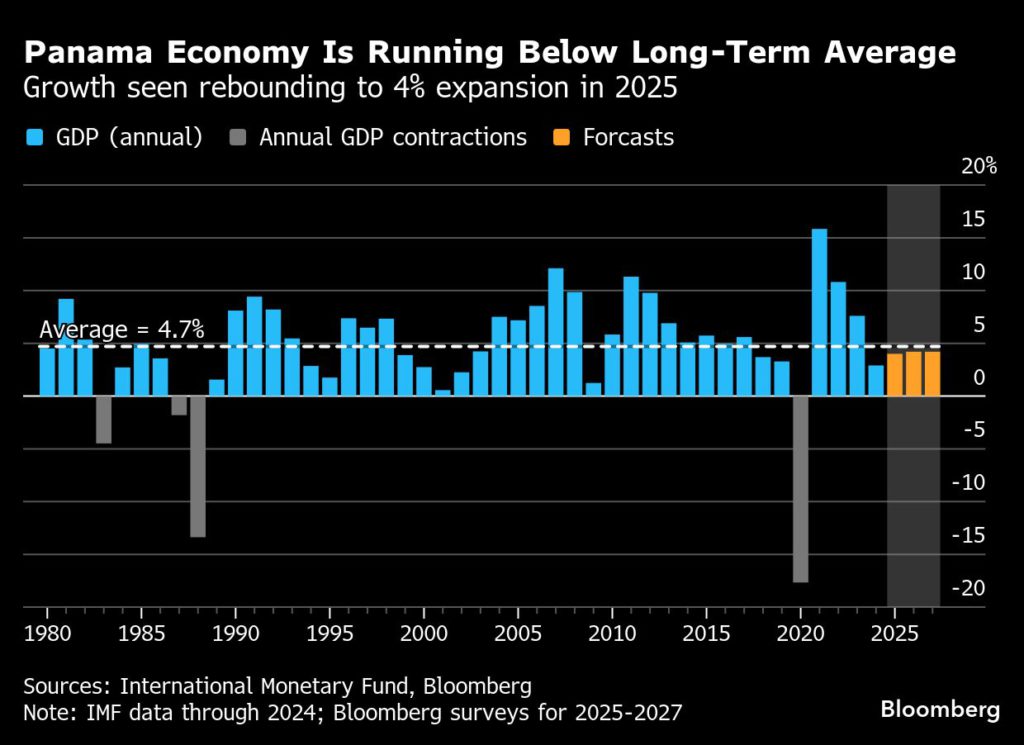
For Panama, a reopening of the mine, which represented roughly 5% of gross domestic product, offers the potential for creating thousands of jobs and a boost to the economy.
Chapman said that public sentiment toward the mine has improved, with the latest polls showing 50% of those surveyed holding a negative opinion compared to over 80% more than a year ago.
There is also an “agnostic” block of people who could be persuaded to support reopening of the mine under favorable conditions, he said.
As to government finances, Chapman said he’s committed to fiscal consolidation, saying the fiscal deficit targets of 4% this year and 3.5% in 2026 are “non-negotiable.” He’s also waiting for interest rates to decline further before tapping the global bond market.
(By Zijia Song and Martha Beck)
Barrick’s seized Mali mine restarts under state management
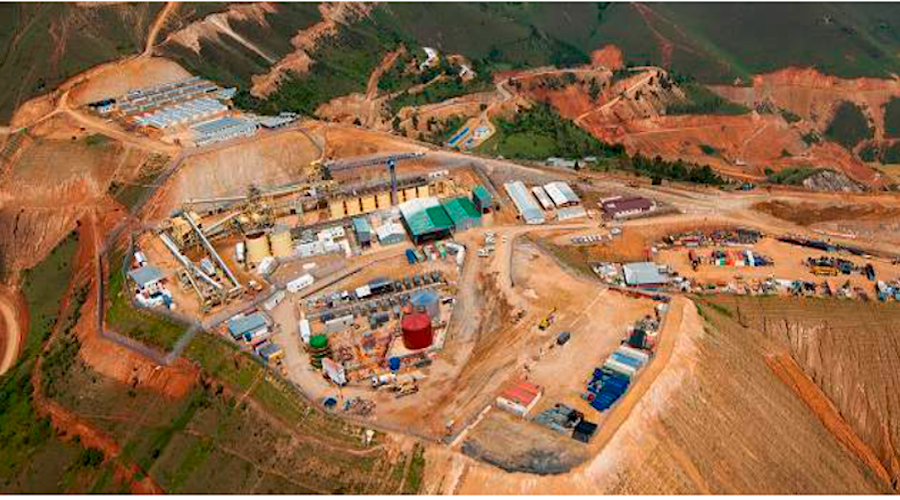
The Loulo-Gounkoto gold complex. (Image courtesy of Barrick Gold.)
Operations restarted at Barrick Mining Corp.’s massive gold mine in Mali for the first time in more than nine months, after a state administrator took over the asset in June, according to people familiar with the matter.
Barrick shuttered the Loulo-Gounkoto complex in January after the West African nation blocked exports, seized gold and detained senior employees. The dispute with the military-led government reached its lowest point four months ago when a court appointed Soumana Makadji, an accountant and former health minister, to manage the mine for at least six months.
Production activity resumed at the site late last week, two of the people said, asking not to be identified discussing information that’s not been made public. That came after a deal to restart payments to contractors, which had been suspended when Barrick halted operations, according to one of the people.
Mali’s Mines Minister Amadou Keita said in June that the provisional management team would “restart operations, produce, pay the workers’ wages, but also produce gold for the national economy.”
Makadji didn’t respond to calls and a text message seeking comment. A Barrick spokesperson declined to comment.
A spokesman for the mining ministry said he’s not aware if operations at Loulo-Gounkoto have restarted. The mine is managed by the court-appointed interim administration and the ministry isn’t involved in operations, he added.
Maxam Corp., Sandvik Group and Etasi & Co. Drilling are among the subcontractors impacted by the recent stoppage. Maxam and Etasi, which provide drilling and blasting services at the mine, didn’t respond to requests for comment. Sandvik declined to comment.
Loulo-Gounkoto – which produced 723,000 ounces of gold in 2024 – is one of Barrick’s most important assets. The temporary seizure of the mine has meant the Canadian firm has been unable to fully capitalize on bullion’s record-breaking 60% rally this year.
Barrick initiated arbitration proceedings against Mali at the start of the year. The company’s lawyers have also filed appeals with a court in the country’s capital, Bamako, challenging the detention of four employees since November. Barrick has denied the junta’s allegations against those staff of money laundering and financing terrorism.
Shortly after the mine was put under state control, government agents arrived at Loulo-Gounkoto in helicopters and left with a ton of gold. Barrick says it’s still waiting for information on the whereabouts and “the intended fate” of the seized bullion.
The standoff between Barrick and Mali around alleged back taxes and new mining legislation dates back to 2023. Other gold miners, including Allied Gold Ltd. and B2Gold Corp., have resolved similar disputes by concluding agreements with the government.
Barrick has denied owing unpaid taxes to the government and said its local subsidiaries possess binding conventions that protect them against certain legal and regulatory changes.\
Twangiza gold mine, located in the rebels-controlled South Kivu province, DRC. (Image courtesy of DRA Global Limited.)
Rebels occupying Twangiza Mining’s gold concession in eastern Democratic Republic of Congo (DRC) have reportedly looted at least 500 kilograms of bullion, worth about $70 million at current prices, the company said.
Twangiza claims that some of its own employees have helped the M23 rebel group transport gold from the site shortly after the mine was seized in May.
“With the help of some employees, they transported the first batch of more than 50 kg of gold out in a very short time,” Twangiza Mining told Reuters. ”Since the occupation, they have obtained at least 500kg of gold and secretly transported it through underground channels.”
The gold mine, located in South Kivu province, fell under M23 control five months ago after weeks of escalating conflict in the region. Twangiza says it has lost more than 100 kg of gold a month since then, along with $5 million worth of equipment and materials. The company has declared force majeure and plans to file complaints with Congolese authorities and international arbitration bodies.
A drone strike on October 15 destroyed the mine’s power infrastructure. Responsibility for the attack remains unclear.
The M23 group, an ethnic Tutsi-led militia allegedly backed by Rwanda, launched a major offensive early this year, seizing key cities including Goma and Bukavu. Congo’s government says more than 7,000 people were killed in eastern DRC just in the first half of 2025.
The mineral-rich region remains a flashpoint in the long-running rivalry between Congo and Rwanda. DRC is the world’s largest cobalt producer, Africa’s leading copper exporter, and a major source of tantalum, tin, tungsten and coltan, all of which are critical to global electronics and green technologies.
Behind the peace deal
A US-led peace initiative between Rwanda and the DRC, inked in June, aimed to stabilise eastern Congo and attract Western mining investment. But a new report released Tuesday suggests the deal is less about peace and more about securing US access to Congolese minerals.
Researchers from California-based the Oakland Institute found found that Rwanda’s tantalum exports to the US rose 15-fold between 2013 and 2018, despite Rwanda’s limited production capacity. This surge followed Washington’s decision to lift sanctions after the 2012 M23 rebellion. The study argues that the latest agreement legitimises smuggling routes through Rwanda while strengthening US-backed infrastructure projects such as the $553 million Lobito Corridor.
The corridor is a 1,700-kilometre railway from Angola’s Atlantic port of Lobito to the DRC’s mining hub of Kolwezi, with an extension planned into Zambia’s Copperbelt province. The US has framed the corridor as a strategic alternative to Chinese-backed infrastructure across Africa.
Several mining deals along these two routes are already being negotiated by a number of US firms, including some backed by high-profile billionaires like Bill Gates and figures tied to the US military and intelligence community, the report says.
It also warns that the arrangement enriches US corporations and Rwandan elites while leaving Congolese communities to absorb the environmental and human costs. More than 1,000 civilians have been killed since the deal’s signing, raising doubts about its effectiveness.
Rwanda and Congo missed an August deadline to ratify the accord, blaming each other for the delay. Both sides agreed last week to create a monitoring mechanism for an eventual ceasefire.
EIB seeking critical minerals investments in Australia, exec says
The European Investment Bank (EIB) is seeking critical minerals investments in Australia and will look to partner with Australian companies in Europe, Vice President Nicola Beer said on Tuesday.
“We are capable to take risk … we use our capital very efficiently to go for the right projects,” Beer said at a mining conference in Sydney.
(By Melanie Burton; Editing by Tom Hogue)
Saudi Arabia lures Macquarie, Rinehart in courtship of Australia
Saudi Arabia is ramping up efforts to deepen ties with Australia — a country with which it has traditionally done limited business — as the kingdom seeks to capitalize on fresh momentum from deals in metals, mining and finance.
Officials from both countries will meet this week in Riyadh at the Saudi-ANZUK Forum to discuss trade, deals and investment. New Zealand and UK delegates are also slated to attend, with all four states looking to diversify trade channels amid tariff friction.
The two-day event aims to build on a budding relationship between Saudi Arabia and Australia, with mining magnate Gina Rinehart’s Hancock Prospecting and Saudi state-backed Maaden recently winning the right to dig for metals together in the kingdom — a country that estimates it has $2.5 trillion in minerals underground.
Macquarie Asset Management also recently signed an agreement with Saudi Arabia’s nearly $1 trillion sovereign wealth fund to pursue investments and set up in Riyadh, one of the strongest signals yet of Australian financial heavyweights expanding into the desert nation.
“The relationship is still young but developing quickly,” said Sam Jamsheedi, president of the Saudi-Australia Business Council and founder of the Trademark Group of Companies, which is hosting the Riyadh event. “We’re seeing strong interest from Australian companies, particularly in mining, agribusiness and healthcare.”
In many ways, the relationship seems like a natural fit. Both are G20 nations heavily geared toward natural resources and trying to diversify their economies.
For Saudi Arabia, its Vision 2030 transformation agenda calls for drawing in foreign investment, companies and knowledge so it can build new industries in which it has little expertise — all in the name of weaning the economy off of oil.
Australian mining companies including Hancock currently only account for 10% of the 70 overseas businesses exploring for Saudi resources, according to Khalid Al-Mudaifer, Saudi Arabia’s vice minister of industry and mineral resources for mining affairs.
“We are building a new sector almost from scratch. Where better to go than Australia?,” he said in an interview in Sydney on Tuesday. “Australia has what we need in terms of know-how and capacity building.”
In Australia’s case, its economic base is more diversified than Saudi Arabia, but the country is heavily dependent on exports of iron ore and primarily to one market: China.
Canberra has been pushing to expand potential export markets to ease some of that dependence. Prime Minister Anthony Albanese struck a deal with the US this week, for example, to ship more critical minerals and Australia also this month officially entered into a free-trade agreement with the United Arab Emirates.
While Saudi Arabia and Australia may eventually pursue their own FTA, both are likely to benefit from the UAE deal as the country is a re-export hub to the Gulf.
Bilateral trade between Australia and Saudi Arabia has been steadily increasing over the years, climbing to A$2.1 billion ($1.4 billion) in fiscal 2024 compared to about A$1.9 billion five years earlier. Australia exports education services, beef, and barley, while Saudi Arabia is a significant energy supplier.
“There is a lot of complementarity between the Australian and Saudi markets,” said Anas Iqtait, a lecturer in economics and political economy of the Middle East at the Australian National University.
But for all that complementarity, there is still little in the way of investments. Saudi Arabia didn’t make Australia’s list of top 20 destinations for investment in 2024 and likewise didn’t appear on the roster of countries injecting money.
Iqtait sees the potential for important decisions or agreements at the Saudi-ANZUK forum, which could pave the way for those investment flows to grow.
Australia and Saudi Arabia also stand to grow closer diplomatically after the former’s decision to break with key ally the US and recognize a Palestinian state.
Saudi Crown Prince Mohammed bin Salman has long advocated for the recognition of a Palestinian state and has recently grown closer to leaders that have made that recognition, including French President Emmanuel Macron.
“This convergence on a critical issue demonstrates growing diplomatic coordination between the two countries,” said Amnah Mosly at the Gulf Research Center in Jeddah. That creates “opportunities for joint initiatives in peace building and diplomacy.”
(By Yassmin Jabri, Michael Heath and Angus Whitley)
IFC, Appian launch $1 billion critical minerals fund in Africa, Latam
By Reuters
October 21, 2025
LONDON, Oct 21 (Reuters) - Private equity firm Appian Capital Advisory and the International Finance Corporation (IFC) have launched a $1 billion fund to invest in critical minerals projects in Africa and Latin America, the companies said on Tuesday. The fund, anchored by an initial $100 million commitment from IFC, a member of the World Bank Group, will focus on nickel, copper, cobalt and rare earths, all essential for the energy transition and digital technologies.
The new vehicle is IFC's first fund in partnership with a private mining investor, reflecting growing interest by development finance institutions to attract private capital into mining projects.
"They're (IFC) trying to deploy more capital to work in our space, but it's a very difficult and challenging sector," Michael Scherb, Appian's founder and CEO, told Reuters, adding that Appian has already worked with the IFC in rare earth and gold projects across Africa. "This is a much more formalised partnership."
Appian, which manages around $5 billion in assets, will oversee the fund's investments, co-investing alongside its existing and future funds.
The fund's first investment will be in Atlantic Nickel's Santa Rita mine in Brazil, a nickel-copper-cobalt open pit mine that the parties will also develop underground, expected to produce 30,000 metric tons of nickel a year for 34 years.
As governments and companies race to secure supplies of critical minerals, the fund will seek to strengthen supply chain resilience and support sustainable industrialisation in developing economies.
Scherb said that the fund is also looking into building a downstream refinery for its Santa Rita mine in Brazil.
Appian, which produces graphite in Brazil, already has a graphite downstream refiner in the United States, for example, to which the U.S. Department of Energy (DOE) has just given a $125 million grant, Scherb said.
"We have expertise in upstream and downstream, and you could see us partnering with governments more on that basis," he said.
But, as Ivory Coast prepares for another election on Saturday, peace activists here say they've hit on a way to prevent further bloodshed.
Reporting by Clara Denina; Editing by Susan Fenton
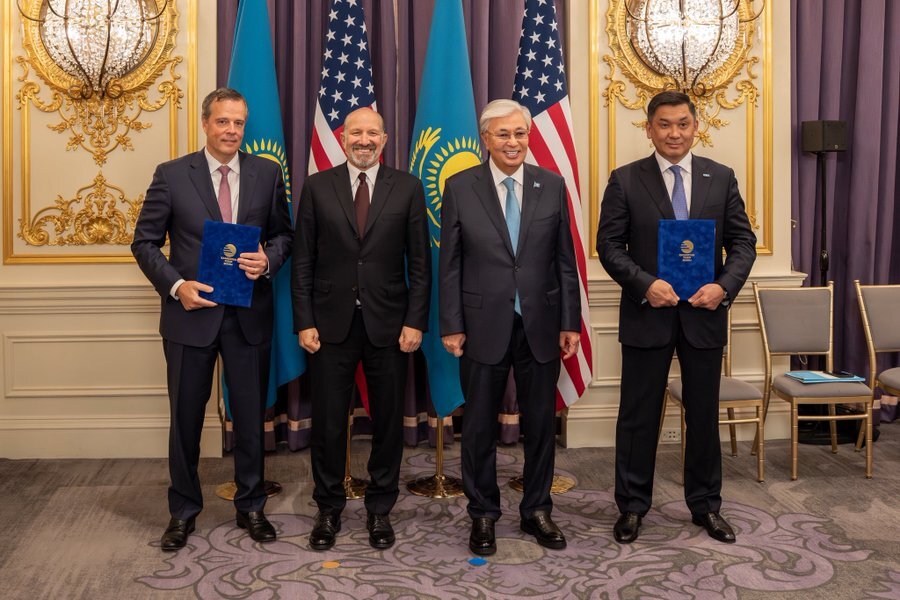
Commerce Secretary Howard Lutnick and Kazakhstan President Qasym-Jomart Toqayev at the signing of the historic locomotive agreement last month. Credit: Howard Lutnick | X
President Donald Trump’s administration is involved in talks for a US company to access one of the world’s largest untapped deposits of tungsten, a metal used by the Pentagon to make ammunition, projectiles and other weaponry.
Commerce Secretary Howard Lutnick has facilitated negotiations between Cove Kaz Capital Group LLC and Kazakhstan’s sovereign wealth fund about a bid to develop two of the central Asian country’s largest deposits of the metal, according to people familiar with the matter.
The talks are aligned with the White House’s effort to boost supplies of the mineral as the US weans itself off China’s rare earths and critical minerals — an issue at the heart of the trade dispute between the world’s two largest economies.
The US government is taking an advocacy role through the International Trade Administration and financial support could be made available for the plan through federal entities, including the US International Development Finance Corporation and the Export-Import Bank, the people said. Those agencies are set up to provide funding for private-sector projects, usually outside the US.
Details have yet to be finalized, but proposals under consideration include the US offering loans for the deal, they said. The Trump administration is not currently seeking an equity stake in the venture, a US official said, speaking on condition of anonymity to discuss private conversations.
Cove Kaz Capital has been in talks for months with the Kazakhstan sovereign wealth fund, Samruk-Kazyna, but has faced significant competition with at least one state-backed Chinese firm willing to pay above market price, the people said.
Cove Kaz Capital needs US backing to ensure they can obtain the financing required to complete the deal, some of the people said.
Representatives for the White House, the US Commerce Department and a lobbying firm representing Kazakhstan’s wealth fund didn’t respond to requests for comment. Cove Kaz Capital declined to comment.
While the scope of Lutnick’s involvement isn’t clear, it reveals the Trump administration’s interest in tapping unconventional tools to acquire assets it deems critical to national security. Direct negotiations with another nation’s sovereign wealth fund are typically reserved for private companies, not senior US officials.
The tungsten deal also puts the US in direct competition with China for the site, an extremely rare scenario in which the economic superpowers are in a de facto bidding war to buy a mine in a former Soviet republic.
The Trump administration strengthened ties with Kazakhstan earlier this year when the Commerce Department helped broker a $4.2 billion rail deal, in which Pennsylvania-based locomotive parts maker Wabtec Corp. agreed to sell to Kazakhstan’s national railway.
That announcement followed a September meeting between Kazakh President Kassym-Jomart Tokayev and Lutnick, during which Trump called in. It’s not clear whether the tungsten project was discussed at that meeting.
Tungsten deal
The tungsten deposits are valued in the billions of dollars, according to people familiar with the matter. Kazakhstan’s wealth fund lists the two deposit locations on its website — Upper Kairaktinskoye and North Katpar — which the group has said will “make Kazakhstan one of the main participants of the world tungsten market.”
The fund has been soliciting bids from multiple parties as it views the deposits as the most desirable untapped tungsten resources in the world, the people said.
Talks have involved creating a joint venture between Cove Kaz Capital and the Kazakhstan wealth fund, with the company operating the mine while building out production and processing within the Central Asian nation, according to the people. The tungsten would then be shipped to the US for defense and commercial purposes, the people said. Kazakhstan would share in the profits, but Cove Kaz Capital would become the project’s majority owner.
Earlier this year, Cove Kaz Capital announced a joint venture with JSC Qazgeology, Kazakhstan’s national geological exploration company, for a rare earth project.
The US Geological Survey, widely regarded as the gold standard of mining data, doesn’t report Kazakhstan among the top countries in the world with recoverable deposits of tungsten. But the country estimates it has more than 2 million tons of the mineral in reserve.
Tungsten extraction in Kazakhstan mostly stopped about three decades ago. New mines would produce supply for 30 to 40 years, the people said.
Currently, China accounts for some 80% of global production of tungsten concentrate, according to the US Geological Survey.
The Pentagon’s Defense Logistics Agency, which manages the US stockpile, lists tungsten as one of its materials of interest. The USGS included tungsten on its list of critical minerals, noting that any significant disruption to supply of the metal would have an impact on US gross domestic product.
(By Joe Deaux and Josh Wingrove)
Environmental Protestors Return to IMO to Campaign Against Biofuels
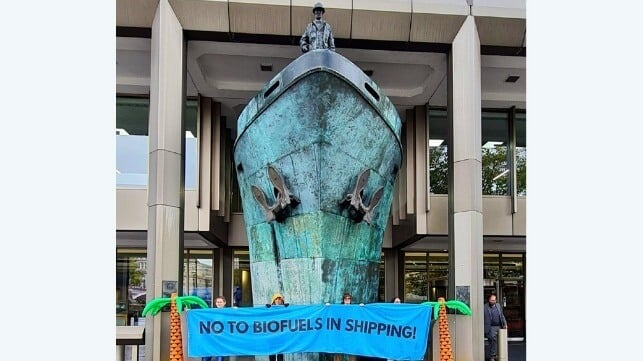
Biofuel protestors in front of IMO headquarters in London (Biofuelwatch)
Timed to the start of the working group session of MEPC (Marine Environment Protection Committee) protestors have returned to the front of the IMO’s London headquarters, this time to demand an end to biofuels. The effort launched as the discussions continue about refining the framework for net-zero and just days after the IMO member states adjourned the discussion for the adoption for one year.
The working group is meeting behind closed doors to tackle some of the elements of the framework and fuels will be high on their agenda. Groups named Biofuelwatch, Forest Watch Indonesia, and Global Forest Coalition teamed up demanding that biofuels be excluded from the Net-Zero Framework.
The groups are calling attention to deforestation which they say biofuel is contributing to and accelerating in parts of the world. They assert that the land use change for crops such as palm oil and soy, to support biofuels wipe out claims of climate benefits. They also point to the growing issues of agricultural displacement and food insecurity demanding that the IMO exclude biofuels from the green alternatives in the Net-Zero Framework.
“Biofuels are not a sustainable solution under any circumstances,” said Jana Uemura, Climate Campaigner at the Global Forest Coalition. “If the IMO creates new demand for biofuels, it will unleash more emissions, more inequality, and more land grabbing.”
The groups point to data released earlier this year by the NGO T&E that said international shipping could become the fourth largest biofuel consumer, driving more demand for biofuels coming from food and feed crops. T&E estimated that biofuels could make up more than a third (36 percent) of the global fuel mix by 2030 with the share increased to 59 percent by 2035 and 76 percent by 2040. It would be mostly derived from soy and palm oil.
“We urge all IMO member governments to take a strong, united stance against the inclusion of biofuels in the Net-Zero Framework” said Pax Butchart, Biofuel Campaigner at Biofuelwatch. “The science is clear: crop-based and waste-derived biofuels cannot deliver real emissions reductions.”
The groups fear because it is a lower cost alternative, used cooking oil biofuel will attract strong demand far beyond its capacity. They note that the supply is highly constrained and largely already used in the transport sector. The global waste oil supply currently used for biofuel production, they assert, could only meet about five percent of shipping’s energy demand. With the limited supply, they fear the next alternative will be indirect land use change biofuels, contributing to crop displacement and food insecurity.
The groups highlight that major national and industry frameworks, including the EU’s Maritime and Aviation policies, the UK SAF Mandate, and the International Civil Aviation Authority’s CORSIA scheme, already exclude or cap high-ILUC biofuels, or include ILUC emissions in the life cycle accounting.
The groups are urging the working group to factor these issues into the discussions this week and move to exclude biofuels from the future alternative fuel options.
Wärtsilä Biogas Upgrading Plant Adds Momentum to Denmark’s Green Transition
Wärtsilä Gas Solutions, part of technology group Wärtsilä, has been contracted to deliver a biogas upgrading plant (PuregasCA) to Danish renewable energy solutions provider Bigadan AS. The plant will play a crucial role in enhancing the efficiency and utility of biogas as a renewable energy source, and will have the capacity to upgrade 6000 Nm3 per hour of raw biogas. The order with Wärtsilä was booked in Q3 2025.
The project represents a significant step in scaling up biogas production and utilisation in Denmark, and will make an important contribution to the country’s green transition. The biogas upgrading plant will be located at Bigadan’s biogas facility in Horsens, Denmark.
The Wärtsilä Gas Solutions biogas upgrading is based on the amine scrubber technology, that allows for efficient and effective upgrading, of biogas to meet the Danish national gas grid standards.
“We are committed to supporting and promoting the green transition, and Wärtsilä upgrading solution will add momentum to our efforts. It is an exciting example of the recent advancements made in renewable energy technology. Biogas has huge potential as a sustainable energy solution, since it aligns with global efforts to reduce carbon emissions and promote cleaner energy sources,” said Casper Krog Hansen, Bigadan AS, Project Manager and Christian A. Tidmarsh, Bigadan AS - Business Development Manager.
The Wärtsilä PuregasCA solution is expected to be in full operation, delivering upgraded gas to the Danish national grid in Q3 2026. Wärtsilä scope includes installation and commissioning of the plant.
“The integration of biomass and biogas, along with wind and solar, is an important element in creating a holistic energy strategy, and the collaboration between Wärtsilä and Bigadan contributes significantly to this strategy,” commented Goran Gajski, Sales Manager, Wärtsilä Gas Solutions, Biogas. “The innovative technology that we are able to deliver is based on our vast experience and deep in-house expertise, and our solid reputation and track record was an important consideration in the award of this contract.”
The products and services herein described in this press release are not endorsed by The Maritime Executive.