Wednesday, October 22, 2025

FAU historian traces the transformation of U.S. nursing homes into big business


Florida Atlantic University
Americana Nursing Home 

image: 

Postcard showing a typical Americana Nursing Center design, as employed in the facility that opened in Normal, Illinois, in 1962 (author’s private collection).

view more 

Credit: Willa Granger, Ph.D. (author)


In postwar America, as suburbs spread and federal social welfare programs expanded, one underexamined building type quietly became a fixture of the American health care landscape: the nursing home.

In a new article published in the Journal of the Society of Architectural Historians, historian Willa Granger, Ph.D., an assistant professor in the School of Architecture within Florida Atlantic University’s Dorothy F. Schmidt College of Arts and Letters, examines how a little-known company from midcentury Illinois helped lay the groundwork for the modern nursing home industry in the United States.

Granger’s research centers on the Americana Corporation, a for-profit eldercare chain that pioneered a replicable model of suburban, hospital-adjacent nursing homes during the 1960s – ultimately reshaping not only how older adults are cared for, but where and by whom.

Through meticulous archival research, Granger draws from internal business records, marketing materials, and federal policy documents to show how nursing homes evolved from small, local operations – often run out of converted houses – into standardized, medically regulated institutions tied to federal funding and corporate expansion.

Granger’s article is one of the first comprehensive architectural histories of the nursing home in the U.S. By placing this overlooked building type at the center of debates about health care, policy and design, she opens new questions about how architecture has participated in shaping social institutions – not only reflecting cultural attitudes toward aging but actively producing them.

“This is not just a story about nursing homes. It is a story about how buildings mediate care, how federal policy influences physical space, and how the structure of eldercare became a mirror of midcentury American life – its promises, its anxieties and its enduring contradictions,” said Granger.

Americana wasn’t just building nursing homes. It was building a system – one that merged health care with real estate, design and franchising. In doing so, it helped redefine what eldercare looked like, both physically and institutionally.

Founded in 1960, Americana was conceived to bridge the growing gap “between hospital and the private home,” according to its early marketing materials. Americana’s facilities were strategically sited near regional hospitals in growing suburban and rural markets. Its facilities were purpose-built, single-story structures styled in familiar neocolonial architecture – with brick facades, white porticos and decorative shutters – but internally organized according to clinical, hospital-style layouts. Americana’s leaders borrowed tactics from the booming motel industry, blending real estate development, standardization and institutional medicine to build nursing homes across the Midwest that felt like home but functioned like hospitals.

By 1969, the company had developed more than 30 locations across nine states. Its success was driven not only by design and branding, but by a unique moment in U.S. policy. Granger’s article demonstrates how federal programs like the Hill-Burton Act, Social Security, and especially Medicare, helped incentivize and normalize this new model of care. The very programs meant to support aging Americans also helped consolidate eldercare into a professionalized, increasingly privatized industry.

“Americana shows how architecture was used not just to house people, but to create an entire system of care – one shaped by regulation, profit and a vision of aging that was both medicalized and marketable,” said Granger.

By contrasting Americana’s approach with earlier operators like Leonard Tilkin – a Chicago-area businessman infamous for running understaffed, substandard facilities out of converted historic homes – Granger reveals how architecture became a key player in the moral and economic politics of eldercare. While Americana met newly imposed safety and licensing standards, it also signaled a broader shift toward corporate models of caregiving that prioritized scale, replication and compliance over community and personal connection.

Granger’s study raises urgent questions about the legacy of this shift and its continued relevance today.

“As the U.S. faces a rapidly aging population and mounting pressures on long-term care, the origins of the modern nursing home reveal how deeply our built environments reflect the values – and blind spots – of their time,” said Granger. “History reminds us that decisions about architecture, policy and profit are never neutral; they shape the everyday lives of vulnerable people. Understanding where these systems came from is essential if we hope to imagine and build something better.”

- FAU -


Postcard showing the later Americana Nursing Center design as employed in Urbana, Illinois, 1967 (author’s private collection).

Credit

Willa Granger, Ph.D. (author)

Advertisement showing the plan of Florence Baltz’s Washington Nursing Center, Washington, Illinois, 1967. 

Credit

Washington, Illinois Historical Society


About Florida Atlantic University:

Florida Atlantic University serves more than 32,000 undergraduate and graduate students across six campuses along Florida’s Southeast coast. Recognized as one of only 21 institutions nationwide with dual designations from the Carnegie Classification - “R1: Very High Research Spending and Doctorate Production” and “Opportunity College and University” - FAU stands at the intersection of academic excellence and social mobility. Ranked among the Top 100 Public Universities by U.S. News & World Report, FAU is also nationally recognized as a Top 25 Best-In-Class College and cited by Washington Monthly as “one of the country’s most effective engines of upward mobility.” As a university of first choice for students across Florida and the nation, FAU welcomed its most academically competitive incoming class in university history in Fall 2025. To learn more, visit www.fau.edu.


EU ambiguity on Western Sahara frozen conflict is a “glaring source” of vulnerability for Sahrawis, study shows


University of Exeter


The European Union’s legal ambiguity on the Western Sahara frozen conflict is an increasingly glaring source of vulnerability for Sahrawis, a new study shows.

The lack of an EU firm position on the non-self-governing status of Western Sahara’s territory is a disadvantage for the Polisario Front.

The EU’s ambiguity includes questions such as where lies the distinction between Western Sahara’s people and local population and who is entitled to represent them.

The study, by Dr Irene Fernández-Molina, from the University of Exeter, shows how the EU’s longstanding territorial undifferentiation practices have been successfully challenged through “lawfare”, or legal activism, from the Polisario Front, producing accumulating, compelling case-law. The concept of “lawfare” is here used in a descriptive and value-neutral sense to refer to legal activism in a conflict context, without the connotations of illegitimacy prevailing in other cases.

A disadvantage for the Polisario Front and its proclaimed Sahrawi Arab Democratic Republic concerns broader international community and UN ambiguities about the nature and status of the Western Sahara conflict.

During the three-decade frozen conflict there has been increasingly unclear language from the UN Security Council’s regarding self-determination.

The ongoing low-intensity hostilities are described as a ‘state of war’ by the Polisario Front/SADR, who control the eastern strip of Western Sahara, in contrast to the ‘total absence of any armed conflict’ stated by Morocco, which has annexed three quarters of the area. The long-frozen conflict has thawed and heated up since late 2020.

Dr Fernández-Molina has analysed the political, analytical, and legal grey areas that surround both Western Sahara as a territory and the SADR as a contested state. She describes the legal strategies and arguments used by SADR and the Polisario Front – the national liberation movement internationally recognized as the representative of the Sahrawi people – since the mid-2000s.

The manifold political and legal ambiguities that surround contested statehood and conflict in Western Sahara have acted as sources of vulnerability for the Polisario Front/SADR and the Sahrawi people, which have responded with both “lawfare” and warfare.

The study says Sahrawi legal activism currently appears as more successful internationally yet also more of a long-term effort, while warfare may meet more immediate domestic needs for the Polisario Front/SADR leadership.

Western Sahara is treated as an international armed conflict (IAC) for the purposes of international humanitarian law. This extends the rights and protections of jus in bello to Western Sahara’s civilian population and those fighting on its behalf in the exercise of their right to self-determination.

References to international humanitarian law in UN Security Council resolutions on Western Sahara have focused exclusively on the release of prisoners of war.

The specific – and politically most sensitive – branch of international humanitarian law that is hardly mentioned in the UN discourse on Western Sahara is occupation law.

The main target of Sahrawi “lawfare” has been the European Union whose manifold bilateral economic and sectoral cooperation agreements with Morocco have for decades failed to make any differentiation between the internationally recognized territory of this country and that of Western Sahara. Rulings against this undifferentiation from the Court of Justice of the EU triggered an unheard-of three-year diplomatic crisis between Rabat and Brussels between 2016 and 2019.


Germany, Norway on charm offensive in Ottawa as Canada shops for new subs


By The Canadian Press
October 21, 2025 

Prime Minister Mark Carney climbs out of a 212A class submarine under maintenance as he tours ThyssenKrupp Marine Systems (TKMS), a submarine building facility in Kiel, Germany, on Tuesday, Aug. 26, 2025. THE CANADIAN PRESS/Christinne Muschi

OTTAWA — Germany’s defence minister says the German firm bidding for Canada’s lucrative submarine contract would have no trouble doing the work on time and on budget.

Defence ministers from Germany and Norway are in Ottawa this week for meetings with Canadian ministers as the federal government shops around for a contractor to build a new fleet of submarines for the navy.

The two finalists for the contract are South Korea’s Hanwha and its KSS-III subs, and ThyssenKrupp Marine Systems and its Type 212CD subs, which are now being built for Germany and Norway.

While making a sales pitch to Canadian media, German Defence Minister Boris Pistorius said that if Canada desires it, TKMS could build some of the 212CD subs, or parts for them, in Canada.

His comments come days ahead of a trip Prime Minister Mark Carney is making to Asia, where he is expected to visit a Hanwha shipyard in South Korea.

Canada has only four submarines and they’re set to be retired from service by 2035, making the major procurement project a priority for the government as it rushes to find replacements.

This report by The Canadian Press was first published Oct. 21, 2025.
Kyle Duggan, The Canadian Press


Canada offers tariff relief to some steel, aluminum products from US, China

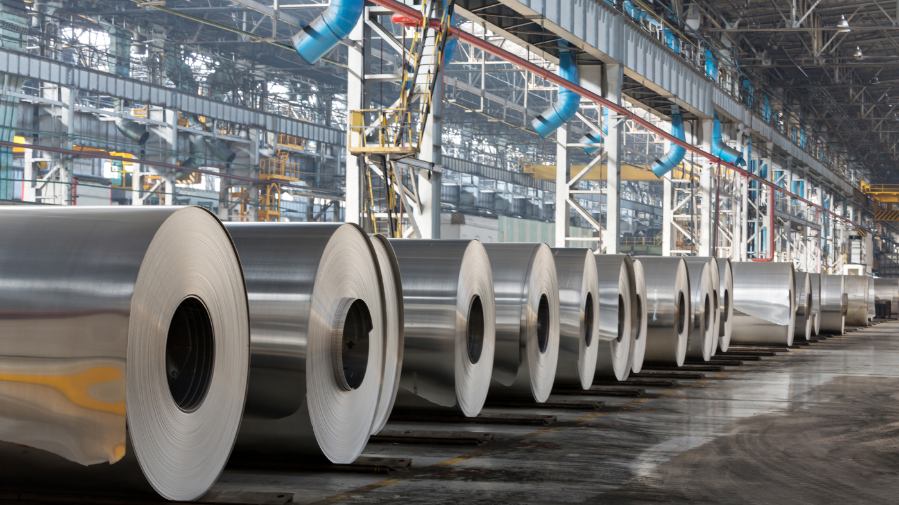
Stock image.

Canada offered tariff relief on some steel and aluminum products imported from the US and China, a government document showed, in efforts to help domestic businesses battered by a trade war on two fronts.

Prime Minister Mark Carney is negotiating with US President Donald Trump, who imposed tariffs on Canadian steel and aluminum. His team also met with Chinese counterparts last week in an effort to secure relief on Chinese tariffs on Canadian agricultural goods.

Canada’s economy has come under strain as the impact of tariffs on Canadian exports to the US and China has taken a toll. Carney has rolled back many of the retaliatory tariffs his predecessor imposed on US imports as he tries to strike a deal with Trump.

In an amendment to the surtax remission order of 2024 on Chinese imports, the Ministry of Finance granted remission on some steel and aluminum varieties imported from China that are not produced in Canada, a document issued on Friday showed.

The order came into effect on October 15 and more details regarding the remission order will be published on November 5, the ministry’s communication to the industry showed.

The ministry also exempted from tariffs some US steel and aluminum products primarily linked to public health, national security, manufacturing, agriculture and food packaging, the document said.

“The remission process is to protect people who are in the downstream sector … to deal with exceptional circumstances,” Finance Minister François-Philippe Champagne said in remarks to reporters on Monday.

He said these were a group of very specific products that are needed to enter Canada to maintain the supply chains and will not impact much in terms of how much counter-tariffs are being collected.

(By Promit Mukherjee and Divya Rajagopal; Editing by Mark Porter)


Mark Carney confirms possibility of sectoral tariff deal with U.S.

By Spencer Van Dyk
 October 21, 2025

Prime Minister Mark Carney confirms there’s a possibility for a new sectoral tariff deal with the United States by the end of this month, but is cautioning against being overly optimistic.

Asked by CTV News’ Judy Trinh on his way into a cabinet meeting Tuesday morning whether Canada can expect a deal with the United States on sectoral tariffs by APEC, Carney said: “We’ll see.”

“We’re in ongoing discussions with the Americans, and you know,” Carney said. “I wouldn’t overplay it.”

Government sources, meanwhile, tell CTV News they are hopeful there could be movement on a steel and aluminum deal with the U.S. this week.

Carney and his cabinet have been in ongoing discussions with U.S. President Donald Trump and his administration for months, as the trade war between the two countries drags on.

Throughout the negotiations, Carney has signalled it’s highly unlikely any country will come away from talks with the United States with an entirely tariff-free deal. Instead, Canada is hoping to secure deals on specific sectors, namely steel, aluminum, copper, autos, and lumber.

“I’m looking forward to see the president (Trump) at APEC in (South) Korea, but we’re going to be seeing lots of other countries, and one of our core elements of our strategy is diversifying trade,” Carney also said. “That’s why we’re going to Asia.”

Carney is travelling to Malaysia next week to meet with the group of Southeast Asian countries known as ASEAN. He’ll then head to South Korea late next week for the Asia-Pacific Economic Cooperation Forum (APEC).

Canada-U.S. Trade Minister Dominic LeBlanc, however, is less optimistic about the prospect of a deal by next week.

Speaking to reporters on his way into Tuesday’s cabinet meeting on Parliament Hill, he said while he’s optimistic by nature, there’s still work ahead before an agreement is reached.

LeBlanc said he’s in ongoing discussions with his American counterparts.

“We’re making progress,” he said. “We’re into a level of detail that we hadn’t seen previously, but we still have work to do, and my objective is to continue to do that work until we get to the deal.”

“But we haven’t set a deadline of a particular date in the next week or two,” he added. “We’ll just continue to do the work to get the right deal. If we set an artificial deadline, it might lead us to a deal that’s not in the best interest of Canadian workers.”

Over the summer, the federal government set and missed two deadlines by which it’d planned to reach a new agreement.

In an interview with CTV News on Monday, Business Council of Canada president and CEO Goldy Hyder said there’s “reason to be cautiously optimistic” that Canada is working towards a deal for some sectors.

With files from CTV News’ Abigail Bimman

Spencer Van Dyk

Writer & Producer, Ottawa News Bureau, CTV News
GM cuts EV production in Canada, cites Trump backpedal

NATIONALIZE GM UNDER WORKERS CONTROL


By AFP
October 21, 2025


General Motors is ending production of electric vehicles at one of its plants in Canada - Copyright AFP/File Jorge Uzon

General Motors said Tuesday it was ending production of an electric vehicle at a plant in Canada, a further blow to the country’s auto sector tied to President Donald Trump’s opposition to EVs.

Canada’s auto industry has been battered by Trump’s global tariffs on foreign-made vehicles, but GM’s decision to stop production of an EV van in Ingersoll — about 160 kilometers (99 miles) west of Toronto — was not directly linked to the trade war.

GM made a specialized zero-emission delivery van at the Ingersoll plant, used by companies like FedEx for urban deliveries, but the company said demand for the vehicles “developed much slower than expected.”

“The elimination of tax credits in the United States (for EVs) has made the business even more challenging,” GM said.

Trump has slashed support for EVs, ending a tax credit of up to $7,500 for vehicle purchases.

That has forced a pivot by automakers like GM, which had aggressively invested in EV capacity throughout the presidency of Trump’s predecessor, Joe Biden.

Canadian autoworker union Unifor said GM’s announcement will impact more than 1,000 jobs.

“After billions of dollars in public support to build an EV future, Canada cannot allow companies to simply walk away the moment there is pressure from Washington or turbulence in the market,” said Unifor national president Lana Payne.

Canada has hoped to become a major player in the auto industry’s shift to EVs, given its substantial deposits of the critical minerals essential for EV batteries.

The country has pitched itself as an ideal location for end-to-end EV production, where the minerals could be extracted, processed, and then brought to plants for battery-making.

But that bet appears to have been badly timed.

Experts from Western University said last month that eight EV manufacturing plants in Ontario had received a combined Canadian $43.6 billion ($31 billion) in government subsidies.

Five have already been forced to suspend or delay their activities amid a softening in EV demand.

General Motors ending BrightDrop production in Ingersoll, Ont.

By The Canadian Press
Updated: October 21, 2025 


General Motors has announced an end to production of its electric delivery van at its Ingersoll, Ont., plant just a week after Stellantis said it would be moving production planned for its Brampton, Ont. plant to Illinois.


The two automakers cutting planned production in the province in as many weeks has labour leaders and politicians signalling more aggressive efforts to push back against the companies in an effort to save the industry.

“We have to stand up and say enough is enough, we’re fighting back,” said Unifor national president Lana Payne.

She wants government to be ready to use counter-tariffs against automakers, which companies currently have a reprieve from as long as they keep their footprint and employment in Canada.

While there’s a balance to strike between courting companies and punishing them, Payne said the current approach clearly isn’t working as the roughly 3,000 workers in Brampton and more than 1,000 in Ingersoll no longer have a clear future ahead.

To stop the trend, companies need to feel pressure from more than just the Trump administration, she said.

“The only way that we can keep production in Canada, and make sure we’re keeping these jobs here and saving the auto industry, is these companies have to feel pressure from us too. That is critically important.”

Provincial and federal leaders have also signalled a shift to a stronger response, including the federal government last week threatening to sue Stellantis for breach of contract by cutting its Canadian footprint.

Federal Industry Minister Mélanie Joly said Tuesday that after speaking with Unifor and Ontario leaders they had agreed to create a response group to make a more co-ordinated fight for the auto industry.

“We need to make sure that we fight for these jobs, that there are new models coming back to Ingersoll, and that GM has a bright future here in Canada,” said Joly before heading into a cabinet meeting.

Ontario Economic Development Minister Vic Fedeli said he’s already expressed to GM his disappointment.

“The message was very clear, this is not acceptable,” he said. “But the real point is this assault on the Canadian auto sector has to stop.”

He said the province is reviewing contracts in place with both GM and Stellantis after both it and the federal government provided funding to the companies to invest in the auto plants they’ve now left in limbo.

All three parties met with Stellantis on Monday, and Payne said she was encouraged to see both governments backing up labour.

“We’re going to be working together with both levels of government to hold the feet of these companies to the fire and to say you made commitments here, we expect you to live up to them,” said Payne.

General Motors said the decision to end production of the BrightDrop vehicle was demand-related, and it wasn’t moving production elsewhere.


The company had already temporarily cut production in April before fully idling the plant in May, leaving more than 1,200 unionized workers temporarily laid off. The plant was supposed to restart operations in November with a single shift that would have meant around half that number heading back to work.

Kristian Aquilina, president of GM Canada, said in an interview that there are no firm plans in place for the plant.

“With this news just fresh, we’ll now assess the future opportunities for the plant,” Aquilina said.

“We’re very energized now as a result of this news to find other solutions, but we don’t want to get ahead of ourselves. We’re looking at various opportunities.”

Aquilina said the decision to end production of the BrightDrop had nothing to do with tariffs, but others say the trade war is having an effect on the company’s decisions.

Payne said the plant was hit both by Trump’s decision to hit Canada with tariffs and to dismantle EV supports.

Flavio Volpe, president of the Automotive Parts Manufacturers’​ Association, said that the uncertainty caused by tariffs has likely contributed to the decision to simply end production, rather than replace it with another product.

“They could have put that Equinox production back where they took it from,” said Volpe.

“They chose not to because the uncertainty around this Trump tariff war.”

The plant previously produced the popular Chevy Equinox model before shutting production in 2022 to retool the plant for the BrightDrop.

He said he’s encouraged that the company has idled the plant, rather than formally closed it, but that the federal government also needs to be prepared to use what means it has to ensure automakers to stay in Canada.

That includes both incentives like the $5 billion restructuring fund to help companies produce for the Canadian market, as well as sticks like tariffs.

“You have to use every lever that you think you have.”

By Ian Bickis
With a file from Nick Murray in Ottawa.
This report by The Canadian Press was first published Oct. 21, 2025.


GM shares soar on better tariff outlook and EV backpedal


By AFP
October 21, 2025


General Motors CEO Mary Barra has shifted investment away from electric vehicles in response to the policies under President Donald Trump - Copyright GETTY IMAGES NORTH AMERICA/AFP/File CHIP SOMODEVILLA


John BIERS

General Motors shares soared Tuesday after reporting strong results as it adjusts strategy over US President Donald Trump’s tariffs and slashing of economic support for electric vehicles.

The giant US automaker — which has faced tough questions over the impact of Trump’s policy pivots — reported better than expected third-quarter profits and boosted some full-year projections.

The good results came despite a $1.6 billion hit to write down EV investments and $1.1 billion in tariff costs in the third quarter.

Profits fell 56.6 percent to $1.3 billion, while revenues dipped 0.3 percent to $48.6 billion.

But shares rocketed up more than 15 percent in a sign investors believe better profitability lies ahead after GM’s heavy lifting in recent months to reposition the company.

“When we have a clear challenge in front of us, that’s when the team does their best work,” Chief Executive Mary Barra said on a conference call.

“We don’t sit around and you know look to blame others. We just say, ‘Okay, here’s the situation, how are we going to adjust to it and how quickly can we do it?”


– Pivot away from EVs –


GM reported increased deliveries in the United States and China compared with the prior-year period, while vehicle pricing remained solid, with dealer inventories below year-ago levels.

Executives described the US market as “resilient” with still-healthy demand for GM’s fleet of gasoline-powered vehicles, which is dominated by sport utility vehicles and trucks.

GM also scored a jump in EV sales in the United States in a quarter that culminated with the September 30 expiration of a US tax credit of up to $7,500 for vehicle purchases. Executives said EV sales are on track for a drop in the fourth quarter but are expected to stabilize in 2026.

GM earlier this month announced the $1.6 billion cost hit from the changes in EVs.

The automaker had been aggressively investing in EV capacity throughout the presidency of Trump’s predecessor, Joe Biden. It announced in 2021 a target of having its cars and trucks emissions-free by 2035.

Barra, in a letter to shareholders, said EVs “remain our North Star,” but that the company’s pivot was needed in recognition that the transition in the United States will take longer.

“By acting swiftly and decisively to address overcapacity, we expect to reduce EV losses in 2026 and beyond,” Barra said.

At the same time GM has pulled back some EV capacity, it has bolstered investments in US plants in response to the tariffs.

In June, GM announced $4 billion in investments to expand production of plants in Michigan, Kansas and Tennessee in a plan that also shifts towards a greater mix of vehicles with internal combustion engines.

– Tariff policy tweaks –


Barra had a trying relationship with the White House during Trump’s first term. On Tuesday, she thanked “the President and his team” for adjusting tariff policies, including a shift on Friday that lets the company offset some of the costs of tariffs on imported parts through 2030.

GM now sees its 2025 tariff cost hit at between $3.5-$4.5 billion, down $500 million from an earlier forecast.

The company projected full-year adjusted profits of between $12 billion and $13 billion, up from the prior range of $10-$12.5 billion.

Executives declined to go into detail on their outlook for next year, but Chief Financial Officer Paul Jacobson said “we do expect that 2026 can be better than 2025.”

Analysts at JPMorgan Chase have estimated that GM’s 2026 results could benefit $1 billion from a US-South Korea trade agreement that has yet to be finalized and another $1 billion annually from Trump’s watered down fuel economy rules.

“The overall impression is of a company firing on all cylinders within the context of those factors that management can control, and with improving visibility with regard to those factors outside management’s control,” said the JPMorgan note.