Monday, January 26, 2026

‘Spiralling global contradictions are upending Philippine politics’
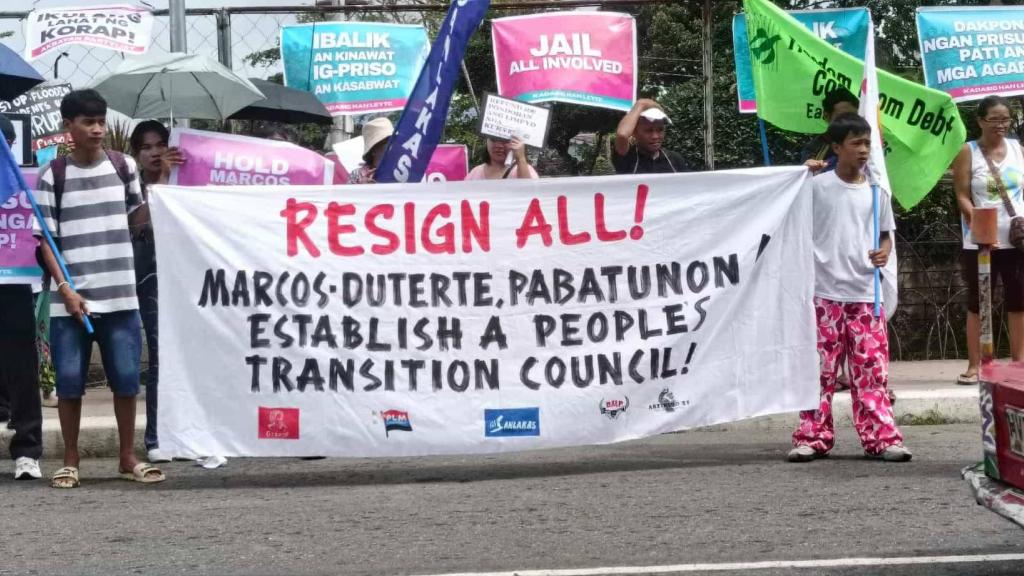

Protest Philippines

Rasti Delizo is a global affairs analyst, veteran Filipino socialist activist and former vice-president of the Bukluran ng Manggagawang Pilipino (BMP, Solidarity of Filipino Workers).

In the second of a three-part series, Delizo talks to Federico Fuentes from LINKS International Journal of Socialist Renewal about the impacts of US-China tensions on Philippine politics and the left. Part I, which looks at the factors underpinning US-China tensions and the dangers posed for the Asia-Pacific region can be read here.

How do you explain current dynamics within global capitalism?

There is a distinct but related set of dynamics that generates global capitalism’s endless conflicts. The imperialist world system does not just produce full-scale wars of aggression by traditional imperialist powers. It also induces sub-imperialist powers in the semi-periphery of world capitalism to launch regional wars for capital accumulation. This is another material factor expressing capitalism’s utterly decomposing nature. These complexities deepen the international order’s structurally exploitative, oppressive, and repressive circumstances.

Here, I would clarify that the Russian Federation is an imperialist great power rather than a sub-imperialist state (as I explained in a prior LINKS interview). Russia is a close strategic ally of China and belongs to the same imperialist bloc. The China-Russia bloc is a fraction of the imperialist core. As a direct consequence, this duo is caught in a competition with its rival imperialist bloc, led by the US and allied imperialist states of the G7.

These two groups compete to win predominance over the imperialist world system. These disparate blocs — representing diametrically opposed pro-capitalist camps — chase superprofits for the ruling-class elites of their respective capitalist states. They use capitalist mechanisms of exploitation, via their extensive territorial spheres of influence reinforced by military force, to guarantee greater capital accumulation.

Returning to your first question: a complex reality of varied but constantly moving parts moulds and propels the international system of monopoly-finance capital. The imperialist world system’s evolving globalised structures and processes are critically driven by paradoxes creating worldwide tensions and hostilities.

These global antagonisms are primarily caused by the uneven and combined development throughout the world. These unequal features, when combined with asymmetrical material realities (imperialist powers, sub-imperialist states, subjugated countries), causes international conflicts among diverse state actors operating within the capitalist system. It is this universal setting that causes non-imperialist great powers to also wield military power beyond their borders to secure capitalist profits from their immediate spheres of influence.

As a result, there are a cluster of sub-imperialist nation-states operating throughout various regions. Some rose from imperialism’s post-1945 phase of development , while others appeared after the end of the Cold War. These sub-imperialist countries play a specifically combined economic, political and military role within global capitalism.

Today even smaller nations such as Turkey and Saudi Arabia, among others, exert military power beyond their borders, either directly or through proxies. Is that what you mean by sub-imperialist?

As a part of the structures underpinning the international division (and redivision) of labour — mainly along particular zones of capitalist production-distribution-consumption — sub-imperialist states are located within the semi-periphery.

Core imperialist states are composed of hegemonic and generalised monopoly-finance capitalist powers and possess hi-tech capabilities. Sub-imperialist entities are those hegemonised and subordinated by monopoly-finance capitalist states, which have a mix of hi-tech and low-tech capabilities with relatively expansionist policies at the regional level. Peripheral economies, which represent the dominated and dependent non-monopoly-finance capitalist countries with low-tech capacities, are subjugated and oppressed by both imperialist and sub-imperialist powers.

Imperialism’s main features create a capitalist world order that shapes and directs exceptional geopolitical and geoeconomic tendencies. Within this systemic configuration, sub-imperialist states in the semi-periphery subordinate themselves to definite imperialist blocs in exchange for security support, while carrying out regionwide political-security tasks for that imperialist camp. At the same time, they drain surplus value from the periphery (via unequal exchange mechanisms) for their own sub-imperialist economic advantages.

Some current sub-imperialist countries are Australia, Brazil, India, Indonesia, Iran, Saudi Arabia, South Africa, Turkey, Qatar, the United Arab Emirates (UAE) and Israel. They all carry out various forms of military initiatives across their adjacent geographical areas to sustain their superprofit-seeking schemes and expansionist agendas. These sub-imperialist states maintain aggressive militarist stances toward their neighbouring nations to negate any threats to their regional spheres of influence.

How have all these dynamics affected Philippine politics?

The Philippines continues falling into a deeper socioeconomic and political-security quagmire. This is largely due to growing capitalist-driven mayhem affecting global affairs.

Given the conjuncture of internal and external circumstances, the Philippines perennially plunges to an ever-deteriorating status. As this national dilemma deepens, the country’s socioeconomic fabric worsens due to the generalised crisis of international capital impinging upon it (economic, diplomatic and security challenges).

In response, the Philippines’ major political forces enter into an ascending policy competition with each other. Manila’s sitting regime and its rival political parties increasingly clash over their contending foreign policy frameworks, even as they battle it out on equally pressing domestic policy agendas. This is how modern-day domain Philippine political affairs proceeds amid the impacts of the current world situation.

The Philippines persists as a maldeveloped peripheral semi-colonial state in Southeast Asia. This status quo is due to its structurally subordinated role and historical development along prevailing capitalist socioeconomic lines.

Being a national-level socioeconomic unit for capitalist production, distribution and consumption, the Philippines is a capitalist nation-state project plugged into globalised circuits of capital. Its capitalist mode of production is anchored in a decades-old neoliberal paradigm, which lingers in a retrograde manner while maintaining fundamental paradoxes upheld by the Filipino capitalist-ruling class.

A prime example of this is that, even as the Philippine economy remains highly dependent upon global capital for development (international loans, conditional foreign direct investments, etc), huge amounts of its surplus value is simultaneously siphoned off abroad for the interests of the imperialist core.

Another major contradiction is that core states are reimposing protectionist tariffs on traditional trading partners (including for flawed geopolitical reasons). On the other hand, the Philippines insists on protecting its more than four-decade-old neoliberal economic framework — despite it being a destructive pathway for national development.

Both approaches have hugely negative implications beyond any immediate, short-term economic or social gains. Yet, Manila continues pursuing this long-discredited economic policy track of detrimental neoliberal measures with catastrophic consequences. By upholding neoliberalism as its macroeconomic policy model, the Filipino ruling class knowingly and deliberately throws the country’s social majority into harm’s way.

What about the country’s relations with the US, amid rising tensions with China?

Linked to the direction of its political economy, the Philippines continues its integration into the US imperialist bloc’s security architecture in the Asia-Indo-Pacific area. This web of interlocking regional security alliances buttresses Washington’s array of regional economic networks that exploit this vast geographical realm.

These dual areawide entities form the backbone of US monopoly-finance capital’s strategic capability to sway and project power far beyond the US mainland. Functioning as US imperialism’s sphere of influence and dominance, it involves the AUKUS (Australia–United Kingdom–United States) and Quad (Quadrilateral Security Dialogue, comprising Australia, India, Japan and the US) projects, among other regional security mechanisms, to militarily fortify its dominance in the area.

However, aggravating the Philippines’ economic-security arrangements are its oligarchic elites. Its central policy agenda is chiefly controlled and contained within a national set of regressive institutional parameters. The Philippine state’s political domain is one whose operative infrastructure and methods are worsened by varied forms of political retrogression, immaturity and decline.

This is justified and fuelled by the small-minded and parochial-type thinking characteristic of the dictatorship of the Filipino capitalist class. The Philippines, as a class society, is consensually hegemonised and ruled by the Filipino oligarchs, who retain economic and political power via a series of national regimes.

They have done so for nearly eight decades, since the Philippines became a formally independent bourgeois-democratic state in July 1946. Underpinning this is a reactionary form of conducting Philippine politics. This has wrought a domestic political system centring on the narrowly anti-poor socioeconomic interests and of the contending fractions of the Filipino elites.

Acting as a comprador bourgeoisie, these imperialist agents of the Filipino capitalist ruling-class guarantee that the Philippine state apparatus (as the US’s first colony in Asia) is forever subjugated by US monopoly-finance capital. The Filipino oligarchs ensure the preservation of US foreign policy’s geostrategic designs aimed at Southeast Asia (and the Eastern Hemisphere).

This outlook is upheld via Manila’s pro-Washington external policy blueprint in exchange for US imperialism’s continued protection of the Philippine state’s governing regimes. This overall context maintains the reactionary dispensation of Philippine bourgeois-democracy and its ensuing traditionalist politics.

But the spiralling contradictions of the global political economy are upending Philippine politics. The Philippines faces a sweeping set of organic predicaments that are also roiling most bourgeois states around the world. These state- and society-wide conundrums are rooted in capitalist structures and processes emanating from outside and inside the country.

The parallel but distinct competitions of capital agglomeration on a global scale have combined with a domestic one. Complicating this dialectic, the imperatives of the regional economic and security rivalry among imperialist great powers, specifically the US and China (primarily focused on attaining strategic dominance over the Southeast Asian Sea, including the Taiwan question), spillover into the Philippines. This complex reality has direct ramifications on domestic politics and Manila’s external relations.

In this regard, the negative impacts of the external situation fundamentally affects the Philippines’ national political struggles. Unless amicably resolved, inter-imperialist competition between Washington and Beijing will remain an external challenge to Manila’s sitting regimes.

If this regional status quo lingers, the repercussions from such an unresolved situation can only strain the Philippines as a frontline state. It could also unlock further political destabilisation and turmoil along pro- versus anti-US/China foreign policy agendas. Only a minority of principled, progressive political forces — chiefly the revolutionary socialist movement — actively advance a “Neither Washington nor Beijing” foreign policy line in the Philippines.

Has any of this led to splits or divisions in the ruling class?

This evolving situation impels the contending fractions of the Filipino capitalist ruling-class towards an urgent reactionary competition among themselves. These oligarchic elites scramble to defend their self-serving financial and material stakes from any threats emanating from the global order’s polycrises.

They manoeuvre and counter-manoeuvre against their perceived socioeconomic and political adversaries via all means necessary. Still, as a class, their most powerful thrust will ultimately be an aggressive counterrevolutionary offensive against the Filipino revolutionary working-class movement. This scenario can be expected to occur once Filipino capitalism’s internal disputes are settled in favour of one fraction or another.

Filipino elites are closely observing the external stirrings impinging on the Philippines with a sensitivity towards their own self-preservation. They are concerned that an extended global slump could affect the Philippines’s growth prospects. As a key strata of the Filipino ruling-class, the oligarchy is apprehensive about looming economic uncertainties mixed with elevated geopolitical tensions. A melding of these potential blowbacks will cause nationwide instability.

The top echelons of Filipino capital sense the need to protect their socioeconomic claims and possessions from any fallout. To shield their financial and material wealth from ruin, they fiercely scour for a way out of this quandary. One option available to them involves an actively partisan participation in state-based politics.

The country’s foremost competing elites have arrived at a desperate self-realisation. Reflecting their ruling-class character, the competing oligarchic factions are once more seeking to overcome these perceived risks through electoral politics. The antagonistic Filipino capitalist camps are frantically gearing up to battle each other for national power in the next presidential election in May 2028.

What can you tell us about these elections and how this contest is shaping up?

With this forthcoming contest, traditional political leaders are already breaching the Philippine state’s laws and rules. With their main reactionary allies from among the many elitist political dynasties and warlord clans operating across the country’s 82 provinces, they are committing many criminal acts to bolster their chances of winning. This includes using graft and corruption to snag financial resources to fuel their respective bids for the presidency, together with other top posts.

The vying fractions of the Filipino oligarchy are looking to further monopolise national power for themselves. They have begun a race to reconsolidate their formal hold over the capitalist state apparatus by (and beyond) mid-2028. Redeploying their political forces, the capitalist ruling-class elites have launched a new cycle of pre-electoral transgressions. These include incitements and provocations with destabilising effects.

All throughout 2025, a series of impactful — even violent — politically-associated events shook the Philippine state and its social fabric. The situation was worsened by political violence surrounding the earlier May 2025 midterm elections. Last year alone, more than three dozen election-related killings and political assassinations occurred.

Furthermore, at least 224 anti-corruption protesters (most of them young) were arrested during violent clashes in downtown Manila on September 21 — the 53rd commemoration of Martial Law in the Philippines. This militant mass action, which was small in size but was a form of anarchist-inspired direct action, happened about one kilometre from MalacaƱan Palace (the official residence of the President of the Philippines). This was in stark contrast to two peaceful, though mammoth-sized mass mobilisations, on the same day.

All three synchronous mass protests, which strongly condemned ongoing cases of sweeping state-based corruption, took place at geographically distinct (yet symbolic) locations within Metro Manila. Outside the national capital region, more mass mobilisations were held against reactionary forms of traditionally elite-based politics.

Following the two enormous protest rallies, a pair of massively attended anti-state corruption rallies were held on November 30 in Metro Manila. This date commemorated the 162nd birthday of the great Filipino proletarian revolutionary leader and founder of the Katipunan, Andres Bonifacio (the Katipunan was an underground revolutionary movement that spearheaded the victorious revolutionary war of national liberation against Spanish colonial rule in the Philippines in August 1896). This symbolic date in Philippine revolutionary history is observed by the organised workers’ movement through mass mobilisations and other large-scale protest actions.

These two big rallies were separately organised and led by the distinct mass-based forces of the revolutionary and reformist left. However, the reformist left remains in an opportunistic political alliance with parties and organisations of the opportunist right.

Could you explain in more detail the differences among the revolutionary and reformist left?

A very notable feature of the latest anti-government/counter-state mass mobilisations was the substance of their respective political calls. The revolutionary left called for extra-constitutional ways to overcome the Philippines’ escalating national crisis under the rule of corrupt-reactionary political dynasties. The Partido Lakas ng Masa (PLM/Party of the Labouring Masses) put forward the line: “Resign All! Establish the People’s Transition Council (PTC)! End political dynasties!”

On the other hand, the reformist left–opportunist right alliance sees a need to preserve the existing bourgeois-democratic constitutional framework, including its corruption-prone elitist processes. This latter political alliance — anchored on the local Catholic Church’s mainly conservative leadership — remains vacillating and bogged down in a political marsh; it apparently lacks any critical alternative for the immediate future, except to wait for the next electoral cycle’s elitist procedures favouring candidates of the same political dynasties.

The stirring political situation in the Philippines is defined by the country’s overall balance of national political forces. This condition, likewise, traces the country’s domestic political spectrum. Any assessment of the national balance of forces must recognise that it is a constantly evolving dynamic, subject to influence by ever-changing objective and subjective factors.

Yet, the Philippines’ non-static correlation of class forces is a predominant factor in social relations, which will be crucial to determining the country’s future political direction. This will especially be the case if there are any genuine systemic changes that can result from the deepening national political crisis. As the country’s political milieu faces rising pressures, its traditional political forces will opportunistically alter their extant alliances for mainly short-term tactical considerations and gains in relation to the rising consciousness of the Filipino working-class masses.

Given the context you have set out so far in broad brushstrokes, could you give us a better sense of the contending political forces within the country’s domestic political arena and how and what they represent specifically?

I will confine my descriptive scope to a very simple left-right axis for a basic view of Philippine politics today.

Such a depiction requires at least four columns categorising the country’s basic ideological-political formations. The left and right require an extra two sub-columns each. The Philippine left, for example, comprises ideological-political forces representing revolutionary and reformist movements. On the other hand, the Philippine right is composed of an opportunist and a counterrevolutionary sector.

Right-wing formations maintain hegemonic sway throughout the Philippines. In objective terms, they sustain dominance over the country’s capitalist economy, bourgeois social order and its reactionary state machinery.

Accordingly, the Philippine right has pervasive control over the Philippine state’s bourgeois-democratic framing. The right-wing formations have command and clout over the country’s political structures, conventional processes and, particularly, its financial-material resources.

The Philippine political-electoral system is led by the two major crony-capitalist factions of the counterrevolutionary right. The first right-wing bloc is anchored around the state-based leadership of Philippine President Ferdinand “Bongbong” Marcos Jr, while the other reactionary bloc is aligned with Vice President Sara Duterte and her father (jailed former president Rodrigo Duterte).

These two blocs had a tactical electoral alliance for the 2022 presidential election. But now they are entangled in a vicious political power struggle to protect their very questionable economic interests. Even as the Marcos and Duterte factions are caught up in an intense struggle to win the 2028 presidential election, this counterrevolutionary duo actively express hostility towards the broad Philippine left movement.

In terms of the Philippines’ external dynamics, the intense inter-imperialist competition between the US and China is a dire factor complicating the country’s internal politics. The reactionary Marcos-led bloc is aggressively ramping up its pro-Washington foreign policy as a populist posture to retain mass support from the Filipino public, which remains greatly pro-US. In contrast, the Dutertes have taken a nominally pro-Beijing stance, although this is a tactic; the autocratic Duterte bloc remains pro-US imperialism in content (especially when push comes to shove) as proven in the past.

In response, the leading political formations from the reformist left and opportunist right seek to challenge the counterrevolutionary right (primarily the Duterte camp’s potential return to power) by acting in unison. Given they share a political objective via principally constitutional means, and specifically electoral, these reformist left and opportunist right forces sense a common exigency.

This stems from a fast-growing recognition that the Philippines’ contracting bourgeois-democratic space is rapidly becoming a national threat to the country’s registered political parties, partylist organisations and legal mass organisations (and, subsequently, the Filipino people’s inherent rights and democratic freedoms). The political forces of the reformist left and opportunist right are collaborating to build an acceptable political-electoral vehicle that could conceivably derail the presidential bids of the Marcos and Duterte camps in 2028 (or perhaps even before that year’s national electoral race).

The opportunist right is largely embodied by the country’s bourgeois-democratic political formations. By self-identifying their ideological orientation with that of liberal democracy, their political agenda frequently reeks of socioeconomic policies biased toward capitalist elite-rule.

Their current array of more engaged political groups include: the Liberal Party (LP), the second-oldest traditional political party in the Philippines; the Mamamayang Liberal (or ‘Liberal Citizens’ in English) partylist organisation; and the Tindig Pilipinas (Stand Up, Philippines) multisectoral coalition. In practice, these three organisations project the same fundamental political calls and public slogans.

The bourgeois-democrats have kept a generally circumspect attitude toward the major currents of the progressive mass movement. Since at least the late 1970s, the liberal democrats have had a reasonably good working relationship with the social democratic movement at different levels of struggle. Yet, the bourgeois-democrats still have an innate bias against the social democratic forces; even as they are often forced to collaborate, the bourgeois-democrats still view the social democrats with a respectful disdain.

At the same time, opportunist right groups tend to be wary of the revolutionary left. The bourgeois-democrats often shy away from revolutionary Marxist-oriented political organisations due to their “very radical” positions and class-based agenda on a wide range of issues and concerns.

In terms of Philippine foreign policy, the opportunist right parties are among the staunchest advocates of US imperialism. The Filipino bourgeois-democrats are vocal about the need to secure US foreign policy interests and actions across the Asia-Indo-Pacific area.

Their public political figures constantly amplify Washington’s narratives around US imperialism’s geostrategic objectives. The liberal democrats relentlessly assert certain pro-US code-phrases that justify US foreign policy imperatives. Such claims include Washington’s need to uphold “the rules-based international order,” “freedom of navigation operations” and “a free and open Indo-Pacific,” among others.

What about the left?

With regard to the reformist left, its primary forces are ideologically oriented to social democracy in theory and practice. The main social democratic formations are led and influenced by the Akbayan partylist organisation and its constellation of allied mass organisations. Reformist left politics inside the country tends to gravitate around Akbayan’s program.

As a social democratic party, Akbayan is a consultative member of the Socialist International (SI); it represents the Philippine section within this reincarnation of the historically right-opportunist Second International.

At present, the social democrats ground their political agenda within the parameters of the 1987 Philippine Constitution. This is both the country’s basic law and the Philippine state’s fundamental legal framework, which provides the rationales for bourgeois-democratic principles and governance in the Philippines.

The social democratic forces still engage in varying forms of progressive mass struggles in the streets, schools and workplaces. However, their ultimate mode of struggle for social change centres on winning huge numbers of votes in elections.

Due to this Philippine social democracy is badly compromised and susceptible to all kinds of right opportunist tendencies. Over time, this strategy will quickly become a danger to the working-class base of the Filipino social democratic movement — in a way, tailism in permanence.

The great majority of reformist left forces in the Philippines openly accept the leadership of US imperialism versus Chinese social-imperialism to guide Philippine foreign policy. Due to this capitulationist position supporting one imperialist bloc against another, Philippine social democracy unquestionably pursues an international line of social chauvinism.

And the revolutionary left?

The revolutionary left is marked by two major ideological-political currents centred on revolutionary Marxism.

The dominant of these two revolutionary left blocs is guided by the Maoist-oriented national democratic movement. Comprising a distinct revolutionary left bloc, the national democrats have been led by the underground Communist Party of the Philippines (CPP) since December 1968.

As a Marxist-Leninist-Maoist (MLM) party, the CPP’s main form of struggle is a nationwide “people’s war”. The CPP’s armed struggle, militarily led by its New People’s Army (NPA), has been bolstered by a mix of dual forms of political struggles as part of its revolutionary strategy.

Pursuing the political objectives of their national democratic revolution, the national democrats essentially conduct national and local-level mass campaign struggles. These militant modes of struggle are further augmented by their elected partylist leaders inside the Philippine House of Representatives, via high-profile legal activities and public interventions.

Usually operating in joint fashion, the national democratic bloc’s main legal mass movement formation is the Bagong Alyansang Makabayan (Bayan/or New Patriotic Alliance), while its parliamentary component is the Makabayan coalition (Patriotic Coalition of the People).

There is another vanguard party in the Philippines that continues advancing the revolutionary socialist project. The Partido ng Manggagawang Pilipino (PMP/Party of the Filipino Workers), which was founded in August 2002, is an underground revolutionary Communist party that consciously upholds and promotes the Marxist-Leninist line of march.

Operating clandestinely across Philippine society, especially within the broad ranks of the working-class masses, the PMP is guided by Lenin’s “two-stage, uninterrupted revolution” — through a revolutionary strategy of mass insurrection — to achieve socialism in the Philippines.

The PMP is committed to the proletariat’s historic mission of world socialist revolution. Toward this aim, the party leads concrete revolutionary mass struggles to help shift the national correlation of class forces.

Other revolutionary left organisations exist in the Philippines that similarly share the PMP’s revolutionary socialist principles and outlook. Unlike the PMP’s secret and illegal organisational character, these revolutionary left formations openly carry out national and local-level militant mass campaigns for certain policy reforms. They wage revolutionary mass struggles to bring about genuine systemic change.

Among the leading mass organisations exemplifying this current of the revolutionary left are: Bukluran ng Manggagawang Pilipino (BMP/Solidarity of Filipino Workers), a revolutionary socialist political centre of the Filipino working-class movement; the socialist political party, Partido Lakas ng Masa; the progressive anti-imperialist democratic coalition, SANLAKAS; the socialist mass organisation of agricultural workers and small fishers, AMA (Aniban ng Manggagawa sa Agrikultura/Union of Agricultural Workers); the socialist-oriented national confederation of urban poor mass organisations, KPML (Kongreso ng Pagkakaisa ng Maralitang Lungsod/Congress of Unity of the Urban Poor); and the anti-fascist/anti-imperialist youth and student-based formation, SPARK (Samahan ng Progresibong Kabataan/Association of Progressive Youth), among others.

Lastly, the foreign policy positions of the two leading currents of the revolutionary left are identical. In stark contrast to the reformist left, the CPP’s and PMP’s general lines on international affairs are consistently anti-imperialist.

These revolutionary Marxist parties similarly (yet separately) uphold and advance a principally anti-imperialist revolutionary proletarian line, which guides their common global viewpoints. Both the national democrats and the revolutionary socialists stand firmly against US and Chinese imperialisms concurrently.

These two revolutionary left blocs invariably advocate a “Neither Washington nor Beijing” posture for the Philippines. The principled foreign policy stance asserted by the revolutionary left — which stands in sharp variance with the country’s reactionary and opportunist political forces — maintains a coherent form of revolutionary class independence.

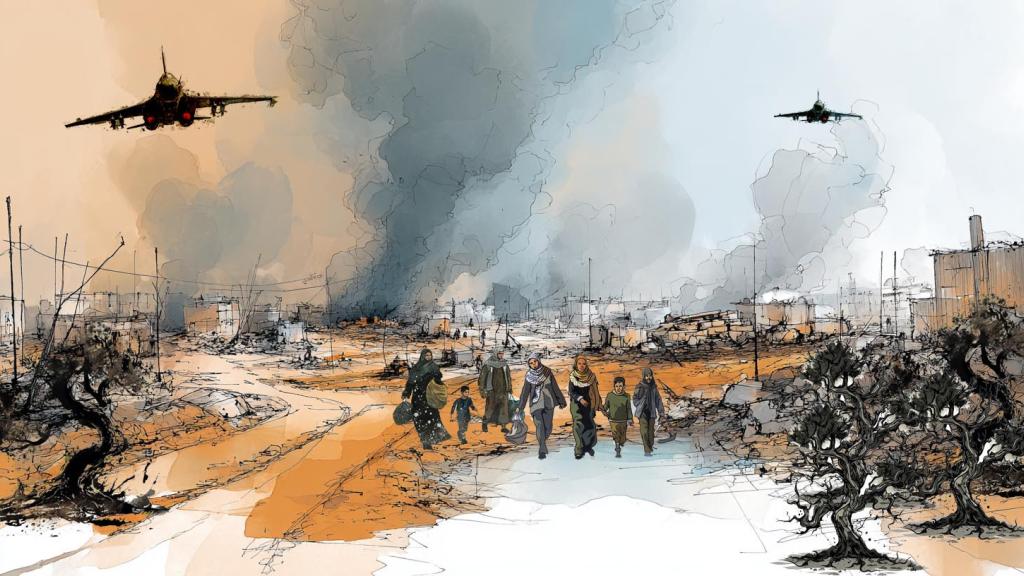
Resisting the monstrous trifecta of war, genocide and ecocide


Transnational Institute graphic ecocide imperialism palestine

Everywhere, especially the Global South, is suffering from the ongoing effects of the imperialist carve up of the world in the 19th and early 20th centuries. This was achieved by war, genocide, colonisation and semi-colonialism, and the expropriation and theft of the Global South’s wealth. 

As the damaging legacies of historic imperialism continue to play out, today’s United States-led imperialism and global capitalism has wrought even more destruction of peoples and planet; it has increased economic inequality between the Global North and South, as well as between workers and oppressed people and capitalists.

US-led imperialism and global capitalism are now reaching ever-higher levels of depravity; this is evidenced by more than two years of genocidal war on Gaza, the US’ recent illegal military assault on Venezuela and the global rolling back of already inadequate climate protections, led by US President Donald Trump.

We are now facing a monstrous trifecta of genocide, war and ecocide.

But at the same time, we are witnessing a resurgence in popular resistance to imperialism, particularly in the global movement for Palestine solidarity, Mayor Zohran Mamdani’s and the Democratic Socialists of America’s success in New York, the rise of Your Party and the Greens in Britain, the Gen-Z uprisings, pro-democracy protests in Iran and, potentially, an upsurge in anti-imperialist organising after the events in Venezuela.

Unlike earlier US administrations, the Trump administration no longer keeps up even the pretence of following “international law” because it either no longer deems that necessary, or worth the political or economic cost.

Israel and the US’ genocide in Gaza have already paved the way for the complete flouting of post-World War II institutions — the United Nations, the International Criminal Court and the International Court of Justice. While each is incredibly flawed, they were set up to purportedly prevent war and promote international human rights.

Trump’s recent actions in Venezuela, and elsewhere, are a big middle finger to these institutions and to humanity in general. When asked on January 9, if there were any limits to his power, Trump said: “Yeah … My own morality. My own mind. I don’t need international law.”

The current international situation is shaped by US imperialism’s (and particularly Trump’s) desire to shed all pre-existing fetters and solidify the US’ global hegemony. 
Jason Hickel put it well on X:

Bombing Venezuela while coordinating a genocide in Palestine while threatening to attack Iran (Again) while destabilising Somalia, while carrying out a heist in the DRC [Democratic Republic of the Congo]. US imperialism is the greatest threat to peace and security in our world today.

Leaders in the Global North have largely failed to condemn the US, although French President Emmanuel Macron and German President Frank-Walter Steinmeier have criticised its aggression and denounced “new colonialism”, although without naming the attack on Venezuela.

If anyone was doubtful that there is a direct, causal link between US-led imperialism and capitalism on the one hand, and war, ecocide and genocide on the other, you only have to read one of Trump’s recent tweets:

I am pleased to announce that the Interim Authorities in Venezuela will be turning over between 30 and 50 MILLION Barrels of High Quality, Sanctioned Oil, to the United States of America. This Oil will be sold at its Market Price, and that money will be controlled by me, as President of the United States of America!

It’s clear: war and invasion for the purpose of grabbing resources (in this case oil) to make profits, control the market and create economic “growth”. Oil emissions will increase global warming and ecocide; the profits from oil sales will then be used to fuel and fund further wars and genocides, and the cycle continues.

Threat to ecosystem

We know that capitalism is incompatible with human life and the planet’s ecosystem, but the question is how much longer before it becomes uninhabitable. Many parts of the Earth are already uninhabitable. We have just experienced a record breaking heat wave in the South and Eastern states of Australia, and another bushfire season has started in Victoria. A Lancet climate change report published in October said that “heat-related deaths have risen by 63% since the 1990s, causing, on average, 546,000 deaths annually in 2012–21”.

The World Weather Attribution Annual Report said in 2025 that “human-driven greenhouse gas emissions meant global temperatures were exceptionally high [causing] … prolonged heat waves, worsened drought conditions and fire weather” as well as increasing extreme rainfall and winds associated with severe storms and floods. These have led to thousands of fatalities and displaced millions of people.

“The events of 2025 demonstrate the growing risks already present at approximately 1.3°C of anthropogenic warming and reinforce the urgent necessity of accelerating the transition away from fossil fuels,” it said.

We should note that the Intergovernmental Panel on Climate Change (IPCC) has said global warming must be limited to a 1.5°C rise by 2030 to avoid “ catastrophic climate breakdown”. 
Global South countries are the most badly impacted, despite being the lowest emitters, historically and currently, as well as being victims of the colonial extractivism of resources.

Recent research by Hickel reveals that the Global North is responsible for 86% of all emissions in excess of the safe planetary boundary, which is set by scientists as 350 parts per million. This figure refers to the concentration of carbon dioxide in the atmosphere.

Global North governments, such as Australia, are driving global climate change to seek profits. They are often paid off or supported by billionaire oil and gas magnates. Currently Australia is the second-biggest exporter of greenhouse gas emissions through coal and gas. Climate Analytics says that its global fossil fuel carbon footprint is three times larger than its domestic footprint.

Capitalism incompatible with sustainability

The logic of the capitalist mode of production itself — the need for ongoing economic growth, ever increasing rates of profit and ongoing capital accumulation — is at the root of today’s ecocide.

As John Bellamy Foster states:

Economic growth, based on non-stop capital accumulation, is the main cause of the destruction of the earth as a safe place for humanity.

Renewables are necessary, but in a capitalist system they cannot provide a solution for two main reasons.

First, renewables are attractive for some capitalists, however they are utilising renewables for their own profit-making, rather than to seriously ameliorate the climate crisis.

Secondly, capitalists do not see renewables as capable of providing maximum ongoing profits. Fossil fuels are a better option because they are more marketable. There are significant costs to set up and production of renewables and the profits they return are not deemed high enough to outweigh the costs.

Economist Brett Christophers argues that solar and wind projects are simply not financially viable in a capitalist economy. 

Rather than being able to thrive in the free market, renewables projects are still almost entirely reliant on some extent of state support to remain commercially viable.

The Trump administration has declared war on climate protection policies. Trump’s mantra “We will drill baby drill” is not only applied to the US, but most dramatically, in recent times, to Venezuela.

The news that Trump has withdrawn the US from the IPCC follows a litany of attacks on climate protections after he returned to office. The Trump administration withdrew from the Paris agreement for the second time; ramped up oil and gas production; massively cut funding to climate science; scrapped major offshore wind projects, and rolled back more than 140 environmental rules and regulations including pollution and greenhouse gas emission restrictions. Cutting rules and regulations on pollution and emissions will make whole communities sick.

Trump has also successfully pressured other Global North countries to back track on their existing already too weak climate targets. Following trade pressures, last year Canada agreed to boost oil and gas production. Last December, European Council and European Parliament negotiators caved under pressure from the fossil fuel industry, business associations and the Trump administration, agreeing to major rollbacks of their climate obligations.

COP30 was a cop-out. The climate conference was dominated by fossil-fuel lobbyists, and failed to secure any commitment to cut fossil fuels, protect forests, or commit to adequate financial reparations to Global South countries.

Wellthon Leal, a member of the Global Ecosocialism Network reported from COP30 that the “sustainable solutions” that lobbyists from the Global North were pushing “in reality, deepen the exploitation of Global South countries.

“Never before had the South been so sought after as a carbon-offset zone, a sacrifice area for data centers, and a region targeted for rare-earth extraction — all disguised as investment promises.”

As Hickel explained in a recent article for TriContinental:

The disaster that is being wrought is a direct continuation of colonial violence … when we understand that this is the trajectory that our ruling classes are currently planning to achieve (and which could very easily be avoided), it is difficult to see it as anything other than genocidal.

Although the organised climate movement seems to be at a low ebb in the Global North, indigenous activists are leading actions in Global South countries.

In Belem, Brazil, a People’s Summit was organised in parallel to the official COP; it brought together more than 1000 climate organisations and culminated in a 70,000 strong Global Climate March. Protesters held signs which read “agribusiness is fire”, “there is no climate justice without popular agrarian reform”, and “environmental collapse is capitalist”.

Ecocide: no longer a byproduct of war

The legal use of the term “ecocide” began with scientists raising alarm about the US’ deployment of environmental warfare during the Vietnam War, with Agent Orange and the purposeful destruction of agricultural crops.

From the mid 20th Century onwards, ecocide is no longer just a byproduct of genocide and war, but is increasingly used a weapon in itself.

This has been made painfully clear in Gaza, where Israel has embarked on a systematic process of environmental destruction involving polluting weapons: Gaza is now polluted by 40 million tonnes of debris and hazardous material, much of it containing human remains, which the UN estimates will take decades to clear. On top of this, Israel has purposefully destroyed sewage treatment plants allowing seawater to become contaminated.

Israel has fundamentally altered Gaza’s landscape through a process of forced topographic change caused by constant bombardment and bulldozing, the destruction of about 90% of agricultural land and the large-scale extraction of water.

All this is deliberately aimed at making Gaza uninhabitable. The winter storms there were extremely severe due to the effects of climate change. Israel lost no time in weaponising the storms to kill more Palestinians by preventing them accessing appropriate shelters for wet and cold weather as well as the aid blockade.

The apocalypse in Gaza continues. Israel has violated the fake ceasefire agreement, brokered by Trump in October, by up to 900 times. At least 425 Palestinians have been killed and 1158 injured since the so-called ceasefire began.

Israel has suspended more than 48 humanitarian organisations, including Medicine San Frontiers and the Norwegian Refugee Council “for failing to meet its new rules for aid groups working in the war-ravaged Gaza Strip”.

There is no doubt that the Trump administration has given Israel the green light to do what it wants in Gaza and the West Bank, which is turning increasingly into another Gaza.

Trump also gave Israel the go ahead to attack at least six countries last year, including Iran, Lebanon, Qatar, Syria and Yemen. Israel also carried out strikes in Tunisian, Maltese and Greek territorial waters on the Sumud aid flotillas heading for Gaza.

The US brokered “Peace Plan” is a new colonial project; a Mandate 3.0. It means Gaza will be dominated, occupied and under the military, economic and political control of Israel and the US. It means that Palestinians will lose any possibility of self-determination.

The UN Security Council, on November 17, 2025, endorsed this Peace Plan, with China and Russia abstaining, rather than using their veto power. This seems to confirm that China and Russia, along with other BRICS countries, do not have the political will to stand up against US hegemony on behalf of the Global South.

While the global Palestine solidarity movement continues, with key highlights being the Sumud Flotilla and the general strikes for Palestine in Italy and Spain, the trend is for Global North governments to pass new laws allowing for severe repression of the anti-genocide movement.

The weaponisation of antisemitism has led to the curtailing of basic civil liberties and the right to protest, especially in Britain and Australia. In the latter, the federal and NSW Labor governments are weaponising the Bondi attack to attack anti-genocide activists.

The unceasing horror of Israel’s genocide in Palestine has sharpened anti-colonial consciousness, including that US imperialism needs Israel as its bulwark in the Middle East.

Sudan genocide

In addition, the genocides in Sudan and the Congo are equally horrific. The so-called civil war in Sudan is the world’s worst humanitarian crisis. This genocide is visible from the air—dark spots of blood appear on satellite images.

Since 2023, when the war between Sudan Armed Forces (SAF) and RSF (Rapid Support Forces) began, more than 150,000 have been killed, 13 million have been displaced, and half the population is facing famine.

Sidgi Kaball, of the Sudanese Communist Party, says the war in Sudan is not a civil war in the traditional sense but a counterrevolutionary war, conducted by a parasitic comprador elites in the military, who are using the war to completely crush Sudan’s pro-democracy revolution of 2018.

At the same time, the United Arab Emirates (UAE), which is bankrolling the RSF, has already extracted and profited from Sudan’s gold and wants to continue to do so.

US allies in the region — Egypt, Saudi Arabia and the UAE — have formed the “Quad” group to supposedly take charge of negotiating an end to the ongoing war. They are not neutral actors; all are working to maintain their contracts in Sudan with corporations such as Caltex and BP.

The Quad countries have a direct economic stake in continuing the violence, because they make profits from the resources extracted during the war in Sudan.

Meanwhile, there is now evidence that Australia is involved in the genocide in Sudan. The UAE (which is arming the RSF), purchases most of its military equipment from the US and its Western allies, including Britain, France, Germany, Israel and Australia. According to the UN’s Comtrade database, over the last five years, the UAE has been the single biggest customer for Australian arms exports and Australia was UAE’s fourth-largest supplier of weapons over that same period.

The people of the Democratic Republic of the Congo (DRC) are also dealing with a genocide, which has been ongoing for more than 30 years. The wars are being fought over minerals, such as cobalt and gold, and now the various rare-earth minerals used for high tech industry and electronic devices.

The situation escalated in 2025 when the Rwanda-backed M23 militia drove the national Congolese army out of Goma. The ensuing conflict has caused record levels of violence against the civilian population. At the same time rare-earth minerals continue to be extracted providing super profits for capitalists in the Global North and China.

Constant wars the corollary to genocide

US imperialism needs war. A new war with Venezuela and the threat of conflict with the rest of Latin America and Greenland shows up Trump’s hollow claim to want to end all wars.

US-led imperialism faces, but can’t resolve, threats to US hegemony from China’s growing economic strength, the environmental crisis and capitalism’s recurring economic crises.

To counter these threats, the Trump administration is making sure its military domination is unchallenged. Its solution is more war. At the same time, the global imperialist ruling class is falling over itself to defend US hegemony.

The US National Security Strategy (NSS) 2025 document, released in December, unabashedly describes the new policy as a return to unchallenged domination of the Western Hemisphere through a revival of the Monroe doctrine. Trump calls his Monroe doctrine the “Donroe doctrine”.

Rise of the far right

US-led imperialism, in combination with four decades of neoliberal policies, are fuelling the rise of the far right. The ruling class is using the far right to enlist a part of the working class in its battle to defend US hegemony. This is very different to the ways in which fascism was used to crush a huge socialist and communist working class, and its real power, in the 1930s.

The contradiction here is that the ruling class is making more profits than ever; recent statistics show the top 0.001% own three times more wealth than the poorest half of the world’s population combined. US imperialism is still the world’s dominant economic, military and cultural power.

An article in Foreign Affairs early in 2025 noted its corporations still control the commanding heights of the global economy. But, despite this, ideologically their power is uncertain, as is their economic hegemony.

Trump’s demand on NATO countries to increase their military spending proves the point that war is necessary to Trump’s project. It is akin to Hitler’s move to make re-armament a national economic priority before World War II.

But because the US already spends more than any other country on the military, his announcement reveals a certain desperation to hold onto global power and to cement it by any means necessary. Trump claims tariffs will pay for this, but we all know the US’ own working class and oppressed groups are the ones who will pay.

Trump eyes off oil

Although Venezuela is Trump’s key target, he has threatened Colombia and Mexico, and his Secretary of State, Marco Rubio, has threatened Cuba. Trump wants full domination of the Americas to the exclusion of rival capitalist powers.

The attack on Venezuela was Trump’s most aggressive foreign military action yet, striking Caracas, as well as other parts of the country and kidnapping President Nicolas Maduro and Cilia Flores.

While for more than 20 years, the US has been trying to overthrow the Venezuelan government and has backed coups in Latin America throughout the 19th and 20th centuries, there is a difference in the level of audacity.

This was not a covert operation, but one announced with pride and fanfare. The US military build-up, including warships, planes and soldiers in the Caribbean, was at first posed as necessary to fight drug trafficking and narcoterrorism, despite no evidence being produced.

Trump has since made clear the attack is all about Venezuela’s oil and economic control of the region. Tellingly, Trump tipped off oil CEOs about the attack before he consulted anyone else in his administration. Trump said that, as part of the takeover, major US oil companies would move into Venezuela, which has the world’s largest oil reserves, and refurbish supposedly badly degraded oil infrastructure, a process experts said could take years.

While Socialist Alliance has expressed criticism of Maduro for failing to publicly show the 2024 election results and for his suppression of dissent, it has always condemned the brutal US sanctions and blockade, which has led to the deaths of thousands of Venezuelans and destabilised the country. We demand the US leave Venezuela and allow Venezuelans their right to self-determination.

Latin American unity is unraveling as far-right governments are elected, including Argentinean President Javier Milei, a Trump supporter, and JosƩ Antonio Kast in Chile, the son of a Nazi Party member and an admirer of Pinochet.

The attack on Venezuela raises the question of how this will affect Russia’s war on Ukraine, the US’ rivalry with China and other global conflicts. 

The US’ policy of “containing” China and expanding NATO to encircle Russia has not changed.

However, Trump has made clear he wants NATO members and the EU to take greater fiscal responsibility for the Ukraine war. In June they succumbed to pressure and agreed to increase their military spending to 5% of GDP annually. Trump is likely to broker a deal for Ukraine, where Ukraine loses more.

The aggression of countries, including Russia and China, on their neighbours should not be seen as inter-imperialist rivalry, but as attempts to pursue their own independent economic projects and military strategies — which are not in the interests of working people.

However, the ultimate domination of US-led imperialism exacerbates the conflicts and antagonisms of non-imperialist states, with often horrific repercussions. The situation for the Kurds in North East Syria epitomises this.

Kurds have been the target of slaughter at the hands of competing countries, such as Turkey, Iran, Iraq and Syria, for decades. Now, the Ahmed al-Sharaa Syrian regime, backed by Turkish armed forces and allied mercenary militias, are attacking and destroying Kurdish neighbourhoods of Aleppo, in northern Syria.

Diplomacy, not more war

Four years after Russia’s invasion of Ukraine, with loss of life and environmental destruction in the extreme, it is evident that it is a catastrophe for both countries. According to the British Ministry of Defence, more than one million Russian troops have been killed or injured since February 24, 2022 and between 60–100,000 Ukrainian personnel have been killed with total casualties reaching approximately 400,000.

Diplomacy, rather than more war, is needed to resolve the conflict. But war is profitable, and means that the United States and its Western allies’ can continue to dominate the global capitalist world order. Russia’s war on Ukraine is also profitable for Putin and Russian elites, and for big oil companies which have made billions since the invasion.

China’s response to Venezuela has, so far, been lukewarm and primarily shaped by its desire to protect its economic interests, which include oil, in the country.

China, like other members of BRICS, have been incapable of condemning the US. They are not a real counter to US-led imperialism because they too want to maintain their own capitalist interests; they need to maintain growing profits in the global market and balance their own sovereignty with maintaining a mutually beneficial relationship with the US.

China does not play the role the former Soviet Union (with all its flaws) once did.

US-led imperialism and global capitalism is at the root of ecocide, genocides and constant wars.

What is the antidote? The only force capable of making meaningful cracks in the imperialist and capitalist armour is a mass movement of international ecosocialism. And this is what we need to build.

‘Chairman Trump’ and a Dystopian Vision for Gaza Without Gazans

by  | Jan 25, 2026 | 

When Donald Trump strode into the World Economic Forum in Davos this January flanked by Jared Kushner and other confidants, it was ostensibly to sign a charter establishing a “Board of Peace.” The document, hailed by its backers as a technocratic alternative to decades of dead‑end diplomacy, promises “pragmatic judgment” and a “nimble and effective” institution to rebuild war‑torn Gaza. The preamble reads like an attempt to imitate the United Nations Charter without its collective obligations. Beneath that veneer, the charter sets up a structure that concentrates virtually all authority in the hands of its chairman, Donald J. Trump, and relegates Palestinians to spectators while foreign investors draw up the blueprints for their homeland.

A personal chairmanship with no term limits

The charter treats the chairmanship as a personal role rather than an office tethered to the U.S. presidency, or any other head of state. The text explicitly states that “Donald J. Trump shall serve as inaugural Chairman of the Board of Peace,” with no mention of the presidential office or any fixed term. In other words, the chairmanship belongs to Trump, exclusively. The charter further grants him the sole authority to designate his own successor; replacement can occur only upon his resignation or incapacitation, and even then the successor is someone he has already chosen. Once appointed, the chairman can renew the board ad infinitum. It is scheduled to dissolve only when the chairman deems it “necessary or appropriate,” and the board can otherwise continue indefinitely with annual renewals controlled by him.

Membership is by invitation only. The charter states that membership commences when a state consents to be bound after receiving an invitation from the chairman. The initial term lasts three years and is renewable “by the Chairman,” while states that contribute $1 billion in cash to fund the board’s activities secure permanent membership; an echo of pay‑to‑play diplomacy. Member states may be removed at any time by the chairman, subject only to a veto by two‑thirds of the other members. A diplomat quoted by Reuters said the model resembles a “Trump United Nations” that sells permanent membership to those demonstrating “commitment” – a euphemism for financial support.

Agenda control and veto power

The Board of Peace is ostensibly composed of heads of state and government who meet to vote on budgets, international agreements, and major policies. Yet every aspect of its operations is subject to the chairman’s approval. The agenda for voting sessions, to be held at least annually, is set by the executive board “subject to notice and comment by Member States and approval by the Chairman.” Decisions require a majority vote of member states but do not take effect unless the chairman approves them; he may also cast a tie‑breaking vote. The chairman may invite regional bodies to attend under “such terms and conditions as he deems appropriate,” and he alone may create, modify, or dissolve subsidiary entities. In case of disputes over the meaning or application of the charter, the chairman is “the final authority” on interpretation. He is empowered to issue resolutions or directives unilaterally, further eroding any semblance of collective governance.

The extent of this concentration of power is jaw‑dropping. Trump has the sole power to invite states, set agendas, override board decisions and terminate membership. He selects the executive board, interprets the charter, chooses his successor, and controls the board’s budget. Membership is renewable at his discretion and can be revoked unilaterally. His personal control of a peace‑building institution fits seamlessly with the pay‑for‑play ethos of his foreign policy. Even the board’s duration hinges on his whim. The charter allows the board to be dissolved only when the chairman decides or at the end of every odd‑numbered year unless he renews it by November 21. Thus, Trump can keep the board alive indefinitely, effectively constructing a new international organization under his, or his chosen successor’s, personal chairmanship.

Layers of subservience: executive boards and technocrats

Below the Board of Peace is an executive board selected entirely by the chairman. Members serve two‑year terms but may be removed or reappointed at his discretion. The executive board elects its own chief executive, but this individual is nominated by the chairman and subject to his veto. The executive board’s decisions become effective only until the chairman chooses to overturn them. He may establish subcommittees and determine their mandates, meaning that all administrative structures derive from his authority.

At the bottom sits the National Committee for the Administration of Gaza (NCAG), a Palestinian technocratic body. According to the White House, the NCAG will manage public services and economic development under the supervision of a U.S.‑appointed high representative. Gaza’s only Palestinian component is this committee; the top decision‑making positions are reserved for foreign leaders and investors. Gaza’s future is thus to be managed by an international corporate board while Palestinians remain relegated to municipal duties.

“Glitzy Gaza” at Davos

If the board’s composition evokes colonial governance, the development pitch that accompanied its launch further exposes its priorities. At the signing ceremony in Davos, Kushner presented a slide deck promising to turn Gaza into a glitzy resort. The plan, he said, could be completed in three years if Hamas demilitarizes. Kushner described Gaza’s reconstruction as “a Mediterranean utopia” with terraced towers, a seaport, and an airport. He called the project a “master plan” for “catastrophic success” and urged critics to “just calm down for 30 days” while the new board gets to work. He and Trump repeatedly emphasized Gaza’s “beautiful piece of property” on the sea, underscoring the real‑estate logic behind the initiative. Kushner advocated a free‑market economy in Gaza, claiming that the plan would deliver “100 percent full employment” and raise household incomes to $13,000 per year within a decade. He insisted there was “no plan B” and called for $25 billion in private investment.

Such rhetoric reveals a striking disconnect. While Gaza reels from what rights groups call a genocide that has killed over 71,000 Palestinians and displaced virtually the entire population, U.S. officials promote luxury developments contingent on the disarmament of the territory’s defenders. The requirement that Hamas demilitarize before reconstruction can begin effectively conditions aid on surrender. Kushner’s reference to Gaza’s waterfront as prime real estate echoes his earlier suggestion that the enclave’s inhabitants could be removed temporarily to make way for redevelopment. The Davos pitch thus appears less about humanitarian recovery than about transforming Gaza into an investment opportunity for global capital.

A colonial echo chamber

Critics across the political spectrum have denounced the Board of Peace as neo‑colonial. Rights advocates told Reuters that having Trump supervise a foreign territory’s governance resembles a colonial structure and undermines the United Nations. Diplomatic sources warned that the board could become a permanent global peace‑making body that rivals the UN. One diplomat described the plan as a “Trump United Nations that ignores the fundamentals of the U.N. charter.” Several European governments expressed concern that the board might erode multilateral institutions and privilege wealthy states that can afford membership fees.

Gaza analyst Iyad al‑Qarra said that Trump treats Gaza “not as a homeland, but as a bankrupt company in need of a new board of directors.” He describes the structure as a “corporate takeover” that turns sovereignty into a commercial venture. The lineup of investors and real‑estate developers at the top, he suggests, reflects the transformation of the Palestinian cause into a business deal. Even Israeli objections to the inclusion of Turkish and Qatari officials appear more tactical than principled; analysts note that Israel still retains security control while outsourcing Gaza’s day‑to‑day misery to international donors.

A dystopian vision without Gazans

What emerges is a dystopian vision for Gaza’s future. The board’s charter eliminates any possibility of Palestinian self‑determination; all authority flows upward to a chairman who owes his position to personal ambition rather than democratic mandate. By tying membership to billion‑dollar payments and awarding permanent seats to financiers and war hawks, the plan monetizes governance and disenfranchises those whose lives are at stake. The executive board resembles a consortium of business executives and politicians who view Gaza’s reconstruction as a chance to implement neoliberal policies and real‑estate projects.

Furthermore, the board’s insistence on complete demilitarization before any rebuilding can begin ensures that Gaza remains under Israeli military domination. Israel’s assault has killed tens of thousands of people and created a hunger crisis; yet the board offers no mechanism to halt the bombardment or lift the blockade. Instead, it conditions aid on the elimination of armed resistance. This mirrors earlier proposals in which U.S. envoy Kushner offered economic incentives only if Palestinians abandoned claims to their land.

The plan’s disregard for Palestinian agency is perhaps its most striking feature. Despite repeated references to “peace” and “partnership,” the board includes no Palestinian voices at the top. Palestinians are relegated to a municipal committee under the supervision of a foreign high representative. The board invites 60 nations to join and solicits billion‑dollar memberships, but it does not invite the people whose fate it claims to manage. Even the technocratic NCAG is answerable to the board and not to Gaza’s residents.

Empire disguised as peace

By designating himself chairman for life and constructing a governance structure that is answerable only to him, Donald Trump has created an organ that resembles a private company more than an international peace‑building body. Its membership roster reads like a who’s who of pro‑Israel hawks, real‑estate speculators and corporate financiers. The “glitzy Gaza” pitch at Davos underscores the board’s priorities: expensive towers, free‑market economics, and a lavish Mediterranean destination built atop the ruins of Palestinian homes. As rights advocates and diplomats have observed, this plan is less about peace than about consolidating U.S. and Israeli control over Gaza’s future. It is a dystopian vision for Gaza without Gazans – a world in which sovereignty is commodified, resistance is criminalized, and war profiteers masquerade as peace‑makers.

Alan Mosley is a historian, jazz musician, policy researcher for the Tenth Amendment Center, and host of It’s Too Late, “The #1 Late Night Show in America (NOT hosted by a Communist)!” New episodes debut every Wednesday night at 9ET across all major platforms; just search “AlanMosleyTV” or “It’s Too Late with Alan Mosley.”