Friday, February 27, 2026

Panama seizes control of strategic ports from Hong Kong’s Hutchison

Panama seizes control of strategic ports from Hong Kong’s Hutchison
The dispute has acquired overt geopolitical dimensions. US President Donald Trump has repeatedly alleged Chinese influence over canal-adjacent infrastructure and threatened to “take back” the waterway upon returning to office. / xinhua
By Alek Buttermann February 25, 2026

Panama’s decision to assume control of the Balboa and Cristóbal container terminals marks a structural rupture in the governance of infrastructure that underpins roughly 5% of global maritime trade and about 40% of US container traffic.

The measure, executed following a Supreme Court ruling that declared unconstitutional the concession held by a subsidiary of Hong Kong-based CK Hutchison Holdings, has triggered legal threats, diplomatic protests and operational disruption, while opening a broader debate over legal certainty in one of the world’s most strategic logistics corridors.

The legal trigger was a January ruling by Panama’s Supreme Court annulling the concession contract under which Panama Ports Company had operated the Pacific terminal at Balboa and the Atlantic terminal at Cristóbal since 1997. Publication of the ruling in the official gazette on February 23 rendered the decision final. 

Within hours, the Panama Maritime Authority occupied the facilities under Executive Decree No. 23 of February 23 2026, invoking “urgent social interest” grounds to ensure continuity of service. The decree authorised temporary occupation of movable assets, including cranes, vehicles, software and information systems, while explicitly stating that no transfer of ownership was implied.

President José Raúl Mulino framed the measure as an administrative tool rather than expropriation. In a televised address cited by multiple outlets, he insisted that the state was merely using assets to guarantee uninterrupted operations until their value could be determined for subsequent actions. The distinction is constitutionally relevant: expropriation entails permanent transfer of title and compensation; temporary occupation maintains ownership while the state assumes operational control.

Despite official assurances, the transition exposed immediate operational fragilities. The Panama Maritime Authority disabled internet systems at both ports to allow incoming operators to install their own software platforms and to mitigate cyber risks. As a consequence, the terminals were unable to operate at full capacity on February 24. 

At Balboa, export and empty containers resumed reception between 07:00 and 22:00, but import containers were not being delivered. Refrigerated cargo remained connected to power supplies under monitoring to protect perishable goods. At Cristóbal, gates were temporarily closed, halting container ingress and egress.

Government officials, including Canal Affairs Minister José Ramón Icaza, argued that vessel movements had not been materially affected. He noted that two ships had departed Balboa prior to publication of the ruling and that Cristóbal faced an eleven-day window without scheduled container berthing. 

Nonetheless, exporters reported difficulty retrieving empty containers, and industry representatives warned that even short-term frictions could affect routes dedicated exclusively to Balboa, particularly for perishables.

To prevent paralysis, the Cabinet authorised transitional concessions worth $41.9mn. The Comptroller General endorsed Contract No. A-2002-26 with APMT Panamá, S.A. for $26.1mn to operate Balboa, and Contract No. A-2003-26 with TIL Panamá, S.A. for $15.8mn to manage Cristóbal, both for up to eighteen months. 

APMT Panamá is affiliated with A.P. Moller - Maersk, while TIL Panamá is linked to Mediterranean Shipping Company. Under the published terms, operators will pay a fixed annual canon of $7.5mn plus variable payments after deducting recoverable costs, alongside fees of 13.20 dollars per container movement and 6.60 dollars per vehicle discharged outside containers.

The Ministry of Economy and Finance projects that, over eighteen months, state revenues could reach up to $100mn, several times higher than returns generated under the annulled concession. Officials cite a Comptroller’s audit indicating that over 29 years the state received $483mn, allegedly resulting in foregone revenues of $853mn. 

Conversely, the company has initiated arbitration exceeding $1.5bn, a figure the minister characterised as detached from financial reality. Legal representation is being assembled, with notification deadlines in early March and proceedings potentially lasting years.

From the corporate perspective, the events constitute unlawful termination. Panama Ports Company stated that authorities entered the terminals and assumed administrative and operational control without coordination. CK Hutchison Holdings described the takeover as illegal and warned of risks to operational safety. 

Reuters reported that employees were threatened with criminal prosecution should they refuse to vacate facilities and were instructed not to contact the parent company. The conglomerate signalled possible recourse under investment protection treaties and before the International Chamber of Commerce, and it has not excluded action against third parties, including APM Terminals.

The dispute has acquired overt geopolitical dimensions. US President Donald Trump has repeatedly alleged Chinese influence over canal-adjacent infrastructure and threatened to “take back” the canal upon returning to office. Panama has consistently denied any Chinese control. Following the court ruling, Hong Kong authorities lodged a “stern protest”, while China’s Foreign Ministry spokesperson Mao Ning declared that Beijing would firmly defend the legitimate rights and interests of its enterprises. 

Bloomberg reported earlier this month that Chinese authorities had asked state-owned firms to suspend new project talks with Panama and consider alternative shipping routes, as well as intensifying customs inspections on certain Panamanian goods. 

Finance Minister Felipe Chapman stated on February 25 that Panama had received no official Chinese reaction and that Chinese participation in foreign direct investment and banking deposits remained relatively low compared with investors from the Americas and Europe.

Domestic political scrutiny has paralleled international reaction. Former president Martín Torrijos criticised what he termed an “unnecessary geopolitical dispute” and questioned the transparency of the transition, even while acknowledging that the outgoing concessionaire had not been an effective partner. He warned that terminating concessions without clear explanation could set precedents affecting institutional credibility. 

Labour considerations are similarly central: more than 1,200 workers are directly employed at the two terminals. Authorities reported over 526 employer substitutions at Balboa and more than 326 at Cristóbal within 24 hours, with agreements reached with two of four unions. Legislator Eduardo Gaitán argued that if transitional operators do not assume accrued benefits, the state must compel the former concessionaire to settle outstanding entitlements.

Sectoral analysts emphasise reputational risk. Jorge Barnett of Georgia Tech Panamá underlined that the country’s logistics brand rests on uninterrupted service, while business leaders stressed that a port operating below 100% capacity erodes confidence irrespective of legal justifications. Angel Sánchez Chiapeto of the National Logistics Business Council warned that “a ship at berth generates no freight”, highlighting the cost of even temporary inefficiencies.

In aggregate, the episode intertwines constitutional adjudication, emergency administrative action, commercial renegotiation and great-power rivalry. Panama seeks to demonstrate that judicial independence and executive enforcement can coexist with operational continuity. Whether the combination of temporary occupation, enhanced fiscal returns and international arbitration will consolidate or weaken legal certainty depends on the state’s ability to sustain uninterrupted service while defending its position in protracted legal forums.

India’s Modi addresses Israeli Parliament, deal negotiations ongoing


India’s Modi addresses Israeli Parliament, deal negotiations ongoing
PM Modi in Israel / Narendra Modi - PM of India - X
By bno Chennai Office February 26, 2026

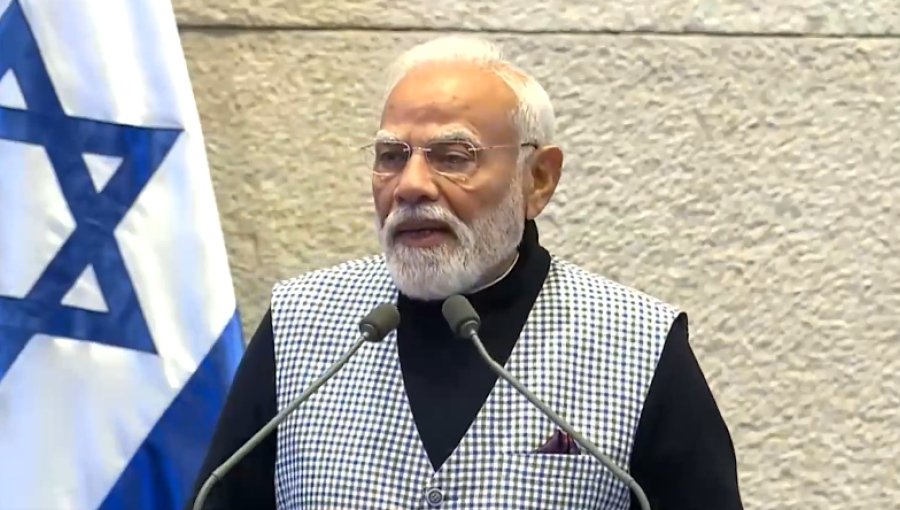
On the first day of his two day visit to Israel Indian Prime Minister Narendra Modi addressed the Israeli parliament, the Knesset in Jerusalem, according to a report by All India Radio.

During the address Modi condoled the loss of life and terrorism perpetrated by the terrorist group Hamas on October 7 2023 in Israel. He drew parallels to India’s own experience of being attacked by terrorists during the November 26 2008 attacks in Mumbai which led to the death of 160 people including civilians, law enforcement and security forces and armed forces personnel.

Some of the civilians killed during the Mumbai attack were also Jewish and Israeli nationals. India subsequently established that the Mumbai attacks were perpetrated by terrorist groups backed, funded and operationally overseen by Pakistan’s military and intelligence agencies.

Modi also revealed that his exact day of birth coincided with the day India officially recognised the state of Israel on September 17 1950.

According to a report by The Times of India, Modi was also honoured with the Speaker of the Knesset Medal and became its first awardee.

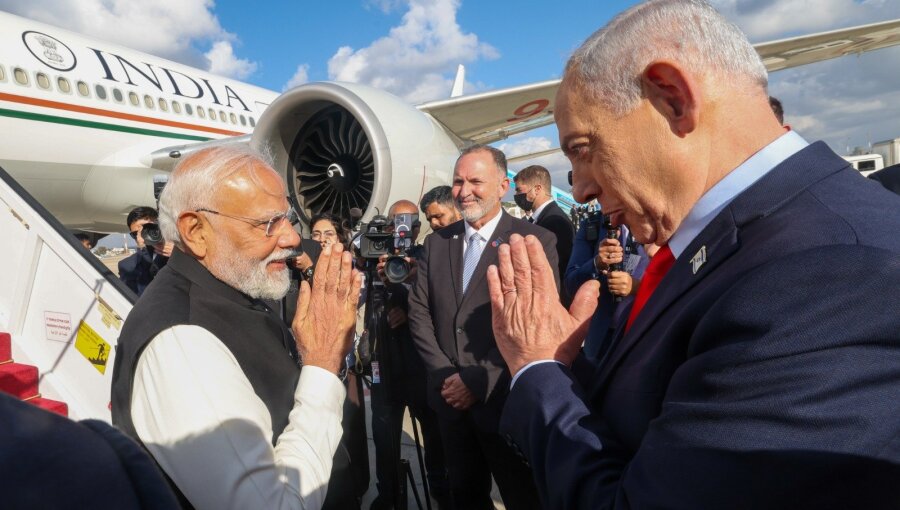
Preceding the address to the Israeli parliament the Indian leader was received at the airport by Israeli Prime Minister Benjamin Netanyahu and his spouse. Modi also had a meeting and conversation with Netanyahu and later visited a technology and innovation exhibition with him, with both Israeli and Indian products featured.

The visit to the exhibition included visuals of Modi and Netanyahu posing with a Royal Enfield Motorcycle - the product of a world recognised Indian motorcycle brand Eicher Motors (NSE: EICHERMOT).

While Modi has been in Israel, a delegation of Israeli officials is purportedly negotiating the specifics of a Free Trade Agreement with the Indian side in New Delhi, in parallel according to another report by All India Radio.

An agreement will be a headline maker when confirmed, and may sit beside a list of agreements and memoranda signed between Tel Aviv and New Delhi as Modi’s visit concludes. Defence is also a major pillar of the visit and diplomatic engagement that is underway between India and Israel.

While specific and confirmed cues are not forthcoming from either the Israeli defence establishment or its Indian counterpart. It is likely that India is seeking components for its future nationwide air defence shield dubbed the “Sudarshan Chakra” programme which is conceived to be a multi stage and multi layer system with several components of different origin, range and role.

Possible acquisitions could include jointly developed versions of air defence and precision strike weapons and platforms such as ballistic missile interception capable air defence systems IAI industries’s Arrow and Rafael Advanced Defense Systems’s David’s Sling and shorter ranged Elbit systems’s (TASE:ESLT, NASDAQ:ESLT) Iron Dome and Iron Beam.

Unmanned Aerial Vehicles(UAV)s may also be explored as Israel and IAI industries has been a traditional vendor to India’s military for UAVs which India has successfully used in combat operations. However none of these deals or likelihood of these systems being under discussion has been referred to by any official sources.

Be it coincidental or by design, India has also been negotiating an FTA with the Gulf Cooperation Council (GCC) which can be seen as a hedge strategy for the broader West Asia region in India’s complex foreign policy web.

India has always taken a neutral stance on the Arab-Israeli conflict and has advocated for a peaceful resolution of all conflicts in the region through dialogue and diplomacy as it has strategic ties to both Israel and Arab states that affect its own national interest directly across defence, food, mobility, diaspora and energy security.

India and Israel sign new pacts but FTA negotiations to continue

India and Israel sign new pacts but FTA negotiations to continue
/ Narendra Modi - PM of India - X
By bno Chennai Office February 26, 2026

Indian Prime Minister Narendra Modi ended the second and final of his state visit to Israel on February 26, 2026, according to a report by All India Radio.

During his visit a delegation of Israeli officials was in New Delhi negotiating a Free Trade Agreement (FTA) in parallel with their Indian counterparts headed by India’s Minister of Commerce and Industry Piyush Goyal.

The round of FTA negotiations were positive but didn’t conclude with the agreement as was widely expected, and instead a second round of negotiations has been scheduled for May 2026. It is unclear what issues or obstructions remain in concluding the agreement, or if the issues are regulatory or legislative that need to be resolved first before any preferential trade access to either side can be granted by the other.

According to the official website of the Indian prime minister, Modi delivered a joint statement to the press alongside Israeli Prime Minister Benjamin Netanyahu, continuing his comments on terrorism being unacceptable in any form, expressions and manifestations including cross border terrorism which was unequivocally supported by the Israeli side.

The summit’s official outcomes have been listed as 16 agreements across domains such as emerging technologies, cyber, agriculture, water management, health, entrepreneurship, mobility, defence and security. One of these agreements is an MoU between India’s NPCI International (NIPL) and Israel’s MASAV on implementation of India’s Unified Payments Interface (UPI) digital payments system in Israel.

Modi made a reference to being informed that the agreement will now lead the way in enabling UPI to be functional in Israel. The goal behind the agreement is to enable seamless remittances between Israeli and Indian nationals, companies and entities via an instant and well regulated digital mechanism.

UPI is a fully sovereign technology as part of India’s digital public infrastructure and doesn’t rely on any third party services like SWIFT. While SWIFT is the ubiquitous standard for cross border digital payments, the exclusion of Russian financial institutions from it after the 2022 invasion of Ukraine has established a precedent.

States with a high sense of sovereign fiscal patterns in international trade seek to develop or adopt alternatives which can’t be cut off depending on the political and alignment calculations of third parties at any time.

While defence agreements were also expected as the two countries have a burgeoning security relationship and shared cross border threats, nothing substantive on the procurement of new platforms or systems was announced during or in conjunction to the visit.


Cuba vows to defend sovereignty after deadly speedboat clash raises US tensions

Cuba vows to defend sovereignty after deadly speedboat clash raises US tensions
Deadly exchanges between Cuban security forces and vessels arriving from Florida are rare, though the Florida Straits have long been a corridor for people-smuggling and drug-running operations that have occasionally drawn gunfire.
By bnl editorial staff February 26, 2026

Cuba has vowed to counter any further armed incursions after its border guards shot dead four people and wounded six others aboard a Florida-registered speedboat whose occupants opened fire on a patrol vessel off the country's northern coastline, an episode that threatens to deepen the already strained relationship between Havana and Washington.

The confrontation took place on February 25 morning after a Cuban border guard patrol boat with five crew members on board moved to intercept the vessel, registered in Florida as FL7726SH, spotted approximately one nautical mile north-east of the El Pino channel near Villa Clara province. Cuba's interior ministry said the speedboat's occupants fired on the patrol boat as it approached, wounding its commander, and that Cuban forces responded in kind.

All ten people aboard were Cuban nationals resident in the United States, according to the ministry. The six survivors were wounded, detained and taken to Cuban medical facilities for treatment. Separately, a person dispatched from the US to participate in the operation was apprehended on Cuban territory, the ministry added.

Cuban President Miguel Díaz-Canel on February 26 said his country "does not attack or threaten" but declared that "Cuba will defend itself with determination and firmness against any terrorist or mercenary aggression that seeks to undermine its sovereignty and national stability." Foreign Minister Bruno Rodríguez said authorities were working to establish the full facts and described coastal defence as "an inescapable duty."

Following a search of the vessel, the ministry said authorities recovered an arsenal including automatic weapons, pistols, improvised explosive devices, body armour, optical scopes and military-style clothing. The government named seven of the ten passengers. Two of them, Amijail Sánchez González and Leordan Enrique Cruz Gómez, now face Cuban terrorism-related charges.

US Secretary of State Marco Rubio, himself a Cuban-American, said Washington played no part in the incident and called it "highly unusual, it's not something that happens every day." He said the administration was assembling its own account of events, including establishing whether those involved held US citizenship or permanent residency. Florida's attorney-general ordered a separate inquiry, while the US Attorney's Office for the Southern District of Florida said the facts remained "unclear and conflicting."

Moscow, a long-time ally of the communist regime, sided with Havana. Kremlin spokesman Dmitry Peskov said Cuban border guards "did what they had to do in that situation" and urged all parties to exercise restraint around the island. Russian foreign ministry spokeswoman Maria Zakharova went further, denouncing the incident as "an aggressive provocation by the United States" aimed at escalating tensions, a claim Washington has not addressed.

The clash lands at a moment of acute pressure on Cuba. Since January, Venezuelan oil deliveries, which had covered roughly half the island's energy needs, have been disrupted following the US military intervention that captured Nicolas Maduro. On January 29, the Trump administration issued a directive imposing duties on any nation supplying crude to the island, compounding a fuel crisis that has forced Havana to implement severe energy rationing.

The US Treasury Department moved on February 25 to permit limited Venezuelan oil sales to Cuba through private channels, though analysts said the measure fell well short of what the island, which relies on crude to generate over 80% of its electricity, required. According to AP, William LeoGrande, a Cuba specialist at American University in Washington, warned that the Trump administration might "use this incident as some kind of an excuse to come up with even more sanctions." He added, however, that if the Cuban government publicly displayed the seized weapons and allowed detainees to speak about their intentions, that "might put the issue to rest."

Deadly exchanges between Cuban security forces and vessels arriving from Florida are rare, though the Florida Straits have long been a corridor for people-smuggling and drug-running operations that have occasionally drawn gunfire. Cuba's foreign minister said the island had faced what he described as "numerous terrorist and aggressive infiltrations" from American territory since 1959, at great cost in lives and material damage, a lineage that stretches back to the CIA-backed Bay of Pigs invasion of 1961.


UK Greens trounce far right in key election as Labour fall to disastrous third place

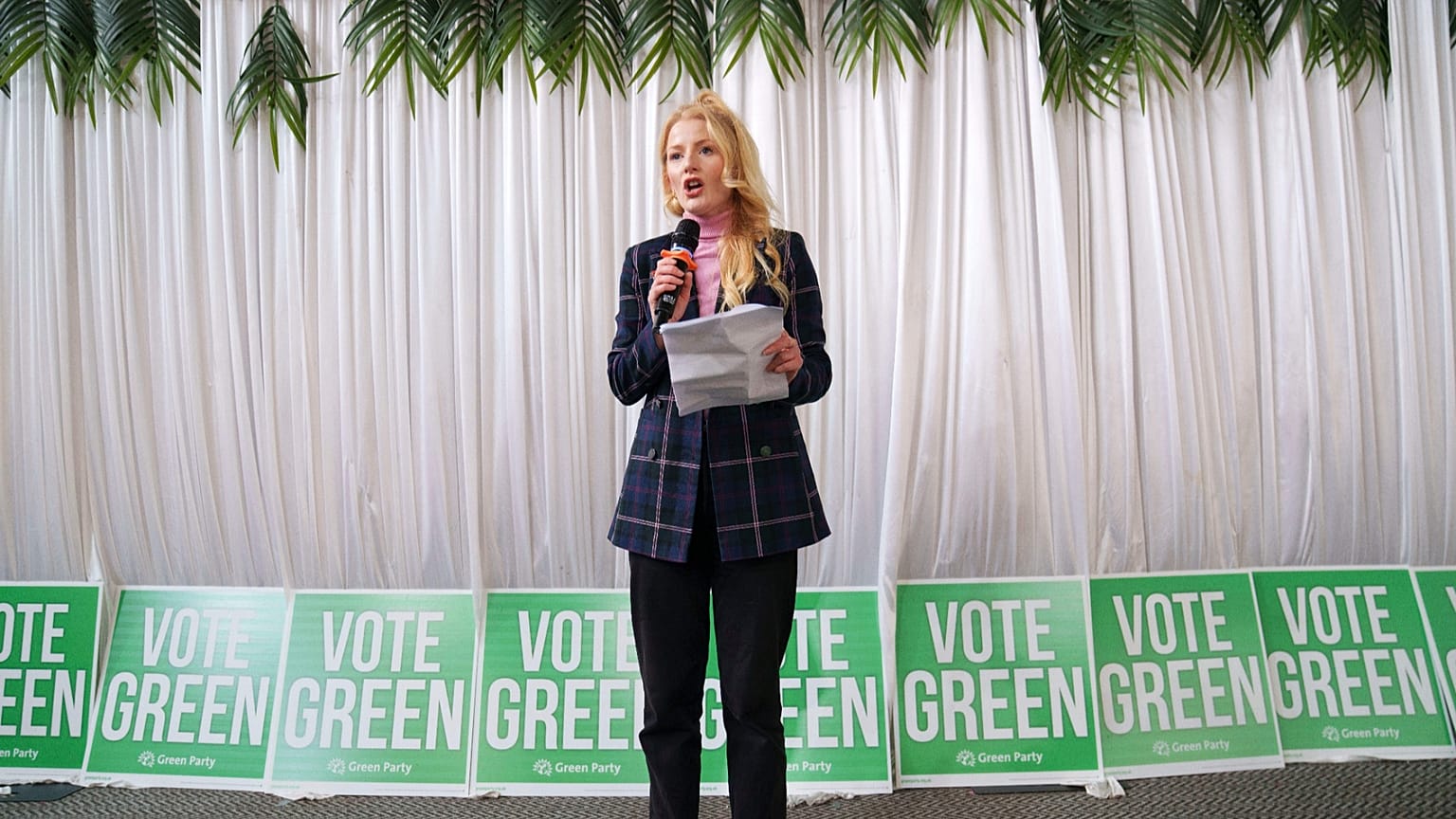
Green Party candidate for the Gorton and Denton by-election Hannah Spencer speaks in Manchester, England.
Copyright AP Photo

By Andrew Naughtie
Published on 

Two insurgent parties with a tiny number of MPs between them have shunted Britain's governing party into a humiliating defeat.

The Green Party of England and Wales has won a stunning victory in the most pivotal UK by-election in years, establishing itself as a major political force and beating Nigel Farage's far-right Reform UK into second place while the governing Labour Party suffered a humiliating defeat.

Held to fill the greater Manchester seat of Gorton and Denton, which was vacated by a Labour MP who resigned over racist and sexist WhatsApp messages about his party colleagues, the by-election pitted the UK’s strongest far-right and left-wing parties directly against each other.

In the final result, the Greens' Hannah Spencer won with 14,980 votes, beating Reform UK's Matt Goodwin on 10,578 and Labour's Angeliki Stogia on 9,364.

While they only have a combined 13 seats in the House of Commons, Reform and the Greens are increasingly dominating Britain’s political discourse, and Thursday’s result – coming off the back of the highest turnout in any by-election since 1983 – will fuel their overlapping claims that the traditionally dominant parties are in irreversible decline.

A new left rises

In her victory speech, Spencer stressed the economic difficulties faced by everyday people "working to fill the pockets of billionaires" and stressed the Greens' strong left-wing message of fairness for working-class people who have seen their neighbourhoods and life chances alike go into decline while working ever harder to maintain their standard of living.

"Everybody should get a nice life," she said. "And clearly I'm not the only person who thinks that."

Spencer also called out "politicians and divisive figures" who she said had scapegoated the area's large Muslim population and tried to turn white working-class locals against them.

"My Muslim neighbours are just like me: human," she said.

Having won four seats at the last general election, its best ever result, the Green Party has surged in the polls since choosing a new leader, Zack Polanski, last September.

Polanski was originally a member of the more centrist Liberal Democrats, but stormed out of the party in 2016 when he failed to make the shortlist of candidates to fight a pivotal by-election. Now an elected member of the London Assembly, he is highly popular on social media, where he projects himself as a cheerful and charismatic left-populist.

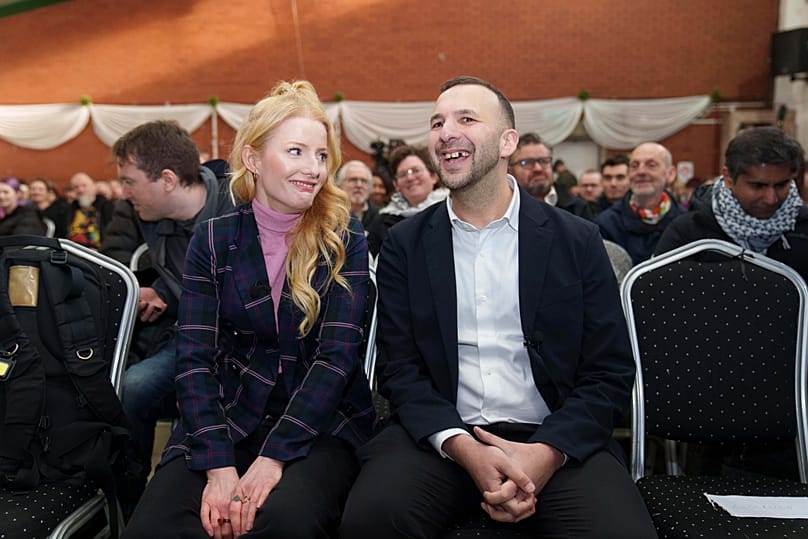
Green Party leader Zack Polanski, right, sits with the party candidate is the Gorton and Denton by-election Hannah Spencer AP Photo

While not departing from the Greens' baseline environmentalism, his most attention-grabbing proposals include withdrawing the UK from NATO, imposing higher taxes on the wealthy, and nationalising various utilities and services. He has also been a vociferous critic of Israel's war in Gaza.

The Greens’ meteoric polling surge under his leadership has eclipsed an attempted comeback by former Labour leader Jeremy Corbyn, whose attempt to form a new left-wing political force named Your Party has been dogged by financial and organisational chaos as well as a rift between him and co-founder Zarah Sultana – who, like Polanski, is highly popular with the online left.

Having quit the Labour Party in 2025 over the government's political direction and its stance on the war in Gaza, she now argues that the British government should "nationalise the entire economy". It is unclear when Your Party will begin contesting elections.

Extremists on the march

Despite only returning a handful of MPs at the last general election, Reform UK has consistently led nationwide opinion polls for some time, and achieved a wave of victories in local elections across England in May 2025. Pollsters estimate that the UK's first-past-the-post electoral system would have a high chance of forming a majority government were an election held tomorrow.

However, it has suffered from a number of disastrous candidate vetting failures and a steady flow of defections and resignations by both MPs and local councillors, many of whom have left the party after making outlandish or racist public statements.

The party’s ongoing effort to refute allegations of extremism meant it was something of a surprise when it decided to fight the Gorton and Denton contest with Goodwin, who has built a substantial personal following while espousing some of the most extreme views of any major party candidate in recent British political history.

Goodwin first came to public prominence in the 2010s as an academic studying the rise of right-wing populism, in particular Islamophobia. However, in the years following the UK's departure from the EU, he has morphed from a critic of right-wing movements and parties into an out-and-out advocate of far-right ideas.

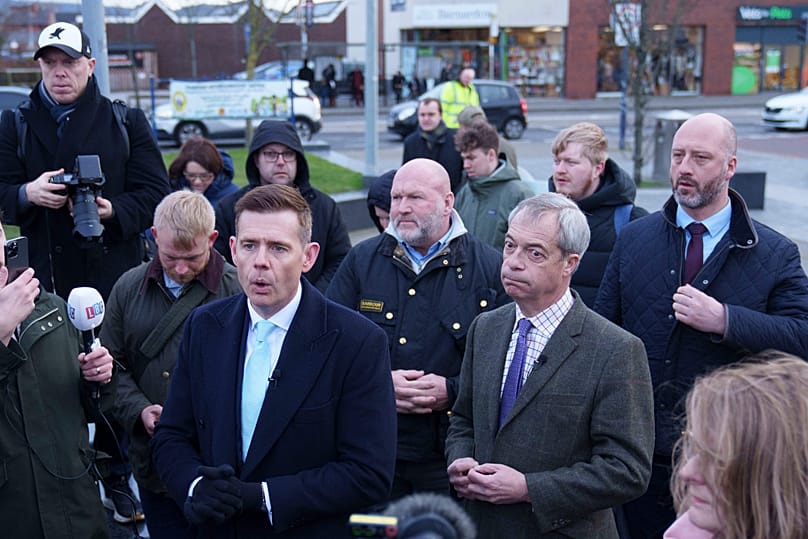
Reform UK's Matt Goodwin (centre) campaigns with party leader Nigel Farage. AP Photo

With tens of thousands of followers on social media and Substack as well as a show on right-wing TV channel GB News, Goodwin argues that immigration from non-European countries and cultures poses an existential threat to British and Western civilisation.

A leading proponent of the widely circulated right-wing claim that "London is over" thanks to rampant violent crime and the "displacement" of white British residents – claims easily proven untrue by abundant publicly available evidence – Goodwin has repeatedly advanced explicitly ethnonationalist conceptions of national identity.

In one particularly infamous interview last year, he opined that “Englishness is an ethnicity that is deeply rooted in a people that can trace their roots back over generations” and argued that British citizens with recent foreign heritage – among them former Conservative prime minister Rishi Sunak, who was born in Hampshire – cannot reasonably call themselves "English" in a true sense.

However, Goodwin himself and Reform are increasingly under pressure from even more extreme figures on the right, notably expelled Reform MP Rupert Lowe, whose recently founded party Restore claims to have 100,000 members and has attracted the backing of Elon Musk.

Lowe, who has promised to "remove millions of foreigners who shouldn’t be in our country, and chainsaw back the size of the state, vastly empowering the individual", has lately attacked Reform UK for his supposed moderation on “mass deportation” and racial difference in general.

In response, Goodwin – who among other things has promised to “slash welfare for non-Brits” – has responded to Restore supporters’ mockery by accusing them of providing a haven for “white supremacists, antisemites, racists and conspiracy theorists”.

Labour on life support

Meanwhile, the result in Gorton and Denton deals a heavy blow to the Labour government, in particular Prime Minister Keir Starmer, whom some pollsters judge to be the most unpopular prime minister in the history of modern British politics depending on what measure is used.

Having fallen well behind Reform in the polls – sinking to as low as fourth place in some surveys – the Starmer government has lately been rocked by the release of the so-called Epstein Files, which revealed that its chosen ambassador to Washington, Peter Mandelson, had not only continued a close friendship with convicted paedophile Jeffrey Epstein well after his first conviction but also passed him confidential information while serving as Business Secretary at the height of the 2009 global financial crisis.

The ensuing row forced the resignation of Starmer's chief of staff, and the prime minister was briefly expected to face an immediate leadership challenge. But the Gorton and Denton vote will be followed in May by simultaneous elections for the Scottish Parliament, Welsh Senedd and many English local governments, all of which are expected to be disastrous for the Labour Party.

With the exception of Manchester Mayor Andy Burnham, whose attempt to stand in Gorton and Denton was blocked by the Labour Party’s National Executive Committee, no candidate has so far emerged to directly challenge Starmer before the government has those elections behind it.


Pakistan declares 'open war' with Afghanistan and launches strikes on Kabul

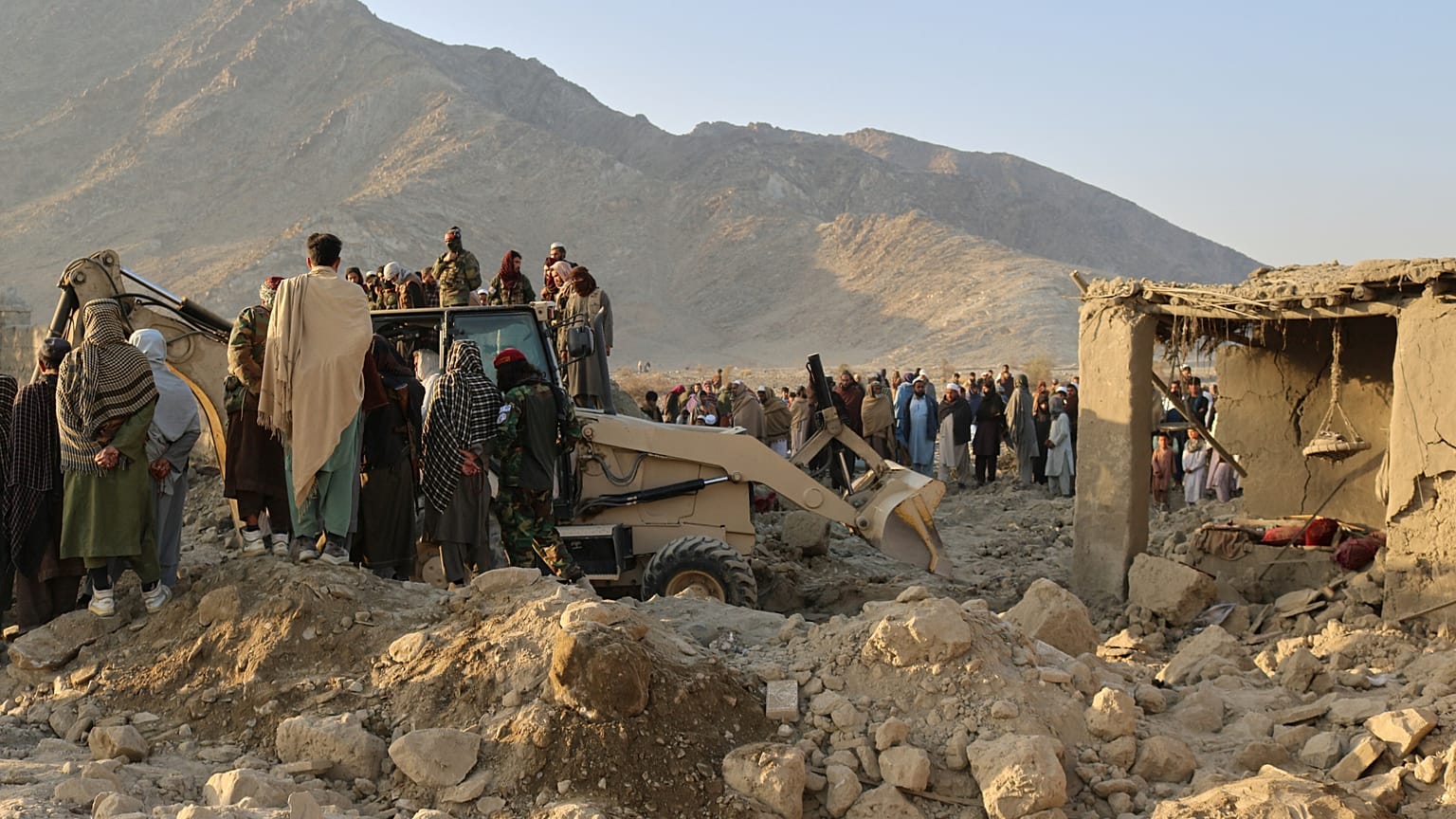
Local residents and civil defense workers look on as a bulldozer clears the rubble of a house hit by a cross-border Pakistani army strike, Afghanistan, Sunday, Feb. 22, 2026.
Copyright AP Photo/Hedayat Shah

By Emma De Ruiter
Published on 

Pakistan's latest operation came after Afghan Taliban forces attacked Pakistani border troops on Thursday night over earlier air strikes by Islamabad, and follows months of border clashes.

Pakistan launched strikes on major cities in Afghanistan on Friday, including the capital Kabul, as its defence minister said his country ran out of “patience” and considers that there is now an “open war”.

It comes after Afghan Taliban forces attacked Pakistani border troops on Thursday night in retaliation for deadly Pakistani airstrikes on Afghan border areas on Sunday.

In a post on X Friday, Defence Minister Khawaja Mohammad Asif said Pakistan had hoped for peace in Afghanistan after the withdrawal of NATO forces and expected the Taliban to focus on the welfare of the Afghan people and regional stability.

Instead, he said, the Taliban had turned Afghanistan “into a colony of India,” gathered militants from around the world and begun “exporting terrorism.”

Pakistan has frequently accused neighbouring India of backing the outlawed Baloch Liberation Army and the Pakistani Taliban, allegations New Delhi denies.

Relations between the neighbours have plunged in recent months, with land border crossings largely shut since deadly fighting in October that killed more than 70 people on both sides.

Islamabad accuses Afghanistan of failing to act against militant groups that carry out attacks in Pakistan, which the Taliban government denies.

Several rounds of negotiations followed an initial ceasefire brokered by Qatar and Turkey, but the efforts have failed to produce a lasting agreement.

Both militaries said they killed dozens of soldiers in the latest round of border violence, which followed multiple Pakistani strikes on Afghanistan and clashes along the frontier in recent months.

Months of border violence

There has been a series of deadly suicide blasts in Pakistan and Afghanistan in recent months.

They included an attack on a Shiite mosque in Islamabad that killed at least 40 people and was claimed by the so-called Islamic State terrorist group.

The group's regional chapter, Islamic State-Khorasan, also claimed a deadly suicide bombing at a restaurant in Kabul last month.

After repeated breaches of the initial ceasefire, Saudi Arabia intervened this month, mediating the release of three Pakistani soldiers captured by Afghanistan in October.

Pakistan launched a sweeping crackdown in October 2023 to expel migrants without documents, urging those in the country to leave of their own accord to avoid arrest and forcible deportation, and forcibly expelling others. Iran also began a crackdown on migrants at around the same time.

Since then, millions have streamed across the border into Afghanistan, including people who were born in Pakistan decades ago and had built lives and created businesses there.

Last year alone, 2.9 million people returned to Afghanistan, the UN refugee agency has said, with nearly 80,000 having returned so far this year.