Friday, February 27, 2026

Euroviews. Democratising investment: unlocking Europe’s dormant capital


Copyright AP Photo

By Beatrice Dumurgier, CEO Western Europe, Revolut
Published on 27/02/2026 - 
The opinions expressed in this article are those of the author and do not represent in any way the editorial position of Euronews.


Instead of European savings flowing abroad, they could support European projects and innovations. The investment capacity and the technology are there. What remains is the political will to make Europe’s capital market truly single, says Beatrice Dumurgier, CEO Western Europe at Revolut.

In the midst of geopolitical tensions and economic uncertainty, Europe faces a paradox that is as frustrating as it is hopeful. On one hand, we speak constantly about the financing gap needed to fund our green and digital transitions and to strengthen our defence capabilities. We compare ourselves to the depth of US capital markets and wonder how we can compete without relying on foreign investors.


Europe is sitting on a goldmine


On the other hand, Europe is sitting on a goldmine. European households hold an estimated €33 trillion in financial assets. Yet while US households keep roughly 13% of their wealth in cash, Europeans leave nearly 34% sitting in deposits. While these deposits are crucial for bank lending, mortgages, and financing the economy under regulatory oversight, much of this capital does not flow directly into European capital markets. The Savings and Investment Union (SIU) is designed to change that, allowing citizens to invest more directly in businesses and innovation.

RelatedThe silent wealth drain hitting European savers: Is your money at risk?

It is an EU initiative to create a truly single market for investment, so that money can move across Member States as easily as goods and people; by harmonising capital markets rules, simplifying cross-border investment, and making it easier for citizens to invest in European companies regardless of where they live. This approach would allow Europe to mobilise its savings more directly for innovation, growth, and strategic priorities.

European households hold an estimated €33 trillion in financial assets (symbolic photo) Pixabay/Free License

The cost of fragmentation

Europe needs an estimated €620 billion annually to finance its green and digital transitions, yet much of this capital sits in low-yield savings accounts.

While these accounts play an important role in funding bank lending, there is potential for this money to be channelled more directly into investments across Europe. However, cross-border investment remains difficult in practice. Consider a simple example: an Italian citizen who wants to invest in a Dutch or Finnish company faces different tax reporting rules, withholding tax procedures, and investor protection frameworks. For financial institutions, operating across borders means navigating 27 variations of consumer protection and tax systems. Withholding tax reclaim processes can take months, and disclosure requirements differ even when the financial product is identical. These barriers discourage both providers and citizens from engaging in cross-border investment.

While goods and people move freely across the EU, capital still encounters friction. Every euro blocked by these barriers reduces Europe’s ability to finance its own priorities: from energy grids to defence to scaling technology companies.

From savers to investors


Europe is undeniably a continent of savers. Household saving rates are nearly triple those of the United States. We naturally prioritise the stability of bank deposits. That caution has value. But in a context of demographic ageing and pension gaps, relying overwhelmingly on savings accounts can erode purchasing power over time. Today, a typical household may keep €10,000 in a current or savings account earning minimal interest.


European households prefer bank deposits even though diversified long-term investments generate higher returns. (symbolic photo) Pixabay/Free License

Over 20 years, inflation alone can significantly reduce its real value. By contrast, diversified long-term investments have historically generated higher returns - with appropriate risk and time horizons. The challenge is not to encourage speculation, but to democratise access to investment tools that were once complex, expensive, or reserved for institutional investors. As highlighted by leaders such as Mario Draghi and Enrico Letta, Europe cannot scale without innovation.

Citizens cannot become investors if the system remains opaque, costly, and paper-based. In many Member States, opening an investment account still involves lengthy forms, fragmented tax documentation, and high entry thresholds. Fees are often unclear, and cross-border investing can feel intimidating.

The technological bridge


Good news is, digital banks are making it easier than ever for Europeans to put their savings to work through investing. Accounts can be opened in minutes using secure digital identity verification. Fees are transparent and significantly lower than traditional models. New products, such as money market funds offering daily visible returns, give savers a bridge between saving accounts and long-term investment.

Customers can start with smaller amounts, experiment, and build confidence before committing larger sums, supporting better financial literacy and informed decision-making. Automated tax and compliance reporting further reduces friction, making cross-border investing safer and easier. By contrast, traditional banks often require higher minimum investments, limiting accessibility.

A Portuguese user should be able to move part of their savings into a diversified European ETF as easily as sending a payment, without navigating multiple national systems. Technology makes cross-border investment simple, fast, and cost-effective, while regulatory alignment ensures it is safe and consistent.

Fintechs to open borders

The future bank is not merely a place to store money. It is a gateway that enables citizens to allocate savings efficiently, diversify responsibly, and participate in Europe’s economic growth. By integrating education, simplified products, low fees, and automated tools, digital banks and fintechs make investing accessible to everyone, not just high-net-worth individuals.

The bank of the future is a gateway that enables citizens to participate in Europe’s economic growth. (symbolic photo) Photo by Austin Distel on Unsplash

When financial products are transparent, affordable, and integrated into platforms people already use for everyday payments, barriers to participation fall dramatically. According to the 2023 Eurobarometer, only 18% of EU citizens demonstrate high financial literacy - embedding education directly into digital tools can change that. If the EU delivers on its simplification agenda and completes the SIU, fintechs and digital banks can scale this impact exponentially.

Instead of European savings flowing disproportionately into non-European markets, they could more easily support European energy projects, defence innovation, and home-grown technology champions. The investment capacity is here. The technology is ready. Citizens are willing to engage when given simple, safe tools. What remains is the political determination to remove remaining barriers and make Europe’s capital market truly single.

SEXOLOGY

European Commission says EU funds can be used for cross-border abortion access


By Evelyn Ann-Marie Dom & Vincenzo Genovese
Published on 

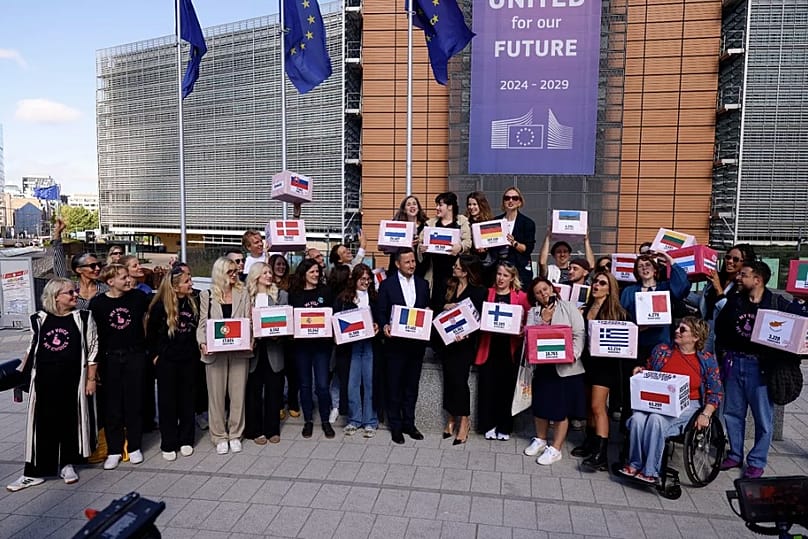
The decision comes in reaction to a campaign launched by the citizens' initiative "My Voice, My Choice", which raised 1,124,513 signatures across all 27 EU member states asking for improved access to safe abortions in Europe.

The European Commission said on Thursday that member states can use an EU social fund to provide access to safe and legal abortion for women who are barred from doing so in their home country.

The decision came in response to calls by the citizens' initiative "My Voice, My Choice" for the creation of an EU solidarity mechanism to guarantee safe and affordable access to abortion for all women.

Member states can make use of the bloc's existing European Social Fund Plus (ESF+), which contributes to social, education, employment and healthcare policies, voluntarily and in accordance with their domestic laws to provide such support.

The existing fund will "support women who need to travel, support women in their own country, support women in remote areas, and support women without financial means," EU Commissioner for Equality Hadja Lahbib said on Thursday.

The ESF+ has a €142.7 billion budget for the period 2021–2027, with funding allocated to countries determined by their population size.

However, the Commission stopped short of establishing a new funding mechanism, which was requested by the European Parliament in a non-binding resolution adopted in December.

"While no new legal instrument is being created, the Commission has formally acknowledged that the core objectives of our initiative can be achieved and outlined a concrete pathway to implement it in practice," coordinator of the "My Voice, My Choice" initiative Nika Kovač said in a statement.

The role of citizens' participation

"My Voice, My Choice" is a European Citizens' Initiative (ECI), a mechanism that allows citizens to call on the European Commission to propose new legislation.

If an initiative gets the support of at least one million people across at least seven EU countries, it must be discussed by the European Parliament, while the European Commission has a timeframe to either set out legislative measures or provide justification for not doing so.

"My Voice, My Choice" signatories in front of the European Commission in Brussels, Belgium. September, 2025. Črt Piksi

"My Voice, My Choice" raised 1,124,513 signatures across all 27 countries. As a result, the European Parliament approved a non-binding resolution asking to establish a financing mechanism to help women with no acess to safe abortions in their home country.

The proposal was backed by over 100 European Members of Parliament, who sent a letter to the Commission’s President Ursula von der Leyen, increasing pressure on the institution ahead of its decision.

“When 1.2 million citizens raise their voices, when the European Parliament sends a clear democratic signal, and when civil society mobilises across the borders, the European Commission cannot look away," Kovač said at a press conference following the decision on Thursday.

In addition to attracting a large number of signatures, the initiative also sparked significant attention online.

"A strong online presence was really one of the crucial tools to this campaign, from collecting the signatures to applying pressure," communications director for the campaign Nika Povz said. "Our online community was our strongest ally and our biggest weapon."

Some EU countries have highly restrictive laws on abortion rights. A total ban is in force in Malta, where abortion is not allowed under any circumstances, while in Poland it is permitted only when conception follows sexual violence or when there is a risk to the woman’s health.

In January 2021, the Polish Constitutional Tribunal banned abortions in cases of fetal malformation, which until then had been the most frequent reason for terminating pregnancies in the country.

Other countries have more relaxed laws, but they lack legal protections that fully decriminalise abortion, wide service availability, national health coverage, or government-led information on the matter.

According to the European Abortion Policies Atlas 2025, several EU countries have taken steps to guarantee the right to safe abortions. France, for instance, made it a constitutional right, while Luxembourg and the Netherlands have removed mandatory waiting periods.

But other member states have recorded new restrictions, increased harassment of abortion providers, and the spread of disinformation on the topic.


Vasectomies on the rise in Poland as fertility rate hits record low

It is estimated that five thousand procedures are performed annually in Poland.
Copyright Wazektomia.com

By Aleksandra Galka Reczko
Published on 

In Poland, vasectomy is becoming an increasingly popular method of permanent contraception among men. In contrast, female tubal ligation is illegal on request.

Poland's population could more than double by 2100, according to figures from the United Nations.

The youngest adults are even called the "end-of-the-world generation" or the "climate catastrophe generation".

The State of the Young 2025 report indicates that 15 percent of those born between 1995 and 2006 have no children and do not intend to have any.

Permanent forms of contraception, such as vasectomy among men, are gaining in popularity. However, it is only men because tubal ligation, a similar procedure for women, is prohibited in Poland.

Five thousand vasectomies a year

There is a lack of precise statistics from the National Health Fund, as most vasectomies in Poland are performed privately.

Meanwhile, it is estimated that around five thousand are carried out annually.They are commercialised, and their advertisements can be found online and on roadside billboards.

Mateusz Siwik, owner of one of the Warsaw vasectomy clinics, told Euronews Health that the procedures are noticeably gaining popularity.

"In recent years, we have seen a systematic increase in interest in vasectomy. The year-on-year dynamic is around 15 percent," he said.

In his opinion, the increase in interest is a gradual process and is mainly due to "the greater availability of information and the breaking down of social stereotypes."

According to Siwik's observation, the patient population is socially diverse.

"They are mostly men in stable relationships, with two or more children, who have consciously made the decision to end family enlargement," he assessed.

A very masculine decision

Just such an example is Kamil Pawelski, a psychologist and influencer on the subject of masculinity, who underwent the procedure in 2020, two years after the birth of his second child.

"It was a decision driven by the fact that I knew I didn't want my wife to have hormone therapy because we were aware that it didn't affect her functioning well, her health. At the same time, we were also aware that we did not want to have any more children," he says.

As a blogger who emphasises masculinity and responsibility, Pawelski is a popular figure in Poland, but when he publicly announced the procedure, he did not receive the support he expected.

"Paradoxically, the biggest hate came to me from the men's side. I got very much support from women instead," he said.

"I think this is a very masculine decision. Although, of course, I wouldn't recommend this procedure to people who are considering having children in the future."

Medical tourism

Unlike vasectomy, tubal ligation on request is prohibited in Poland.

The procedure is regulated by Article 156-1 of the Penal Code, which states that whoever causes grievous bodily harm, including permanent inability to conceive, is liable to imprisonment from 3 to 20 years.

"In most Western European countries, the procedure of tying up the fallopian tubes is legal. More often than not, gynaecologists from abroad are surprised that in our country this is the law, that the possibility of performing this procedure is so limited and only allowed for medical reasons," says Rafał Zadykowicz, a specialist in obstetrics and gynaecology.

He also has an extensive practice abroad. In an interview with Euronews, he explains that in other countries, the law is less restrictive in this regard.

The limited access to the procedure has led to the development of so-called medical tourism, especially to neighbouring countries such as Germany, Czechia, and Slovakia, where clinics offer packages in Polish, including transport and accommodation.

"As Polish patients know, they are educated, they no longer ask for it. They simply turn to the relevant institutions or go abroad," said Zadykowicz.

French men are open to the idea, Italians, not so much

Both methods of sterilisation are legal in Western Europe.

Although statistics show that vasectomy is increasingly the preferred method among couples, as it is considered simpler and less invasive than tubal ligation.

In France, the number of vasectomies has increased from 1,940 in 2010 to more than 30,000 in 2022, especially among men under 40. In other countries, such as Spain and Austria, interest is also slowly growing. Meanwhile, Italy remains low, around 1 percent of men in their reproductive ages.

According to The Lancet, vasectomy is widely used in North America at around 12 per cent, and 11 percent in Oceania and Northern Europe. In Canada, it is the most popular method, with 22 percent of women relying on their partner's vasectomy. High rates are also recorded in the UK, New Zealand, and South Korea, with 17-21 percent. In developing countries, the marginal rate is at least 0.7 percent.

There are no such figures for Poland.

Poland with third place from the end

The discussion on access to sterilisation is combined with the one on alarmingly low fertility rates.

Poland struggles with one of the lowest fertility rates in the world. According to the Central Statistical Office, by 2025, the population will have fallen to 37.3 million, and the number of children and adolescents will have decreased by another 140,000.

The fertility rate (TFR) in 2024 reached a record low, around 1.10-1.16 children per woman according to various CSO/Eurostat sources, with an estimated 1.10 in 2025.

In 2024, Poland ranked third from last among OECD countries in terms of fertility, ahead of only Chile and South Korea.

In the European Union, the average TFR in 2023 was 1.38 children per woman, with the highest in Bulgaria at 1.81 and the lowest in Malta at 1.06. The downward trend has continued for years, with short bounces, for example, a rate of 1.53 was recorded in 2021 during the pandemic. After that, however, it declined again.

In Poland, there is now a heated debate over how to reverse the dramatic decline in fertility rates. A social policy programme offering tax-free financial support for children has been in place since 2016.

However, it does not address one of the key questions: why do people who could have children ultimately decide not to?


Men’s sperm move more quickly in summer than in winter, research shows

Men’s sperm move more quickly in summer than winter, research shows
Copyright Canva

By Roselyne Min
Published on 

The findings could matter for couples trying to conceive and for fertility clinics interpreting test results.

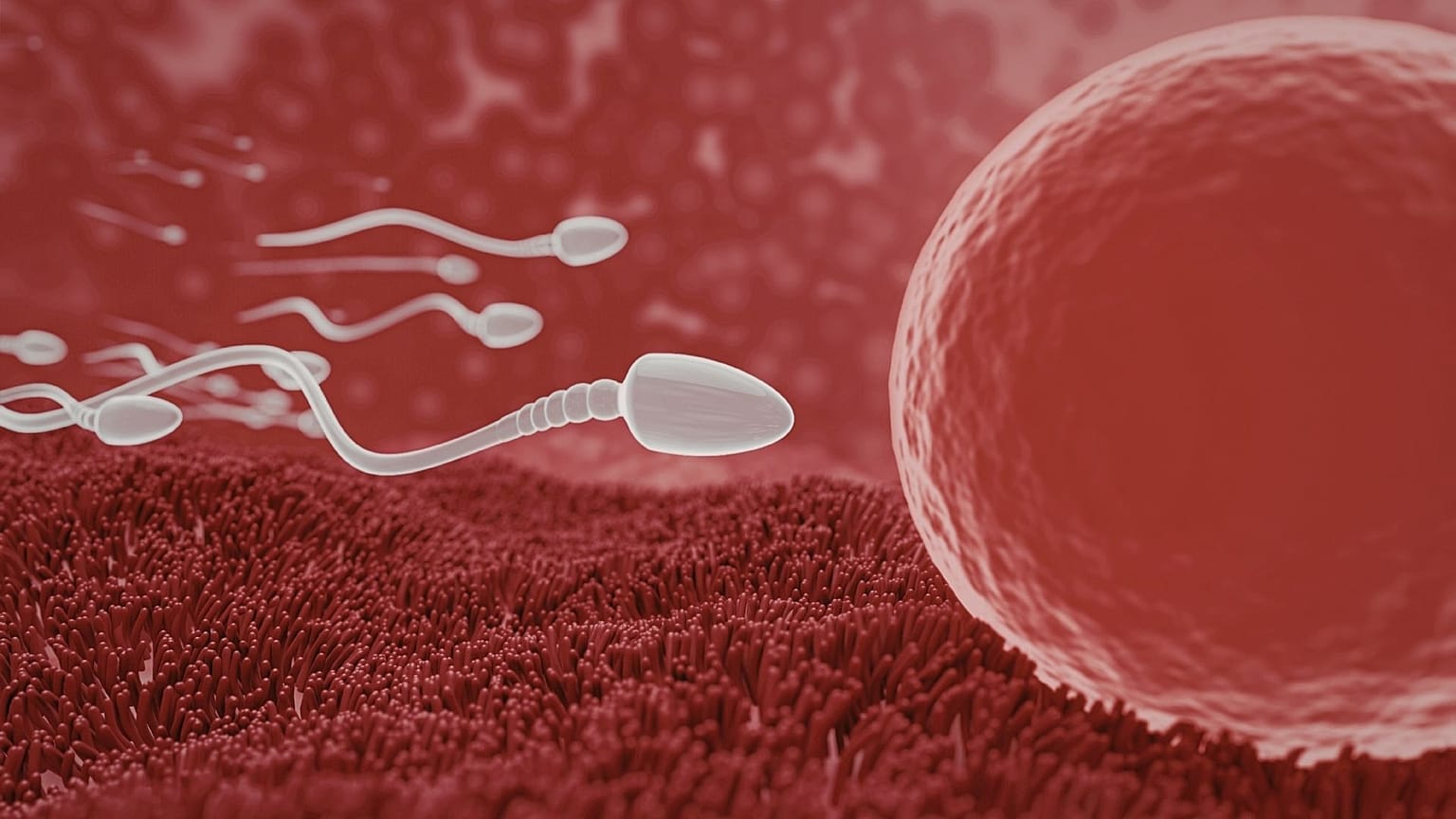
Men’s sperm move more quickly in summer than in winter, according to a large new study analysing more than 15,000 semen samples.

Researchers in Denmark, the United Kingdom, and Canada analysed semen samples from donors in Denmark and the United States.

They found clear seasonal changes in semen quality, measured by the concentration and number of progressively motile sperm, the sperm that swim forward effectively and are most likely to fertilise an egg.

The concentration of the fastest-moving sperm rose through spring, peaked in early summer and then fell to its lowest levels in mid-winter.

The findings could matter for couples trying to conceive and for fertility clinics interpreting test results. A semen analysis taken in summer may look different from one taken in winter.

However, the differences do not mean men are fertile only in summer or infertile in winter.

Overall, sperm production did not change across the year.

The total number of sperm and the volume of semen remained stable in all seasons. What varied was how well the sperm moved.

The total number of sperm and the volume of semen did not change with the seasons. That suggests that sperm production itself remains stable throughout the year.

Instead, what appears to vary is how well sperm move.

Scientists have long known that sperm development is sensitive to temperature.

However, previous studies have often suggested that sperm perform best in colder months, but results have been mixed and many involved smaller groups of men.

By analysing a large number of samples from two countries with very different climates, the new research suggests the seasonal pattern may be more consistent than previously thought.

The study was observational, meaning it shows a pattern but cannot explain exactly why it happens.


‘Rest in Power, Power’: Wu-Tang Clan co-founder Oliver ‘Power’ Grant dies aged 52

‘Rest in Power, Power’: Wu-Tang Clan co-founder Oliver ‘Power’ Grant dies aged 52
Copyright Instagram screenshots

By David Mouriquand
Published on 

While not a performing member of the group, Grant was one of the founding members of Wu-Tang Clan and executive produced the group’s early recordings – including their seminal debut album, 1993’s ‘Enter The Wu-Tang (36 Chambers)’.

Wu-Tang Clan founding member Oliver ‘Power’ Grant has died aged 52

The producer, actor and fashion mogul’s death was confirmed on Wu-Tang Clan’s official social media channels last night.

"Rest in Power, Power," the American hip-hop collective posted online.

A cause of death has not yet been disclosed.


Born in 1973 in Jamaica and raised in New York’s Staten Island, Grant grew up in the Park Hill Projects, where he met the future members of Wu-Tang Clan - RZA, Ghostface Killah, Method Man, Raekwon, Inspectah Deck, U-God, Masta Killa, and Cappadonna. They gave him the nickname “Power” over a game of chess.

While not a performing member of the group, Grant raised funds for Wu-Tang Clan and executive produced the group’s early recordings – including their seminal debut album, 1993’s ‘Enter The Wu-Tang (36 Chambers)’, which is widely considered as one of the greatest hip-hop albums of all time. He also oversaw their successful fashion line, Wu Wear, which launched in 1995 and was renamed Wu-Tang Brand in 2008.

Wu-Tang Clan members have posted tributes to their fallen brother.

Method Man posted a tribute, stating: “Paradise my brother safe travels! I am not OK.” GZA wrote: “We couldn’t have done it without him. Wu wouldn’t have come to fruition without Power. His passing is a profound loss to us all. My deepest condolences to the fam.”

Raekwon said: “POWER we been everywhere …. now you everywhere ! The most high is merciful love you.”

Ghostface Killah shared a series of broken-heart emojis with a “Power” logo with a halo.

The news of Grant’s death follows the announcement that Wu-Tang Clan have been nominated for the Rock & Roll Hall Of Fame 2026.

Ryanair and Wizz Air named worst airlines by passengers over ‘confusing’ add-on costs

BA and Ryanair have been named and shamed as the worst airlines.
Copyright Steve Lynes & Alan Wilson via Flickr


By Rebecca Ann Hughes
Updated 

Commenting on the worst-ranking airlines, Which? Travel editor Rory Boland advised passengers to "fly with anyone else, if you can".

Ryanair has finished bottom of an annual ranking of airline customer satisfaction by UK consumer champion Which?.

The group said it comes “as the penny drops for passengers that add-on fees mean budget carriers are no longer always the cheapest option”.

In the survey of more than 5,500 travellers, Jet2 topped the table in the short-haul category, while Singapore Airlines was top for long-haul.

Ryanair and Wizz Air named worst airlines

Ryanair was the worst-performing short-haul airline in the ranking with a score of 55%. The budget carrier scored two stars for its booking process, boarding, customer service and cabin environment and just one star for seat comfort.

One customer commented that “the plane is dirty and the seats are awful”.

Ryanair scored three stars for value for money, fewer than four other short-haul carriers – Jet2, Lufthansa, TUI and Aer Lingus.

“It is billed as a budget airline but they make money from extras which far outweigh price savings on other flight companies,” one survey participant said. Over a third of Ryanair's customers said something went wrong with their journey.

In the consumer champion’s survey, Wizz Air also finished near the bottom (59%).

The airline scored two stars in the majority of categories and three stars for value for money, with one respondent saying Wizz Air was “consistently terrible and overpriced”.

Travellers also complained about poor customer service and a lack of communication around delays.

easyJet scored 67% overall and three stars for its booking process. The budget airline’s punctuality has improved over the last two years, and it has cancelled fewer flights.

However, it received just two stars for customer service, seat comfort and cabin environment. The airline, like Ryanair, received three stars for value for money.

Turkish Airlines (66%), Loganair (65%) and Vueling Airlines (63%) were also at the wrong end of the short-haul table.

Budget airlines lose out over add-on costs

Which? says it has repeatedly found that the headline cost of flights from low-cost airlines can shoot up once cabin bags are added. These prices are often not displayed until towards the end of an exhaustive booking process, making calculating the full cost time-consuming and confusing.

Last month, the Advertising Standards Authority (ASA) made a ruling against easyJet as a result of a recent investigation into cabin bag pricing by Which?.

Even after checking hundreds of prices, the group was unable to find any flights where the bags could be taken on for anything close to the £5.99 (€6.90) claimed.

“Many other passengers fly with them because of the enticingly low headline fares,” says Rory Boland, editor of Which? Travel. “But ridiculously expensive charges for baggage and other add-ons mean they are no longer guaranteed to be the cheapest option.

“We’ve repeatedly found that airlines that include baggage and seat allocation in their fares can actually work out cheaper overall. Fly with anyone else, if you can.”

In response, a spokesperson for easyJet said: “We allow customers to pay for only what they want and no more, which enables us to keep fares low for everyone. With around 40% of our customers choosing to travel with just the fare and our customer satisfaction scores at a 10-year high, it’s clear that customers continue to value this choice and our service.”

A spokesperson from Wizz Air noted: “Which?’s survey relies on a tiny sample size. It surveyed 259 people, which is only 0.002% of the 12 million passengers carried on our UK flights in 2025.”

The company added that from October 2024 to December 2025, customer satisfaction rose by eight percentage points.

“At the same time, our flight completion rate in the UK was 99.7% – consistently among the best in the industry – while our on-time performance increased by 14% year-on-year.”

Jet2 tops ranking for short-haul travel

At the top of the ranking came Jet2 (76%), which proved to be the big winner for reliability.

Jet2 cancelled far fewer flights at the last minute than most of its rivals and clinched four stars for its booking process, customer service and value for money. One customer praised the generous luggage allowance compared with other budget airlines.

More than three-quarters of passengers said that there were no problems with their flight – compared with 63% for Ryanair.

Emirates excelled with its smooth booking process, seat comfort, food and value for money. Emirates

Other strong performers were Lufthansa (73%), Norwegian (73%), British Airways (72%), KLM (72%), TUI (72%), Aer Lingus (71%) and Air France (69%).

British Airways scored 72% in both the short-haul and long-haul categories. BA scored four stars for customer service and has also seen a big improvement in punctuality, with 74% of flights departing on time, up from 65% in the equivalent period last year, according to data from the Civil Aviation Authority (CAA).

Singapore Airlines and Emirates top long-haul ranking

For long-haul, Singapore Airlines received the highest customer score of 81%. The airline earned five stars for its cabin environment and customer service.

It was one of only two airlines to receive five stars for customer service. One customer said: “Cabin staff were very kind and accommodating. Food was excellent and the whole cabin environment was comfortable.”

The airline missed out on a Which? ‘Recommended Provider’ endorsement because of its no-show clause, meaning if you miss your outbound flight the airline will cancel your return ticket, or charge you extra to amend your trip.

Other top performers were Emirates (80%), Virgin Atlantic (79%), Qatar Airways (78%), Air Canada (77%), KLM (75%) and Etihad Airways (74%).

Emirates excelled with its smooth booking process, seat comfort, food and value for money. Customers raved about the customer service. One said: “It felt like I was flying first class, even though I booked economy.”

Virgin Atlantic was praised for its staff and cabin atmosphere, outperforming transatlantic rivals like Delta and United. The airline also received five stars for customer service.

In contrast, Aer Lingus received the lowest score for long-haul travel (65%). The airline scored just two stars for seat comfort and cabin environment – crucial categories for longer flights. It did, however, manage three stars for value for money, customer service, booking process, boarding process, and food and drink.

US airlines were also among the weaker performers, with Delta (70%), American Airlines (69%) and United Airlines (68%) all near the bottom of the table.