'Disgusting and evil.' Trump faces MAGA backlash on Iran.
Zac Anderson, USA TODAY
Sun, March 1, 2026 at 4:41 PM MST
After unleashing operation "Epic Fury" in Iran, President Donald Trump is facing MAGA skepticism at home as the military campaign threatens to strain his political coalition heading into the midterm election.
Trump campaigned as a staunch critic of U.S. wars in the Middle East, and his aggressive foreign policy moves since returning to office have sparked backlash within the MAGA movement, including accusations he has betrayed those who subscribed to his anti-interventionist, “America First” pledges.
Polling indicates many Republicans are wary of military involvement in Iran, presenting a challenge as the president works to keep them motivated in a crucial election year. That skepticism has been aired publicly by prominent voices on the right since the U.S. and Israel launched a military campaign targeting Iran’s leadership, missile sites and nuclear program.
More: Do Americans support Iran strikes? Here's what new poll says

U.S. Vice President JD Vance speaks to Cabinet Secretaries during military operations in Iran, in the Situation Room at the White House in Washington, D.C., U.S. February 28, 2026. The United States launched military strikes and "major combat operations" against Iran on Saturday, President Donald Trump said, targeting the country's missile capabilities.
Supreme Leader Ayatollah Ali Khamenei was killed in the joint strikes with Israel on Iran, an Israeli source confirmed to USA TODAY.
This image was provided by The White House.

U.S. President Donald Trump speaks with CIA Director John Ratcliffe, accompanied by White House Chief of Staff Susie Wiles and Secretary of State Marco Rubio, during military operations in Iran, at Trump's Mar-a-Lago resort in Palm Beach, Florida, U.S. February 28, 2026. This image was provided by The White House.

A satellite image shows black smoke rising and heavy damage at Iranian Supreme Leader Ayatollah Ali Khamenei's compound, following strikes by the United States and Israel against Iran, in Tehran, Iran February 28, 2026.
U.S. Vice President JD Vance speaks to Cabinet Secretaries during military operations in Iran, in the Situation Room at the White House in Washington, D.C., U.S. February 28, 2026. The United States launched military strikes and "major combat operations" against Iran on Saturday, President Donald Trump said, targeting the country's missile capabilities.
Supreme Leader Ayatollah Ali Khamenei was killed in the joint strikes with Israel on Iran, an Israeli source confirmed to USA TODAY.
This image was provided by The White House.More
Tucker Carlson, a long-time Trump backer and former FOX News host who recently attended a White House event, was scathing in an ABC News interview, describing the Iran operation that was launch on Feb. 28 as "absolutely disgusting and evil."
Others in the MAGA sphere questioned how the operation squares with the spirit of the president’s political movement, which over three White House campaigns centered around a more populist approach that eschewed years of GOP foreign policy orthodoxy on utilizing American military might.
“I don’t see how this is in keeping with the president’s MAGA commitment. I’m disappointed,” Trump ally Erik Prince, a private military contractor, said March. 1 on a podcast hosted by Steven Bannon, who served as White House chief strategist during Trump’s first term.
Former GOP Rep. Marjorie Taylor Greene, who has become a fervent Trump critic after years as one of his top supporters in Congress, accused the president and his team in a flurry of social media posts after the initial attack on Iran of betraying their promises.
Greene called the Trump administration “sick (expletive) liars” in a Feb. 27 post declaring, “We voted for America First and ZERO wars.”
Regime change war
The Trump administration’s focus on regime change in Iran is adding to the backlash. The president announced that Iran's Supreme Leader Ayatollah Ali Khamenei had been killed along with other top leaders, and has called on the Iranian people to rise up and replace the regime, even as he has warned against regime change efforts in the past.
“We must abandon the failed policies of nation building and regime change,” Trump said at the 2016 Republican National Convention.
The deaths of three U.S. troops in the operation also has heightened tensions.

Former U.S. Rep. Marjorie Taylor Greene, Republican from Georgia, speaks to reporters as she arrives for a closed-door meeting with House Republicans, at the Republican National Committee office on Capitol Hill on March 25, 2025, in Washington, DC.More
“This was absolutely unnecessary and is unacceptable,” Greene said in a March 1 social media post. “Trump, Vance, Tulsi (Gabbard), and all of us campaigned on no more foreign wars and regime change. Now, America soldiers are dead.”
Many GOP lawmakers and other conservatives are rallying around Trump as the military operation unfolds, with some dismissing the idea that the president is out of synch with MAGA.
Let Trump 'cook'
Longtime Trump adviser Jason Miller said MAGA’s priorities are the same as the president’s, “Full stop.”
“We voted for President Trump because we believe in HIS decision-making & HIS judgment to keep us safe,” Miller said Feb. 28 on social media.

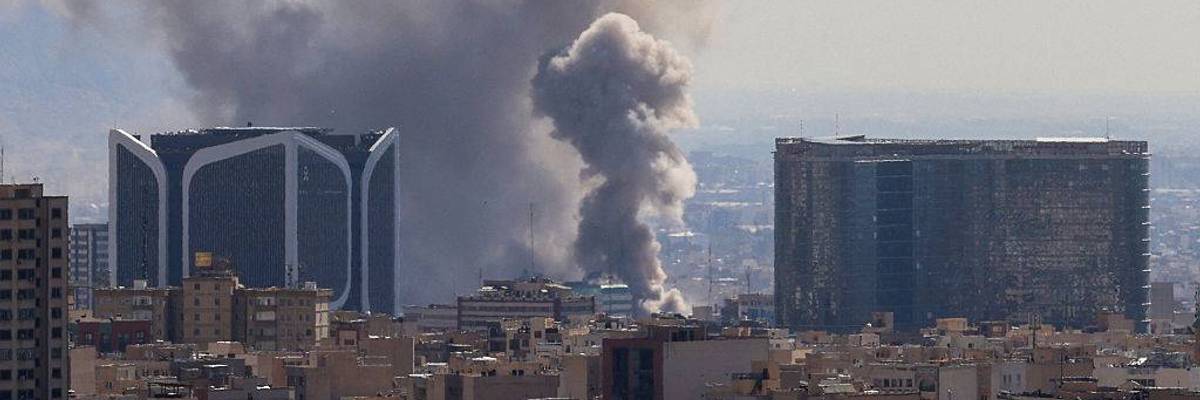
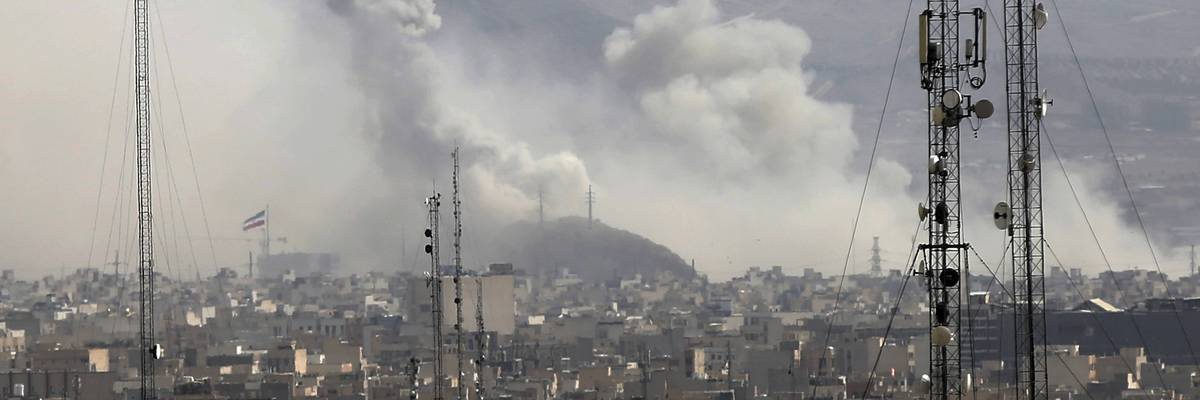
Plumes of smoke rise following reported explosions in Tehran on March 1, 2026, after Iran's supreme leader, Ayatollah Ali Khamenei, was killed a day earlier in a large U.S. and Israeli attack, prompting a new wave of retaliatory missile strikes from Iran.More
FOX News host Laura Ingraham asked conservative podcaster and former Trump FBI Deputy Director Dan Bongino what his message is to “some of our friends on the right” who point out that Trump campaigned against regime change and is now pursuing that goal.
Pete Hegseth Finally Comments on Iranian Strikes After Being MIA on Social Media
Blackwater Founder Fumes to Steve Bannon About Iran Strikes: ‘I Don’t Think This Was in America’s Interests’
“Can you give the man a chance to cook a little bit?” Bongino responded Feb. 28, adding: “Maybe give the guy five minutes before you’re already crapping on everything he did.”
Sen. Lindsay Graham, R-South Carolina, said on NBC’s Meet the Press that the Iran military operation is fully aligned with Trump’s America First agenda.
“America First is not isolationism, America First is not head in the sand,” said Graham, one of the most outspoken GOP hawks. “America First is not to get entangled. We’re not going to have any boots on the ground in Iran.”
Election questions
Trump also faced MAGA criticism after his decision to bomb Iran’s nuclear sites last year. It quickly quieted down, though. That attack was a single event that didn’t spiral into a broader conflict and there were no U.S. deaths. Polls since then have shown overwhelming support for the president among Republicans.
The latest conflict already has resulted in American casualties, though, and is more open ended, with the U.S. and Israel already launching multiple strikes and the president offering an uncertain timeline for how long it could last.

U.S. Navy sailors prepare to stage ordnance on the flight deck of the Nimitz-class aircraft carrier USS Abraham Lincoln during the U.S. attack on Iran at an undisclosed location, Feb. 28, 2026.
A University of Maryland survey conducted two weeks before Trump struck Iran again found that just 21% of U.S. adults favored launching an attack, including just 40% of Republicans. After the operation began, a Reuters/Ipsos poll found 27% of Americans approved, including 55% of Republicans.
With a sizeable portion of his party opposed or unsure of his use of force in Iran, Trump could be treading into politically perilous ground as he seeks to rally the GOP ahead of the midterms and maintain enthusiasm.
Mercedes Schlapp, a Trump ally who served in his first administration and in the administration of former Republican President George W. Bush, said in a CSPAN interview shortly before Trump struck Iran that it’s not something his MAGA base wants and that the midterms will be fought on the economy.
“I think that if the administration moves towards… more military tactics, a more aggressive posture into Iran, I think that that could be detrimental for Republicans going into the midterm elections,” Schlapp said, noting she worked for Bush during the Iraq War and “it became a very unpopular war quickly.”

Zac Anderson, USA TODAY
Sun, March 1, 2026 at 4:41 PM MST
After unleashing operation "Epic Fury" in Iran, President Donald Trump is facing MAGA skepticism at home as the military campaign threatens to strain his political coalition heading into the midterm election.
Trump campaigned as a staunch critic of U.S. wars in the Middle East, and his aggressive foreign policy moves since returning to office have sparked backlash within the MAGA movement, including accusations he has betrayed those who subscribed to his anti-interventionist, “America First” pledges.
Polling indicates many Republicans are wary of military involvement in Iran, presenting a challenge as the president works to keep them motivated in a crucial election year. That skepticism has been aired publicly by prominent voices on the right since the U.S. and Israel launched a military campaign targeting Iran’s leadership, missile sites and nuclear program.
More: Do Americans support Iran strikes? Here's what new poll says
U.S. Vice President JD Vance speaks to Cabinet Secretaries during military operations in Iran, in the Situation Room at the White House in Washington, D.C., U.S. February 28, 2026. The United States launched military strikes and "major combat operations" against Iran on Saturday, President Donald Trump said, targeting the country's missile capabilities.
Supreme Leader Ayatollah Ali Khamenei was killed in the joint strikes with Israel on Iran, an Israeli source confirmed to USA TODAY.
This image was provided by The White House.
U.S. President Donald Trump speaks with CIA Director John Ratcliffe, accompanied by White House Chief of Staff Susie Wiles and Secretary of State Marco Rubio, during military operations in Iran, at Trump's Mar-a-Lago resort in Palm Beach, Florida, U.S. February 28, 2026. This image was provided by The White House.
A satellite image shows black smoke rising and heavy damage at Iranian Supreme Leader Ayatollah Ali Khamenei's compound, following strikes by the United States and Israel against Iran, in Tehran, Iran February 28, 2026.
U.S. Vice President JD Vance speaks to Cabinet Secretaries during military operations in Iran, in the Situation Room at the White House in Washington, D.C., U.S. February 28, 2026. The United States launched military strikes and "major combat operations" against Iran on Saturday, President Donald Trump said, targeting the country's missile capabilities.
Supreme Leader Ayatollah Ali Khamenei was killed in the joint strikes with Israel on Iran, an Israeli source confirmed to USA TODAY.
This image was provided by The White House.More
Tucker Carlson, a long-time Trump backer and former FOX News host who recently attended a White House event, was scathing in an ABC News interview, describing the Iran operation that was launch on Feb. 28 as "absolutely disgusting and evil."
Others in the MAGA sphere questioned how the operation squares with the spirit of the president’s political movement, which over three White House campaigns centered around a more populist approach that eschewed years of GOP foreign policy orthodoxy on utilizing American military might.
“I don’t see how this is in keeping with the president’s MAGA commitment. I’m disappointed,” Trump ally Erik Prince, a private military contractor, said March. 1 on a podcast hosted by Steven Bannon, who served as White House chief strategist during Trump’s first term.
Former GOP Rep. Marjorie Taylor Greene, who has become a fervent Trump critic after years as one of his top supporters in Congress, accused the president and his team in a flurry of social media posts after the initial attack on Iran of betraying their promises.
Greene called the Trump administration “sick (expletive) liars” in a Feb. 27 post declaring, “We voted for America First and ZERO wars.”
Regime change war
The Trump administration’s focus on regime change in Iran is adding to the backlash. The president announced that Iran's Supreme Leader Ayatollah Ali Khamenei had been killed along with other top leaders, and has called on the Iranian people to rise up and replace the regime, even as he has warned against regime change efforts in the past.
“We must abandon the failed policies of nation building and regime change,” Trump said at the 2016 Republican National Convention.
The deaths of three U.S. troops in the operation also has heightened tensions.
Former U.S. Rep. Marjorie Taylor Greene, Republican from Georgia, speaks to reporters as she arrives for a closed-door meeting with House Republicans, at the Republican National Committee office on Capitol Hill on March 25, 2025, in Washington, DC.More
“This was absolutely unnecessary and is unacceptable,” Greene said in a March 1 social media post. “Trump, Vance, Tulsi (Gabbard), and all of us campaigned on no more foreign wars and regime change. Now, America soldiers are dead.”
Many GOP lawmakers and other conservatives are rallying around Trump as the military operation unfolds, with some dismissing the idea that the president is out of synch with MAGA.
Let Trump 'cook'
Longtime Trump adviser Jason Miller said MAGA’s priorities are the same as the president’s, “Full stop.”
“We voted for President Trump because we believe in HIS decision-making & HIS judgment to keep us safe,” Miller said Feb. 28 on social media.
Plumes of smoke rise following reported explosions in Tehran on March 1, 2026, after Iran's supreme leader, Ayatollah Ali Khamenei, was killed a day earlier in a large U.S. and Israeli attack, prompting a new wave of retaliatory missile strikes from Iran.More
FOX News host Laura Ingraham asked conservative podcaster and former Trump FBI Deputy Director Dan Bongino what his message is to “some of our friends on the right” who point out that Trump campaigned against regime change and is now pursuing that goal.
Pete Hegseth Finally Comments on Iranian Strikes After Being MIA on Social Media
Blackwater Founder Fumes to Steve Bannon About Iran Strikes: ‘I Don’t Think This Was in America’s Interests’
“Can you give the man a chance to cook a little bit?” Bongino responded Feb. 28, adding: “Maybe give the guy five minutes before you’re already crapping on everything he did.”
Sen. Lindsay Graham, R-South Carolina, said on NBC’s Meet the Press that the Iran military operation is fully aligned with Trump’s America First agenda.
“America First is not isolationism, America First is not head in the sand,” said Graham, one of the most outspoken GOP hawks. “America First is not to get entangled. We’re not going to have any boots on the ground in Iran.”
Election questions
Trump also faced MAGA criticism after his decision to bomb Iran’s nuclear sites last year. It quickly quieted down, though. That attack was a single event that didn’t spiral into a broader conflict and there were no U.S. deaths. Polls since then have shown overwhelming support for the president among Republicans.
The latest conflict already has resulted in American casualties, though, and is more open ended, with the U.S. and Israel already launching multiple strikes and the president offering an uncertain timeline for how long it could last.
U.S. Navy sailors prepare to stage ordnance on the flight deck of the Nimitz-class aircraft carrier USS Abraham Lincoln during the U.S. attack on Iran at an undisclosed location, Feb. 28, 2026.
A University of Maryland survey conducted two weeks before Trump struck Iran again found that just 21% of U.S. adults favored launching an attack, including just 40% of Republicans. After the operation began, a Reuters/Ipsos poll found 27% of Americans approved, including 55% of Republicans.
With a sizeable portion of his party opposed or unsure of his use of force in Iran, Trump could be treading into politically perilous ground as he seeks to rally the GOP ahead of the midterms and maintain enthusiasm.
Mercedes Schlapp, a Trump ally who served in his first administration and in the administration of former Republican President George W. Bush, said in a CSPAN interview shortly before Trump struck Iran that it’s not something his MAGA base wants and that the midterms will be fought on the economy.
“I think that if the administration moves towards… more military tactics, a more aggressive posture into Iran, I think that that could be detrimental for Republicans going into the midterm elections,” Schlapp said, noting she worked for Bush during the Iraq War and “it became a very unpopular war quickly.”
John Casey
March 1, 2026
RAW STORY
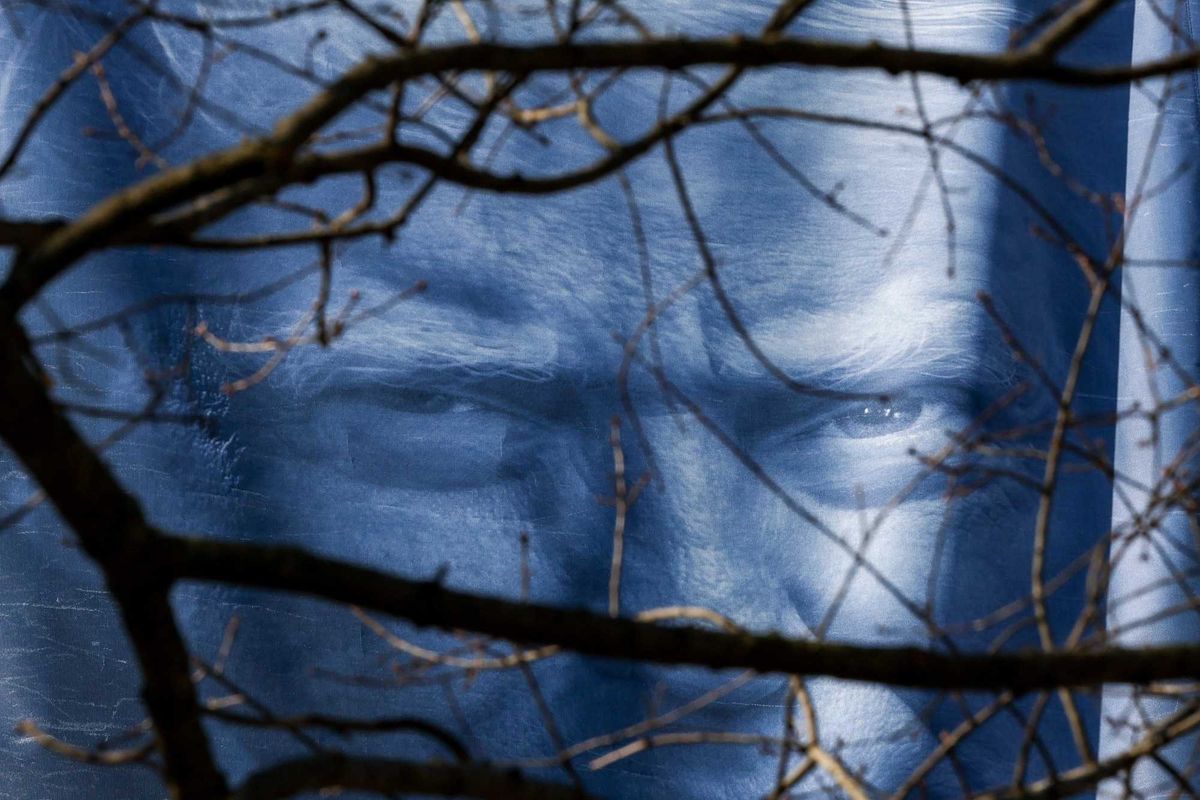
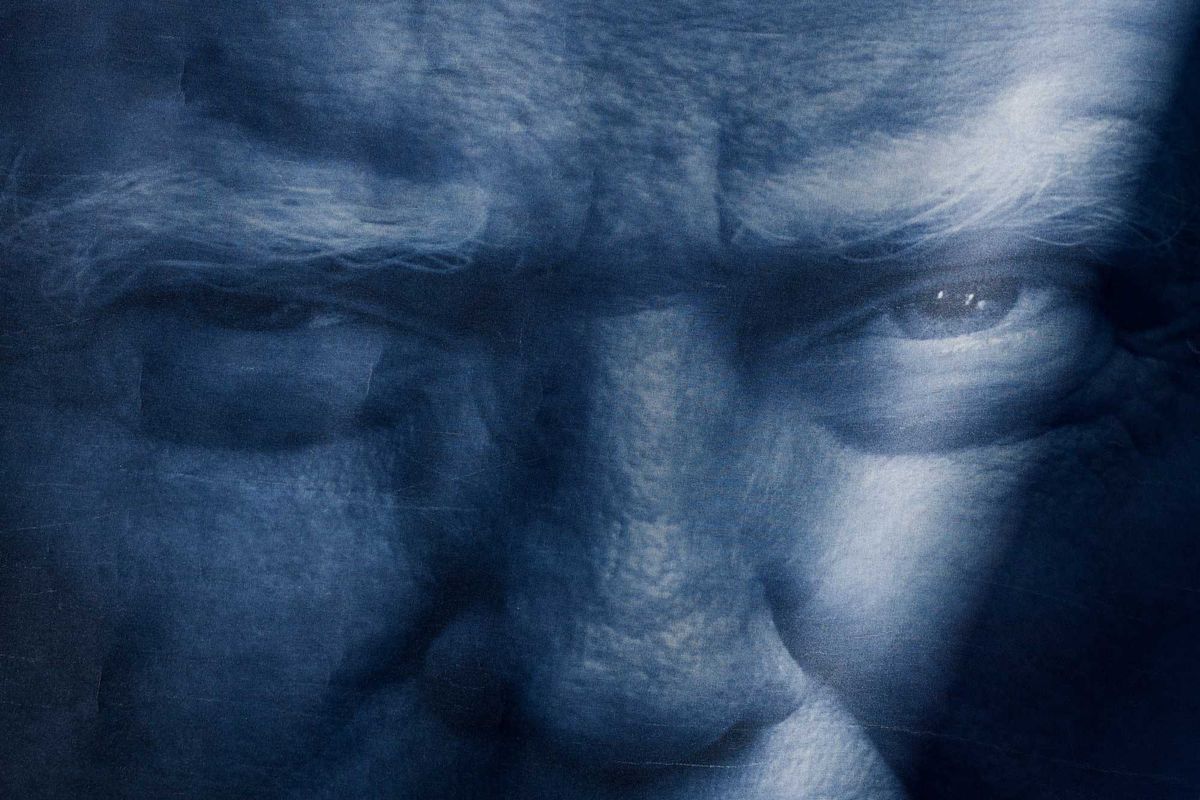
A banner depicting Donald Trump hangs outside the Department of Justice. REUTERS/Kylie Cooper
The first days of a bombing campaign almost always look successful. Targets are hit. Explosions dominate headlines. Leaders declare strength. But wars are judged by what follows: retaliation, escalation, unintended consequences that unfold in days, weeks, months, and years.
For example, Israeli sources said on Saturday that Iran’s Supreme Leader Ayatollah Ali Khamenei was killed in the initial bombings. But if he is dead, who comes next? His death after 35 years in power would likely trigger a prolonged, ugly and tumultuous struggle.
Further back, remember George W. Bush and his rush to declare “Mission Accomplished," shortly after the attack on Iraq in 2003?
That pattern of not thinking and planning ahead for what comes next mirrors Donald Trump’s life of losing. His deals and grand ideas often look triumphant at the start. Later, collapse, chaos, and damage become clear.
Trump’s decision to join Israel in bombing Iran is shocking the world. It feels reckless and ego-driven — both for Trump and Benjamin Netanyahu — undertaken without fully reckoning with the grave consequences such action could unleash.
Yes, Iran is dangerous. Yes, it should never have nuclear weapons. Yes, the regime’s mass killing of protesters is abominable. But behind the curtain of cruelty is an entrenched military and ruthless theocratic leadership capable of spreading unimaginable horror throughout the Middle East.
It’s already begun.
But let’s start in the U.S., with a president who campaigned in 2024 on ending wars through dealmaking.
Trump has ended nothing. He has built nothing. He has stabilized nothing. That assessment isn’t limited to what’s happening now. It reflects how he has carried himself throughout his life. He is not a winner. He is a loser. He does not create peace. He creates chaos.
Now he has detonated that chaos in the most volatile region on Earth. Why now? For what purpose? For how long?
Trump repeatedly claimed that last year’s U.S. strikes on Iranian nuclear facilities “obliterated” them. Obliterated. He has insisted on that word, dismissing experts who said otherwise.
So why are American bombs once again falling on Iranian soil? You don’t obliterate something and then have to obliterate it again.
There has been no publicly presented evidence that bombing Iran is in America’s best interest. None. No imminent attack disclosed. No ticking-clock intelligence, laid before Congress.
And what of Congress? Article I of the Constitution is clear: Congress has the power to declare war. Trump didn’t seek it. He didn’t secure it. He didn’t build bipartisan consensus. He simply acted. Congress represents the voice of the American people. We, and our elected officials, should decide whether to put American troops in harm’s way.
Trump failed to rally NATO. After years of threatening to weaken the alliance, flirting with abandoning European partners, even floating the absurd notion of invading Greenland, he has left the United States diplomatically diminished.
Rather than assembling a coalition, he has tethered America’s fate to another leader who thrives on confrontation: Israeli Prime Minister Benjamin Netanyahu.
Netanyahu has long viewed Iran as Israel’s existential enemy. Iran harbors deep hostility toward Israel and Netanyahu. Netanyahu is polarizing in the Middle East, controversial at home. Trump is viewed globally as erratic, incapable of restraint.
Two unpredictable leaders do not create stability. They do not project peace. And if these two have rid Iran of the equally unpredictable Khamenei, God knows what lies ahead.
This is a sweeping assault with no clearly articulated endgame against an adversary as hardened as it is brutal. If Khamenei is dead, his revolutionary forces will surely retaliate to an extreme.
There has been no serious explanation of what victory looks like, only assurances that bombing will continue. Escalation feels inevitable. Regional war is plausible.
Experts have warned for weeks that a full-scale attack on Iran could ignite the Middle East.
Iran is not isolated. It has a network of proxies: Hezbollah in Lebanon, militias in Iraq, the Houthis in Yemen. They are all capable of striking American assets and allies. Retaliation could be relentless, U.S. troops potential targets.
Shipping lanes could be disrupted. The Strait of Hormuz, through which flows a significant share of the world’s oil, could become a choke point. Energy markets would convulse. Inflation would spike. A fragile global economy, rattled by Trump’s erratic tariff obsession, could tip toward crisis.
And then there’s Russia, which was blunt in response to the bombing, saying it was an “unprovoked act of armed aggression.”
Moscow has deepened ties with Tehran. Iran has supplied Russia with drones. Russia has offered diplomatic cover. By attacking Iran in a sustained way, Trump risks entangling the U.S. in a broader dynamic that could spiral beyond control.
When military powers circle the same battlefield, miscalculation is a real probability.
Even within U.S. military leadership, alarm bells have been ringing. Joint Chiefs Chairman Dan Caine has warned that a full-scale confrontation with Iran would come with “acute risks,” along with being extraordinarily costly and unpredictable.
This is not Venezuela. Iran is no pushover. It is one of the most volatile regimes in the world, rivaling North Korea.
And now we have added another unpredictable actor — the habitual liar that is the President of the United States.
This is the man who has failed at virtually every major endeavor he has led, too many to list. He is not a steady leader. He is a coddled billionaire who has never faced meaningful consequences for his mistakes.
Trump, who thrives on confusion, lies, and chaos, has not clearly articulated objectives, sought congressional authorization, or built a multinational framework. And we are supposed to trust him?
We are headed for a hellscape of unimaginable dimensions.
What unfolds next could reshape the global order: regional war, confrontation with major powers, economic shockwaves hitting American families, gas stations and grocery stores, terror retaliation, cyberattacks … the “acute risks” falling like dominos.
Trump falsely bills himself as the man who would keep America out of endless wars. He foams at the mouth for a Nobel. He launched a farcical “Board of Peace.” Yet he has now lit the fuse in one of the world’s most combustible regions.
Unlike his past failures, his latest bomb is far worse than a bankruptcy. Far, far worse.
March 1, 2026
RAW STORY
A banner depicting Donald Trump hangs outside the Department of Justice. REUTERS/Kylie Cooper
The first days of a bombing campaign almost always look successful. Targets are hit. Explosions dominate headlines. Leaders declare strength. But wars are judged by what follows: retaliation, escalation, unintended consequences that unfold in days, weeks, months, and years.
For example, Israeli sources said on Saturday that Iran’s Supreme Leader Ayatollah Ali Khamenei was killed in the initial bombings. But if he is dead, who comes next? His death after 35 years in power would likely trigger a prolonged, ugly and tumultuous struggle.
Further back, remember George W. Bush and his rush to declare “Mission Accomplished," shortly after the attack on Iraq in 2003?
That pattern of not thinking and planning ahead for what comes next mirrors Donald Trump’s life of losing. His deals and grand ideas often look triumphant at the start. Later, collapse, chaos, and damage become clear.
Trump’s decision to join Israel in bombing Iran is shocking the world. It feels reckless and ego-driven — both for Trump and Benjamin Netanyahu — undertaken without fully reckoning with the grave consequences such action could unleash.
Yes, Iran is dangerous. Yes, it should never have nuclear weapons. Yes, the regime’s mass killing of protesters is abominable. But behind the curtain of cruelty is an entrenched military and ruthless theocratic leadership capable of spreading unimaginable horror throughout the Middle East.
It’s already begun.
But let’s start in the U.S., with a president who campaigned in 2024 on ending wars through dealmaking.
Trump has ended nothing. He has built nothing. He has stabilized nothing. That assessment isn’t limited to what’s happening now. It reflects how he has carried himself throughout his life. He is not a winner. He is a loser. He does not create peace. He creates chaos.
Now he has detonated that chaos in the most volatile region on Earth. Why now? For what purpose? For how long?
Trump repeatedly claimed that last year’s U.S. strikes on Iranian nuclear facilities “obliterated” them. Obliterated. He has insisted on that word, dismissing experts who said otherwise.
So why are American bombs once again falling on Iranian soil? You don’t obliterate something and then have to obliterate it again.
There has been no publicly presented evidence that bombing Iran is in America’s best interest. None. No imminent attack disclosed. No ticking-clock intelligence, laid before Congress.
And what of Congress? Article I of the Constitution is clear: Congress has the power to declare war. Trump didn’t seek it. He didn’t secure it. He didn’t build bipartisan consensus. He simply acted. Congress represents the voice of the American people. We, and our elected officials, should decide whether to put American troops in harm’s way.
Trump failed to rally NATO. After years of threatening to weaken the alliance, flirting with abandoning European partners, even floating the absurd notion of invading Greenland, he has left the United States diplomatically diminished.
Rather than assembling a coalition, he has tethered America’s fate to another leader who thrives on confrontation: Israeli Prime Minister Benjamin Netanyahu.
Netanyahu has long viewed Iran as Israel’s existential enemy. Iran harbors deep hostility toward Israel and Netanyahu. Netanyahu is polarizing in the Middle East, controversial at home. Trump is viewed globally as erratic, incapable of restraint.
Two unpredictable leaders do not create stability. They do not project peace. And if these two have rid Iran of the equally unpredictable Khamenei, God knows what lies ahead.
This is a sweeping assault with no clearly articulated endgame against an adversary as hardened as it is brutal. If Khamenei is dead, his revolutionary forces will surely retaliate to an extreme.
There has been no serious explanation of what victory looks like, only assurances that bombing will continue. Escalation feels inevitable. Regional war is plausible.
Experts have warned for weeks that a full-scale attack on Iran could ignite the Middle East.
Iran is not isolated. It has a network of proxies: Hezbollah in Lebanon, militias in Iraq, the Houthis in Yemen. They are all capable of striking American assets and allies. Retaliation could be relentless, U.S. troops potential targets.
Shipping lanes could be disrupted. The Strait of Hormuz, through which flows a significant share of the world’s oil, could become a choke point. Energy markets would convulse. Inflation would spike. A fragile global economy, rattled by Trump’s erratic tariff obsession, could tip toward crisis.
And then there’s Russia, which was blunt in response to the bombing, saying it was an “unprovoked act of armed aggression.”
Moscow has deepened ties with Tehran. Iran has supplied Russia with drones. Russia has offered diplomatic cover. By attacking Iran in a sustained way, Trump risks entangling the U.S. in a broader dynamic that could spiral beyond control.
When military powers circle the same battlefield, miscalculation is a real probability.
Even within U.S. military leadership, alarm bells have been ringing. Joint Chiefs Chairman Dan Caine has warned that a full-scale confrontation with Iran would come with “acute risks,” along with being extraordinarily costly and unpredictable.
This is not Venezuela. Iran is no pushover. It is one of the most volatile regimes in the world, rivaling North Korea.
And now we have added another unpredictable actor — the habitual liar that is the President of the United States.
This is the man who has failed at virtually every major endeavor he has led, too many to list. He is not a steady leader. He is a coddled billionaire who has never faced meaningful consequences for his mistakes.
Trump, who thrives on confusion, lies, and chaos, has not clearly articulated objectives, sought congressional authorization, or built a multinational framework. And we are supposed to trust him?
We are headed for a hellscape of unimaginable dimensions.
What unfolds next could reshape the global order: regional war, confrontation with major powers, economic shockwaves hitting American families, gas stations and grocery stores, terror retaliation, cyberattacks … the “acute risks” falling like dominos.
Trump falsely bills himself as the man who would keep America out of endless wars. He foams at the mouth for a Nobel. He launched a farcical “Board of Peace.” Yet he has now lit the fuse in one of the world’s most combustible regions.
Unlike his past failures, his latest bomb is far worse than a bankruptcy. Far, far worse.
John Casey was most recently Senior Editor, The Advocate, and is a freelance opinion and feature story writer. Previously, he was a Capitol Hill press secretary, and spent 25 years in media and public relations in NYC. He is the co-author of LOVE: The Heroic Stories of Marriage Equality (Rizzoli, 2025), named by Oprah in her "Best 25 of 2025.”
Trump Guns for Peace Prize
It’s obvious that Trump loves the feel of power. It no doubt gives him a rush more intoxicating than any drug.
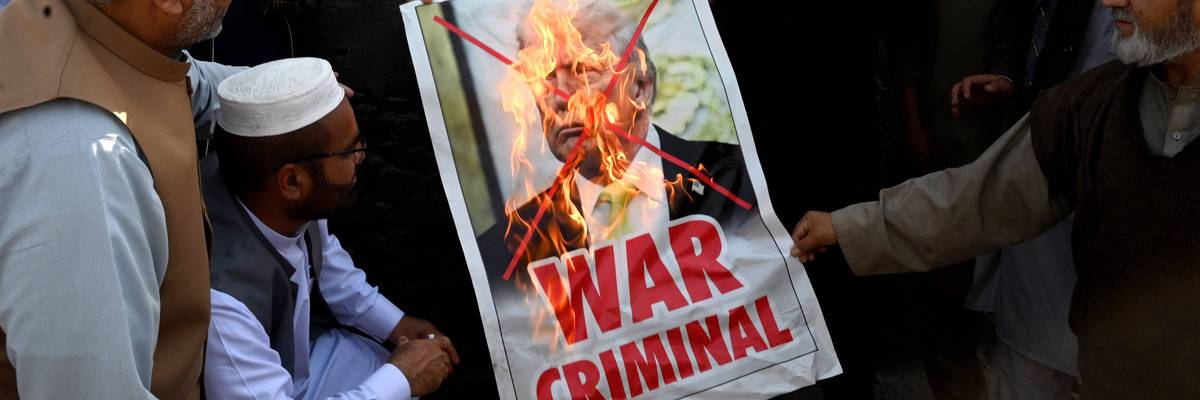
Demonstrators burn a poster of US President Donald Trump during an anti-US and Israel protest in Peshawar on March 2, 2026 after the death of Iran’s supreme leader Ayatollah Ali Khamenei amid US-Israel strikes.
(Photo by Abdul Majeed / AFP via Getty Images)
Les Leopold
Mar 02, 2026
It’s obvious that Trump loves the feel of power. It no doubt gives him a rush more intoxicating than any drug.
Demonstrators burn a poster of US President Donald Trump during an anti-US and Israel protest in Peshawar on March 2, 2026 after the death of Iran’s supreme leader Ayatollah Ali Khamenei amid US-Israel strikes.
(Photo by Abdul Majeed / AFP via Getty Images)
Les Leopold
Mar 02, 2026
Common Dreams
Since resuming power 13 months ago, President Trump has declared he should be awarded the Nobel Peace Prize. At the same time, he has attacked civilian boats in the Caribbean, abducted the head of Venezuela, blockaded Cuba, conducted air strikes in Nigeria, Somalia, Yemen, and Syria, and even threatened to invade Greenland. He bombed Iran’s nuclear facilities last June, and now is waging war to achieve regime change, not an easy task in a country of 90 million people.
What is common to all these strikes is that the target was weak. Note that Trump is not trying to topple North Korea, or force Russia out of Ukraine, or threaten China’s economic domination. His targets can’t do much harm to the US, at least in the short run, which makes it easy to score what he calls “victories.”
It’s obvious that Trump loves the feel of power. It no doubt gives him a rush more intoxicating than any drug. He is the ruler of the strongest nation in the history of the world, but he doesn’t have the freedom to unilaterally act on domestic affairs, although he constantly tries. The courts are in the way, as is popular dissent. Judges and citizens are preventing him from exerting his will, even making him change course by removing troops and immigration forces. And it will, he surely knows, get even worse if the Democrats gain control of either house of Congress.
But he has a free hand in foreign affairs. The Supreme Court won’t stop him and there is no international court that the US recognizes, nor does he believe he is morally bound by international law. He couldn’t care less about the United Nations, and he hopes that military engagement against the weak makes him look strong to the American public. Also, in Iran’s case, a war with a quick victory has the added benefit of possibly improving his paltry approval ratings by diverting public attention away from “affordability” and the Epstein files. Already the joke is that they should have called the Iran adventure, “Operation Epic Epstein.”
Just think what the total freedom to attack means for Trump. For starters he gets to deploy his toys—the trillion-dollar arsenal of US warships and fighter planes. It’s the ultimate video game for power-hungry adults. And no one can stop him abroad, and while the Republicans in Congress could, they certainly won’t.
Trump seems to believe that these military attacks will secure his place in history as the greatest president of all time. He and only he had the guts to get rid of the Iranian theocracy that has bedeviled the US since the 1979 hostage crisis. And only he will end communism in Cuba, that pesky island of resistance only 90 miles from shore. Most importantly, he is remaking the Middle East into a US-Israeli safe zone. He is showing the world that the US means business and that whatever it wants, it should get—of course in the name of protecting the US and securing world peace.
As Trump’s deputy chief of staff, Steven Miller, put it, “We live in a world , in the real world…that is governed by strength, this governed by force, that is governed by power. These are the iron laws of the world.”
Before claiming all this aggression demonstrates Trump truly is a Hitler-like dictator, we should recall that he is not the first Commander-in-Chief to follow these “iron laws of the world.” Truman sent troops to fight in Korea (1950), Eisenhower sent them to Lebanon (1958), Kennedy to the Bay of Pigs in Cuba (1961), Johnson to Vietnam (1964), Nixon bombed Cambodia (1969), Reagan invaded Grenada (1983), George H. Bush invaded Panama (1989), Clinton bombed Kosovo (1999), Obama bombed Libya (2011), Trump sent missiles to Syria (2017,2018), and Biden ordered airstrikes in Syria (2021), and Yemen (2024)—all without a declaration of war by Congress.
This is what US presidents do because they can. But no president has been quite as overtly aggressive as Trump. Even when he tries, he can’t hide his desire to dominate. He doesn’t spend time building alliances or forming a consensus at home. He just acts as if the weaker countries of the world are his playthings. He can push them around at will, first with tariffs then with bombs, and his sycophantic enablers will cheer him on. From Trump’s perspective, what’s not to like?
Nothing, unless it doesn’t end well. And there are dozens of ways his current path in Iran could lead to his own destruction. The American public is not likely to approve of these adventures, especially if prices rise because global trade is severely disrupted. More ominously, it’s possible that a war with Iran could spiral out of control, sucking the US in with ground troops and leading to yet another forever war and American casualties. That’s why MAGA isolationists also are having trouble with Trump’s foreign interventions.
And there is a question of whether the Iranians who want regime change will trust the Americans. They are certainly aware that the Afghans who assisted US forces and the CIA in their (failed) war of liberation were awkwardly abandoned during our troop withdrawal, and those who were given safe haven have in many cases been unceremoniously kicked back to their dangerous homeland by Trump.
The upshot of all this adventurism is that we may again witness a moment in history when the universe actually bends towards justice. Debilitating hubris has a way of striking down the mighty: LBJ was driven from office by his Vietnam debacle and Nixon had to resign because of his secret dictatorial actions. Will Trump blow himself up as well?
Maybe, but let’s pray, with the nuclear button close at hand, he doesn’t take all the rest of us with him.
Since resuming power 13 months ago, President Trump has declared he should be awarded the Nobel Peace Prize. At the same time, he has attacked civilian boats in the Caribbean, abducted the head of Venezuela, blockaded Cuba, conducted air strikes in Nigeria, Somalia, Yemen, and Syria, and even threatened to invade Greenland. He bombed Iran’s nuclear facilities last June, and now is waging war to achieve regime change, not an easy task in a country of 90 million people.
What is common to all these strikes is that the target was weak. Note that Trump is not trying to topple North Korea, or force Russia out of Ukraine, or threaten China’s economic domination. His targets can’t do much harm to the US, at least in the short run, which makes it easy to score what he calls “victories.”
It’s obvious that Trump loves the feel of power. It no doubt gives him a rush more intoxicating than any drug. He is the ruler of the strongest nation in the history of the world, but he doesn’t have the freedom to unilaterally act on domestic affairs, although he constantly tries. The courts are in the way, as is popular dissent. Judges and citizens are preventing him from exerting his will, even making him change course by removing troops and immigration forces. And it will, he surely knows, get even worse if the Democrats gain control of either house of Congress.
But he has a free hand in foreign affairs. The Supreme Court won’t stop him and there is no international court that the US recognizes, nor does he believe he is morally bound by international law. He couldn’t care less about the United Nations, and he hopes that military engagement against the weak makes him look strong to the American public. Also, in Iran’s case, a war with a quick victory has the added benefit of possibly improving his paltry approval ratings by diverting public attention away from “affordability” and the Epstein files. Already the joke is that they should have called the Iran adventure, “Operation Epic Epstein.”
Just think what the total freedom to attack means for Trump. For starters he gets to deploy his toys—the trillion-dollar arsenal of US warships and fighter planes. It’s the ultimate video game for power-hungry adults. And no one can stop him abroad, and while the Republicans in Congress could, they certainly won’t.
Trump seems to believe that these military attacks will secure his place in history as the greatest president of all time. He and only he had the guts to get rid of the Iranian theocracy that has bedeviled the US since the 1979 hostage crisis. And only he will end communism in Cuba, that pesky island of resistance only 90 miles from shore. Most importantly, he is remaking the Middle East into a US-Israeli safe zone. He is showing the world that the US means business and that whatever it wants, it should get—of course in the name of protecting the US and securing world peace.
As Trump’s deputy chief of staff, Steven Miller, put it, “We live in a world , in the real world…that is governed by strength, this governed by force, that is governed by power. These are the iron laws of the world.”
Before claiming all this aggression demonstrates Trump truly is a Hitler-like dictator, we should recall that he is not the first Commander-in-Chief to follow these “iron laws of the world.” Truman sent troops to fight in Korea (1950), Eisenhower sent them to Lebanon (1958), Kennedy to the Bay of Pigs in Cuba (1961), Johnson to Vietnam (1964), Nixon bombed Cambodia (1969), Reagan invaded Grenada (1983), George H. Bush invaded Panama (1989), Clinton bombed Kosovo (1999), Obama bombed Libya (2011), Trump sent missiles to Syria (2017,2018), and Biden ordered airstrikes in Syria (2021), and Yemen (2024)—all without a declaration of war by Congress.
This is what US presidents do because they can. But no president has been quite as overtly aggressive as Trump. Even when he tries, he can’t hide his desire to dominate. He doesn’t spend time building alliances or forming a consensus at home. He just acts as if the weaker countries of the world are his playthings. He can push them around at will, first with tariffs then with bombs, and his sycophantic enablers will cheer him on. From Trump’s perspective, what’s not to like?
Nothing, unless it doesn’t end well. And there are dozens of ways his current path in Iran could lead to his own destruction. The American public is not likely to approve of these adventures, especially if prices rise because global trade is severely disrupted. More ominously, it’s possible that a war with Iran could spiral out of control, sucking the US in with ground troops and leading to yet another forever war and American casualties. That’s why MAGA isolationists also are having trouble with Trump’s foreign interventions.
And there is a question of whether the Iranians who want regime change will trust the Americans. They are certainly aware that the Afghans who assisted US forces and the CIA in their (failed) war of liberation were awkwardly abandoned during our troop withdrawal, and those who were given safe haven have in many cases been unceremoniously kicked back to their dangerous homeland by Trump.
The upshot of all this adventurism is that we may again witness a moment in history when the universe actually bends towards justice. Debilitating hubris has a way of striking down the mighty: LBJ was driven from office by his Vietnam debacle and Nixon had to resign because of his secret dictatorial actions. Will Trump blow himself up as well?
Maybe, but let’s pray, with the nuclear button close at hand, he doesn’t take all the rest of us with him.