Sunday, March 15, 2026

Iranians who backed Trump turn against him as president's wartime moves backfire

David McAfee
March 14, 2026 
RAW STORY


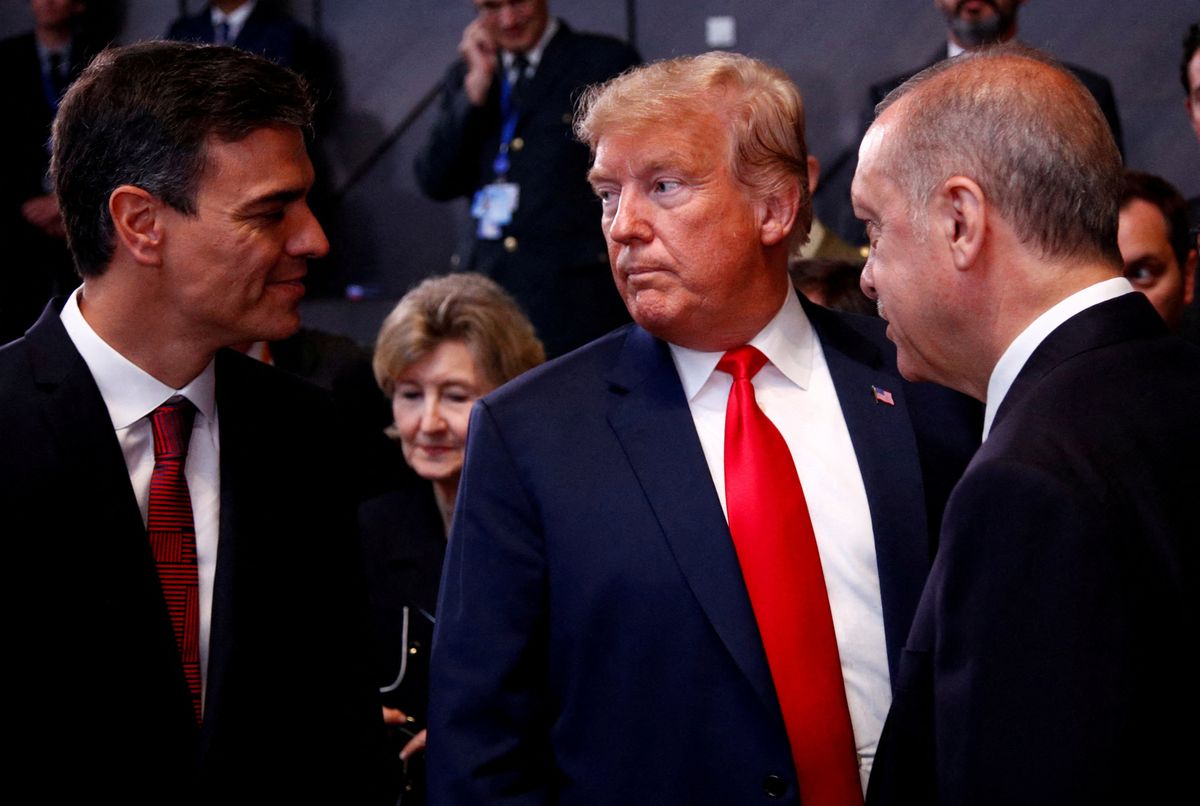
FILE PHOTO: Turkish President Tayyip Erdogan, U.S. President Donald Trump and Spain's Prime Minister Pedro Sanchez attend a meeting of the North Atlantic Council during a NATO summit in Brussels, Belgium July 11, 2018. REUTERS/Francois Lenoir/File Photo

Anti-regime Iranians who initially embraced President Donald Trump's promise to "rescue" them from their oppressive government are now expressing deep disillusionment with his military campaign, according to new reporting from The Guardian.

Many Iranian dissidents had harbored hope that Trump's administration would intervene militarily against the Islamic Republic. That hope transformed into despair after a fortnight of U.S. and Israeli airstrikes that have killed hundreds of civilians, destroyed critical infrastructure, and damaged irreplaceable cultural heritage sites.

"They are also lying! Like the regime has been lying to us," said Amir, a University of Tehran student and anti-regime protester, speaking to The Guardian. "You are all worse than each other."

The turning point came when Israeli forces struck fuel depots in Tehran, coating the capital in toxic oil rain and blackening the sky. The strikes also damaged ancient landmarks including the 14th-century Golestan Palace and the 17th-century Chehel Sotoon Palace in Isfahan.

"I genuinely believe now they [the US and Israel] didn't have a plan," Amir told The Guardian. "If the regime is what you want to hit, where do you draw the line? What about us, the ordinary Iranians? We rely on this civil infrastructure."

Many protesters now fear the conflict mirrors the 2003 U.S. invasion of Iraq, which promised liberation but delivered civil war. Other Iranian dissidents report viewing the bombing campaign as "carpet bombing" that has killed civilians indiscriminately.

"A significant portion of the people I've been speaking to, after witnessing the killing of civilians, have altered their perception of military intervention," one Tehran protester told The Guardian.

Read the full report here.
Trump ridiculed for 'sending out invitations to WWIII' as he 'pleads' allies for Iran help


David McAfee
March 14, 2026 
RAW STORY

President Donald J. Trump spurred a variety of alarmed reactions on Saturday after he asked other countries to help the U.S. with the Iran war amid escalating tensions in the Strait of Hormuz.

"The United States of America has beaten and completely decimated Iran, both Militarily, Economically, and in every other way," Trump wrote, before shifting to call for international cooperation. He urged countries reliant on oil transit through the strait to "take care of that passage," promising substantial U.S. assistance and coordination to ensure "everything goes quickly, smoothly, and well." Trump framed the effort as a long-overdue "team" approach that would foster "Harmony, Security, and Everlasting Peace!"

The post drew immediate online backlash, with critics highlighting what they saw as a glaring contradiction: claiming total Iranian defeat while seeking help to secure the vital waterway, through which roughly one-fifth of global oil flows.

Professor Phillips P. O'Brien, a noted historian and strategist, described the message as "a work of art" worthy of preservation. He pointed out the irony: if Iran's military capability is "100% destroyed," why plead with frequently insulted allies to intervene in the Gulf?

Online reactions spread rapidly. PatriotTakes, which monitors right-wing extremism, quipped that Trump was "sending out invitations to WWIII."

MS NOW's Chris Hayes called it an "instant classic."

Detractors mocked the pivot as evidence of overreach in the ongoing U.S.-Iran conflict, where recent airstrikes—including on Kharg Island's military targets—have disrupted shipping but not fully neutralized threats like mines or asymmetric attacks. Supporters, however, viewed it as pragmatic leadership, emphasizing U.S. dominance and the need for shared burden in global security.

The statement also underscores broader challenges in Trump's foreign policy approach: bold claims of triumph paired with appeals for multilateral support in a region where unilateral action has proven costly. As oil prices surge and tanker traffic remains vulnerable, the post highlights the delicate balance between projecting strength and acknowledging real-world limitations in securing critical chokepoints.


‘It hurts’: Trump travel ban blocks Oscar nominee from attending award ceremony

Alexander Willis
March 14, 2026 
RAW STORY


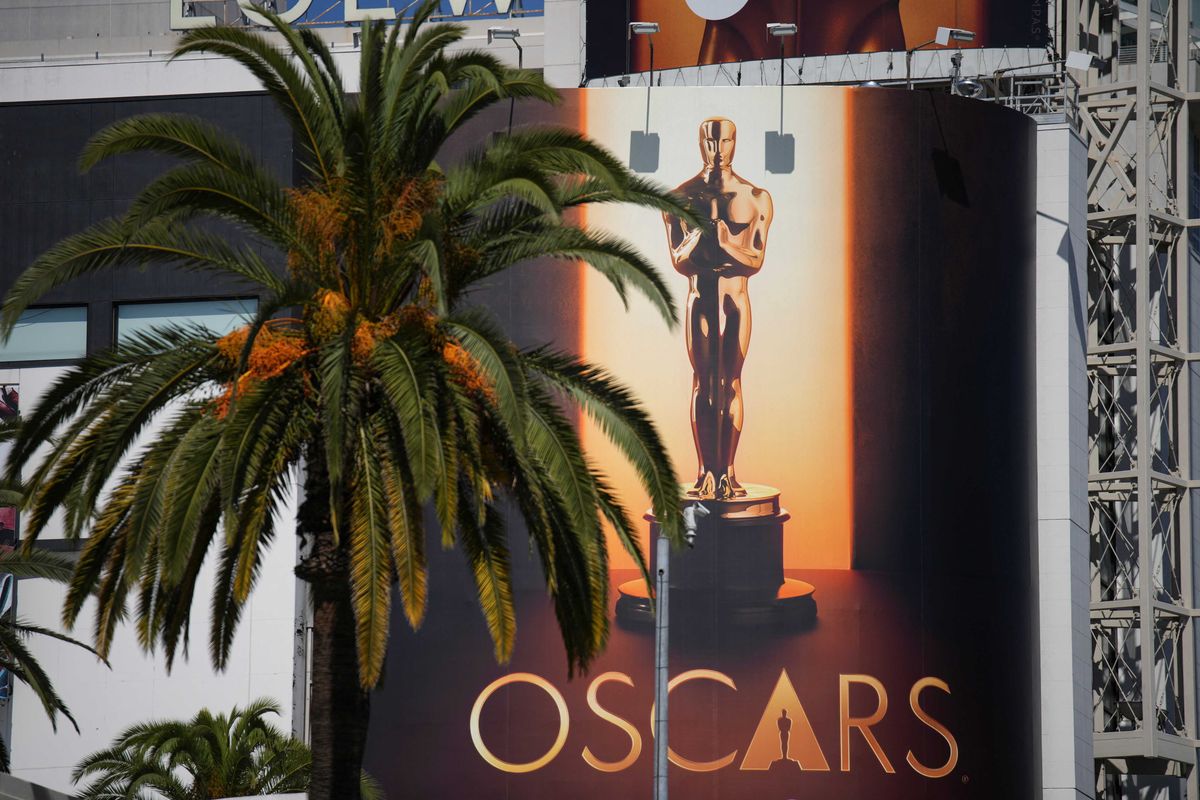
A large billboard sign featuring an Oscar statuette towers over Hollywood blvd as workers prepare for the 98th Academy Awards in Los Angeles, California, U.S., March 9, 2026. REUTERS/Daniel Cole

Oscar-nominated actor Motaz Malhees is barred from attending this Sunday’s Academy Awards due to President Donald Trump’s travel ban for certain foreign nationals, with the actor taking to social media Friday to express his disappointment.

Malhees played a prominent role in the 2025 film “The Voice of Hind Rajab,” a dramatization of the real-life killing of Hind Rajab, a five-year-old Palestinian girl who was killed in 2024 when Israeli troops fired hundreds of rounds into a vehicle carrying her and her family. An Israeli tank reportedly fired on first responders attempting to reach her.

The film was nominated for Best International Film by the Academy Awards last December, but Malhees – who is Palestinian – said on Friday he won’t be able to attend the ceremony.

“I will not be there. I am not allowed to enter the United States because of my Palestinian citizenship,” Malhees wrote in a social media post on Instagram.

“It hurts. But here is the truth: You can block a passport. You cannot block a voice. I am Palestinian, and I stand with pride and dignity. My spirit will be with the voice of Hind Rajab that night. Good luck to all of you. Our story is bigger than any barrier, and it will be heard.”

Trump  signed a proclamation last December that added “full restrictions and entry limitations” to those holding passports issued to them by the Palestinian Authority. In a shocking move, the Trump administration has also issued a directive to subject Palestinian immigrants, regardless of their citizenship, to heightened scrutiny when applying for asylum, a move described by legal experts as unprecedented given its focus on an entire ethnic group.


FCC chair signals license revocations for broadcasters critical of Trump's War

David McAfee
March 14, 2026 
RAW STORY


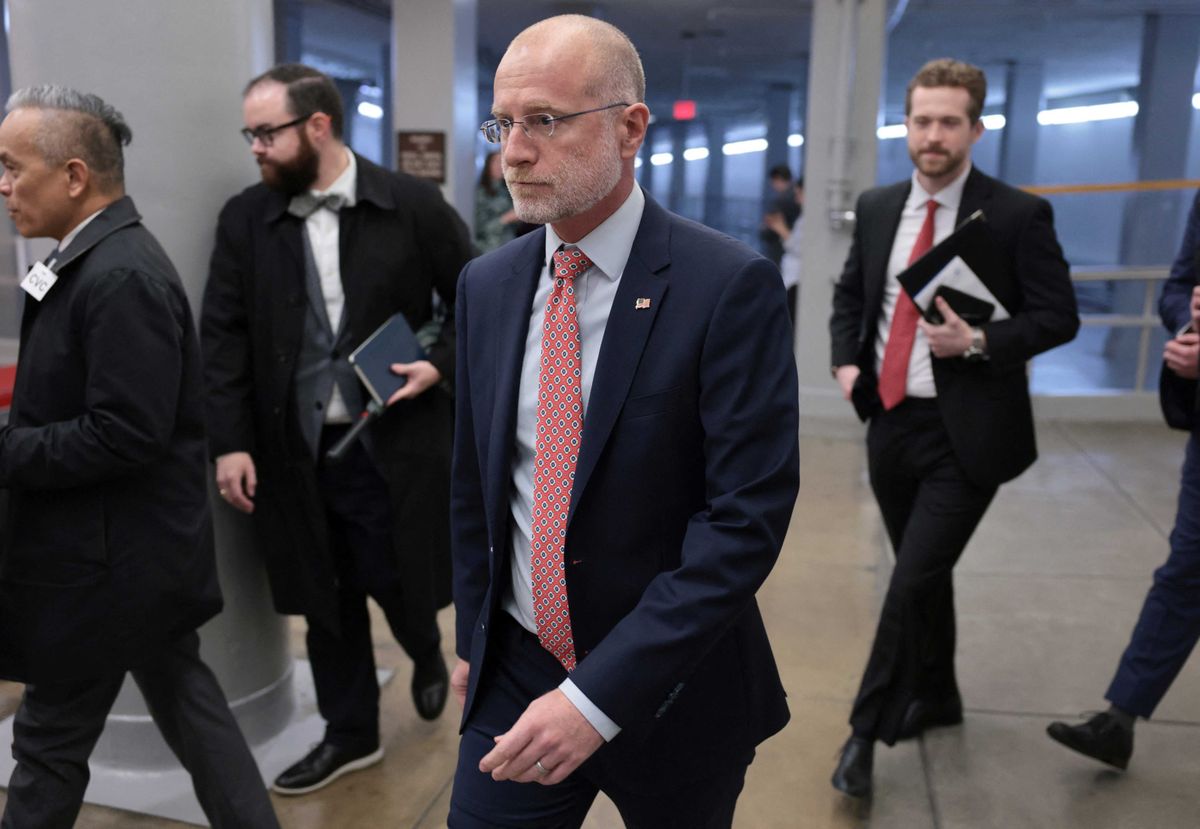
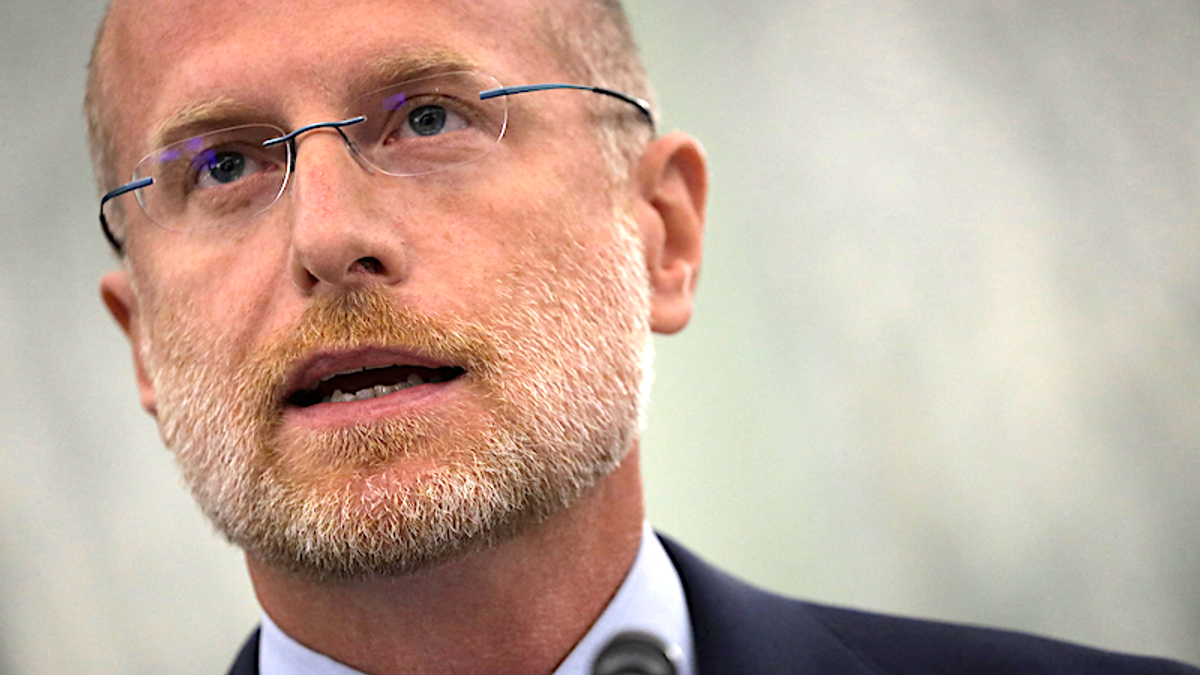
Federal Communications Commission (FCC) Chairman Brendan Carr walks through the subway system under the U.S. Capitol in Washington, D.C. on Dec. 2, 2025. REUTERS/Jonathan Ernst


Brendan Carr, chair of the Federal Communications Commission under President Donald Trump, issued a stark warning to television broadcasters on Saturday, threatening license revocation for what he characterizes as "hoaxes and news distortions."

In a statement, Carr declared: "Broadcasters that are running hoaxes and news distortions - also known as the fake news - have a chance now to correct course before their license renewals come up. The law is clear. Broadcasters must operate in the public interest, and they will lose their licenses if they do not."

Carr cited declining trust in legacy media, noting that "trust in legacy media has now fallen to an all time low of just 9% and are ratings disasters." He argued that broadcasters have been subsidized through free access to the nation's airwaves and suggested that changing editorial direction is in their business interests.

The FCC chief framed the issue as a matter of public confidence, stating: "When a political candidate is able to win a landslide election victory in the face of hoaxes and distortions, there is something very wrong. It means the public has lost faith and confidence in the media."

Carr concluded by calling for systemic change in broadcast journalism, declaring "Time for change!" His comments represent an unprecedented direct threat by a Trump administration official to use regulatory authority over media licensing as a tool to influence news coverage.


Trump’s FCC Chair Threatens to Pull Broadcast Licenses Over Negative Iran War Coverage

“Brendan Carr is threatening the media to cover the war the way the Trump regime wants. It’s one of the most anti-American messages ever posted by a government official,” one news network said.


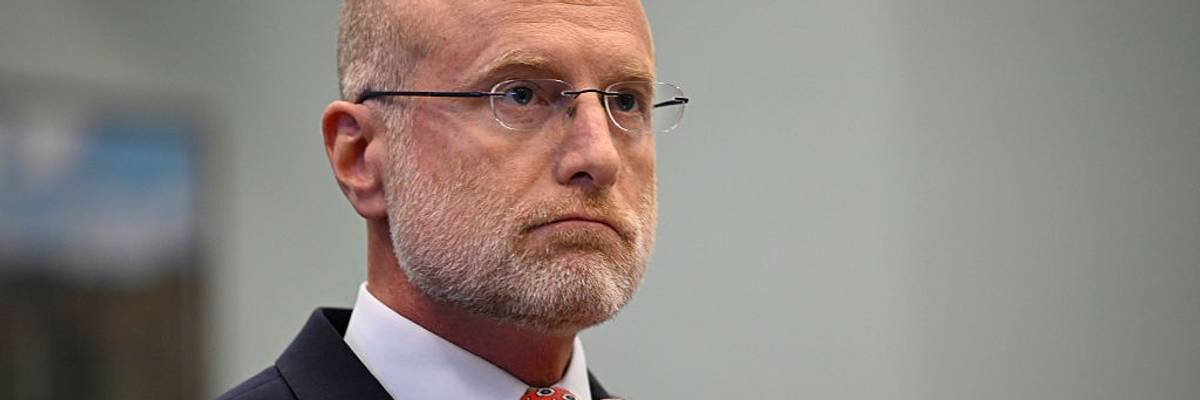
Federal Communications Commission Chairman Brendan Carr testifies before the House Appropriations Subcommittee on Financial Services and General Government at the Rayburn House Office Building on May 21, 2025 in Washington, DC.
(Photo by John McDonnell/Getty Images)

Olivia Rosane
Mar 14, 2026
COMMON DREAMS

In a move one administration critic described as “fragrantly unconstitutional,” Federal Communications Commission Chair Brendan Carr wrote a post on social media on Saturday that appeared to threaten the broadcast license of any media outlet that reported information concerning President Donald Trump’s war on Iran that the president did not like.

“Broadcasters that are running hoaxes and news distortions—also known as the fake news—have a chance now to correct course before their license renewals come up. The law is clear. Broadcasters must operate in the public interest, and they will lose their licenses if they do not,” Carr’s message began.

Carr also shared a screenshot of a Trump post on Truth Social complaining about “Fake News Media” coverage of five US Air Force refueling planes that were reportedly hit and damaged in an Iranian missile strike on Prince Sultan air base in Saudi Arabia.

“The[is] is the federal government telling news stations to provide favorable coverage of the war or their licenses will be pulled,” wrote Sen. Chris Murphy (D-Conn.) on social media in response to the post. “A truly extraordinary moment. We aren’t on the verge of a totalitarian takeover. WE ARE IN THE MIDDLE OF IT. Act like it.”

Several other media professionals, free speech advocates, and Democratic politicians understood Carr’s post as a threat.

“The truth is this war has been a failure of historic proportions. They don’t want Americans to know that.”

“The FCC is threatening the licenses of news stations that report on the effects of Iranian attacks on the American military,” wrote journalist Séamus Malekafzali.

Bulwark economics editor Catherine Rampell wrote, “FCC Chair Brendan Carr threatens broadcast licenses over Iran War coverage.”

Journalist Sam Stein posted, “The state doesn’t like the war coverage, threatens the license of the broadcasters.”

Independent news network MediasTouch wrote: “Brendan Carr is threatening the media to cover the war the way the Trump regime wants. It’s one of the most anti-American messages ever posted by a government official.”

“The truth is this war has been a failure of historic proportions. They don’t want Americans to know that,” the group continued.

“This is worse than the comedian stuff, and by a lot. The stakes here are much higher. He’s not talking about late night shows, he’s talking about how a war is covered.”

Several pointed out that such a threat would be in violation of the First Amendment of the US Constitution, which guarantees freedom of speech and of the press.

“Constitutional law 101: It’s illegal for the government to censor free speech it just doesn’t like about Trump’s Iran war,” Sen. Elizabeth Warren (D-Mass.) posted on social media. “This threat is straight out of the authoritarian playbook.”

Sen. Mark Kelly (D-Ariz.), who has faced scrutiny from the administration for advising service members to disobey illegal orders, wrote: “When our nation is at war it is critical that the press is free to report without government interference. It is literally in the Constitution. This is overreach by the FCC because this administration doesn’t like the microscope and doesn’t want to be held accountable.”

California Gov. Gavin Newsom wrote, “If Trump doesn’t like your coverage of the war, his FCC will pull your broadcast license. That is flagrantly unconstitutional.”

Aaron Terr, the director of public advocacy at the Foundation of Individual Rights and Expression, said: “The president’s hand-picked misinformation czar is at it again, singling out ‘fake news’ that conflicts with his boss’ political agenda. The First Amendment doesn’t allow the government to censor information about the war it’s waging.”

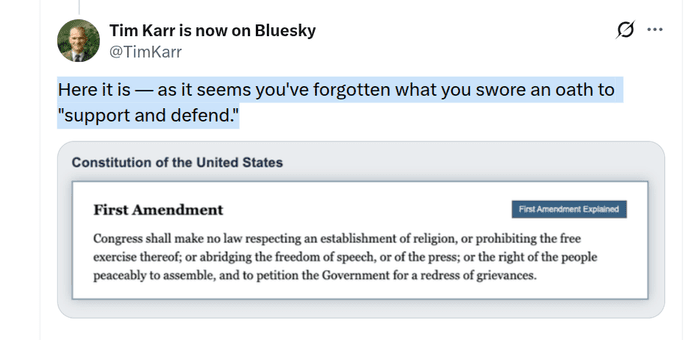
Free Press senior director of strategy and communications Timothy Karr responded to Carr with a screenshot of the First Amendment and the words: “Here it is—as it seems you’ve forgotten what you swore an oath to ‘support and defend.’”


This is not the first time that Carr has been accused of putting his loyalty to Trump over his duty to the Constitution. In September, he pressured ABC to take comedian Jimmy Kimmel off the air over remarks Kimmel had made following the murder of Charlie Kirk.

While ABC eventually reinstated Kimmel’s show following public backlash, free speech advocates warned at the time that the Trump administration would not stop trying to censor opposing views.

“The Trump regime’s war on free speech is no joke—and it’s not over,” Free Press co-CEO Craig Aaron said at the time.

Indeed, Sen. Brian Schatz (D-Hawaii) wrote of Carr’s Saturday statement: “This is worse than the comedian stuff, and by a lot. The stakes here are much higher. He’s not talking about late night shows, he’s talking about how a war is covered.”

Carr’s note comes at a particularly urgent time for independent media coverage in the US, as Paramount Skydance, which is run by the son of pro-Trump billionaire Larry Ellison, is set to acquire Warner Bros. Discovery, which owns CNN. The Trump administration has often criticized CNN’s coverage, including of the war.

On Friday, Secretary of Defense Pete Hegseth told reporters, “The sooner David Ellison takes over that network, the better,” as he complained about a CNN report on how the Pentagon underestimated the risk that Iran would close the Strait of Hormuz in response to US aggression.

Carr has already spoken out in favor of the merger, telling CNBC he thought it was a “good deal, and I think it should get through pretty quickly.”

This piece has been updated with quotes from Sens. Chris Murphy, Elizabeth Warren, and Mark Kelly.


Experts alarmed as Trump FCC's new 'fascist' move dubbed 'truly extraordinary moment'


David McAfee
March 14, 2026 
RAW STORY


Brendan Carr, chair of the Federal Communications Commission under President Donald Trump, stirred outrage when he issued a stark warning to television broadcasters, threatening license revocation for news coverage he characterizes as "hoaxes and news distortions."

"Broadcasters that are running hoaxes and news distortions—also known as the fake news—have a chance now to correct course before their license renewals come up," Carr stated. "The law is clear. Broadcasters must operate in the public interest, and they will lose their licenses if they do not."


The threat appears directed at media coverage of the Trump administration's Iran war, prompting immediate condemnation from media critics and Democratic lawmakers who characterized the remarks as an authoritarian attack on press freedom.

CNN senior political reporter Aaron Blake flagged the administration's approach: "The Trump administration is now threatening the licenses of broadcasters whose news coverage—apparently about the war—it deems to be 'fake.'"

Authoritarianism expert Ruth Ben-Ghiat responded to the threat with stark language. When Republicans Against Trump asked "What country are we living in?" Ben-Ghiat replied simply: "What authoritarians do."

Democratic Senator Chris Murphy issued an urgent warning, stating: "This is the federal government telling news stations to provide favorable coverage of the war or their licenses will be pulled. A truly extraordinary moment. We aren't on the verge of a totalitarian takeover. WE ARE IN THE MIDDLE OF IT. Act like it."

Senator Mark Kelly similarly condemned the FCC's overreach. "When our nation is at war it is critical that the press is free to report without government interference. It is literally in the Constitution. This is overreach by the FCC because this Administration doesn't like the microscope and doesn't want to be held accountable," Kelly said.

The threat represents an unprecedented use of federal regulatory authority to pressure media outlets based on their editorial coverage of government actions.


Dem hits Trump official with profanity-laden warning: 'You will be sued and you will lose'

David McAfee
March 14, 2026 
RAW STORY+


Commissioner of Federal Communications Commission Brendan Carr testifies during an oversight hearing held by the U.S. Senate Commerce, Science, and Transportation Committee to examine the Federal Communications Commission (FCC), in Washington, U.S. June 24, 2020. Alex Wong/Pool via REUTERS/File Photo

A Democratic congressman on Saturday issued a stern warning to a Trump official seen as threatening overreach on Free Speech in media.

Trump's pick, Commissioner of Federal Communications Commission Brendan Carr, over the weekend issued a warning of his own to broadcast media outlets. In a statement, Carr declared: "Broadcasters that are running hoaxes and news distortions - also known as the fake news - have a chance now to correct course before their license renewals come up. The law is clear. Broadcasters must operate in the public interest, and they will lose their licenses if they do not."

Carr's comments represented an unprecedented direct threat by a Trump administration official to use regulatory authority over media licensing as a tool to influence news coverage. One Democratic lawmaker pointed out as much in a post using some profanity.

Congressman Ted Lieu responded to the FCC head, writing, "Dear @BrendanCarrFCC: If you implement your flagrantly anti First Amendment actions, you will be sued and you will lose. And legal discovery will be awesome. Because the American people can then find out what the Administration keeps hiding."

Lieu then added, "Take your fascist s--- and shove it."


Saturday, March 14, 2026

‘Labour must prove it understands public anger over water company failure – and act on it’


© Yau Ming Low/Shutterstock.com

Like many Labour MPs I have had a lot of emails encouraging me to watch “Dirty Business”, the Channel 4 docudrama on the water company sewage scandal. The UK public will tolerate many things, but they will not tolerate an obvious injustice. And they will not tolerate being taken for mugs which is exactly how the water industry has treated them.

In 2024, Labour won an election on a promise of ‘change’. This wasn’t tucked away in the middle of our manifesto. It was on the front of every leaflet. It was the hashtag on every social media post. Every ‘out card’.

Labour’s current troubles are because people don’t believe we have delivered that change. And where they accept we have, they currently think it has been change for the worse.

Change, fairness and clarity

Nowhere is this clearer than on the issue of water.

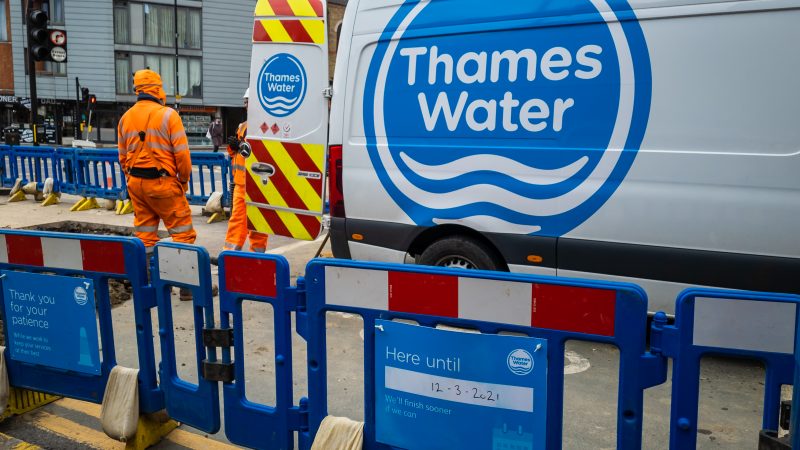
People look particularly at a company like Thames Water, the largest in the country, who also serve my constituency. This is a company that has abused its monopoly. Infrastructure has been left creaking while bosses took out loans to pay dividends to shareholders. Now it is drowning in debt, and it is still polluting our rivers, streams, and beaches with sewage.

Yet last year, under a Labour government, they were allowed to increase bills by £250. This is a lot of things, but nobody can claim that it is fair.

To most people, this is not just mismanagement. It is a violation of the basic British belief in fairness.

People do not expect perfection. But they do expect that companies entrusted with essential services should not be allowed to pollute, profiteer, and then plead poverty to bill payers who are unable to switch suppliers.

Thames Water’s collapse into dysfunction is not an accident. It is the predictable outcome of a political choice to let private companies treat essential infrastructure and bill payers as a cash machine. And when they fail, it is the public who are forced to cough up.

The company is staggering under nearly £20 billion of debt — the legacy of decades of financial engineering that prioritised extraction over investment.

Meanwhile, the pipes leak. The rivers choke. The bills rise. And sewage still ends up in our rivers and on our beaches. Is it any wonder that people are angry?

The cost of living tops every poll of issues that the public are concerned about. And the government has recognised this by taking welcome steps on energy, rail fares, prescription charges and childcare.

But when a bill that (unlike some of those things) everyone in the country has to pay – namely water, is allowed to increase after a company has behaved as shoddily as Thames Water, then the public are entitled to ask if a government elected on a mandate for change really gets it.

A Survation poll of 4,300 people found a majority want water run in the public sector, not by private companies that have repeatedly failed to deliver. New research from 38 Degrees shows overwhelming support for renationalising key services, including water, because voters are sick of “high costs, declining services, scandal-hit companies, and eye-watering bonuses.

These numbers reflect a public that believes fairness has been broken. For all that Labour has passed legislation in this area; the reality is that the public do not believe it goes anywhere near far enough.

Nationalisation may not be the answer

Government estimates put the cost of bringing water utilities into public ownership at around £100 billion. This is not a trifling sum and when there are so many other competing priorities it is right that other options are explored.There are steps short of nationalisation that would show the public that we get the scale of their anger.

We should block companies from paying any dividends until infrastructure investment is delivered. We should impose penalties that reflect the true scale of environmental harm. We should force rapid restructuring of companies that fail basic standards. And, like with COVID fraud, we should get billpayers at least some of their money back.

These are not radical demands. The measures taken so far in the Water (Special Measures) Act simply do not meet the scale of public anger and desire for change. That is the same for other things that the government has done. This is not about opening up the cheque book or about ripping up the fiscal rules. It is about calling time on those who have rigged and milked the system for far too long.

This crisis is not just about water. It is about whether the government believes fairness applies to vested interests that screw over hard-working people. Polling shows the public has already made up its mind; they want a system that treats water as a public necessity, not a private cash machine.

That doesn’t have to be publicly owned but it must be unambiguously public serving.

UK

‘Dunblane’s legacy: how grief, courage and a community’s campaign helped ban handguns’


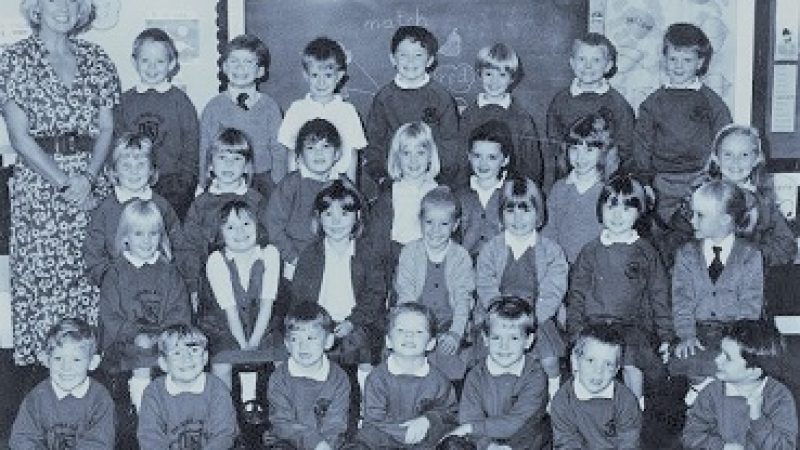
Gwen Mayor and her pupils, Dunblane, 1996.

The Dunblane Tragedy is remembered by people across the country, and indeed the world, today.

For those of us who live in my constituency, however, no reminders are needed.

As my local newspaper The Stirling Observer has stated more than once over the three decades since, ‘constant reminders are only for that you may forget’.

The 16 school children lost that day, all aged five and six, along with their teacher Gwen Mayor, are never forgotten here.

In the aftermath, the community and the families embarked on the painful path towards some kind of healing, endeavouring to do so with dignity and courage and determining to take the memory of the children and Mrs Mayor with them.

It was a path far more difficult to negotiate than mere pages of history books may one day be able to reflect, but all the more noble and admirable for that.

The Dunblane Centre, built for the young people of the community from funds gifted from people across the UK and the rest of the globe, is today a place packed with joy amid the subtle reminders of the children of Mrs Mayor’s class, including glass etchings of their drawings.

Over the years, at the centre, local children – and adults – have enjoyed endless events – from music to the arts; from birthday parties to amateur drama; and even gatherings to watch the town’s most famous son Sir Andy Murray do them proud, all while quietly conscious of those who are not present.

It is a tangible symbol of Dunblane’s silent pledge to crush evil with the force of good.

As an MP I am proud and privileged to represent all the people and families of Dunblane. As a human being I am humbled by them.

Today in particular must be a day to reflect upon the innocent and the good.

Part of that good, however, was the campaign to ban handguns, led by supporters and the families.

There can be little doubt that we have them to thank for all the years since when we have sent our own children, grandchildren, nieces and nephews off to school. Safely returning home when 16 other little ones so tragically didn’t.

Younger generations would be forgiven for assuming such a campaign was merely preaching to the choir and for underestimating the valiant effort and powers of persuasion that took.

In terms of logistics alone, Snowdrop Appeal campaigners had no internet to rely upon, no social media, no buttons to press to simply reach out for public support. The 750,000 signatures on their petition were earned through hard graft, sitting outside the local shopping centre, posting out requests for copies.  Ordinary people putting themselves in the public eye to achieve their aim in honour of lives lost and in the hope it would prevent such heartache from darkening the doors of other families and communities.

There was pushback from a not insignificant number of critics who, while sympathising with the aim, felt a ban was not needed, citing concerns – such as it could be administratively cumbersome and could impact shooting as a sport.

My predecessor, Labour’s own Anne McGuire, found herself with what was arguably one of the most overwhelming responsibilities ever asked of any new local MP.

The 1997 general election saw her catapulted into the Stirling seat which had long been held by Michael Forsyth, the Secretary of State for Scotland.

Even his political might was tested while navigating the aftermath of the tragedy and the push towards a handgun ban.

A partial handgun ban had been put in place in February 1997, but it was not until later that year that a full handgun ban was passed.

In a powerful speech to Parliament in June 1997, Anne spoke of the tragedy, asking those present to “remember how that day developed and the way they felt” and to “keep faith” with those lost and with their families and with communities across the country by extending the ban.

And she said: “Events, no matter how tragic, can often be used as a springboard to create a better world.”

If ever there is an example of that, it is surely Dunblane.

We must all pledge to honour the legacy of those lost and those forever impacted by the events of that day. And we must also honour those who fought in their names to ensure our children and our children’s children are protected.

In doing so we must ensure their achievements are never diluted, that time never deems them irrelevant and that never again are we faced with reacting after the event.


‘This Labour Government needs to fix the Tory student loan fiasco’


Editorial credit: Enrico Della Pietra / Shutterstock.com

Whatever reason you joined the Labour Party, a belief in social mobility is likely to be part of it. 

We share a conviction that someone’s background shouldn’t define them and that the state should make it possible for anyone to achieve their potential. 

That is the foundation that lay behind the New Labour government’s expansion of university places. For university education to be open to everyone rather than being the preserve of the already privileged.

But the current student loan system has created a perverse disincentive. Graduates, particularly those on Plan 2, are facing a debt that will spiral during their working life with up to 87% of graduates projected to not pay back their loans. 

READ MORE: ‘Education, education, education – not debt, debt, debt’

That means the majority of graduates paying back their loans at a rate of 9% on top of their tax rate and pension contributions. A whole generation of young people disincentivised to progress in their career or to increase their productivity. 

This is yet another example of a mess left by the Tories that this government has inherited. And, in a pattern that is becoming tiresomely familiar, a mess cheerfully ignored by the media – and the Leader of the Opposition – until it has become our responsibility. 

But that is the point of national renewal. To fix the foundations of our country so that it once again becomes a place where everything is possible for everyone. 

In Leeds Central and Headingley, we have the highest proportion of students of any parliamentary seat in the UK. It is right, therefore, that this becomes a campaigning issue for us. 

Recently, we agreed a motion to provide a structure for our government to deal with this issue and to create retail policies that will sell on the doorstep. 

Firstly, we are asking the government to unfreeze the repayment threshold. By maintaining the thresholds as they are, thousands of graduates are repaying their loans before they have a chance to earn the benefit of a university degree. As it stands, first year teachers and nurses are having to pay back 9% of their starting salary – preventing them from saving for their first house or joining their pension scheme. 

Secondly, we are calling for an Australian-style student debt cut. Inspiration from our antipodean friends shouldn’t just be confined to immigration. Last year, Anthony Albanese cut all student debt by 20% which wiped $16 billion from the loans of almost 3 million Australians. This would have a significant cost attached to it but, by lifting the burden of debt on recent graduates, would give people a sense that they might be able to repay their debt increasing productivity and aspiration. 

Finally, we are calling for an end to the 3% additional interest that Plan 2 graduates are paying on their loan in addition to RPI. 

This additional interest was planned by the coalition government to cover the shortfall caused by those who can afford to pay back their loan in full or those who will never pay it back. But let’s call it what it really is. This is a social mobility tax. It is ensuring that graduates who needed the loans to attend university are paying for those whose parents could afford to pay for them. 

We know that this is an opportunity for our government to win a generation of voters to our party and to show that Labour in government is delivering for them. We are calling on CLPs across the country to make the same demands. Join us by using the model motion below at your next CLP or BLP meeting and let’s change Britain together.

Motion on student loan repayments

Leeds Central and Headingley CLP notes that:
● Plan 2 student loans introduced by the Conservative-Liberal Democrat coalition
government are regressive and unfair.
● Graduates are paying 9% loan repayments each month creating a 37% marginal
tax rate.
● Additionally, interest rates change throughout the life of the loan 3% plus Retail
Price Index rate (3.2% in March 2025).
● This means that most graduates (current estimate is 83%) will never repay their
student loan.
Leeds Central and Headingley CLP believes that:
● University education benefits individual students, university communities and our
national economy.
● The current system of Plan 2 repayments is unfair, regressive and
disproportionately affects working people.
● Until tuition fees are abolished, any system of student loan repayment should be
progressive and ensure that low and middle income earners do not pay more
than higher earners.
Leeds Central and Headingley CLP resolves to write to the Minister for Higher
Education and Chancellor of the Exchequer to ask the government to:
● Urgently review the Plan 2 student loan repayment system to unfreeze the
threshold of repayments and ensure that it rises with CPI inflation thereafter.
● Introduce an Australian-style student debt cut.
● Scrap the additional 3% interest rate paid on top of RPI by Plan 2 graduates.
● Replace RPI with CPI for all student loans.
Furthermore, we will also work with other CLPs in university-linked seats to ask for their
support in a joint letter of support for this.


UK Think tanks and MPs call for targeted response as Iran war impacts cost of living


Photo: Just Jus/Shutterstock

The crisis in the Middle East threatens to pose an economic headache for the government, as well as a diplomatic one. Oil prices have spiked after Iran closed vital shipping lanes in the Strait of Hormuz and launched drone attacks across the region.

With the cost of living already a major pinch point for communities across the country, the threat of a prolonged war will no doubt be causing some in the Treasury to scratch their heads and consider what options are on the table to relieve the financial pressure on families should the knock-on effects of the war cause energy bills and the cost of groceries to soar.

LabourList spoke to think tanks and some Labour’s MPs to ask what they think the government’s approach should be in navigating the potential cost of living challenge posed by the war – ranging from incentivising businesses and households to make the switch to clean energy to targeted support for energy bills this winter.

‘Government needs to communicate a clear and compelling story about the crisis’

Luke Raikes, deputy general secretary at the Fabian Society, said that the government has its priorities right by being focused on the cost of living and that, while much of the control over that lies out of reach of Whitehall, Labour must do everything in its power to protect people with “the right short-term interventions and long-term shifts”.

Raikes said: “The Prime Minister and Chancellor must drive key government departments to make sure living standards are their priority, from transport to social security, housing and energy. And, in the long term, they must reduce our dependency on oil, taking this moment to push EVs, winning the argument for renewables and nuclear, and getting spades in the ground and wind turbines up in the sky.

“Just as importantly, the government needs to communicate a clear and compelling story about the crisis. They need to level with the public. If they oppose a cut in fuel duty, then they need to make a powerful case that it would be both reckless and ineffective.

“They need to show that only Labour is being responsible and ensuring supply – and then they need to communicate their own policies in a way that cuts through.”

‘Accelerate investment in rooftop solar and batteries’

The Iran conflict has exposed once again how exposed Britain is to the volatility of global oil and gas markets, with the New Economics Foundation stressing how the crisis is another reminder of the need to transition away from fossil fuels and towards energy independence through renewables.

Lydia Prieg, chief economist at the NEF, said the war could make life harder for millions who are already struggling, and that the government should be looking at ways to support people through “what could be a turbulent time”.

She said: “It should start by moving all green and social levies from bills to general taxation and abolish the carbon price support, a levy which makes electricity more expensive than gas. These two measures alone could cut household energy bills by £120.

“It should also accelerate investment in rooftop solar and batteries, which helped those with the technology during the last crisis – and if bills spike again, subsidising essential energy use for everyone, along with targeted support for those with additional needs, would protect vulnerable households more cost-effectively than previous schemes.

“Crucially, it is the government that needs to step up and not rely on the Bank of England to raise interest rates, which would make it harder to invest in what we need to protect us from future fossil fuel crises.”

‘Government can’t waste time in creating targeted policy for energy bill support’

The Institute for Public Policy Research said that, although fossil fuel shocks are becoming more frequent, little has been done since the 2022 energy crisis to improve our options.

Associate director for energy and climate at IPPR Sam Alvis said that the UK still lacks the ability to target support to those that need it most, lacks scalable programmes to get people clean energy technology, like solar panels and electric vehicles, and industry support schemes lack an incentive to nudge businesses away from using gas and towards clean electricity.

Alvis said: “All that means the most obvious response from government remains the same policy the UK tried before – broad-based support for energy bills, at a cost of almost £50 billion.

“Two things should cause a rethink. Our fiscal space is tight, in part because we are still paying for the last crisis, and households are already hurting because they are still paying for last time, too – with bills still 40 percent higher than they were before Ukraine.

“Government has the advantage that the current energy price cap will protect consumers until July, and that the coming spring warmth means people will use less gas. This opportunity cannot be wasted – in 2022, the government waited seven months after the Ukraine crisis to act on energy prices, and still adopted a kneejerk, expensive and untargeted policy. The next few months are critical to designing interventions that maintain the incentive to switch from gas and lower the cost of universal support if things deteriorate.”

‘If the shock persists, it will become a public health issue’

In Labour’s rural constituency of South West Norfolk, more than a quarter of residents use heating oil as their main source of fuel – and with heating oil prices rising, MP Terry Jermy has said families in his seat are on the frontline of the energy shock.

Jermy told LabourList: “I have dozens of elderly and vulnerable residents who have exhausted their oil supplies and are now forced to turn off their boilers as they simply cannot afford the new prices. This includes people who had orders confirmed and paid for, only to have their delivery cancelled by the supplier and, in some cases, offered the same order for the new price.

“If this issue persists, it will become a public health issue.”

Jermy has worked with other members of the Labour Rural Research Group to lobby ministers with a four-point plan to address the crisis; a review of “exploitative” heating oil price increases, an examination of potential unfair retail practices, ensuring reliable supply chains, and a consideration of stronger protections for off-grid households.

“Rural Britain cannot be left uniquely vulnerable when global energy shocks hit. I am pleased the government has engaged so well with rural Labour MPs this week and has responded to the challenge – but if this crisis persists, the government must take further action to protect rural families and businesses.”

‘Keep calm and build clean power at home to shield us from the next shock’

MP for Leeds North West and climate minister Katie White said she has found the Reform and Tory response “baffling”, saying they would keep the country hooked on “the very system that keep throwing Britain around like a cork in the North Sea”.

In a piece for LabourList, she wrote: “The debate triggered by events in Iran cannot be separated from Britain’s energy system. If we want stability when geopolitical crises erupt, the answer is not rhetorical swings between escalation abroad and petrol pump stunts at home. It is reducing our exposure to volatile global fuel markets.”

She said that the government has been rebuilding the UK’s ability to produce more of its own power, by lifting a ban on onshore wind, streamlining planning barriers and allowing investment in clean energy to thrive.

“None of this will eliminate geopolitical shocks overnight. But the more electricity Britain generates from sources produced here at home, the less exposed our economy becomes to global fossil fuel volatility.

“The lesson from the Iran crisis is not that Britain needs more political theatre or petrol pump stunts. It is that moments like these that demand seriousness, consistency and a clear strategy for the future.

“The job of government is the opposite: keep calm, get serious, and build the clean power at home that shields Britain from the next fossil fuel shock.”

‘Unacceptable for anyone to use crisis to rip people off’

For its part, the government has sought to reassure households over the fluctuations in oil prices, with Energy Secretary Ed Miliband also meeting with industry leaders to discuss the impact of the conflict in the Middle East.

Speaking to the BBC, he hit out at the hikes in the price of heating oil and said he would not tolerate unfair practices – and has spoken to the Competition Authority as they investigate the situation.

“It would be completely unacceptable for anyone to use this crisis to rip people off and we will fight people’s corner to stop that happening.”

He also told the broadcaster that Britain needed to get off the “fossil fuel rollercoaster” and noted a recent report that found that the cost of the clean energy transition is less than the entire cost of the last fossil fuel crisis.

In addition, Miliband revealed that plans to end the freeze in fuel duty in September are now under review.
 

Unite workers at BAE Systems celebrate huge pay victory after strike action

12 March, 2026 
Left Foot Forward


Staff had been furious at the lack of a fair pay award after seeing colleagues in other parts of the BAE business being awarded pay rises and decided to take industrial action.


Unite the union workers at BAE Systems are celebrating a huge pay victory after strike action.

Thousands of workers at BAE Systems aerospace factories in Lancashire have won a significant, above inflation pay award after months of industrial action supported by Unite, the UK’s leading aerospace and defence union.

Workers at the factories at Warton and Samlesbury have secured a pay rise worth six per cent overall as well as additional annual leave and a one-off payment.

Staff had been furious at the lack of a fair pay award after seeing colleagues in other parts of the BAE business being awarded pay rises and decided to take industrial action.

Despite attempts by BAE in the High Court to try and block a legitimate strike, workers shut down the factories repeatedly in December, January and February.

Unite general sectary Sharon Graham said: “It has taken a courageous stance from our workers on a picket line to win this award. They should be congratulated for standing together and winning a pay rise they truly deserve.”

Staff have been awarded a 4.8 per cent award backdated to 1 January and a further 0.75 per cent from 1 October 2026. All staff will receive an additional day of annual leave while Unite members receive a one-off further days leave. All staff are due to receive a one-off £500 and a half-hour earlier finish time each day.

Basit Mahmood is editor of Left Foot Forward

UK

EXCLUSIVE: Usdaw General Secretary writes to PM ‘frustrated’ regarding changes to Employment Rights Act


LabourList has seen a letter addressed to the Prime Minister, written by General Secretary of Labour affiliated union Usdaw Joanne Thomas, that demonstrates concerns the government is ‘set to fail to fulfil its manifesto commitment on guaranteed hours’ in the implementation of the Employment Rights Act.

LabourList contacted Usdaw, where a source confirmed that the letter is authentic.

Thomas outlined in the letter to Sir Keir Starmer, that she has received information suggesting the government will no longer implement the Employment Rights Act as promised in its manifesto – opting to no longer commit to a policy that everyone receives the right to a contract which reflects the number of hours they normally work.

This is due to the inclusion of a minimal hours threshold, that Thomas’ letter suggests would not only fall short of the Government’s initial commitments, but may ‘actually have unintended consequences of making working hours less secure than they are now, for the most vulnerable workers.’

The letter suggests that Thomas was anticipating an option for full-time workers to be included in the right as part of an upcoming consultation, but has now come to believe this measure will not be included in the consultation or considered by the Government.

The letter asks four questions for the Prime Minister to answer:

“1. Which Department is responsible for the decision not to include full-time workers in the consultation on guaranteed hours?

2. What legal advice has the Government received on this matter?

3. If legal advice which prevents the Government from fulfilling its manifesto commitment has been received, when was this received and why has it not been shared with unions?

4. What steps will you take to resolve this matter so that Usdaw can regain trust and confidence in the Government to deliver the Plan to Make Work Pay?”

Thomas states that the matter of guaranteed hours contracts goes ‘right to the heart of the Government’s make work pay agenda’ in addition to the Prime Minister’s ‘integrity’, before outlining that Starmer had spoken at Usdaw’s conference in 2024 and committed to the membership that the Employment Rights Act would not see these measures watered down.

The letter concludes by saying that in order to preserve the relationship between Usdaw and the Government, Thomas requires ‘full confidence that the Chancellor and the Secretary of State for Business and Trade will deliver the Plan to Make Work Pay’ requesting that the Prime Minister intervenes due to a ‘lack of clarity and accountability across departments’.

The letter was also CC’d to other union leaders, the Chancellor of the Exchequer, the Secretary of State for Business and Trade, the Parliamentary Under-Secretary of State for Employment Rights and Consumer Protection, and the Deputy Leader of the Labour Party.

LabourList has contacted Number 10, HM Treasury and the Department for Business and Trade for comment.

A Government spokesperson said:
“Tackling insecure work is vital if we are to boost incomes, raise living standards and increase productivity. The consultation has not yet been finalised or published.
We’re already implementing the plan to Make Work Pay and new measures coming into effect next month will mark a turning point for working life – improved sick pay, day one family leave rights and the new Fair Work Agency – as we look to put fairness and security at the heart of the workplace.”

Share your thoughts. Contribute on this story or tell your own by writing to our Editor. The best letters every week will be published on the site. Find out how to get your letter published.

Full letter text of USDAW letter:

Dear Keir

Employment Rights Act Implementation

I write in my capacity as Usdaw General Secretary. As you are aware, Usdaw has consistently been a supportive advocate of this Government, and the Employment Rights Act in particular. It is extremely frustrating that I now find myself in the position of having to write this letter and seek your personal intervention to resolve a major issue with implementation. Unfortunately, I have had information which leads me to believe the Government is set to fail to fulfil its manifesto commitment on guaranteed hours contracts.

As you will be aware the manifesto said that everyone would have the right to a contract that reflects the hours people normally work. We have been concerned since the first publication of the Bill that the inclusion of minimum hours threshold would fail in meeting the Government’s commitments and, even worse, would actually have unintended consequences of making working hours less secure than they are now, for the most vulnerable workers.

I had raised this issue repeatedly, at every level of Government, including with yourself. I had a clear expectation that the forthcoming consultation would include an option for full-time workers to be included in the right. I have since come to understand that this will not be included and that the Government has no intention of even considering it as an option. I have a number of questions that I am seeking an urgent response from you:

1. Which Department is responsible for the decision not to include full-time workers in the consultation on guaranteed hours?

2. What legal advice has the Government received on this matter?

3. If legal advice which prevents the Government from fulfilling its manifesto commitment has been received, when was this received and why has it not been shared with unions?

4. What steps will you take to resolve this matter so that Usdaw can regain trust and confidence in the Government to deliver the Plan to Make Work Pay?

Unfortunately, this issue does not sit in isolation. I understand that a number of other unions have concerns about implementation of other elements of the Act, which they will no doubt contact you about separately. Usdaw will of course support all of the TULO unions in seeking full delivery of the Government’s Plan to Make Work Pay.

On guaranteed hours specifically, this was the most important and potentially transformative new right within the Act for Usdaw members – on this I have been extremely clear with you and the whole of the Government. This goes beyond technical implementation and right to the heart of the Government’s Make Work Pay agenda. Beyond that, it goes to the heart of our working relationship, and your integrity as Prime Minister.

You spoke at our conference in 2024, and told our members that there would be no watering down of the New Deal. Our members listened to that message and they believed it. They campaigned for you, they voted for you, and they expect you to keep your promise. As things currently stand I cannot in good faith tell those members that you will do so. I have a responsibility to our members to give a clear eyed assessment of what any Government is delivering, or failing to deliver, for them.

I had believed that the Government was genuinely open to meaningful consultation on guaranteed hours. Indeed, Justin Madders, then Parliamentary Under-Secretary of State for Business and Trade is recorded in Hansard as stating on 4 December 2024 “There is an argument that anyone below full-time hours—again, there is a debate about what that means—could be within scope. That is why we are holding a consultation, to enable us to understand exactly who will be affected—whether we are trying to catch everyone or target the people who suffer the greatest insecurity of work. That is the purpose of the consultation.”

In order to preserve our ongoing relationship, I need to have full confidence that the Chancellor and the Secretary of State for Business and Trade will deliver the Plan to Make Work Pay. My attempts to seek assurances from your Government have led to frustration at what appears to be a lack of accountability and clarity across departments. I am, therefore, asking you to step in to resolve the situation and show leadership, as a matter of urgency.

I will be available for a call at your earliest convenience.

Yours sincerely

JOANNE THOMAS
General Secretary

CC:

Dave Ward, General Secretary, CWU
Steve Wright, General Secretary, FBU
Gary Smith, General Secretary, GMB
Roy Rickhuss, General Secretary, Community
Chris Kitchen, General Secretary, NUM
Sharon Graham, General Secretary, Unite
Naomi Pohl, General Secretary, Musicians’ Union
Maryam Eslamdoust, General Secretary, TSSA
Dave Calfe, General Secretary, Aslef
Andrea Egan, General Secretary, Unison
Rachel Reeves, Chancellor of the Exchequer
Peter Kyle, Secretary of State, Department of Business & Trade
Kate Dearden, Minister of State, Department of Business & Trade
Lucy Powell, Deputy Leader