Showing posts sorted by relevance for query DRUGS. Sort by date Show all posts

Thursday, February 20, 2025


All generic drugs are not equal, study finds


Generics made in India have more ‘severe adverse events’


Ohio State University


COLUMBUS, Ohio – Generic drugs manufactured in India are linked to significantly more “severe adverse events” for patients who use them than equivalent drugs produced in the United States, a new study finds.


These adverse events included hospitalization, disability, and in a few cases, death.  Researchers found that mature generic drugs, those that had been on the market for a relatively long time, were responsible for the finding.


The results show that all generic drugs are not equal, even though patients are often told that they are, said John Gray, co-author of the study and professor of operations at The Ohio State University’s Fisher College of Business.


“Drug manufacturing regulation, and therefore quality assurance practices, differ between emerging economies like India and advanced economies like the United States,” Gray said.

“Where generic drugs are manufactured can make a significant difference.”


“The FDA assures the public that all generics patterned after the same original drug should be equivalently safe and effective, however, this is not necessarily the case when it comes to generic drugs made in India,” added another co-author, George Ball, associate professor of operations and decision technologies at Indiana University’s Kelley School of Business.


Published recently in the journal Production and Operations Management, the research was led by In Joon Noh, who received his PhD at Ohio State and is now an assistant professor at Korea University. Other authors include Zachary Wright, who will receive his PhD from Ohio State and is now an assistant professor at Brigham Young University; and Hyunwoo Park, a former assistant professor at Ohio State, now at Seoul National University.


Several of the authors on this paper have worked closely with the Food and Drug Administration on federal grants and contracts, though this study was conducted completely independent of the FDA. These authors said working closely with the FDA gave them a deep appreciation for the importance of studying generic drug quality.


The study is significant because it is the first to be able to link a large sample of generic drugs to the actual plant where they were manufactured.  The FDA will not release that information through the Freedom of Information Act process. But Gray said Noh figured out how to use what is called the Structured Product Labeling dataset to link drugs to the factory where they were produced.


“Overcoming this lack of transparency of drug manufacturing location is one of the major accomplishments of our study,” Gray said.

Another key to the study is that it matched the drugs made in India to the same drugs made in the United States. The drugs had the same active ingredients, the same dosage form and the same route of administration.


“That means the drugs are pharmaceutically equivalent and we are comparing apples to apples,” he said.


The researchers matched 2,443 drugs made in the United States and in emerging economies.  Although the researchers included other countries in their analysis, 93% of generic drugs from emerging economy countries are made in India, so India data fully explained the results.


The researchers compared the frequency with which drugs were associated with adverse event reports for generic drugs made in India versus the matched drugs made in the United States. These adverse event reports are available in the FDA Adverse Event Reporting System (FAERS).


Although the FAERS includes all reported adverse events, in this study the researchers only used those with the most serious outcomes, including hospitalization, disability and death.


Results showed that the number of severe adverse events for generic drugs made in India was 54% higher than for equivalent matched generic drugs made in the United States. That was after taking into account a variety of other factors that could have impacted the results, including the volume of drugs sold.


The findings were driven by drugs that had been on the market for a longer time.


“In the pharmaceutical industry, the older drugs get cheaper and cheaper and the competition gets more intense to hold down costs,” Gray said. “That may result in operations and supply chain issues that can compromise drug quality.”


Gray emphasized that the results shouldn’t be taken as a reason to stop overseas production of generic drugs.


“There are good manufacturers in India, there are bad manufacturers in the U.S., and we’re not advocating for ending offshore production of drugs or bashing India in any way,” Gray said.


“We believe this is a regulatory oversight issue that can be improved.”


Gray said one key issue is that when the FDA inspects plants that make generic drugs in the United States, the inspections are unannounced.  But in overseas locations, the inspections are arranged in advance, which may allow manufacturers to hide problems and make it harder for the FDA to find those that do exist. Making all inspections unannounced could make a big difference, he said.


“A key recommendation we make in this study is for the FDA to make drug manufacturing location, such as the country of manufacture, and drug quality, transparent for consumers,” Ball added. “This can help create a market in which drug quality is incentivized more than it is today”

Monday, February 03, 2020

Drugs, war inextricably tied, Watson panel says
Professor Peter Andreas explains how, through war, six drugs gained popularity

By AANCHAL SHETH STAFF WRITER Friday, January 31, 2020

LEON JIANG / HERALD

A panel at the Watson Institute discussed Professor Peter Andreas’ book, “Killer High: A History of War in Six Drugs,” and the five dimensions of war and drugs, such as “war while on drugs.”

Six drugs — cocaine, tobacco, opium, amphetamines, alcohol and caffeine. In “Killer High: A History of War in Six Drugs,” Peter Andreas, professor of international studies and political science and professor of international and public affairs, details how these six drugs have sparked, fueled and been popularized by war for hundreds of years.


Andreas spoke on his recently launched book at the Watson Institute of International and Public Affairs Thursday. “War made drugs and drugs made war,” Andreas told The Herald.

Andreas explored the relationship between drugs and war through a“five-dimensional approach,” he said. The first dimension explores “war while on drugs,” which includes the use of drugs during wartime to cope with stressful situations and celebrate victories, Andreas said. The second consists of “war through drugs,” entailing the use of drugs as a weapon of war. Another example is funding wars through alcohol, tobacco, cocaine and opium revenue. The third dimension deals with “war for drugs,” which addresses conflict motivated by desire for access to or control of drug markets. The fourth dimension, “war against drugs,” uses military and strategic resources to fight drugs, an approach that began with President Nixon declaring war on drugs in 1971.
The final dimension is “drugs after war,” which covers the change in consumer outcomes and preferences because of war. Andreas questioned why the United States is a coffee-drinking nation rather than a tea-drinking one. “Because we won the American Revolution, when the Brits went on to tea, we went on to coffee. … The very taste that we take for granted is actually the result of war,” Andreas explained during the discussion. Panelist C.J. Chivers, a writer for the New York Times and combat veteran, also spoke to this aspect of Andreas’ research, noting that prescribed drugs are deeply concerning for veterans after war, who receive limited or no counseling on the proper use of pharmaceuticals.

Andreas began his research for “Killer High” seven years ago. When he initially began writing, Andreas had a “bias towards thinking it’s about cocaine and heroin.” But Andreas was surprised by the importance of legal drugs. “It was pretty eye-opening to discover how important caffeine and alcohol and tobacco have been historically,” he added. Andreas also said that the word “coffee” was mentioned more times in soldiers’ diaries than the words “gun,” “cannon” or “rifle.” Despite Andreas’ research on the harm drugs have caused, he has an addiction of his own. “Caffeine is my drug of choice.”

Andreas wanted to find the “sweet spot” between writing good scholarship and accessible reading material for non-specialists. Panelist Angelica Duran-Martinez PhD’13, associate professor of political science at University of Massachusetts Lowell, said that the topics were presented so accessibly that she has assigned this book as a reading for her students. Chivers also held up his copy of Andreas’ book, which had handwritten notes scrawled over the pages. “When I get to the end of the book and I’ve used up two ink pens, it’s probably a sign that it’s a hell of a book,” he said.

---30---

Friday, August 13, 2021

FOR PROFIT MEDICINE USA
Groups make own drugs to fight high drug prices, shortages

By LINDA A. JOHNSON
August 10, 2021

1 of 5
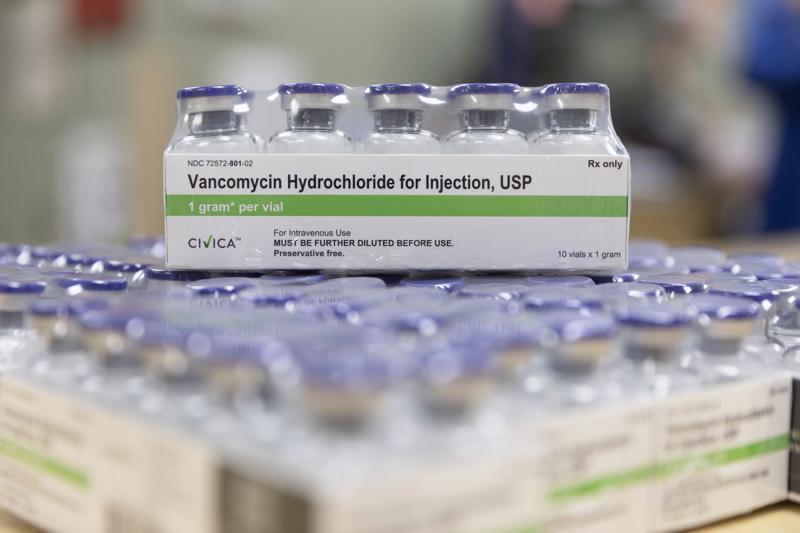
This 2019 photo provided by Civica Rx shows vials of vancomycin in Lehi, Utah. Impatient with years of inaction in Washington on prescription drug costs, U.S. hospital groups, startups and nonprofits have started making their own medicines in a bid to combat stubbornly high prices and persistent shortages of drugs with little competition. (Civica Rx via AP)

Impatient with years of inaction in Washington on prescription drug costs, U.S. hospital groups, startups and nonprofits have started making their own medicines in a bid to combat stubbornly high prices and persistent shortages of drugs with little competition.

The efforts are at varying stages, but some have already made and shipped millions of doses. Nearly half of U.S. hospitals have gotten some drugs from the projects and more medicines should be in retail pharmacies within the next year as the work accelerates.

Most groups are working on generics, while at least one is trying to develop brand-name drugs. All aim to sell their drugs at prices well below what competitors charge.

“These companies are addressing different parts of the problem and trying to come up with novel solutions” to produce cheaper medicines, said Stacie Dusetzina, a Vanderbilt University health policy professor. “People should be able to access the drugs that work for them without going broke.”

While some of the projects are solving supply problems and reducing medication costs for hospitals, drug price experts are split on how much consumers will benefit.

Dusetzina said the efforts could bring needed price competition, at least for some drugs.

Dr. Aaron Kesselheim, a Harvard Medical School researcher and price expert at Brigham & Women’s Hospital in Boston, thinks for some drugs these projects “can lower patients’ out-of-pocket costs ... absolutely.”

But David Mitchell, founder of the independent consumer group Patients for Affordable Drugs, said the projects are workarounds that help in niches, but are “not enough to fix a broken system.”

Civica Rx was started three years ago by a hospital consortium. It now provides over 50 generic injectable medicines in chronic shortage to more than 1,400 hospital members and the Veterans Affairs and Defense departments. It already has sold enough medication to treat 17 million people, including many hospitalized with COVID-19.

Now it’s expanding to help patients directly, said chief executive Martin VanTrieste. Its new partnership with Anthem and Blue Cross health plans, CivicaScript, is picking six or seven expensive generic drugs to start. It will have contract manufacturer Catalent start producing those drugs to sell at 50,000 retail pharmacies starting in 2023.

Other “alternative drugmakers” include:

—Two enterprises, from Premier Inc. and Phlow Corp., focused on providing their hospital members with affordably priced generics that are chronically scarce.

NP2, which is about to start producing cheaper generic IV cancer medicines.

EQRx, which is creating brand-name drugs for cancer and inflammatory disorders to sell at “radically lower prices” than rival brands.

Walmart recently added insulin to its in-house brand of products for people with diabetes. It’s selling its own version of the mealtime insulin NovoLog, in partnership with manufacturer Novo Nordisk, for less than half NovoLog’s price.

Even entrepreneur Mark Cuban has jumped in, giving his name and money to a public-benefit company aiming to provide cheap alternatives to high-cost generic drugs at 15% above manufacturing costs, no insurance needed.

In January, Mark Cuban Cost Plus Drug Co. launched its first medication, a pill for parasitic worm infections that it sells through independent pharmacies for about $40 per two-dose treatment, said founder and CEO Dr. Alex Oshmyansky. The company is building a factory in Dallas but paying other manufacturers for now and aims to launch up to 100 more drugs by year’s end.

Vanderbilt’s Dusetzina sees Cuban’s company as best positioned to cut out-of-pocket costs.

“It’s a really nice project to go after products where there’s little competition — and price gouging,” she said.

Brand-name drugs get monopolies lasting up to two decades under U.S. patent law, so most of the alternative drugmakers are targeting certain off-patent medicines whose prices have risen dramatically in recent years.

Generics are usually cheap. But as buyers pushed for barely break-even prices on these drugs over the last couple decades, generic manufacturers consolidated. With fewer factories making certain generics, even temporary plant closures triggered lasting shortages. And the reduced competition led to big price hikes, often forcing doctors to try costlier, less-effective alternatives and hospital pharmacists to spend long hours seeking alternatives for drugs in shortage.

Those years-long shortages spurred Civica’s formation. It also led a top hospital group purchasing organization, Premier Inc., to launch a program that has contractors making more than 60 products for about 850 member hospitals, said its chief pharmacy officer, Jessica Daley. The two groups say they’ve gotten numerous drugs off national shortage lists.

Phlow Corp., a public benefit drug manufacturer largely funded by government grants, partnered in March with 11 top children’s hospitals to address shortages by making generic medicines in child-size doses for cancer and other life-threatening conditions. Phlow and Civica are building neighboring factories in Petersburg, Virginia.

Such efforts have been helping hospitals stock crucial drugs — sedatives, painkillers, antibiotics and respiratory medicines — needed for COVID-19 patients.

The alternative drugmakers are hiring U.S. contract manufacturers whenever possible and getting drug ingredients here or in Europe, to diversify supply chains heavily reliant on China and India, which limited exports of drugs and ingredients early in the pandemic. The Biden administration also is working to increase domestic production of essential generic drugs.

Harvard’s Kesselheim foresees the new generic manufacturers helping to boost supply and lower prices, but he thinks developing new brand-name drugs — as EQRx is trying to do — is tougher.

EQRx is currently testing 10 novel drugs that it licensed the rights to, for cancers and immunologic disorders like rheumatoid arthritis. One already in final-stage testing could launch within three years.

The company expects to start work on another 10 patented drugs in ultra-expensive categories in the next year and is collaborating with Exscientia, a firm that uses artificial intelligence to design drugs and speed up testing.

Insurers are among EQRx’s early investors, said the company’s president, Melanie Nallicheri. They expect the company to turn a profit, but they also support plans to price medicines at up to two-thirds off rival brand-name drugs, she said.

___

The Associated Press Health and Science Department receives support from the Howard Hughes Medical Institute’s Department of Science Education. The AP is solely responsible for all content.

Monday, June 30, 2025

‘It’s heartbreaking’: bad cancer drugs shipped to more than 100 countries

The Bureau of Investigative Journalism
DAWN
Published June 26, 2025 

Illustration by Anuj Shrestha for TBIJ


LONG  READ

Vital chemotherapy drugs used around the world have failed quality tests, leaving cancer patients in more than 100 countries at risk of ineffective treatments and potentially fatal side effects.

The drugs in question form the backbone of treatment plans for numerous common cancers, including breast cancer, ovarian cancer and leukaemia.

Some drugs contained so little of their key ingredient that pharmacists said giving them to patients would be as good as doing nothing. Other drugs, containing too much active ingredient, put patients at risk of severe organ damage or even death.

“Both scenarios are horrendous,” said one pharmacist. “It’s heartbreaking.”

Doctors from multiple countries told The Bureau of Investigative Journalism (TBIJ) that the drugs in question were not working as expected, leaving patients suddenly unresponsive to treatment. Other patients suffered side effects so toxic that they could no longer tolerate the medicine.

The variance found in the levels of active ingredient was alarming. In some cases, pills from the same blister pack contained different amounts.

These findings expose huge holes in the global safety nets intended to prevent profit-seeking manufacturers from cutting corners and to protect patients from bad drugs. All the while, patients and governments with stretched resources are paying the price for drugs that don’t work.

A global killer


Cancer is one of the biggest killers worldwide, linked to around 10 million deaths every year — roughly one in six. The burden of cancer is growing, particularly in low and middle-income regions. In sub-Saharan Africa, for example, instances of cancer have doubled in the last 30 years.

Much of the global demand for treatment is met by so-called generic drugs. These are versions of a drug that can be made once the original maker’s exclusivity rights have expired, and are typically made far more cheaply. The bad drugs described in this investigation were all generics.

Generics are widely used in all countries but are most crucial in those with fewer resources, where costlier treatments might be beyond reach.

If generics were not available in sub-Saharan Africa, for instance, “any cancer treatment would be likely inaccessible to most of the population”, said Claudia Martinez of the Access to Medicine Foundation, an NGO part-funded by the Bill and Melinda Gates Foundation.

In chemotherapy drugs, the active ingredient, which fights cancer cells, is also highly toxic. Patients need to receive enough of it to treat the cancer, but not so much that they overdose and suffer damaging side effects.

As such, hospital pharmacists calculate doses carefully and, in doing so, rely on the amount of active ingredient being exactly what’s stated on the label.

Research from a landmark study published today examined the amount of active ingredient in seven common types of cancer drugs: cisplatin, cyclophosphamide, doxorubicin, ifosfamide, leucovorin, methotrexate and oxaliplatin. All of them are classed as essential medicines by the World Health Organisation (WHO).

Working with collaborators in Cameroon, Ethiopia, Kenya and Malawi, researchers at the University of Notre Dame in Indiana, in the United States, analysed drug samples from the four countries.


Of the 189 samples that had not expired at the time of testing, about one-fifth failed. This consisted of 20 different brands of generic drug made by 17 manufacturers.


“We were all taken aback when we saw the results,” said Marya Lieberman, the professor who led the research.

More than 30 manufacturers made products to a good standard. But for patients receiving the poor-quality drugs, the effects could be devastating.

“Once a person has been diagnosed with cancer, there’s a limited window of opportunity for treatment to work,” said Lieberman. “And if someone is treated with an ineffective product, they can lose that precious window.”

The majority of failed drugs had too little active ingredient — for most, this meant less than 88 per cent of the amount stated on the label — while some contained too much, more than 112pc in some cases. Both thresholds were decided by researchers based on international standards.


Maximilian Wilfinger tests chemotherapy drugs in Marya Lieberman’s lab at the University of Notre Dame, Indiana, the US, in this file photo taken in August 2024. — Matt Cashore/University of Notre Dame

“Both scenarios are horrendous in my eyes,” said Shereen Nabhani-Gebara, vice chair of the British Oncology Pharmacists Association. “It takes a lot of courage for someone with cancer to accept a diagnosis, but then to be short-changed like this when they are trying their best is heartbreaking, because this is someone’s life.”


Tracking the threat


Over the past six years, these brands of drugs have been shipped to more than 100 countries in every populated continent on the planet. They range from low and middle-income nations like Nepal, Ethiopia, North Korea and Pakistan, to wealthy countries such as the US, UK and Saudi Arabia.

The worst-performing drug in the study is made by Indian manufacturer Venus Remedies. It is a drug called cyclophosphamide, which is often used to treat cancers, including lymphoma and breast cancer.


A table showing data on subpar cancer drugs shipped to Pakistan. — The Bureau of Investigative Journalism

All eight samples of this Venus Remedies drug failed, with six containing less than half the amount of active ingredient claimed by the manufacturer. One contained just over a quarter of the stated dose, which, according to several cancer pharmacists, would be as effective as no treatment at all.

The drug has been shipped to six countries, with its largest importer being Ethiopia. Although Pakistan does obtain cyclophosphamide from Indian vendors, Venus Remedies is not the main supplier.

Wondemagegnhu Tigeneh, a clinical oncologist in the Ethiopian capital Addis Ababa, told TBIJ that he has treated patients with chemotherapy drugs he believes did not work.

“I have a suspicion that the active ingredient was lower than expected,” he said, remembering a drug he gave to a recent patient who had responded well to the first three rounds of treatment. But on the next round, their progress suddenly stopped.

Because he has no means to test them, Tigeneh can never be sure of the quality of a given drug. But in his 20 years treating cancer, he has learned to notice tell-tale signs. Sometimes, for instance, there is a complete absence of side effects such as nausea or hair loss.

“That makes it difficult to trust that particular drug,” he said.

Then there are the patients whose disease he struggles to get under control, such as a patient whose response to treatment halted without warning.

Rather than reducing the size of the tumour enough to enable surgery, his team has been forced to move on to a second-line treatment. If that fails, the next stage is palliative care. “

It’s very sad,“ said Tigeneh. “We didn’t used to see things like this.”

Cancer patients in Ethiopia have far better access to treatment facilities now than they did 20 years ago. It doesn’t seem, however, that the standard of medicines has kept pace.

A 2020 study of cancer drugs in Ethiopia included 20 samples of cisplatin, which were all found to be substandard, averaging just over half of the stated content. One researcher who tests the quality of drugs in the country told TBIJ that they find bad medicines wherever they go.

Venus Remedies told TBIJ that the study results were “not scientifically plausible” given the company’s “validated manufacturing systems and quality controls”.

It said it has received no complaints or concerns about the batches in question and shared the results of its own testing that indicated they were of a good standard.


Professor Marya Lieberman works in her lab at the University of Notre Dame, in India, the US, in this photo taken in July 2024. — Barbara Johnston/University of Notre Dame

It said storage conditions in the supply chain, which can affect drug quality, might have affected the researchers’ test results. However, the absence of similar quality issues across the entire data set suggests this is not the case.

Venus Remedies is one of three companies or regulators that queried the methodology used by the lab, saying it deviated from international standards or could give erroneous results.

However, Lieberman said that, although her results are not intended for regulatory purposes, her researchers’ methods are based on those used by regulatory labs and were verified for suitability, accuracy, and precision. Both the findings and methods have been scrutinised by independent academics.


Toxic effects

Some 2,000 miles south of Addis Ababa, in Malawi, specialist cancer care has only been available for around 15 years. In one of the poorest countries in the world, patients depend on healthcare being free at the point of need. That means clinics have to rely on generic drugs.

A pharmacist specialising in cancer care in central Malawi told TBIJ of seeing patients at his hospital overdose on methotrexate, a drug used to treat leukaemia and lymphoma.

Malawi has also imported two of the brands of methotrexate the researchers in this investigation found to contain too much active ingredient: Zuvitrex, made by Zuvius Lifesciences; and Unitrexate, made by United Biotech.

Neither company responded to multiple requests for comment.

This sort of excess can be just as harmful as a deficit. A bad overdose can leave a patient with lifelong side effects or even kill them. As Nabhani-Gebara said, “More is not better.”

The Malawian pharmacist said patients at his hospital have suffered severe vomiting and nausea after overdosing on methotrexate, while others had to be moved onto a second-line treatment, which may not be as effective.

For some patients, the side effects were so severe that they had to pause treatment entirely, giving the cancer a chance to grow.

When a sample of the methotrexate in question was tested as part of a research project taking place at the time, it was found to be too high in active ingredient. “It’s very worrying,” the pharmacist said.

He told TBIJ that he and his colleagues have, on occasion, had to stop using an entire batch of chemotherapy medicine and send samples to the national drug regulator after the medicine changed colour — a sign that something is wrong with it.

“We had patients scheduled for clinic,” he said, “and then we had to break the news to them that we don’t have medicines.”

Failing safety nets

Countries all over the world have systems in place to stop bad drugs from reaching patients. However, there are huge disparities in their effectiveness.

According to Chaitanya Kumar Koduri of the US Pharmacopoeia, an organisation that sets standards for medicines in the US and internationally, “70pc of countries cannot take care of their own medicine quality”.

Most governments have a national regulator, but their remit and resources vary hugely. Even the better-funded regulators are far from foolproof.

The US Food and Drug Administration (FDA), for instance, is struggling to keep up with inspections of manufacturing plants domestically and in India and China and has admitted that its inspections have not been a reliable indicator of drug quality.

The FDA recently announced it would expand unannounced inspections at foreign manufacturing facilities, saying this will help expose those who falsify records or hide violations.

It told TBIJ “that inspections and reviews will continue to ensure [drug] safety and efficacy”.


Maximilian Wilfinger tests chemotherapy drugs in Marya Lieberman’s lab at the University of Notre Dame, Indiana, the US in this file photo taken in August 2024. — Matt Cashore/University of Notre Dame

One of the countries where medicine regulation ranks the lowest, according to the WHO, is Nepal. It is also one of the biggest importers of the failed chemotherapy brands in this investigation.

Despite there being more than 20,000 brands of medicine on the market, the country’s drugs regulator has set a target of testing just 22 drugs in the next 12 months — none of them chemotherapy drugs.

Narayan Prasad Dhakal, the regulator’s director general, told TBIJ that its lab cannot currently test cancer drugs and admitted that the situation around quality testing is “a concern”. He also said that while his department has the power to recall cancer drugs based on external evidence, it has never done so.

The issue is especially fraught for patients who may have travelled from remote, rural areas to get treatment that may not even work.

Laxmi Kumari, whose two-year-old son is being treated for cancer in Kathmandu, Nepal’s capital, has had to procure chemotherapy drugs from private pharmacies.

The treatment has cost the family nearly 200,000 Nepalese rupees (£1,160), equivalent to several months’ average salary in Nepal, and yet they have no reassurance that it will be effective.

“We have no way of knowing the quality of the medications being used in his treatment,” said Kumari. “We rely entirely on what the doctors recommend.”

“Neither patients nor their families have any way of knowing the quality of these drugs,” said Smriti Pokharel of the Wish Nepal Foundation, which helps children from low-income families access cancer treatment.

“Even doctors face challenges in verifying their quality. No one seems willing to take responsibility for ensuring proper treatment for cancer patients.”


Race to the bottom


Generic drug manufacturers are operating in a global market that healthcare professionals and experts agree is driven by one thing: price. It’s a market in which those operating under a less watchful eye can find ways to undercut their competitors.

This could mean scrimping on the amount or quality of the active ingredient — the most expensive component — or using cheap or outdated machinery. Research shows that the majority of substandard drugs occur due to problems with manufacturing, quality control, packaging or storage.

The results can be fatal. Four children died in Colombia after being given contaminated cancer drugs in 2019. Three years later, another batch of bad medicine caused the deaths of at least 10 children in Yemen who were being treated for leukaemia.

The price-driven market creates a dangerous dynamic in which the number of companies making a particular drug shrinks and shrinks until global supply is precariously dependent on just a handful of manufacturers. Should one company slip up, thousands of patients can be left without the drugs they depend on.

It’s a situation that played out in the US recently. Between 2018 and 2022, Intas Pharmaceuticals, the parent company of Accord Healthcare — which made the worst-performing cisplatin tested in this investigation — grew its market share of cisplatin from 24pc to 62pc.

It also increased its share of methotrexate fivefold in the same time period. All the while, prices of both these chemotherapy drugs dropped.

Then, at the end of 2022, a surprise inspection by the US drug regulator revealed a “cascade of failure” at an Intas factory in India, where staff were seen shredding and pouring acid on quality records.

The shutdown that ensued sent shockwaves across the US, with nearly every major cancer centre reporting shortfalls in chemotherapy drugs during the spring or summer of 2023, according to The New York Times.

Accord Healthcare said the batch of cisplatin that failed our testing had met all established quality standards and shared data from internal and external studies indicating its quality. It said it has not received any market concerns related to this batch.

The world’s pharmacy

India, where about 20pc of the world’s generic drugs come from, plays a pivotal role in ensuring people everywhere can access affordable medicine. Sixteen of the 17 manufacturers of failed drugs in this investigation are based in India.

While the majority of India-made drugs are safe, the country’s generics industry has long been dogged by scandal. In 2013, Indian manufacturer Ranbaxy agreed to pay a fine of $500 million after its US subsidiary pleaded guilty to the improper manufacturing, storing and testing of drugs.

In 2022 and 2023, Indian-made cough syrups were linked to the deaths of children in Gambia, Cameroon and Uzbekistan. As recently as August 2024, it was reported that the regulator had found more than 50 drugs on the market to be substandard or fake, including some paracetamol and antacids.

In India, the world’s largest producer of generic drugs, questions have been raised over whether manufacturers are properly punished for producing drugs that aren’t fit for purpose and whether foreign regulators have proper oversight.

“The Indian government’s interest is in trying to protect the industry,” said public health activist and former Big Pharma whistleblower Dinesh Thakur.

Sixteen of the 17 manufacturers identified in this investigation are based in India, and five have been previously flagged by a regulator for producing substandard batches of drugs. One of them, Zee Laboratories, has been flagged 46 times since 2018.

India’s drug regulator told TBIJ that Zee Laboratories has been audited and given a “stop production order”, which was lifted after the company resolved the problems in question. It did not give details about when this was, which issues it pertained to or whether the company faced any consequences.

It’s also unclear whether the manufacturers exposed in TBIJ’s previous investigation into substandard asparaginase have faced any repercussions, despite 70,000 children with leukaemia being at risk.

Three of those companies — Getwell Pharmaceuticals, United Biotech and VHB Medi Sciences — also made some of the substandard drugs revealed by this investigation.

Thakur said there’s only one way to explain the production of weak drugs by big companies: “Somebody’s cutting corners.”

Meanwhile, these medicines continue to fill pharmacy shelves. Zuvius Lifesciences and GLS Pharma have supplied their failed brands to over 40 countries.

In the past two years, Venus Remedies, which made the drug that pharmacists said wasn’t worth prescribing, has been awarded a series of contracts and licences, including from the Pan American Health Organisation to supply several essential cancer drugs to Latin American countries.

India’s drug regulator defended the oversight system, saying that failing drugs are recalled and manufacturers face “either administrative penalties or legal prosecution in court”.

Getwell Pharmaceuticals, GLS Pharma, VHB Medi Sciences, and Zee Laboratories did not respond to multiple requests for comment.

Shortage of resources

In order to ensure that people across the world have access to safe, effective drugs, the World Health Organisation (WHO) has put in place a series of steps.

It has compiled a list of “essential medicines”, to help countries with limited resources know what to prioritise. It checks certain drugs, active ingredients and their manufacturers to create a pre-approved list that countries can trust.

The WHO also oversees a set of standards for manufacturers and drugs that many countries refer to when importing medicines.

However, these measures have their own limitations.

The list of recommended medicines, for example, only expanded to include cancer drugs in 2019 and experts say that the WHO should include more of them on the list.

Shalini Jayasekar-Zürn of the Union for International Cancer Control, a global membership organisation dedicated to taking action on cancer, says it currently only encompasses two cancer drugs, rituximab and trastuzumab.

“It would be great if the list were expanded to include more essential medicines, especially for cancer,” she said.

While the WHO oversees standards for manufacturers and drugs, it’s up to the countries buying medicines to make sure those standards are met, which is no easy task given the resources of national regulators.

Meanwhile, Thakur said that one WHO scheme — a certificate system that says a given drug meets various standards — has been undermined by companies that have found “workarounds” to get hold of the paperwork without improving quality.

“It’s not worth the paper it’s written on,” he said.

As a result, experts say, is that without the comprehensive oversight seen in countries like the UK, the WHO’s processes don’t stop substandard medicines from making their way onto shelves.

Reflecting on TBIJ’s findings alongside his own experience, Thakur said that the WHO was “clearly not” delivering on its stated purpose: to promote health, keep the world safe and serve the vulnerable.

The WHO did not respond to several requests for comment made by TBIJ.


A high price


The cruel irony is that in this race to the bottom, it is the cancer patients who are often left to foot the bill. And those who have the least pay the most: in low-income countries, the cost of 58pc of essential cancer medicines is paid by patients, compared with 1.8pc in upper-middle-income countries.

One cancer pharmacist in Ethiopia estimated that it could take over a year for a patient to save for cancer treatment. If that medicine then turns out to be faulty, they simply might not be able to afford to pay for another.

“Most people believe cancer is incurable,” they said. “When they end up with a medicine that won’t cure them, that’s another tragedy.”

“For me, it’s a question of fairness,” said Lieberman, the lead researcher. “[Patients] have the right to be treated with a medicine that actually is what it says it is. One that has the correct ingredients in it, that hasn’t degraded, and that doesn’t have things in it that will hurt them. It’s too important.”

This report has been published in collaboration with The Bureau of Investigative Journalism.

Tuesday, August 26, 2025

CRIMINAL CAPITALI$M

Most US neurologists prescribing MS drugs have received pharma industry cash


Higher volume prescribers more likely to receive payments; and recipients more likely to prescribe that company’s drugs, especially if payments were larger, sustained, and recent


BMJ Group


Nearly 80% of US neurologists prescribing drugs for multiple sclerosis (MS) received at least one pharma industry payment, with higher volume prescribers more likely to be beneficiaries, finds a 5 year analysis of Medicare database payments, published in the open access journal BMJ Open.

And those in receipt of these payments were more likely to prescribe that company’s drugs, especially if the sums involved were larger, sustained, and recent, the findings indicate.

Because of the lifelong nature of MS, effective therapies are usually continued indefinitely unless a patient’s clinical response changes, explain the researchers. And MS drug prescriptions are Medicare’s largest neurological drug expense despite making up a relatively small portion of total claims, they add.

While previously published research indicates that industry payments are associated with increased prescribing of marketed products, none of these studies focused on a market as competitive as the MS drugs market, say the researchers. 

They therefore set out to characterise industry payments to neurologists prescribing MS drugs and find out if the receipt of such payments might be associated with the likelihood of the preferential prescribing of that company’s drugs.

They used publicly available data on payments made by pharma companies to doctors from the Centers for Medicare & Medicaid (CMS) Open Payments platform from 2015 to 2019.

Payments are classified as: research payments; ownership and investment interests; and general payments. The researchers focused on general payments to neurologists, linking these to Medicare Part D data, which covers prescription drugs, using National Provider Identification numbers and drug names. 

Their analysis included 7401 neurologists who had prescribed disease modifying therapies (DMTs) for at least 1 year, issuing a minimum of 11 prescriptions, and 20 DMTs manufactured by 10 companies.

In all, 5809 (78.5%) neurologists received 626,290 distinct industry payments from at least one drug company, totalling US$163.6 million between 2015 and 2019; 4999 (67.5%) neurologists received payments from two or more companies.

The average individual amount received was US$779, but 10% of recipients amassed US$155.7 million between them—95% of the total sums received–which suggests that drug companies may selectively target high-volume prescribers, say the researchers.

Higher prescription volumes were associated with a greater likelihood of receiving any payment type, particularly for consulting services, non-consulting services, such as speaking at an event, and travel/accommodation; the highest number of discrete payments was made for food and drink. 

The amount received was positively associated with prescription volume. Compared with those who received no payments from a company, those who did, were 13% more likely to prescribe that company’s drugs.

The strongest association between industry payment and prescribing tendencies was observed for non-consulting services. These neurologists were 53% more likely to prescribe that company’s drugs. 

Larger payments were also associated with a greater likelihood of preferential prescribing, rising in tandem with the size of the payment received: US$50 was associated with a 10% greater likelihood of prescribing that company’s drugs; US$500 with a 26% greater likelihood; US$1000 with a 29% greater likelihood; and US$5000 with a 50% greater likelihood.

Longer duration of payments was another seemingly influential factor, ranging from a 12% greater likelihood of prescribing that company’s drugs for one year of payments to 78% greater likelihood for 5 consecutive years. 

The recency of payments also seemed to be influential. A payment made 4 years earlier was associated with a 3% greater likelihood of prescribing that company’s drugs, but a 34% greater likelihood when made in the same year.

This is an observational study, and as such, no firm conclusions can be drawn about cause and effect. And the researchers acknowledge that their study was limited to the prescribing of Part D drugs, and couldn’t establish the appropriateness of prescribing, nor for which patients more expensive brand-name drugs were most suitable. 

A doctor’s decision to prescribe is informed by many different factors, including national guidelines and/or institutional protocols, insurance cover, and patient preferences. These drivers are difficult to assess using publicly available data, but should be considered when interpreting the findings, emphasise the researchers.

Nevertheless their “findings raise concerns about excess pharmaceutical promotion efforts and their implications for physician prescribing for patients,” they suggest.

“Promotional efforts to influence prescribing are especially concerning given the drugs’ substantial costs, particularly if more expensive brand-name drugs are being prescribed instead of appropriate, effective, generically available alternatives,” they point out.

“The Physician Payments Sunshine Act, which led to the creation of the Open Payments Database, was an important step forward in making transparent the financial conflicts of interest among physicians receiving industry payments.

“However, it remains unclear whether increased transparency has mitigated these conflicts of interest and their impact on prescribing behaviour, or simply given the public greater insight into the large scale of industry payments made to prescribers,” they conclude.


How Big Pharma Bought Government to Protect its Racket


 August 22, 2025

The US government is pay-to-play – and drug lobbyists are buying a lot of playing time.

Pharmaceutical companies claim that the government shouldn’t negotiate lower drug prices because losing those excess profits will hurt innovation, but they can pour record amounts of money into lobbying the government. The premier lobbying group for Big Pharma – the Pharmaceutical Research and Manufacturers of America (PhRMA) –  spent over $20.6 million on lobbying the federal government in the first half of 2025, including more than $7.6 million in the second quarter.

Pharmaceutical and health products companies overall spent $105.4 million in the second quarter of 2025 and $226.8 million for the first half the year. This lobbying boom is an extension of growing spending over the last few years, as the industry spent around $22 million more than it had in the first half of 2024.

Lobbying literally means the act of influencing government actions, and PhRMA’s spending successfully reaped rewards in the recently signed reconciliation packagethat President Trump coined the “One Big Beautiful Bill” (OBBB).

The United States spends far more than other countries for the same prescription drugs. Compared to the 38 countries in the Organisation for Economic Co-operation and Development (OECD) – which are mostly other democratic, developed nations – US prices were roughly three times as high for the same products. Estimates haveshown two-thirds to three-fourths of global pharmaceutical profits come from the US alone. The pharmaceutical industry achieved two massive wins in the OBBB to help ensure that this price gouging of Americans continues.

What PhRMA Won in the OBBB

Unlike other countries, the US government doesn’t use its significant purchasing power to negotiate and lower prices. However, the 2022 Inflation Reduction Act (IRA) introduced very limited drug negotiation in the Medicare program for the 50 drugs with the highest amount of spending in Medicare Parts B and D each. More specifically, the IRA allows Medicare to negotiate prices for a whopping 10 drugs starting in 2026, adding another 15 in 2027, another 15 in 2028, and 20 in 2029 and beyond.

The OBBB increased the number of drugs exempted from the limited price negotiation program, which the Congressional Budget Office estimates will save the industry $5 billion over ten years. Before the OBBB, drugs that the Food and Drug Administration (FDA) approved to treat patient populations of under 200,000 for a single rare disease – known as orphan drugs – were exempt from price negotiation.

The OBBB tweaked the law so that drugs approved to treat multiple rare diseases are also exempt. This change is significant, as pharmaceutical companies often chase orphan drug designations for their products because they provide significant financial incentives like tax credits, fee exemptions, grants, and market exclusivities. Orphan drugs are also significantly more expensive than nonorphan drugs. One analysis of 242 FDA-approved orphan and nonorphan drugs from 2017-2021 found that the median cost of orphan drugs was roughly $219,000 compared to $13,000 for nonorphan drugs.

The other significant win for the pharmaceutical industry was the exclusion of a supposed Trump policy to lower drug prices. In May 2025, President Trump issuedan executive order claiming to create a most-favored-nation policy to lower drug prices. Essentially, such a policy would set the prices of drugs in the US to the lowest level paid by comparable countries. However, President Trump issued a similar executive order in his first administration, which the courts struck down for violatinglegal procedures.

To put President Trump’s executive order into law, Representatives Ro Khanna (D-CA), Anna Paulina Luna (R-FL), Marcy Kaptur (D-OH), and Andy Biggs (R-AZ) introduced the Global Fairness in Drug Pricing Act in May to codify key provisions of the executive order. Yet, the OBBB did not include this bipartisan policy. The pharmaceutical industry won out again.

The industry’s lobbying successes do not end there. Among its other wins, the OBBB nor any other piece of legislation has included Department of Health & Human Services (HHS) Secretary Robert Kennedy’s desire to rein in direct-to-consumer advertising. Currently, the United States and New Zealand are the only two countries that allow pharmaceutical companies to spend money directly advertising their drugs to consumers. Additionally, companies are financially incentivized to spend big on such advertising as these expenditures are exempt from federal taxes. Secretary Kennedy has openly endorsed ending this tax exemption and Senators Josh Hawley (R-MO) and Jeanne Shaheen (D-NH) have introduced the No Handouts for Drug Advertisements Act to do so.

Senators Bernie Sanders (I-VT) and Angus King (I-ME) also introduced legislation to ban such direct-to-consumer advertising outright, a policy that Secretary Kennedy has repeatedly advocated for. Unsurprisingly, Congress has not passed such a ban.

Why do drug companies spend millions on lobbying the federal government when they also price-gouge Americans so that they reap every last penny while willingly and knowingly denying life-saving treatments to patients? The same question applies to the tens of millions of dollars the industry spends through campaign contributions to members of Congress.

The answer is clear: Influence. Companies know that by spending more money to get favorable candidates elected, and by bombarding elected officials, their staff, and regulators with their priorities, they can reap massive profits.

Spending millions on lobbying and campaign contributions can influence policy that creates billions in returns – either from changes in public policy or by maintaining the status quo. Demonstrating the magnitude of this dynamic, one study found that every $1 corporations spent on lobbying for a tax holiday provision in the American Jobs Creation Act of 2004 yielded $220 – a 22,000 percent return on investment. For many pharmaceutical companies and other corporate interests, buying political power is arguably the most lucrative investment they can make.

This first appeared on CEPR.

Brandon Novick is a Program Outreach Assistant for the Domestic Team at the Center for Economic and Policy Research in Washington, D.C.