Unpacking Copper’s Phantom Deficit
- The current record-high copper price, driven by a nearly 40% rise in 2025, is primarily a result of "economically trapped" inventory—between 730,000 and 830,000 tonnes of copper held in US warehouses by traders hedging against potential 15% tariffs.
- The article argues that the market is running on a "belief-based" deficit narrative, largely fueled by the energy transition story, while on-the-ground data shows a surplus of metal that is simply in the wrong location for industrial use.
- The structural deficit is projected to become genuine in 2026, but the short-term volatility hinges on political factors; if anticipated tariffs are lighter than expected, the trapped US inventory could be released, triggering a price collapse.
The headlines from the London Metal Exchange tell a story of a world on the brink of a copper famine.
2025 is closing out with prices up nearly 40%...the most violent annual move since the post-crisis bounce of 2009.
We’ve watched prices breach $12,000 a tonne, a level that would usually imply the world’s electrical grids were physically melting.
But if you look at the actual hardware...the physical metal sitting in sheds...the story isn't one of scarcity, but of a massive, expensive game of logistical hide-and-seek.
The reality is this: the world isn't out of copper. It has just moved the copper to places where it is functionally useless for industry, but highly profitable for traders.
We are witnessing the birth of the "economically trapped" inventory, where metal is diverted not to be turned into wire or transformers, but to sit as a hedge against a political "what-if."
- The current record-high copper price, driven by a nearly 40% rise in 2025, is primarily a result of "economically trapped" inventory—between 730,000 and 830,000 tonnes of copper held in US warehouses by traders hedging against potential 15% tariffs.
- The article argues that the market is running on a "belief-based" deficit narrative, largely fueled by the energy transition story, while on-the-ground data shows a surplus of metal that is simply in the wrong location for industrial use.
- The structural deficit is projected to become genuine in 2026, but the short-term volatility hinges on political factors; if anticipated tariffs are lighter than expected, the trapped US inventory could be released, triggering a price collapse.
The headlines from the London Metal Exchange tell a story of a world on the brink of a copper famine.
2025 is closing out with prices up nearly 40%...the most violent annual move since the post-crisis bounce of 2009.
We’ve watched prices breach $12,000 a tonne, a level that would usually imply the world’s electrical grids were physically melting.
But if you look at the actual hardware...the physical metal sitting in sheds...the story isn't one of scarcity, but of a massive, expensive game of logistical hide-and-seek.
The reality is this: the world isn't out of copper. It has just moved the copper to places where it is functionally useless for industry, but highly profitable for traders.
We are witnessing the birth of the "economically trapped" inventory, where metal is diverted not to be turned into wire or transformers, but to sit as a hedge against a political "what-if."
The Architecture of a Fake Shortage
The friction point isn't in the mines, at least not yet. It’s in the spread between the LME in London and the CME in Chicago.
Data from Benchmark Minerals suggests that by October, between 730,000 and 830,000 tonnes of copper were "economically trapped" in the US.
To put that number in perspective: that’s enough copper to build about 10 million electric vehicles or wire up every AI data center planned for the next three years...
And yet, it is doing neither.
It is sitting in warehouses because traders are terrified of the 15% tariffs rumored to be coming from the Trump administration.
If you bring the metal in now, you beat the tax. Once it’s inside the U.S. border, the arbitrage and the premium environment mean there is zero incentive to move it. It’s a one-way valve.
We have reached a bizarre state where the world's most critical industrial metal is being treated like a digital token...hoarded for its future value rather than used for its current utility.
The friction point isn't in the mines, at least not yet. It’s in the spread between the LME in London and the CME in Chicago.
Data from Benchmark Minerals suggests that by October, between 730,000 and 830,000 tonnes of copper were "economically trapped" in the US.
To put that number in perspective: that’s enough copper to build about 10 million electric vehicles or wire up every AI data center planned for the next three years...
And yet, it is doing neither.
It is sitting in warehouses because traders are terrified of the 15% tariffs rumored to be coming from the Trump administration.
If you bring the metal in now, you beat the tax. Once it’s inside the U.S. border, the arbitrage and the premium environment mean there is zero incentive to move it. It’s a one-way valve.
We have reached a bizarre state where the world's most critical industrial metal is being treated like a digital token...hoarded for its future value rather than used for its current utility.
The 17-Year Lead Time vs. The 10-Minute Trade
The mining companies have done a masterful job of selling the "Transition Narrative." They point to the declining ore grades...which have dropped from 1.5% in 1900 to about 0.6% today...and the fact that a new copper deposit now takes an average of 17 years to move from discovery to first production.
The story is compelling. It’s also a convenient screen for the current price chaos.
Investors have bought the long-term deficit story so completely that they’ve priced in 2035’s shortages in 2025. This "belief-based" pricing has pushed mining equity valuations to 18x forward EBITDA, well above the 12x historical average.
The industry is currently running on the "vibes" of the energy transition rather than the reality of the order books. In China, the actual consumer of over half the world’s copper, construction and manufacturing remain soft. The "vibe" says we are in a deficit; the "boots-on-the-ground" data says we have nearly a million tonnes of surplus metal currently parked in the wrong zip code.
The mining companies have done a masterful job of selling the "Transition Narrative." They point to the declining ore grades...which have dropped from 1.5% in 1900 to about 0.6% today...and the fact that a new copper deposit now takes an average of 17 years to move from discovery to first production.
The story is compelling. It’s also a convenient screen for the current price chaos.
Investors have bought the long-term deficit story so completely that they’ve priced in 2035’s shortages in 2025. This "belief-based" pricing has pushed mining equity valuations to 18x forward EBITDA, well above the 12x historical average.
The industry is currently running on the "vibes" of the energy transition rather than the reality of the order books. In China, the actual consumer of over half the world’s copper, construction and manufacturing remain soft. The "vibe" says we are in a deficit; the "boots-on-the-ground" data says we have nearly a million tonnes of surplus metal currently parked in the wrong zip code.
Who Pays for the "Green" Premium?
We need to talk about who is collecting the equity in this new copper regime. As prices hover near $12,000, we aren't just seeing a commodity cycle; we are seeing a shift from public service infrastructure to private platform extraction.
- The Privateers: Private equity mining investments tripled this year, hitting $12 billion compared to $4 billion in 2024.
- The Grid Tax: Modernizing the North American grid is projected to cost $2.5 trillion by 2035. Every dollar added to the price of copper is a hidden tax on every household's utility bill.
- The Substitution Trap: At these prices, engineers are desperately trying to swap copper for aluminum. But aluminum requires 1.5 to 2 times the volume for the same conductivity and brings its own set of thermodynamic headaches.
The "limitless growth" promised by the AI and EV sectors assumes that the laws of finance will eventually bend to the needs of the "Cloud." They won't.
A 100-megawatt AI data center can suck up 2,000 to 3,000 tonnes of copper. At $12,000 a tonne, the metal alone is becoming a significant percentage of the CapEx. Eventually, the balance sheet will force a choice: build the data center or pay the copper speculators. You cannot do both at these levels.
We need to talk about who is collecting the equity in this new copper regime. As prices hover near $12,000, we aren't just seeing a commodity cycle; we are seeing a shift from public service infrastructure to private platform extraction.
- The Privateers: Private equity mining investments tripled this year, hitting $12 billion compared to $4 billion in 2024.
- The Grid Tax: Modernizing the North American grid is projected to cost $2.5 trillion by 2035. Every dollar added to the price of copper is a hidden tax on every household's utility bill.
- The Substitution Trap: At these prices, engineers are desperately trying to swap copper for aluminum. But aluminum requires 1.5 to 2 times the volume for the same conductivity and brings its own set of thermodynamic headaches.
The "limitless growth" promised by the AI and EV sectors assumes that the laws of finance will eventually bend to the needs of the "Cloud." They won't.
A 100-megawatt AI data center can suck up 2,000 to 3,000 tonnes of copper. At $12,000 a tonne, the metal alone is becoming a significant percentage of the CapEx. Eventually, the balance sheet will force a choice: build the data center or pay the copper speculators. You cannot do both at these levels.
The Maintenance vs. Growth Binary
The most sobering data comes from the existing hardware. This year, 18 of the world’s 25 largest copper miners reported production decreases.
This isn't just about strikes at Grasberg or Kamoa-Kakula. It's about the maintenance bill. We are spending more capital just to keep production flat. The capital intensity to build a new mine has doubled, rising from $8,000 per annual tonne in 2010 to nearly $20,000 today.
Most of the "growth" we see in corporate press releases is actually just a desperate attempt to outrun the depletion of existing assets.
Asset
2024 Performance
2025 Reality
Grasberg (Indonesia)
Production Leader
Long-term disruptions; recovery post-2027
QB2 (Chile)
"Growth Engine"
Ramp-up delays and technical friction
Kamoa-Kakula (DRC)
High-grade hope
Logistical bottlenecks and quota fears
The industry is effectively running up a down escalator.
The most sobering data comes from the existing hardware. This year, 18 of the world’s 25 largest copper miners reported production decreases.
This isn't just about strikes at Grasberg or Kamoa-Kakula. It's about the maintenance bill. We are spending more capital just to keep production flat. The capital intensity to build a new mine has doubled, rising from $8,000 per annual tonne in 2010 to nearly $20,000 today.
Most of the "growth" we see in corporate press releases is actually just a desperate attempt to outrun the depletion of existing assets.
Asset | 2024 Performance | 2025 Reality |
Grasberg (Indonesia) | Production Leader | Long-term disruptions; recovery post-2027 |
QB2 (Chile) | "Growth Engine" | Ramp-up delays and technical friction |
Kamoa-Kakula (DRC) | High-grade hope | Logistical bottlenecks and quota fears |
The industry is effectively running up a down escalator.
2026: The Year of the Structural Snap
If 2025 was the year of the "Trade Hedge," 2026 is where the math starts to get real.
BloombergNEF warns that the market will enter a genuine structural deficit next year. The safety valves...scrap and substitution...are already being pushed to their limits.
Scrap currently accounts for 36% of manufacturing supply, but it’s a lagging indicator. You can't recycle a car that was built yesterday; you have to wait 15 years for that metal to come back.
For 2026, I’m watching the "Trump Volatility" closely.
If the anticipated tariffs are lighter than expected, that million-tonne "trapped" inventory in the US could flood back onto the global market, triggering a price collapse that would catch the "deficit" bulls off guard.
However, if the tariffs land and the AI build-out continues its current trajectory, we are looking at a fractured global market where copper prices in the US and the rest of the world decouple entirely.
The deficit is coming, but the volatility is already here.
By Michael Kern for Oilprice.com
If 2025 was the year of the "Trade Hedge," 2026 is where the math starts to get real.
BloombergNEF warns that the market will enter a genuine structural deficit next year. The safety valves...scrap and substitution...are already being pushed to their limits.
Scrap currently accounts for 36% of manufacturing supply, but it’s a lagging indicator. You can't recycle a car that was built yesterday; you have to wait 15 years for that metal to come back.
For 2026, I’m watching the "Trump Volatility" closely.
If the anticipated tariffs are lighter than expected, that million-tonne "trapped" inventory in the US could flood back onto the global market, triggering a price collapse that would catch the "deficit" bulls off guard.
However, if the tariffs land and the AI build-out continues its current trajectory, we are looking at a fractured global market where copper prices in the US and the rest of the world decouple entirely.
The deficit is coming, but the volatility is already here.
By Michael Kern for Oilprice.com
Super Copper’s Cordillera project approved by Chile’s National Mining Authority
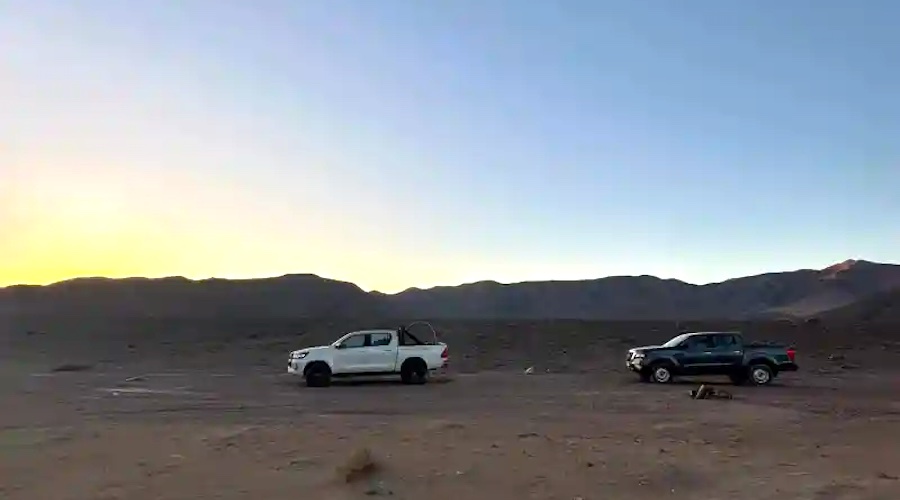
Super Copper (CSE: CUPR) said on Wednesday it has received approval from Chile’s national mining authority (Sernageomin) for its Cordillera Cobre project.

The approval pertains to a total of 26 mining concessions covering approximately 6,858 hectares in the Atacama copper belt.
Super Copper said it has now completed the most technical and challenging portion of the Chilean mining rights process, with 26 exploitation concessions that make up the Cordillera Cobre claim block fully approved by the National Geology and Mining Service.
Of these concessions, 25 have received formal court resolutions establishing them and 15 have had their legal extract published in the official mining gazette; registration in the Copiapó mining registry is now underway.
Once registration is complete, each concession becomes a legally constituted exploitation concession, granting full and permanent mining rights, the company noted.
“This is a critical milestone for Super Copper. Securing exploitation concessions, not just exploration rights, gives full and permanent mining rights at Cordillera Cobre,” Super Copper CEO Zachary Dolesky said in a news release.
“With the title process effectively complete and registration progressing as planned, we are positioned to submit our drill program promptly upon finalizing results from our most recent exploration work,” Dolesky said. “This positions Super Copper to advance one of the most exciting new copper projects in the Atacama region, at a time when global copper demand is entering a major structural deficit.”
In July, the Canadian junior also struck a deal to acquire 100% of the Castilla copper project, locking down a 5,800-hectare land package near the historic Manto Negro mine.

No comments:
Post a Comment