RUSSO-UKRAINE WAR AT SEA
Ukraine Disabled Russian Maritime Patrol Aircraft Before Submarine Strike
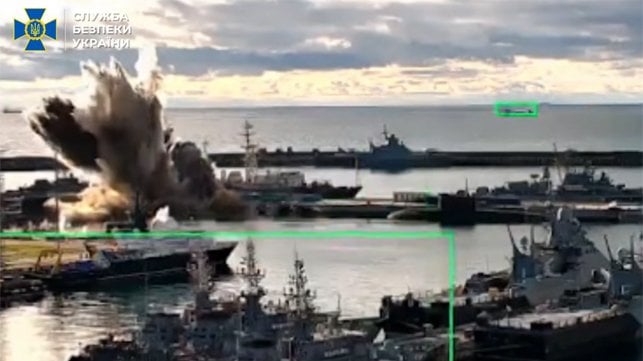
In advance of the drone sub strike on the Russian Navy submarine pen on the Black Sea, Ukraine's SBU security service paved the way by damaging the only Russian antisubmarine patrol aircraft in the area, the agency claims.
On December 15, the SBU released video showing a strike on a Kilo-class attack submarine at a pier in Novorossiysk, the protected port where the Russian Navy has relocated almost all of its combatant vessels in the Black Sea. The agency claimed that the strike was carried out by a drone submarine - a "Sub Sea Baby" - and that the Kilo-class sub suffered "critical damage." Satellite imaging from before and after the attack suggests that the drone struck the pier wall next to the target, leaving a crater. The Russian Navy claimed after the fact that the Kilo-class - the Varshavyanka - was undamaged and still operational.
To get to the target, Ukrainian forces needed to get a drone sub through to Novorossiysk without interception, requiring a crossing of some 400 nautical miles without detection. To prevent interception, the SBU planned and staged a preparatory operation behind the lines, targeting the only Russian asset that had a good chance of spotting the drone sub coming.
According to the spy agency, a Ukrainian aerial drone asset was delivered (by undisclosed means) within range of the airfield at Yeysk. The base is home to the only Russian Il-38N antisubmarine patrol aircraft in the Black Sea. This Soviet-era aircraft class has been upgraded with modern tracking systems for following targets above and below the surface, and SBU said that it was a known threat to Ukraine's drone boats and unmanned submersibles.
The agency said that it used an aerial drone to deliver an airburst warhead over the top of the Il-38N, damaging engines, sensors and radars with a shaped charge. SBU noted that the attack shows the continued vulnerability of Russian airfields to drone incursions, despite previous high-profile strikes.
"The disabling of this anti-submarine aircraft ensured the successful execution of the main part of the special operation - the explosion of the Varshavyanka class submarine," SBU claimed.
Russia's ministry of defense has not confirmed the details of the Yeysk airfield strike. If the Il-38N does require time to repair, it may well be replaceable with another airframe of the same class; Russian Naval Aviation is believed to have had an inventory of about 30 examples of the type before the start of the full-scale invasion.
Ukraine Intensifies Strikes on Oil Operations in Black Sea and Caspian
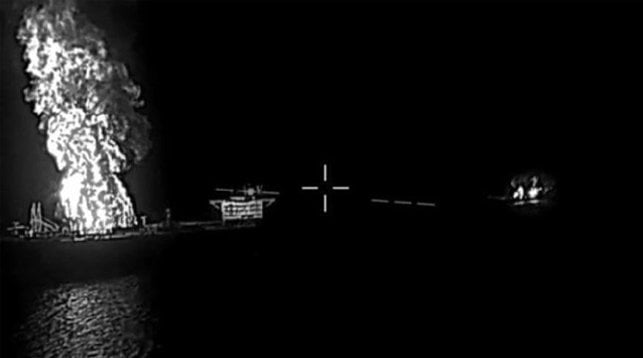
Ukraine’s Defense Intelligence Unit and Special Operations Forces revealed the latest round of drone strikes on Russia’s oil operations. The Defense Intelligence Unit also confirmed the obvious that Ukraine has intensified its assault on the oil sector to cut off badly needed revenues for Russia.
On the night of December 22, the Defense Intelligence Unit confirmed strikes on the strategic port of Taman, which lies off the Kerch Strait on the peninsula between the Black Sea and the Sea of Azov. It is a critical transshipment port for Russia used to maintain operations in oil, products, liquified gas, ammonia fertilizer, grains, and other cargoes.
The DIU said the attack was staged with drones targeting the Taman transshipment complex operated by Tamanneftegaz. While claiming to have destroyed 23 drones over the Black Sea, Russian officials also confirmed fires at the port complex.
The Administration of the Krasnodar Krai region reported that two piers, one supply pipeline, and two tankers were damaged in the drone attack. They said a fire had started on one of the tankers but was extinguished. Crews, however, were still battling the fire on the fuel supply pipeline, which they confirmed at 1,500 square meters. They said 119 people and 34 pieces of equipment were involved in the firefight. They also said two storage tanks had been damaged by debris, but there were no reports of oil pollution.
Ukrainian media reports are saying the damage is more extensive to the operations. Posts online talked of “pillars of fire” over Taman. Ukrainska Pravda wrote that sources stressed that military intelligence is stepping up strike pressure on the Russian energy sector.
The Special Operations Forces had posted on Sunday, confirming the rumored strikes on the Filanovsky oil and gas field in the Caspian Sea. Operated by Lukoil, they confirmed that drones had been used to strike the platform. It comes after earlier long-range attacks on other Lukoil operations in the Caspian.
The SOF is also claiming that they were able to damage a Russian patrol ship in the Okhotnik class. Russia has commissioned about a dozen of these vessels over the past 16 years, with reports saying they are designed to combat surface and airborne targets and threats. They are about 600 tons and 200 feet in length and are capable of speeds of 25 knots.
In its statement, SOF said it would continue to carry out asymmetric actions aimed at stopping Russia’s military aggression. These recent strikes came after Ukraine started using drones to attack oil tankers in the Black Sea and, at the end of last week, claimed its first strike on a tanker operating in the Mediterranean.
Cargo Ship and Ports Damaged During Massive Russian Attack on Ukraine

Ukrainian officials are reporting what they called a “massive Russian strike” directed overnight and into this morning broadly at the country’s infrastructure, including ports as well as power and other elements across at least 13 regions of the country. A smaller cargo ship was caught loading in the Odesa region and was reportedly damaged during the attacks.
According to the reports, Ukraine asserts that Russia launched at least 650 drones and more than three dozen rockets, with air raid sirens continuing to sound. Odesa regional administrator Oleh Kiper said that the was damage to the port, energy, transport, industrial, and residential elements, although there were no reported injuries.
The dry cargo vessel was docked in the Odesa port complex, loading soybeans. Reports only described the ship as being registered in Lebanon. Pictures showed fires burning on the ship and firefighters aboard.
“Once again, the Odesa region and port infrastructure are under enemy attack. Civilian warehouses and critical energy facilities have been damaged,” said Deputy Prime Minister for the Restoration of Ukraine Oleksii Kuleba.
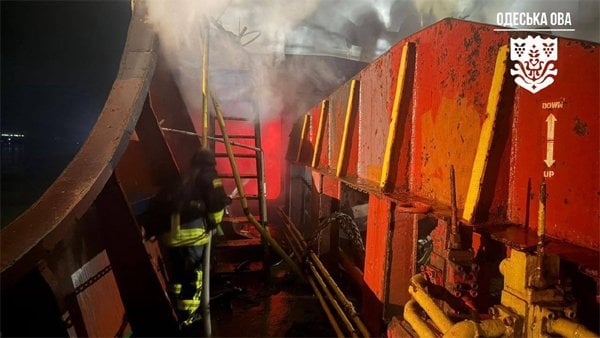
Fire crews aboard the damaged vessel (State Emergency Service of Ukraine)
There were reports of damage to at least one warehouse in the port complex. The Ukrainian Sea Ports Authority also said there was damage in the port of Reni, impacting the infrastructure as well as administrative buildings.
An earlier Russian missile attack on the Odesa port complex and the city killed at least eight people, and 27 others were wounded. Some of the casualties were said to have been on a city bus that was struck.
The energy infrastructure remains one of the key targets. They said the thermal power plant operated by Ukraine’s largest private energy company, DTEK, was damaged and offline. The Zaporizhzhia Steel Works also reported a loss of power and an emergency shutdown of production.
Russia had also recently struck the port of Pivdennyi. A fire broke out in the port area, with about 30 storage tankers for flour and vegetable oil catching fire.
The Ukrainian media said talk of the possible pause in the assaults for the Christmas season now seems unlikely.

No comments:
Post a Comment