Unions Condemn US Military Aggression and Violation of Venezuela’s Sovereignty.
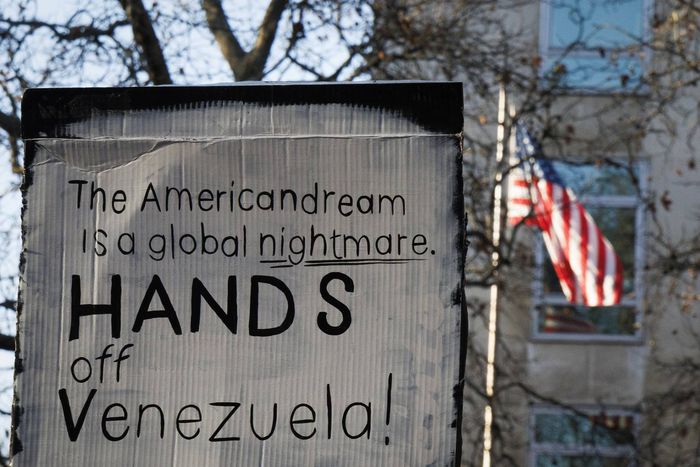
Source: ITUC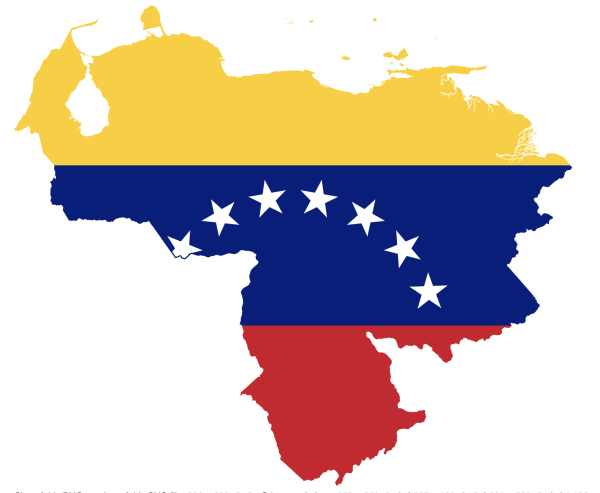 Image by Darwinek via wikimedia commons
Given the gravity of the events, which include the bombing of facilities in Caracas and confirmation by the US government of the capture and kidnapping of President Nicolás Maduro, the international trade union movement declares:
- Condemnation of military intervention: We denounce this action as a flagrant violation of the Charter of the United Nations and the fundamental principles of international law. The use of military force and the incursion into the territory of a sovereign nation constitute an unacceptable act of war that jeopardises the peace and stability of the entire region.
- Defence of sovereignty and self-determination: In line with our historic position of defending the autonomy of peoples and supporting the statements issued by the governments of the region demanding unrestricted respect for Venezuelan sovereignty, we reject any attempt at regime change by force or through foreign interference. The fate of Venezuela must be decided exclusively by the Venezuelan people through democratic and peaceful mechanisms, without imperial tutelage.
- Demand for human guarantees: We join the immediate international demand for proof of life, respect for physical integrity, and the release of President Nicolás Maduro and his wife, Cilia Flores, as well as any other citizens detained in this illegal operation. Their current status must be made transparent to the international community without delay.
- Call for peace and dialogue: We agree with the position expressed by the governments of Brazil, Mexico, and other countries in condemning violence and urging a return to diplomatic channels. The region must remain a zone of peace; we will not allow Latin America to be dragged into a military conflict for geopolitical interests that do not represent our peoples.
“These acts in no way defend democracy; they are clear acts of aggression as part of a militarised foreign policy agenda motivated by unilateral economic interests,” said ITUC General Secretary Luc Triangle. “Threats of kidnapping and the misuse of the courts to attack a sovereign government undermine the international rule of law and set a precedent of imperial coercion that jeopardises peace everywhere.”
“We, the trade union movement of the Americas, condemn the military aggression and kidnapping of President Maduro and his partner Cilia Flores, a violation of the sovereignty and integrity of the Venezuelan people and of all Latin America and the Caribbean, declared a Zone of Peace by Community of Latin American and Caribbean States since 2014. We are activating mechanisms of international solidarity with the people and workers of Venezuela,” said Rafael Freire, TUCA General Secretary. “We defend Venezuela and all of Latin America as a territory of peace. We do not accept invasion and violence against our peoples and territories. The trade union movement, as always, is on the front line of defending sovereignty and self-determination, democracy and human rights.”
The ITUC and the TUCA remain mobilised against imperialist, military or economic interference by one country in another, against wars, and in firm defence of peace, democracy and multilateralism.
For the sovereignty, peace and self-determination of peoples.
Given the gravity of the events, which include the bombing of facilities in Caracas and confirmation by the US government of the capture and kidnapping of President Nicolás Maduro, the international trade union movement declares:
- Condemnation of military intervention: We denounce this action as a flagrant violation of the Charter of the United Nations and the fundamental principles of international law. The use of military force and the incursion into the territory of a sovereign nation constitute an unacceptable act of war that jeopardises the peace and stability of the entire region.
- Defence of sovereignty and self-determination: In line with our historic position of defending the autonomy of peoples and supporting the statements issued by the governments of the region demanding unrestricted respect for Venezuelan sovereignty, we reject any attempt at regime change by force or through foreign interference. The fate of Venezuela must be decided exclusively by the Venezuelan people through democratic and peaceful mechanisms, without imperial tutelage.
- Demand for human guarantees: We join the immediate international demand for proof of life, respect for physical integrity, and the release of President Nicolás Maduro and his wife, Cilia Flores, as well as any other citizens detained in this illegal operation. Their current status must be made transparent to the international community without delay.
- Call for peace and dialogue: We agree with the position expressed by the governments of Brazil, Mexico, and other countries in condemning violence and urging a return to diplomatic channels. The region must remain a zone of peace; we will not allow Latin America to be dragged into a military conflict for geopolitical interests that do not represent our peoples.
“These acts in no way defend democracy; they are clear acts of aggression as part of a militarised foreign policy agenda motivated by unilateral economic interests,” said ITUC General Secretary Luc Triangle. “Threats of kidnapping and the misuse of the courts to attack a sovereign government undermine the international rule of law and set a precedent of imperial coercion that jeopardises peace everywhere.”
“We, the trade union movement of the Americas, condemn the military aggression and kidnapping of President Maduro and his partner Cilia Flores, a violation of the sovereignty and integrity of the Venezuelan people and of all Latin America and the Caribbean, declared a Zone of Peace by Community of Latin American and Caribbean States since 2014. We are activating mechanisms of international solidarity with the people and workers of Venezuela,” said Rafael Freire, TUCA General Secretary. “We defend Venezuela and all of Latin America as a territory of peace. We do not accept invasion and violence against our peoples and territories. The trade union movement, as always, is on the front line of defending sovereignty and self-determination, democracy and human rights.”
The ITUC and the TUCA remain mobilised against imperialist, military or economic interference by one country in another, against wars, and in firm defence of peace, democracy and multilateralism.
For the sovereignty, peace and self-determination of peoples.
NY mayor says he telephoned Trump to voice opposition to capture of Venezuela’s Maduro
January 4, 2026 MEMO

Zohran Mamdani, mayor of New York, speaks after being administered the oath of office during an inauguration ceremony at City Hall in New York, US, on Thursday, Jan. 1, 2026 [Mostafa Bassim – Anadolu Agency]
New York Mayor Zohran Mamdani said on Saturday that he telephoned President Donald Trump “directly” to voice opposition to what he called a “pursuit of regime change” in Venezuela after the capture of President Nicolas Maduro and his wife in an overnight operation, Anadolu Agency reports.
“I called the president and spoke with him directly to register my opposition to this act,” Mamdani told reporters during a press conference.
He said his objection was rooted in opposition to a “pursuit of regime change” and actions he believes violate federal and international law that should be upheld consistently.
Earlier in the day, Mamdani posted on the US social media company X, calling the US operation in Venezuela “an act of war” and a “blatant pursuit of regime change.”
“I was briefed this morning on the U.S. military capture of Venezuelan President Nicolas Maduro and his wife, as well as their planned imprisonment in federal custody here in New York City,” Mamdani wrote.
“Unilaterally attacking a sovereign nation is an act of war and a violation of federal and international law,” he added.
The mayor stressed that such “blatant pursuit of regime change” not only affects those abroad, but its impact extends beyond Venezuela and could directly impact tens of thousands of Venezuelans living in New York.
“My focus is their safety and the safety of every New Yorker, and my administration will continue to monitor the situation and issue relevant guidance,” he added.
His remarks came after the US carried out a “large-scale strike” on Venezuela, with President Nicolas Maduro and his wife Cilia Flores also “captured and flown out” of the country, later en route to New York City, where they will face federal charges, according to President Donald Trump.
US bombs Venezuela and kidnaps President Maduro
“At 2am, local time, on 3rd January 2026 the United States attacked several sites in and around Caracas and adjoining states such as Miranda, Aragua, and La Guaira, including military bases and civilian areas. This attack is a violation of Article 2 of the United Nations Charter,” said No Cold War in a statement. “The United States has made it clear that this war, which it has imposed on Venezuela, is about oil and nothing other than oil.”
Trump has indeed largely admitted the motive. Mehdi Hasan pointed out: “In his 2019 memoir The Threat, former FBI deputy director Andrew McCabe quotes first-term Trump saying Venezuela was ‘the country we should be going to war with, they have all that oil and they’re right on our back door’.”
The US Government claims it has captured President Maduro and flown him and his wife out of the country. President Trump says the US will bring Maduro to justice on American soil for arms and drug offences.
The US has been ramping up attacks on Venezuela increasingly over recent months. Over 100 people have been killed by US strikes on boats in the Caribbean and Pacific, which the US claims, with little evidence, were transporting illegal drugs. In recent months, the US sent 12 military warships to Caribbean waters near Venezuela, including the world’s largest aircraft carrier, a submarine and four amphibious vessels for landing troops.
But the direct attack on Caracas itself – and the kidnapping of a sitting President – shocked many for its unprecedented and unprovoked nature.
Not everybody was surprised, however. One analyst predicted it, noting: “Sensing an approaching war, investors have been snapping up the country’s defaulted debt, gambling that the collapse of Maduro’s regime will unlock the once improbable prospect of repayment.”
Reports of casualties are sketchy at this stage, but it should be noted that three million people live in Caracas, one of the densest cities in South America. The Attorney General of Venezuela, Tarek William Saab, reported that “innocent victims have been mortally wounded and others killed by this criminal terrorist attack.”
Widespread condemnation
The Venezuelan Government condemned the attack as “criminal” and “colonial”. President of Colombia Gutavo Petrosaid troops are being deployed to the Venezuela border and called on the Organization of American States and the UN to “meet immediately.” Chilean President Gabriel Boric also condemned the attack, as did Mexico. Cuban President Miguel Díaz-Canel said his country “denounces and urgently demands the reaction of the international community against the criminal attack by the US on Venezuela.”
Brazil’s President Lula said: “The bombings on Venezuelan territory and the capture of its president have crossed an unacceptable line. These acts represent a grave affront to Venezuela’s sovereignty and yet another extremely dangerous precedent for the entire international community.”
The British Government has not condemned the attack. Keir Starmer said Britain was not involved but he wants to talk to Trump to “establish facts”. He also said: “I always say and believe we should all uphold international law.”
On the UK left, there was full-throated condemnation of the US aggression. Momentum’s co-chairs issued a statement, saying: “Trump’s attack on Venezuela – and the capture of President Maduro – following years of crippling sanctions, coup attempts, and a blockade is a bloodthirst criminal act. Without even a fig leaf of legality, it emboldens all would-be aggressors. The UK government must condemn this brutal regime change attempt. Solidarity with the people of Venezuela.”
Campaign Group MPs also added their voices. “Donald Trump’s bombing of Venezuela is an illegal attack on a sovereign nation,” said Nadia Whittome. “It is a blatant grab for Venezuelan oil, risking the lives of innocent civilians. All of us who care about international law must condemn this.”
“If this is accurate, with no legal sanction, with no UN decision, what difference in international law is there between Trump’s attack on Venezuela and Putin’s invasion of Ukraine?” asked former Shadow Chancellor John McDonnell MP. “If the UK government stands for the rule of law, Keir Starmer must condemn this.” Diane Abbott MP called the bombing “completely unacceptable.”
Brian Leishman MP tweeted: “Invading another country for oil, capturing another nations leader and removing them from their position. Pure imperialism. Anyone that thought Trump was genuine about ending US involvement in ‘forever wars’ was a complete fool.”
Apsana Begum MP agreed: “His military’s bombing of Caracas is an act of US imperialism and illegal under international law. I condemn it and extend my solidarity to the people of Venezuela.”
Kim Johnson MP added: “This shameless attack is about seizing Venezuela’s resources. We must always defend international law.”
Richard Burgon MP said: “Donald Trump has launched a US war on Venezuela, with the US military bombing the capital Caracas. I totally condemn this illegal attack on a sovereign nation. As with the war on Iraq, Trump’s regime change is about control of Venezuela’s oil – the largest reserves in the world.”
“Trump’s attack, which was conducted without the approval of Congress, or America’s allies, also has big ramifications for the UK,” pointed out Zeteo. “Before his return to the White House, Trump’s British cheerleader Boris Johnson predicted that he would make the world ‘safer and more stable’ while Nigel Farage insisted Trump would be a ‘global peacemaker’ who would prevent America from engaging in an ‘endless series of foreign wars’. It’s now clear that the opposite is the case.”
Ukraine’s Social Movement issued a powerful statement about the attack, saying: “As before – from the bombing of small vessels in the Caribbean and Pacific Oceans to the sanctions blockade – it is a demonstration of the strength and full readiness of the United States to use violence without trial, investigation and any respect for international law. Pretexts such as the fight against drug trafficking and cartels are used to legitimize aggression…”
“The excuses about fighting what are supposedly ‘drug cartels’ are particularly cynical given Trump’s recent amnesty from a US prison of the right-wing former president of Honduras, Hernandez – he was sentenced to a huge term for cocaine trafficking, but was released to help his allies in the last election. As with the ‘fight against terrorism’, the real goal is not protection, but control over oil and mineral resources and the establishment of a regime loyal to Washington.
At the same time, it is necessary to clearly call things by their rightful names: the regime of Nicolas Maduro is authoritarian, repressive and deeply corrupt. It has nothing to do with socialist democracy, hiding behind the legacy of Hugo Chavez and Bolivarian rhetoric. Together with the destructive US sanctions, it is the policies of the Maduro government that are responsible for the economic collapse, social catastrophe, extrajudicial killings, malnutrition and mass emigration of millions of Venezuelans. The Maduro elite has nullified the gains of mass movements and social programs of the Chavez era, instead only discrediting the leftist idea in the region. Parasitizing on the population, the regime is maintained thanks to the security forces, restrictions on freedoms and external support – primarily from Russia.
“However, it is a grave mistake to equate the Maduro regime with Venezuelan society…
“The isolation of the progressive government in Colombia and the threats to a similar government in Mexico, the strengthening of the alliance with the far-right regime in Argentina at the expense of American taxpayers, the support of neo-fascist revanchists in Brazil led by Jair Bolsonaro, the use of the infamous mega-prison of the repressive Bukele government in El Salvador to hold deportees from the United States – all these are parts of a single strategy to restore Washington’s hegemony in Latin America.”
And beyond. As the Guardian’s George Monbiot pointed out, “the seizure and kidnapping of a head of state takes us to a very dark place. Vast, arbitrary, extra-legal power, which could be exercised almost anywhere, regardless of the character of the target government.”
At the same time, Trump’s contempt for international law sends a message to Russia and other dictatorships that anything goes. It helps to legitimise their aggression and abuses, now and in the future. Owen Jones agreed, saying you can see why Trump “is so sympathetic to Russian claims in Ukraine. He wants the same for the US in Latin America.”
The Progressive International, which includes Jeremy Corbyn MP in its leadership, issued a statement calling on “political parties, trade unions, social movements, and civil society organizations across the world to act with urgency and determination. We urge — and commit to collaborate with all efforts to develop — coordinated actions, worker strikes, and assemblies that promise to halt these acts of wanton aggression.”
Labour CND is calling on people to contact their MP. The Stop the War Coalition has called a protest for Monday January 5th at 6pm in Downing Street.
January 4, 2026
Zohran Mamdani, mayor of New York, speaks after being administered the oath of office during an inauguration ceremony at City Hall in New York, US, on Thursday, Jan. 1, 2026 [Mostafa Bassim – Anadolu Agency]
New York Mayor Zohran Mamdani said on Saturday that he telephoned President Donald Trump “directly” to voice opposition to what he called a “pursuit of regime change” in Venezuela after the capture of President Nicolas Maduro and his wife in an overnight operation, Anadolu Agency reports.
“I called the president and spoke with him directly to register my opposition to this act,” Mamdani told reporters during a press conference.
He said his objection was rooted in opposition to a “pursuit of regime change” and actions he believes violate federal and international law that should be upheld consistently.
Earlier in the day, Mamdani posted on the US social media company X, calling the US operation in Venezuela “an act of war” and a “blatant pursuit of regime change.”
“I was briefed this morning on the U.S. military capture of Venezuelan President Nicolas Maduro and his wife, as well as their planned imprisonment in federal custody here in New York City,” Mamdani wrote.
“Unilaterally attacking a sovereign nation is an act of war and a violation of federal and international law,” he added.
The mayor stressed that such “blatant pursuit of regime change” not only affects those abroad, but its impact extends beyond Venezuela and could directly impact tens of thousands of Venezuelans living in New York.
“My focus is their safety and the safety of every New Yorker, and my administration will continue to monitor the situation and issue relevant guidance,” he added.
His remarks came after the US carried out a “large-scale strike” on Venezuela, with President Nicolas Maduro and his wife Cilia Flores also “captured and flown out” of the country, later en route to New York City, where they will face federal charges, according to President Donald Trump.
“At 2am, local time, on 3rd January 2026 the United States attacked several sites in and around Caracas and adjoining states such as Miranda, Aragua, and La Guaira, including military bases and civilian areas. This attack is a violation of Article 2 of the United Nations Charter,” said No Cold War in a statement. “The United States has made it clear that this war, which it has imposed on Venezuela, is about oil and nothing other than oil.”
Trump has indeed largely admitted the motive. Mehdi Hasan pointed out: “In his 2019 memoir The Threat, former FBI deputy director Andrew McCabe quotes first-term Trump saying Venezuela was ‘the country we should be going to war with, they have all that oil and they’re right on our back door’.”
The US Government claims it has captured President Maduro and flown him and his wife out of the country. President Trump says the US will bring Maduro to justice on American soil for arms and drug offences.
The US has been ramping up attacks on Venezuela increasingly over recent months. Over 100 people have been killed by US strikes on boats in the Caribbean and Pacific, which the US claims, with little evidence, were transporting illegal drugs. In recent months, the US sent 12 military warships to Caribbean waters near Venezuela, including the world’s largest aircraft carrier, a submarine and four amphibious vessels for landing troops.
But the direct attack on Caracas itself – and the kidnapping of a sitting President – shocked many for its unprecedented and unprovoked nature.
Not everybody was surprised, however. One analyst predicted it, noting: “Sensing an approaching war, investors have been snapping up the country’s defaulted debt, gambling that the collapse of Maduro’s regime will unlock the once improbable prospect of repayment.”
Reports of casualties are sketchy at this stage, but it should be noted that three million people live in Caracas, one of the densest cities in South America. The Attorney General of Venezuela, Tarek William Saab, reported that “innocent victims have been mortally wounded and others killed by this criminal terrorist attack.”
Widespread condemnation
The Venezuelan Government condemned the attack as “criminal” and “colonial”. President of Colombia Gutavo Petrosaid troops are being deployed to the Venezuela border and called on the Organization of American States and the UN to “meet immediately.” Chilean President Gabriel Boric also condemned the attack, as did Mexico. Cuban President Miguel Díaz-Canel said his country “denounces and urgently demands the reaction of the international community against the criminal attack by the US on Venezuela.”
Brazil’s President Lula said: “The bombings on Venezuelan territory and the capture of its president have crossed an unacceptable line. These acts represent a grave affront to Venezuela’s sovereignty and yet another extremely dangerous precedent for the entire international community.”
The British Government has not condemned the attack. Keir Starmer said Britain was not involved but he wants to talk to Trump to “establish facts”. He also said: “I always say and believe we should all uphold international law.”
On the UK left, there was full-throated condemnation of the US aggression. Momentum’s co-chairs issued a statement, saying: “Trump’s attack on Venezuela – and the capture of President Maduro – following years of crippling sanctions, coup attempts, and a blockade is a bloodthirst criminal act. Without even a fig leaf of legality, it emboldens all would-be aggressors. The UK government must condemn this brutal regime change attempt. Solidarity with the people of Venezuela.”
Campaign Group MPs also added their voices. “Donald Trump’s bombing of Venezuela is an illegal attack on a sovereign nation,” said Nadia Whittome. “It is a blatant grab for Venezuelan oil, risking the lives of innocent civilians. All of us who care about international law must condemn this.”
“If this is accurate, with no legal sanction, with no UN decision, what difference in international law is there between Trump’s attack on Venezuela and Putin’s invasion of Ukraine?” asked former Shadow Chancellor John McDonnell MP. “If the UK government stands for the rule of law, Keir Starmer must condemn this.” Diane Abbott MP called the bombing “completely unacceptable.”
Brian Leishman MP tweeted: “Invading another country for oil, capturing another nations leader and removing them from their position. Pure imperialism. Anyone that thought Trump was genuine about ending US involvement in ‘forever wars’ was a complete fool.”
Apsana Begum MP agreed: “His military’s bombing of Caracas is an act of US imperialism and illegal under international law. I condemn it and extend my solidarity to the people of Venezuela.”
Kim Johnson MP added: “This shameless attack is about seizing Venezuela’s resources. We must always defend international law.”
Richard Burgon MP said: “Donald Trump has launched a US war on Venezuela, with the US military bombing the capital Caracas. I totally condemn this illegal attack on a sovereign nation. As with the war on Iraq, Trump’s regime change is about control of Venezuela’s oil – the largest reserves in the world.”
“Trump’s attack, which was conducted without the approval of Congress, or America’s allies, also has big ramifications for the UK,” pointed out Zeteo. “Before his return to the White House, Trump’s British cheerleader Boris Johnson predicted that he would make the world ‘safer and more stable’ while Nigel Farage insisted Trump would be a ‘global peacemaker’ who would prevent America from engaging in an ‘endless series of foreign wars’. It’s now clear that the opposite is the case.”
Ukraine’s Social Movement issued a powerful statement about the attack, saying: “As before – from the bombing of small vessels in the Caribbean and Pacific Oceans to the sanctions blockade – it is a demonstration of the strength and full readiness of the United States to use violence without trial, investigation and any respect for international law. Pretexts such as the fight against drug trafficking and cartels are used to legitimize aggression…”
“The excuses about fighting what are supposedly ‘drug cartels’ are particularly cynical given Trump’s recent amnesty from a US prison of the right-wing former president of Honduras, Hernandez – he was sentenced to a huge term for cocaine trafficking, but was released to help his allies in the last election. As with the ‘fight against terrorism’, the real goal is not protection, but control over oil and mineral resources and the establishment of a regime loyal to Washington.
At the same time, it is necessary to clearly call things by their rightful names: the regime of Nicolas Maduro is authoritarian, repressive and deeply corrupt. It has nothing to do with socialist democracy, hiding behind the legacy of Hugo Chavez and Bolivarian rhetoric. Together with the destructive US sanctions, it is the policies of the Maduro government that are responsible for the economic collapse, social catastrophe, extrajudicial killings, malnutrition and mass emigration of millions of Venezuelans. The Maduro elite has nullified the gains of mass movements and social programs of the Chavez era, instead only discrediting the leftist idea in the region. Parasitizing on the population, the regime is maintained thanks to the security forces, restrictions on freedoms and external support – primarily from Russia.
“However, it is a grave mistake to equate the Maduro regime with Venezuelan society…
“The isolation of the progressive government in Colombia and the threats to a similar government in Mexico, the strengthening of the alliance with the far-right regime in Argentina at the expense of American taxpayers, the support of neo-fascist revanchists in Brazil led by Jair Bolsonaro, the use of the infamous mega-prison of the repressive Bukele government in El Salvador to hold deportees from the United States – all these are parts of a single strategy to restore Washington’s hegemony in Latin America.”
And beyond. As the Guardian’s George Monbiot pointed out, “the seizure and kidnapping of a head of state takes us to a very dark place. Vast, arbitrary, extra-legal power, which could be exercised almost anywhere, regardless of the character of the target government.”
At the same time, Trump’s contempt for international law sends a message to Russia and other dictatorships that anything goes. It helps to legitimise their aggression and abuses, now and in the future. Owen Jones agreed, saying you can see why Trump “is so sympathetic to Russian claims in Ukraine. He wants the same for the US in Latin America.”
The Progressive International, which includes Jeremy Corbyn MP in its leadership, issued a statement calling on “political parties, trade unions, social movements, and civil society organizations across the world to act with urgency and determination. We urge — and commit to collaborate with all efforts to develop — coordinated actions, worker strikes, and assemblies that promise to halt these acts of wanton aggression.”
Labour CND is calling on people to contact their MP. The Stop the War Coalition has called a protest for Monday January 5th at 6pm in Downing Street.
Spanish protesters slam ‘imperialist aggression’ in Venezuela
By AFP
January 4, 2026

A protester holds a slogan reading 'Down with US imperialist aggression against Venezuela, Trump is a war criminal' - Copyright AFP Thomas COEX
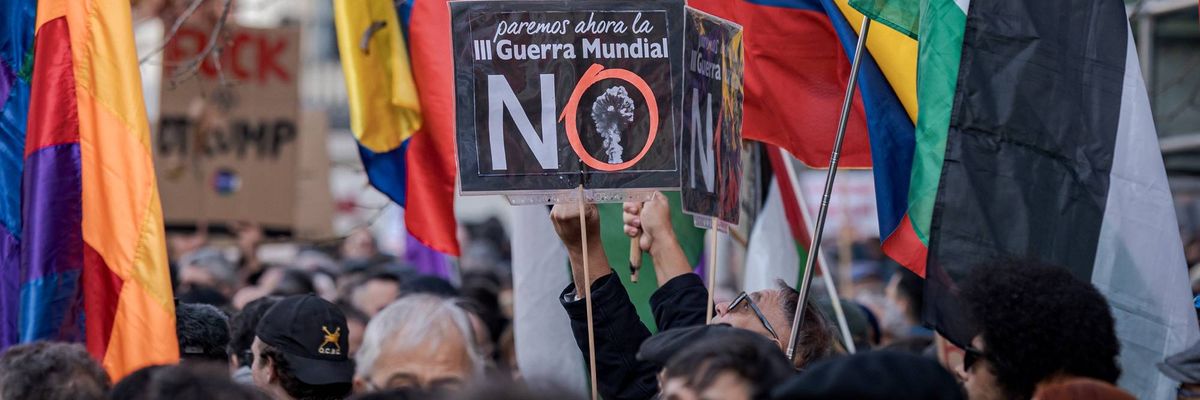
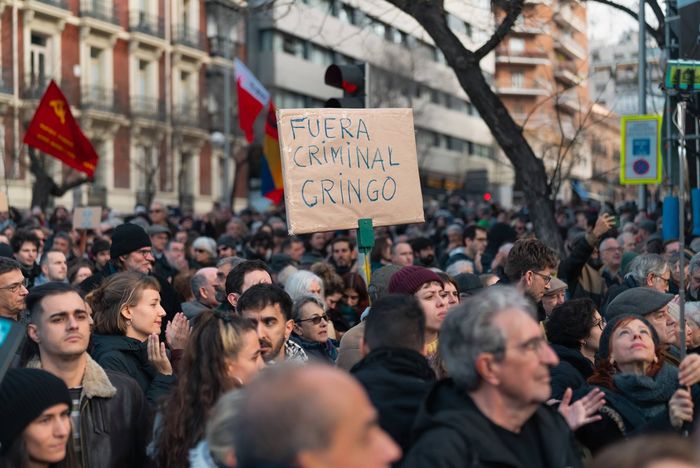
Around a thousand people gathered outside the US embassy in Madrid on Sunday to blast “imperialist aggression” after US special forces seized Venezuelan President Nicolas Maduro in a military operation.
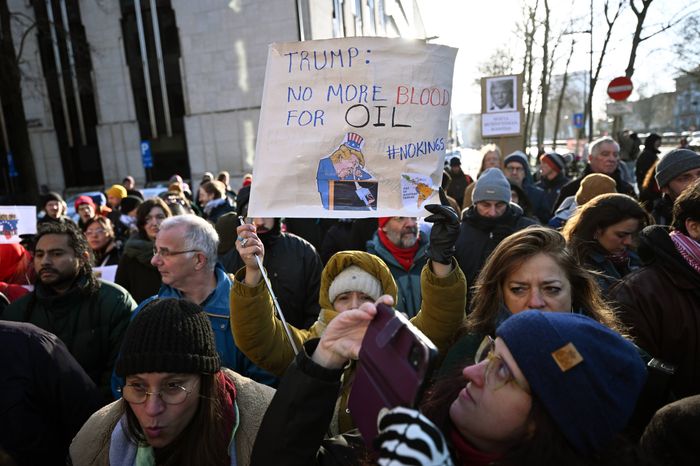
The demonstrators held up numerous banners, including one showing US President Donald Trump greedily swallowing a can of oil in the colours of the Venezuelan flag.
Another proclaimed “Trump aggressor”, while one banner read “No to imperialist aggression against Venezuela”.
Several protesters carried flags of the far-left Podemos party, or Spain’s communists, while others held aloft Venezuelan colours.
Following his dramatic abduction, Maduro now finds himself in a New York jail awaiting a court appearance on drug-trafficking and weapons charges.
Trump has meanwhile vowed that the United States will “run” Venezuela for a transitional period and tap its vast oil resources.
Spain’s Socialist Prime Minister Pedro Sanchez, whose country gave shelter to Venezuela’s opposition candidate in the 2024 presidential election, Edmundo Gonzalez Urrutia, on Saturday slammed what he termed “an intervention which violates international law” which could threaten regional stability.
Sanchez called for a transitional period which would be “just and with dialogue”.
The Venezuelan opposition maintains that Urrutia defeated Maduro in the 2024 poll.
Sanchez, whose government relies on the backing of far-left coalition partner Sumar, on Sunday doubled down on his criticism of the US operation in a letter to Socialist Party members, where he criticised “the recent violation of international law in Venezuela, an act that we condemn in the strongest terms”.
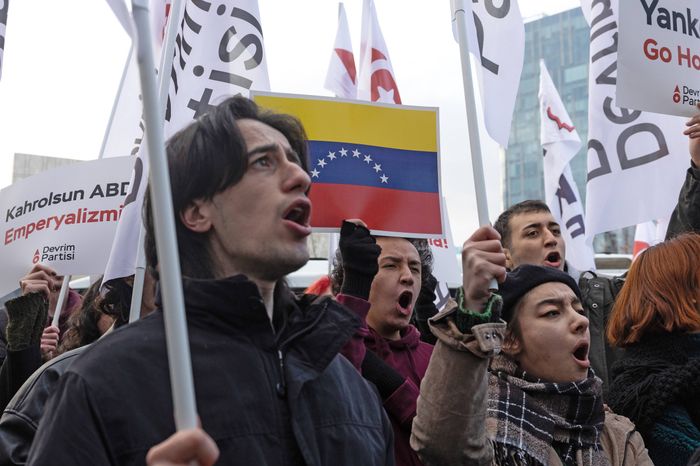
Several hundred people also demonstrated in Amsterdam outside the US consulate on Sunday, holding up placards with slogans such as “Yankee go home”, “Stop killing for oil” or “Stop Trumps Fossil Army”, according to the ANP news agency.
Spanish protesters slam ‘imperialist aggression’ in Venezuela
By AFP
January 4, 2026
A protester holds a slogan reading 'Down with US imperialist aggression against Venezuela, Trump is a war criminal' - Copyright AFP Thomas COEX
Around a thousand people gathered outside the US embassy in Madrid on Sunday to blast “imperialist aggression” after US special forces seized Venezuelan President Nicolas Maduro in a military operation.
The demonstrators held up numerous banners, including one showing US President Donald Trump greedily swallowing a can of oil in the colours of the Venezuelan flag.
Another proclaimed “Trump aggressor”, while one banner read “No to imperialist aggression against Venezuela”.
Several protesters carried flags of the far-left Podemos party, or Spain’s communists, while others held aloft Venezuelan colours.
Following his dramatic abduction, Maduro now finds himself in a New York jail awaiting a court appearance on drug-trafficking and weapons charges.
Trump has meanwhile vowed that the United States will “run” Venezuela for a transitional period and tap its vast oil resources.
Spain’s Socialist Prime Minister Pedro Sanchez, whose country gave shelter to Venezuela’s opposition candidate in the 2024 presidential election, Edmundo Gonzalez Urrutia, on Saturday slammed what he termed “an intervention which violates international law” which could threaten regional stability.
Sanchez called for a transitional period which would be “just and with dialogue”.
The Venezuelan opposition maintains that Urrutia defeated Maduro in the 2024 poll.
Sanchez, whose government relies on the backing of far-left coalition partner Sumar, on Sunday doubled down on his criticism of the US operation in a letter to Socialist Party members, where he criticised “the recent violation of international law in Venezuela, an act that we condemn in the strongest terms”.
Several hundred people also demonstrated in Amsterdam outside the US consulate on Sunday, holding up placards with slogans such as “Yankee go home”, “Stop killing for oil” or “Stop Trumps Fossil Army”, according to the ANP news agency.
Venezuelan, International Popular Movements Condemn US Bombings, Maduro Kidnapping
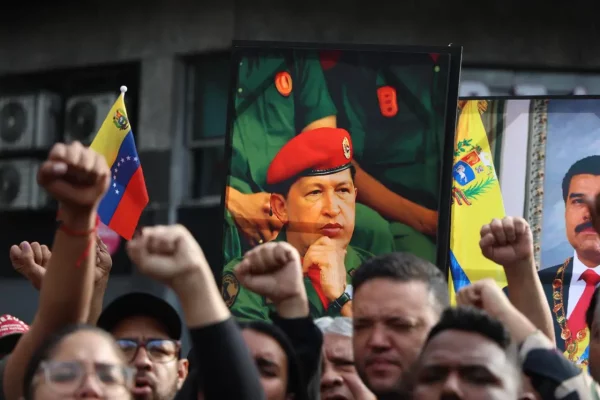 Crowds gathered in Caracas in defense of the Bolivarian Process. (Photo: Rome Arrieche)
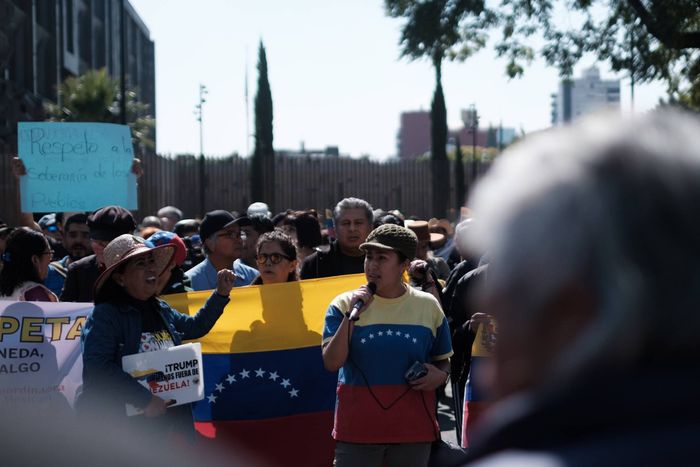
Venezuelan popular movements and international solidarity organizations have taken to the streets to condemn a US military attack against the country and the kidnapping of President Nicolás Maduro.
Following the bombings and special operations raid in the early hours of January 3, pro-government collectives began to concentrate in Caracas near Miraflores Presidential Palace. Demonstrations were likewise registered in many other Venezuelan cities.
“Long live a free and revolutionary Venezuela,” grassroots leader Mariela Machado told press in the Caracas demonstration. “International institutions must stop being accomplices and take a stance because our people are being massacred.”
She went on to state that “the US government is not the world’s police” and demanded the safe return of the Venezuelan President.
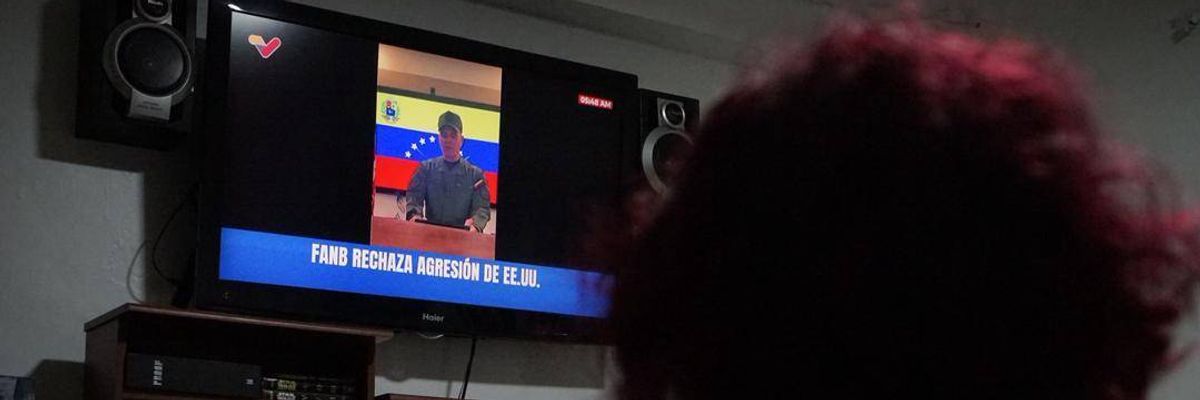
Venezuelan Interior Minister Diosdado Cabello and Defense Minister Vladimir Padrino López published statements in the early morning hours, urging the international community to take a stance against the US actions and calling for popular mobilization.
International solidarity organizations also set up emergency rallies in dozens of cities, including London, New York and several Latin American capitals.
US forces began the attack at 2 am local time with missiles fired against a number of Venezuela military installations in the capital and surrounding areas. Social media users broadcast fires and large columns of smoke emerging from Fuerte Tiuna, the main military installation in Caracas.
The port in La Guaira, an airbase in Higuerote, Miranda State, and a radar facility in El Hatillo, Eastern Caracas, were among the targets reportedly struck. Venezuelan authorities have not disclosed information concerning damages and casualties.
A few hours after the first bombings, US President Donald Trump announced that a special operations raid had kidnapped Maduro and first lady Cilia Flores and that the two were “flown out of the country.” The pair was reportedly taken aboard the USS Iwo Jima warship.
US Attorney General Pam Bondi stated that Maduro and Flores were indicted in a New York District Court on charges including “narco-terrorism conspiracy.” In recent years, US officials have repeatedly accused Maduro and other Venezuelan high-ranking officials of “flooding” the US with drugs. However, they have not presented any court-tested evidence, while UN and DEA reports have shown Venezuela to be a marginal player in global drug trafficking.
In a Saturday press conference, Trump stated that the US will “run” Venezuela until there are conditions for a “safe, proper and judicious transition.” He added that Secretary of State Marco Rubio and other officials will be charged with “running the country.”
The US president reiterated claims to Venezuelan oil resources and threatened that Venezuela would have to “reimburse” the US for oil nationalizations and damages from alleged drug trafficking. Trump went on to say that Rubio had held talks with Venezuelan Vice President Delcy Rodríguez, alleging that she had been sworn in and had vowed to accept US dictates.
Trump dismissed the idea of María Corina Machado taking power in the South American nation, affirming that the far-right leader lacks on-the-ground support.
Washington’s military attack and special operations raid followed months of buildup and escalating regime-change threats against Caracas. US forces have amassed the largest military deployment in decades in the Caribbean Sea while also conducting dozens of bombings against small boats accused of narcotics trafficking.
The military operation drew widespread international condemnation from Latin America and elsewhere.
“The US bombings and Maduro’s capture are unacceptable,” Brazilian President Lula da Silva wrote on social media. “These actions are an affront to Venezuelan sovereignty and set an extremely dangerous precedent for the international community.”
Colombian, Mexican and Cuban leaders were among those to strongly reject US actions and demand respect for international law.
Russian Foreign Minister Sergei Lavrov reportedly held a phone conversation with Vice President Rodríguez, reiterating Moscow’s support for the Venezuelan government and a call for dialogue.
For its part, the Chinese foreign ministry issued a statement “fiercely condemning the use of force against a sovereign nation.” Beijing urged Washington to cease its violations of international law and respect other countries’ sovereignty.
Venezuelan Foreign Minister Yván Gil held multiple phone conversations with counterparts from different countries who expressed their condemnation of the US attacks as violations of international law.
Caracas has likewise requested an emergency meeting of the United Nations Security Council. Two prior meetings called by Venezuela saw China, Russia and other countries criticize the US’ military actions but ultimately no resolutions were put forward.
[UPDATE: Venezuelan Vice President Delcy Rodríguez gave a press conference on Saturday afternoon, vowing that the country would not “bow down to any empire.” Rodríguez demanded Maduro’s release and announced the activation of a state of commotion. On Saturday evening, Venezuela’s Supreme Court ruled that Rodríguez will assume the presidency on an interim basis.]
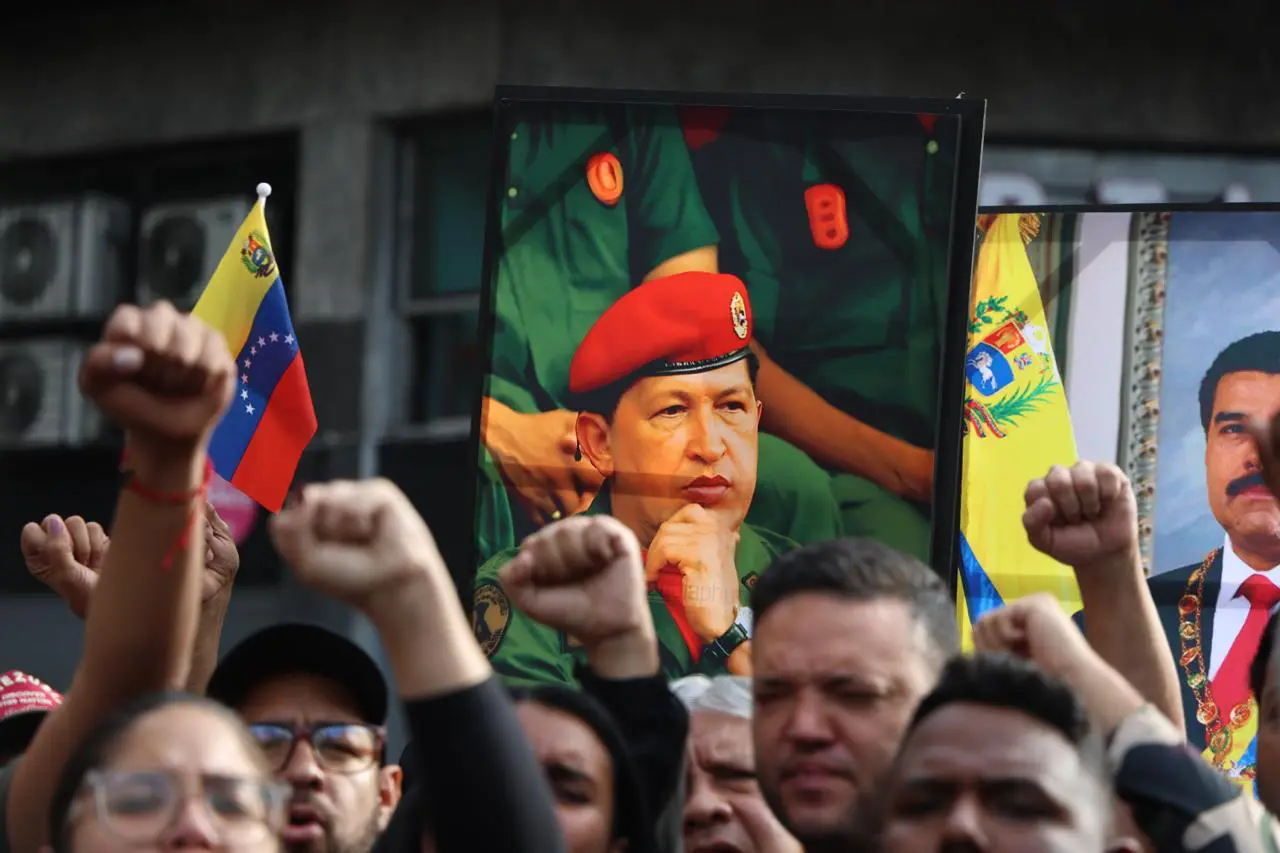
Venezuelan popular movements and international solidarity organizations have taken to the streets to condemn a US military attack against the country and the kidnapping of President Nicolás Maduro.
Following the bombings and special operations raid in the early hours of January 3, pro-government collectives began to concentrate in Caracas near Miraflores Presidential Palace. Demonstrations were likewise registered in many other Venezuelan cities.
“Long live a free and revolutionary Venezuela,” grassroots leader Mariela Machado told press in the Caracas demonstration. “International institutions must stop being accomplices and take a stance because our people are being massacred.”
She went on to state that “the US government is not the world’s police” and demanded the safe return of the Venezuelan President.
Venezuelan Interior Minister Diosdado Cabello and Defense Minister Vladimir Padrino López published statements in the early morning hours, urging the international community to take a stance against the US actions and calling for popular mobilization.
International solidarity organizations also set up emergency rallies in dozens of cities, including London, New York and several Latin American capitals.
US forces began the attack at 2 am local time with missiles fired against a number of Venezuela military installations in the capital and surrounding areas. Social media users broadcast fires and large columns of smoke emerging from Fuerte Tiuna, the main military installation in Caracas.
The port in La Guaira, an airbase in Higuerote, Miranda State, and a radar facility in El Hatillo, Eastern Caracas, were among the targets reportedly struck. Venezuelan authorities have not disclosed information concerning damages and casualties.
A few hours after the first bombings, US President Donald Trump announced that a special operations raid had kidnapped Maduro and first lady Cilia Flores and that the two were “flown out of the country.” The pair was reportedly taken aboard the USS Iwo Jima warship.
US Attorney General Pam Bondi stated that Maduro and Flores were indicted in a New York District Court on charges including “narco-terrorism conspiracy.” In recent years, US officials have repeatedly accused Maduro and other Venezuelan high-ranking officials of “flooding” the US with drugs. However, they have not presented any court-tested evidence, while UN and DEA reports have shown Venezuela to be a marginal player in global drug trafficking.
In a Saturday press conference, Trump stated that the US will “run” Venezuela until there are conditions for a “safe, proper and judicious transition.” He added that Secretary of State Marco Rubio and other officials will be charged with “running the country.”
The US president reiterated claims to Venezuelan oil resources and threatened that Venezuela would have to “reimburse” the US for oil nationalizations and damages from alleged drug trafficking. Trump went on to say that Rubio had held talks with Venezuelan Vice President Delcy Rodríguez, alleging that she had been sworn in and had vowed to accept US dictates.
Trump dismissed the idea of María Corina Machado taking power in the South American nation, affirming that the far-right leader lacks on-the-ground support.
Washington’s military attack and special operations raid followed months of buildup and escalating regime-change threats against Caracas. US forces have amassed the largest military deployment in decades in the Caribbean Sea while also conducting dozens of bombings against small boats accused of narcotics trafficking.
The military operation drew widespread international condemnation from Latin America and elsewhere.
“The US bombings and Maduro’s capture are unacceptable,” Brazilian President Lula da Silva wrote on social media. “These actions are an affront to Venezuelan sovereignty and set an extremely dangerous precedent for the international community.”
Colombian, Mexican and Cuban leaders were among those to strongly reject US actions and demand respect for international law.
Russian Foreign Minister Sergei Lavrov reportedly held a phone conversation with Vice President Rodríguez, reiterating Moscow’s support for the Venezuelan government and a call for dialogue.
For its part, the Chinese foreign ministry issued a statement “fiercely condemning the use of force against a sovereign nation.” Beijing urged Washington to cease its violations of international law and respect other countries’ sovereignty.
Venezuelan Foreign Minister Yván Gil held multiple phone conversations with counterparts from different countries who expressed their condemnation of the US attacks as violations of international law.
Caracas has likewise requested an emergency meeting of the United Nations Security Council. Two prior meetings called by Venezuela saw China, Russia and other countries criticize the US’ military actions but ultimately no resolutions were put forward.
[UPDATE: Venezuelan Vice President Delcy Rodríguez gave a press conference on Saturday afternoon, vowing that the country would not “bow down to any empire.” Rodríguez demanded Maduro’s release and announced the activation of a state of commotion. On Saturday evening, Venezuela’s Supreme Court ruled that Rodríguez will assume the presidency on an interim basis.]
The Horror of Trump’s Press Conference From a Venezuelan Perspective
This press conference wasn’t just about Venezuela. It was about whether American empire can say the quiet part out loud again, whether it can openly claim the right to govern other nations and expect the world to shrug.
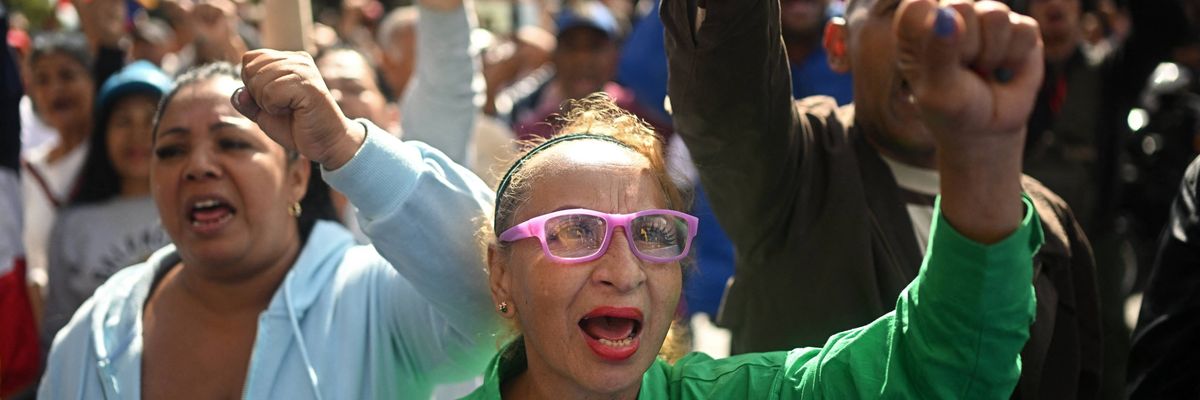
Supporters of Venezuela’s President Nicolas Maduro raise their clenched fists as they gather in the streets of Caracas on January 3, 2026, after US forces kidnapped him. President Donald Trump said Saturday that US forces had captured Venezuela’s leader Nicolas Maduro after bombing the capital Caracas and other cities in a dramatic climax to a months-long standoff between Trump and his Venezuelan arch-foe.
(Photo by Federico PARRA / AFP via Getty Images)
Michelle Ellner
Jan 04, 2026Common Dreams
I listened to the January 3 press conference with a knot in my stomach. As a Venezuelan American with family, memories, and a living connection to the country being spoken about as if it were a possession, what I heard was very clear. And that clarity was chilling.
The president said, plainly, that the United States would “run the country” until a transition it deems “safe” and “judicious.” He spoke about capturing Venezuela’s head of state, about transporting him on a US military vessel, about administering Venezuela temporarily, and about bringing in US oil companies to rebuild the industry. He dismissed concerns about international reaction with a phrase that should alarm everyone: “They understand this is our hemisphere.”
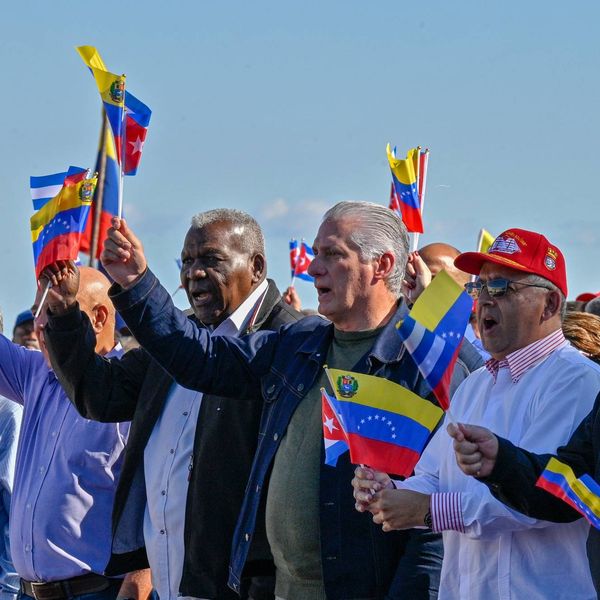
After Venezuela Assault, Trump and Rubio Warn Cuba, Mexico, and Colombia Could Be Next
For Venezuelans, those words echo a long, painful history.
Let’s be clear about the claims made. The president is asserting that the US can detain a sitting foreign president and his spouse under US criminal law. That the US can administer another sovereign country without an international mandate. That Venezuela’s political future can be decided from Washington. That control over oil and “rebuilding” is a legitimate byproduct of intervention. That all of this can happen without congressional authorization and without evidence of imminent threat.
To hear a US president talk about a country as something to be managed, stabilized, and handed over once it behaves properly, it hurts. It humiliates. And it enrages.
We have heard this language before. In Iraq, the United States promised a limited intervention and a temporary administration, only to impose years of occupation, seize control of critical infrastructure, and leave behind devastation and instability. What was framed as stewardship became domination. Venezuela is now being spoken about in disturbingly similar terms. “Temporary Administration” ended up being a permanent disaster.
Under international law, nothing described in that press conference is legal. The UN Charter prohibits the threat or use of force against another state and bars interference in a nation’s political independence. Sanctions designed to coerce political outcomes and cause civilian suffering amount to collective punishment. Declaring the right to “run” another country is the language of occupation, regardless of how many times the word is avoided.
Under US law, the claims are just as disturbing. War powers belong to Congress. There has been no authorization, no declaration, no lawful process that allows an executive to seize a foreign head of state or administer a country. Calling this “law enforcement” does not make it so. Venezuela poses no threat to the United States. It has not attacked the US and has issued no threat that could justify the use of force under US or international law. There is no lawful basis, domestic or international, for what is being asserted.
But beyond law and precedent lies the most important reality: the cost of this aggression is paid by ordinary people in Venezuela. War, sanctions, and military escalation do not fall evenly. They fall hardest on women, children, the elderly, and the poor. They mean shortages of medicine and food, disrupted healthcare systems, rising maternal and infant mortality, and the daily stress of survival in a country forced to live under siege. They also mean preventable deaths, people who die not because of natural disaster or inevitability, but because access to care, electricity, transport, or medicine has been deliberately obstructed. Every escalation compounds existing harm and increases the likelihood of loss of life, civilian deaths that will be written off as collateral, even though they were foreseeable and avoidable.
What makes this even more dangerous is the assumption underlying it all: that Venezuelans will remain passive, compliant, and submissive in the face of humiliation and force. That assumption is wrong. And when it collapses, as it inevitably will, the cost will be measured in unnecessary bloodshed. This is what is erased when a country is discussed as a “transition” or an “administration problem.” Human beings disappear. Lives are reduced to acceptable losses. And the violence that follows is framed as unfortunate rather than the predictable outcome of arrogance and coercion.
To hear a US president talk about a country as something to be managed, stabilized, and handed over once it behaves properly, it hurts. It humiliates. And it enrages.
And yes, Venezuela is not politically unified. It isn’t. It never has been. There are deep divisions, about the government, about the economy, about leadership, about the future. There are people who identify as Chavista, people who are fiercely anti-Chavista, people who are exhausted and disengaged, and yes, there are some who are celebrating what they believe might finally bring change.
But political division does not invite invasion.
Latin America has seen this logic before. In Chile, internal political division was used to justify US intervention, framed as a response to “ungovernability,” instability, and threats to regional order, ending not in democracy, but in dictatorship, repression, and decades of trauma.
In fact, many Venezuelans who oppose the government still reject this moment outright. They understand that bombs, sanctions, and “transitions” imposed from abroad do not bring democracy, they destroy the conditions that make it possible.
This moment demands political maturity, not purity tests. You can oppose Maduro and still oppose US aggression. You can want change and still reject foreign control. You can be angry, desperate, or hopeful, and still say no to being governed by another country.
Venezuela is a country where communal councils, worker organizations, neighborhood collectives, and social movements have been forged under pressure. Political education didn’t come from think tanks; it came from survival. Right now, Venezuelans are not hiding. They are closing ranks because they recognize the pattern. They know what it means when foreign leaders start talking about “transitions” and “temporary control.” They know what usually follows. And they are responding the way they always have: by turning fear into collective action.
This press conference wasn’t just about Venezuela. It was about whether empire can say the quiet part out loud again, whether it can openly claim the right to govern other nations and expect the world to shrug.
If this stands, the lesson is brutal and undeniable: sovereignty is conditional, resources are there to be taken by the US, and democracy exists only by imperial consent.
As a Venezuelan American, I refuse that lesson.
I refuse the idea that my tax dollars fund the humiliation of my homeland. I refuse the lie that war and coercion are acts of “care” for the Venezuelan people. And I refuse to stay silent while a country I love is spoken about as raw material for US interests, not a society of human beings deserving respect.
Venezuela’s future is not for US officials, corporate boards, or any president who believes the hemisphere is his to command. It belongs to Venezuelans.
Our work is licensed under Creative Commons (CC BY-NC-ND 3.0). Feel free to republish and share widely.
Michelle Ellner
Michelle Ellner is a Latin America campaign coordinator of CODEPINK. She was born in Venezuela and holds a bachelor’s degree in languages and international affairs from the University La Sorbonne Paris IV, in Paris. After graduating, she worked for an international scholarship program out of offices in Caracas and Paris and was sent to Haiti, Cuba, The Gambia, and other countries for the purpose of evaluating and selecting applicants.
Full Bio >
This press conference wasn’t just about Venezuela. It was about whether American empire can say the quiet part out loud again, whether it can openly claim the right to govern other nations and expect the world to shrug.
Supporters of Venezuela’s President Nicolas Maduro raise their clenched fists as they gather in the streets of Caracas on January 3, 2026, after US forces kidnapped him. President Donald Trump said Saturday that US forces had captured Venezuela’s leader Nicolas Maduro after bombing the capital Caracas and other cities in a dramatic climax to a months-long standoff between Trump and his Venezuelan arch-foe.
(Photo by Federico PARRA / AFP via Getty Images)
Michelle Ellner
Jan 04, 2026
I listened to the January 3 press conference with a knot in my stomach. As a Venezuelan American with family, memories, and a living connection to the country being spoken about as if it were a possession, what I heard was very clear. And that clarity was chilling.
The president said, plainly, that the United States would “run the country” until a transition it deems “safe” and “judicious.” He spoke about capturing Venezuela’s head of state, about transporting him on a US military vessel, about administering Venezuela temporarily, and about bringing in US oil companies to rebuild the industry. He dismissed concerns about international reaction with a phrase that should alarm everyone: “They understand this is our hemisphere.”
After Venezuela Assault, Trump and Rubio Warn Cuba, Mexico, and Colombia Could Be Next
For Venezuelans, those words echo a long, painful history.
Let’s be clear about the claims made. The president is asserting that the US can detain a sitting foreign president and his spouse under US criminal law. That the US can administer another sovereign country without an international mandate. That Venezuela’s political future can be decided from Washington. That control over oil and “rebuilding” is a legitimate byproduct of intervention. That all of this can happen without congressional authorization and without evidence of imminent threat.
To hear a US president talk about a country as something to be managed, stabilized, and handed over once it behaves properly, it hurts. It humiliates. And it enrages.
We have heard this language before. In Iraq, the United States promised a limited intervention and a temporary administration, only to impose years of occupation, seize control of critical infrastructure, and leave behind devastation and instability. What was framed as stewardship became domination. Venezuela is now being spoken about in disturbingly similar terms. “Temporary Administration” ended up being a permanent disaster.
Under international law, nothing described in that press conference is legal. The UN Charter prohibits the threat or use of force against another state and bars interference in a nation’s political independence. Sanctions designed to coerce political outcomes and cause civilian suffering amount to collective punishment. Declaring the right to “run” another country is the language of occupation, regardless of how many times the word is avoided.
Under US law, the claims are just as disturbing. War powers belong to Congress. There has been no authorization, no declaration, no lawful process that allows an executive to seize a foreign head of state or administer a country. Calling this “law enforcement” does not make it so. Venezuela poses no threat to the United States. It has not attacked the US and has issued no threat that could justify the use of force under US or international law. There is no lawful basis, domestic or international, for what is being asserted.
But beyond law and precedent lies the most important reality: the cost of this aggression is paid by ordinary people in Venezuela. War, sanctions, and military escalation do not fall evenly. They fall hardest on women, children, the elderly, and the poor. They mean shortages of medicine and food, disrupted healthcare systems, rising maternal and infant mortality, and the daily stress of survival in a country forced to live under siege. They also mean preventable deaths, people who die not because of natural disaster or inevitability, but because access to care, electricity, transport, or medicine has been deliberately obstructed. Every escalation compounds existing harm and increases the likelihood of loss of life, civilian deaths that will be written off as collateral, even though they were foreseeable and avoidable.
What makes this even more dangerous is the assumption underlying it all: that Venezuelans will remain passive, compliant, and submissive in the face of humiliation and force. That assumption is wrong. And when it collapses, as it inevitably will, the cost will be measured in unnecessary bloodshed. This is what is erased when a country is discussed as a “transition” or an “administration problem.” Human beings disappear. Lives are reduced to acceptable losses. And the violence that follows is framed as unfortunate rather than the predictable outcome of arrogance and coercion.
To hear a US president talk about a country as something to be managed, stabilized, and handed over once it behaves properly, it hurts. It humiliates. And it enrages.
And yes, Venezuela is not politically unified. It isn’t. It never has been. There are deep divisions, about the government, about the economy, about leadership, about the future. There are people who identify as Chavista, people who are fiercely anti-Chavista, people who are exhausted and disengaged, and yes, there are some who are celebrating what they believe might finally bring change.
But political division does not invite invasion.
Latin America has seen this logic before. In Chile, internal political division was used to justify US intervention, framed as a response to “ungovernability,” instability, and threats to regional order, ending not in democracy, but in dictatorship, repression, and decades of trauma.
In fact, many Venezuelans who oppose the government still reject this moment outright. They understand that bombs, sanctions, and “transitions” imposed from abroad do not bring democracy, they destroy the conditions that make it possible.
This moment demands political maturity, not purity tests. You can oppose Maduro and still oppose US aggression. You can want change and still reject foreign control. You can be angry, desperate, or hopeful, and still say no to being governed by another country.
Venezuela is a country where communal councils, worker organizations, neighborhood collectives, and social movements have been forged under pressure. Political education didn’t come from think tanks; it came from survival. Right now, Venezuelans are not hiding. They are closing ranks because they recognize the pattern. They know what it means when foreign leaders start talking about “transitions” and “temporary control.” They know what usually follows. And they are responding the way they always have: by turning fear into collective action.
This press conference wasn’t just about Venezuela. It was about whether empire can say the quiet part out loud again, whether it can openly claim the right to govern other nations and expect the world to shrug.
If this stands, the lesson is brutal and undeniable: sovereignty is conditional, resources are there to be taken by the US, and democracy exists only by imperial consent.
As a Venezuelan American, I refuse that lesson.
I refuse the idea that my tax dollars fund the humiliation of my homeland. I refuse the lie that war and coercion are acts of “care” for the Venezuelan people. And I refuse to stay silent while a country I love is spoken about as raw material for US interests, not a society of human beings deserving respect.
Venezuela’s future is not for US officials, corporate boards, or any president who believes the hemisphere is his to command. It belongs to Venezuelans.
Our work is licensed under Creative Commons (CC BY-NC-ND 3.0). Feel free to republish and share widely.
Michelle Ellner
Michelle Ellner is a Latin America campaign coordinator of CODEPINK. She was born in Venezuela and holds a bachelor’s degree in languages and international affairs from the University La Sorbonne Paris IV, in Paris. After graduating, she worked for an international scholarship program out of offices in Caracas and Paris and was sent to Haiti, Cuba, The Gambia, and other countries for the purpose of evaluating and selecting applicants.
Full Bio >

No comments:
Post a Comment