Tom Boggioni
February 27, 2026
RAW STORY
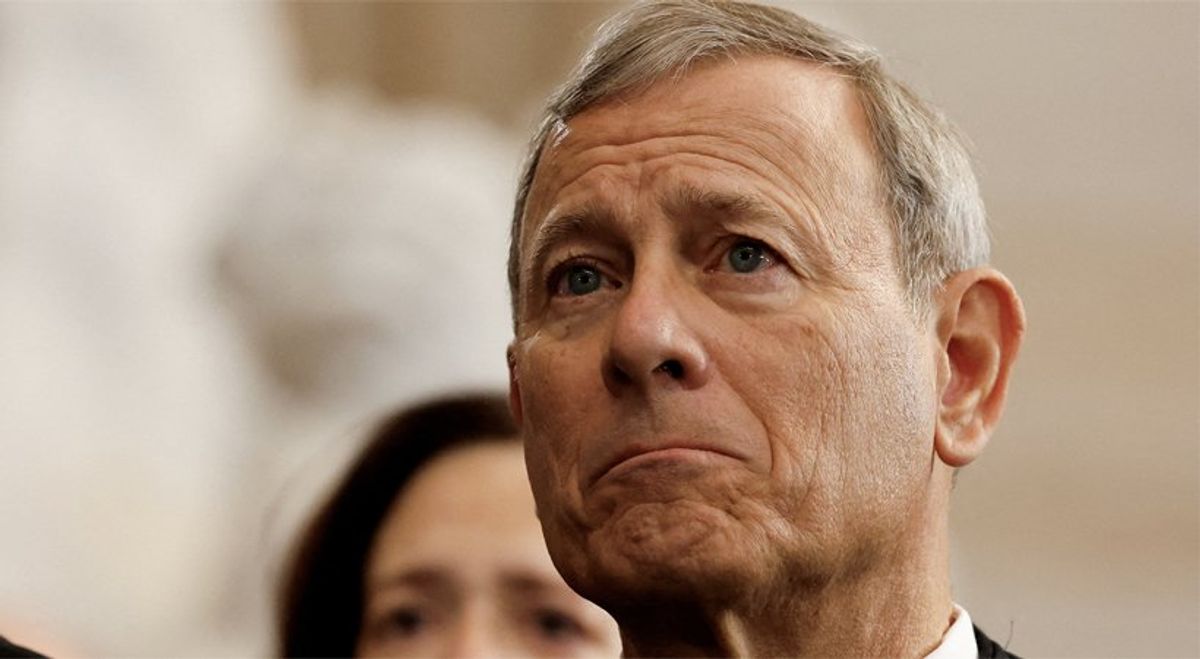
WASHINGTON, DC - JANUARY 20: U.S. Supreme Court Chief Justice John Roberts attends inauguration ceremonies in the Rotunda of the U.S. Capitol on January 20, 2025 in Washington, DC. Donald Trump takes office for his second term as the 47th president of the United States. Chip Somodevilla/Pool via REUTERS/File Photo
The Supreme Court's 6-3 decision limiting Donald Trump's unilateral tariff authority has significantly weakened his trade negotiators' position by eliminating their most potent weapon.
According to reporting from Politico, the ruling has shifted the balance of power in trade discussions. U.S. Trade Representative Jamieson Greer faced immediate pressure from the U.K.'s chief negotiator, Peter Kyle, who implicitly threatened to block a trade agreement unless the United States honored a deal setting duties at 10 percent.
Without the ability to arbitrarily adjust tariff rates, Trump officials have adopted a "more conciliatory approach in the hope of averting further setbacks to Trump's trade agenda."
Trump has publicly insisted that countries attempting to exploit the Supreme Court decision will face even higher tariffs, stating: "Any Country that wants to 'play games' with the ridiculous supreme court decision, especially those that have 'Ripped Off' the U.S.A. for years, and even decades, will be met with a much higher Tariff, and worse." However, administration insiders acknowledge a marked shift in strategy.
Former Biden official Peter Harrell suggested the practical impact may be limited: "The ability to compel implementation of these deals is weakened a little bit [by the Supreme Court ruling], but not significantly. I think that there is kind of enough other tariff threat, enough other non-tariff threat, and also, frankly, enough inducement in these deals that by and large, the governments that have agreed to the deals will continue to honor them."
The ruling has also emboldened domestic opposition to trade agreements in some countries. Taiwan's opposition party has threatened to block approval of its agreement with the Trump administration, which imposed 15 percent tariff rates on most Taiwanese goods—higher than the current 10 percent global duty. The party has used the Supreme Court decision as justification to renegotiate the terms with the United States.
You can read more here.
WASHINGTON, DC - JANUARY 20: U.S. Supreme Court Chief Justice John Roberts attends inauguration ceremonies in the Rotunda of the U.S. Capitol on January 20, 2025 in Washington, DC. Donald Trump takes office for his second term as the 47th president of the United States. Chip Somodevilla/Pool via REUTERS/File Photo
The Supreme Court's 6-3 decision limiting Donald Trump's unilateral tariff authority has significantly weakened his trade negotiators' position by eliminating their most potent weapon.
According to reporting from Politico, the ruling has shifted the balance of power in trade discussions. U.S. Trade Representative Jamieson Greer faced immediate pressure from the U.K.'s chief negotiator, Peter Kyle, who implicitly threatened to block a trade agreement unless the United States honored a deal setting duties at 10 percent.
Without the ability to arbitrarily adjust tariff rates, Trump officials have adopted a "more conciliatory approach in the hope of averting further setbacks to Trump's trade agenda."
Trump has publicly insisted that countries attempting to exploit the Supreme Court decision will face even higher tariffs, stating: "Any Country that wants to 'play games' with the ridiculous supreme court decision, especially those that have 'Ripped Off' the U.S.A. for years, and even decades, will be met with a much higher Tariff, and worse." However, administration insiders acknowledge a marked shift in strategy.
Former Biden official Peter Harrell suggested the practical impact may be limited: "The ability to compel implementation of these deals is weakened a little bit [by the Supreme Court ruling], but not significantly. I think that there is kind of enough other tariff threat, enough other non-tariff threat, and also, frankly, enough inducement in these deals that by and large, the governments that have agreed to the deals will continue to honor them."
The ruling has also emboldened domestic opposition to trade agreements in some countries. Taiwan's opposition party has threatened to block approval of its agreement with the Trump administration, which imposed 15 percent tariff rates on most Taiwanese goods—higher than the current 10 percent global duty. The party has used the Supreme Court decision as justification to renegotiate the terms with the United States.
You can read more here.

No comments:
Post a Comment